As soon as we dropped off our luggage at Casa Llemo in San Pedro de Laguna, we walked into town in search of lunch. Since I have a sensitive stomach, my anxiety over potentially getting sick often makes me think twice about where we eat. At the same time, I also want to eat as much local food as possible. The answer is to look for restaurants or comedores (dining rooms) that cook their food to order. Our first stop featured grilled sausages, served with a red salsa, salad, rice, soupy black beans, and warm tortillas. Adam ordered longaniza, while I ordered both longaniza and chorizo. Both were charcoal grilled and had that lovely smokey barbecue taste. Longaniza can be a little pungent, but this sausage tasted more tart than we’re used to. (Like lemony tart, not bad meat tart.) Still, we gobbled it up and enjoyed a lakeside view.
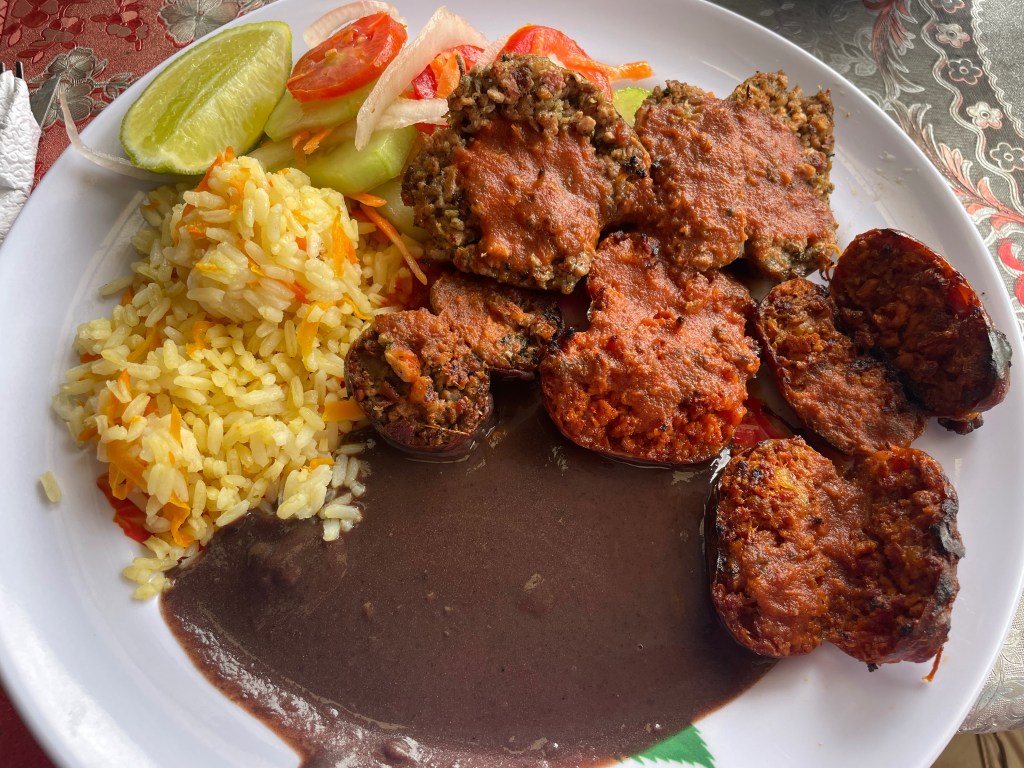
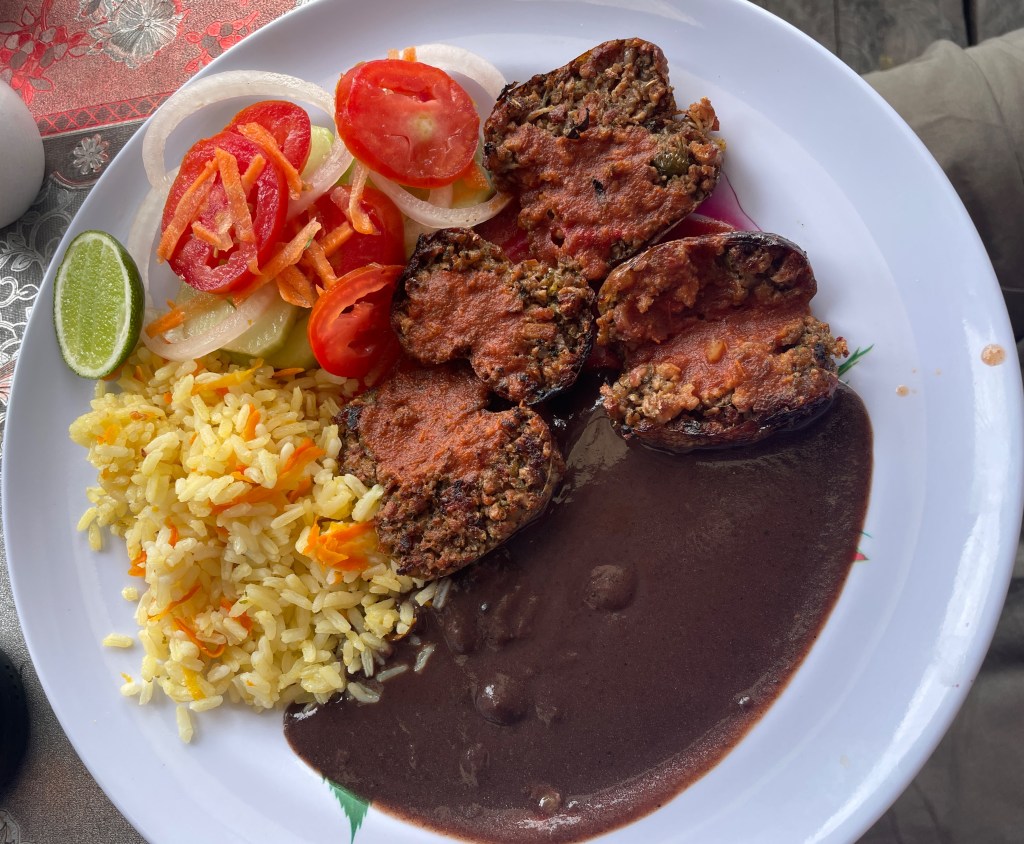
(If you look closely, you can see the image on the left has two different kinds of sausages.)
Being on the lake inspired me to try the local fish. Talapia was everywhere and I took the plunge. Typically, the options are either frito (fried), a la plancha (usually a grilled filet), or con ajo (in a garlic sauce). I wanted to try the garlic sauce, but I was worried it would have butter. (For whatever reason, people forget that butter is made from cow’s milk, but think that mayonnaise is dairy-based. Mayo is made from eggs and oil, y’all.) I tried both a filet and a whole fish a la plancha and it didn’t disappoint. The filet was slightly better, but I’m not complaining.
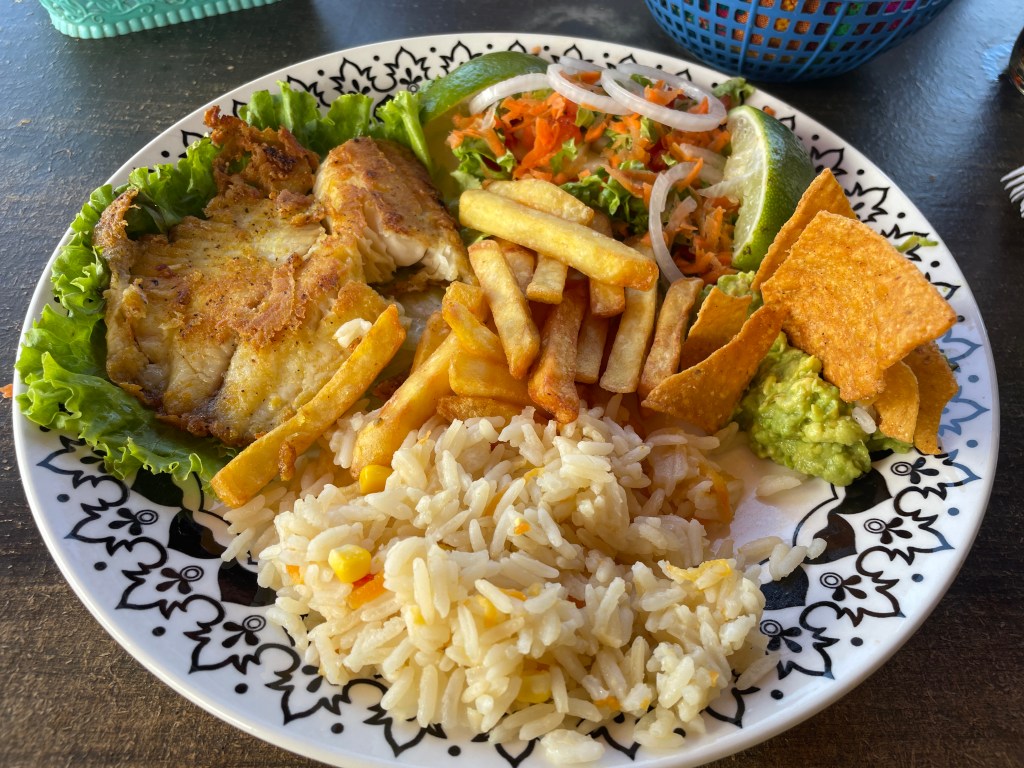
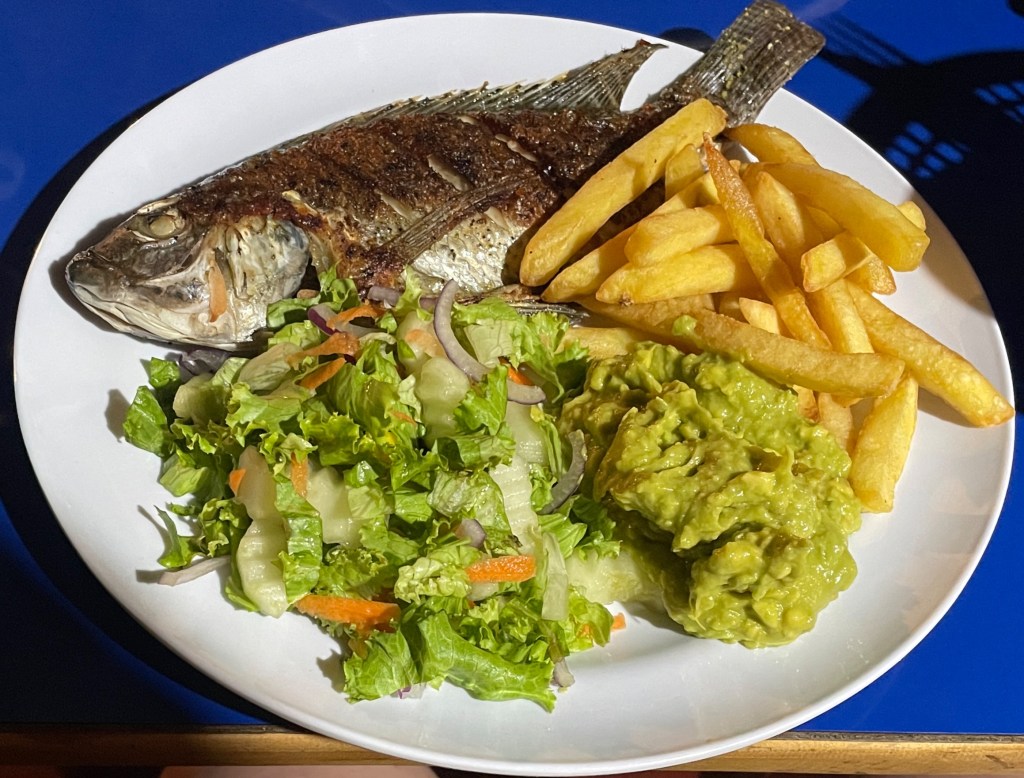
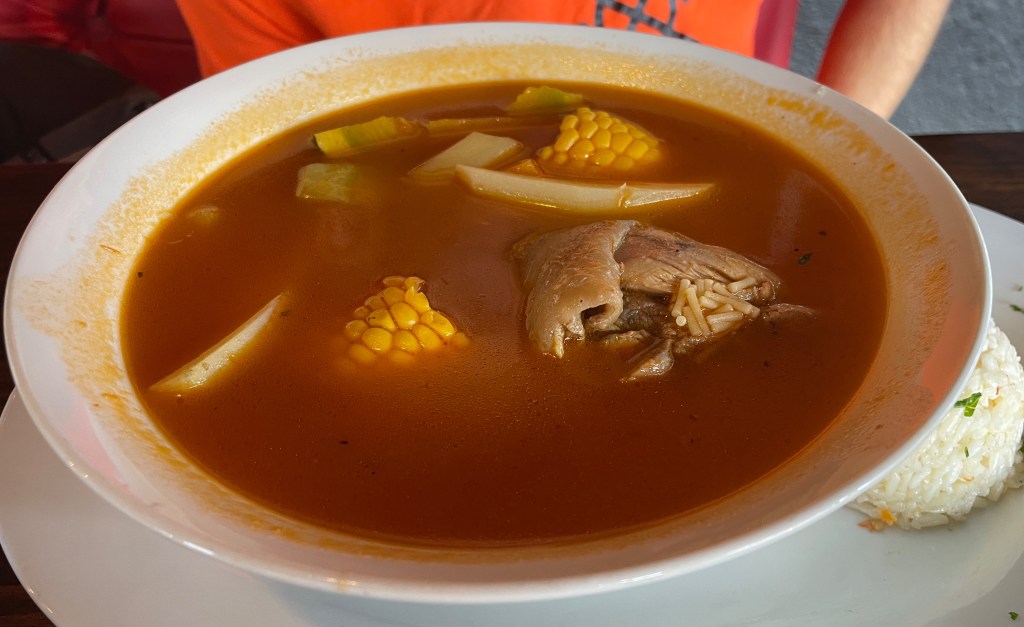
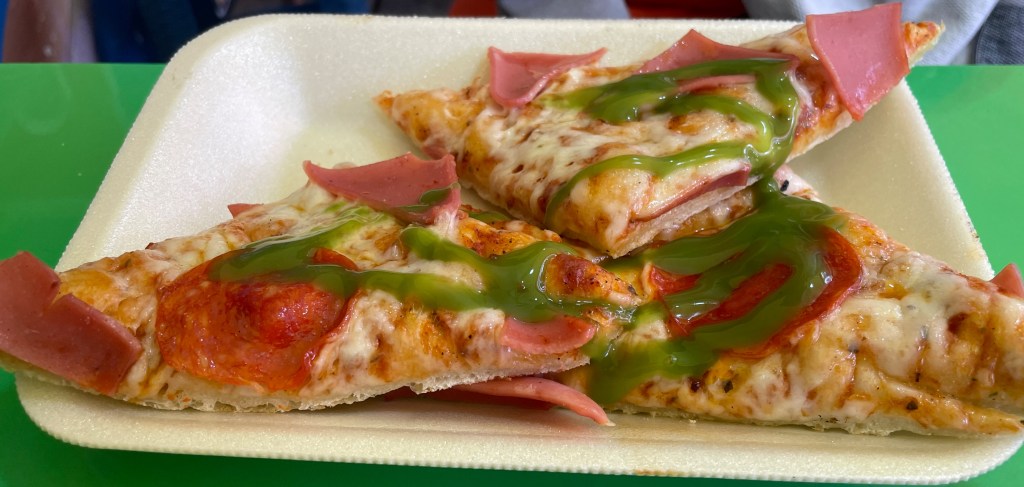
In Santiago D’Atitlàn, Adam ordered a beautiful chicken soup. He had a choice of either roasted chicken or chicken cooked in the broth, which was a fun option. Adam opted for the chicken cooked in the broth. (Correct choice.) You can’t tell from the photo, but there’s a huge chicken leg in that bowl of soup. When we walked around the market, we found ourselves in a somewhat abandoned carnival that had pizza by the slice. Obviously Adam couldn’t resist. His review: a chewy dough with a nice crunchy bottom, not too saucy or cheesey, and even the meat was sliced thin enough so that it didn’t overwhelm the overall flavor. The jalepeño sauce on top wasn’t too spicy, even though it looks kind of goopy.
Before we left Santiago D’Atitlàn to go back to San Pedro, we spent some time hanging out by the lake waiting for the lancha. (We spent so much time hanging out by the lake every day.) Women and children came by, trying to sell us our wares. I noticed one woman with a pot of something on her head, with lots of other stuff in her hand. A woman called her over from across the way. She walked over, sat on the floor, and created a little makeshift restaurant. She had a stool, a spoon, baggies, and who knows what else. What was in the pot? Beautiful stewed peaches. I then ranted to Adam about the importance of looking at all sorts of economies in a society to learn about a culture. It’s not just the official stores or stalls that line the street; look at the informal economies. Look at how women and men earn money differently; how they spend their time; how they laugh with their friends as they sell their stewed peaches. I brought up Margaret Mead and how she insisted on writing about the banana leaf culture/economies of Samoan women when male anthropologists ignored it. (No photos because it felt weird to just photograph people living their lives without being able to really ask for consent.)
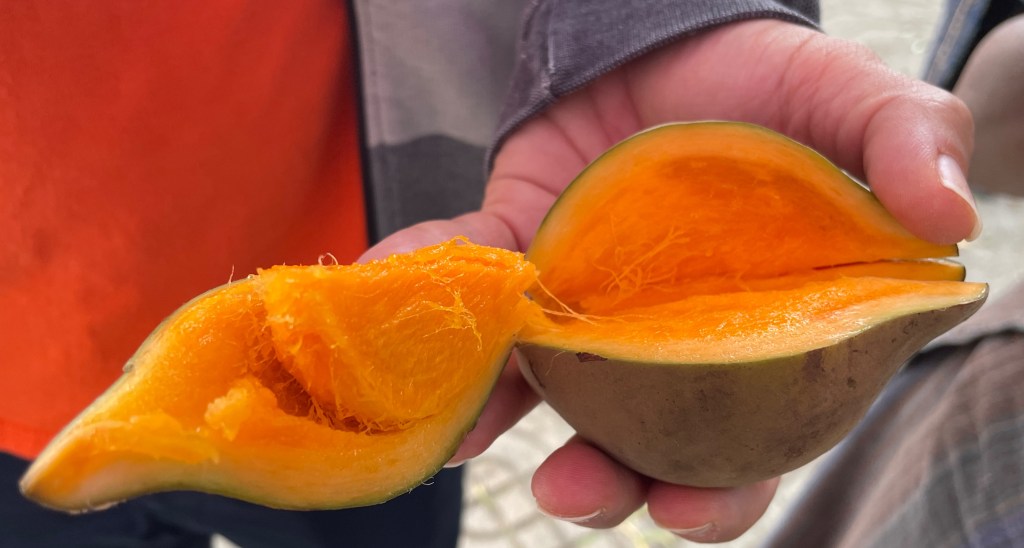
Then, an elderly woman came to us selling fresh fruit. We said no, no, but I couldn’t stop looking. She could tell I was curious, so she kept asking. Adam reluctantly said okay, and she went to her friend to borrow a knife. She cut it and peeled it for us so that we could eat it right there. For 10Q ($1.30) she sold us one sapote and it was lovely. It’s stringy like a mango, but with a mild tropical flavor reminiscent of mango and melon. She kept warning us not to eat the pits or the skin because it would make us sick. (So typical of such a delicious fruit.) It was the perfect sweet treat to keep our blood sugar up in the heat between meals.
We didn’t have lunch in Panajachel, but we did eat in Santa Catarina Palopo (the “blue town”). The comedor we walked into was clearly mostly for locals, but we sat down anyway. Adam had chicken and I had steak, served with a lovely tomato salsa, steamed veggies, rice, and freshly-made tortillas. While we were there, a few more locals came in and they were also very surprised to see us. We noticed they watched us to see how we fared. It was also a chance to hear the mixture of Spanish and Mayan languages in a quiet setting.
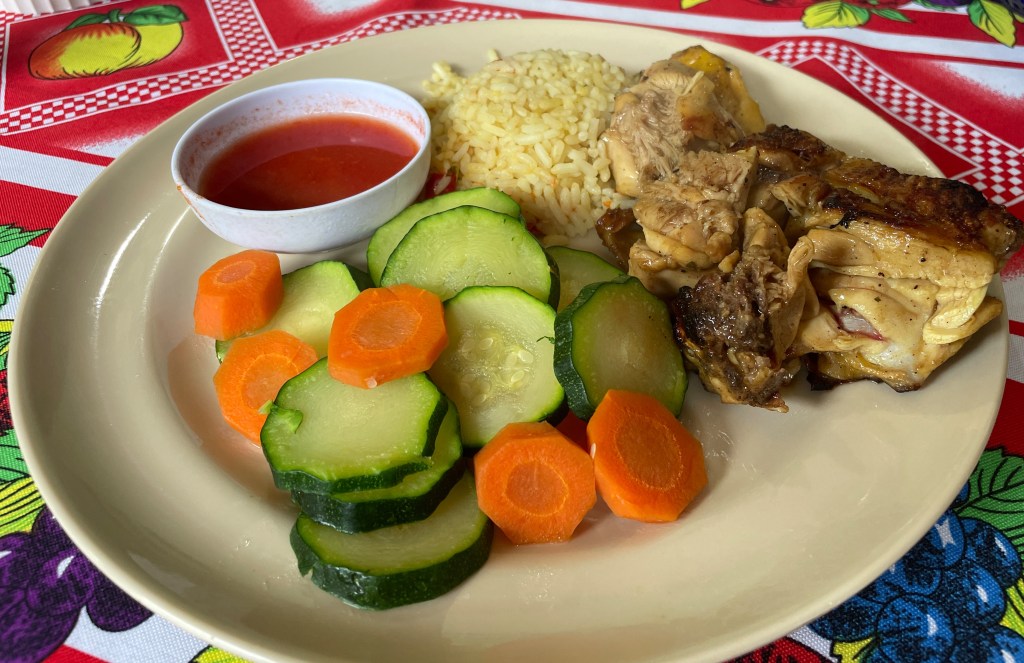
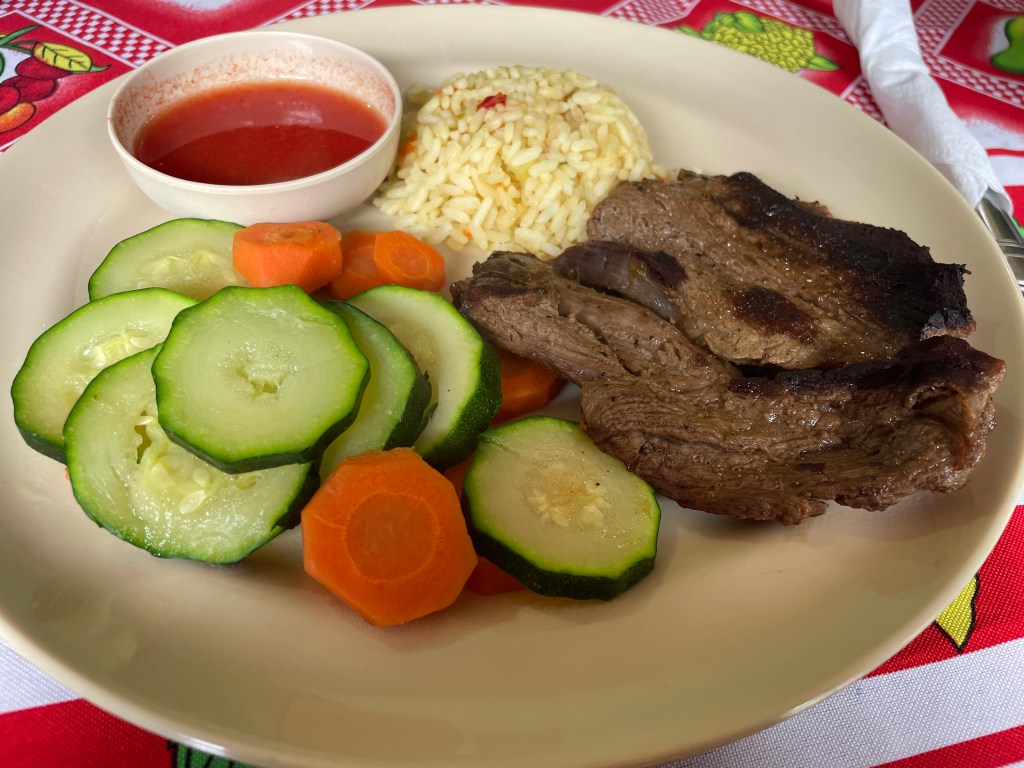
(How did they know I like my steak so well-cooked? I’m not being sarcastic.)
As far as other local food, breakfasts at Casa Llemo didn’t disappoint. Vilma remembered my food allergies and didn’t just feed us a desayuno tipico. Instead, she switched it up. On Sunday, we had french toast & fresh fruit; Monday we had a desayuno tipico with eggs, fried plantains, beans, and tortillas; Tuesday we got pancakes with fruit. I haven’t had pancakes in years. What a treat! (You know what pancakes and fruit look like.)
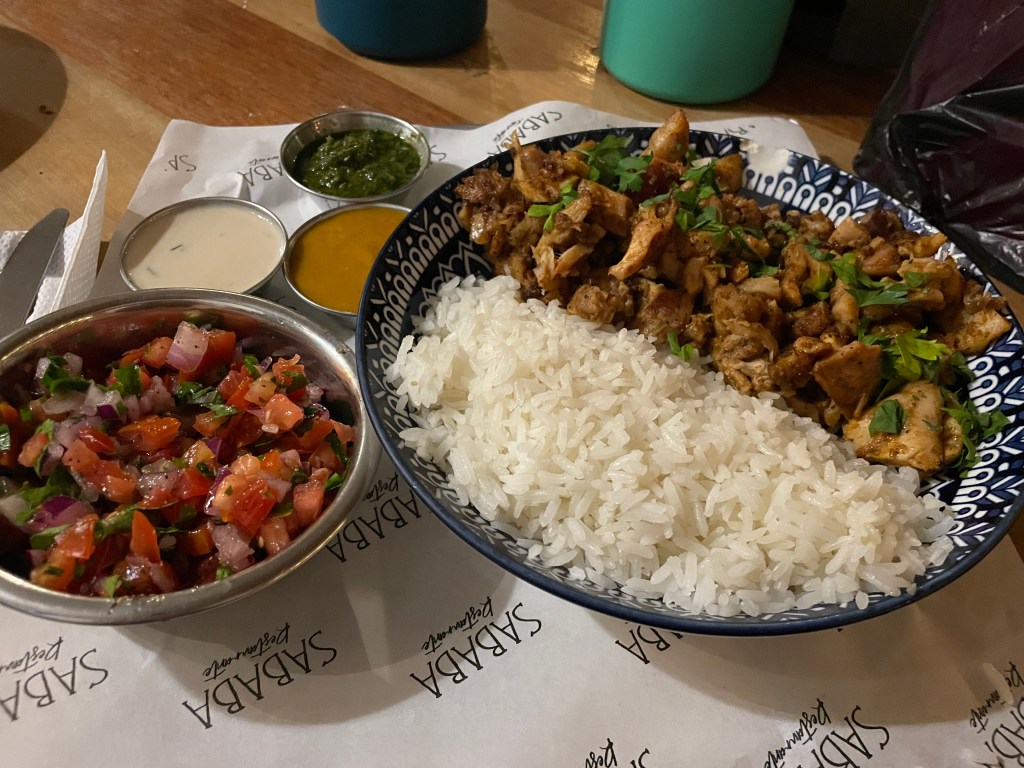
Since San Pedro has so many Israelis, we couldn’t quite resist familiar flavors. Tahini is as vital to life as water in my opinion, so the chance to have some “in the wild” feels like such a luxury and comfort. Normally, we try to visit a different restaurant every meal, but we visited one restaurant, Sababa, twice. The first time, we both got salads. I had the lentil & greens with tahini; Adam had the tuna. (The tuna, by the way, was Israeli tuna that tastes like cat food and did a bit of a number on Adam’s stomach. IYKYK.) The next time, Adam got the kubbeh hamusta soup, a sour soup with semolina dumplings stuffed with beef. Not the best he’s had, but definitely comforting. I had the chicken shawarma, which came with tahini, zhoug (a spicy cilantro-cardamom condiment), and amba (a pickled mango and fenugreek condiment – it’s as polarizing as it sounds).
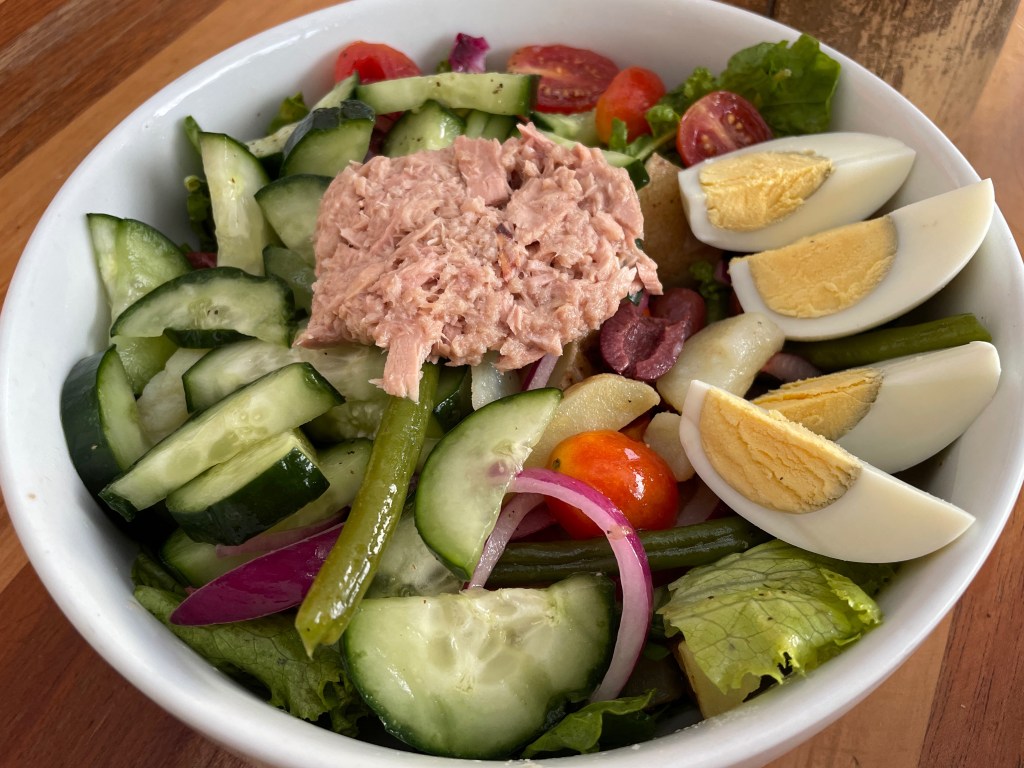
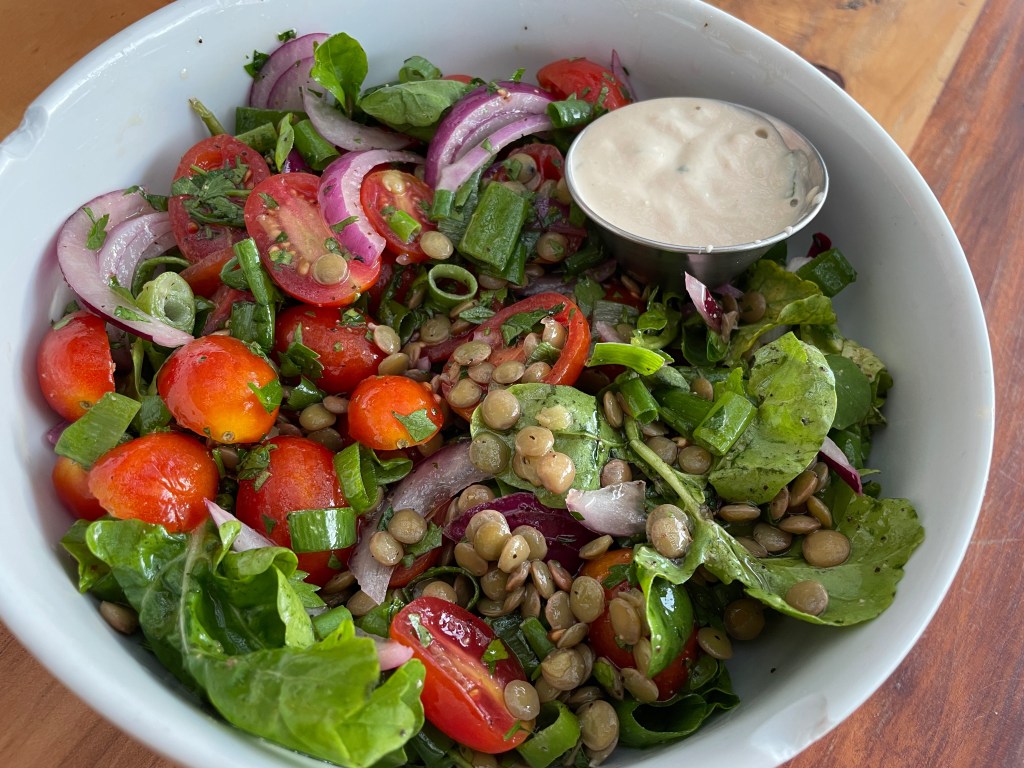
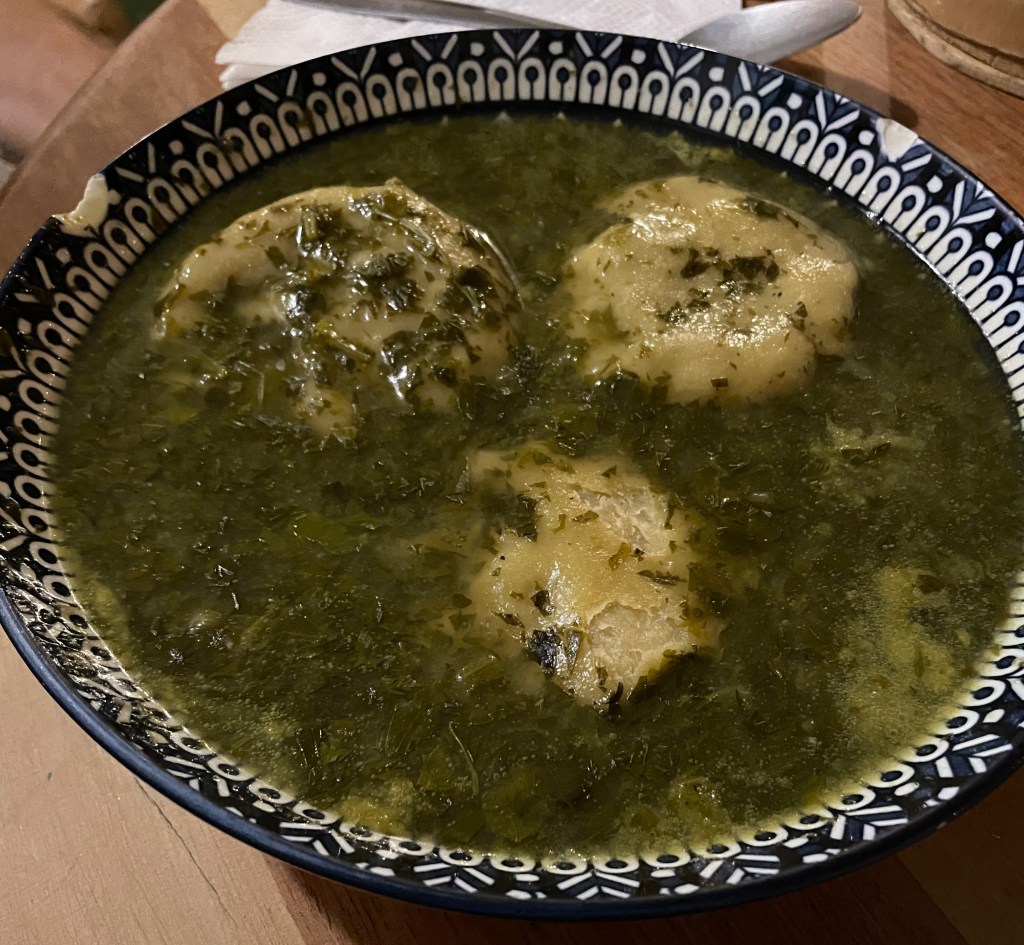
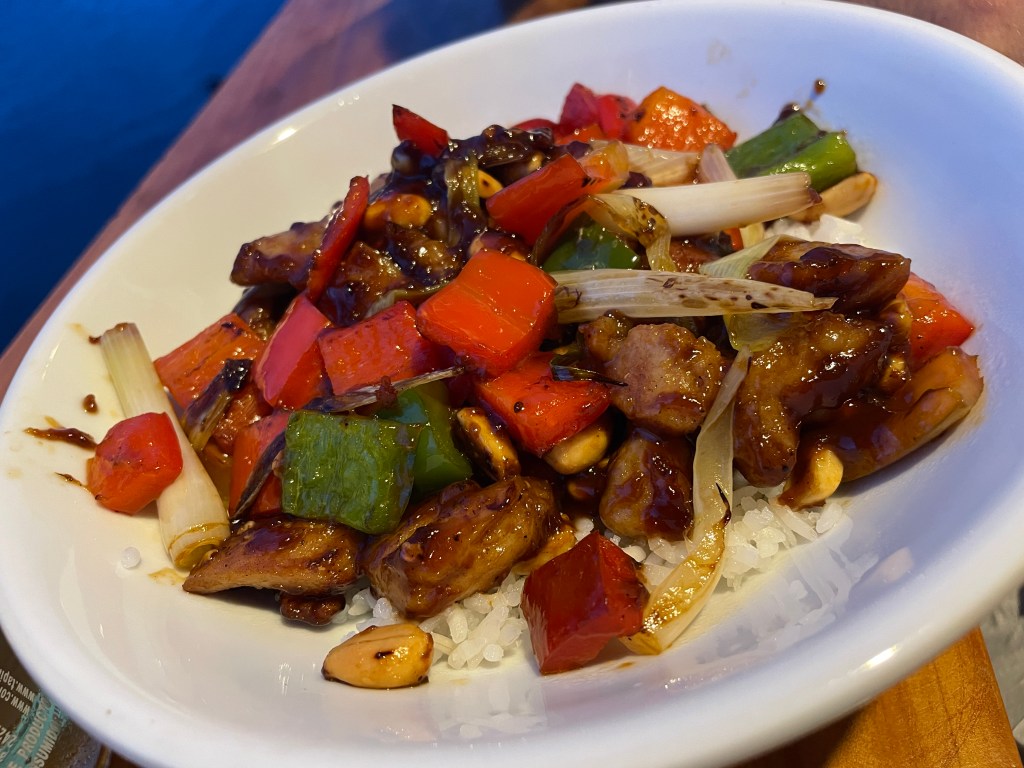
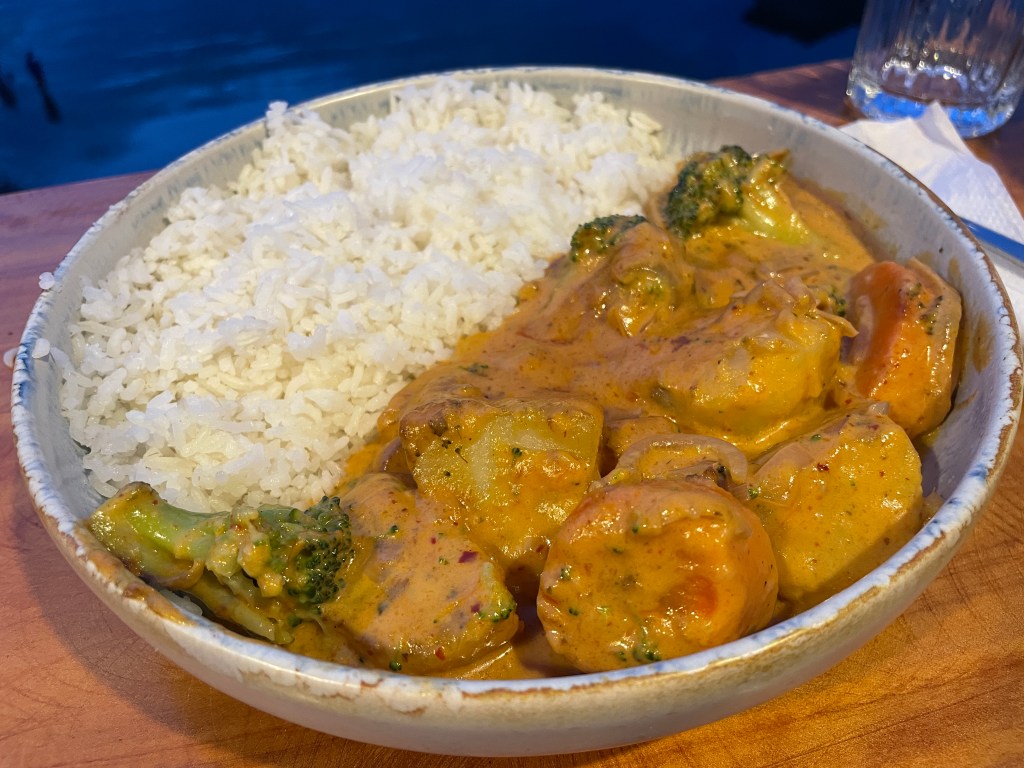
Probably the oddest choice was the “Asian” food. A restaurant called Chicken Bus serves a variety of pan-Asian dishes, filtered through Israeli tastes in Guatemala. (Hello Globalized World.) We spent most of the time talking to one of the owners about life in Guatemala and why he stayed. The lake has a magnetism he said; by the last day I totally got it. The food wasn’t amazing and didn’t quite scratch an itch, but it took me back to my days in Tel Aviv. Adam got the kung pao chicken, which wasn’t very spicy. I ordered the red curry with veggies, which was very coconut milk-heavy like an Indian curry but doesn’t have quite the punch of flavor you would expect from an Indian or Japanese curry. It’s kind of like one of those filling meals that your college roommate made for you one day that is meh but before you know it you kind of get addicted to the flavor because it’s so filling and easy to make.
Was the food in the towns around Lake Atitlàn better than Antigua? It’s not a fair comparison, but a pattern emerges. Some elements are to be expected everywhere: beans, rice, tortillas, tomatoes, and meats. Still, there is a variety of flavors if you’re paying close enough attention to notice and have a willingness to try.
Be sure to like, comment and subscribe to Traveling While Introverted so you don’t miss our next post!
 Traveling While Introverted
Leave a comment