After our time in Boquete, we traveled to Bocas del Toro, an archipelago on the Caribbean Sea famous for its beautiful beaches, mangroves, and wildlife. The archipelago consists of six islands. We stayed on two, Isla de Colón and Isla Bastimentos, and visited a third, Isla Carenero. To get to the islands, though, we needed to reach the town of Almirante, leave our car in a parking lot, and take a water taxi to our first stop. Sometimes these drives are uneventful; however, this one featured a local wild resident trying to cross the road. Initially, Adam and I thought it was a stray dog lying in the road, but once we got closer we realized it was a three-toed sloth.
Adam, two German guys in the car behind us, and a local who ran to us seemingly out of nowhere all made sure our furry friend made it across safely.
That wasn’t the only surprise on the drive to Almirante. Speed traps, we discovered, aren’t just a U.S. phenomenon. In a 40-kilometer per hour zone, Adam was driving…well…more than 40. A man dressed in a Department of Transportation uniform with a radar gun pulled us over. As he looked at Adam’s driver’s license, he knew he had gringos ripe for the picking. Through a translation app, he explained that we could pay him $50 now or he would give us a “sticker” and we would have to pay $70 later. Obviously, we opted for the $50 choice. He let us go as soon as we paid without any paperwork which fueled our suspicions. Later, we found out that we could have just as easily given him a $20 or asked for a ticket and it wouldn’t have cost more than $20 anyway. The quintessential bribing of an officer in Latin America experience is officially crossed off our bucket list. To think, it only took two and a half months!
We eventually made it to Almirante and a water taxi took us to Isla de Colón. The water taxis dropped us off at Bocas Town, the main city for the entire archipelago. Our bed & breakfast was located outside of the town center and we could have walked there, but because we’re traveling with our entire lives on our back, we opted to have the bed & breakfast pick us up from the dock. Mike, one of the owners, was there as soon as we arrived and in less than 10 minutes we were at the landing for The Sunsetter.
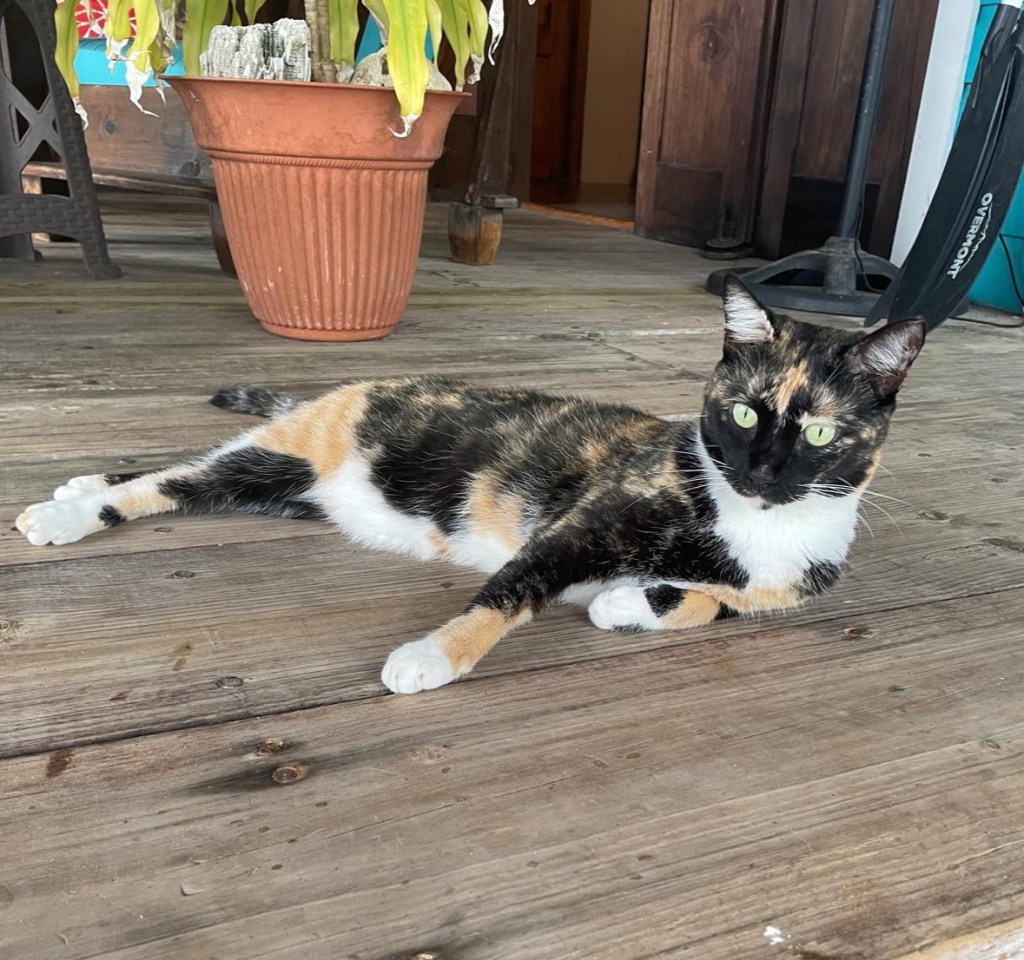
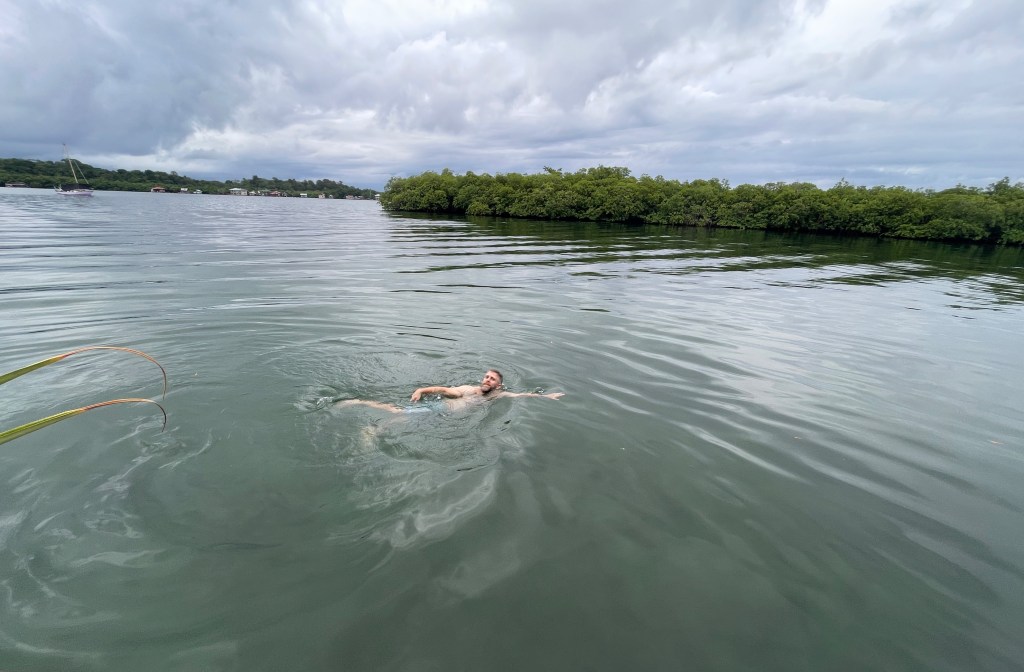
Y’all we promise we are not getting paid to hype-up any accommodations, so when we say The Sunsetter was one of the best hotels/bed & breakfasts we’ve ever stayed in, we mean it. Mike and Sally, the owners, are warm, friendly, and exceptionally thoughtful. The entire b&b only has three spacious rooms and include a very homey shared space & kitchenette. Mike cooks a mean breakfast every day that changes daily, and is incredibly accommodating to those with food allergies. Yahm got to eat gluten-free bread for the first time since leaving the U.S. in July! Plus, they have four adorable cats who kept us all entertained as they chased each other around. Pictured below is Pepita. (For those with allergies: not to worry, they’re not allowed in any of the rooms.) The Sunsetter is actually located in an area called Saigon Bay, which is an inlet with a mangrove forest, making it much quieter than anything we could have found in Bocas Town. Adam was even brave enough to go for a swim.
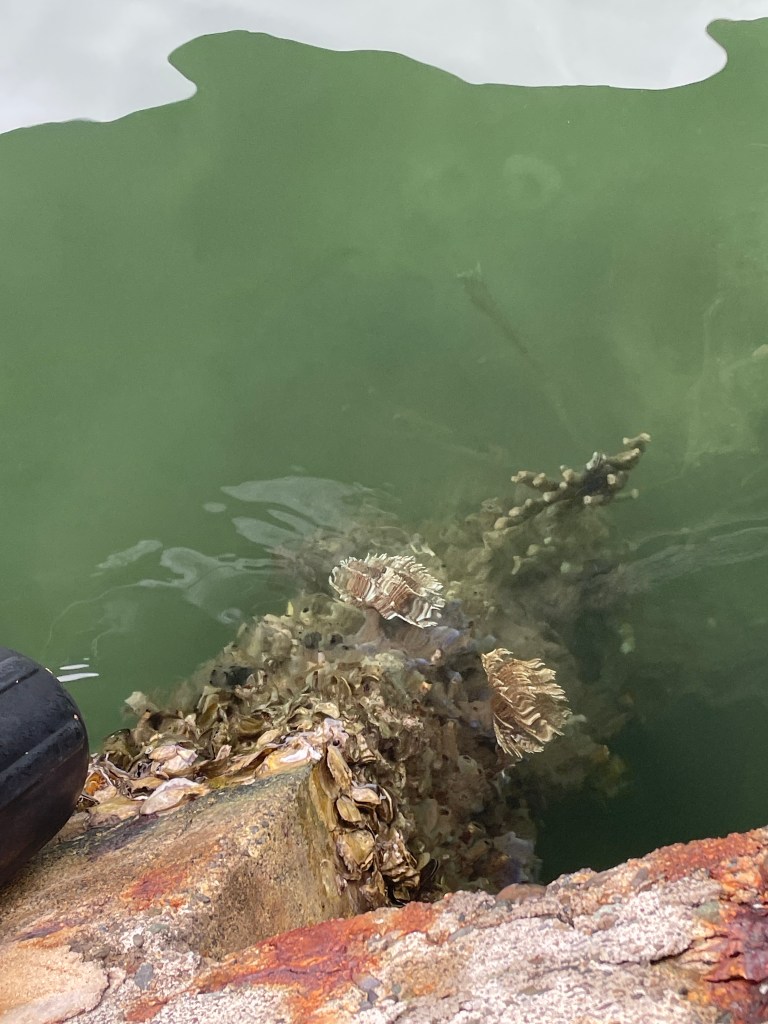
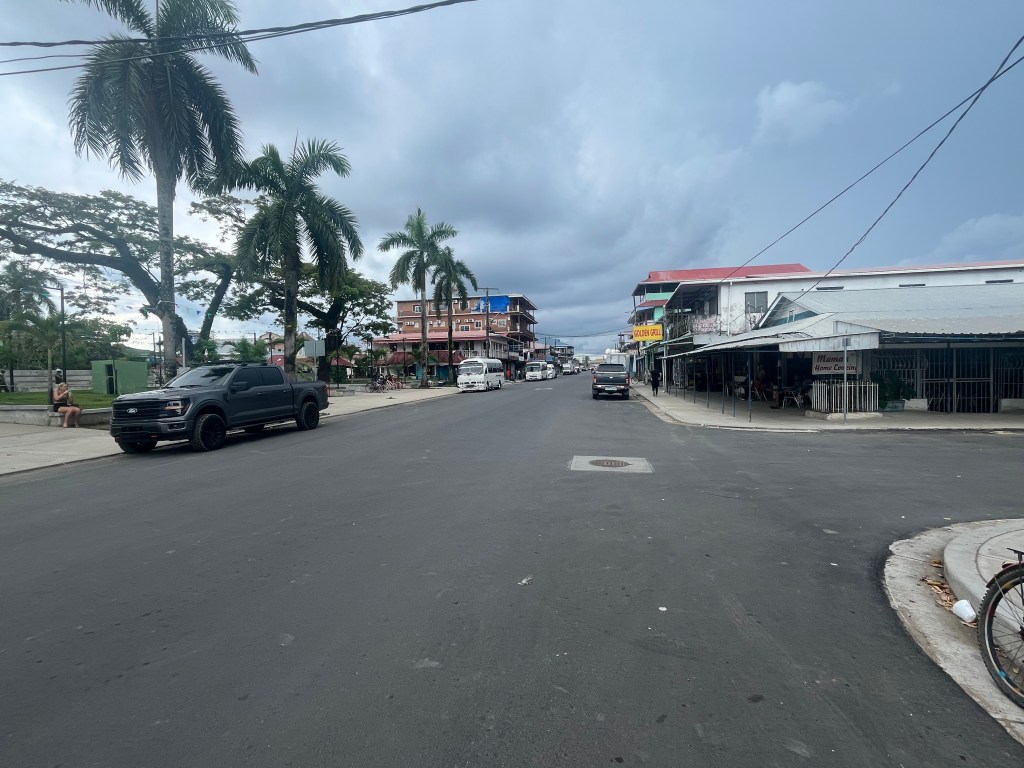
After we got settled, we walked back to Bocas Town to explore and eat. (Check out Yahm’s post about library/book adventures and some of the yummy meals we had.) We had heard that the town is not a fun place to stay in because it’s full of backpackers who party hard all hours of the night. However, since we are traveling in the low season and it’s an exceptionally slow low season, we found Bocas Town to be very quiet and calm. While it’s not the most charming town, we still enjoyed visiting.
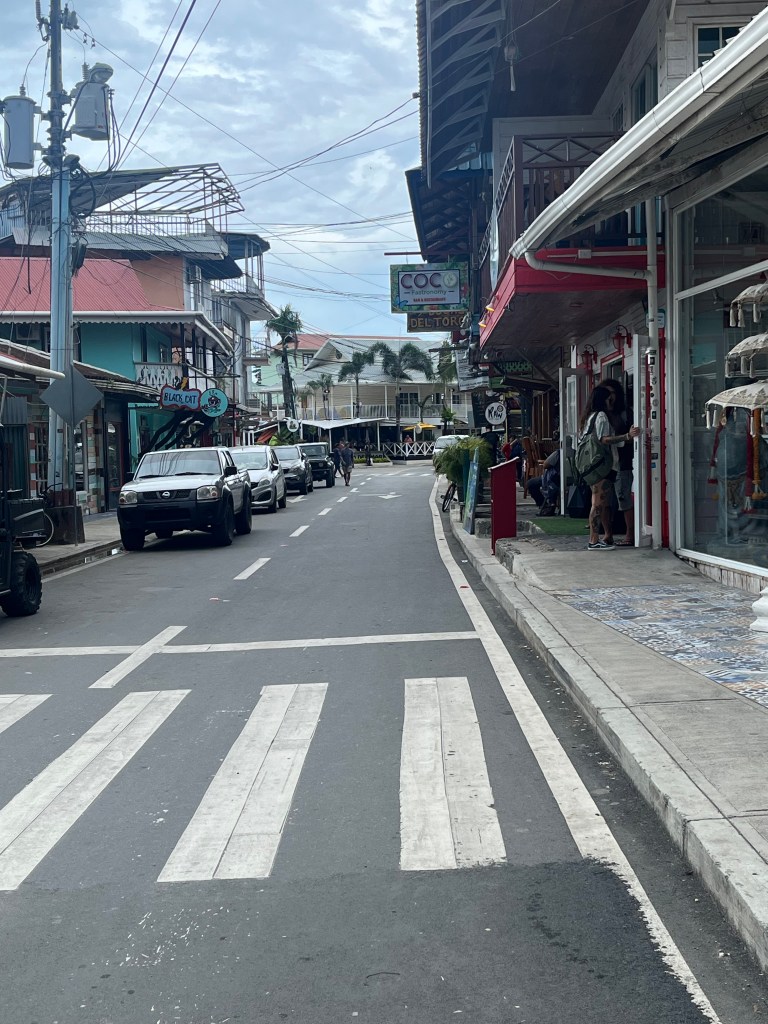
The next day, we decided to visit Isla Carenero, a small island less than two miles away from Bocas Town. Most of the island is a forested preserve and locals hang out in the shallow shores. For whatever reason, we didn’t bring our bathing suits or hiking gear. Instead, we walked along the shore of half the island and dipped our feet into the Caribbean. Very few establishments were open and there was a lot of construction going on, which made it sort of a weird experience. Still, the warm bathwater of the Caribbean felt lovely.
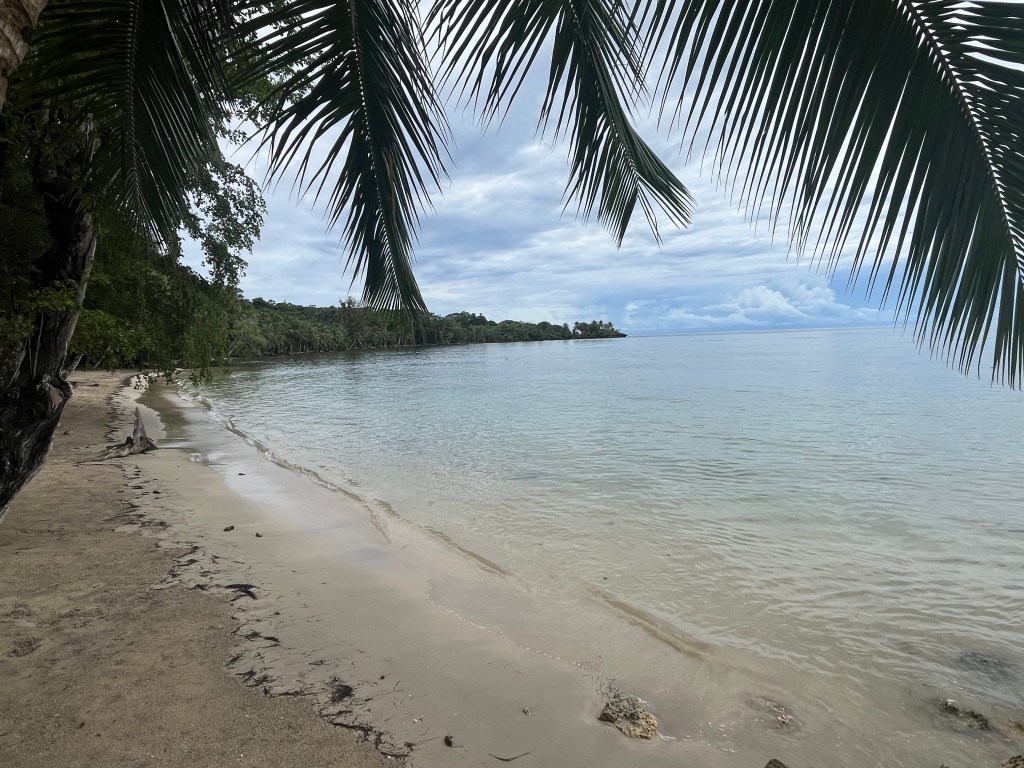
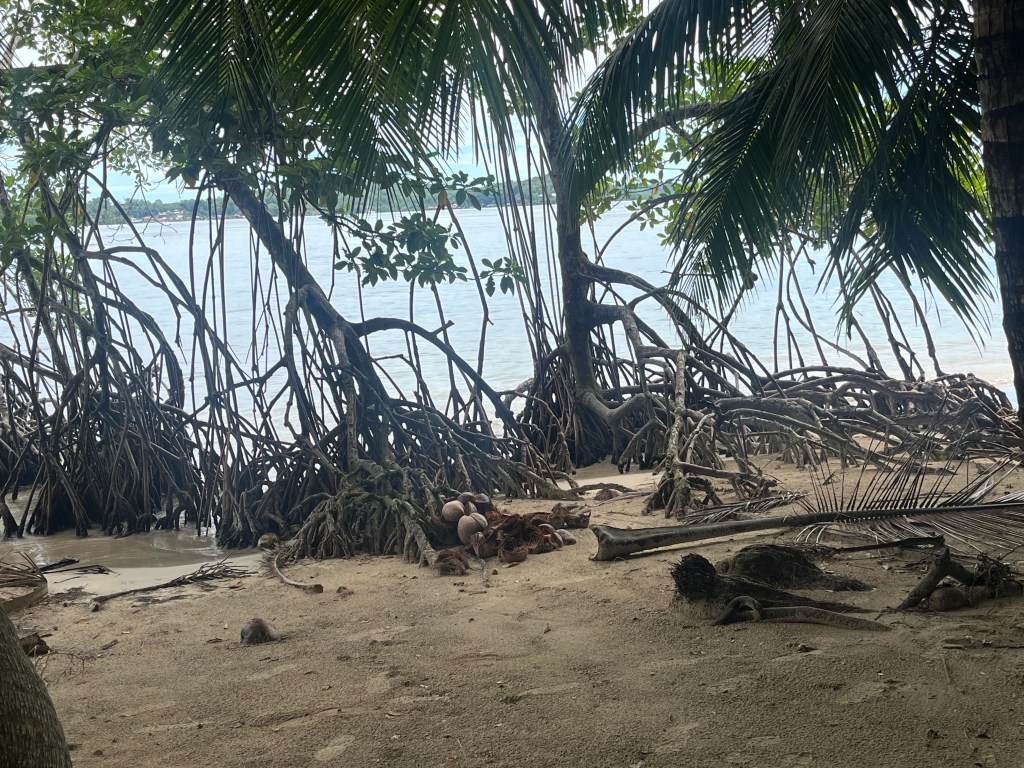
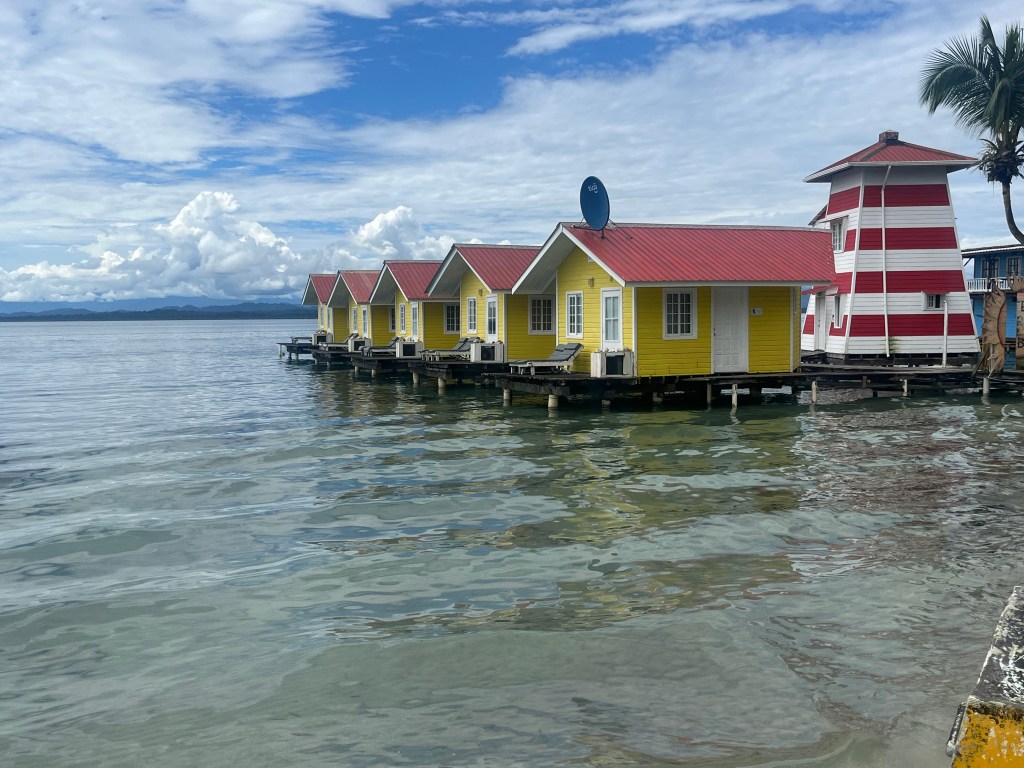
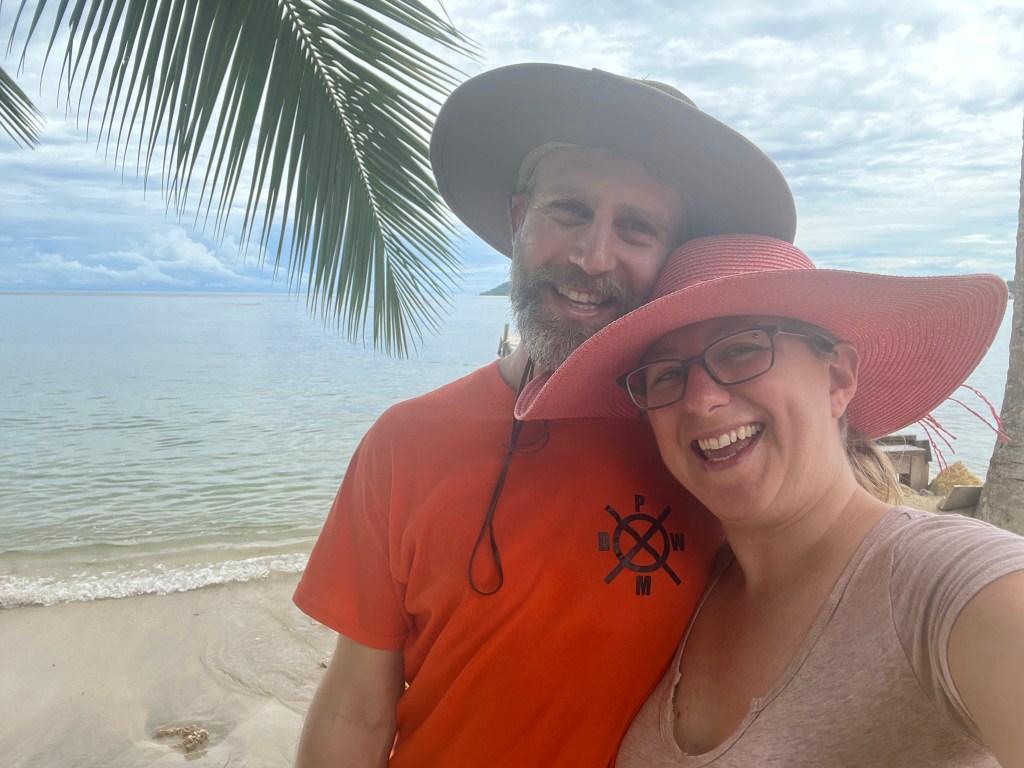
In our research, it was recommended to hop around the islands to really get a sense of the differences between them. We couldn’t afford to visit the more remote islands, so we decided to visit Isla Bastimentos (“Basti”) for a few nights and then sort of see how it goes. We generally don’t travel that spontaneously, but we have learned that keeping options open means you’re not stuck somewhere you don’t necessarily want to be.
On Basti, we stayed in the town of Old Bank, which is a majority Afro-Caribbean town. We may have been in Panamá, but Old Bank felt more like Jamaica in terms of hearing English and Patois mixed with Spanish. Even though we knew there would be few services (very few restaurants and stores to purchase supplies), we were still a little culture shocked by the lack of infrastructure overall. The two popular beaches on Basti are Wizard Beach and Red Frog. To get to Wizard Beach, we walked along a path that started in between people’s homes, meandered through a cattle pasture, up a hill to a forest, and suddenly opened up to a hyper-remote beach. On the way, we heard the calls of all sorts of native birds such as the Montezuma oropendola and Gray-cowled Wood-Rail. Only one little restaurant is available that sells burgers, pizzas, and drinks. There is also very little shade on the shore itself, which can make it dangerous in terms of sun exposure.
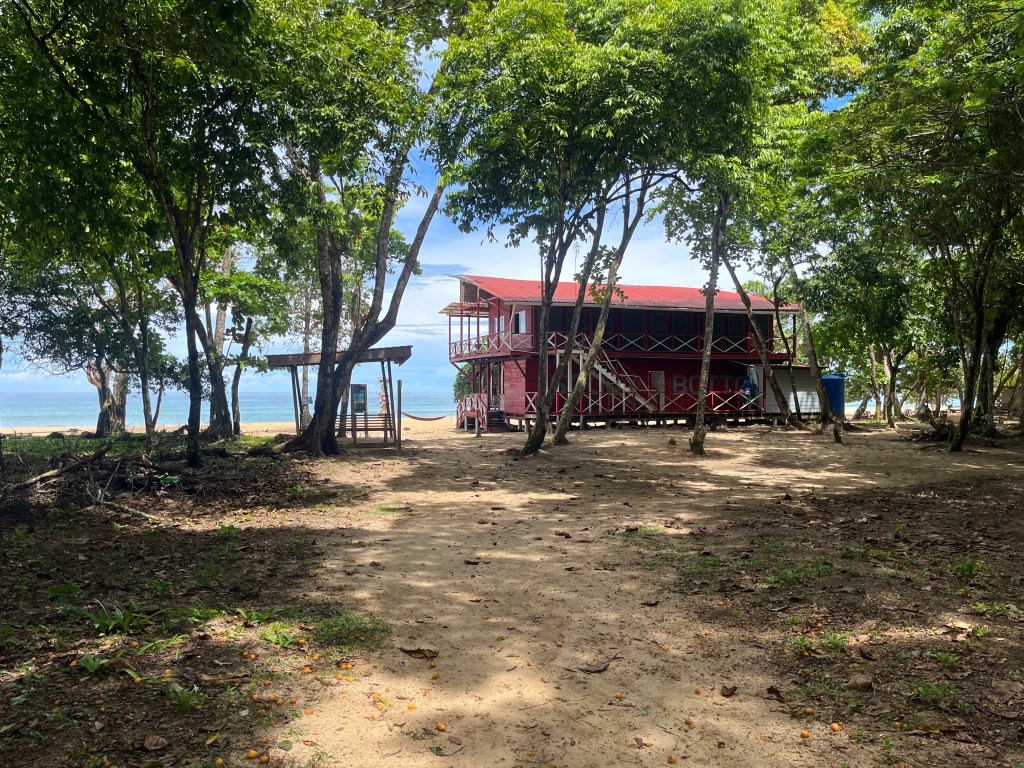

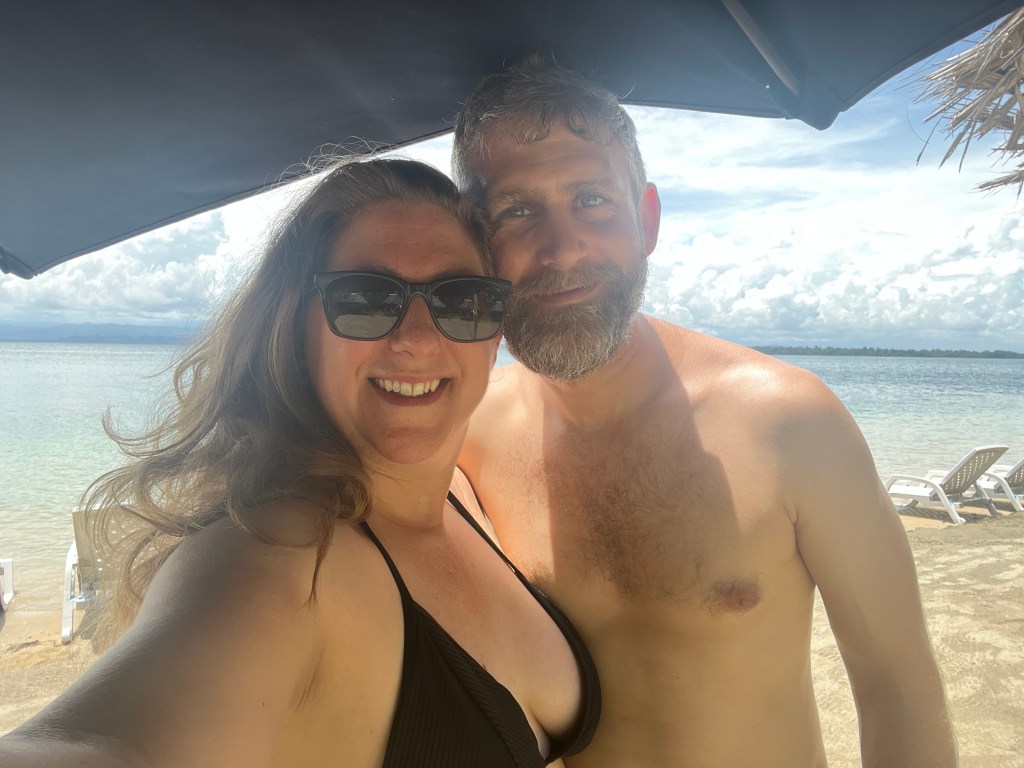
On the other side of the island is the Red Frog Preserve and beach. It is possible to hike through the forest, which includes a lot of strawberry poison dart frog sightings, the namesake of the beach. We opted for a water taxi that dropped us off at the Red Frog Preserve dock instead. To enter the preserve and reach the beach, we had to pay $5 each and walk through a very large luxury resort. Once we reached the beach, the resort had its own restaurant just for guests. We hunkered down at the restaurant next door which let us rent chairs for $5 a day under an umbrella. We spent the day splashing in the sea, reading our books, and taking walks on the sand. It was a perfect day.
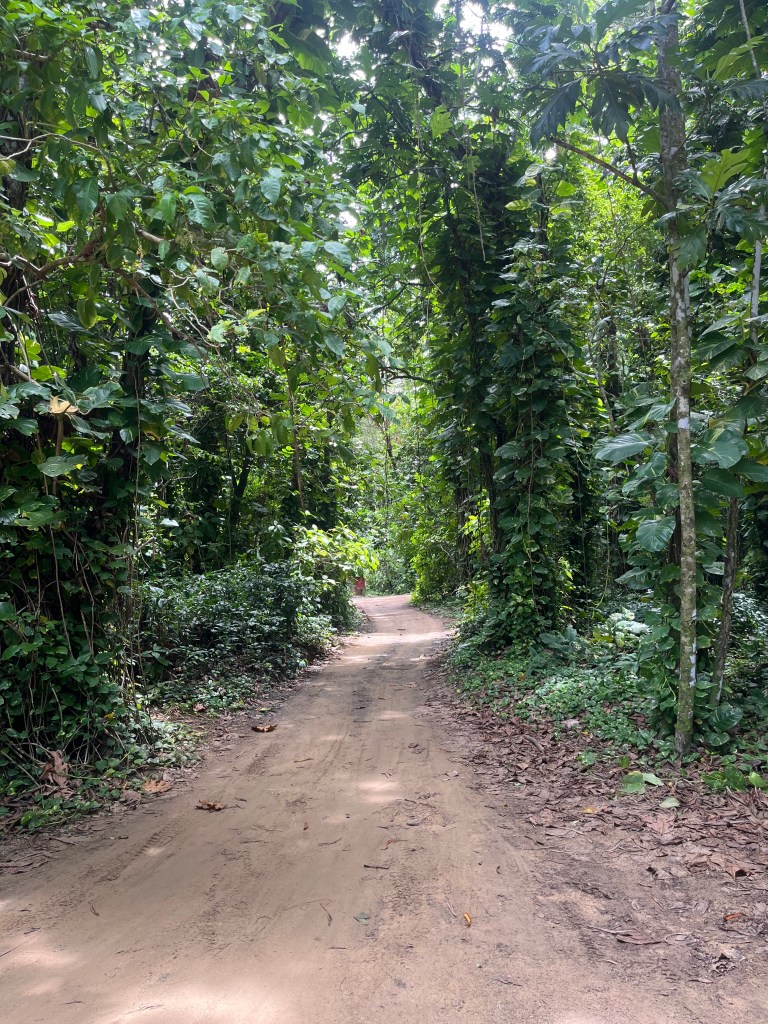
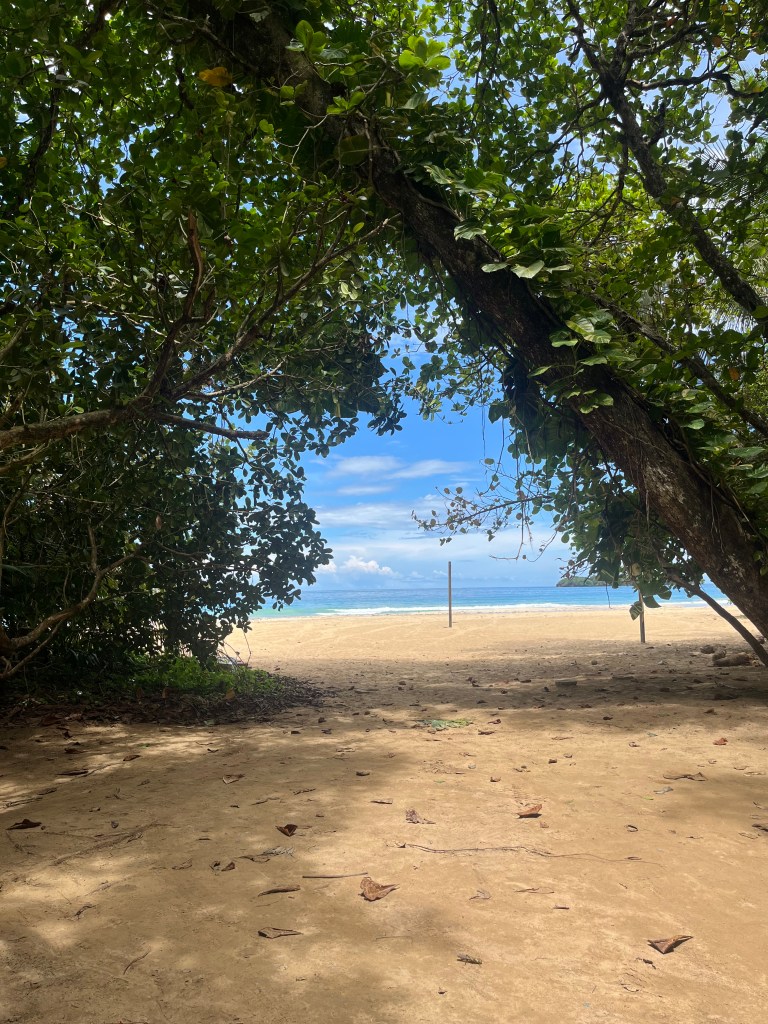

Still, the differences between Old Bank and Red Frog was stark. That is not to say that we think Old Bank should be like Red Frog. On the contrary: Old Bank’s Afro-Caribbean culture and Black diasporic identity is beautiful and exciting in its own right. However, given that a huge resort with beautiful beaches and wealthy accommodations is only a 15-minute boat ride/45-minute hike away from a disinvested town with a profound trash problem* and few resources amplifies the gap between the haves and have-nots on the island. This isn’t the first time we’ve seen this contrast, but it stayed with us and reminded us how privileged we are to be doing what we are doing right now.
(*Trash is everywhere on the islands. Some of it is due to lack of waste infrastructure and a lack of education about the perils of waste and pollution. Some is a result of the worlds’ oceans general pollution coming back to haunt its shores. If you can, please support organizations like 4Ocean that are doing wonderful work to stop the planet from becoming completely covered in plastic.)
After two nights in Old Bank, we decided to return to The Sunsetter. (See? Keeping options open!) We explored two additional beaches on Isla de Colón: Playa Estrella (Starfish Beach) and Pippa Beach. One of the nice things about being on Isla de Colón is the surprisingly affordable public transportation. When we visited Play Estrella, we flagged down a bus that dropped us off at Boca del Drago. From there, it was just a short walk through a coastal forest to get to the beach. Playa Estrella is a favorite among locals and it was far more affordable than Red Frog.
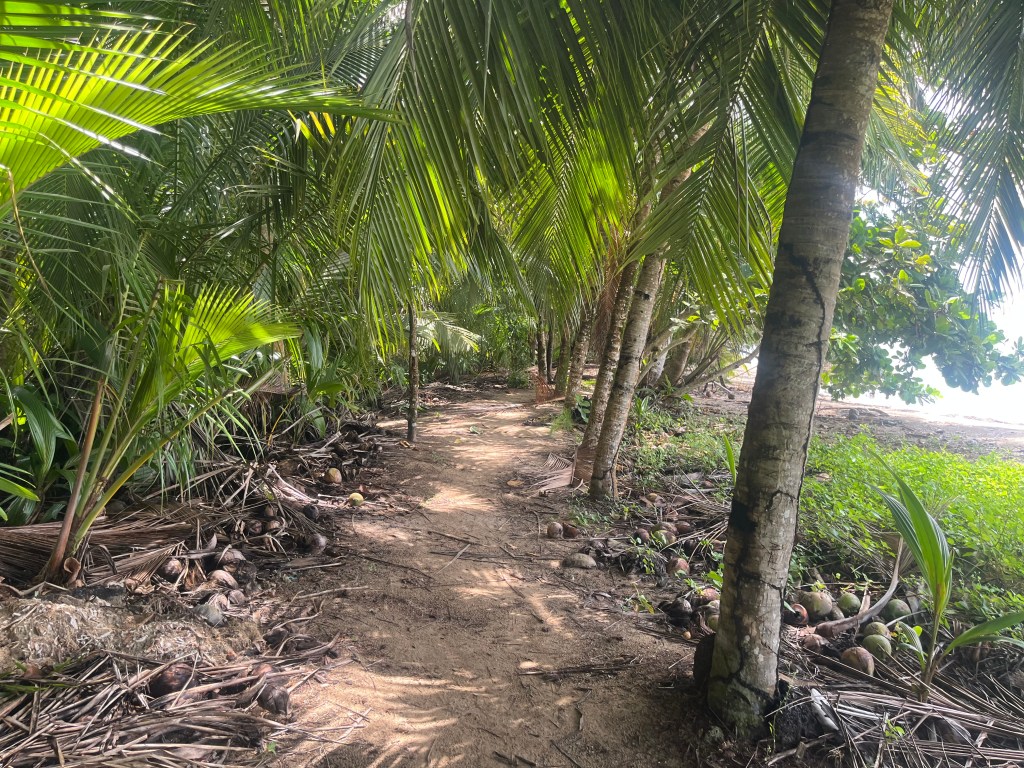

True to its name, we saw wild starfish in the clear waters. (Sorry, no pictures.) However, when we visited Pippa Beach we spent a good time watching ghost crabs do their thing:
All in all, the Bocas del Toro archipelago was a fun way to sweat, swim, and take in Panamá’s Caribbean coast. As we approach the final leg of our time in the country, we head to the highlands of El Valle de Anton and back to Panamá City where our journey began over a month ago. We’ll have a bit more to share about our time on the isthmus before we fly to our next destination. Be sure to like, comment, and subscribe to Traveling While Introverted so you don’t miss it!

 Traveling While Introverted
Leave a comment