When we visited Guatemala and Costa Rica, we didn’t spend much time in their respective capital cities, so I didn’t get a chance to visit their national libraries. However, since we had to circle back to Panamá City to leave the country, I was determined to visit the library. National Libraries are fascinating places because their purpose is to be a repository for their country. The same is true for state libraries in the United States: they often have so many treasures the public is unaware of unless they’re curious enough to ask. These libraries are typically also closed-stacks, which means you can’t check out items or walk among the stacks. The material these libraries house are often one-of-a-kind, fragile, and crucial to the history of a place. (National Archives are similar in their purpose, though they generally collect unpublished material and/or ephemera, though the distinction between archives and libraries is very grey.)
The best way to see a national or state library is to coordinate a tour ahead of time. I had reached out to the person in charge of tours but didn’t hear back, which I knew was a long shot. National libraries aren’t typically tourist hot spots so they might not invest in providing tours in a language other than the national language. More upsetting, though, is their budgetary crisis, which I only realized was going on when we visited. Turns out, the library hasn’t received any government funds since the beginning of 2025. They have had to stop crucial projects, reduce hours and staff, and are on the brink of closing their doors. What a shame would it be to no longer have librarians and archivists caring for the history of such a beautiful and vibrant country, especially when Panamanians are so proud of their rich history!
The National Library of Panamá is located in a large urban park (Parque Omar), not far from the city’s old capital, Panamá Viejo. The park is so large that visitors can easily miss the library if you weren’t looking for it. Adam and I suspect perhaps this was a more central area of the city many years ago. The library is named after Ernesto J. Castillero Reyes, a historian and educator who founded the national library. He was also the library’s first director from 1942-1945. Below are photos of the building’s exterior and views of the park.
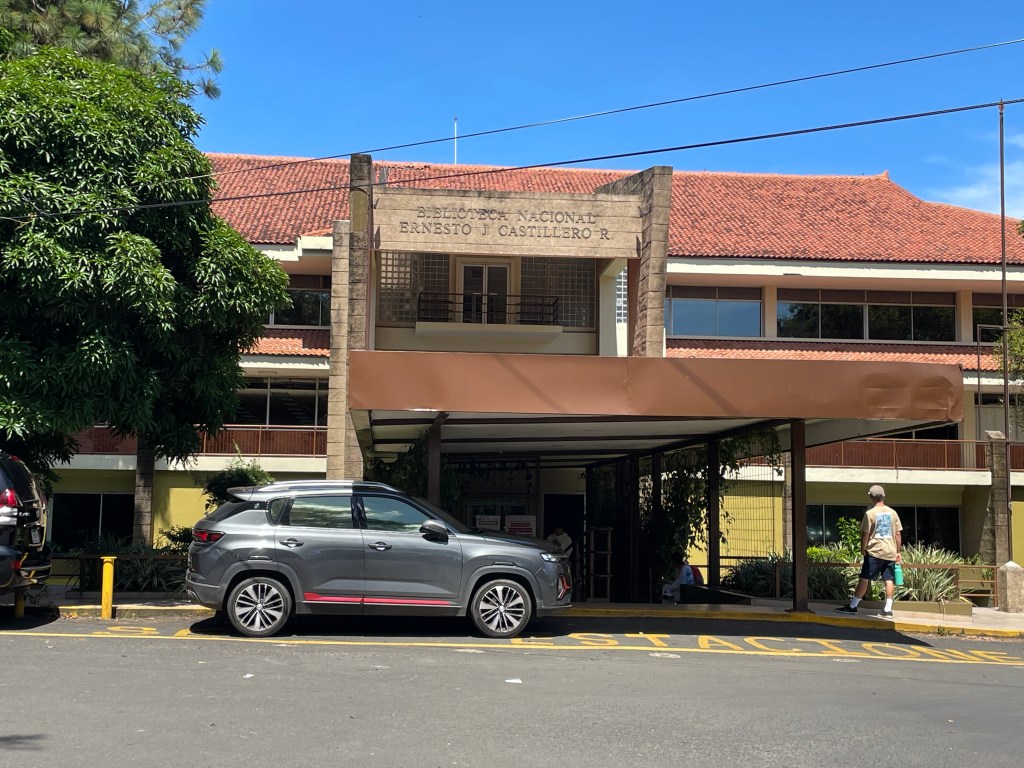
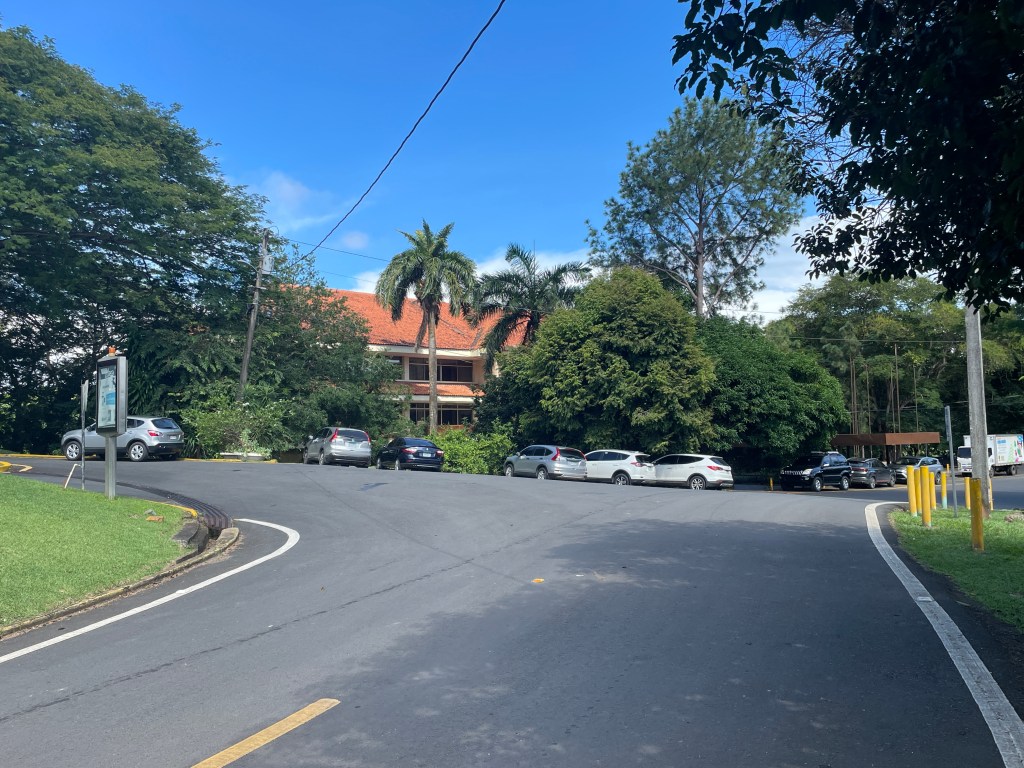
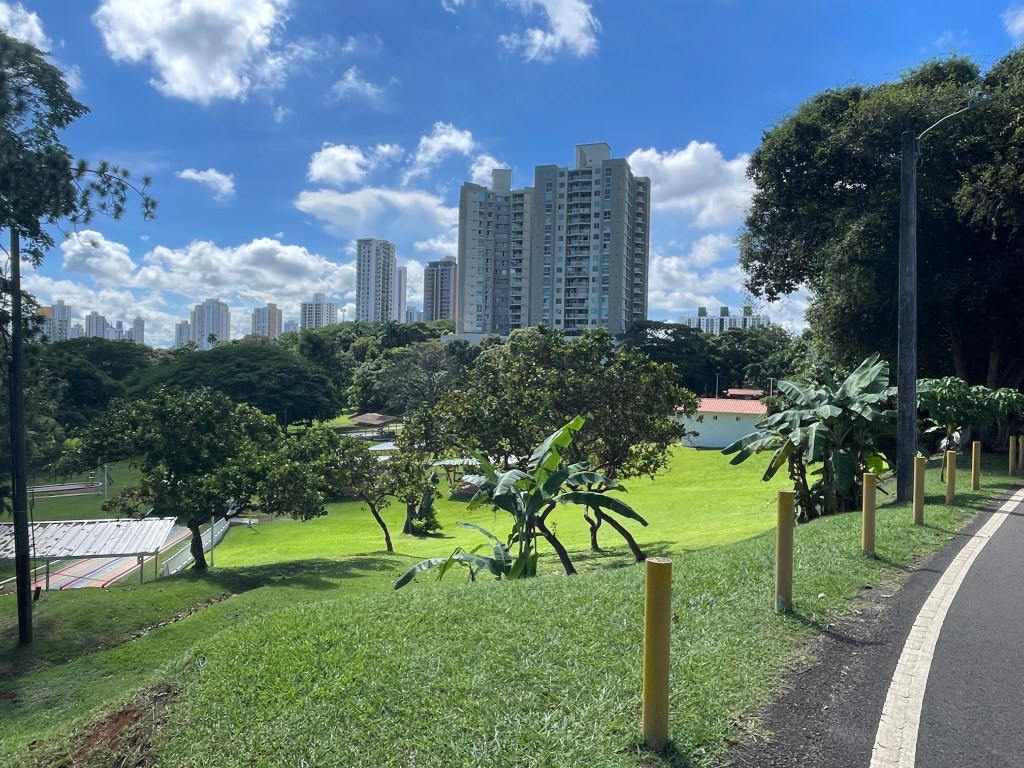
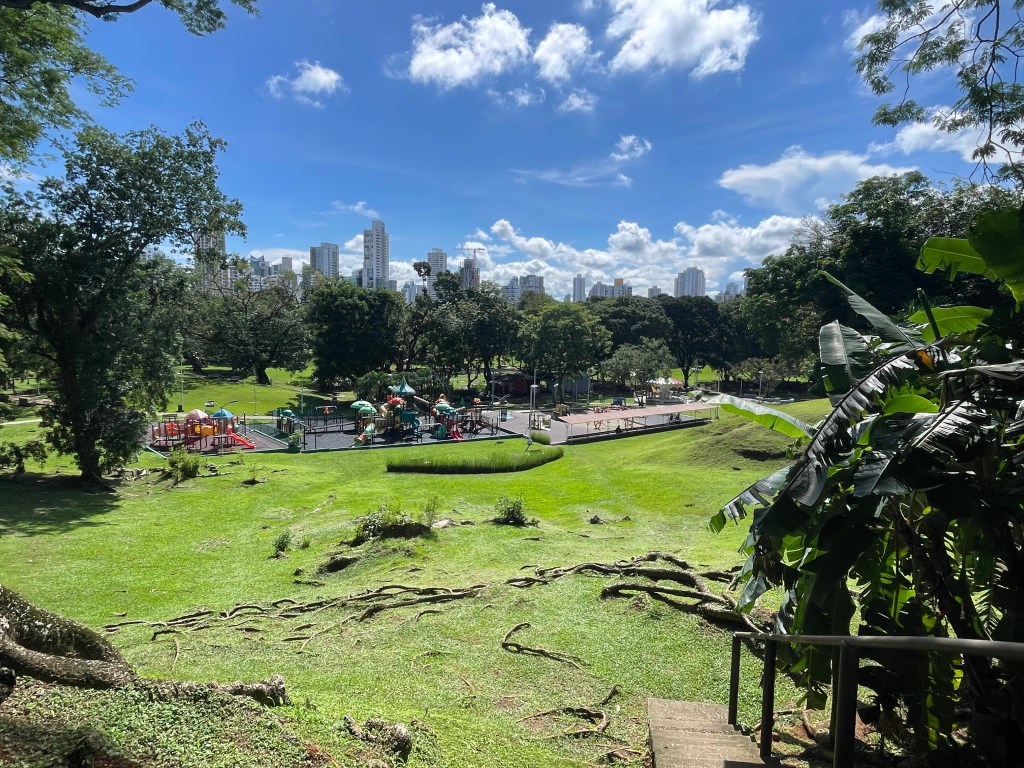
The library consists of four floors and only two are accessible to the public (with limitations). When we entered the building, we were on the second floor which features, among other things, the Panamá collection. This collection houses unique material about the history and culture of the country, much of which is likely unavailable anywhere else in the world. Besides a few tables and chairs near the circulation desk for the Panamá collection, there was also a stage with chairs for events, as well as a series of displays about a Panamanian artist.
Later, I found out that the first floor houses newspapers and periodicals, available in paper, microfilm, and digital formats. Researchers can request to view paper and microfilm materials, and it’s easy to view the digitized material from any computer through the library’s catalog. Because it’s closed-stacks, we couldn’t go there unless we had an appointment or special request.
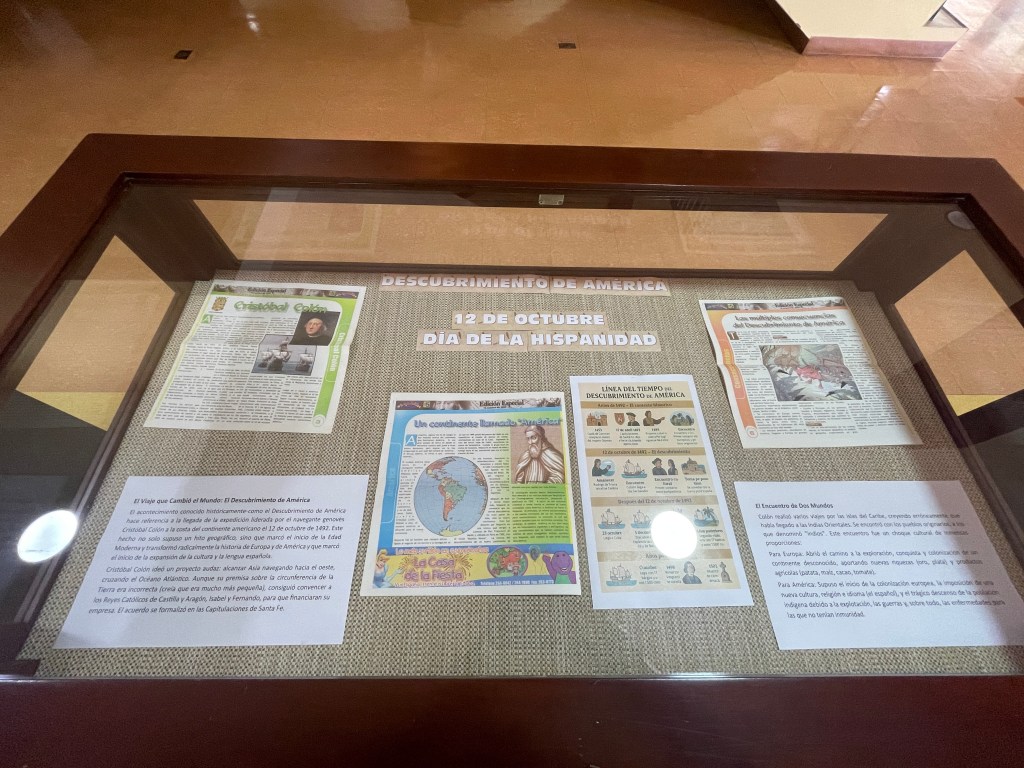
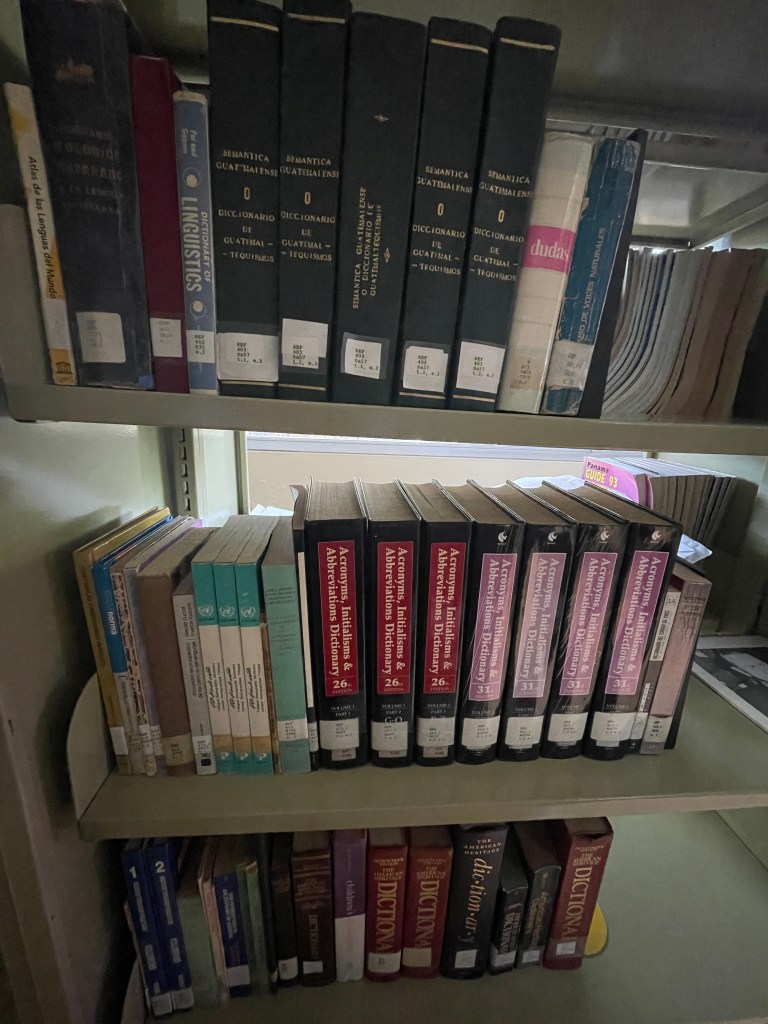
Since there wasn’t anyone at the circulation desk on the second floor, we went up to the third floor. This area had many more tables and chairs and quite a few patrons were peppered throughout the floor. We noticed a display about the 12th of October, Día a Hispanidad, or the Day of Spanishness, to commemorate Christopher Columbus’s arrival to the Americas. This is also when we learned that he is called Cristobal Colón in Spanish, which makes so many names of places make so much more sense! I walked through the reference section which included all kinds of dictionaries, almanacs, collections of government statistics, and so much more. Quite a few publications were in English and about other Latin American countries. (For my fellow librarians: yes, it’s Dewey. Again.)
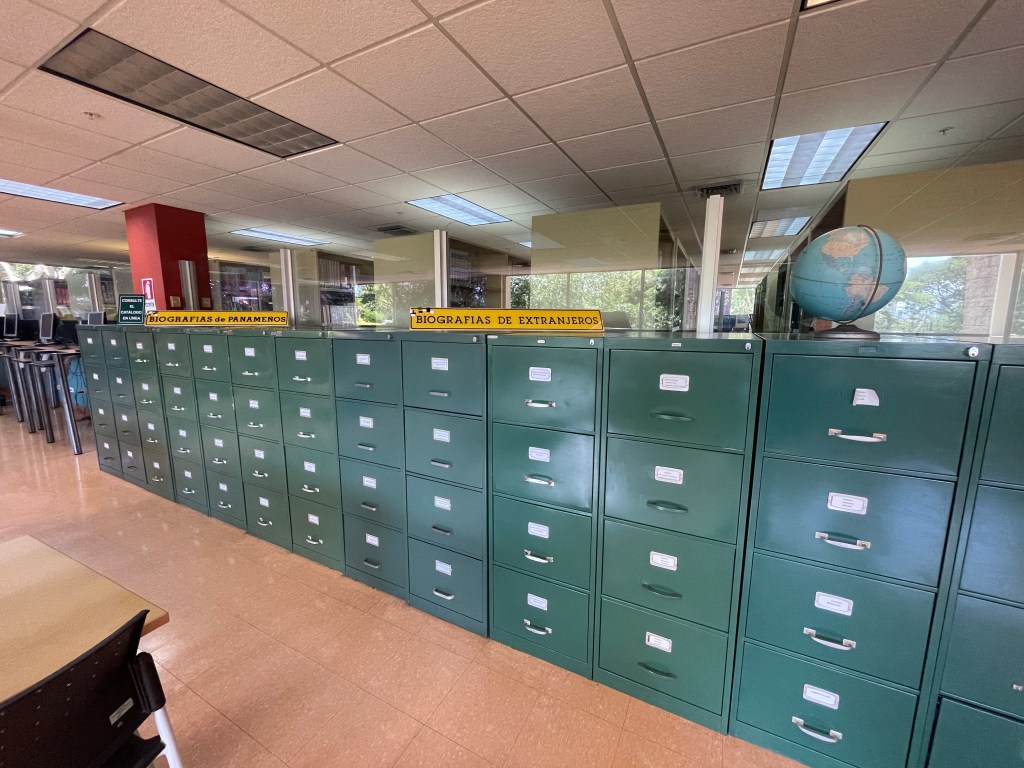
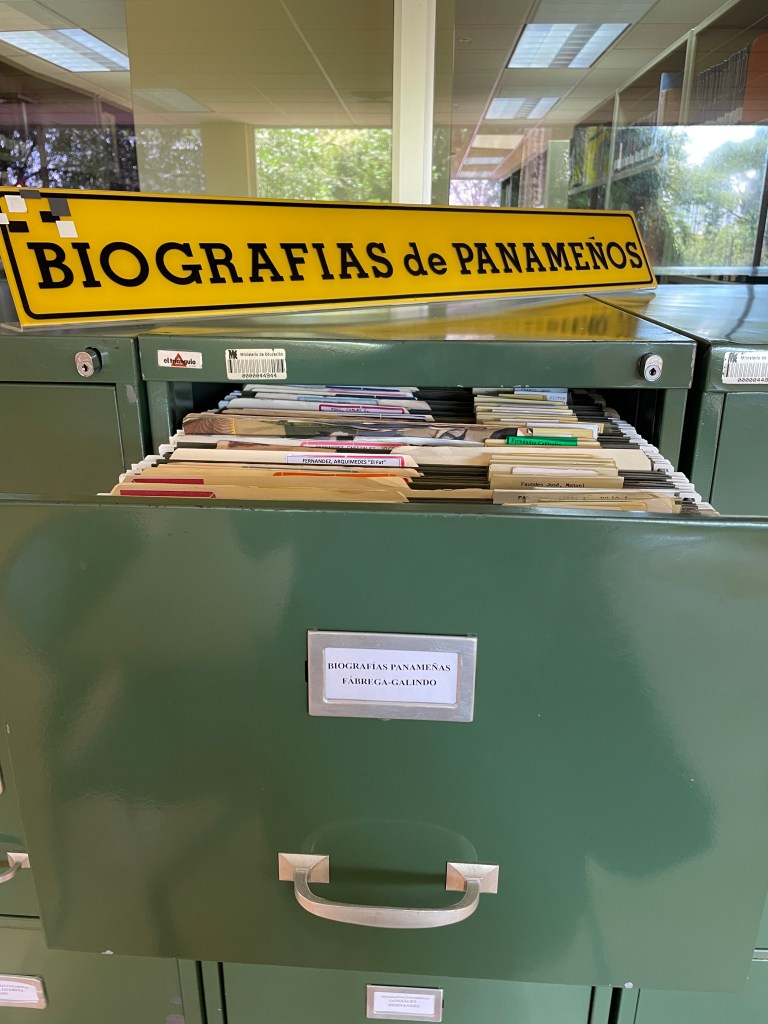
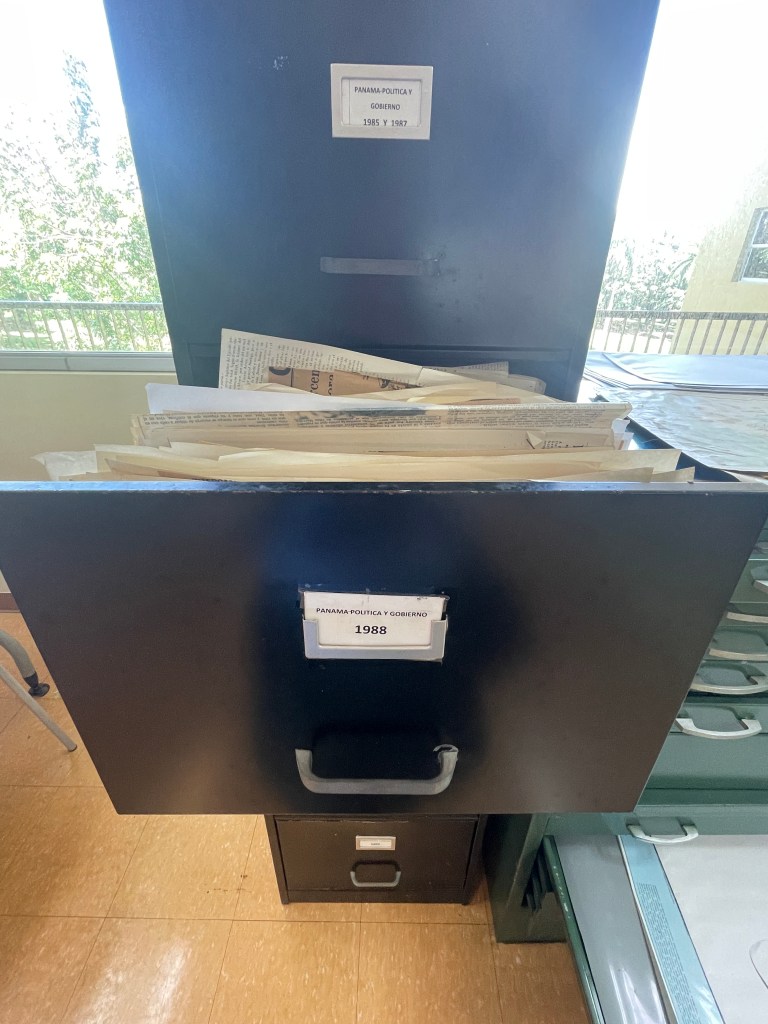
Also on this floor were two vertical file collections. (Vertical files typically house newspaper clippings, letters, manuscripts or other paper ephemera about a person or subject.) One wall was dedicated to only biographical files, divided into Panamanians and non-Panamanians who have had some sort of impact on the country. Another area housed subject files based on a theme or important event, such as the Covid-19 Pandemic or the many phases of the Canal. Summaries of these files are digitized and readily available through the library’s online catalog, which is so impressive! At the library I worked at, we only offered a digital list of biographical and subject vertical files. If anyone wanted to learn more, they had to come in and view the file in person.
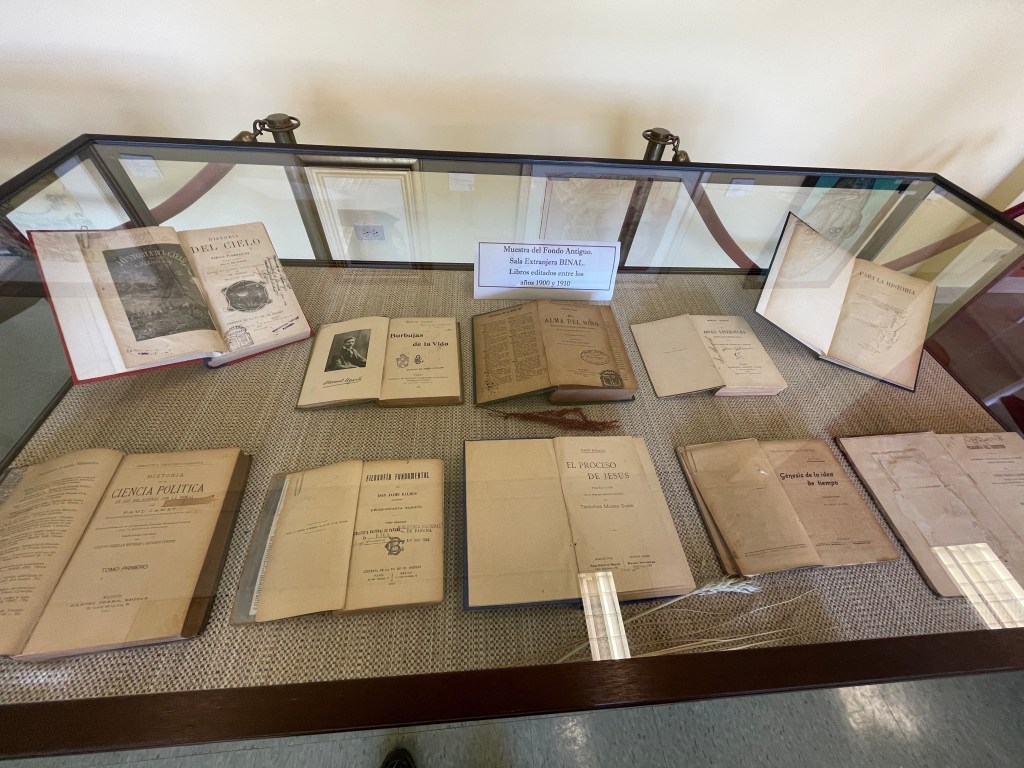
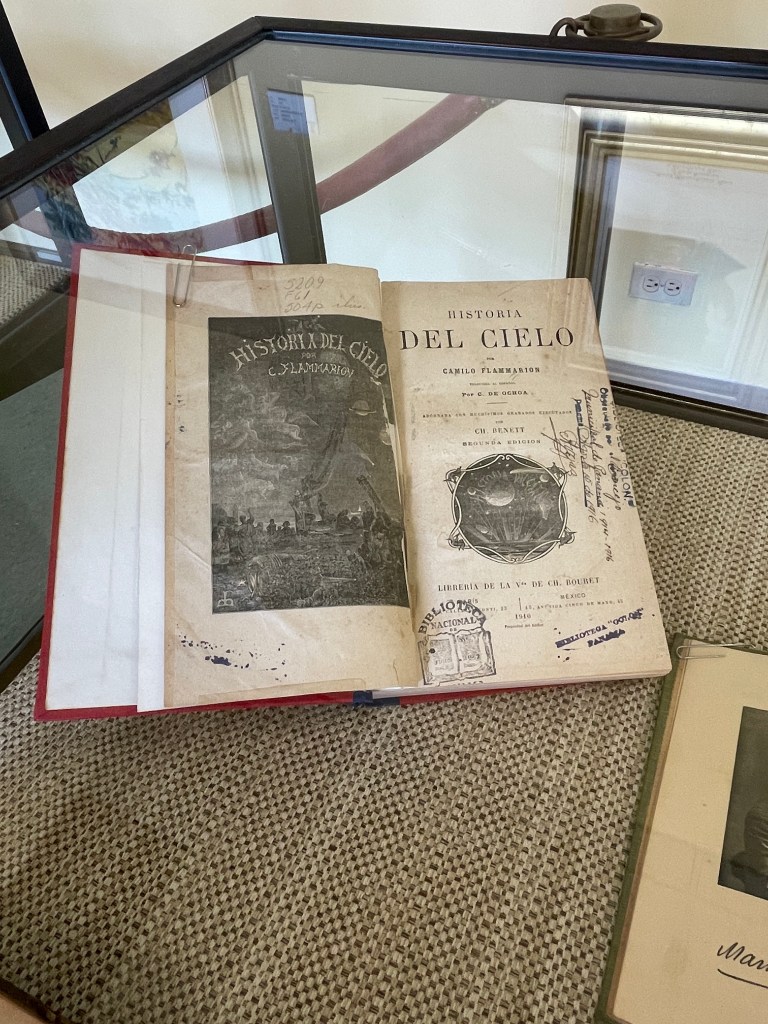
The fourth floor houses a children’s collection and literature. The display near the literature section featured books published between 1900-1910, which you can see below. I particularly enjoy books that have many bookplates, which are the stamps, labels, or writings inside a book that can tell you who owned the book and when. At the circulation desk, I used a translation app to ask the librarian if I could take a photo of the display behind her to get a sense of what closed stacks can look like. Next to her desk was a collection of literature books that patrons could browse (not pictured).
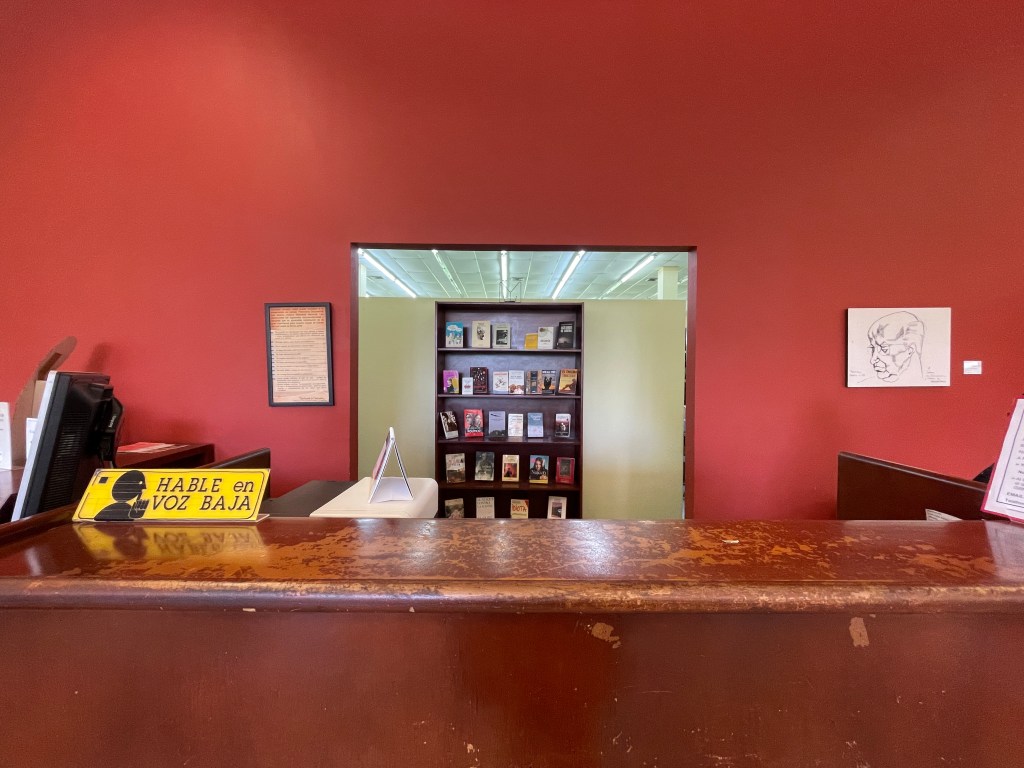
As we walked back down to the third floor, Adam encouraged me to talk to a librarian organizing some maps. He kept looking at us in that friendly curious way librarians do as if to say, “Hey, I’m here if you have questions, but you’re also welcome to wander around in the areas designated for the public.” He didn’t speak any English so I explained I was a librarian and could I ask a few questions about the library? He shared so much information with us and all in Spanish. I think because we’ve been trying to pick up as much Spanish as possible during our travels and because I’m a librarian, I was able to follow everything he was saying, more or less. I’m sure I missed a few details, but I got the gist and he answered a few of my questions. I kept thanking him for his time and, by the end, I was buzzing with librarian energy. I really hope that they can secure funding and continue this vital work.
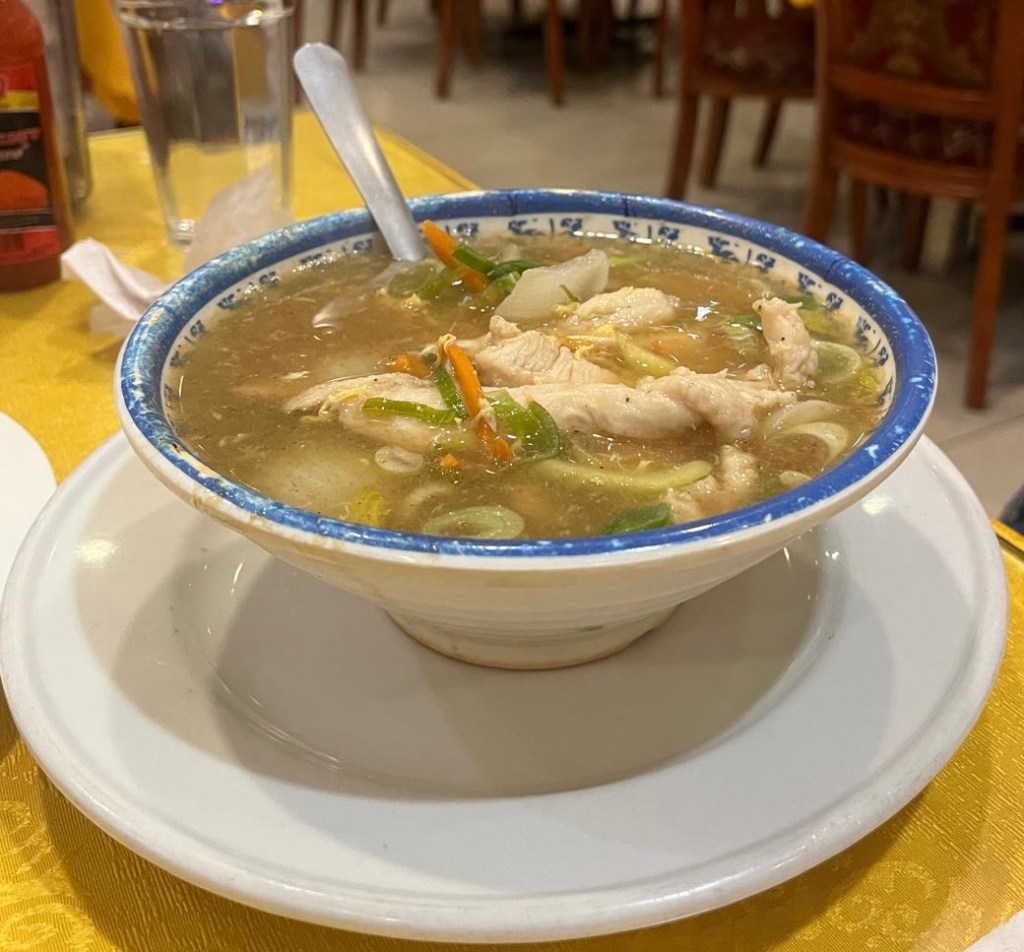
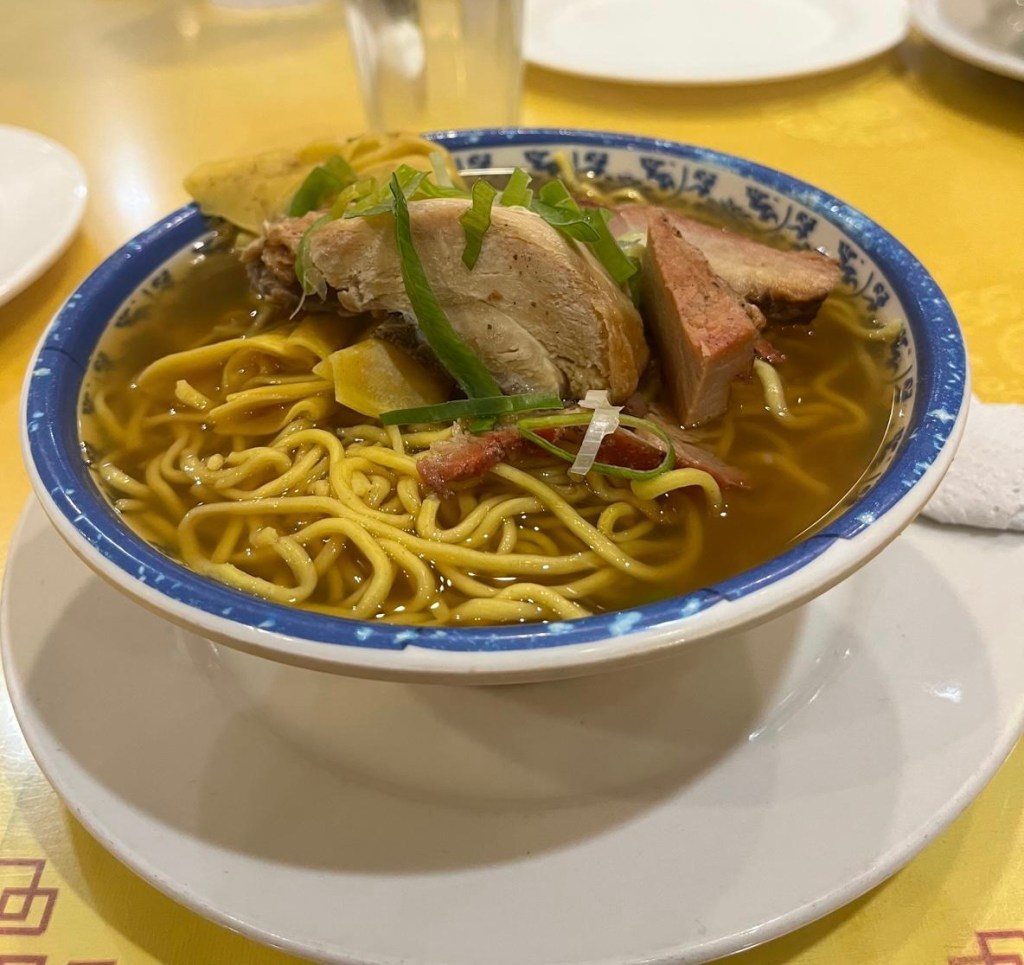
As this is my last post about Panamá, at least for now, I have a few more culinary finds. As Adam mentioned in his post, to get from the port city of Almirante to El Valle de Antón was an exceptionally long drive and we broke it up by stopping in David for a night. There were many restaurants near our hotel and we decided to try some Chinese food. As is the case in the U.S., immigrant communities modify their food to match local tastes and we don’t always enjoy the modifications when it comes to Chinese food. We were not disappointed this time. We both ordered a small soup to start since we hadn’t really eaten all day. Both bowls were huge! My chicken broth came with fresh veggies (including anise which was a lovely surprise) and Adam’s wonton soup came packed with noodles, veggies, and hunks of pork.
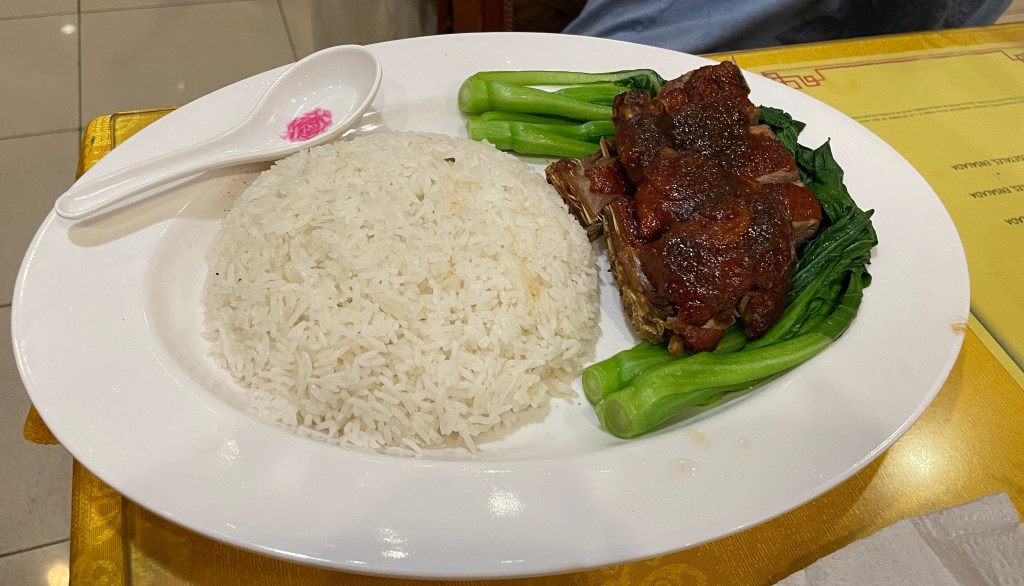
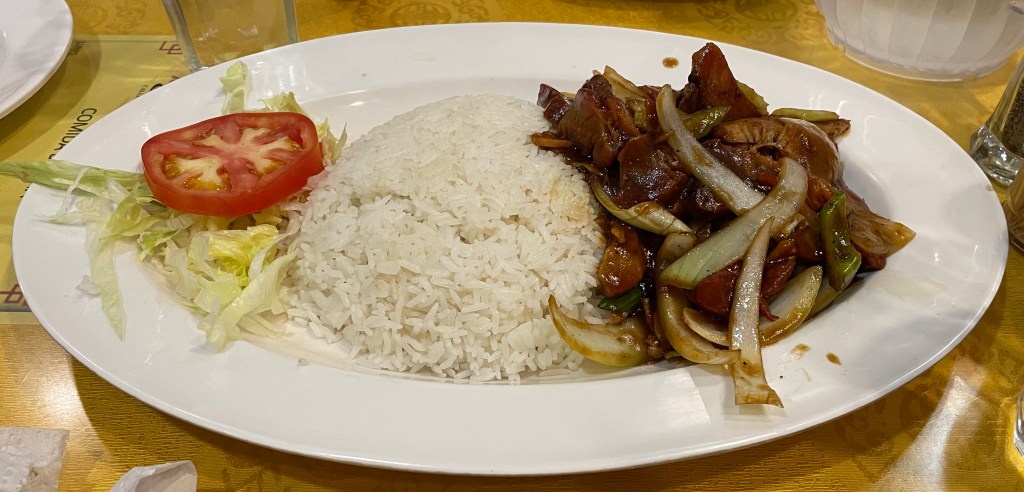
We also ordered two mains (we’re hungry people) thinking the soups might not fill us up. After the soup, I was so glad we only ordered two. On the left is a photo of the braised duck with mustard greens, which were so tender and juicy. (The duck was bone-in if you’re curious.) The right-hand photo is pork with veggies which was a tad too salty, but also delicious.
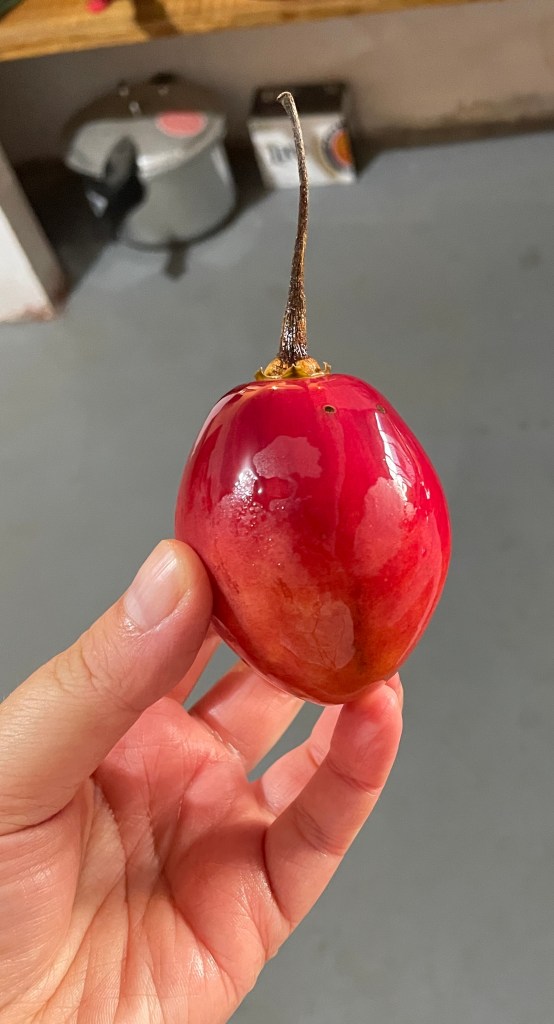
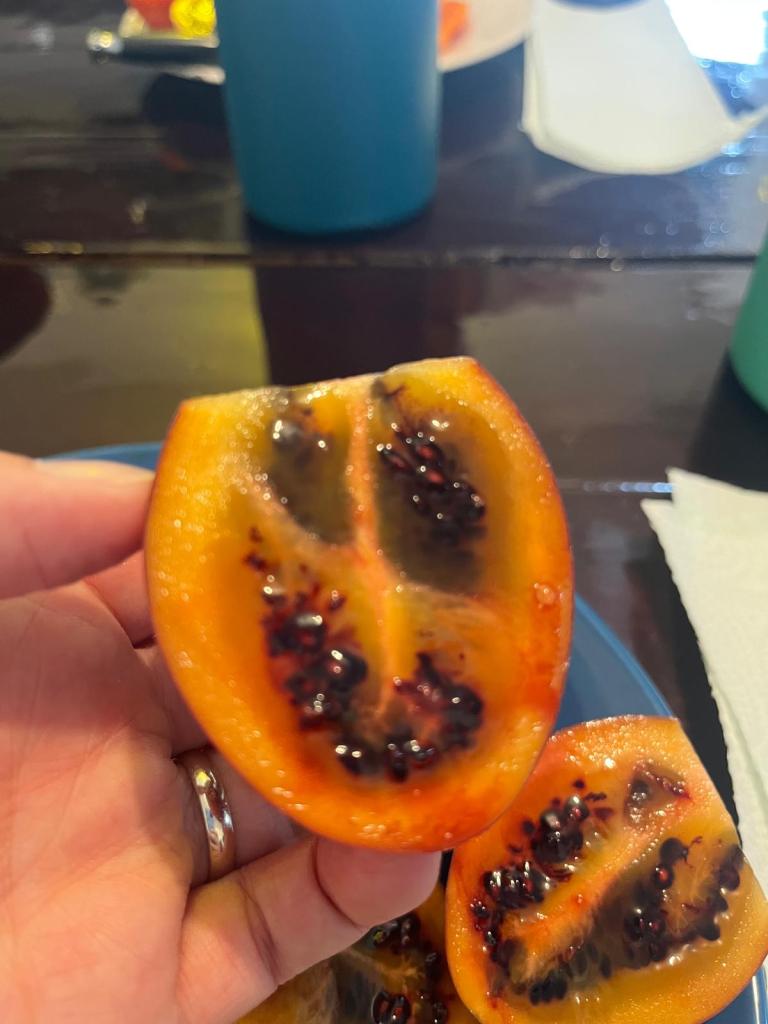
While we were in El Valle de Antón, Adam and I tried two new fruits thanks to the fruit and vegetable stalls in town! First, the tomato de arbor or tamarillo (first photo on the left). It looks like a tomato, smells like a plum, and tastes savory, but not savory enough to be in a salad. (Cross-section photo in the center.) After eating it on our breakfast fruit plate for three days, I’ve decided I’m ambivalent towards it.
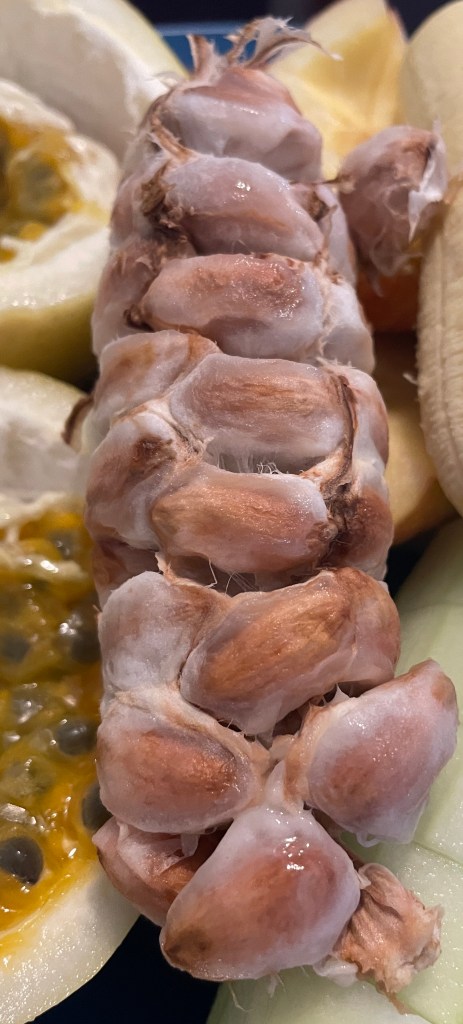
While at the stalls, I pointed out a cacao pod to Adam and he suggested we buy it. There’s a whole process to turning cacao pods into chocolate that we did not do, but it turns out that the membrane surrounding the seeds are sort of edible. The photo on the right is of the pods in the membranes, which taste tart and fruity, wholly unlike chocolate. If you’re curious about the process, I recommend watching this vlog. Her other videos are excellent too. I also recommend watching this video about Ivory Coast cacao farmers who taste chocolate for the first time. Adam enjoyed the cacao pulp more than I did. (I know it looks like poop, but I promise it isn’t.)
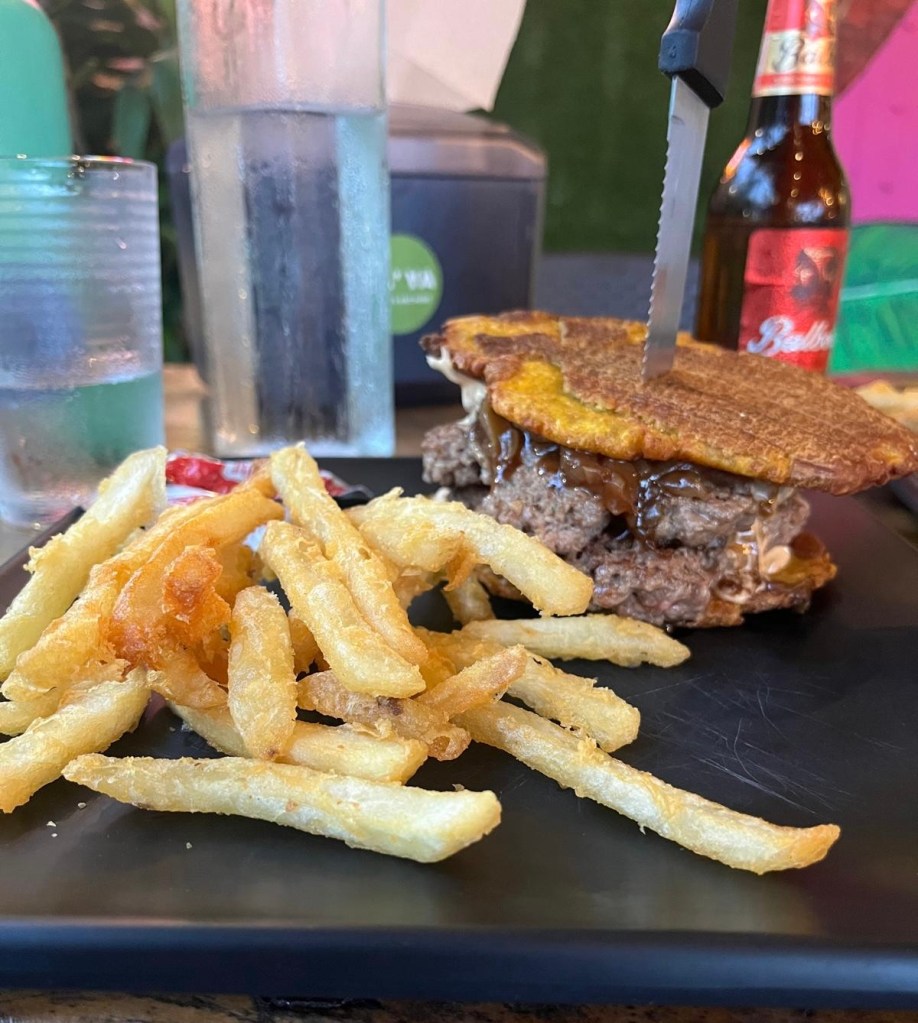
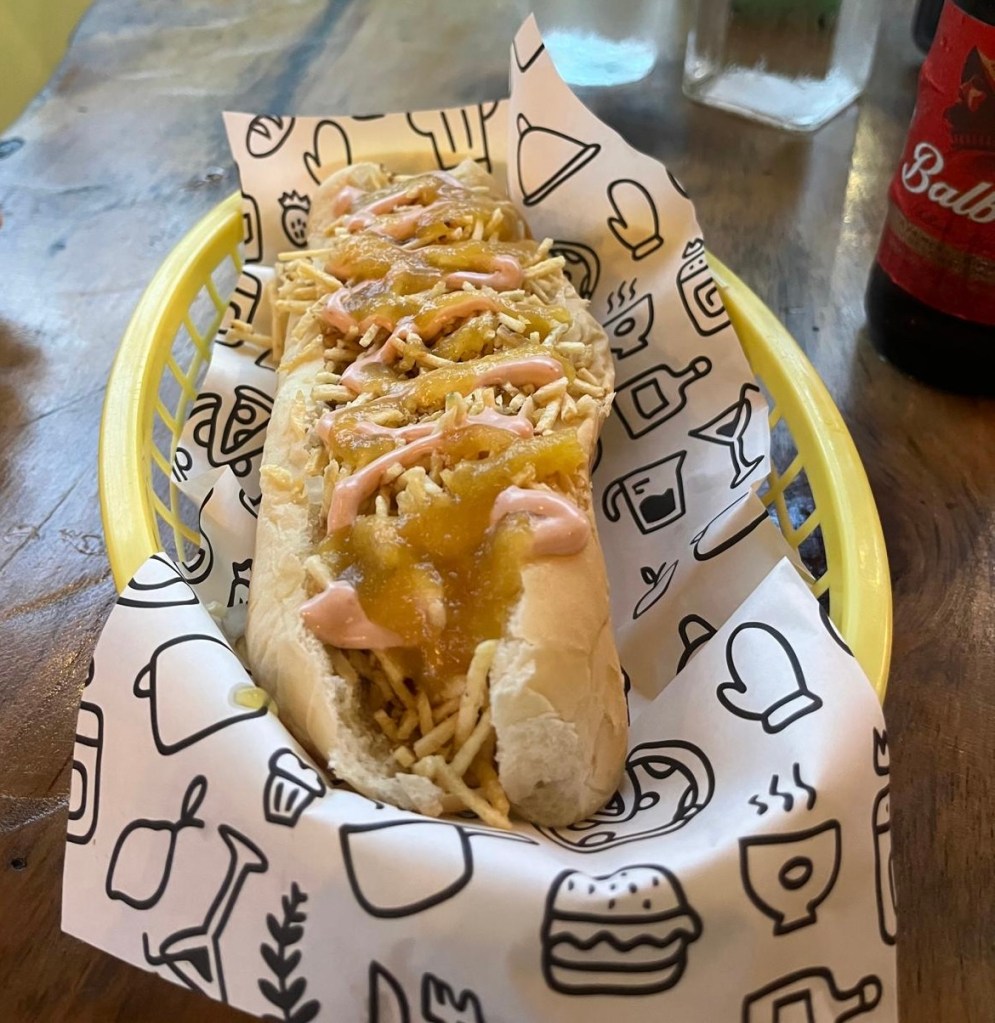
One memorable meal was at a burger restaurant. Initially, I thought I would order the loaded fries, but then I saw they had a burger between two patacones (fried green plantain). My love affair with patacones and plantains in general has continued to grow in our travels, so I had to try it. (Photo on the left.) It was better than bread and I move to make it a staple gluten-free alternative worldwide! The grilled onions were almost jammy and they added a lovely sweetness. Adam ordered a hot dog loaded with sauces and crispy potatoes and a classic burger. The patties, by the way, were some of the best we had in a very long time. (Take some notes In-n-Out and all you smashed burger places. I said what I said.)
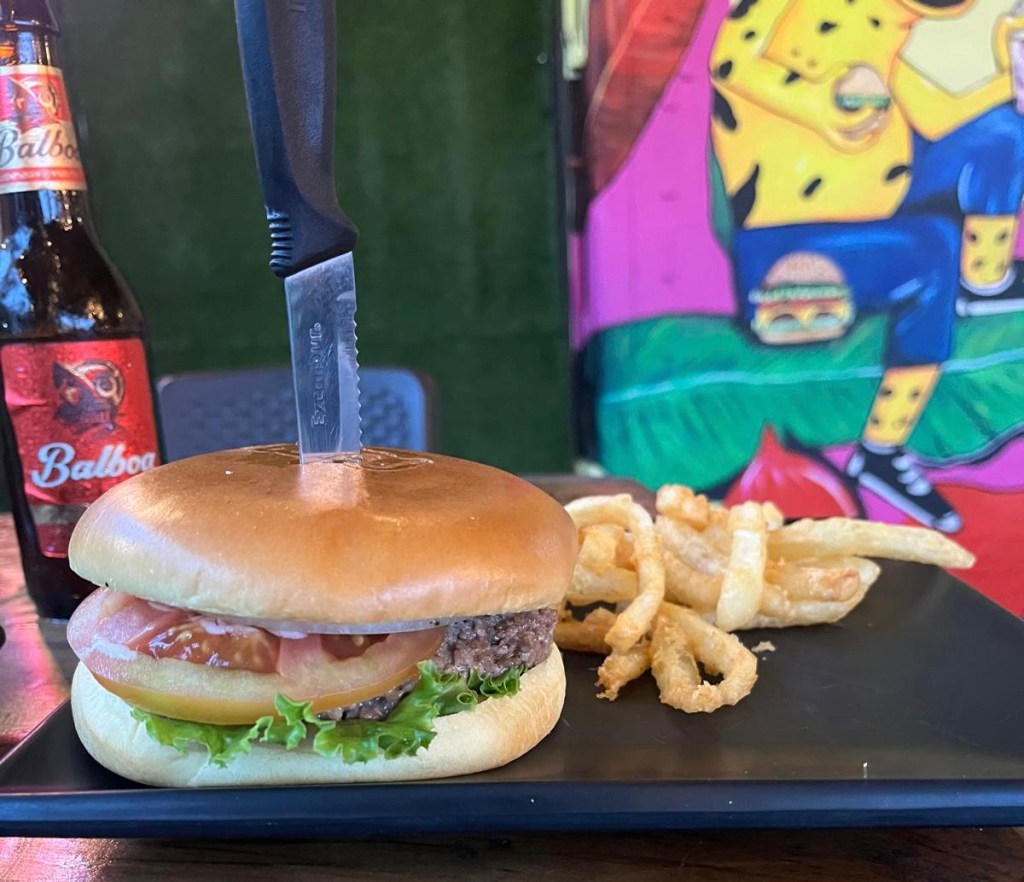
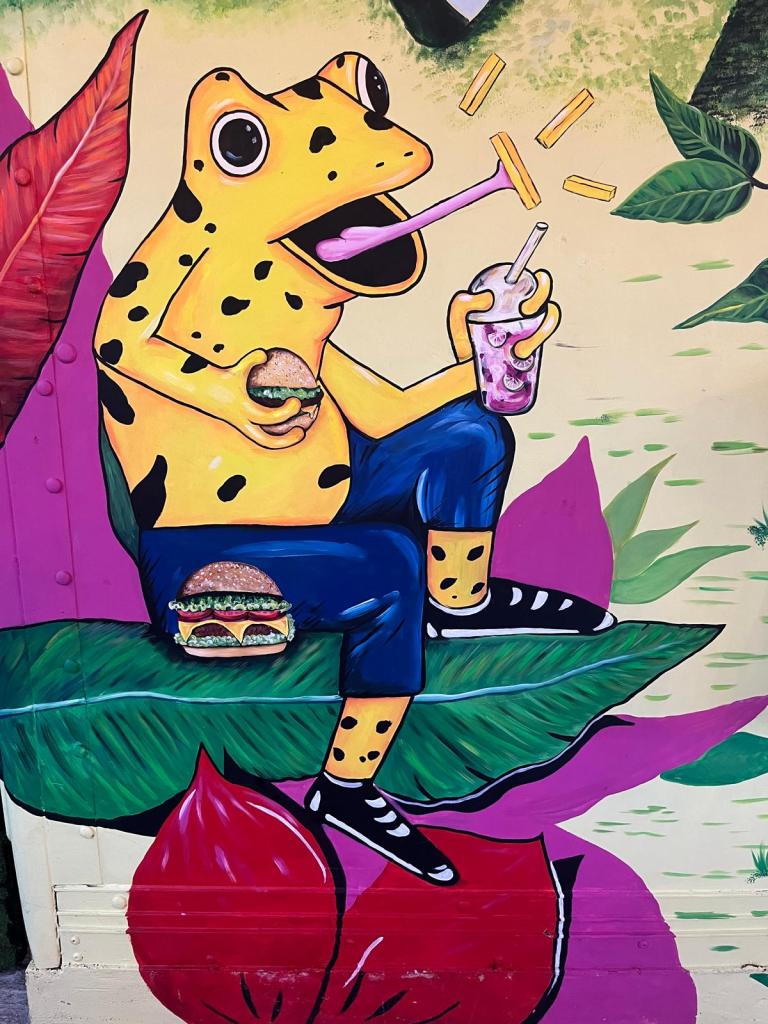
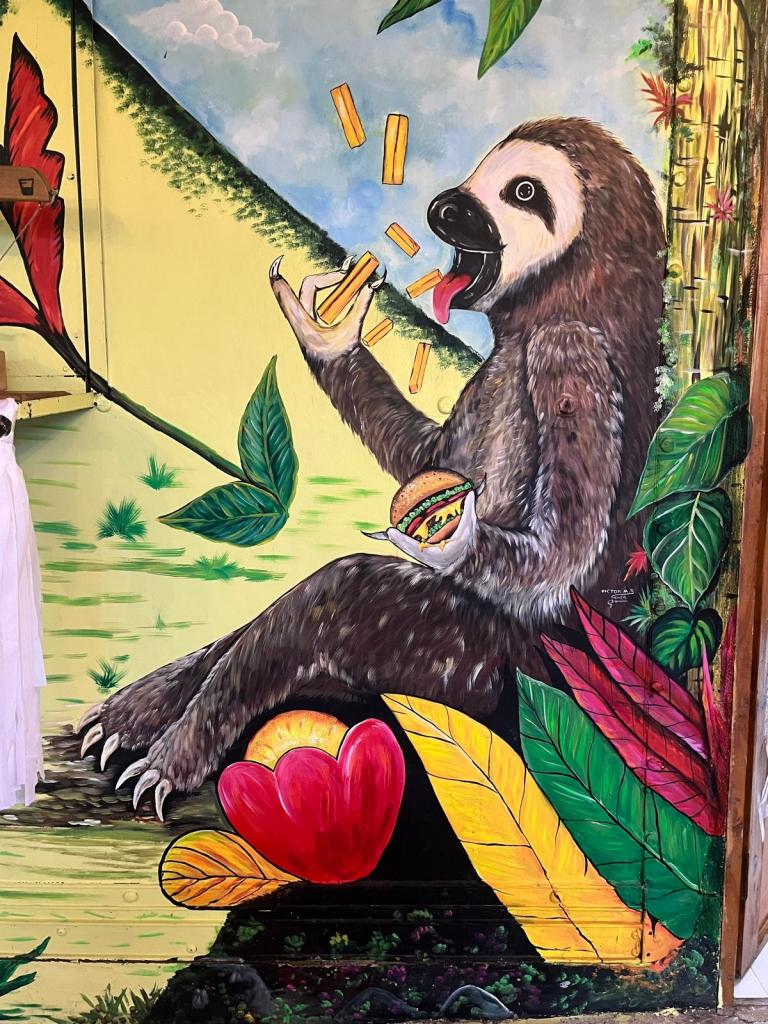
I also loved the murals on the walls of the restaurant. Look at this Panamanian golden frog eating a fry as if it was a fly! And this three-toed sloth sitting on the ground eating a burger and fries. (Sloths are strictly vegetarian and only come down from the trees to poop or go to another tree.) Too cute.
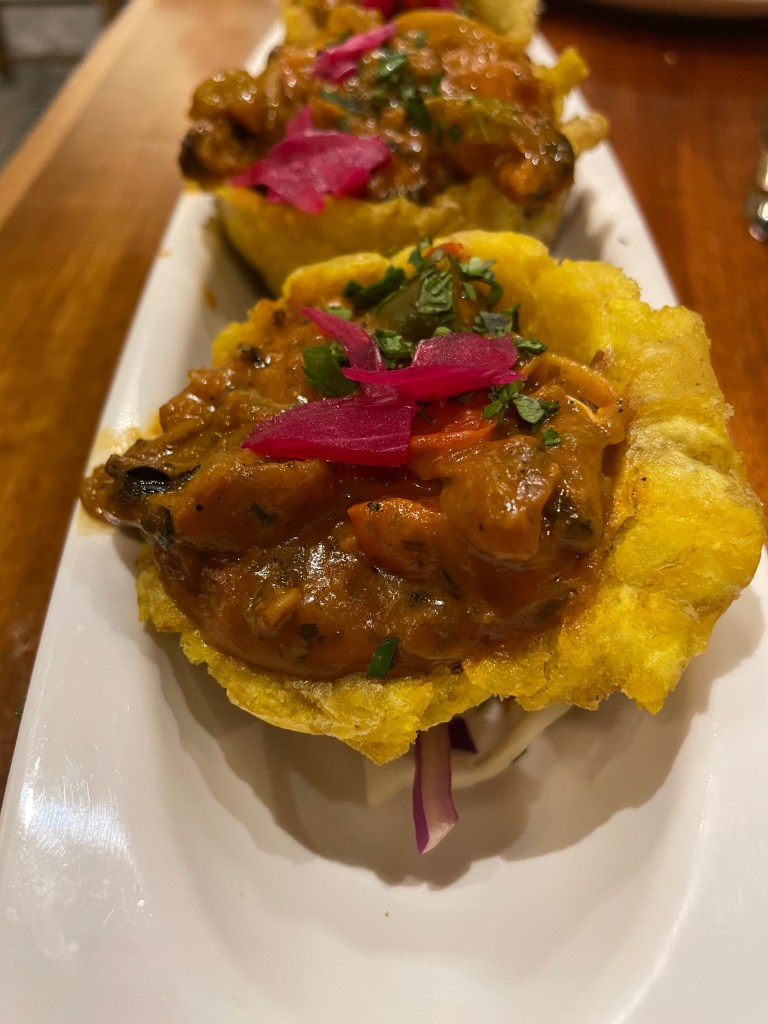
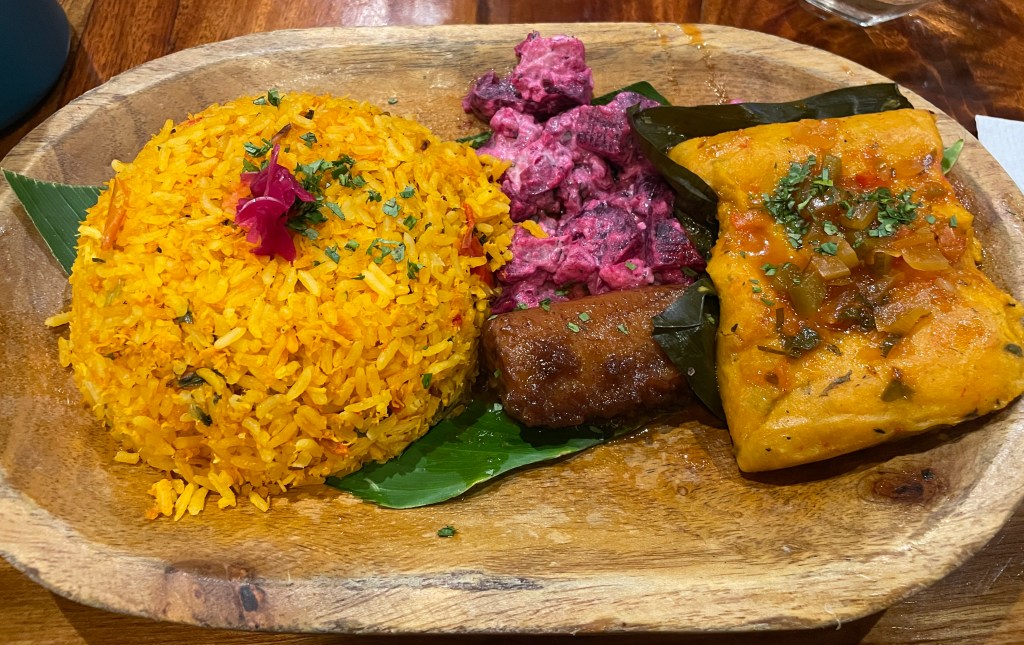
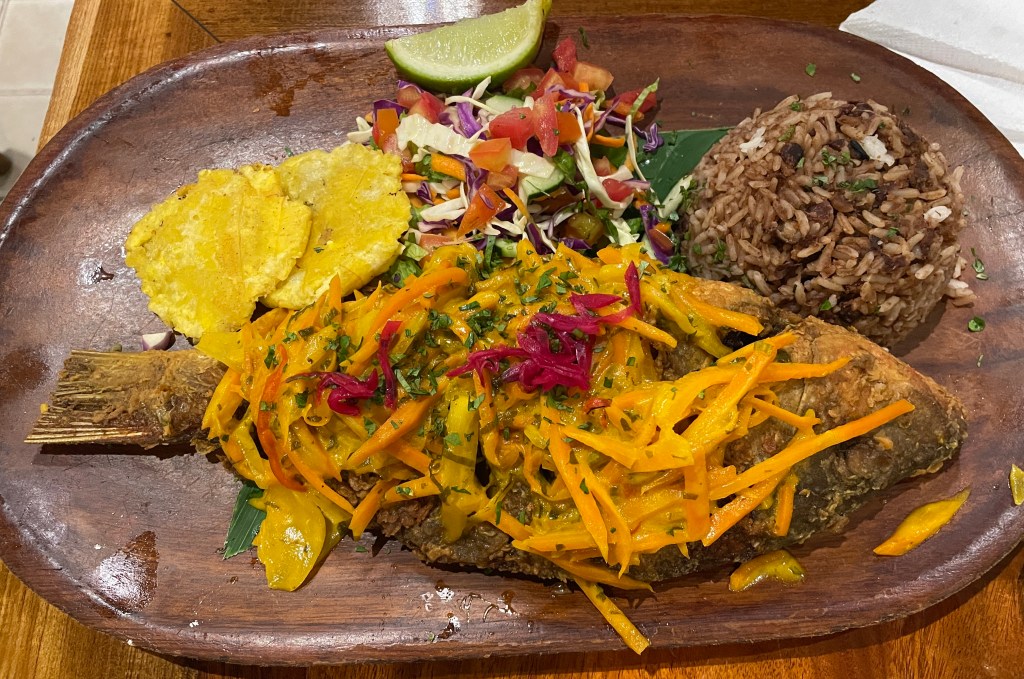
When we returned to Panamá City, I wanted to make sure we had one more traditional-ish meal before we left the country. For dinner our first night back, we visited Restaurante El Nacional Sabores de Panamá. For an appetizer, we shared the fried plantains stuffed with seafood in coconut milk. I ordered the pollo de Panameño: shredded chicken cooked with rice, served with a beet-and-potato salad, a chicken tomalito (softest masa I’ve ever had), and a caramelized, cinnamony plantain. Adam ordered the whole fried fish (Red Snapper) in a spicy Afro-Caribbean sauce, served with coconut rice mixed with beans, a green salad, and patacones. Obviously we ate it all and loved it.
As excited as I am to visit another country, I am also sad to leave Panamá. There is so much to still see and experience. I hope we get to come back soon.
Be sure to like, comment, and subscribe to Traveling While Introverted so you don’t miss out on future posts!
 Traveling While Introverted
Leave a comment