Rather than detail all of our culinary experiences for every city we’ve visited since Salento, I’ve decided to do a highlights post instead. Part of the reason for this is that we don’t eat at restaurants three times a day. In fact, the meal we eat at restaurants most often is lunch. We’ve discovered that Colombian restaurants typically offer the same lunch nearly everywhere: a protein grilled or fried, rice, fries/patacones, a small salad, and sometimes a soup and/or juice is included. Or, at least, these are the restaurants we visit most often because they’re filling and affordable. Breakfast and dinner are prepared wherever we are staying and it’s nothing too fancy. While what we cobble together is yummy, it’s also pretty basic since we try to only buy items we can finish during our limited stay wherever we are.
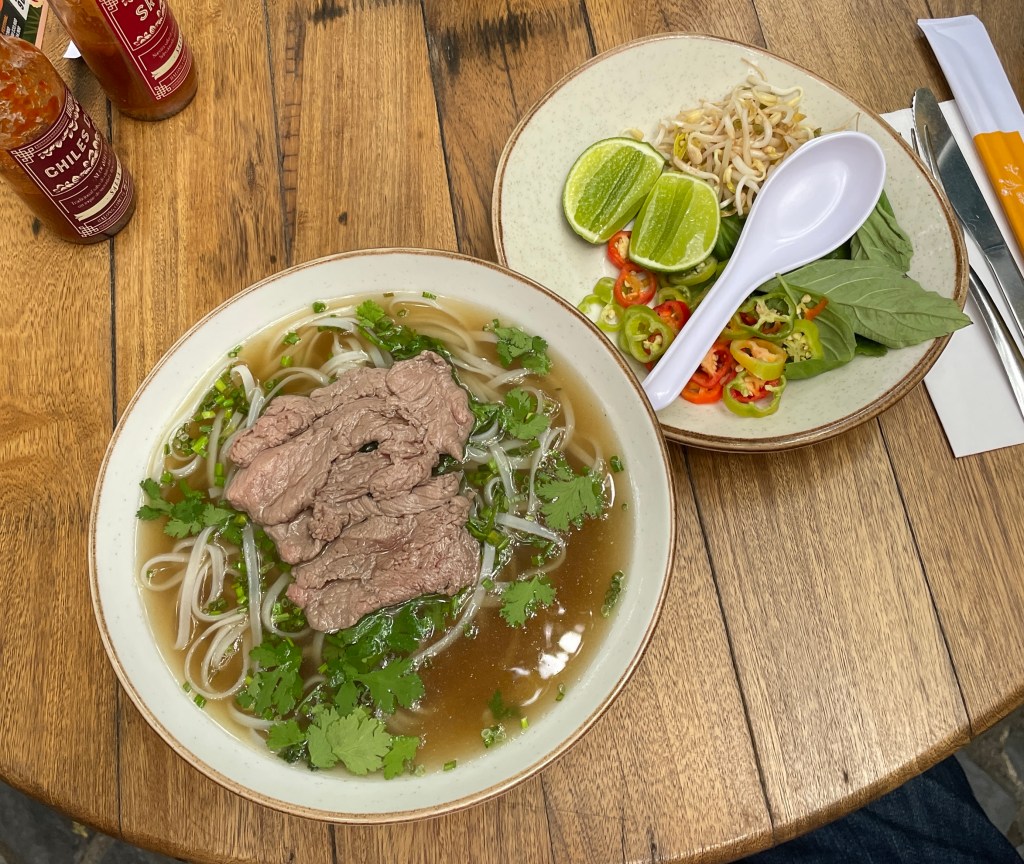
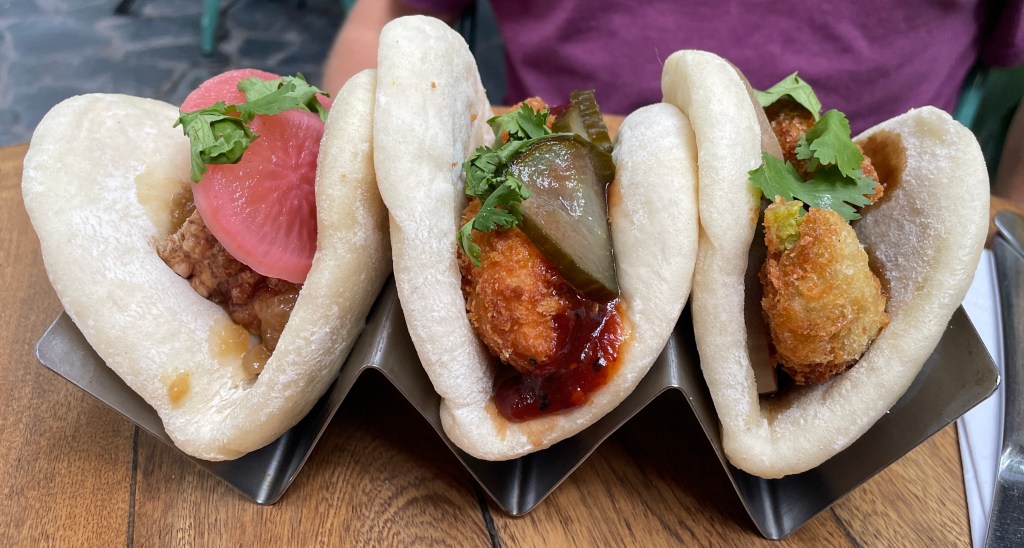
First, let’s talk about Medellín. Overall, we found the city to be underwhelming, including the food. However, we did find a decent Vietnamese restaurant near our hotel. I ordered the beef Pho, which was flavorful and very generous in its portions. Adam ordered all three bao buns on the menu: veggie, Korean fried chicken, and chicharron. The fried chicken was so good that he ordered a second one. These were also the biggest bao buns we’ve seen; they were the size of full Mexican tacos. We were both impressed by how much these buns filled Adam up until dinner time.
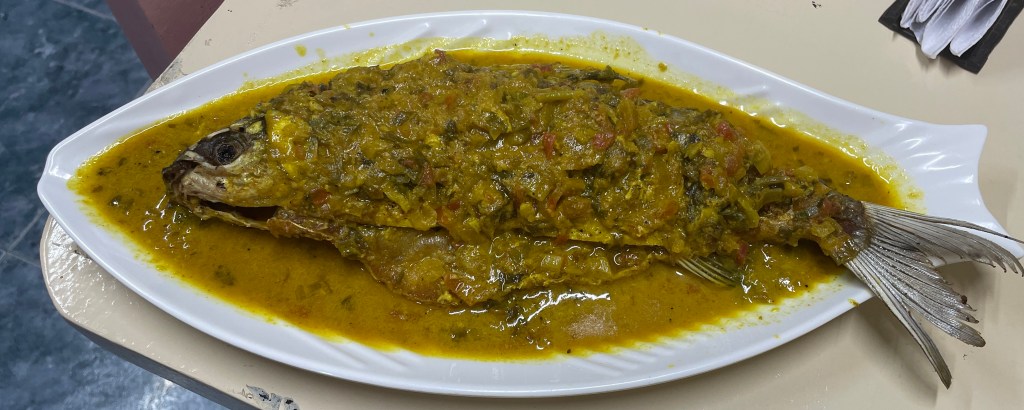
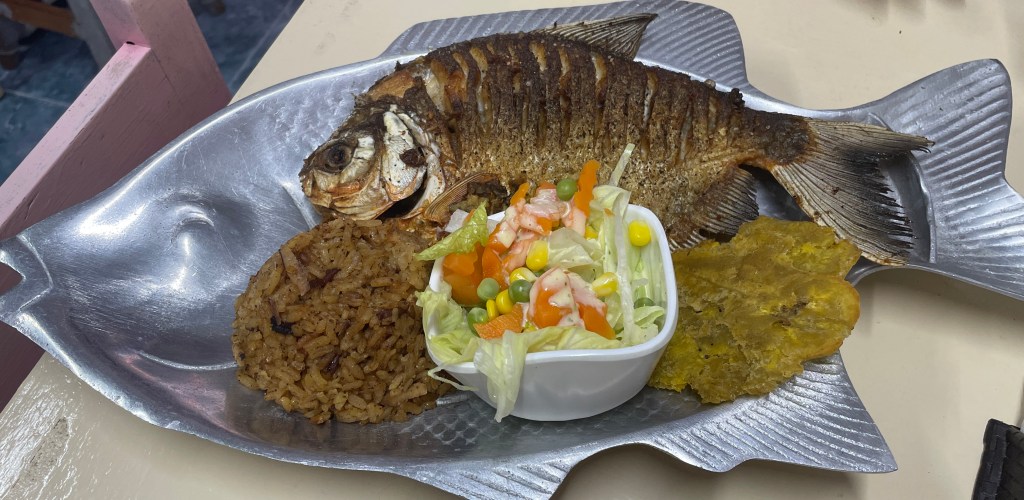
As yummy as the Vietnamese food was, the two best meals we had in Medellín were at Afro-Colombian restaurants. One focused on food from the Pacific side and the other from the Caribbean. Readers might be surprised to learn there is a large Afro-Colombian presence on the western/Pacific side of Colombia, but it’s actually larger than the communities along the Caribbean. Sadly, I don’t have photos of the Pacific Afro-Colombian meal because my expectations were so low by that point I didn’t bother taking photos. It was scrumptious though. At El Fogón Costeño, the Caribbean restaurant, we had a chance to try two new fish. I ordered the bocachico (farm raised) in a tomato-onion stew (left) and Adam ordered the fried cachama (right), both of which are river fish. The bocachico had a mild river taste and heaps of bones, so I wouldn’t recommend it if you’re not a patient fish eater. The cachama was mild-tasting and not too boney, but small.
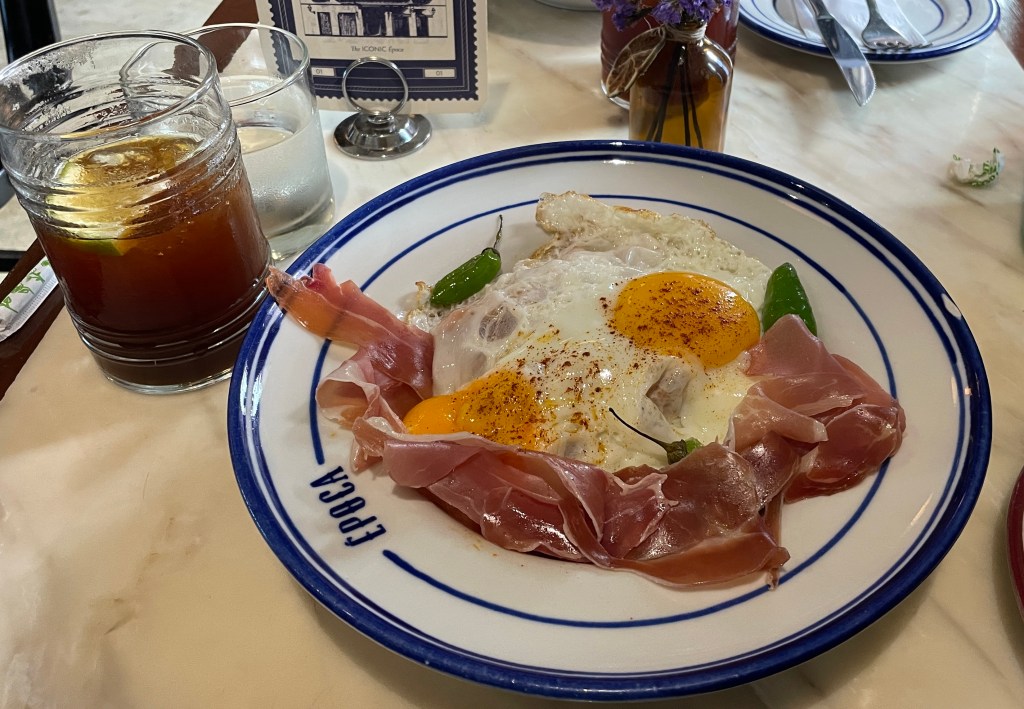
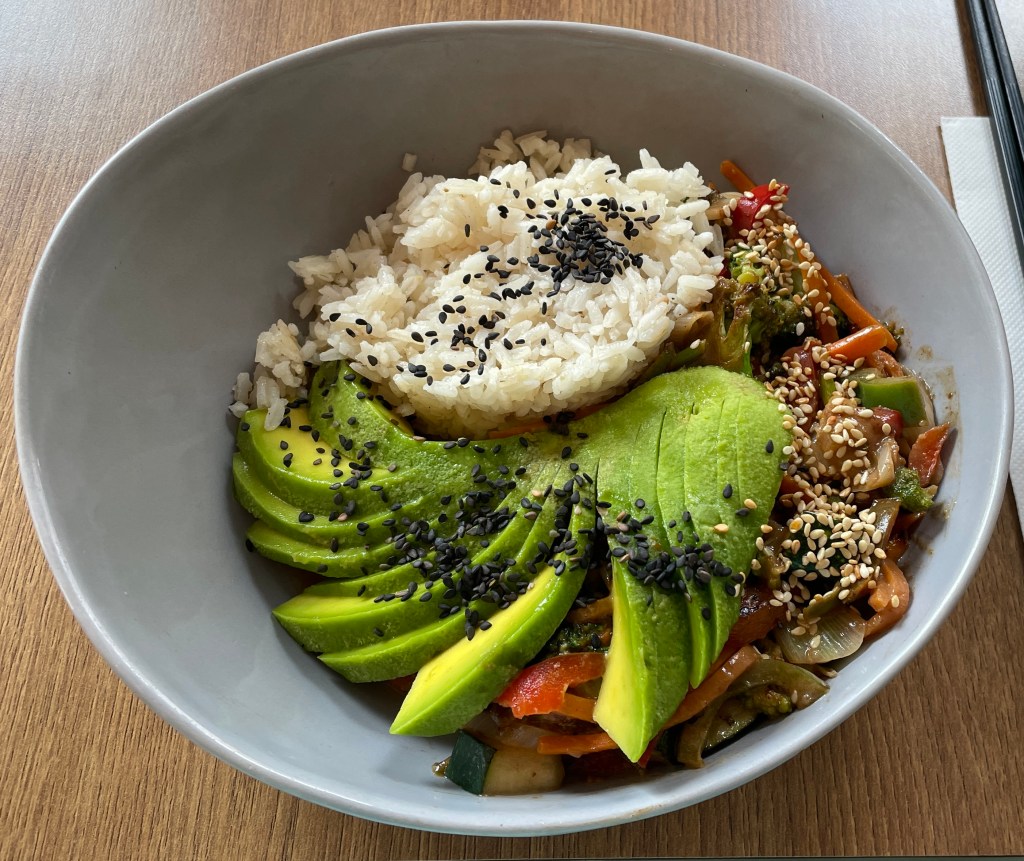
Once we arrived in Cartagena, the culinary opportunities seemed to improve. Our first meal was breakfast and we both ordered a plate of fries mixed with a smoked paprika oil, topped with prosciutto and two fried eggs (left). Considering we had been up since about 1am that day to catch our flight, it was a perfect lunch. (Admittedly, I gave at least a fourth of my prosciutto to Adam because I’m more of a bacon girl.) Later that day we visited an Asian-Colombian fusion restaurant. It wasn’t mind-blowing, but it helped curb our cravings for East Asian food. Adam ordered a seafood curry ramen (middle) and I ordered stir-fried vegetables over rice (right). Extra points for a lovely presentation and having air conditioning since it was so dang hot outside.

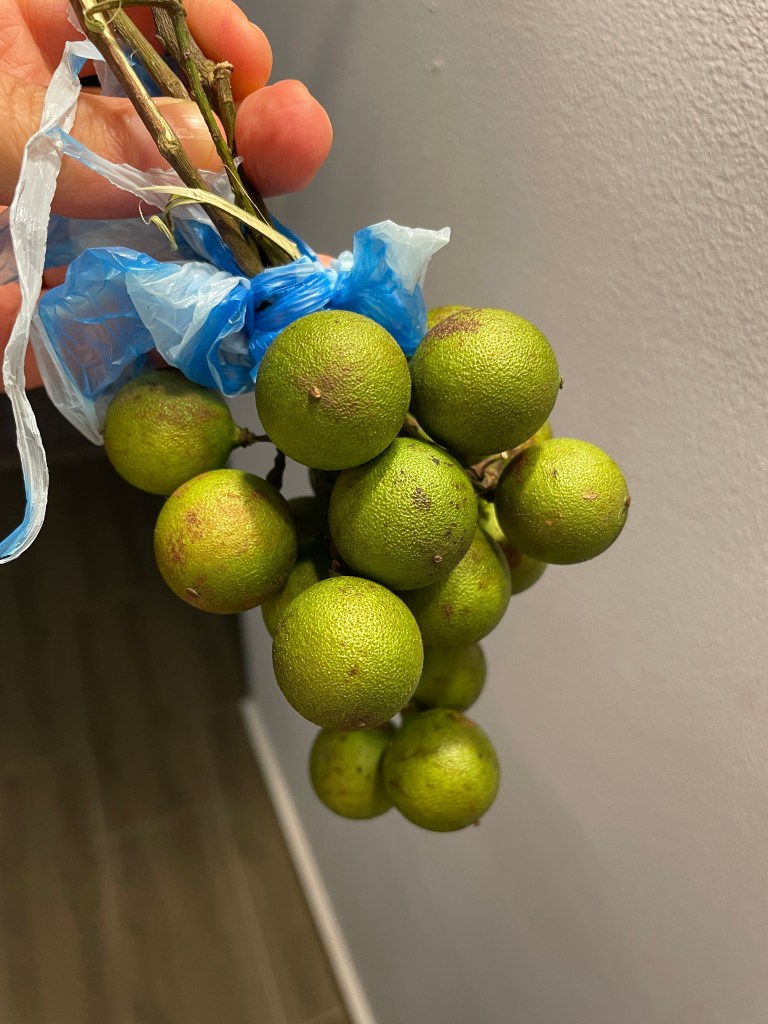
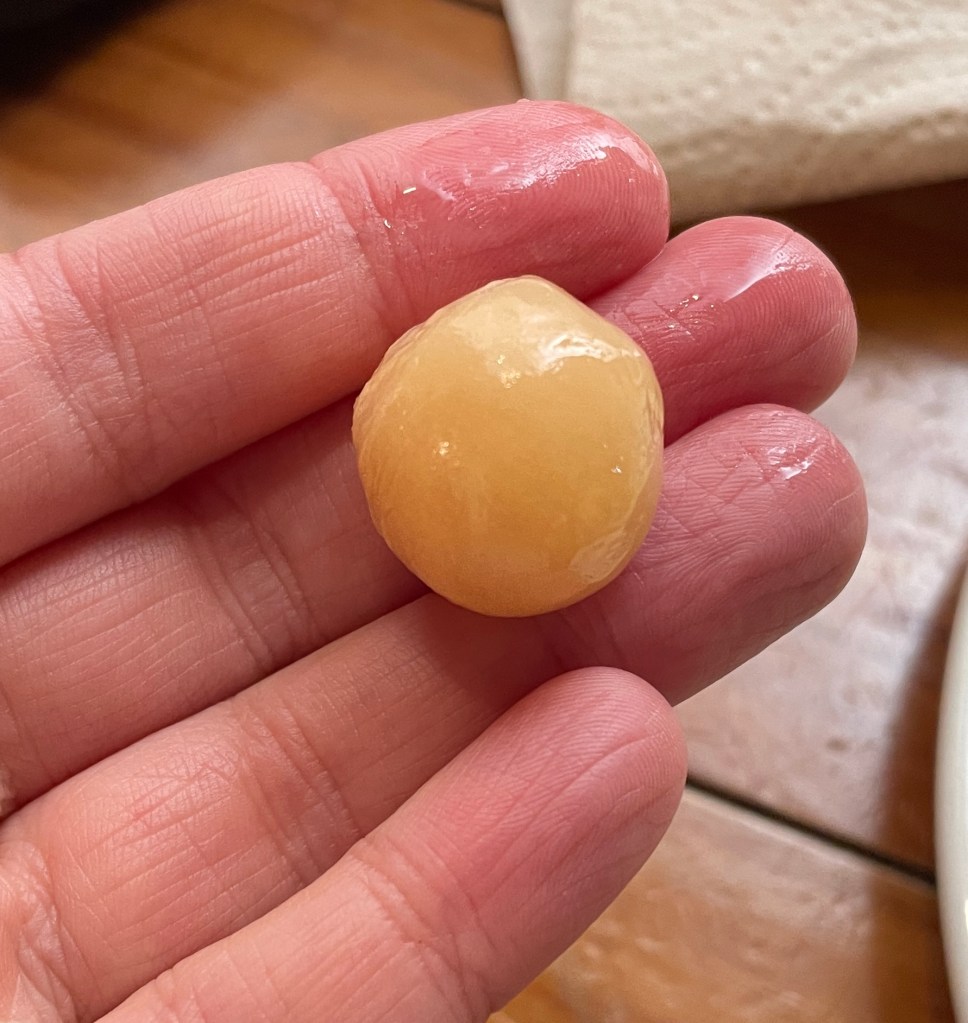
We also had a chance to try two new fruits. While we were buying mangos and avocados from a lady on the street, I pointed to a fruit I had never seen before and asked her what it was. She gave us each a little bit to try and we really liked them. Turns out they’re called Mamoncillo or Spanish limes. They’re sold in bunches and the skin is very easy to pierce through with your nail. There’s a huge seed inside so we just carefully suck on the fruit around it. The texture is like a soft lychee and the flavor is very mild and tropical. Corozo is another fruit that is very common along the Caribbean coast but mostly sold as a juice. I ordered it at a restaurant just to see what it tasted like and I have been hooked ever since. The juice is a beautiful deep shade of red and the taste varies from tasting like blueberries and cranberries to almost beet-like. (No photo.)
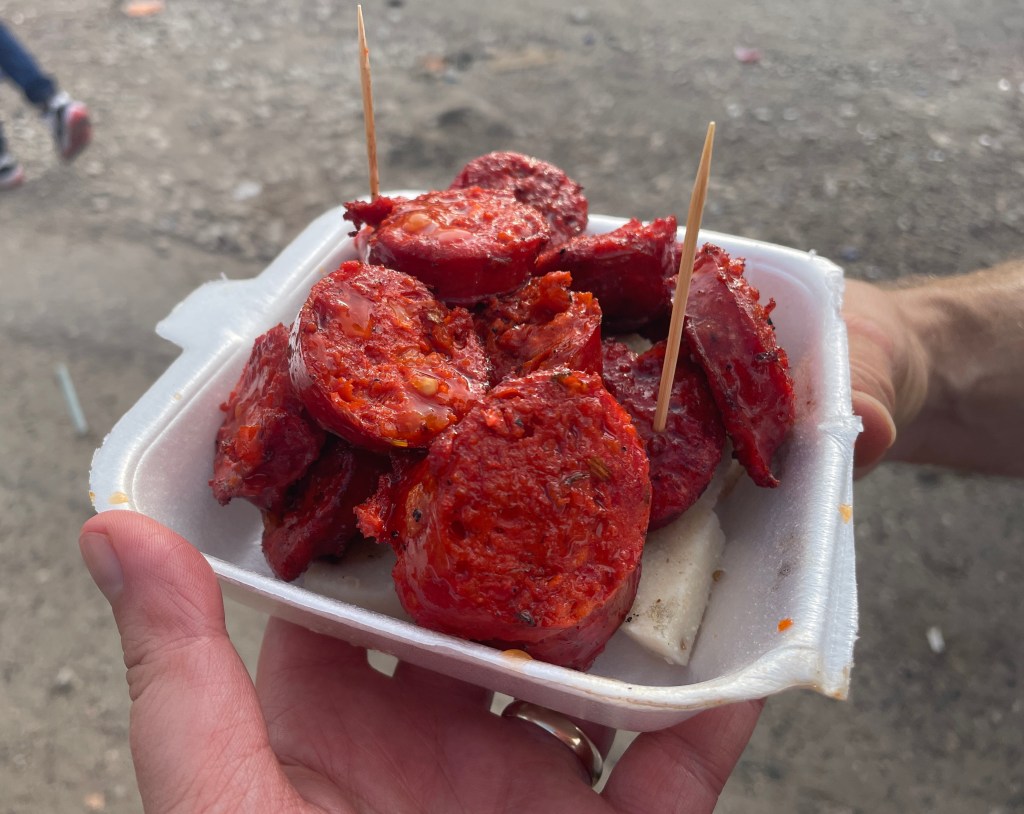
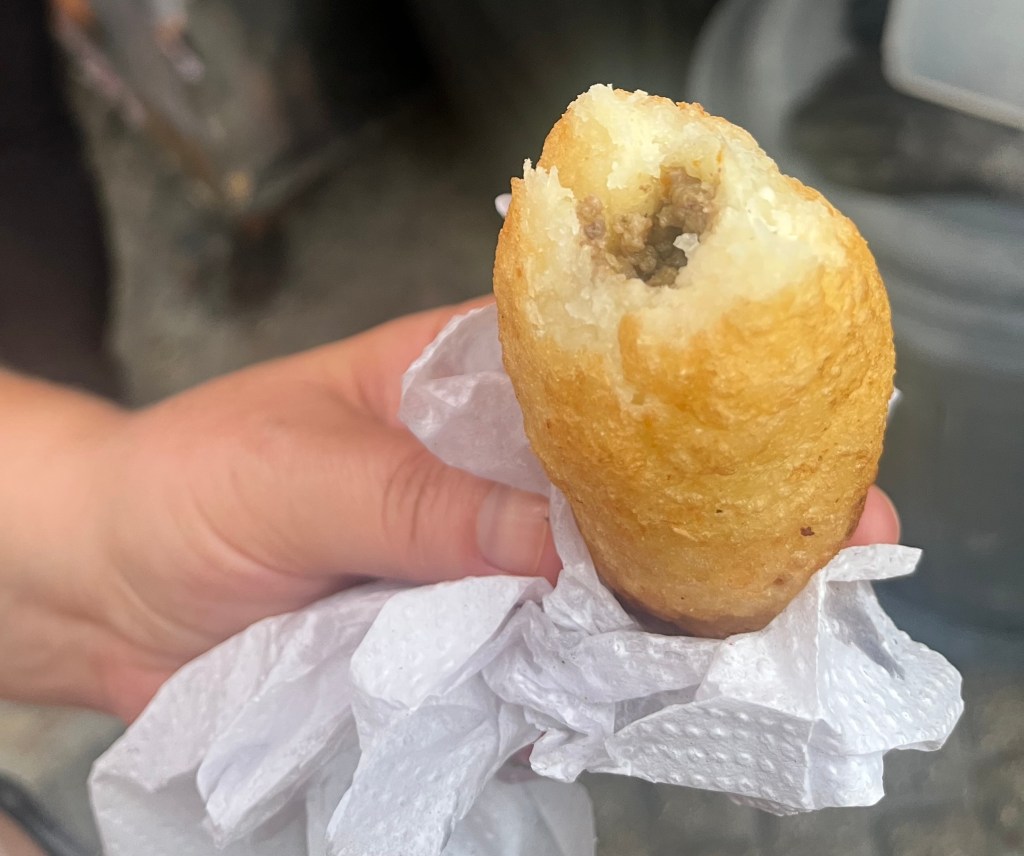
In our opinion, though, the best typical Colombian food is the street food. During Festival, I couldn’t resist eating a freshly grilled chorizo (left). For a few extra Colombian pesos, the vendor added slices of boiled corn masa that had congealed that helped cut through the fatty goodness. You can see the slices peaking under the chorizo. The chorizos don’t really taste like the Mexican chorizos that we’re used to; instead, it keeps its sausage shape with a lovely snap and a mild peppery taste. Even with the extra hot sauce she added it wasn’t spicy at all. On another occasion, I had a chance to try a carimañola: mashed yucca stuffed with meat and deep fried (right). The exterior has the lightest crunch since it’s not breaded but the yucca becomes soft like mashed potatoes. The particular vendor I bought the carimañola from had a lovely tomato and cilantro-based hot sauce I wanted to bottle and carry with me everywhere.
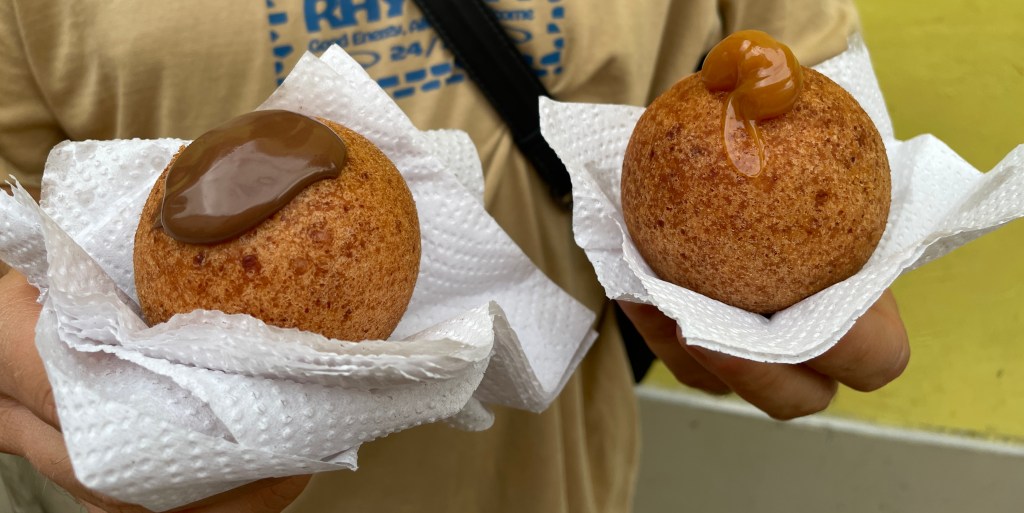
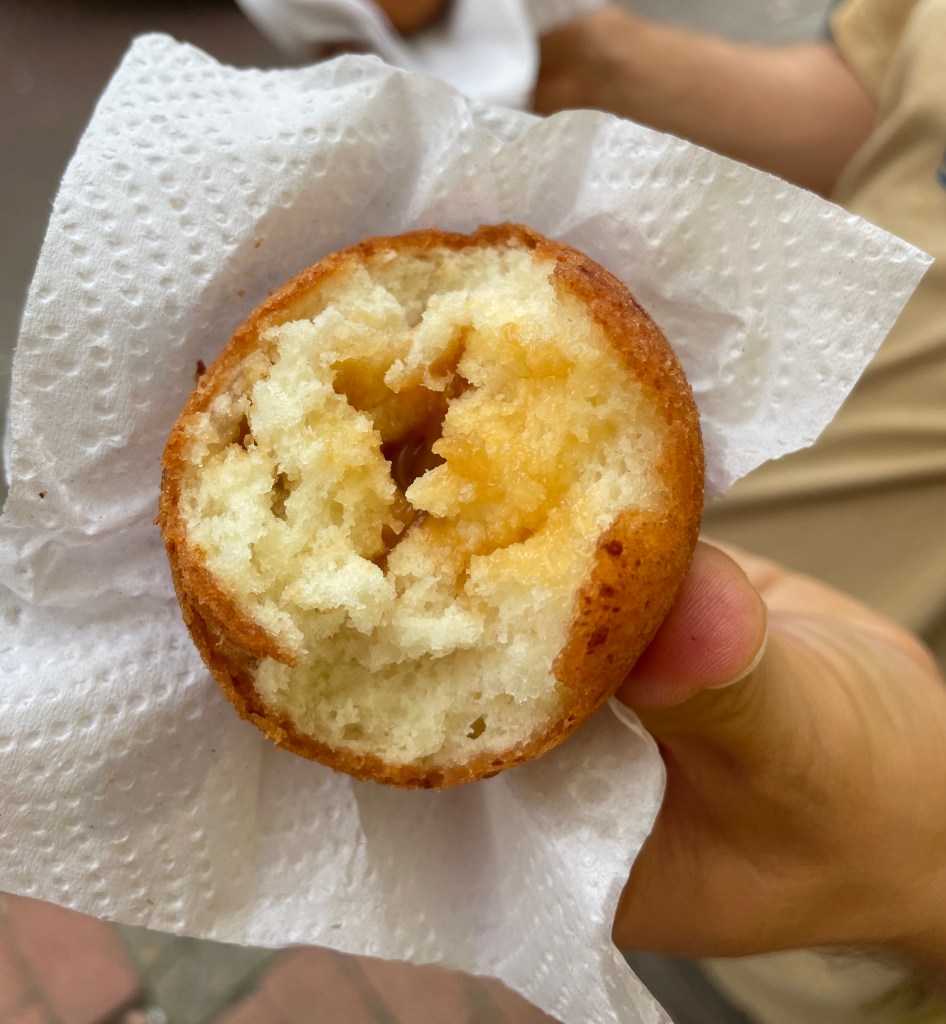
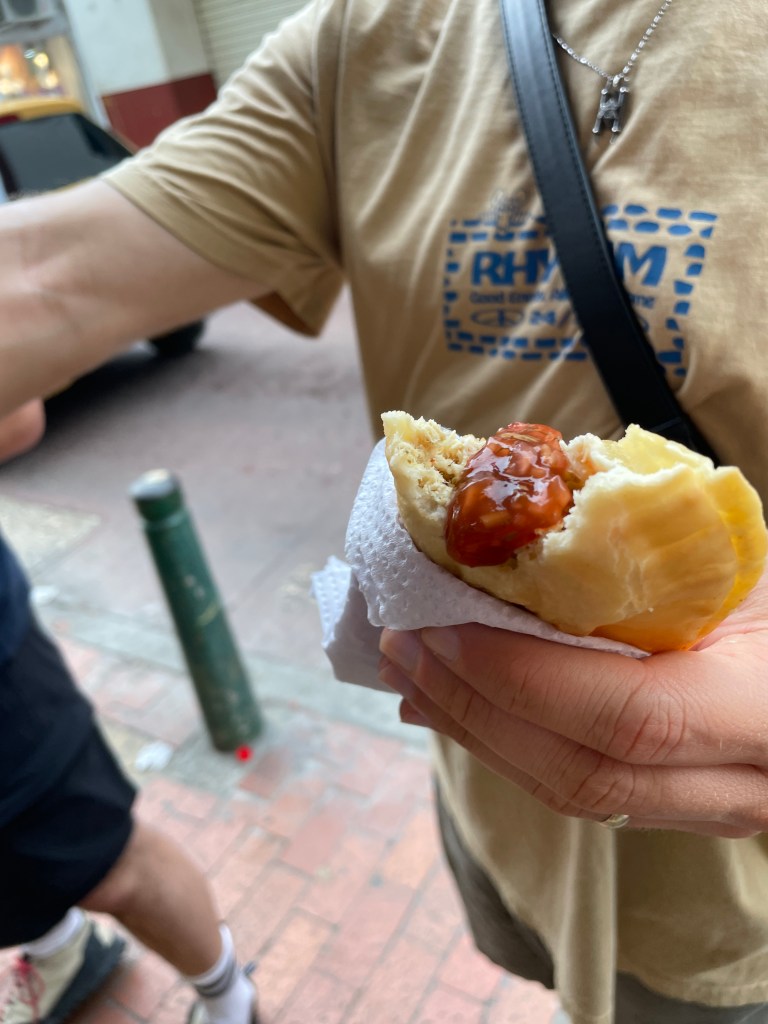
Colombians don’t just eat savory street food, though. Since Medellín, I had been asking Adam to try a buñuelo, a fried yeast dough stuffed with all kinds of sweet fillings. Every time I saw a stand, they were stuffed with a sweet cheese, which was a no-go for him. In Cartagena, we randomly stumbled upon a place that stuffed them with caramel and chocolate (left and center). According to Adam, the dough is like a cakey donut rather than a donut texture and he enjoyed the caramel-stuffed one better. In typical Adam fashion, he had to chase that sweetness with a chicken empanada topped with a goopy sweet chili sauce (right).
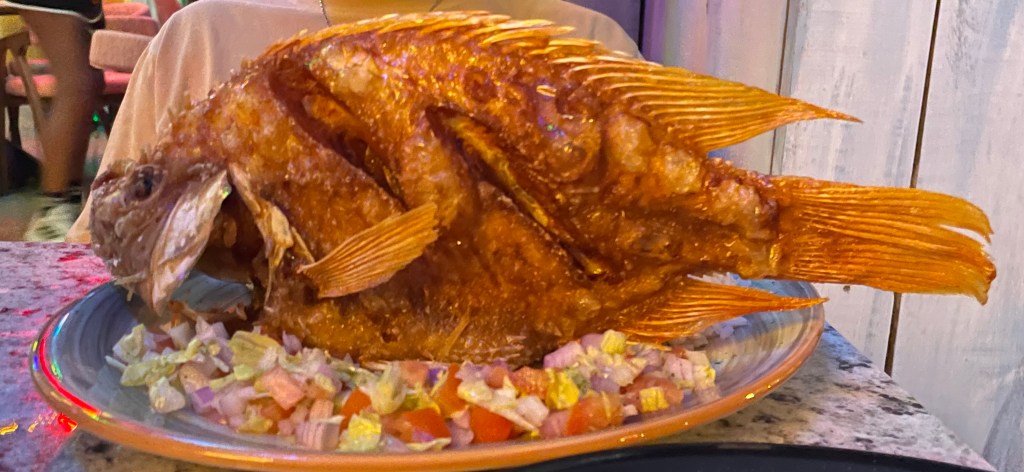
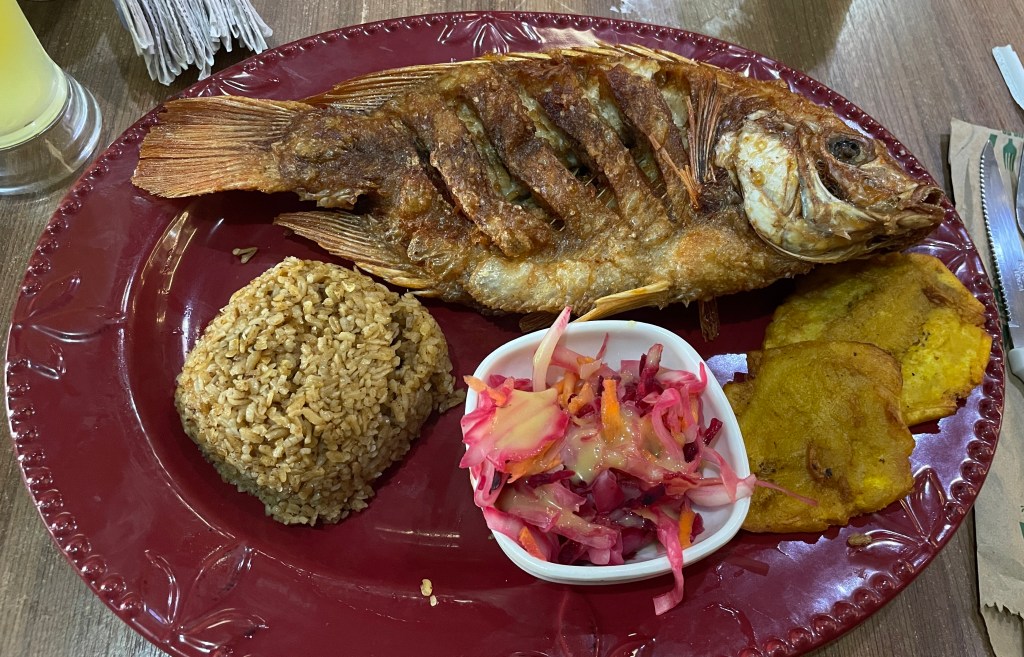
We don’t order it as much because we try to limit our fried food consumption, but probably our favorite thing to eat in all of Colombia is whole fried trout. It never lets us down. Just look at the left and center photos. The exterior is crispy, the meat is soft, and it’s easy to pick around the bones. Sometimes, though, it’s so tempting to get other kinds of seafood. The photo on the right is a shrimp and lobster dish Adam ordered at a restaurant. It came with a whole lobster! He said it was delicious.
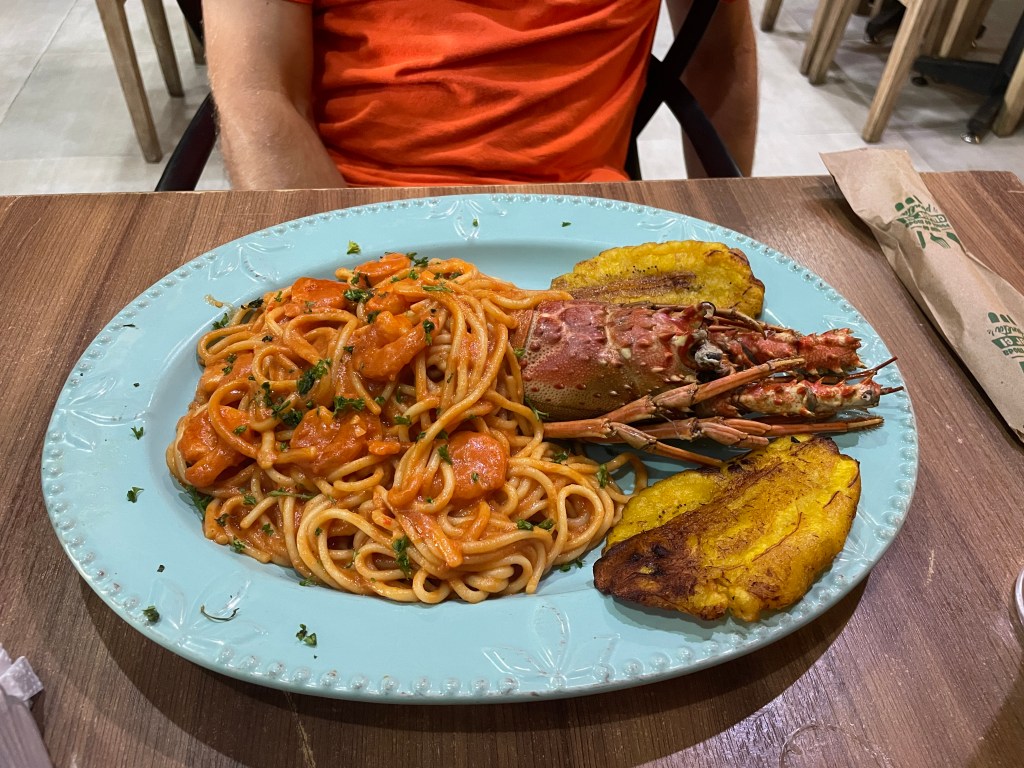
Of course, eating at restaurants carries its risks. Overall, we’ve been very lucky to avoid traveler’s tummy. We try to only eat food that is cooked to order or thoroughly warmed up and at restaurants that are busy. (Or, if a dish is supposed to be served cold such as ceviche, we make sure that it’s very cold and not room temperature.) Sometimes, though, we get so comfortable that we forget to watch out for these important signs. That lovely pasta dish did a number on Adam’s stomach on our penultimate day in Cartagena. (It’s okay! We have a medicine bag just for these occasions.) Two days later, on the day we were supposed to take a four-hour bus from Cartagena to Santa Marta, I had some of the worst nausea I have had in years. Since I couldn’t really leave the hotel room, we managed to postpone our plans by one day. I don’t know what I caught exactly, but I felt like I had turned into a mucous-producing factory once the nausea subsided.
Why do I share all of this? Because our memories of Santa Marta, one of the small towns along the Caribbean Sea that Colombians love to vacation in, is a bit hazy for both of us. I pretty much slept the first two days and we’ve mostly eaten in our apartment/hotel because our stomachs needed time to recover. Neither one of us has gone swimming in the sea or explored the night life. Because I was so sick, I decided to stay behind in Santa Marta and forgo hiking through Tayrona National Nature Park. (Read Adam’s post here.)
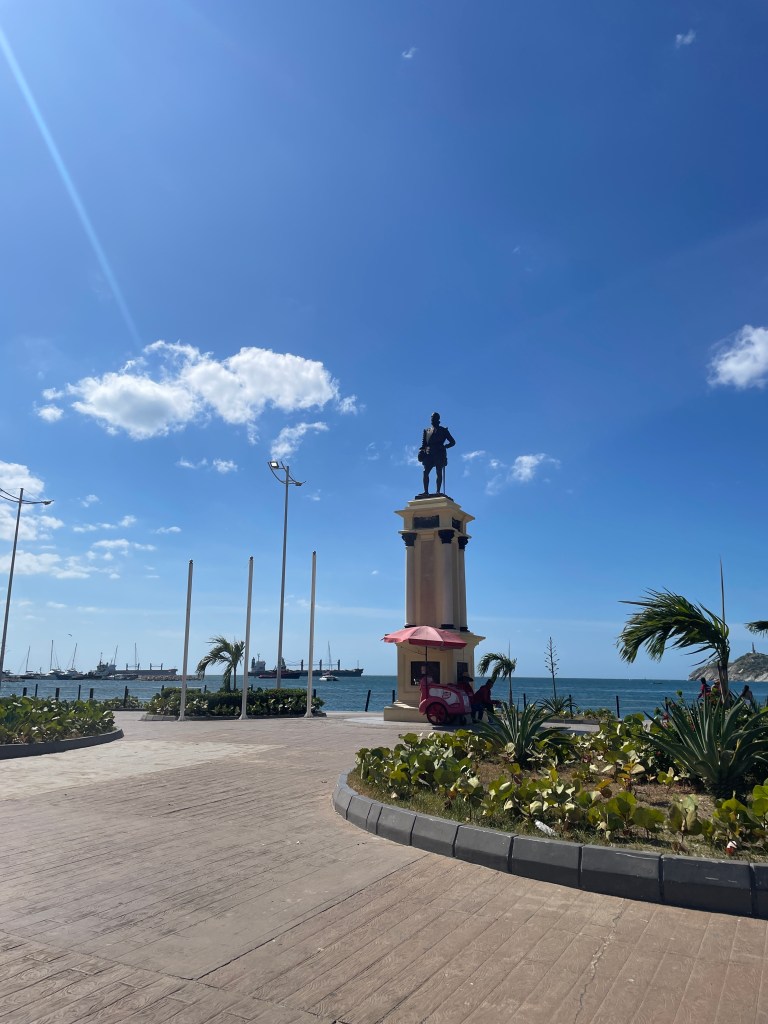
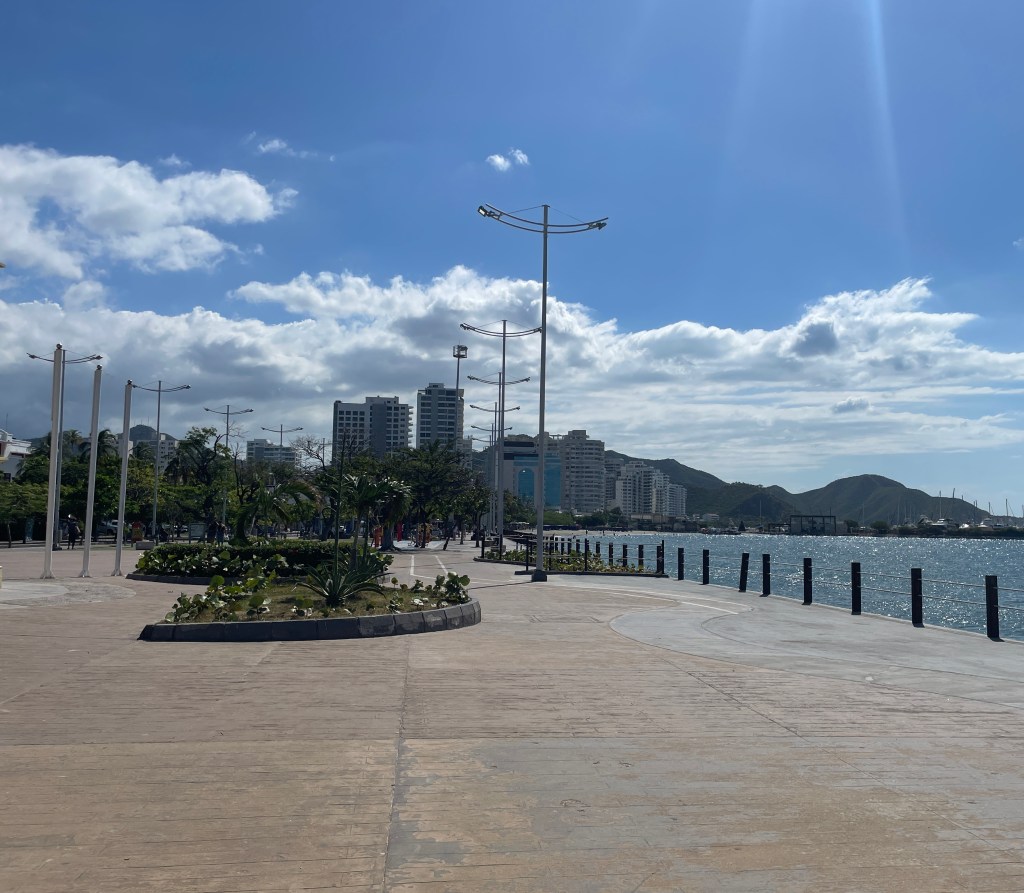
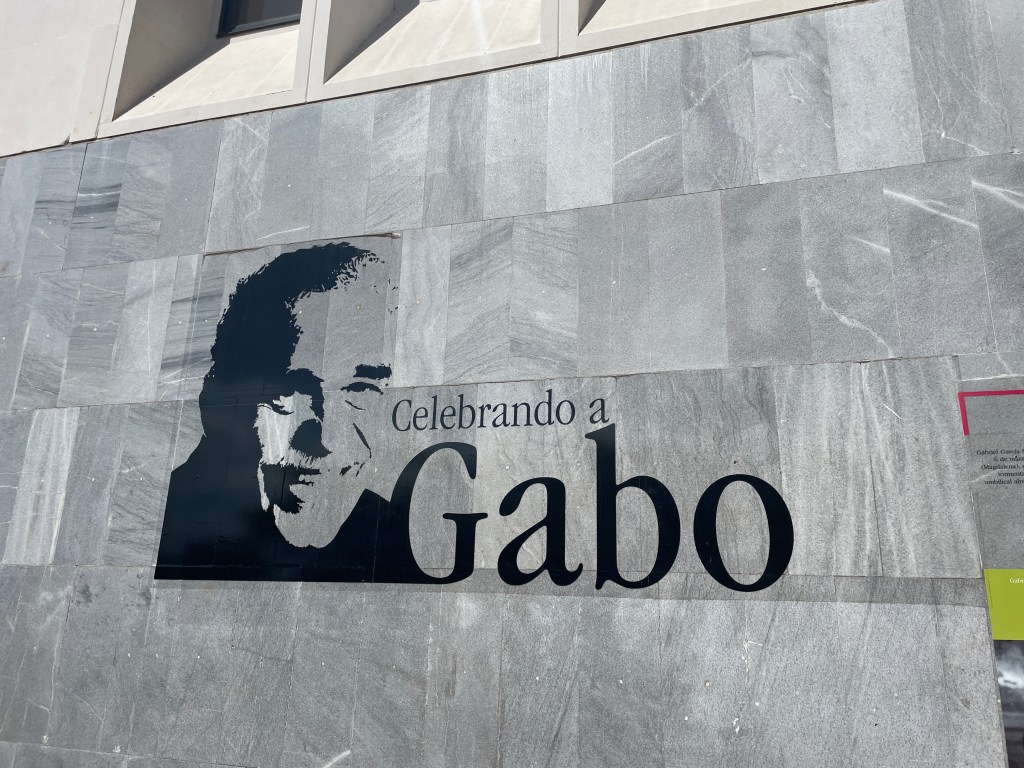
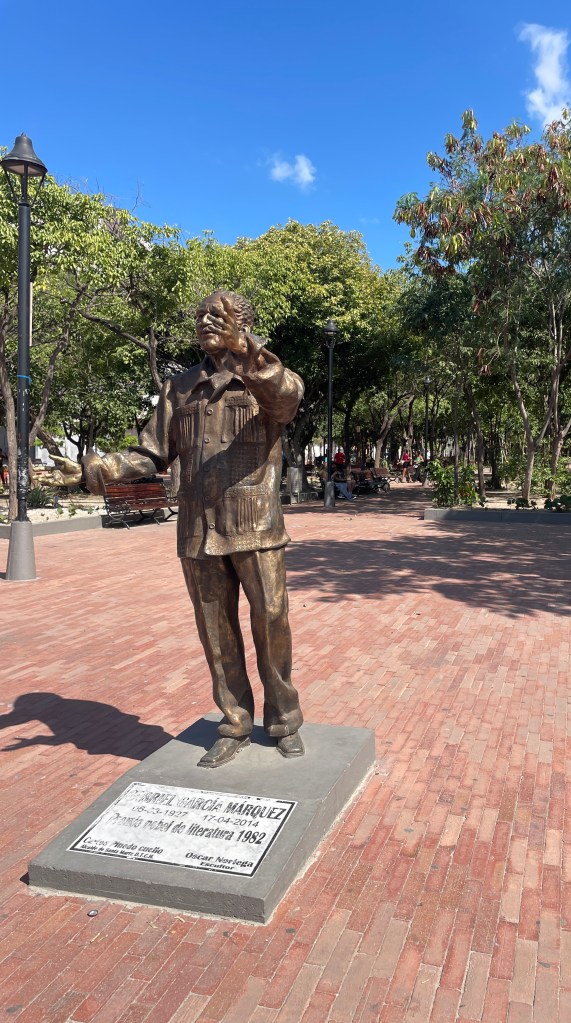
Once I finally felt better, though, I did venture a bit on my own. Below are a few photos of the boardwalk, which obviously includes a statue of Simón Bolívar. A huge library named after Gabriel Garcia Marquez, one of the greatest post-World War II authors in the world, is in Santa Marta as well. (The day I ventured out it was closed so I couldn’t visit.) There’s also a statue of him facing the sea. The first novel by Marquez that I read was Love in the Time of Cholera, which made me swoon as a teenager. It’s very likely that, even today, my preconceived notions of Spain and Latin America are based on Marquez’s descriptions. And, without getting too much into my colorful dating history before Adam, I think that my expectations for romance and love were largely based on Love in the Time of Cholera more than anything else I was exposed to as a teenager. That is to say: bittersweet, filled with secret pinning, requiring the utmost patience, and never guaranteed a happy ending. (Take that Jane Austen.)
Instead of the library, I visited the Museo del Oro Tairona. The museum provides a history of Santa Marta while also displaying many gold items that archeologists have dug up over the years. (Colombia is rich in raw materials, including gold. There’s a famous Gold Museum in Bogotá too that people love to visit.) Unlike other museums we visited in Colombia, this one translated almost every exhibit into English. The time period of the museum spans from about 200 CE to the present, providing heaps of information about Indigenous people past and present, Spanish conquests and defeats, an homage to Simón Bolívar the great liberator of Latin America who died in Santa Marta, and Afro-Colombian culture. I learned so much but here are my favorite fun facts:
- Santa Marta is named after Saint Marta of Betania (Bethany), Lazarus‘s sister, because the Spaniards landed here on Santa Marta’s day. (She’s known for her hospitality since she hosted Jesus and for helping wives with difficult husbands because she fought a dragon with holy water.)
- It took 75 years for the Spaniards to finally establish control over the Tairona People and other Indigenous Tribes in the Santa Marta area. (Is it wrong to lament what would have happened if the Spanish would have just given up?)
- In 1503, Queen Isabella decreed that all “Caribs,” defined as cannibals who rejected Christianity, could be enslaved. Such a broad definition means that anyone could be considered a “Carib,” and explains so much about Spanish brutality in the region.
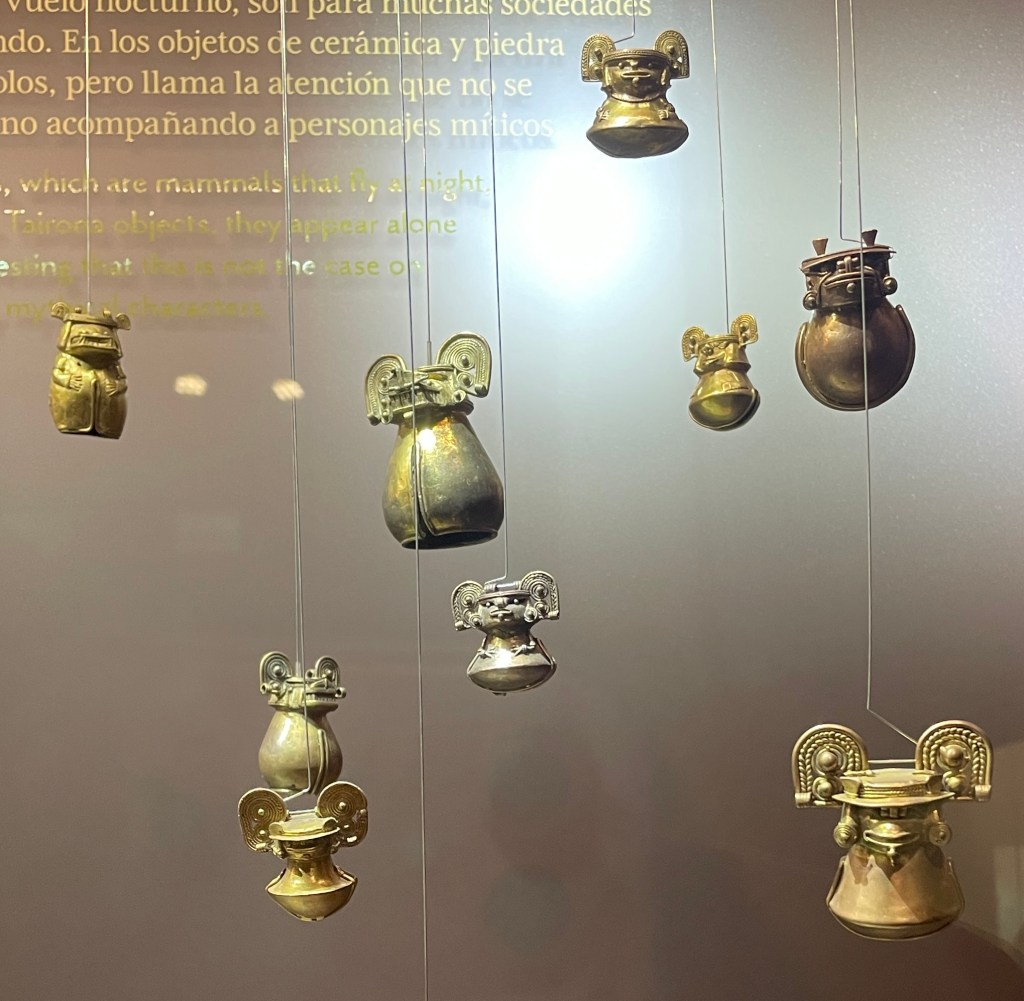
- For many Indigenous groups both past and present, bats are associated with political and religious leaders because they’re nocturnal, experience the world upside down, and fly. Vampires are associated with fertility and femininity (rather than, say, antisemitism). As such, bat iconography is everywhere but not bats like Batman’s logo. Instead, they tend have the leaf-shaped nose like these bats. (Third row, photo on the left.)
- The house that the museum is located in is one of the oldest houses in town and has a very long history. Besides housing Simón Bolívar‘s body after he died but before burial, it was also the site of the United Fruit Company’s offices when Colombia was a banana republic. (Hence the political cartoon in the third row, photo on the right.)
- Because Santa Marta has such a long history with many booms and busts it is perpetually figuring out its identity. Right now, the city has to decide if it is going to rely mostly on tourism or if it is going to be a port to supply the world’s demand for coal. As one display stated, “The banana train has become the coal train.”
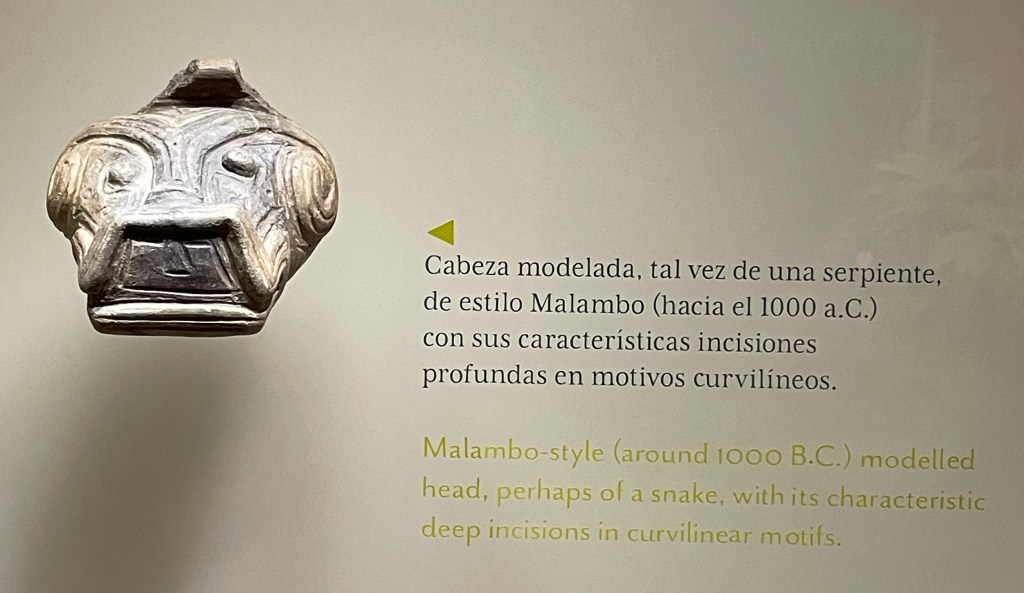
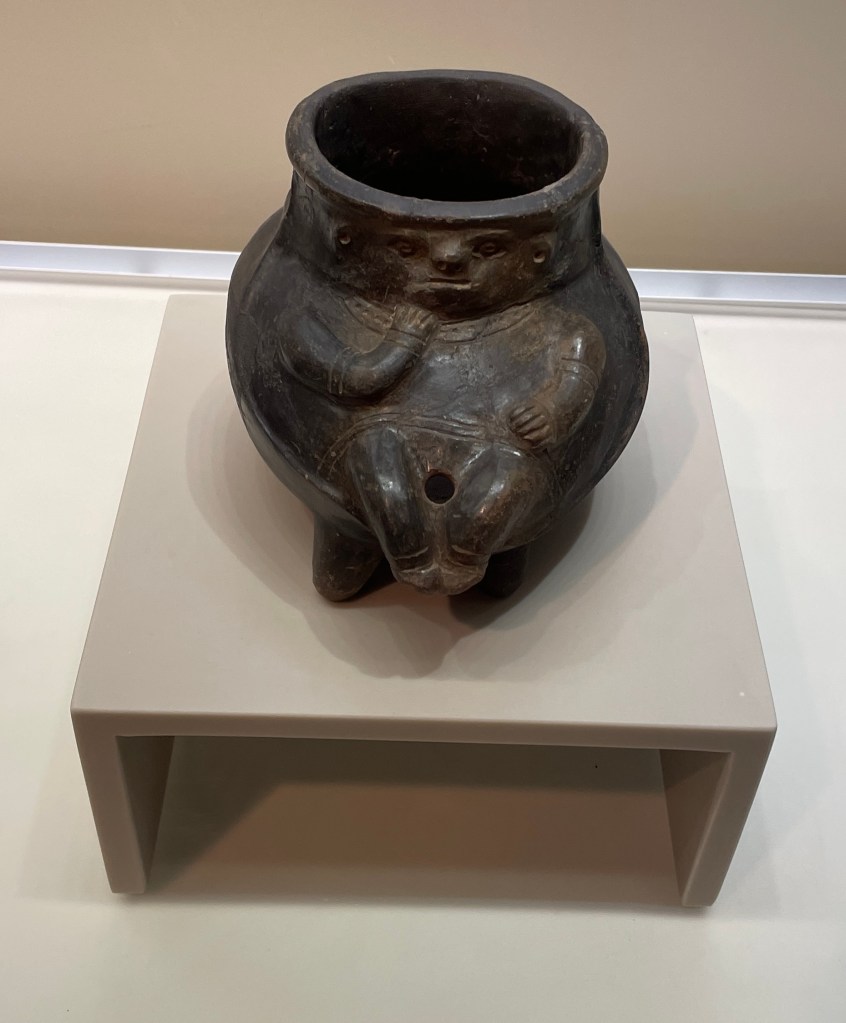
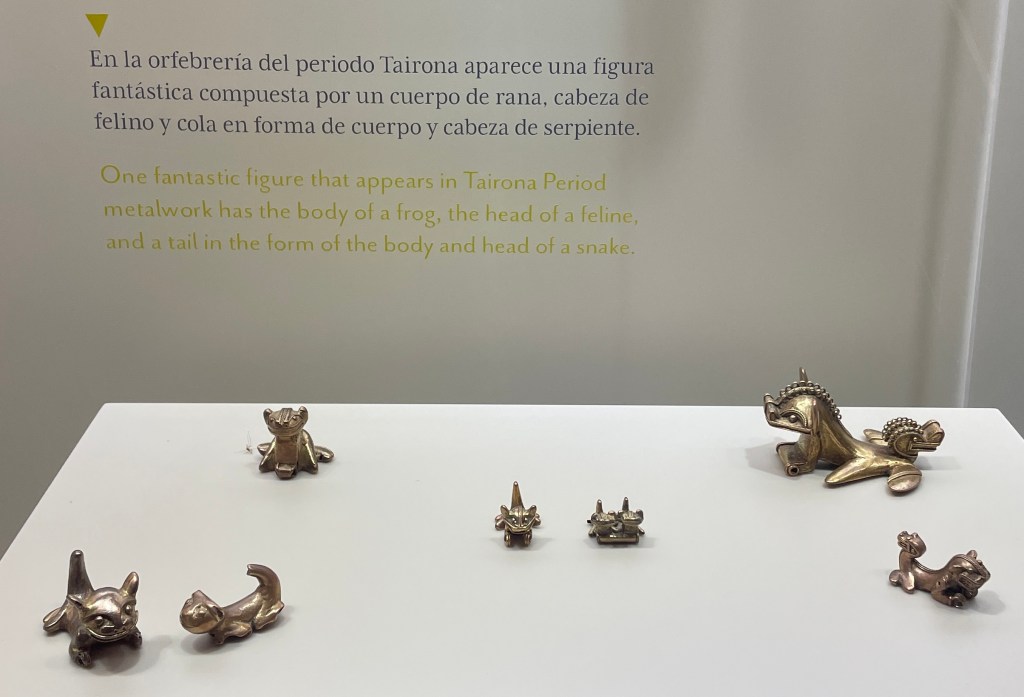
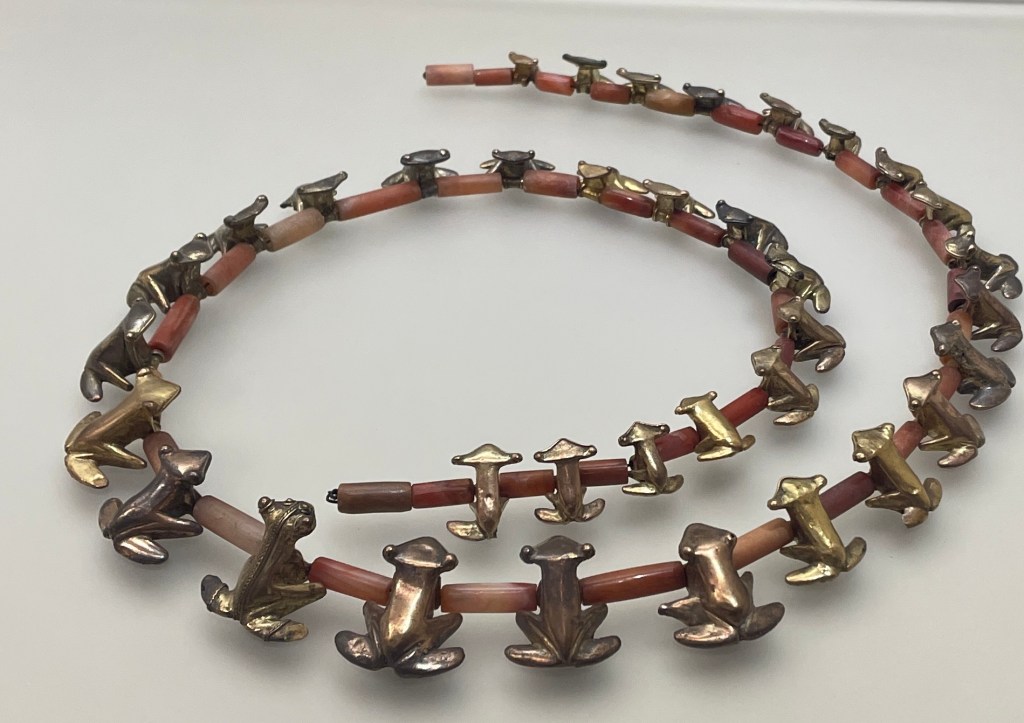

As our time in Colombia draws to a close, I find myself both sad and excited to leave. There is still so much to see and experience, but I am also anxious to see what other countries on this continent have in store. Overall, I will say that if you have any inkling to visit Colombia, I whole-heartedly recommend it and I promise you’ll be surprised by what you find. Stay tuned for one more post about Adam’s adventure in Tayrona National Park and then you’ll have to guess where we’re flying to next. Be sure to like, comment, and subscribe to Traveling While Introverted so you don’t miss it!
 Traveling While Introverted
Leave a comment