Parque Nacional Natural Tayrona (Tayrona National Natural Park) sits on the country’s Caribbean coastal plain, approximately 25 miles east of the city of Santa Marta. It protects over 37,000 acres (15,000 hectares) of coastal tropical humid rainforest, seashore, coral reefs, cloud forest, thorn scrub, tropical dry forest, and mangrove forest. The park’s location between the Caribbean Sea and Sierra Nevada de Santa Marta – the highest coastal mountain range in the entire global tropics and one of the highest coastal mountain ranges on earth – produces incredible topographical diversity.
The astounding habitat diversity in Tayrona allows it to host more than 800 species of vertebrates (mammals, fish, reptiles, amphibians, birds), hundreds of species of insects and marine invertebrates, and more than 1,380 species of plants and trees. Though Tayrona is a national park that is open to the public, it also has a buffer zone of protected areas that are restricted. This buffer zone protects the ancestral lands of four tribes that signed the Línea Negra Decreto 1500, which can be read more about in this link. Rangers can come to assess ecosystem health or accompany scientists doing research; however, it is meant to be exclusively accessed by the tribes. These tribes have seen their villages and populations suffer at the hands of non-tribal members over the centuries, including during periods of poaching and illegal logging. Thus, it is important and really cool that the park includes these areas and allows the tribes the ability to self-sustain within them without public interference.
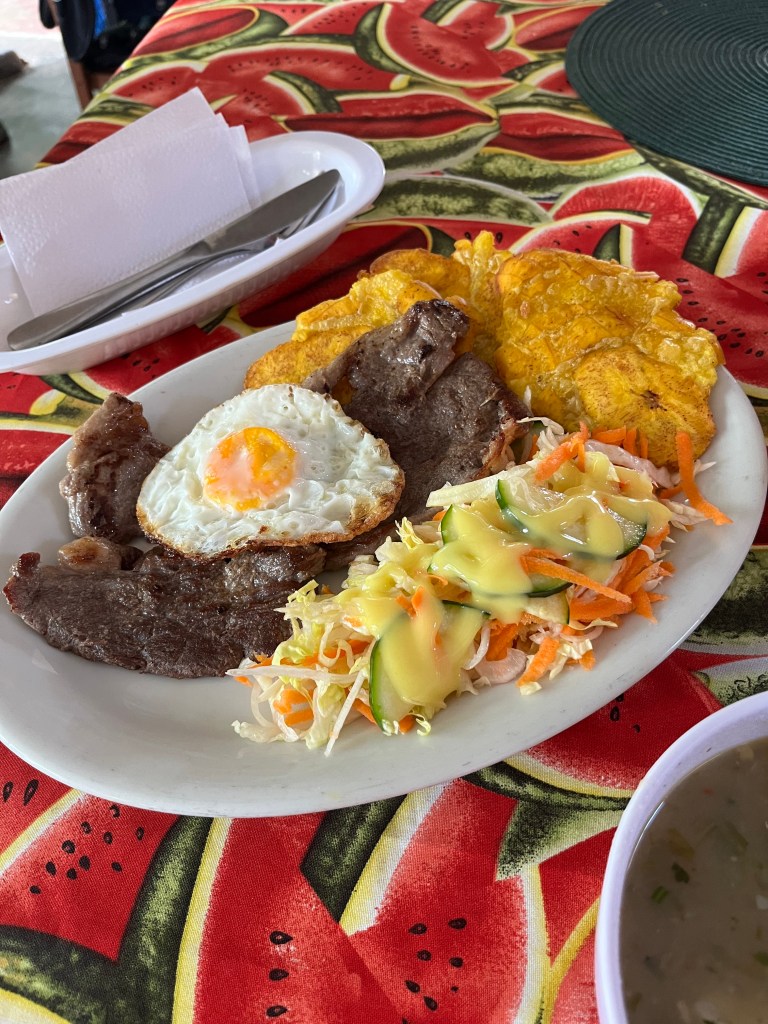
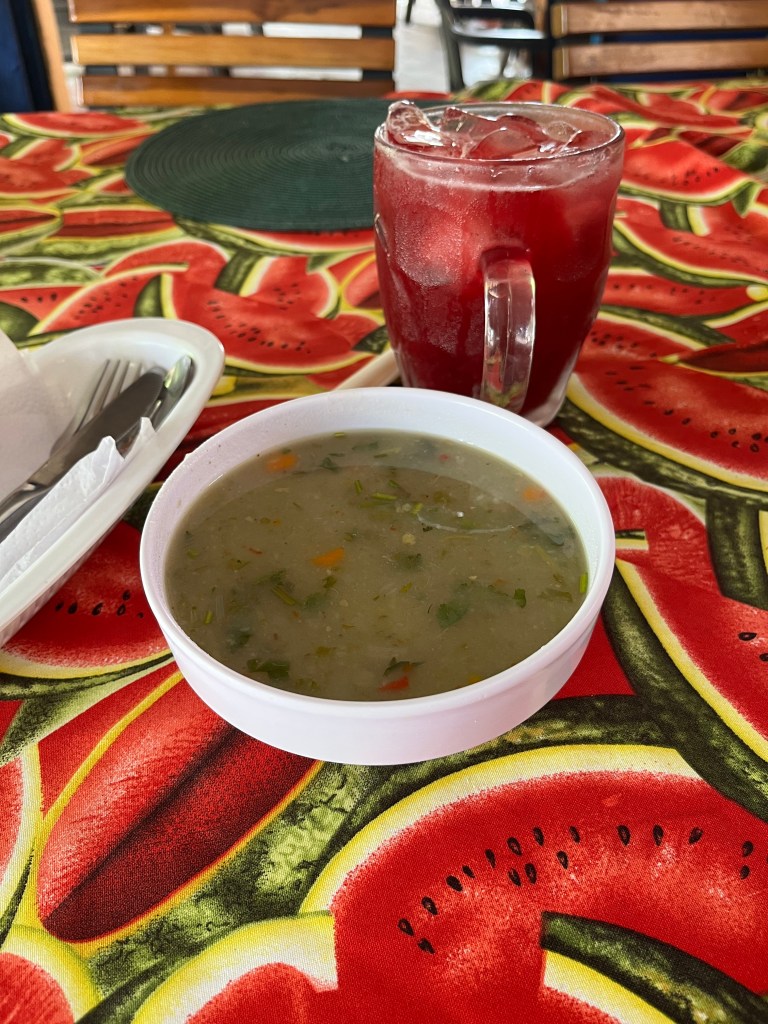
As mentioned in Yahm’s last post, she had come down with the flu and wanted to keep resting, so she sent me to explore the park on my own. I took a 40-minute taxi ride to the entrance of the park and before heading in I ate a quick lunch at one of the half-dozen or so restaurants that serve park visitors. Usually the food experiences are reserved for Yahm’s corner, but since she was not there, I wanted to mention my lunch. It consisted of burro a la plancha (grilled donkey filet). This was the first time I have ever seen burro on a menu, and I had to try it. It tasted like a very lean steak and you would never know it wasn’t beef. Like most typical lunches it came with patacones (fried plantains), a small salad, a fruit juice of your choice (I chose corozo), and a soup of the day. (That day it was beef soup.)
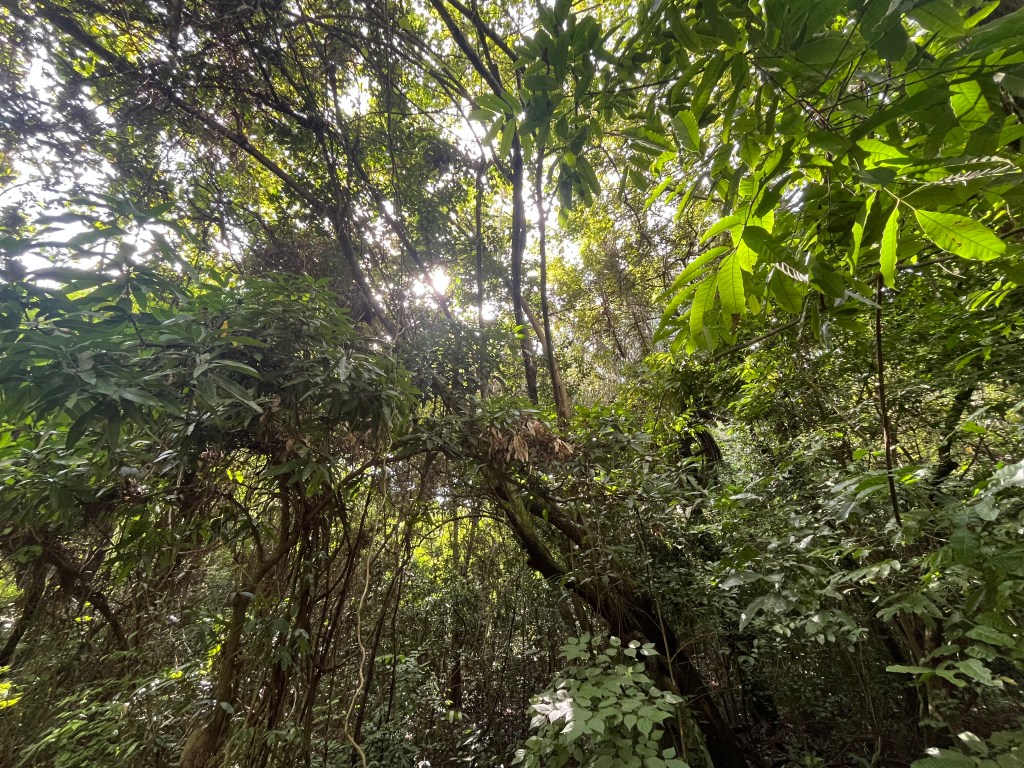
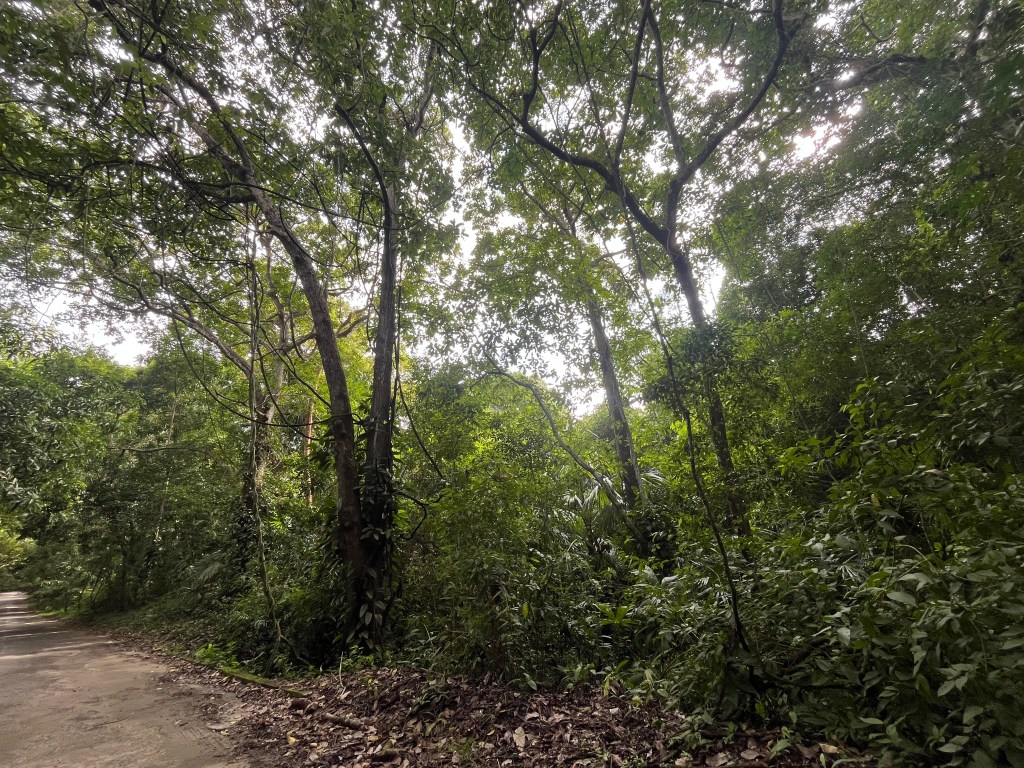
By the time I had unpacked and prepped my cabin, it was getting late, around 2 pm, which was too late to go on a long hike. Instead, I decided to head to the nearest beaches. From my lodge, the nearest beaches were Playa Cañaveral and Playa Piscina. The walk to the coast wound along a road used by both pedestrians and vehicles, so it can be a bit hectic. That said, the forests that line the road were still rich in life. I am not a botanist by any means, but even I could recognize that I was seeing dozens of species of plants and trees. Despite having to hike along a roadside, the scenery was still beautiful.
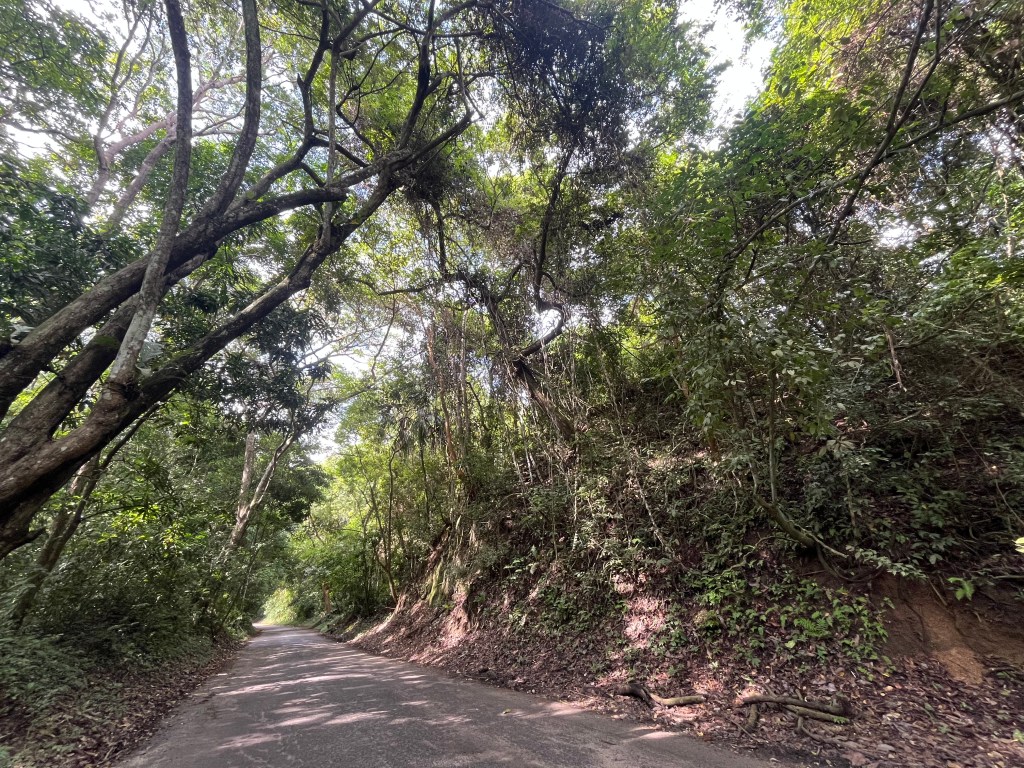
While journeying to the beaches, I heard the rapid, high-pitched notes of the Buff-breasted Wren and the screeches of a Yellow-headed Caracara, which scared a pair of Orange-chinned Parakeets that had been vocalizing and fluttering above me. All of that paled in comparison to spotting two of the park’s more common monkey species. (Of Colombia’s 41 native primate species, five can be found in this park.) First, as I came around a bend near a luxury hotel, the trees above hosted a small troop of Colombian Red Howler Monkeys.
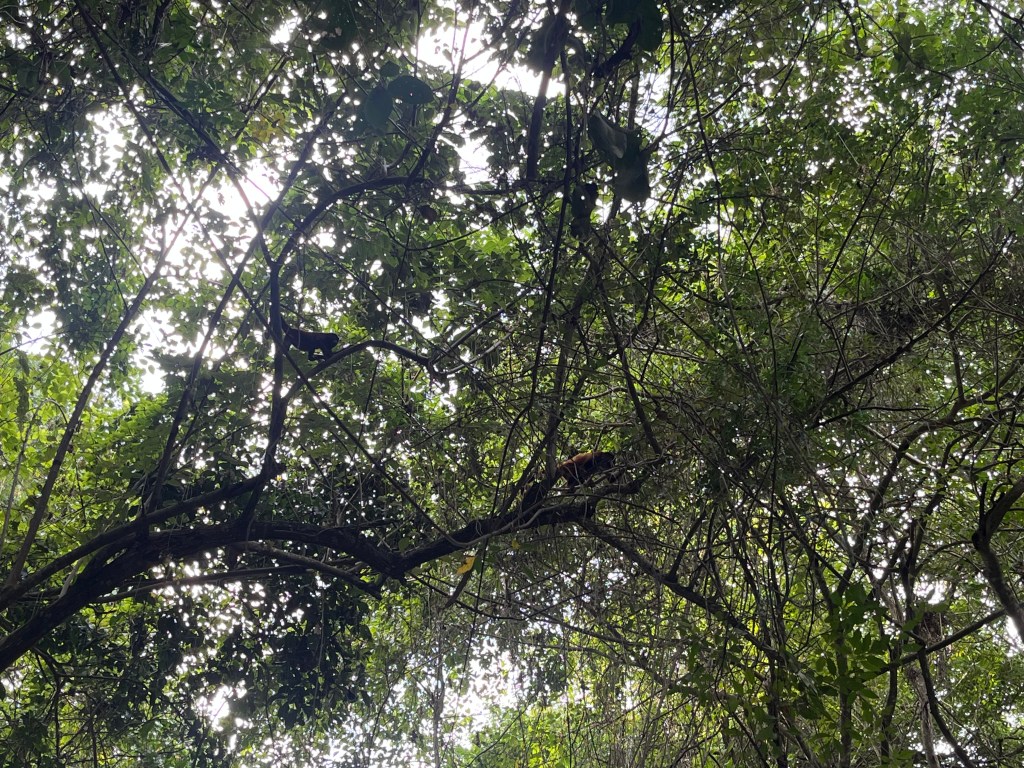
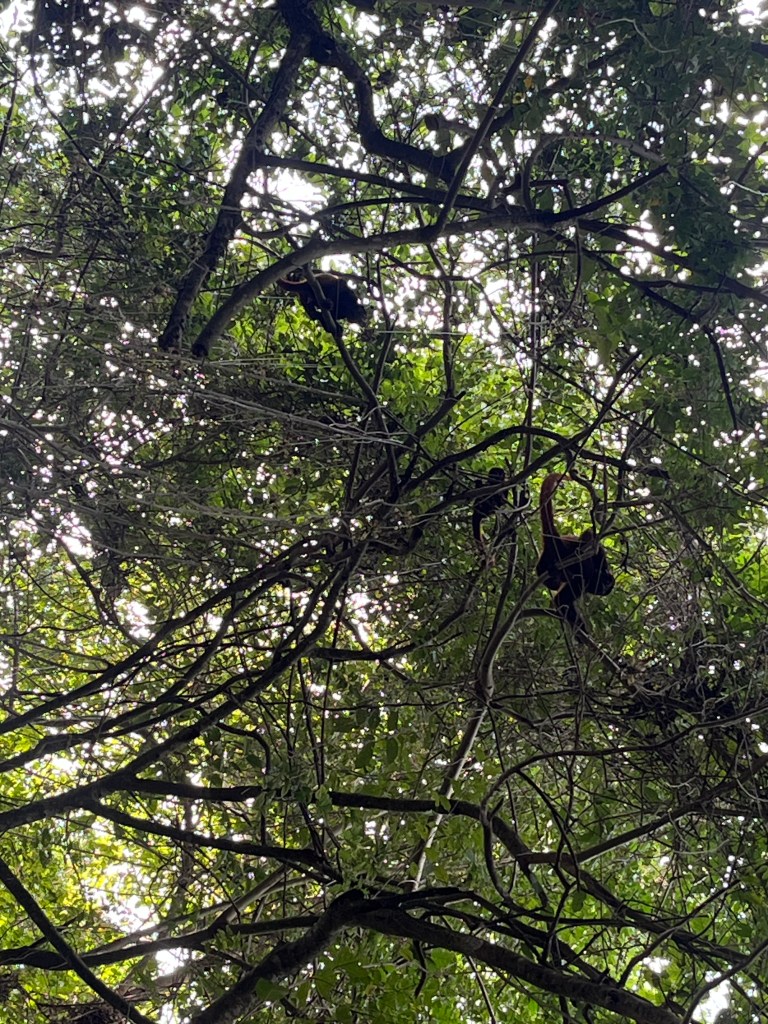
Back when we were in Costa Rica, especially when we were dog sitting in the Tamarindo area, we got pretty close to Mantled Howler Monkeys and often heard them howling in the mornings and evenings. However, this experience may have been the closest I have ever been to wild monkeys of any kind. Colombian Red Howlers are nearly two times larger than Mantled Howlers so they are easy to see even when they are in the canopy; but, seeing them so up-close and watching them looking at me, almost posing, was extremely cool. A few minutes later, I heard crashing in the canopy.
What could it be? Clearly it was an animal, but was it another primate? Another arboreal mammal like a kinkajou or olingo? Was it a large bird? I soon discovered that I had stumbled upon a troop of Santa Marta White-fronted Capuchin Monkeys causing a bit of a ruckus. I later learned that Colombia has a few subspecies of capuchins and that these guys are a subspecies endemic only to the Sierra Nevada de Santa Marta mountains and their surrounding forests where Tayrona is located. They’re endangered so seeing them was truly a treat.
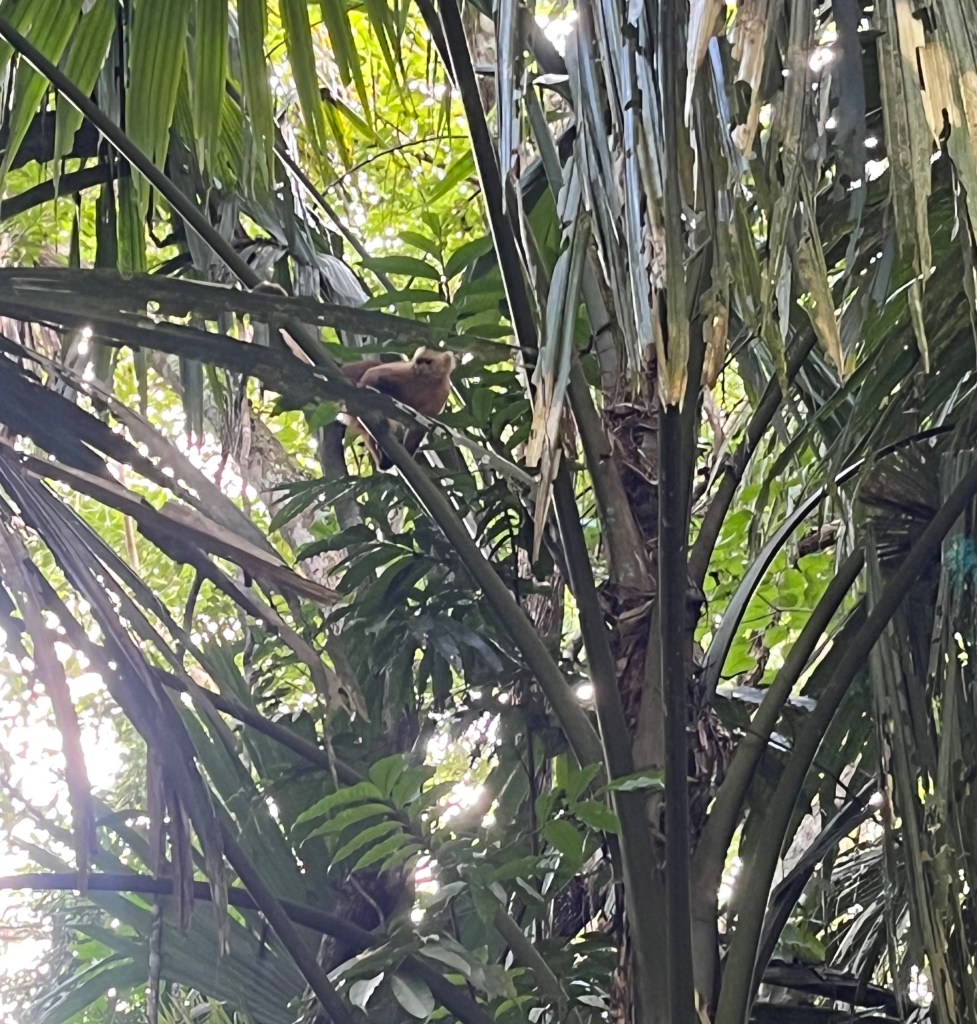
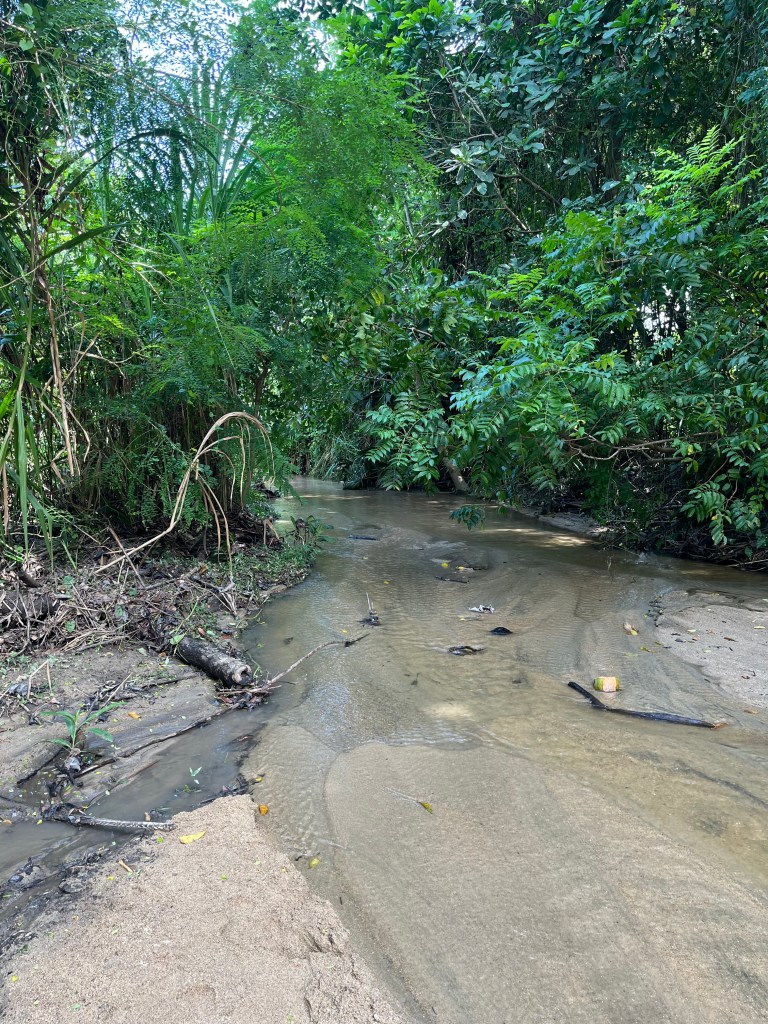
Seeing this kind of behavior up close was so cool, but time was ticking and I wanted to chill at the beach and be sure to head back to the lodge before the sunset. As I walked along the trail, I started seeing signs of creek drainage indicating that the coast was nearby.
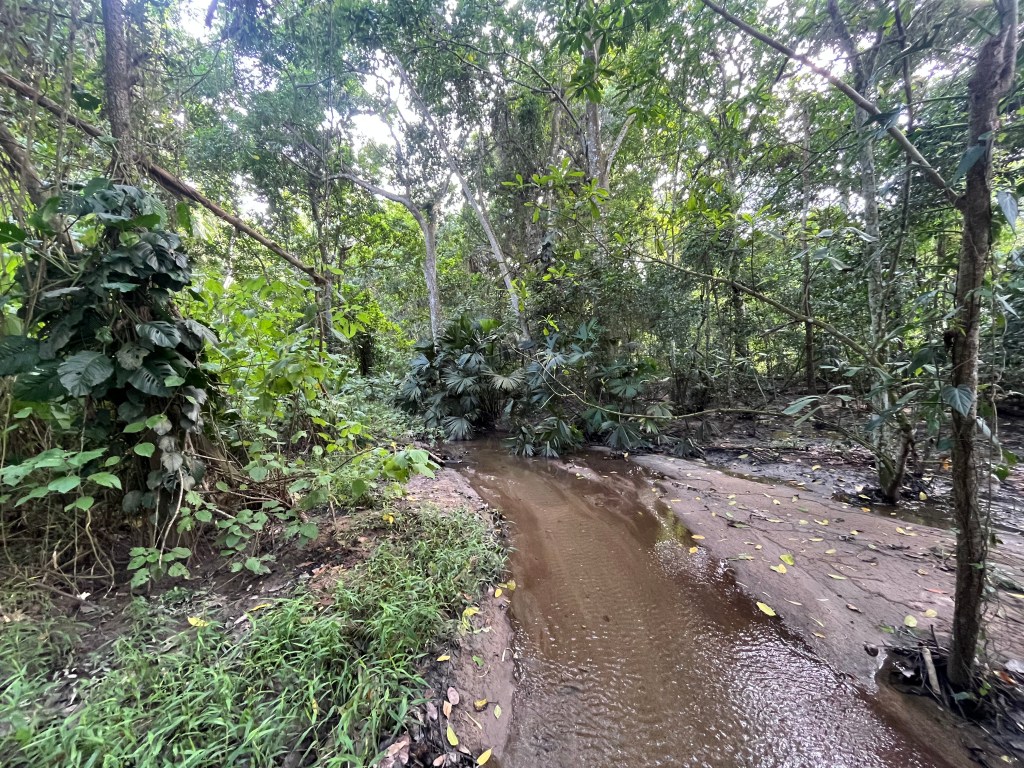
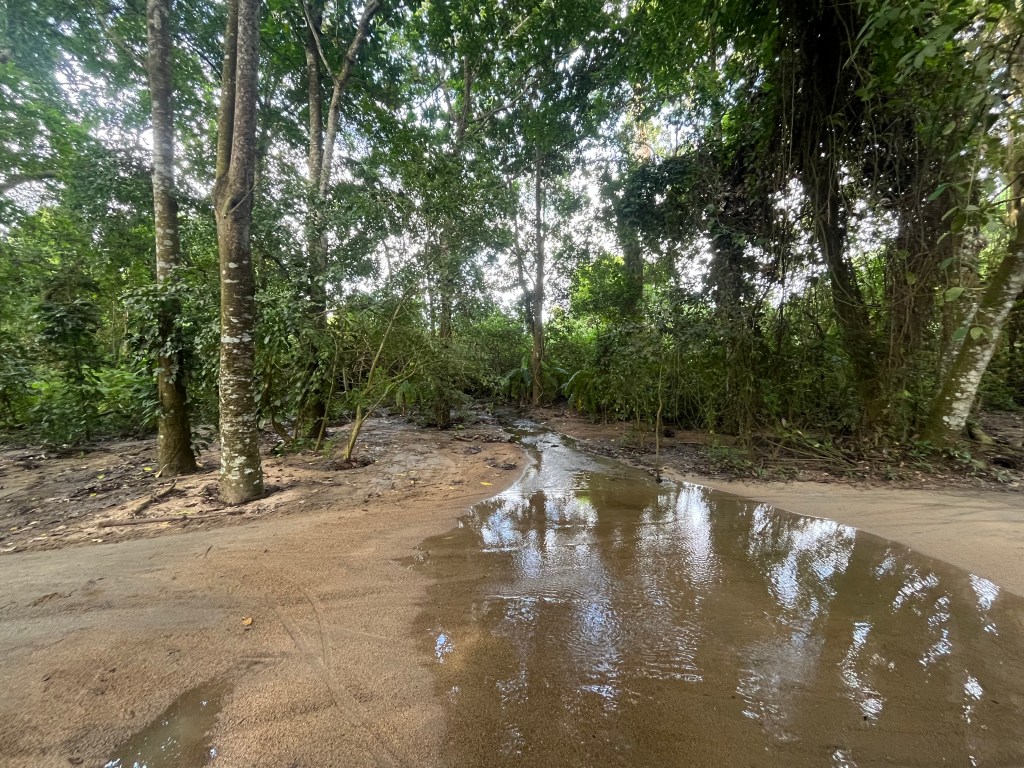
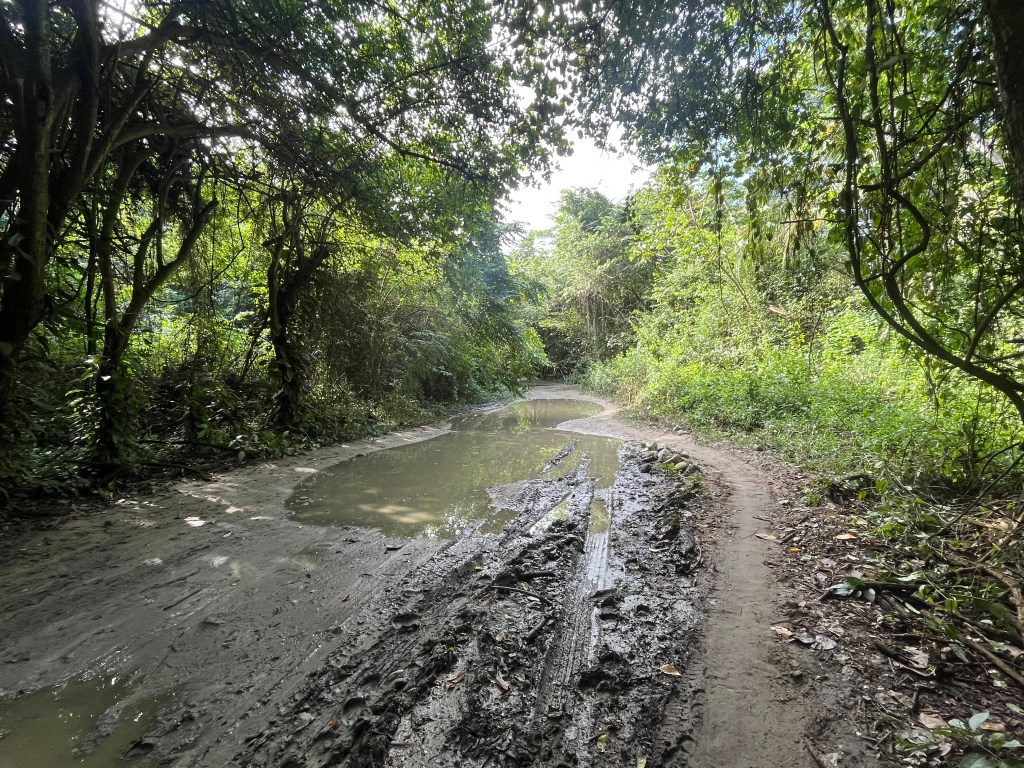
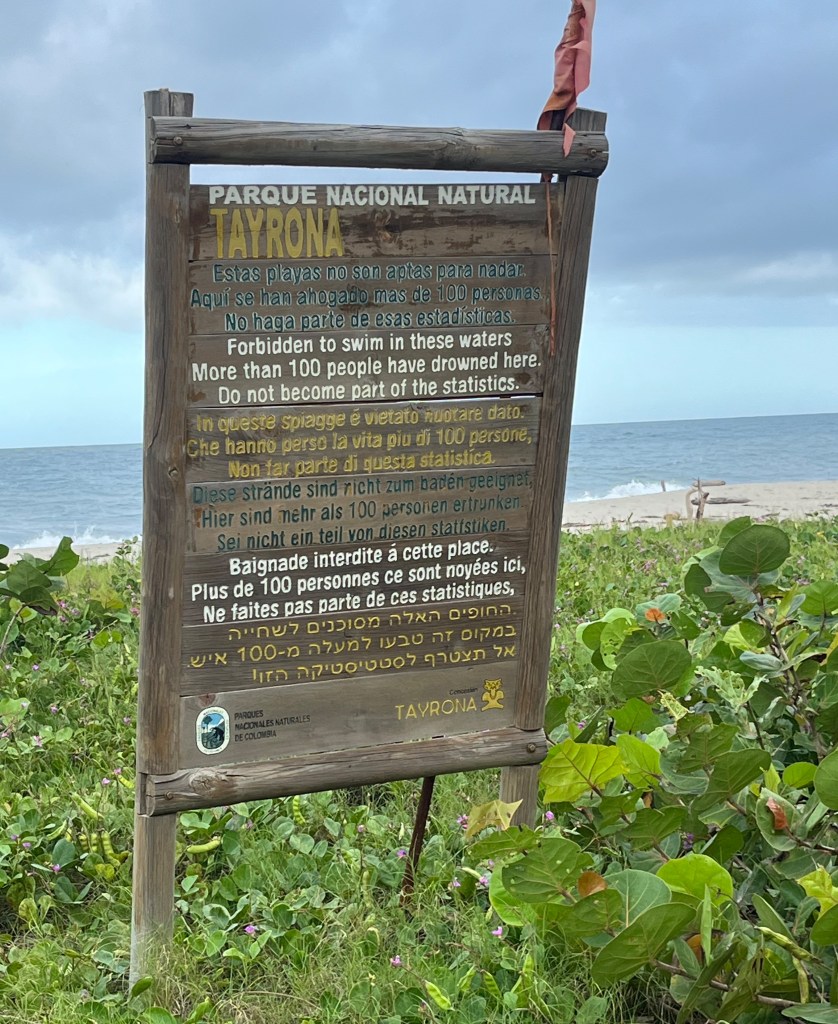
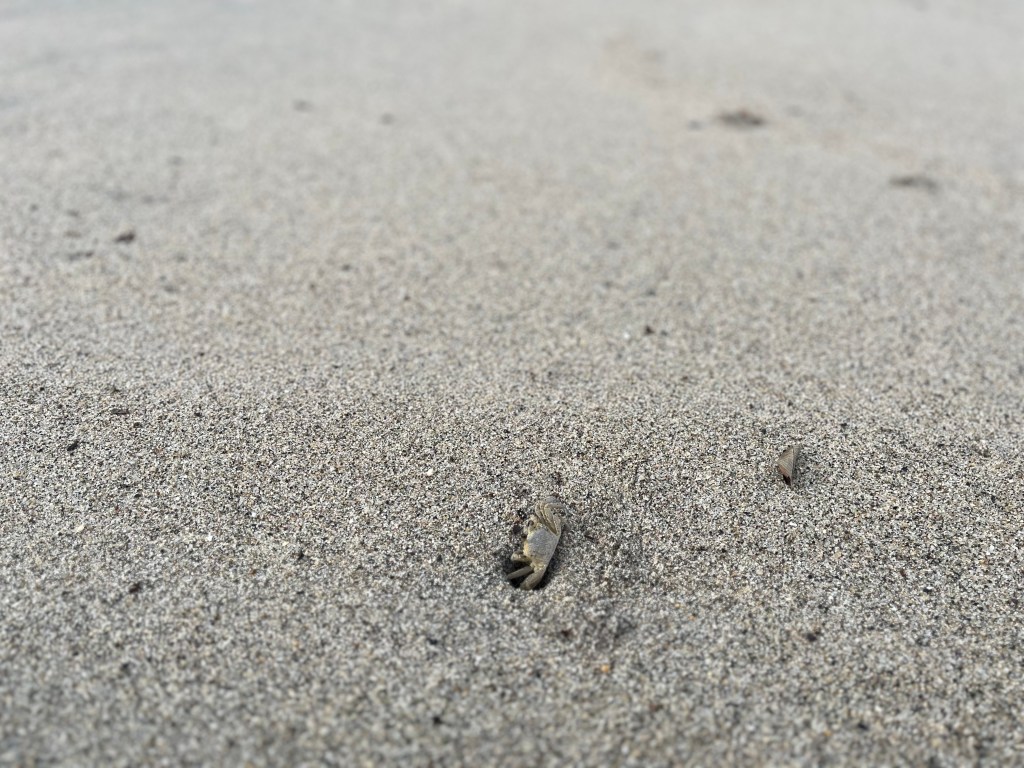
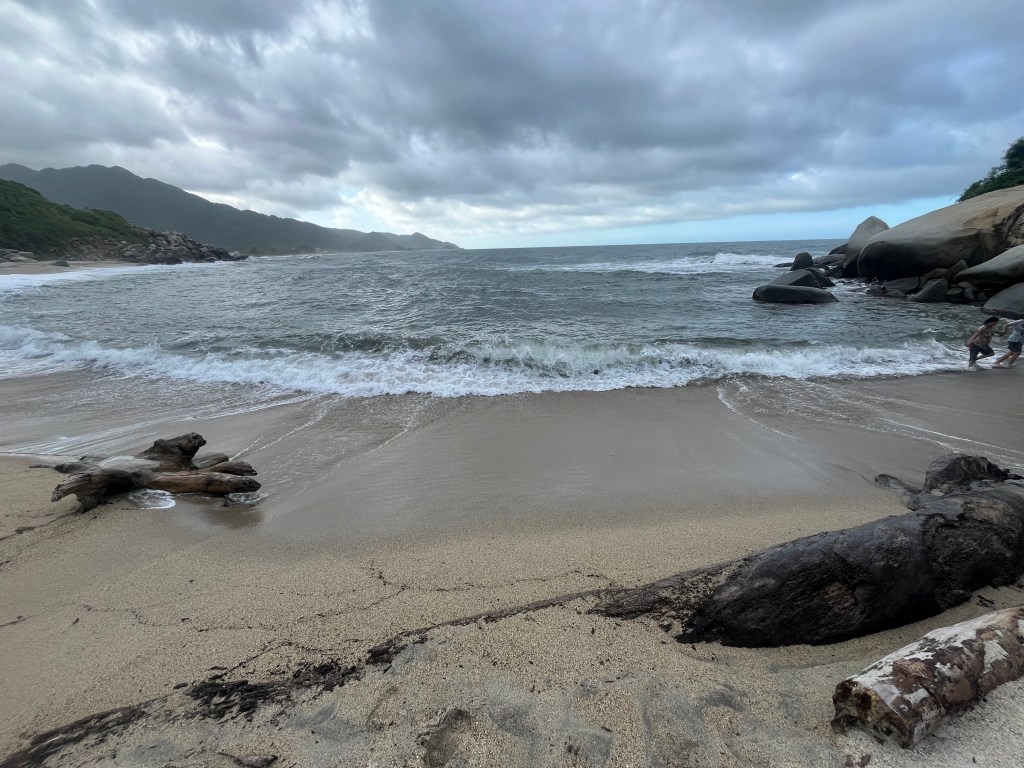
Once I got to Playa Cañaveral I realized that I would not be swimming. The Caribbean is generally a calm sea when it is not hurricane season and is world-famous for being a blue-green salty bath. Yahm and I experienced that in Panamá. However, all major bodies of water have many personalities. When it comes to the Caribbean’s mood along the coastlines of Tayrona, it does not gladly welcome swimming and bathing. In fact, signage ahead of Playa Cañaveral clearly stated that many tried to swim here and it did not turn out well. The sea’s rough waves further solidified that fact. That said, the coast was still incredibly dramatic. I even had a chance to snap a photo of an elusive crab.
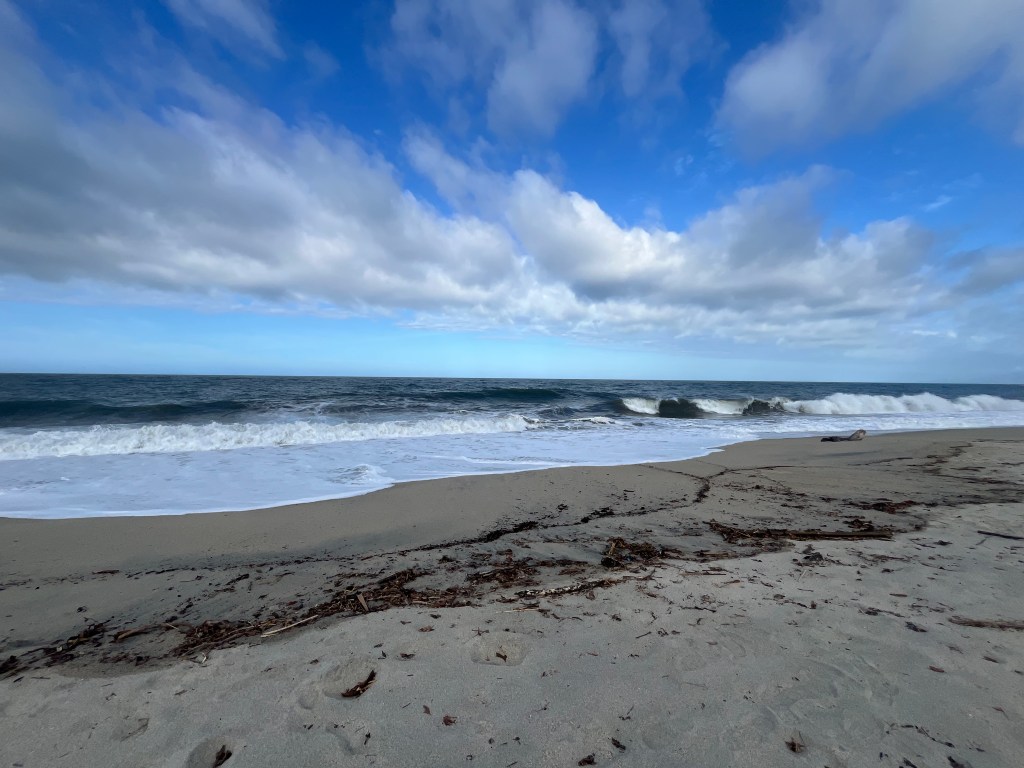
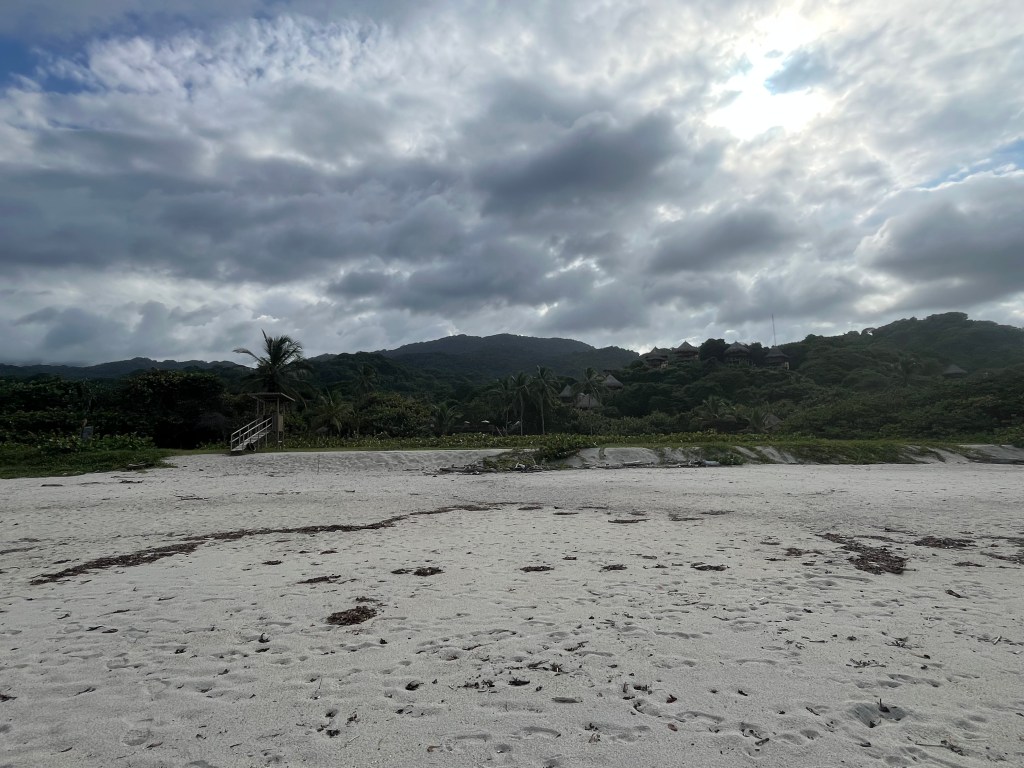
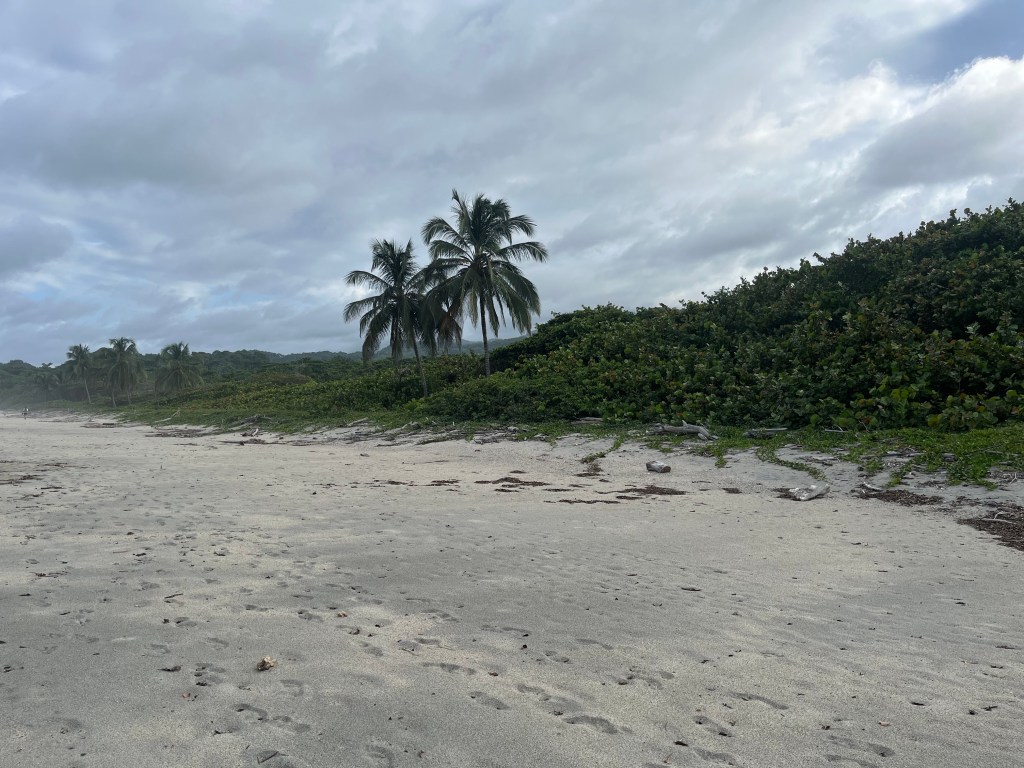
After checking out Playa Cañaveral, I walked about 600 feet (183 meters) to the slight west and entered Playa Piscina. Signage here did not warn of deaths from swimming and there were people lounging on the sand. However, the fact that swimmers stayed close to the shore and the water’s choppy nature was all one needed to know that taking a swim was not wise. Still, I did dip my feet in the water. It may have been a day of nutrient upwellings, common in seas across the world and a source of cooling, as the sea was chilly. Even if the waves were not foreboding the temperature was surprisingly cold.
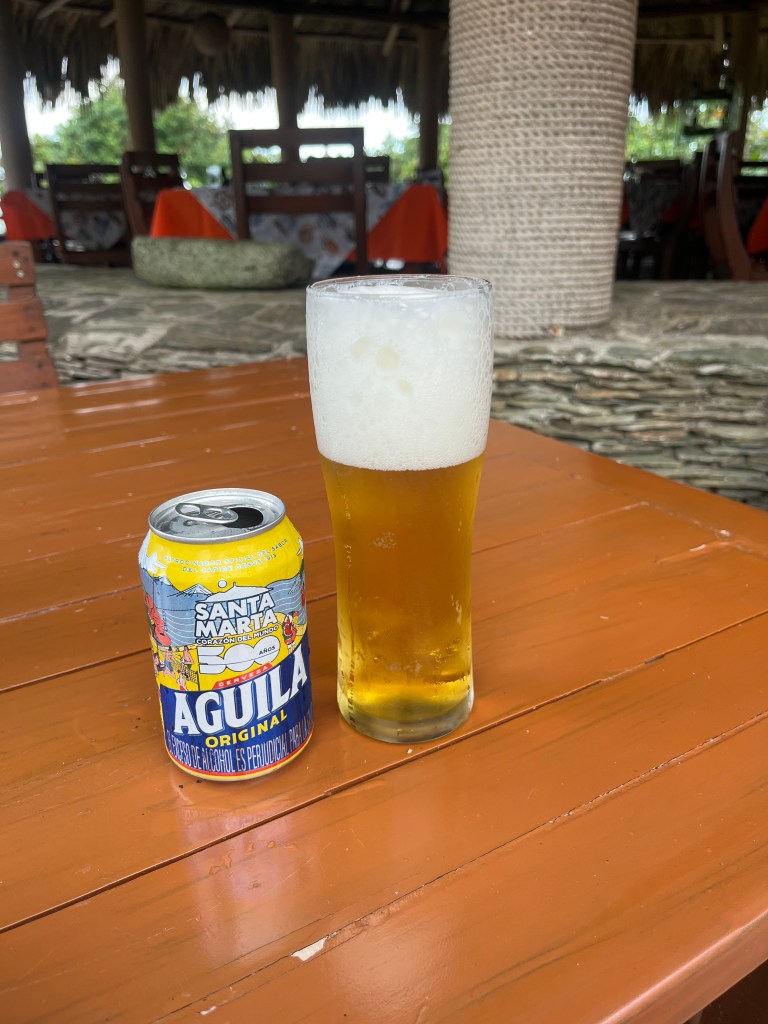
After a brief time looking at the southern Caribbean and dipping my feet in it, I walked to a nearby hotel and restaurant. I ordered a beer before heading back up the road to my lodge to conclude the end of day one and get some rest for a full day of hiking on Sunday.
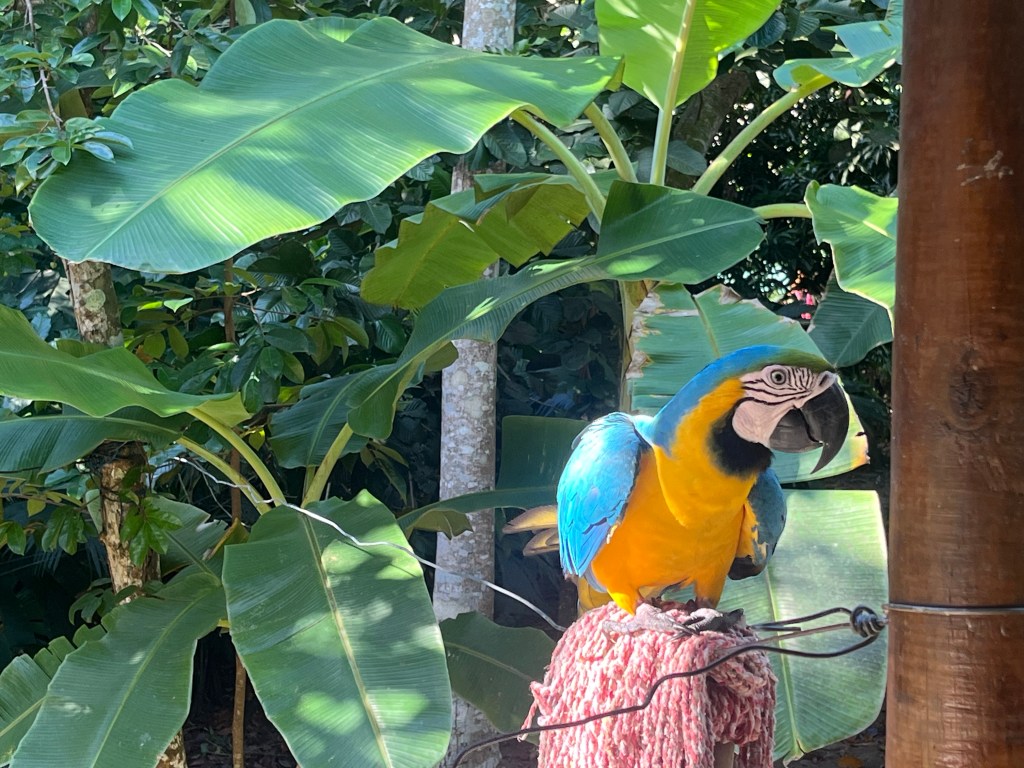
Once I got back to the lodge I noticed a large Blue-and-Yellow Macaw sitting in a coconut palm tree. Prior to this, my only experience seeing macaws was at a zoo or as a pet in the United States.
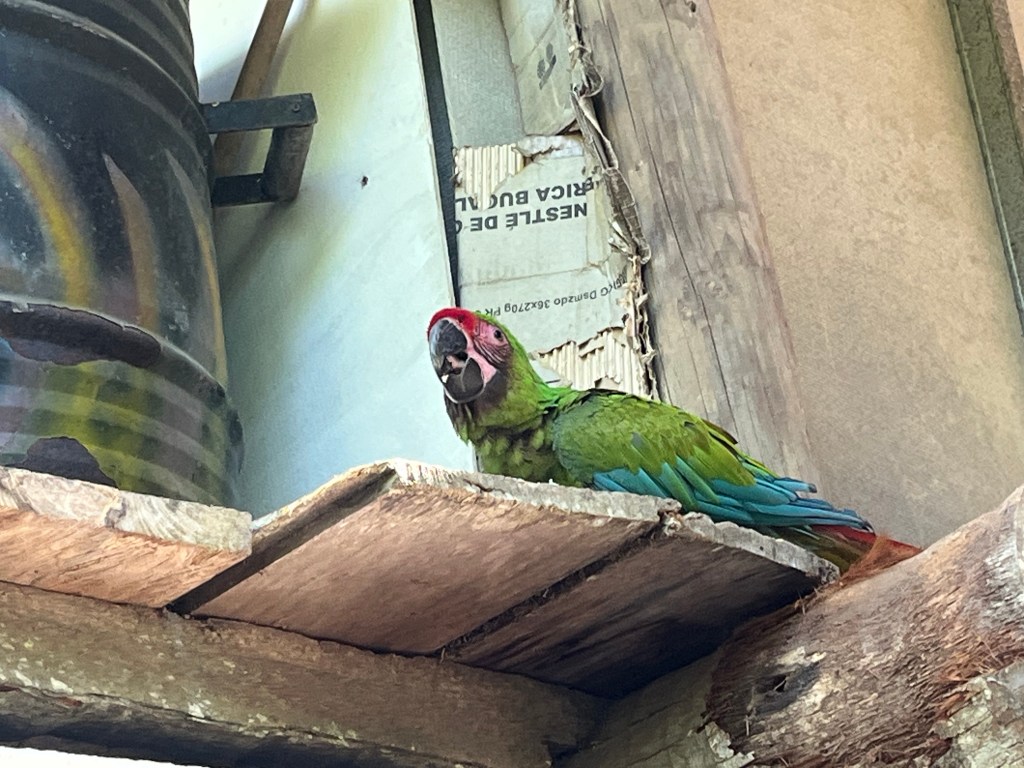
The next morning, I saw four macaws all hanging around the kitchen and eating area while the staff was preparing breakfast. One of the staff members mentioned that these are wild macaws, but a few years back this group of individuals became attracted to the grounds and decided to hang around as much as they could because of the surrounding fruit trees. The lodge I stayed at is one of the few with an outdoor dining area, which made this area especially attractive to the birds. They typically forage and hang out in the forest during the day, then come back at night to roost in the lodge grounds. In the morning, they get some discarded fruit rinds before flying into the forest. So, in actuality, they’re more feral than truly wild. The staff provides them with fruit rinds in a special designated area that they have learned to associate with food, away from the tables, so they do not get aggressive with guests. They definitely made the mornings colorful and loud!
These were not the only wildlife species that greeted me in the morning. While I was brushing my teeth, I noticed activity in the trees and came outside to find a troop of Cotton-top Tamarins, or mono titis as Colombians call them. These diminutive primates are one of the highlights of the park for visitors, and especially for Colombians who seem to adore them. This would not be the only chance I got to see them that day. Their numbers are high in the park, which is a good thing. Elsewhere in the country they’re endangered and continue losing their habitats, much like the other 40+ species of tamarins throughout South America.
With a breakfast in me and some wildlife viewing starting early, it was time for me to prepare for a long hike. I was advised to hike to Cabo San Juan del Guia and the surrounding areas, Playa Cabo and Arrecifes. From my lodge, these areas were over 3 miles (5 kilometers) away and a round trip takes around 8-9 hours. My long journey started down the same road I took the day before to get to the coast and where I saw the monkeys. This time I heard new birds: the tell-tale weet-weet-weet of the Streaked Flycatcher and the shrill shrieks of the Blue-headed Parrot.
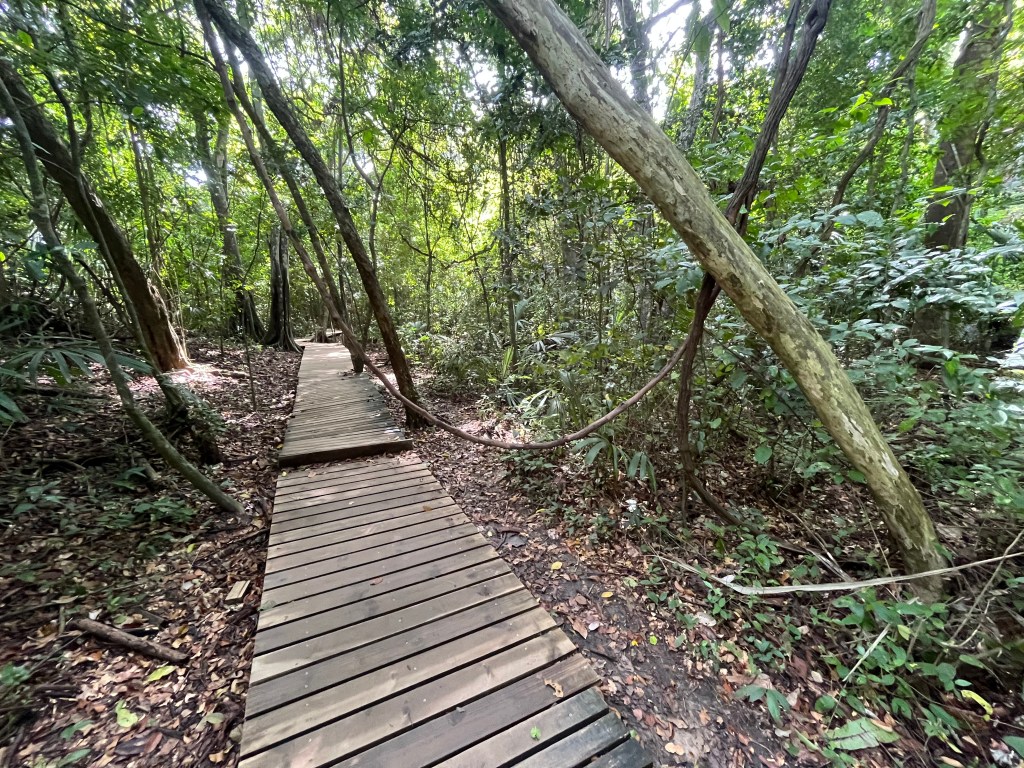
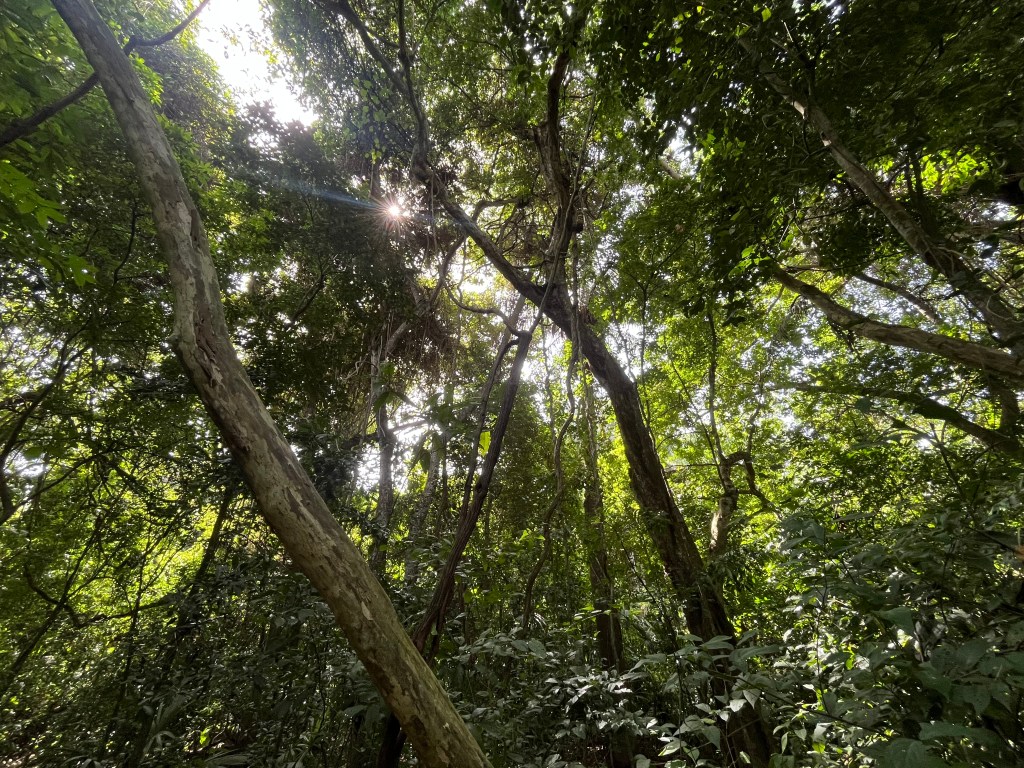
On the trail, the dirt path became an elevated boardwalk that weaved among the canopy of tall tropical hardwood trees. The path weaves through the mottled sunlight and organized chaos of hardwood trees and vines. An amazing visual experience. A cat was sitting on the entrance to this part of the trail. Myself and others tried to get its attention but it had its gaze fixed away from those coming and going and was unbothered by attempts to get its attention.
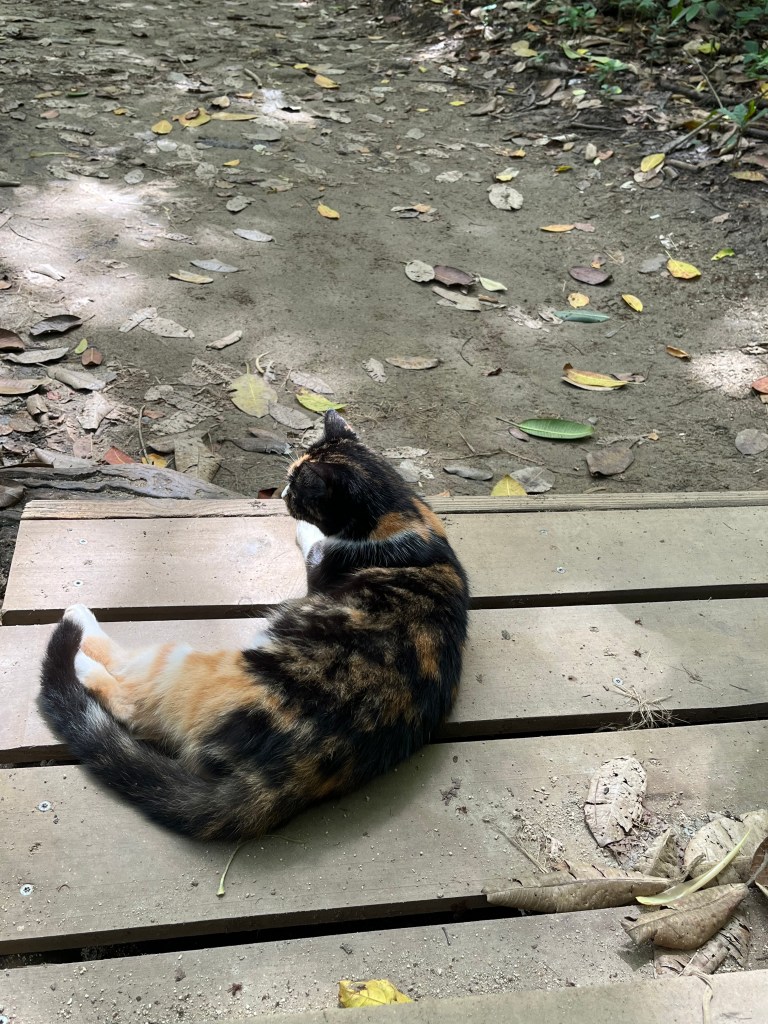
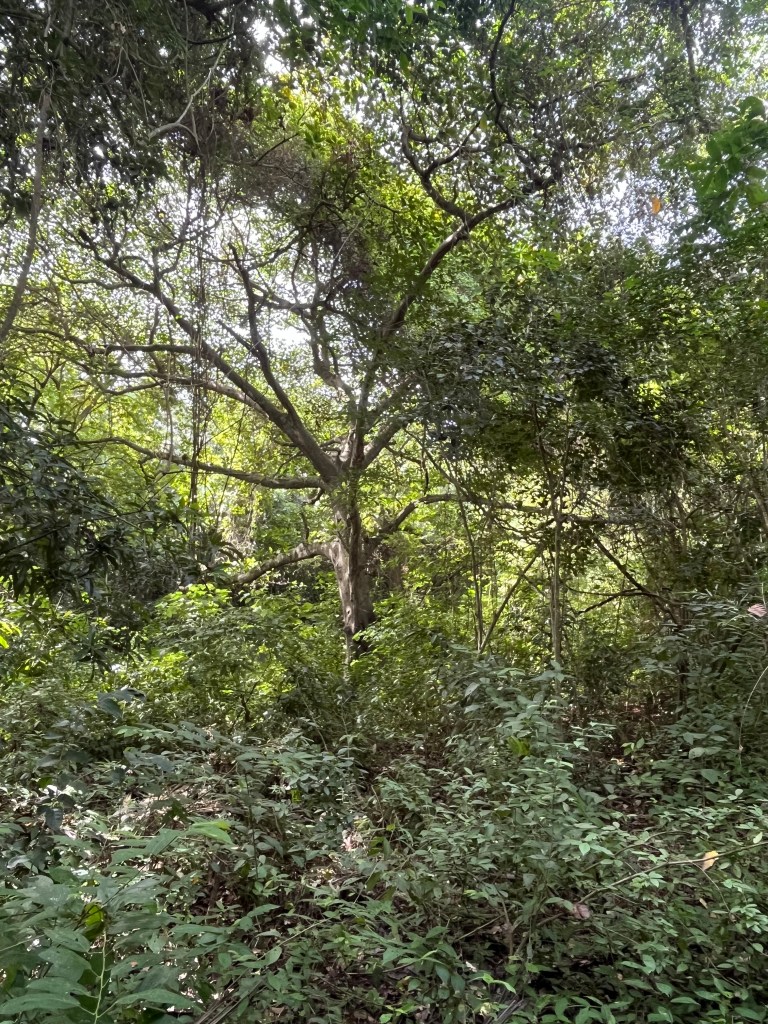
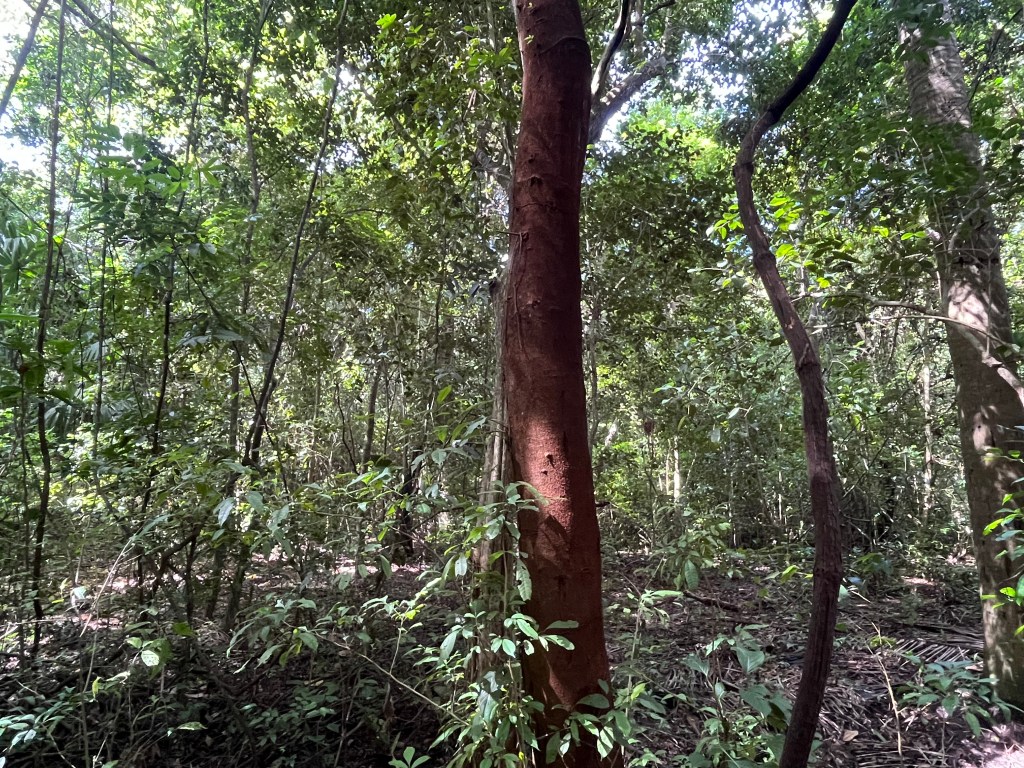
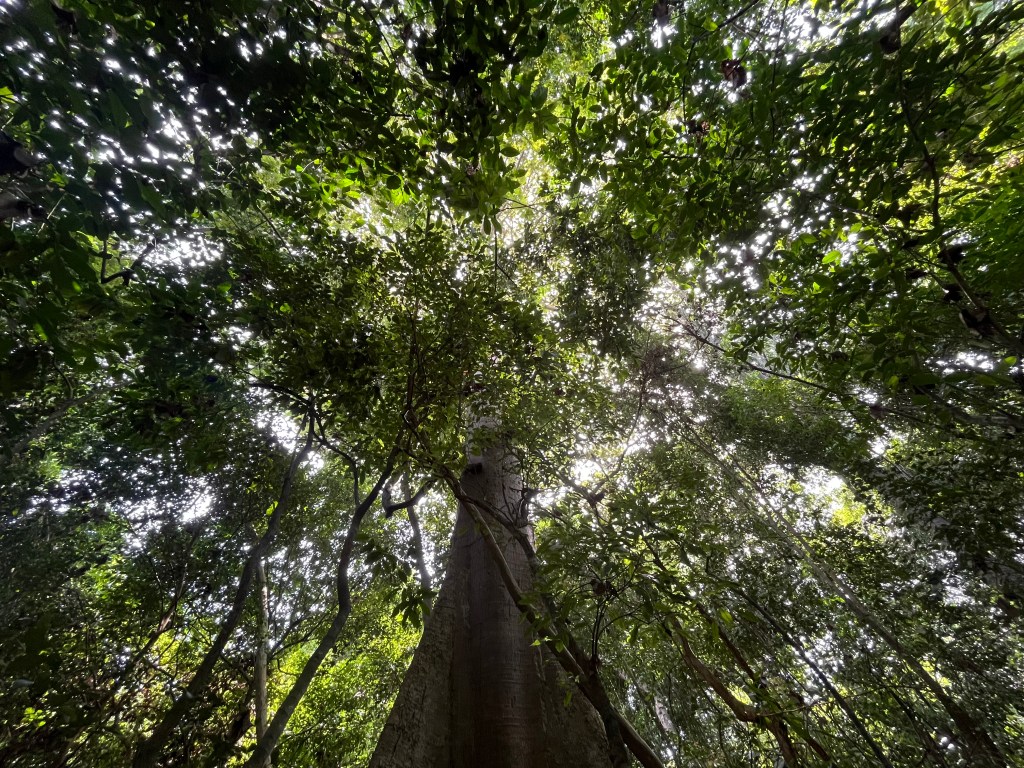
As I continued down this elevated path, I came across a group of Russian tourists who were staring up in excitement. A troop of Colombian Red Howler Monkeys were hanging in the trees off to the side. This troop featured an entire family, including babies. Who does not love baby mammals, right?

As I continued on, the path started to incline. As I proceeded up a hill, I noticed more activity in the trees. Some of the Colombian hikers ahead of me were saying “mira, mira, titi, mono titi!” The squeaks of these Cotton-top Tamarins announced their presence. Myself and others were treated to these little monkeys doing their thing in the canopy above.
As the hiking path continued to climb, the roar of the sea and its breeze became an unmistakable sign that the Caribbean was not far. It is always near the trail, but can wind away from it for up to a mile inland. Underneath the canopy of tall tropical trees, the full wrath of the sun is neutralized, but the heat is not so easily dissuaded. The breeze becomes a salvation from the humidity and heat. Once I reached the top of this inclined part of the trail I saw the moody Caribbean.
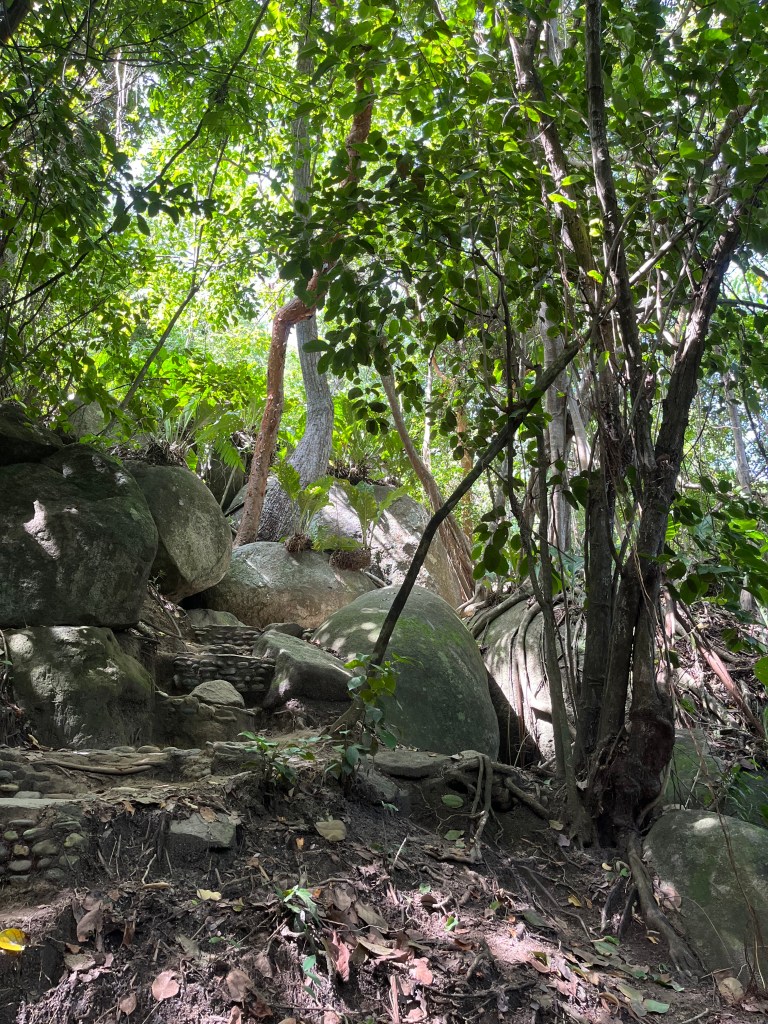
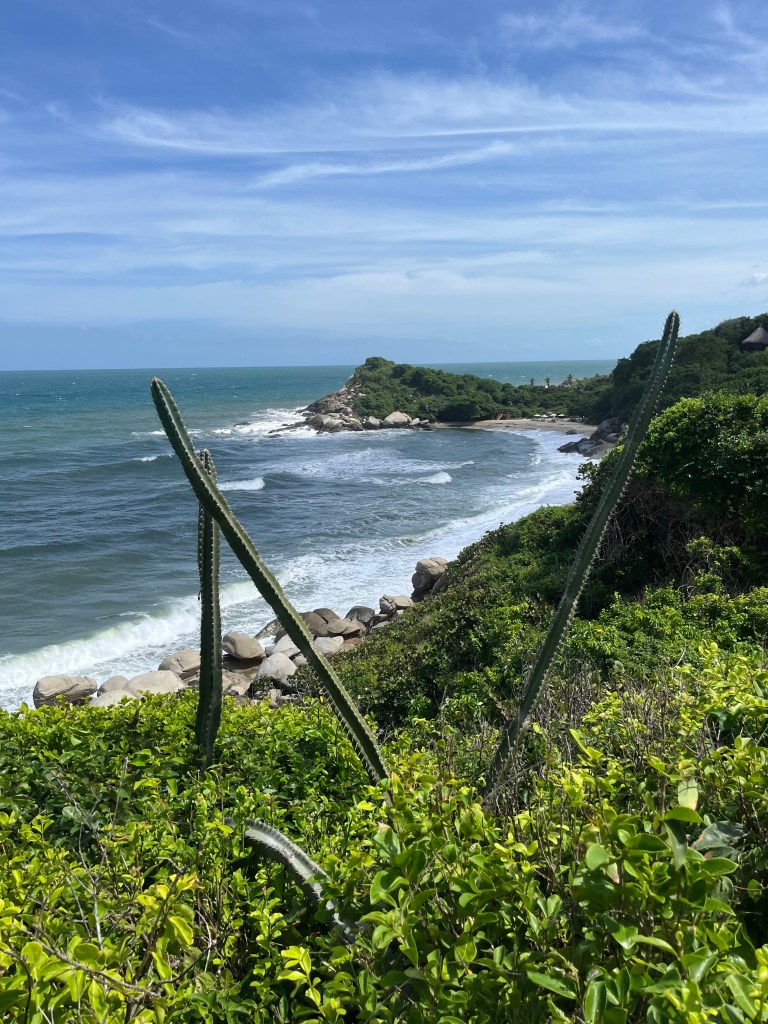
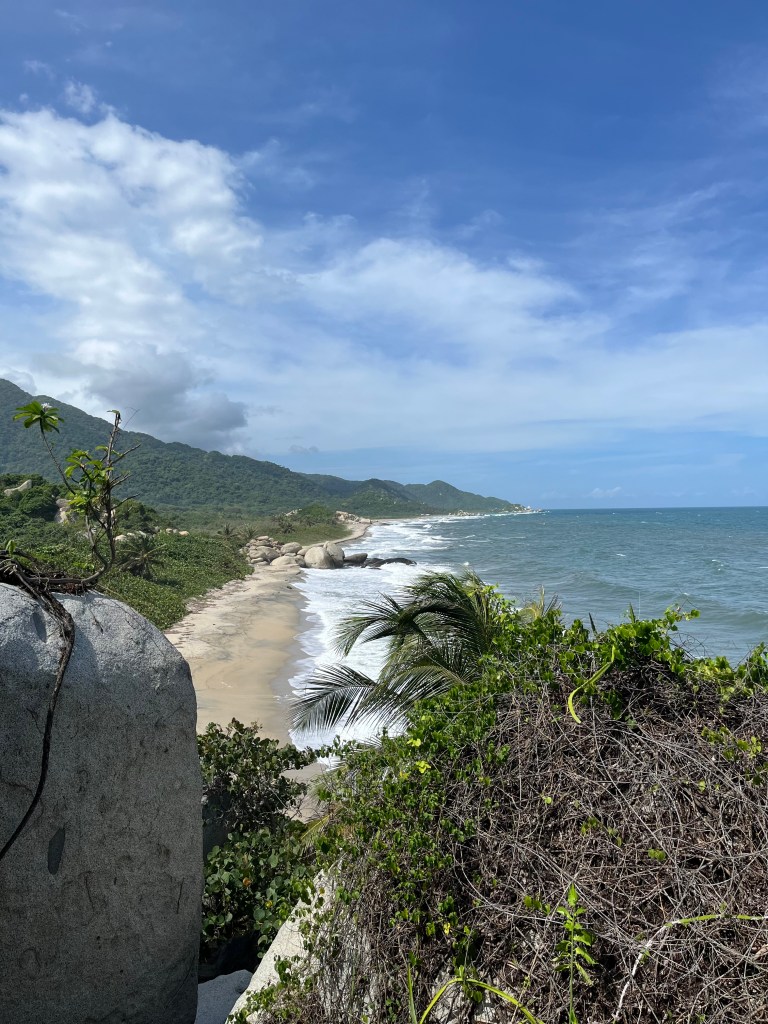
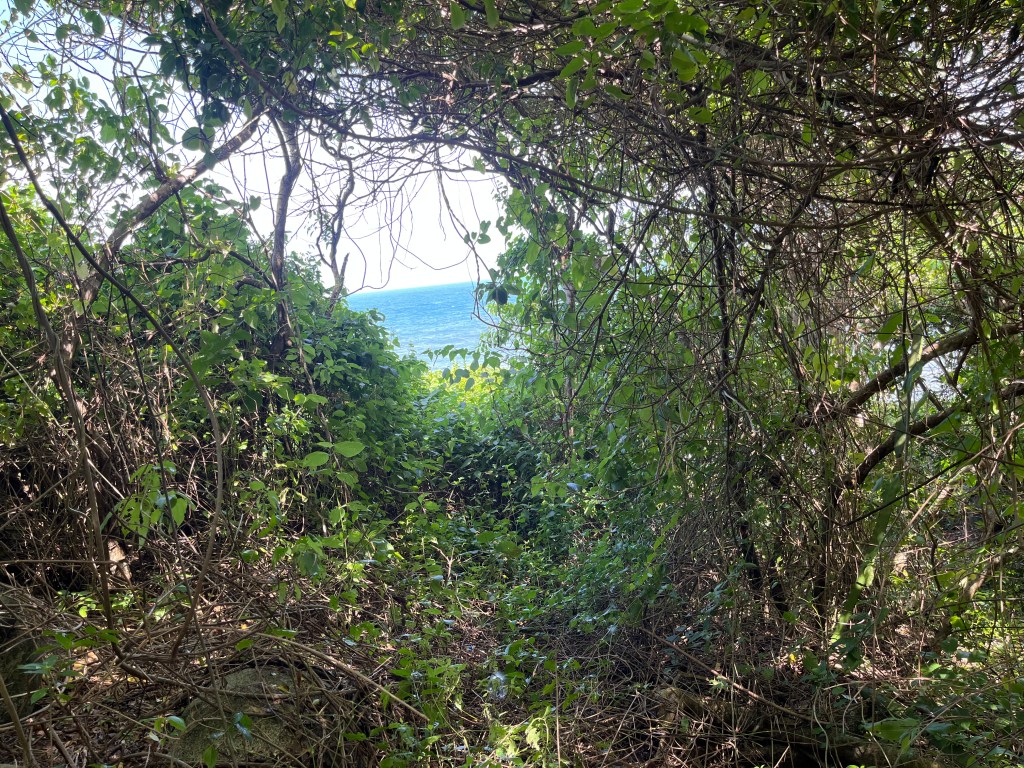
At the top of the path was a man selling paletas (fruit-flavored ice pops), ice cream, soda, and coffee. Random snack shacks in the middle of trails is not an uncommon site in Latin America. They are an oasis! A few bucks provides you with something cold and sweet to have the energy to keep going. They also always have a trash bin for your garbage so you do not litter. Once I was refreshed by my soursop paleta and took more swigs of water from my 3-liter hydration pack, I was ready to keep moving towards Cabo San Juan del Guia. The path descended onto a flat sandy ground that took me into a mixed broadleaf and interior mangrove forest.

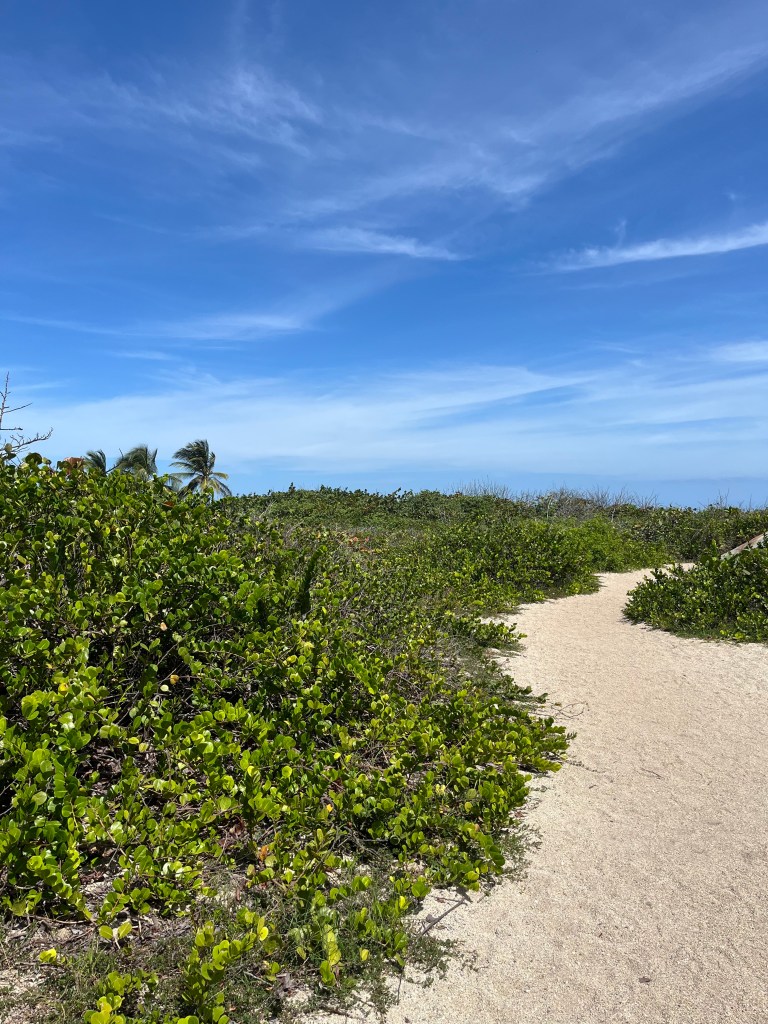
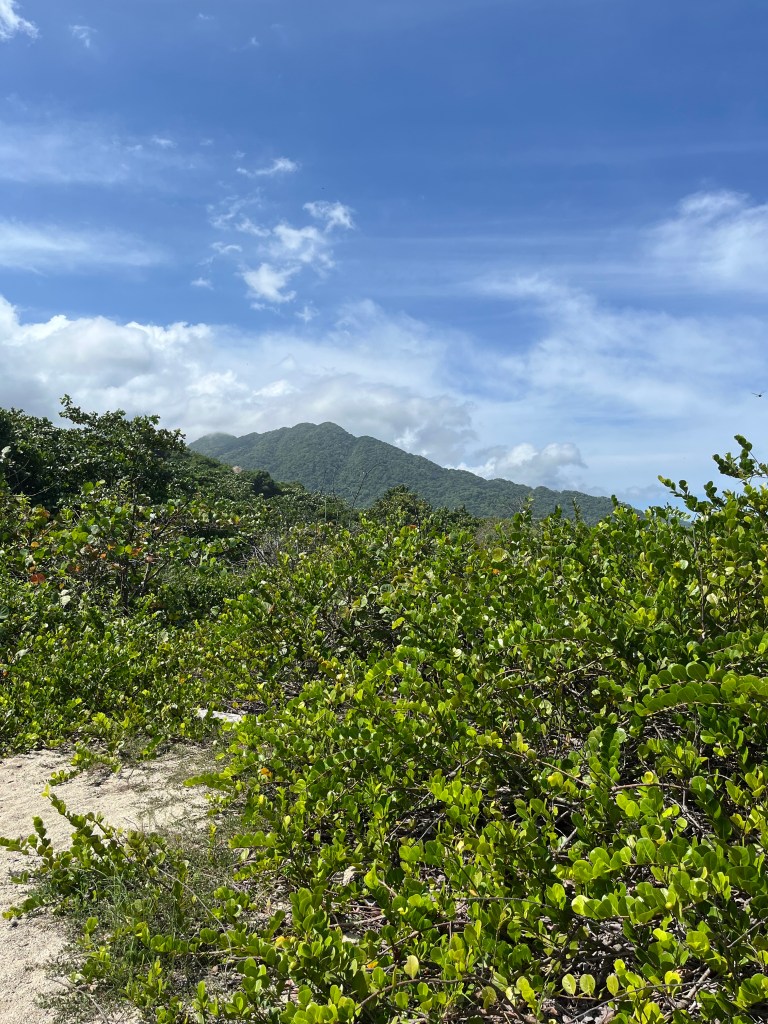
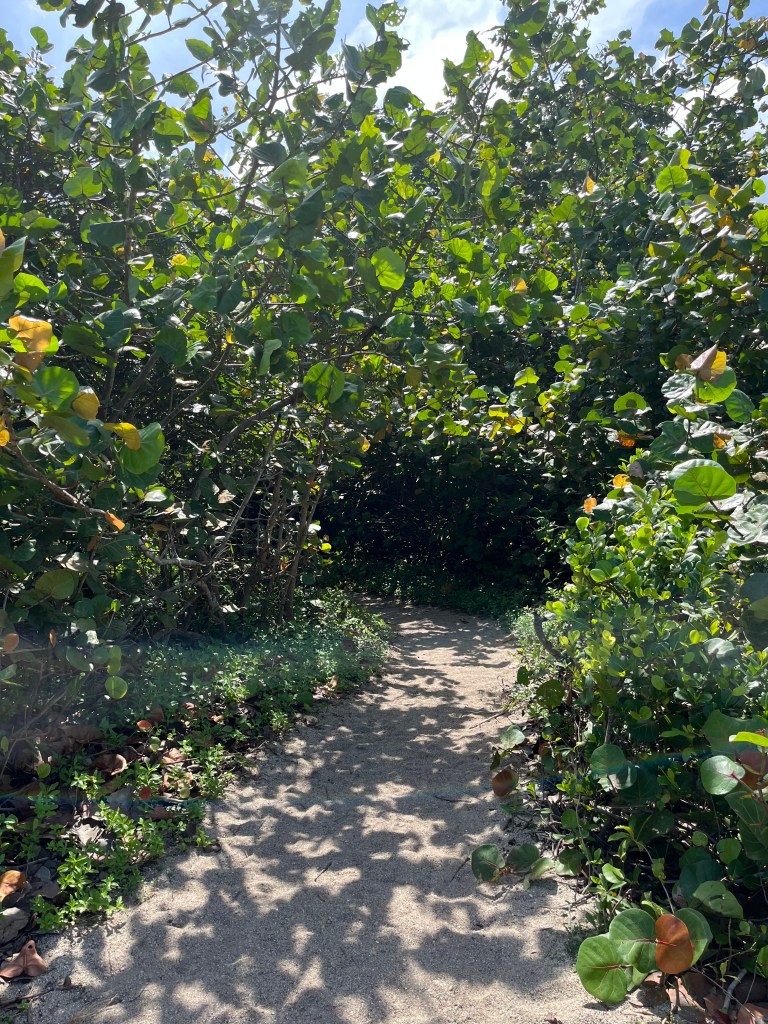
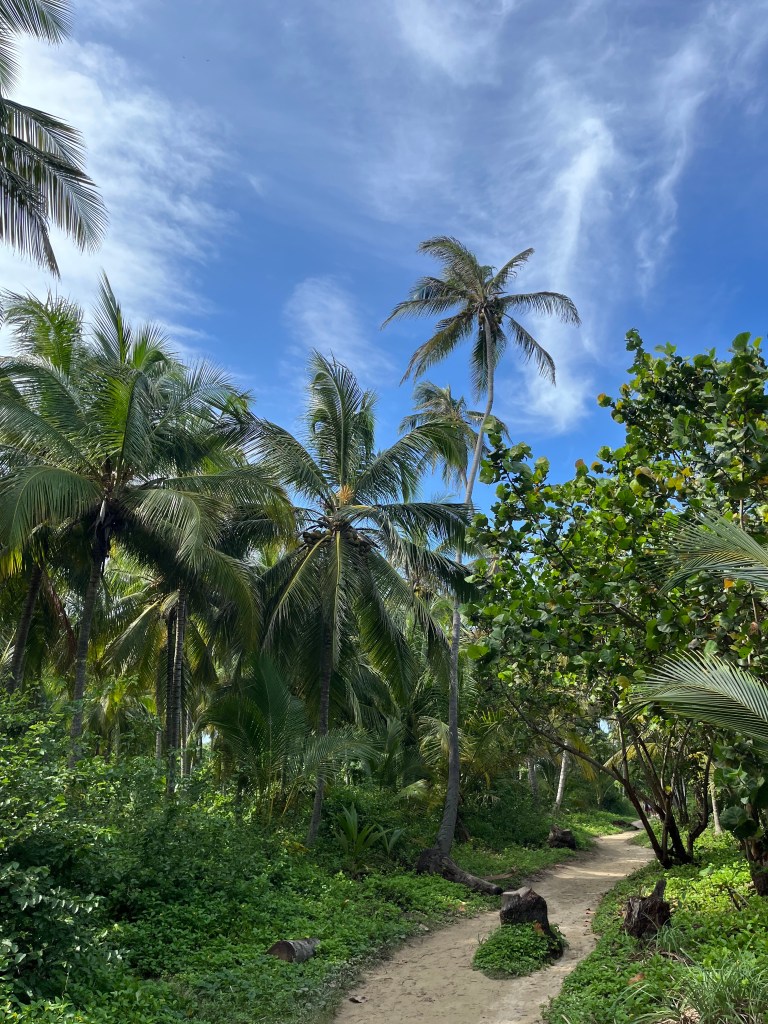
Though I love being in natural spaces, the 1.5 miles (2.4 kilometers) between the entrance to the mangroves and the Arrecifes area was extremely monotonous. I was getting hot, tired, and hoping Arrecifes would arrive sooner rather than later. Along the way I ran into a group of young Australians who needed to borrow some bug spray and sunblock as they were not well-prepared. We had a good chat about a number of things that helped that mile-and-a-half go by quicker. As we neared camp grounds and a horse camp, we realized that Arrecifes was close. An overlook at a brackish inlet looked inviting; however, there were signs stating that the waters were caiman habitat and people should not swim. I did not see any caiman in the water or basking in the sun, but I still did not test my luck nor did anyone else.
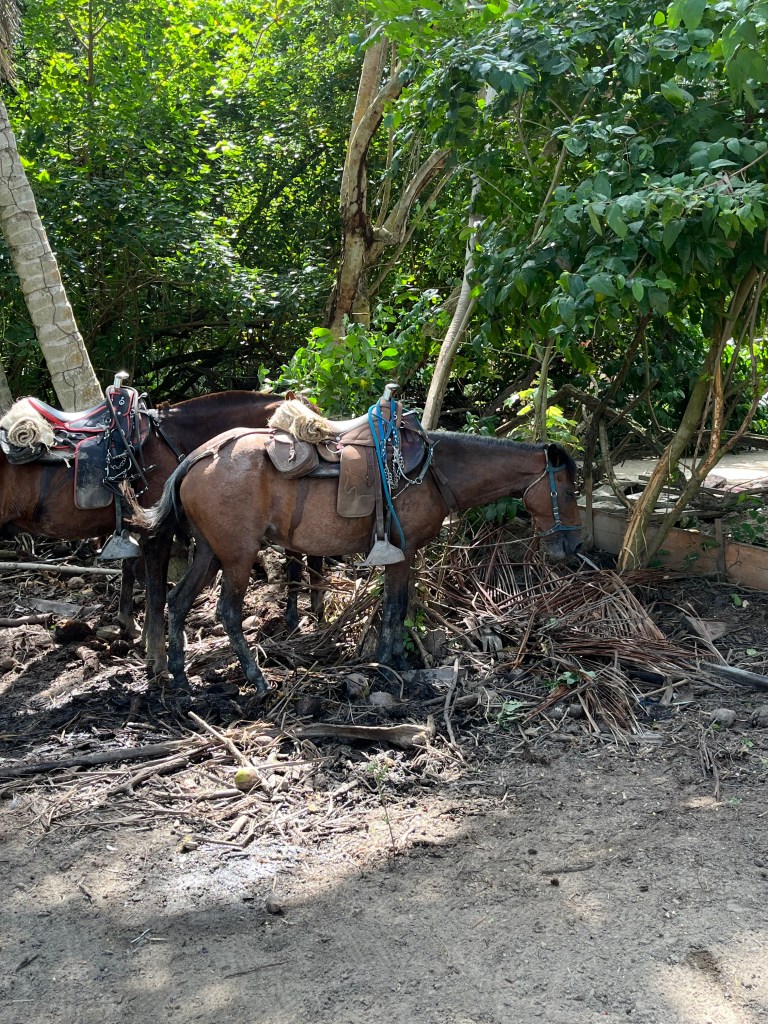
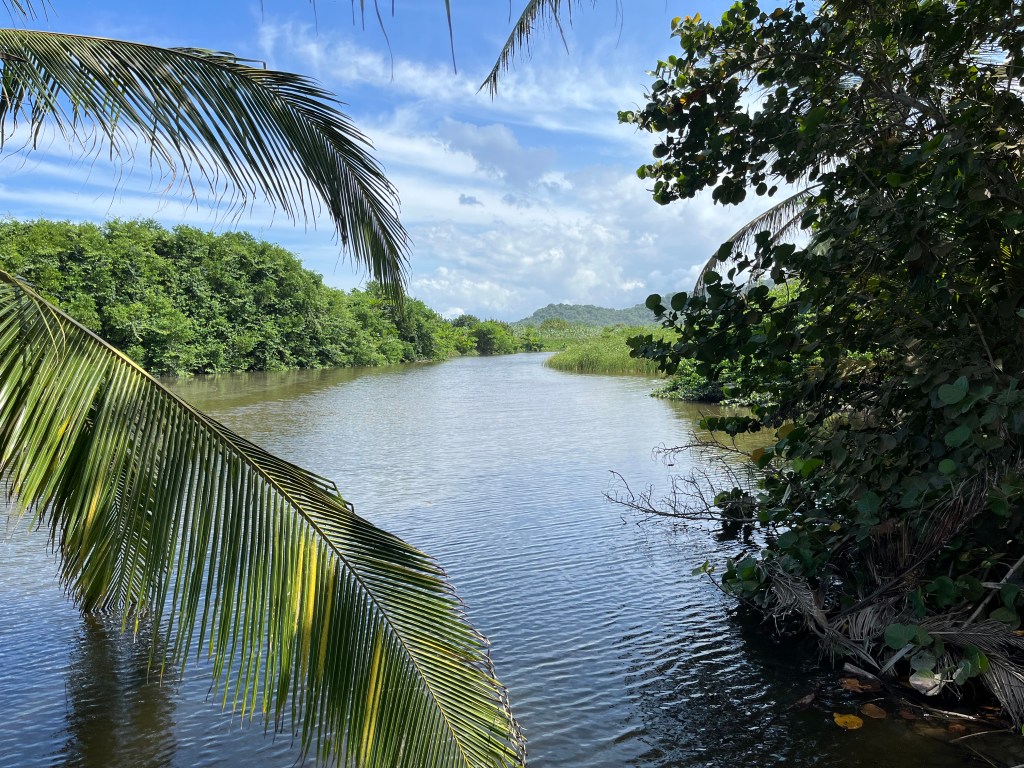
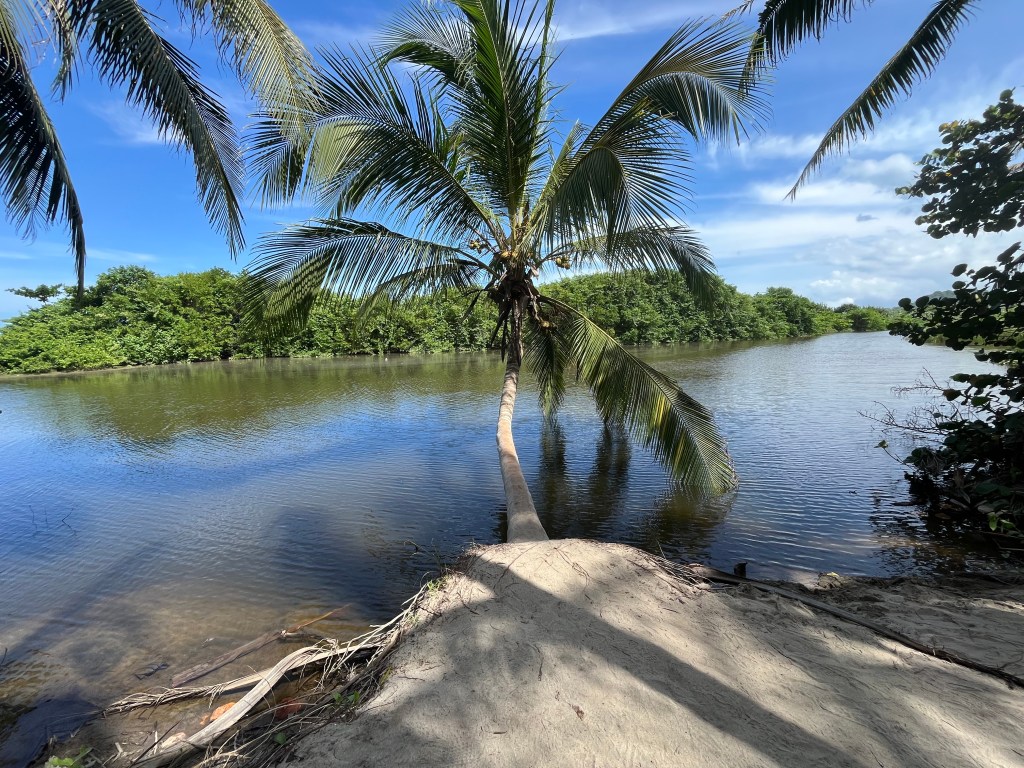
Once at Arrecifes I parted ways with the Australians and stopped at a restaurant for a meal. As I ate, I chatted with a ranger who spoke good English. Among other topics, I asked him if he had ever seen a wild Colombian Red-Tailed boa snake. For those who may not know, before Yahm and I went on this adventure we had a red-tailed boa named Eve. We loved her and she was the hardest thing to give up in order to go on this adventure. When his father was a ranger in the 1970s and early-80s, Colombian Red-Tailed boa numbers were declining because they were taken from the wild to supply the exotic pet market in places like the United States and Europe. However, starting in the mid-1980s, exotic reptile sellers were able to successfully breed red-tails outside of South America and no longer needed to source wild individuals. The black market collapsed and now their numbers are up. I was excited to hear that. He mentioned that red-tails stay away from heavily-used paths and are easier to find in the backcountry. They are also more active at dawn, dusk, and at night. So I did not get a chance to see a wild Eve counterpart, but it was nice to know her wild cousins were alive and well. Miss you Eve-y girl!
After lunch, it was time to finish what I started. After passing along the coast of Playa Arrecifes, I headed through a forested section that meandered along the Caribbean but blissfully provided shade from the equatorial sun. I was able to enjoy some silence for around 20 minutes with no other humans.
As I stumbled through a maze of rocks and steep steps, I came across other humans again. (Oh well, silence over.) The maze of rocks gave way to a stream that required park officials to plant sand bags in it so that those without proper boots, or during high flows, could cross safely.
Once that creek is crossed, the finish line is less than 10 minutes away. As I arrived at Cabo San Juan del Guia, I saw a huge horse camp, a gate with information, camping grounds and food establishments.
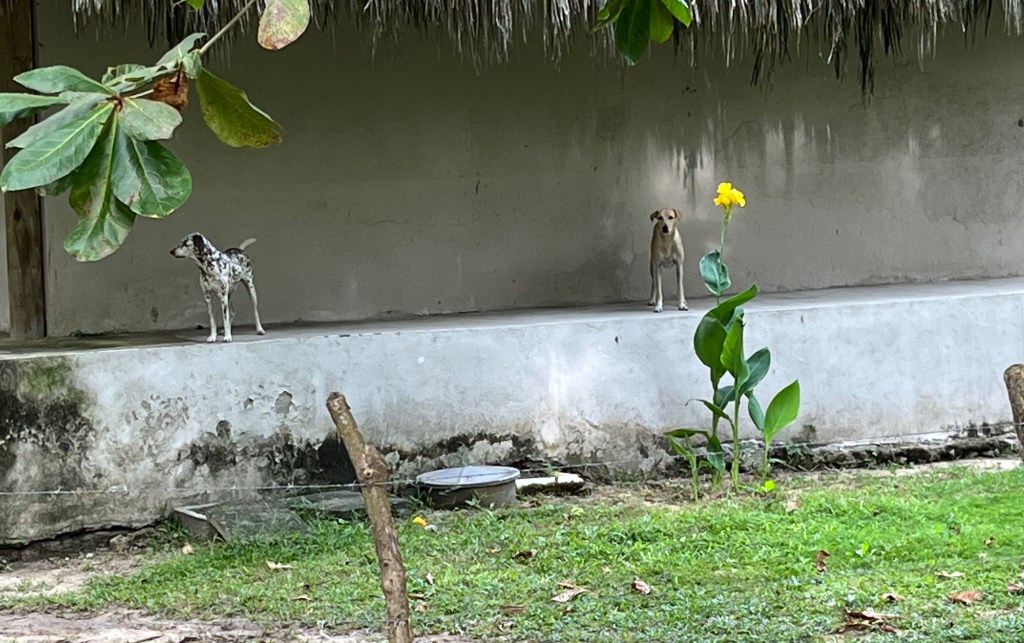
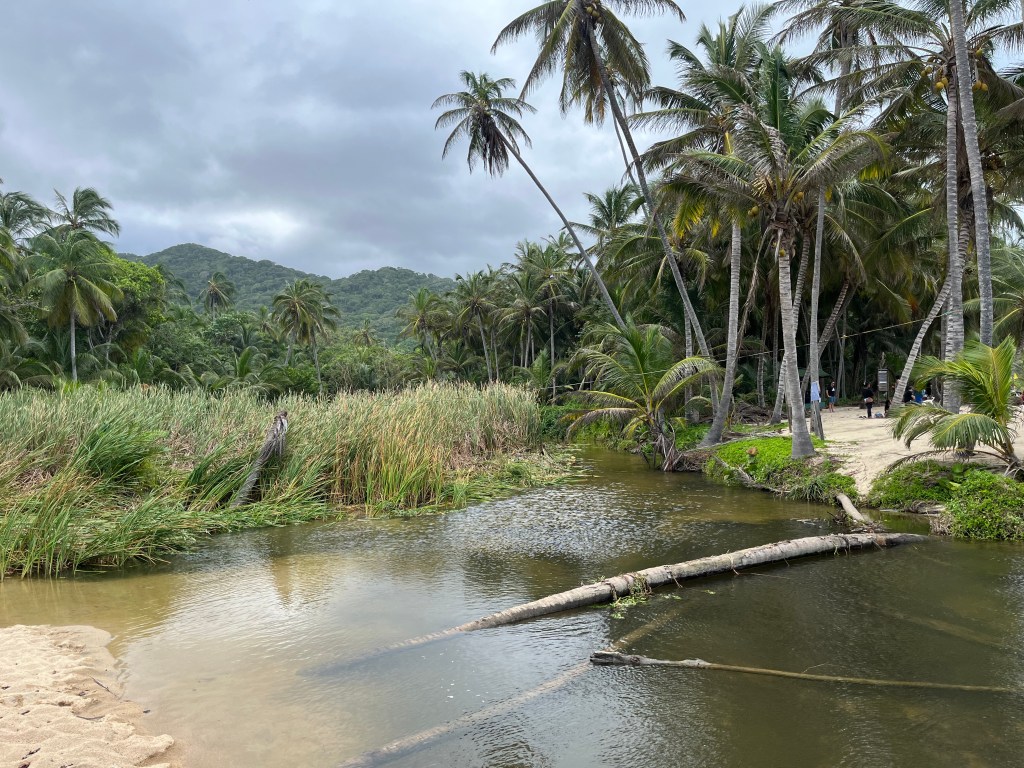
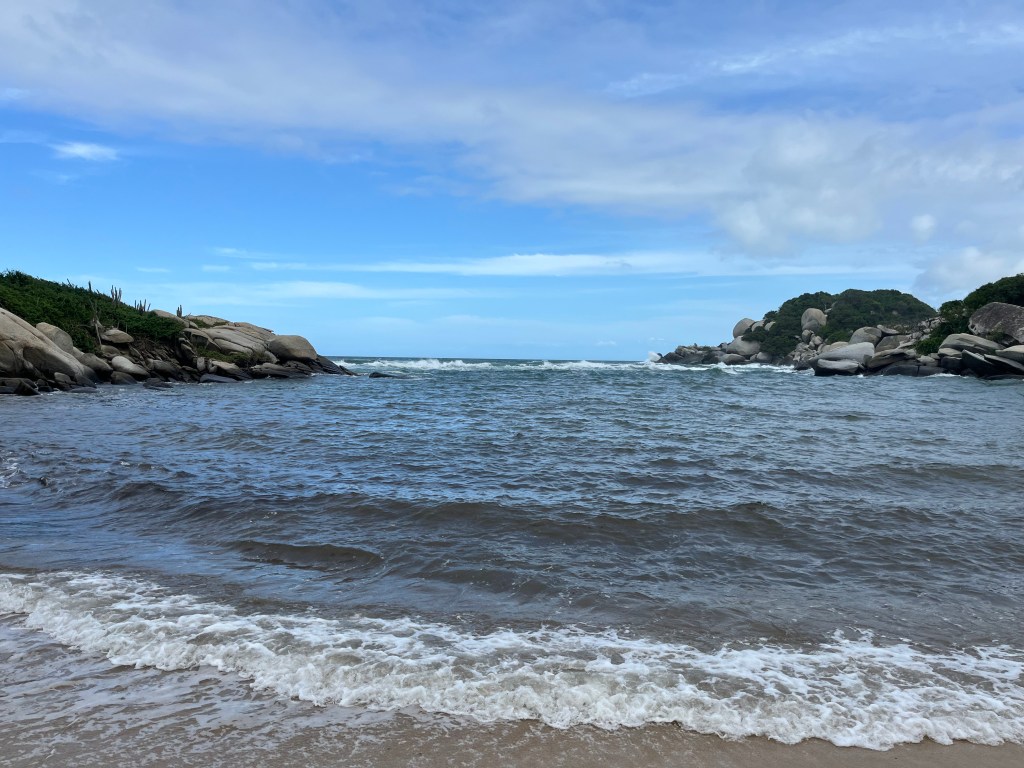
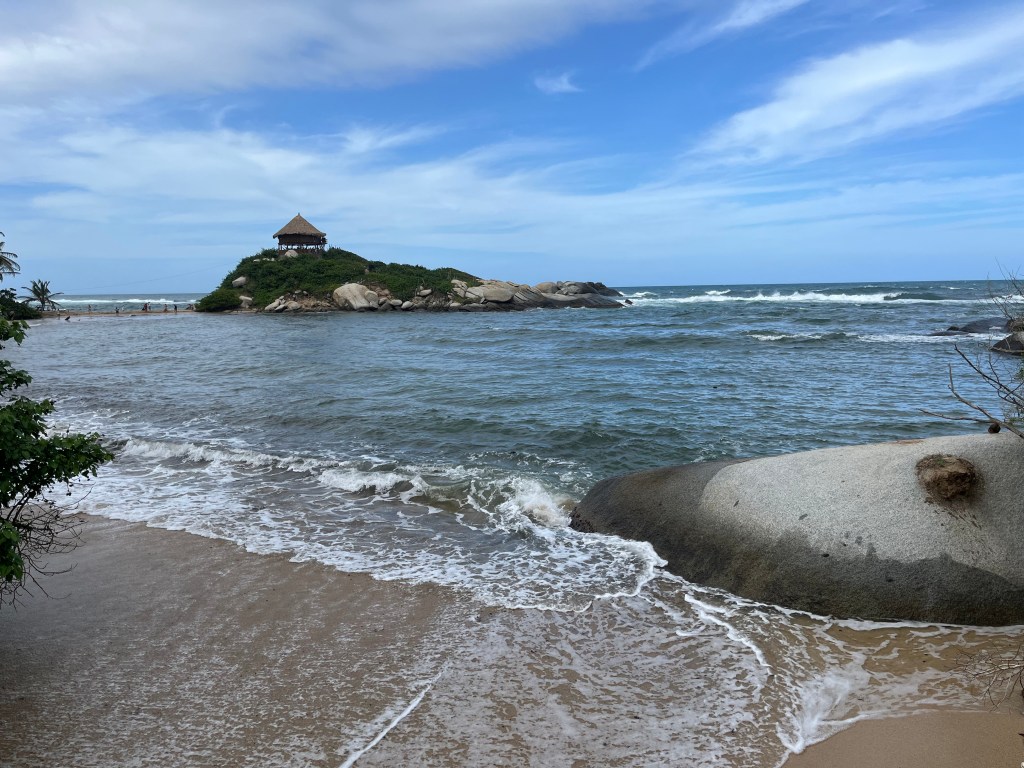
I hated to have to go back and walk another 3-plus miles (5-plus kilometers) back to the lodge. Alas, it was mid-afternoon and I needed to get back before sundown (5:30pm). As I headed back, I was exhausted, but found the reserves to get myself back to the hotel within half-an-hour before sundown. It was officially an eight hour day but well worth it!
One notable thing to happen on my hike back as I got close to Playa Arrecifes was an interaction with a capuchin monkey. A loud group of tourists with a dog were gathered around a grove of coconut palms observing some capuchin monkeys. All of the noise seemed to annoy the monkeys and one individual proceeded to loosen a coconut and drop it down to the forest floor. The humans and the dog scattered. The monkey stared down at them with an inflated chest and bared teeth. It’s not possible to get inside the minds of animals, but this monkey seemed to let the group of people and their dog know that it was annoyed and would not tolerate them any longer. I could not get a video of the event but did capture the offending monkey leave the scene of the crime after the fact. (The monkey moving along the palm frond and away from the camera is the offending party.)
After a weekend away from Yahm and in the beauty, serenity, and lushness of Tayrona National Natural Park, I was ready to head back to Santa Marta and see my wife. It’s been over a month for us in Colombia and this country is absolutely amazing. I highly recommend it for all travelers. If you visit Colombia, be sure to visit Tayrona. It’s a truly special place. Join us on our adventure to our next destination. Be sure to like, comment, and subscribe to Traveling While Introverted so you don’t miss it!
 Traveling While Introverted
Leave a comment