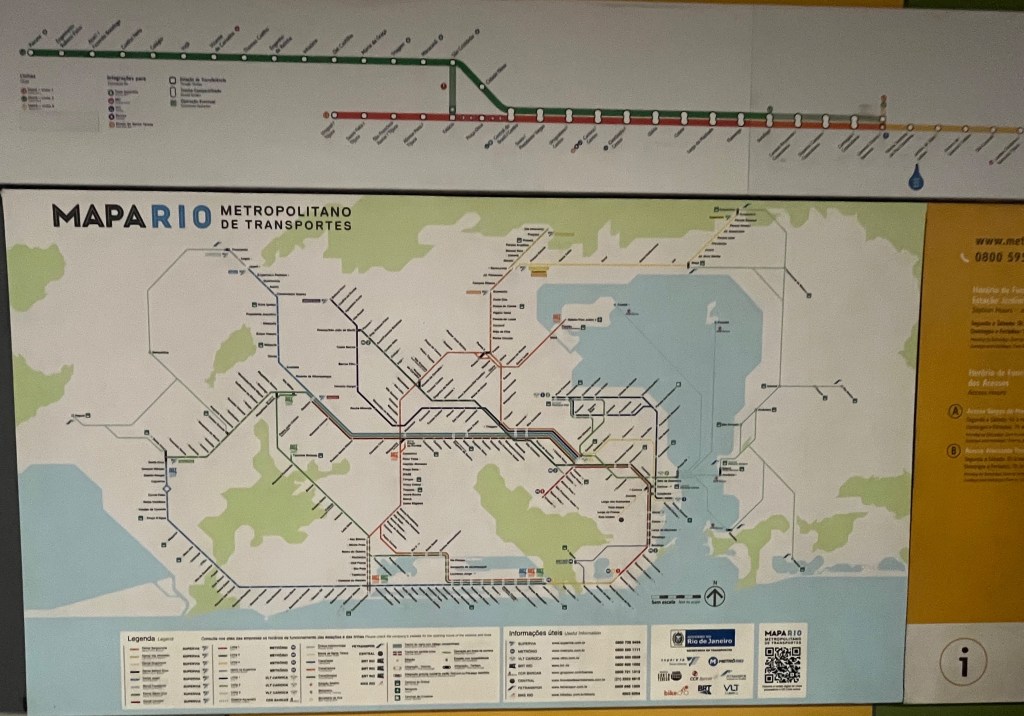
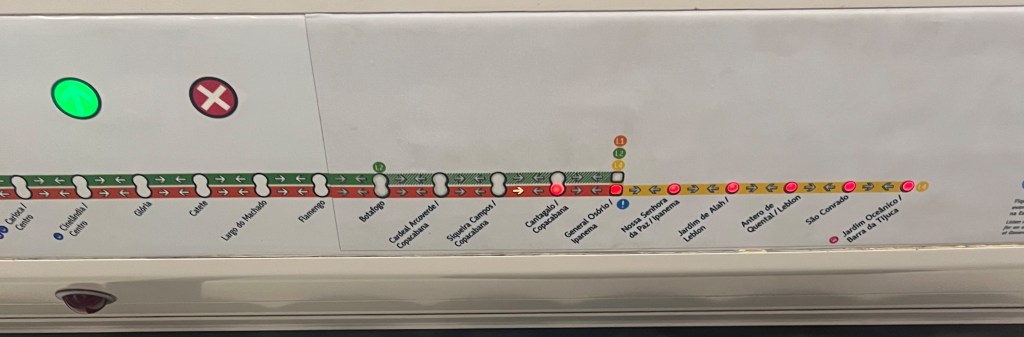
Our time in Rio de Janeiro was a lot of fun, even though we barely scratched the surface of Brazil’s second largest city. Rio is not as sprawling as some other megacities, but it does cover quite a bit of land. Mixed transit types cover almost the entirety of the city’s 471 square miles (1,221 square kilometers). Light rail, subways, and buses traverse the metropolitan area. The Metro (the name of the subway system) features three lines that cover 36 miles (58 kilometers) and cater to the main sectors of the city. As of 2024 (the most recent data available), it averages a daily ridership of just under 500,000 people and an annual average ridership of 182.4 million people. We utilized this system a few times while in Rio to get around and found it hyper-efficient.
From left to right: a map of the subway system; the interior of the cars featured a route map with lights that turned on and off based on where the subway was on its route; a video of an approaching subway.
The light rail and bus systems cover much more of the city’s land area and surrounding suburbs, but we mostly used the subway during our time in Rio. We did, however, use a special form of transit specific to one area. As we shared in our general Rio recap, we visited a neighborhood called Santa Teresa. Because the neighborhood is built into the hills above the city, the best way to get there is taking a bonde (street car). These charming yellow streetcars feature two lines that depart from the same downtown station. One line hits the central areas of the neighborhood, while another goes to the western edge of the neighborhood.
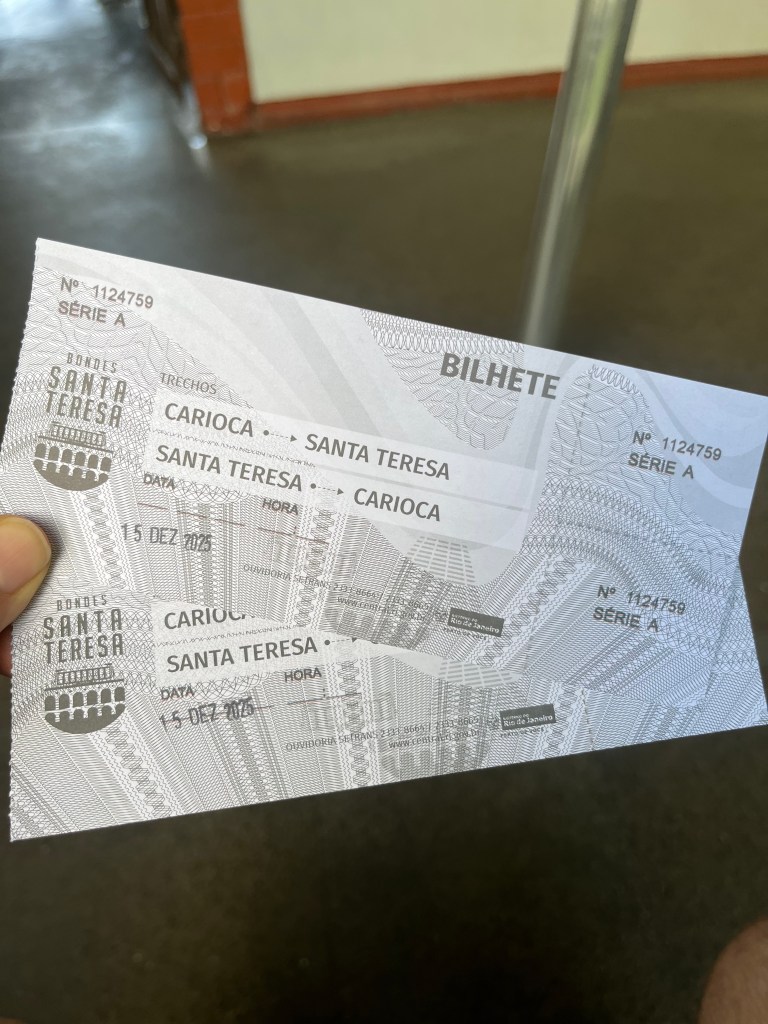
Top row, from left to right: the bonde logo; our tickets, which look really cool; Yahm and I preparing to board the bonde.
Bottom row: people getting off a full bonde in central Santa Teresa.
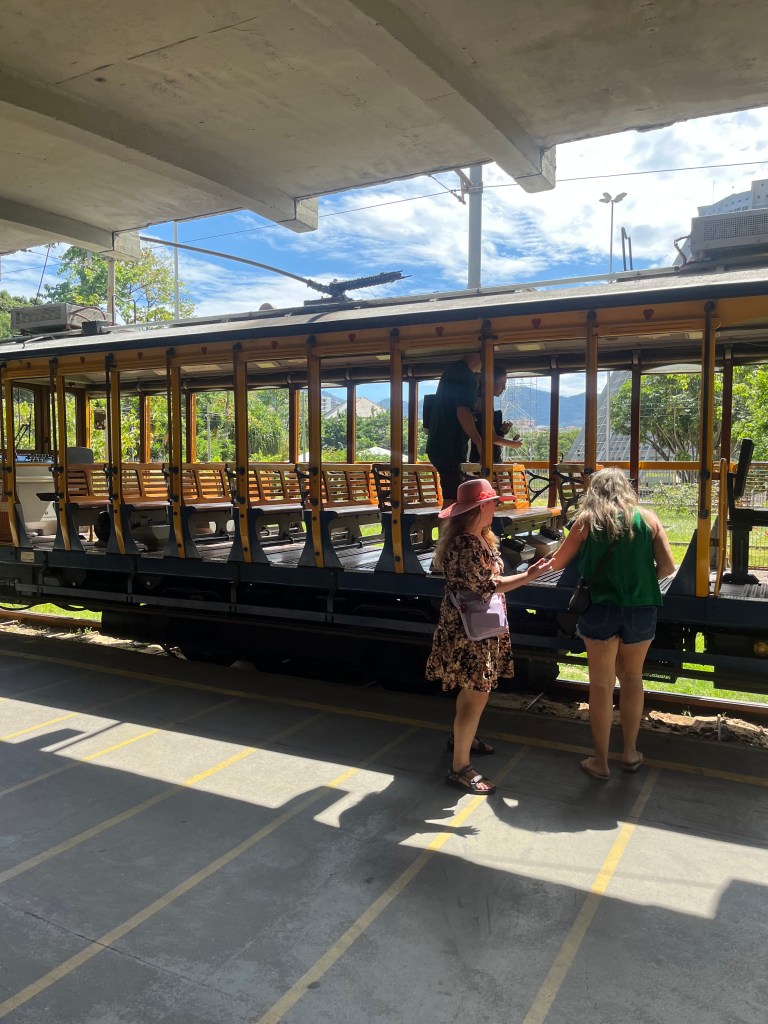
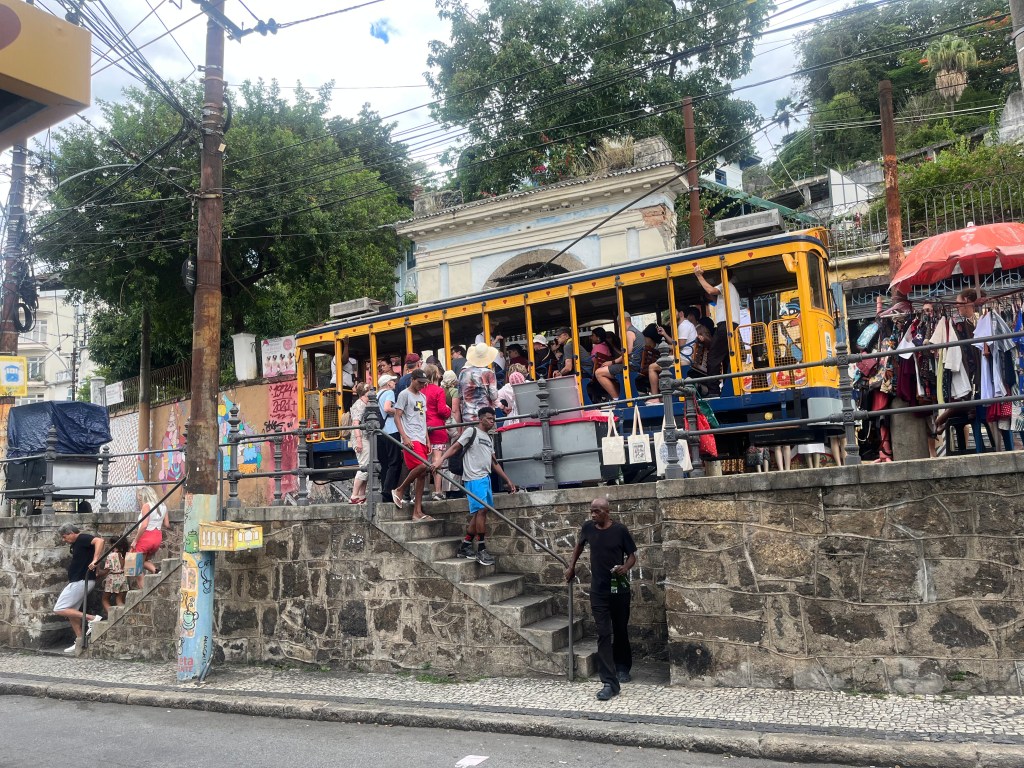
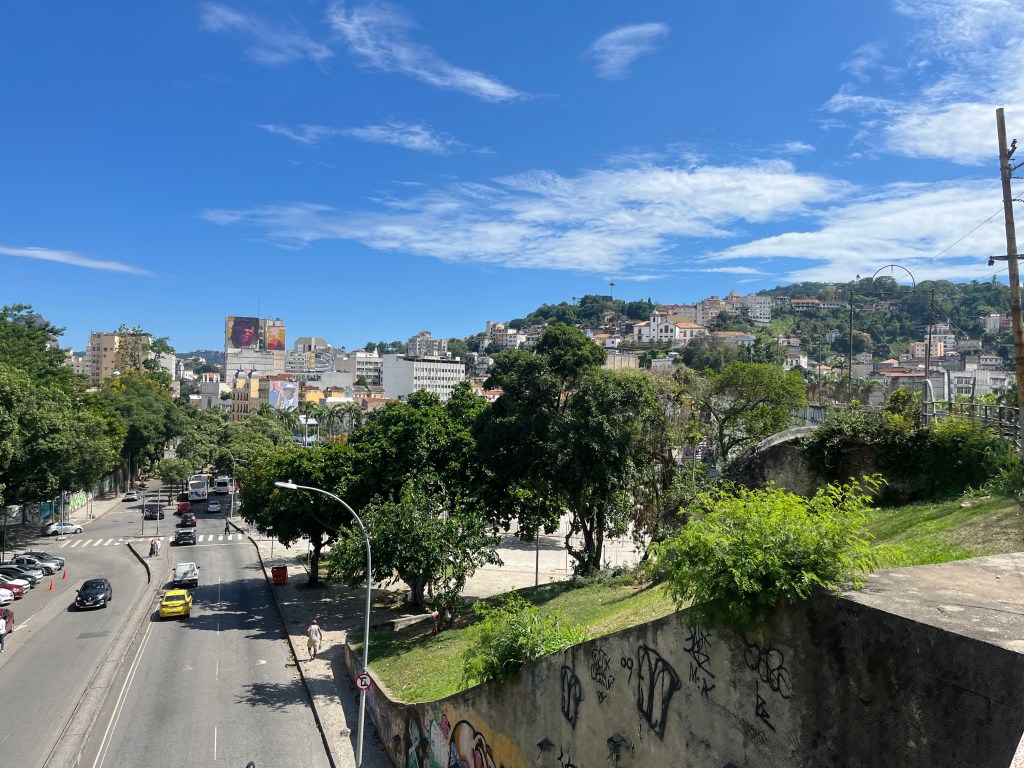
The ride up the hill on the bonde was a cool experience as we watched the modern architecture of central Rio disappear and the older buildings and cobblestone streets of Santa Teresa come into full view.
The bonde tends to be a herky-jerky ride that can struggle to get up the steep hillsides Santa Teresa sits atop. That said, the conductor did a good job to hit the sharp curves calmly so we would not be tossed around. Besides a conductor, there is also somebody who sits in the back of the car and helps the conductor open and close the gate to let people in and out. This person also ensures that riders on the street are not missed so that the conductor can focus on the road. The road into Santa Teresa is narrow so cars, motorcycles, and pedestrians are constantly weaving around bondes.
The gate that lets people on and off the bonde is a wooden bar that either the conductor or the conductor’s assistant operates.
We took a bonde to the end of the route, and as it was making its return back to the main station, we got off in the center of Santa Teresa. Overall, it was one of the highlights of our time in Rio and something I would highly recommend to folks planning to visit Rio. After we finished visiting Santa Teresa and eating a great lunch (which Yahm mentions in her post) we wound up walking back to central Rio. On our walk down the hill a bonde passed us.
Next time we visit Rio we will explore more of the city with public transit given how well connected it is. Before we share experiences in our next country, stay tuned for one more post about Rio’s Tijuca National Park. Be sure to like, comment, and subscribe to Traveling While Introverted so you don’t miss it!


 Traveling While Introverted
Leave a comment