After three short weeks in southeastern Brazil, we flew to Buenos Aires, Argentina. Yahm was especially excited to visit Buenos Aires because of its literary culture and, to be very honest, the musical Evita. She knew that people had mixed feelings about the city, but was still curious to experience it herself. Adam, on the other hand, was concerned he wouldn’t like Buenos Aires because it wouldn’t jive with his tastes. He was much more excited about visiting other parts of Argentina, such as Patagonia, the Gran Chaco, and the Pampas.
The neighborhood we stayed in for the first few days is called Palermo. While it has some tourists, it also has plenty of locals. Long-time readers know that we prefer to stay in areas where we can attempt to connect with locals and get a sense of what living in a neighborhood feels like. Palermo is, on the one hand, very close to parks, museums, and other attractions, but also has plenty of restaurants, cafés, and grocery stores so that no one has to travel far to get their daily needs. Wide one-way roads, leafy sidewalks, and medium-rise buildings form the cityscape. The city’s walkability, not just in Palermo but everywhere, is particularly impressive considering how large and sprawling Buenos Aires is.
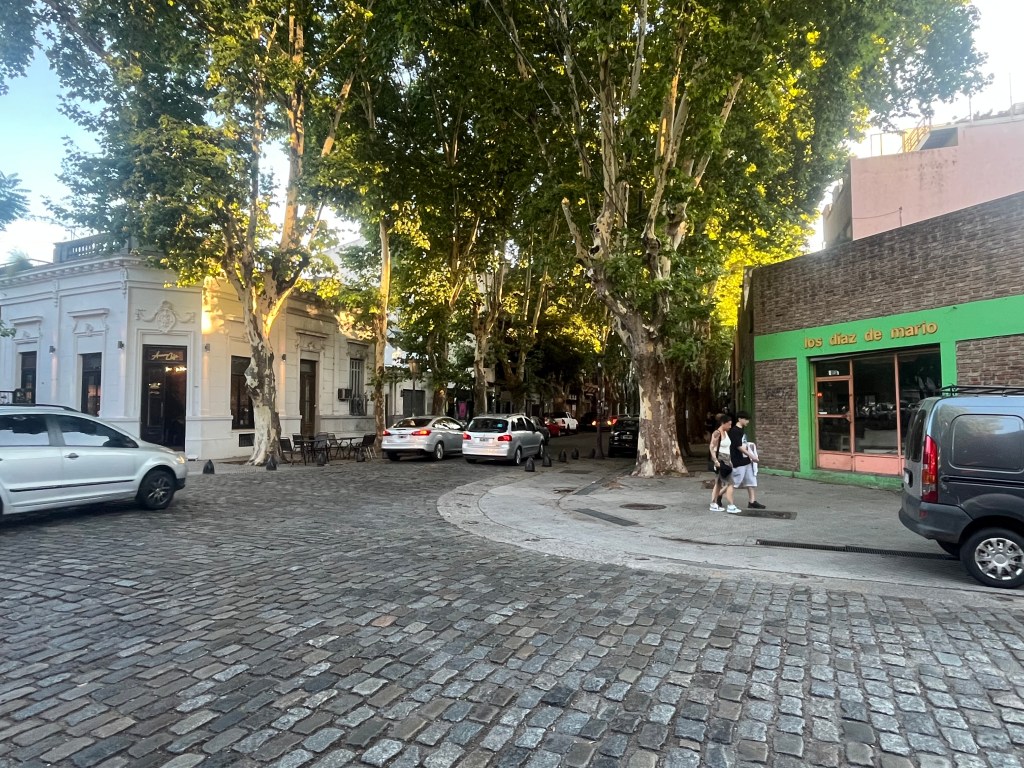
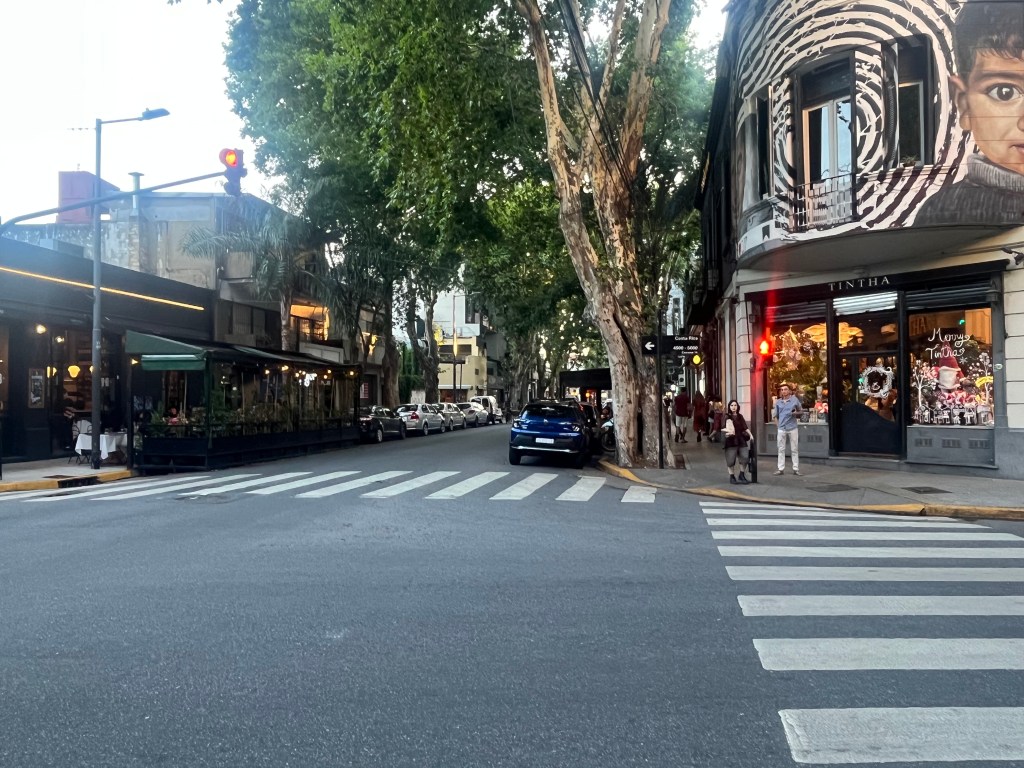
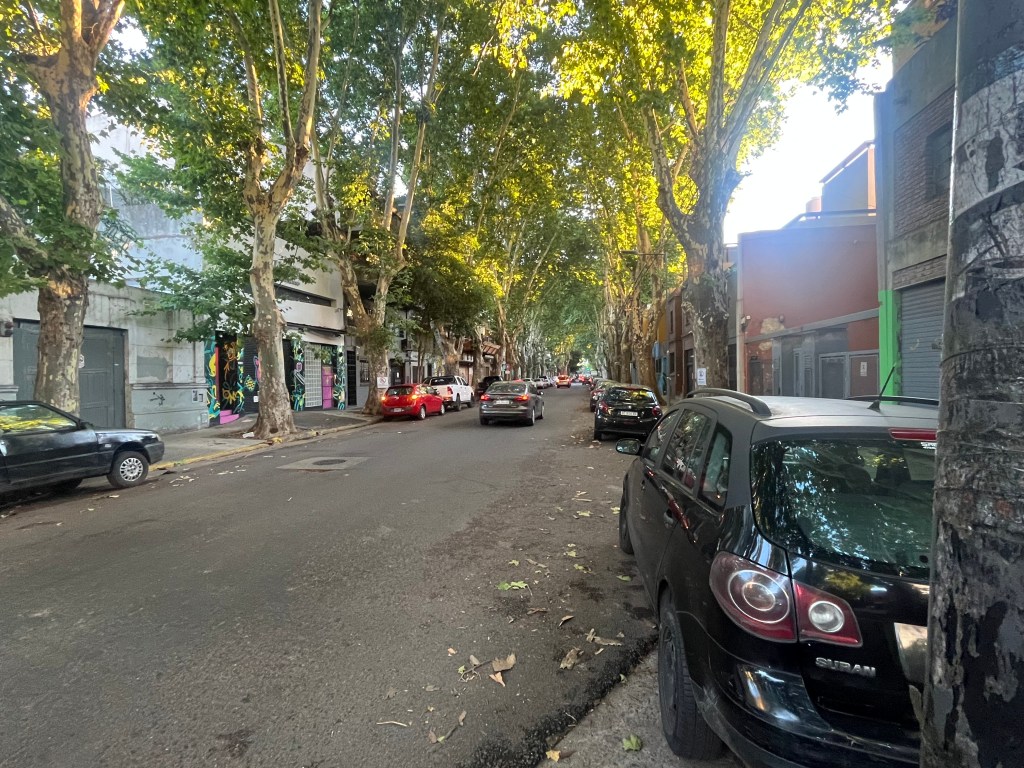
We had planned to spend about a month in Buenos Aires so we really had a chance to take our time exploring our neighborhood and surrounding areas. Almost immediately we realized that Argentine culture is unlike other Latin American culture that we have experienced so far. No one seems to be in a rush, ever. This is especially true in restaurants where it takes longer to order a meal, get the food, and pay than to actually eat the food. Considering Argentina’s long history of dictatorships and deeply Italian influence, it makes sense that they take time to relish sharing meals and taking in the moment. For two people who get excited and hyper about things, coupled with general Jewish anxiety, this aspect of Argentine culture is a bit of a shock.
After a few days of mostly walking around Palermo, we moved to our temporary home for three weeks. Here, we had another house and pet sitting opportunity through Trusted Housesitters. (If you click on that link and sign up, we get 2 free months on the site. Be a mensch and help us out.) This time, we got to watch a dog, Negro, and three cats, Paez (black), Fito (orange), and Tina (tuxedo). Yahm has nicknamed Fito “Fito Badito,” even though he never steals anything, and Tina “Tina Ballerina” on account of her being so slight and elegant.

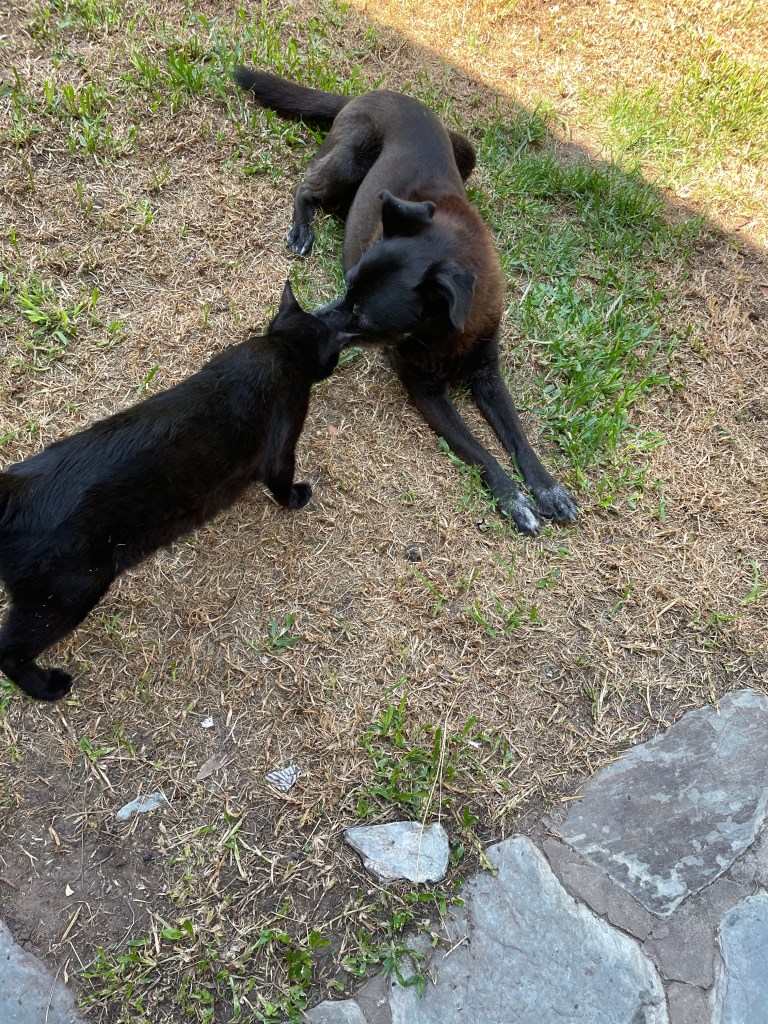
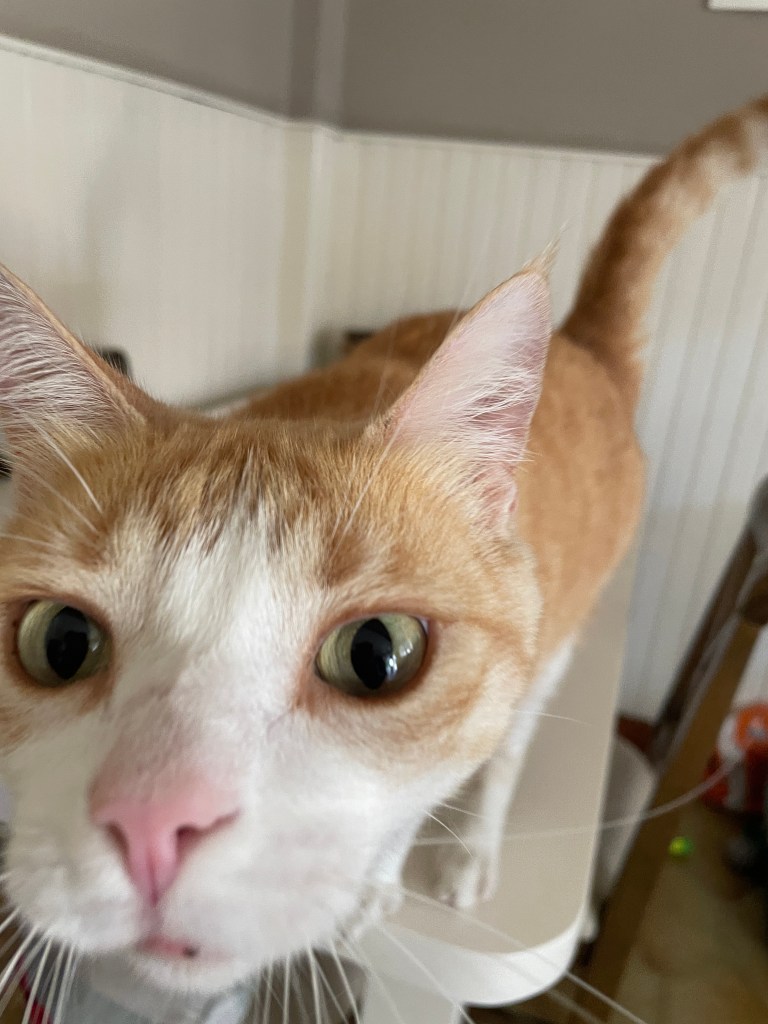
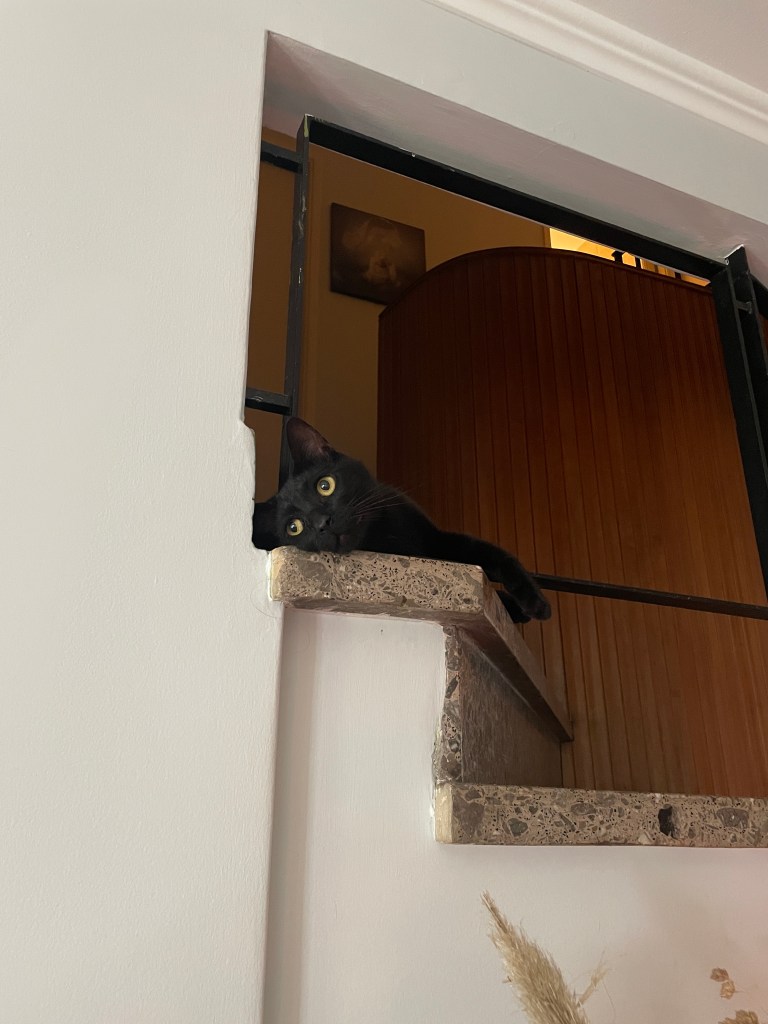
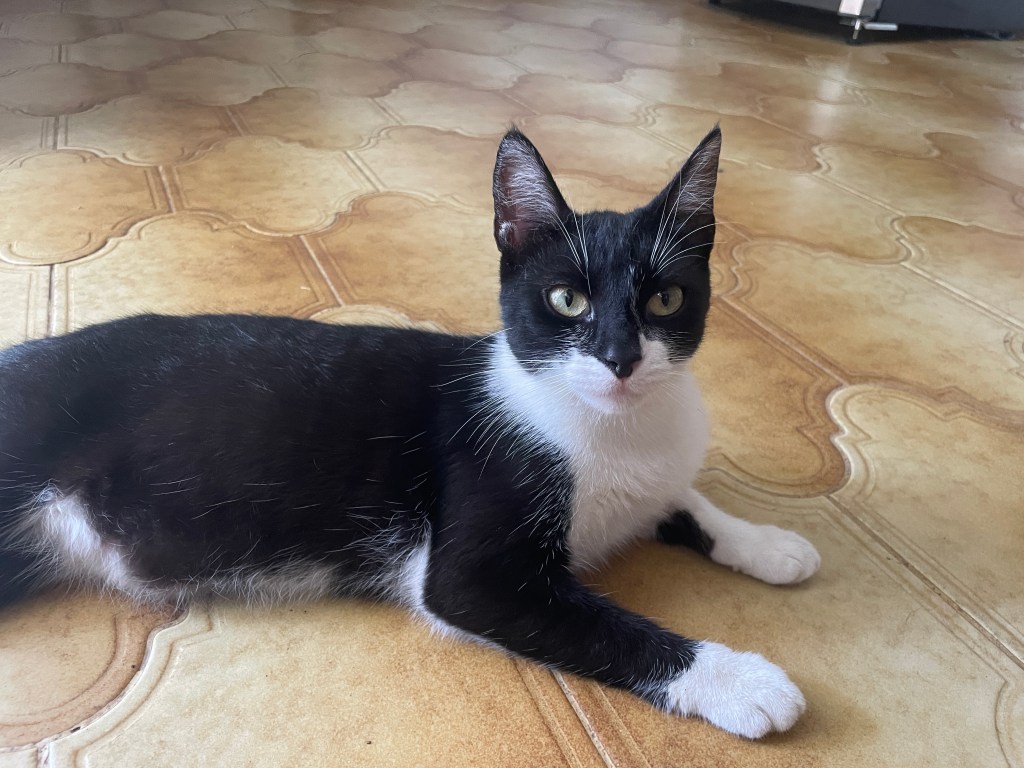
The home is located in San Isidro, a suburb north of Buenos Aires that is mostly accessible via train and bus, rather than the metro, which means that going into town to sightsee is a bit of a schlep. Despite that, the long house and petsitting stint means we can take our time getting to know Buenos Aires.
One of places Yahm was excited to visit was the San Telmo Fair & Market. San Telmo is quite famous for its bohemian and artsy vibes. On Sundays, one of the main streets is shut down to traffic and is turned into a huge pedestrian fair filled with crafts, antiques, and food. Yahm mostly wanted to go for the food (obviously), but both of us appreciated all of the beautiful crafts we saw along the way. The photos below are of the San Telmo fair and neighborhood, and two murals that we liked. The mural on the left is of Lionel Messi and Diego Maradona, two of Argentina’s best soccer stars who both won a World Cup title for Argentina. (Not at the same time.) The mural on the right is of Mafalda, a renowned comic strip character. Comics have a long and prominent role in the socio-political history of the country.
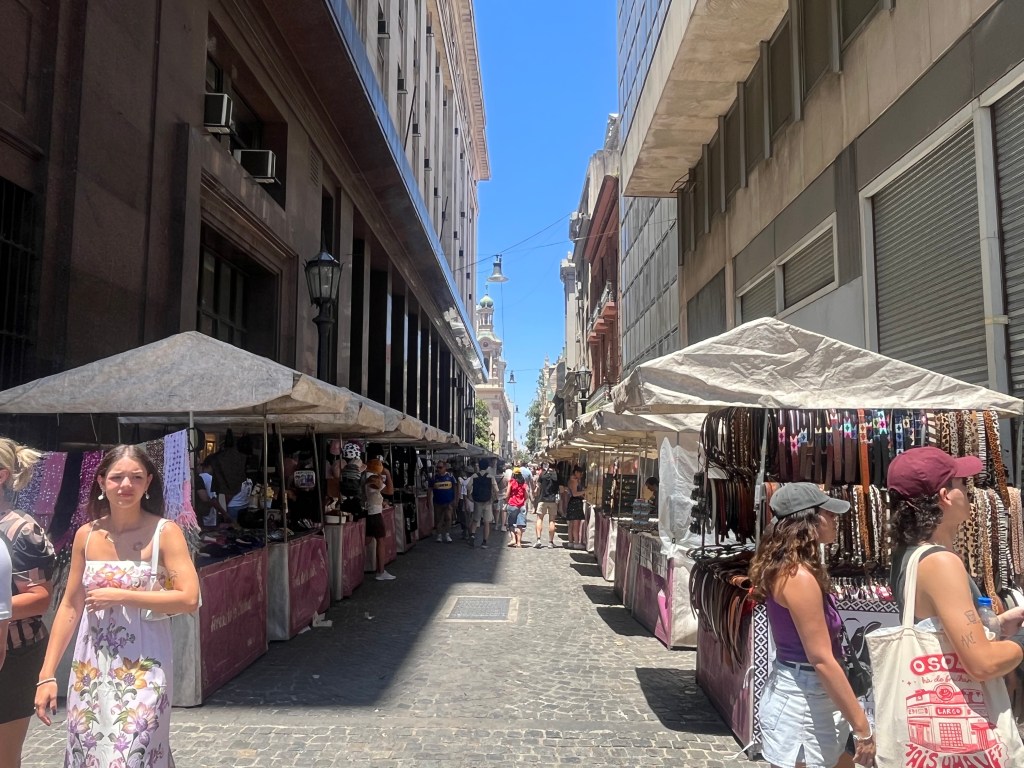
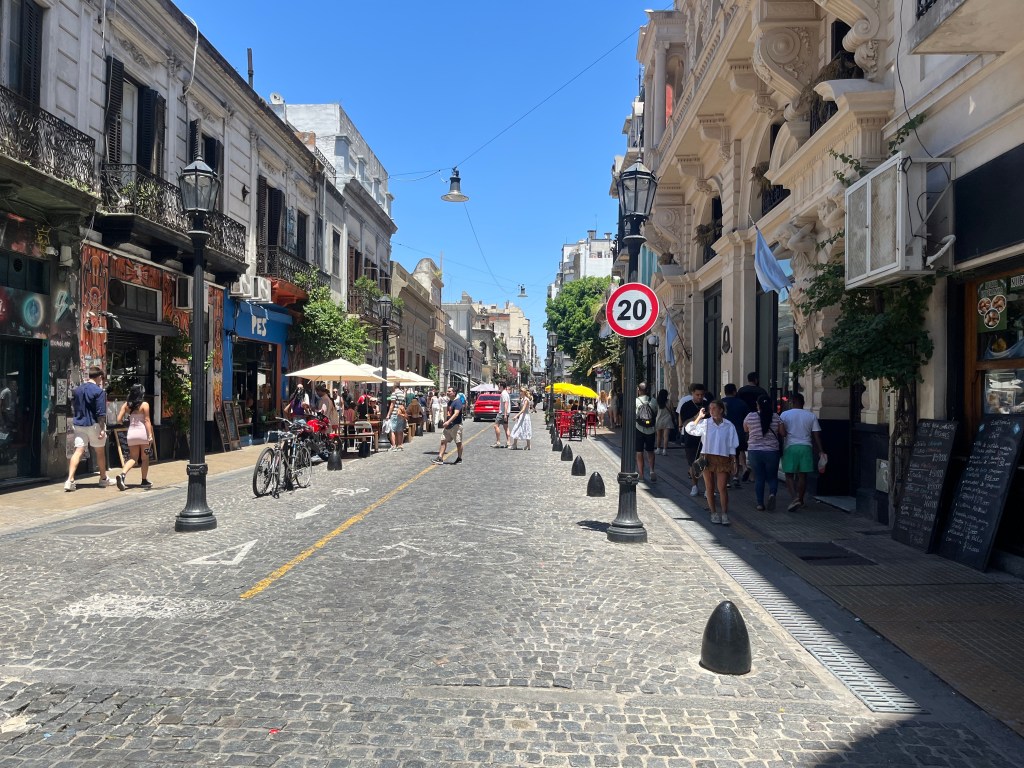
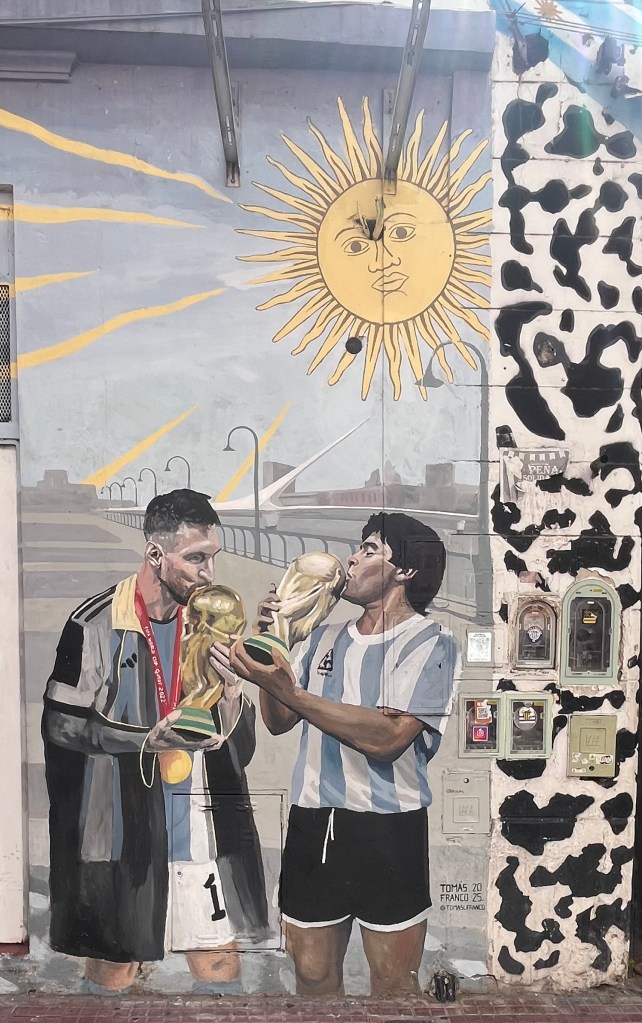
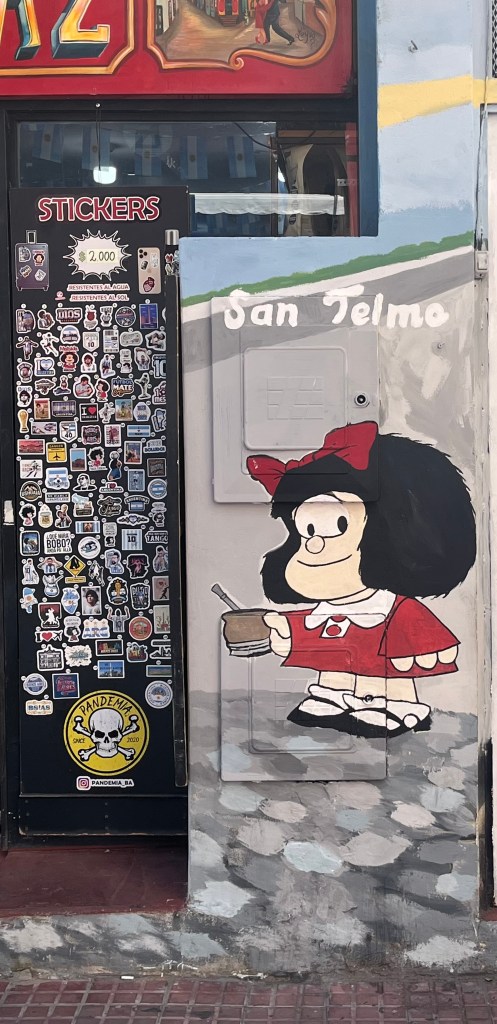
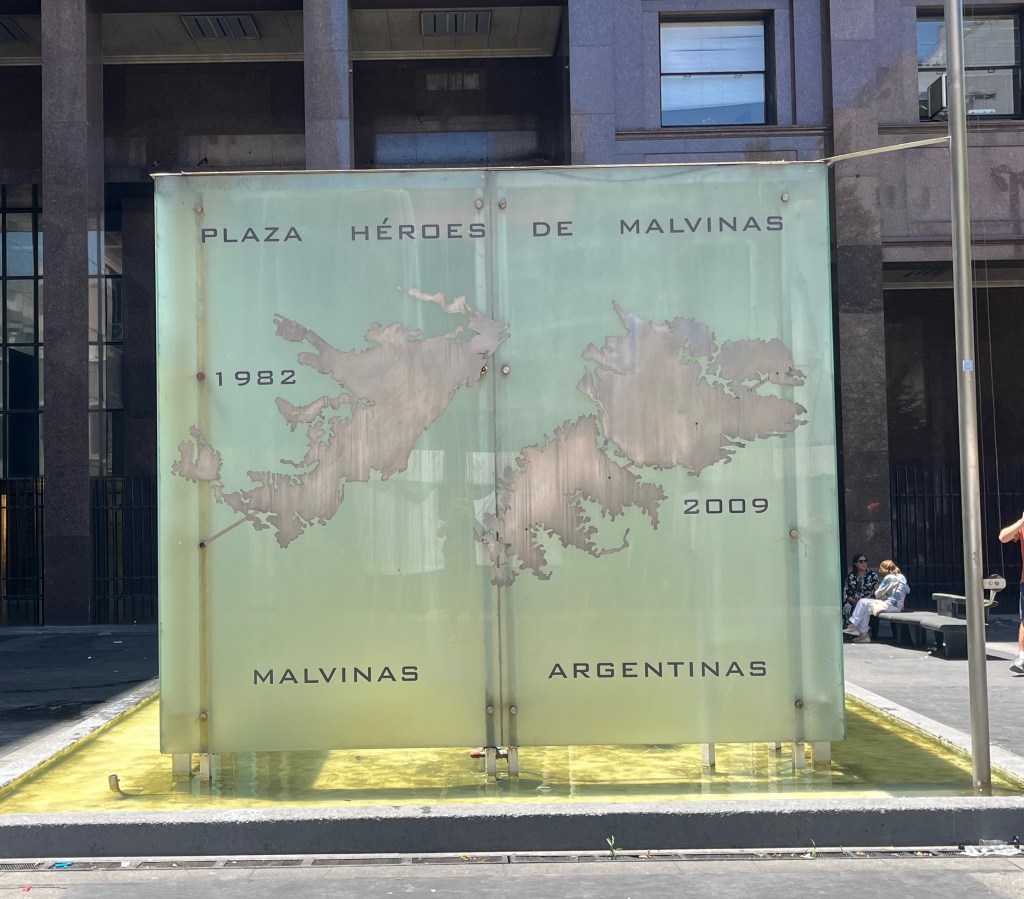
In the middle of the fair, we noticed the Plaza Héroes de Malvinas. In fact, the city is filled with references to these islands and the wars fought over them. Though the Argentines call them the Malvinas, the English-speaking world knows them as the Falklands. The Crown fans may remember references to the war fought during Margaret Thatcher‘s tenure as PM. Either way, the history of rule over these islands is fraught and clearly still painful.
Though we enjoyed looking at the crafts and soaking in the bohemian atmosphere of San Telmo, we left the fair hungry and a little disappointed. Maybe we didn’t walk along the right street or maybe we misunderstood something, but there were very few food vendors, if any. The San Telmo neighborhood also features an indoor food hall (“market”), but because of Yahm’s food allergies, there were very few things she could eat. The sense of slight disappointment set the tone for so many of our experiences in Buenos Aires, so far. Still, we try to make the most out of our sightseeing opportunities.
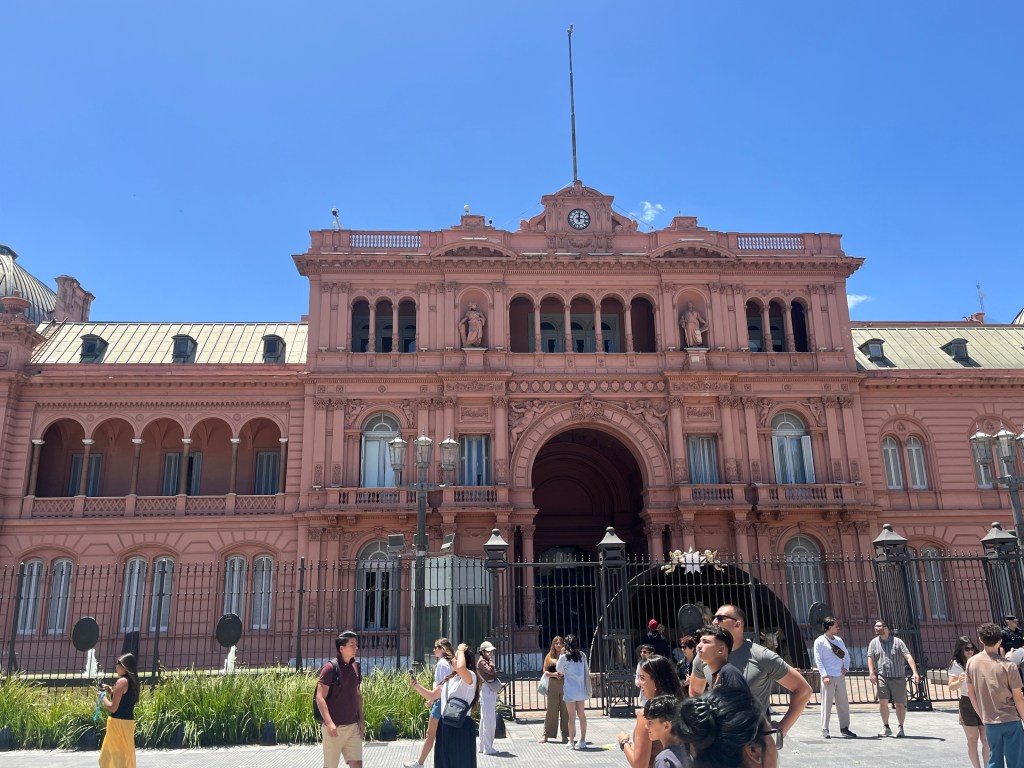
On a different day, we took the time to visit the Plaza de Mayo. This square is the site of some of the most important protests and events in Argentine history. Surrounding the square itself are the Cablido (which was once the seat of the town council), the Metropolitan Cathedral, the Buenos Aires City Hall, the national bank’s headquarters, and the Casa Rosada (seat of the president). Besides visiting the square itself, we also wanted to visit the Casa Rosada Museum, particularly because it’s so rare to see a government building painted pink.
Top row, left to right: Cablido; Metropolitan Cathedral
Bottom row, left to right: the May Pyramid with a statue of liberty at the top; below a statue of Simón Bolívar are a bunch of rocks in memory of people. We’re not sure of the history, but it may have to do with people who went missing during the Dirty War. (More on the Dirty War in a bit.)
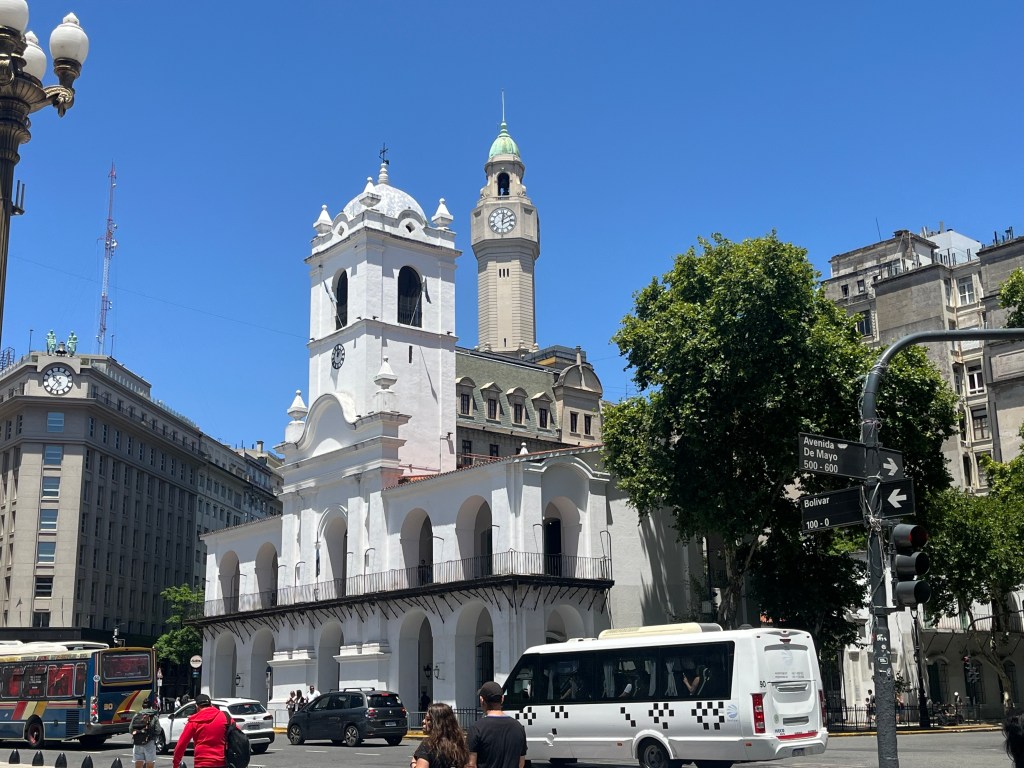
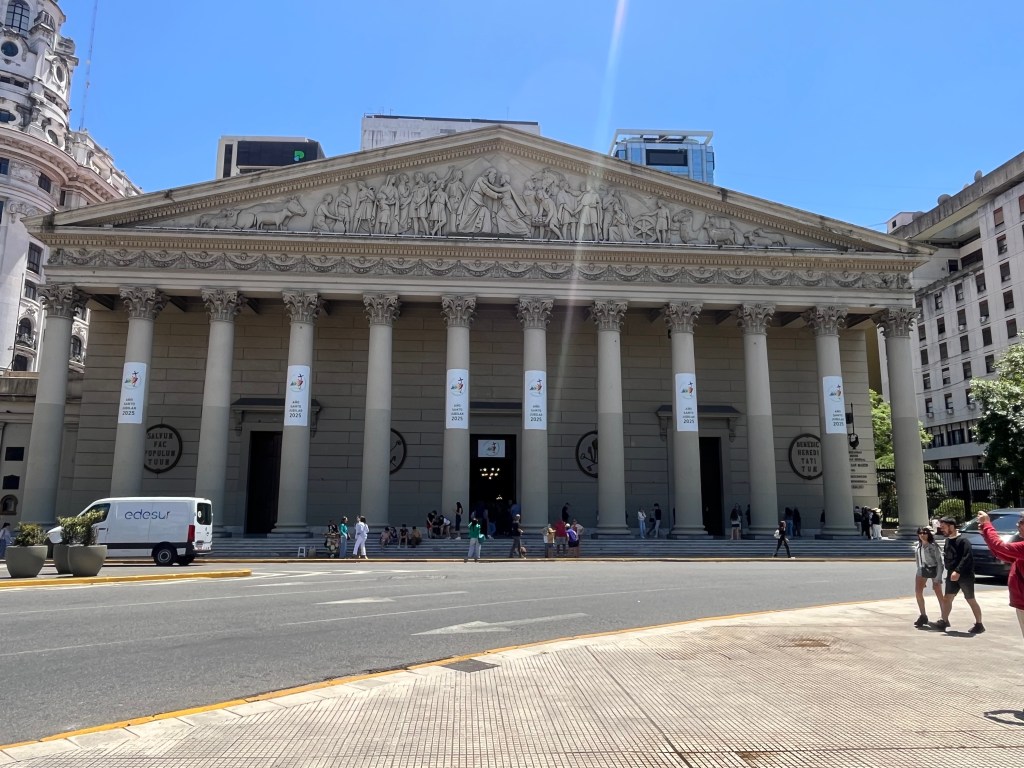
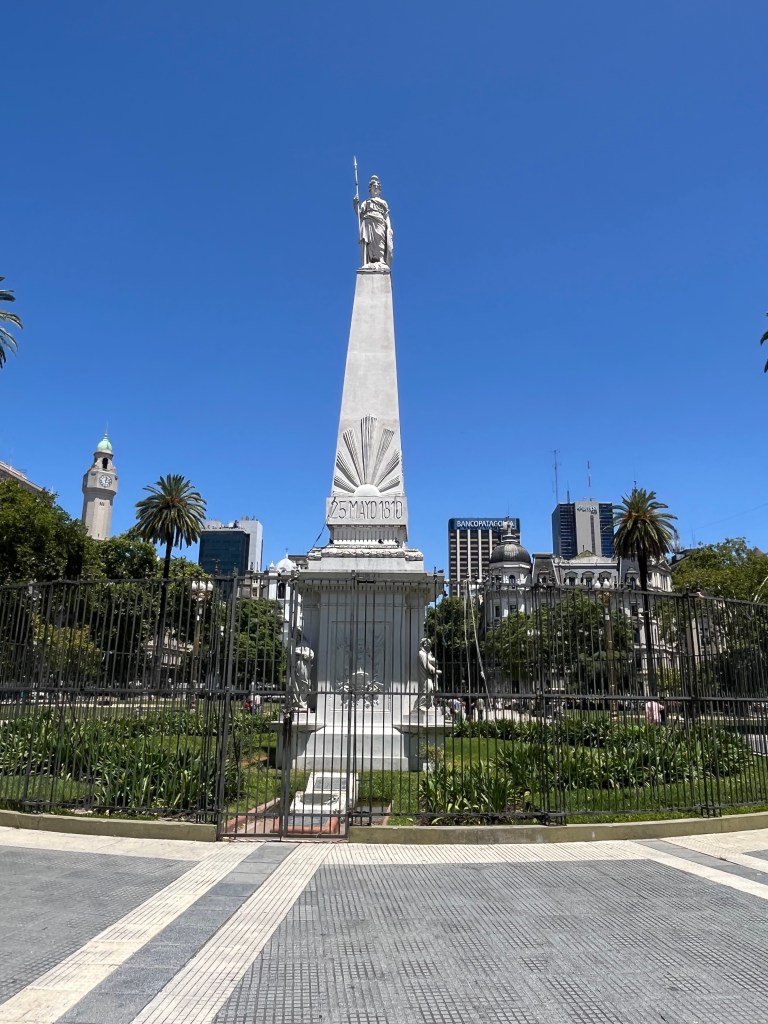
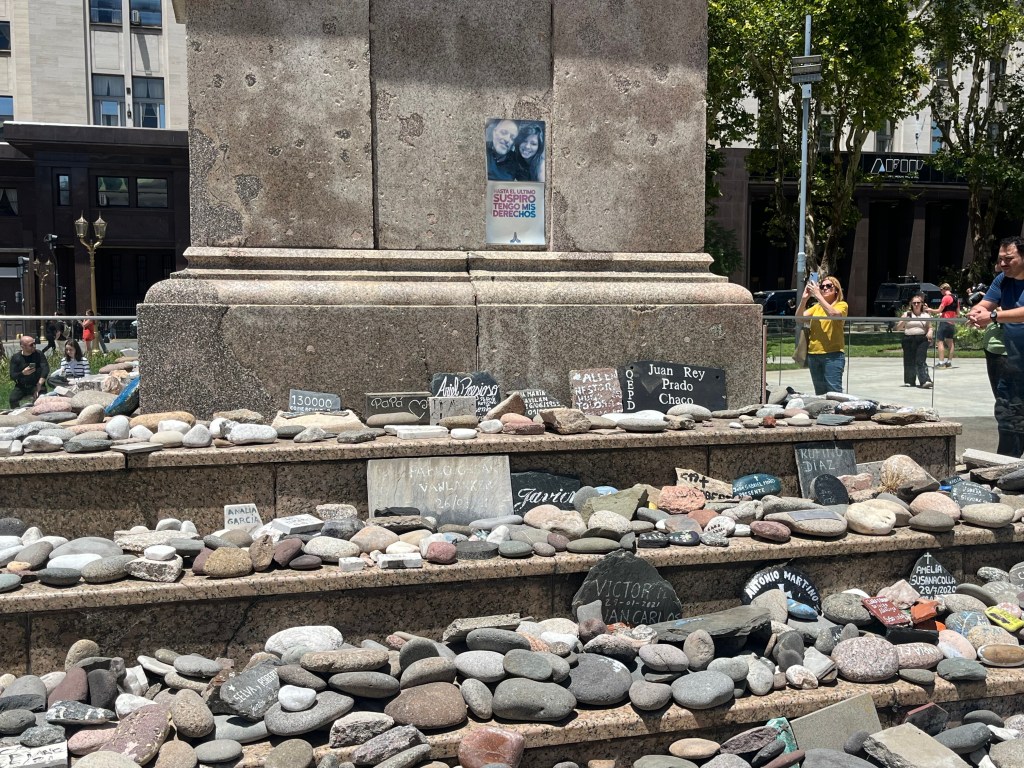
The Casa Rosada (pictured below) is still in use and we could not go inside. However, the Casa Rosada Museum is around the corner and provides an overview of the political history of Argentina by focusing on its leaders. Most of the information is in Spanish, though some was translated into English. (Why a section about common smells of the 1800s was translated and not other parts is unclear.) A highlight was seeing a portrait of Juan and Eva Perón, also pictured below. (When Adam saw the portrait he immediately said, “No wonder they picked Madonna for the movie version.” Yahm replied that Jonathan Pryce was clearly a good choice as well.) After walking around the museum for about an hour, we’re still unsure why the building is pink. However, according to Wikipedia, pink was chosen for the exterior as a way to blend the colors of two opposing political parties or maybe the exterior was painted with cow blood to prevent the effects of humidity.
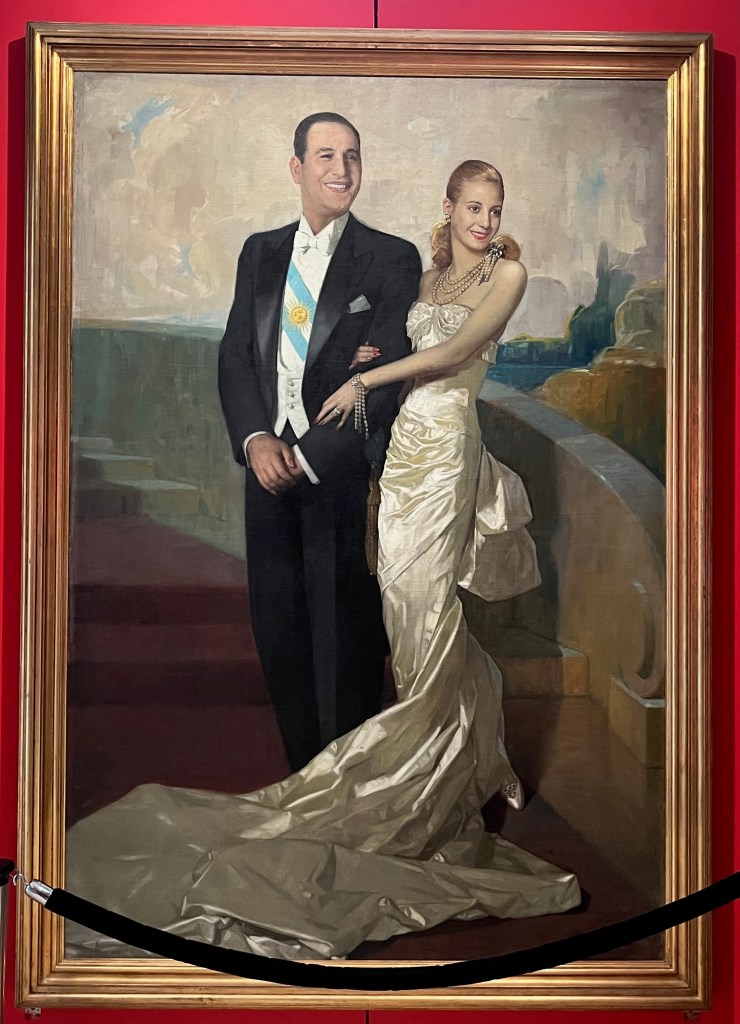
Another place we visited was the Espacio Memoria y Derechos Humanos ex ESMA, a deeply important museum and memorial. First, a quick overview of recent Argentine history. When Juan Perón became president in 1946, he and his wife, Eva (“Evita”), ushered in an era of economic growth and political reform that polarized much of the country. He was overthrown and exiled in 1955. In 1971, his party rose to power and he returned to Argentina to become president again. He died in 1973 and his second wife, Isabel, took over. In 1976, she was placed under house arrest for five years and eventually exiled. A military junta took over in 1976 and installed a dictatorship that lasted until 1983 when democracy was restored. This dictatorship was so repressive that between 10,000-30,000 people deemed as “leftists” were kidnapped, tortured, murdered, and disappeared. This campaign is known as La Guerra Sucia (The Dirty War). (Side note: the Casa Rosada Museum skipped over this painful period entirely and simply called the last section “1983-Present: Return to Democracy.”)
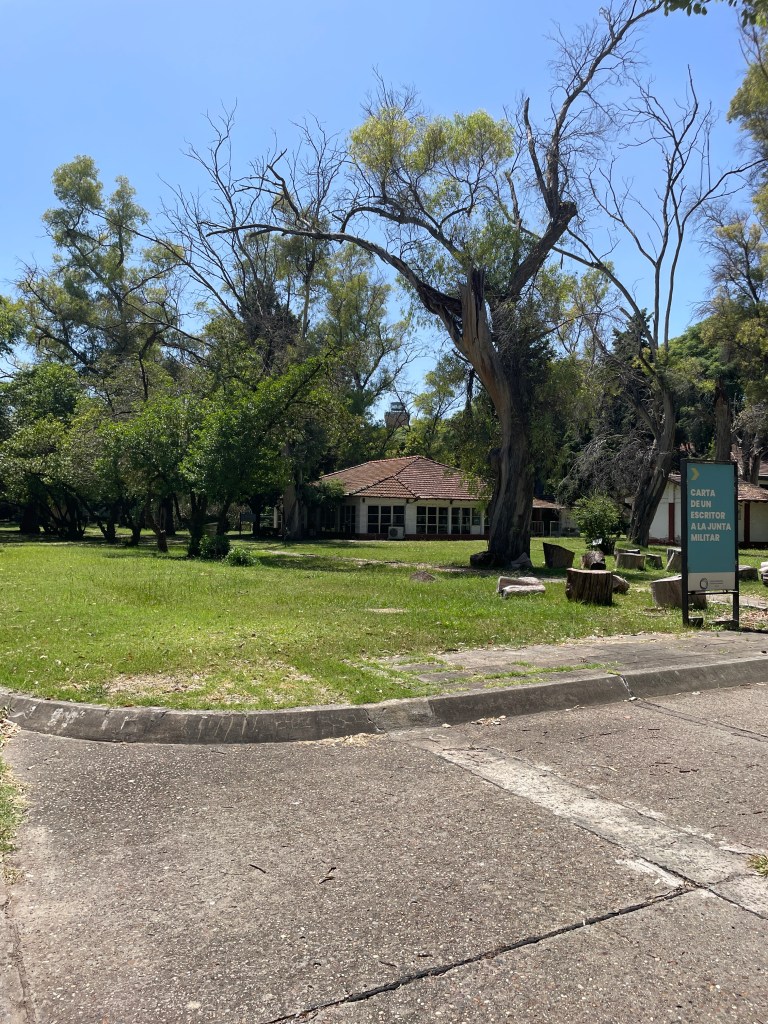
The Espacio Memoria y Derechos Humanos ex ESMA is located in the main headquarters of what was a school for naval cadet training. The complex is massive. When we arrived, we were warned not to touch the walls because investigations are still under way and the walls are used as evidence for crimes against humanity. As we walked around the complex, it was impossible not to feel that something terrible happened here. (Translations for everything are readily available in English, Portuguese, and French.)
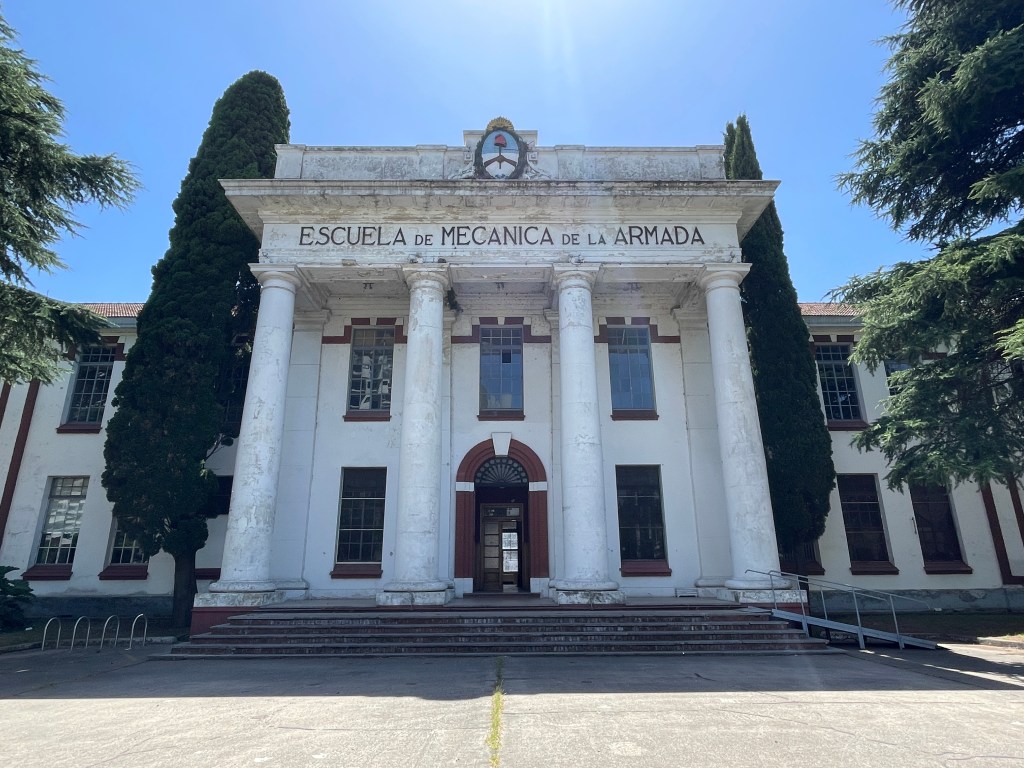
The campaign was planned in this building. It is important to note that prisoners and Navy cadets lived essentially side-by-side during the Dirty War. Cadets who completed the program were recruited to spy on, capture, and torture prisoners.
This is only one of many institutions throughout the country utilized for this campaign.
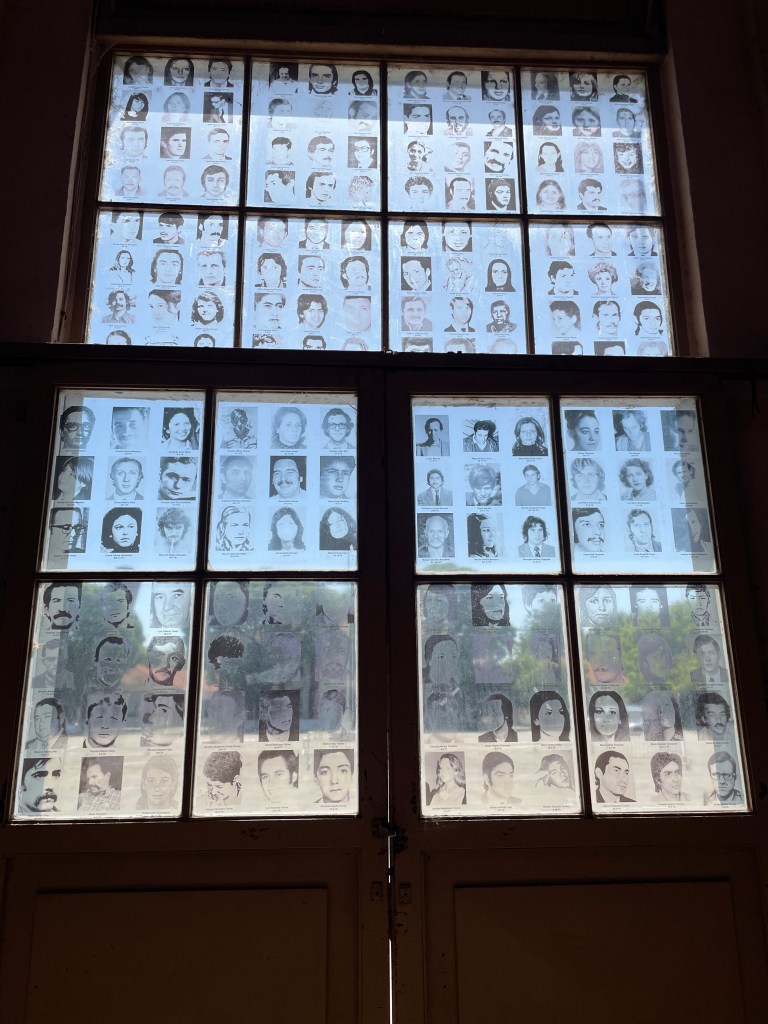
Inside a huge hall, windows are plastered with the faces of victims. Not everyone who disappeared during the Dirty War has been accounted for, which means that justice may never be fully served for victims’ families.
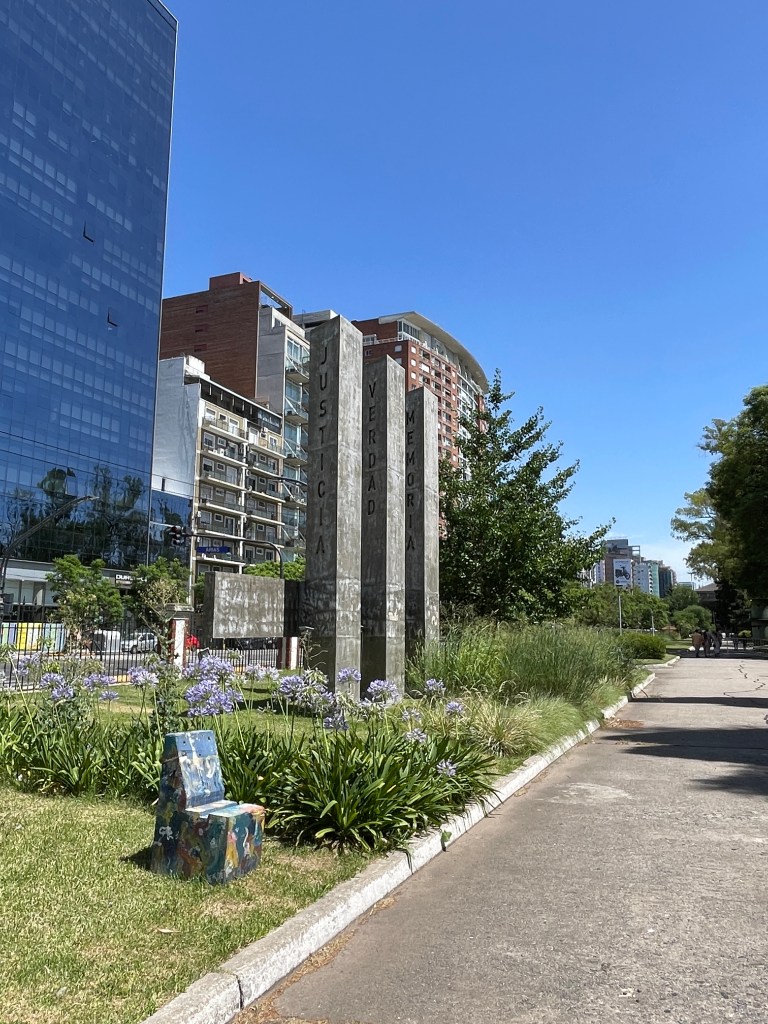
The three concrete pillars say (in Spanish) “Justice, Truth, Memory.” The memorial and museum is located on a main street in Buenos Aires, with high-rises and apartments peppered all over the street.
We both can’t imagine living in an apartment with a view of this terrible place outside the kitchen window.
Just above the roof of the building is a watch tower. There are tens of watch towers scattered all over the complex. Not only did the watch towers ensure that prisoners could not escape, but it also ensured that top secret operations were kept out of sight by the public.
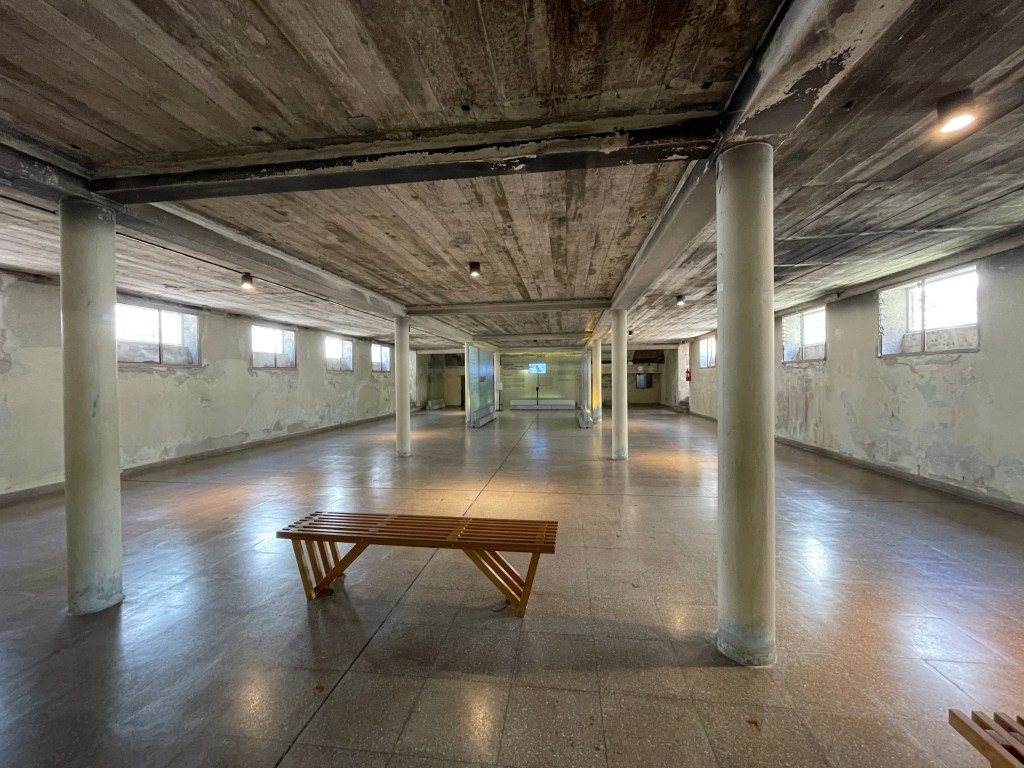
Prisoners were brought to this basement just before they were sent to be “transferred.” Prisoners quickly found out that being transfered meant death.
It should be noted that both men and women, including pregnant women, were imprisoned during the Dirty War. Children that were born during imprisonment were kidnapped and given to other families. Records are sparse.
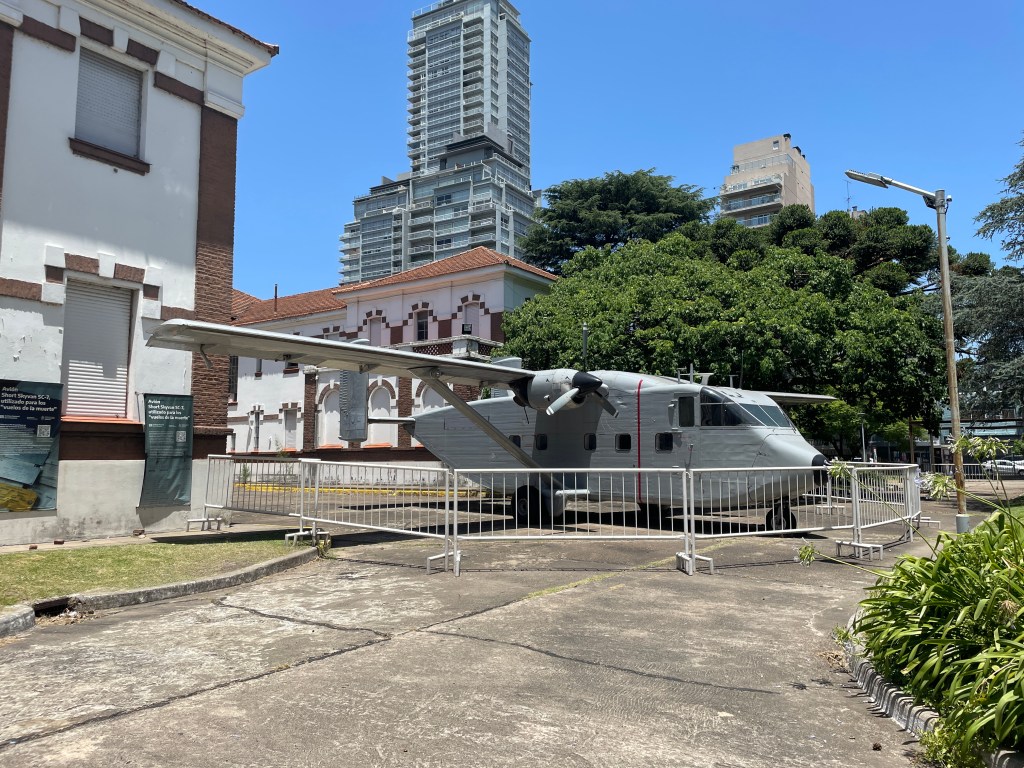
One of the planes used for the death flights, a.k.a. “transfer.” Prisoners were injected with a heavy sedative, placed on the plane, and then dropped into either the Rio de la Plata or the Atlantic Ocean while still alive.
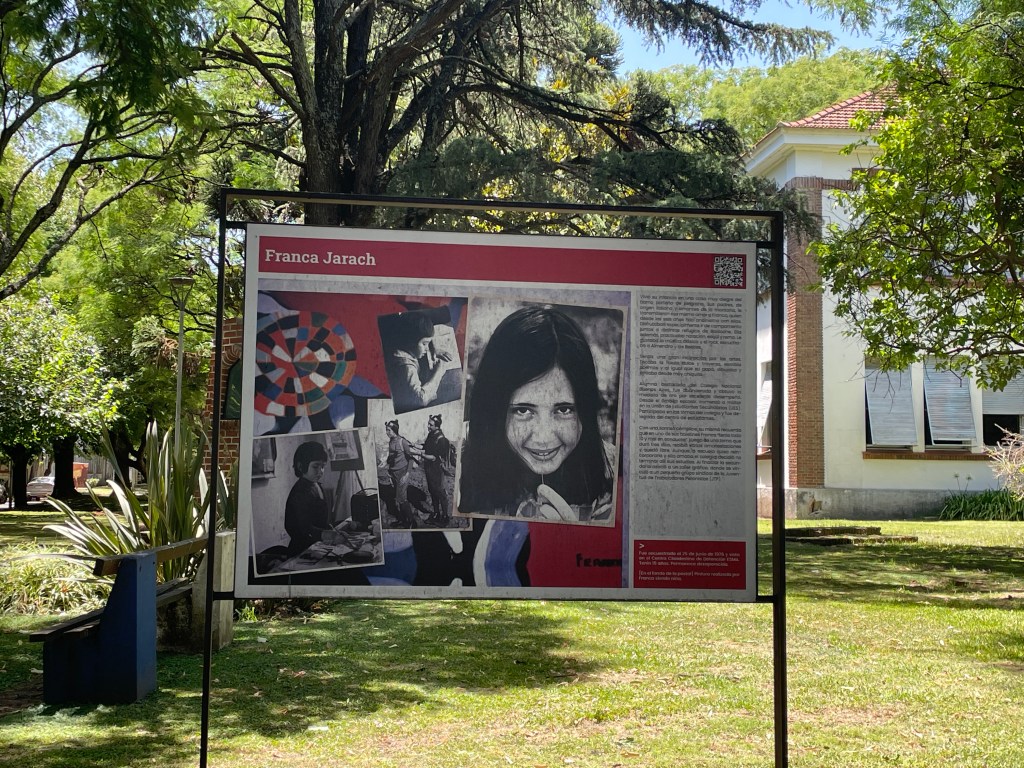
One of the many plaques throughout the complex that names victims and shares information about their lives.
10,000 or 30,000 is a difficult figure to wrap one’s head around. (Much like 6 million.) A name and photos makes the experience far more tangible.
Why end on such a sad note? One of the privileges of traveling is an opportunity to dive deeply into a country’s history and understand its culture. While this dark chapter in Argentine history is only one part of what makes Argentinian culture what it is, it does help explain why lunch takes two hours. To be with community, friends, and family is precious and should be savored. Good moments can so easily slip away, so why rush them? While we haven’t been particularly impressed with Buenos Aires yet (there’s still two weeks to go!), we can at least appreciate how much they value each other during a peaceful time.
Stay tuned for another post about more Buenos Aires adventures and posts from Adam’s and Yahm’s corners. Be sure to like, comment, and subscribe to Traveling While Introverted so you don’t miss it!
 Traveling While Introverted
Leave a comment