Yahm and I have not fully connected with Buenos Aires quite yet, though as of the time of this writing, we are still here for another ten days so maybe our opinion will change. One aspect to the urban-scape of Buenos Aires that has impressed us, though, is the public transit system. It is one of the best connected multi-modal transit systems I have experienced on this trip, and one that other metro areas could stand to copy.
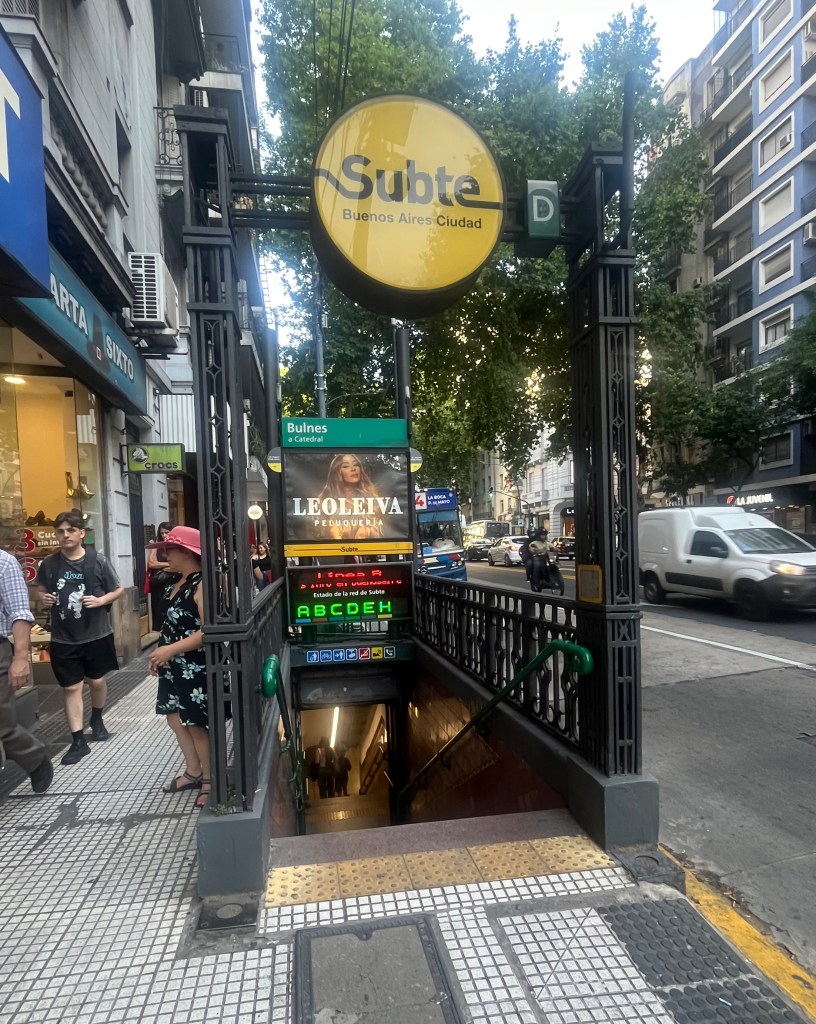
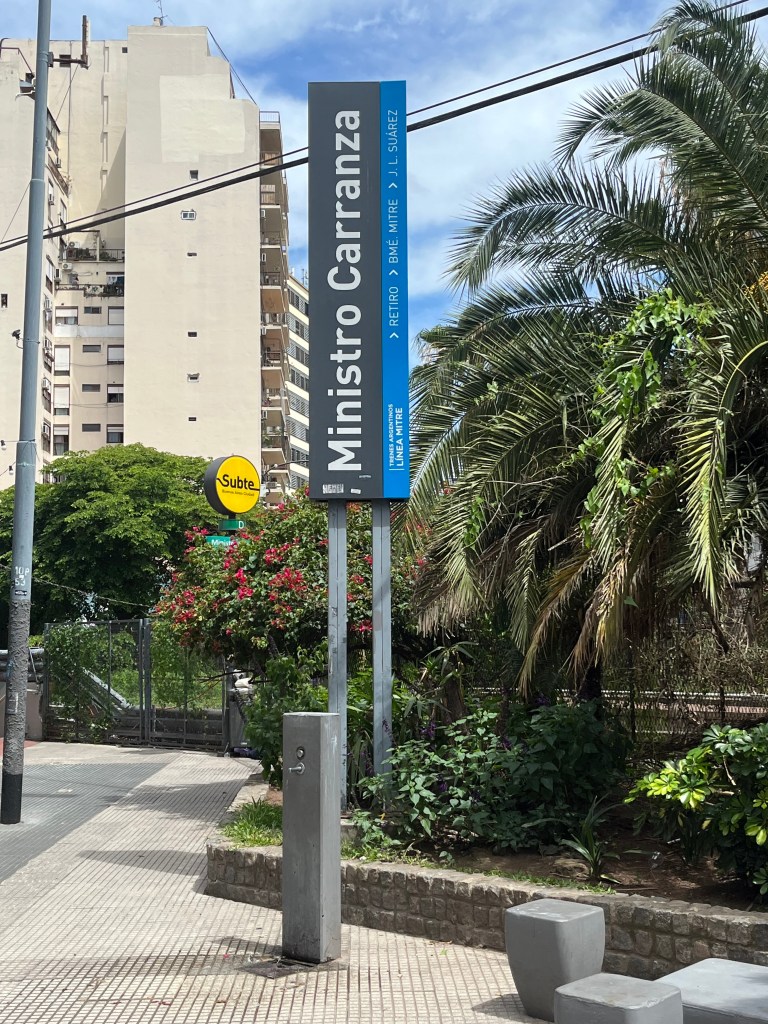
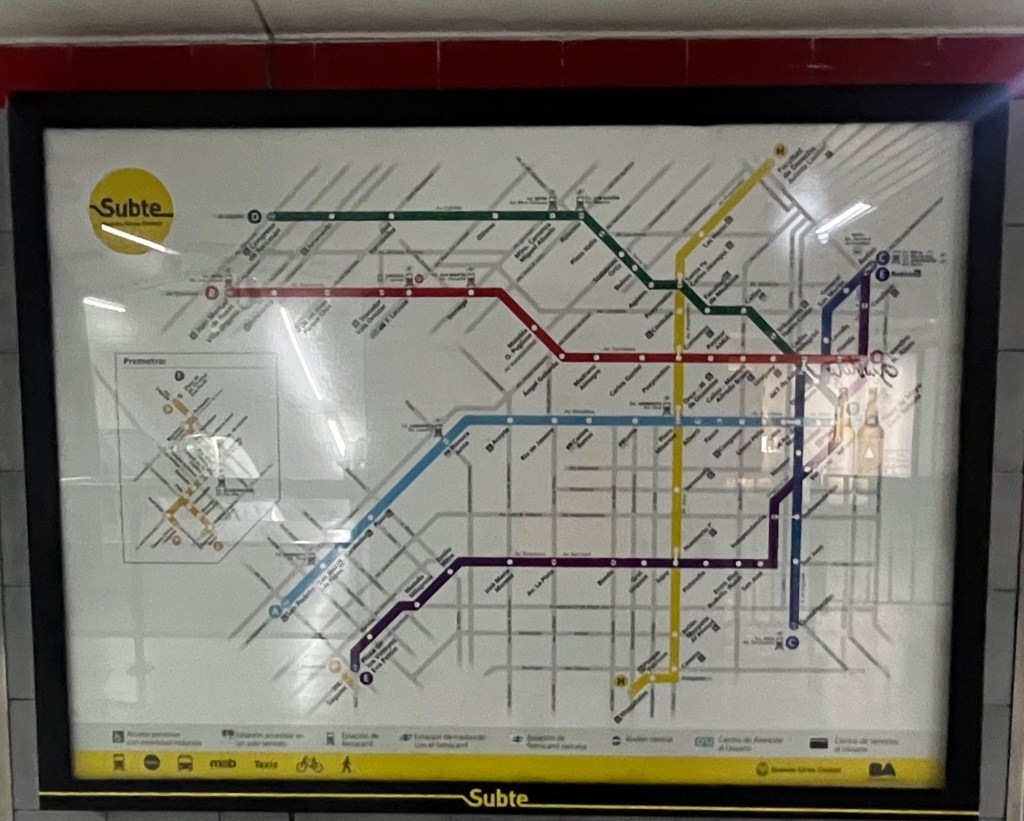
The city of Buenos Aires is served by an underground subway system called the Subte (an acronym for Subterráneo de Buenos Aires). This system covers much of the city proper of Buenos Aires and is one of the older underground systems in the world, having first opened in 1913. Six lines delineated by letters (i.e.: A, B, C, D, E, H) cover 35.6 miles (57.4 kilometers) and feature 90 stations across this city of over 3 million. Yahm and I utilized the Subte a few times, and will continue to do so while here as it is incredibly efficient. The best way to pay for fares on the subway and other transit modes is by purchasing a rechargeable card called a Sube card. This card can only be recharged with cash at specific kiosks, and the city is trying to phase physical cards out. Instead, more and more people are utilizing credit cards or their phones to pay.
Top row, left to right: a Subte station from street level; signage indicating the subway station; a system map for the Subte
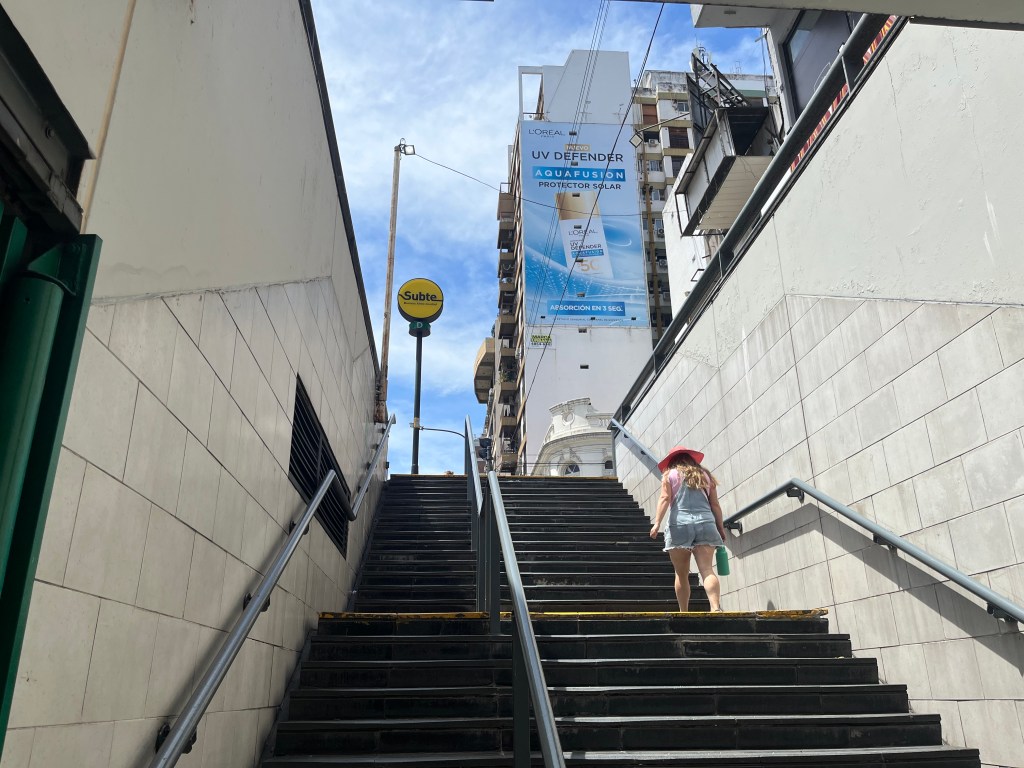
Bottom row: walking up to street level from a Subte station
Video (below photos): A Subte train approaching
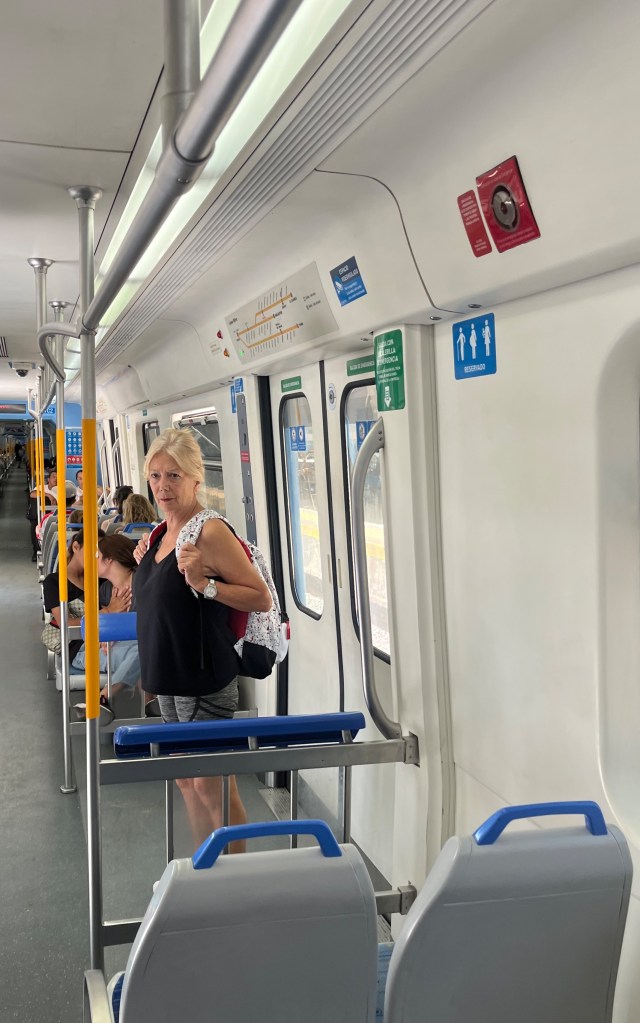
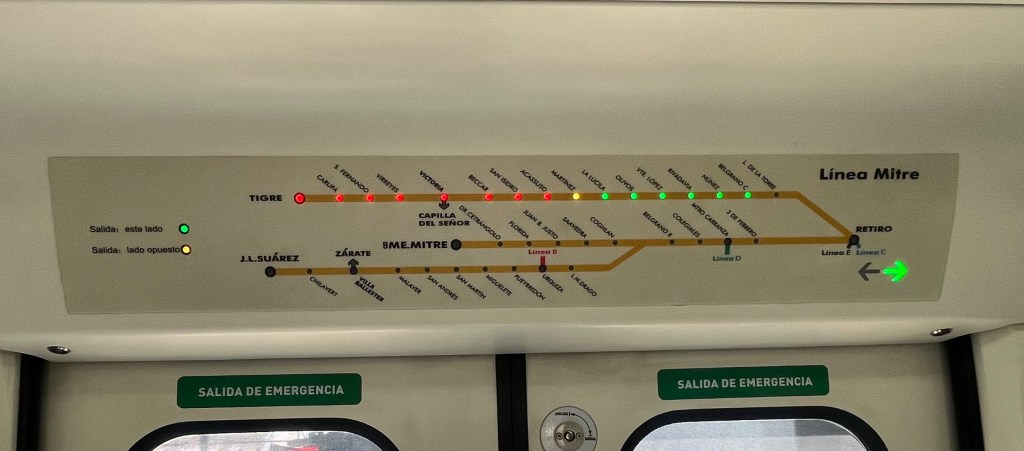
Trains do not just go underground in Buenos Aires. There is also an aboveground train that services both the city proper, the surrounding cities in the metro area, and exurbs within the Buenos Aires Province. Our housesitting gig in the northern suburban community of San Isidro was served by this train system, which took into Buenos Aires proper (as seen in the video below). The train comes less often than the subway does, but on average (in our experience at least) it arrives every 20 minutes. The train was less efficient than the subway, but it was a great way to go from the ‘burbs deeper into the city and was more effective than using a cab or ride share vehicle. The trains are also far less traveled by tourists than the subways or buses, maybe because they serve some of the more far-flung parts of the metro.
Left to right: inside a train; train cars feature a map with lights that indicate when a stop is upcoming and which stops have already been reached similar to those I saw inside subways in Rio de Janeiro, Brazil
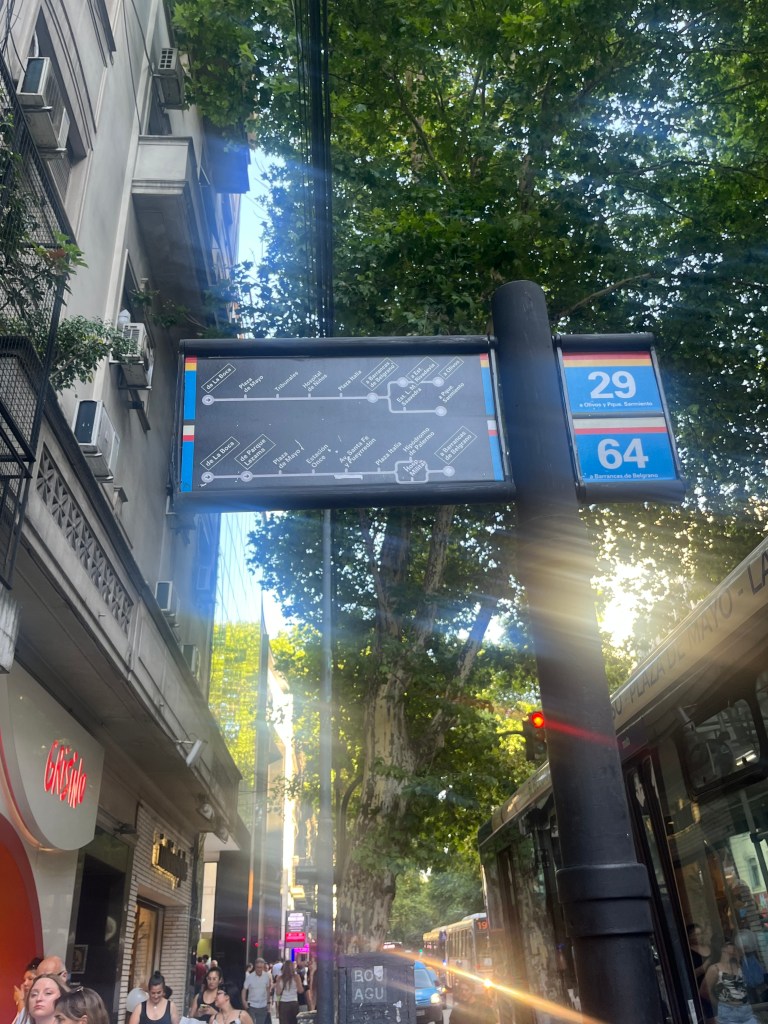
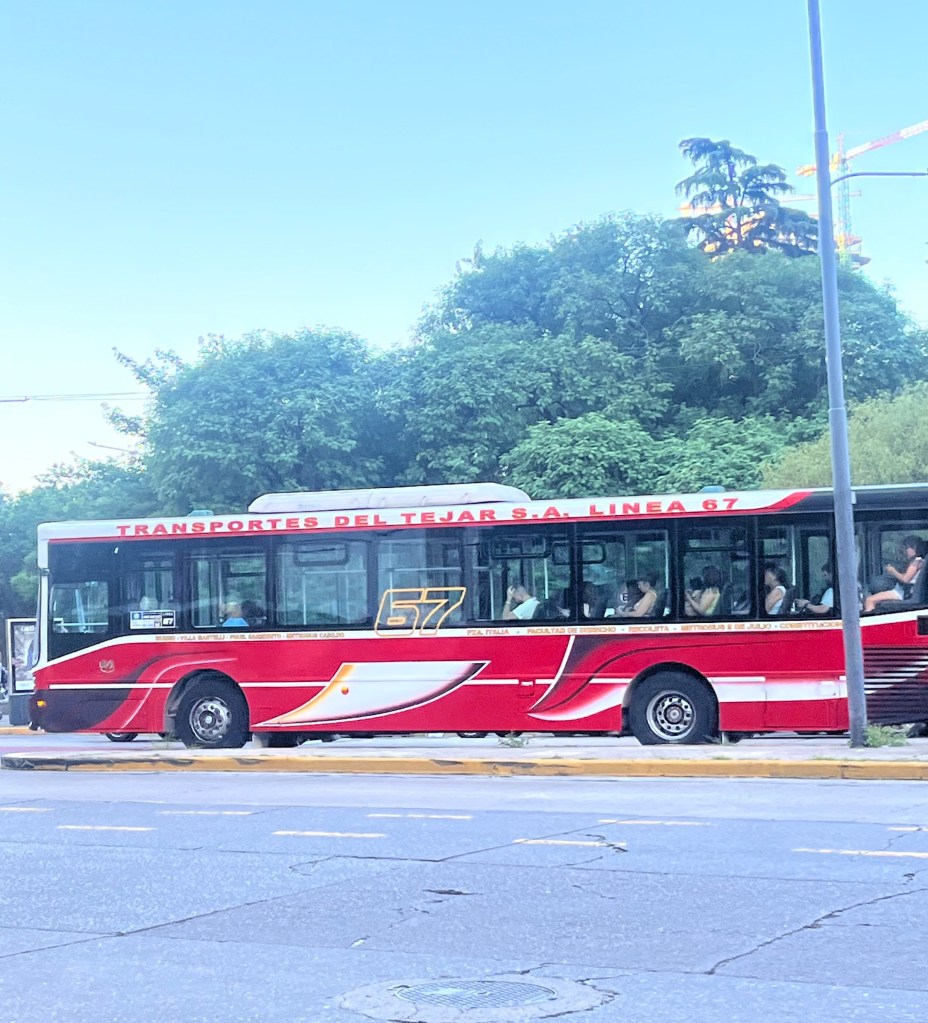
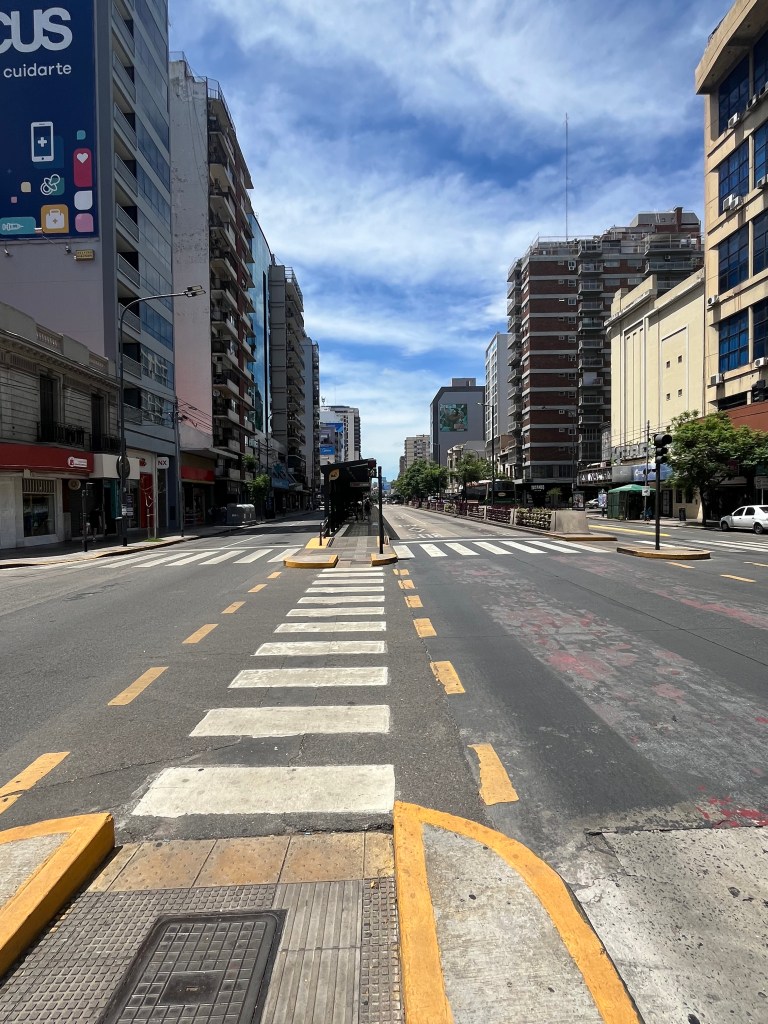
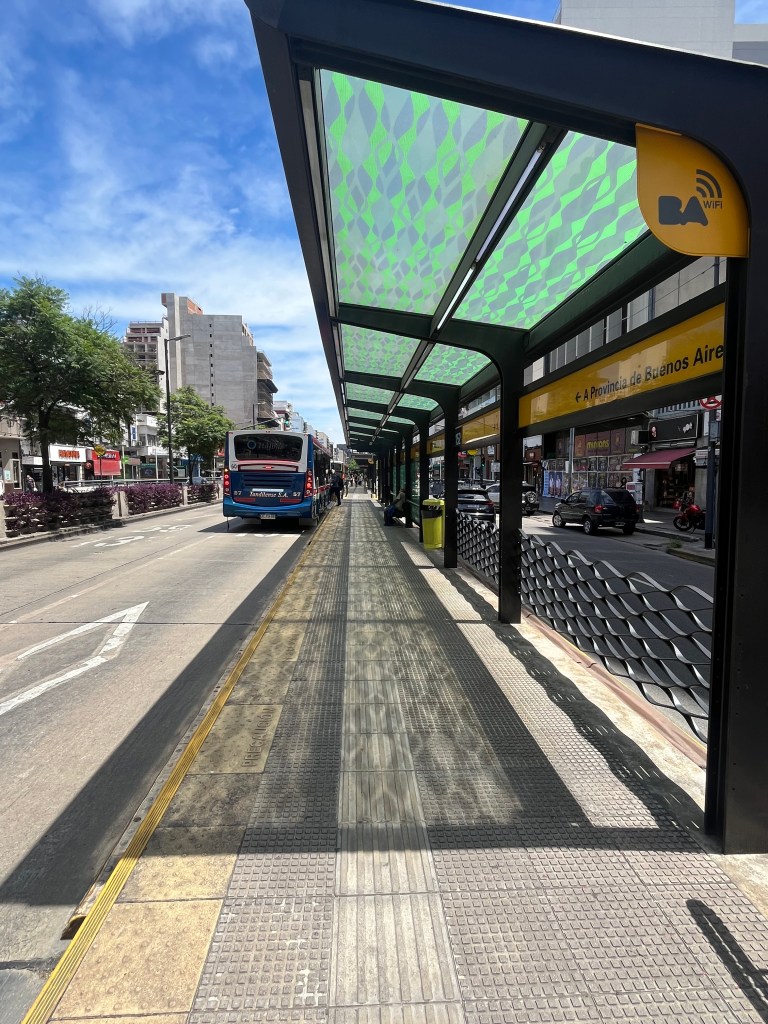
Perhaps the most impressive aspect of Buenos Aires’ public transit system is its buses. They run 24 hours a day and 365 days a year serving the entire city and nearby suburbs. Buses in central Buenos Aires have their own segregated sections of road and stops, which helps them move across the crowded metro area quickly. Despite this efficiency, they are not part of a true bus rapid transit system, such as the one in Bogotá, Colombia, because there are major swaths of the system that ride with regular traffic. Still, the buses are plentiful and wait times are minimal.
A quirk of this system is that each line number travels to multiple terminuses. As an example, line 60 generally travels north. However, different line 60’s travel on different roads and have different stops. To determine the correct line 60, riders have to read the marque. That said, the best way to ensure you will get to the stop you need is after flagging down a bus (yes, you must hail buses here) and ask the driver if they go to a certain stop. In fact, you must tell the driver where you are going so that you pay the correct fare. Drivers are quite helpful and will let you know whether they are driving the correct bus or if you need a bus with a different marque. It is a bit weird at first, but you get used to it.
Top row, left to right: a bus stop on the street (note how major stops are easy to read); the side of a bus (each line has its own unique stenciling and design); the front end of a bus
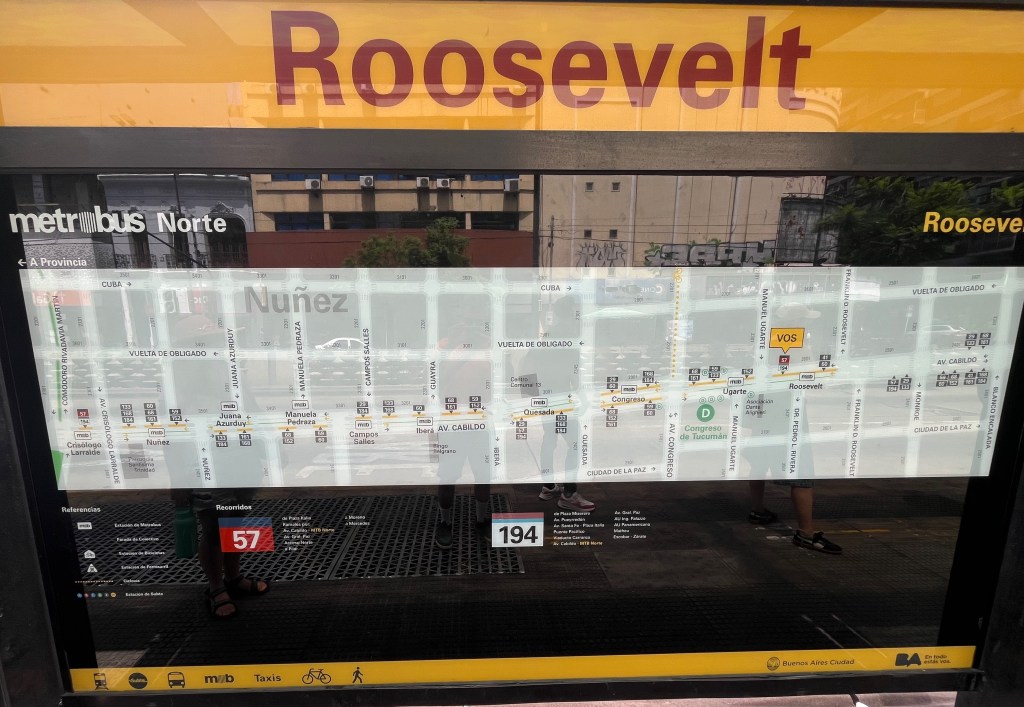
Bottom row, left to right: a map of stops in a segregated bus road that shows riders where they are in relation to the where the buses stop; a view of the segregated road for buses (note that it has its own crosswalk to make it easier for riders to get to their stop); a bus stop along the segregated bus road
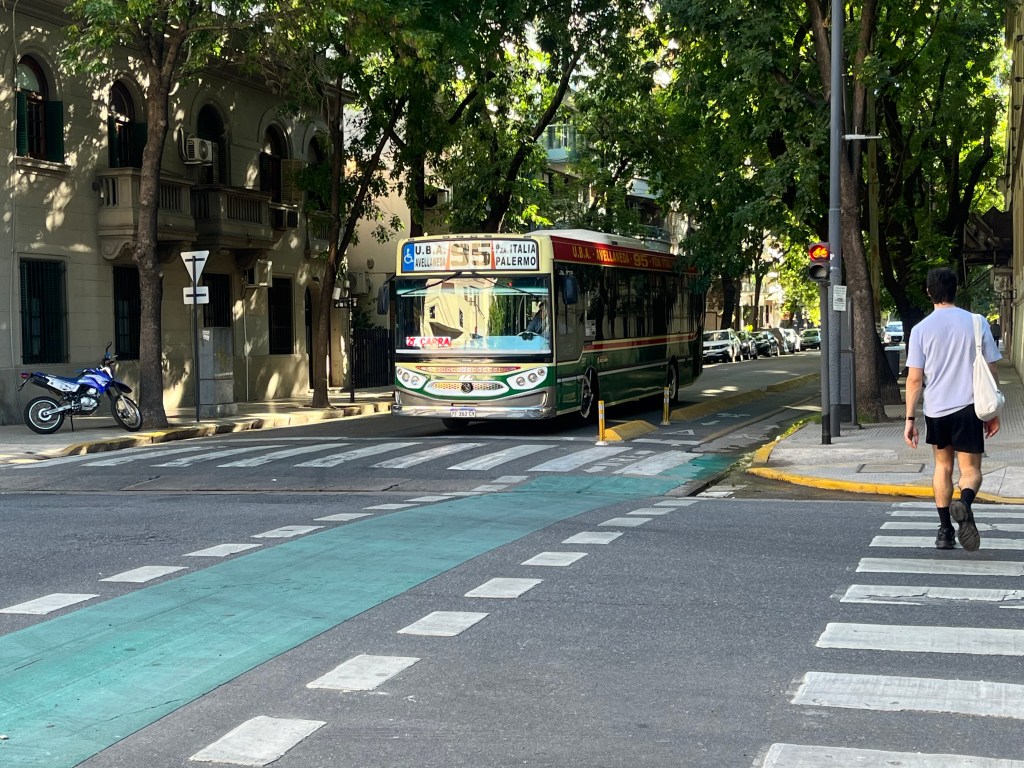
Video: a bus we flagged down to head to our housesitting gig; notice how gigantic the number 60 is to make it easy for riders to flag down the correct bus
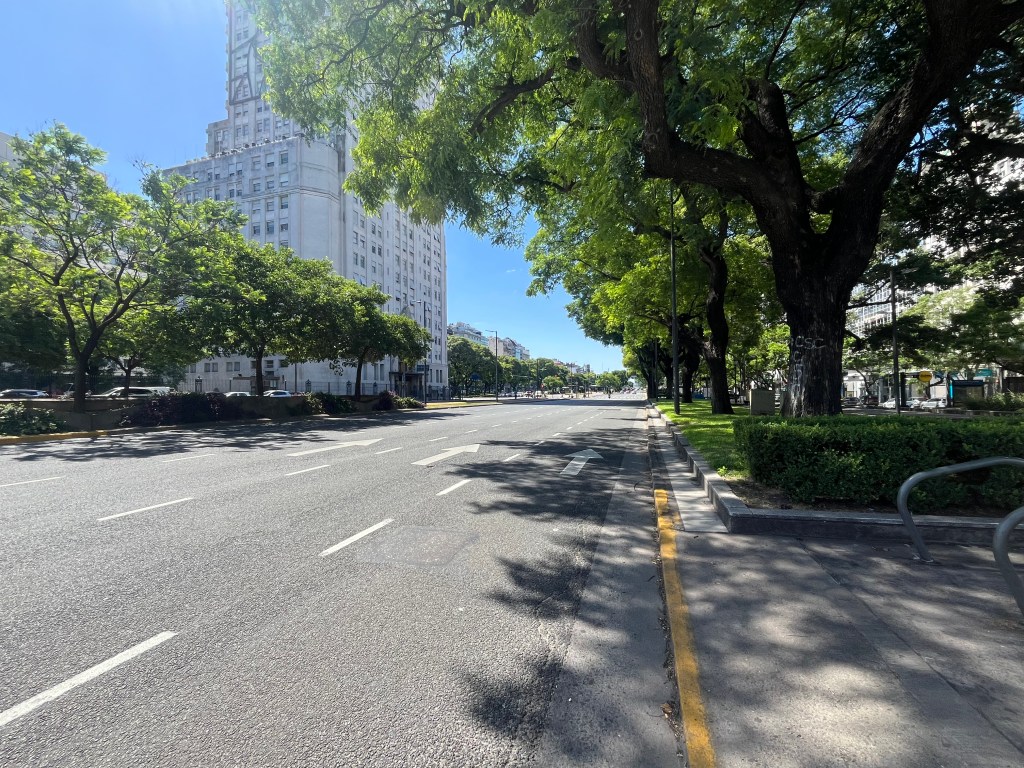
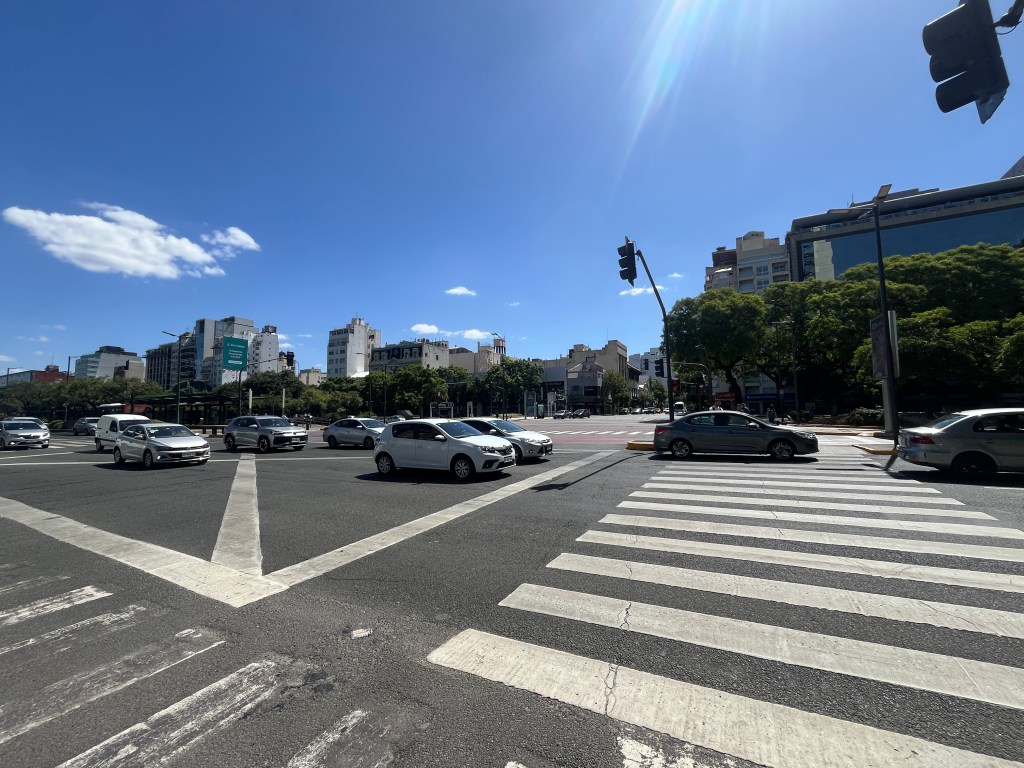
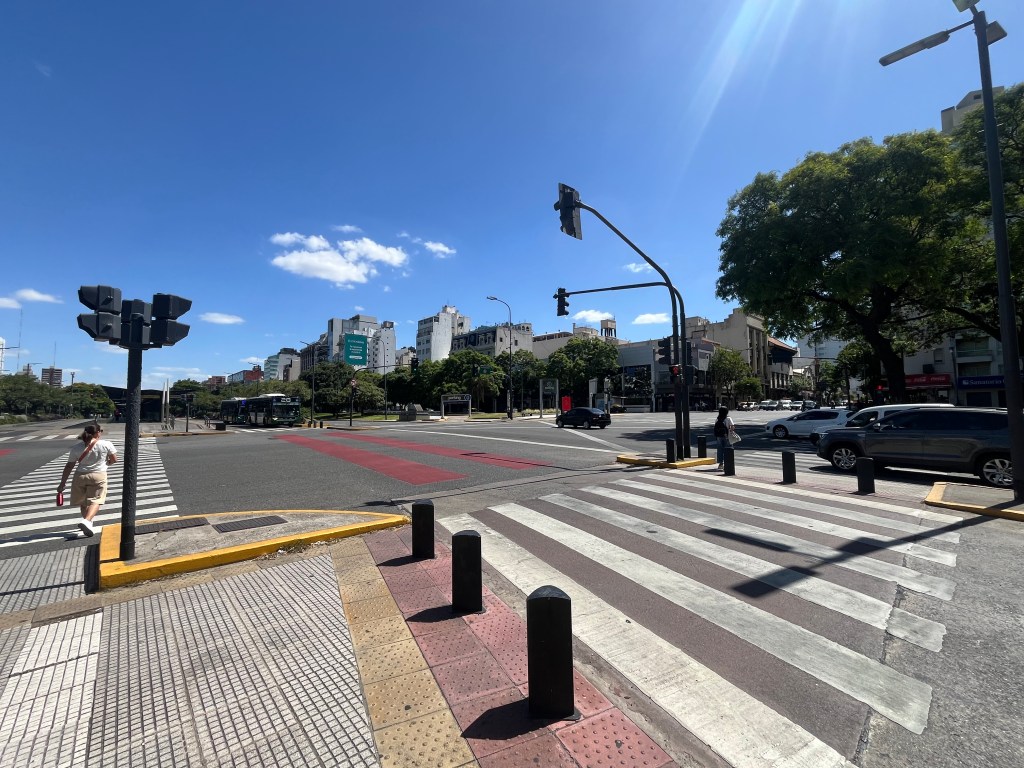
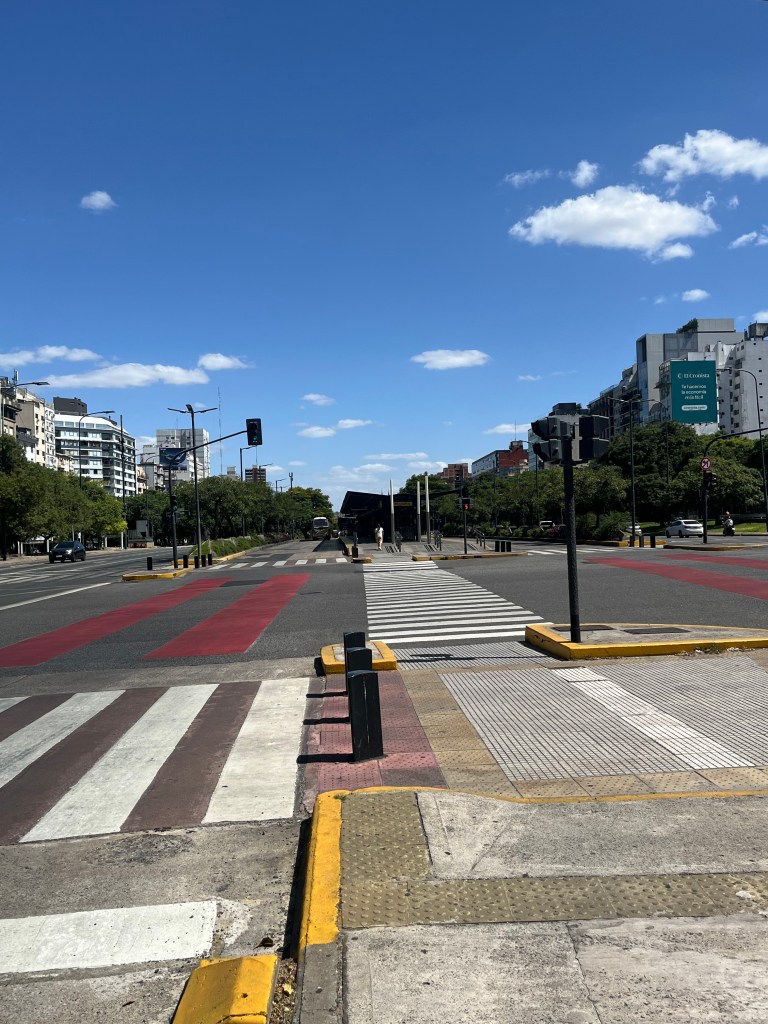
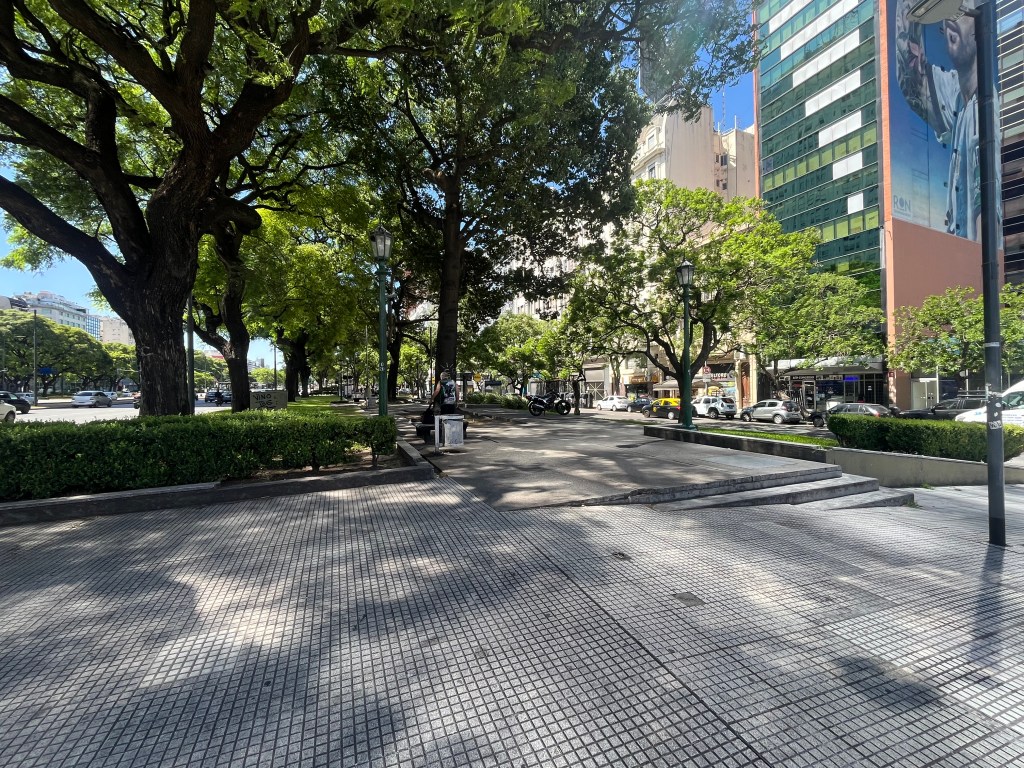
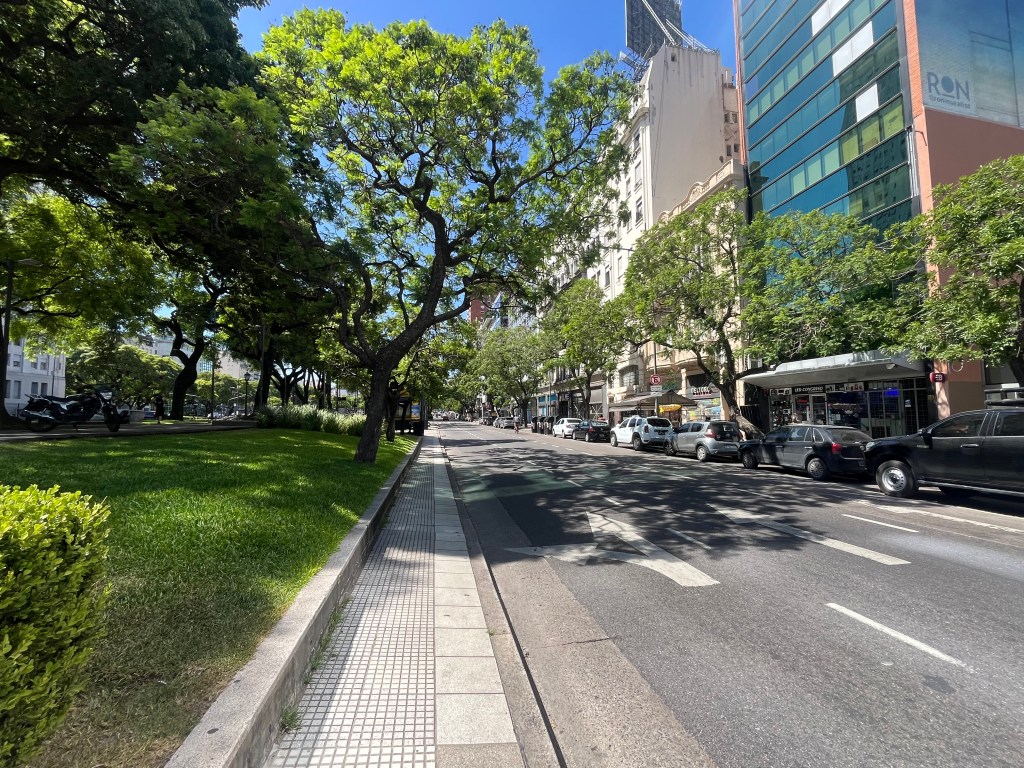
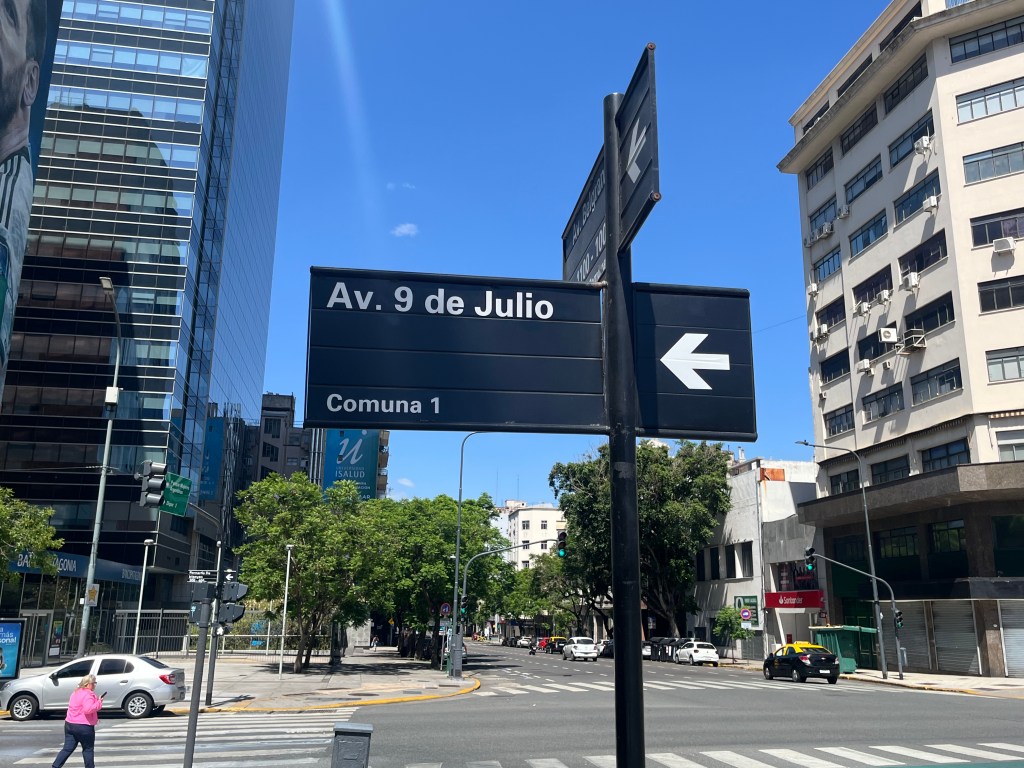
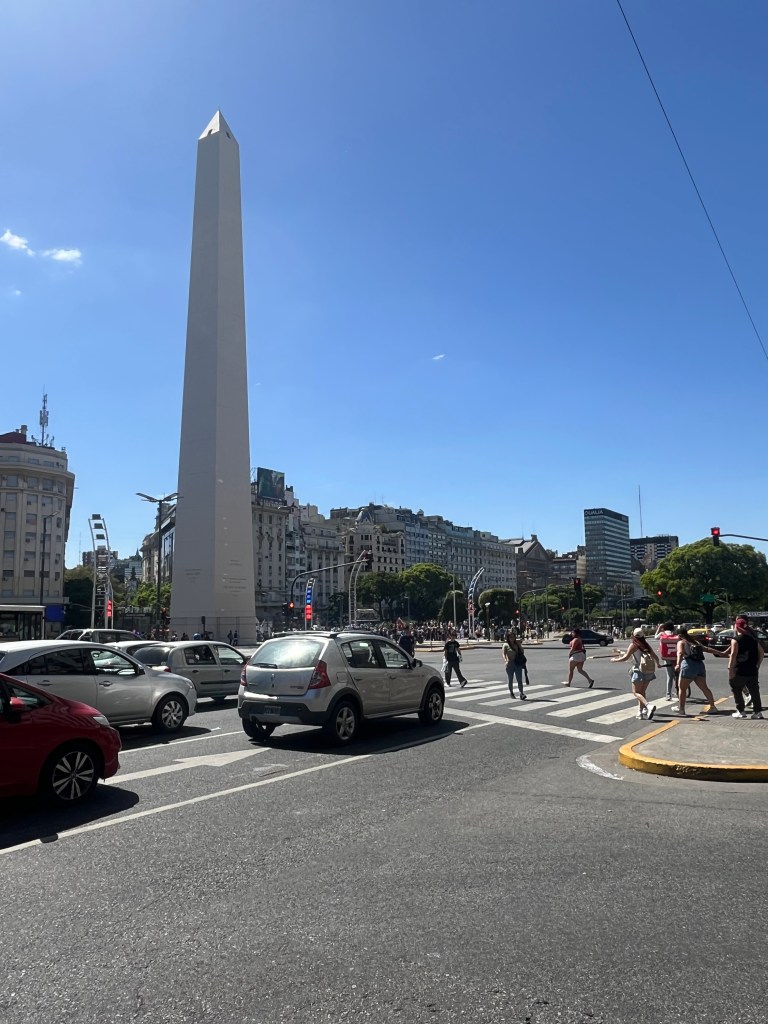
Before I conclude this post, I want to mention Buenos Aires’s wide roads. Many major roads are several lanes wide in every direction. The best example of this is the city’s most famous thoroughfare: Avenida 9 de Julio (9th of July Avenue). The street, named to commemorate the date of Argentina’s independence from Spain in 1816, is seven lanes in either direction. It has a walking path, a segregated bus road, and parallel side-roads alongside it in each direction. (Avenida 9 de Julio runs north-to-south.) All in all, it is 360 feet (110 meters) across making it the widest city road on the planet. It only runs 2.1 miles (3.4 kilometers), but it is a famous part of the Buenos Aires cityscape, especially where it meets the Obelisco de Buenos Aires (Buenos Aires Obelisk).
Top row, from left to right: various views of Avenida 9 de Julio
Middle row, left to right: the segregated bus road in the middle of the avenue; a pedestrian walkway that bisects the avenue; a parallel side road along the south end of Avenida 9 de Julio
Bottom row, left to right: a street sign; the Buenos Aires Obelisk. (In case you’re curious: people were gathering to show support of Venezuela in light of the recent U.S. capture of Venezuelan president Nicolas Maduro.)
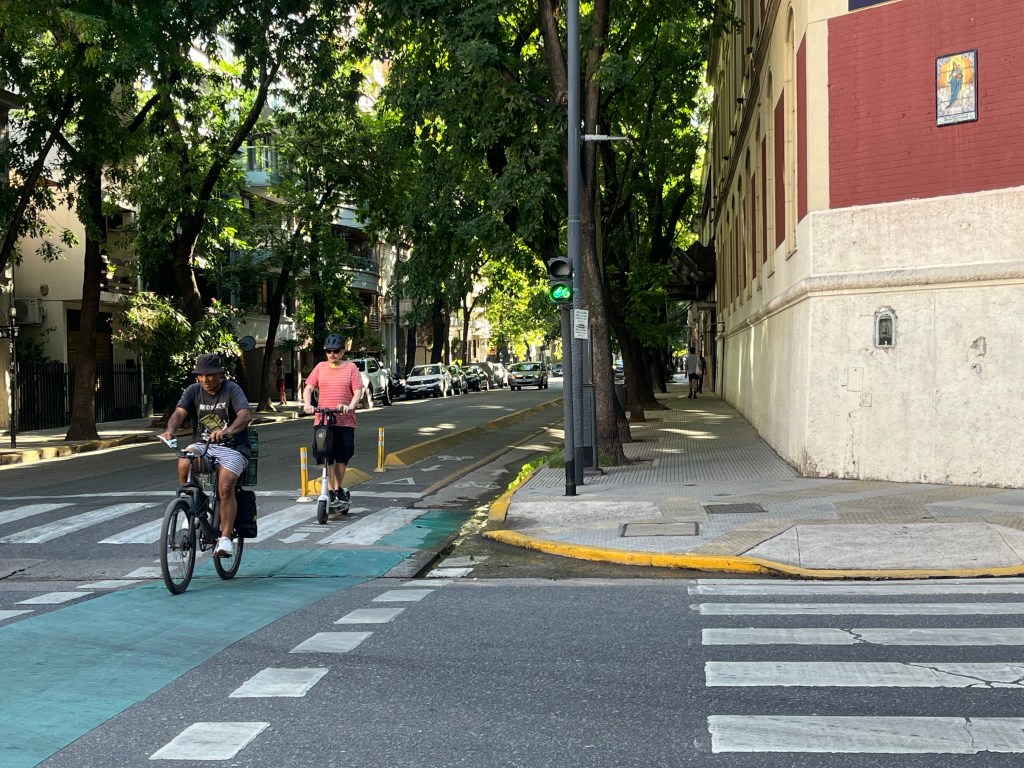
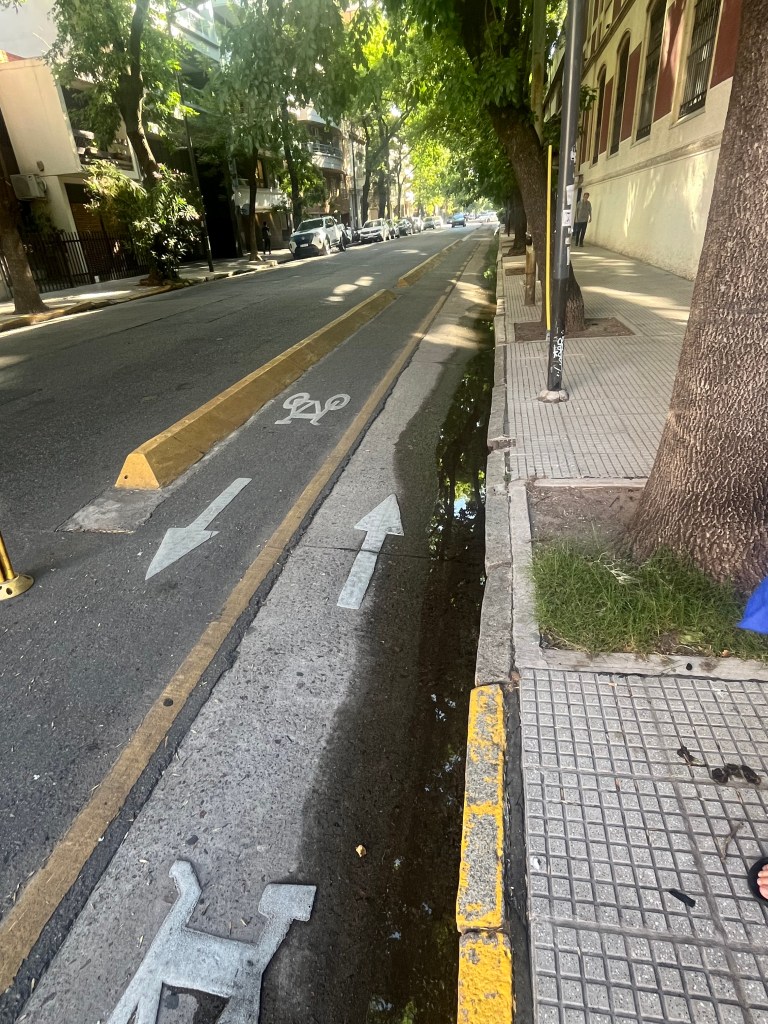
Buenos Aires’ transportation landscape doesn’t stop there, though. Dedicated bicycle and scooter lanes, as well as wide sidewalks that encourage pedestrian traffic, are everywhere. However you get around Buenos Aires there are lots of ways to do so.
From left to right: scooter and bike riders along a Buenos Aires street; a closeup of a bike lane
We will more posts about our time in Buenos Aires, as well as a special post about my upcoming hike in the Pampas and Yahm will share her impressions of the food scene. Be sure to like, comment, and subscribe to Traveling While Introverted so you don’t miss it!
 Traveling While Introverted
Leave a comment