After we completed our house sitting gig through Trusted Housesitters in San Isidro, we returned to the Palermo neighborhood. Due to complex logistics (like 18-hour bus rides) and high costs, we decided to forgo exploring other parts of Argentina that we wanted to see. (We’ll be back.) Instead, we cut our time in Argentina in half and decided to visit another country. However, before we left, we wanted to spend a few more days in Buenos Aires to get the most out of the city. We really tried to love it.
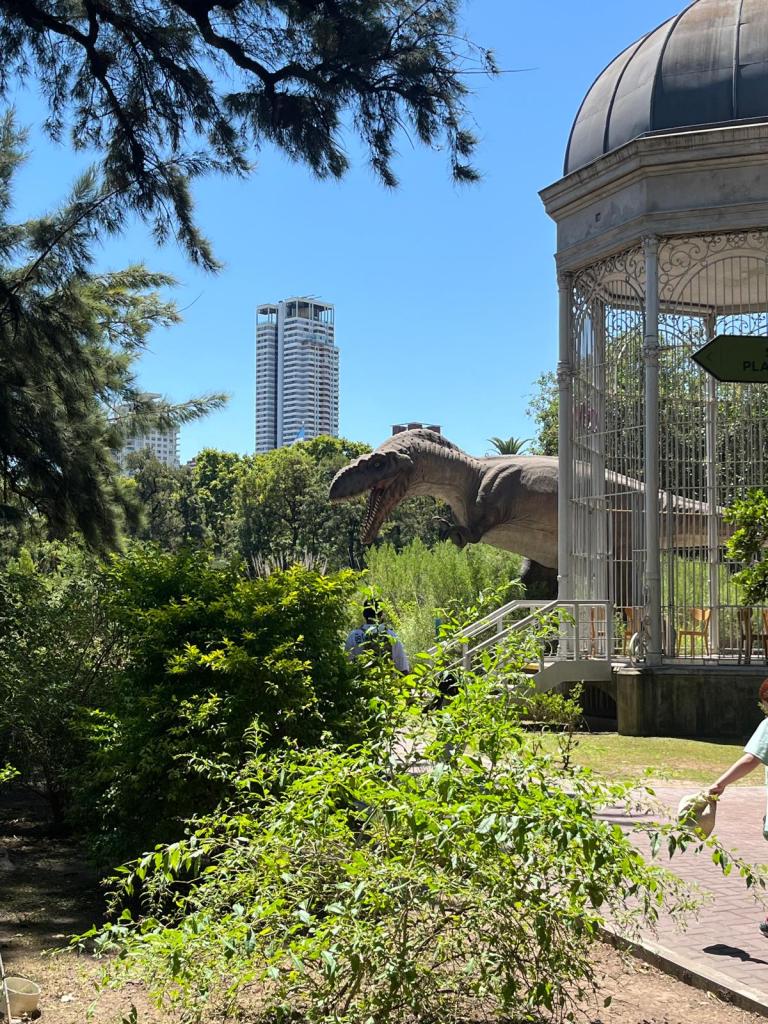
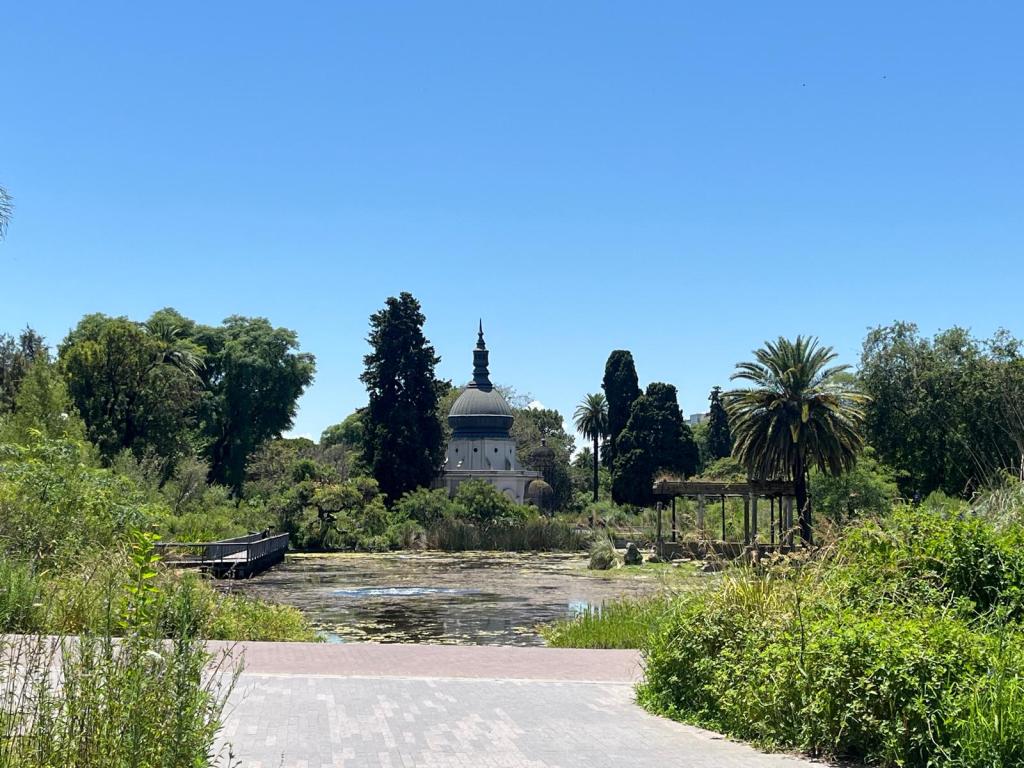
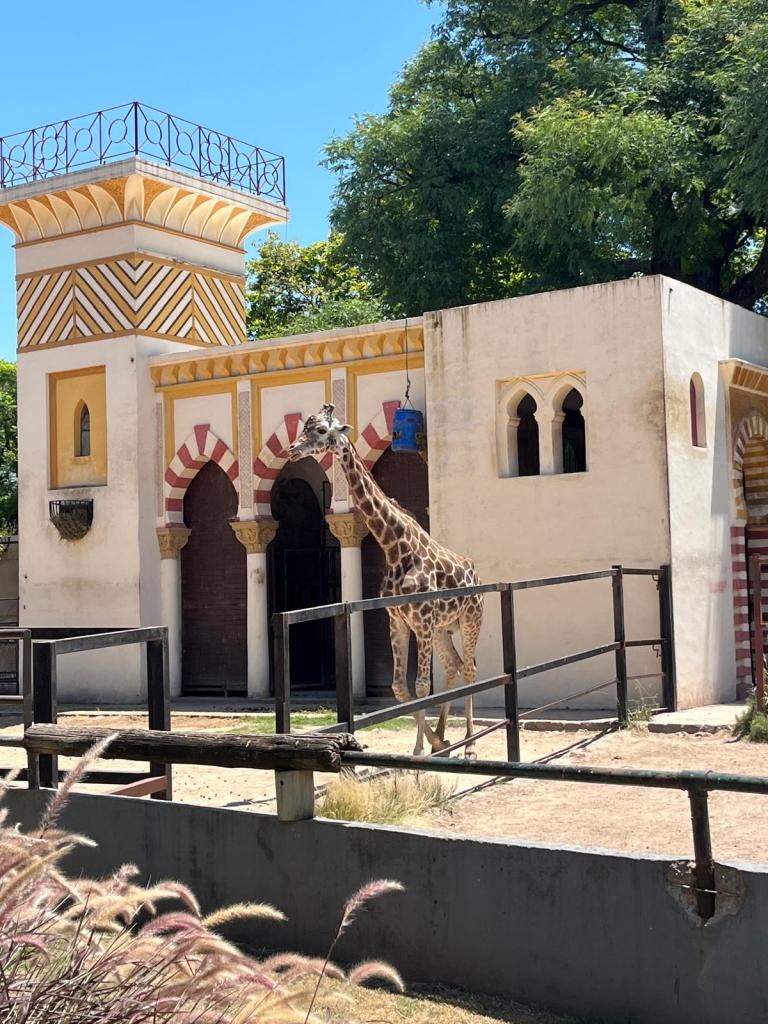
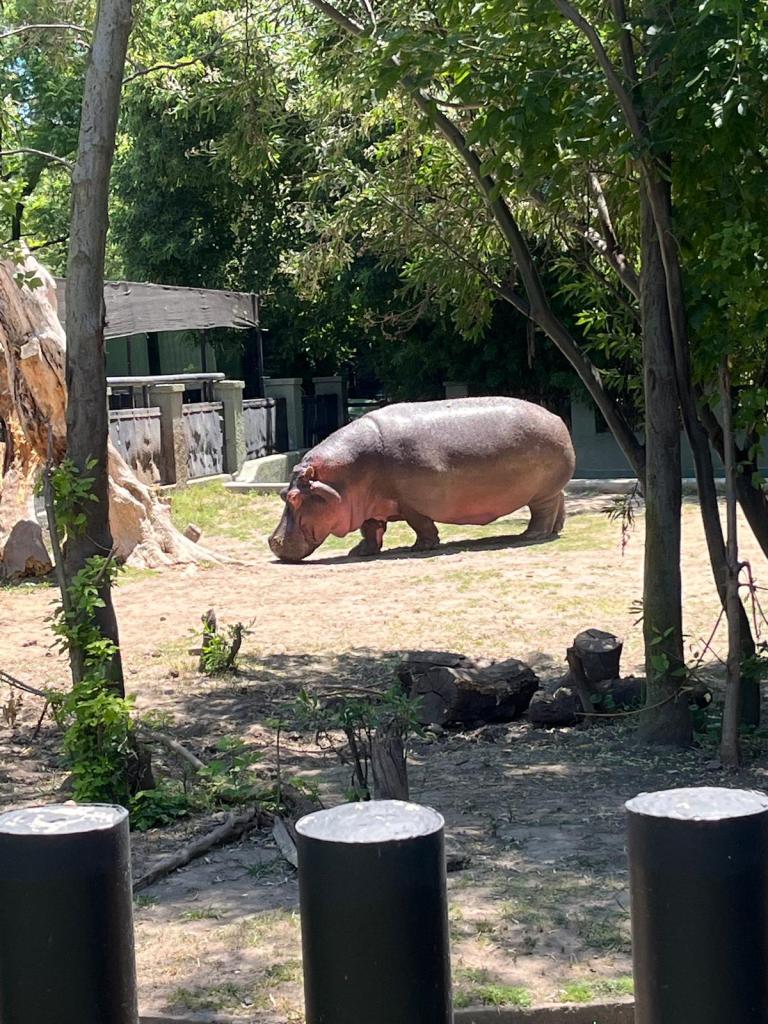
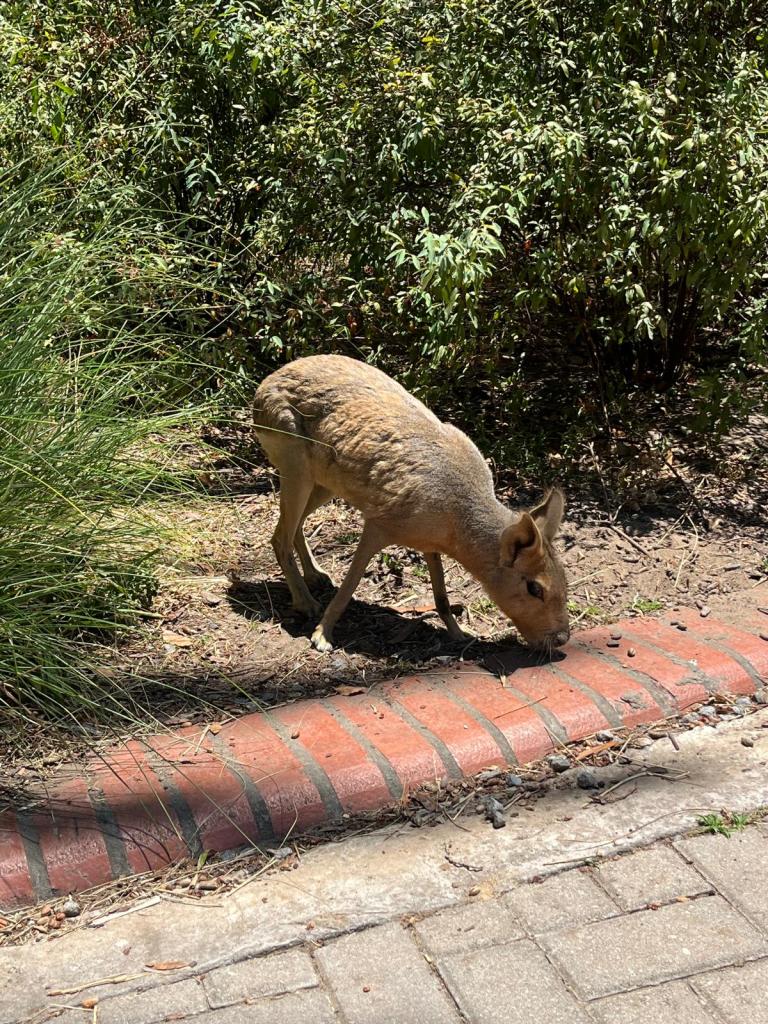
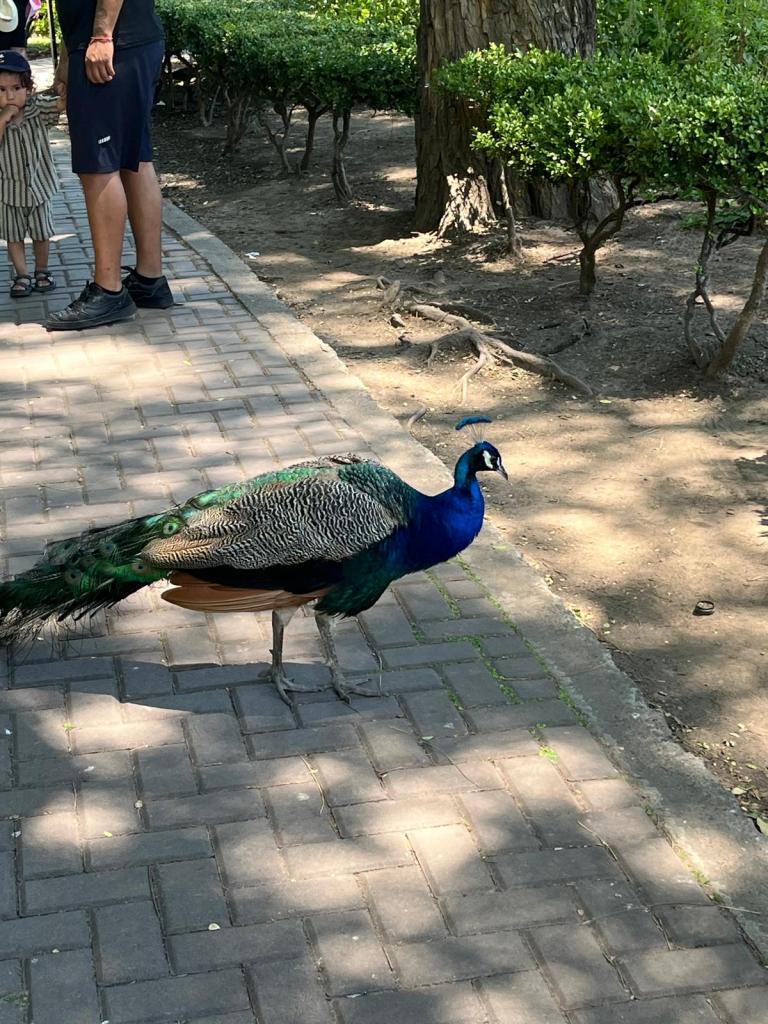
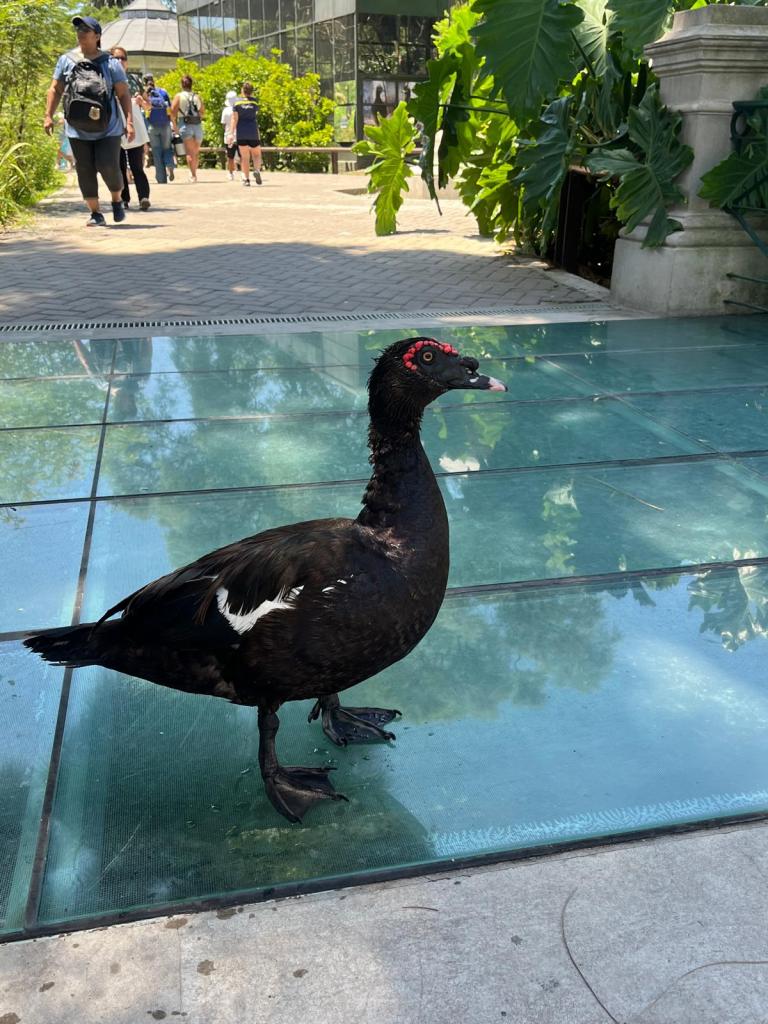
The EcoParque, at the top of our to-visit list, is a large urban park and zoo. While the entire park used to be a zoo, it has been turned into an injured animal rescue, biobank, and conservation park. Generally, zoos don’t do as well in South America culturally compared to the United States or Europe. South Americans prefer to visit places that conserve and rehabilitate local wildlife. The EcoParque features a few legacy animals from outside of South America from the days when it was a zoo, such as giraffes and hippos. However, the majority of species in the park are native to the continent and are in the process of rehabilitation back to the wild. To learn more about the wonderful work the EcoParque does, check out this article. Since we were there on a hot afternoon, many of the animals were napping in the shade so we only have a few photos.
Top row: photos from the trails through the park
Middle row: a giraffe; a hippo
Bottom row: a Patagonian mara (not to be confused with a capybara); a peacock (there were quite a few peacocks, peahens, and chicks walking around); a Muscovy duck
Another highlight was touring the Teatro Colón. When researching Argentina, Yahm had looked into purchasing tickets to a musical performance but nothing caught her fancy. Instead, we made due with the tour, which we highly recommend. The tour lasted for an hour and a lot of information was shared, but below are our five favorite factoids, followed by photos.
- There are no shows during January and February to allow for deep cleaning and repairs. This includes lowering chandeliers from the ceiling to wipe away dust.
- Even though the theater faces Avenida 9 de Julio, the widest urban thoroughfare on the planet, that is not the main entrance to the theater because the theater predates the street’s current structure. The theater has three entrances that used to be based on ticket cost. The wealthy entered from the main entrance, while middle class and poor people entered from the sides. The door that opens to Avenida 9 de Julio was (and still is) for employees and actors. Today, all three public entrances are equitable.
- Three different architects worked on the theater. The first two were Italian and were both murdered at the age of 44. (One of the architects’ butlers was having an affair with the architect’s wife and the butler murdered him after the affair was discovered.) Obviously, this made people think the theater had some strange curse. The third architect was an older Belgian bachelor, so he was able to break the “curse” and complete building the theater.
- Back in the day, widows had many restrictions placed on them while they mourned. One of those restrictions meant not visiting the opera or enjoying musical performances. However, some widows still wanted to go out so the theater had a special area for widows to watch performances without being viewed. They would also enter and exit the theater using the employee entrance to avoid detection. On the other hand, the president’s box in the theater is one of the worst seats in the house because it is so close to the stage. The purpose of a president visiting the theater was for him/her to be seen, not to enjoy the performance. Talk about optics!
- The theater has perfect acoustics. It only takes 1.6 seconds for sound to disappear into the vents on the floor. This is achieved not only through the dome shape of the theater, but also through the materials that absorb sound. Apparently, if a musician or singer makes a mistake it is painfully obvious.
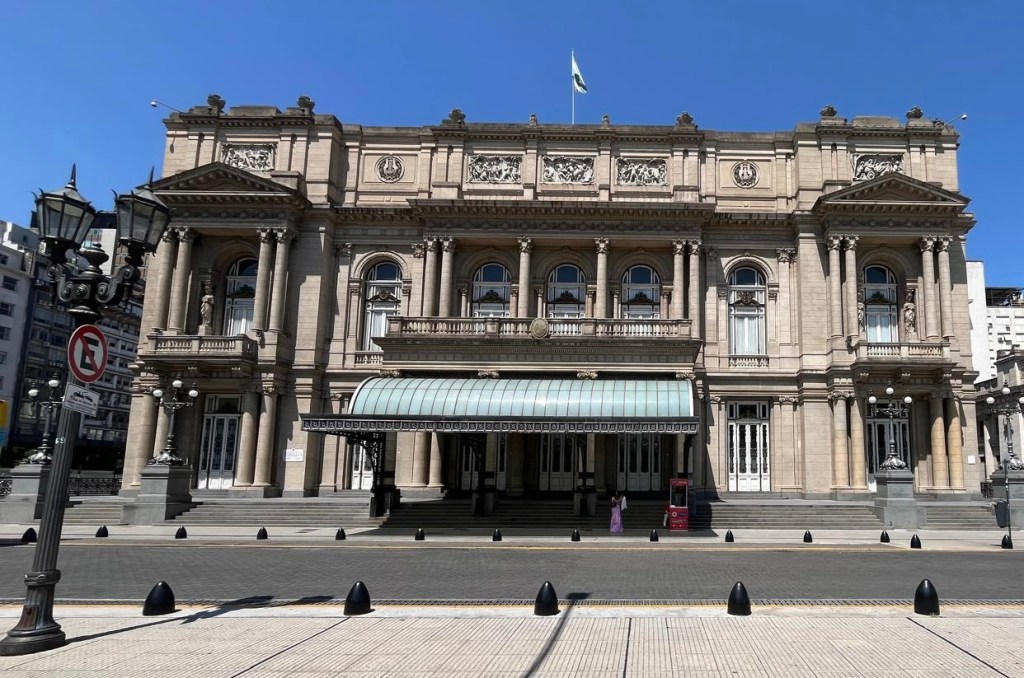
The main entrance to the theater from Avenida Libertad.
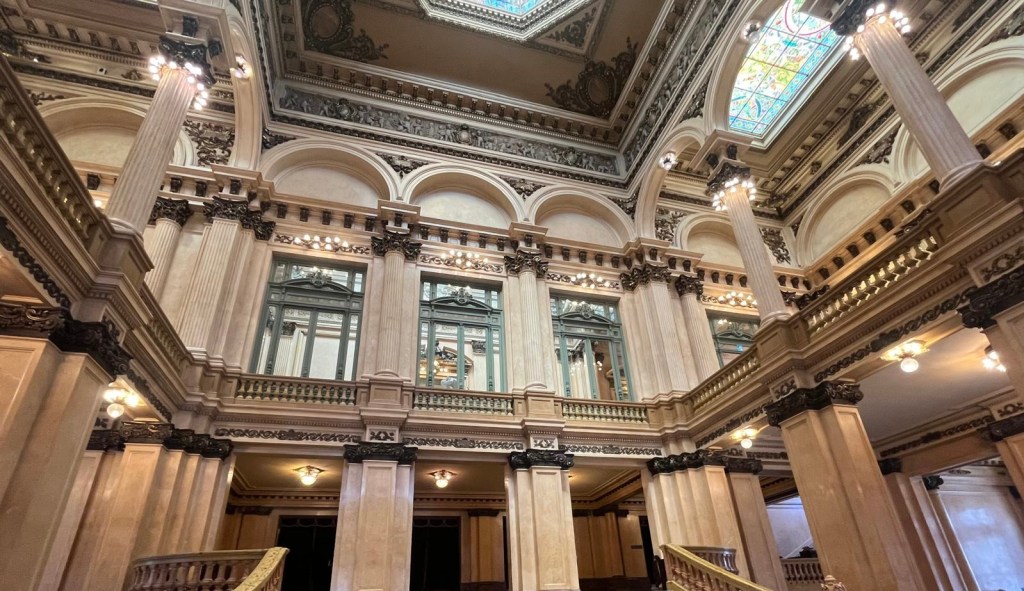
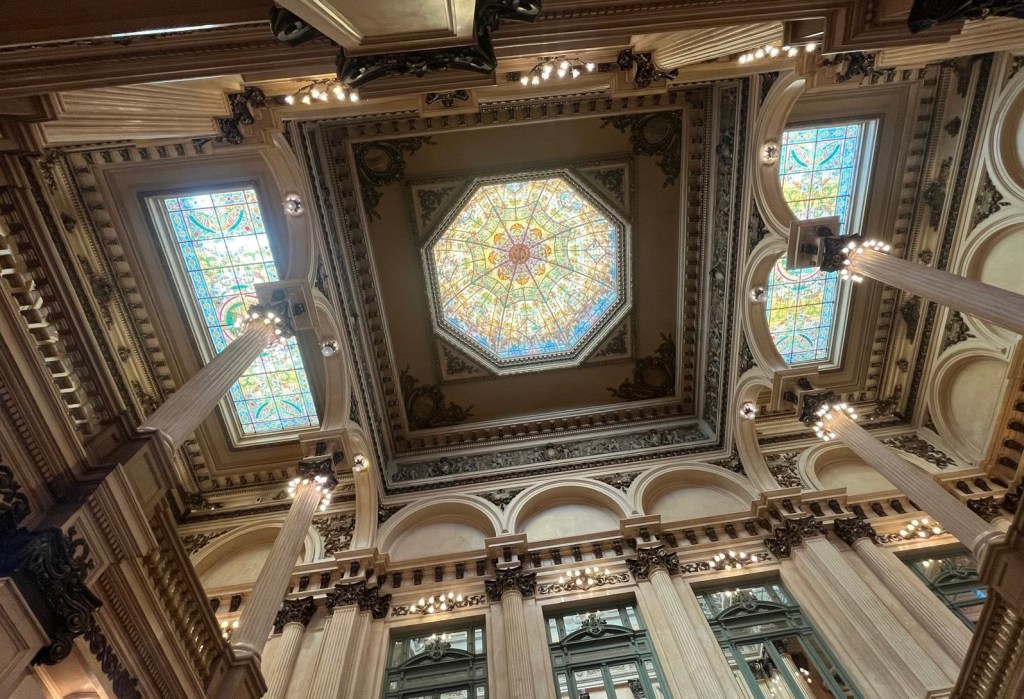
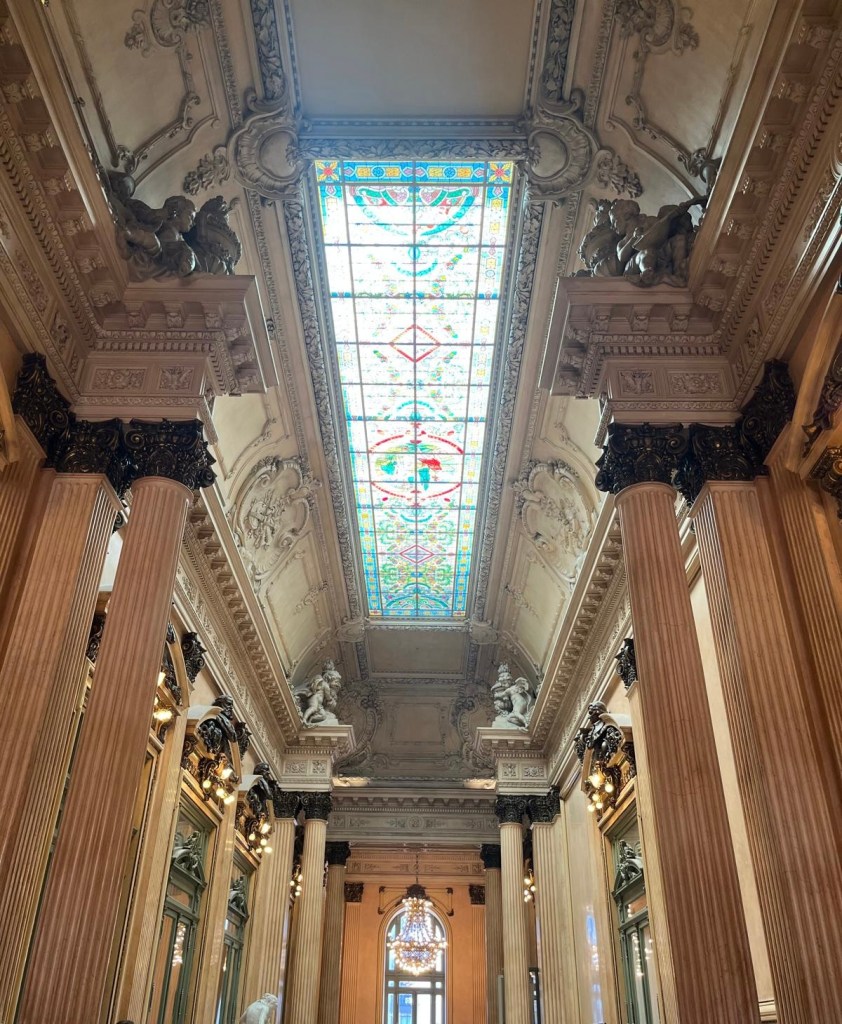
Top row: the lobby; notice the mixture of architectural designs and all of the natural light that comes in from the stained glass windows. While marble from all over the world is used throughout, a lot of the ornamental designs are plaster.
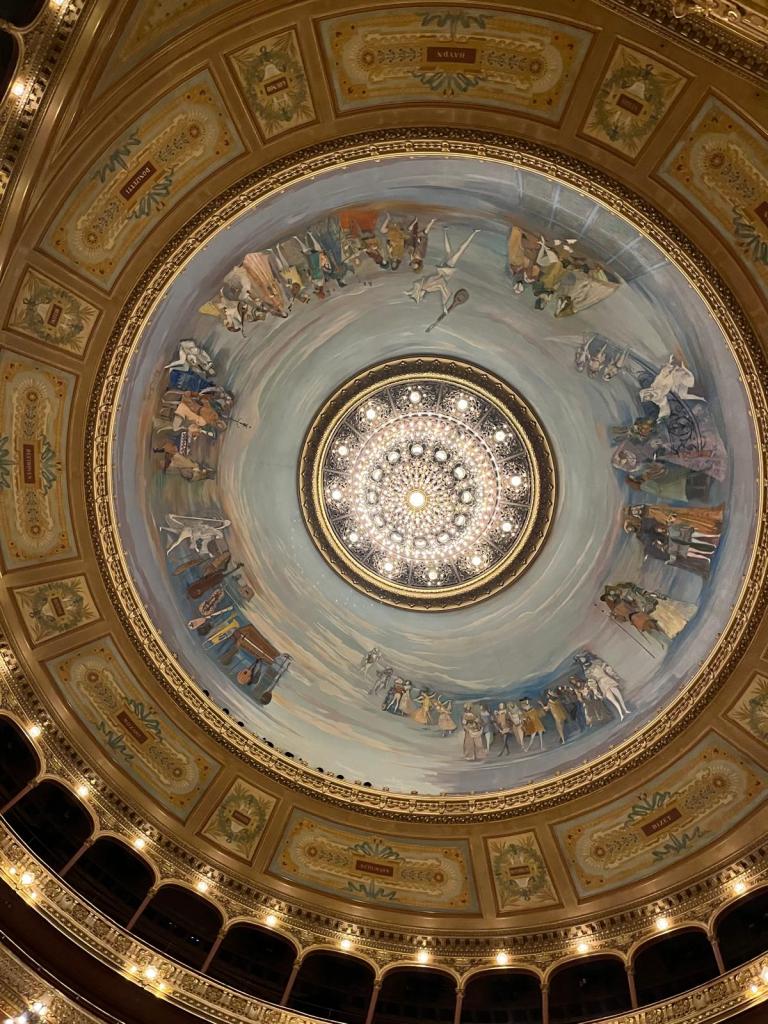
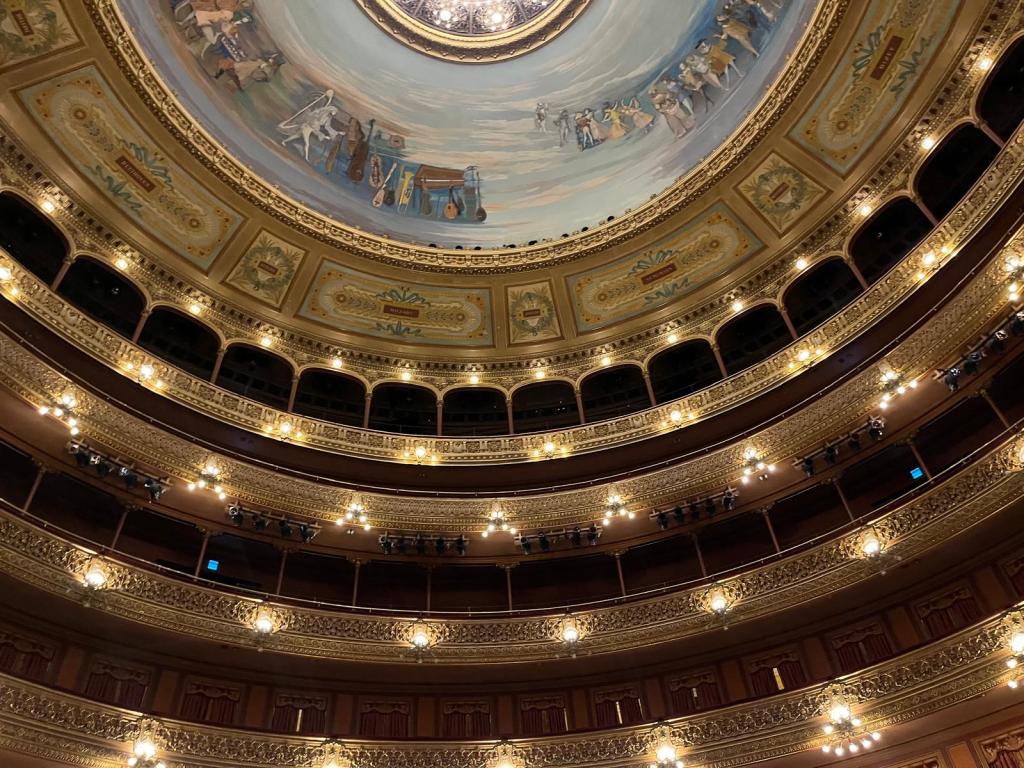
Middle row: the ceiling in the theater; the chandelier is lowered once a year for cleaning and actors can stand above the chandelier for theatrical sound effects such as the voice of God; names of influential composers are painted on the ceiling.
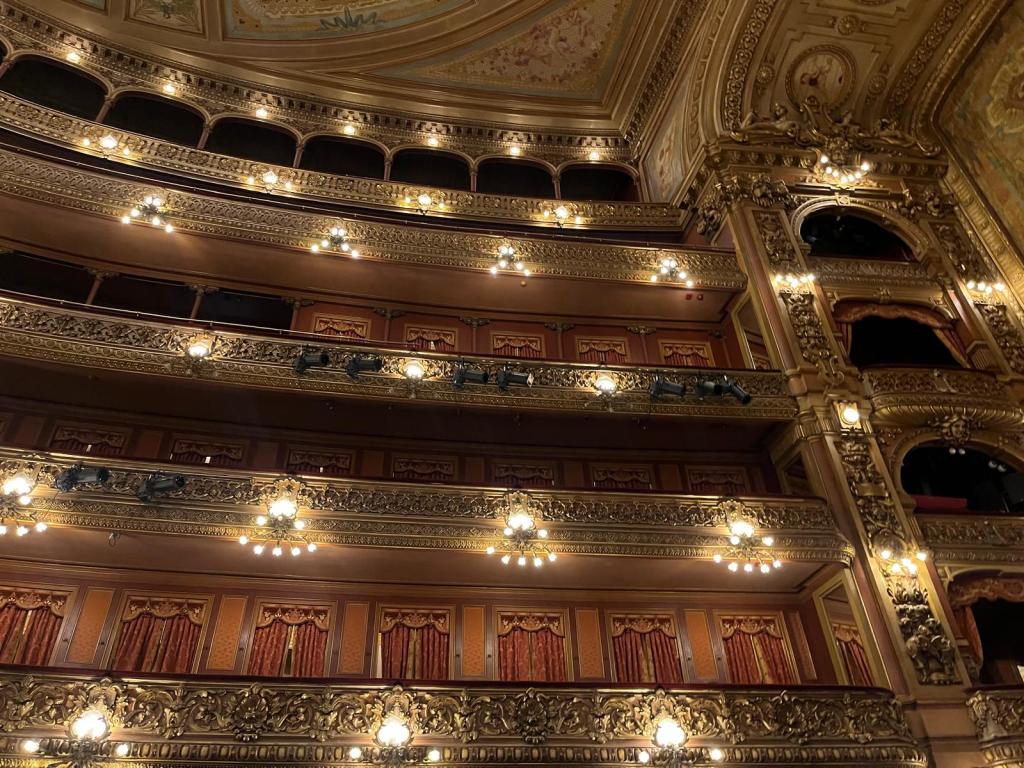
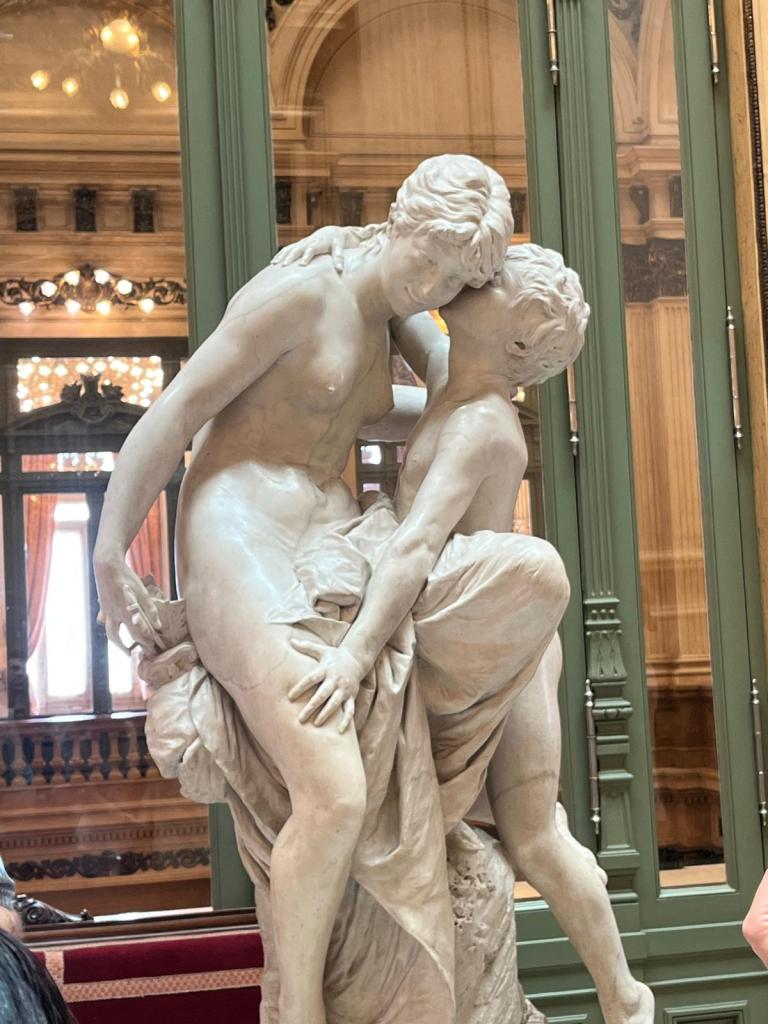
Bottom row left to right: a slightly closer look at the box seating; this statue is statue of Cupid telling Venus a secret which has never been revealed but guests are invited to guess what he is telling her. There are busts and statues throughout the theater.
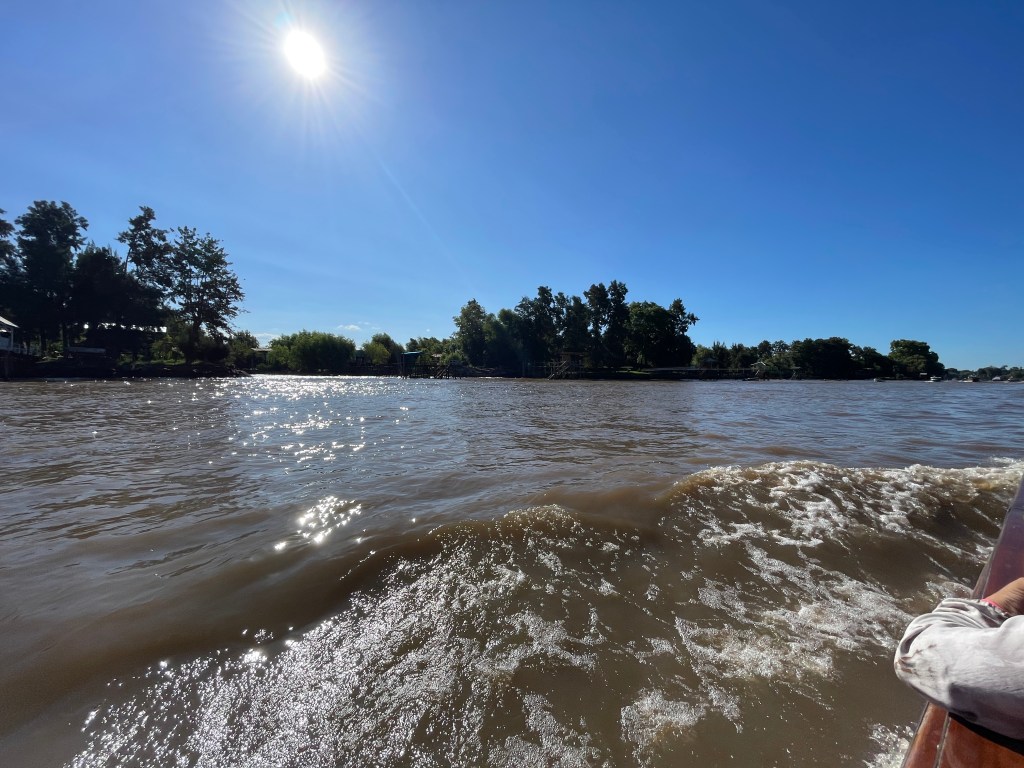
The Buenos Aires metro sits on the Río de la Plata which is formed by the confluence of the Paraná River and the Uruguay River. Where the Río de la Plata meets the Atlantic Ocean forms one of the world’s largest river deltas with the eighth highest water discharge on the planet. The river is also one of the widest non-oceanic bodies of water on earth, forming part of the border between Argentina and Uruguay. Along both sides of the river delta are numerous towns and we visited Tigre, just north of the city of Buenos Aires. Initially we considered staying there for a night or two, but quickly realized that this small town is best suited for families looking to swim in the river or rowers. We walked around, had lunch, and took a tour along the river. As a side note: the reason the river is so brown is because of all the silt that is collected and dumped into the delta by its two major source rivers. Many people swim in the river and in shallow “pools,” though we also saw plenty of trash.
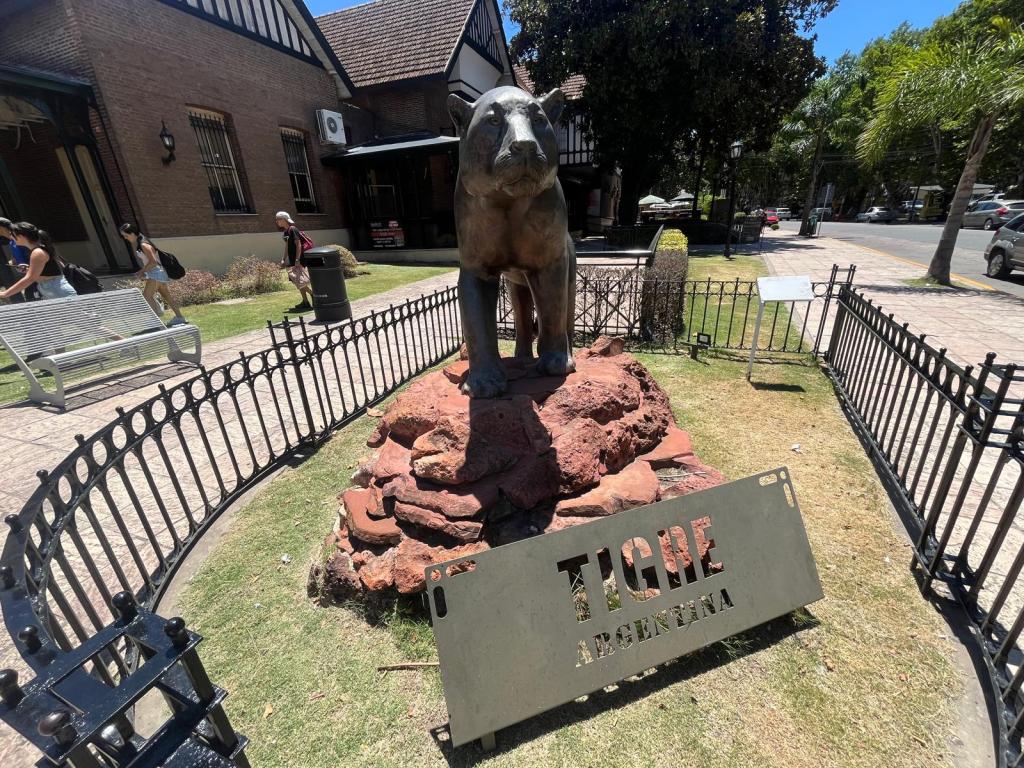
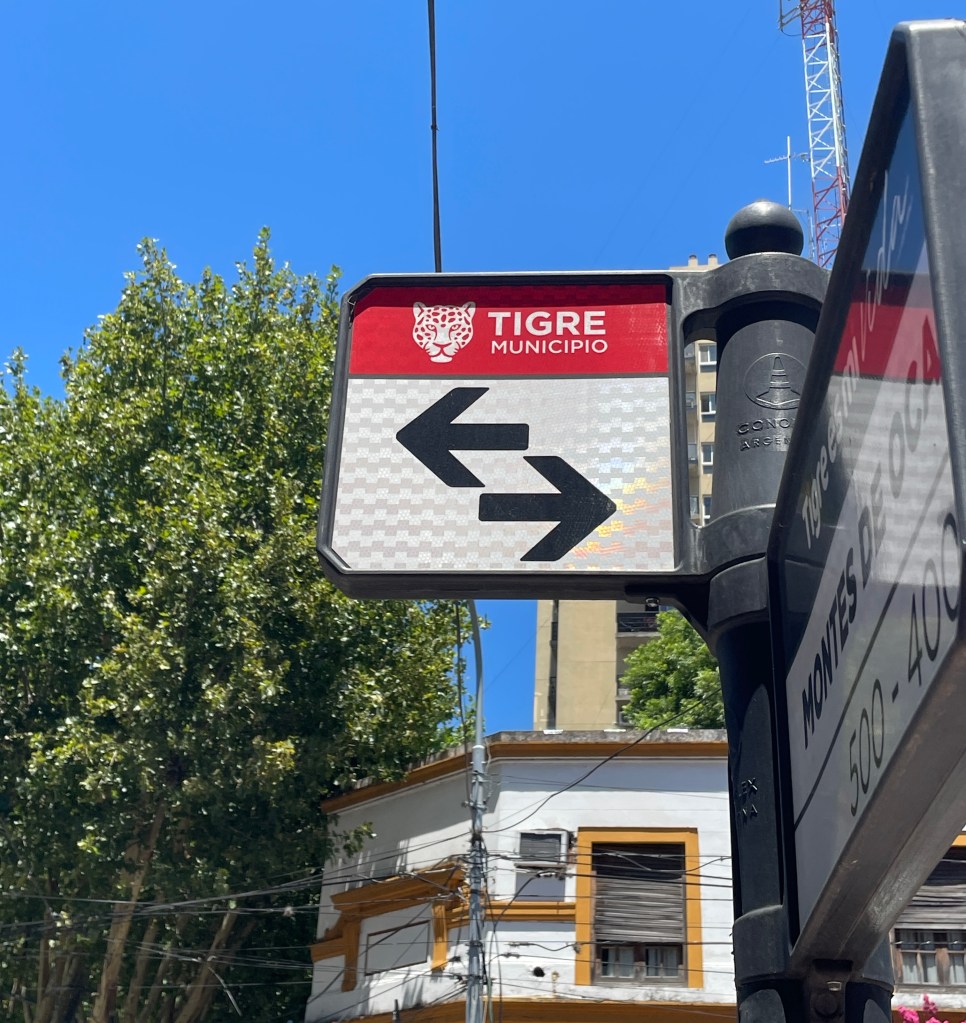
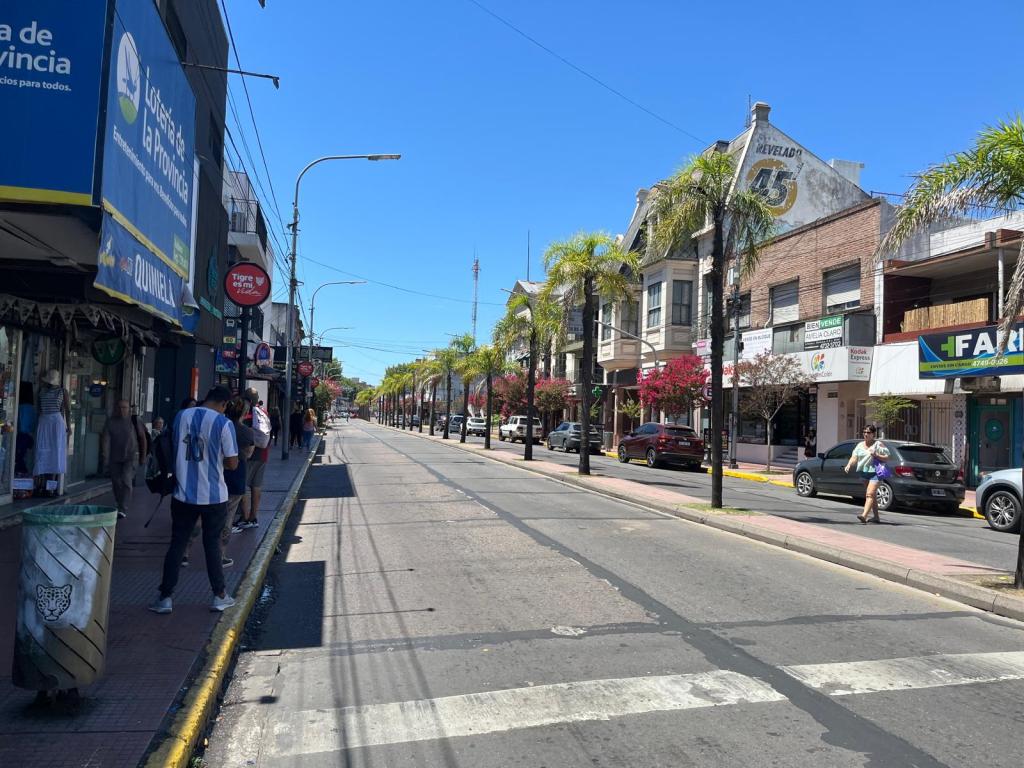
Top row: street views of the city. Look closely and you’ll notice that the statue on the right and the image on the sign in the center photos are of jaguars. Tigre in Spanish means tiger but is also used as a colloquialism for the jaguar, which makes more sense since jaguars are native to South America.
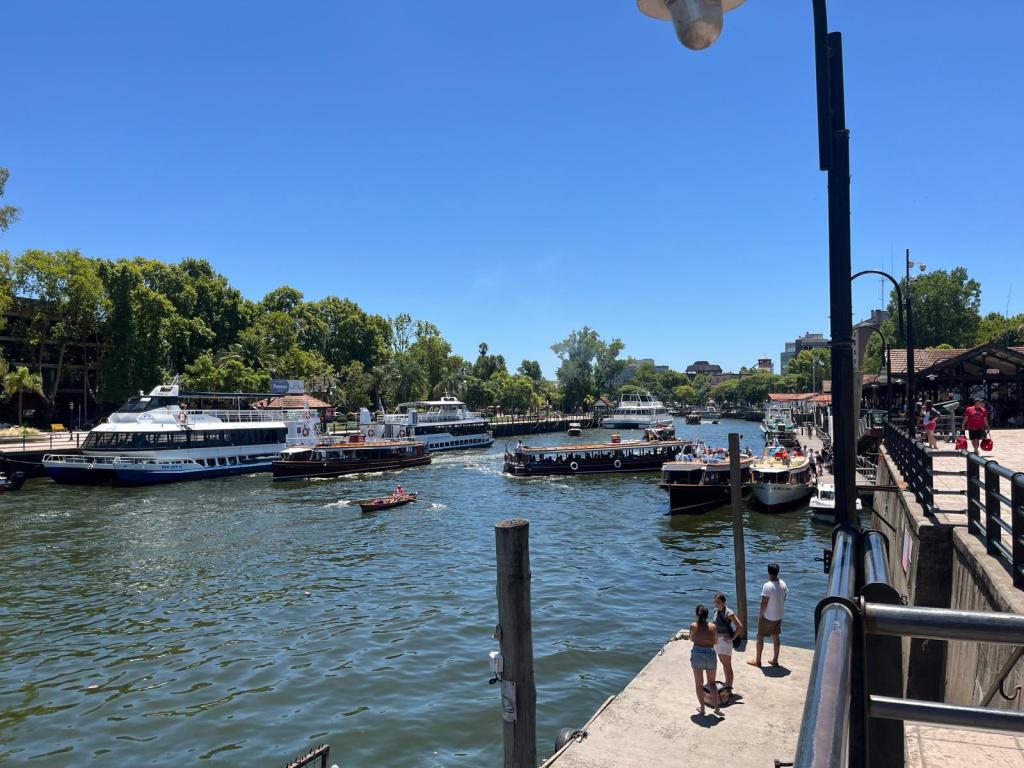
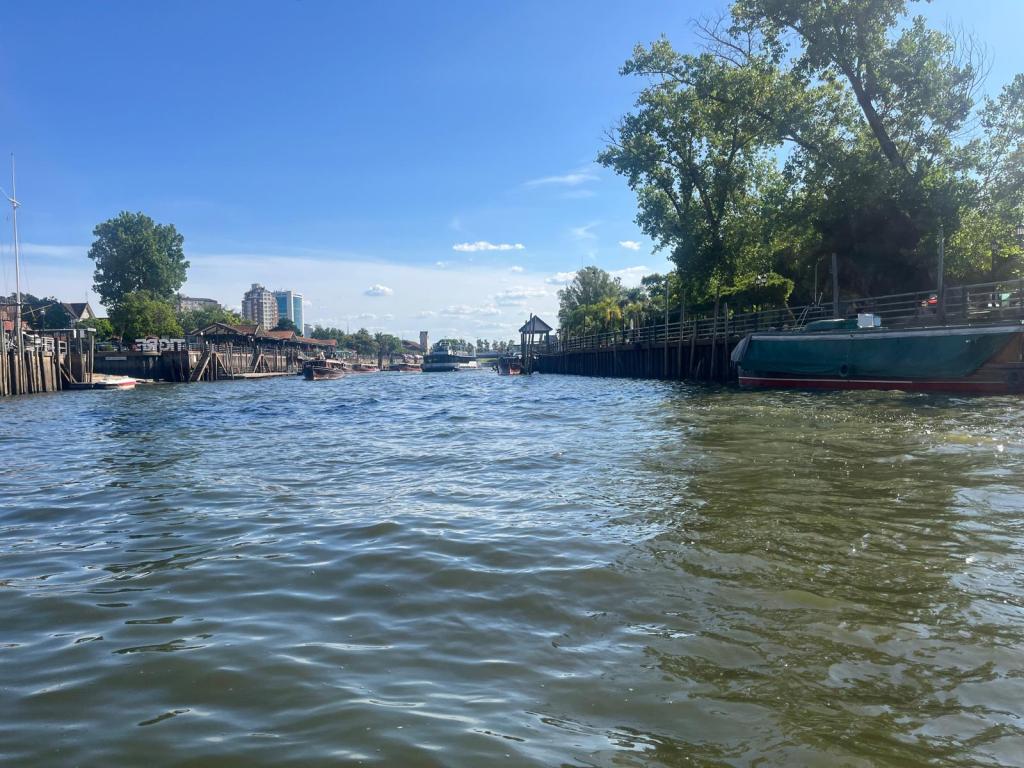
Bottom row, left to right: collectivo boats and tour boats ready to take people up and down the river; still waters taken from the dock; a photo of the river while on the tour
Video of the river on the tour boat.
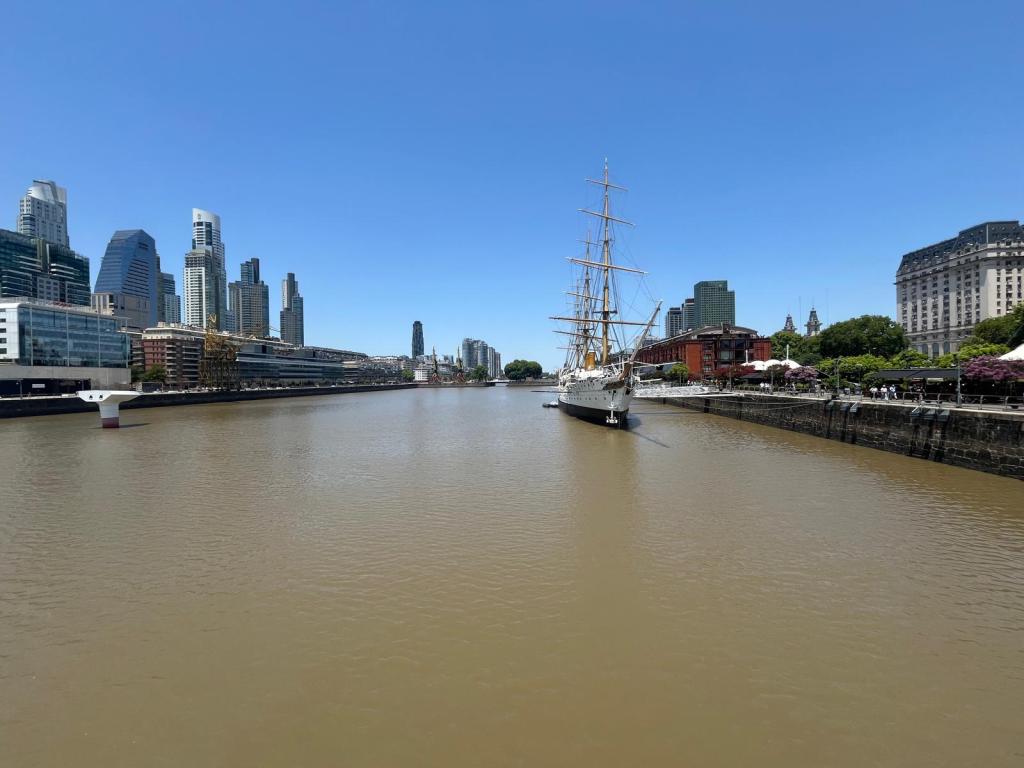
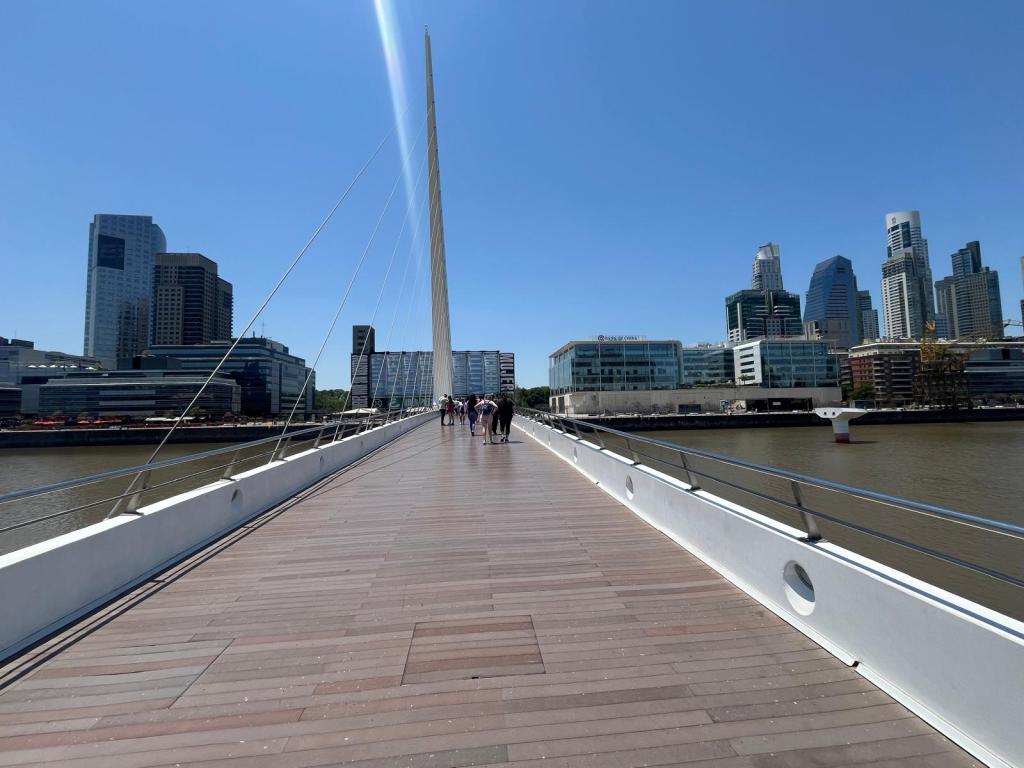
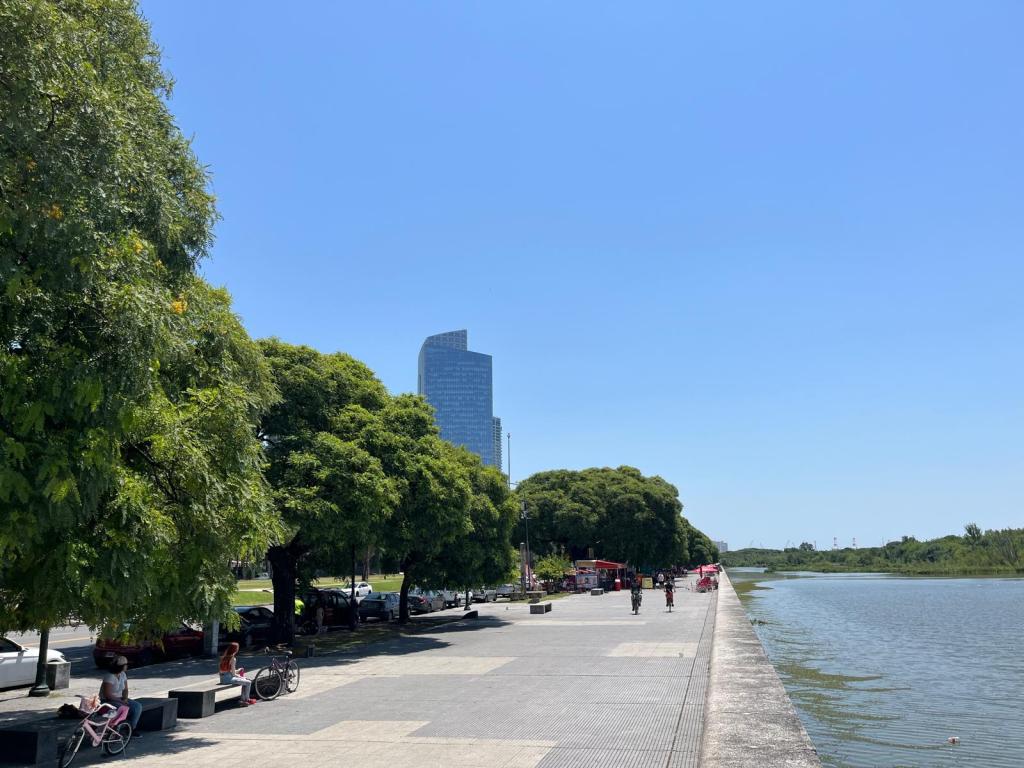
We also took the time to walk along the Río de la Plata in Buenos Aires itself. Along the river are restaurants, cafés, and boardwalks for people to enjoy. No one swims in this part of the river though.
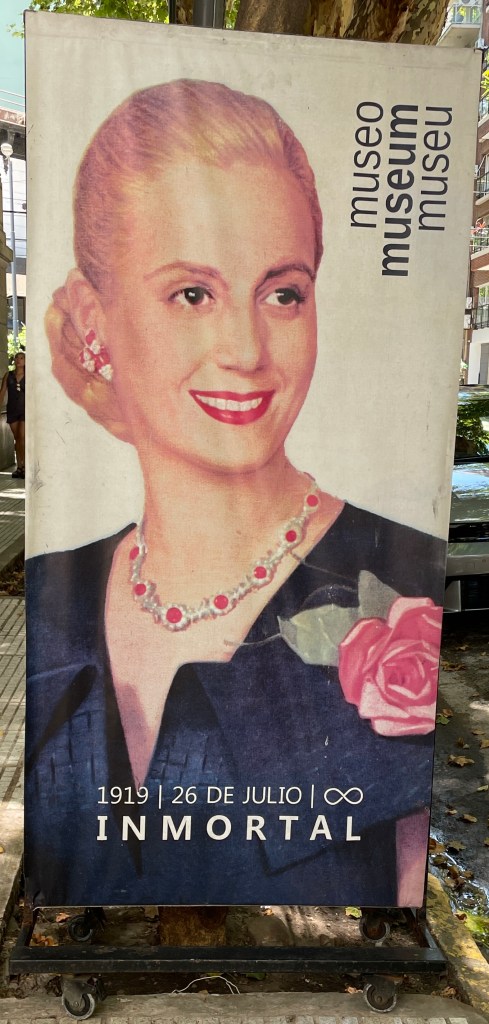
No trip to Buenos Aires is complete without a visit to the Evita Museum. Initially Yahm was keen to visit the museum to see how many liberties were taken in the Evita musical. What we came away with is an incredible appreciation for Evita the woman and questions about the making of collective memory. Evita achieved so much for people who were so often ignored: free public education; homes for orphans and abandoned children that promoted education, exercise, and field trips to appreciate Argentina’s natural beauty; shelters for women and their children; and suffrage for women. She pushed for these centers fiercely despite being sick with cancer for years. By the time she publicly acknowledged having cancer she only weighed 88 pounds (44 kilograms).
In just a few years, she and her husband Juan Perón completely changed Argentina. Of course, the only way to change a country so dramatically and quickly isn’t necessarily through democratic means. What does it mean to celebrate these achievements while also acknowledging that Peronism stands for leftist authoritarianism?
Still, Evita’s contributions to Argentine history could have been so easily forgotten as happens to so many women. Why has her legacy endured? Part of the reason may be because after she died and Perón was ousted out of the government, the new right-wing dictatorship forbade mentioning their names. Then there’s the issue of her body being kidnapped and not laid to rest for 16 years. (Click on the link. It’s so disturbing and fascinating.) In a similar, albeit less political, vein, the Mona Lisa became one of the most famous paintings in the world not because it’s so amazing compared to other paintings of the same era, but because it was stolen from the Louvre multiple times. Is Evita a Mona Lisa for Argentina? Maybe a little bit.
Either way, the museum is a shrine for her short life and the impact she left. She is immortalized so long as the museum keeps its doors open.
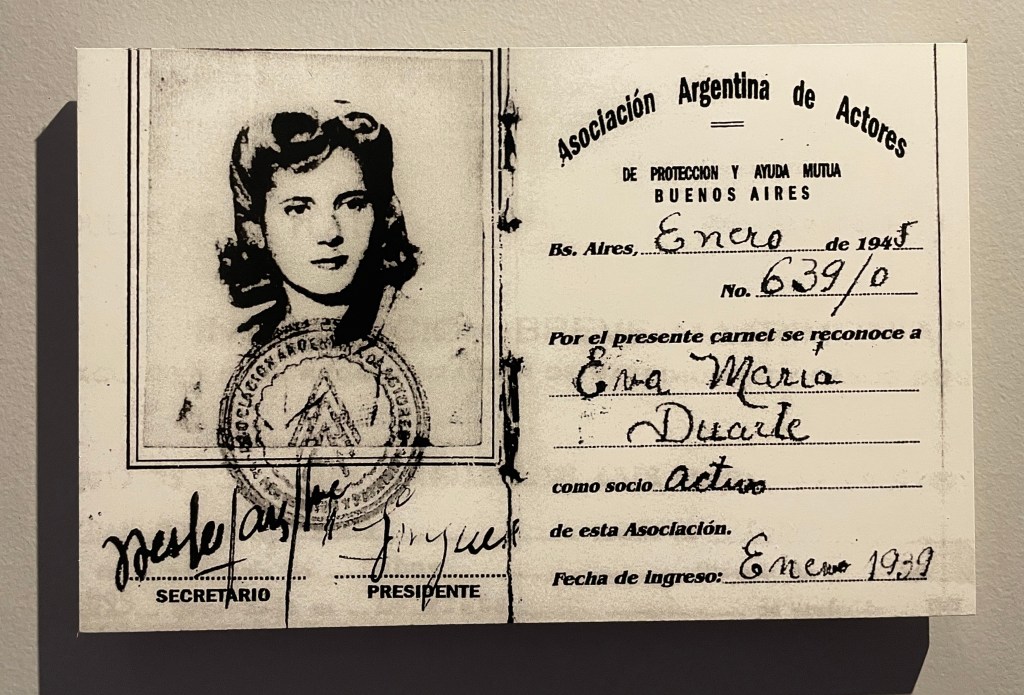
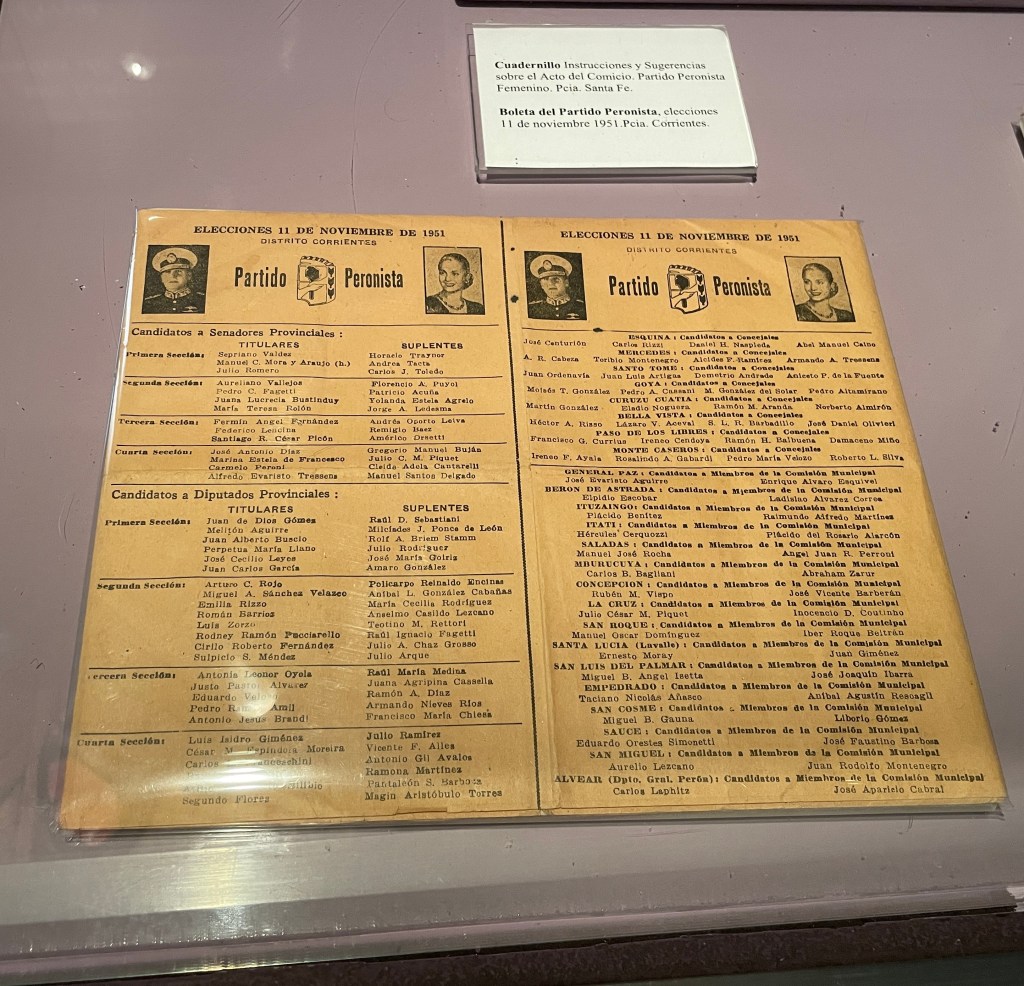
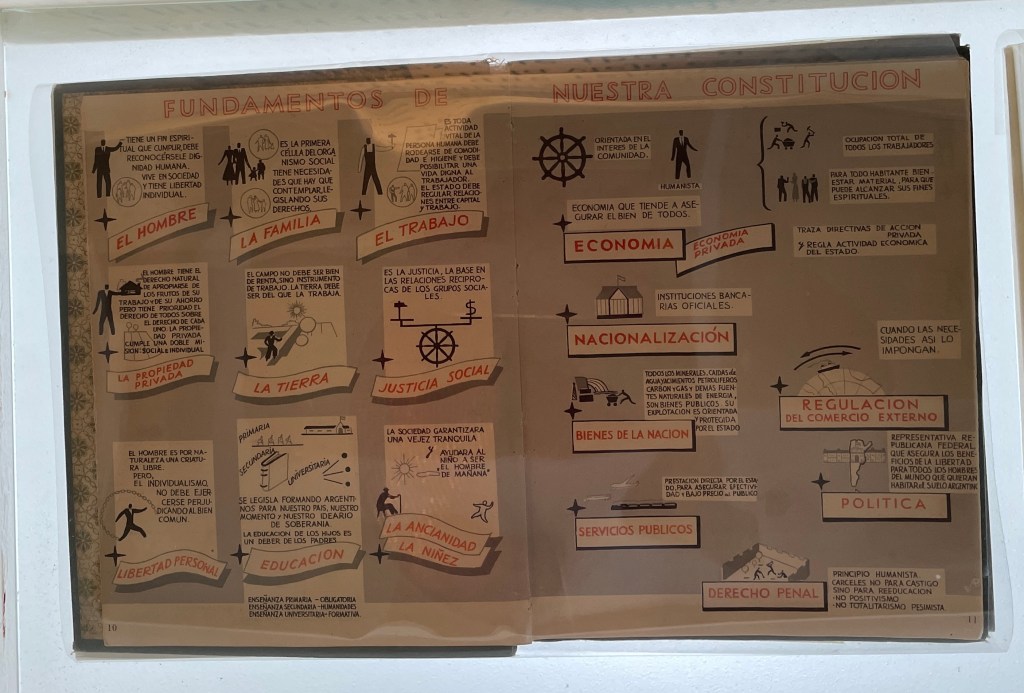
Top row, left to right: the birth certificate Evita forged before she married Juan; a ballot from the 1951 elections; an infographic about the values expressed in the Perón constitution. (Note how leftist and nationalistic; Juan was deeply influenced by Benito Mussolini.)
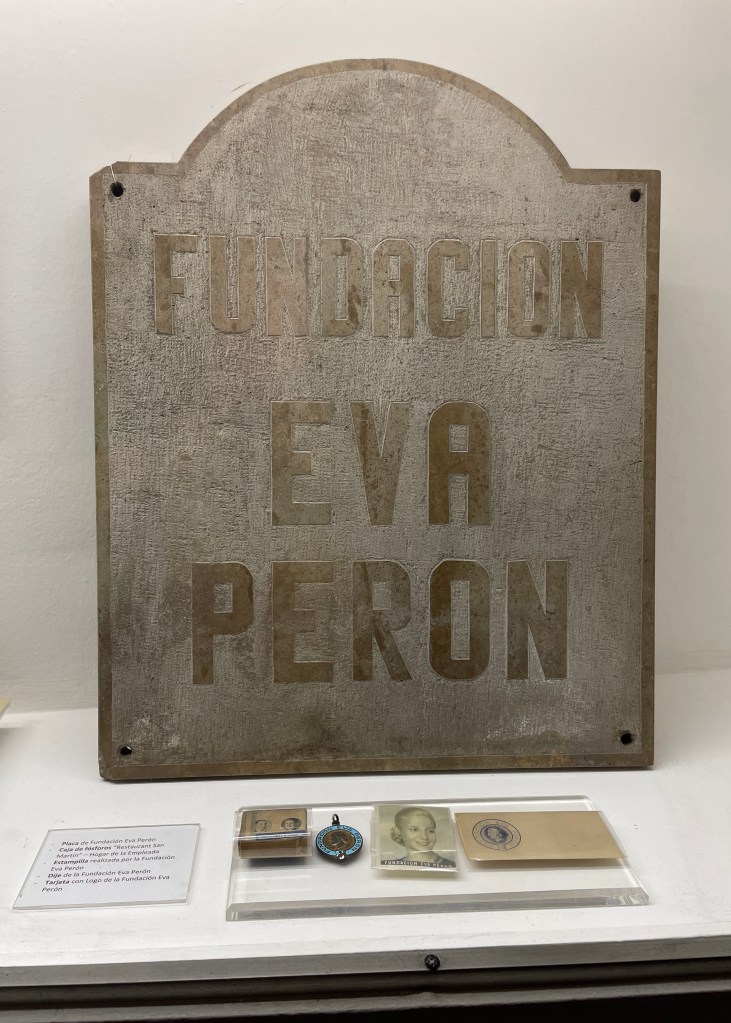
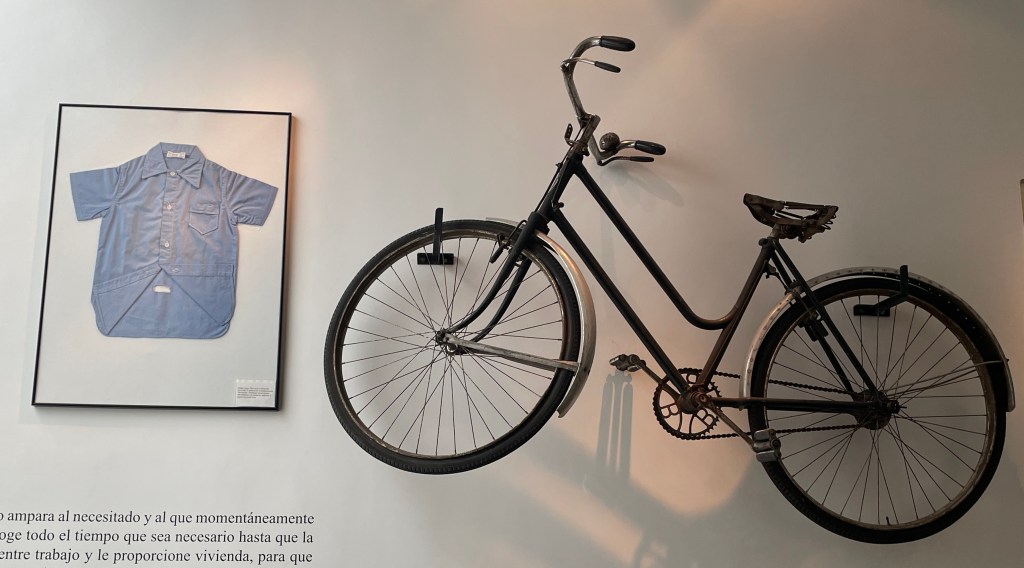
Bottom row, left to right: a room in the museum intended for reflection and prayer*; relics from the Eva Perón Foundation; one of the bicycles that was handed out to children (just like in the movie).
*The museum is located in one of the shelters for women and their children. These shelters were built like middle class homes because of a belief that everyone deserves to live in a home with dignity no matter their socio-economic status.
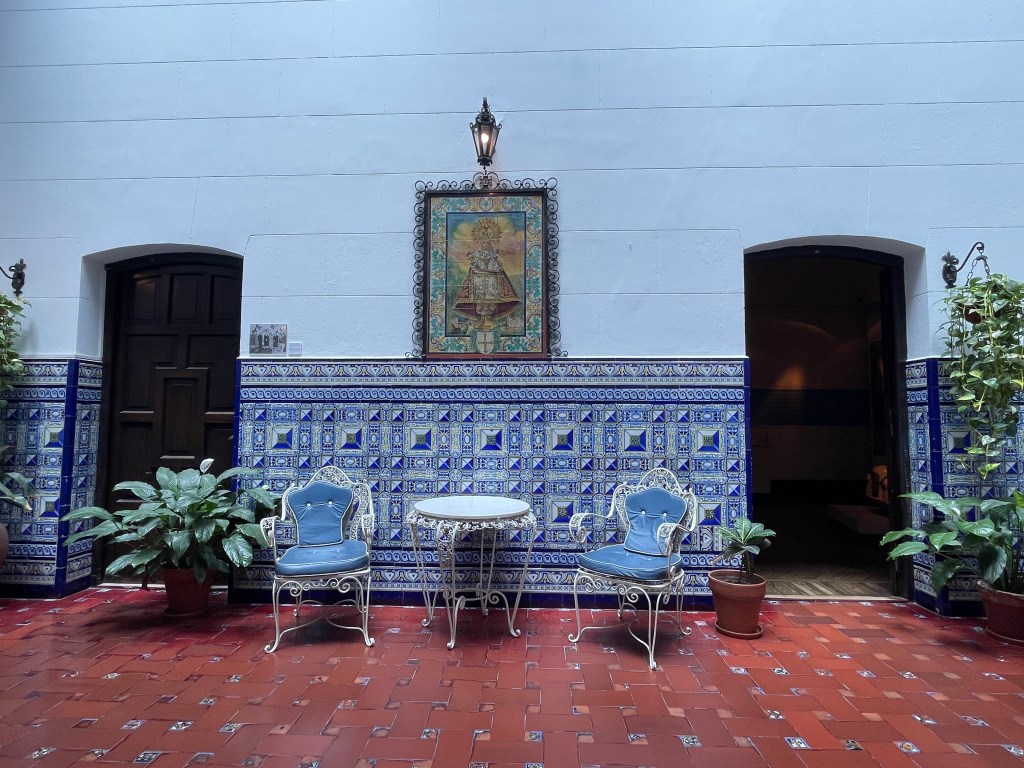
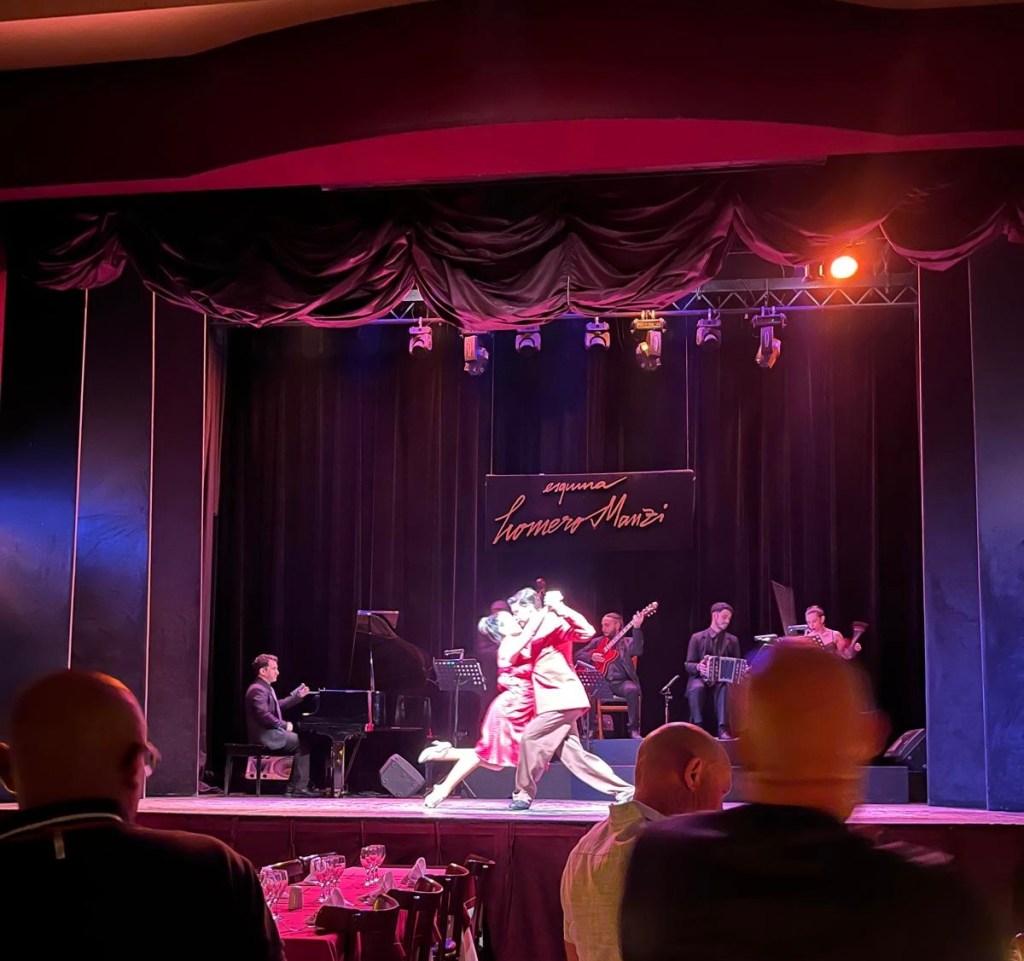
Last but not least, we went to a tango show. Tango was invented in working class neighborhoods in Buenos Aires and Montevideo, Uruguay. There are many ways to watch tango, but we opted to watch professional dancers, musicians, and singers. While they perform, the audience drinks and eats. The emotions came through from both song and dance making it one of the more enjoyable experiences during our visit. It’s a must if you’re visiting Buenos Aires.
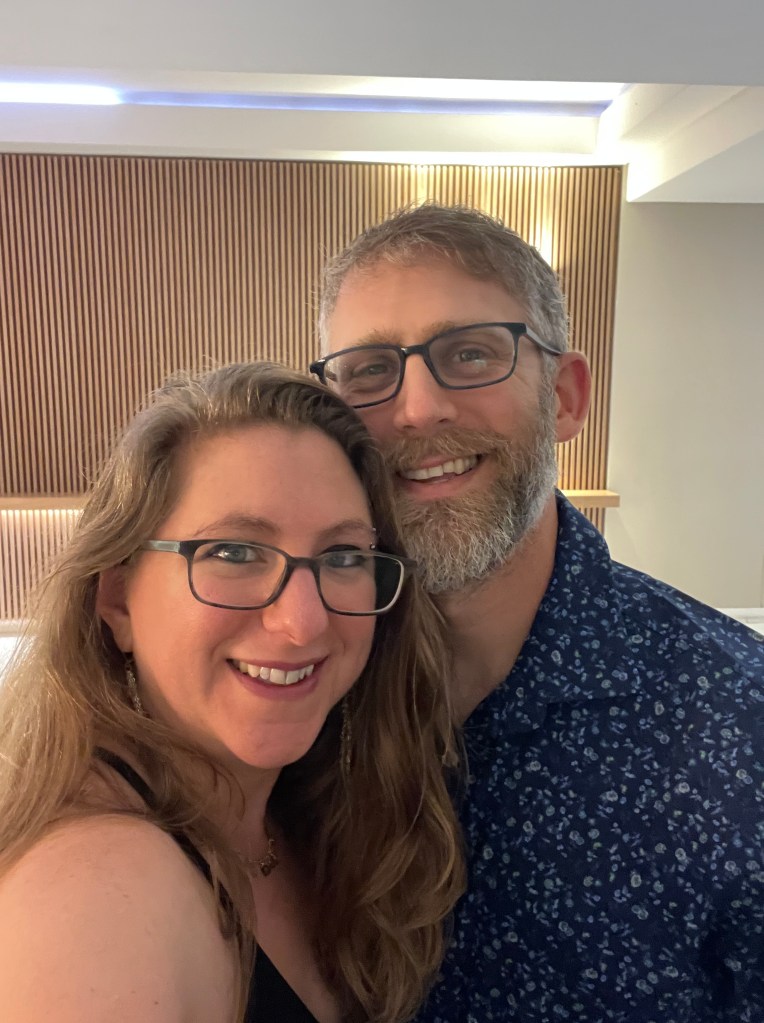
Buenos Aires might not be our favorite city in the world, but we are glad we had the opportunity to visit. Coming up are posts from both Yahm’s and Adam’s corners related to Argentina before we share about our experiences in Uruguay. Be sure to like, comment, and subscribe to Traveling While Introverted so you don’t miss it!
 Traveling While Introverted
Leave a comment