Due to logistics and cost, our time in Argentina mainly consisted of exploring Buenos Aires. However, we were not far from some protected sections of one of South America’s most imperiled and lesser-known biomes: the Pampas. The Pampas is a large expanse of flat grasslands with minimal tree cover as well as rolling hills. This ecosystem extends from extreme southeastern Brazil into Uruguay and northern Argentina. The climate of this bioregion is seasonal with long, hot summers and relatively mild winters. Rainfall is evenly distributed throughout the year and this biome features some of the richest soils on the planet. Because of this, the Pampas has been heavily exploited. Vast tracts of it have become pasture lands for cattle, sheep, goats, etc. Brazil and Uruguay’s sections have been the most affected; though, much of the Argentinian Pampas has also been degraded.
I wanted to see some of wild Argentina while we were still in the country and get a sense of what rural areas are like. I found a perfect place to do so: the town of San Clemente del Tuyú. This small town of just over 12,000 is a vacation destination for urban Argentinians. It is next to two major protected areas that preserve wild tracts of Pampas grassland and the wildlife found within it. Campos del Tuyú is only accessible to the public by guided tours at certain times of the year. Otherwise it is only accessible to ecologists and biologists because of sensitive marshes and wetlands, as well as hosting one of the largest remaining populations of the endangered Pampas deer. The other protected area is Punta Rasa Natural Reserve, which I visited. As with Tayrona National Park in Colombia, Yahm stayed back while I headed out on this excursion solo.
The bus ride to San Clemente del Tuyú is around 3 hours, and the earliest bus was at 2 a.m. Luckily, the bus had extended seats that pull back so people can sleep. I normally do not sleep well on moving vehicles, but I was able to catch a brief nap. I arrived in San Clemente’s bus terminal by 5:45 a.m. The sun had just come up and I was hungry so I headed across the street to a small diner. After I ate, I headed to my hotel to hand them my duffle bag to put in storage. I changed into my hiking gear, got my pack ready, and headed out. It was early morning so this small resort town was asleep. The weather was crisp and cool with cloud cover and some wind. (Winds in the Pampas can be incredibly powerful and are prevalent during the Southern Hemisphere’s summer. This region boasts the third highest concentration of tornadoes on earth after the United States’s Midwest and Southeast regions.)
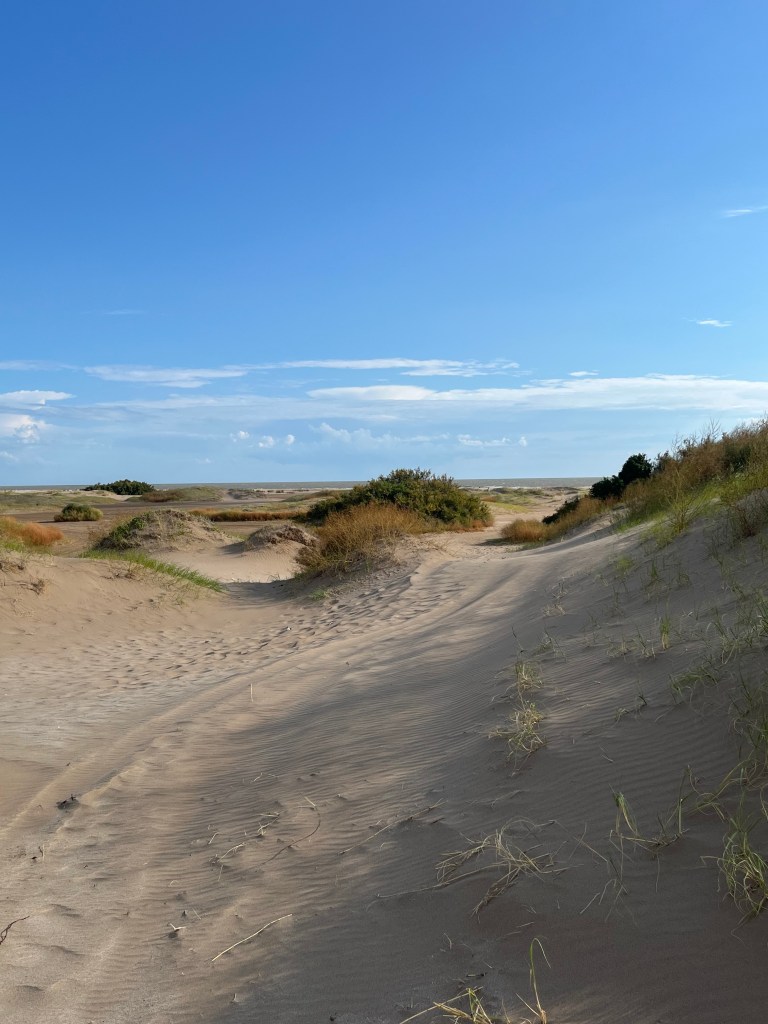
As I took the hour-long walk to Punta Rasa, I found my way to a concentration of sand dunes that abutted the coast. The sand was heavy and coarse but the winds had still managed to form some large dunes and my hiking boots were sinking a bit within them. I was able to enjoy the views on my way to the protected area.
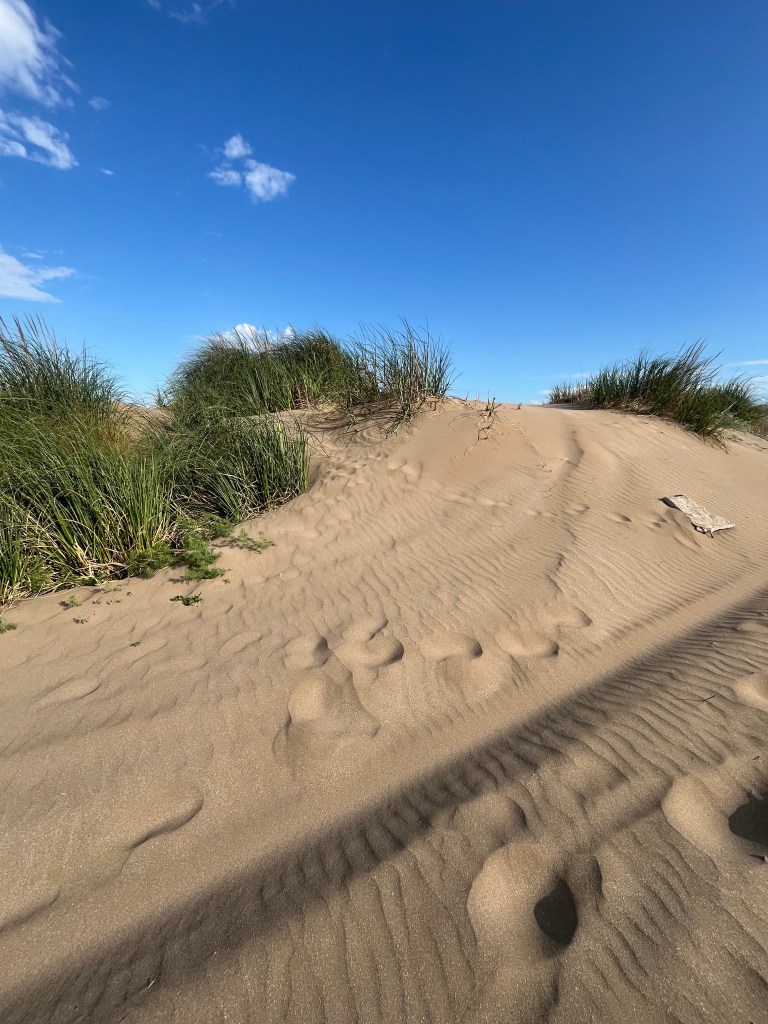
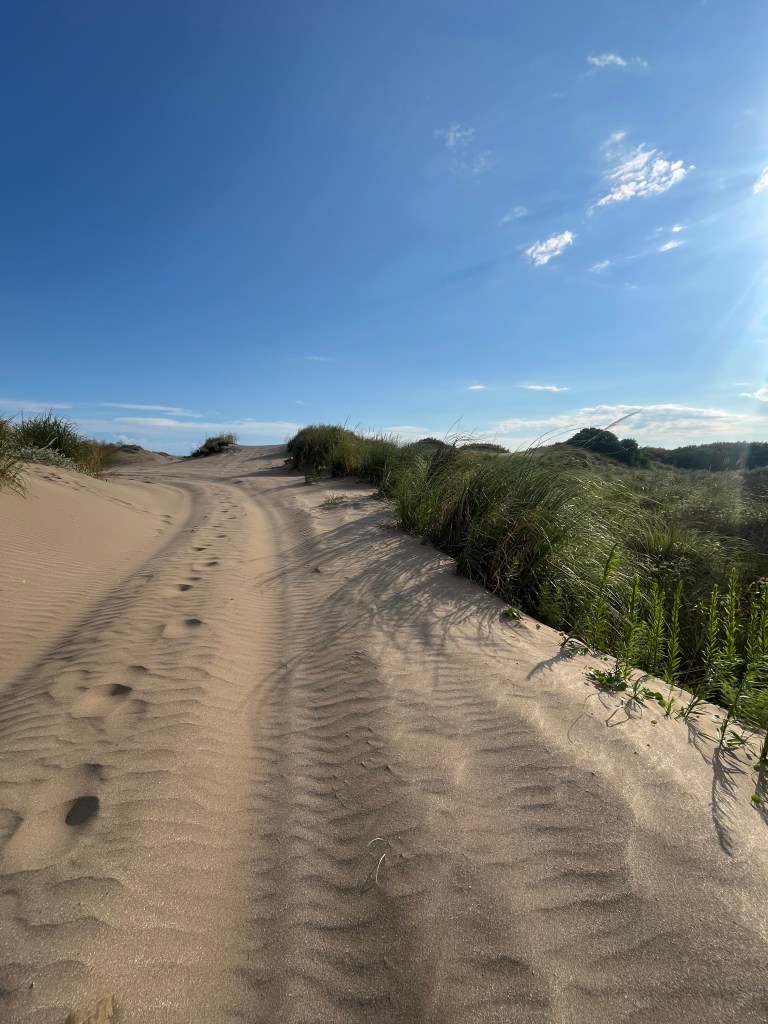
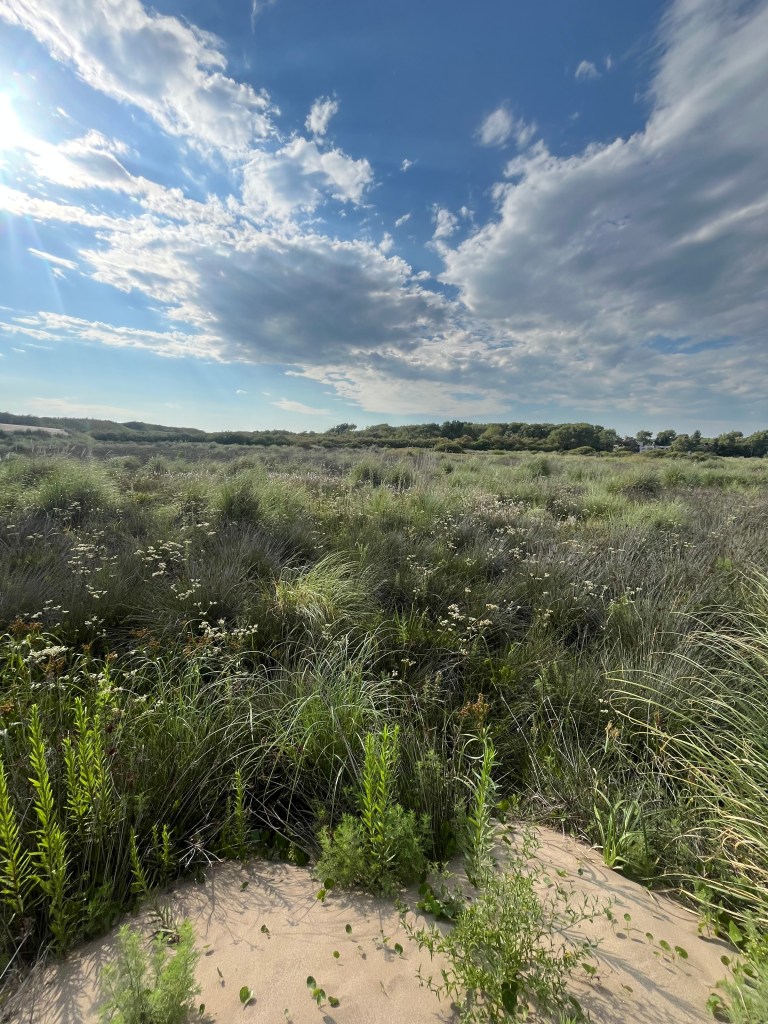
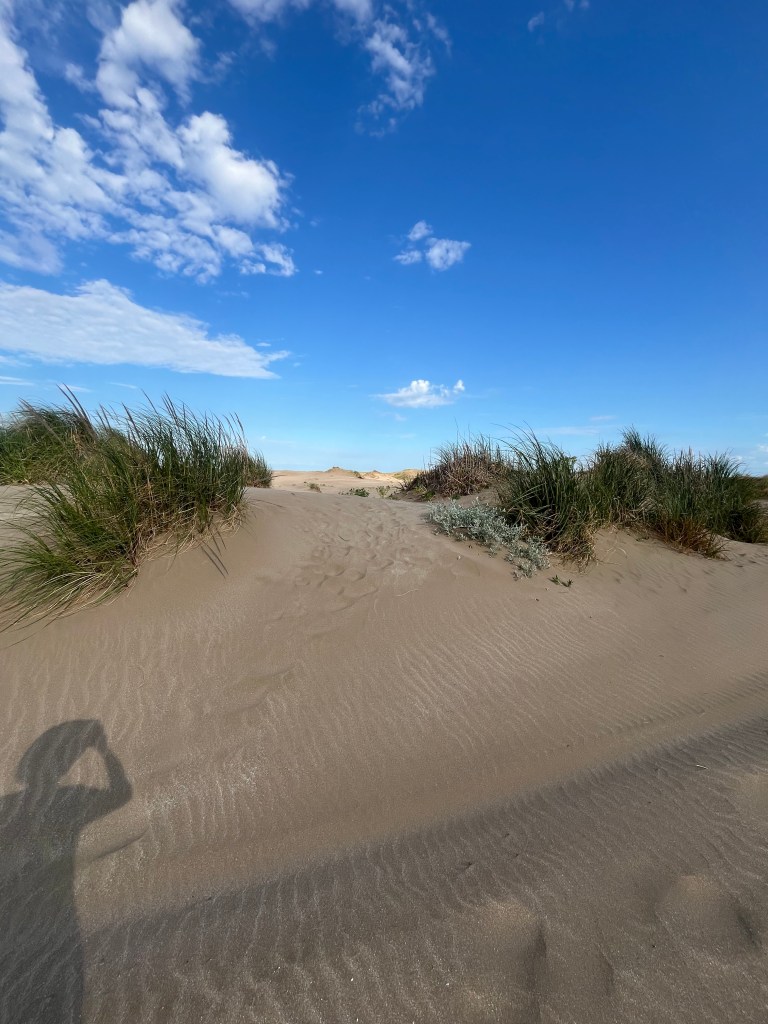
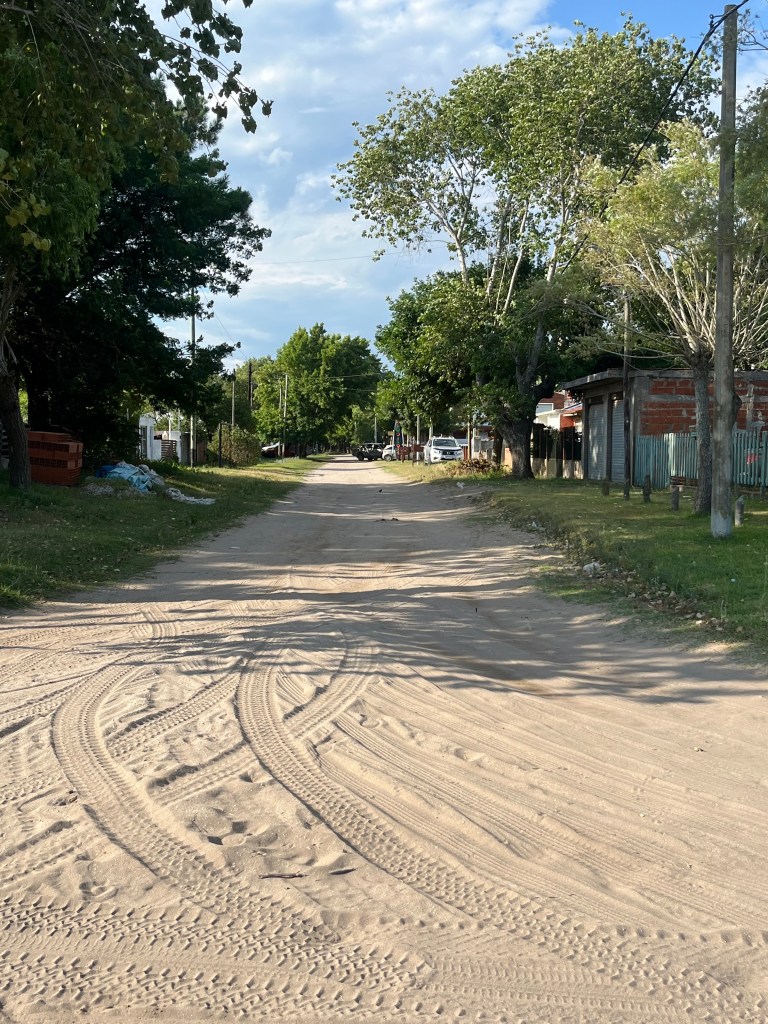
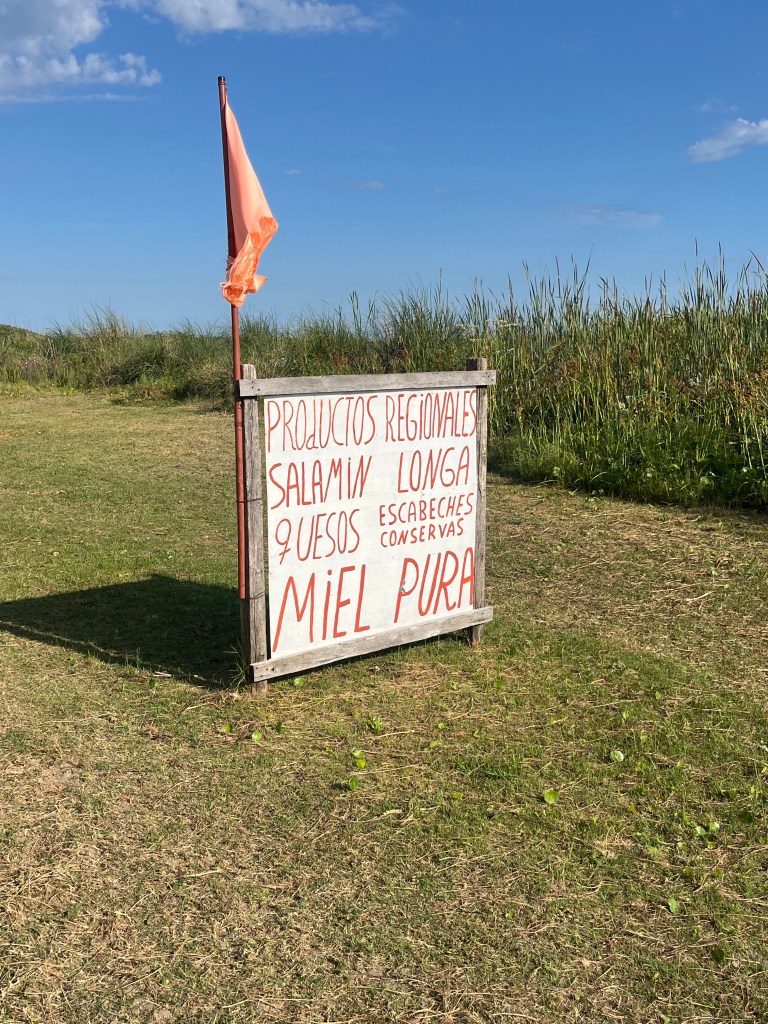
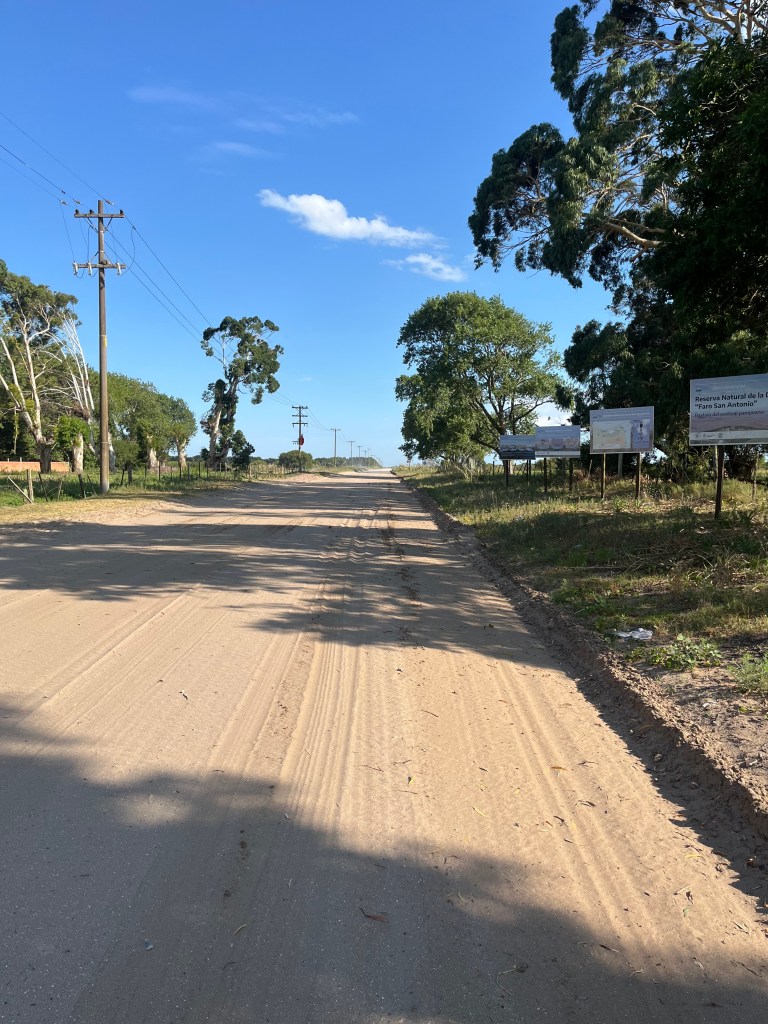
The route to Punta Rasa was dusty and a bit rundown, but there was a certain charm to its look and vibe. As I proceeded further towards the reserve I passed by people enjoying the early morning hours drinking Yerba mate, a particular obsession in this part of the continent. There were also people selling honey, sausages, and other food items out of their homes.
Top row, from left to right: an example of a road through a residential block; a sign advertising products for sale; the road to the reserve
Bottom row: a sign indicating the entrance to Punta Rasa
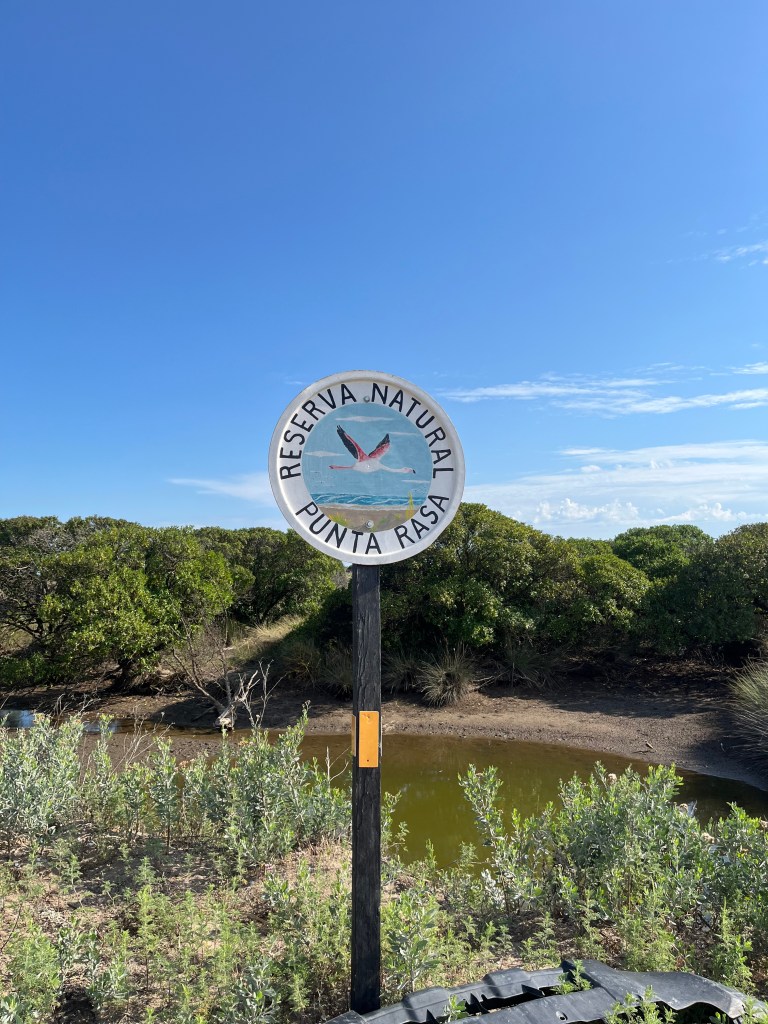
Once I arrived at the reserve, the winds were starting to howl. I was happy to be off the main road as the sand and dust was making its way up to my nose, despite wearing a neck gaiter that can covered my nose and mouth. As I walked through the reserve, the bird life was astounding. Dozens of species flew by me or their calls echoed through the air. Most species were hard to capture on a camera phone as the Pampas’s native birds tend to be small and quick.
In the video below a Snowy Egret greeted me as it was searching for food among the pools of water that filled the landscape. You can hear the wind in the video. This was just the start of what would become an exceptionally windy afternoon.
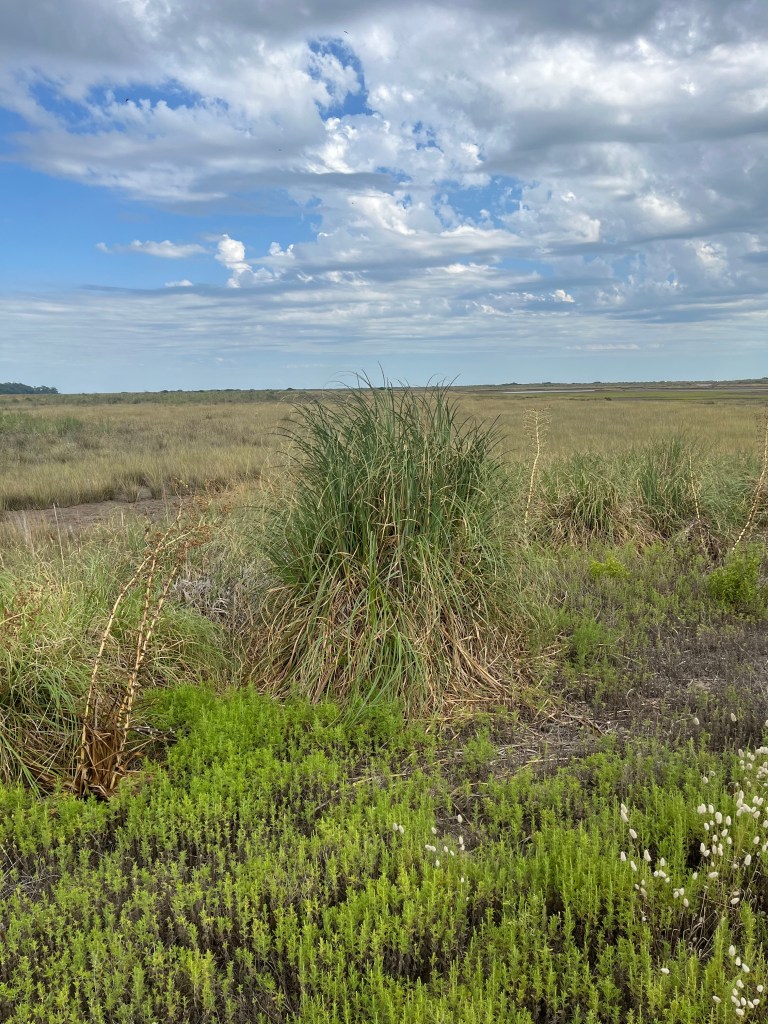
The Pampas is a sea of grass. The lack of trees and flat expanse means one can see prominent features on the landscape for miles. I have been in grasslands and plains before, but this was truly extreme. I could see why wind and fire (which are natural parts of the ecosystem) can overtake these lands, and why so many plants here are built for those types of disturbances.
Top row, from left to right: clouds build above the landscape; the vast expanse of grass; the sun starts to burn through the clouds
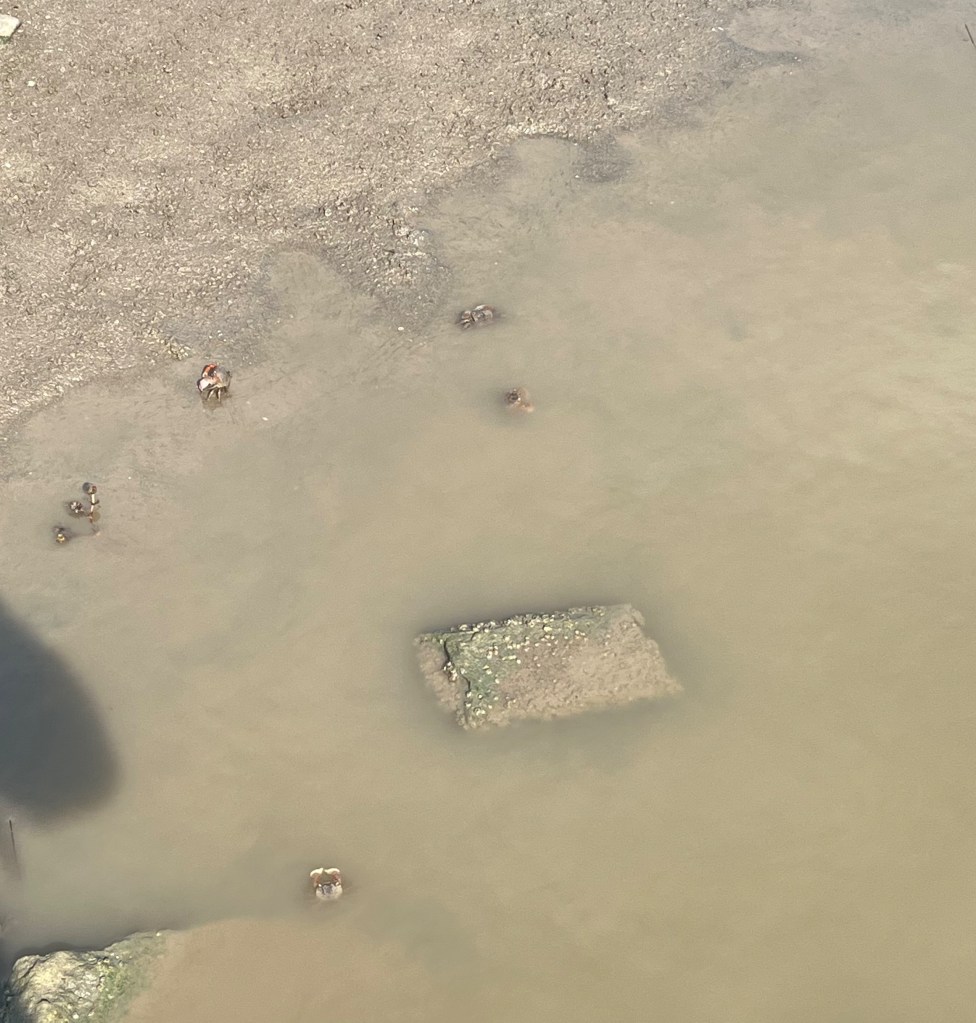
Bottom row: pools of water attract crabs that otherwise hide out in the tall grass to avoid the sun
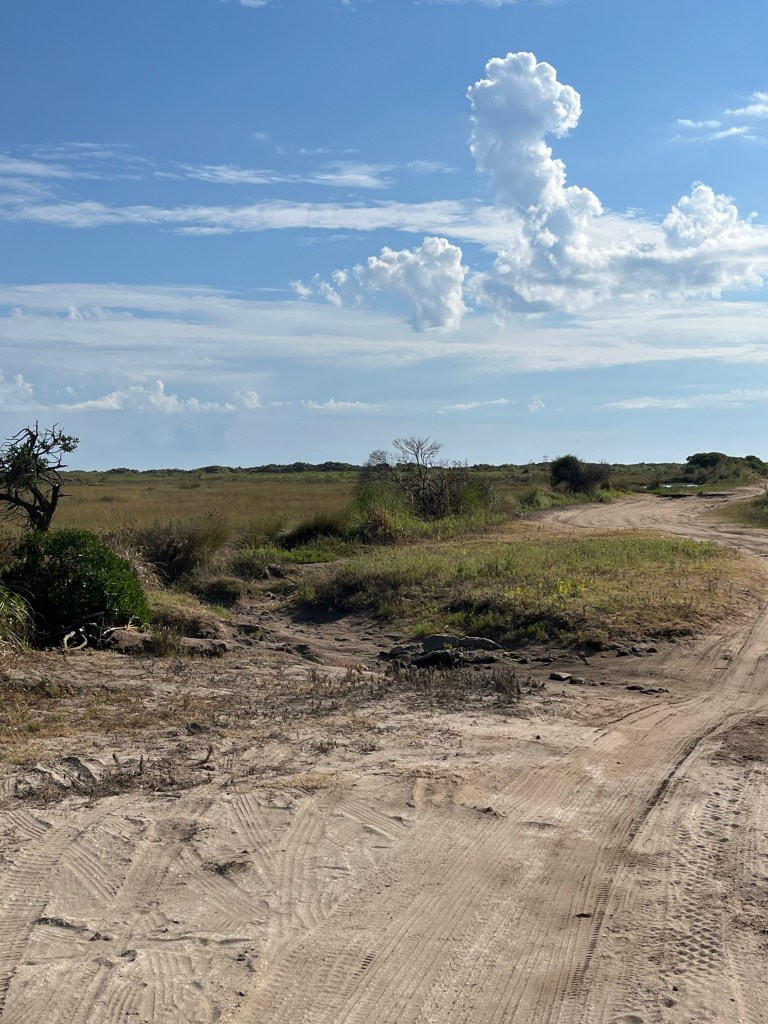
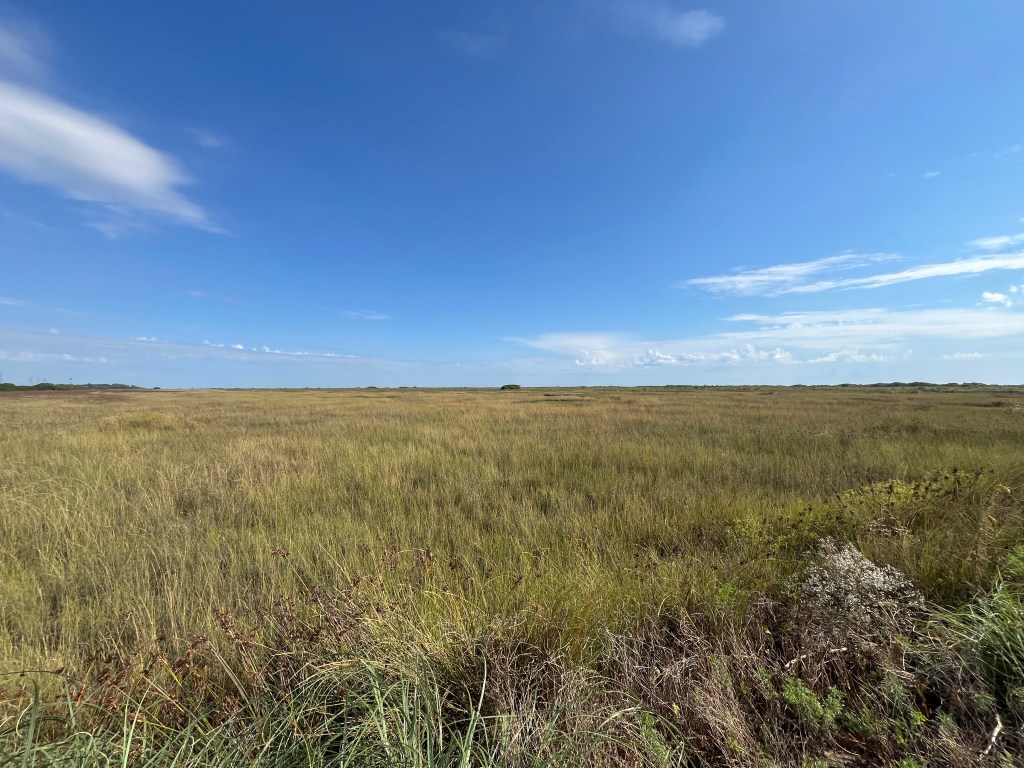
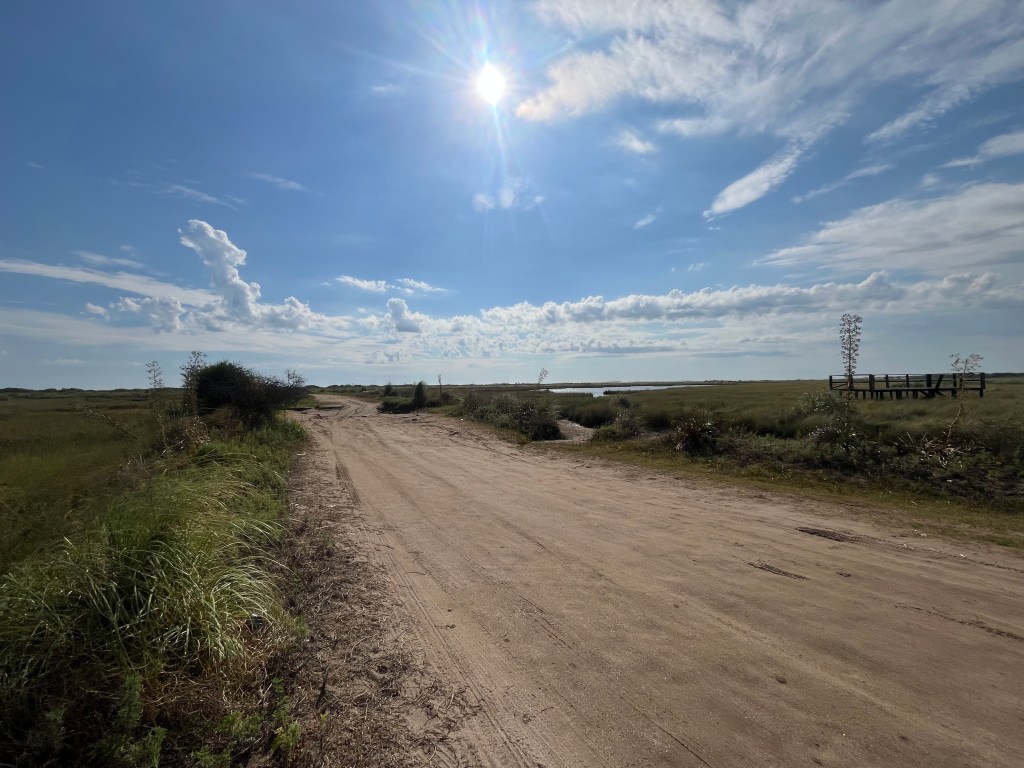
As I walked through the reserve, the wind continued to pick up and the cool morning temperatures started to dissipate. The sun was no longer hiding behind the clouds as they started to burn off. Even before it reached 10 a.m., it was getting close to 90 degrees Fahrenheit (32 degrees Celsius). Still, I was motivated to hike all the way to the end of the trail which would take me to the coast. As I rounded a bend I came across a slight break in the monotony of the landscape.
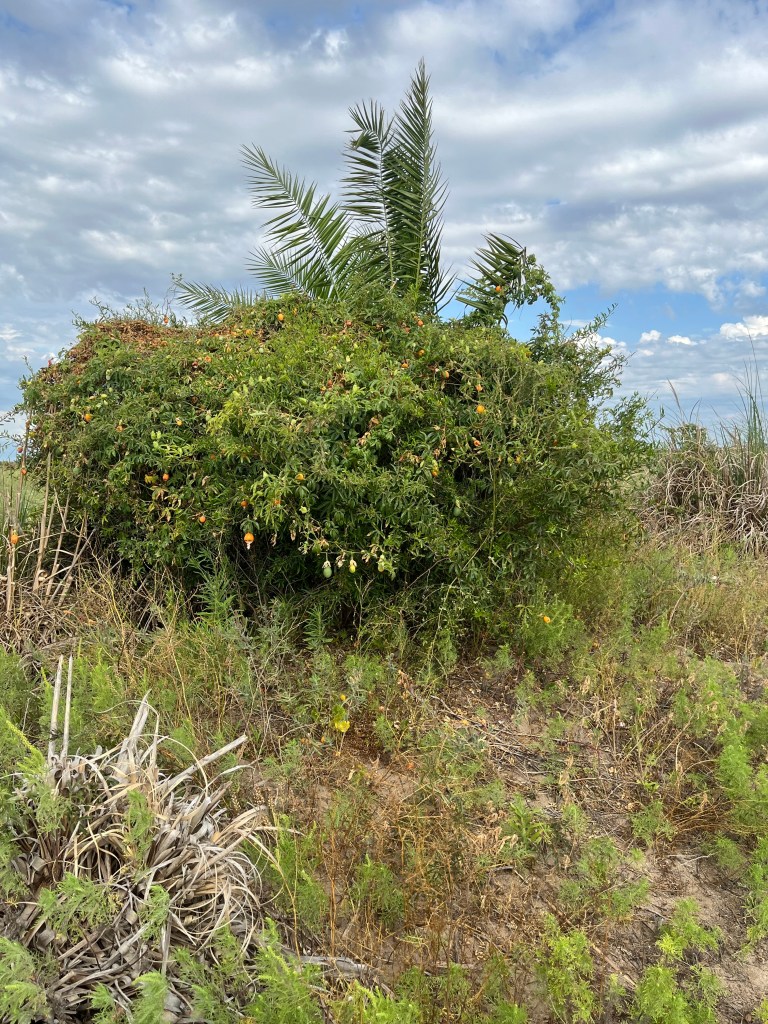
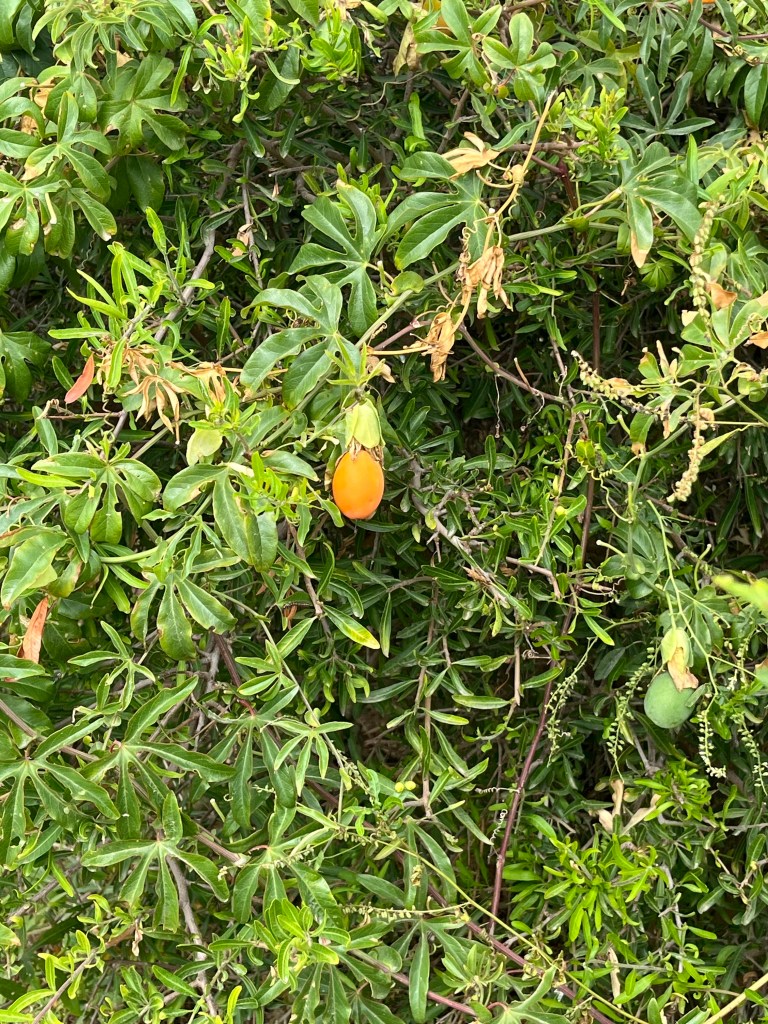
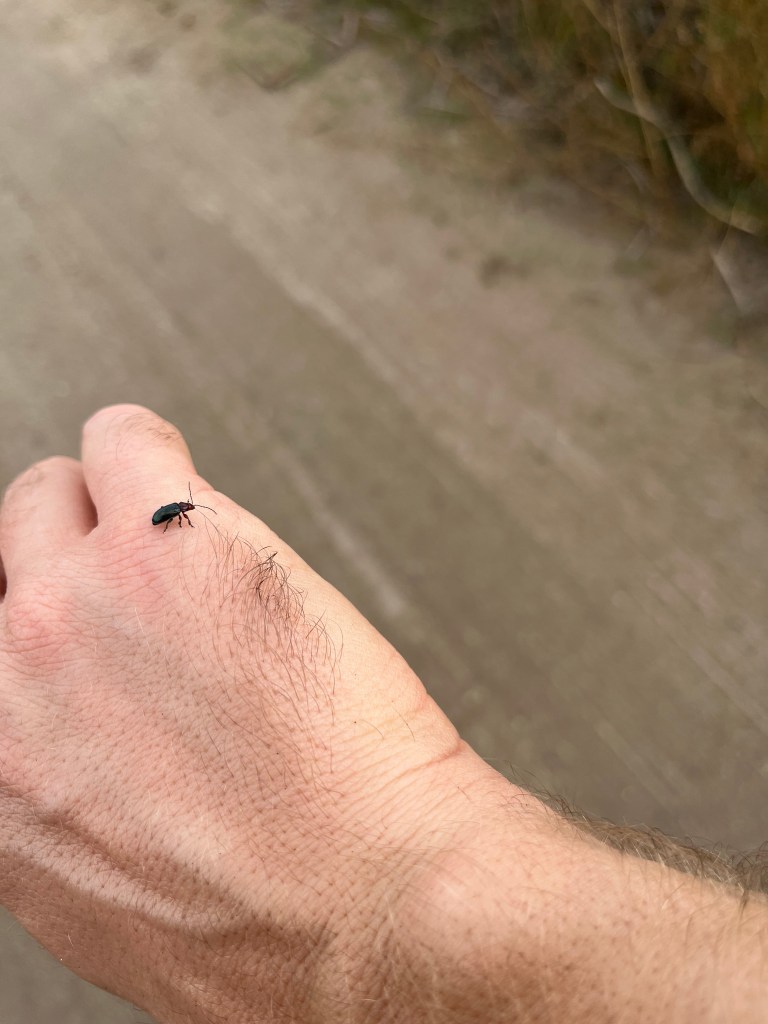
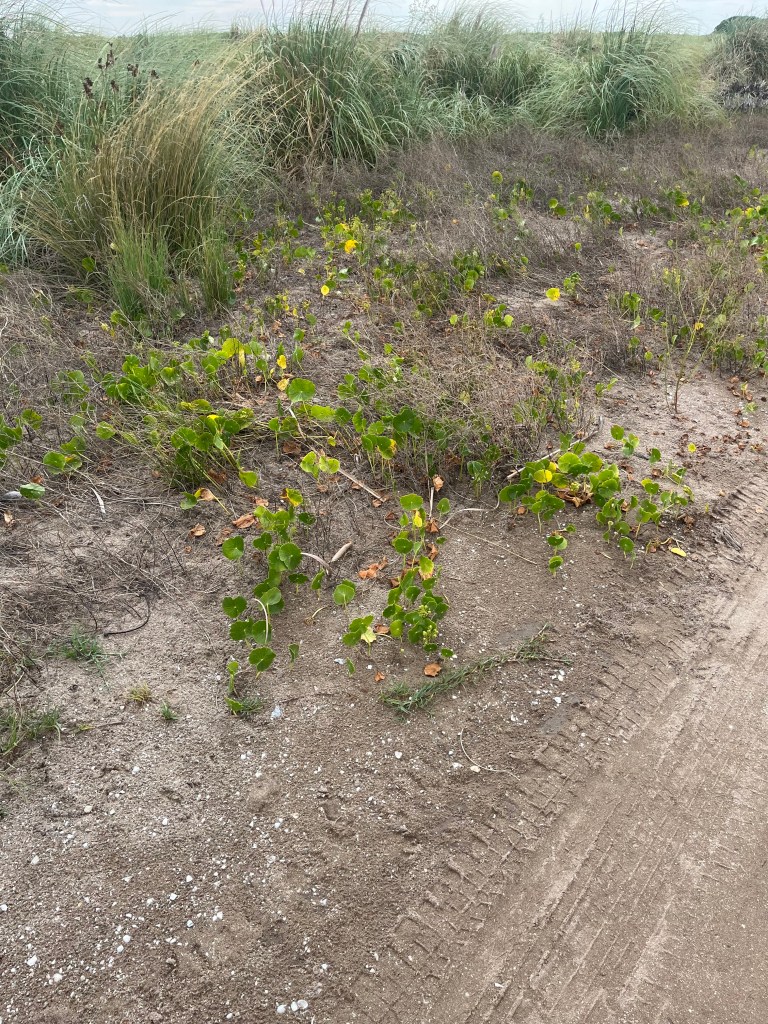
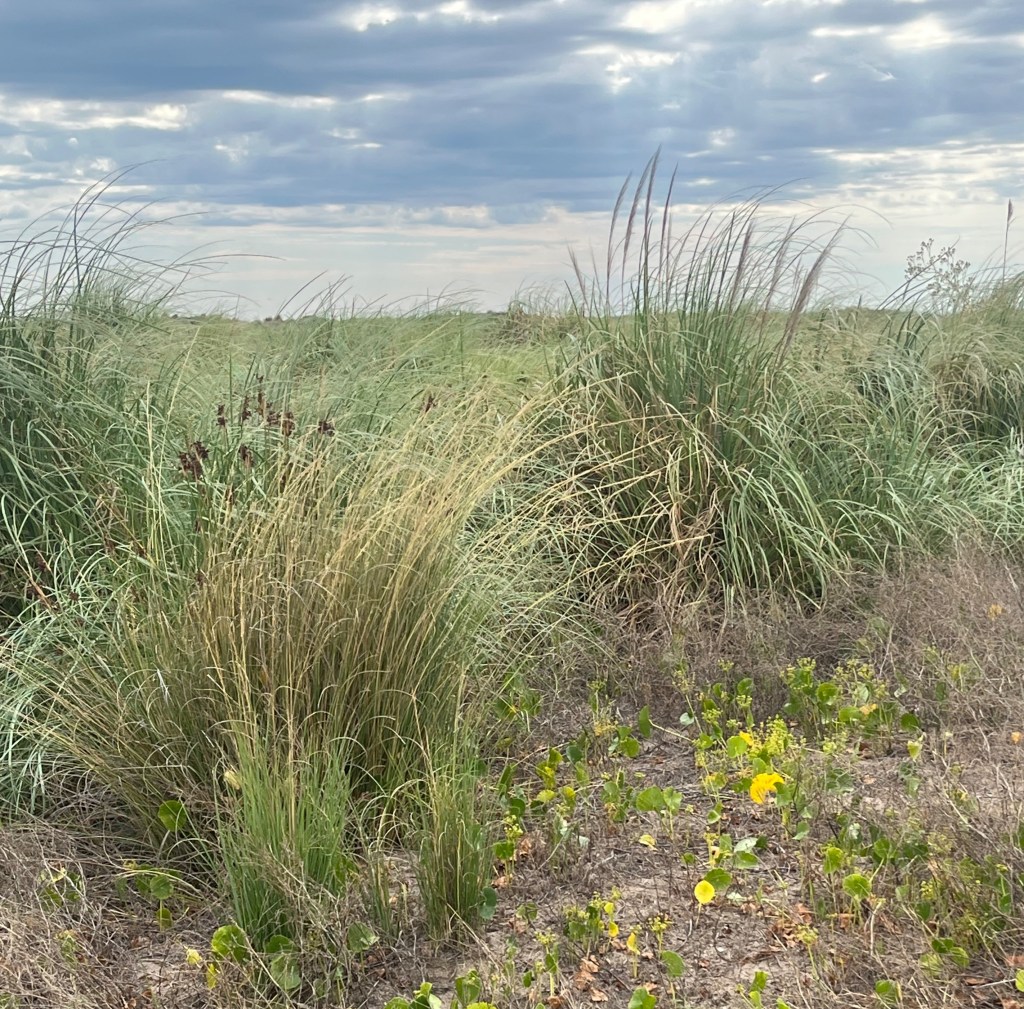
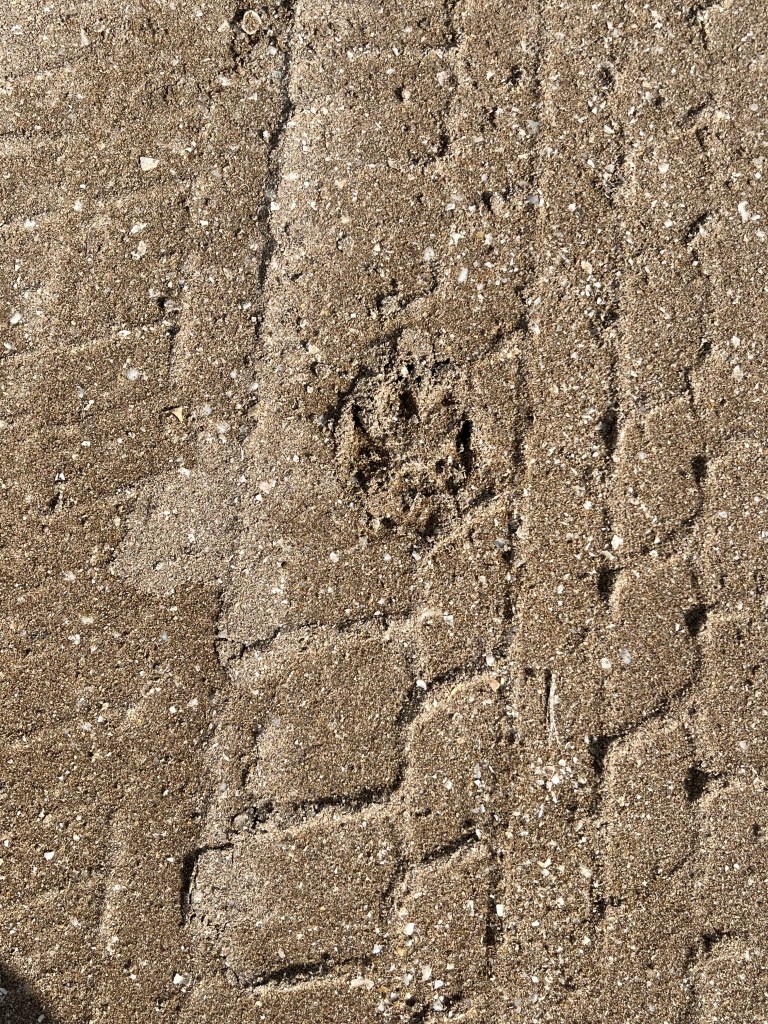
Top row, from left to right: a fruiting tree; a close-up reveals it to possibly be a citrus fruit; a small beetle hung on my hand for a few paces before I let it go on a piece of grass
Bottom row, from left to right: a broadleaf plant (rare to see in this landscape); Pampas Grass in its natural habitat (this is one of the most widespread invasive species in the world, especially in North America); a pug mark (paw print) of either a Pampas Fox or Crab-eating Fox. Based on the size of the print it may have been the latter
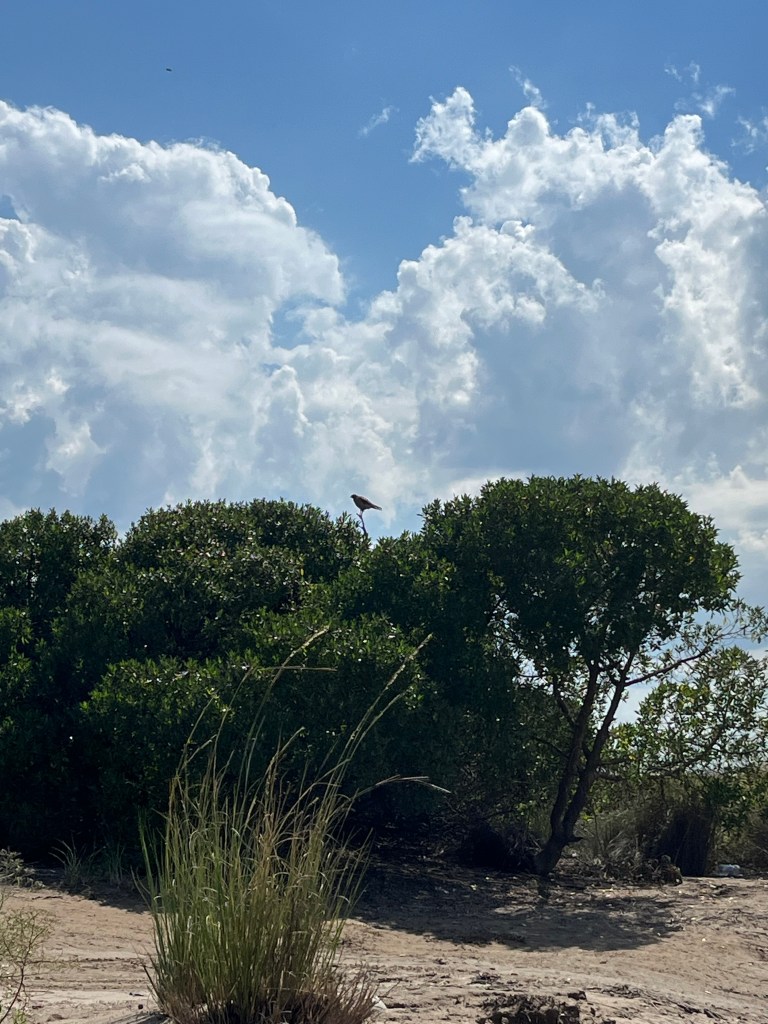
I came across a pair of Roadside Hawks perched on the tallest piece of vegetation around, scanning the landscape and likely trying to choose a gap in the wind before taking off again.
It was incredible to see how the wind roared through the landscape with such little resistance. Below is a video attempting to capture the experience.
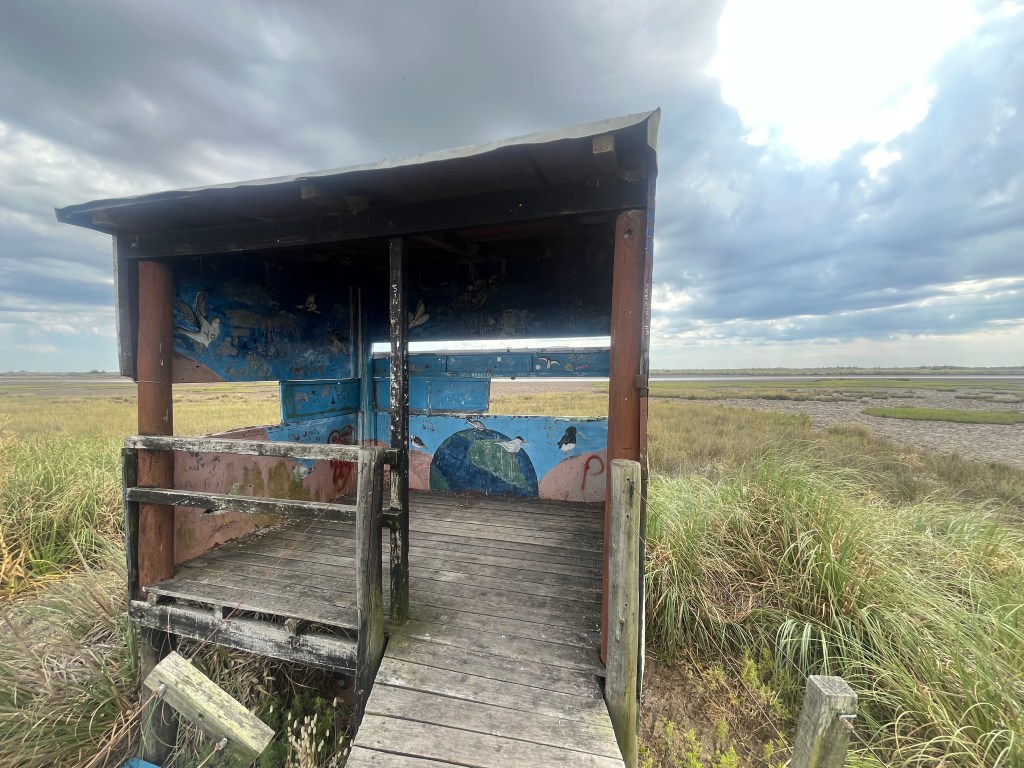
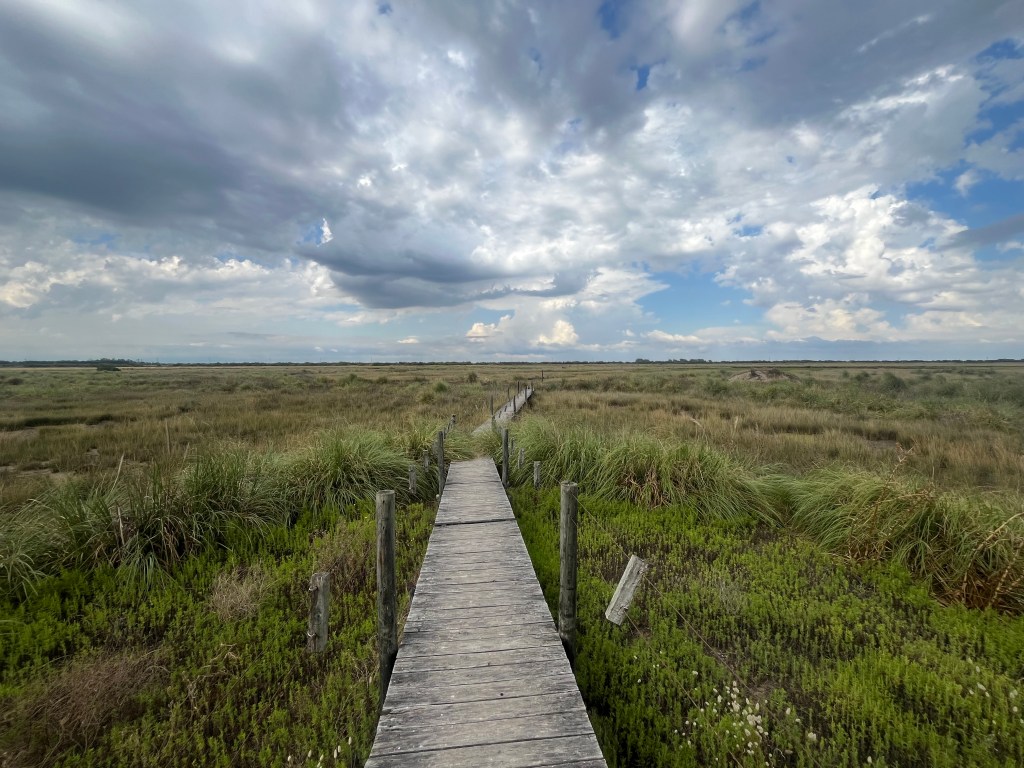
I continued on, crouching as I walked to make cutting through the wind easier. My boots got stuck in the wet mud around the water pools. These pools became more prevalent and larger, thus harder to avoid. Despite the conditions, I was able to hear the songs of Great Kiskadees, Great Pampa Finches, and Guira Cuckoos. Eventually I arrived at a small elevated stand and boardwalk. It provided an opportunity to view wild life and capture this section of the trail in photos. As the wind blew, newly forming clouds covered the sun once more, providing a dramatic frame to the landscape.
As I turned back to the path to head to the coast, I caught a group of swifts mobbing a Roadside Hawk.
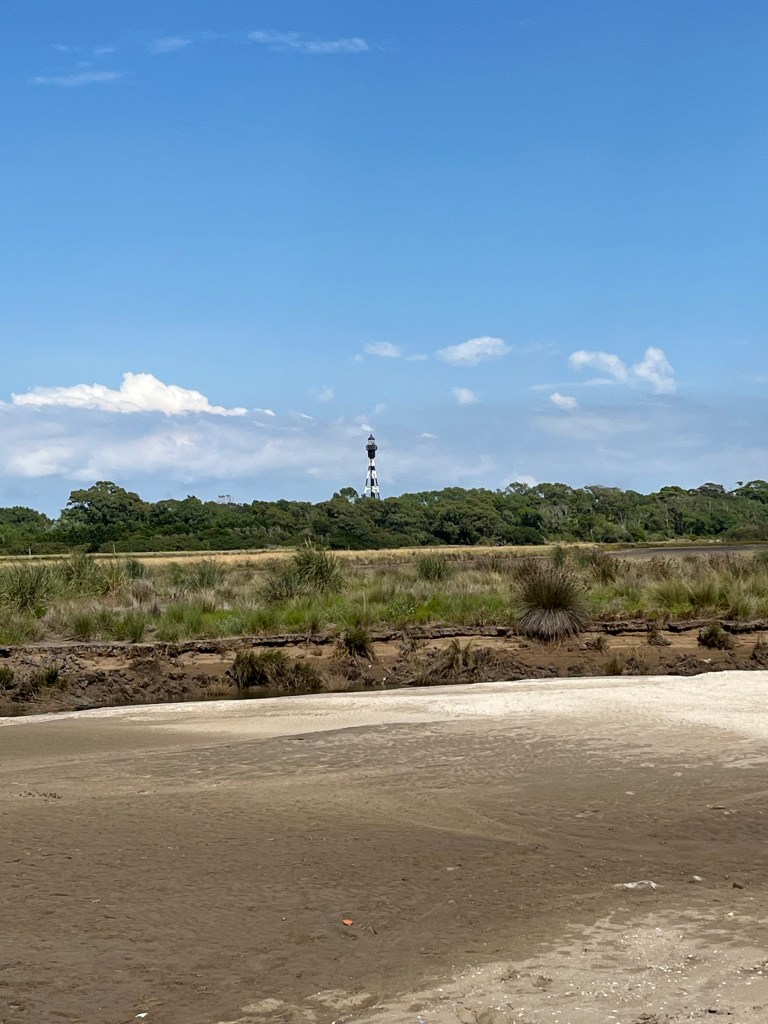
As I continued walking, a tower appeared on the horizon. I later learned that the tower is part of an amusement park on the other side of the reserve. It became my landmark as I pushed forward. I came across a flowing creek that was populated by various wildlife and it was a challenge to cross without stepping ankle-deep in the water. It was refreshing to have my lower legs and feet wet as the temperature began to climb, even through my cargo pants and boots.
Top row: left to right: the tower; a hawk perching on some of the few trees on the landscape; looking out to the creek that crisscrossed the trail
Bottom row: left to right: looking out at the creek from a makeshift bridge; more fresh pug marks by either a Geoffrey’s Cat or Pampas Cat; the size indicates it was likely the former
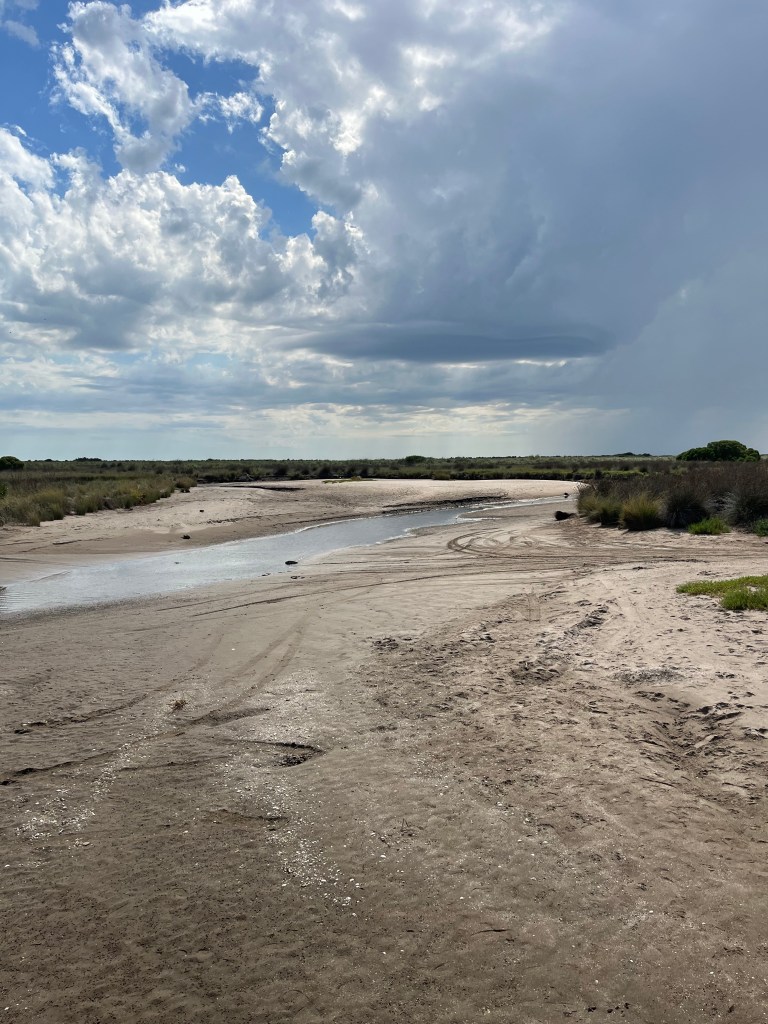
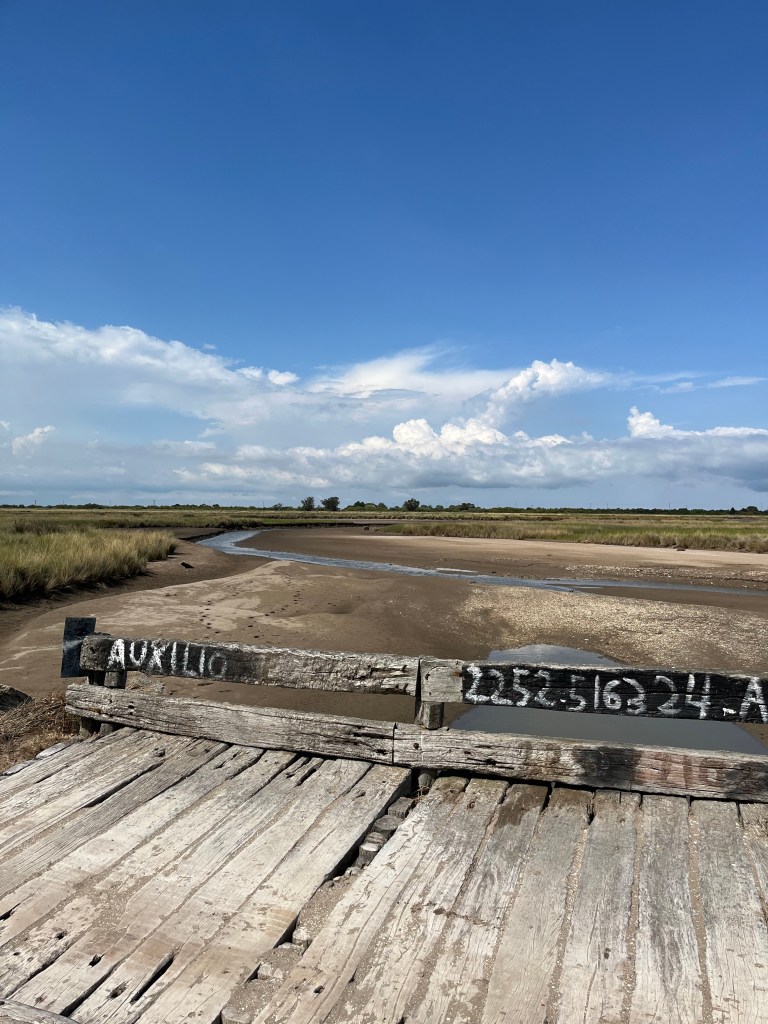
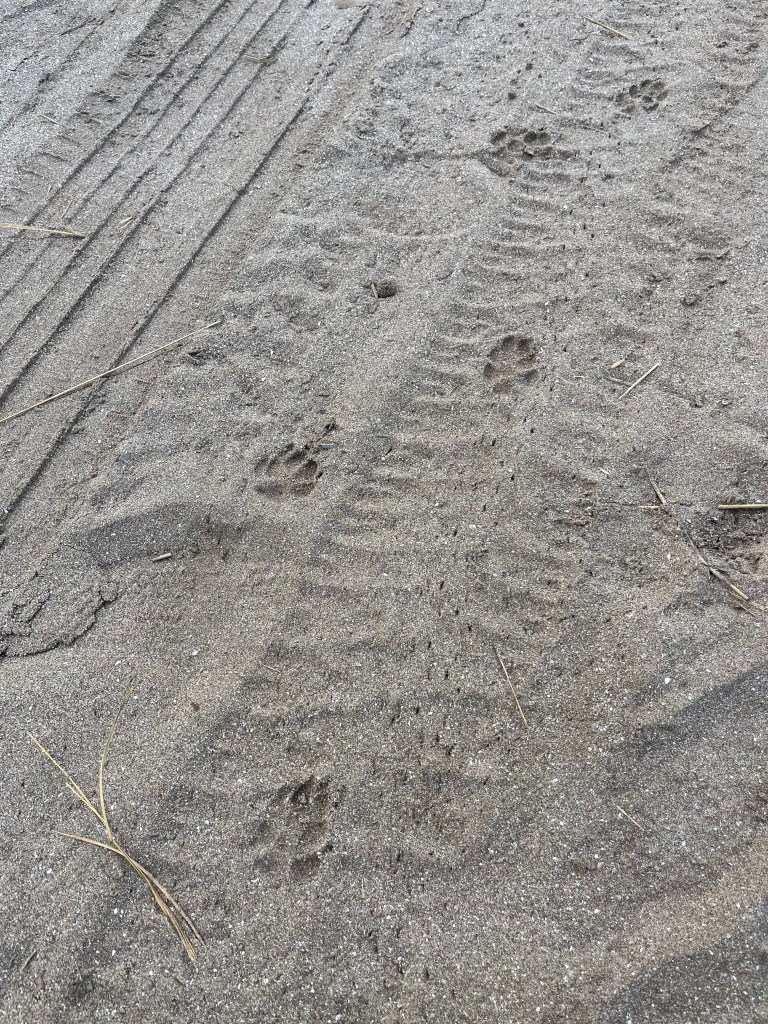
I also came across Lesser Yellowlegs that were foraging around the creek bank while eyeing nearby hawks.
Crabs were everywhere and every time I would approach closer they would duck into the water before I could get a good look at them.
As I kept pushing through the crisscrossing creek, I came upon a Great Pampa Finch hanging out on a reed.
After almost two-and-a-half hours of hiking, I arrived at the coast. The reserve ends at a prominent point that splits at its edge. (The name Punta Rasa means split point in Spanish.) This is where the immense Rio de la Plata meets the Atlantic Ocean. The Rio de la Plata is a confluence of rivers including two of South America’s largest: the Paraná and the Uruguay. It takes in and discharges massive amounts of sediment into the Atlantic, so the water is brown and not great for swimming. That said, people come here to hang out on the beach and look onto the water. Some venture in, but between the murkiness of the water and the currents, most people walk along the shallows. Better swimming beaches along the Atlantic are a few dozen miles south of this area.
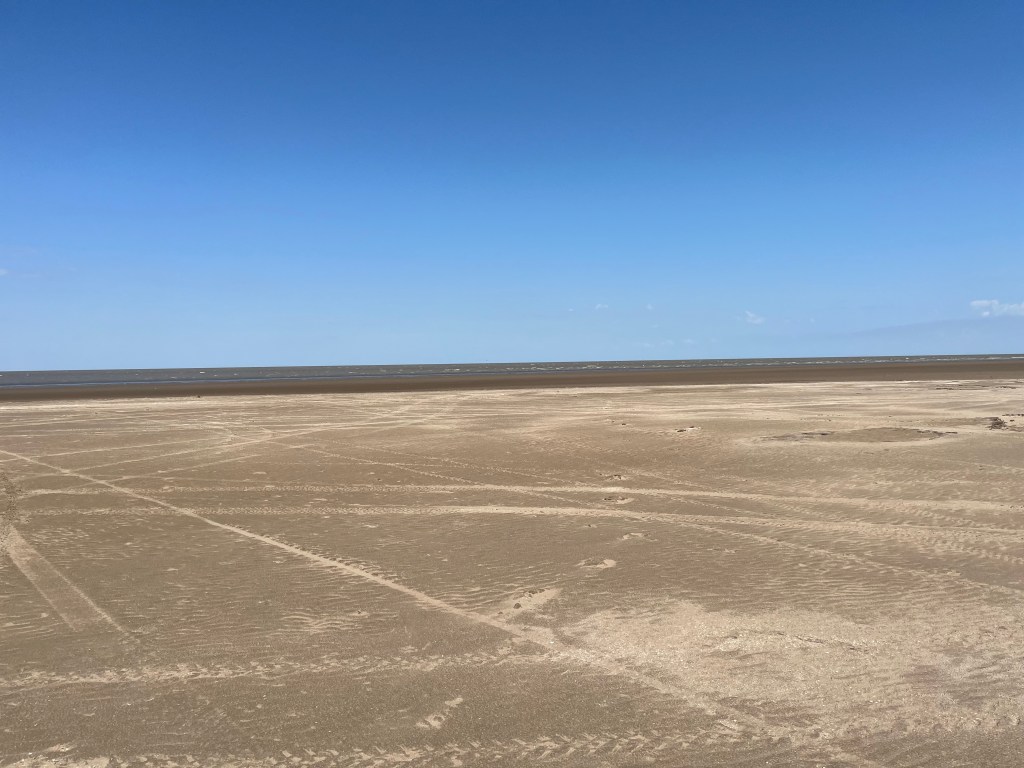
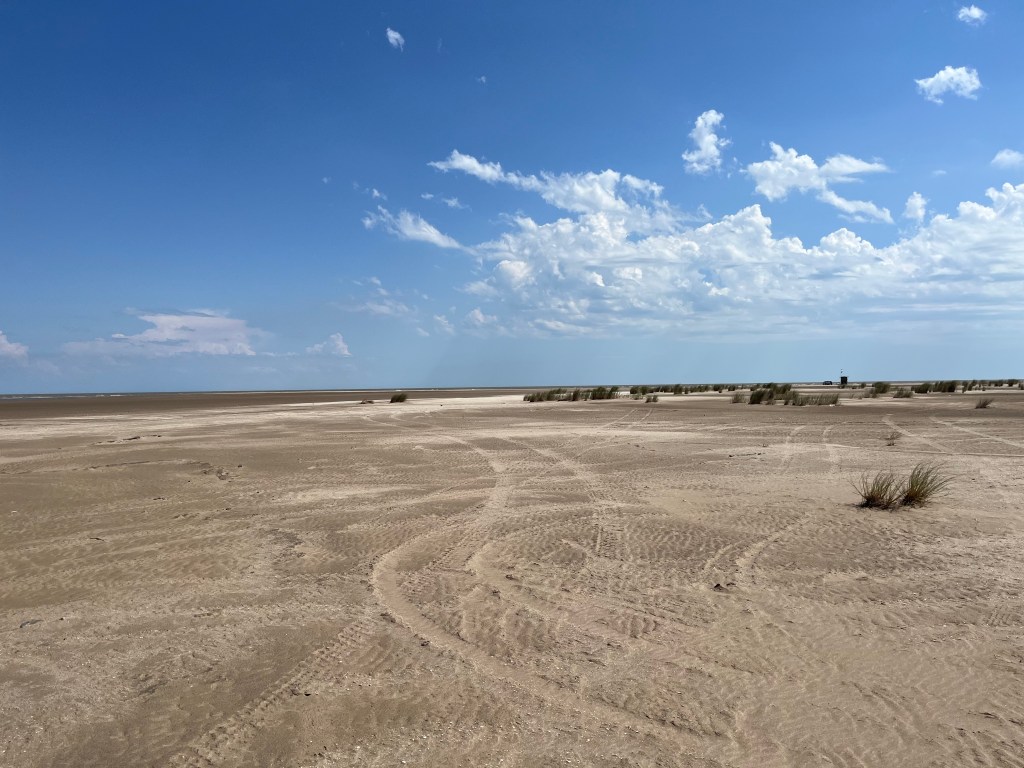
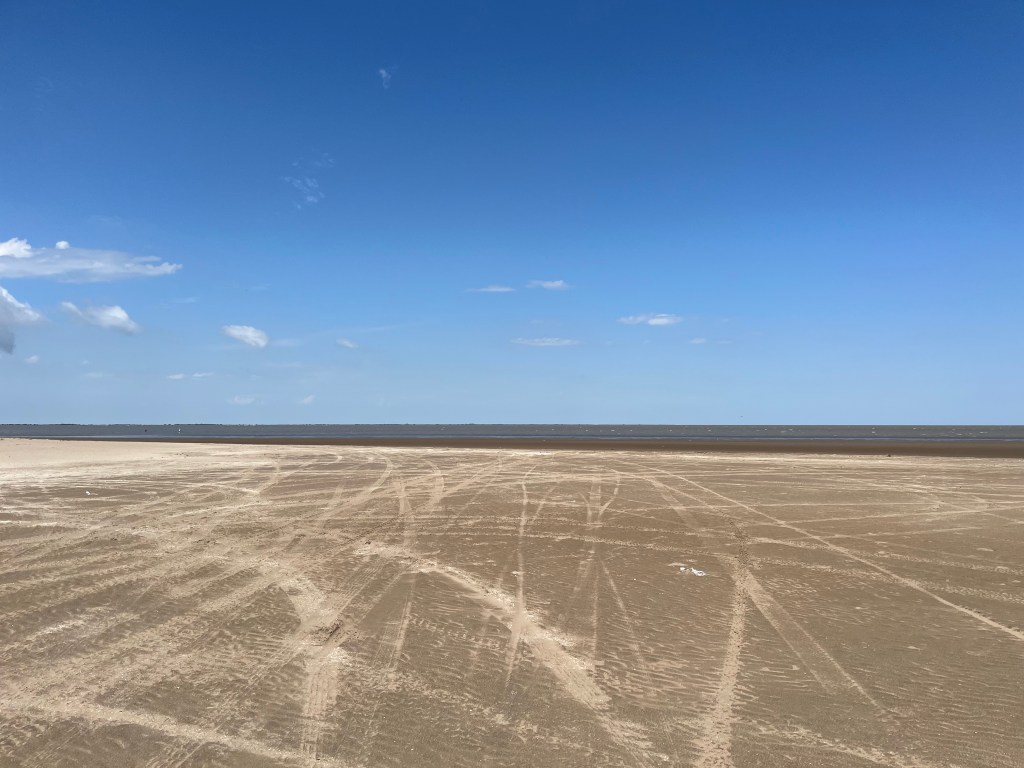
By the time I got to the coast and started taking the photos above it was 11:30 a.m. I had been hiking for four-and-a-half hours and the temperature was climbing. The clouds had burned off again and this time it did not seem like they would return. My phone battery was low and it would be an almost two hour walk back to my hotel. I headed back with my neck gaiter fully up around my face, a fresh application of sunblock on my arms, my hat firmly secured, and the hose of my water pack close by for easy access. I was ready to brave the sun, heat, and dust. As I got closer to town I came across a flock of Southern Lapwings hanging around the side of the road.
As I got into town, I saw more people out and about and hanging out on their stoops. Many of them looked at me and nodded as I schlepped past their homes. I was getting sore and hot, but the finish line was not far away.
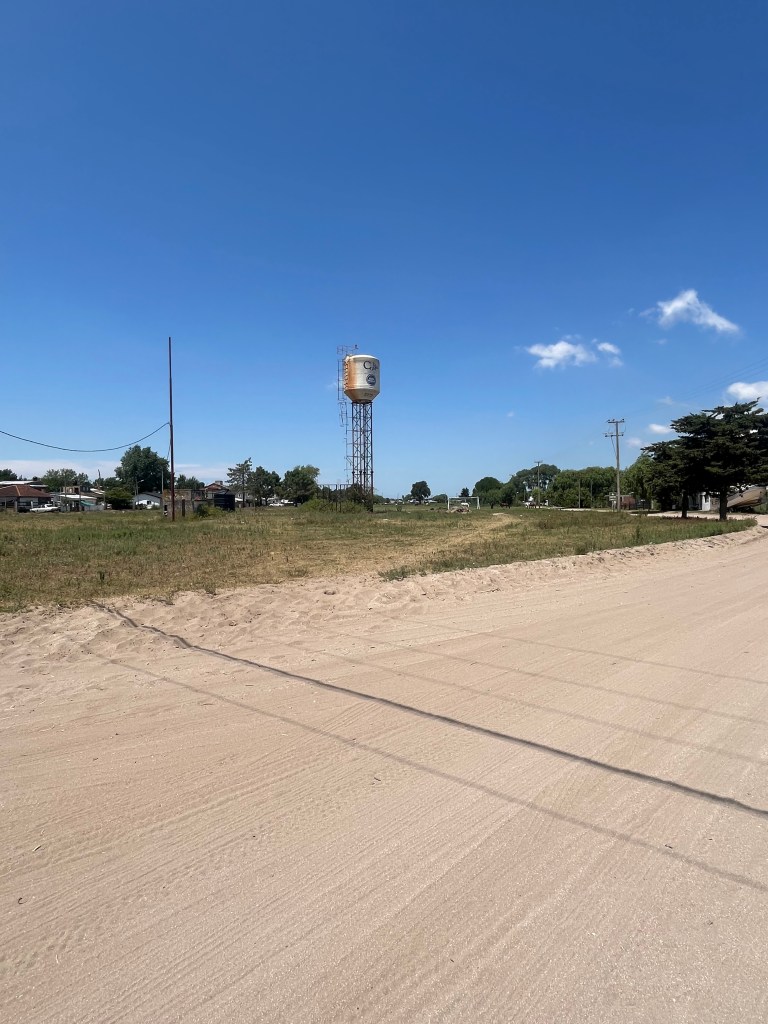
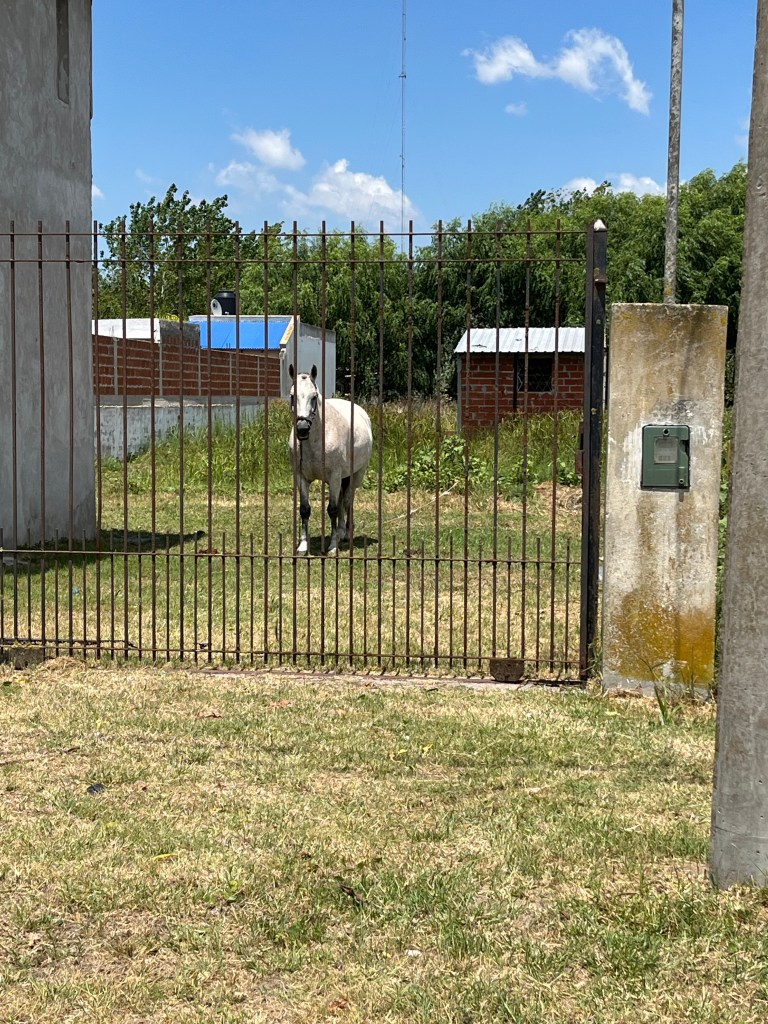
From left to right: the town water tower; this horse was napping when I passed by in the morning, but it was now awake and keeping an eye on me.
Video (below): soon after I ended the video, the horse turned towards me and confidently approached as if to say, “Backoff human.” I obliged.
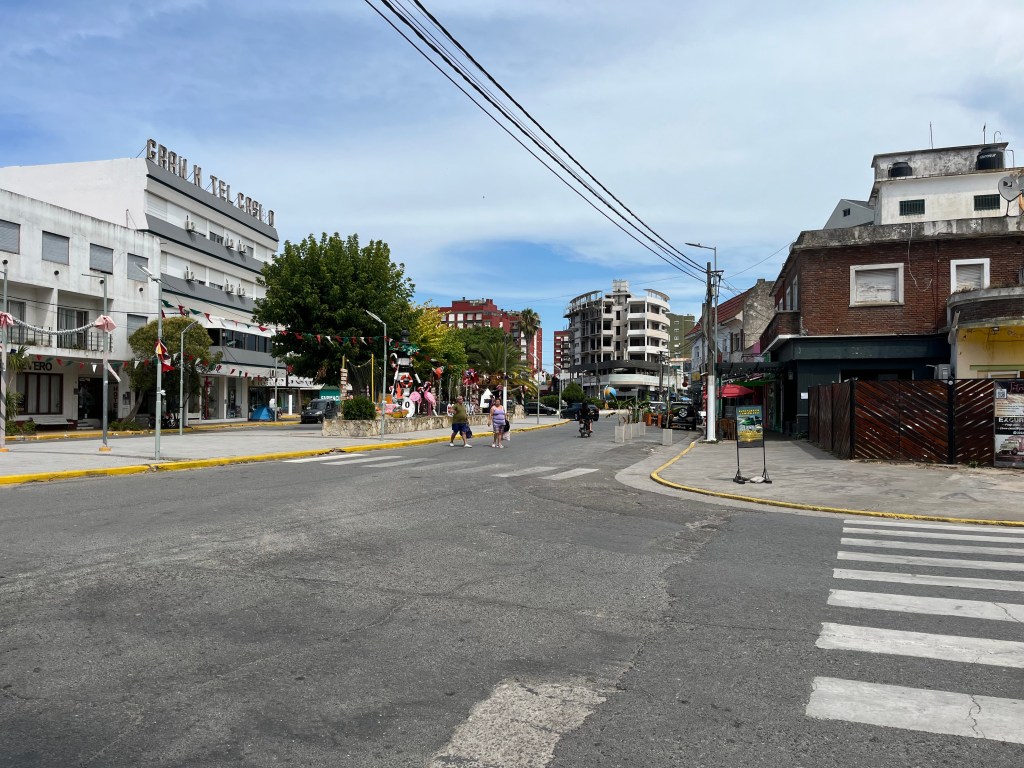
Once I arrived at my hotel and checked into my room, I was ready to pass out after six hours of hiking and virtually no sleep the night before. I found the energy to shower and change because I was also starving. (The snacks in my pack were enough to partially fill my tank but I needed a real meal.) I headed to the center of town, which was very different from the outskirts. Paved streets, businesses, restaurants, and grocery stores were everywhere. It was around 2 p.m. and I only had a little amount of time before restaurants closed due to Argentina’s afternoon siesta culture. Since I did not want meat, I opted for pizza. I love pizza, but prefer slightly more tomoto sauce to cheese ratios. In Argentina, pizza is essentially cheese bread with light tomato sauce. I was starving so I shrugged off the disappointment of this glorified cheesey bread, found a bench in the median along the main road (the restaurant had no seating), and crushed my medium-sized pizza. I then walked off my meal and took some photos of central San Clemente del Tuyú.
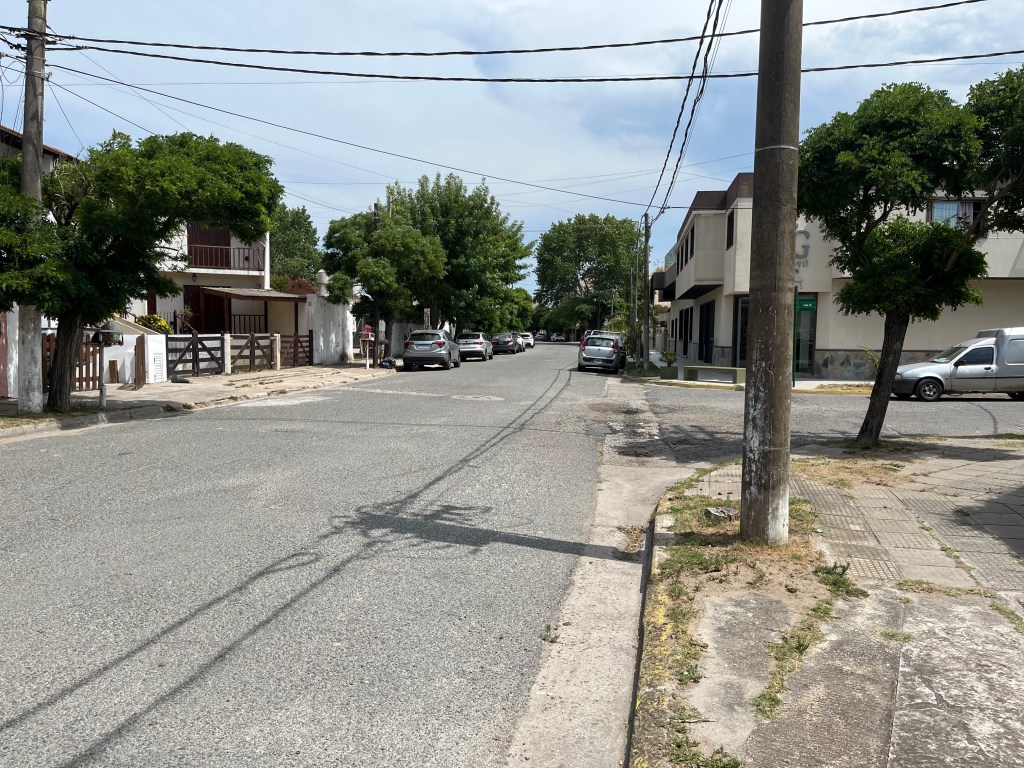
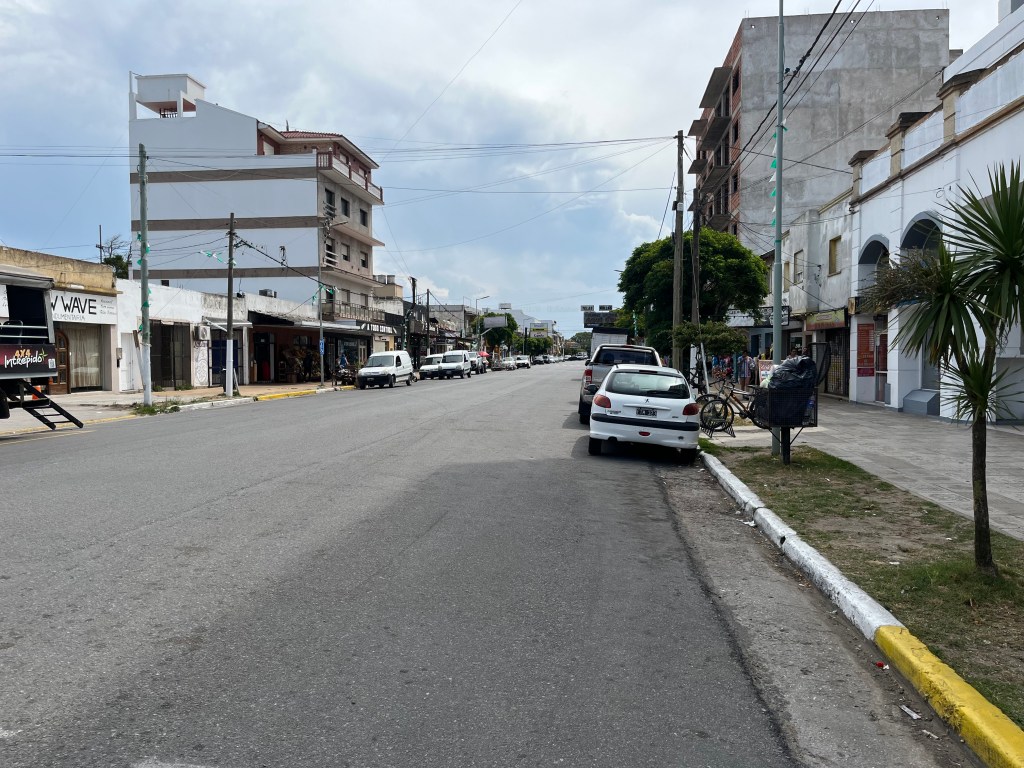
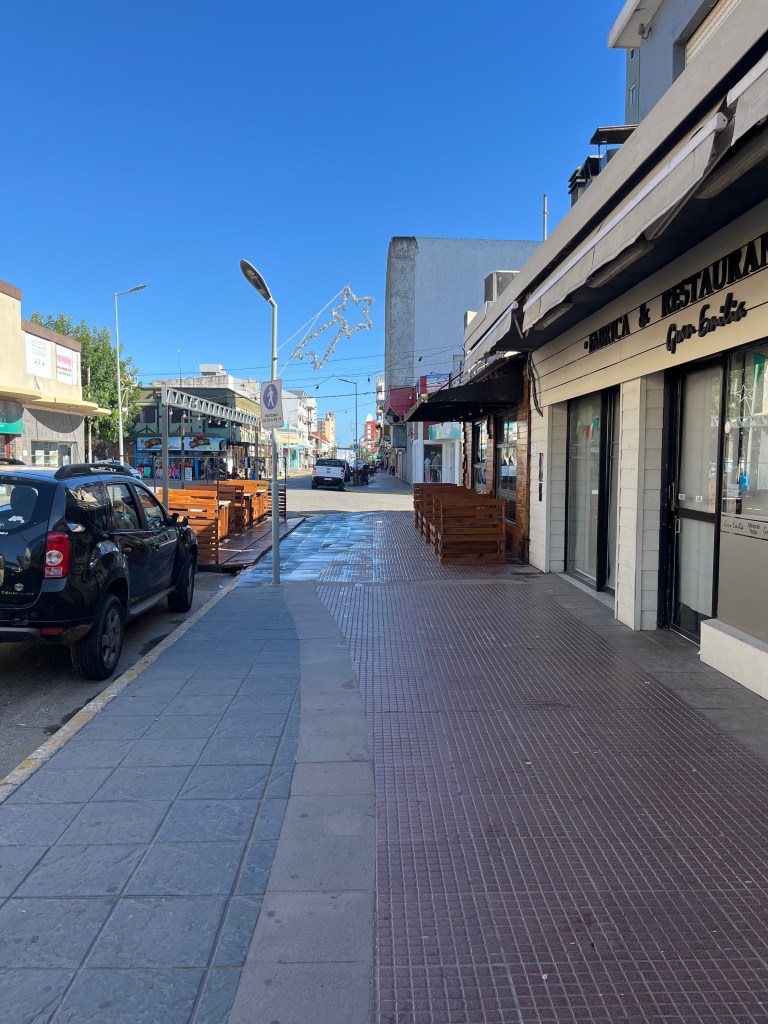
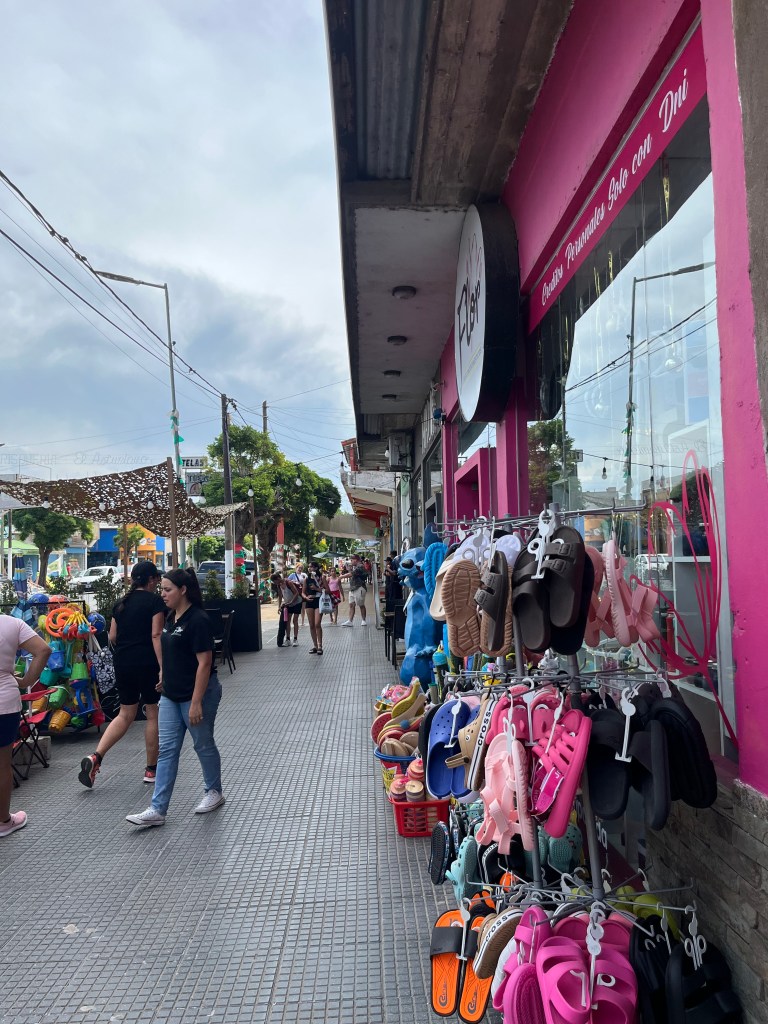
Once I got back to my hotel room I realized that I had perfect timing. The sky started to darken, and soon I heard thunder and pouring rain. A warning alarm also went off that reminded me of tornado warnings from when Yahm and I lived in Alabama. As I mentioned above, tornadoes do occur here, as can fires. When I asked the front desk what the alarm was for, the gal was very nonchalant and shrugged off my concerns, telling me to just be tranquilo (relaxed). This has been a very frustrating aspect of Argentina. People seem to omit or not really provide details on certain things and then act surprised by my frustration. Perhaps their long history of political upheaval and violence is why they act this way, but it is aggravating nonetheless. The alarm eventually stopped. Through my research, I learned that a lightning strike was detected nearby. Some trees had been struck which could have potentially caused a wildfire. Luckily the rains prevented the struck limbs from becoming kindling.
I did not have the energy to go out for dinner, plus the pizza from lunch filled me up. I relaxed in my room and eventually passed out. When I awoke it was early-morning. I walked to a café for breakfast and coffee. Eventually, I arrived to the terminal with 20 minutes to spare before my bus was supposed to arrive. The bus wound up being ten minutes late. Eventually I arrived back in Buenos Aires and reconnected with Yahm.
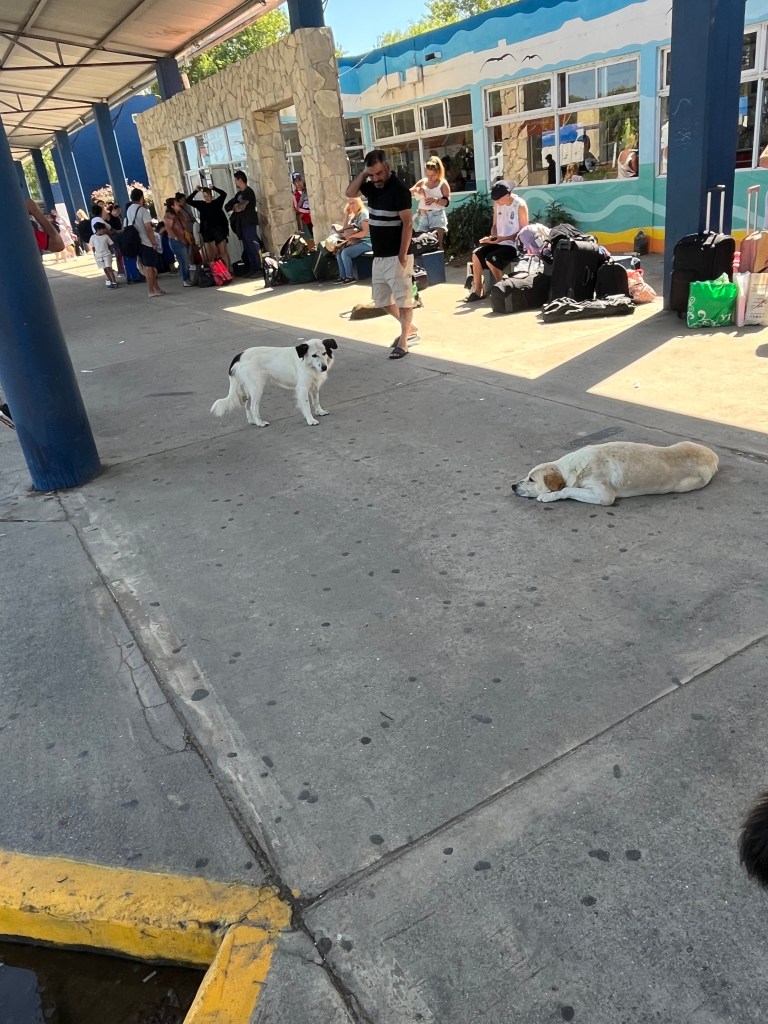
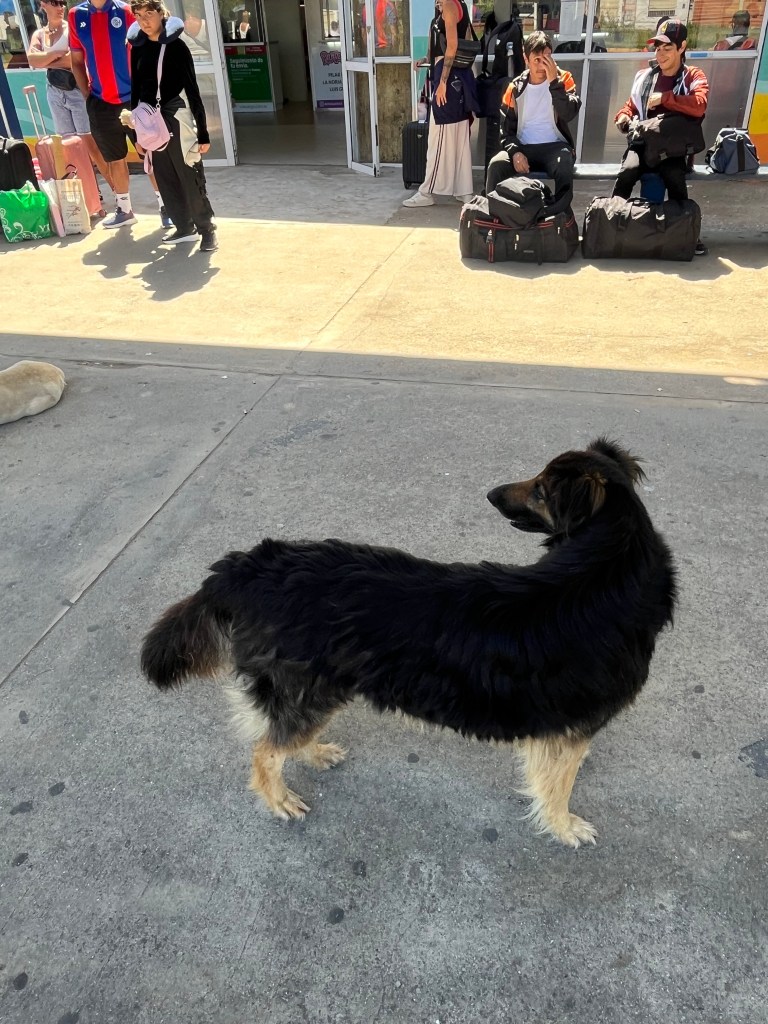
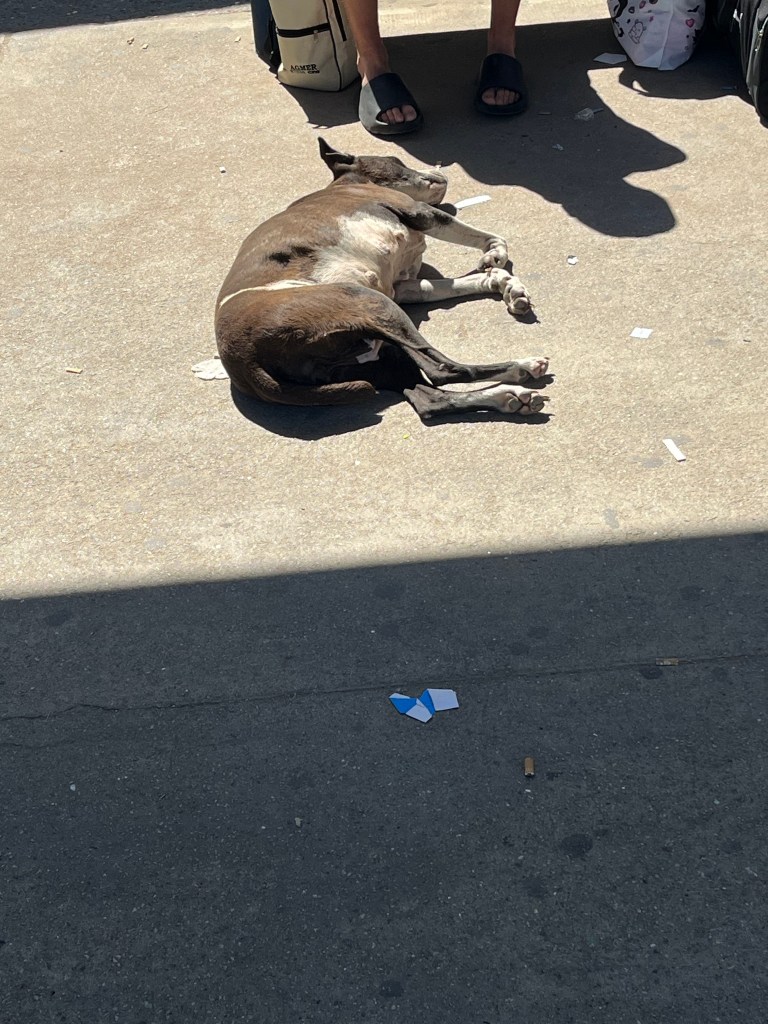
From left to right: stray dogs that hung around the bus terminal looking for shade and handouts
This is my final post about Argentina. Yahm will have an upcoming post recapping the food scene, as well as a book exchange and our experience at the Buenos Aires Jewish Museum. Next, we head to Uruguay and we will share our adventures from there. Be sure to like, comment, and subscribe to Traveling While Introverted so you don’t miss it!
 Traveling While Introverted
Leave a comment