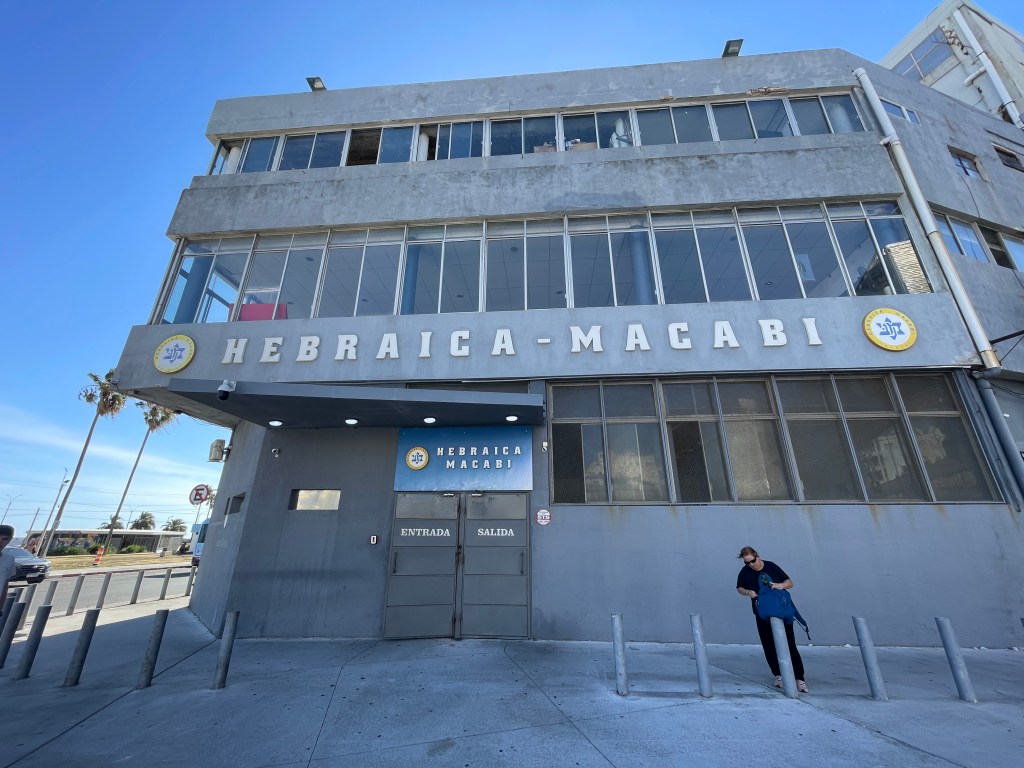
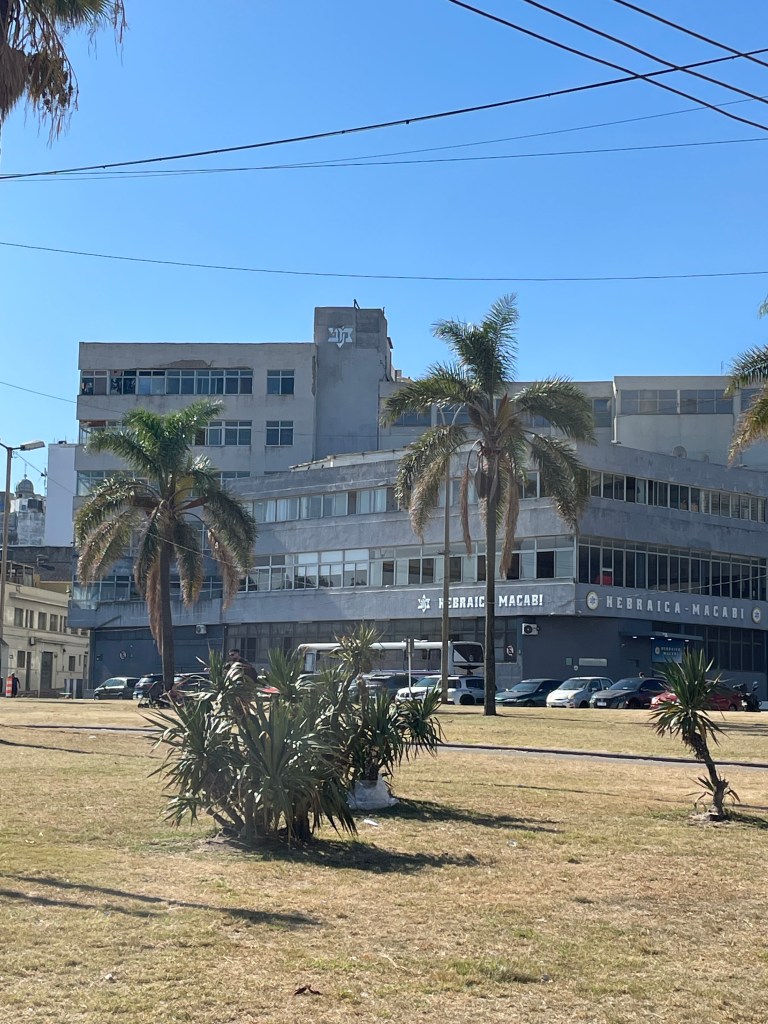
Though Uruguay has a significant Jewish population, there isn’t very much in the way of Jewish tourism. In Montevideo, we found a Holocaust memorial on the rambla (promenade), a statue to Albert Einstein, and a square named after former Israeli Prime Minister Golda Meir. There are many synagogues and community centers, but touring them isn’t something folks do unless they have a good reason. In other words, I don’t have much to say about Jewish Uruguay except for the Hebraica Macabi center we stumbled upon during one of our walks in Montevideo. This building is essentially a gym and community center open to anyone. Uruguay has a Maccabiah basketball group but they practice at a different, larger gym. (For those who don’t know: the Maccabiah is an international Jewish Olympics held in Israel.)
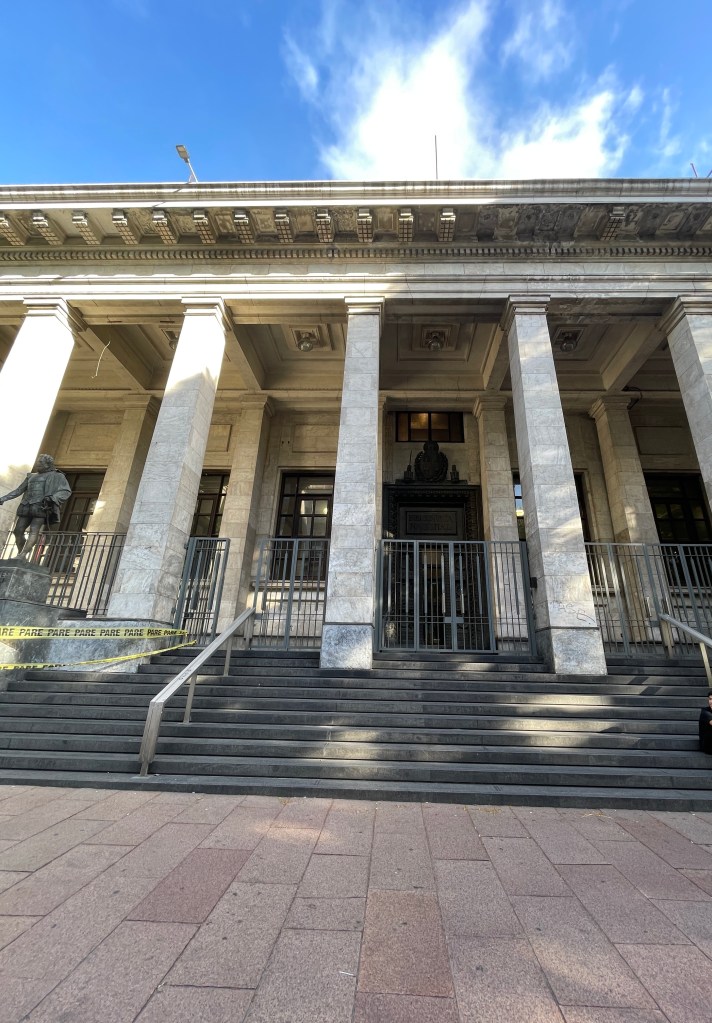
I was also curious to visit the National Library of Uruguay. Unfortunately, the library has been closed since last summer due to issues with mold, flooding, and other structural problems. The library’s website claims that repairs are underway. According to this article, it seems that the library has been neglected for a long time. We walked by it and discovered that it’s right next door to a huge university building. Can students access the materials that they need for their studies and research? It’s unclear.
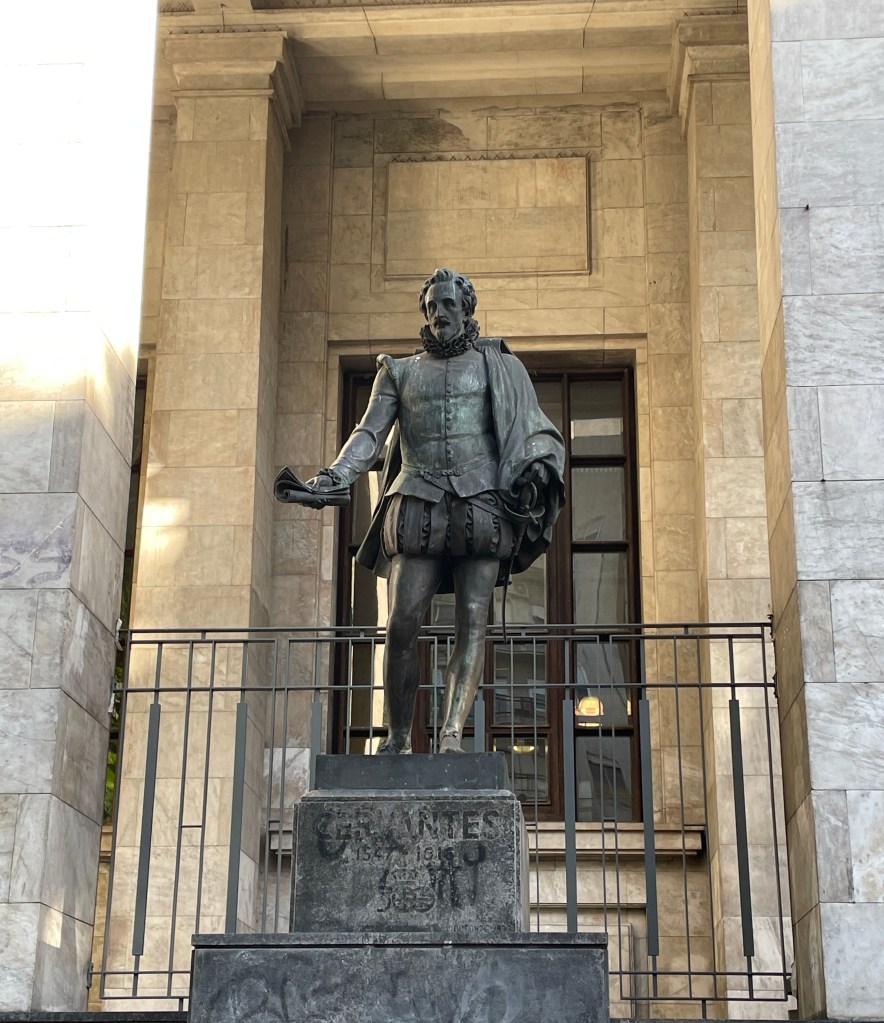
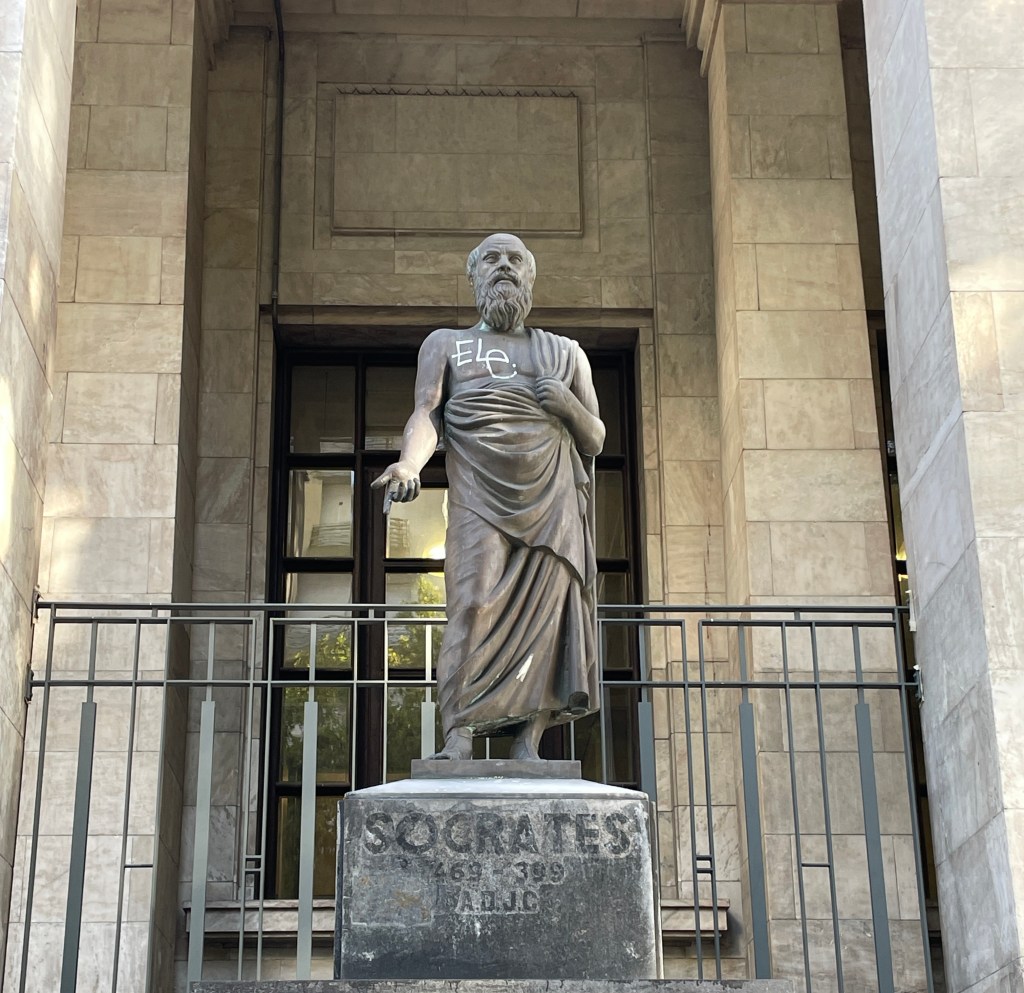
Both Adam and I were also surprised by the amount of graffiti everywhere. Tagging is ever-present on most buildings in Montevideo, but it’s odd to see it on such an important and historic building. Framing the entrance to the library are two statues. One is of Miguel de Cervantes, which makes sense considering how influential his works have been on the Spanish language, novels as a genre, and fiction literature worldwide. The other statue is of Socrates, which makes sense considering Uruguayans are deeply influenced by Greek architecture and philosophy. It’s odd to me, though, not to celebrate great Uruguayans outside the gates of a national library, such as María Stagnero de Munar, María Herminia Sabbia y Oribe, or Juan Carlos Onetti Borges. Maybe there are more commemorations inside the building? One can hope.
One of the quintessential experiences we wanted to partake in was finally trying yerba maté. Yerba maté is a plant native to southern South America that contains caffeine. It has a profound cultural and social significance: drinking maté is typically shared among a group of people and the accoutrements needed for drinking require special care. (This article explains the significance in detail if you’re curious.)
What’s funny about yerba maté is that even though it’s extremely popular, it is not typically served in cafés or restaurants. The reason for that is because yerba maté is something that people prepare at home and sip on all day. Throughout our time in Brazil, Argentina, and Uruguay we have seen people carrying a thermos of hot water, a gourd cup, and a bombilla, the special straw that filters the particles. (In fact, many convenience stores sell hot water for people to add to their thermoses.) Most tourists take a class or find a friendly local willing to share their yerba maté with, but neither of those options quite worked out for us. Thankfully, we found a café in Montevideo that serves it.
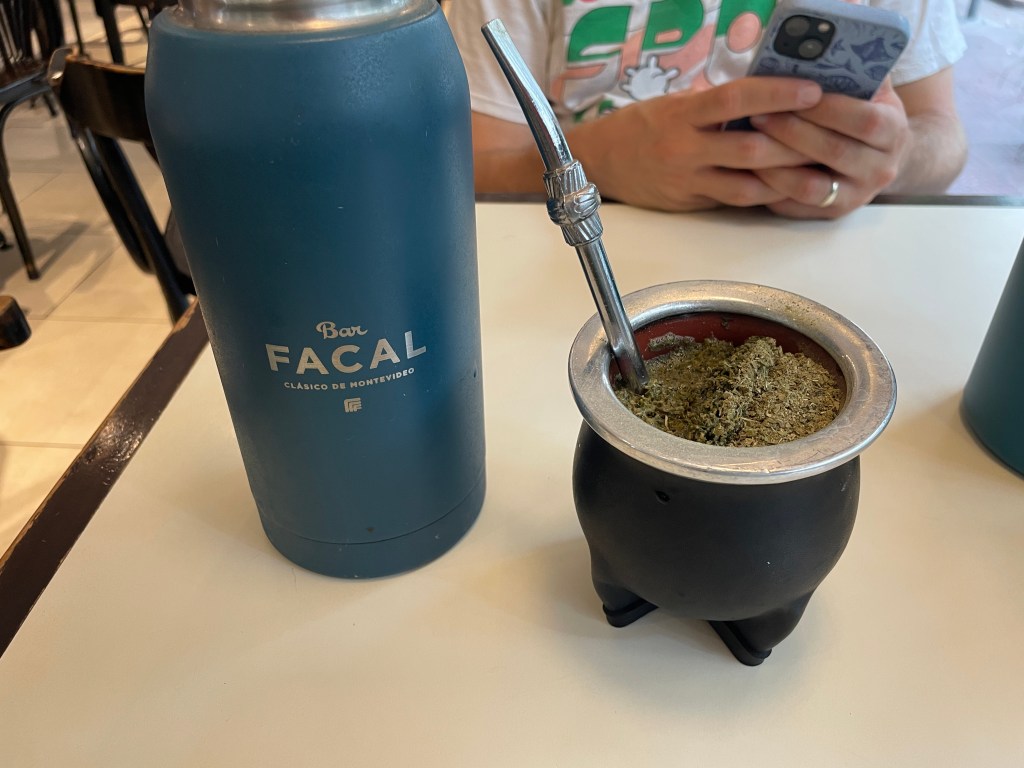
For $10 (give or take), we were given a gourd filled with maté, a bombilla (straw) and a 1-liter (33.8 ounces) thermos of hot water to share at Bar Facal, a local institution.
As a side note: not all yerba maté is the same. Uruguayans tend to prefer theirs a little more powdery, while Argentinians like theirs more chunky.
You might not be able to tell from the video, but I was not a fan. I liked the bitterness but the aftertaste reminded me too much of green tea, which I don’t like. Adam, on the other hand, enjoyed it, and finished the thermos all by himself. Unlike coffee that gives drinkers a rush of caffeine, yerba maté is more gentle. Adam wasn’t hyper or wired after all that tea, just more focused. It is very possible that we might have to invest in a yerba maté kit once we settle somewhere. It’s pretty shocking how calm folks are in these parts considering they drink caffeinated tea all day.
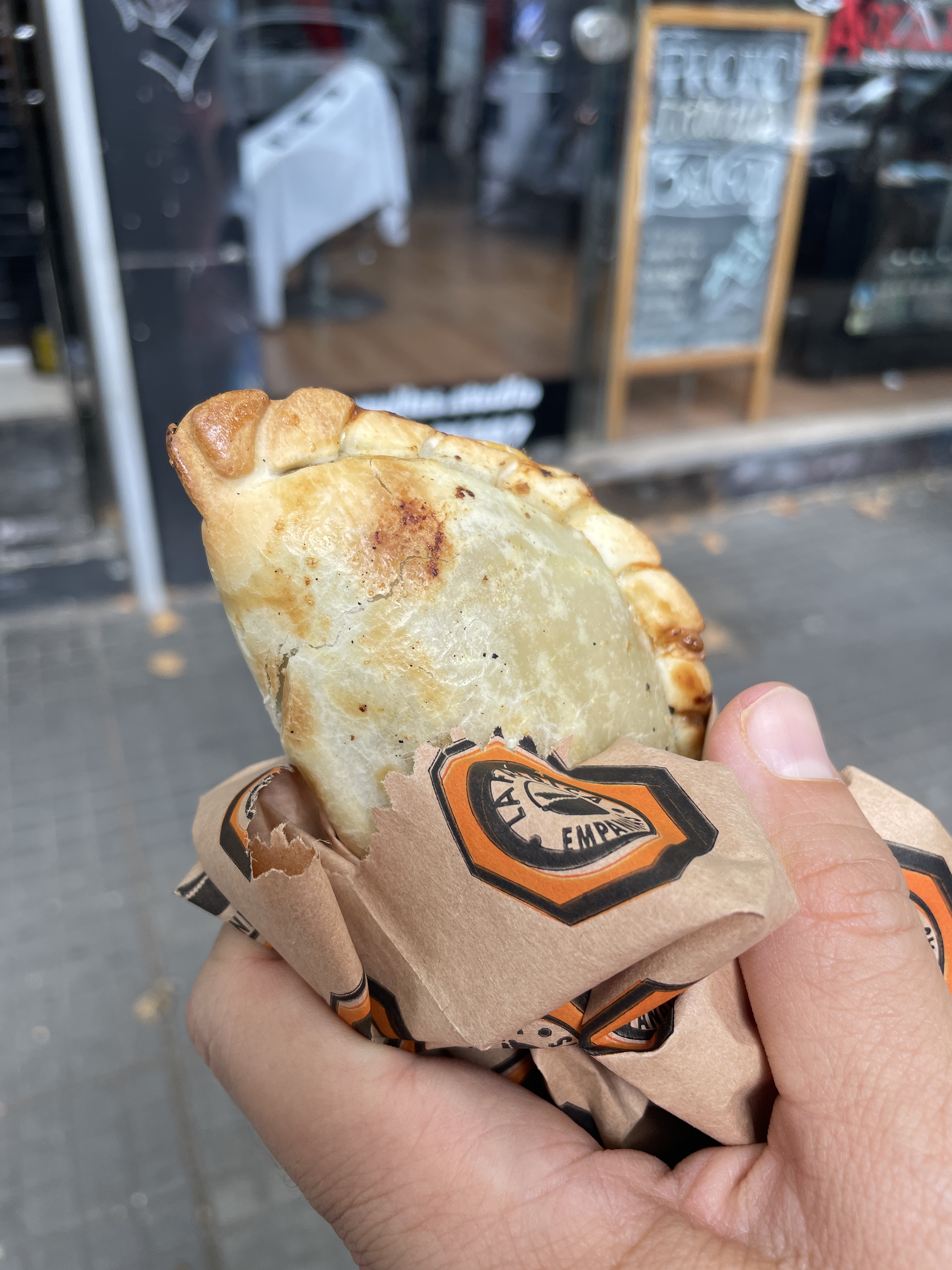
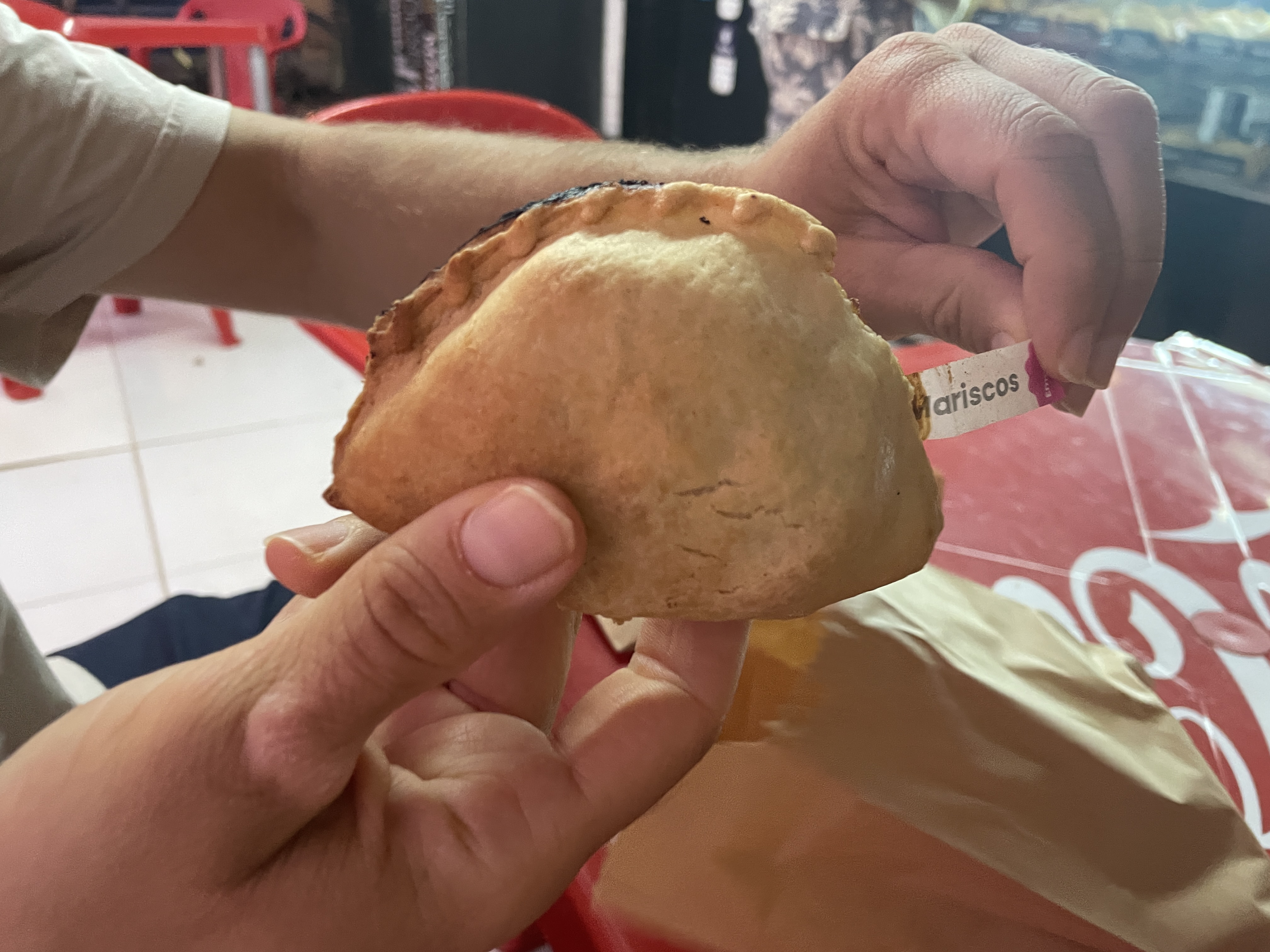
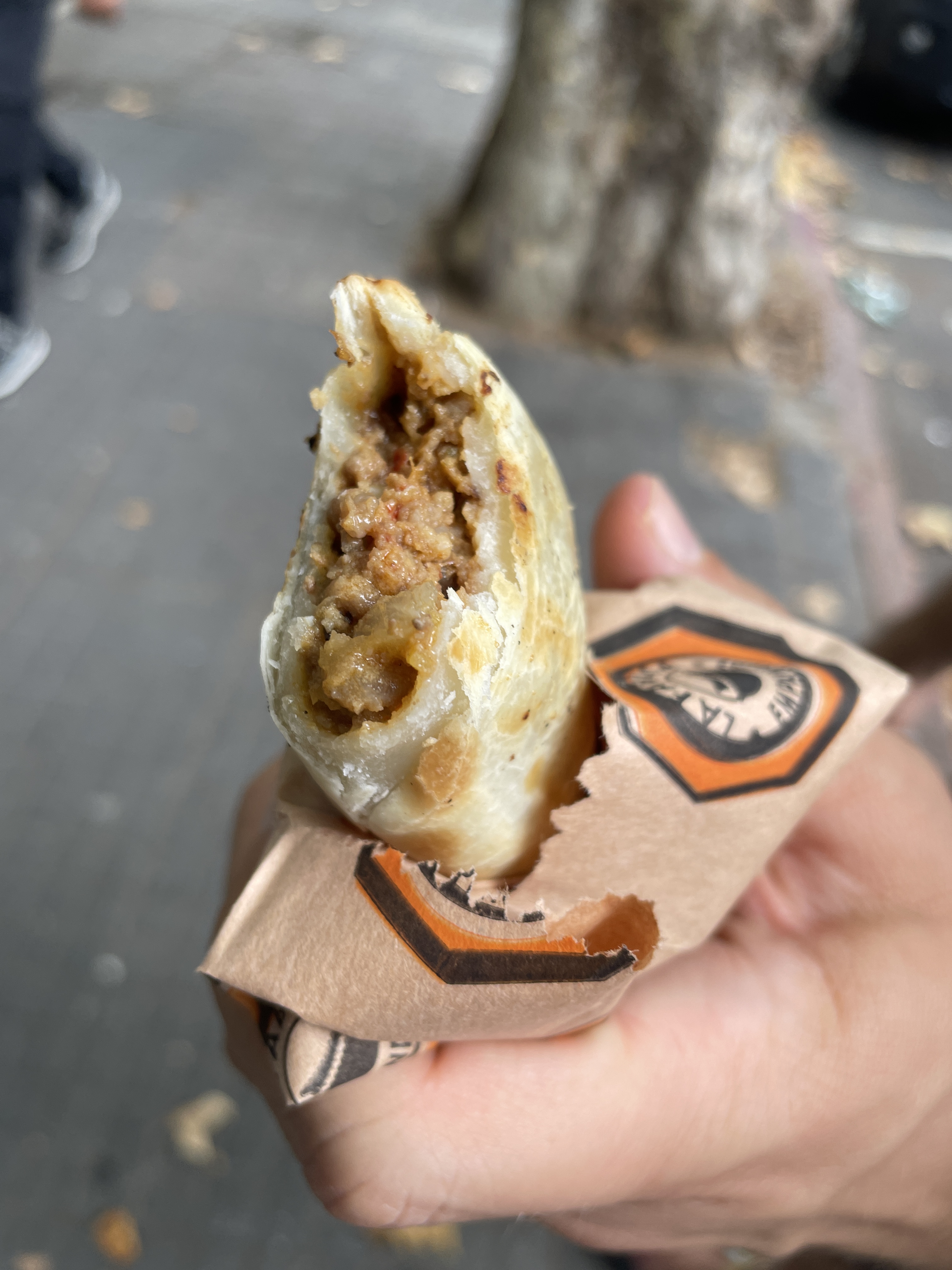
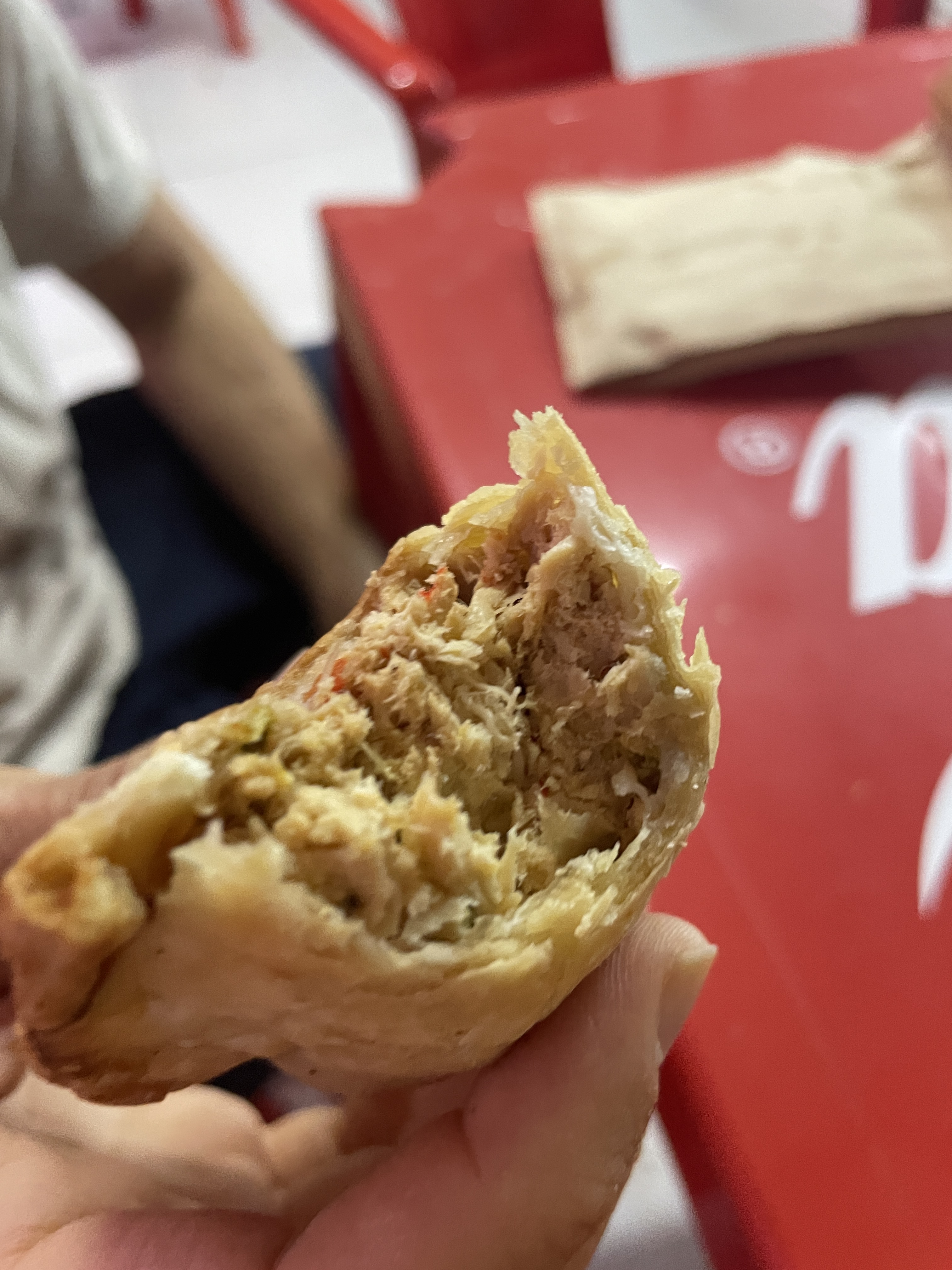
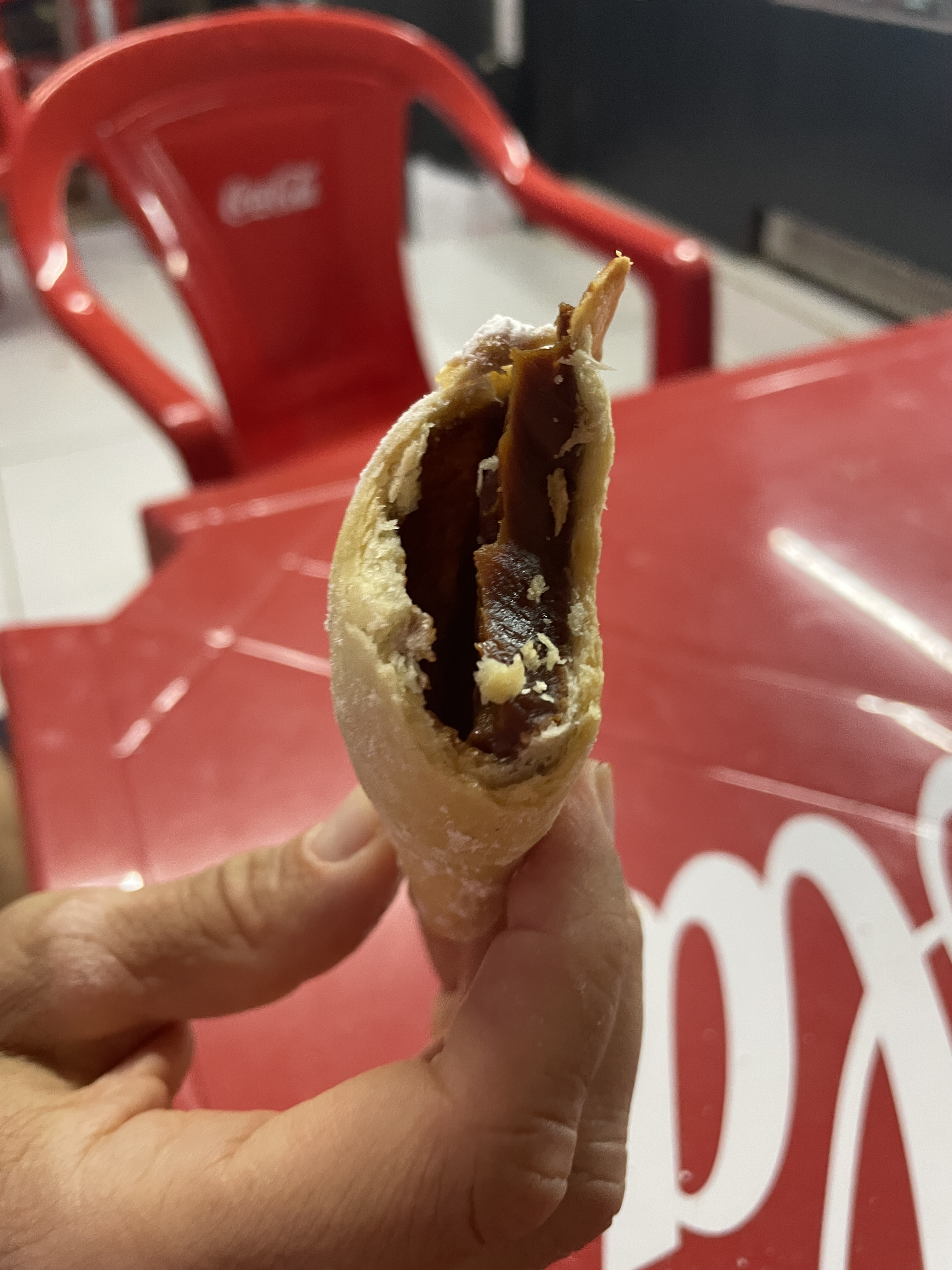
I wanted to make sure that Adam tried some empanadas while we were in Uruguay, if only to compare them to Argentinian ones. Montevideo has a few gluten-free bakeries that sell GF empanadas, but they all have dairy in them so I couldn’t try any. In the United States, Adam found Argentine empanadas to be the best; however, the ones we tried in Buenos Aires were mostly okay. Uruguayan empanadas were much better overall. Not only were there more flavors to try, both savory and sweet, but the filling-to-dough ratio was better. (Colombian empanadas still reign supreme.) Pictured below are a few empanadas he ate. Note the little slip of paper that says “mariscos” (seafood) in the middle photo of the top row as a way to differentiate flavors. The bottom left photo empanada was filled with dulce de leche.
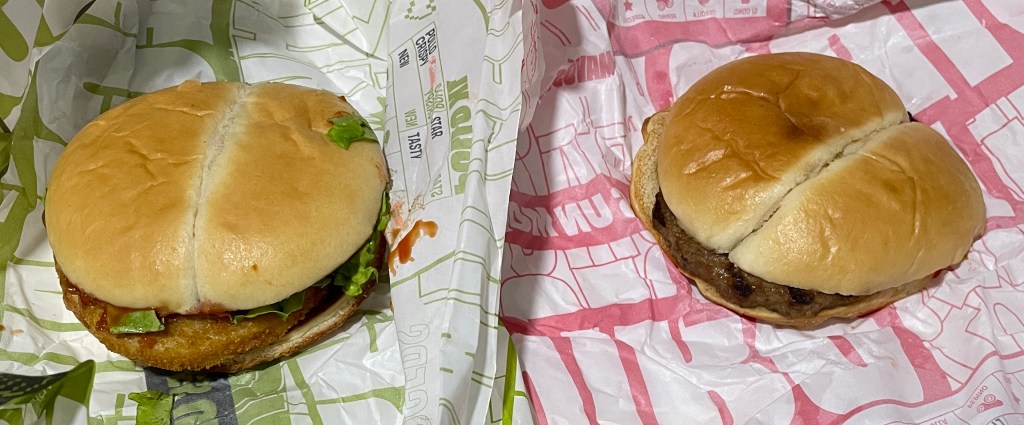
Adam also wanted to try an Uruguayan and Argentine chain called Mostaza. (Mostaza means mustard in Spanish.)
His review: the burger was solid and almost as good as a Whopper (his favorite). The chicken sandwich was high-quality and so yummy that he keeps looking for opportunities to eat more.
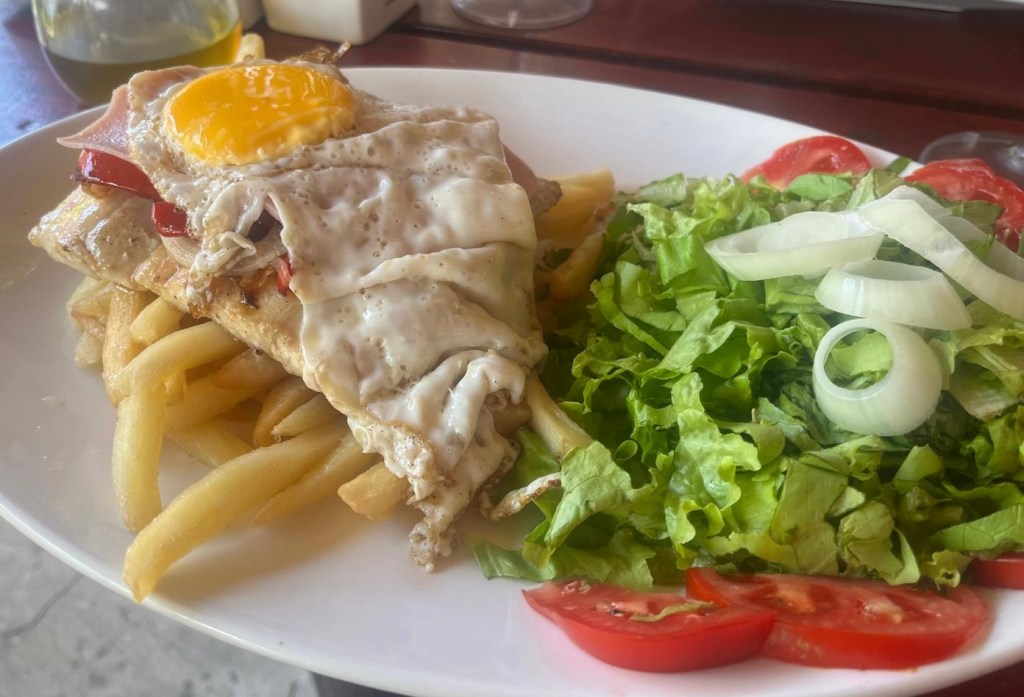
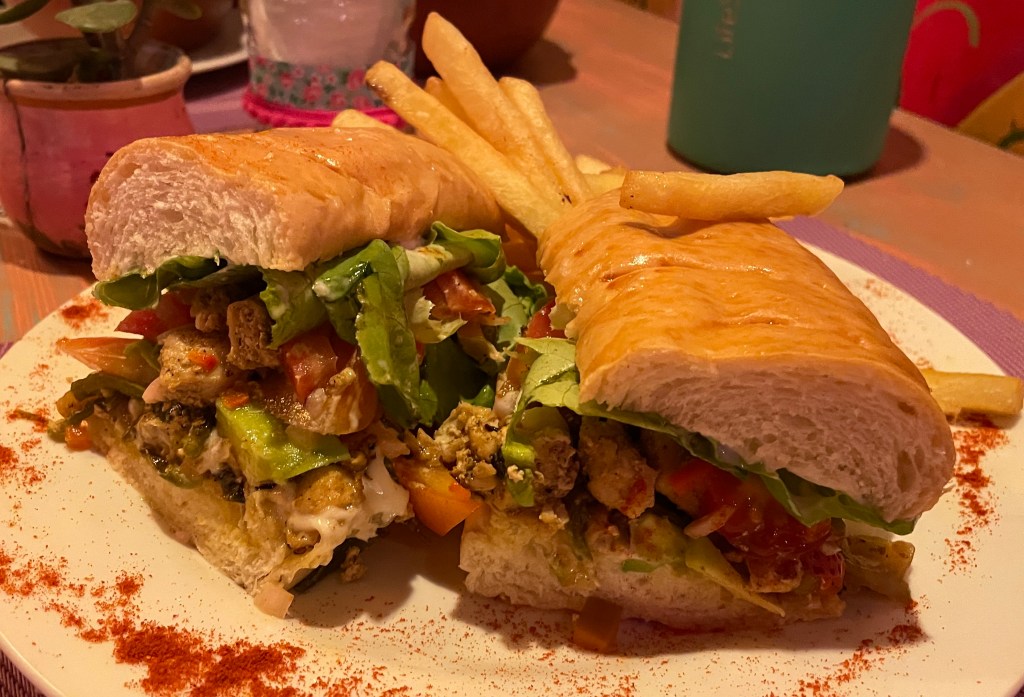
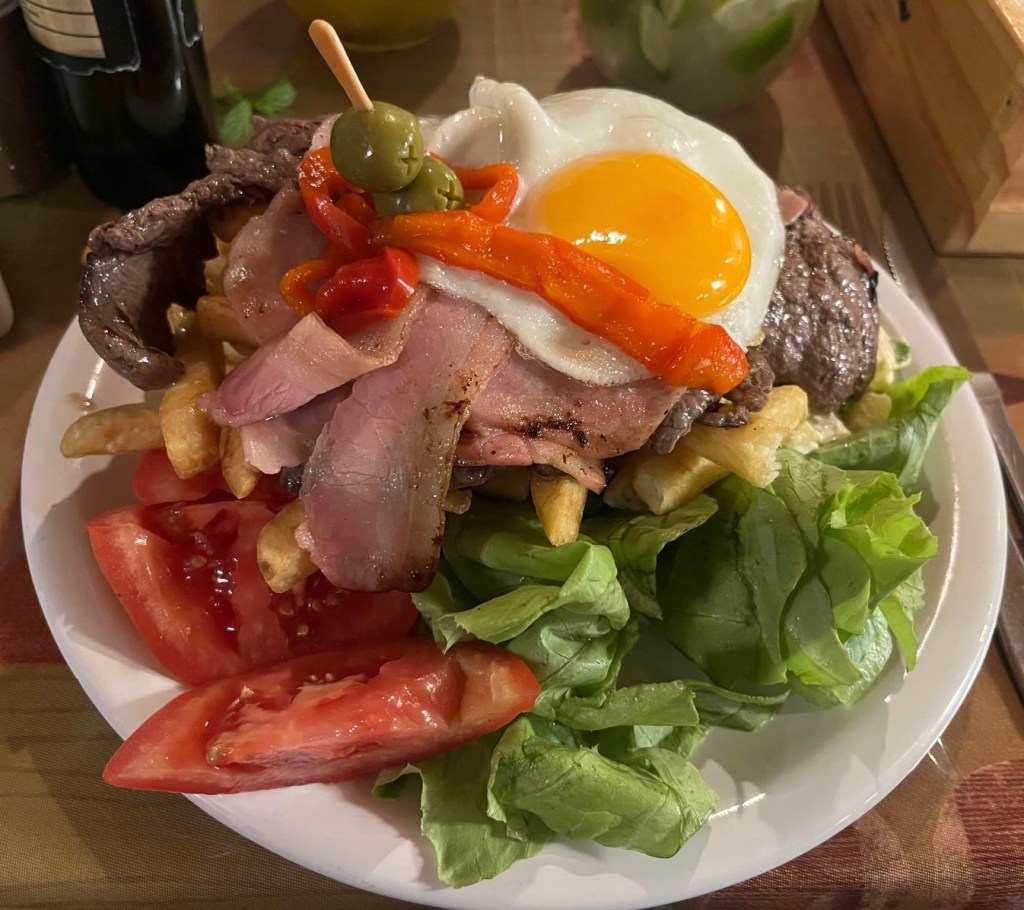
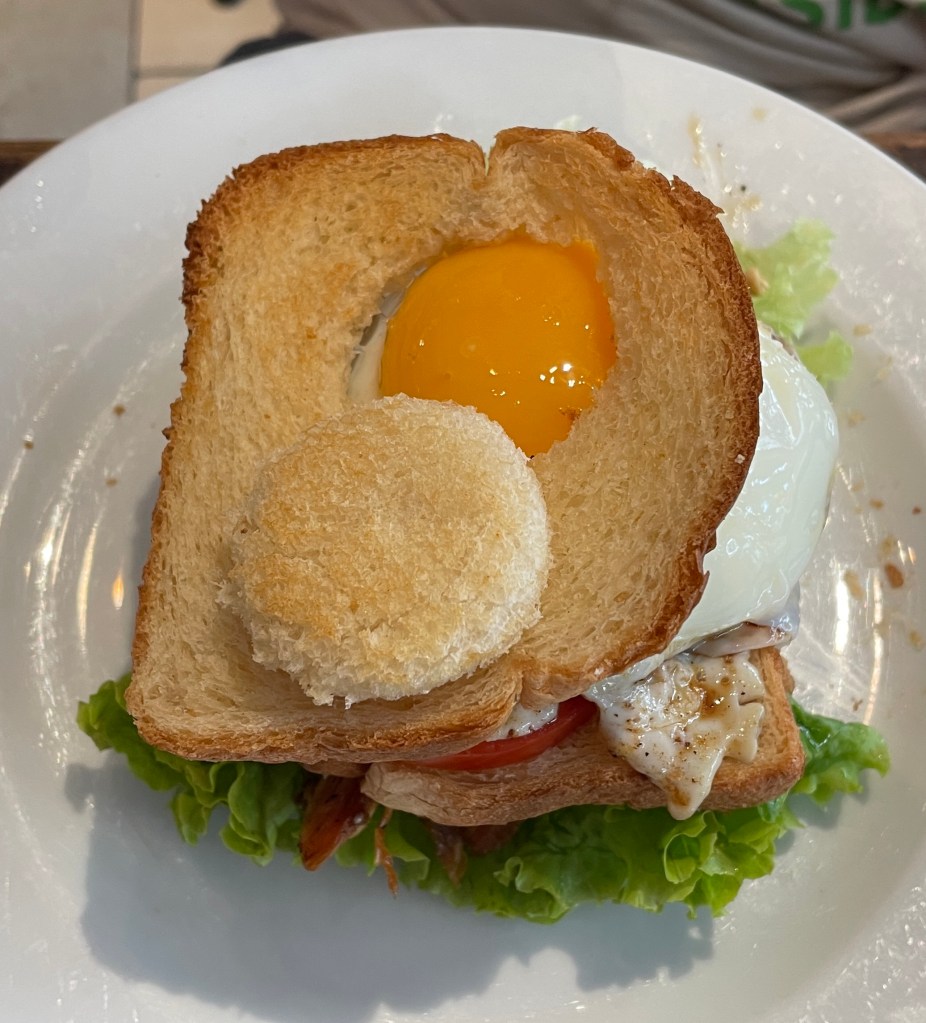
We ate so many variations of chivitos during our time in Uruguay. We tried our first ones in Colonia del Sacramento and have become hooked on them ever since. Because each restaurant makes them a little differently, they never taste the same way twice. As a reminder, a chivito consists of thinly grilled beef steak, deli ham, bacon, a fried egg, mozzarella cheese, lettuce, tomato, and onion on a toasted white bun or served on a plate. Below are notable chivitos we ate, obviously without cheese.
Top row, left to right: a chivito with grilled white fish instead of steak; an “Aztec” chivito from a Mexican-style restaurant with grilled chicken, avocado, and a chipotle sauce that was not spicy at all
Bottom row, left to right: a monster of a chivito that included both french fries and potato salad as sides; a chicken chivito from Bar Facal (extra points for the presentation!)
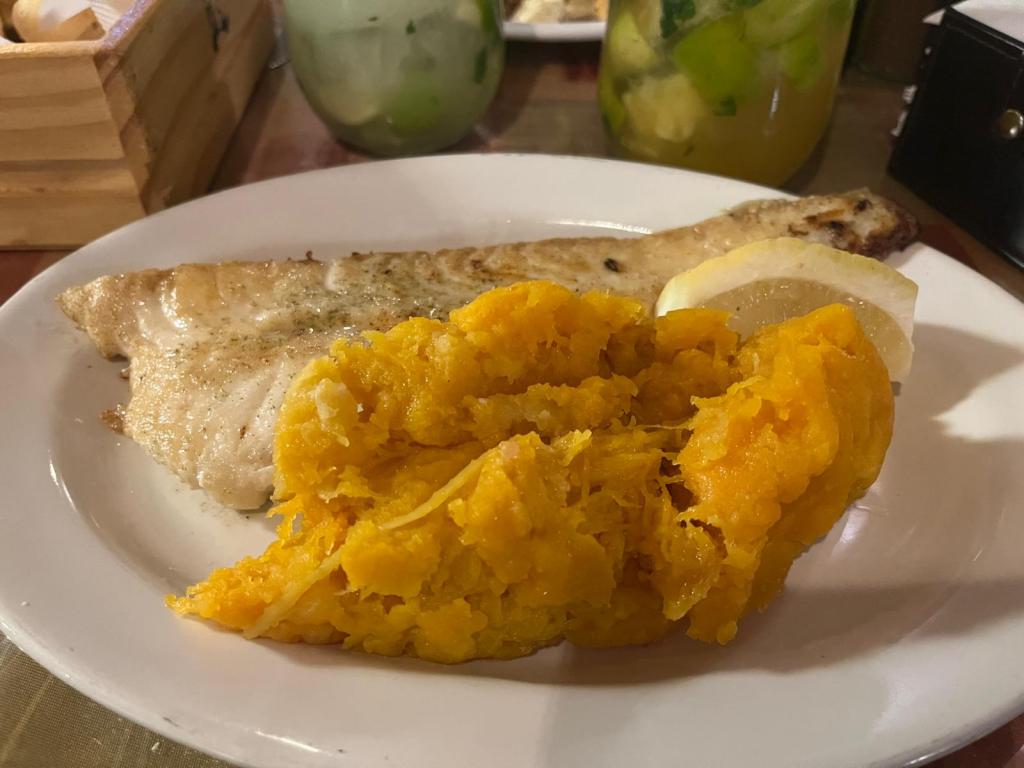
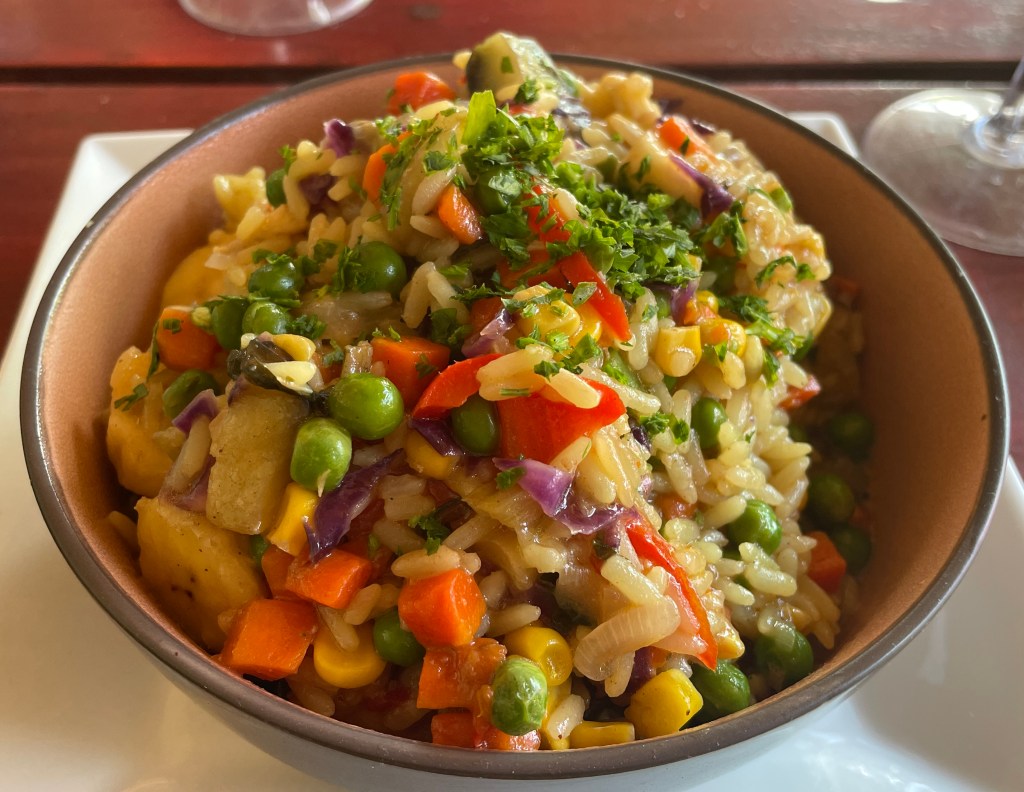
While we were along the coast, we had opportunities to try local seafood. Seafood isn’t always on restaurant menus or particularly affordable. I suspect that maybe it’s more common to cook fish at home and if folks go out, they want special cuts of meat they wouldn’t necessarily prepare themselves. In Punta del Diablo, Adam ordered the fish of the day with squash purée that he enjoyed immensely. (Uruguay gets extra points for embracing squash as a side.) When we ate lunch at Cabo Palonia, I ordered a fish and vegetable rice dish which was so much more comforting than I expected. It was a little soupy, but in a fun way, and, for once, I didn’t need to add salt to the dish.
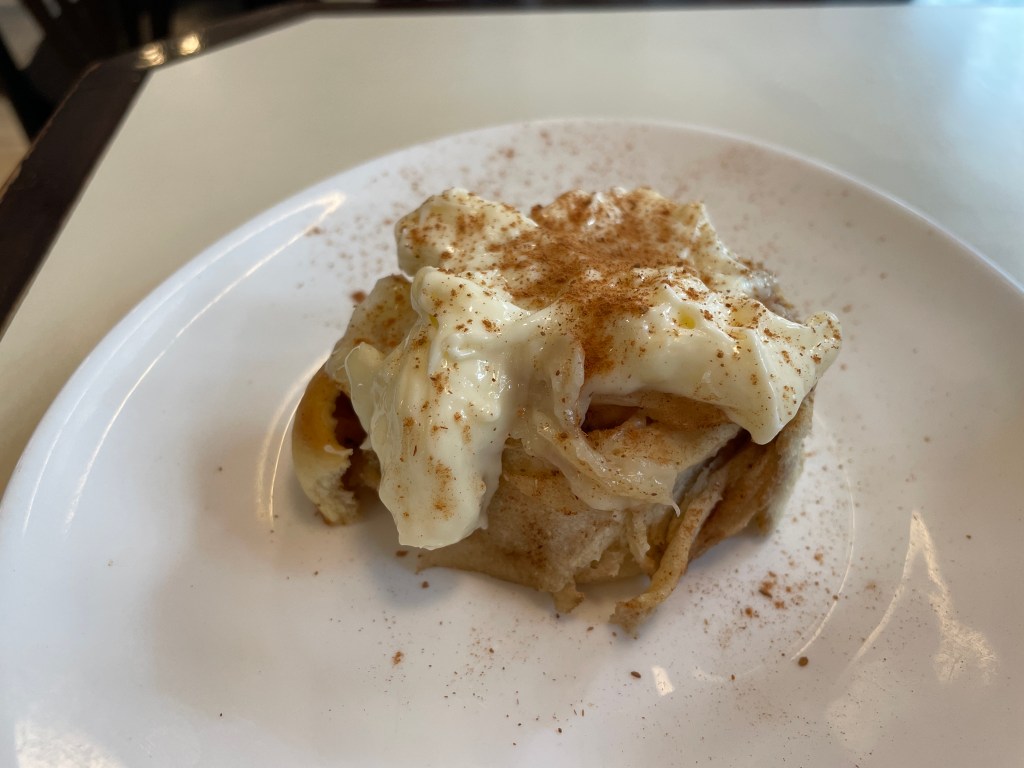
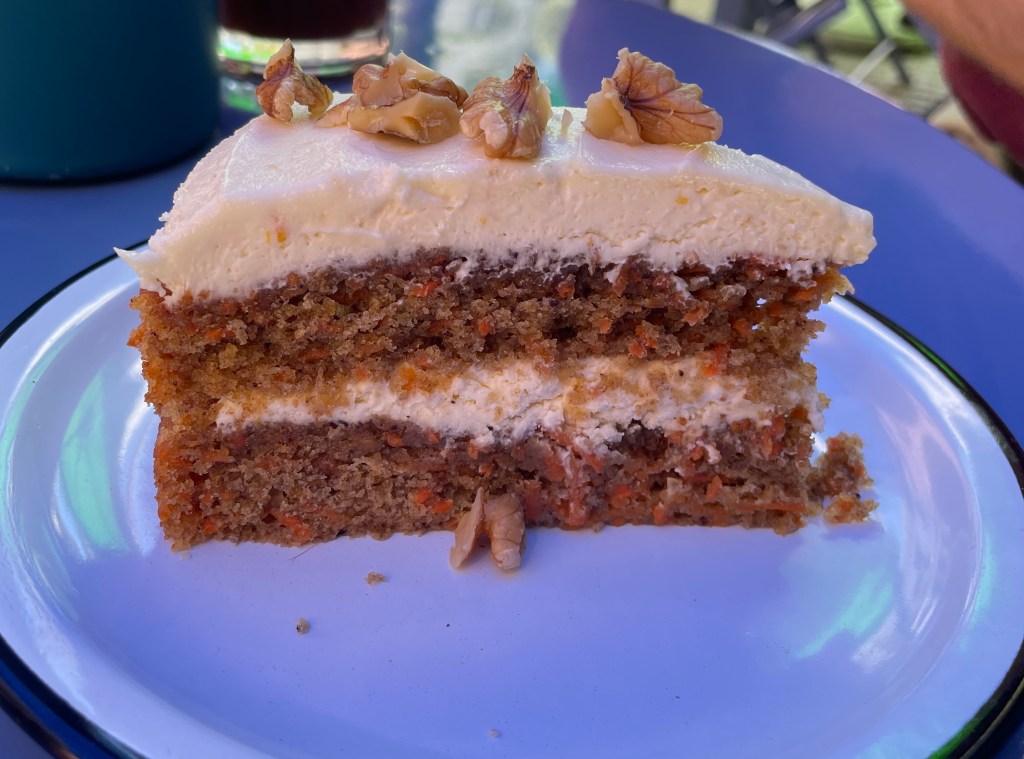
Of course, there were moments when even Adam couldn’t resist a few sweet treats. Adam is a sucker for cinnamon rolls and even though the one on the left doesn’t look like much, it was one of the best he had had. Carrot cake is exceptionally popular all over Latin America and Uruguay is no exception. I have been asking Adam to try carrot cake ever since we began this trip and he finally obliged (right). It was delicious, claro!
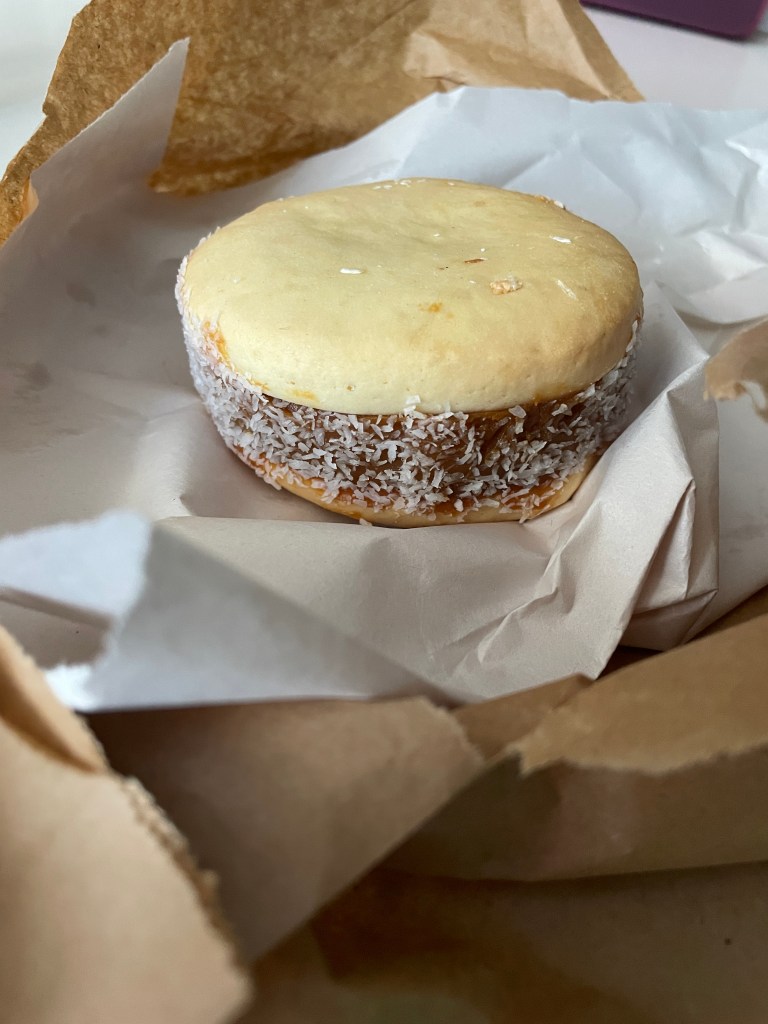
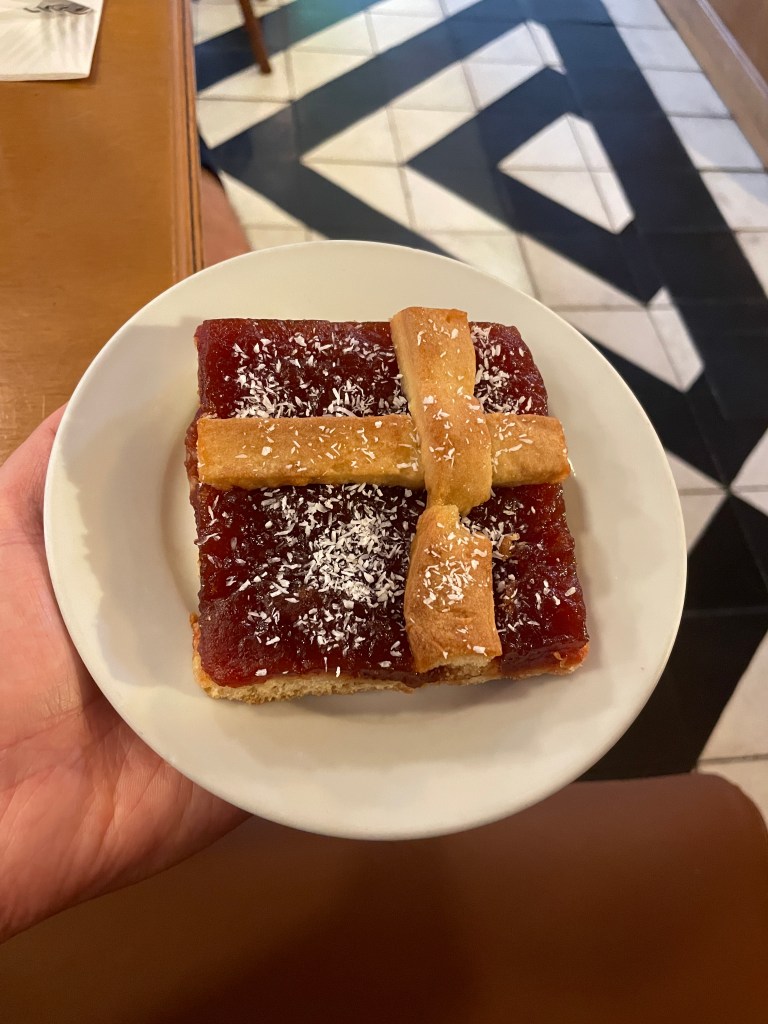
After discovering how much better Uruguayan empanadas are compared to Argentinian ones, Adam decided to give alfajores another try (left). The cookie was soft and buttery, rather than dry and flakey, the dulce de leche gave it just enough sweetness, and the coconut added an extra layer of flavor. I knew if we found the right kind he would like them! The photo on the right is a slice of pastaflora, originally an Italian cake that has been adapted to Uruguayan tastes. The filling is membrillo, a paste made from quince. I’m familiar with quince jams from friends with Egyptian Jewish ancestry, but didn’t realize it is so popular in Uruguay and Argentina as well. Adam says the taste is very special and worth trying if you have a chance.
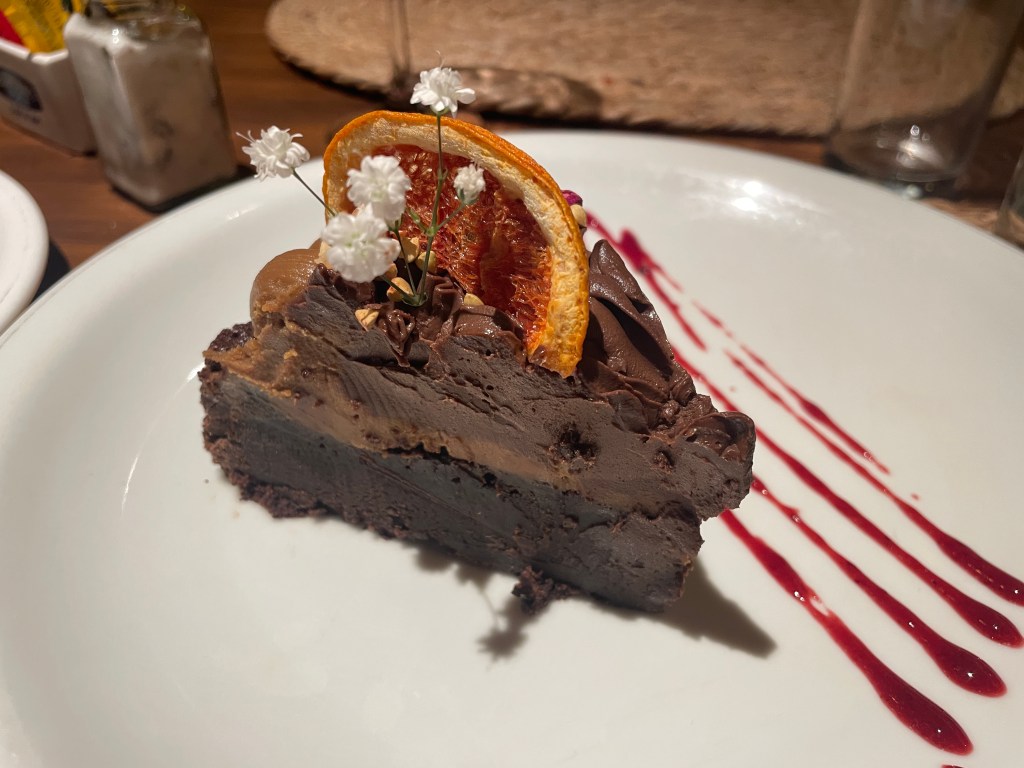
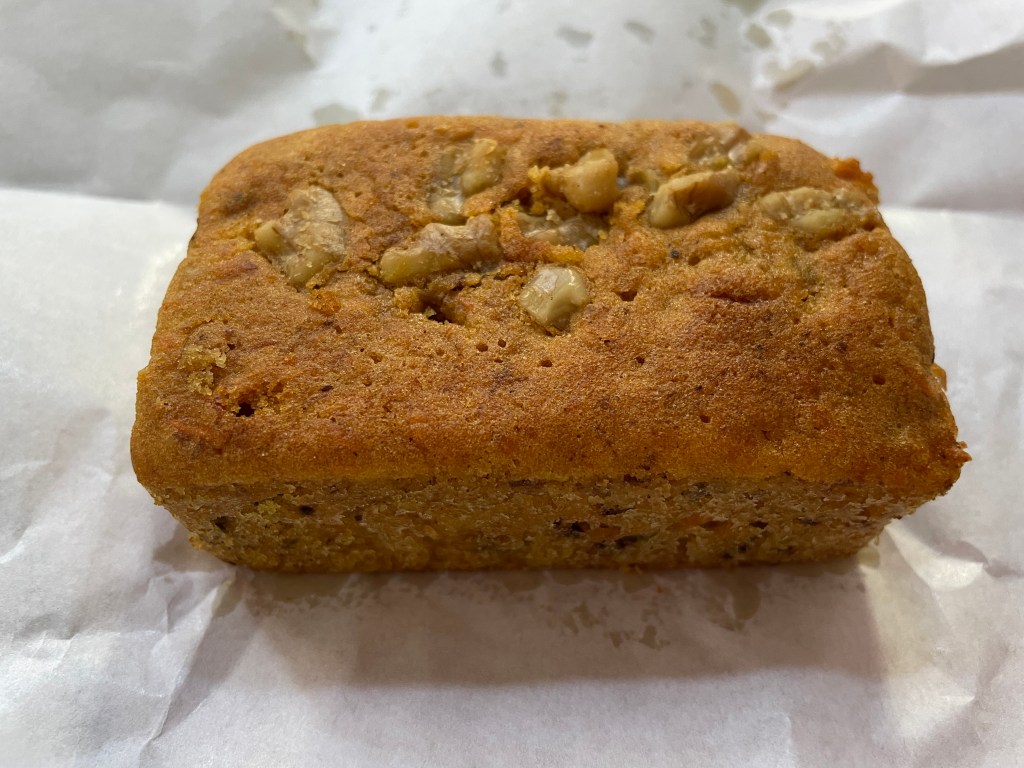
Adam isn’t the only one who got to have sweet treats. While in La Paloma, we found a restaurant that served a gluten-free, vegan, and supremely decadent chocolate cake (left photo). I ate it over two days because it was so rich. On the right is a little dairy-free carrot cake loaf that I found at a gluten-free bakery in Montevideo. It was very moist, spongey, and full of walnuts: perfect as a little mid-day treat.
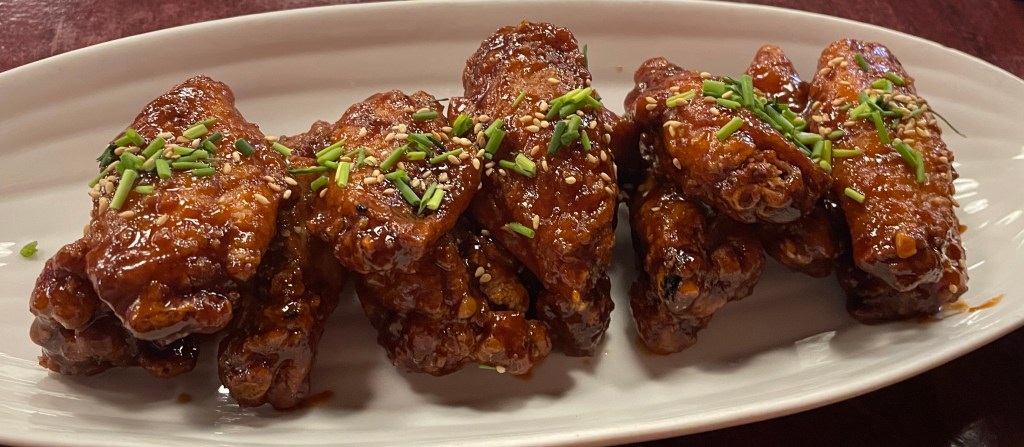
We found a few non-Uruguayan restaurants during our trip, which was a fun surprise. Our first meal in Montevideo was at a Korean restaurant. It was spicy, comforting, and helped curb our craving for East Asian cuisine. Even though it seemed a bit pricey for the portions, all the food tasted so fresh that we almost didn’t mind. We started the meal with some banchan (kimchi and salads) and kimchi jiggae, or kimchi soup (top row). Next, we shared a chicken bibimbap (veggies and rice in a clay pot mixed with gochujang sauce; left) and beef bulgogi (middle). Adam also ordered crispy chicken wings, which he said were excellent (bottom row).
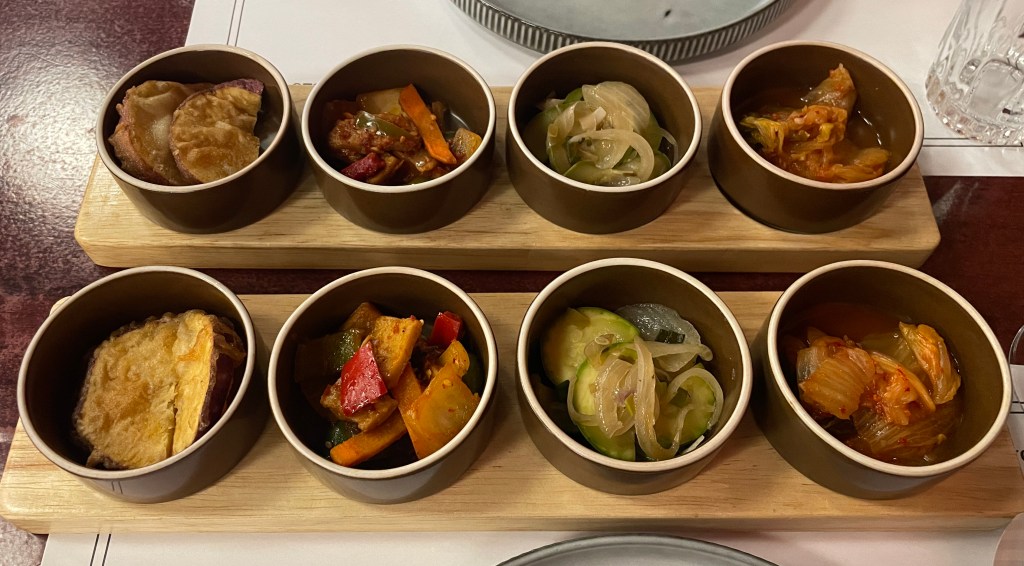
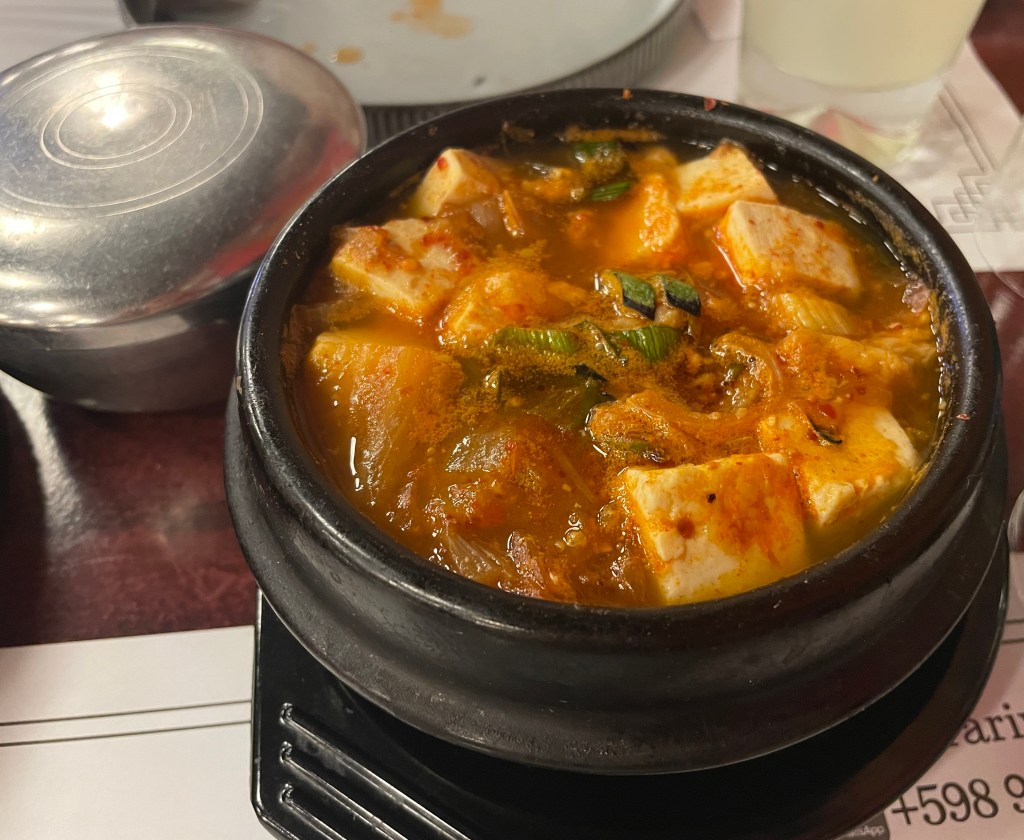
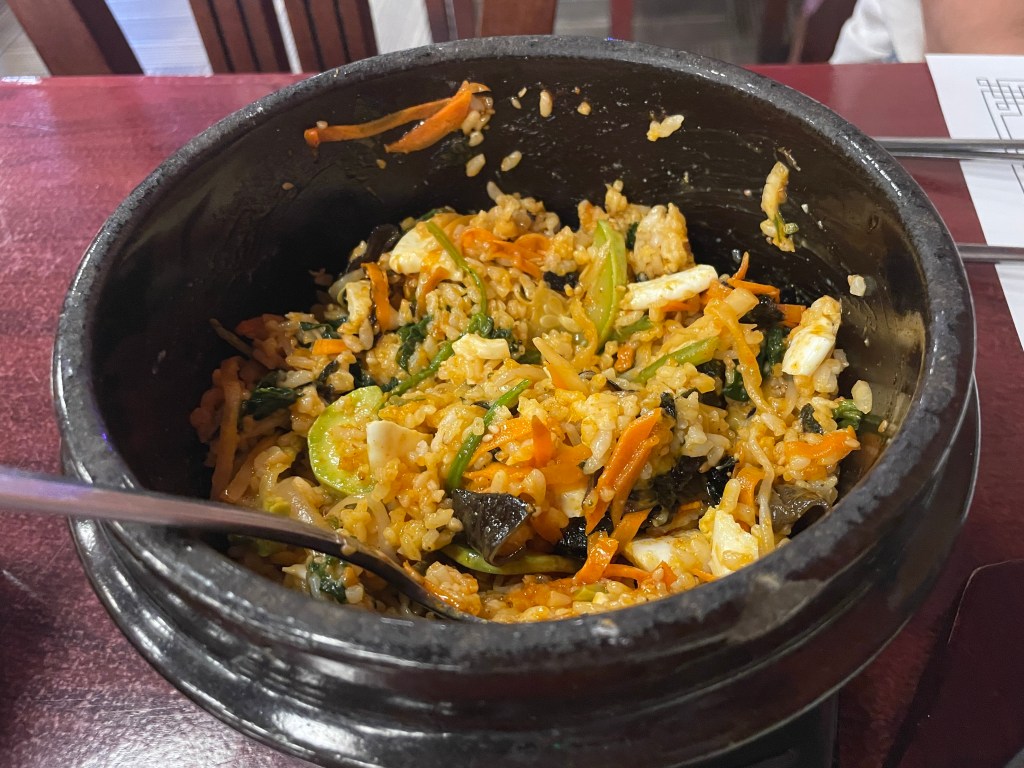
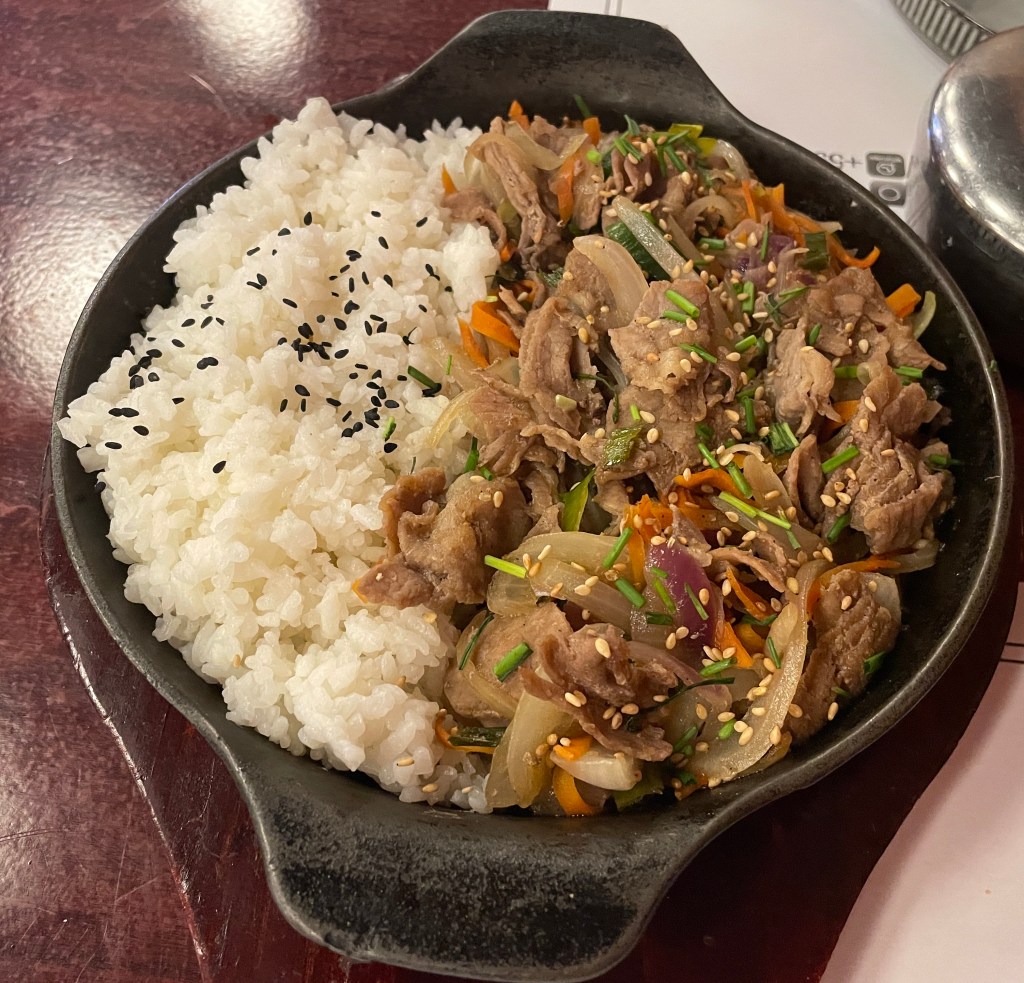
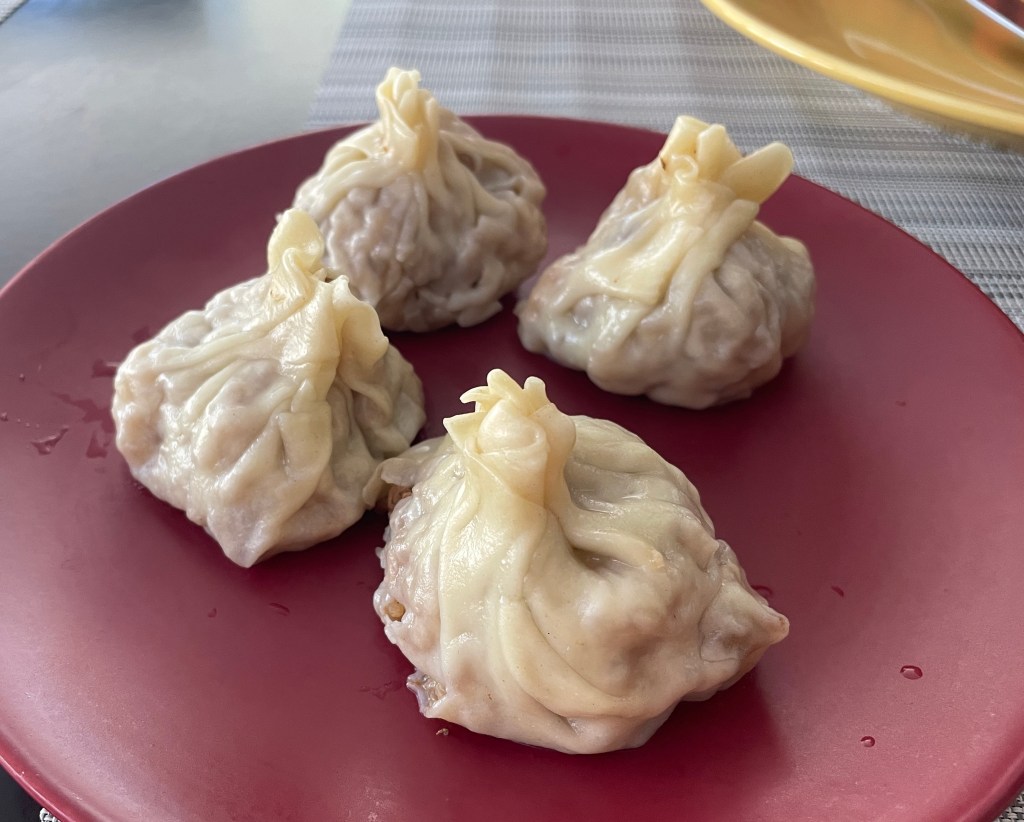
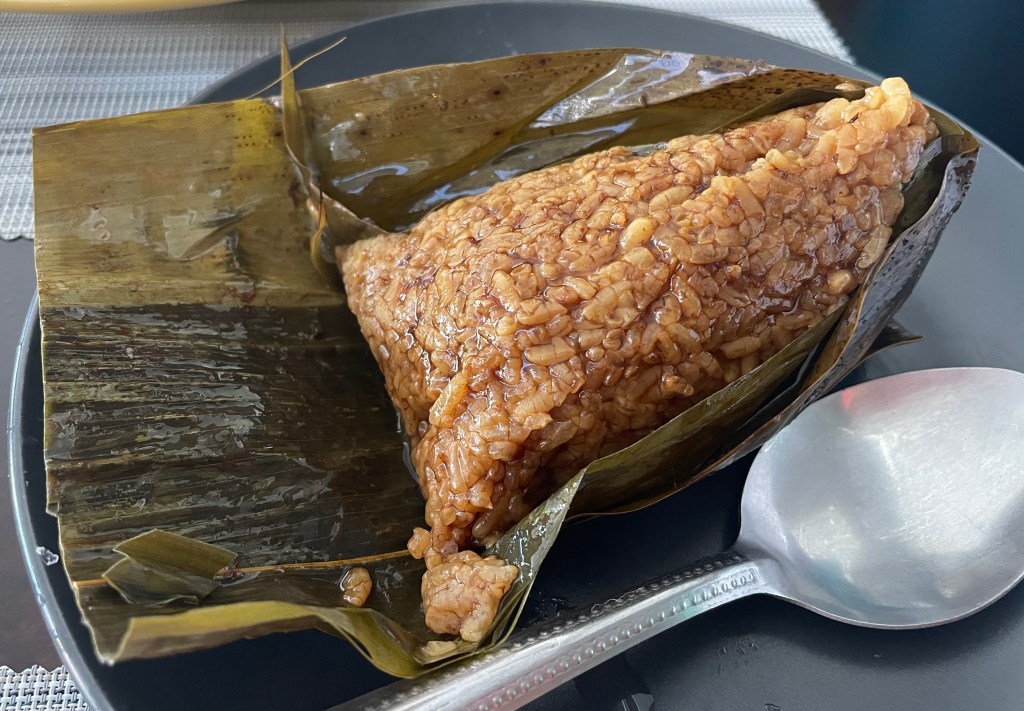
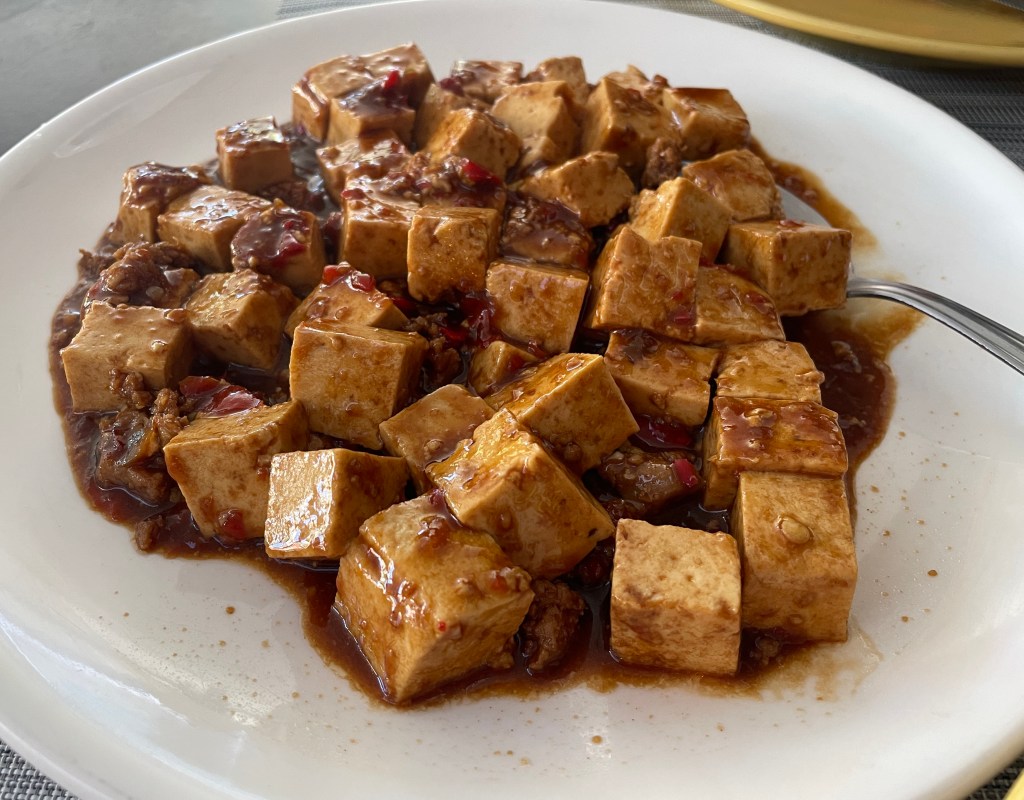
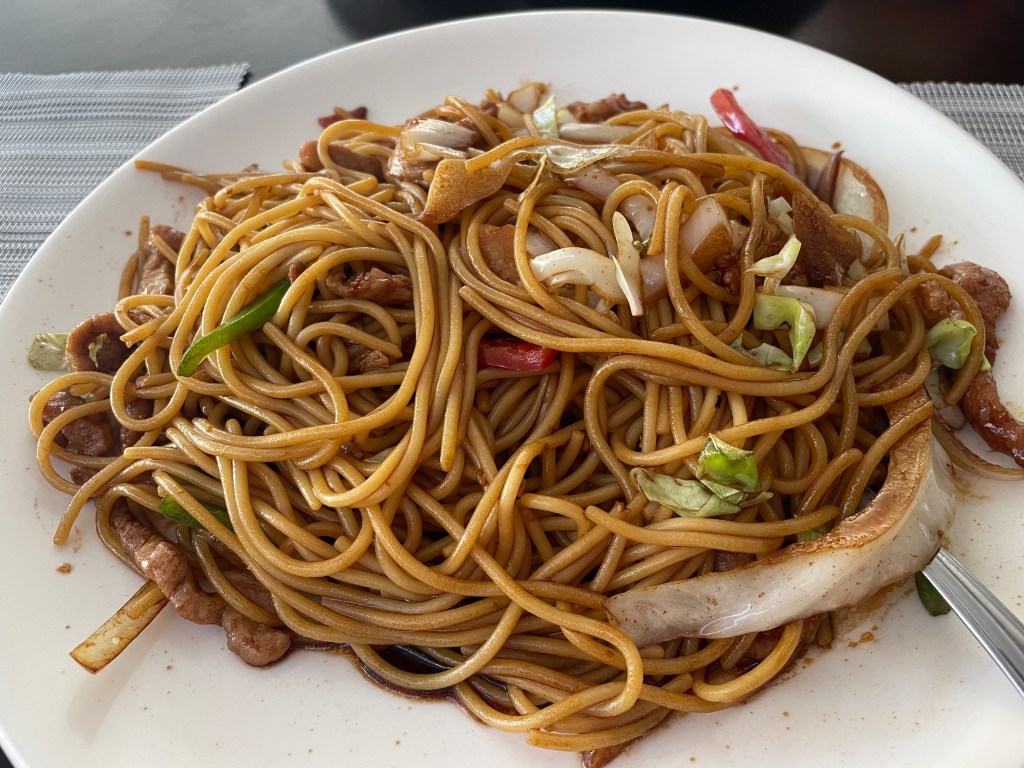
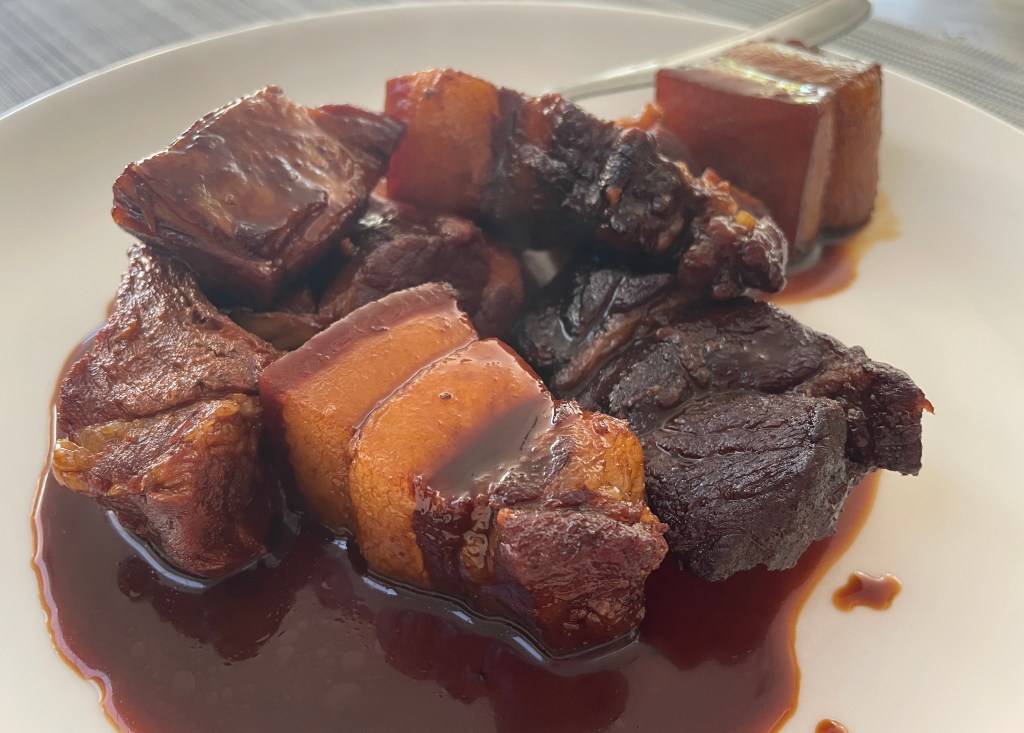
Montevideo has quite a few Chinese restaurants, many of which are fast-food types similar to Panda Express. During the end of our second stint in Montevideo, we found Restaurant Shang Hai, a Chinese restaurant that, at least based on the menu, was more in line with the style we prefer. We were not disappointed! For appetizers, Adam ordered steamed shumai dumplings stuffed with pork, peanuts, and rice, and I ordered zongzi, or rice stuffed with pork and peanuts steamed in a banana leaf (top row). For mains, we shared the Sichuan tofu that had a nice spice level to it, though we did ask for extra spicy. Adam also ordered pork chow mein and I had the pork belly that was cooked in a lovely hoisin sauce (bottom row). Another food craving temporarily satisfied!
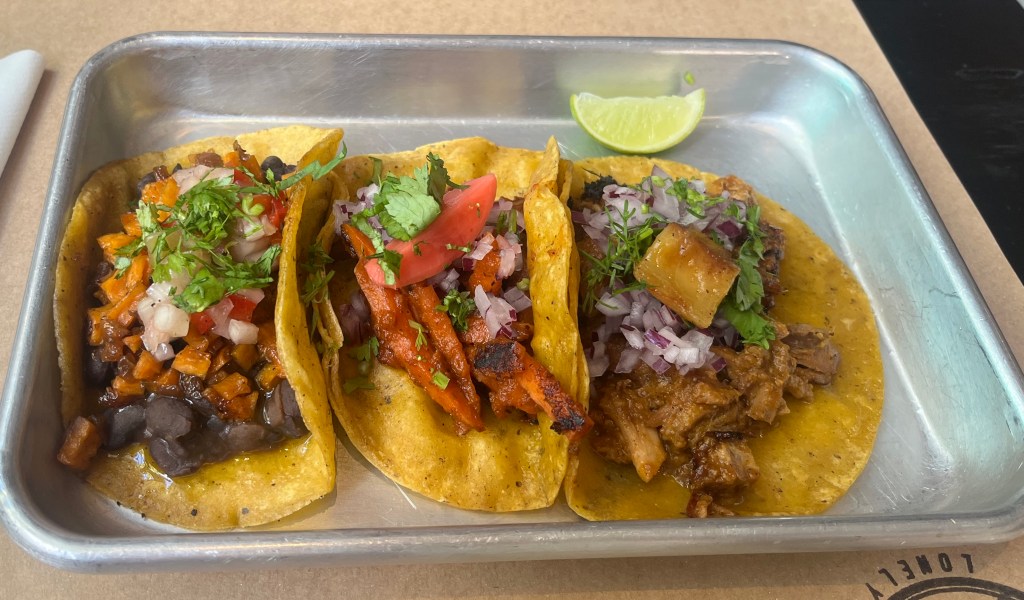
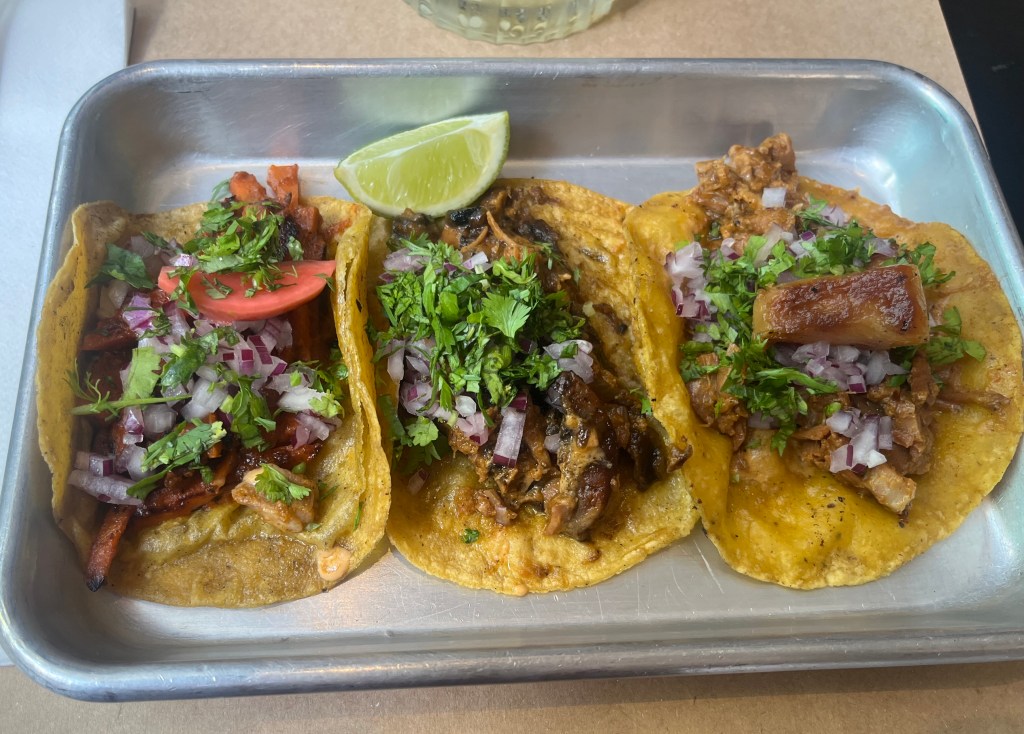
Remember in our post about Montevideo we mentioned we met a lovely person at a Mexican restaurant who invited us to his house to watch the Llamada parade? Obviously we need to talk about the tacos we ate at Lonely Star. The menu has plenty of meat and veggie fillings and we tried pretty much all of them. They also had hot sauce that was actually spicy! Adam had a spicy mezcal margarita (very rare in these parts) and I drank a frozen Aperol spritz. Yum.
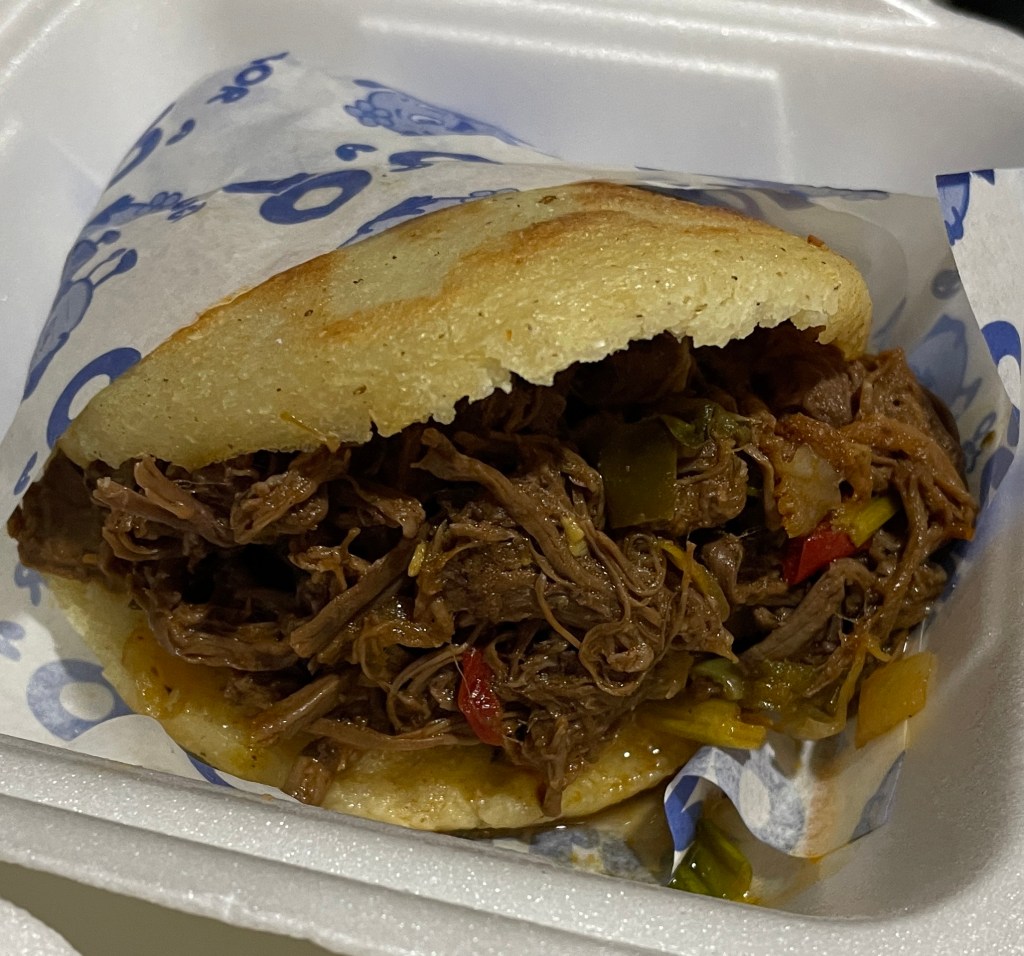
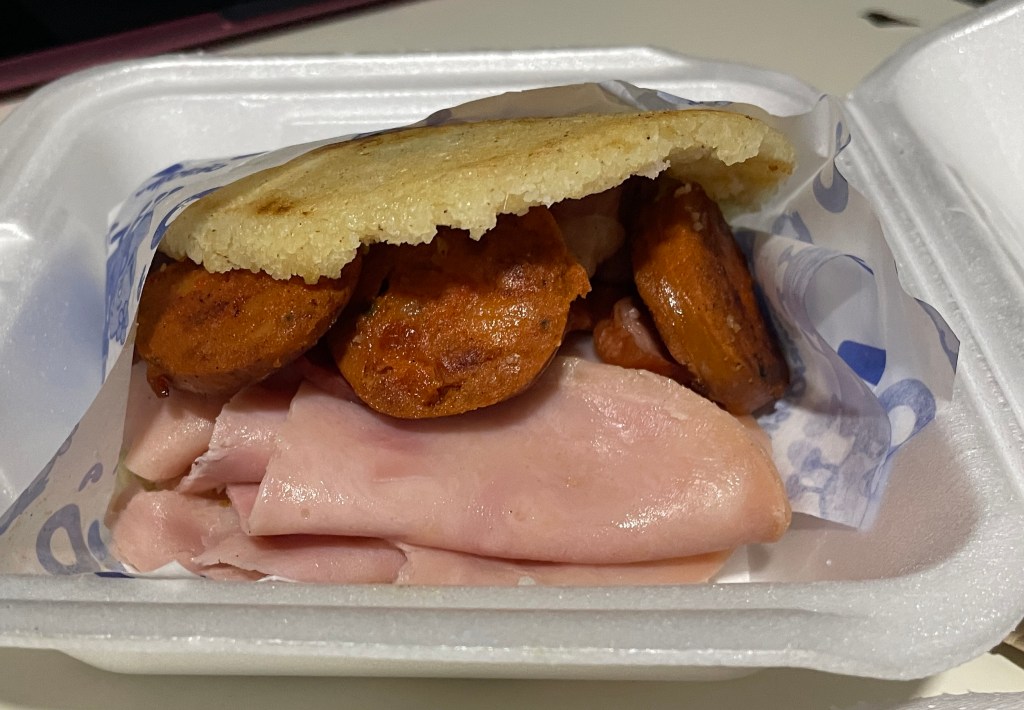
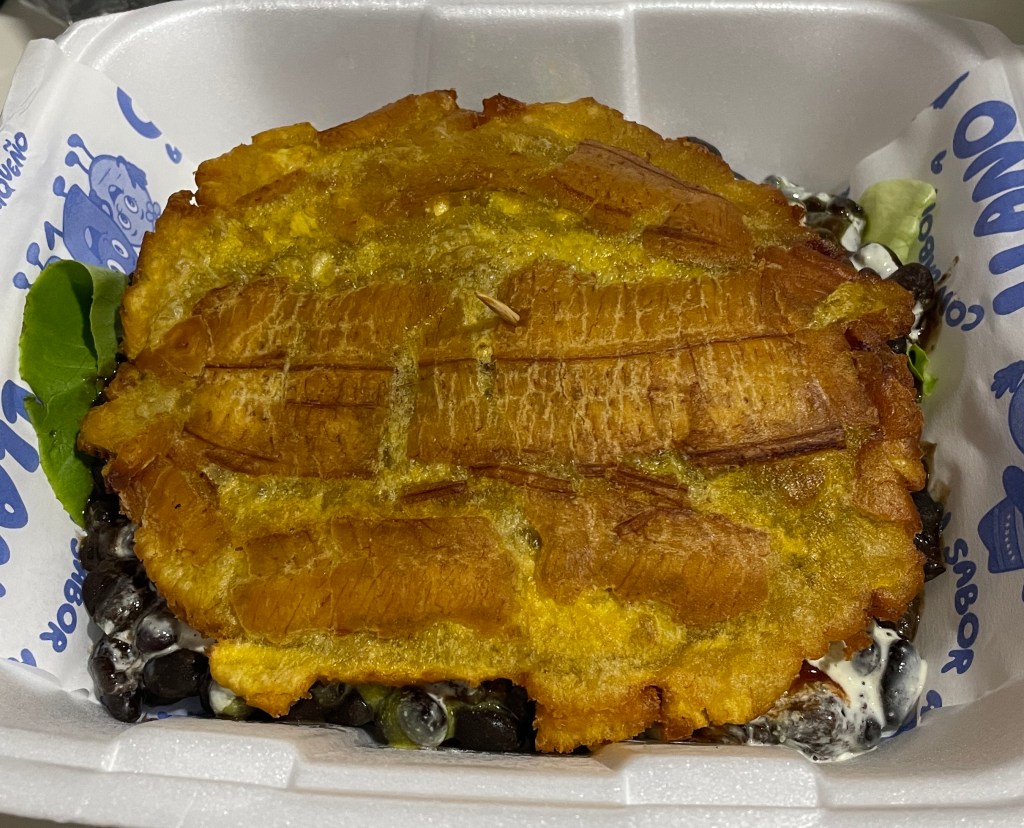
There is a sizable Venezuelan population in Montevideo and next door to our aparto-hotel is a Venezuelan restaurant, which we visited twice. The menu is pretty extensive and we both zeroed in on the arepas (left and center). I’m not sure if you can tell how large and stuffed these arepas are, but they’re packed. They also come with a hot sauce that was so good I wanted to drink it. The first time we visited, I also ordered a patacón, a sandwich made from smashed and fried plantains (right). It was huge and filled with beans, veggies, and sauces that overwhelmed me so I didn’t enjoy it as much as I could have. I think I prefer the plantain on its own as a side and not as a sandwich. The second time we ate at this establishment, we ordered more arepas that were top-notch.
As much as we’ve enjoyed Uruguay, I’m ready to see what awaits us at our next destination. Stay tuned and don’t forget to like, comment, and subscribe to Traveling While Introverted so you don’t miss our next post!
 Traveling While Introverted
Leave a comment