When we were in São Paulo in late-November/early-December of 2025, we did not take nearly as much advantage of the public transit system as we should have. We used far too many rideshares and taxis. This time though, we wanted to utilize the bus and subway system that helps move millions of Paulistas across this vast city.
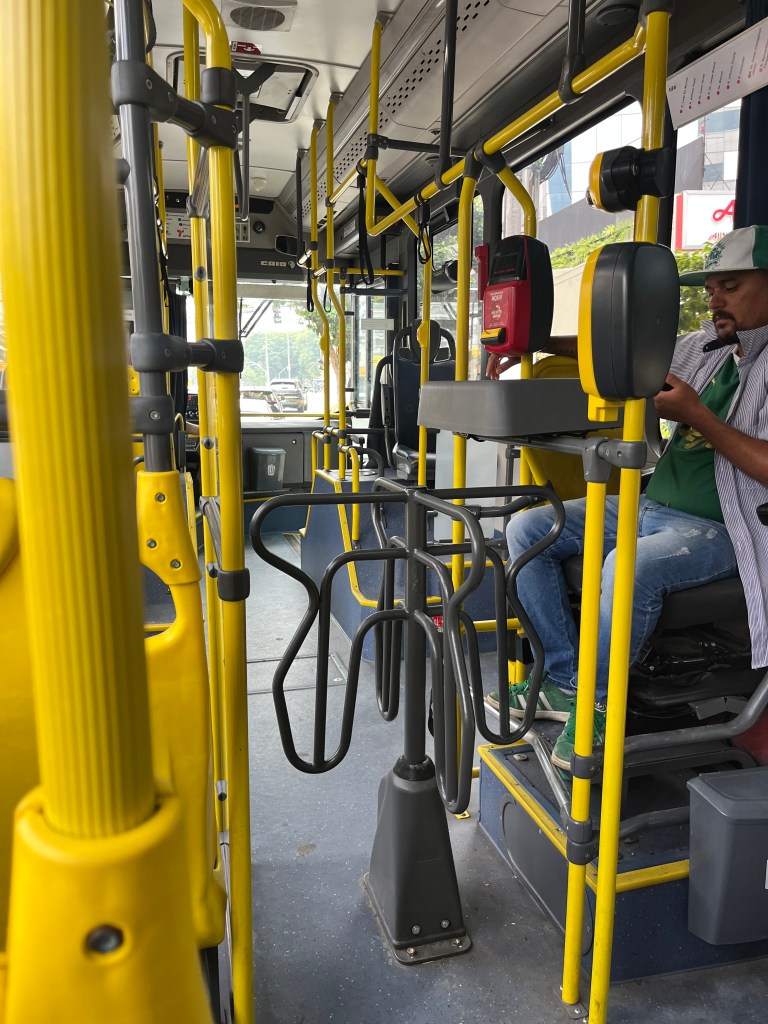
The city’s public transit includes a widespread bus system. Some of the bus lines utilize dedicated bus rapid transit infrastructure: specifically, segregated lanes that divide bus traffic from the rest of the road’s traffic. Other lines do not utilize segregated lanes but, overall, the buses are efficient, reliable, and economical. One interesting aspect about city buses in São Paulo is that the driver does not take any fare. Each bus has a few seats up front (normally for the elderly and physically disabled) and to access the rest of the bus you have to pass through turnstiles as was the case in Bogotá. However, in São Paulo, the turnstiles are operated by a person who handles all fare (including providing change, though they are not legally obligated to), answers questions about the route, and also alerts the driver when passengers in the back of the bus have gotten off.
Another unique aspect to buses in SP is that they have doors on both sides. This way, no matter what side of the road the station is on, passengers can get on and off more efficiently. This feature also allows buses to move much more quickly throughout a city that has horrific traffic, many one-way thoroughfares, and wide and dynamic intersections. As passengers, Yahm and I carefully watched the road to make sure we knew which side our exit was on.
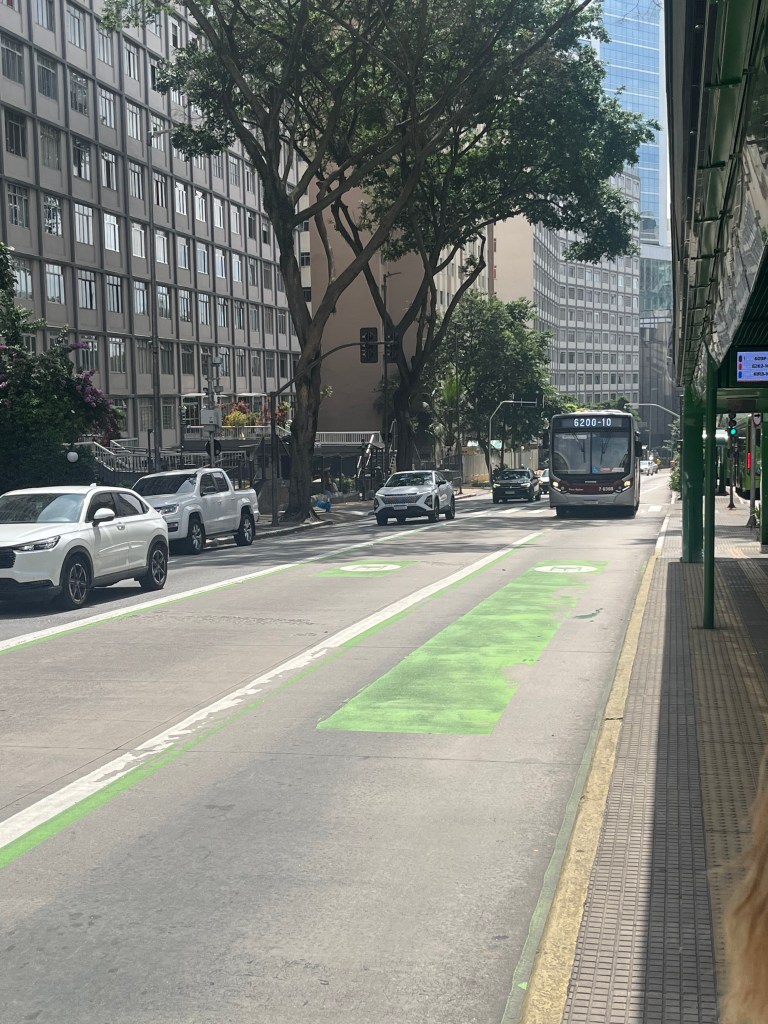
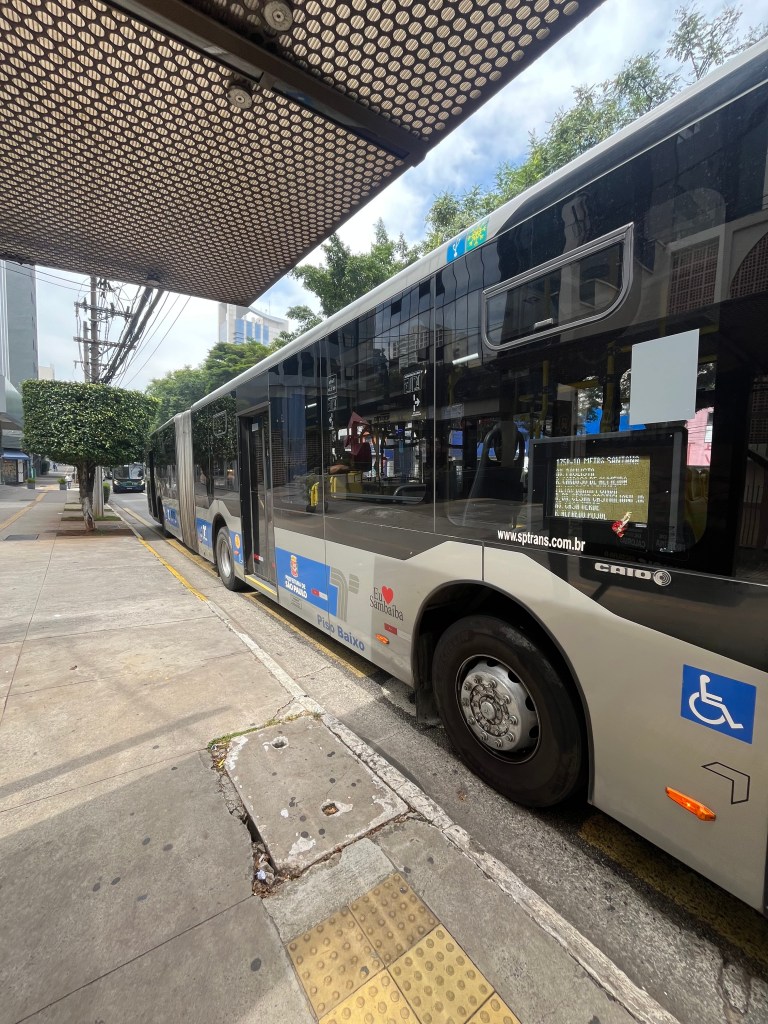
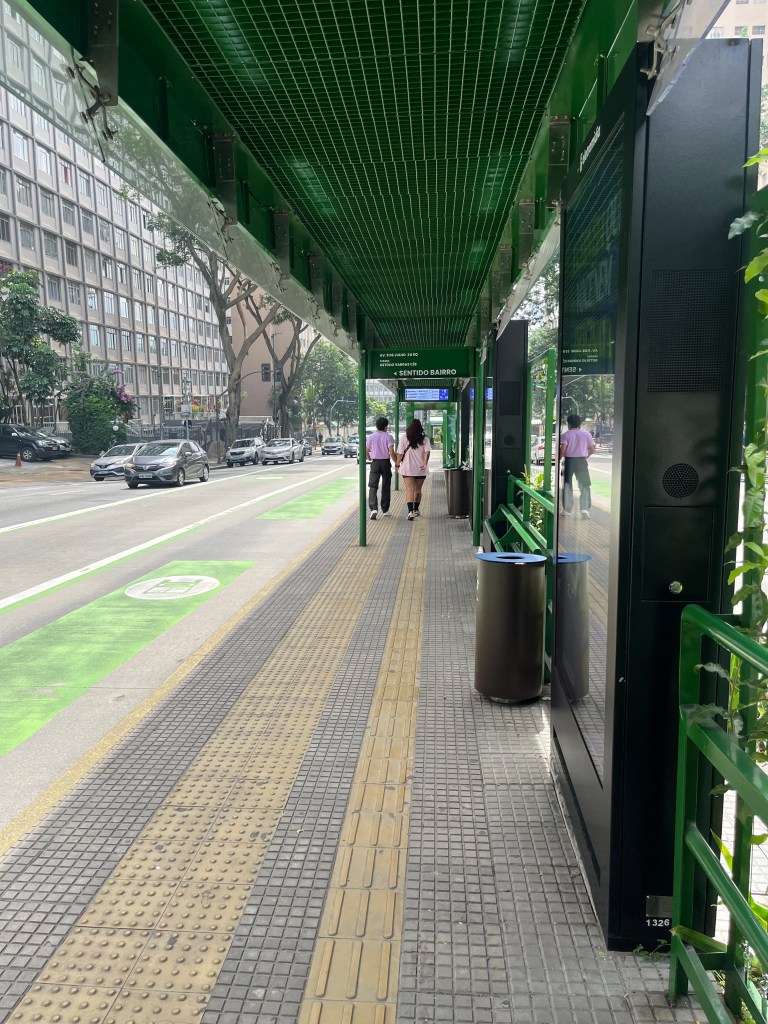
Top row, left to right: a bus approaching (front view); side view of a bus; an example of a specialized bus stop and segregated bus lane
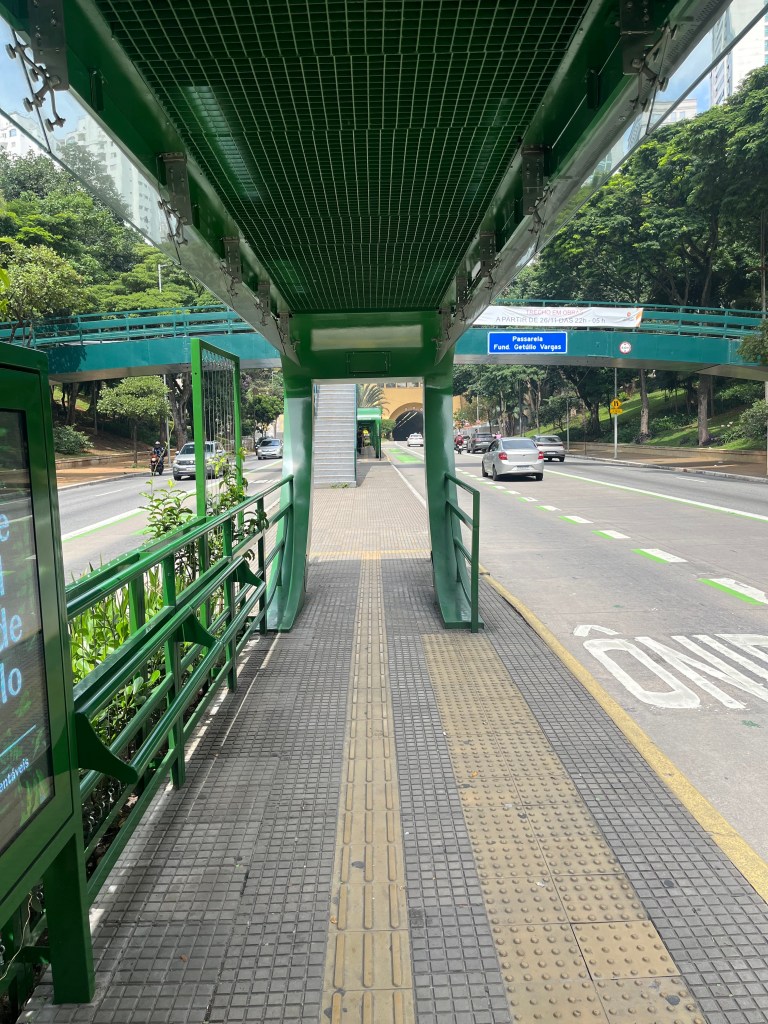
Bottom row, left to right: the same station just facing the opposite direction; a turnstile on a bus and the man who works it
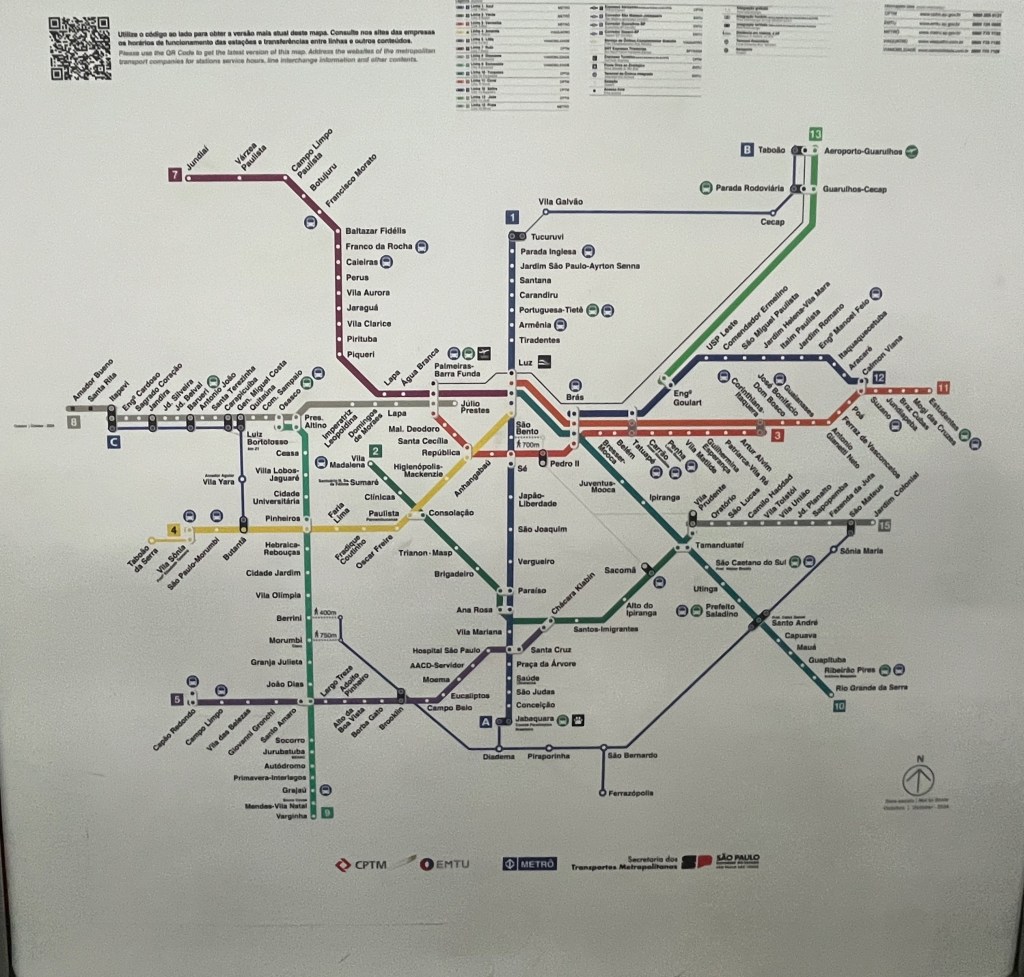
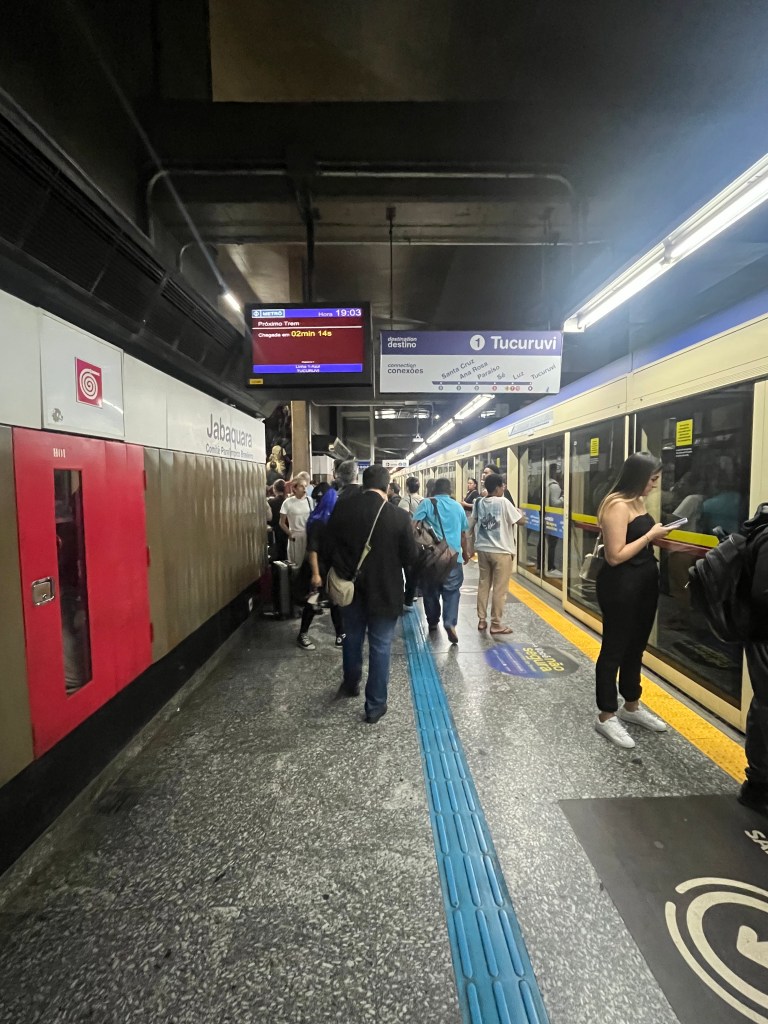
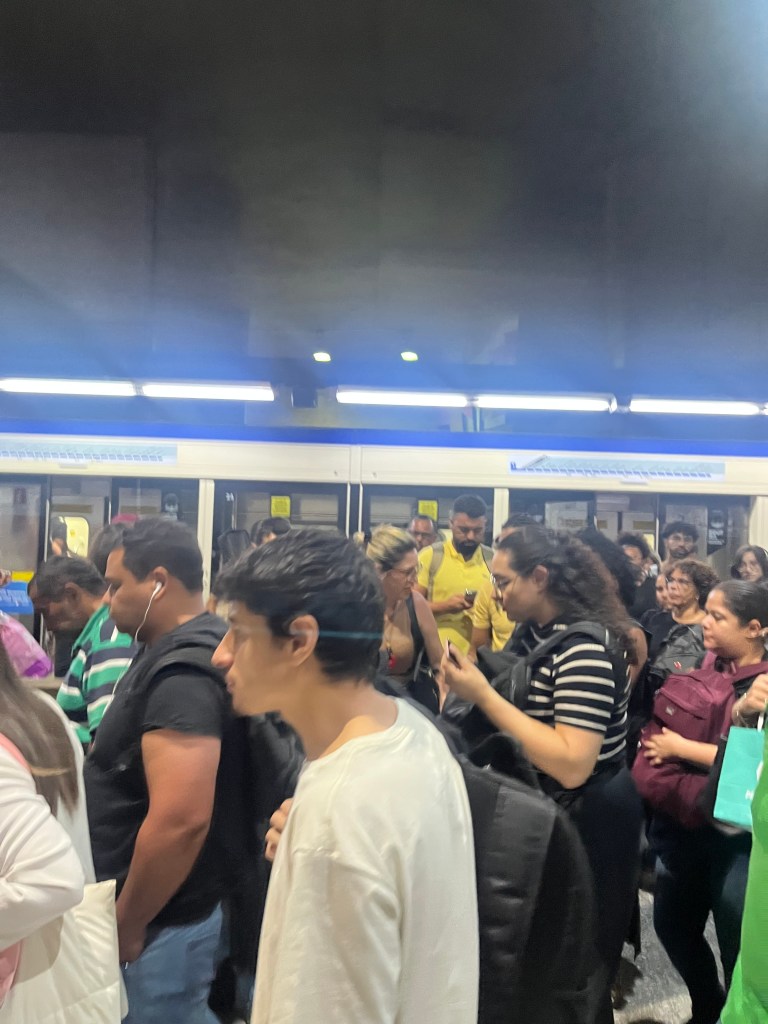
Besides buses, São Paulo features the largest rapid transit system in Brazil, and the third largest in Latin America after Santiago and Mexico City. The rapid transit system includes both a subway system and a commuter rail system that link to each other. The subway network covers 46.9 miles (75.5 kilometers) and has 65 stations served by five lines. The commuter rail network covers 162.1 miles (260.8 kilometers), has 90 stations served by seven lines. In 2025, the average daily ridership of this system was 4.2 million with more than 1.2 billion riders using it in the calendar year of 2025. When we rode the subway, we noticed that during peak hours, a new subway came every minute and a half on average.
Top row, left to right: a system map of the subway; a view of a subway station platform; a crowd of people during rush hour that does not do justice to how many people were in the station
Video of a subway approaching
Initially, Yahm and I were supposed to take a day trip to a coastal town called Bertioga, just 78 miles (126 kilometers) south of São Paulo. The goal was to hike around a state park called Restinga de Bertioga. The park is an extension of the massive Parque Estadual da Serra do Mar (Serra do Mar State Park) that protects the largest remaining tract of Atlantic Forest left in both Brazil and South America. Restinga de Bertioga protects the coastal restinga forest types that used to cover large swaths of southern Brazil’s coast, as well as mangroves and other coastal vegetation. While Yahm was intrigued to hike the forest, she had a sneaky feeling that our plans would be foiled as they always seemed to be anytime I tried to hike in the Atlantic Forest. The only exception was when I visited Rio’s Tijuca National Park because the park is located in the city. I loved hiking through Tijuca and wanted to explore the Atlantic Forest one more time, so with my determination and Yahm’s semi-hopeful blessing, I set off to Bertioga.
The day started out normal as I took the almost three-hour bus ride from São Paulo’s Jabaquara Terminal to Bertioga. As the bus approached Bertioga, the first stop consisted of three benches, a small ticket window, and a sleeping stray dog. According to my map, this was not the central bus station, but I saw quite a few people getting off the bus. Typically, I prefer to get to a town’s central bus station since it is usually large and more geographically convenient to venture off from. On this day though, for whatever reason, I decided to get off the bus and figure out how to get to the park. After the bus left, I realized I forgot my hat on it. That hat, the one that makes me look like a park ranger and is in so many photos, was one of my favorites and now it’s on a bus in southern Brazil somewhere. Forgetting my hat was the beginning of a day that would into a comedy of errors.
I approached the ticket office and asked what was the best way to get to Restinga de Bertioga. The woman I spoke to recommended a ride share rather than a taxi. When the driver arrived, he asked me where I was going. This seemed odd as I had put the destination in the app. When I explained it to him through a translation app, he looked at me with wide eyes. He explained that there is no road into the park. I asked him to drop me off near the entrance and I would walk. He didn’t reply to that and instead started driving to a small shopping center nearby. He parked the car, turned to face me, and said that my request was not going to be fulfilled. I was pretty confused and aggravated. I just lost my hat and now my driver is saying he can’t take me to the park that was the whole reason I came out here. He responded by listing off other natural areas he thought I would enjoy. I was thrown off by this, but eventually settled on him taking me to Praia Branca, which I would need to access via a free ferry. As we drove to the ferry landing he asked me if I had organized a tour of the park with a guide. When I told him that I had not, he looked very concerned and I would later find out why. Eventually, he dropped me off in front of the landing. I tried to pay for the fare, but he refused to accept my money. I eventually gave him some reals (the Brazilian currency) for his time and help.
Photos, left to right: a view of the barrier island that Praia Branca sits on; a view of the ferry
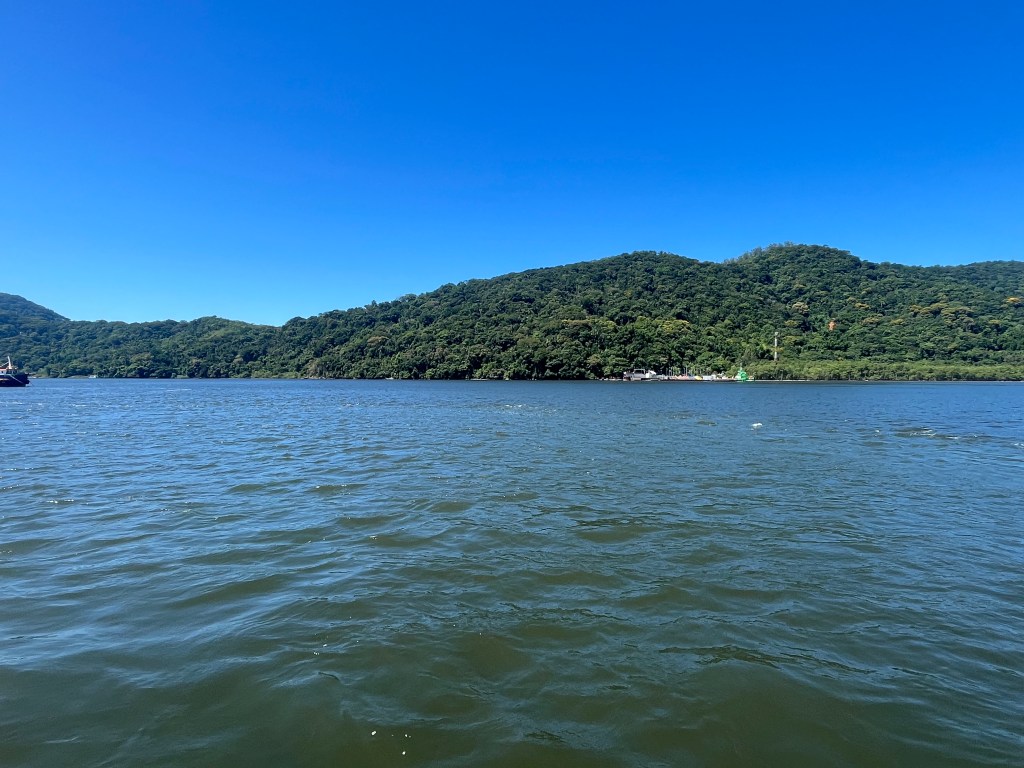
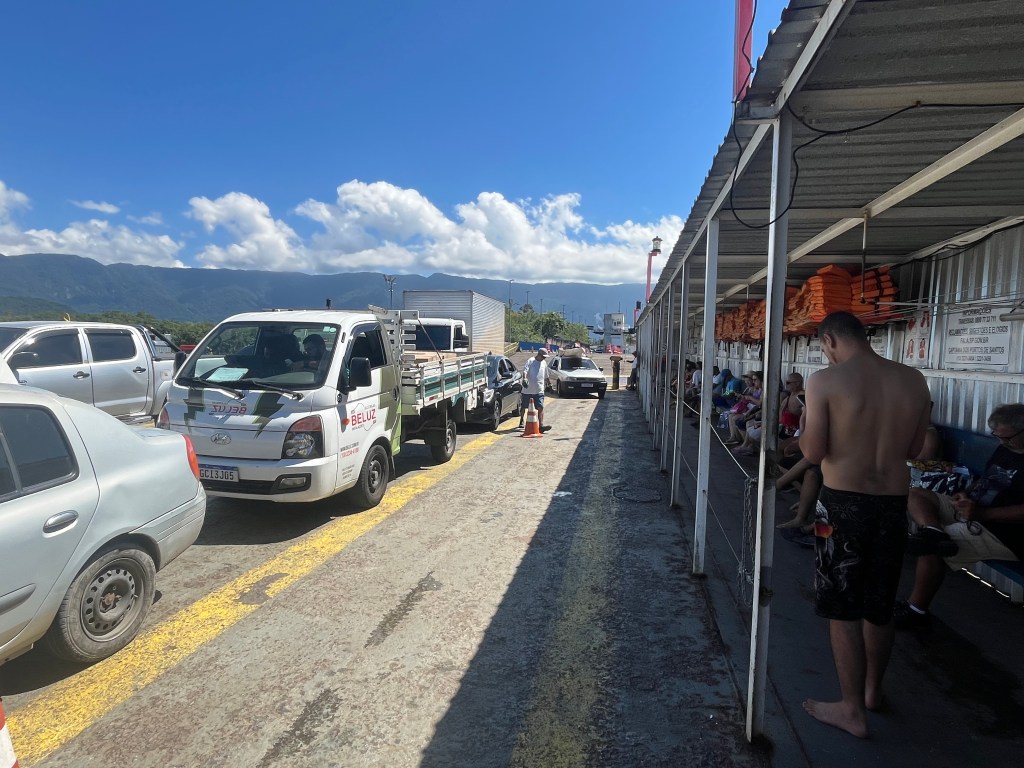
The very helpful driver had explained to me beforehand that the ferry would take me to a barrier island. From there, I would walk up a short hiking path to get to Praia Branca, a popular semi-secluded beach. While on the ferry, one of the workers was making the rounds with everyone on board. When he saw me, he seemed to know I was not Brazilian. In heavily-accented English, he asked me where I’m from. I answered the United States, and he let out a big laugh and elbowed two shirtless guys next to him. They shared some cracks in Portuguese and then he went to the front of the ferry to prepare it for docking. I did not think much of this, though I assumed they were joking about the lone gringo visiting this very Brazilian beach community. As I headed off the ferry, the same worker told me to stick with the shirtless gentlemen he was laughing with earlier as I walked to the beach. I told him thanks but that I was okay. He insisted and as I walked off the dock, the two men came up to me and told me they would accompany me to the beach.
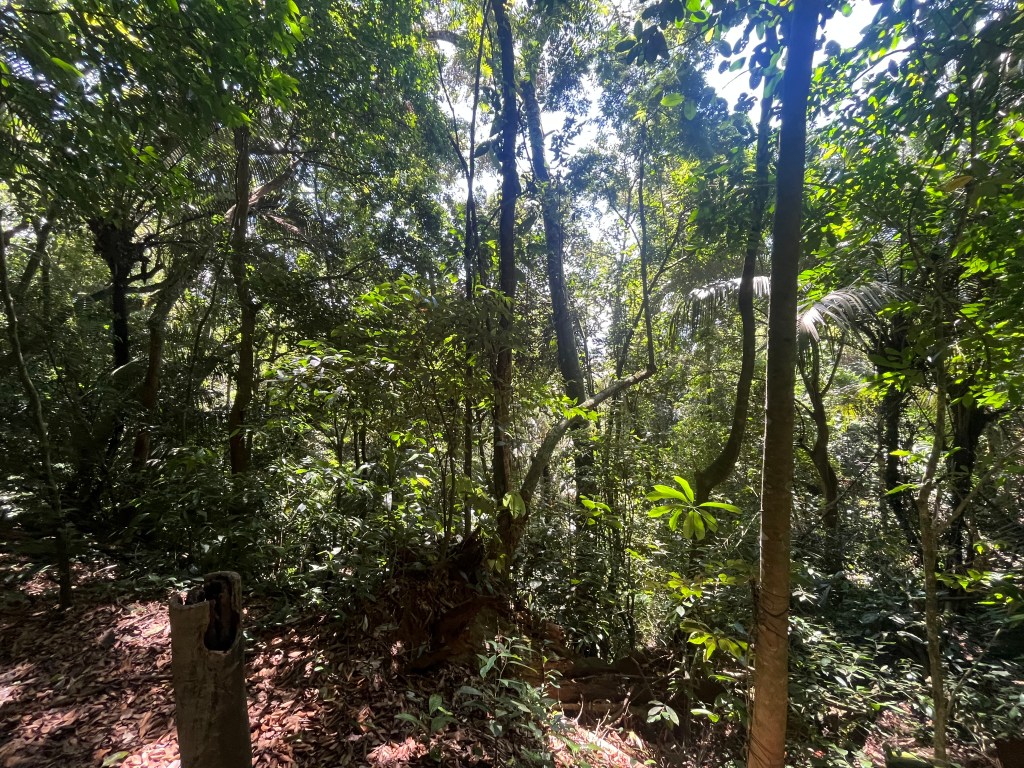
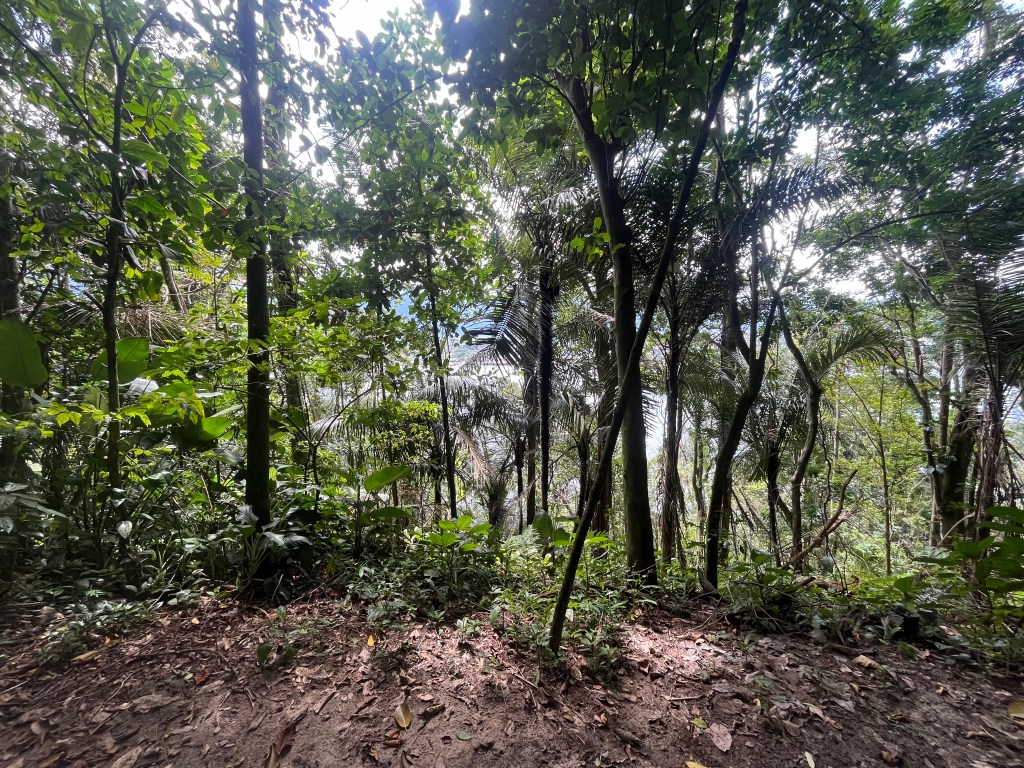
I was quite frustrated. I appreciate that they thought I may need help, but I did not. I have been traveling through this region with Yahm for months and I had a sense of where danger lies. Plus, I wanted to have a solo hiking trip. These two guys were not having it. Both of them were wearing swimming trunks and flip flops, smoking cigarettes and drinking beer. I was offered a beer, a cigarette, and water. I said no to all three. As we walked through the forested path en route to the beach, I realized this day was not going as I had wanted. The path was pretty, but heavily traveled so non-avian wildlife was not present. Some bird life could be heard, but when I tried to look at them through my binoculars or capture them on camera, the two men who accompanied me would also stop thinking I wanted them to take a photo of me. Other beach goers looked at me wondering why I was blocking the path. Below are some photos of the path.
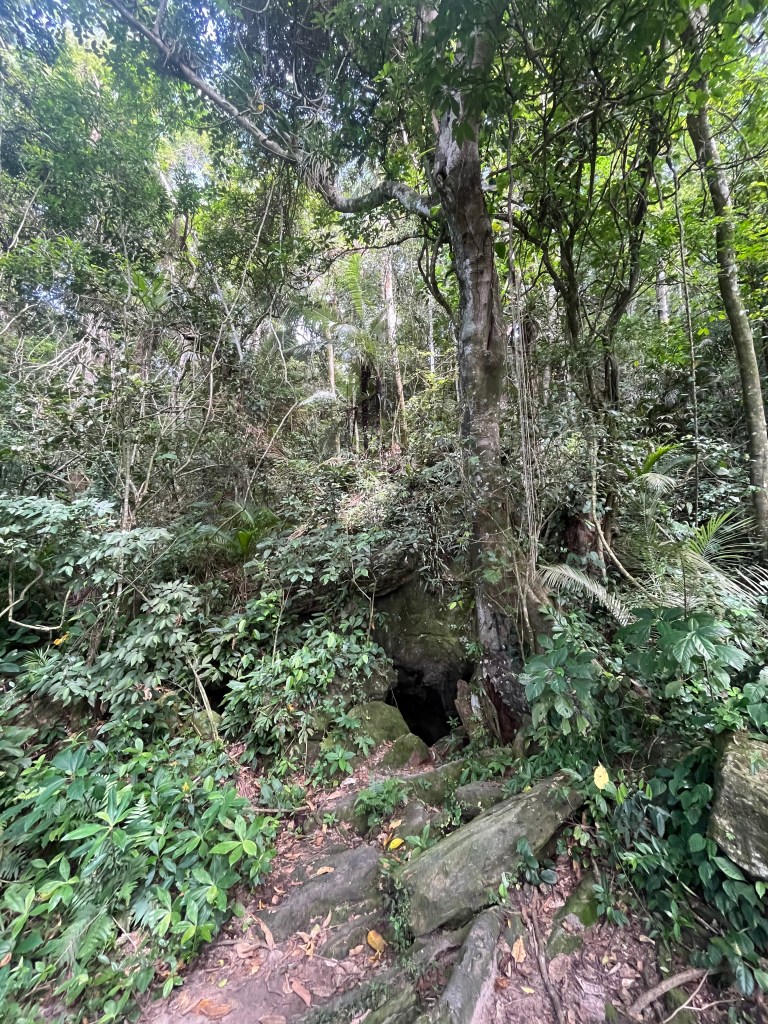
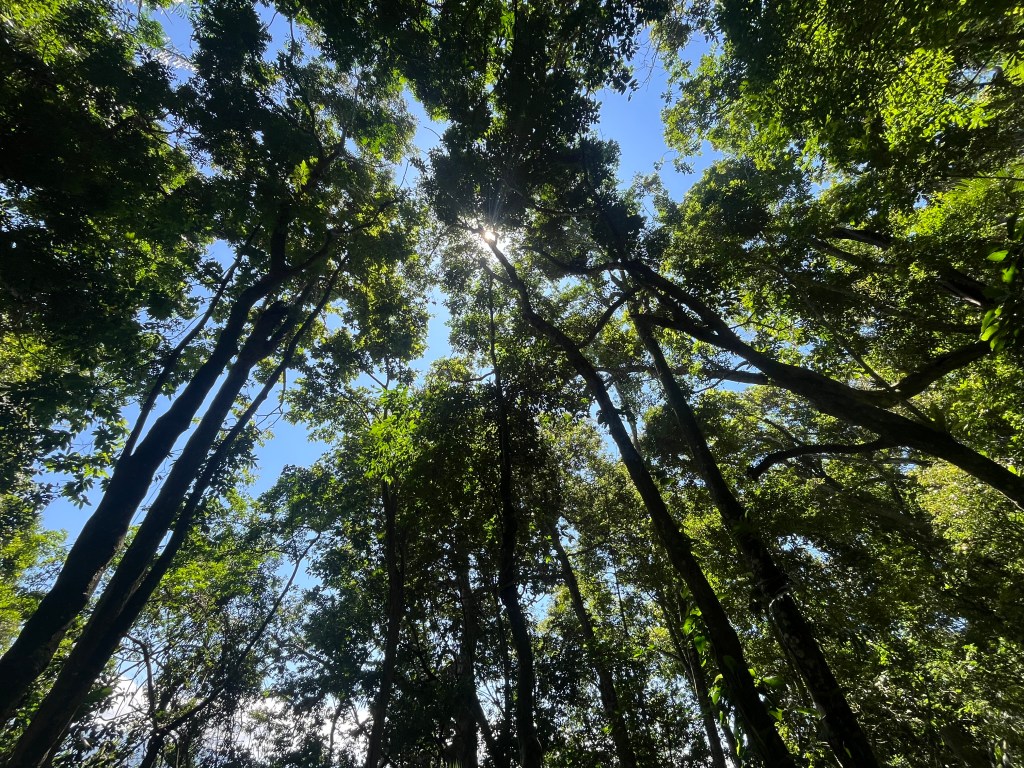
As I walked to the beach, I realized how silly I must look to the locals. I was wearing cargo hiking pants, a long sleeve shirt, a neck gaiter, and a backpack. Everyone else was wearing swim suits and walking in flip flops or no shoes. I was prepared for hiking in a coastal forest, not for the beach. As we wound a bend in the main path, I saw an alternate path for climbing into the forested hills and away from the coast. I told the men accompanying me that I would go on this path and thanks for everything. They told me to stay with them and not go up there. I told them I wanted to hike in the forest. A couple that was walking behind us started talking to “my bodyguards” in Portuguese and the man in this couple translated their words into English. He said that this path winds into some pretty thick forest with spiders and snakes. I told him that was fine; I know how to hike and be aware of dangerous wildlife. He translated this to the shirtless guys and they responded in more animated tones. The English-speaking man told me that this area has robbers and criminals that lie in wait. The shirtless guys come here a lot and that, unfortunately, the forests are not well patrolled, so robbers wait to rob people. My lack of Portuguese could make me a bigger target. I showed them the knife I always carry with me and one of the shirtless guys pantomimed a gun. I did not need a translation. I took the hint and continued to the beach with these men.
At this point, I am sure these guys thought that I am some silly, naive gringo who has a death wish. I really don’t. Admittedly though, I likely would have been in trouble if they were not with me. As we got to the beach they walked to a bar and sat at a table. Once again, they offered me a beer and I, again, said no. I told them what I wanted to do, hike around and clear my head. They told me to stick to the beach and keep my phone in my pocket (standard advice in this part of the world). They mentioned that if I feel like I am in any trouble, to find out where the military police are and talk to them. They told me not to take matters into my own hands with criminals. Rest assured readers: I would never be a vigilante and start using my knife on a group of people with guns. They wished me luck and told me they hoped to see me around. I headed down the beach and looked for some hiking opportunities. There was a beautiful little forested islet, but to cross to it I would have had to walk through the ocean. However, I did not want to get soaked while wearing cargo pants and hiking boots. Instead, I opted for a little hill that lead me to the next beach.
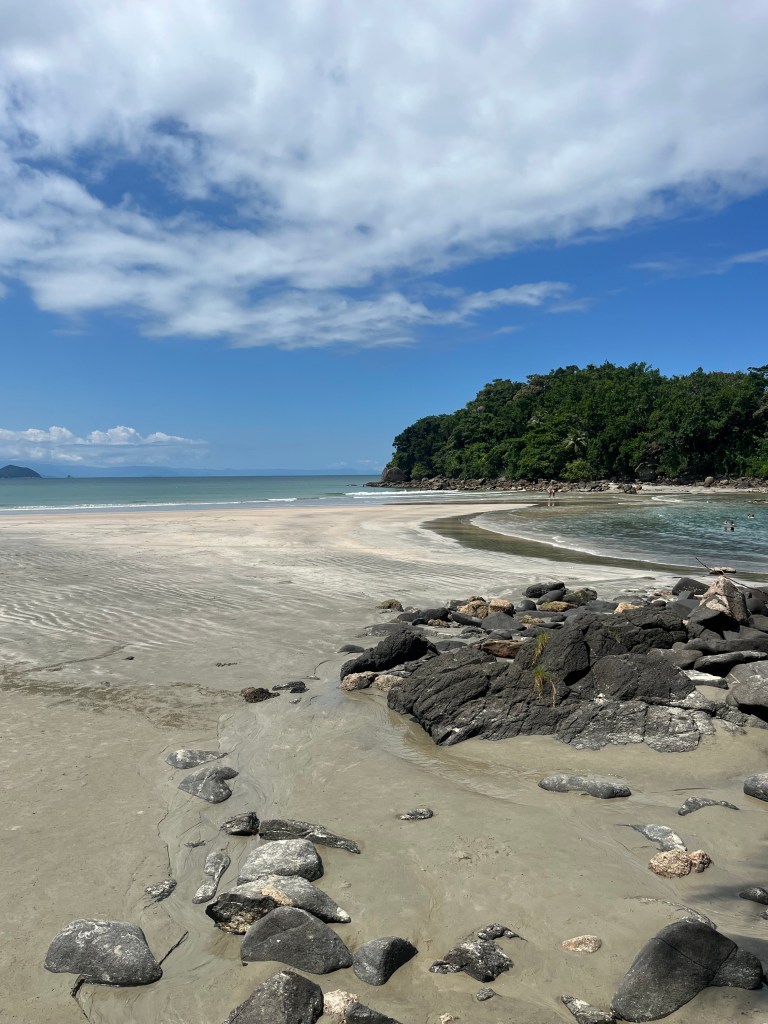
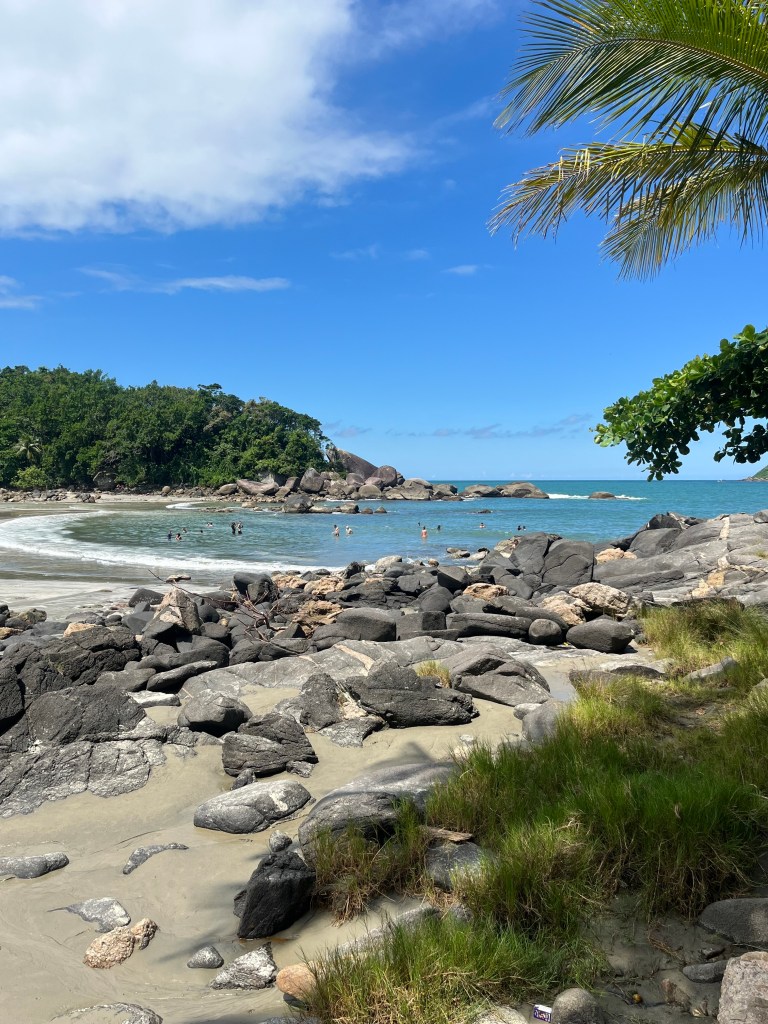
It was a short hike and not very satisfying. I looked at a map of the area on my phone and realized that if I hiked back to the ferry and took it back to Bertioga, I could get a ride share to Restinga de Bertioga. I could still hike in the park before it got too late in the day and catch a late-afternoon bus back to São Paulo. My day could still be salvaged from being a complete disappointment. Before I headed back, I knew I should eat lunch so I could just power through. I ordered two hamburgers that were filling, but not very good. I fought off bees while I was eating, and I managed to finish my food without getting stung. Afterwards, I took some photos of the coast. Brazil has some of the most gorgeous coastline I have ever seen.
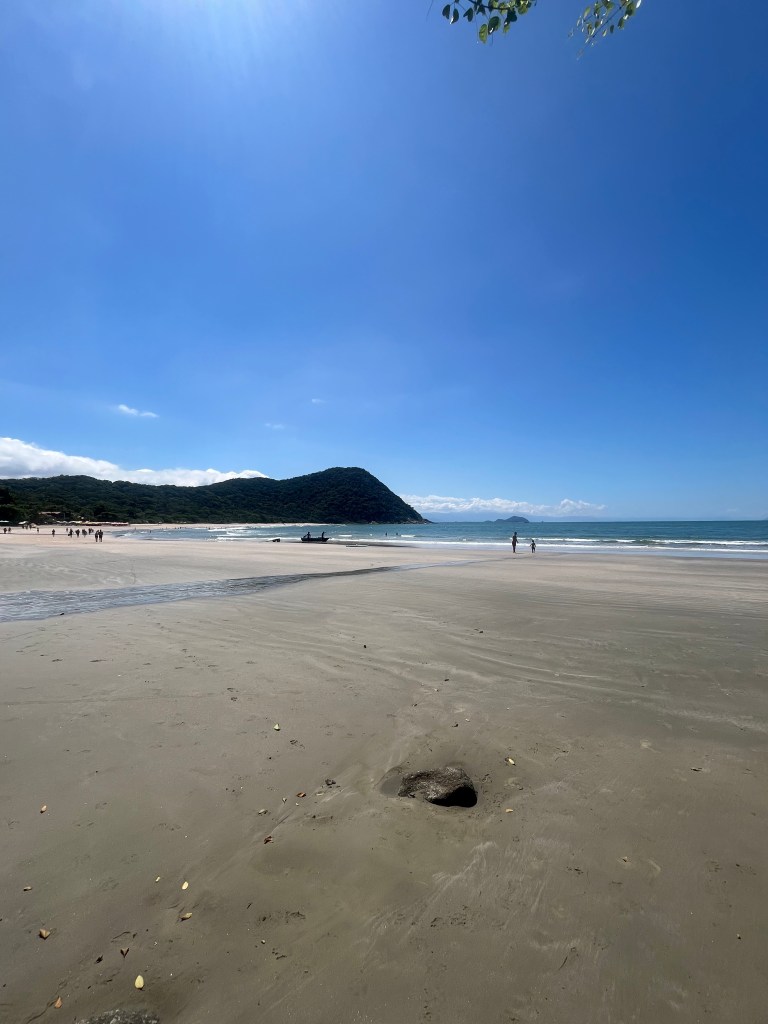
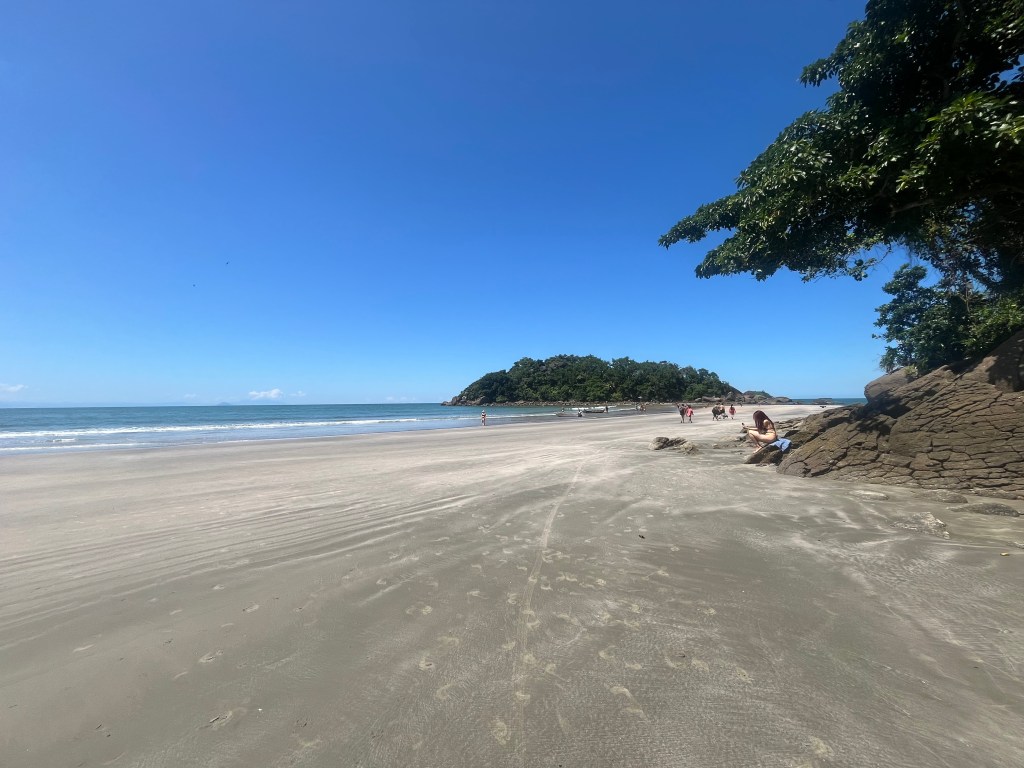
As I headed back to the path to return to the ferry, who do I run into? The two shirtless men! They saw me first and waved at me, then proceeded to approach. I was surprised, and laughed to myself about how I could not seem to shake these dudes. As we walked back towards the ferry, they asked me if I liked the hike and the coast. I said it was beautiful and now I am ready to head back. I put a bit of pep in my step and was able to lose them. They had called for me as I got too far in front and I shouted back to them that I was okay. When I looked back I saw they had stopped trying to keep pace with me. To them I was probably an ungrateful American who did not appreciate that they were trying to make sure I had a good time and not get robbed. Again, it is not that I did not appreciate them; I actually did. These guys were not creepy nor did they feel like con artists; they seemed like genuinely cool dudes who would be fun to hang out with despite the language barrier. However, I wanted alone time, so I kept up my pace to get to the ferry in time.
Once I got onto the ferry I befriended two young guys that both work on the boat. One guy spoke very broken English despite having recently lived in Ireland for a year, while his co-worker spoke very well but was embarrassed about his grammar and accent. I told him he has nothing to worry about, since I cannot speak Portuguese. We conversed for much of the ferry ride about our travels. I asked if they had heard of the Restinga de Bertioga, but neither had. When I told them about my experience with the ride share driver earlier in the day, they shrugged and said I would probably be fine.
Once we got back to the dock in Bertioga, I thanked both of them for the chat and walked towards the dock’s front gates. Before ordering a new ride share, I looked at my map and the accompanying photos. Because I knew a car could not drop me off at the park, I chose a nearby restaurant as a drop-off point. As I scanned the photos that illustrated the route, I saw that I would have to walk on a highway and through a community that looked a bit rundown. This gave me pause. I decided to ask the guards at the dock’s gates what they thought. None of them spoke English, but one guy spoke Spanish. I’m not fluent in Spanish, but I can get by in a basic conversation. I asked this Spanish-speaking gentlemen if he knows the park and he said he did. Aha! Success! I asked him if it is dangerous to go there. He looked at me and asked if I meant going without a guide. I said yes, without a guide. He immediately replied that going alone without a guide was an exceptionally dangerous proposition. Now I know why my ride share driver earlier that day was looking at me with such wide eyes: he was trying to save my life.
The guard explained that the park abuts a favela (slum) that houses the former builders of the city who have not had much work in recent years. Even when there was work, this was a poor community. Most folks are not criminals, but there is a criminal element there and they rob people. To get into that park, it’s best to do so with a guide for three main reasons. First, it’s a very thickly forested area and the guide will identify wildlife while avoiding danger much better than a lone hiker, even an experienced one such as myself. Second, the guides for the park are usually locals hired from the favela and they know which roads are a no-go. Moreover, as symbols of community pride and hope, gangs will not bother them or their visitors. Third, guides would have gotten me in and out of the park before nightfall, which, at this point, was four hours away. Because most of the park is wild and remote, cell service dies quickly. If I get lost, especially at night, I would be in big trouble. After that was explained to me I learned an important lesson: when tour packages for natural spaces are available in Latin America, as they were for Restinga de Bertioga, there’s a reason. If solo hiking or non-guided tours are safe, it is usually well-known. Tijuca near Rio and Tayrona National Park in Colombia were that way. In other words: if there is a guide, get a guide.
The day was a bust. I thanked the guard and accepted the reality that I was not going to hike in the Atlantic Forest. Instead, I took a three-hour bus ride (each way) to lose my hat, walk to a beach, and eat lunch. Oh well. I ordered a ride share to the central bus station of Bertioga since it was time to go home. While in the car, I had a feeling I should check my phone and saw that the estimated arrival time was 30 minutes, which was far too long given how small Bertioga is. Well, that’s because I entered the bus station in Guarujá, a town 31 miles (49.8 kilometers) away. I managed to get the driver’s attention and change my route before he drove too far out of town. I got to the Bertioga bus station and purchased a return ticket to São Paulo. I thought the trials of the day were done, but the comedy of errors was not quite over.
As the bus drove on the highways that crisscross the southern edges of the São Paulo metropolitan area, the driver pulled off to the side of the highway. After about 10 minutes, the driver continued on the journey. Fifteen minutes later, and only 30 minutes away from the bus terminal, the driver stopped along the side of the highway again. This time things were tense. A group of older women in front of me asked the driver what was happening and became agitated. The driver was incredibly soft-spoken, so the older ladies took it upon themselves to yell his explanations to the back of the bus. Everyone seemed quite frustrated.
Obviously, this was all in Portuguese and I didn’t know what was happening. One of the older ladies realized I was from the United States, so she asked if anyone on the bus knew English and pointed at me. The whole bus turned to look at me with apologetic faces as if it was their fault the bus had broken down. I assured them that I was fine and just needed some clarification about what was happening. A young guy walked to my seat and explained that the bus broke down and two other busses were coming to pick us all up. We could wait on the side of the road or inside the bus. I chose to stay inside the bus, though some folks went outside.
Eventually the buses came and we could all fit into one. Once seated, the older gals that had helped get things translated for me gave a look that said, you see everything is fine. I appreciated them and the fact that every other rider on the bus smiled at me reassuringly as they walked by my seat. Again, the sense of community in this country and this part of the world is amazing, something people in the United States could look to copy. The rest of the half hour drive to the bus terminal was uneventful (thankfully). Once I arrived in São Paulo, I took the subway back to the neighborhood Yahm and I were staying in.
While it was not the hiking day I wanted, it was still a funny and memorable experience. I definitely learned that I need to be less reticent to utilize guides if they are recommended, to listen more, and be less cocky. Yahm has an upcoming post about our culinary experiences in São Paulo, and we’re working on an extra overall recap post of our journey. Be sure to like, comment and subscribe to Traveling While Introverted so you don’t miss our next post!
 Traveling While Introverted
Leave a comment