Before I dive into the delicious food we ate in São Paulo, I want to give a quick book update. Since the last book exchange I completed in Buenos Aires, I finished reading 1491 by Charles C. Mann. The writing is very engaging and methodical without being too overwhelming. What I really appreciated was that Mann presents an idea that sounds logical and in line with what has been taught in schools for decades, only to turn around and point to the cracks in the theories to make readers question what they think they know. One of the more poignant points he makes is the devastating impact of disease on Indigenous peoples. Having lived through the Covid-19 pandemic and its legacy, it’s very possible to imagine how smallpox quickly spread after initial contact and killed millions of people in a very short time. By the time Europeans began their colonial settlement projects throughout the continent, whole tribes and cultures had already collapsed. The image we have of nomadic, loosely-connected tribes traversing North and South America is only prevalent because that is what Europeans saw once they could plant their flags and build forts. (Apparently, tribes didn’t let Europeans settle on land for a surprisingly long time and were only allowed to settle once their numbers plummeted.)
While I was reading 1491, I encouraged Adam to start reading Transcendent Kingdom by Yaa Gyasi. We both finished reading it by the time we landed in the United States. Adam isn’t much of a fiction reader, so he was surprised by how much he enjoyed reading this novel. I think we both related to the protagonist because we too are the children of immigrants. (Both of my parents and Adam’s father migrated to the U.S. before we were born.) Navigating the cultural gaps at home versus the outside world can feel like trying to walk between raindrops and so much of Transcendent Kingdom is about coming to terms with that tension. The ending was a little disappointing if only because it felt like Gyasi ran out of steam and needed to wrap things up. (Which is my complaint about all of Jane Austin’s novels, by the way.) But if you don’t mind a slightly meh final chapter, the rest of the novel is fantastic. I still think Homegoing is a better novel and I’m going to try to convince Adam to read it.
I might wait to exchange Transcendent Kingdom until we’re settled somewhere in the U.S., especially since now I can visit the local public library. I am so excited to visit the library! In case you’re wondering: my strategy is to wander around the stacks and let serendipity guide my choices. Unless I’m searching for something specific, I’ll usually check out 4-6 books at a time. Being the picky person I am, I’ll start all of them but only read one or two all the way through. This way, I have choices ready so that I don’t need to run back to the library after a week or two. I find having a short stack to read is encouraging. Adam, on the other hand, is much more deliberate and only chooses one or two books from the library at a time.
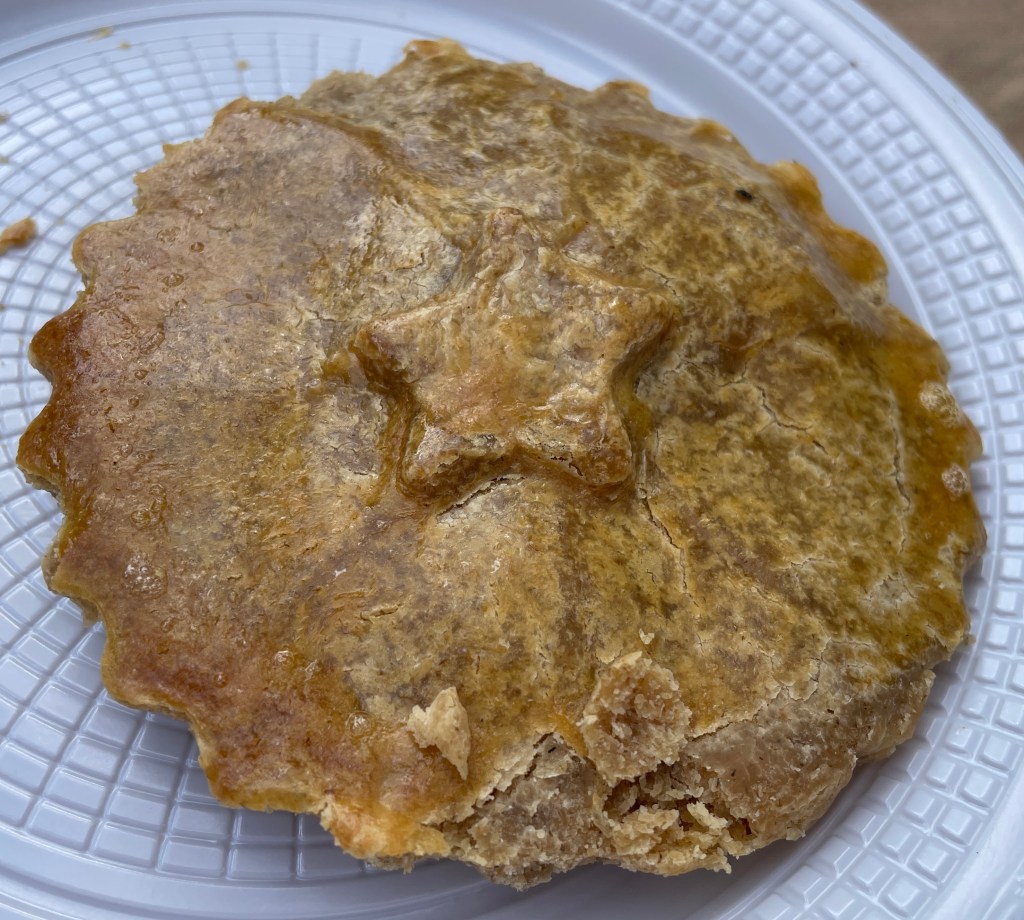
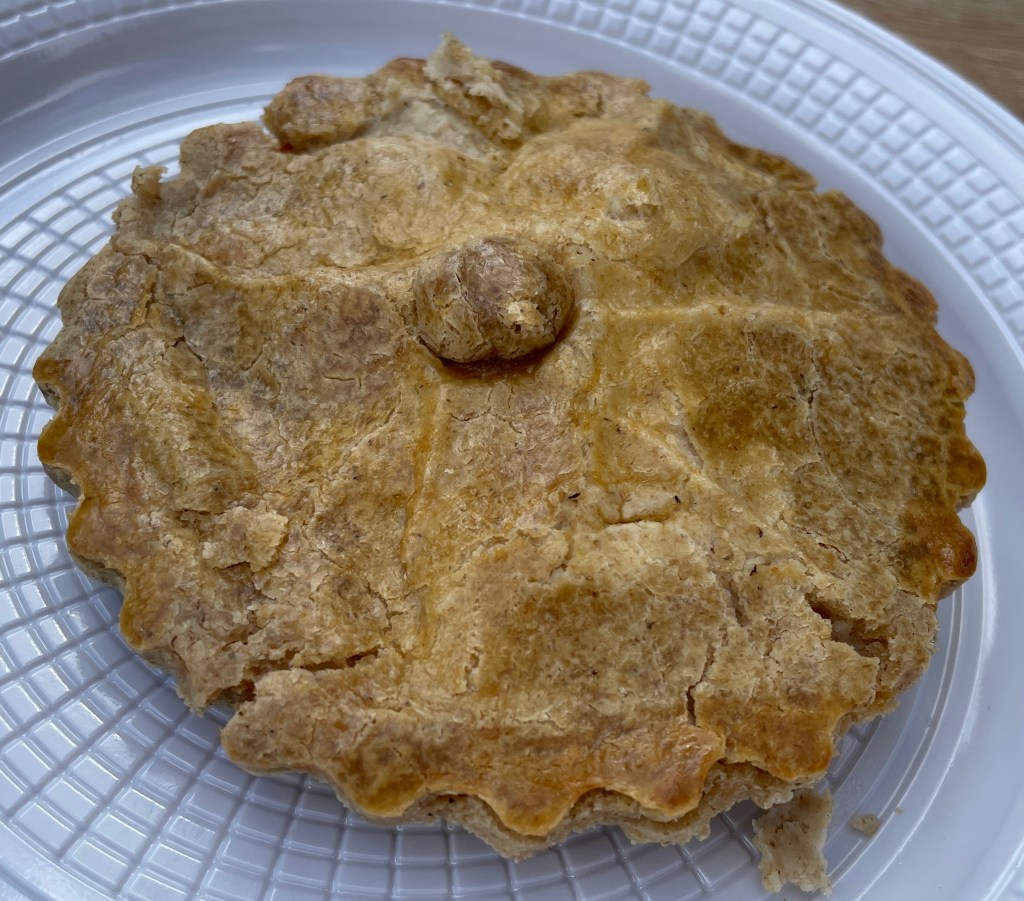
Initially, I wasn’t planning on taking photos of our meals in São Paulo because y’all have already seen how delicious Brazilian food can be. But that changed when we had lunch at the Butantan Institute. We wandered over to a food truck selling Argentinian empanadas and they had gluten-free and dairy- free options! The choices were either chicken or vegan with hearts of palm. I ordered one of each, especially since I am mildly obsessed with hearts of palm. Once we sat down, the person running the food truck gave us a bottle of hot sauce. Hot sauce! Finally! Adam ordered a few empanadas too, though he said the ones in Uruguay were better. Below are the empanadas I ordered, which were larger than I expected and kept me full for a significant part of the day.
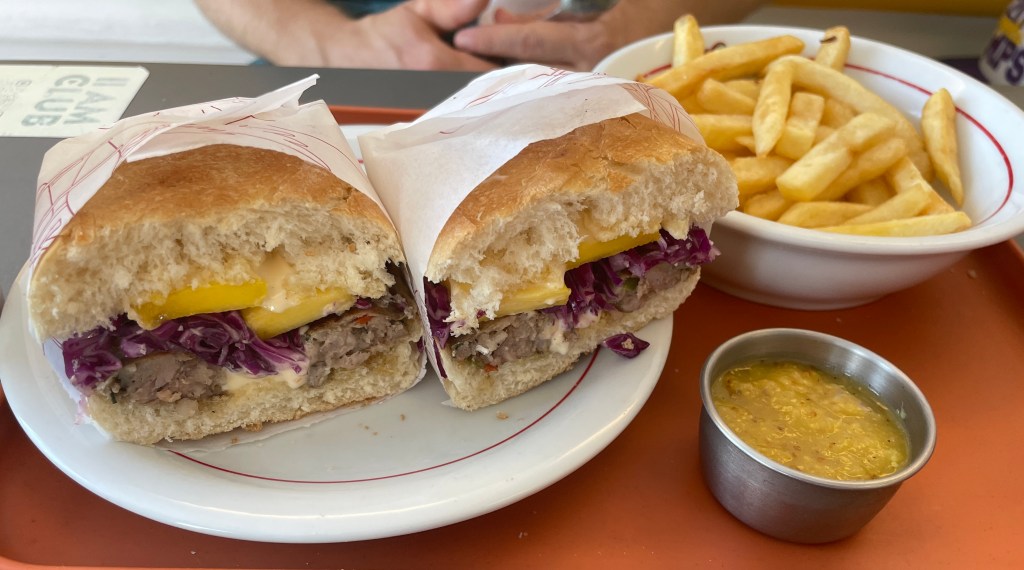
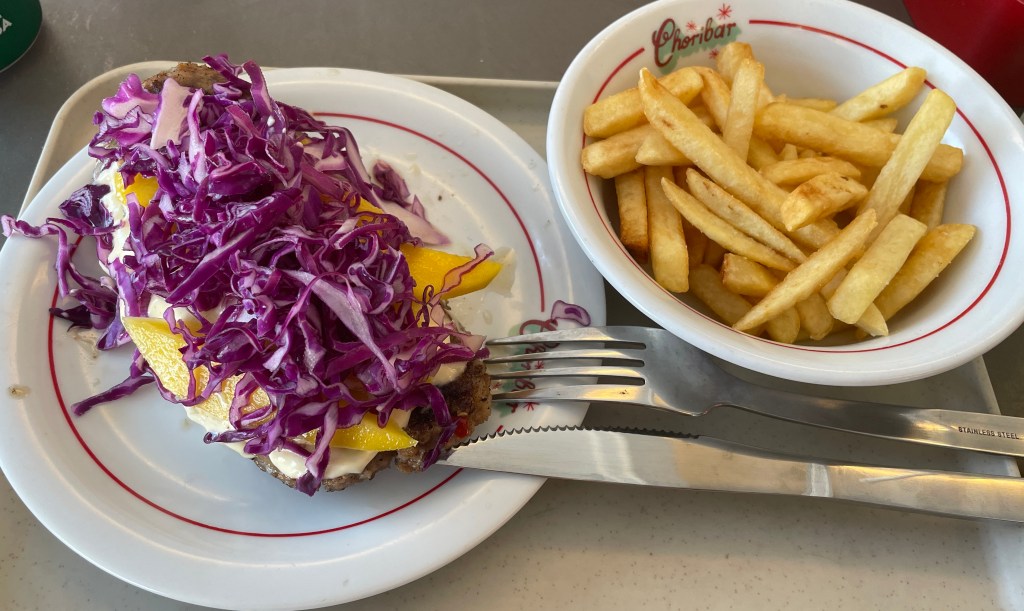
After visiting the Butantan Institute, we returned to our apartohotel in Pinheiros. We were a bit peckish but it wasn’t quite dinnertime so we decided to get a snack at ChoriBar. Not only are their sausages made in-house, but they’re made of Uruguayan beef which is some of the best beef around. They’re cut in half, slightly smashed, and put in a bun with all kinds of toppings. We ordered the same one, though I got mine without the bun. Both were topped with pickled mango, habanero mayo, and a purple cabbage slaw. Adam also ordered an extra side of pineapple mustard for his fries. It was very flavorful, if a bit too mayonnaise-y for our taste. Though, in all honesty, it tasted more like a chivito than a choripan.
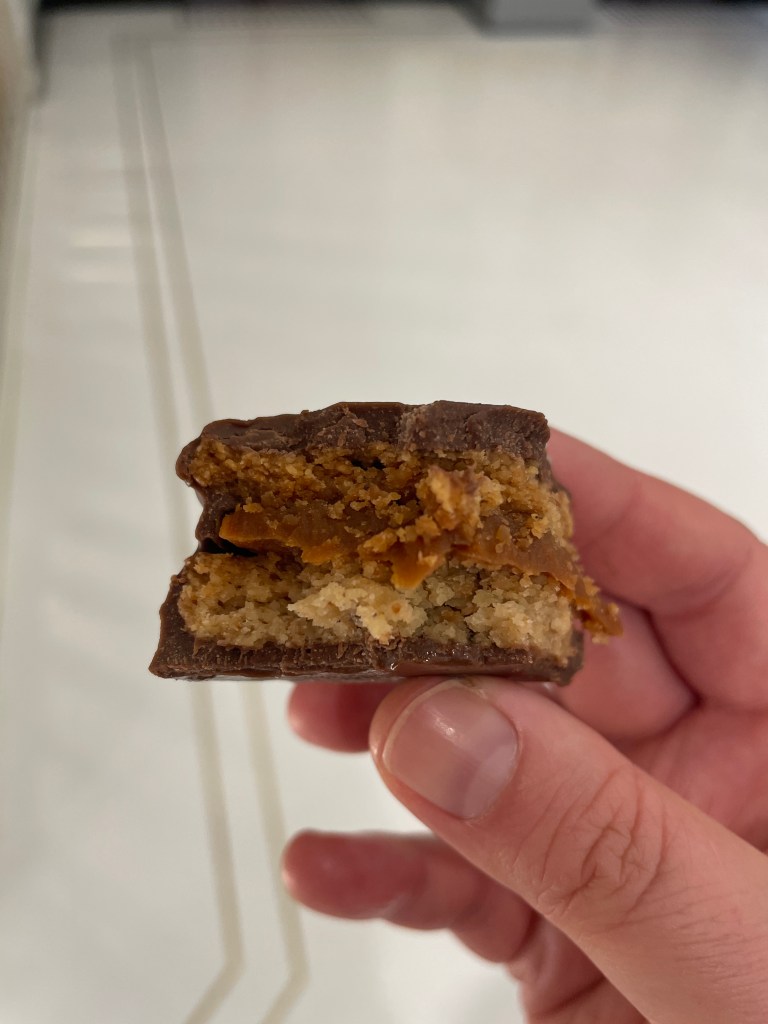
Speaking of random Argentinian and Uruguayan finds, I finally ate an alfajor! A random gluten-free and dairy-free cart at a mall in São Paulo sold them. I paid way too much for it (I won’t tell you how much), but it was a fun last-minute-we’re-on-vacation impulse food purchase.
Look at that cross-section!
Totes worth it.
By chance, we found a delicious Thai restaurant called Krapook Khao once we were in the Vila Mariana neighborhood. The restaurant itself was small, but warm and cozy. We started our meal by sharing tom khai gai soup that was filled with vegetables and chicken (left photo). For mains, Adam ordered khao pad nam prik pao (center photo) and I had the panang curry with chicken (right photo). Though the dishes don’t look very big, we ended up taking the soup home because we couldn’t finish it all. Thai isn’t always a top choice for us when we crave East Asian flavors, but it’s always been top notch throughout Latin America.
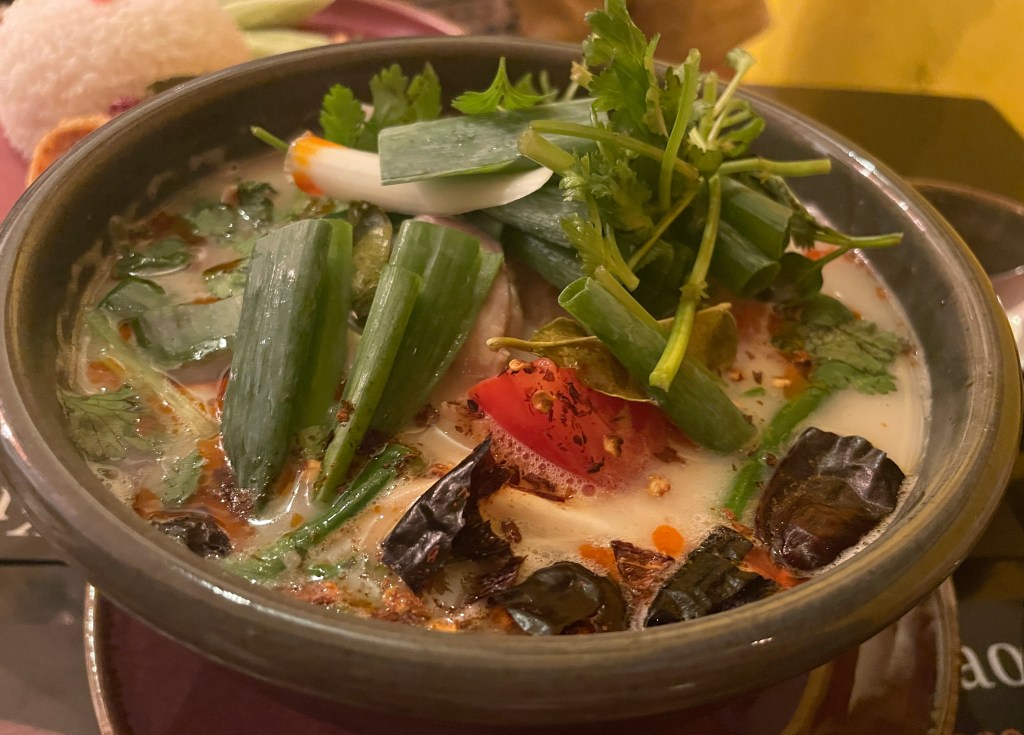
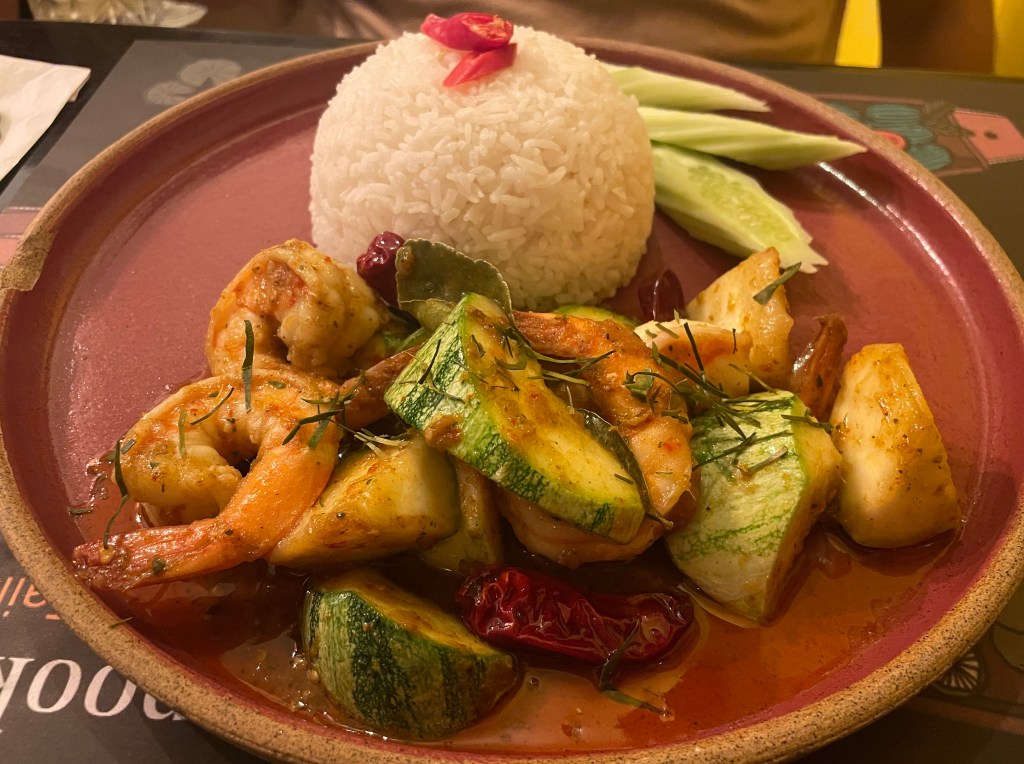
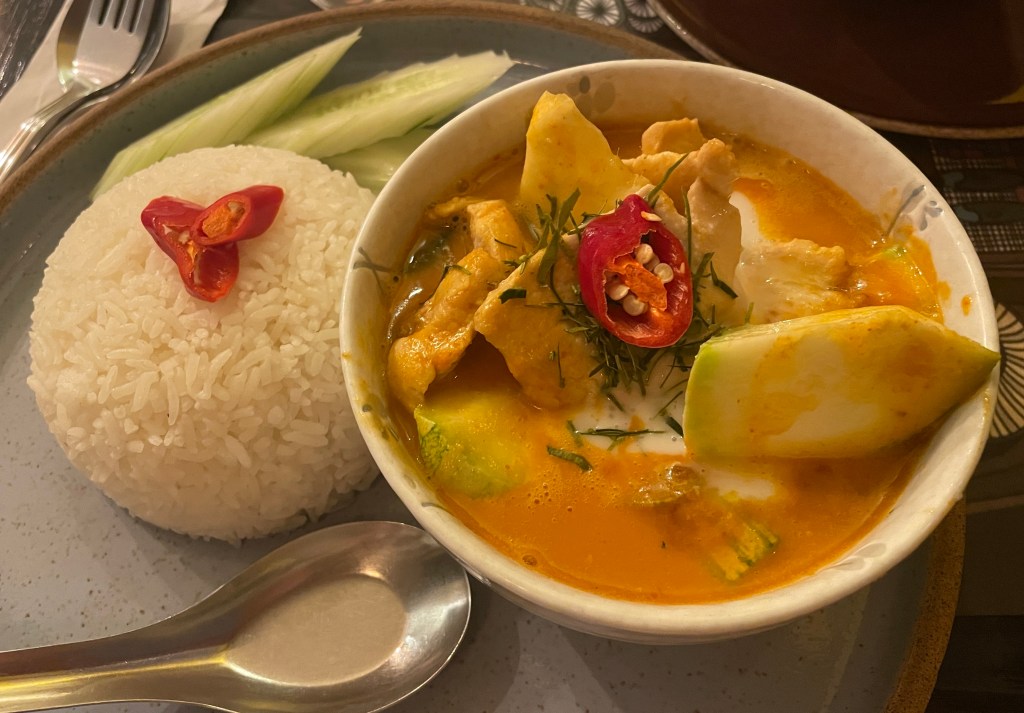
As a side note: we did eat at a Chinese restaurant that was okay, but not great. It had a lot of Szechuan-style style food, but it really lacked the heat we were hoping to experience. We also tried to eat sushi again. This time, we found a fantastic restaurant that didn’t dip everything in tempura or add cream cheese to every roll. I didn’t take any photos because I was too excited, but Restaurante Yamaga in the Liberdade neighborhood is excellent.
Of course we also wanted to eat some of our favorite Brazilian cuisine that we had during our last visit. When we were walking around Santos, we decided a traditional restaurant would be the best option for lunch. We eventually settled on Tasca do Porto, a Portuguese restaurant, not far from the Coffee Museum. When Adam approached our server and tried to ask for a table for two in Portuguese, the server asked him if he spoke English (in Portuguese). When Adam answered yes, he replied, “Then speak English man!” and laughed. Turns out, he’s Cuban and migrated to Brazil a few years ago, but he’s always excited to speak to English-speakers to practice. So, he spoke to us in English and we (tried) to answer in Spanish. We talked about Cuba, how much we wish we could visit his homeland, and what it is like to live in Santos.
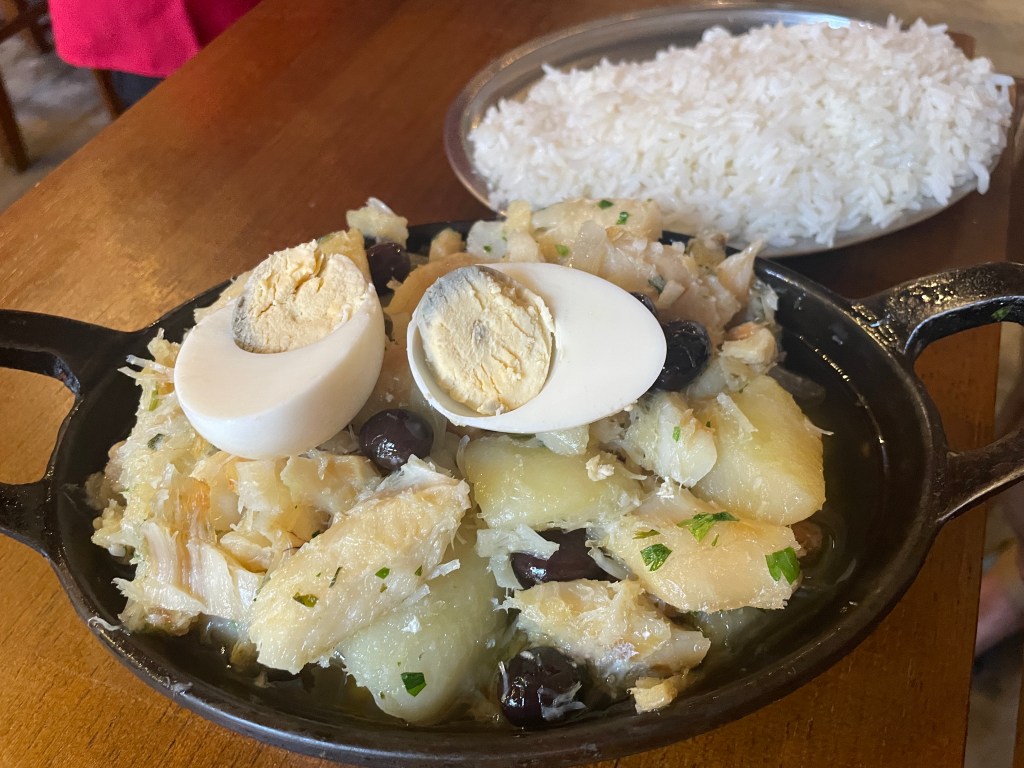
When it was time to order, he initially recommended a local specialty: grilled swordfish with pink shrimp, pumpkin rice, and farofa, the wonderful “sand” Brazilians put on everything to enhance flavors and textures. (It’s so addicting!) Mains are intended to be shared so the portions are generous. We told our server about my food allergies and he frowned. I asked him if it was possible to make a few substitutions and he said, yes, but that it would be complicated and he was worried the kitchen might not make it right. Instead, he recommended the classic bacalhau: salt-cured cod served with potatoes, olives, a hard-boiled egg, and a side of rice. We weren’t disappointed.
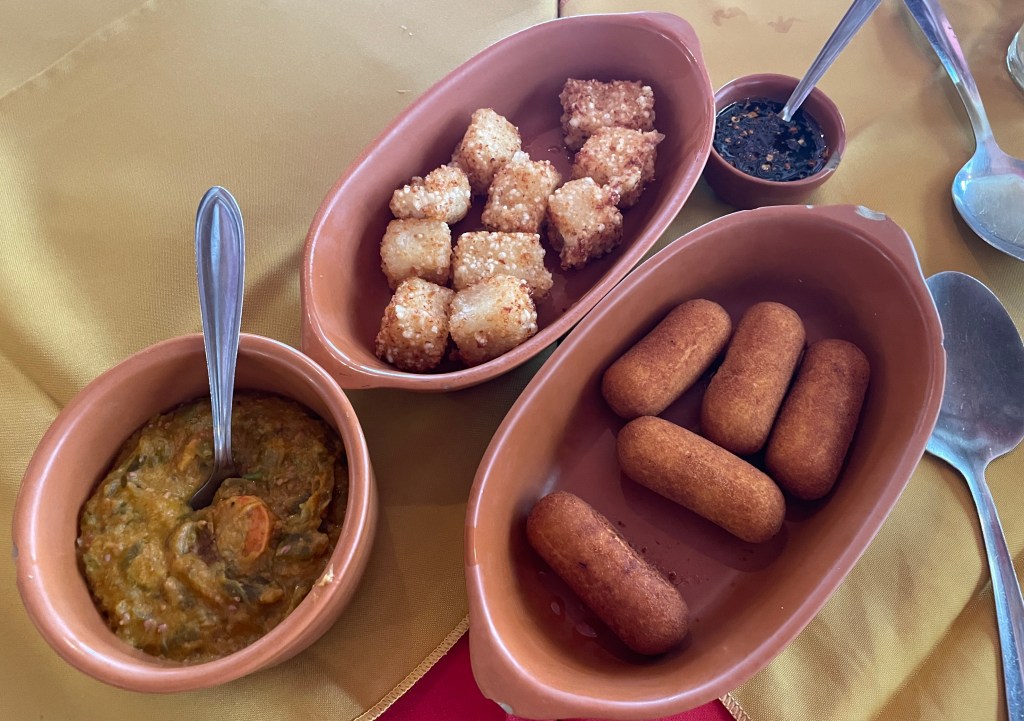
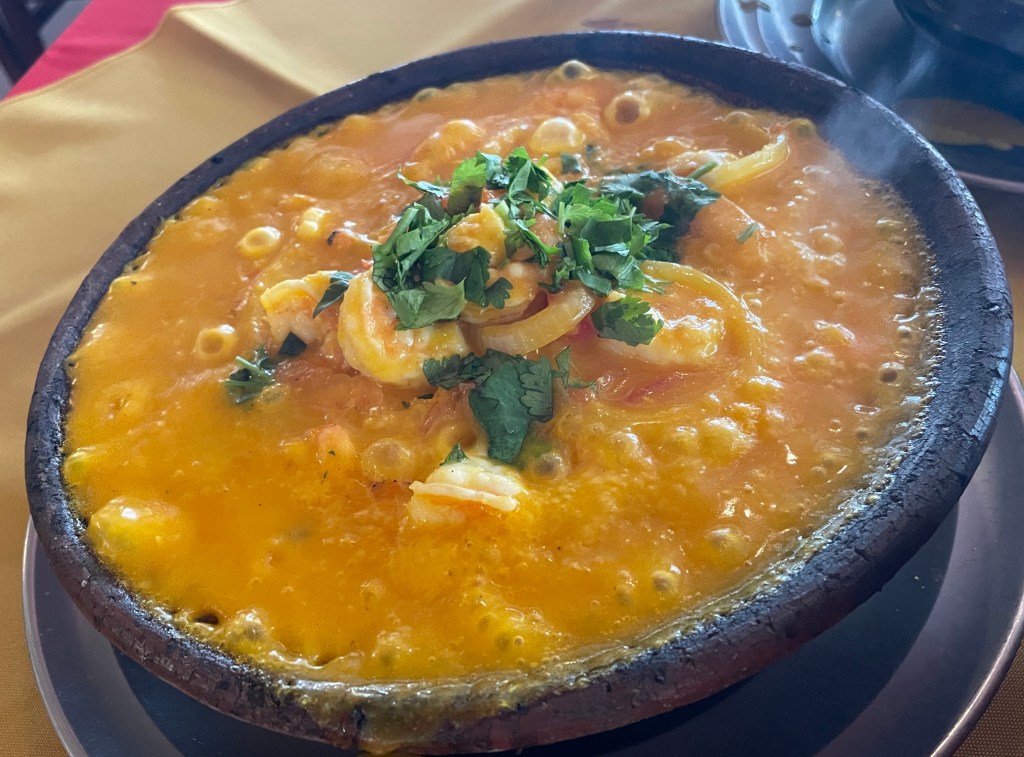
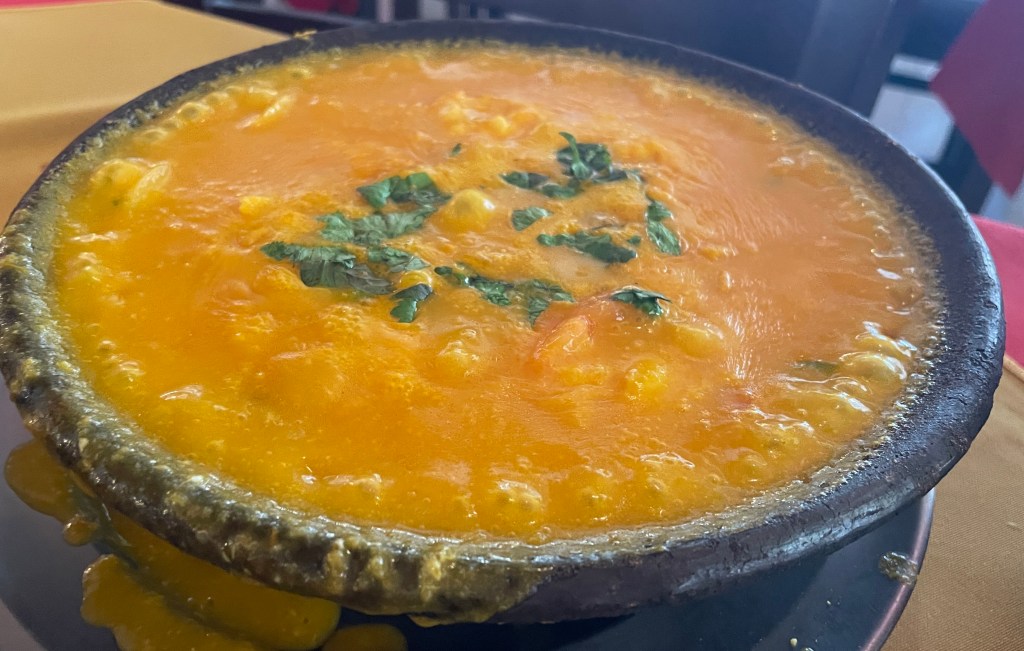
Lastly, completely by chance, we found the Bahian restaurant that Adam’s cousin took us to the first time we visited São Paulo. Consulado da Bahia is one of those neighborhood restaurants that has become an institution. We started the meal with caipirinhas (a must!) and three appetizers: a bowl of mashed okra with other vegetables, tapioca cubes served with molasses mixed with chili flakes, and croquettes filled with sun-dried beef (left photo). Normally the tapioca cubes have cheese in them, but these were dairy-free. Tapioca has such a fun texture and I enjoyed them immensely. Adam gobbled down the croquettes and we split the mashed okra. For mains, we ordered a bobó de camarão (shrimp stew) and moqueca (another type of stew) with pirarucu fish (center and right photos). Both came with steamed rice, a thickening sauce made of cassava root, and, of course, farofa. We were so excited to try an Amazonian fish, but it was only after we started eating that we realized the moqueca had shrimp. It was wonderful nonetheless.
Stay tuned for a fun recap blog about our adventures from the last eight months. Plus, just because we’re traveling back to the United States doesn’t mean I’ll stop writing about the delicious food we’ll eat, libraries, and Jewy things. Be sure to like, comment, and subscribe to Traveling While Introverted so you don’t miss any of it!
 Traveling While Introverted
Leave a comment