As we awoke in Guatemala City (shout out to Mariana’s Petit Hotel for excellent service and homey vibes), we started our day with a desayuno tipico, a typical Guatemalan breakfast. We then waited for our shuttle bus to take us to Antigua, approximately a two-hour ride. We noticed that hotel & hostel operators, including our own, waited for the shuttle bus with us outside to make sure we got on safely. Whether that’s just a custom or a precaution, we don’t know, but it made us feel safe. (It should be noted that it is generally recommended for tourists to fly into Guatemala City and then move on to their next destination. We don’t really have an impression of the city, but we noticed high fences, barbed wires, and security everywhere. The city is very large and chaotic.)
The bus wasn’t full and the drive through the city and then the mountainous countryside seemed equal parts familiar and foreign. Yahm especially enjoyed reading as many signs as she could in an odd attempt to learn Spanish without using a dictionary. Adam enjoyed the winding mountain roads and even some of the chaotic nature of Guatemala City, at least from the bus window. (This is probably not a city he would want to be a Lyft driver in, haha.)
Once the bus arrived in Antigua, the cobblestone streets made for an exceptionally bumpy ride. (For once, Yahm did not get carsick.) The driver dropped everyone off at their hotel and we were the last ones. As he gave us all of our stuff and drove off, we realized one of our backpacks was missing. Of course, that backpack had not one but both of our laptops in it. Thank goodness for WhatsApp: within ten minutes, the driver was back and Adam got the backpack. Apparently it slipped off the seat and the driver didn’t see it. A huge shoutout to GuateGo for their quick and responsive customer service!
We arrived in our hotel, Hotel Chilero y Cafe. We were shown our room, so we dropped off our bags and went for a walk. We won’t lie: the humidity was a little shocking, but by no means the worst we ever experienced. Being 4,900 feet above sea level also ensures we have a cooling breeze that provides much needed relief. One of the more exciting aspects of visiting Guatemala for us is that we don’t need a car. Having lived in such car-dependent cities most of our lives, we cherish the freedom of using our legs to get around.
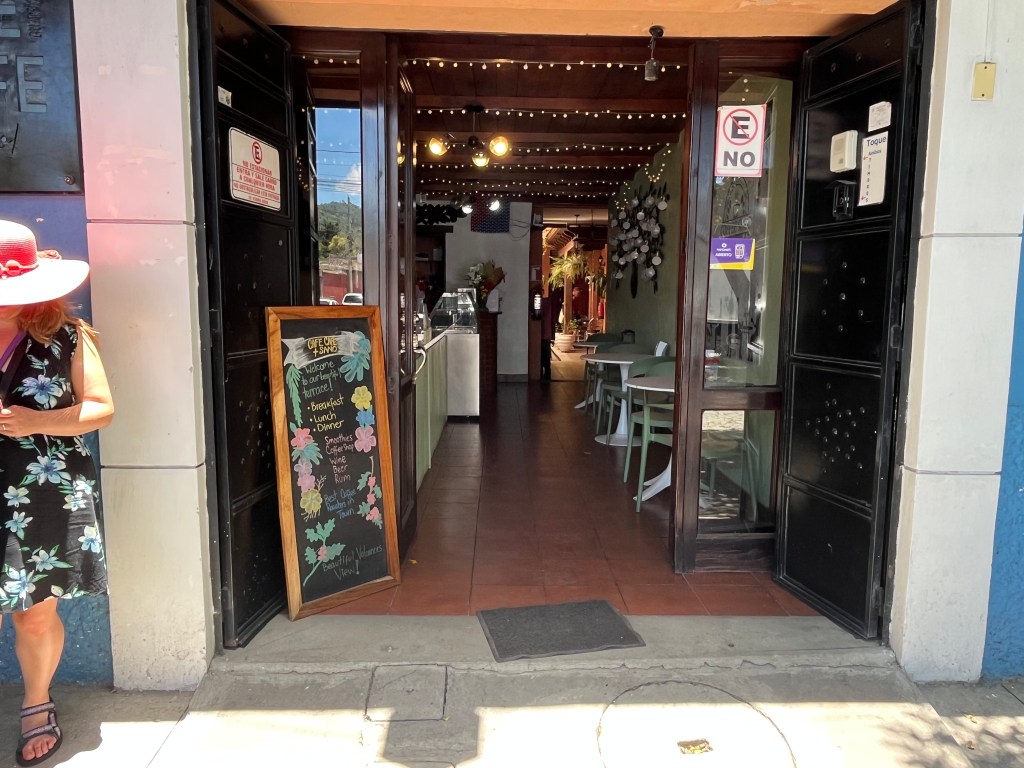
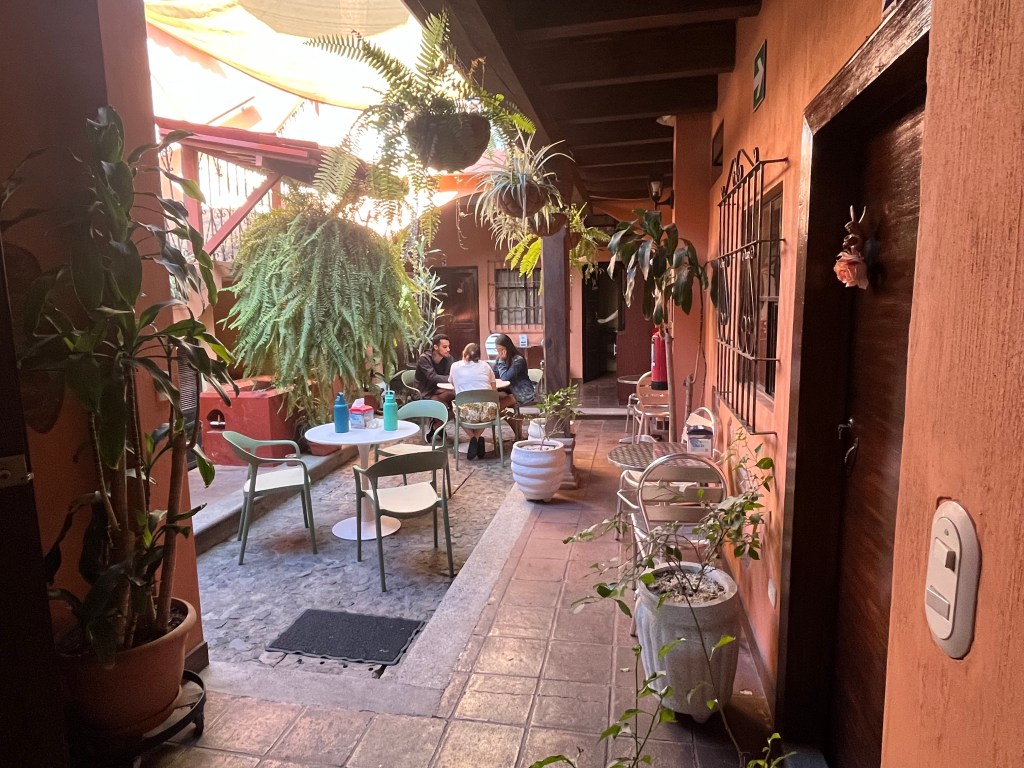
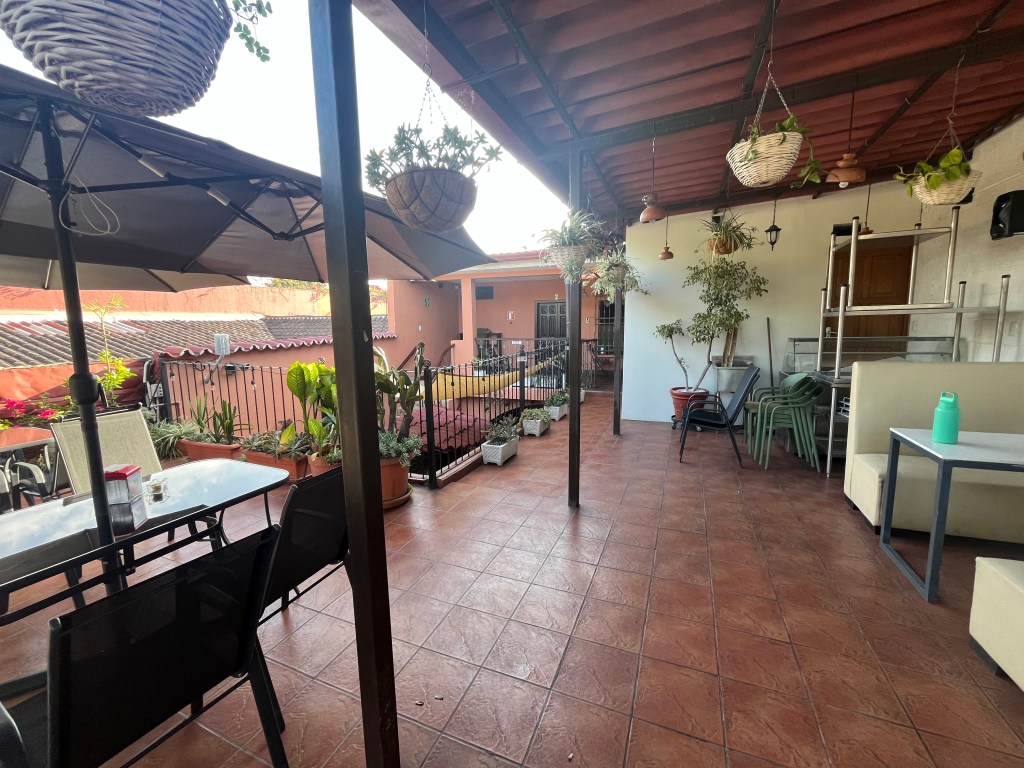
A few photos of our hotel, which includes a lovely breakfast, terrace, and relatively spacious rooms. (Yes, that’s Yahm with her big ass pink hat in the left photo.)
Antigua was established as the capital of the Spanish Governorate of Guatemala in the 16th century. Many of the buildings are from the 16th and 17th century. While the city is surrounded by 3 volcanoes, one of which is active, and is an earthquake-prone region of the country, it remains one of the best preserved colonial cities in the world. It is no surprise that it is a UNESCO World Heritage Site. (We recommend reading more about that here, especially for you architecture buffs.)
Some of the better photos we took while walking around:
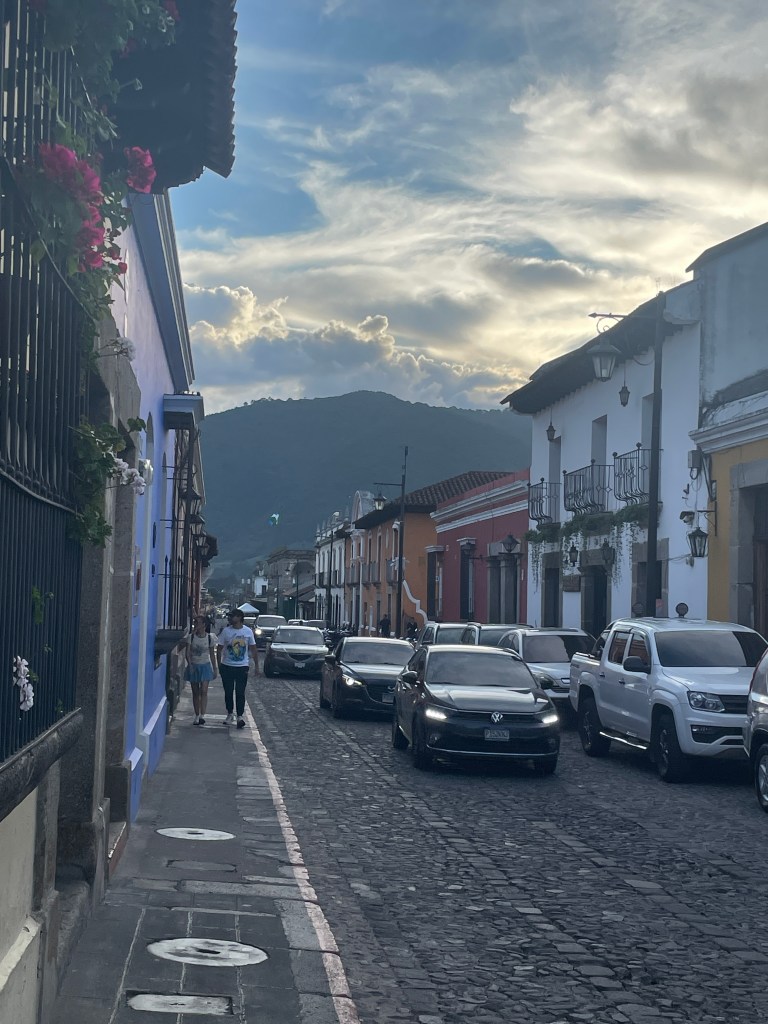
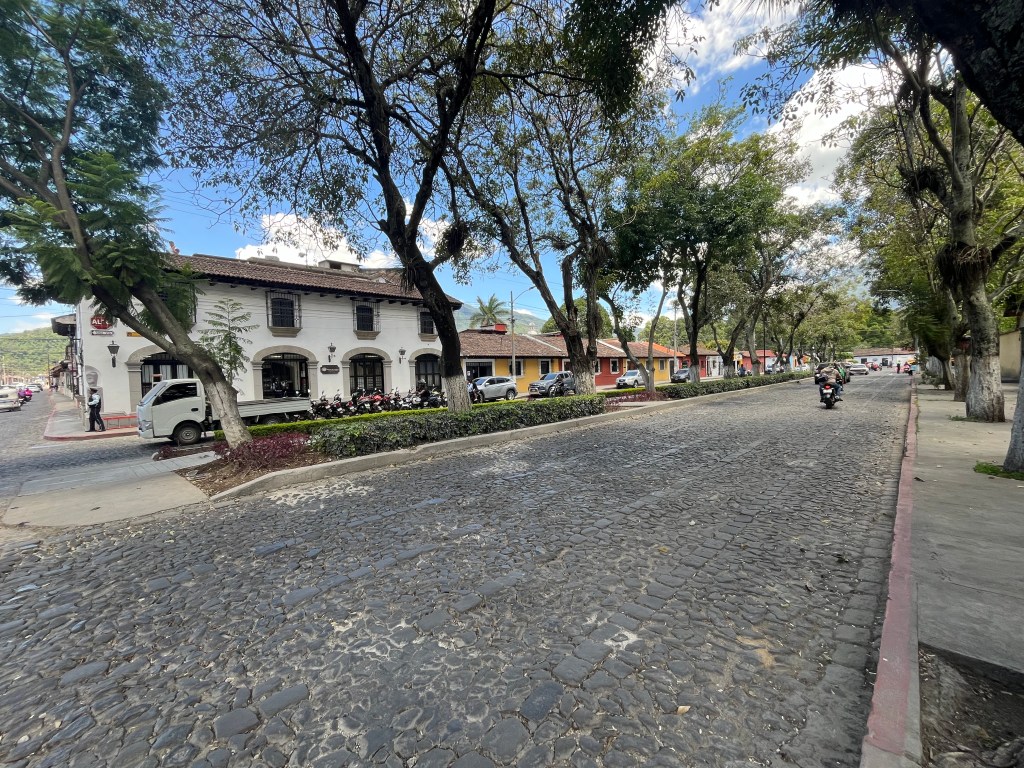
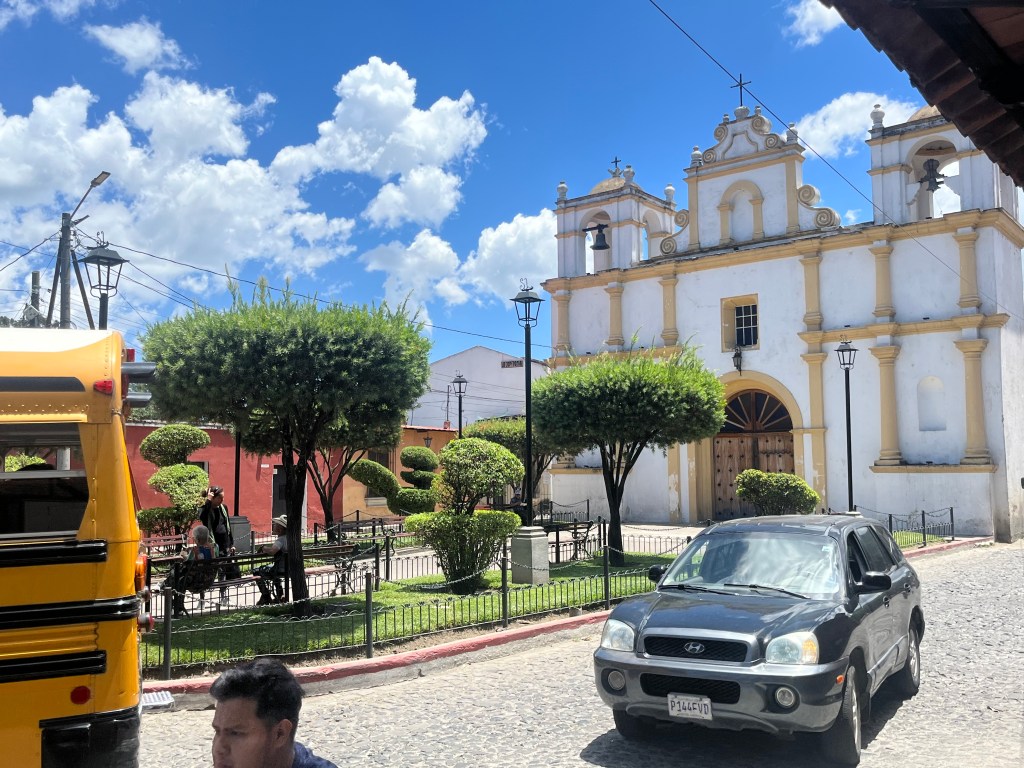

A note about the big buses you see: these are the famous “chicken buses” that are everywhere. The U.S. sends old school buses to Guatemala which are then decorated so beautifully with custom designs by the drivers. Someone is always hanging out the open door offering rides to pedestrians. We didn’t partake, but it was very tempting.

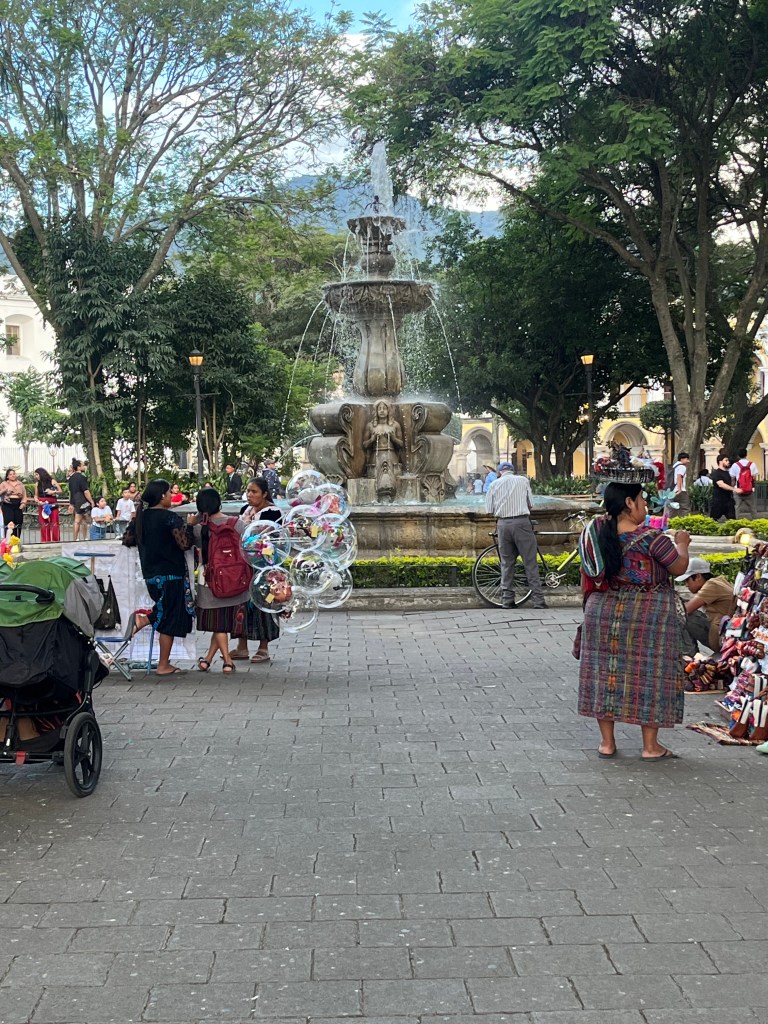
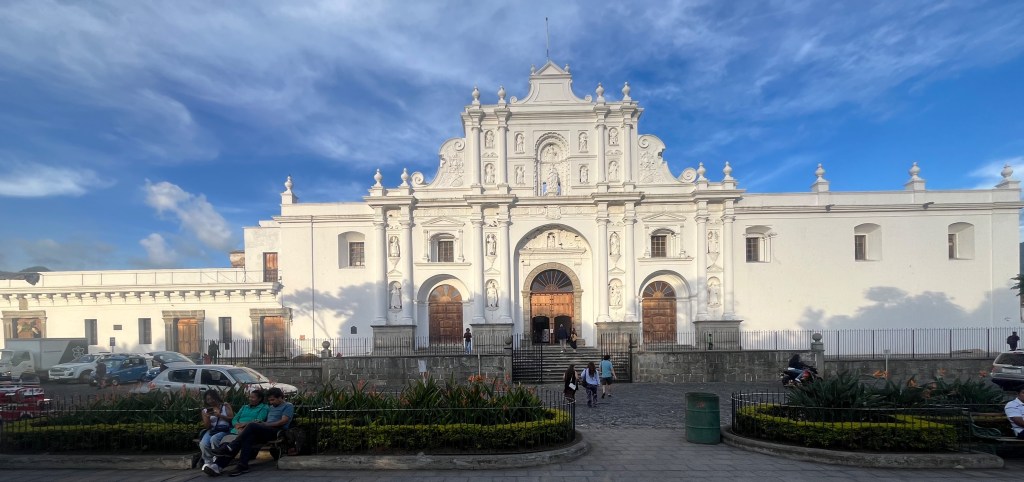
Churches, vendors in colorful traditional clothing, and tourists are seemingly everywhere. Yet, neither one of us felt overwhelmed or pressured to do anything except enjoy our time. Antigua has a way of feeling hyper-local and like a tourist destination at the same time, with plenty of humility and grace. We’ve never visited a place like this before.
As it happens, this weekend is a festival for the patron saint of Antigua. There’s lots of live music and we randomly captured this street scene while exploring the city.
One of the highlights of our time here was visiting a coffee farm. There are many coffee farms throughout Guatemala, some more geared to tourists than others. The farm we chose to visit was one of the farms in the De La Gente (“of the people”) Cooperative. This cooperative encourages coffee farmers to use sustainable farming practices, provides loans to purchase necessary equipment interest-free, and takes out many of the middlemen in the farm-to-cup process. When we purchased tickets to tour the farm & eat lunch with the farmer, we also purchased a few bags of coffee beans. We were so impressed by the smooth and rich taste of the coffee, that we were even more excited to visit the farm.
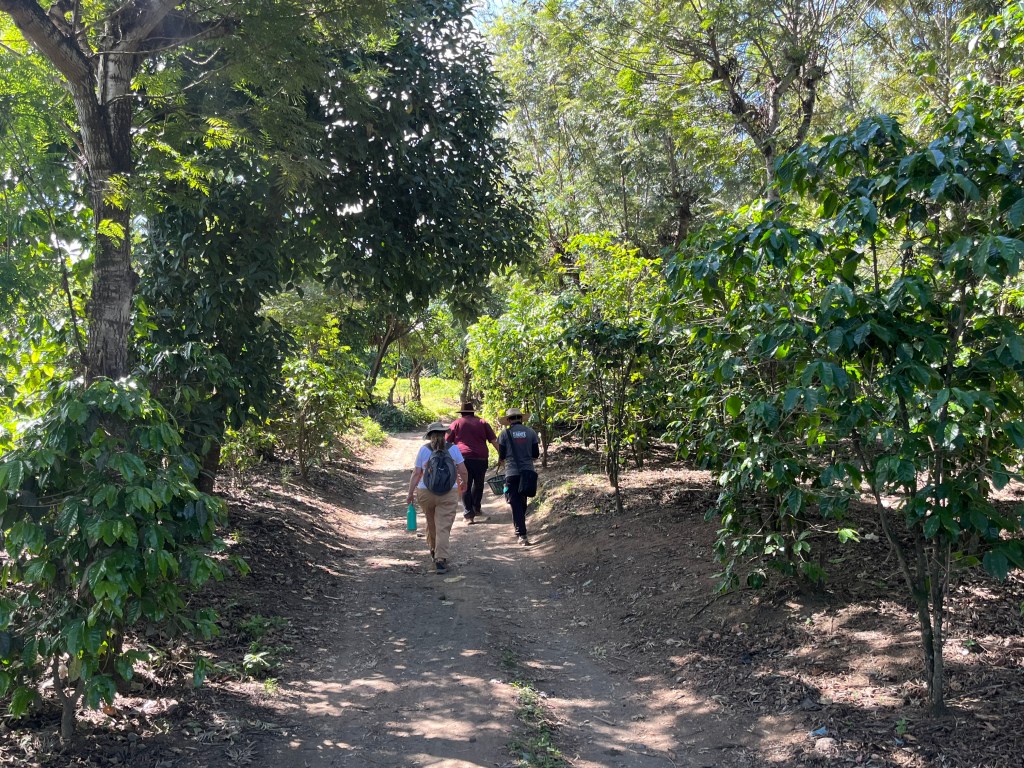
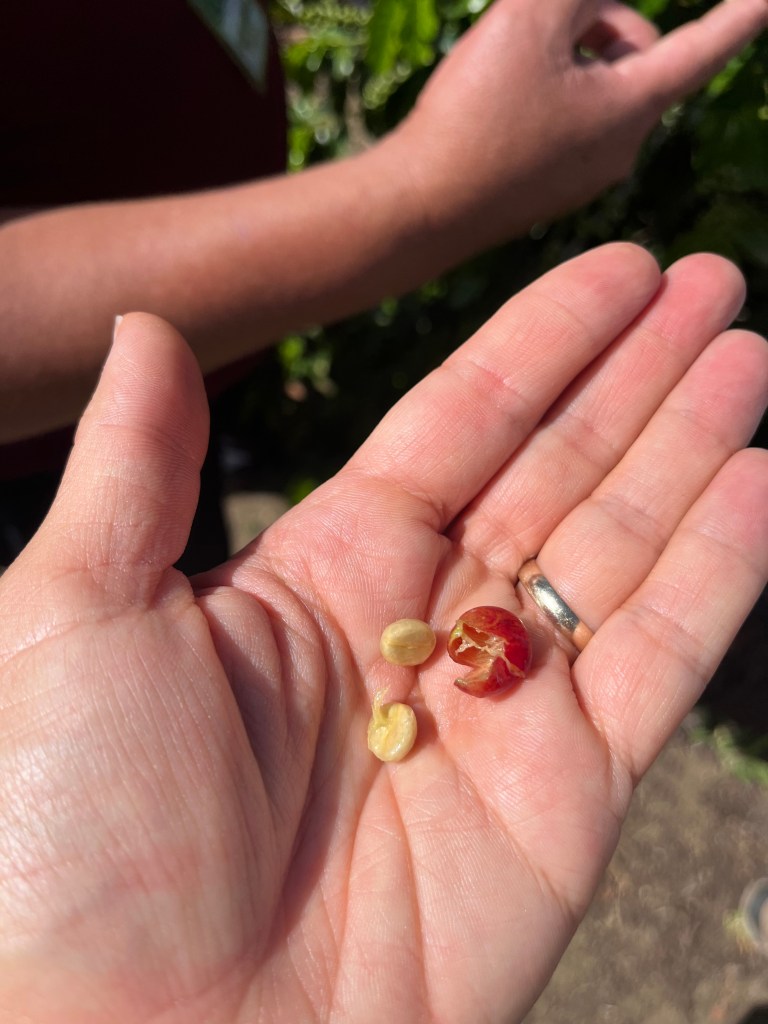
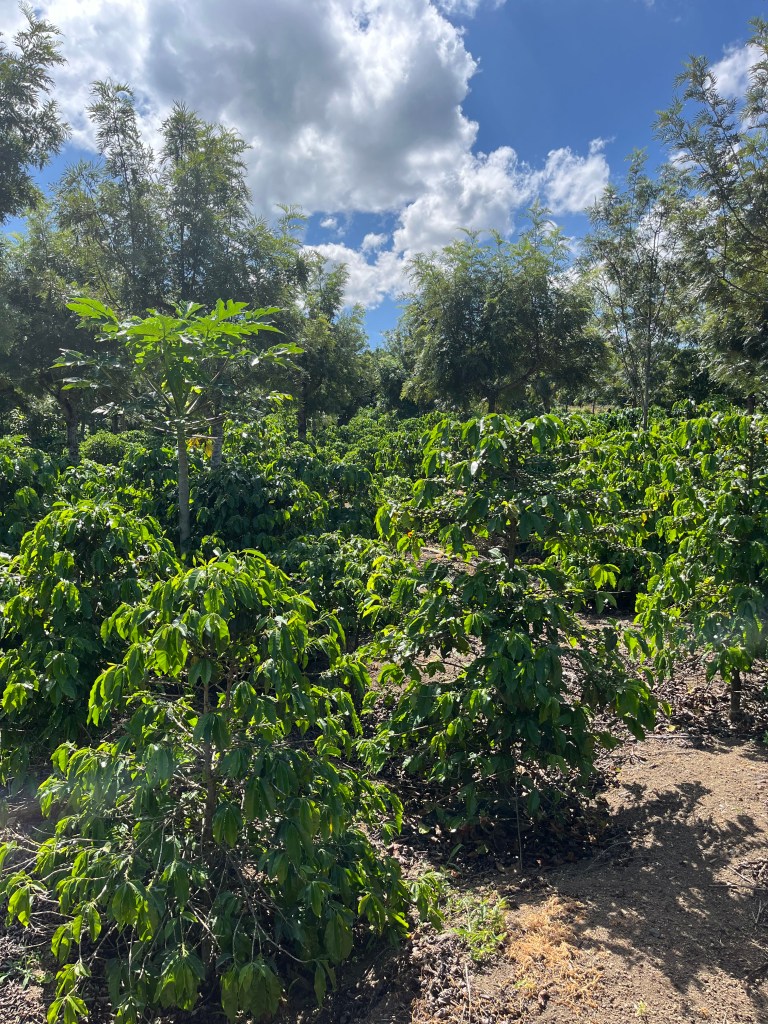
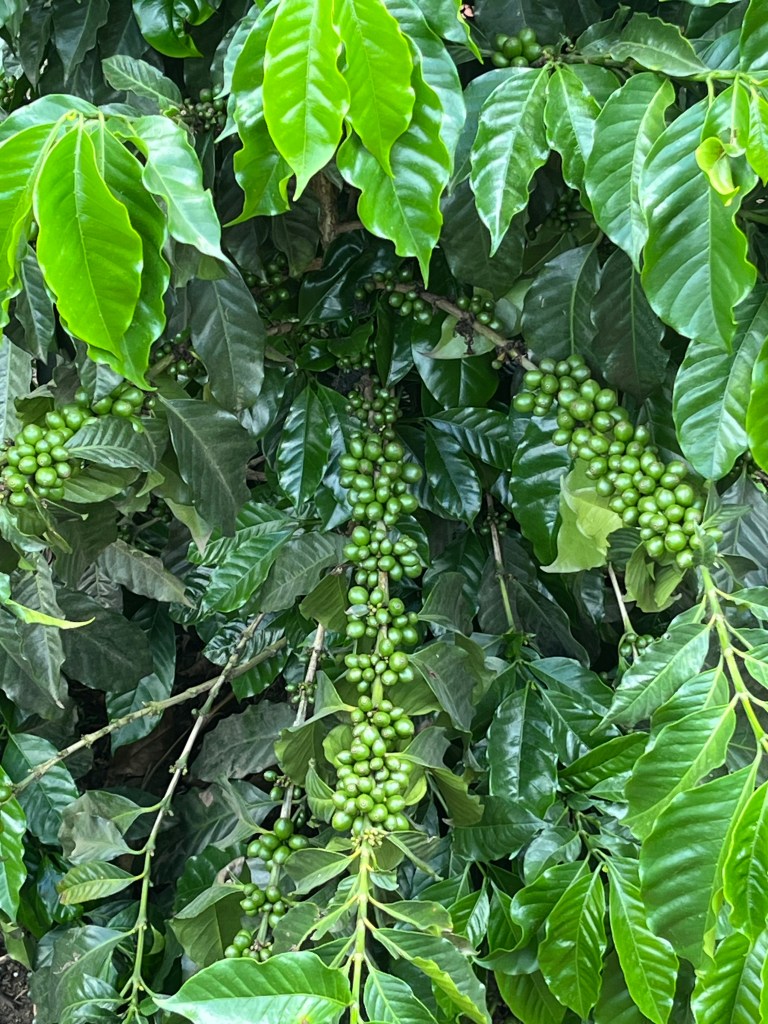
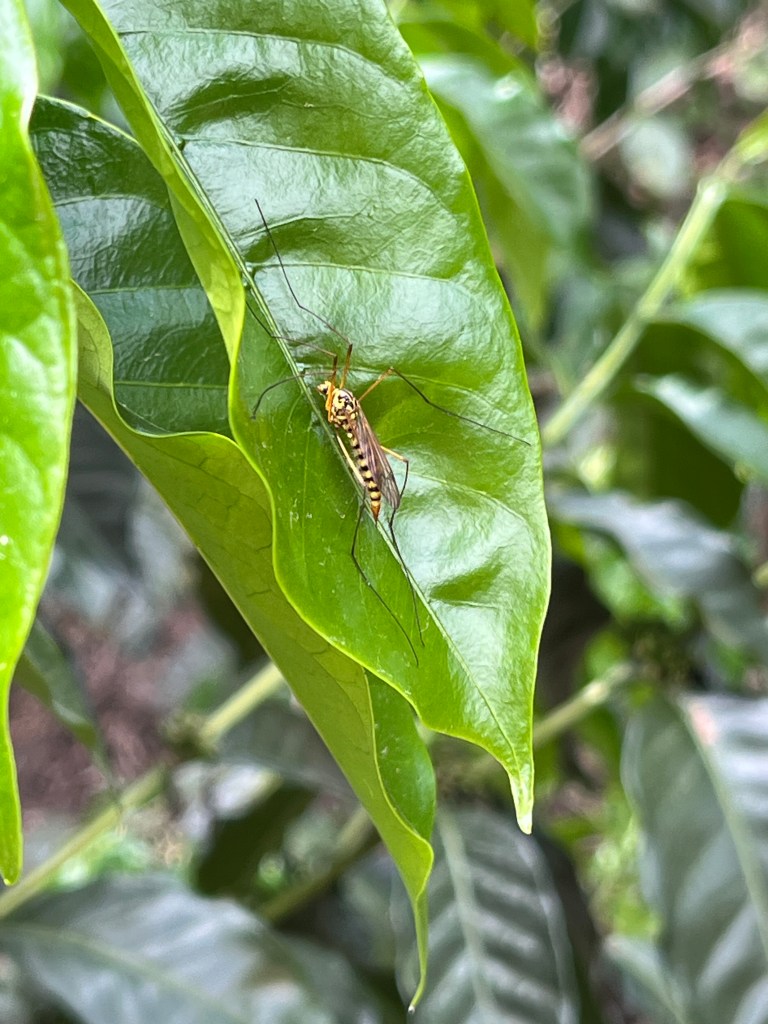
We won’t go into all of the details but this tour gave us a whole new appreciation for coffee. The farmer we visited, Alejandro, shared details about his farming techniques and practices with such passion and care, it was as if he was talking about his children. (We had an interpreter with us who was so unbelievably patient with our millions of questions.) Some of the educational highlights included learning about the unique hybridized coffee plants that provide resistance to coffee leaf rust (a type of fungus) and the coffee bean weevil (a beetle that burrows into the coffee cherry and lays eggs that ruin the fruit), while also limiting its growth so that it doesn’t limit its bean production. (Remember, the taller a plant, the less energy it has to produce fruit or flowers.) Interestingly, it is common practice to use an evergreen Australian plant that flowers but does not fruit, thereby providing the perfect shade for the coffee plants while also being drought tolerant.
His land also produces local avocado, corn, black bean, and castor bean, which looks like rambutan and confused Yahm very much. By growing a variety of crops along with coffee, he is able to enrich the soil with crucial nutrients while also feeding his family and diversifying his income. The sounds of wildlife and the fluttering of pollinators in a food-production landscape is not something you would see in an industrial coffee farm.
We asked why there were no fences to distinguish between parcels of land. Alejandro explained that everyone in the community knows each other and they use specific plants to mark when a property ends and begins. They still follow the honor system and have a tight-knit community, many of whom are part of the collective.
Adam asked about whether his crop has been affected by global warming, which Alejandro replied by mentioning how the rains now come a full month later. The impact of this change means that everything must be pushed a month forward: when coffee plants are planted, when they are harvested, and when farmers are paid for their fruit and labor. In this community, the idea of global warming is not a debate. It is real and it is here.
After we toured the farm, we walked back to Alejandro’s home. There, we learned about what happens to coffee fruit once it is picked. Alejandro’s wife taught us how to roast and grind some beans. She giggled with Yahm at Adam’s very earnest attempts to grind the coffee beans on the molcajete with the matete. After we drank the coffee, we were treated to a delicious lunch. At one point, we felt so comfortable and at home, that we told Alejandro to kick us out when it was time because we could have stayed there all day.
All in all, Antigua was a warm welcome to Guatemala. Our next stop is Lake Atitlan. Stay tuned!
Be sure to like, comment and subscribe to Traveling While Introverted so you don’t miss our next post!

 Traveling While Introverted
Leave a reply to Costa Rica: The Final Stretch – Traveling While Introverted Cancel reply