Thank you to those who participated in our social media and website polls! The majority of you guessed right on our next destination: Costa Rica! Pura vida is the local expression here and is often used as a salutatory greeting. It means pure life or simple life in Spanish. As soon as we landed in San José, we sensed a much more laid back vibe compared to Guatemala. Pura vida is everywhere, both literally on signs and billboards, but also in the air.
Unlike in Guatemala where we were able get around via shuttle bus or tuk-tuk, in Costa Rica the public transportation isn’t quite as developed. It’s generally recommended to rent a 4×4 vehicle to get around, especially if you plan on exploring more natural spaces like national parks (which make up 25% of the country’s land area!). So once we landed and got our mochilas, we headed straight to the car rental area. Within 2 hours of landing we were on the road, slightly anxious about potholes and road conditions in general. Roads here are terrible y’all. The one exception is the Pan-American Highway, which Adam will share details about in his corner.
Our first stop was the town of Monteverde, though we technically stayed in Santa Elena. Since Costa Rica is so expensive, we’re doing our best to stay in rented apartments or cabanas with kitchens of some sort. We’re used to cooking most of our meals anyway, so this isn’t too big of a deal. Plus, this way Yahm gets to visit grocery stores which she enjoys. (Adam is a good sport about it.) Read more about the food, as always, in Yahm’s corner.
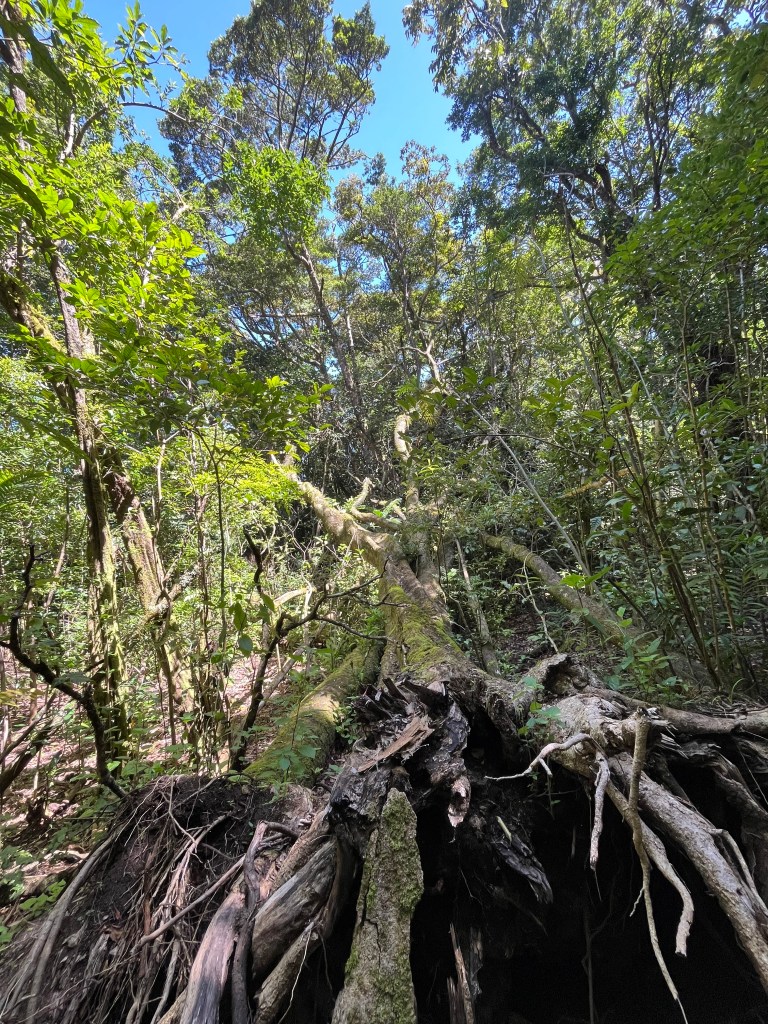
One of the reasons we chose to stay in Monteverde is to visit the cloud forest. Cloud forests typically exist in the tropics, between 500-4,000 meters (1,640-13,120 feet) above sea level. The main difference between them and lowland rainforest is that they tend to be much cooler, have less trees, more mosses, and are far wetter since they get water from both almost-daily rains and morning cloud mists. Like so much of the tropics, they are exceptionally biodiverse. Many cloud forests have unique flora and fauna that do not exist anywhere else in the world because they have adapted specifically to this type of hyper-moist environment.
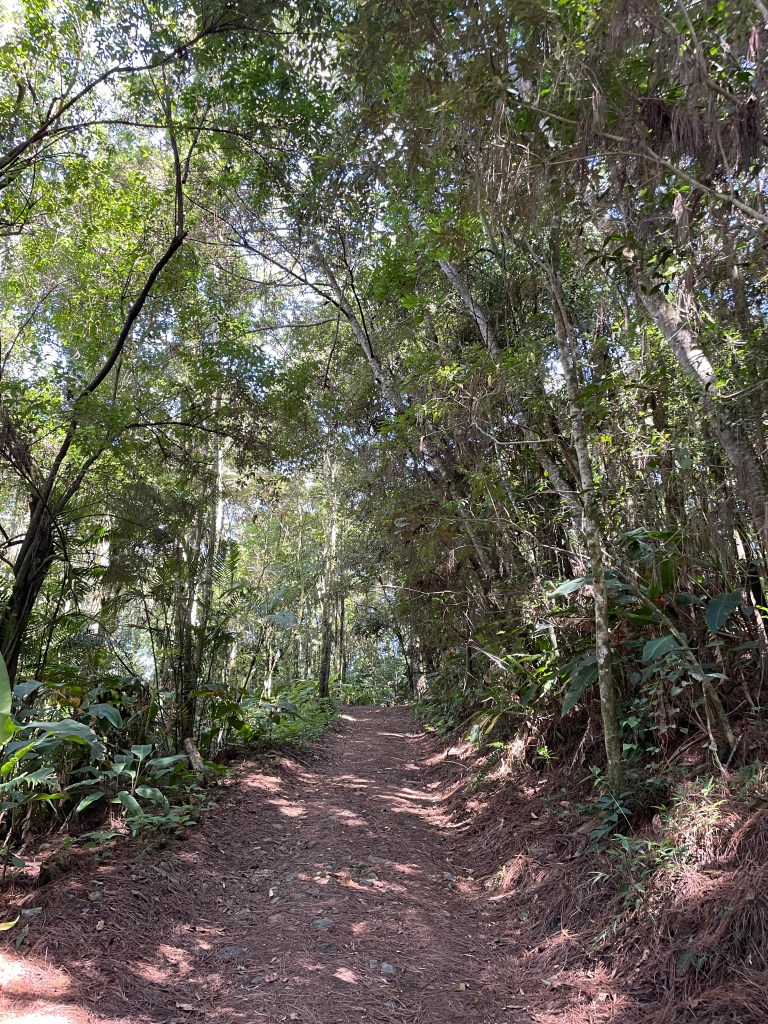
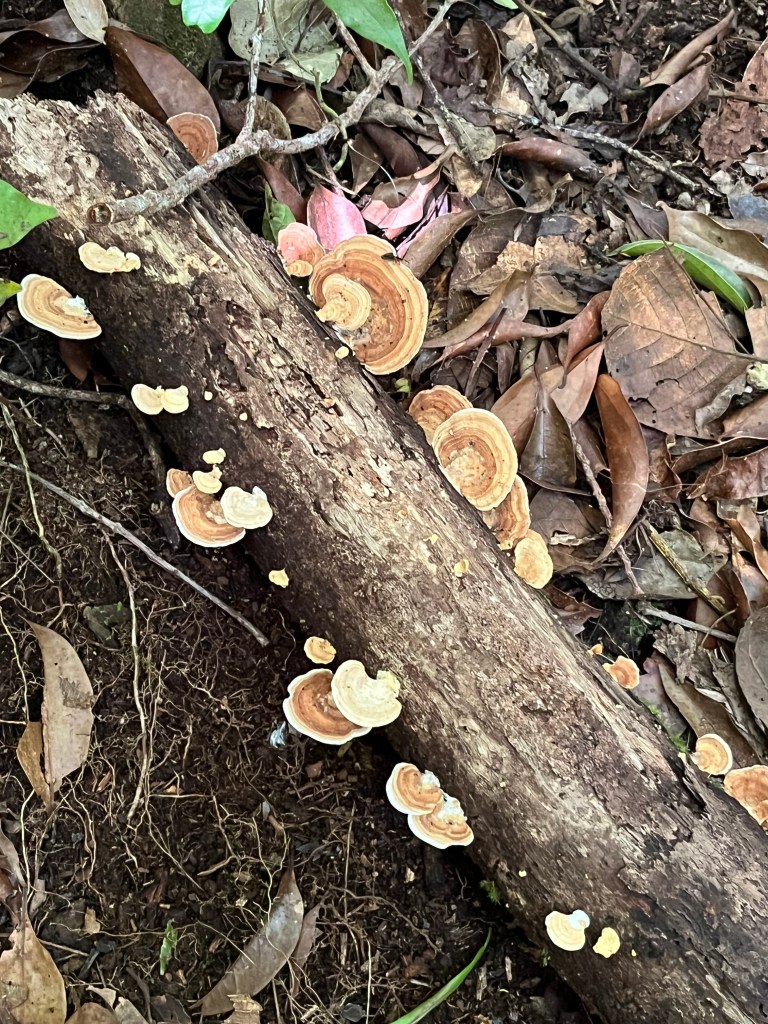
The Monteverde area has two cloud forests that are carefully protected and monitored by the Costa Rican government. We chose to visit La Reserva Bosque Nuboso Santa Elena because it is less crowded and offers a slightly more rugged hiking experience. Hiking in nature isn’t quite one of Yahm’s favorite activities; however, even she couldn’t help but be excited for this experience. Walking through a cloud forest feels a lot like walking through the land of the fairies. Photos don’t capture the beauty and wonder, but we’ll try to share some anyway.
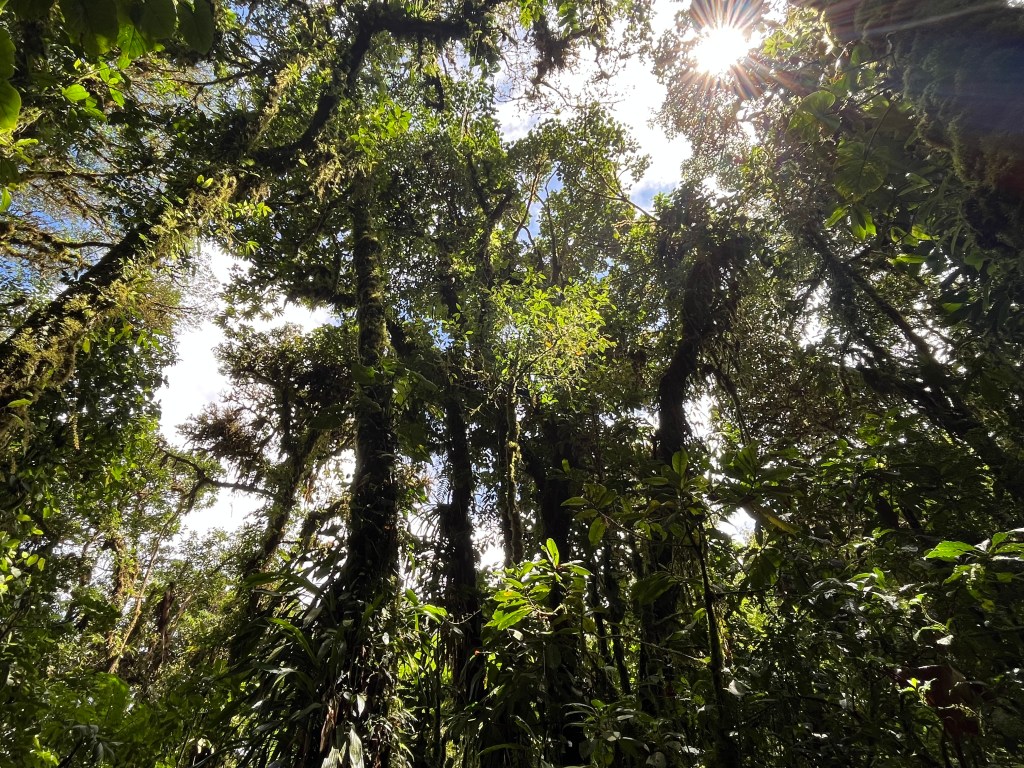
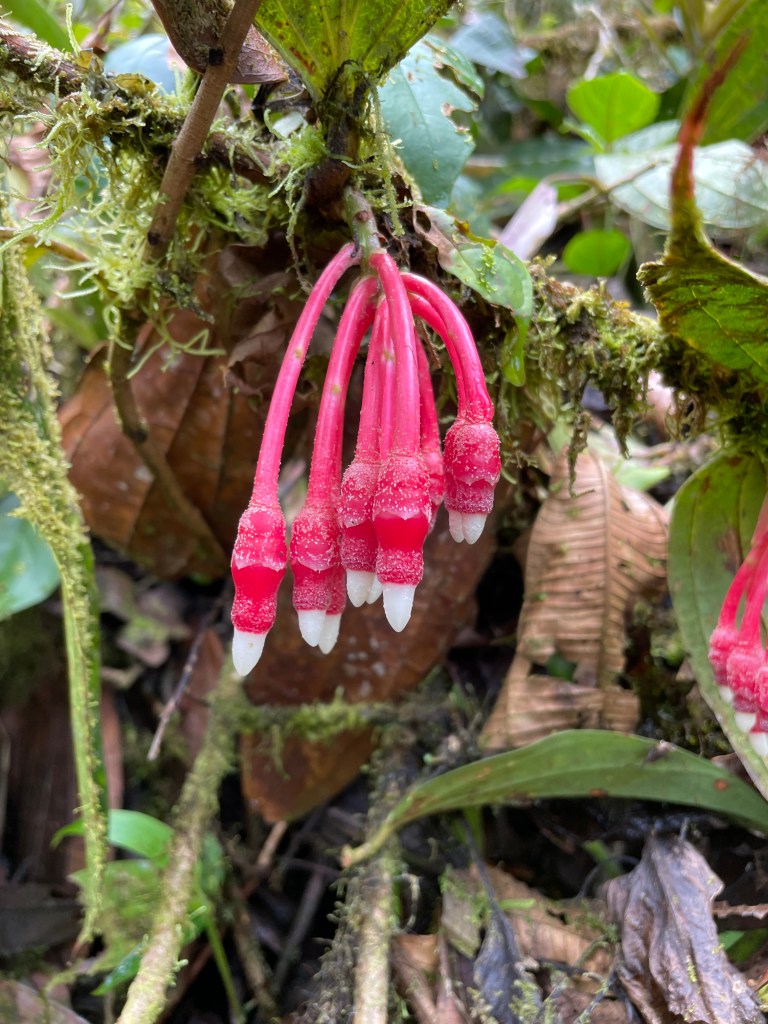
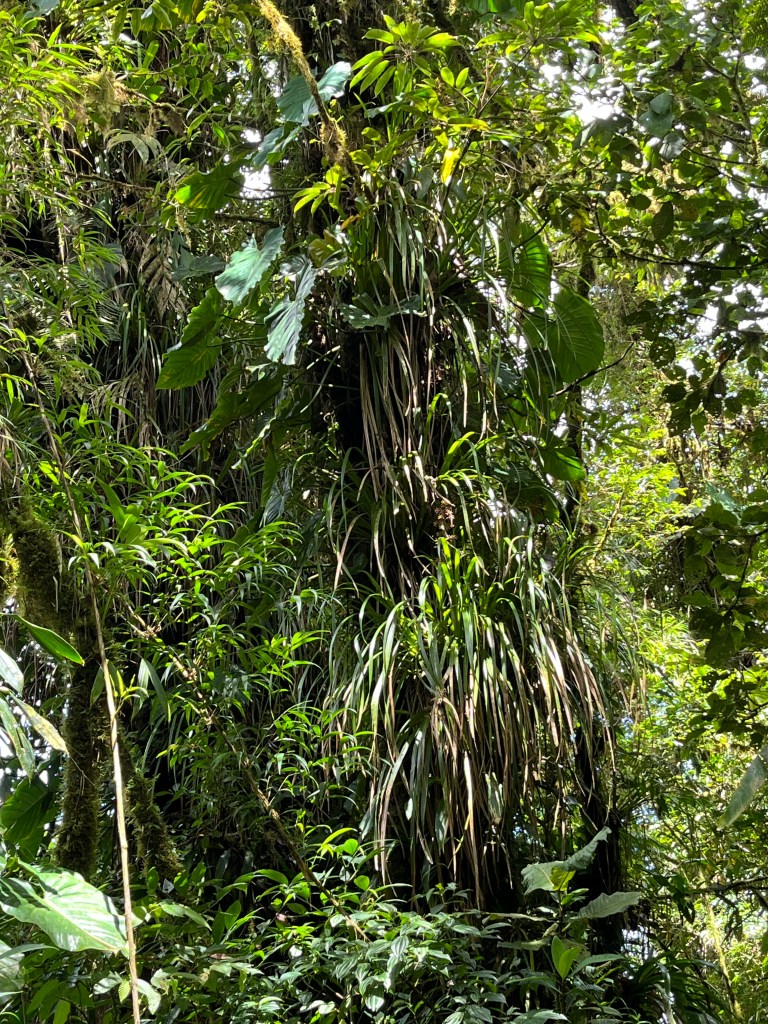

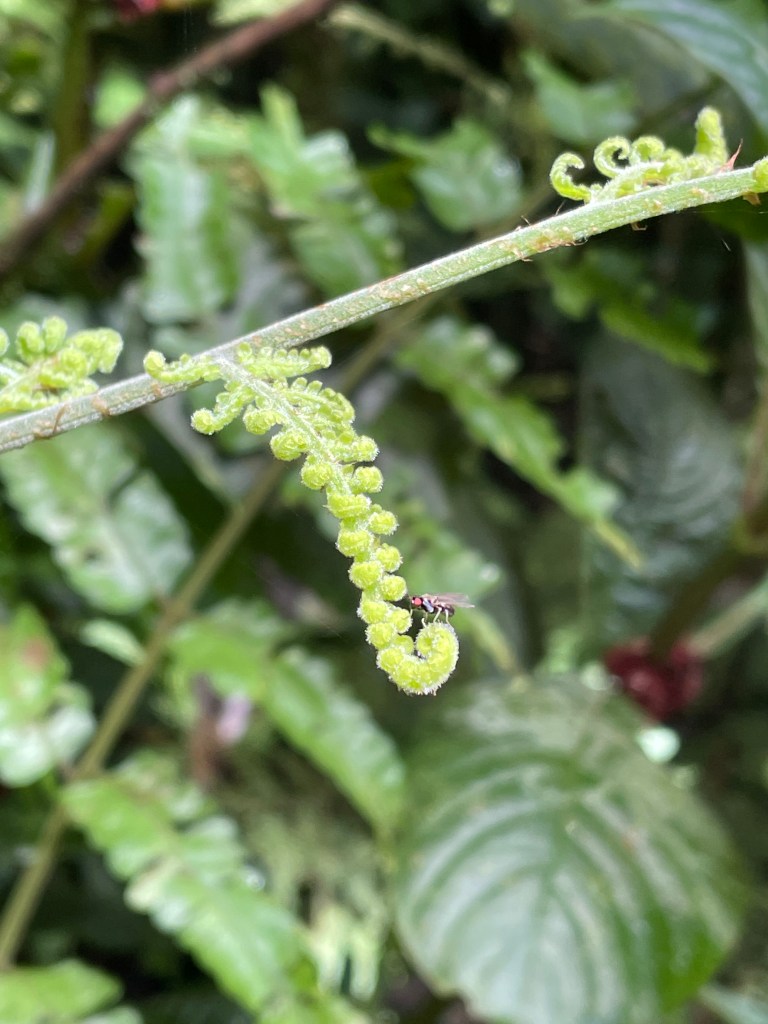
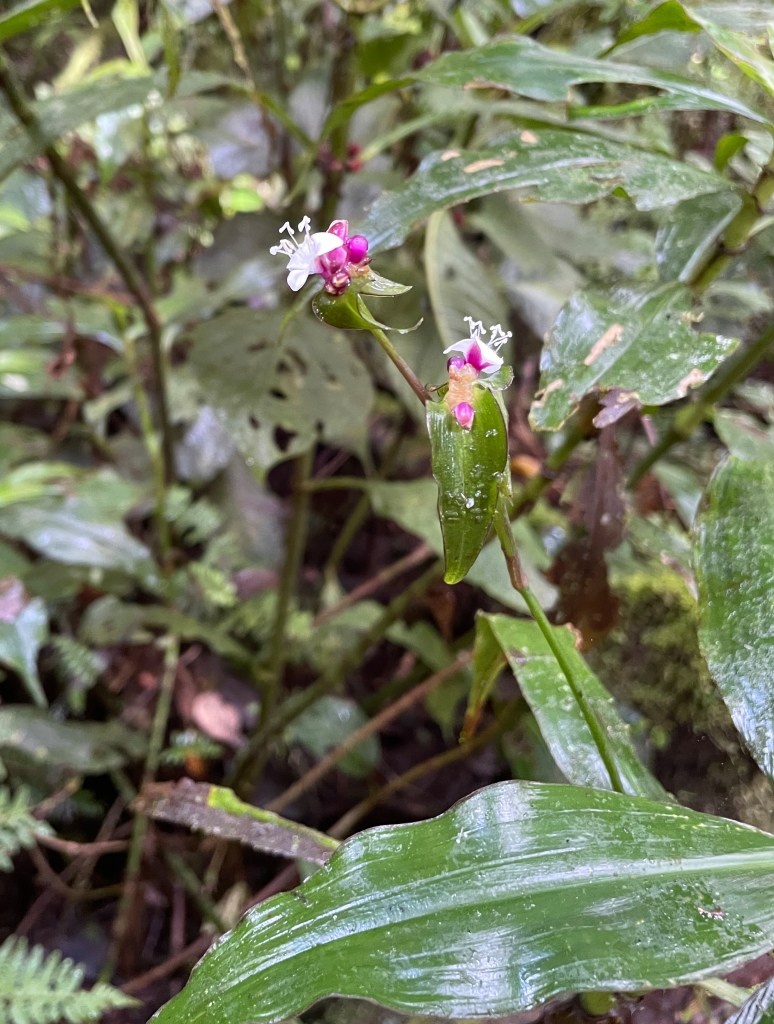
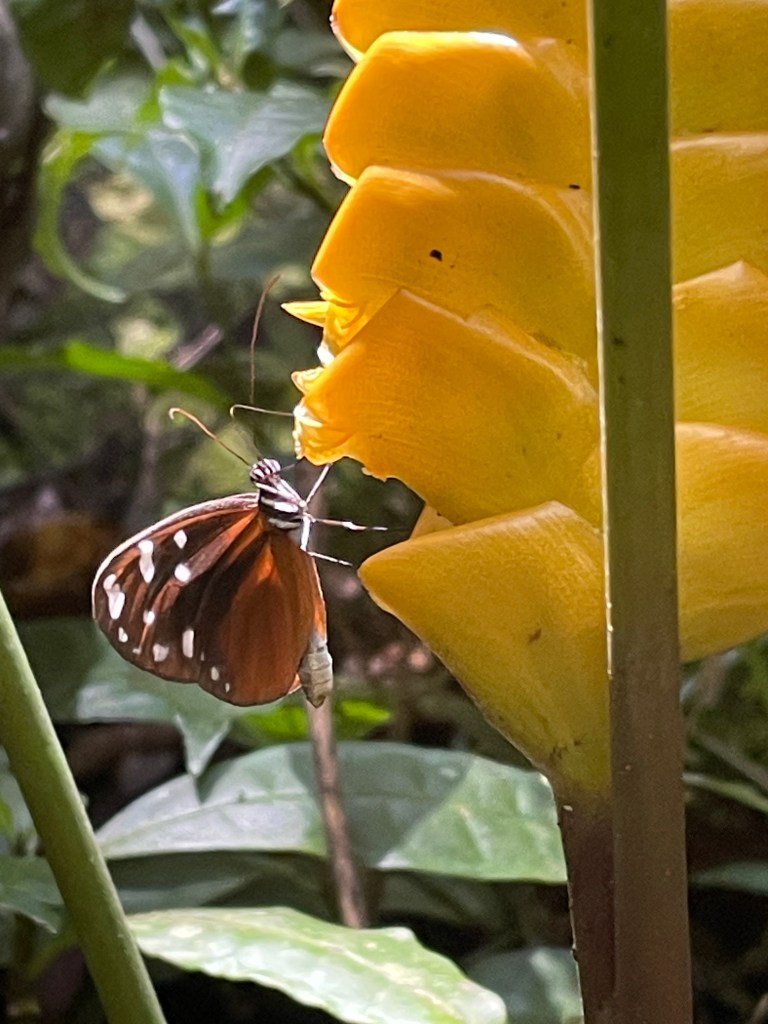
If you’re curious about some of the wildlife we saw, especially insects, visit Adam’s corner.
Another place we were excited to visit was the Bat Jungle. After reading signs along the main hall, guests get to walk through a dark room to watch frugivorous (fruit-eating) bats eating, flying, and huddling together. Each guest has a flashlight, which they can shine on the bats without overwhelming them too much. The glass is also soundproof, which is very important since bats have exceptional hearing.
One of the most interesting facts we learned about bats is that they actually give birth upside down. When a female bat is about to give birth, another female bat will act as a midwife, including catching the baby bat to make sure it doesn’t fall to the ground. The guide we met, Esteban, said that watching this was one of the most fascinating experiences he’s ever witnessed. Whether it’s eating insects, pollinating plants (including agave to make tequila!), or eating rodents and small animals that carry disease, bats are an exceptionally important part of an ecosystem. They are very misunderstood and need our help. If you are reading this and would like to learn more about bat conservation, visit Bat Conservation International.
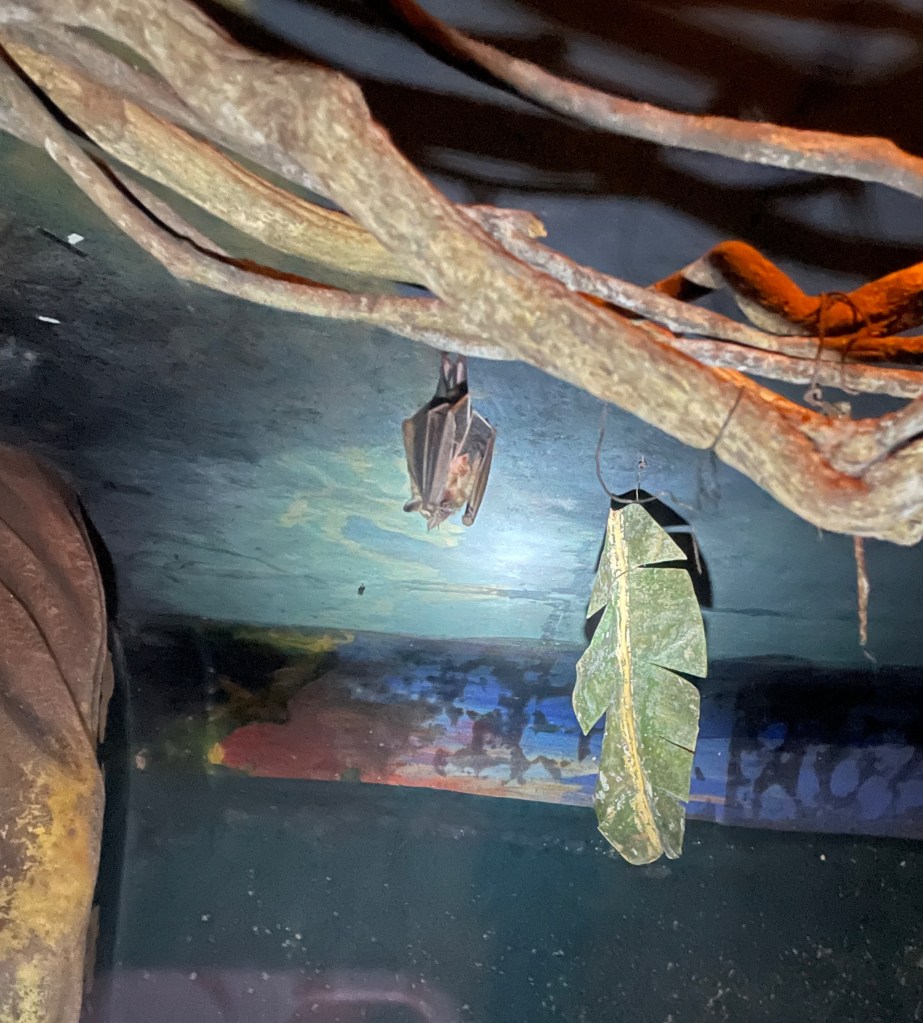
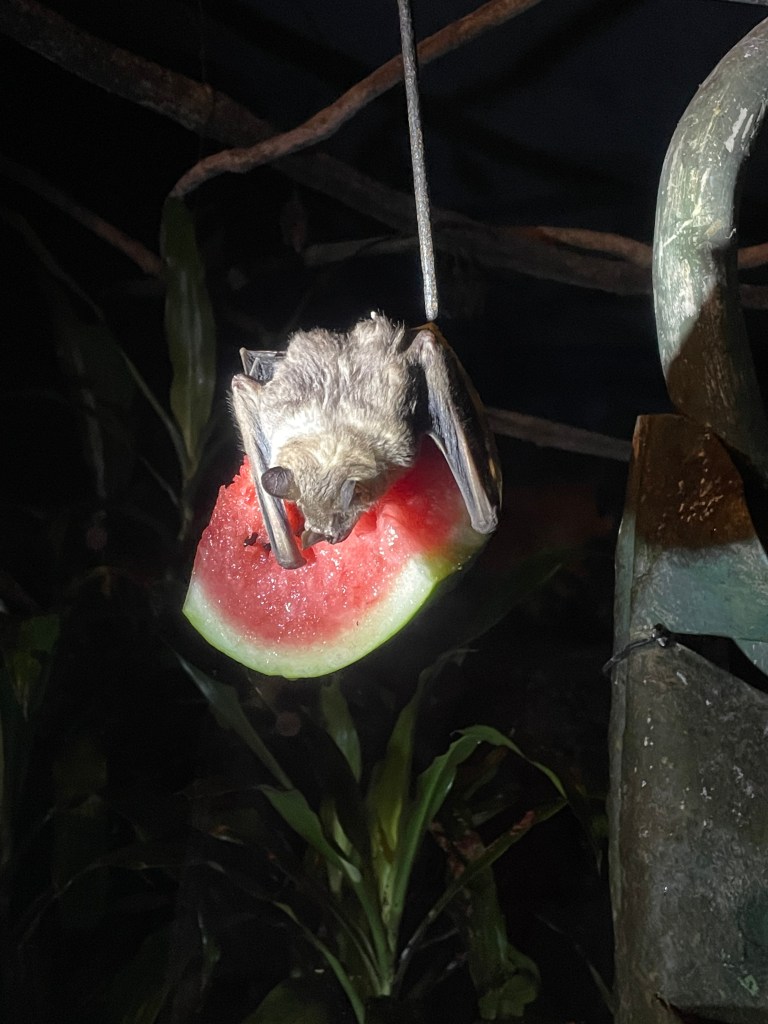
After we walked around the exhibit and watched the bats for a while, we spent an additional two hours talking to Esteban about, well, everything. He shared with us about what life is like as a Tico (the word Costa Ricans call themselves), geopolitics, local politics, philosophy, and his love of bats. Whenever we mentioned a country, he was quick to tell us the number of bat species native to that country. Costa Rica, for example, has 122; 82 live in Monteverde alone!
One of the interesting aspects of traveling while introverted is that, on the one hand, we are very curious and observant. We enjoy conversing with locals and other tourists because you never know what you’ll learn or where a good recommendation can come from. If you’ve met us, you might be fooled into thinking we’re extroverts. We’re not; we’re just friendly. On the other hand, we are often exhausted from talking to strangers and even to each other. So, after spending so much time having such a lively conversation with Esteban, it’s no surprise we went home for lunch and to decompress.
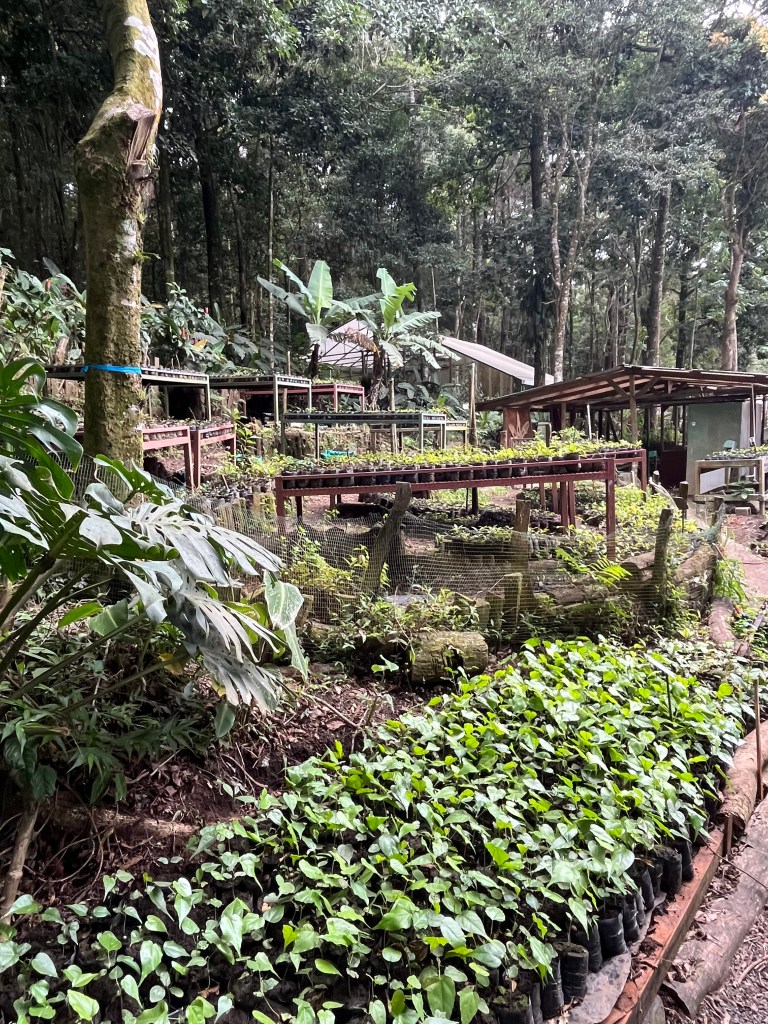
A final highlight from our days in the Monteverde area was visiting the Monteverde Institute, recommended to us by a librarian that we met (more about that in Yahm’s corner). The institute provides international students with internships that help them network with Tico professionals and build projects that directly meet the needs of locals. A project might have several rounds of interns working on it before it is complete, and each round builds on the other. For example, it may begin with a survey, then creating plans, followed by building whatever it is, and finally showcasing it to the community. At the same time, the institute both promotes tourism (the main way Ticos earn a living) and encourages new revenue streams for locals. The resident librarian, Ignacio, gave us a tour of the institute and encouraged us to come back and hike the trails.
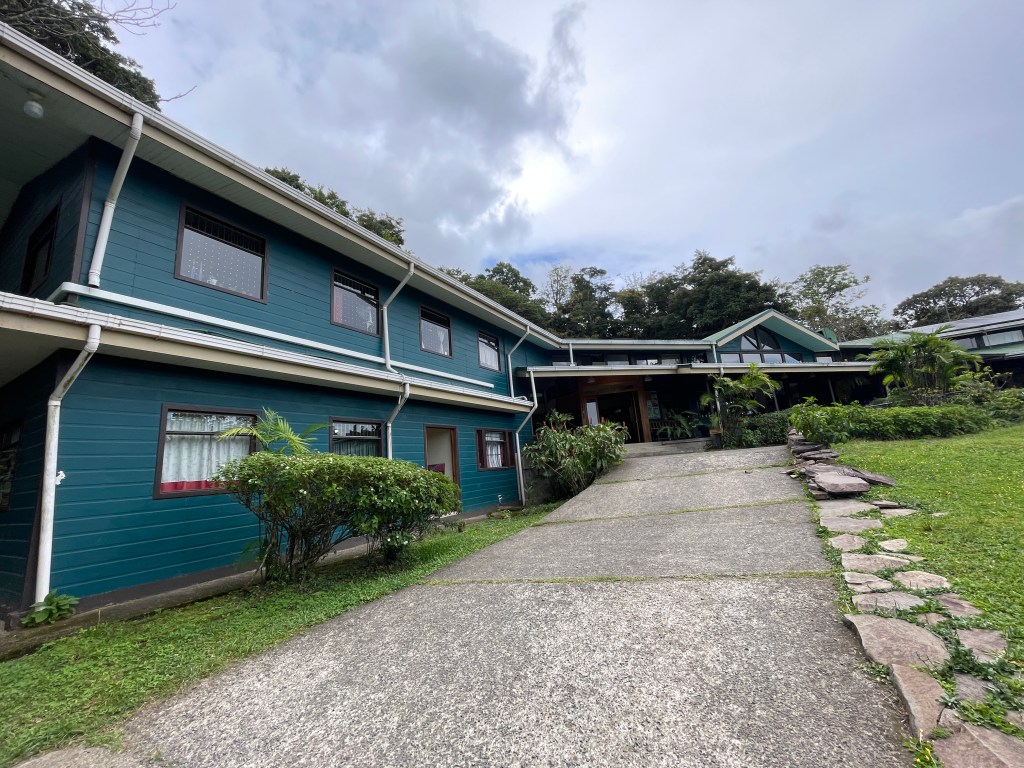
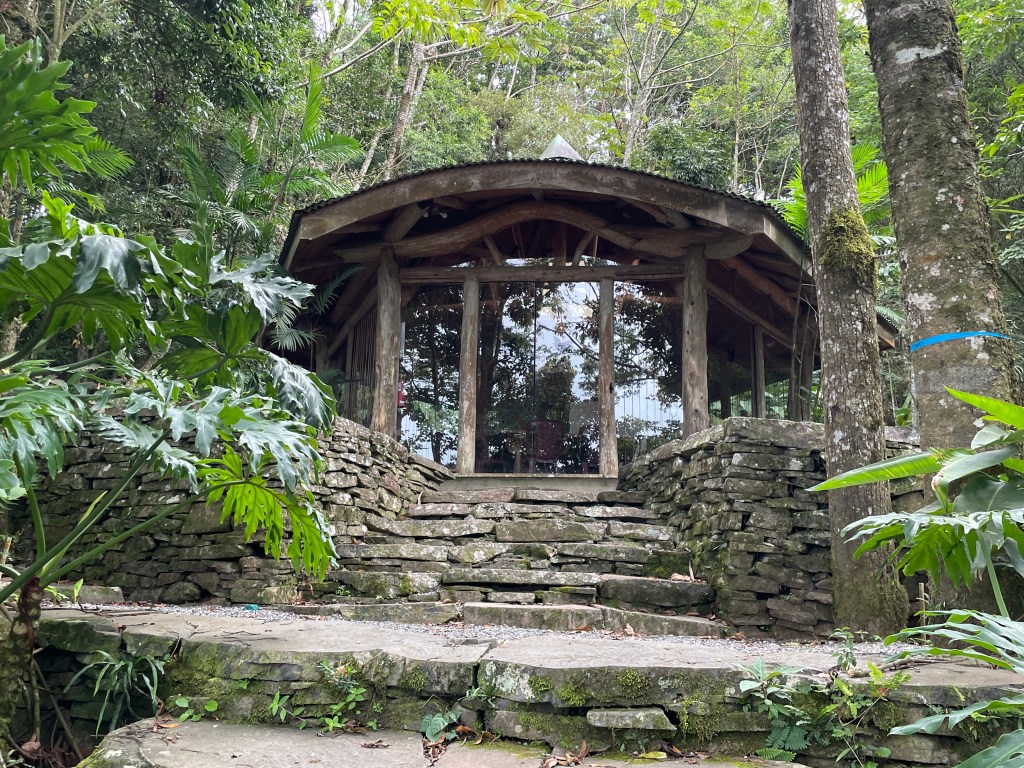
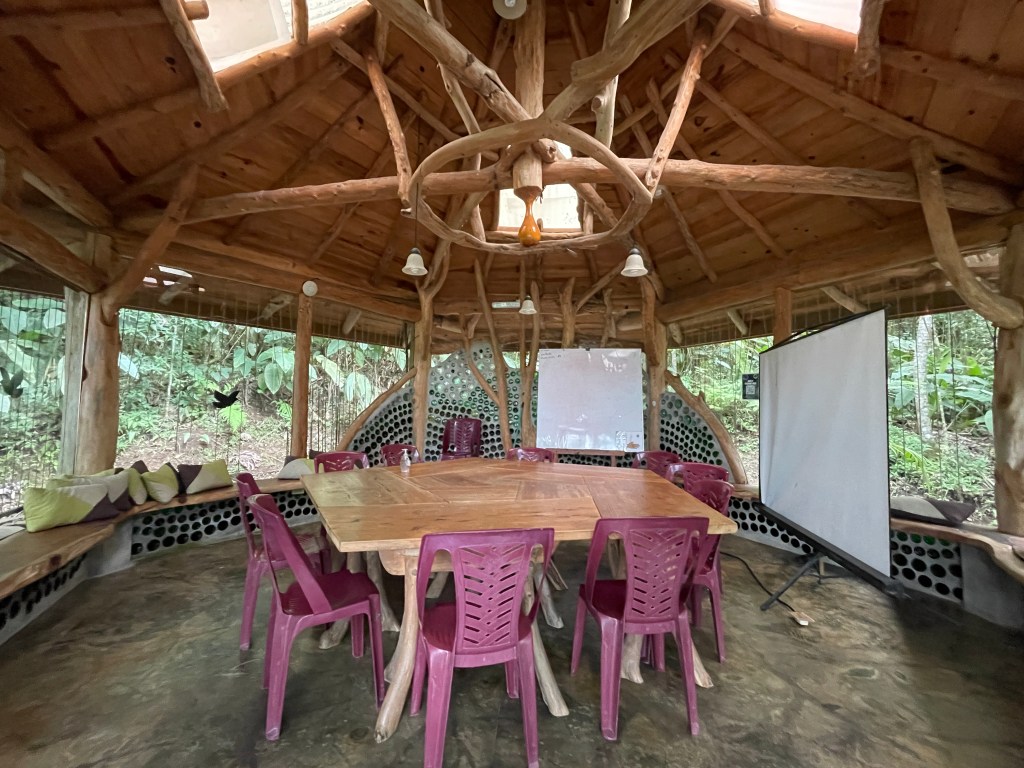
A fun fact about the classroom: many Quakers came to Monteverde in the 1950s. When they arrived, they planted a lot of pine, which is not native to the area. So, the Institute chopped down the trees and used it to build the classroom. Isn’t it beautiful? What a wonderful way to repurpose natural material and stop the proliferation of non-native flora!
After four days in the Monteverde area, it was time to move on to Tamarindo, one of the beach communities along Costa Rica’s northwestern Pacific coast.
Be sure to like, comment and subscribe to Traveling While Introverted so you don’t miss our next post!
 Traveling While Introverted
Leave a reply to Exploring Costa Rica: Monteverde’s libraries and food scene – Traveling While Introverted Cancel reply