While we stayed in the Monteverde area, we happened to find the Biblioteca Publica Interactiva Santa Elena tucked away into a corner of a shopping center. I was so excited to see a library! I took a photo and began looking at the books on display, just outside the main door. A very friendly librarian, Alejandro, explained that the books were part of a book exchange project. The public is welcome to leave-a-book/take-a-book, or take a book for a minimal donation. The library itself is intended for locals, but when I mentioned I was a librarian, he invited us in and shared the story of the library.
As it turns out, Costa Rica does not necessarily have public lending libraries. Instead, libraries are intended for research, mostly in academic settings, or they are for children and are attached to a school. This library began as a donation of about 300 books from Monteverde’s sister city, Estes Park, Colorado. Normally, these books would have been donated to local schools, but a woman in the area had the idea to begin a lending library instead. It’s not a very large library, but it has a sizable children’s section, adult fiction and non-fiction sections, and a small community area. Much like public libraries in the U.S., the purpose of this library is to provide a safe space for all sorts of people and encourages the freedom to read.
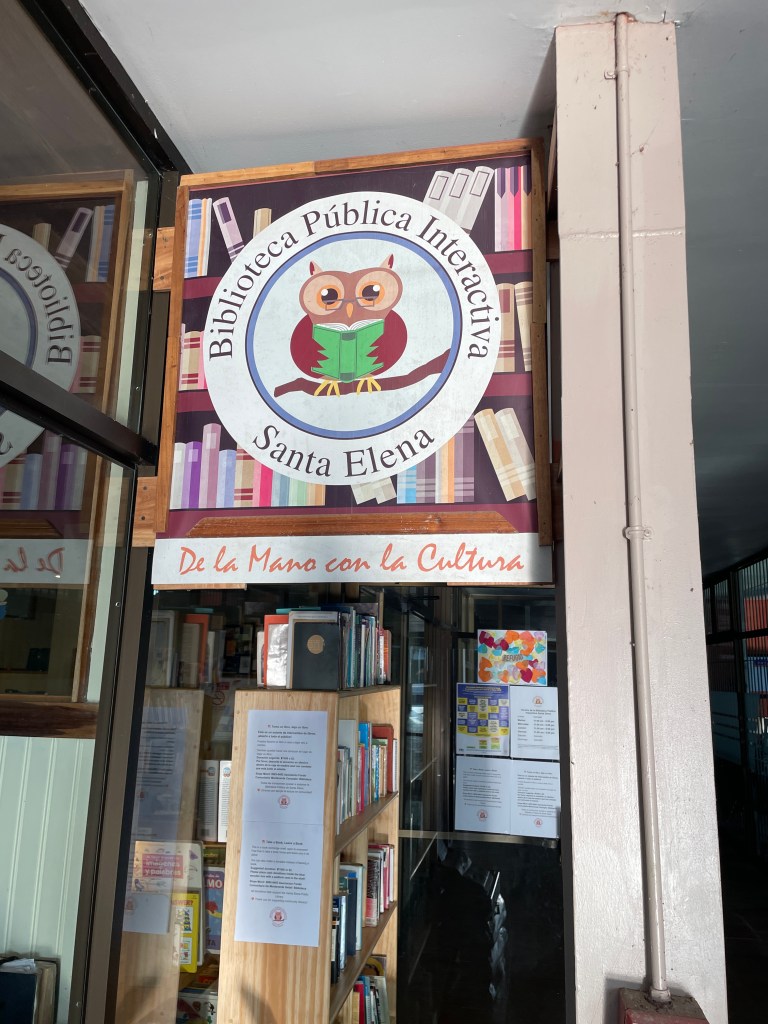
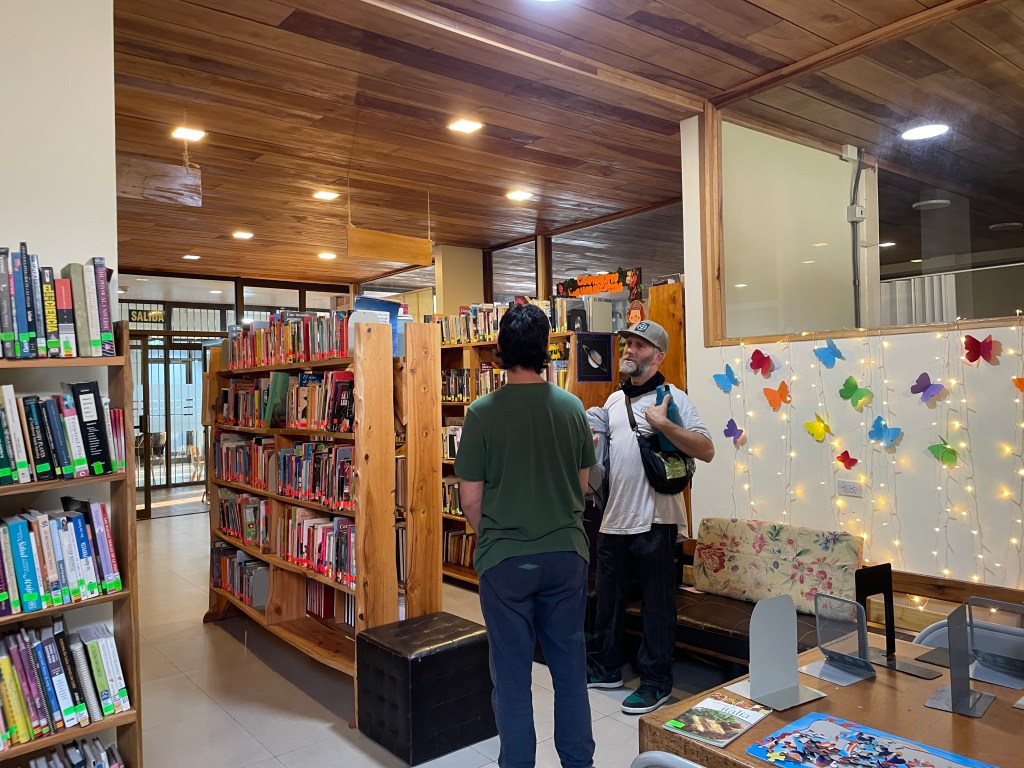
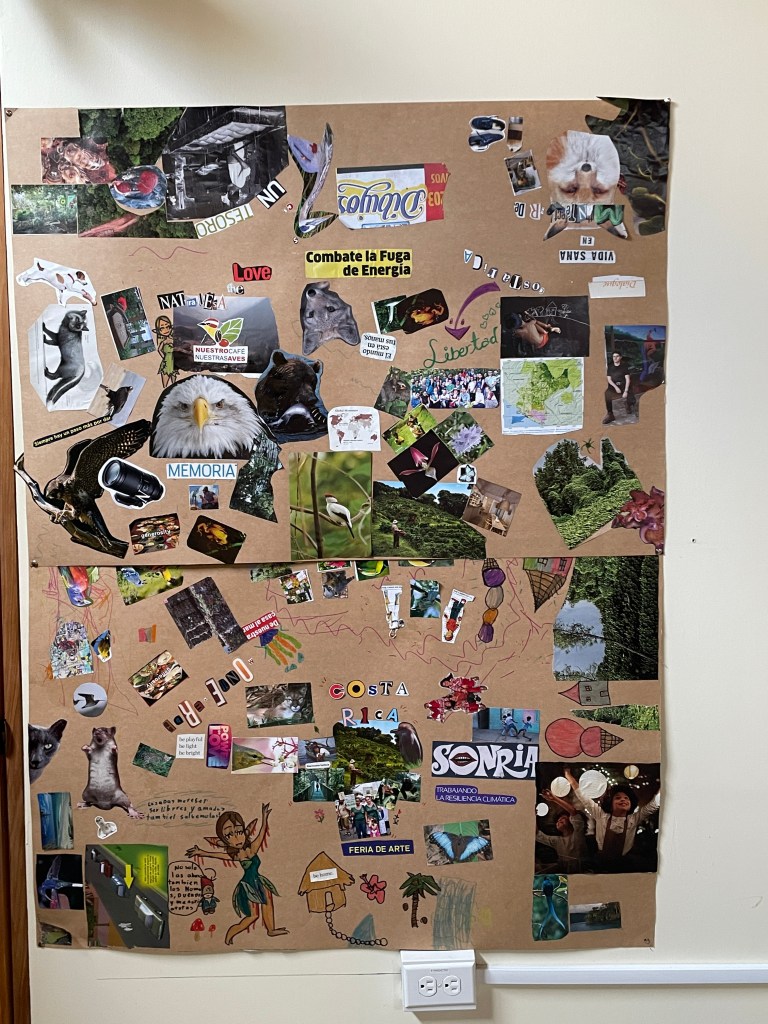
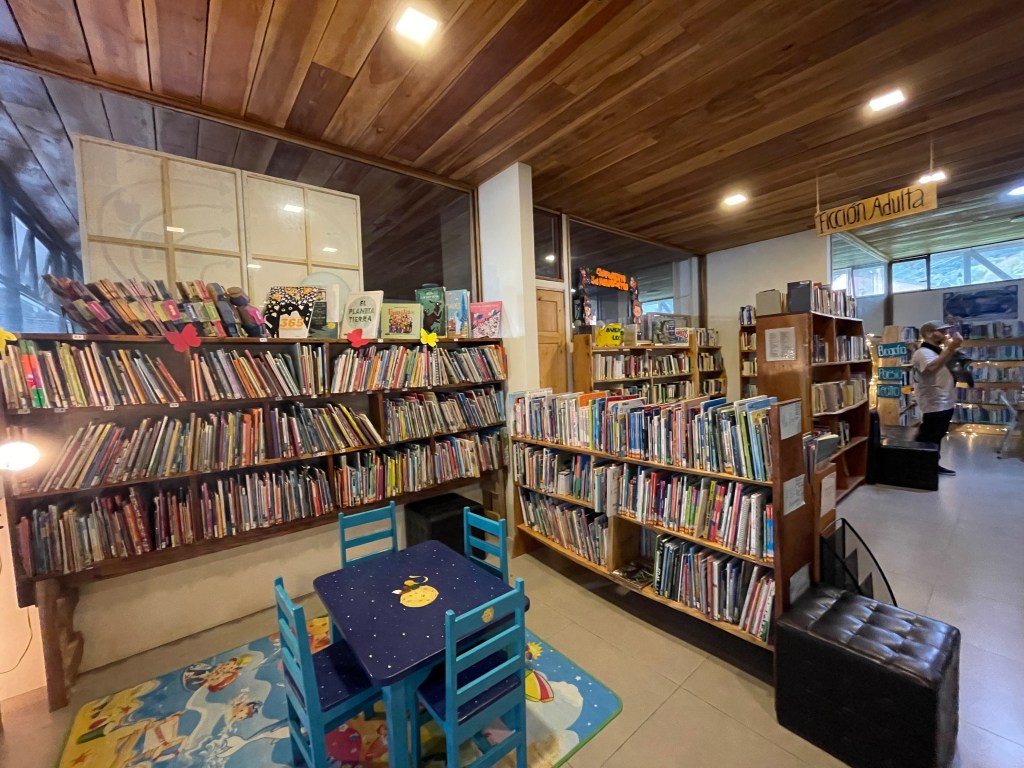
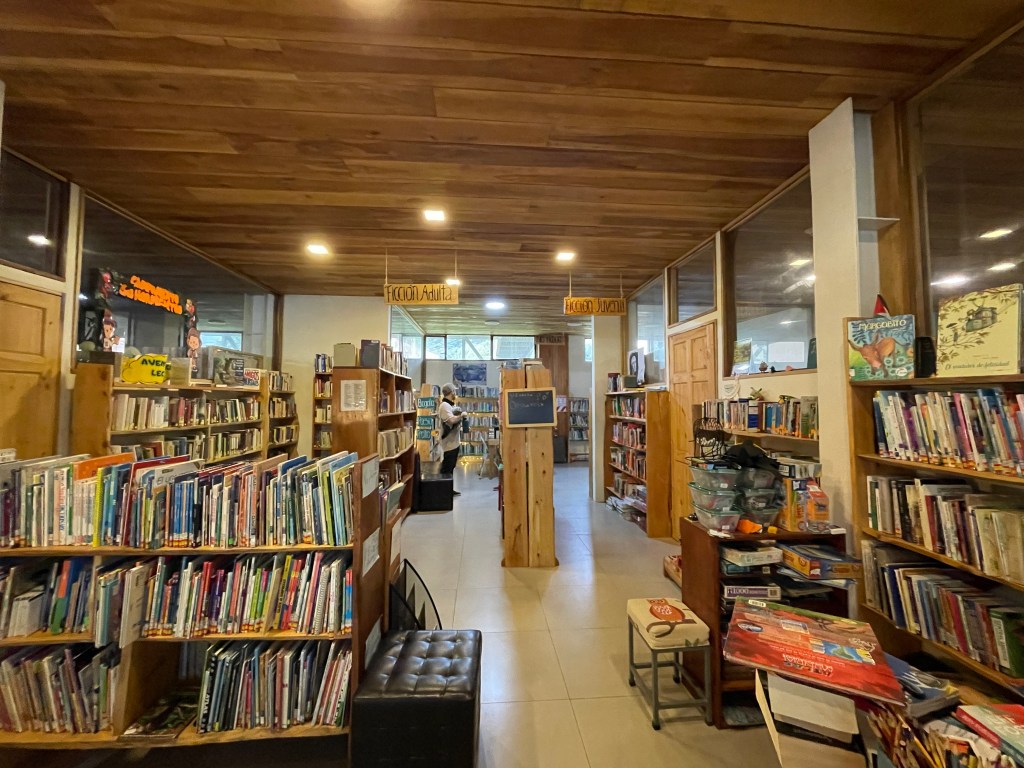
Besides relying on donations, the library is run completely by volunteers. Alejandro, the librarian who spoke to us, is one of three main volunteers. Occasionally, tourists or students will pop in and offer their time and energy to help the library with shelving or reorganizing.
The biggest challenge this library faces, though, is the same one echoed in so many libraries: outreach and encouraging a culture of reading. Getting the word out is such a monumental task in any community, but especially in a place that does not already have established public libraries. In our technologically-driven world, we often forget about the pleasure and importance of reading a book. Public spaces that are free and safe for everyone are so special and, if we’re not careful, they will go extinct. If you have books in Spanish, want to donate money, or are coming to the Monteverde area, get in touch with the Biblioteca Publica Interactiva Santa Elena on Instagram. While you’re at it, don’t forget to visit your local public library if you’re lucky enough to have one. I encourage you visit the front desk and ask them about their services. I promise the staff will be so excited to share everything they offer!
If you read the main post about Monteverde, you also know that we took Alejandro’s recommendation to visit the Monteverde Institute. The librarian, Ignacio, generously showed us around the institute and told us about their library. Many of the data-based collections are digitized, but they do offer paper books about the culture, biology, and ecology of Costa Rica. Since most of the students who visit the Institute are from other parts of the world, they often need this information to fill in their knowledge gaps.
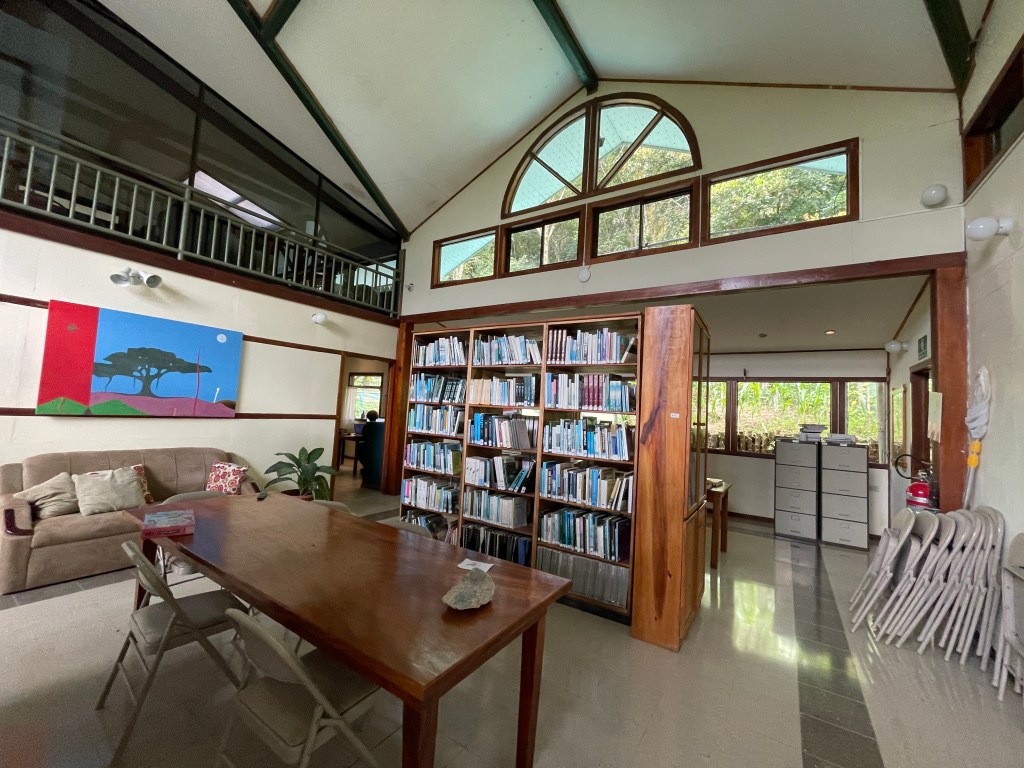
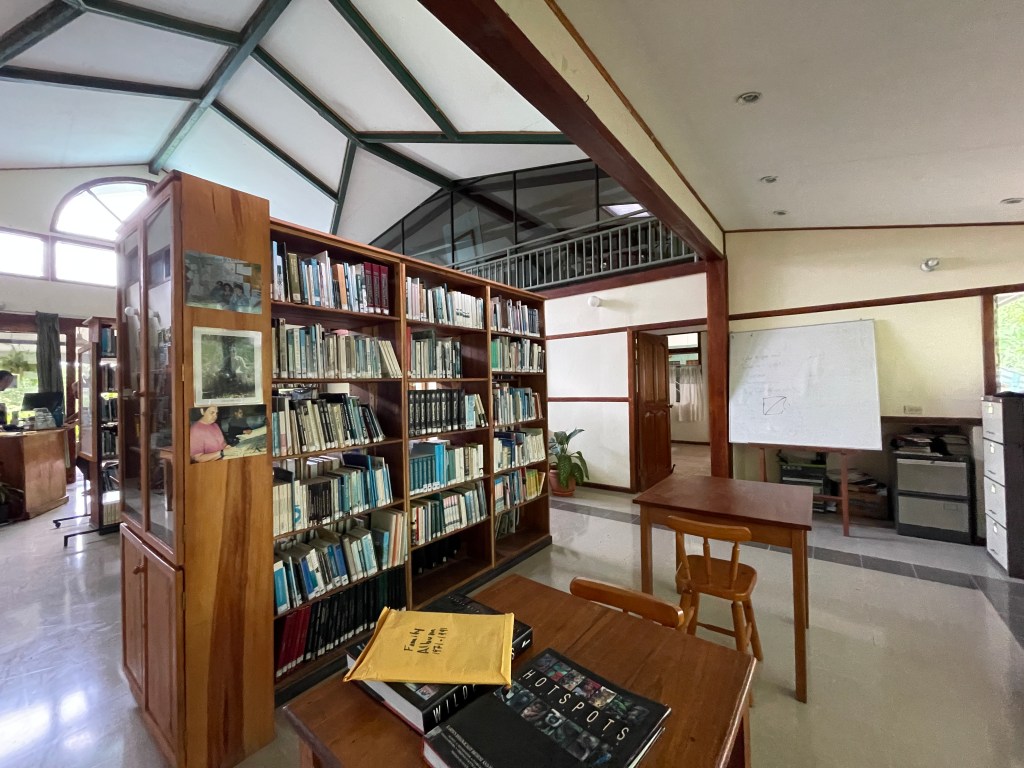
As you can see from these photos, a lot of natural light shines in from the windows. The stacks are open and fresh air comes through from the main doors. Though Monteverde is cooler and drier than, say, the coastal towns, it’s impossible to avoid humidity altogether. Costa Rica is in the tropics after all! When I asked Ignacio how they protect their material from humidity, he said that they don’t really have the funds or means to do so. Whatever can be digitized is digitized, but the hope is that the material will last as long as possible. However, the physical material they have is not so precious that it would be such a great loss if it deteriorated.
Still, this was not very surprising: so many libraries lack the funds and training to protect the materials at their disposal. Some readers of this blog might say, well, at least the data is digitized. Digitization may seem like an end-all-be-all way to preserve material, but digital rot is a real problem. Moreover, as we rely more and more on proprietary software, we are at the whims of their financial evolution. Remember when you could develop a roll of film and get digital copies on a Kodak CD? I’m still not sure what to do with all of my Kodak CDs full of photos from high school since I don’t have a CD-ROM on my laptop. Even if I had an external CD reader, how would I access the Kodak program to look at the photos? Good thing I have negatives and the developed photos.
There was one more library we could have visited, but it was a children’s library at the Quaker school. While I do appreciate a children’s library, especially since so many have been closing in the U.S., we decided to skip it in lieu of other adventures. (If you’re in the U.S.: please help save school libraries!)
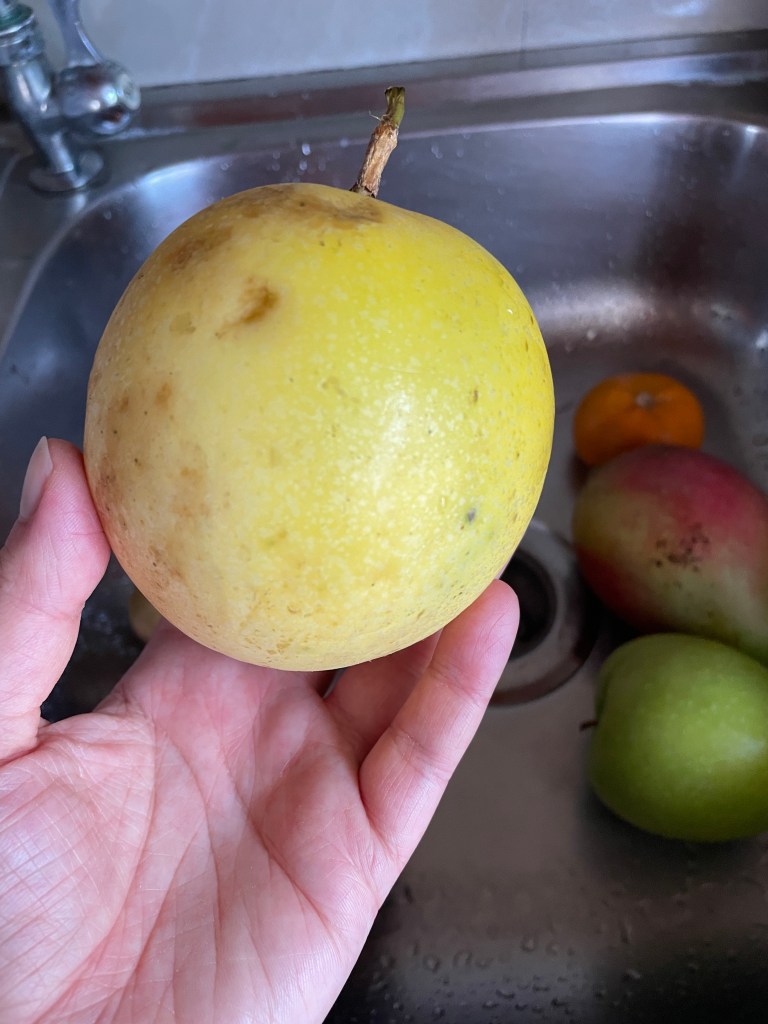
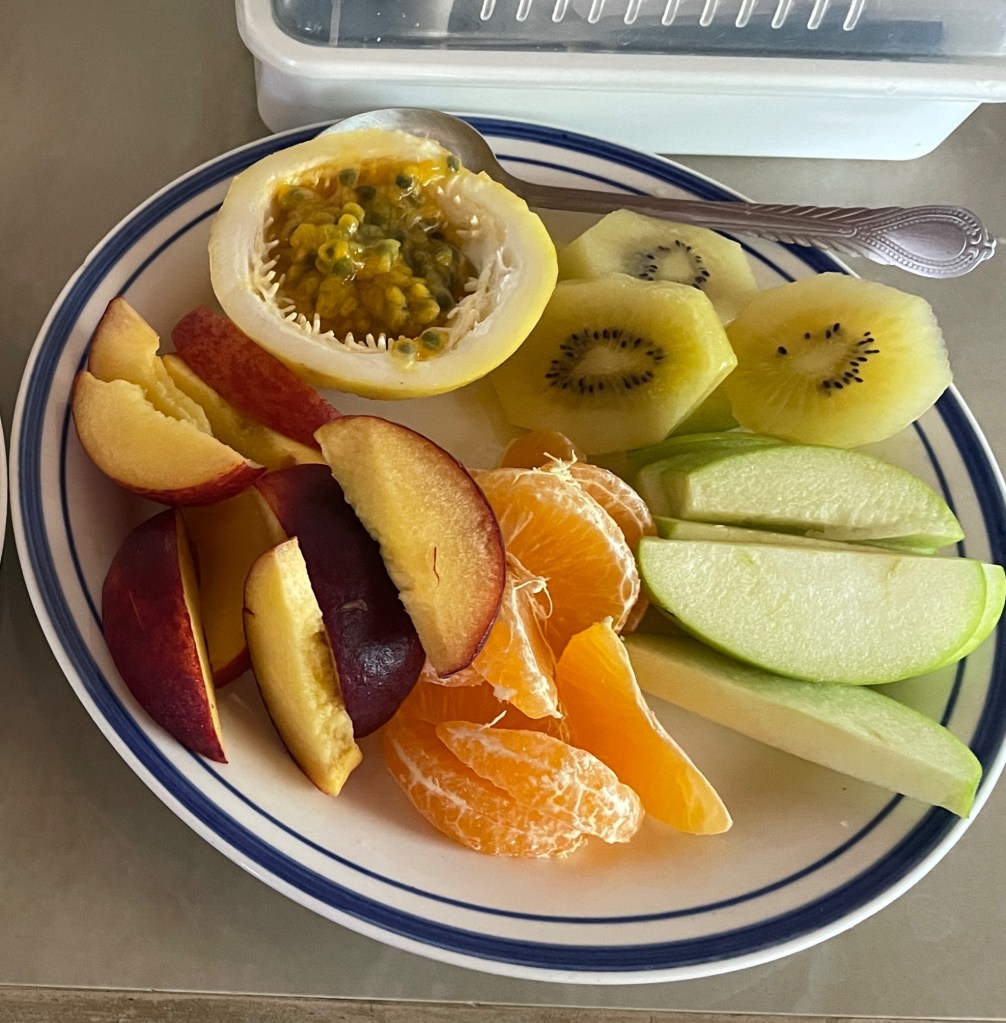
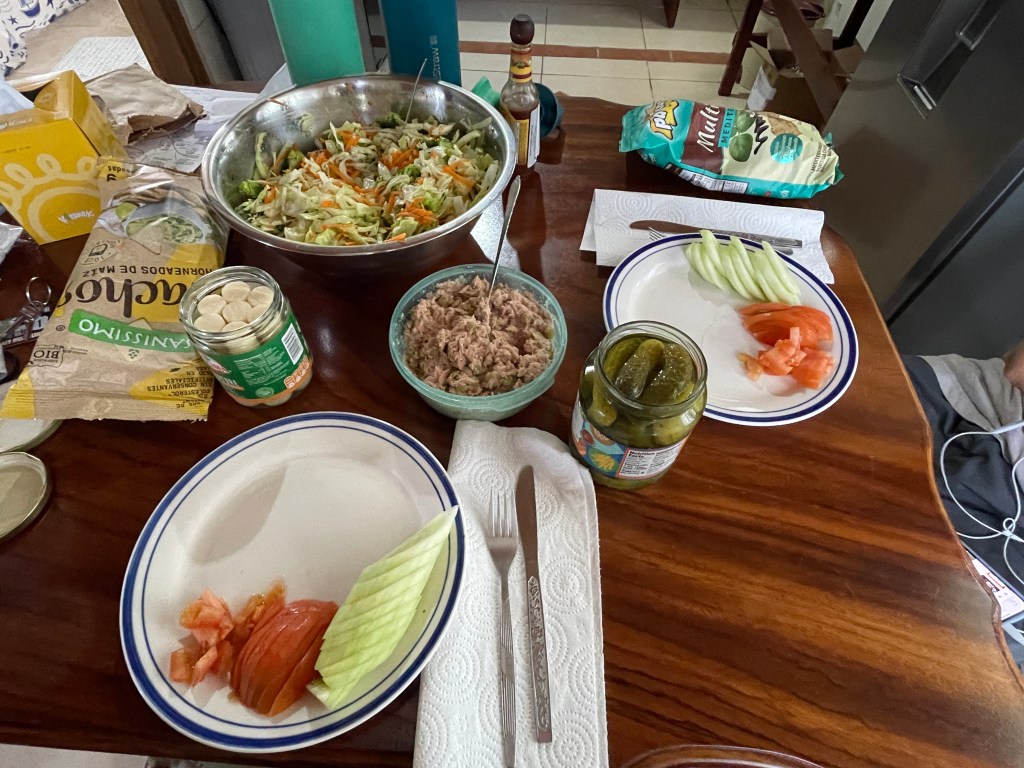
What of the food? Costa Rica is significantly more expensive than Guatemala, so we ate many of our meals indoors. We didn’t mind since it gives us a chance to eat more fresh fruits and vegetables, as well as cut down on animal products. When we were at the grocery store, I noticed a fruit called maracuya. I couldn’t look up what it was at the store since I didn’t have any reception, but I bought it anyway. What’s the worst that could happen? It’s just fruit! Turns out that it’s passion fruit, but different than the purple kind I’m used to. For lunch, we had tuna salad, a lemony coleslaw, sliced veggies, chips, pickles, and hearts of palm.
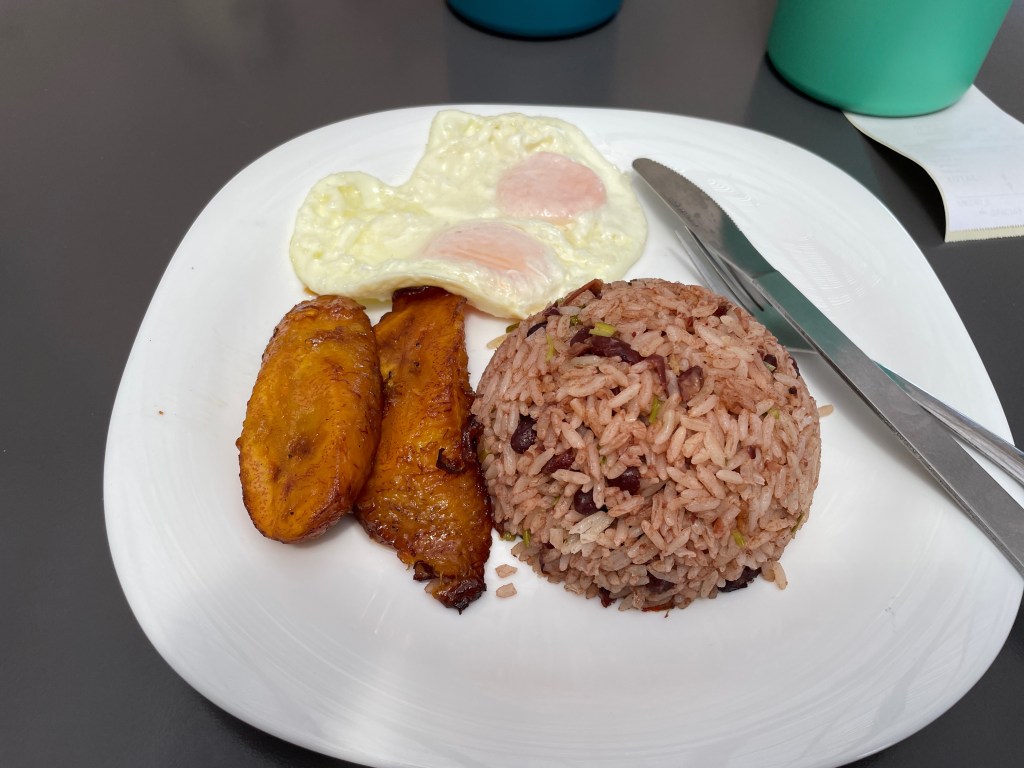
When we went out for dinner, we tried to prioritize Tico food as much as possible. Gallo pinto (literally spotted rooster) is a delicious staple of rice cooked with black beans. (This is different from refried beans in Mexican cuisine or the bean paste in Guatemalan cuisine.) I found it to be very savory, which helps balance everything else on the plate that may be under-seasoned. Plantains, typically fried to perfection, are also abundant, of course, but side salads are more common.
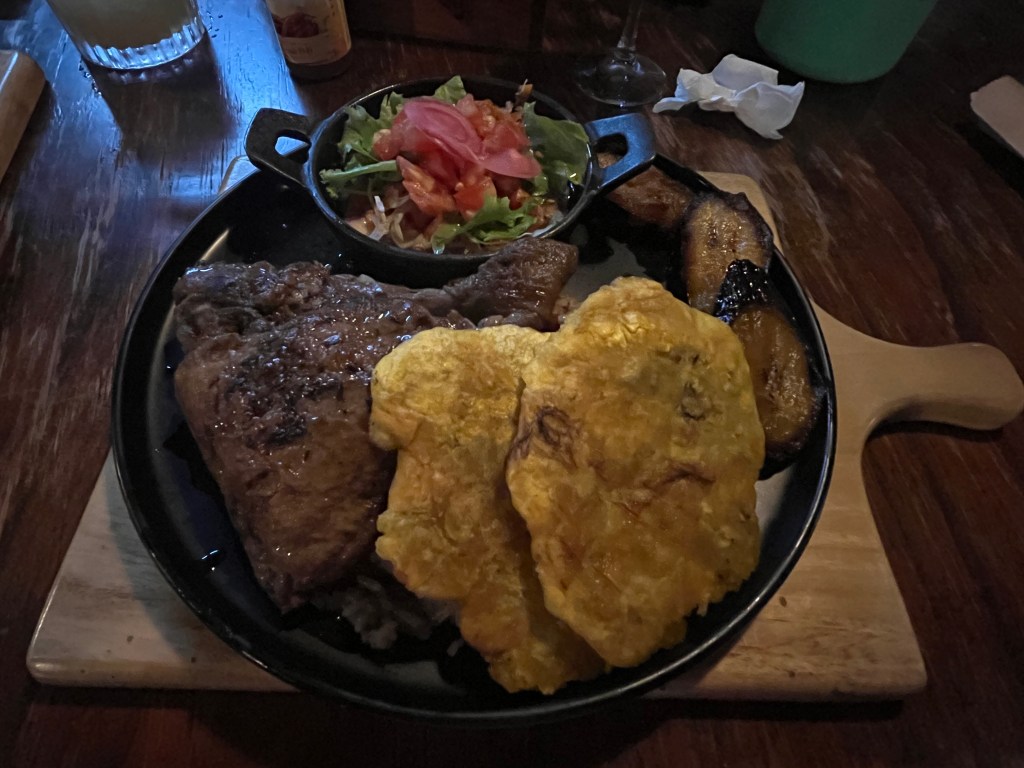
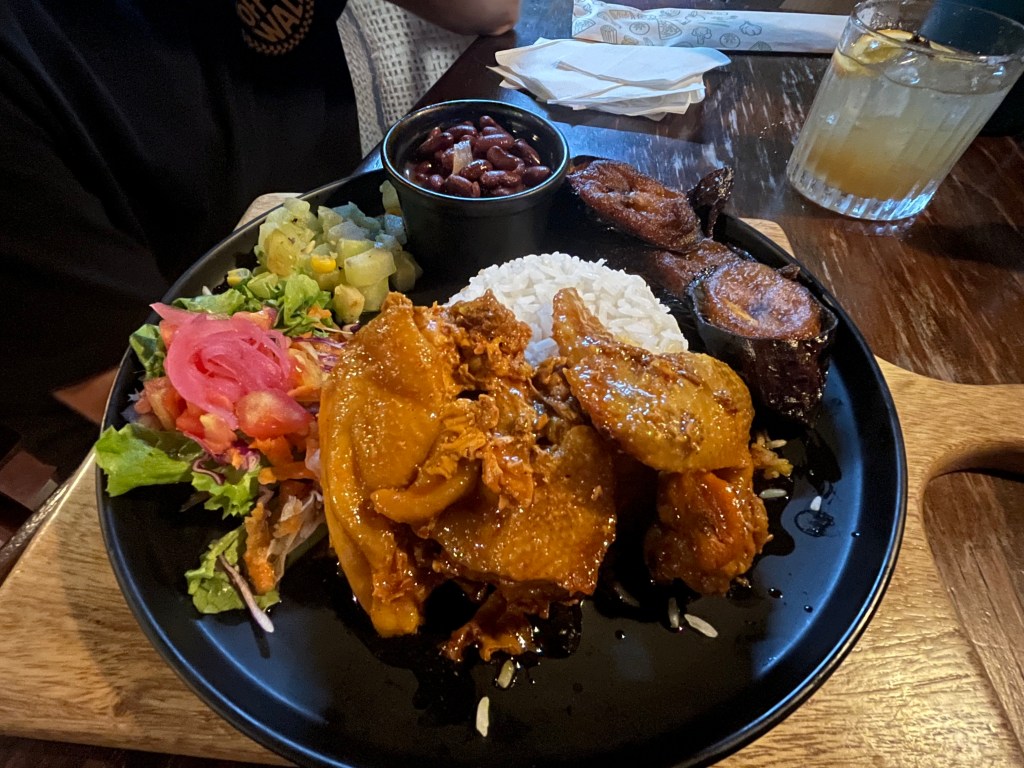
Food inspired by Caribbean flavors is common as well. At Sabor Tico, we ordered pollo caribeño (Caribbean chicken) and gallina achiotada (annatto chicken). Neither dish had quite the flavors we expected, but it was very flavorful nonetheless. When I think of Caribbean flavors, I think of bold, complex, and spicy sauces slathered on meat like jerk oxtails. Caribbean flavors through a Costa Rican lens are perhaps more muted or maybe it was just this restaurant. If you have any insight, please leave a comment below and let me know!
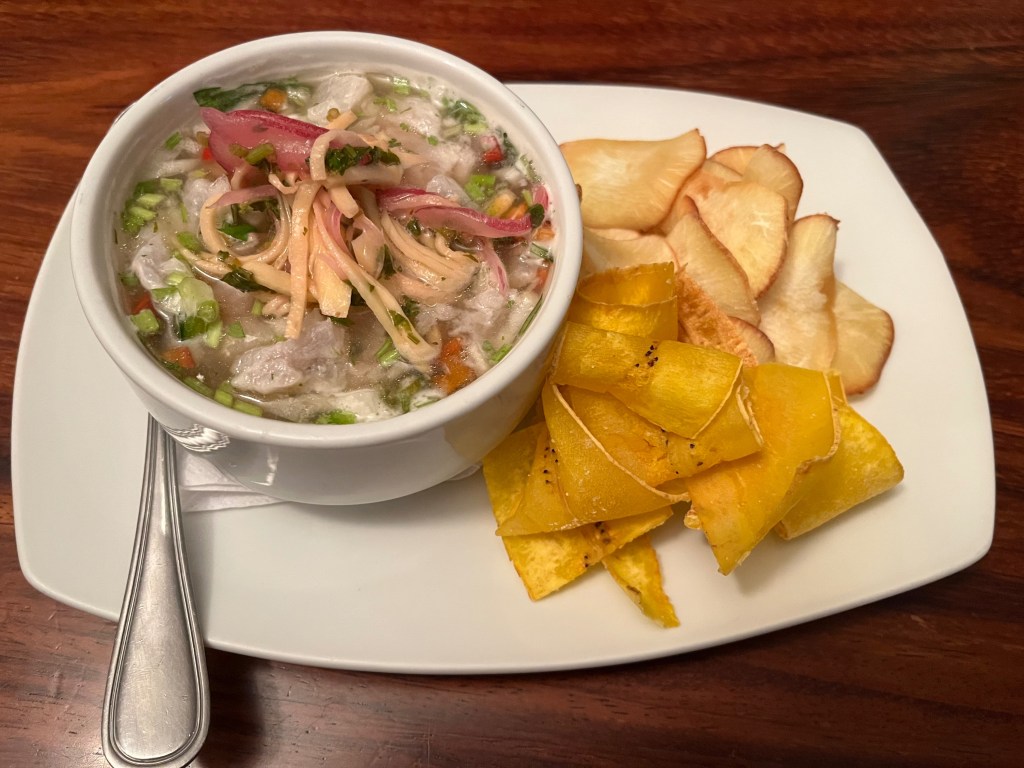
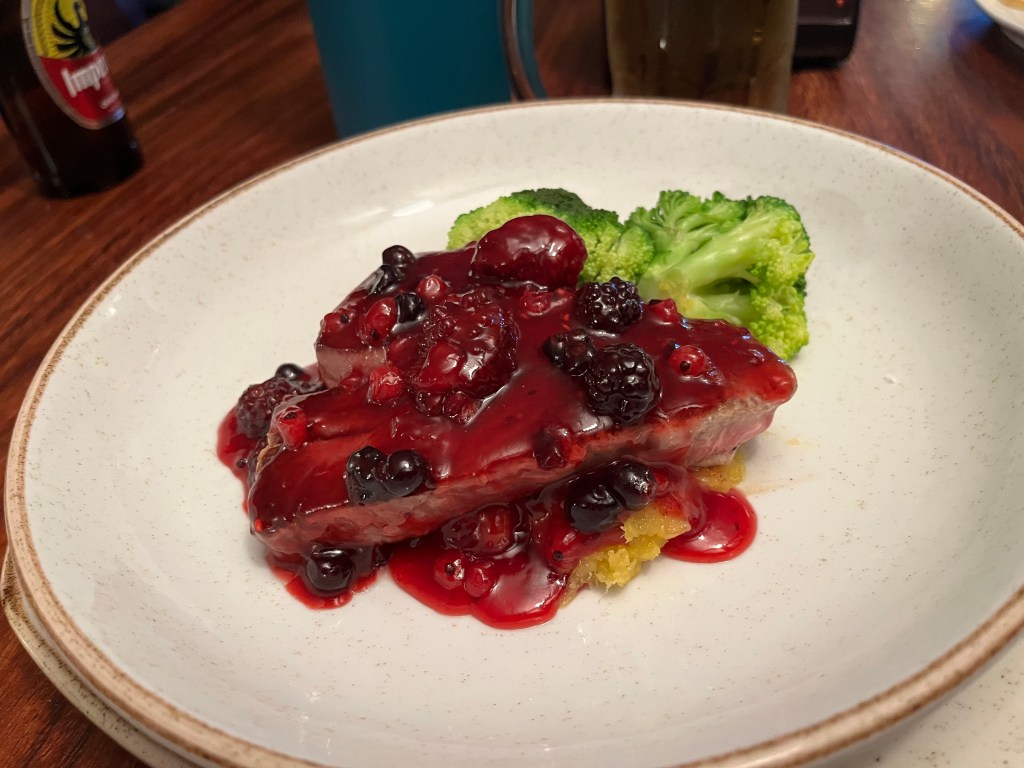
Another night, we visited Tico y Rico (what a cute name!) to try some seafood. I ordered the ceviche served with a side of plantain and cassava chips. Delicious, of course. Adam ordered sea bass on a bed of mashed pumpkin with a berry compote on top. I was very suspicious of the idea of sea bass and berry sauce. Chicken I could understand, but fish? Yikes I thought!
Y’all, it was so yummy.
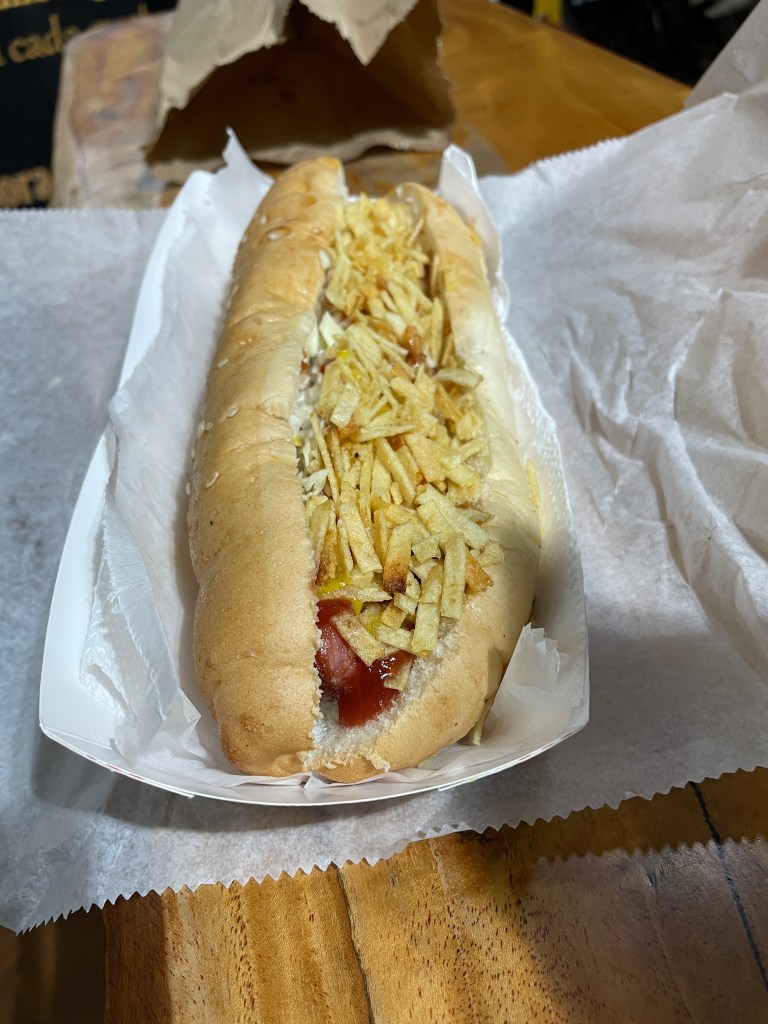
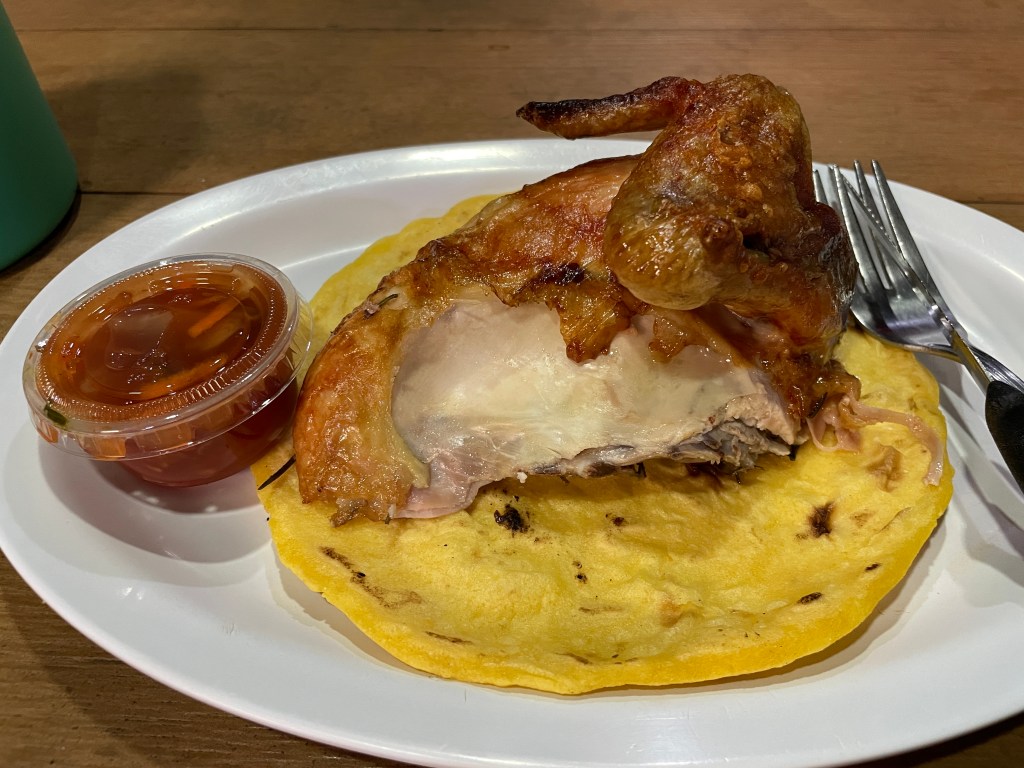
Sometimes, though, no matter how much you try to eat local food, you just need a bit of junk. After a few drinks at a food hall & bar, we ordered Thai-flavored wings and fried potato pakora (not pictured sadly). Both dishes satisfied growing cravings for pan-Asian flavors. For his main course, Adam noticed a little hot dog stand in downtown Santa Elena and couldn’t quite resist. He ordered a jumbo dog with finely chopped onions, sauerkraut, thinly sliced fried potato, ketchup, and mustard. I, on the other hand, had my eye on the rotisserie chicken stand. I ordered the chicken with a tortilla and chimichurri, which clearly means something else in Costa Rica. This chimichurri was a cross between ketchup and a chunky salsa, which was not the vibe, as the kids say. Thankfully, they had a very spicy habanero-mango hot sauce that gave the chicken the little kick it needed.

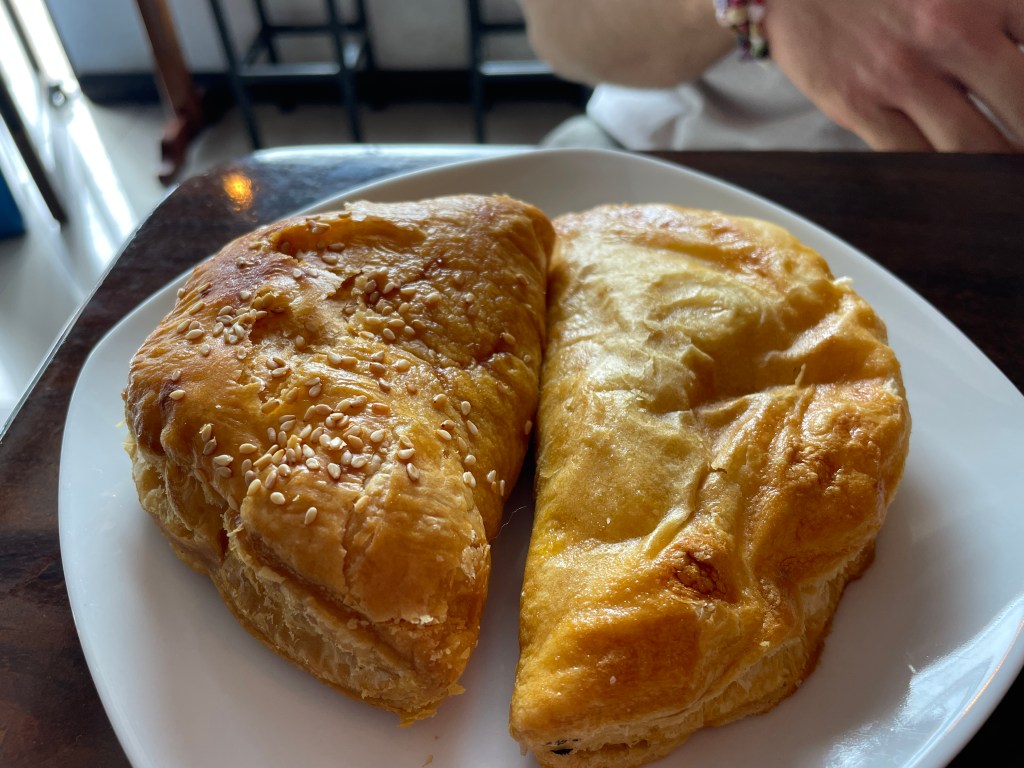
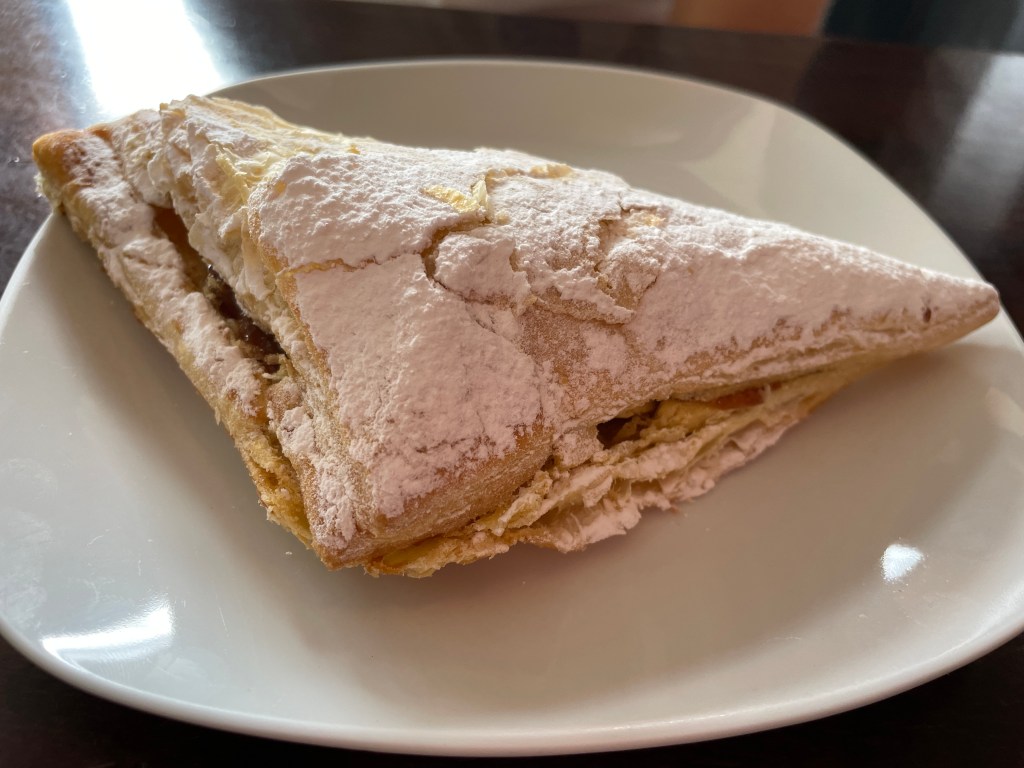
The last bit I want to share are the empanadas Adam had for breakfast before we left Monteverde for Tamarindo. One was filled with chicken and the other with beef, but they didn’t taste like the empanadas he is used to eating back in California. It’s not that they were bad, just different. He also ordered this caramel turnover which looked delicious, but was too buttery and flakey for his taste. According to him, if I could eat it, I would have loved it.
Have you eaten Tico food? Is there a dish or a drink you think we should try? Let me know in the comments.
Be sure to like, comment and subscribe to Traveling While Introverted so you don’t miss the next post!
 Traveling While Introverted
Leave a reply to Costa Rica: The Final Stretch – Traveling While Introverted Cancel reply