After almost three weeks in the Tamarindo area, it was time to explore more of the country. Since we had already purchased our out-going flight before we landed (for visa purposes) and didn’t want to change it, we knew our geographical range would be limited. So we decided to continue exploring northwestern Costa Rica. Perhaps in the future we will return and explore the southern & Caribbean side of the country.
Our first stop after we left the Tamarindo area was a town called Guayabal since it was close to Parque Nacional Rincón de la Vieja, which Adam describes in his latest post. What we were most excited to see was the volcanic activity. The range of volcanoes creates a mountainous landscape, lots of hot springs, bubbling hot mud, and other geothermal features. Due to the altitude, the weather was much cooler (halalu!). It was also an opportunity to visit less touristy towns, which we always prefer.
Rather than stay at a hotel or resort, we stayed at the Greenhouse Lofts Miravalles. We realize we say this a lot, but this was an exceptionally wonderful place to stay. It was so quiet and peaceful, with a lot of birdwatching opportunities thanks to the well-kept garden. Yahm initially assumed that the garden was so beautiful because Ticos are prolific gardeners, but then we found out that both of the owners are agricultural engineers. Anna, who we mostly spoke to since her English was better than her husband’s, taught rural development at the local university until Covid changed everything. (Cute side story: she’s Salvadorian and her husband is Tico, but they met at an agricultural engineering conference in Japan. What a small world!)
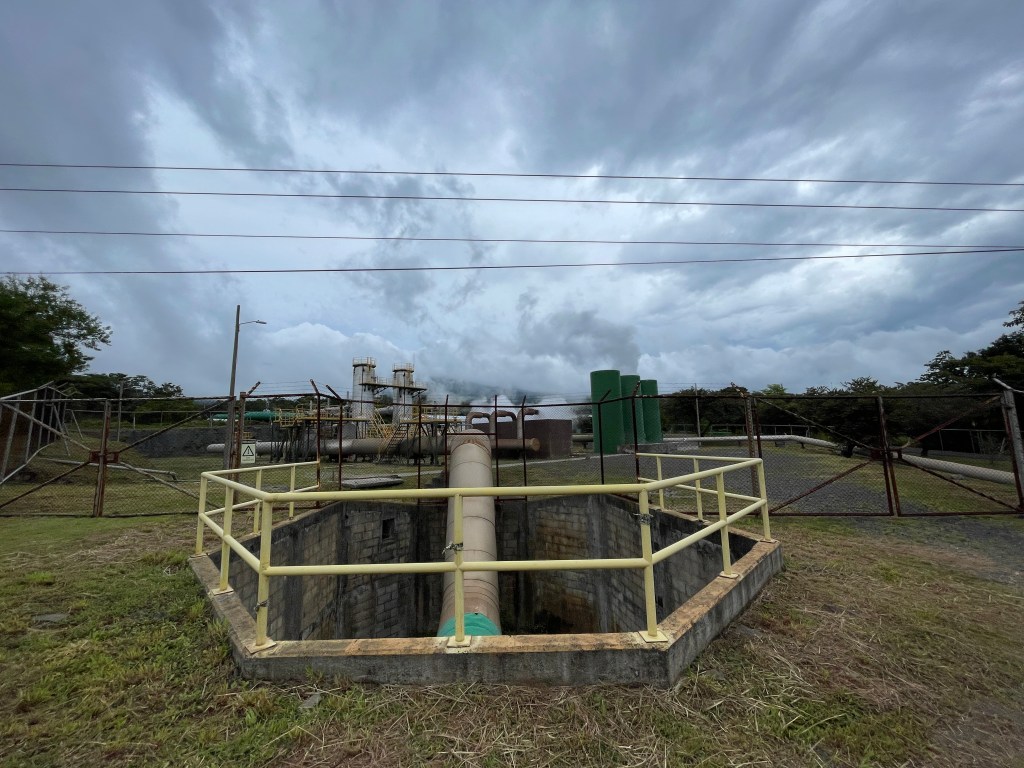
One of the advantages of driving rather than flying is the chance to see the underbelly of a country. We noticed windmills, massive above-ground pipelines, and sub-stations throughout the area. As it happens, this area is one of two energy corridors of the country. Aeolian (wind), geothermal, and hydraulic power is collected and managed by the Instituto Costarricense de Electricidad (ICE). Apparently, Costa Rica used to suffer from massive blackouts in the 1940s and many of these plants were built in the 1990s. You can’t tell from the photo, but this pipe looks as large as an adult slide at a water park. As we explored the area, these pipes could be seen peeking through the landscape.
After a few days in the mountains, it was time to slowly make our way south to get closer to San José, where we catch a plane to our next destination. We stayed in a town called Santa Cruz for a few days. We didn’t know it when we booked it, but Santa Cruz is a true Tico town. We stick out like sore thumbs. Most of the people in town don’t speak English, including the hotel staff, which has helped our Spanish significantly. The other guests at the hotel all seem to be Costa Ricans on holiday or staying for work. This has been the kind of experience that Yahm has been waiting for since we arrived.
Once we got settled in our hotel, we decided to go to a bar (obviously). In our stilted Spanish, we tried to order some aged rum we saw on the shelf, but the bartender didn’t understand us at first. However, a different bartender/server realized what we were asking for and helped us out. (We realized later that the first bartender was new and didn’t know they had 25-year old rum.) The more knowledgable bartender, Joseph, spoke very good English and he chatted with us quite a bit. He also introduced to a delicious Costa Rican rum called Ron Centenario. What’s interesting about their rums is how they are aged and blended to produce a high-quality liquor. Yahm didn’t even need ice with hers which is a testament to its yummy flavor and smooth finish.
We wound up staying at the bar for hours talking, drinking, and eating. We became friendly with the other bartenders through a mixture of our wonky Spanish and Joseph acting as translator. Adam even became friends with Edgar, a former bull rider (he showed us his scars) who didn’t speak a lick of English. He charmed us so much that we bought him a beer. When the bar filled up due to the World Cup qualifying game between Costa Rica and Nicaragua, we decided to take our leave. This was probably one of the more memorable experiences we had during our trip through Costa Rica. Obviously, we went back two nights later for dinner and drinks.
The next morning, we headed to the town of Ortega to take another river tour. Adam describes the tour in his post, but we want to take a moment to share how special the tour company was. One of the ways that we research which parks to visit is by looking at tours available through sites like TripAdvisor. However, we do our best to book directly with a company so that they don’t have to pay commission to external websites. This is especially important for small businesses like the Palo Verde Boat Tours company, with whom we booked the river tour.
When we arrived, a woman named Patricia offered us coffee and dragon fruit juice (amazing) and was very welcoming. After the tour, we were treated to a pottery demonstration. José is a fifth-generation potter who lives in a town known for its traditional pottery practices. Everything is made by hand: from collecting materials to drawing designs to baking the pottery in a wood-fired kiln. It’s a long process from start to finish and, sadly, the youth are not as interested in preserving these traditions. Three of his own family members have abandoned the craft. The town now only has 22 families that make pottery, nearly half of what it used to be before the Covid pandemic. If we weren’t traveling so much, we would have bought one of his beautiful creations.
After learning about local pottery, Patricia and Maria gave us a tortilla demonstration before lunch. Patricia explained that the corn is grown locally, parboiled, and hand-ground in a special machine. Maria expertly flattened the masa by hand to create a tortilla and fried it in a comal. As it was cooking, Patricia shared that there is only one woman in the whole town who makes tortillas to sell to the townspeople, but she needs a worker. Once again, we heard the same problem: the youth are not interested in preserving this way of life and it’s disappearing. Patricia’s passion for her community echoed what we saw at the libraries in Monteverde and when we visited the coffee farm near Antigua, Guatemala. This sadness and worry that the youth will forget its traditions because of the emphasis on technology is a global phenomenon. Still, we must all find a way to pierce through the reels and endless scrolling, otherwise we’ll lose our traditions and histories.
The final town we visited before leaving Costa Rica was Nicoya, about half an hour from Santa Cruz. The town itself is a bustling Tico town. To be honest, we didn’t spend a whole lot of time exploring it, primarily because of rain and confusing parking. (Yahm has received too many parking tickets in her life and refuses to take chances.)
Our next stop is a new country. Can you guess where we’re headed? Let us know your guesses in the comments below! Don’t forget to like and subscribe to Traveling While Introverted so you don’t miss our next post!
 Traveling While Introverted
Leave a reply to Tico Food in Tico Towns – Traveling While Introverted Cancel reply