After six days in Panamá City, we moved onto Boquete for cooler weather and another dog/house-sitting gig. We’ll share more about the town and our four-legged buddy Oscar in a general post, but for now, I’ll share about Jewish culture and the library/book scene.
For those who don’t know Adam and I, we’re not particularly religious Jews. (You could probably figure that out by all the food photos.) However, the holidays are a special time and we have tried to find Jewish community whenever we are far away from our families. Panamá as a whole has a robust Jewish culture and most of it is centered in Panamá City. Thankfully, though, there is a Chabad in Boquete. If you’re unfamiliar with Chabad, they’re basically a sect of Orthodox Jews who help establish communities all over the world by providing kosher meals, religious services, and any other religious needs. When we lived in Alabama and Arizona, we often went to Chabad houses for Rosh Hashana and Passover.
On the evening of Rosh Hashana, we made our way to Chabad. I don’t have any photos because Orthodox Jewish people don’t use technology during holy days, so you’ll just have to use your imagination. When we parked, the first thing I noticed was that there weren’t any armed guards. In fact, the gate was open and anyone could walk in, which is something we haven’t experienced in a very long time. What a relief to feel safe. As we entered the building, we entered the sanctuary of the synagogue. It is beautiful: white marble everywhere, plenty of room for tens of congregants, and lots of windows to help the light shine through during the day. As we walked in, we greeted everyone with shalom and shana tova, Hebrew for hello and happy new year.
I was directed to the women’s section and met the rabbetzin (rabbi’s wife) and two very friendly Panamian women who were so kind to switch to English so that I could be included in the conversation. The rabbetzin asked me what I’m doing in Boquete and when I told her we’re house sitting, she said, “Oh yes, I know who you are. Someone I know knows the lady you’re house sitting for and she told me you would probably show up.” Considering that Boquete is about 50% expatriates and there are only so many Jewish people who live here, I shouldn’t have been surprised. Still, it had been a long time since I was in such a well-connected space and I was taken off guard.
After services (which neither Adam nor I were quite prepared for and fudged our way through), it was time to eat. As it turns out, the only kosher bakery in town is owned by the Rabbi and his wife. (More about that a little later.) Adam said that the challah was some of the best he had ever had! Flavored and creamed honeys were also on the table, which was a very nice touch. The rest of the meal was wonderfully delicious: baked salmon with tomatoes; a variety of salads (including tahini which I miss so much!); beef with artichokes and potatoes; and, finally, a berry crumble. Adam confirmed that the berry crumble was as good as it looked.
During dinner, we had a chance to ask locals and expats about life in Panamá. One Panaminian couple live in both Boquete and Panamá City: he runs a hydroponic farm and she sells boutique mattresses to the wealthy. Their daughter, who is a few years younger than me, moved to Toronto for a job opportunity and was visiting for the holiday. Another couple traveled for years through Costa Rica, but eventually settled in David (pron: davEED, not dayvid). She’s a yoga teacher and he teaches interior design and even though they prefer Boquete, David has more opportunities for their teenage kids. Another man, an expat who moved to Panamá 40 years ago, also lives in David and manages a group of stores. We later found out that that the rabbi is actually from Venezuela and left a few decades ago. Such an eclectic group of people meant that we had a sense that Panamá really does offer so many opportunities for all sorts of people, if you’re willing to look for them. It was also great to be in such a Jewish space and hear so much Spanish. Jewish folks come in all shades and hues after all! (I couldn’t help but mention the organization Jewtina, which does wonderful work.)
As I mentioned above, we couldn’t take any photos of the service or dinner. However, we did visit the rabbi’s bakery, Morton’s Bakehouse, a few days later. Adam ordered a sesame bagel with light cream cheese and lox and let me video him taking his first bite. His review: this bagel was just as good as the ones you can get in New York City. Not only did the sesame not overwhelm the bagel (which happens too often), but there was a light sprinkle of zaatar on top of the onions and tomatoes that really tied everything together. The bagel came with a small side of strawberries, bananas, and oats drizzled with honey. Our iced americanos were also very yummy.
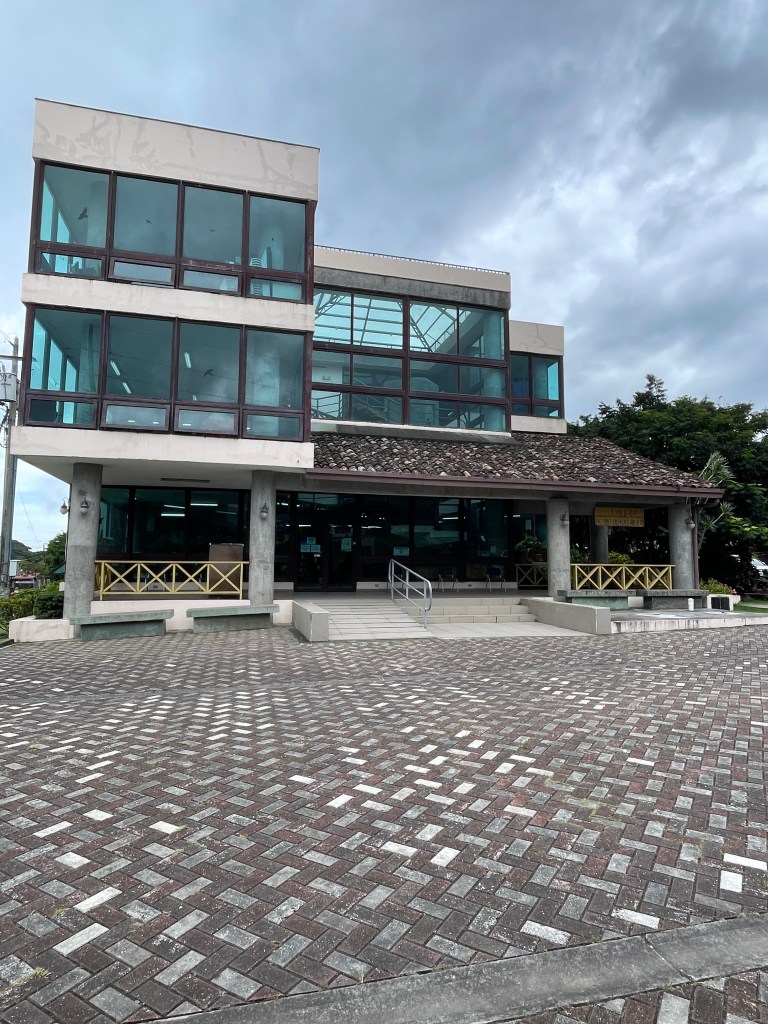
Besides being home to a very small Jewish community, Boquete has a public library and a used bookstore. The library opened its doors in 2012 and was completely funded through grassroots efforts. A public library system does exist in Panamá, but there isn’t a branch in Boquete so the community stepped up. It’s a very charming building with lots of windows and all sorts of spaces for patrons to read, work, and gather. One of the staff members, Guillermo, answered all of my questions about how the library works. The primary goal of the library is to encourage reading and be a community hub, though getting the word out is difficult. (Same problem everywhere.) Since many expats helped push for the library, the library follows the American model, according to Guillermo. I’m not entirely sure how that contrasts with the Panamanian model, but I hope to find out at the library in Bocas del Toro (the next destination in our travels). Fun fact for folks visiting Boquete: non-residents can get a library card that costs $5 with a $20 deposit that is returned when you hand in your card. If we were staying in town longer, I would have gotten a card and borrowed kids books in Spanish to grow my vocabulary.
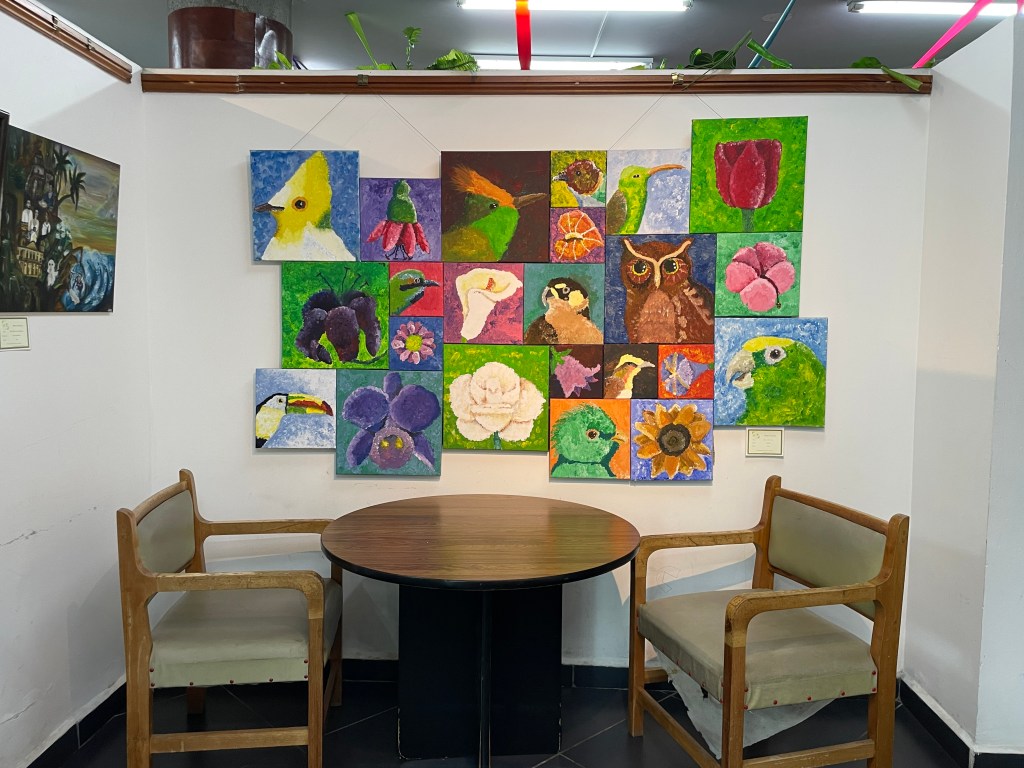
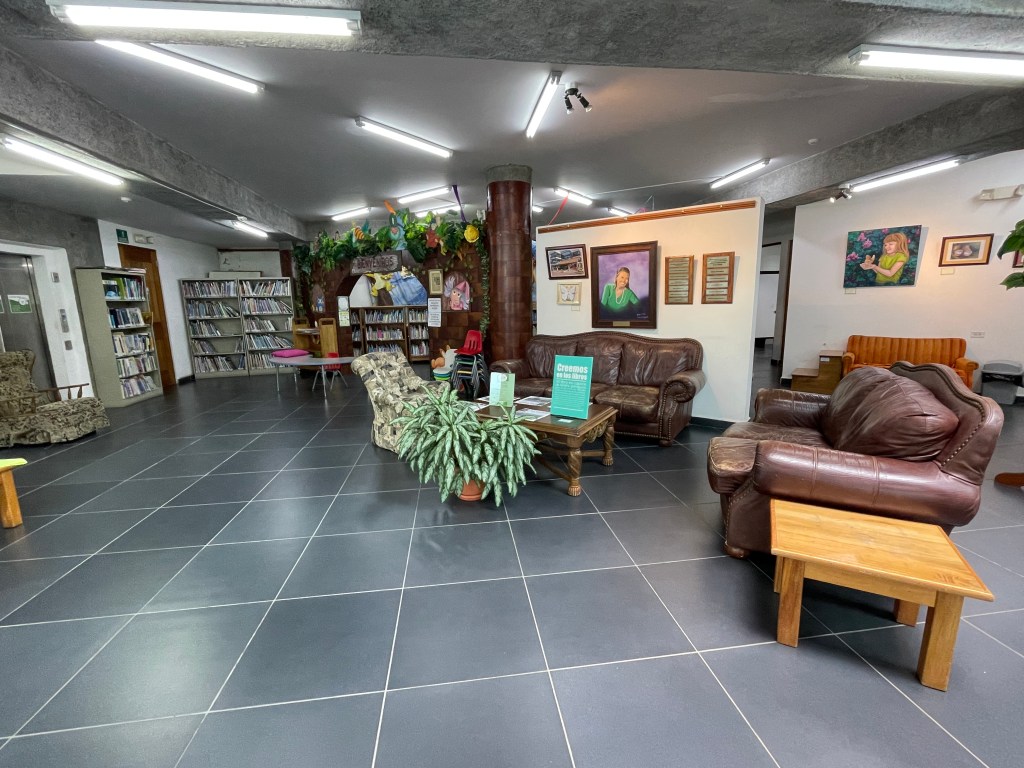
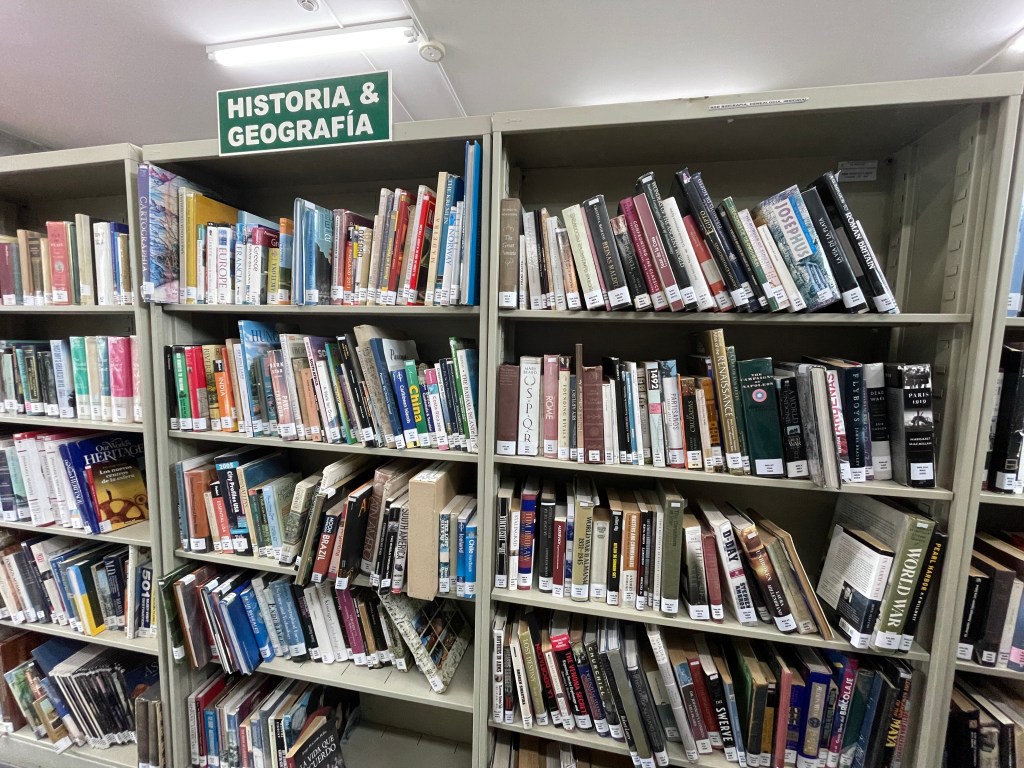
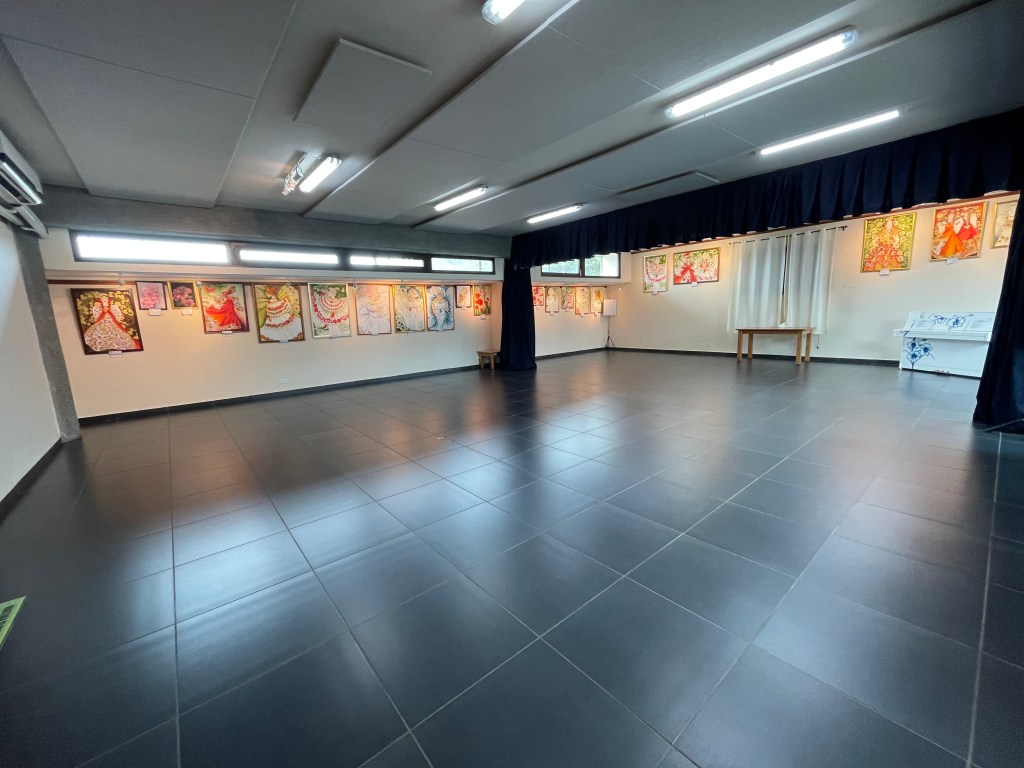
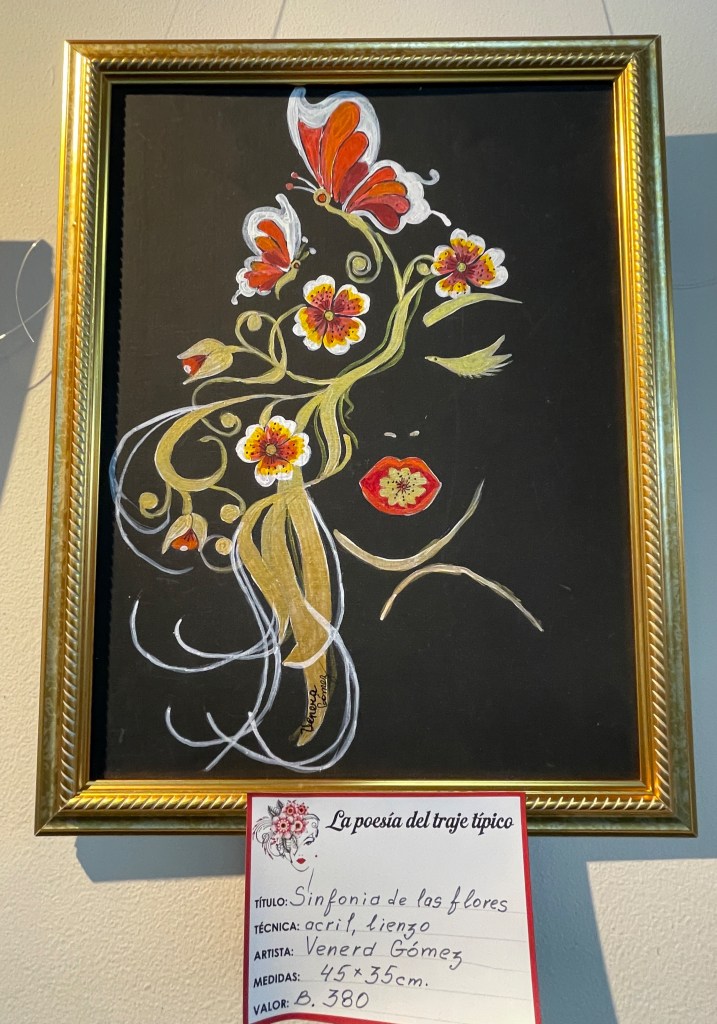
The building itself has three floors. The bottom floor has the circulation desk, tables with books for sale, a multimedia section, and the children’s section. The second floor has desks for quiet work and both fiction & non-fiction books organized by the Dewey Decimal System. (For those of you who haven’t been in a library in a long time: yes, it’s still in use; yes, it’s popular; yes, you should go visit your local library.) The top floor has a gallery that features a new local artist every month. Next to the gallery is a closed room where staff are busy sorting and digitizing a huge collection of donated materials from an important sociologist. Many of the documents are local and national government documents (think ledgers, records etc.) that the sociologist who studied Panamá collected somehow. I was allowed to take photographs of the building, but not people, so I couldn’t take photos of them working or what they were working on, unfortunately.
The exterior (left) and first floor. The area that says “Bienvenidos” (right photo) is the children’s section.
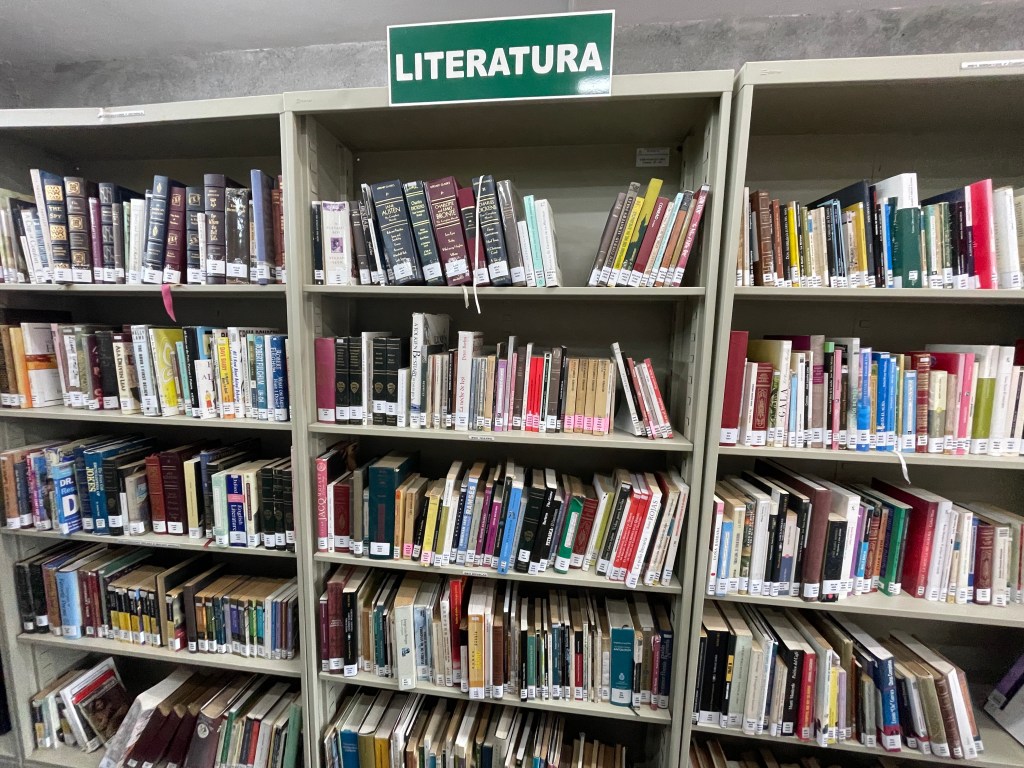
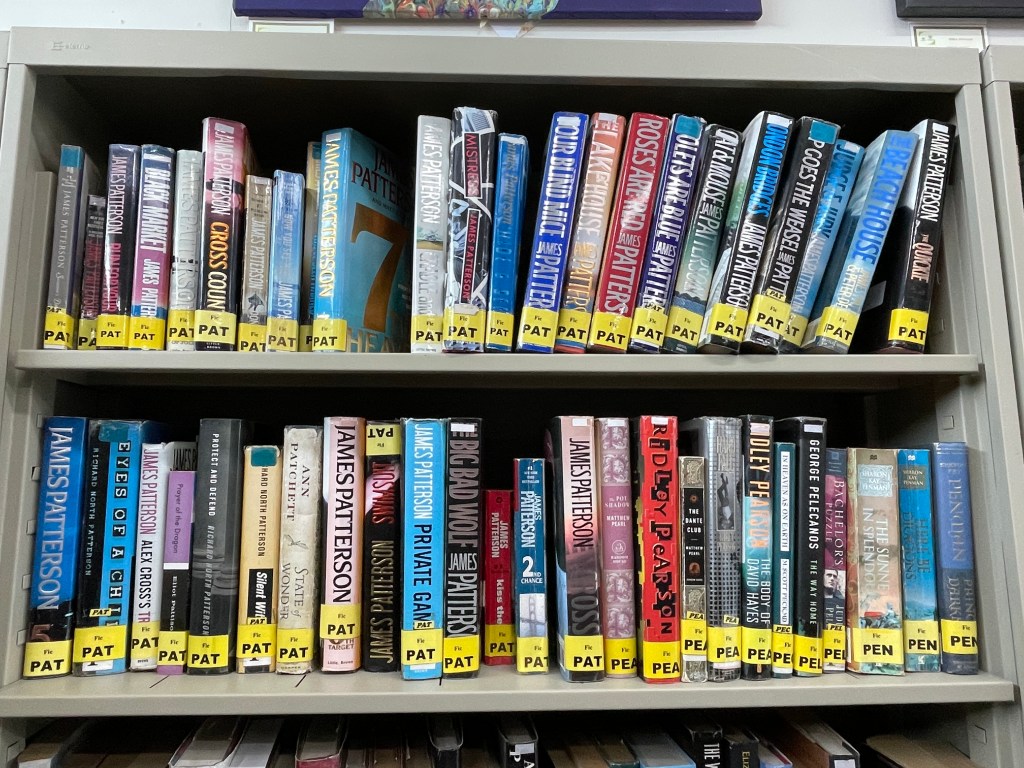
The second floor book sections. Even in Panamá they can’t escape James Patterson.
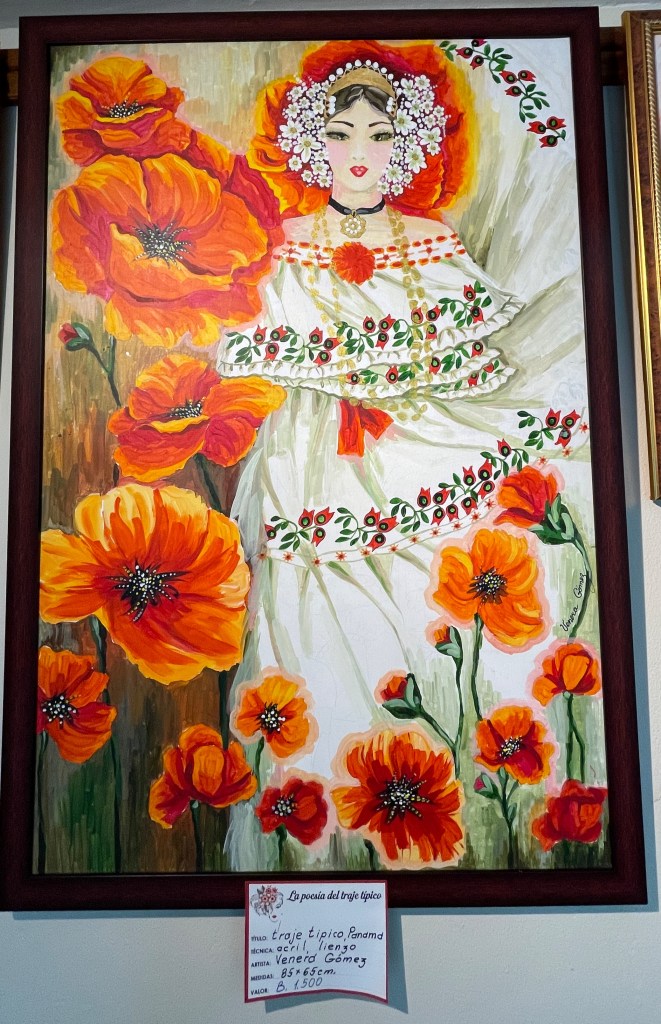
A few photos of the gallery, which also serves as an event space. The artist’s name is Venera Gomez.
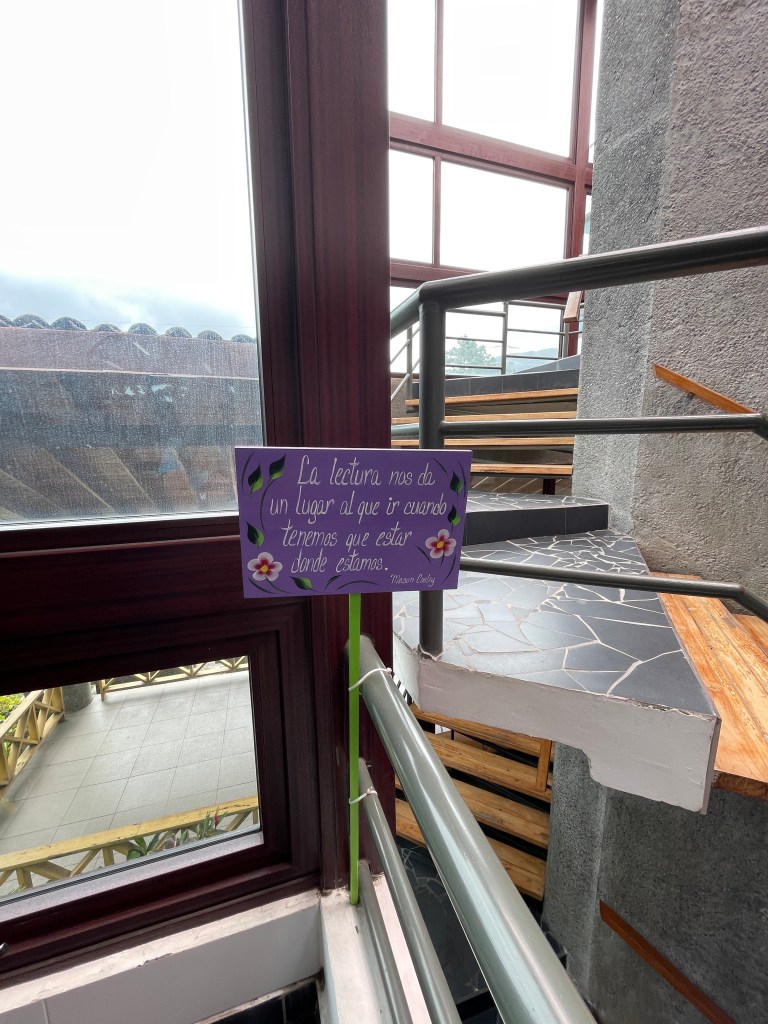
Throughout the library were little hand-painted signs with quotes encouraging patrons to read and explore the library. Quite a few were famous U.S. Americans, which was a little odd, but I suppose the sentiment is what matters. This was my favorite. It says:
“Reading gives us a place to go when we need to be where we are.” – Mason Cooley, an American aphorist.
I was hoping to purchase or trade the book I had finished, East of the Sun by Julia Gregson, with another used book, but that wasn’t an option at the library. So, we headed to the used bookstore, Libreria Bloise in the nearby town of Jaramillo. As soon as we arrived, the owner greeted us and explained to us all about his bookstore and showed us the different sections, all in Spanish. (We got most of it, I think.) In English, Adam asked if he trades used books. Sadly, he only collects specialty books or classics, especially in English, because he has limited space. So we walked around anyway, hoping I would either find a new book to read or a book I had already read in Spanish. Unfortunately, I found neither, but we enjoyed walking around.
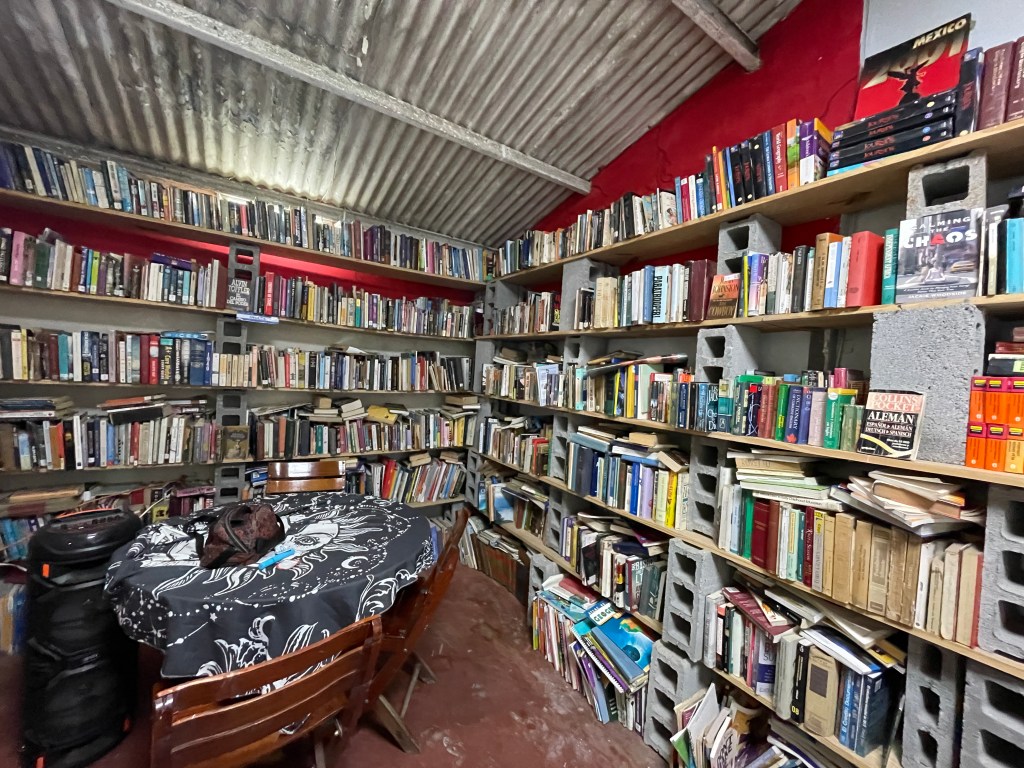
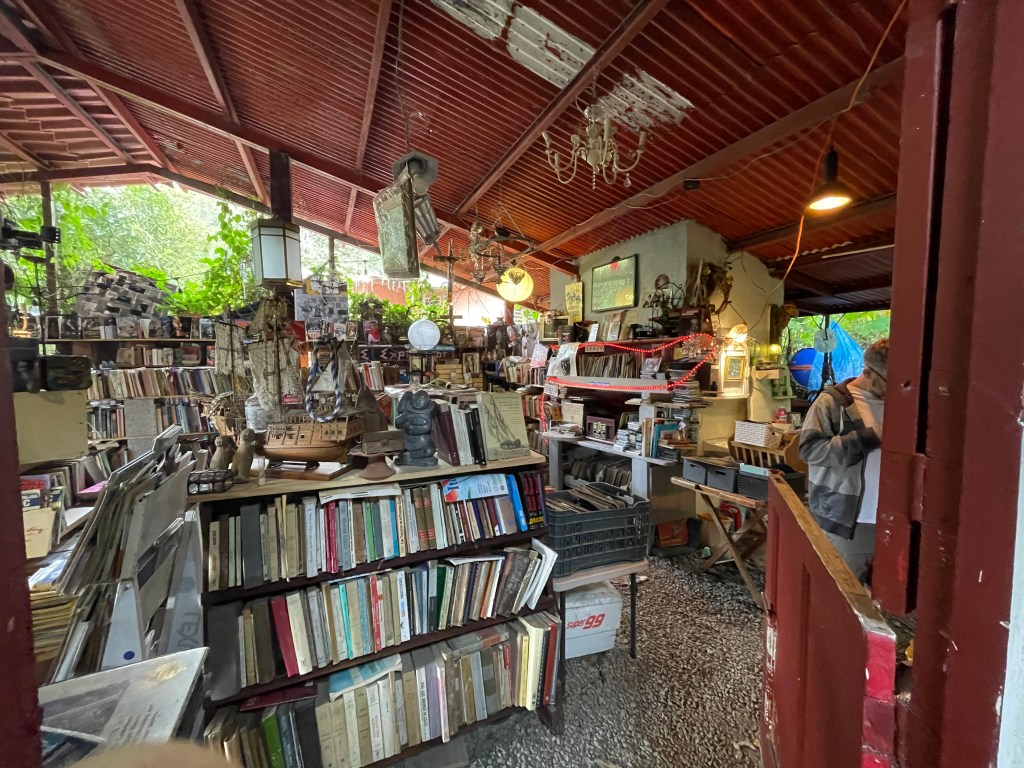
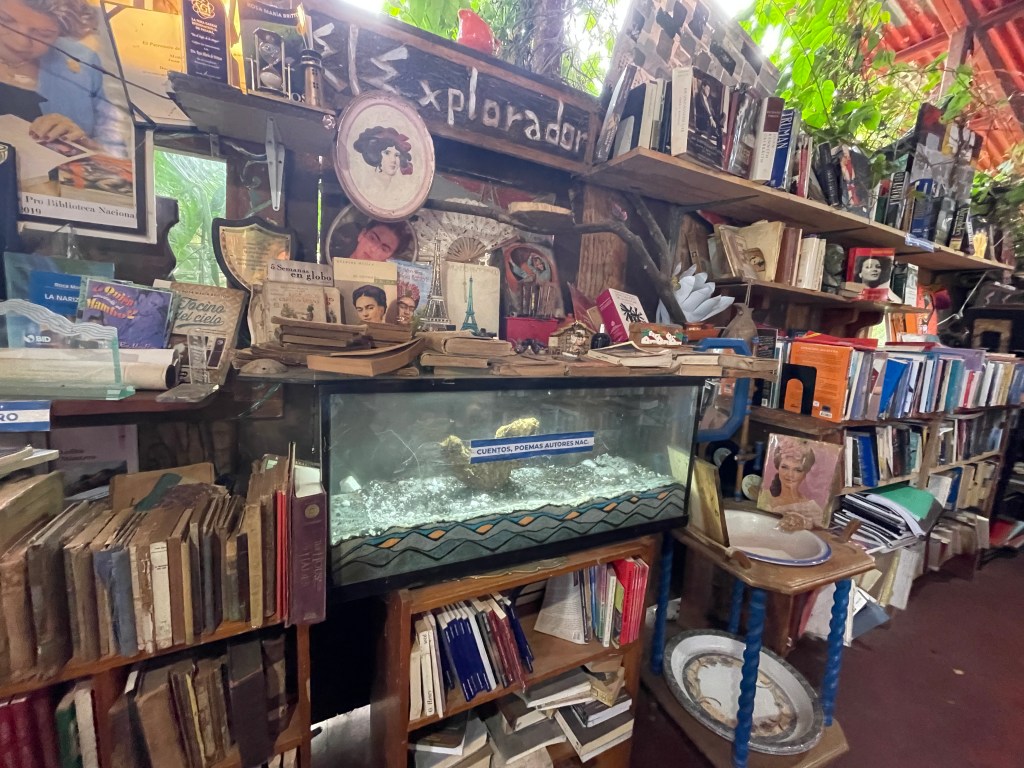
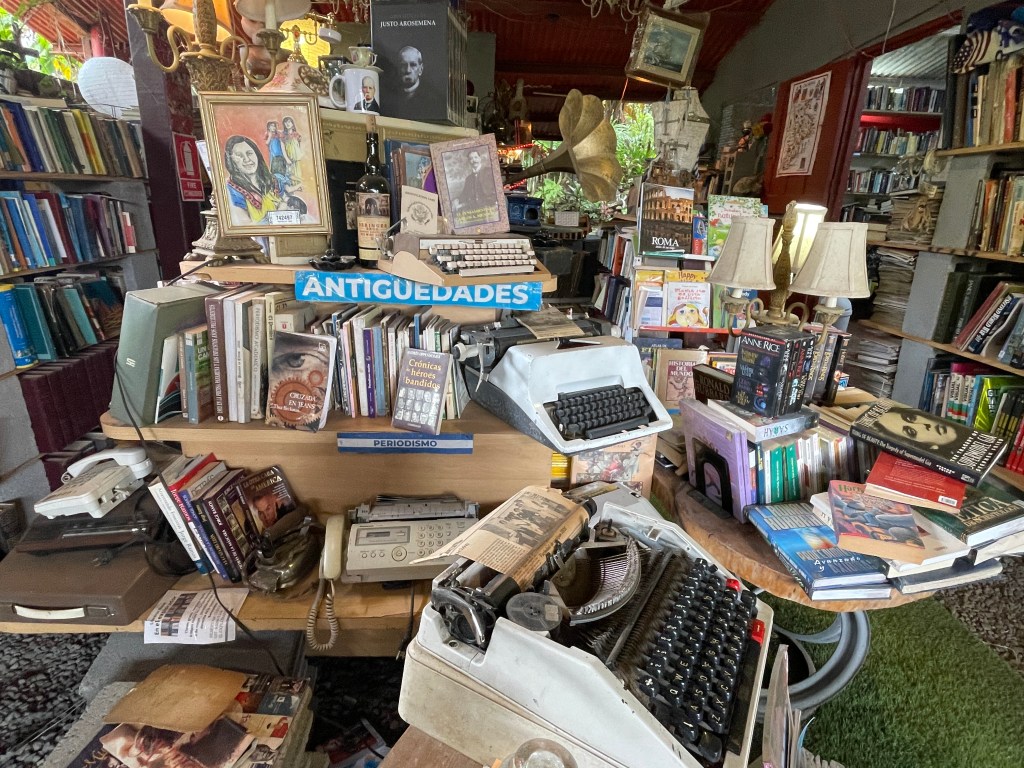
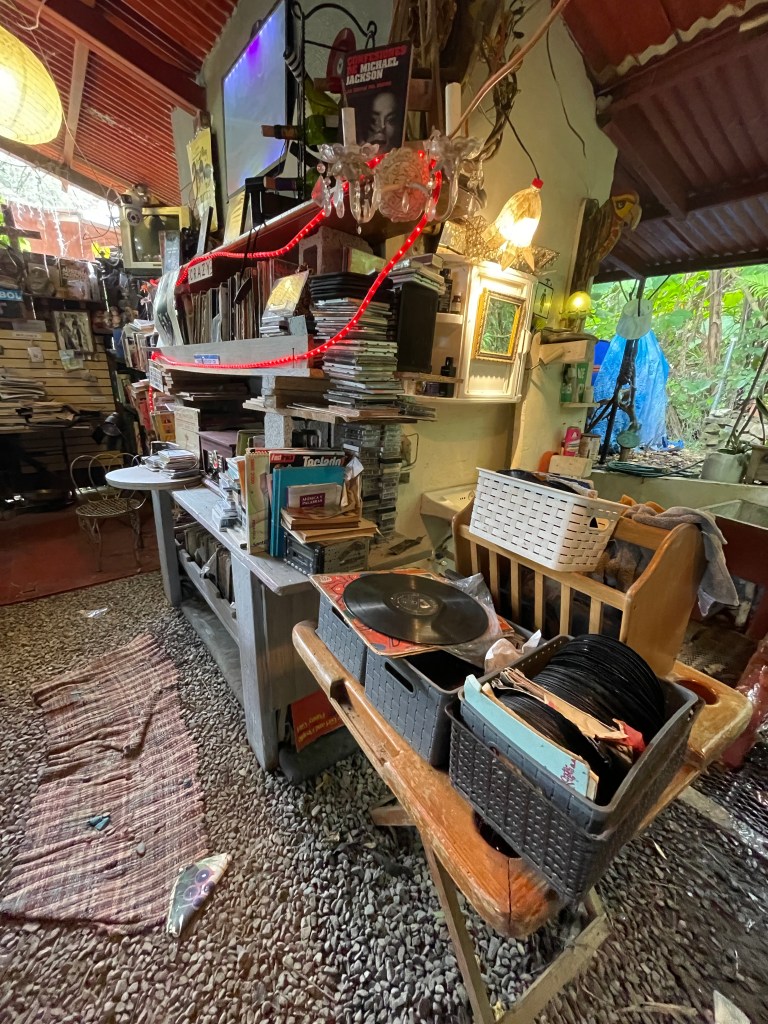
What a wild bookstore y’all. The top left photo is of the English section. Look at those cement blocks holding up the shelves! The next two photos are of the main area, which also included an aquarium, a beautiful basin for washing hands, and a section just on Frida Kahlo. The bottom photos are of relics for sale: LPs, records, cassette tapes, typewriters, and even a fax machine.
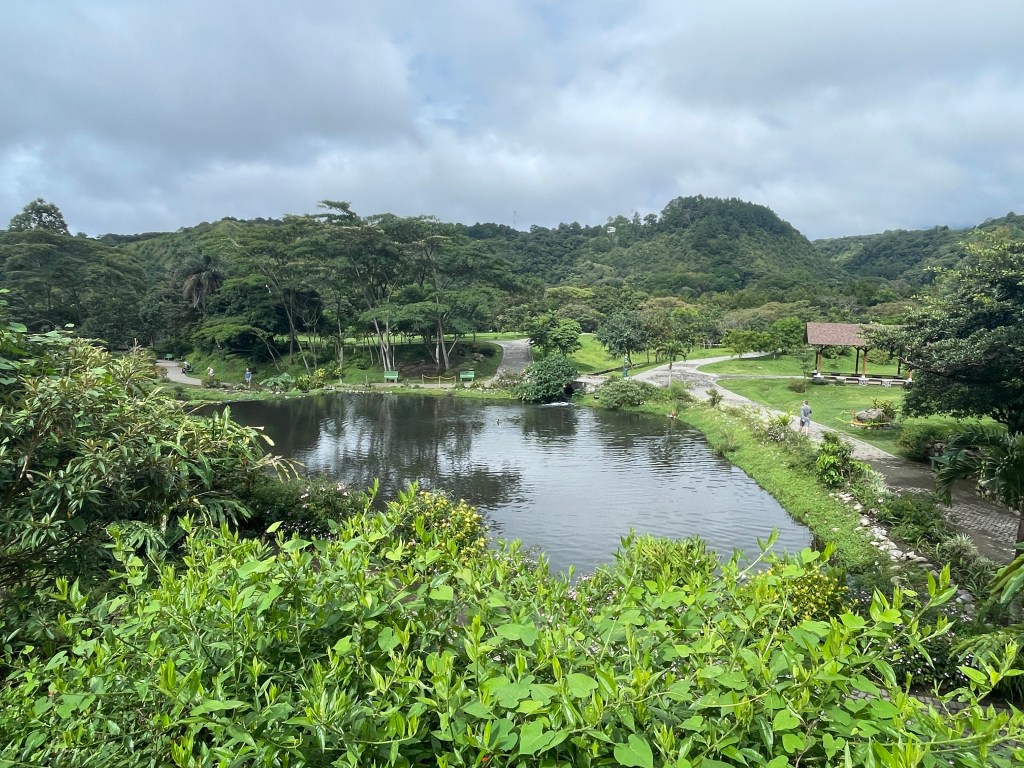
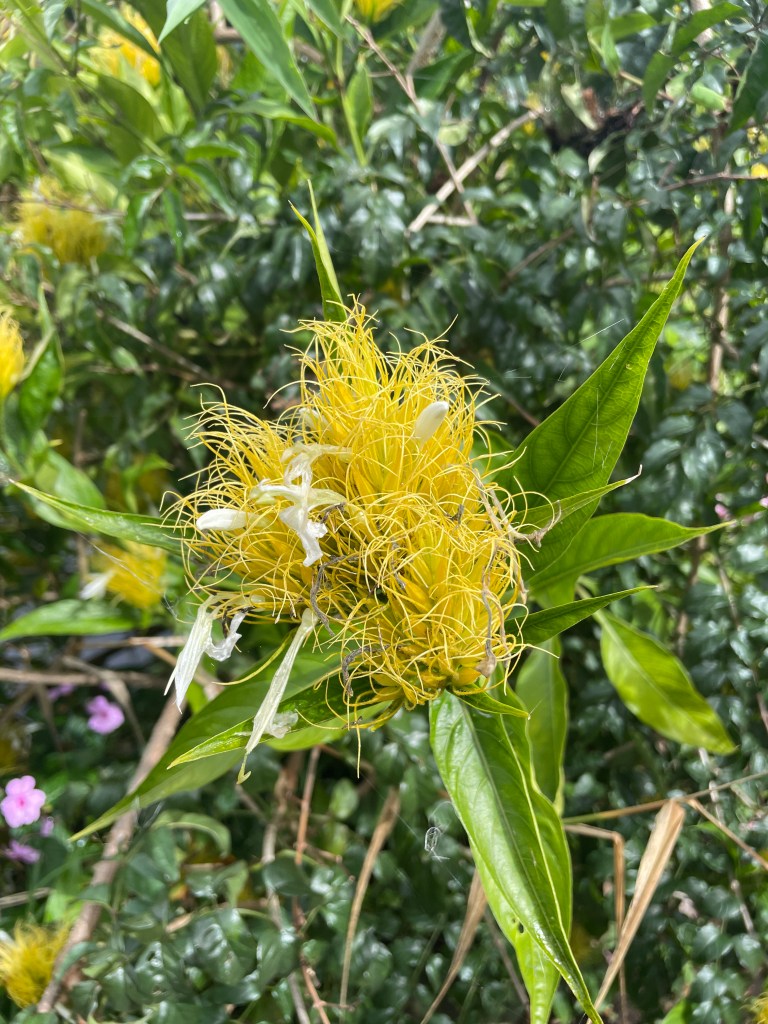
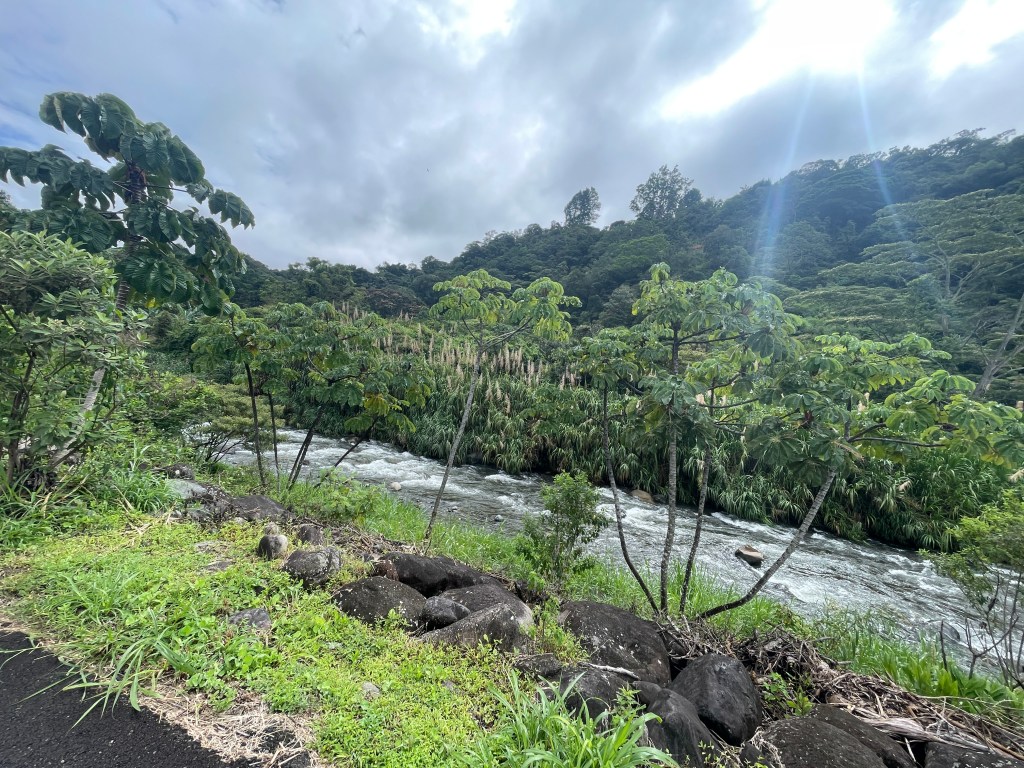
My final effort to trade my book in Boquete was to visit the park next to the library. Someone told us that there are little free libraries throughout the park, so we walked around, hoping for a good find. The park itself is beautiful with lots of flowing water, a pond filled with fish, turtles, and water fowl. Flowers I had never seen before were blossoming and pollinators were buzzing around.
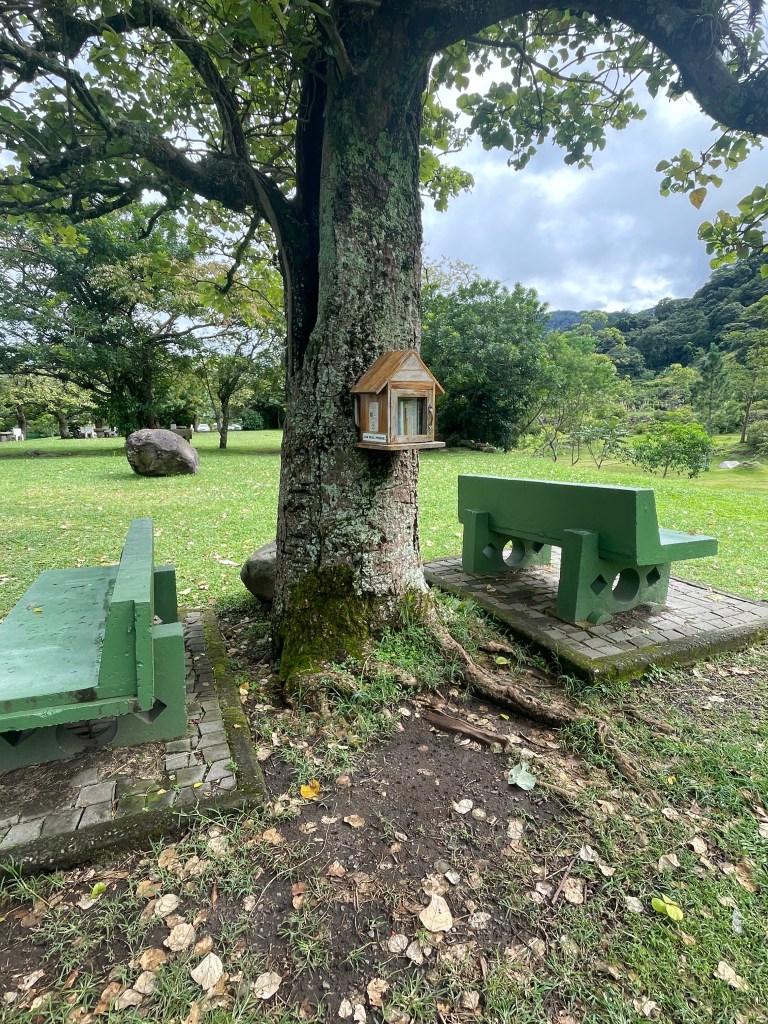
I found two little free libraries, which kind of felt like finding buried treasure. They are very inconspicuous and I almost missed them. The first one only had books in Spanish and I almost took the book The Blood of the Innocents by Julia Navarro, but decided against it. (I generally don’t do Holocaust content unless I absolutely have to because then I have nightmares of Nazis chasing me.) The second little library had books in English and a lot of the titles were about aliens, which was very random.
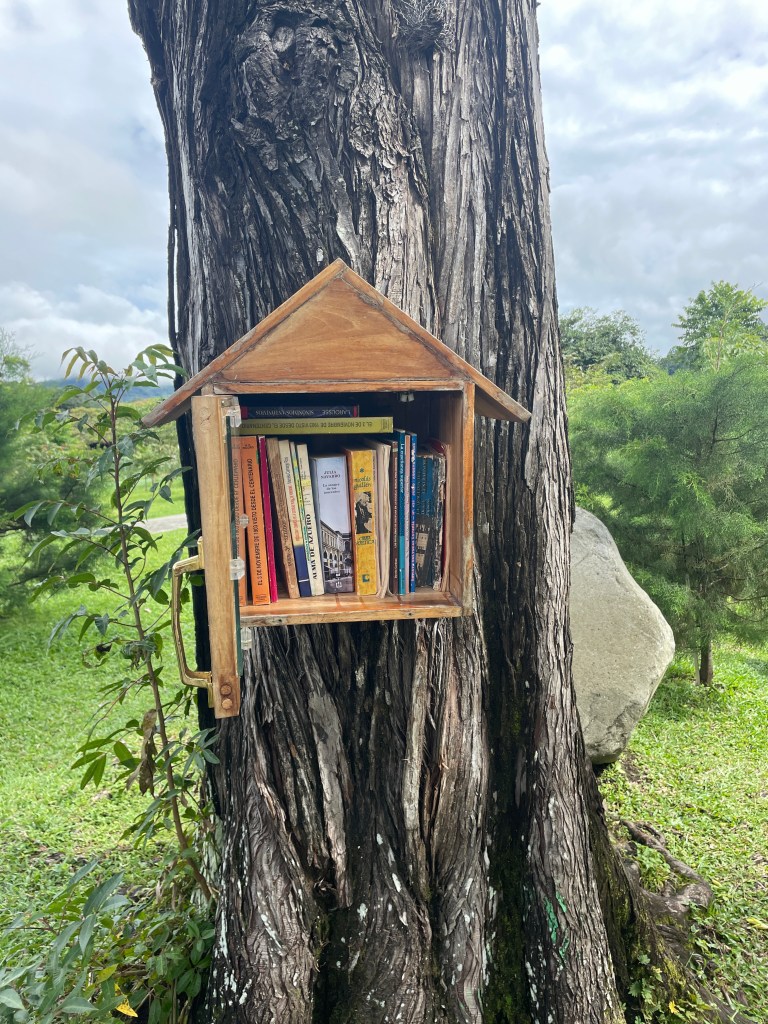
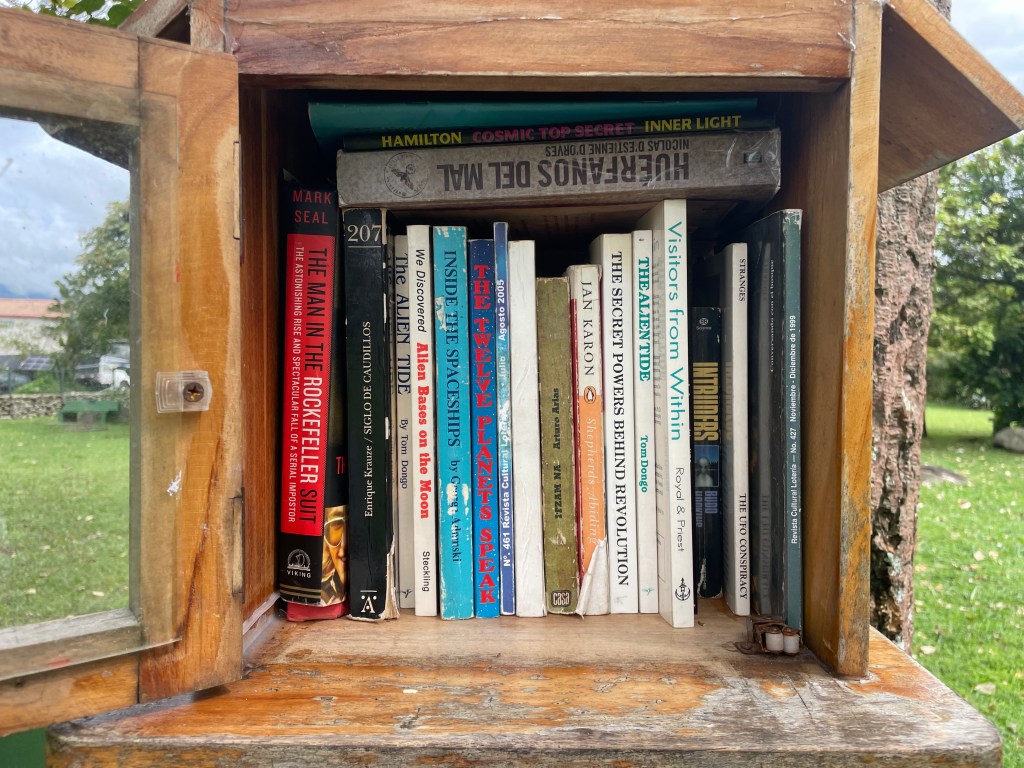
One book caught my eye. I’m not going to link to it because I don’t think it’s a book that should receive more publicity. If you’re really interested, type the title and author into Google. Initially, I thought it was going to be about Jewish history, but it quickly became evident it was a book riddled with classical anti-Semitism. An excerpt is included below.
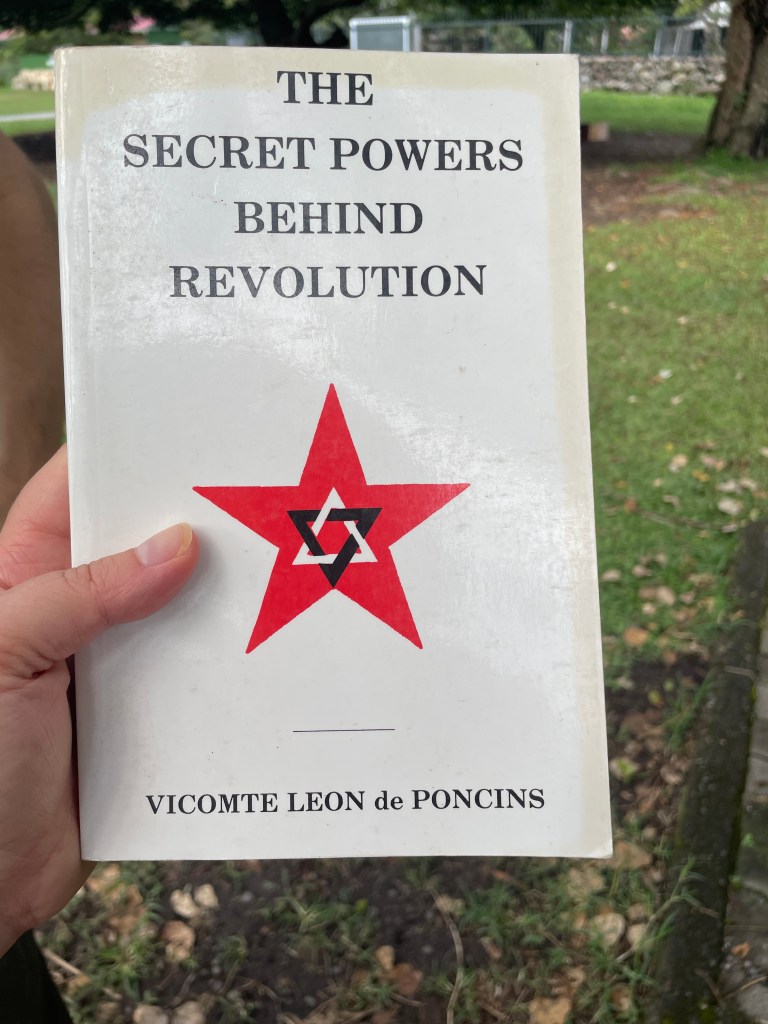
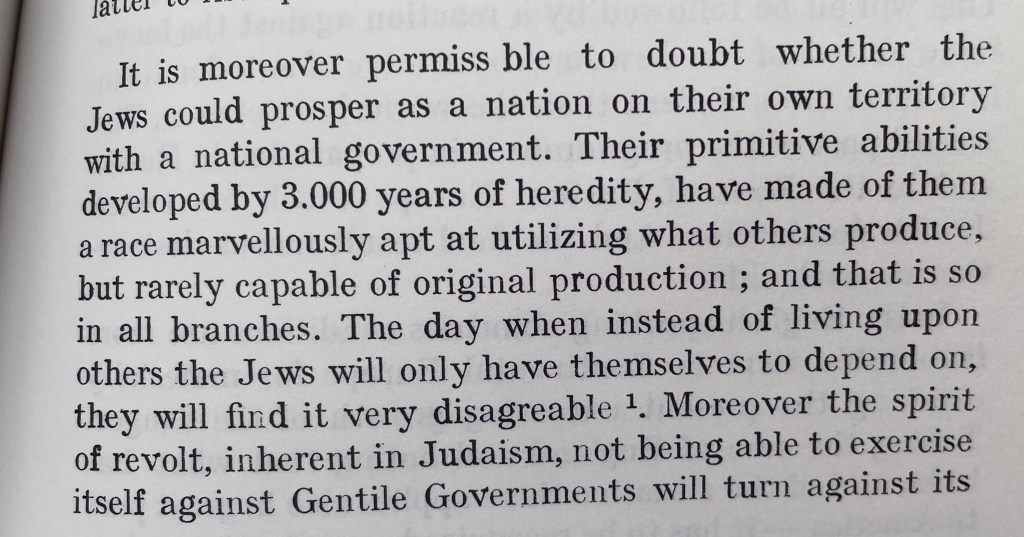
Adam and I flipped through the book feeling angry, sad, and mildly disappointed. My instinct was to take it and throw it away so that no one could read it. But then I remembered that I am a librarian, even if I don’t work at a library at the moment. My profession puts the first amendment into action by ensuring that everyone has a right to read whatever they want. A healthy democracy depends directly on access to information, even if I, personally, don’t agree or like what is on the shelf. So, I put the book back and reminded myself that the banning of one book is a ban on all books.
Stay tuned for more book talk and #FoodandJews. Be sure to like, comment, and subscribe to Traveling While Introverted so you don’t miss it!


 Traveling While Introverted
Leave a comment