After nearly three months of traveling through Central America, it was time to step foot on the South American continent. What better introduction to this land mass neither one of us has ever visited than Colombia. Our first stop was Bogotá. Not only is Bogotá Colombia’s capital and largest city, it is also home to almost 10 million people and is one of the largest cities in the Americas. The city is an overwhelming assault on the senses. Part of the difficulty of navigating such an intense space is that, as tourists, it is highly recommended to always be with crowds of people. Bogotá also has a very high rate of pickpocketing, so we always need to be aware of our surroundings. What this means for two introverted tourists is that our adrenaline is always piqued. This doesn’t take away from our enjoyment of the city. Rather, it has increased our appreciation for the city’s vibrancy, culture, and overall approachability.
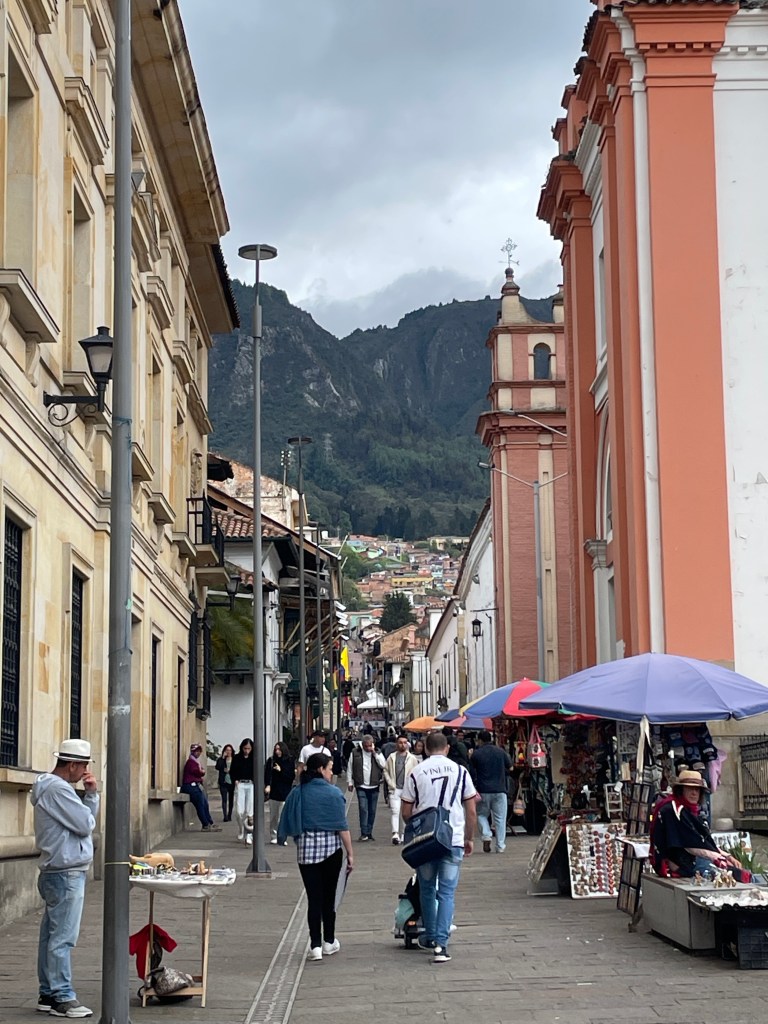
During our stay, we spent nearly every day exploring a different neighborhood. Each neighborhood has its own flair and personality. Yet, everywhere we went we felt and heard a perpetual hum of chaos mixed with the constant movement of people alongside thousands of cars, motorcycles, and buses. Street vendors abound in Bogotá. Regardless of what they’re selling, one phrase we constantly heard was “a la orden.” The phrase literally translates to “to order,” but also means “at your service.” To save their voices from having to yell all day, many vendors have speakers attached to their carts that loop a track. An avocado vendor, for example, will play: “Aguacate, aguacate, aguacate, a la orden, a la orden, a la orden, a la orden!” all day until he has sold his last avocado. As you walk by or approach a vendor, it’s always, “Buenas, a la orden!” As jarring as this was initially, we did get used to it.
Almost everywhere we walked, we could see the Andes Mountains that surround the city, serving as a reminder that the cityscape does not go on forever. Despite its proximity to the equator, Bogotá is mild and at times chilly. The city sits in a valley that is 8,000 feet (2,438 meters) above sea level, which can make even the most fit person winded while walking.
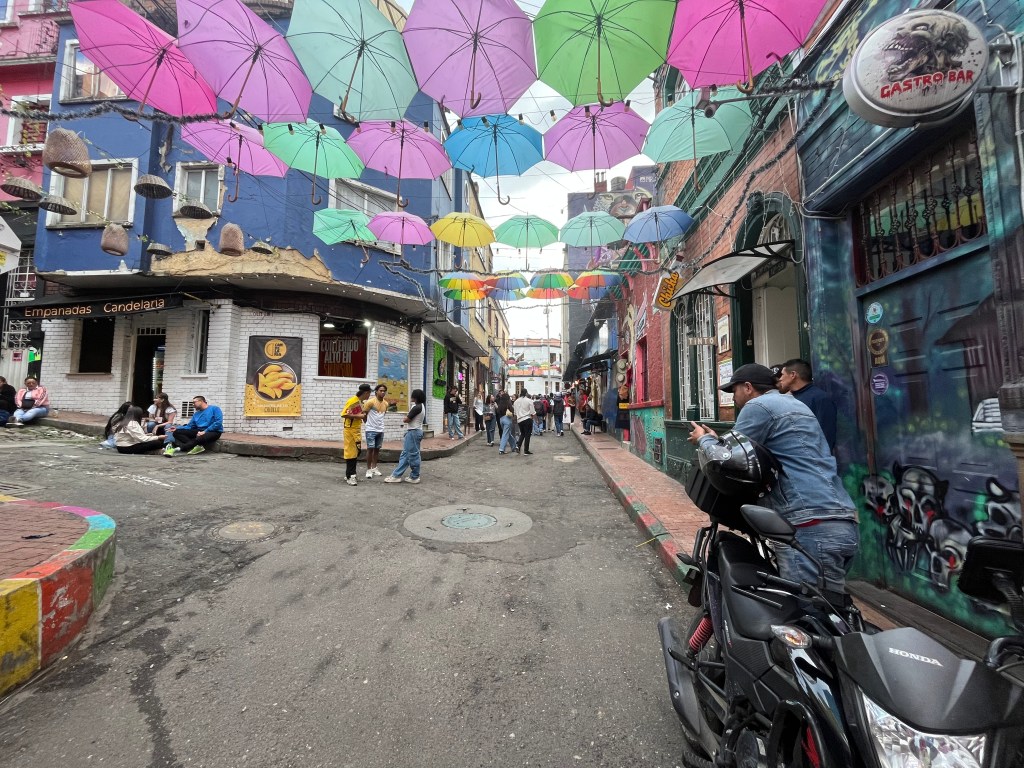
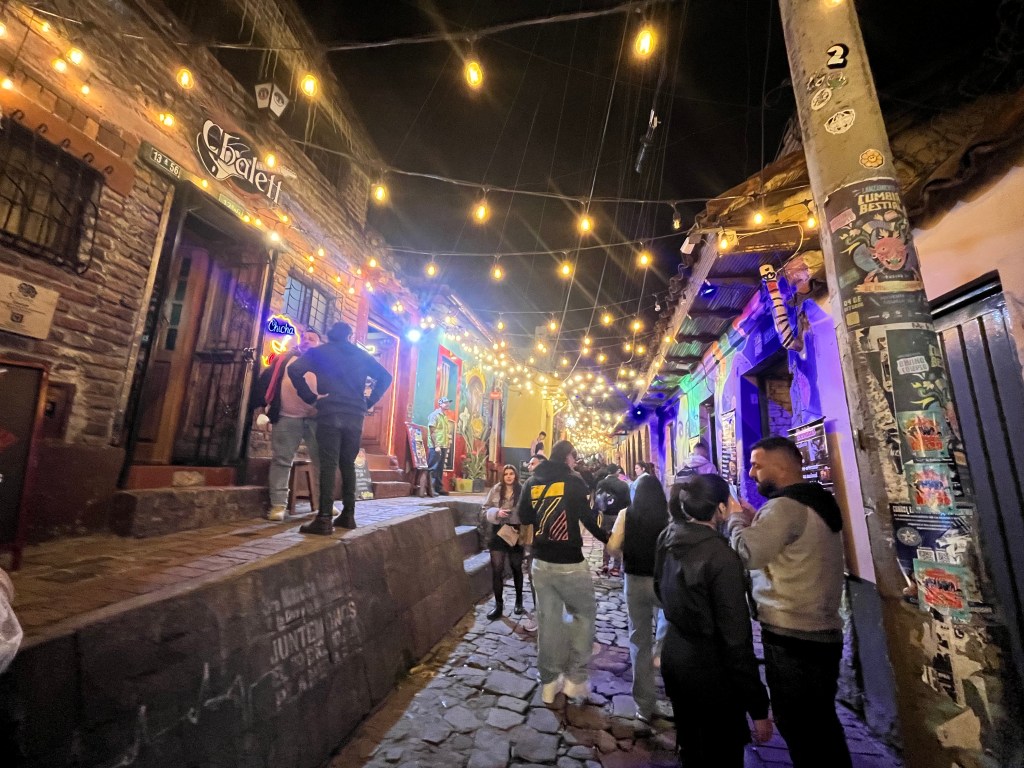
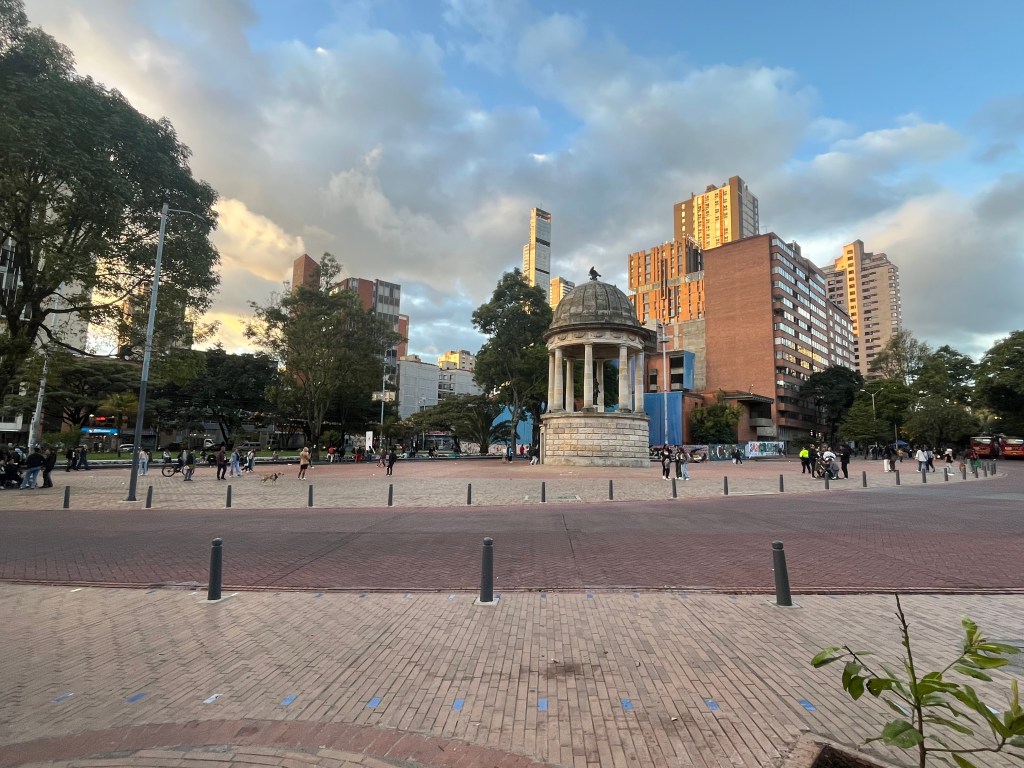
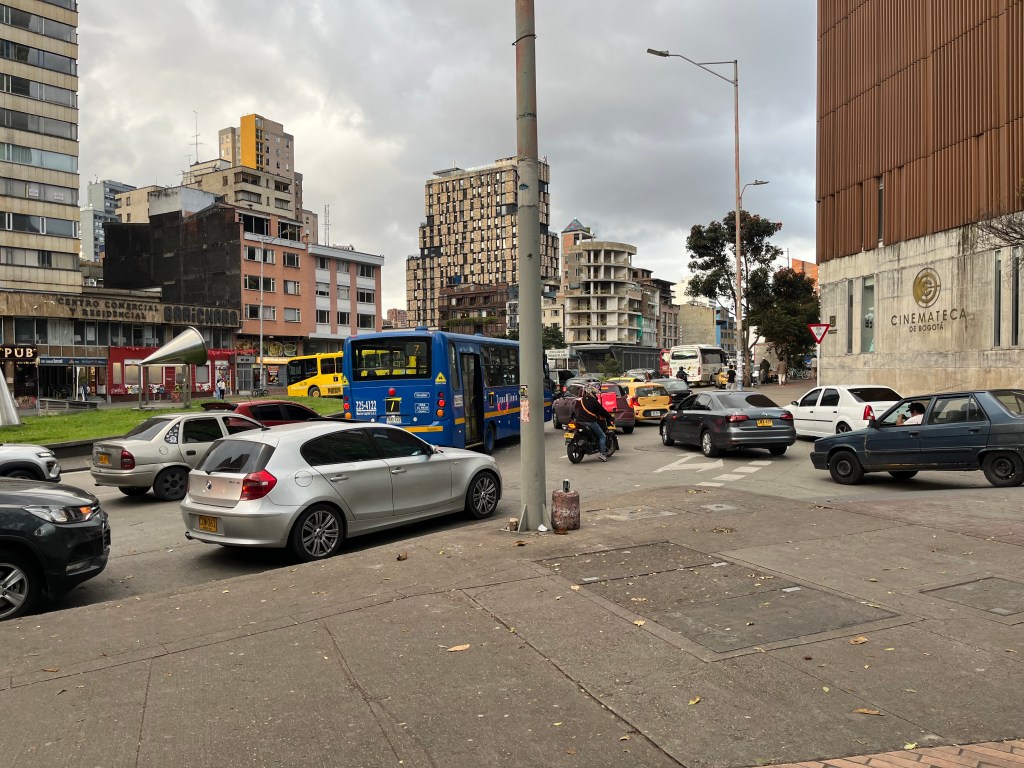
The video below is from the Plaza de Bolívar, the central plaza in Bogotá that is both a tourist attraction and a site for protests. (Don’t worry; we were at our hotel during the big protest this past week.) Though this is only one corner of the plaza, it offers a glimpse of the constant churn of activity.
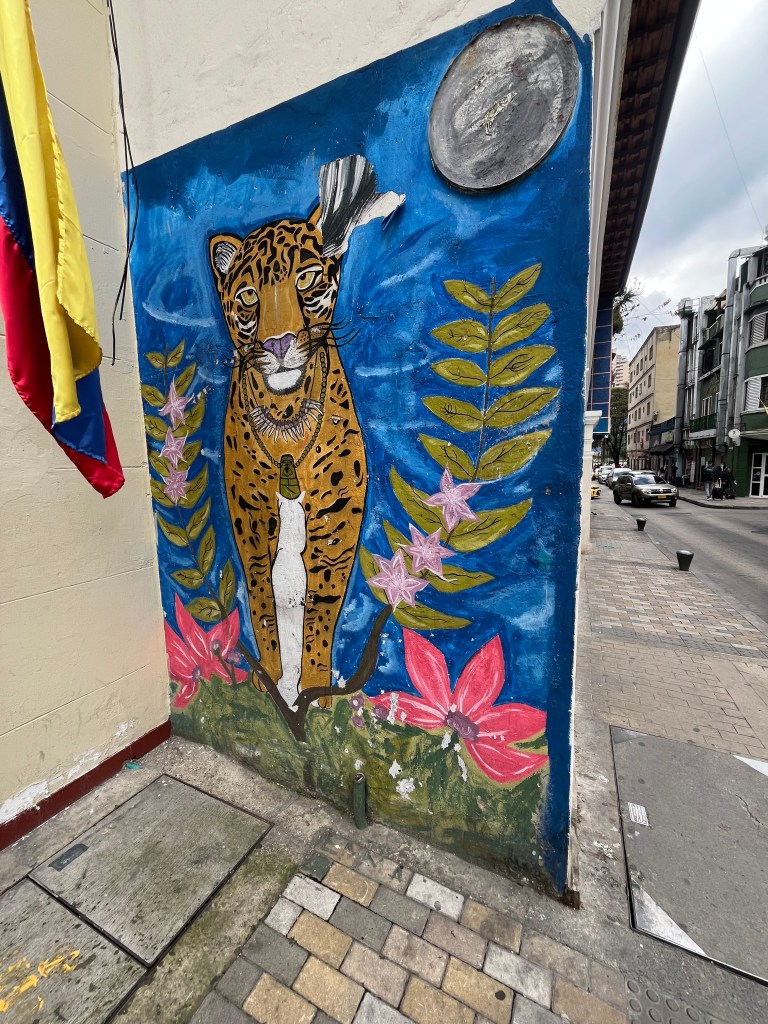
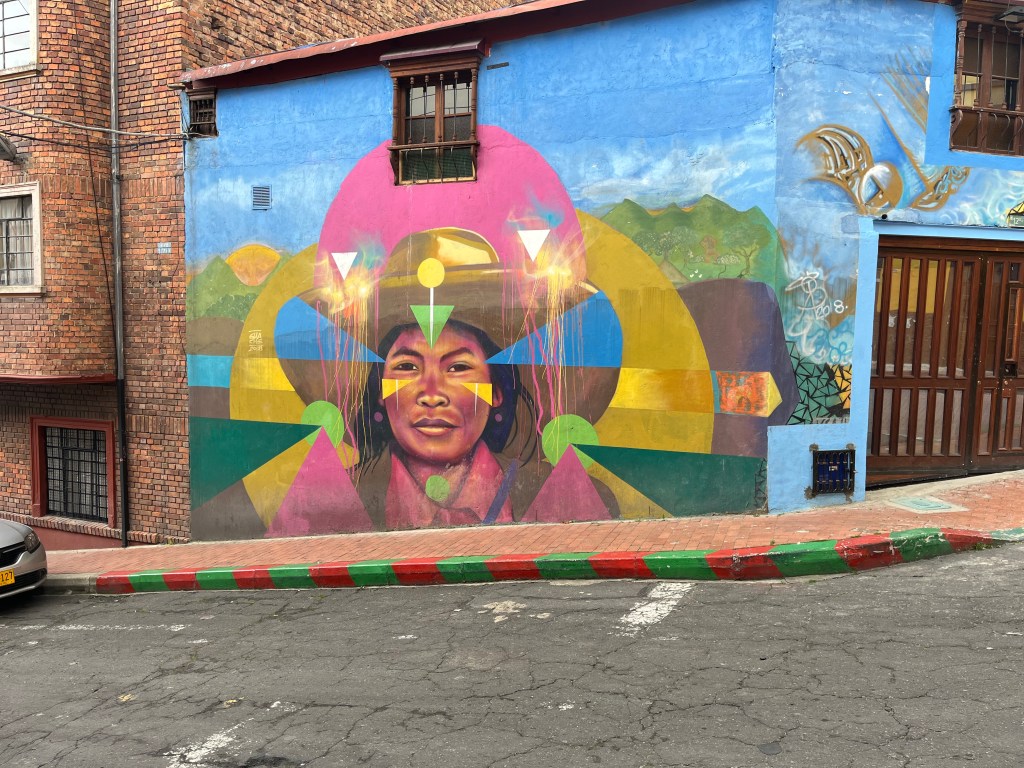
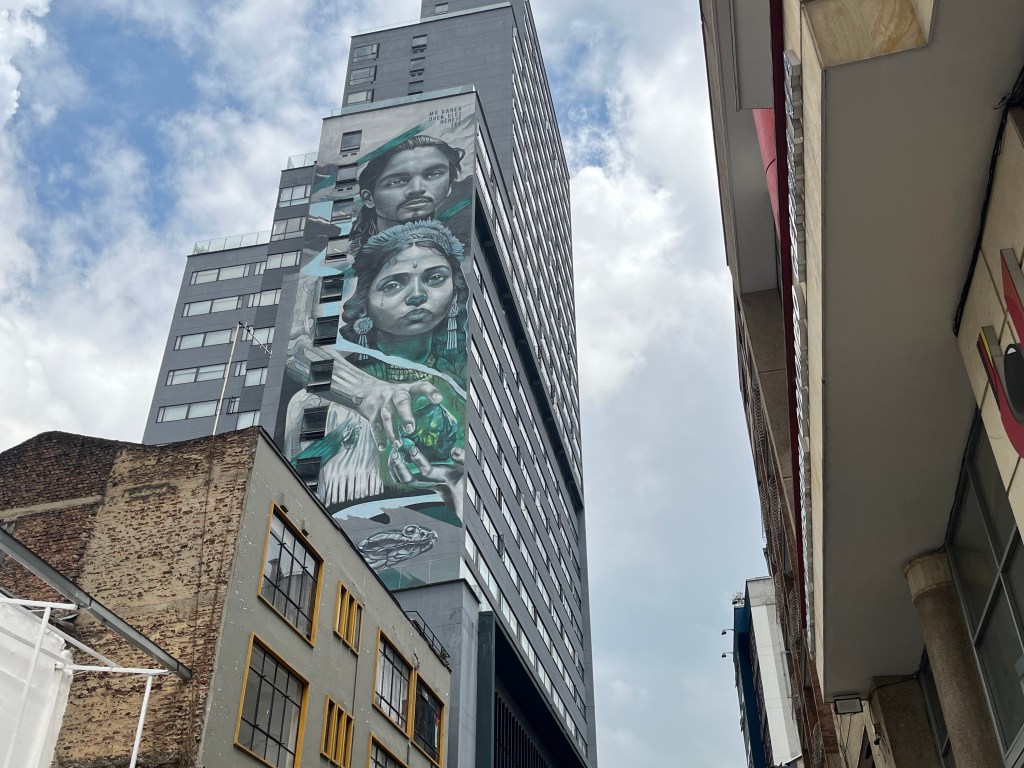
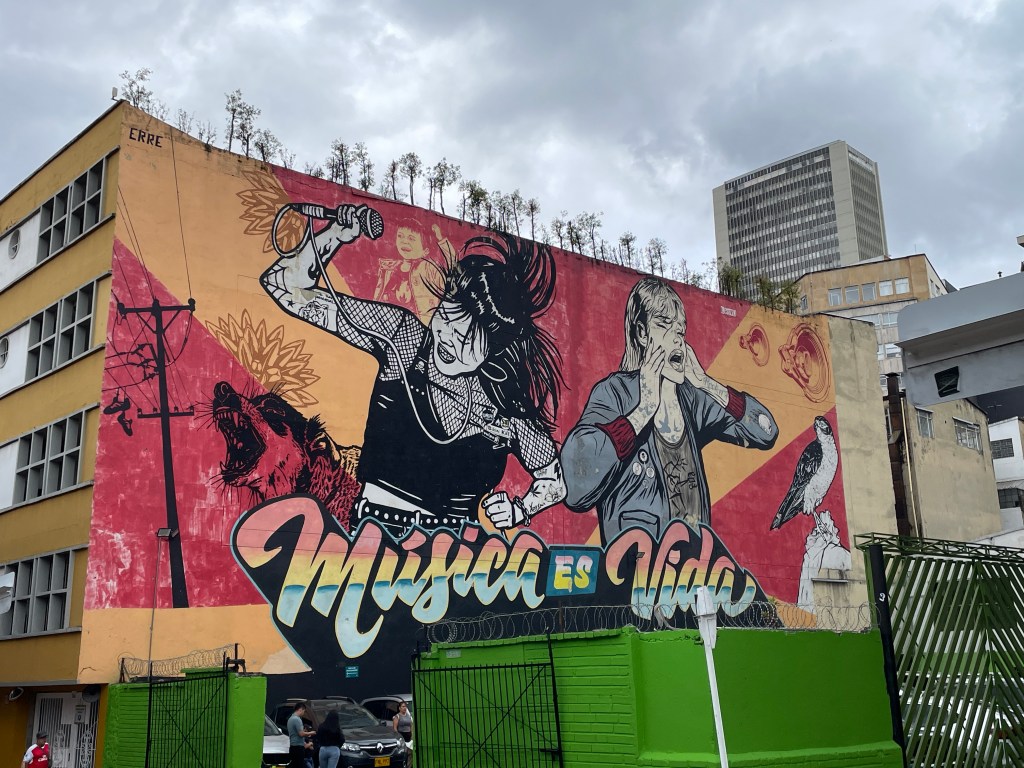
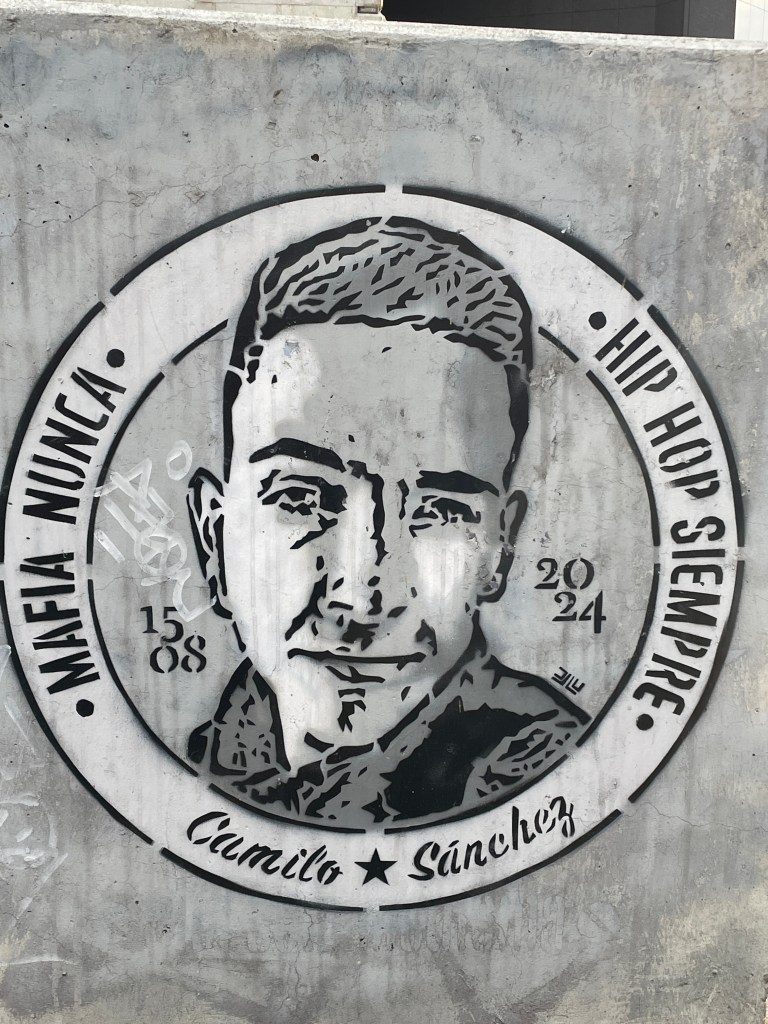
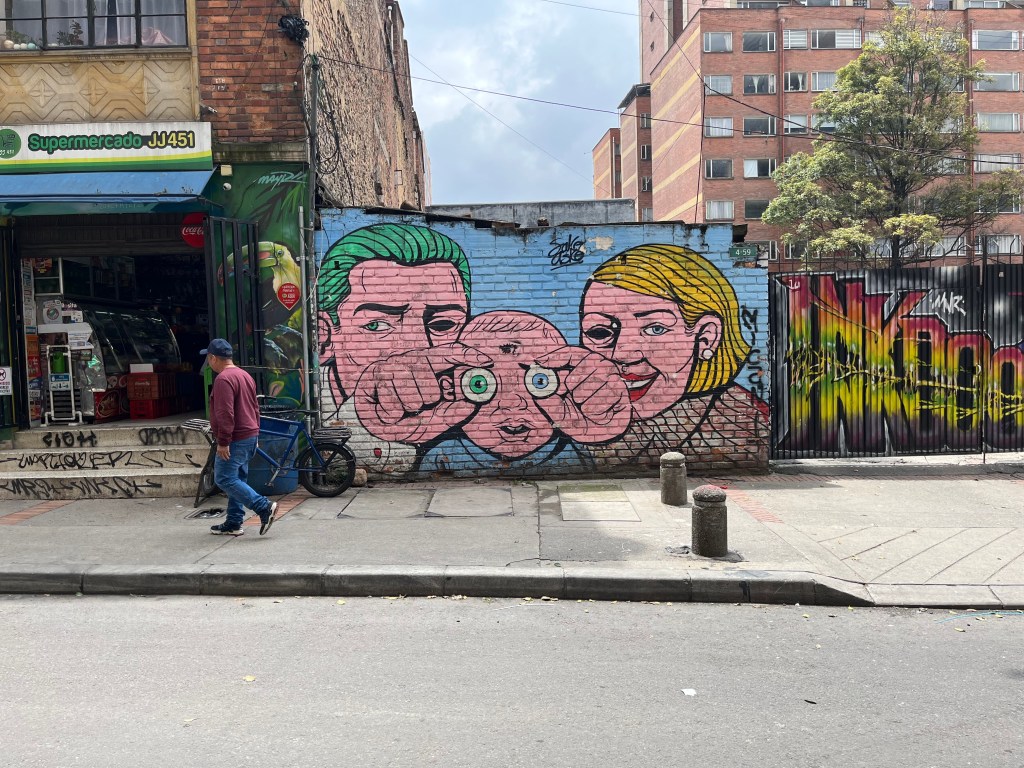
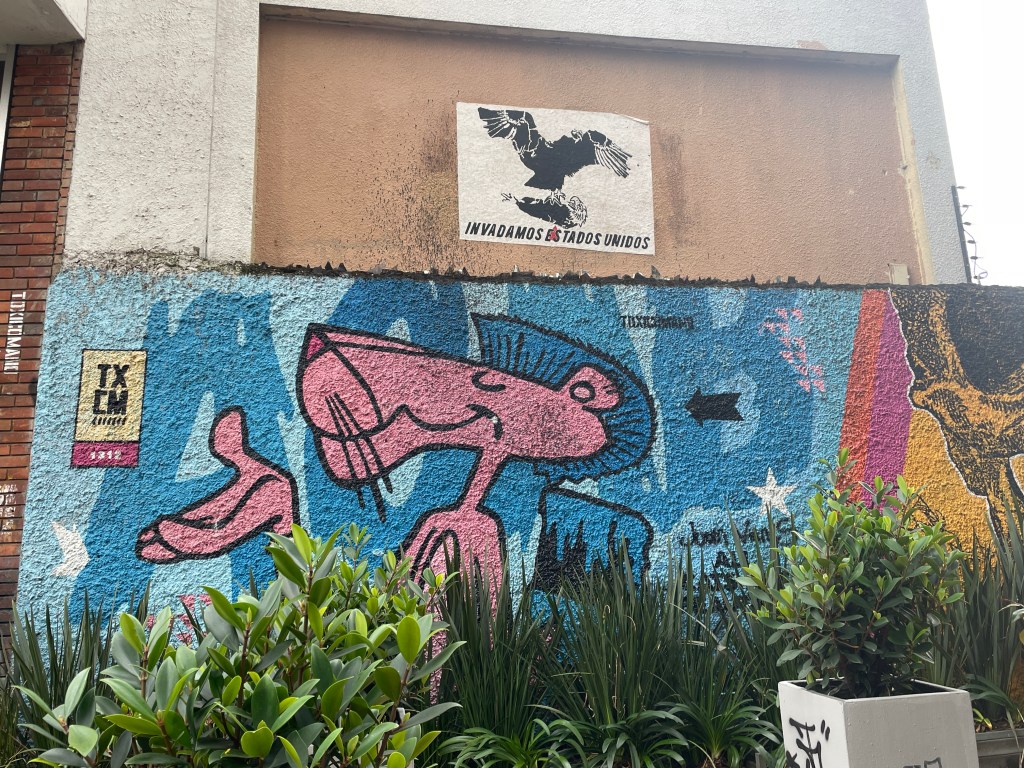
One of the activities we particularly enjoyed was a walking Bogotá graffiti tour. Street art and graffiti are a profound part of the cityscape. The tour not only explained techniques for street art, but also provided much-needed context to understand the statements made by artists. Graffiti is inherently political because it is art in public spaces and is often illegal. In Colombia, graffiti has become a somewhat protected art form and has helped the city of Bogotá become famous for its art. If you’re curious about how that happened, read this 2013 article about the time Justin Bieber safely painted graffiti in Bogotá in contrast to a local graffiti artist who was shot in the back by the cops. Below are a few photos of the street art we were especially impressed by.
First row, left to right: the jaguar is an iconic South American animal and a symbol of power; an Indigenous woman painted by an artist who focuses on invisible people in Colombian society; this art references a legend about how emeralds came to be, since Colombia is known for its emeralds.
Second row, left to right: “Music is life”; “Mafia never – Hip hop Always”
Third row, left to right: street art representing how babies are an amalgamation of their parents (clearly in a super creepy way); above the Pink Panther is an Andean Condor stepping on a Bald Eagle with the words “Let’s Invade the United States,” a reference to the escalating tensions between Colombia and the United States.
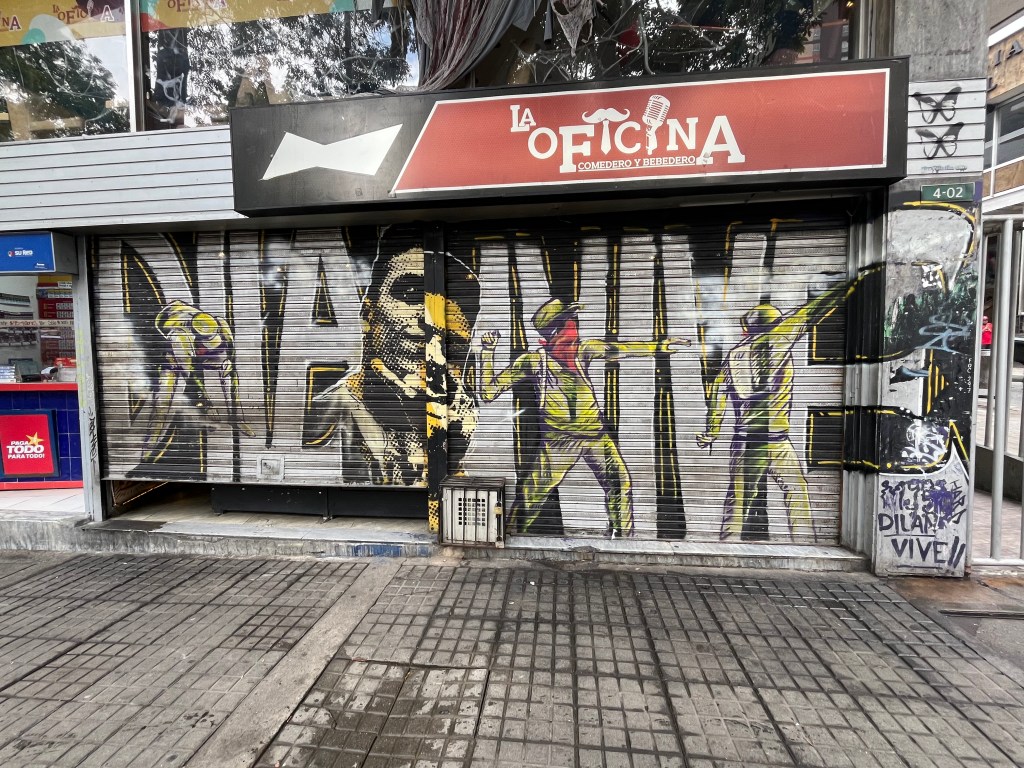
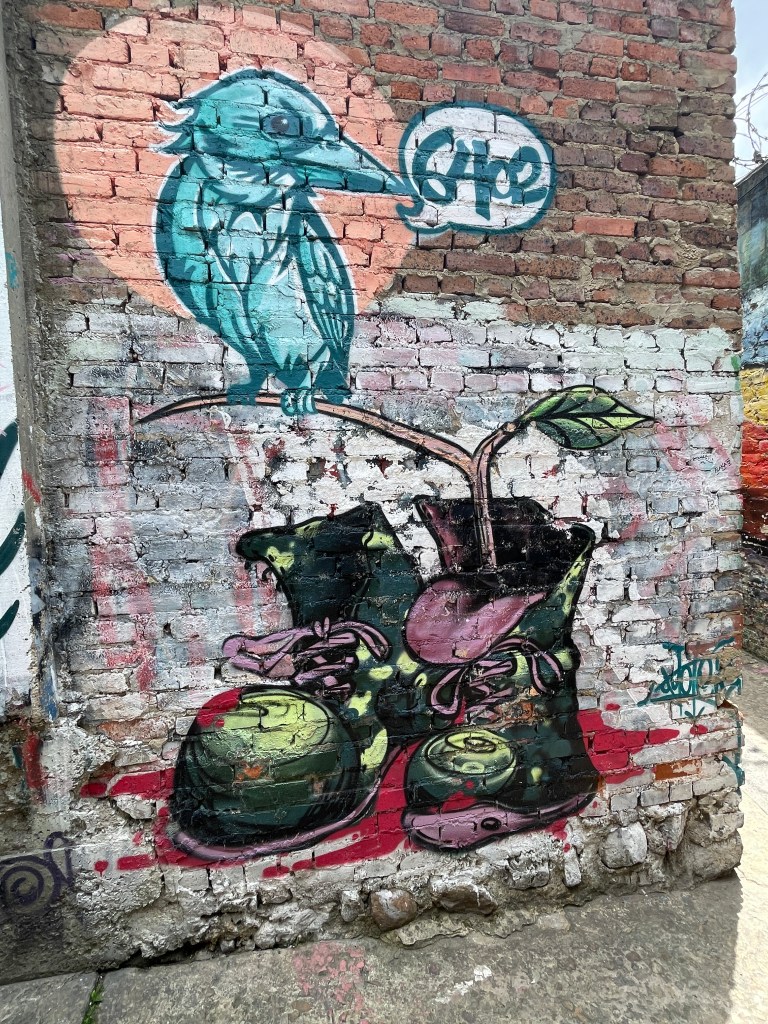
The photos below reference two crucial moments in recent history. On the left is street art memorializing Dilan Cruz, an activist and graffiti artist who was killed by Colombian security forces during a protest in 2019. Because he was a minor, the corner of this street was renamed in his honor. On the right is street art referencing the Falso Positivo, a particularly dark chapter in recent memory. Then-president Álvaro Uribe Veléz had military and civilian collaborators lure poor or mentally-impaired civilians to remote parts of the country with promises of work. When they arrived, they were killed and dressed as guerrillas as “proof” of the administration’s crackdown on guerrilla forces. According to government officials, the number of people who were “false positives” was only around 1,000 or so, but people affected by this operation say the number of victims is 6,402. The number 6,402 is all over Bogotá. The shoes are a reference to the sloppy disguising of civilians. Often shoes on the corpses were placed on the wrong foot (i.e. two left shoes on left and right feet).
Continuing our journey to learn more about Colombia, we visited the Museo Nacional de Colombia (the National Museum of Colombia). The museum provides a comprehensive historical and cultural accounting of this diverse and turbulent country. Most of the placards were in Spanish, which we tried to read as an exercise to improve our language skills. Though our Spanish is nowhere near fluent yet, we were able to absorb quite a bit of information.
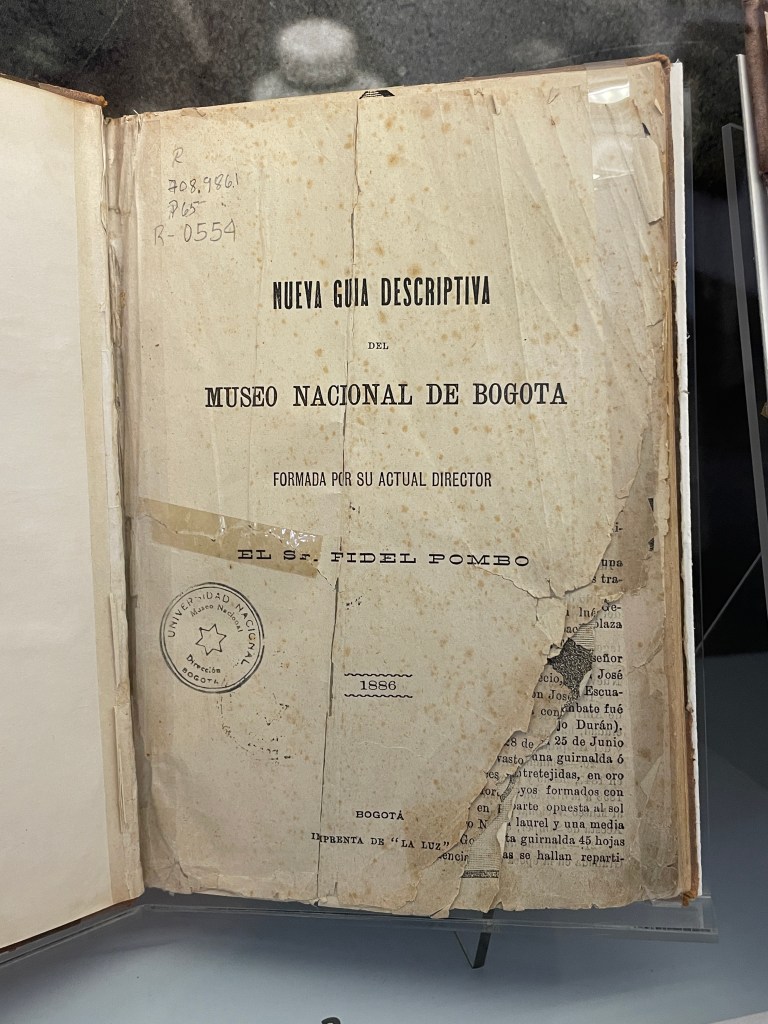
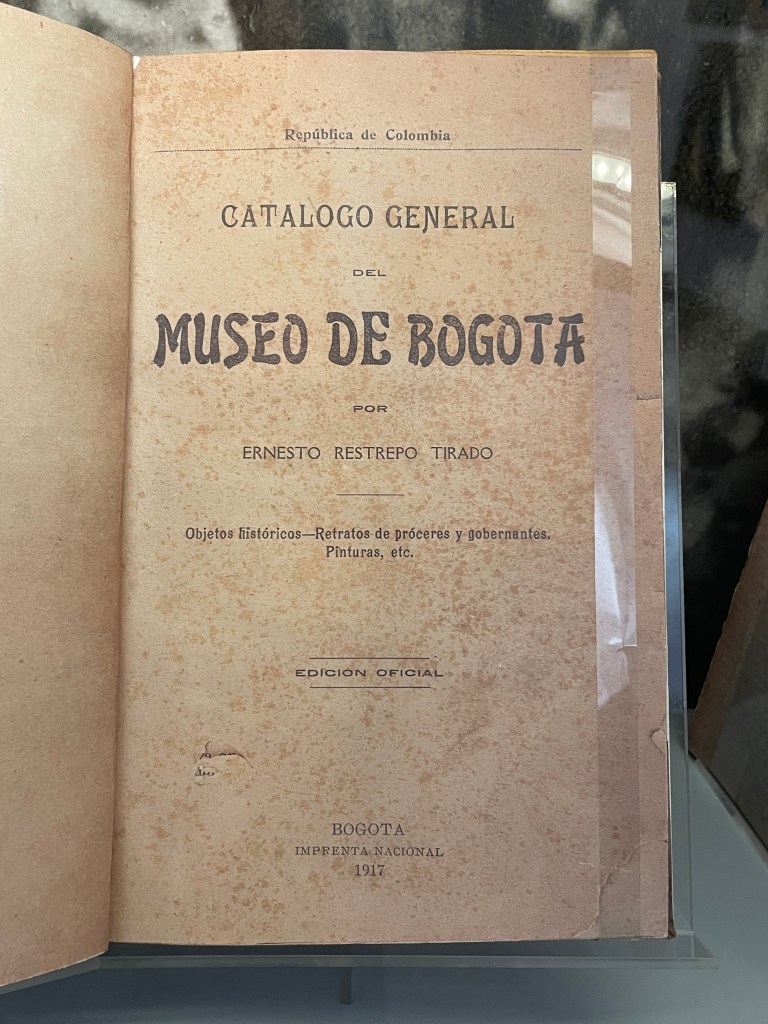
There were two aspects of the museum that spoke to us. A significant portion of the first floor is dedicated to the history of the museum itself. The building that houses the museum is a panopticon, a type of building that promotes surveillance and control of imprisoned people. In a panopticon, inmates never know when guards are watching them and, therefore, become motivated to be on their best behavior at all times, at least theoretically. The museum’s building used to be a prison and workhouse, but was repurposed in 1946. This is the first panopticon to be retrofitted for cultural purposes in Latin America. In its historical display, the museum also situates itself with other famous museums all over the world so that patrons can understand Colombia’s contribution to cultural memory and its importance. Yahm was, of course, most excited to see museum catalog books from 1886 and 1917 on display.
The other aspect that impressed us was the emphasis on diversity as an asset to the nation. As is the case with all nations in the Americas, Colombia’s population consists of Indigenous people, people of European descent, and people of African descent brought to the Americas for enslavement. Together, they have created national and regional cultures that are ignored, tolerated, or celebrated. Over and over again, the museum offered honest portrayals of the nation’s history while emphasizing that this knowledge is key to promoting fraternity, liberty, and democracy.
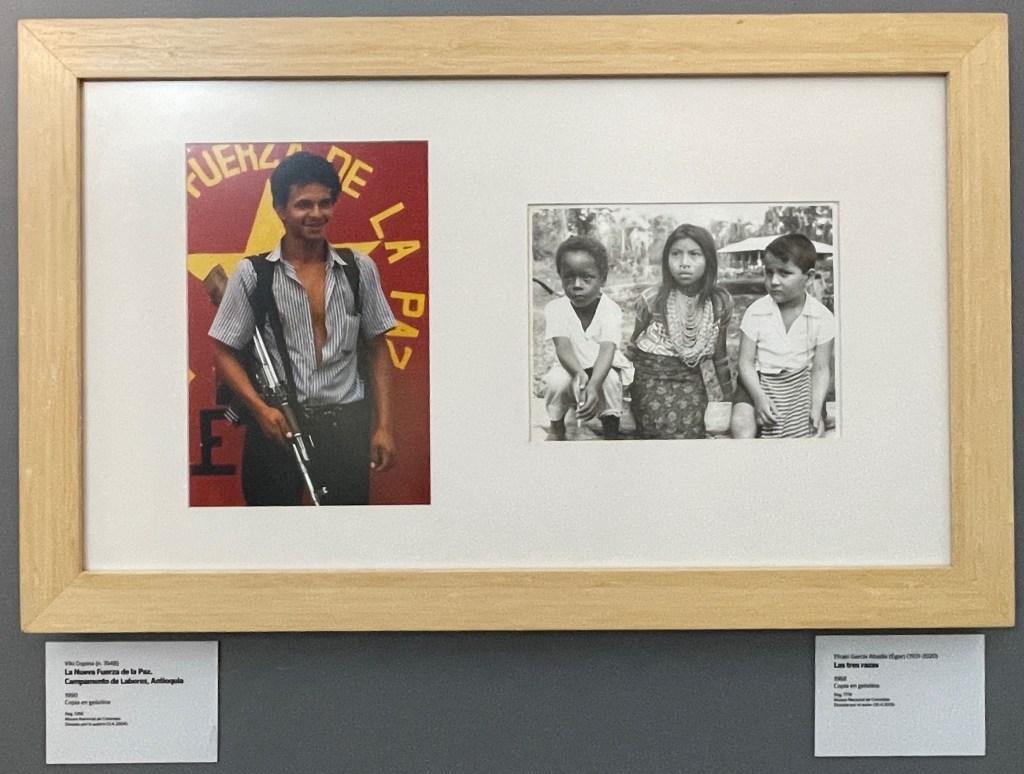
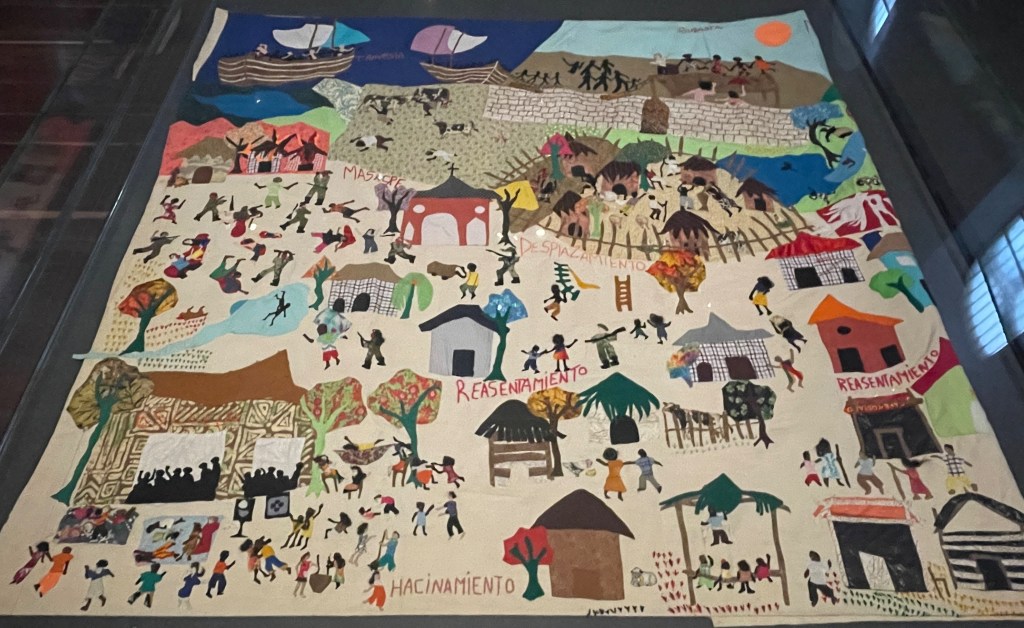
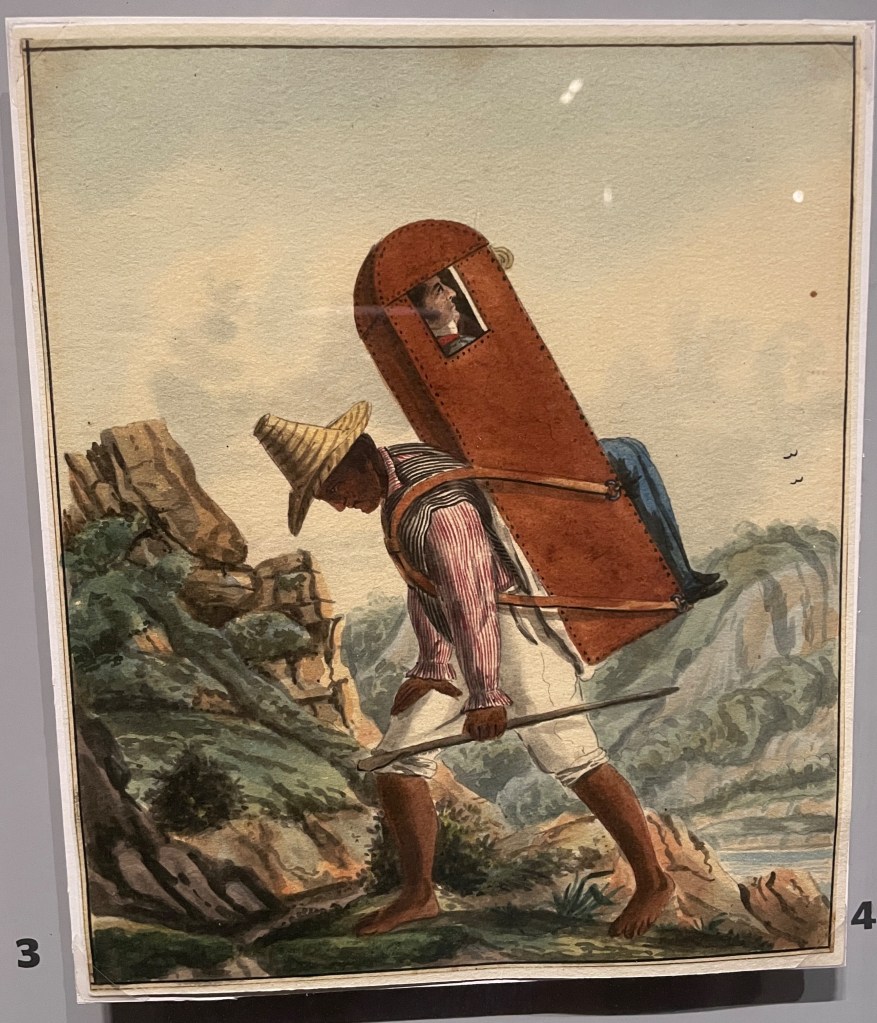
Top row, from left to right: a photo of a young man in front of a La Fuerza de la Paz (The Force of Peace) sign next to a photo titled “The Three Races” featuring Afro-Colombian, Indigenous, and European-Colombian children; a hand-sewn display about the history of Indigenous and Afro-Colombian people; a painting of an Indigenous person carrying a European person on his back up a mountain.
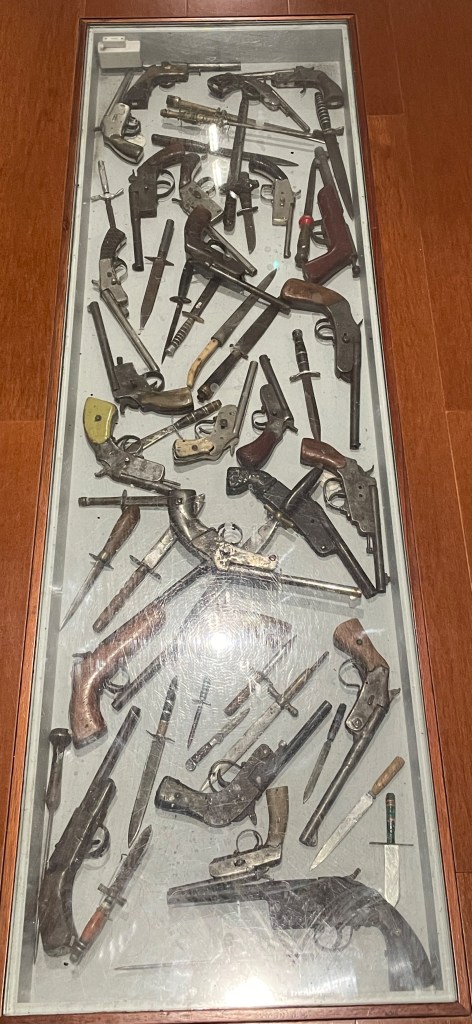
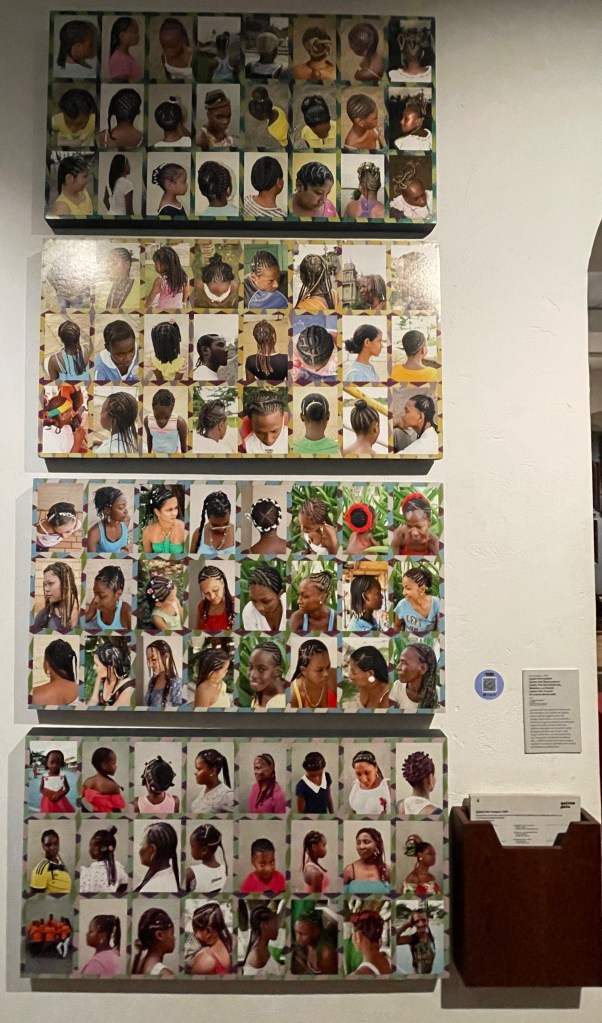
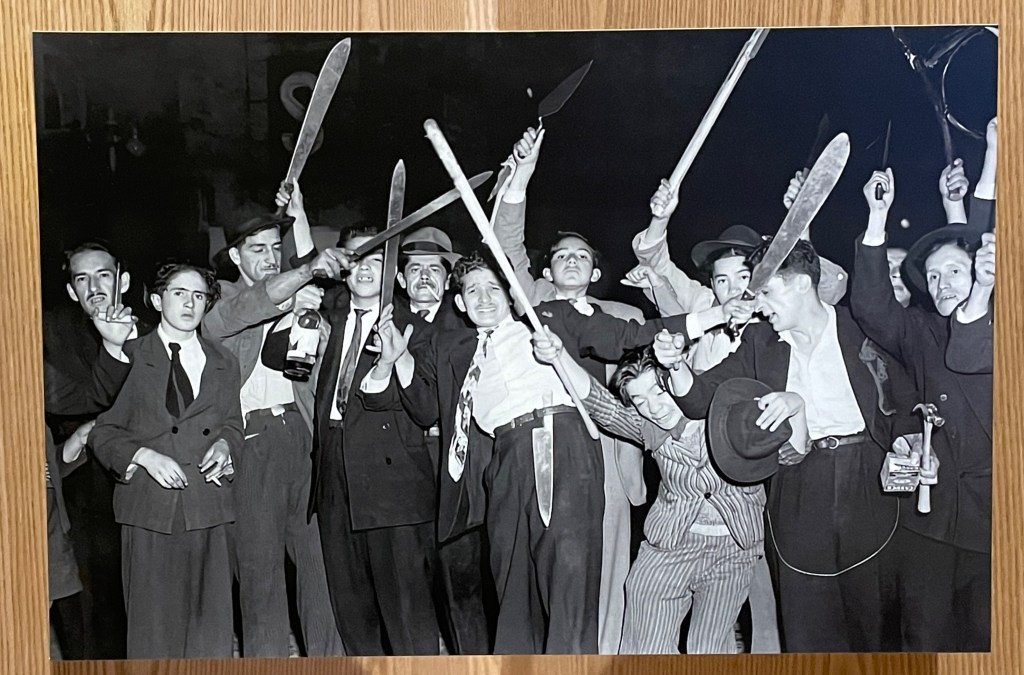
Bottom row, from left to right: a display on the floor of some of the weapons used by the cartels; a display about Afro-Colombian hairstyles and their historical importance; a group of union workers.
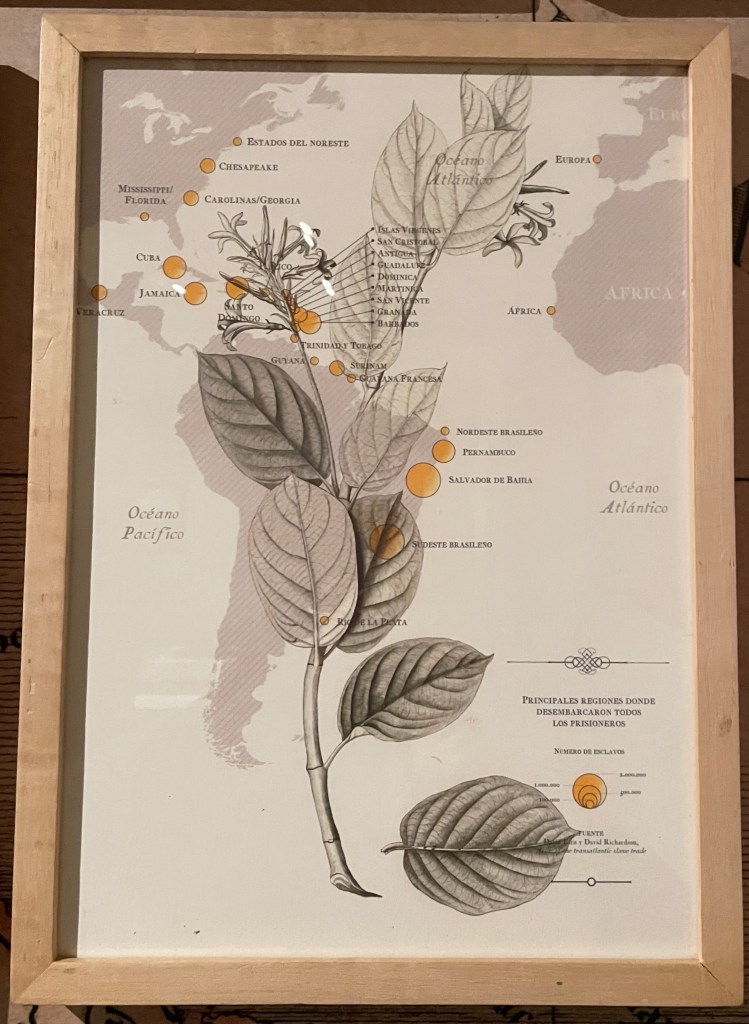
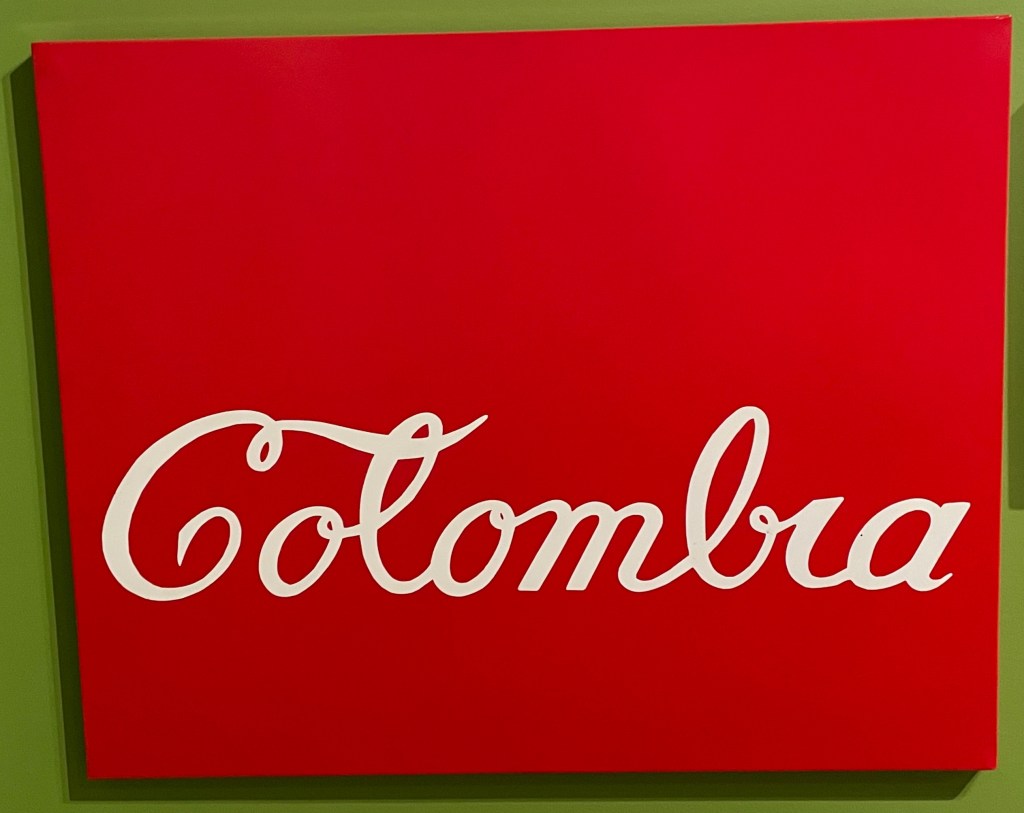
Below are two more special items worth highlighting. The second floor featured a display of maps of South America with local flora painted on top, perhaps as a way to show that the connection to land is greater than nationstate borders. (Photo on the left.) The third floor was filled with art by local artists. The photo on the right is Colombia written in the style of the Coca-Cola logo, which made us both chuckle. The impact of the United States on the Americas may most obviously be consumerism, but it runs far deeper. Coca-Cola couldn’t be what it is today without relying on tremendous amounts of sugar, which is one of Colombia’s top 10 exports. Moreover, the original Coca-Cola recipe was made with coca leaves.
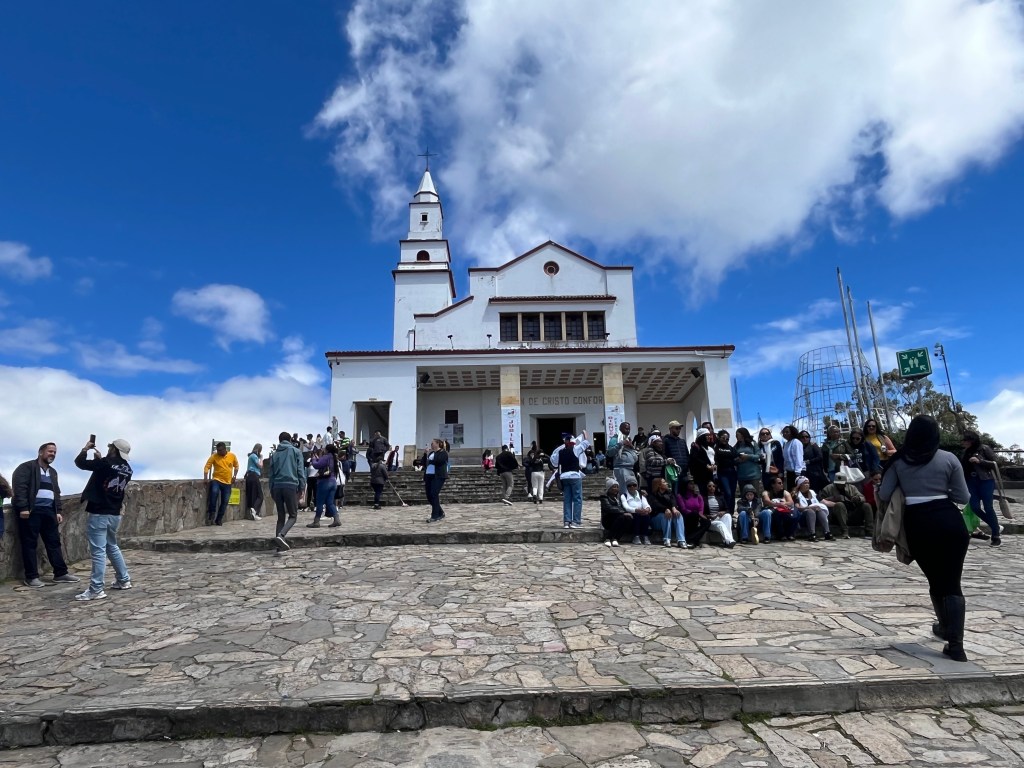
A final notable attraction we visited is called Monseratte, a place beloved by Bogotános and tourists alike. In 1640, approximately 100 years after Bogotá was established by the Spaniards, a chapel dedicated to the Virgin of Montserrate was built on one of the Andean hills surrounding the city. In 1929, a funicular (cable railway system) was built, the first of its kind in South America. A separate cable car, also the first of its kind in South America, was built in 1955. Both were built to improve access to the church for pilgrims. In the 1970s, the site became a popular tourist spot and began offering a variety of events, not just religious ones.
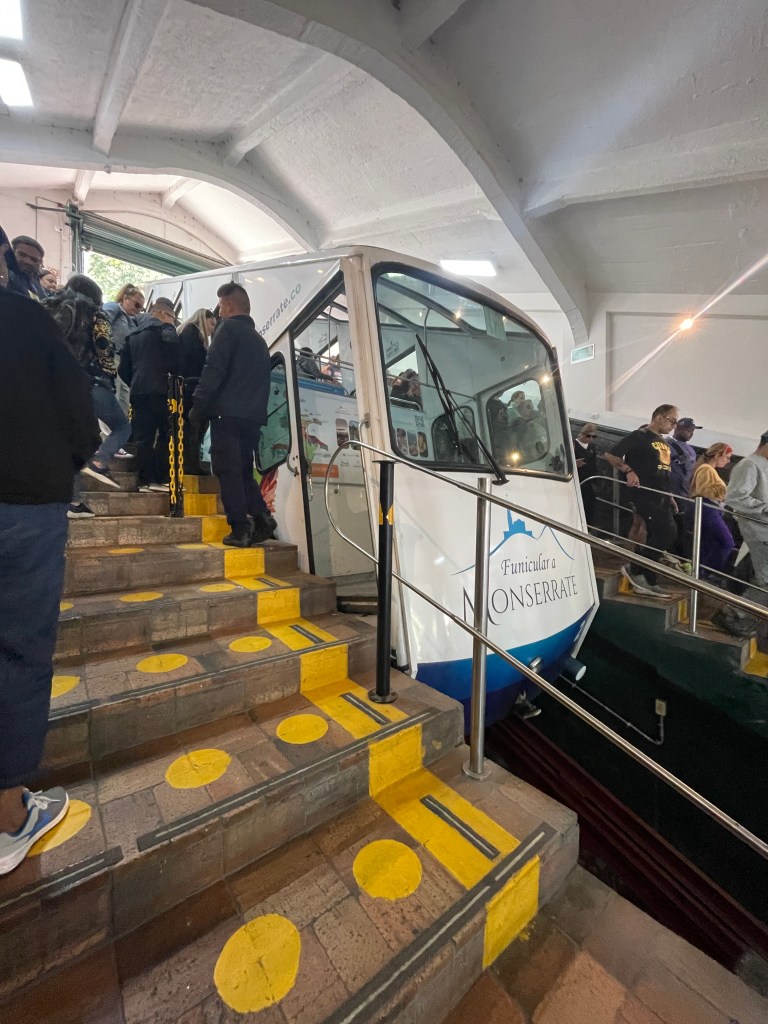
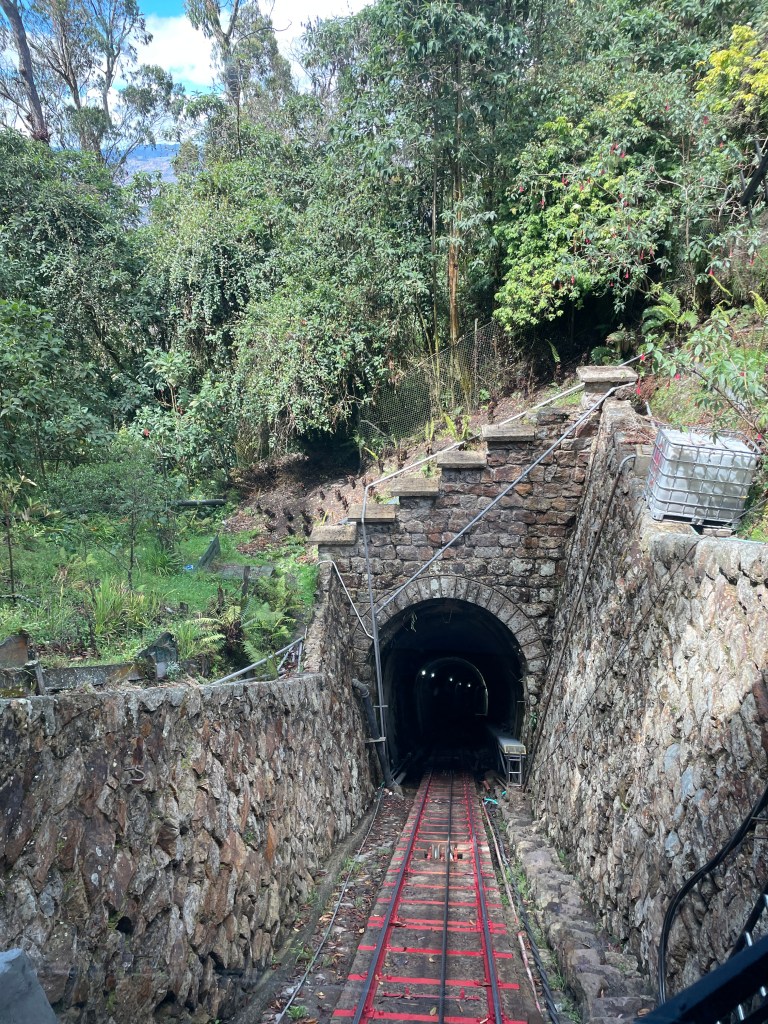
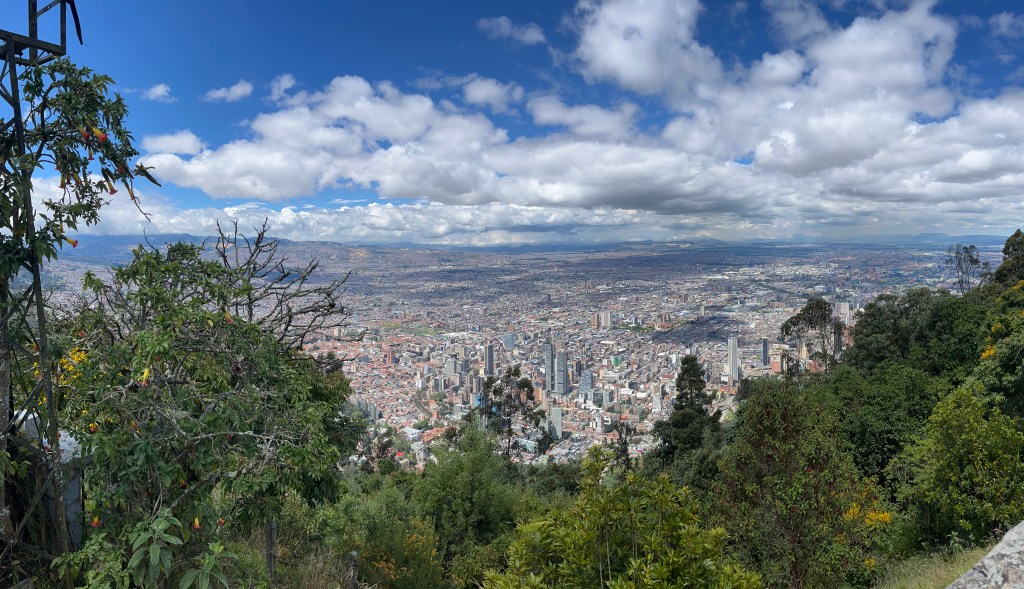
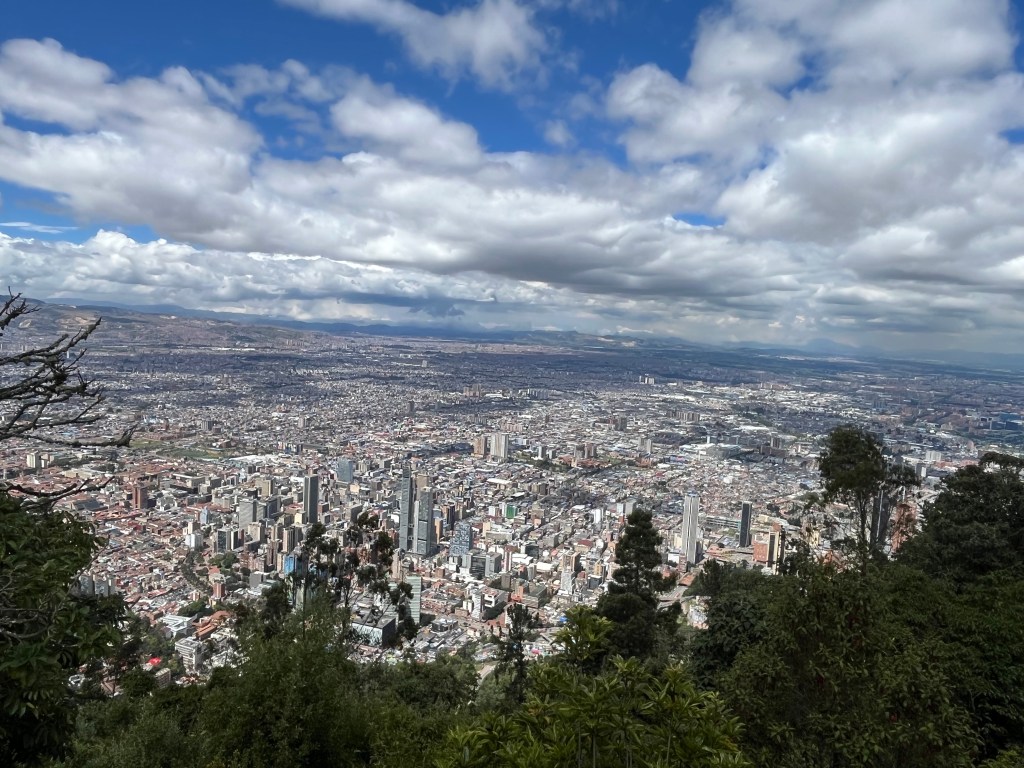
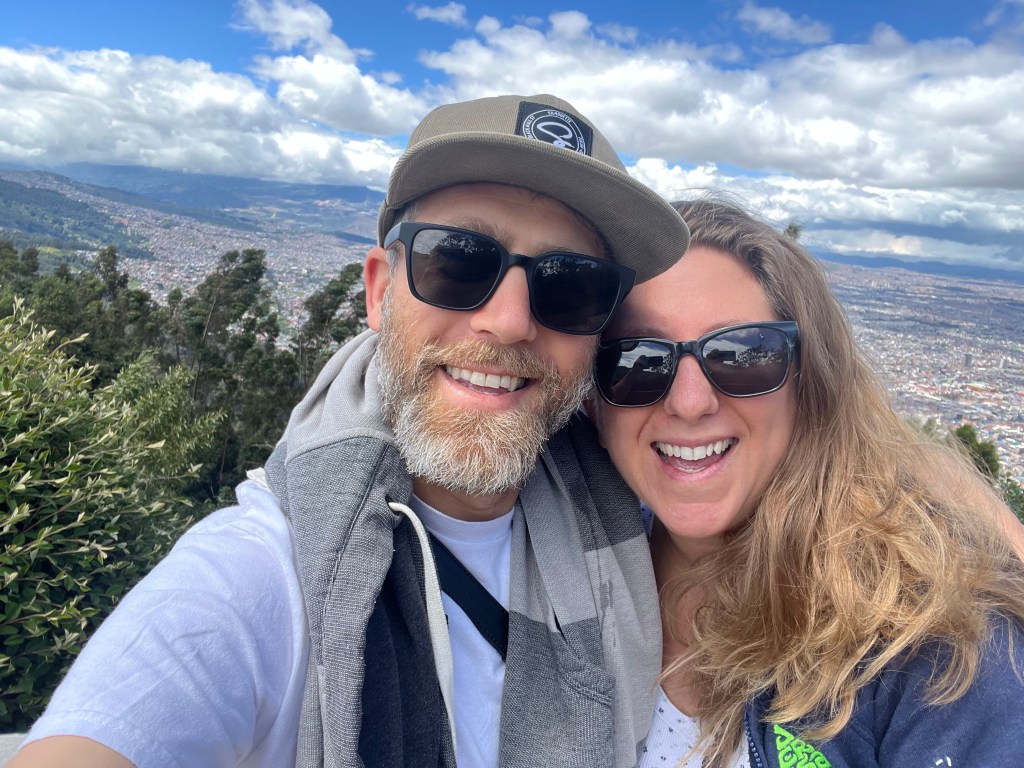
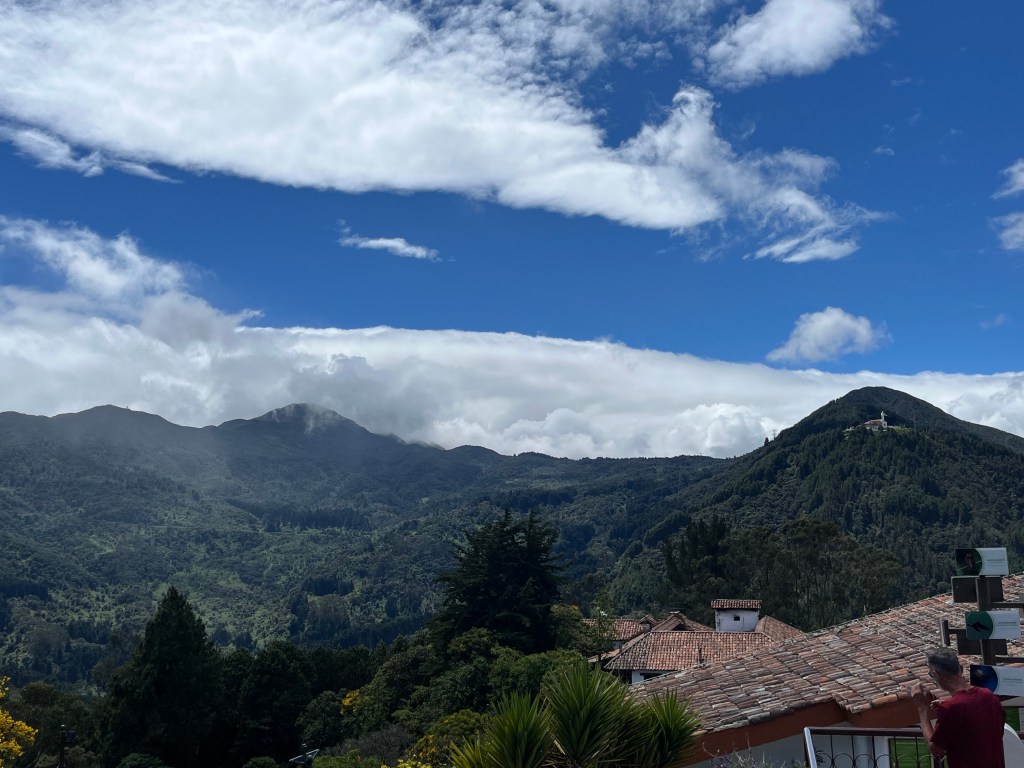
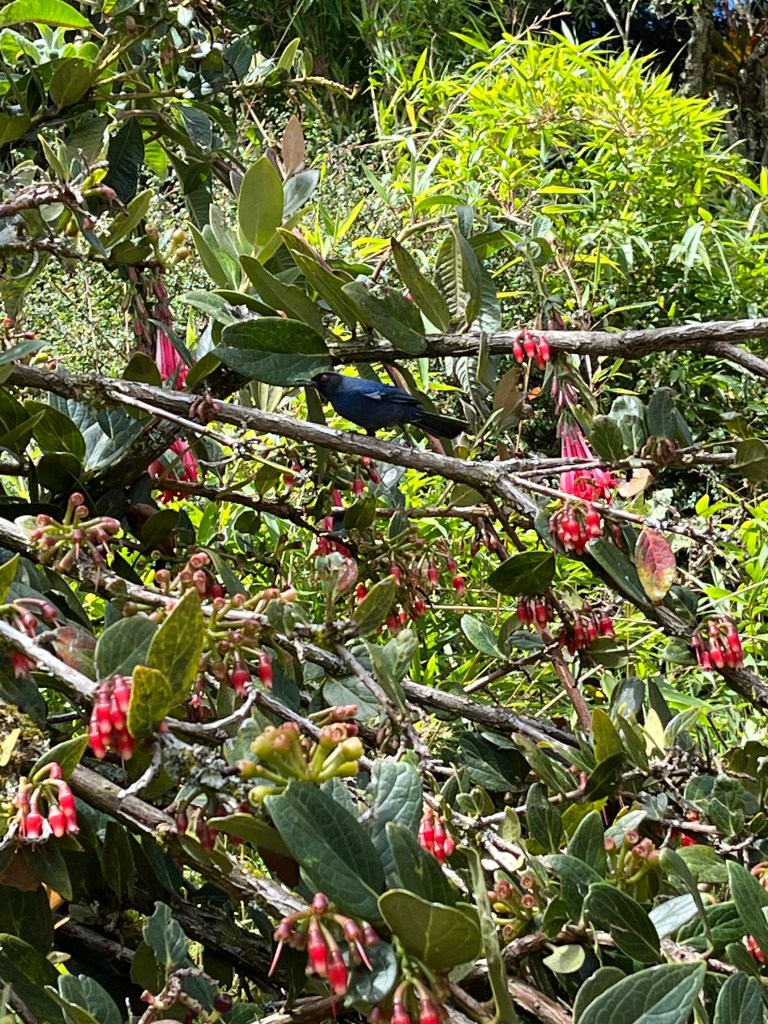
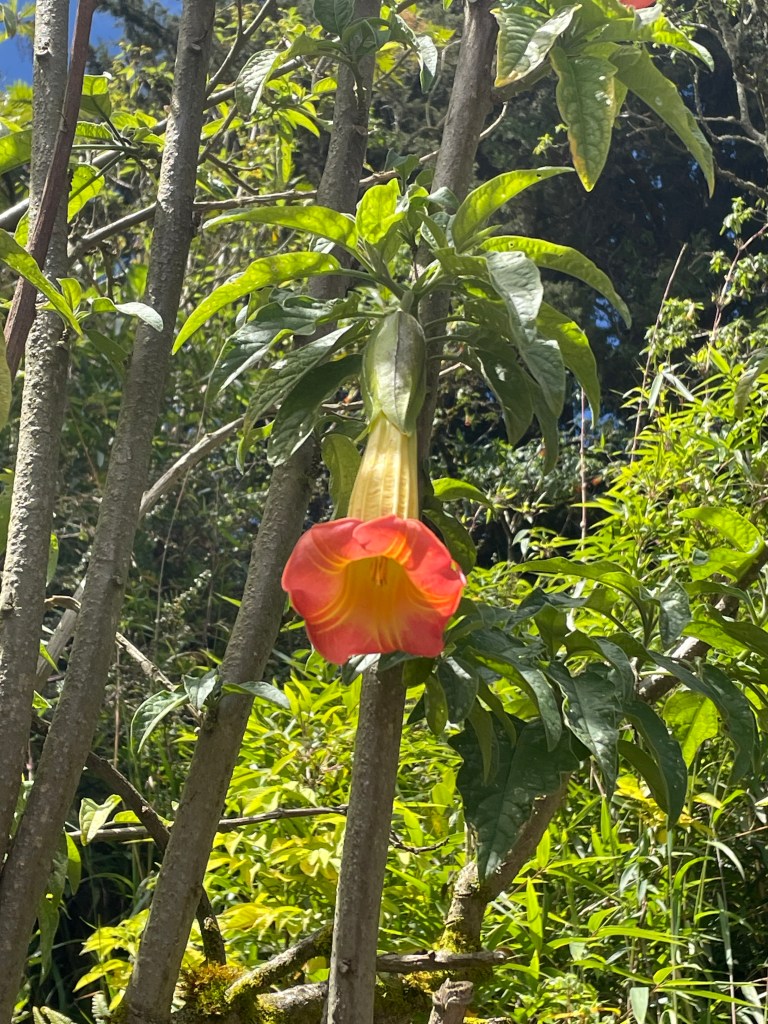
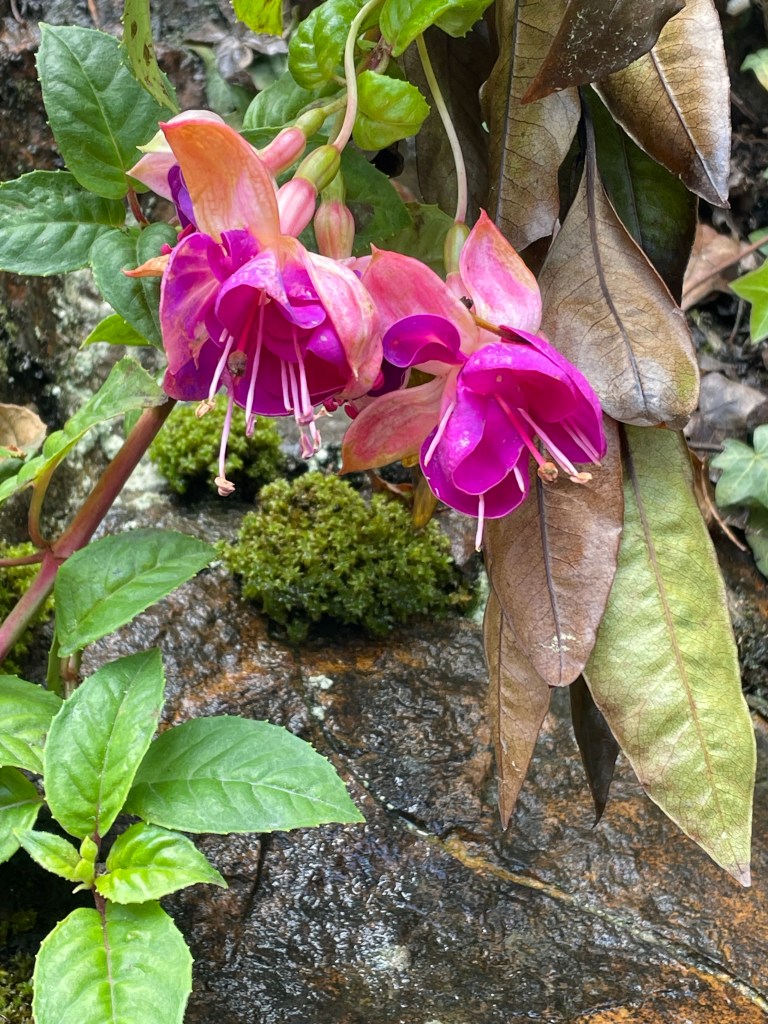
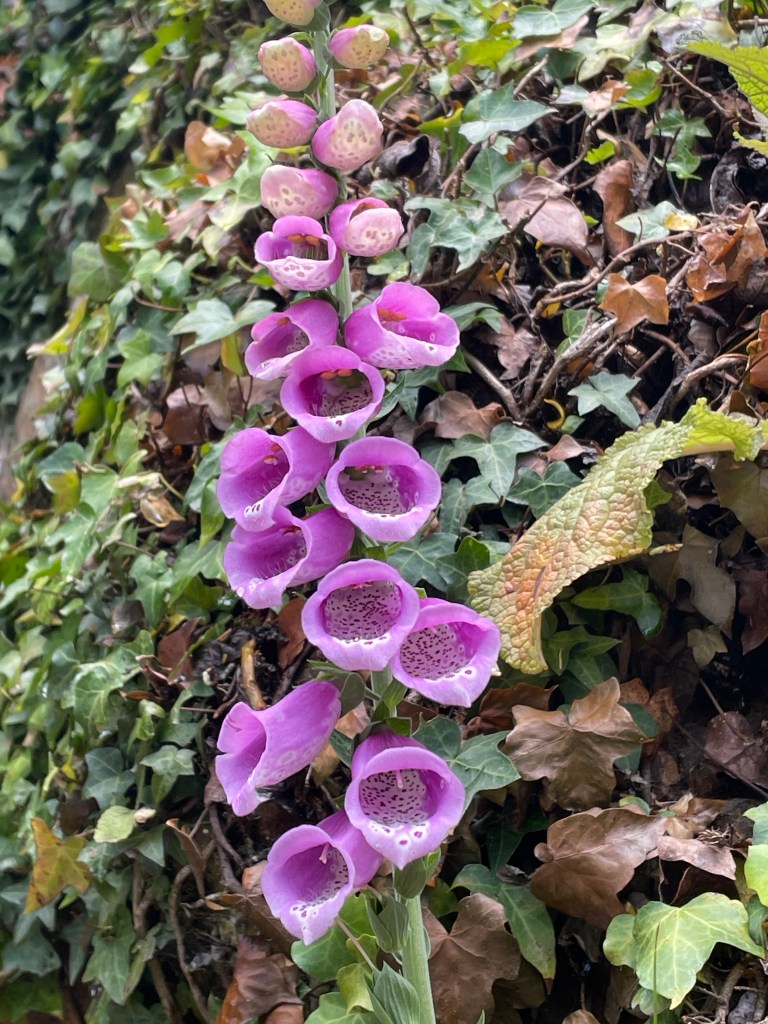
We don’t typically visit Christian religious sites, but this one felt like a must-see. We took the funicular to the mountain top, which reminded us of the Carmelit in Haifa. Though the ride was very short (less than ten minutes), the sheer incline and watching the city skyline appear before us was quite a sight. Adam noticed that stairs still exist next to the funicular for the particularly adventurous. At the top, a winding path with statues depicting the Stations of the Cross leads visitors to the church. Besides the heavily Catholic presence on Monseratte, the surroundings include a landscape replete with native Andean flora and fauna. We were able to spot the Masked Flowerpiercer, so aptly named because it looks like a blue bird wearing a black mask over its face. It also literally pierces flowers for nectar. The real highlight, though, are the views of the city and the surrounding mountains.
Top row, left to right: the funicular; looking down into the tunnel from the top of the mountain.
Bottom row: views of Bogotá; obligatory selfie.
Left: a view of the Andean mountains; right: the church
Top row, left to right: the Masked Flowerpiercer; two types of flowers.
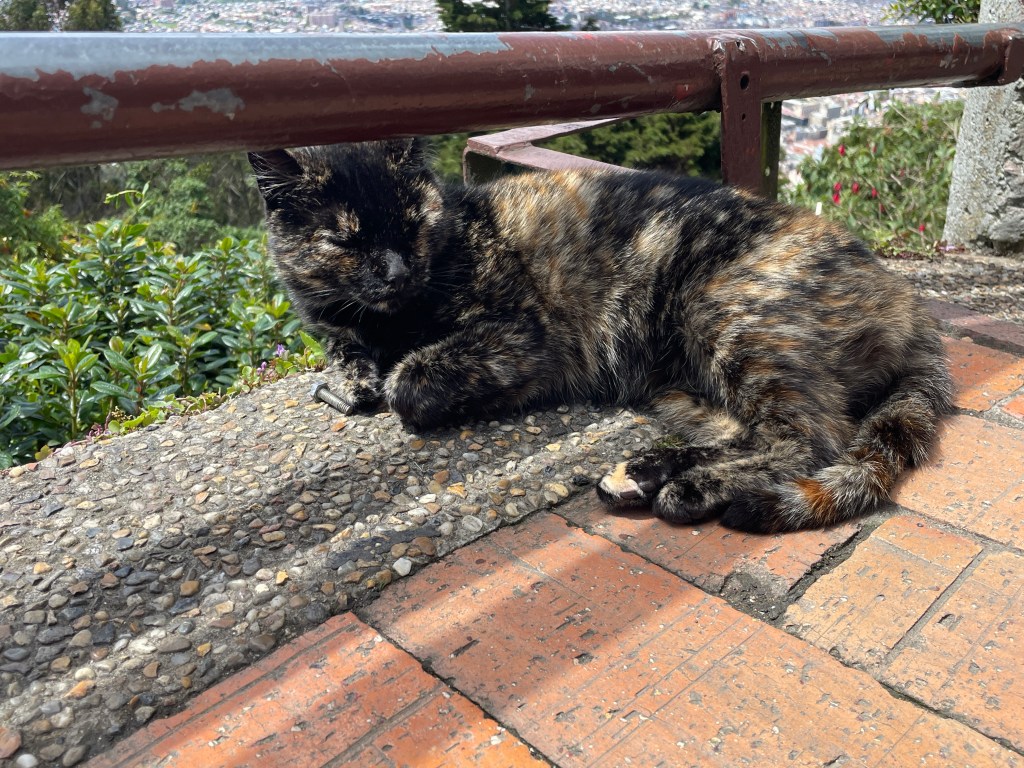
Bottom row, left to right: more flowers; a local cat Yahm insisted on putting in the blog.
After nine days in Bogotá, it is time for us to move on to our next town. Before we do that, be on the look out for posts from both Adam’s and Yahm’s corners about Bogotá’s exceptional bus system, as well as food and libraries (respectively). Be sure to like, comment, and subscribe to Traveling While Introverted so you don’t miss it!
 Traveling While Introverted
Leave a reply to Quindío: Time Well-Spent in the Colombian Andes – Traveling While Introverted Cancel reply