Arriving in Salento was a breath of fresh air for both of us. As much as we enjoy urban areas, small town life brings out the best in us. Our shoulders relax, our sleep improves, and we become friendlier and chattier than normal. I also find comfort in having fewer choices. The pressure of picking the right activity/restaurant/bar/whatever out of thousands is overwhelming. FOMO (the fear of missing out) is something I struggle with often when I’m in a big city. This is doubly true for a city like Bogotá that offers seemingly millions of choices for everything on every corner. Of course, small towns have their downside too. In Salento, most of the restaurants seem to serve the same thing: grilled meats with a side of rice, fries, salad and sometimes either an arepa or patacon. Still, we managed to find some variety.
Salento has a Chabad House; a pleasant surprise for a town of less than 10,000 people. That is, it’s not a surprise that a Chabad House exists in a small town because they’re famous for operating synagogues and centers in places where tourists like to visit. The surprise was how comforting it felt to know it was there if we wanted to visit. Perhaps part of the reason is that we didn’t find much of a Jewish community in Bogotá. Admittedly, this is because all four synagogues in the city are Orthodox and in areas that didn’t seem to have any tourist attractions.
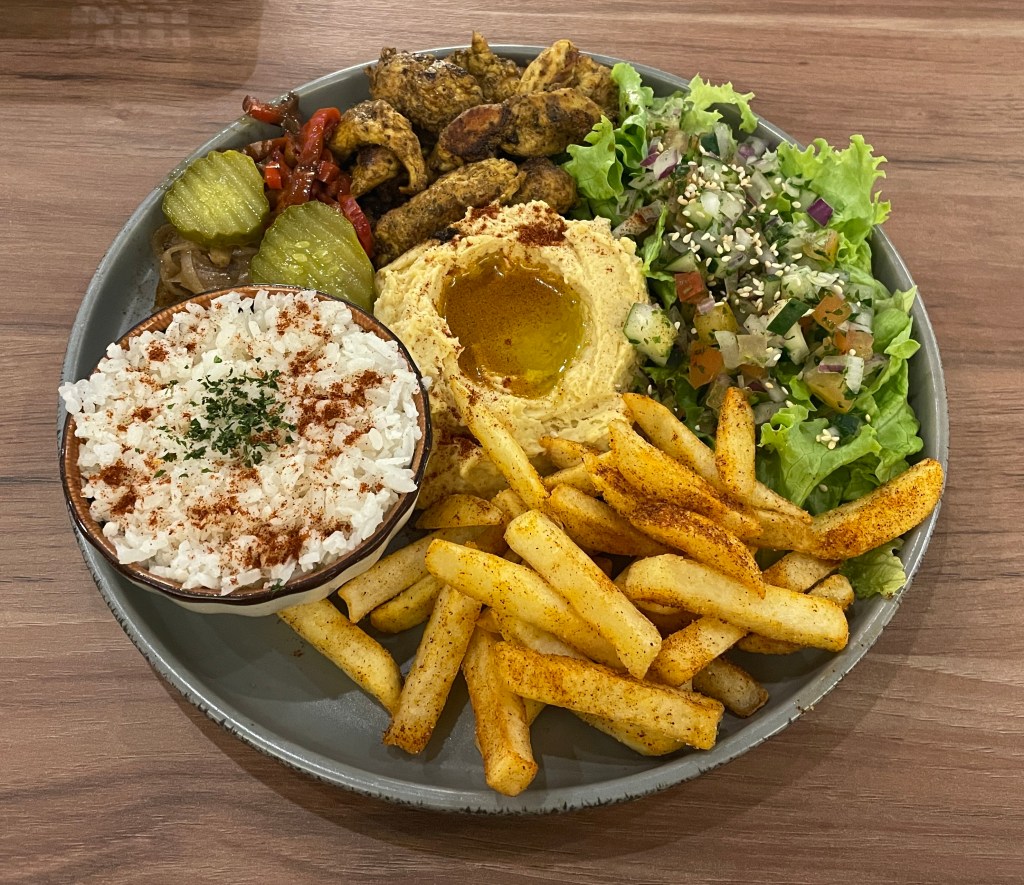
Naturally, the first restaurant I dragged Adam to was Shakshuka. Adam wanted the grilled trout, but they were all out, so we both ordered the chicken shawarma. A taste of home is so important on the road and this meal didn’t disappoint. Pictured: a bowl of rice, pickles, roasted onions and peppers, chicken shawarma, fresh salad, french fries, and a generous helping of garlicky hummus. A side of tahini brought it all together.
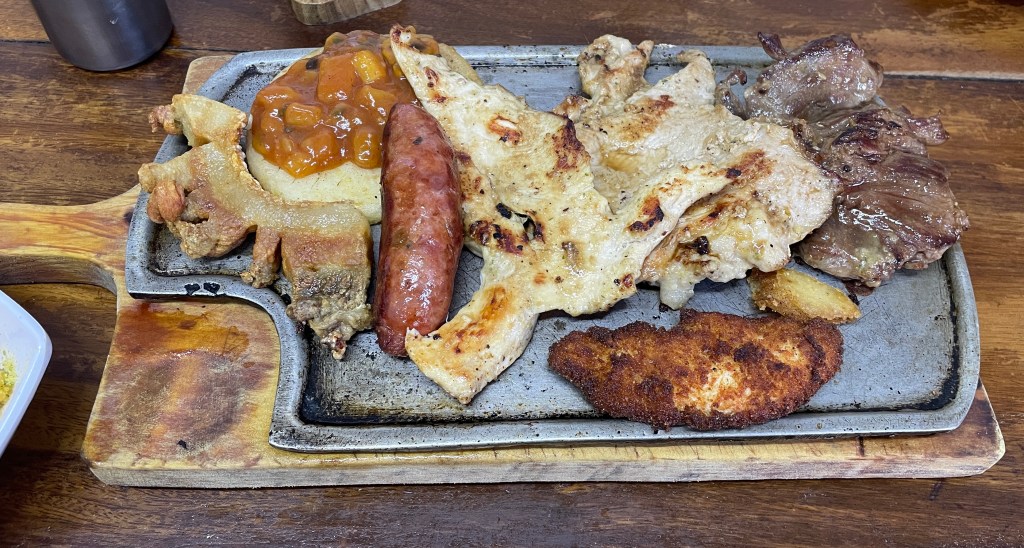
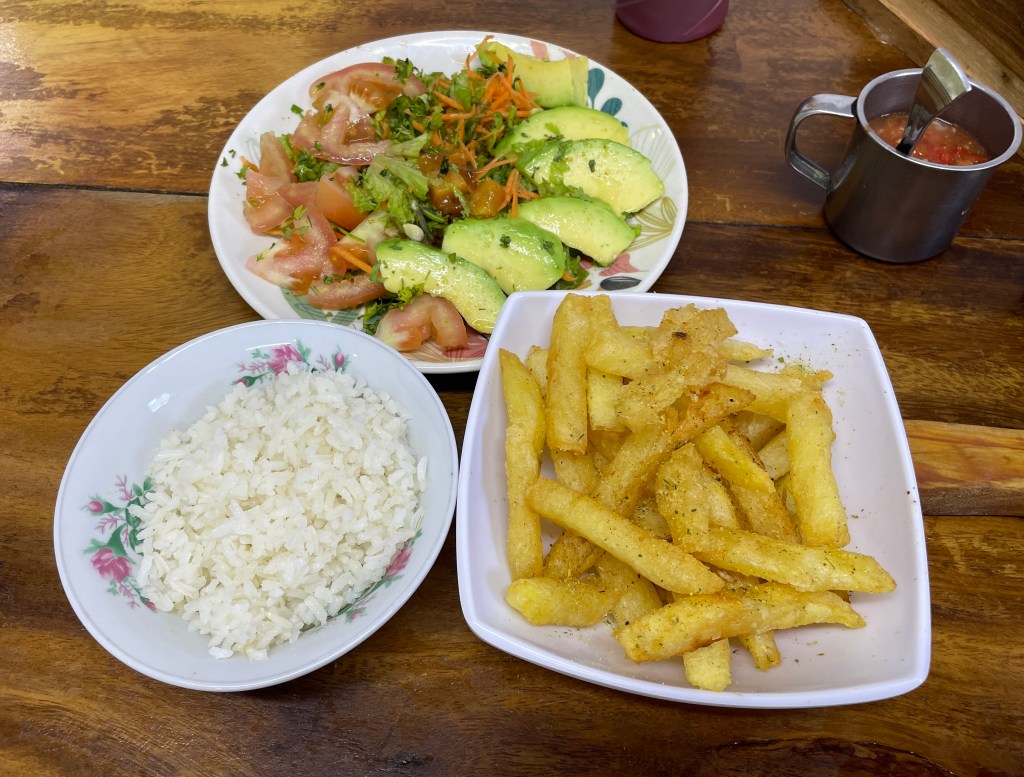
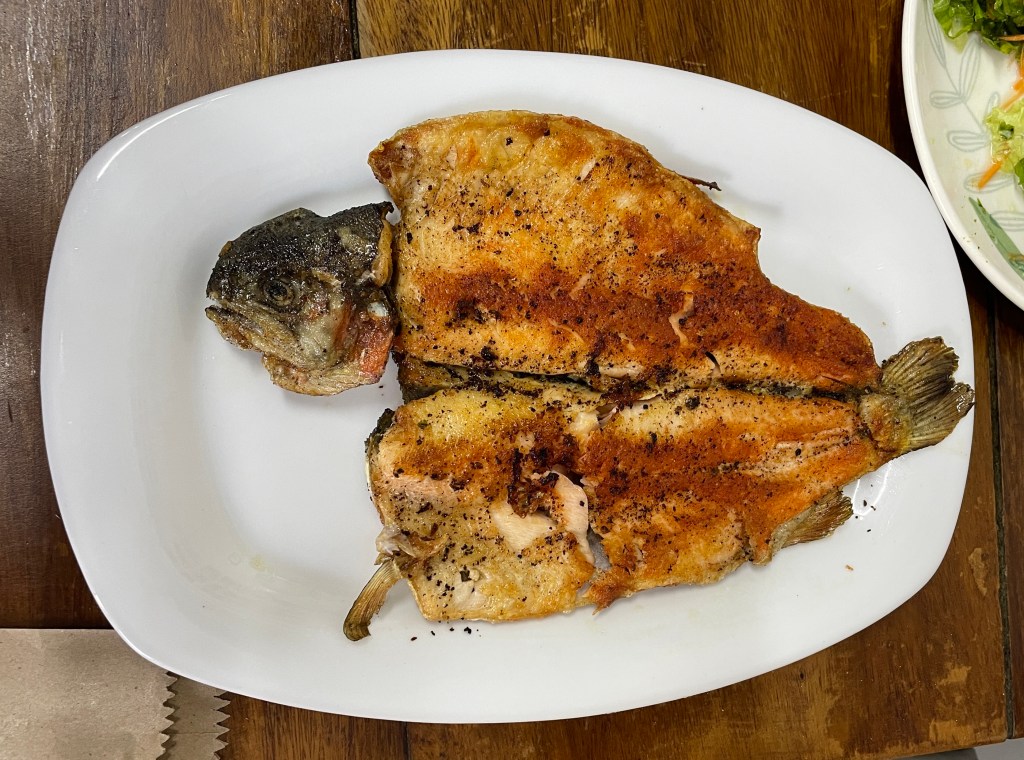
This wasn’t the only opportunity for a taste of home. As we explored Salento, we saw a restaurant with a gigantic Star of David out front. We’ve already learned that a Star of David does not necessarily mean a person or place is Jewish in Latin America. (I’ll keep my opinion to myself on that.) The restaurant is called La Sazon de La Abeula (The Grandmother’s Flavor) and underneath, in Hebrew, the signs says Hamitbach Shel Safta (Grandmother’s Kitchen). When we went in, we were greeted with a typical Colombian menu, which was sort of confusing. While we debated what to order, the owner came by to help. She and I quickly switched to speaking in Hebrew. I hadn’t had a full conversation with a stranger in Hebrew since Rosh Hashanah. What a treat! Adam ordered grilled trout and I ordered a plate of grilled meats, both of which came with, you guessed it, a salad, fries, and rice. It wasn’t the best meal either one of us had, but it felt good supporting an abuela/safta (grandmother).
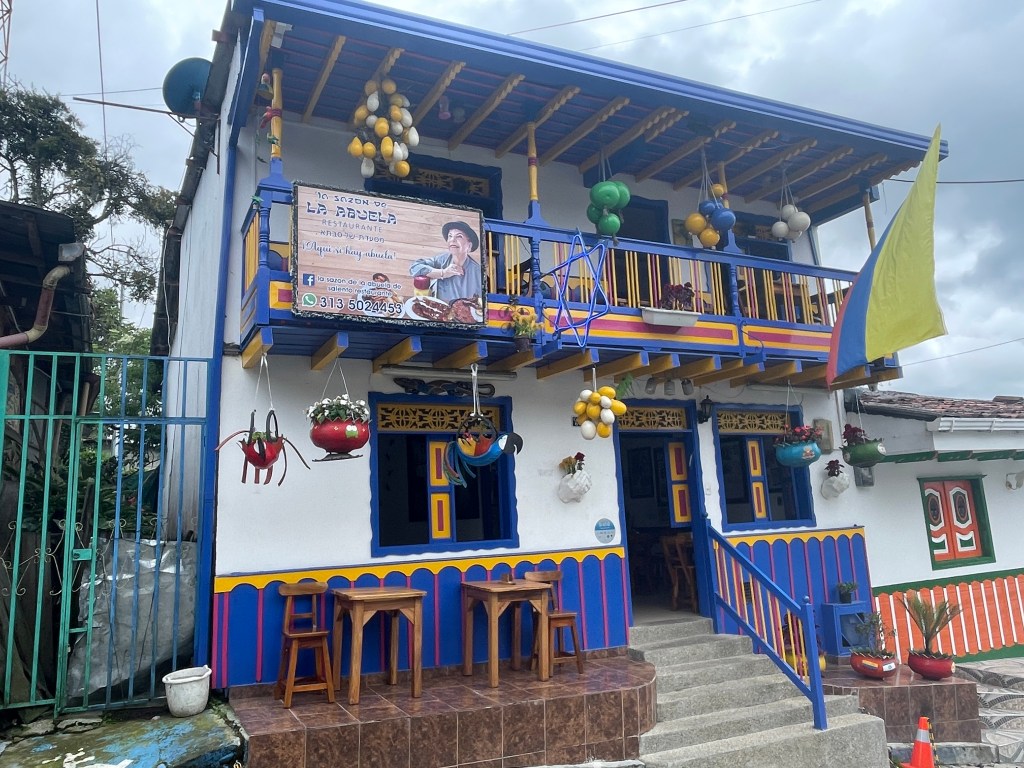
Fun fact: the colonial architectural style is required for any business close to the city center, but tons of businesses maintain it voluntarily. As tourists we think it’s totes adorbs, but we did get a chance to ask a local what he thinks. He said it’s a bit corny but he likes it too.
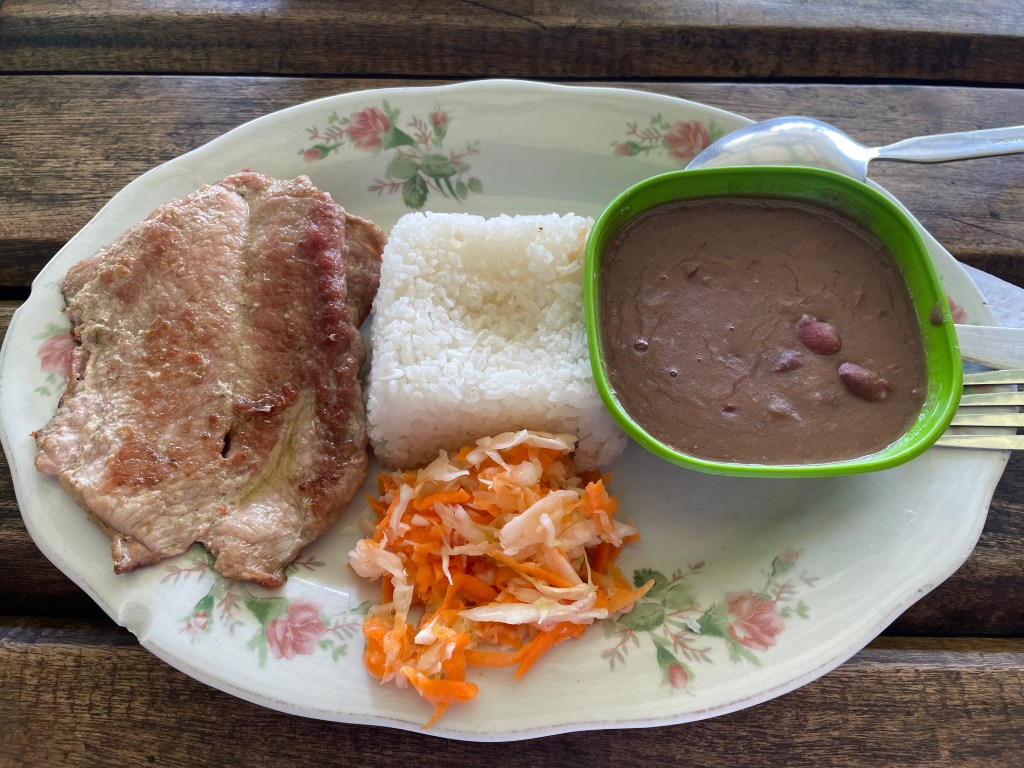
The tipico meals didn’t stop there though. After we hiked to the Cascada Santa Rita which Adam describes in his post about Salento, we stopped to eat at the Santa Rita House. This humble lunch was exactly what we needed to head back to our hotel.
Not pictured are a few slices of fried plantain and the aguapanela that was the sugary pick-me-up we needed.
Speaking of tipico, it’s worth highlighting the meal we ate on the ride back to Bogotá from Salento. (We came back to Bogotá for a few days for a housesitting gig we’ll detail in our next entry.) An eight-hour bus ride that starts in the morning always includes a stop for lunch. On the same route on our way to Salento, we scarfed down some chicken and fries. Only after we ate did we realize that the best thing to get was the freshly-grilled sausage. Since we stopped at the same spot on the way back to Bogotá, we decided to do as the locals do.
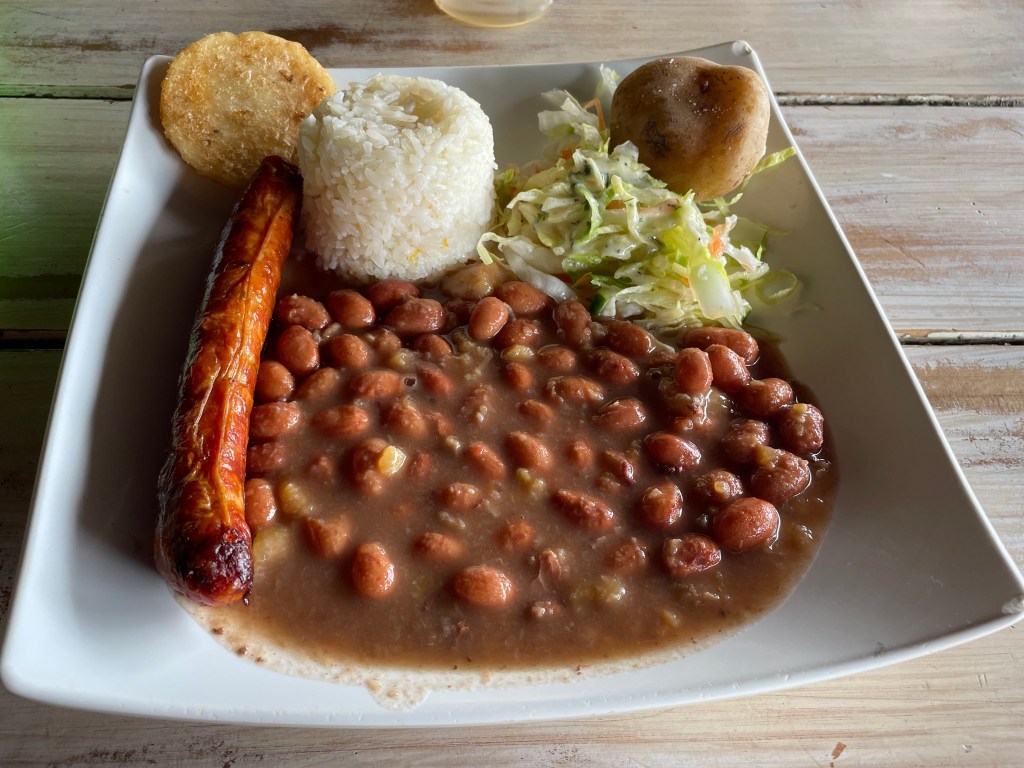
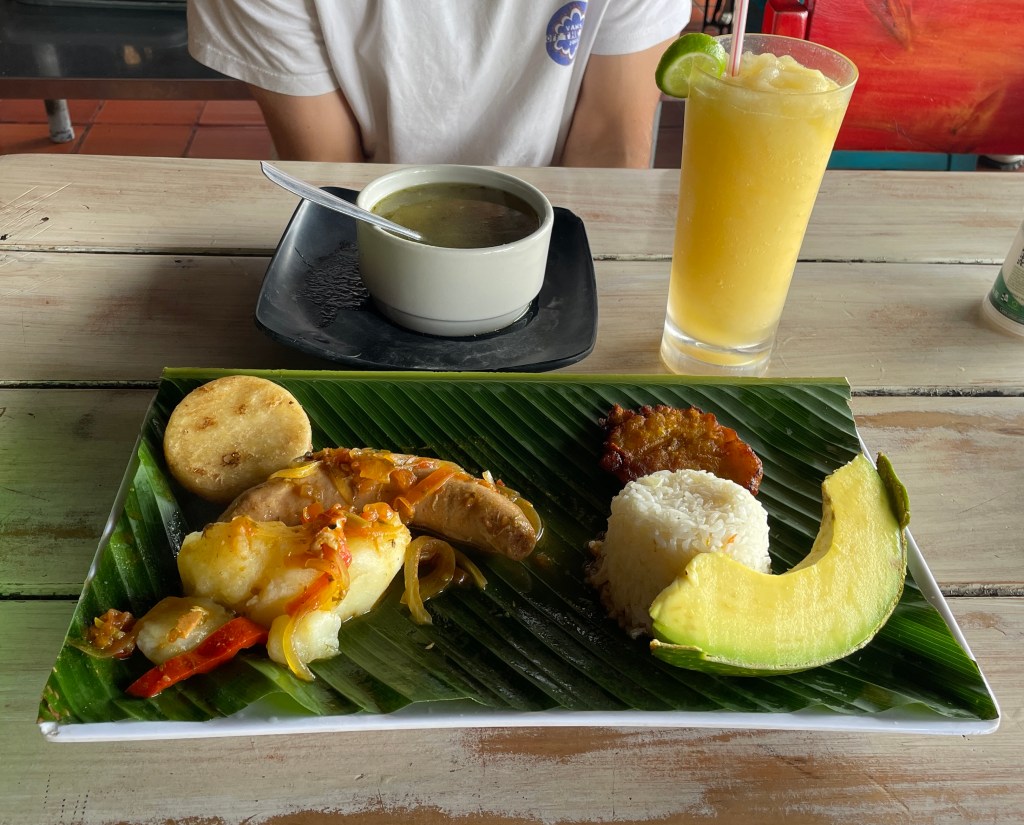
On the left is my lunch: a grilled sausage, lots of soupy beans, rice, a small salad, an arepa, and a small baked potato. Have I mentioned how delicious the potatoes are in Colombia? They’re the best. In fact, potatoes are so good that you don’t call people good eggs; you call them good potatoes. (Obviously I have adopted this expression.) Adam’s lunch was a bowl of chicken and potato soup, a maracuyá lemonade, and a humble sausage plate that included a boiled potato with a tomato-onion sauce, an arepa, rice, and a slice of avocado. The avocado in Colombia is some of the best we’ve had and that’s saying something considering we’re from SoCal.
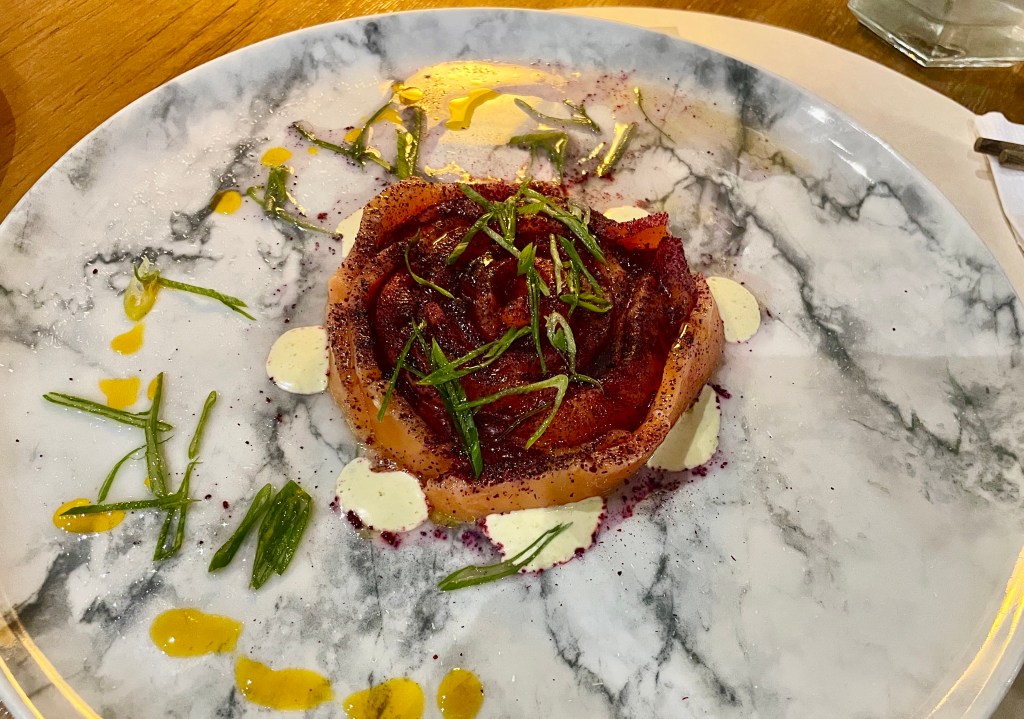
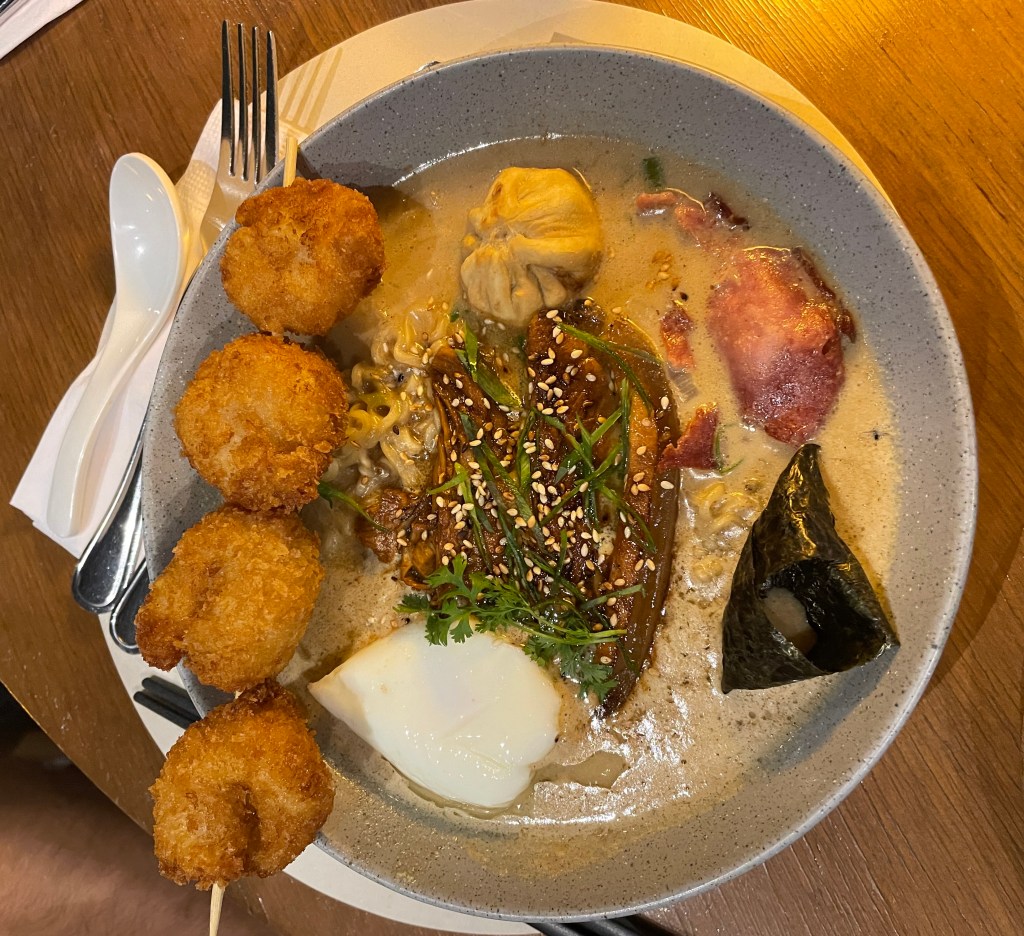
Still, the most surprising meal we had was at Māji by Cerón. According to the front desk at our hotel, this is one of the top restaurants in town. It wasn’t hard to see why: the food was bold, the service excellent, and the atmosphere had that lovely date night vibe. I wasn’t as hungry so I ordered salmon sashimi that was rolled into a rose and topped with a lovely light seasoning. Even though I couldn’t eat the sesame cracker that came with the dish, I still enjoyed it. Adam had what he claims to be one of the best bowls of ramen he has ever had. Toppings included fried shrimp, sweet onion dumplings, a soft-boiled egg, and pork belly.
After a few more days in Bogotá, our next destination is Medellín and I can’t wait to share our adventures there with y’all. Be sure to like, comment, and subscribe to Traveling While Introverted so you don’t miss it!


 Traveling While Introverted
Leave a reply to dreamilyfestdf30874566 Cancel reply