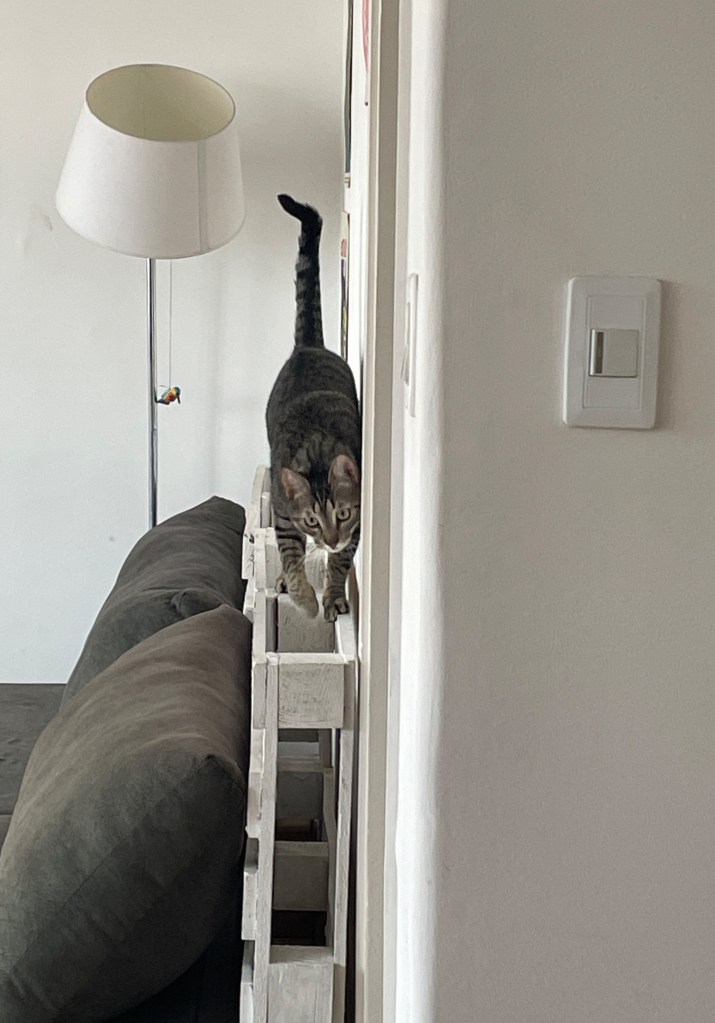
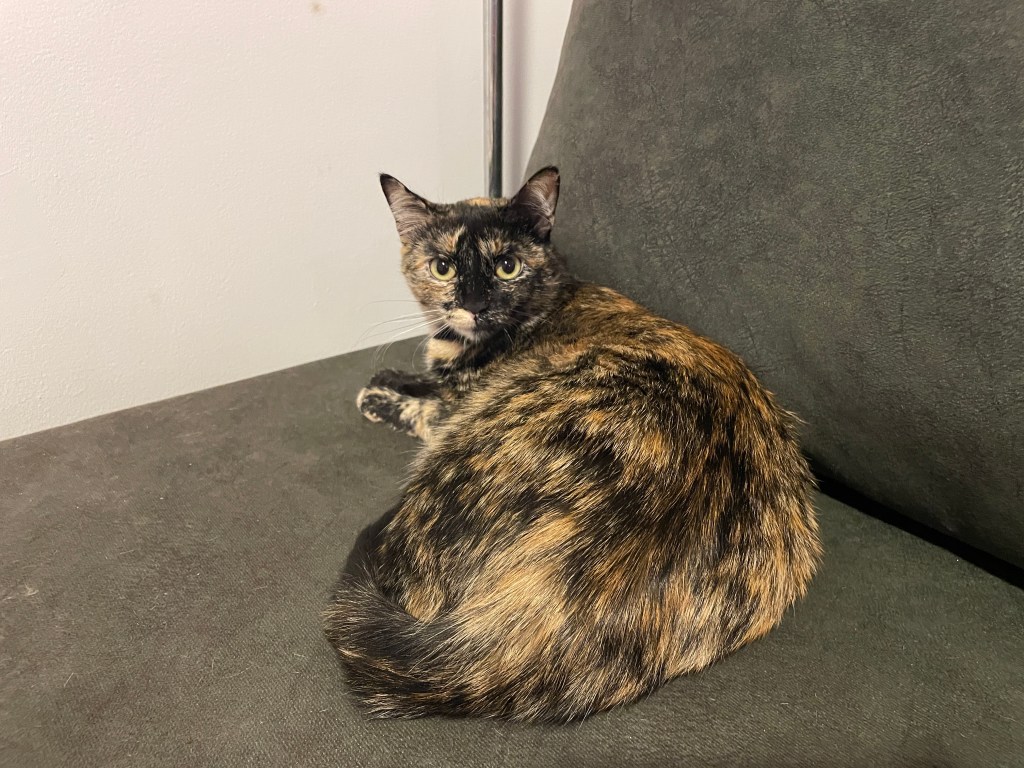
After too short of a stay in Salento, we returned to Bogotá for a quick house sitting gig. Readers of our blog know that we are big fans of Trusted Housesitters. (If you click on that link and sign up, we get 2 free months on the site. So, be a mensch and sign up.) This time, we watched two cats who were very shy and slow to warm up to us. Yahm was a little disappointed because she loves cats so much, but she did manage to take a few photos of them.
Once our house sitting gig was over, we took a bus to Medellín, known as the city of eternal spring due its annual spring-like weather. Colombia is a large country and extremely mountainous, which means that routes from one place to another require winding roads. For travelers such as ourselves, that translates into long overland commutes. The bus ride from Bogotá to Medellín should have taken around 8 hours (including a lunch break). However, it took us 13 hours for all sorts of reasons. Our bus driver stopped at least once an hour for a bathroom break. There was also construction along the way, which caused traffic jams. Police road blocks also slowed us down: twice we saw police call someone off the bus and question their baggage. Such are the adventures of traveling. (Don’t worry; everything was fine.)
The next day, we began our exploration of Medellín. We decided to mostly explore our neighborhood, El Poblado, because Adam felt tired and out of it. So our first day was cut a bit short and we spent the later afternoon and evening resting, which was just what the doctor ordered. The day after that, Yahm felt tired and out of it, similar to what happened when we were in Flores, Guatemala. These bouts foreshadowed a constant theme of things not quite clicking for us in the city.
Once we were both feeling better, we explored different parts of the city while using its public transit system. Unlike Bogotá, Medellín does not have a comprehensive BRT system. Instead, there is a mixed transit system consisting of bus, rail, and cable car that will get folks mostly where they need to go. Still, we both jumped at the chance to use public transportation whenever places were too far to walk. Below is a video of a sleepy Sunday street view while on the light rail. Transit nerds who want more info on the system can click here.
One of the places we were most excited to visit while in Medellín was Guatapé. Guatapé is not in the city itself, but approximately 49 miles (79 km) east of it. The lakeside city is a popular destination for Colombians and tourists alike. It boasts colorful Colonial era buildings, panoramic views of the lake, and a huge rock outcropping. When we did our research, we were told that it’s not really worth staying in Guatapé and the hotel recommended we book a tour for the day. The tour included not only time in the city and a visit to the rock, but also opportunities to visit other nearby towns and attractions, as well as a boat ride to a dam. For two people who typically prefer to do things on our own, we were very excited for the tour.
Once we boarded our tour bus and the guide began speaking in rapid fire Spanish, we looked at each other with furrowed brows. The guide asked everyone on the bus (about 35 people) where they were from. Other than a Brazilian couple and two Chinese gals, everybody was from either Colombia or another Spanish-speaking nation. Everyone, including the Brazilian and the Chinese folks, spoke Spanish fluently. Adam asked the guide if she would repeat anything in English to which looked quizzically at him and shook her head, no. This was a great way for us to dive into the deep end with our Spanish comprehension. (Spoiler alert: we missed a ton of historical information.)
The tour itself also seemed geared towards a uniquely Latin American experience. One of the reasons people love to visit Colombia is to shop. It seemed like every time we stopped at a town, relic, or rest stop, the guide mentioned all the fun things we could purchase. To be fair, besides missing huge portions of the tour due to a language barrier, there may have also been cultural aspects we missed. Perhaps, for Latin Americans, given geographical and political complexities, a tour that offers opportunities to enjoy kitsch safely in a rural area is a special treat. Not to mention a tour that stops in rural places as a chance to support local economies. So while we were a bit bored, the others seemed to love it.
The strangest part of the tour was the boat ride to the dam. Medellín relies heavily on hydroelectric power for its residents and also sells excess energy to other towns and countries. In the 1970s, the Punchiná Dam was built and changed the Guatapé area completely. We thought we would go to the dam and try to glean some knowledge about its history through our limited Spanish comprehension. That was not what happened at all. Instead, we took a short cruise through the lake that didn’t take us anywhere near the dam. The main attraction was the boat guide who hawked a local Pilsner beer and improvised a song based on where people were from. The party boat vibes wrapped up the odd but comical day we had on the tour. It was not a terrible tour by any means; rather, it wasn’t geared towards geeky travelers such as ourselves. Next time we visit the area, we will stay in Guatapé to experience all the kitschy lakeside culture on our own terms.
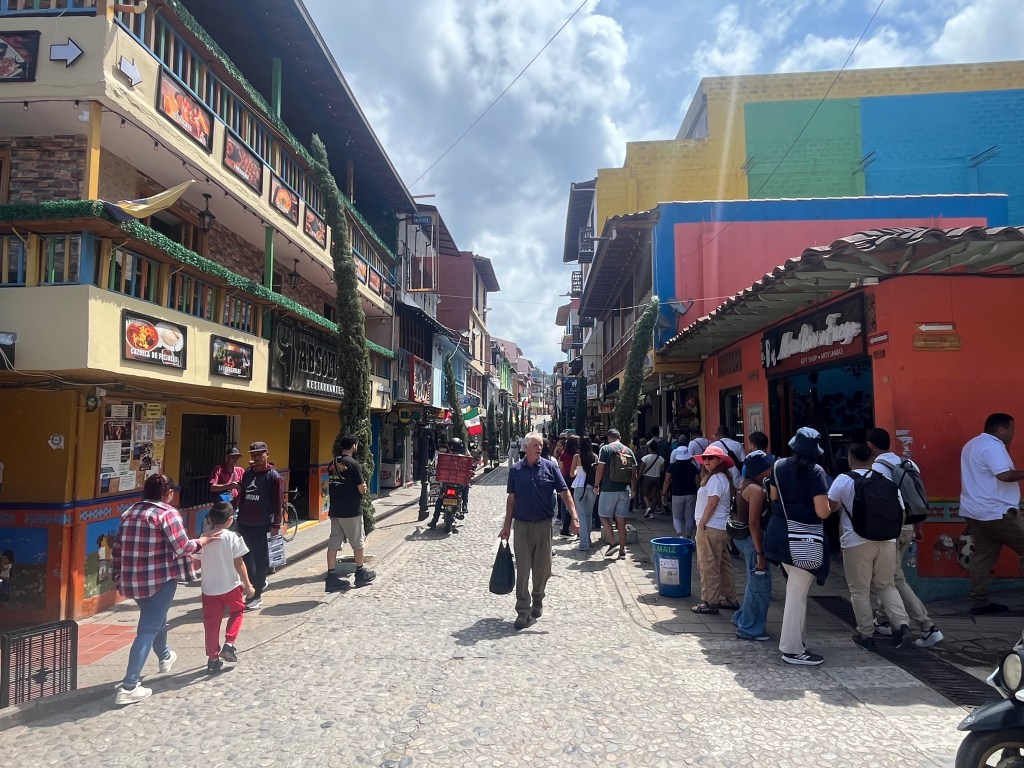
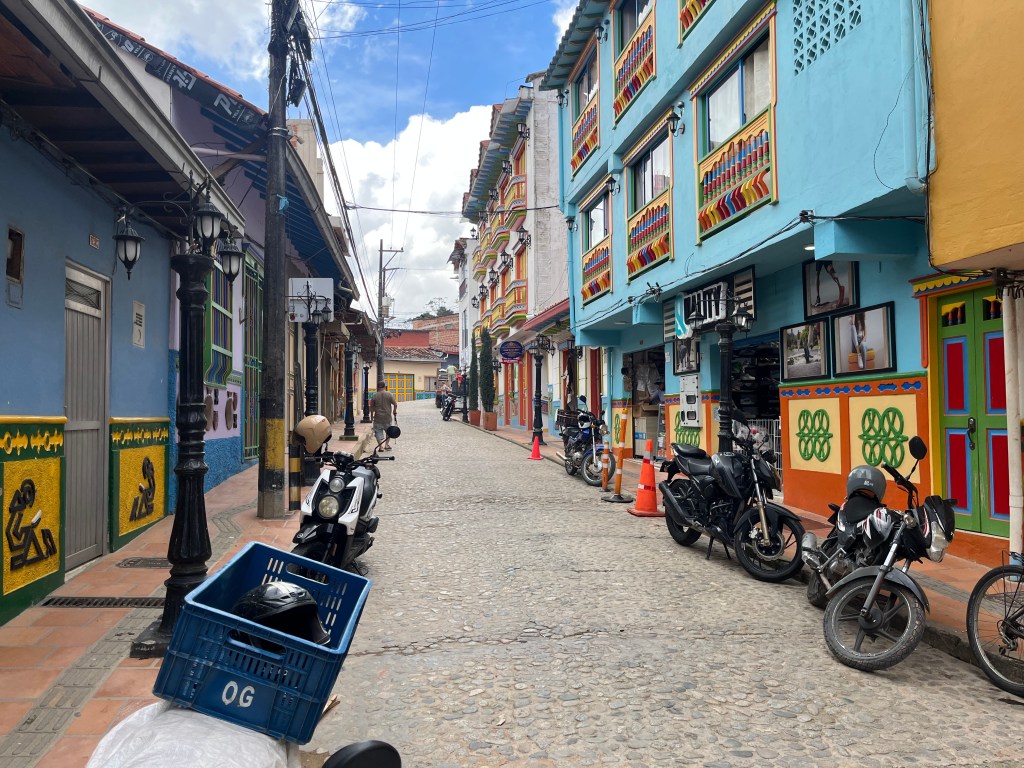
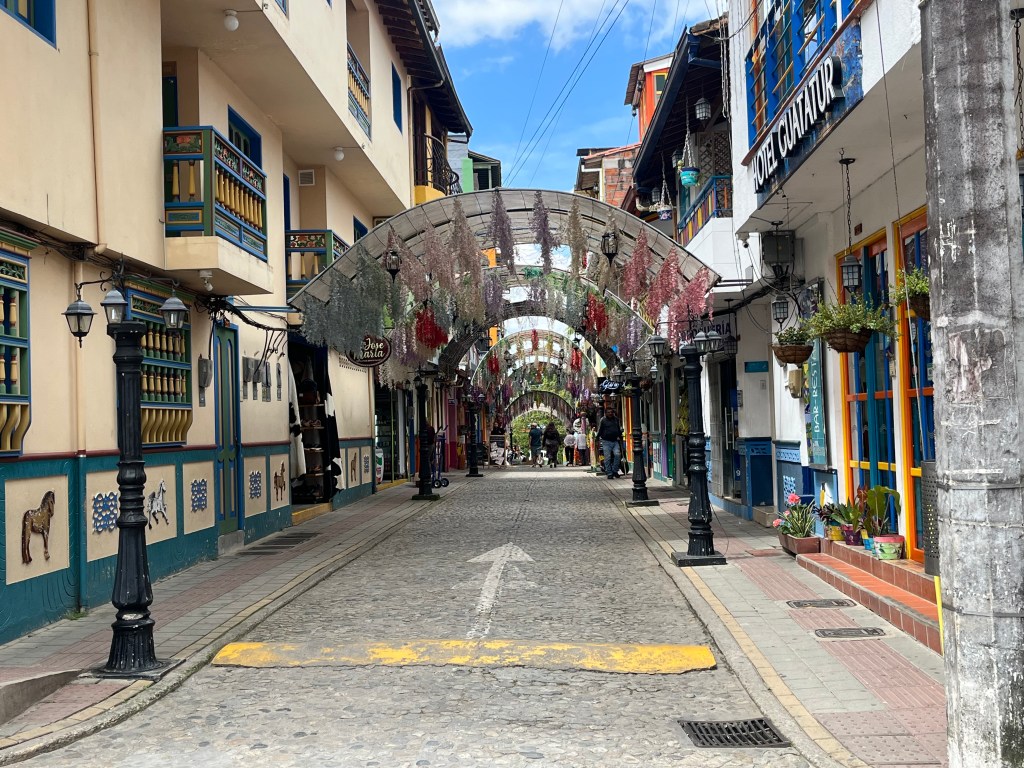
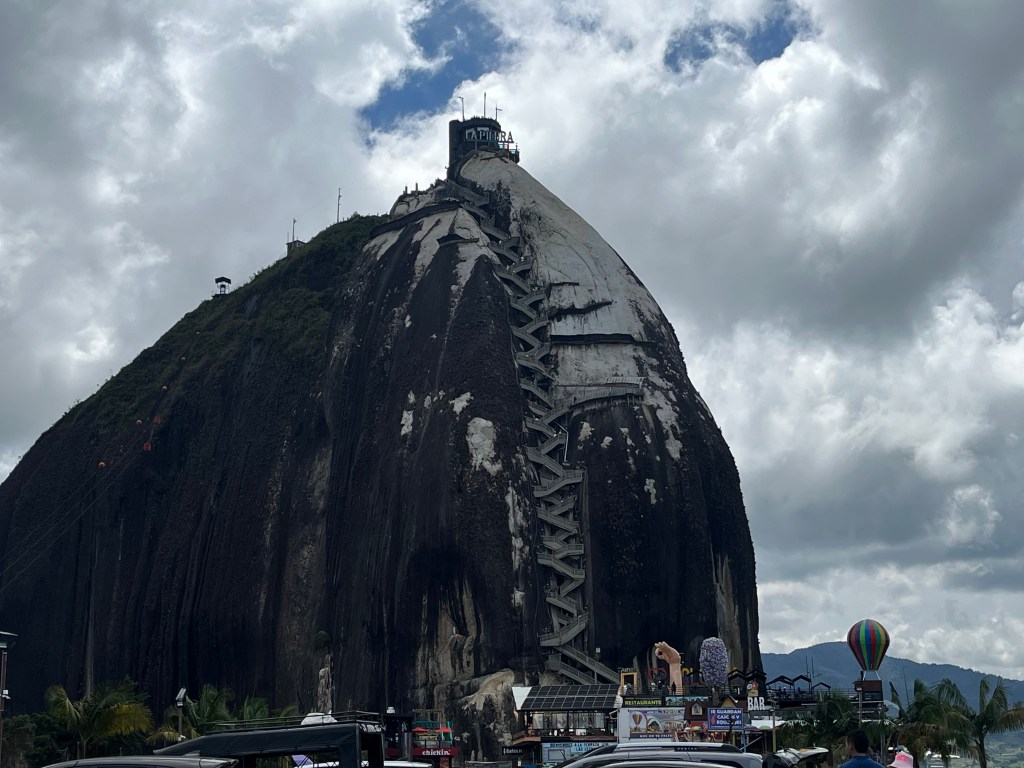
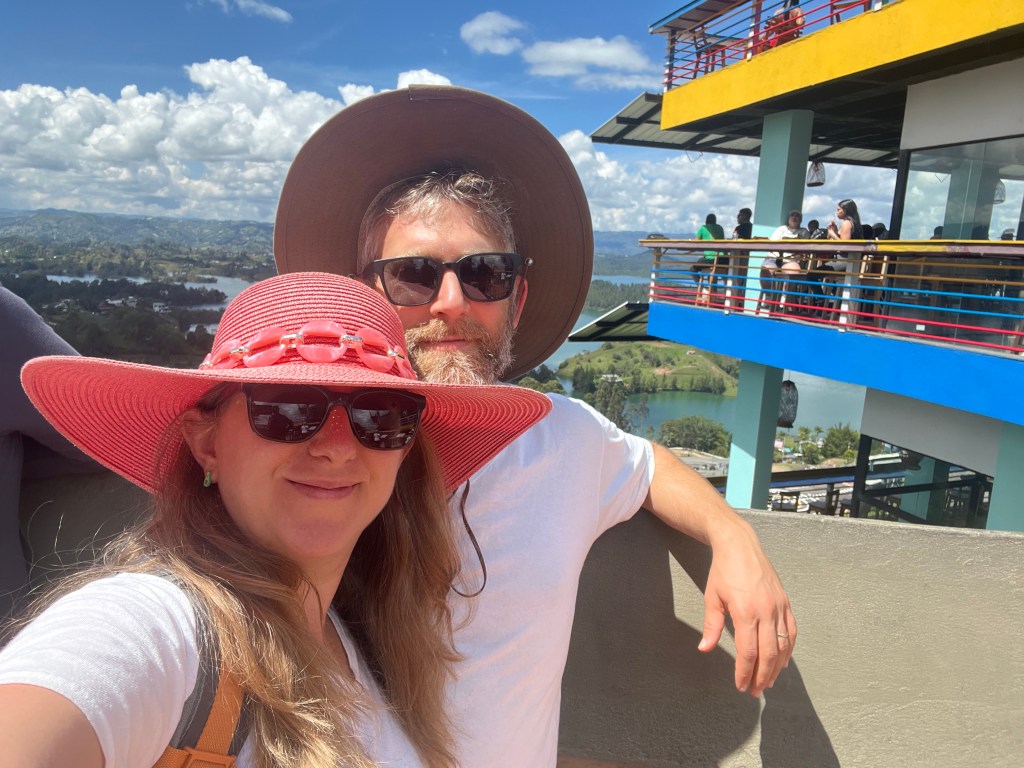
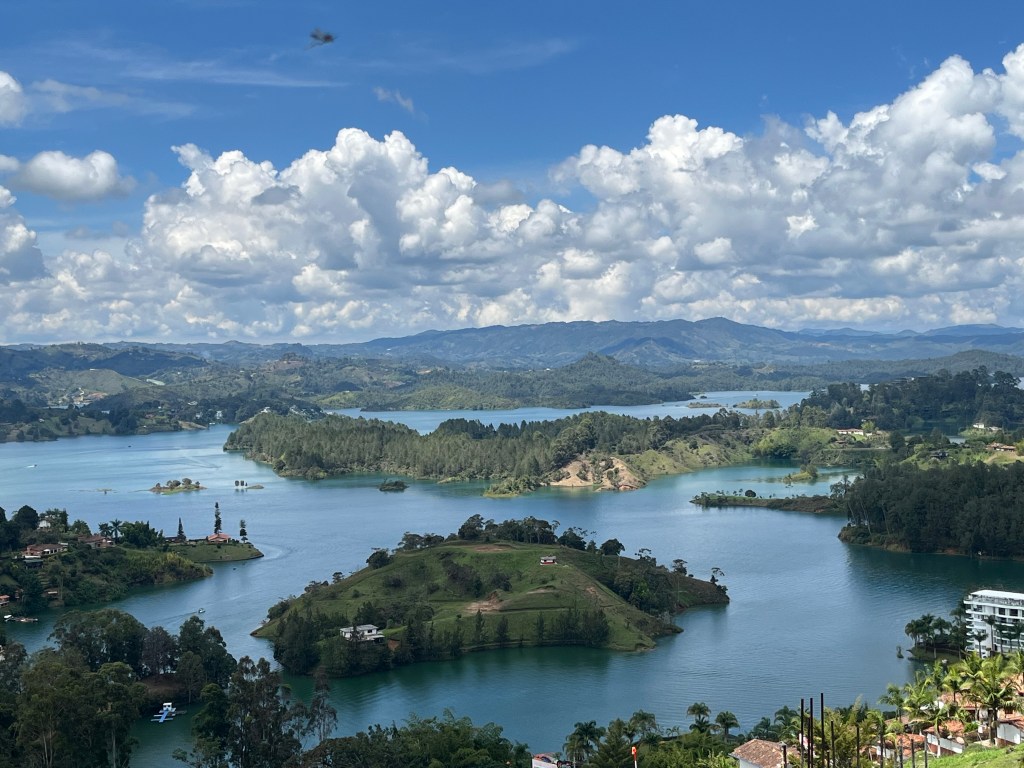
The first row of photos below are of street views in Guatapé. The bottom row, left to right are photos of the rock that folks can climb (we did not partake); an obligatory selfie; and a view of the lake.
Another place we wanted to make sure to visit in Medellín was the Museo Casa de la Memoria (Museum House of Memory). The purpose of this museum is to promote peace and societal cohesion in light of Colombia’s, and Medellín’s in particular, violent history. The mayor of the city proposed this museum to highlight the stories of survivors, families, and former gang/paramilitary members so that the country could heal and move forward. There is still a lot more work to be done. For example, FARC, one of the paramilitary groups responsible for so much violence, continues to operate in border towns along Colombia’s frontier with Venezuela. However, the willingness to have open conversations about the past is nothing short of remarkable and a testament to a society determined to have hope for a better future.
The museum has an app that walks guests through all of the exhibits in Spanish, English, and French. The introduction explains why the museum is called a Museum House of Memory: it is meant to be an intimate space that promotes dialogue as one (hopefully) does at home, while also protecting and caring for memories as museums should do. As we walked through the exhibits, we became intimately familiar with the conflict. It became personal to us, even though it is not part of our family or national history. If you’re in Medellín and only have time to visit one museum, this is the one to visit. It is impossible to understand contemporary Colombia without having a basic understanding of the trauma generations have endured.
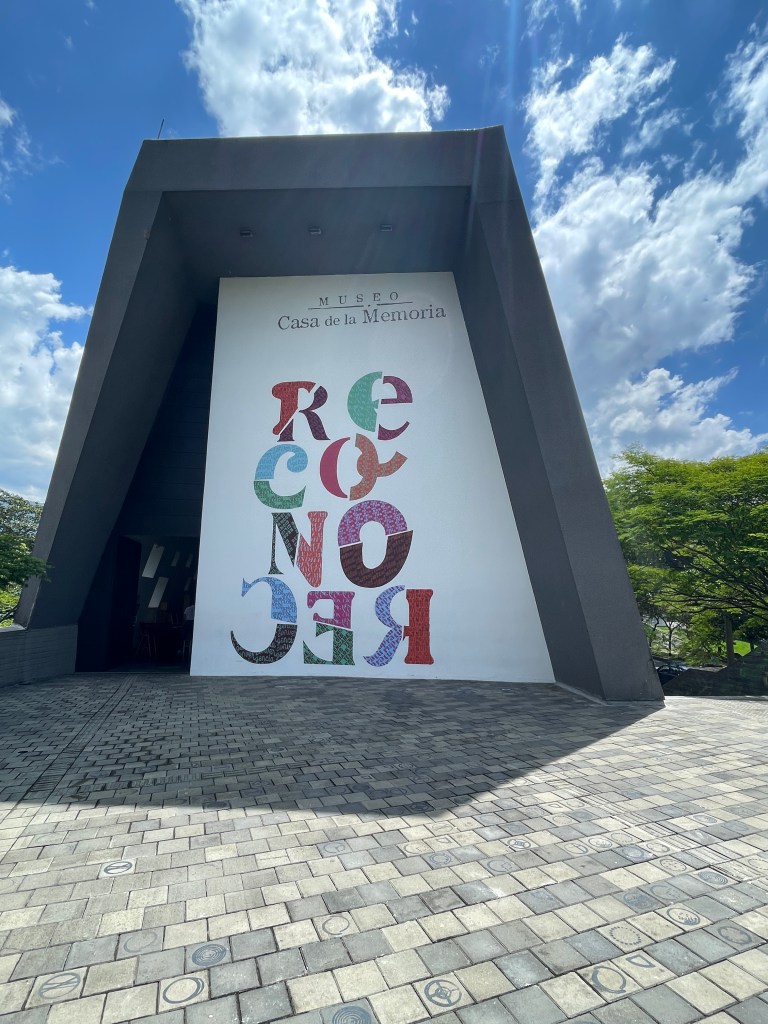
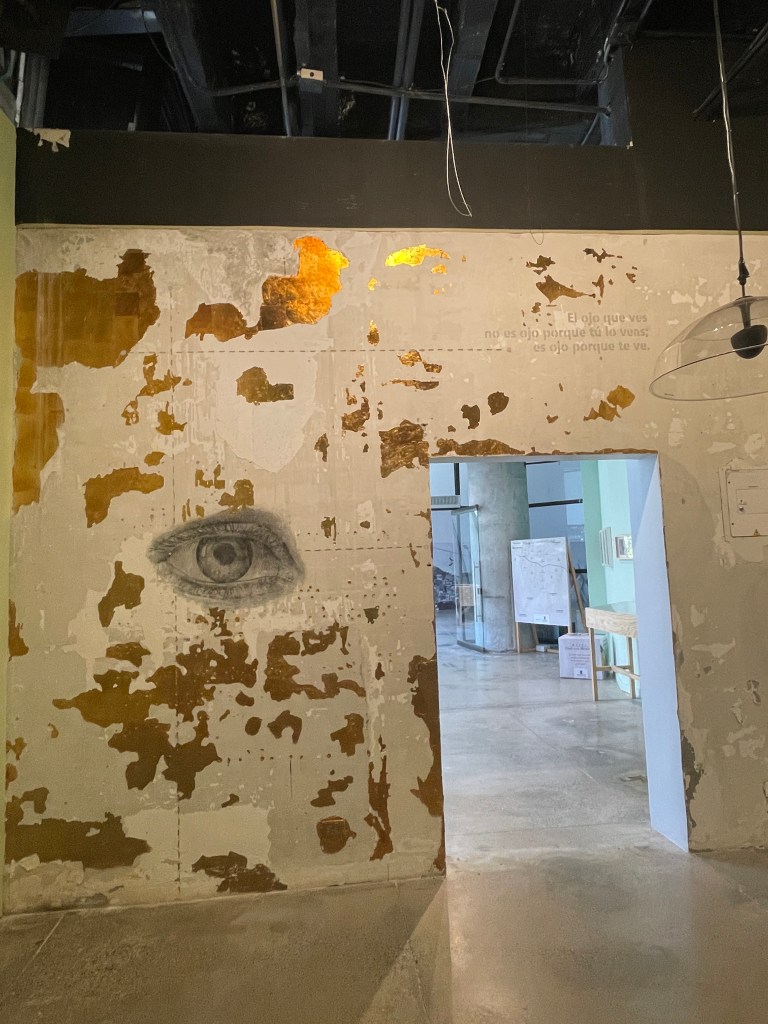
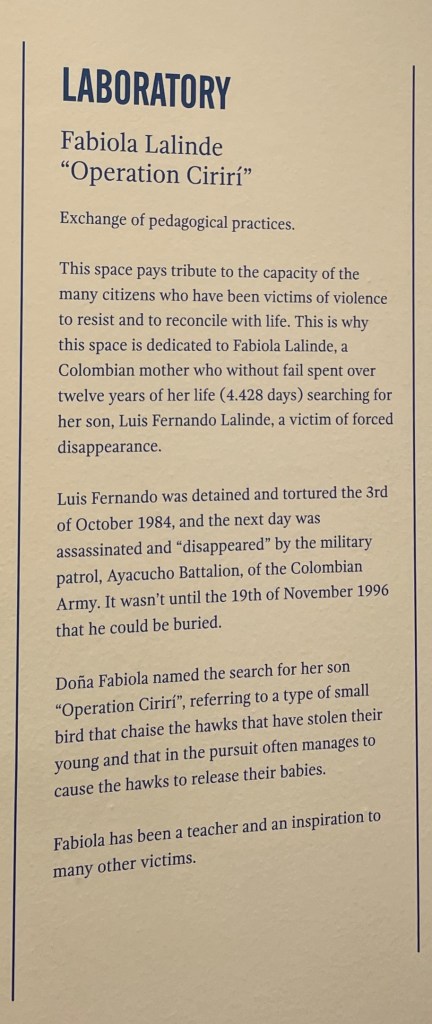
Below are a few photos from the museum. On the left is the entrance and the word “reconocer” (recognize) is boldly broadcasted. The middle photo is from an exhibit. It’s difficult to see, but above the door it says “El ojo que ves, no es ojo porque tú lo vens; es ojo porque te ve” (“The eye you see is not an eye because you see it; it is an eye because it sees you”). The photo on the right is from another exhibit about a mother who spent years searching for her abducted son. What struck us was the explanation for the name of “Operation Cirirí.”
When in Medellín, it may be tempting for gringos such as ourselves to want a Pablo Escobar tour. After all, he is one of the country’s most famous sons and his cartel, which bears the city’s name, haunts the city’s reputation still. (For those who don’t know, Pablo Escobar was killed in 1993.) However, after visiting the Museo Casa de la Memoria and learning more about the civil war and gang-related violence that plagued the country, it became clear to us that a tour revolving around one of the country’s most reviled figures was insensitive and ignorant. Instead, we opted for a tour of Comuna 13, which was once the most violent places on the planet. (Spoiler: this time we made sure the tour was in English.)
First, a quick geographical terminology lesson. The city of Medellín is broken down into comunas, which are similar to wards or districts in U.S. cities such as New Orleans. Medellín has 16 comunas, and the 13th is the most famous because of its exceptionally violent past. One of the reasons for its history of violence is that the road to the Caribbean coast is easier to access from this Comuna, and therefore, drug smugglers and other criminal entities established themselves in the community. Many of the more famous photographs of Colombian violence in urban settings were taken in Comuna 13.
Our three-hour tour of Comuna 13 was with an exceptionally magnetic young man named Esteban, who moved with his family to the Comuna from the countryside when he was a young boy. (His family fled paramilitary and state military violence which commonly affected small rural towns.) He told us that when he was young, he had to abide by an invisible urban border because, otherwise, he was likely to be killed by children as young as him hired by gangs to enforce their territorial prowess. Unlike gang violence in inner cities in other countries, Medellín’s most violent comunas could contain hundreds of gangs. The “typical” ways of distinguishing alliance through colors or tattoos didn’t make sense. Instead, invisible boundaries marked the end of one territory and the beginning of another. This could make walking to the store just to buy milk an exceptionally dangerous outing.
Besides his charm and humor, Esteban’s knowledge of his Comuna and country was matched with an openness that is rare. He not only invited the group to ask questions, but demanded that we do so, no matter how complicated or personal they seemed. He thanked the group time and time again for asking questions and insisted that visitors (rather than tourists) to Colombia need to understand the country from an insider perspective. His thoughtfulness echoed the frankness and intimacy we experienced at the Museo Casa de la Memoria. Most of all, Esteban never stopped connecting with community members wherever we went. He was constantly saying hello, shaking hands, giving hugs, and checking in with people in between his stories and explanations. At one point, Yahm joked about how popular he is and he replied, “If you walk through the Comuna and people don’t act like this, it means they don’t like you and you’re not part of the community.”
Because Esteban was sharing not only a history and a place but his home, he also shared the talents of his community. At one point, we walked to a park next to several schools and an UVA center, a public activity center for kids to ensure they have somewhere to go after school hours. (UVA centers are all over Comuna 13 and help reduce the number of children drawn to gangs.) A group of Afro-Colombian high schoolers performed a dance common in western Colombia called “exotico.” Of course, they were excellent and we were encouraged to give them a tip. Yahm was a bit miffed at this because she was on the tour to learn history. However, later, Esteban shared that thanks to these tours, one of the kids was paid to perform his dance in Turkey for three months. Without the tour, he would never have had that type of opportunity. The tour, more than anything else, allows the world to see the Comuna and the Comuna to see the world.
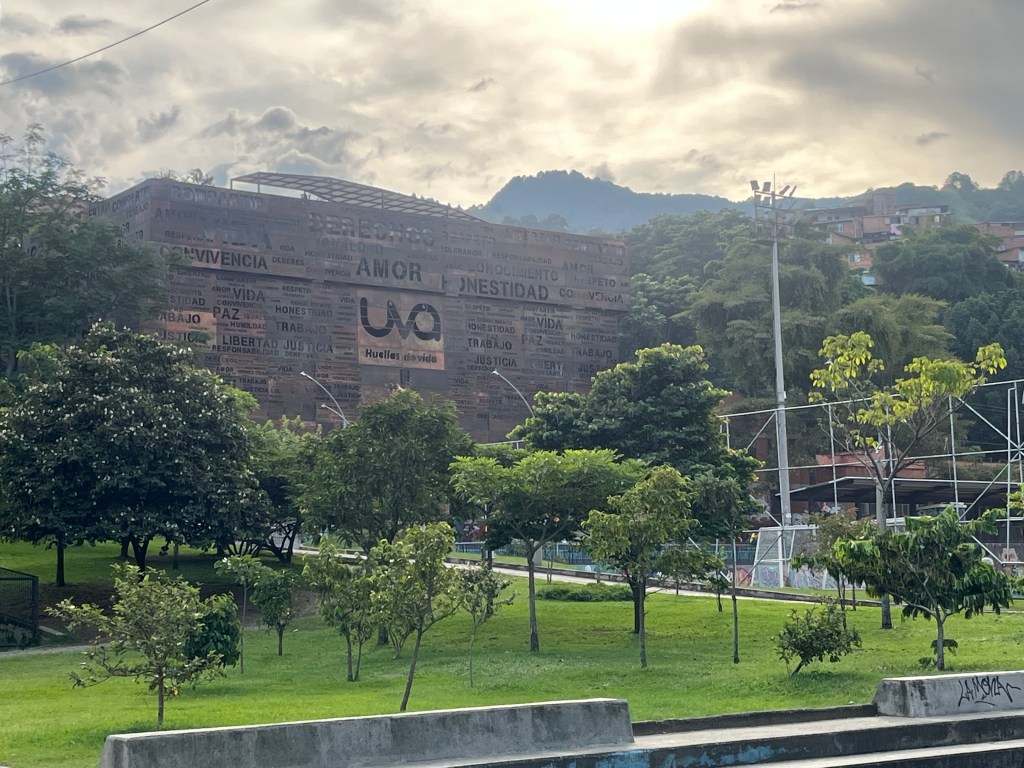
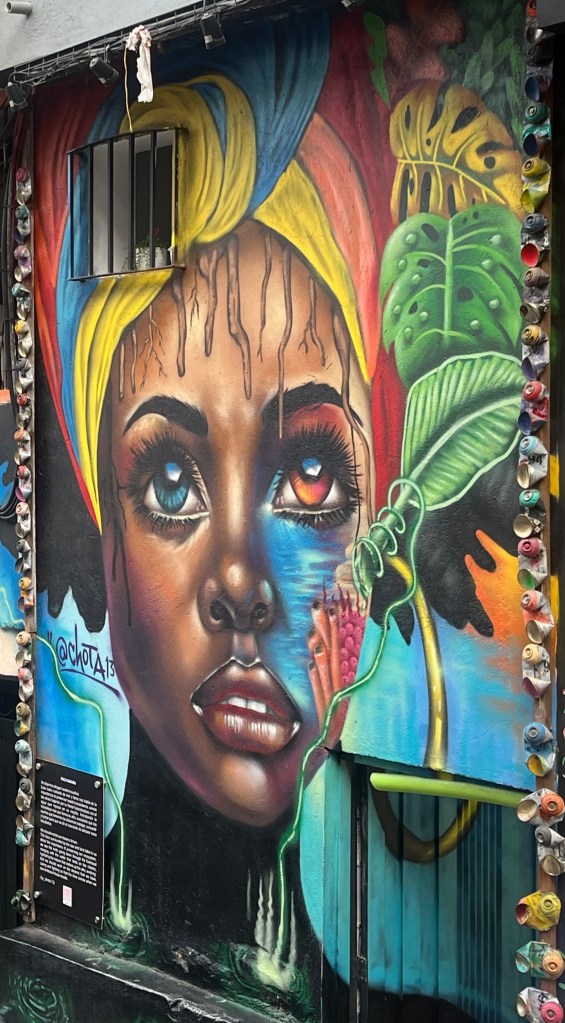
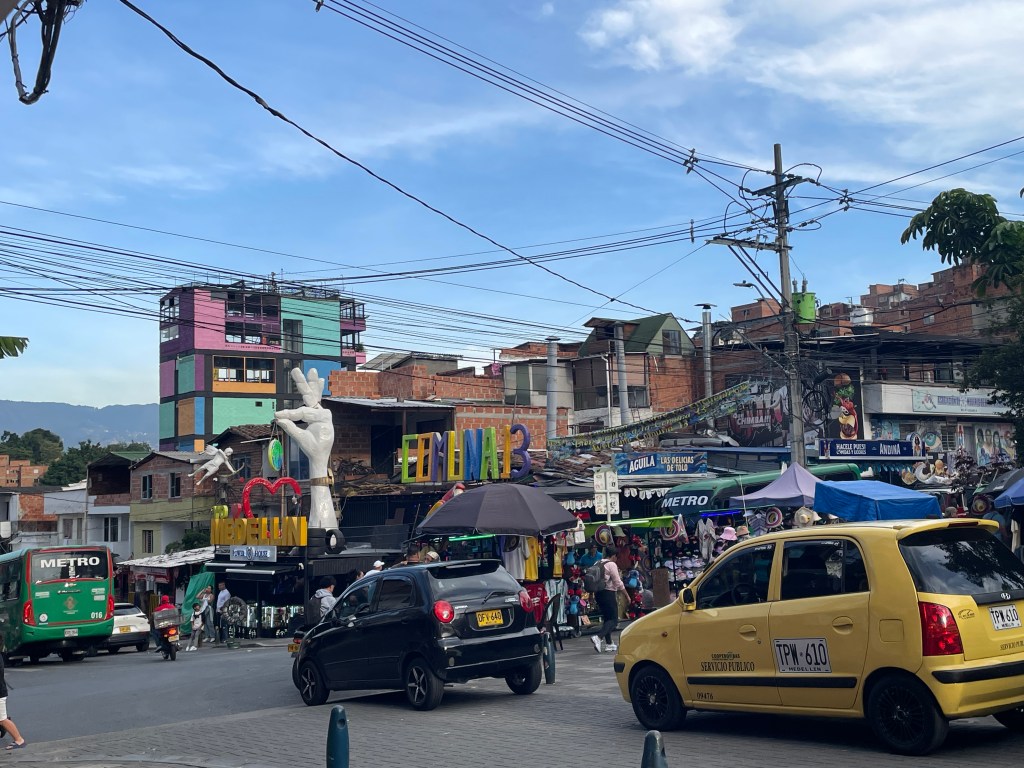
From left to right: the UVA center; a beautiful mural filled with hope for the future; a central point in the Comuna.
Medellín offers plenty for Colombians and visitors: tree-lined streets with cafes; vistas of the surrounding mountains; lively neighborhoods; and, plenty of opportunities to experience Colombian culture. Despite our positive experiences, though, we did not connect with the city the way we hoped. (As proof, there will not be any posts about Medellín in either Adam’s or Yahm’s corners this time.) Still, we would highly recommend visiting and discovering whether the city speaks to you. The next stop on our Colombia tour is to the Caribbean port city of Cartagena. Be sure to like, comment, and subscribe to Traveling While Introverted so you don’t miss it!

 Traveling While Introverted
Leave a reply to Culinary Adventures and a Touch of Santa Marta – Traveling While Introverted Cancel reply