In our post about Medellín, we shared how an eight-hour bus ride became a 13-hour ride due to factors beyond our control. Our next stop on our Colombian journey was from Medellín to Cartagena. Normally the overland route takes 11-12 hours, so even if things don’t go wrong, that would have been a very long bus ride. Instead, we opted to treat ourselves to a flight that only took one hour. Being the keen early birds that we are, we landed in Cartagena at 6am. We figured that, if nothing else, at least we would have a chance to explore the city before the afternoon heat and humidity got to us. (As a reminder, our journey through Colombia began in the highlands which meant we enjoyed lovely weather throughout our time. The final leg of our journey is in the lowlands, at sea level, meaning we’re back to the heat and humidity you would expect in the tropics.)
As a rule, we tend to be those people who wake up super early to explore as much as we can until we’re pooped. Sometimes, though, waking up so early isn’t helpful because businesses don’t open until later. Cartagena doesn’t seem to wake up until about 8am. Once we dropped our bags off at the hotel, we wandered the very empty streets until the city woke up and we could finally get a cup of coffee.
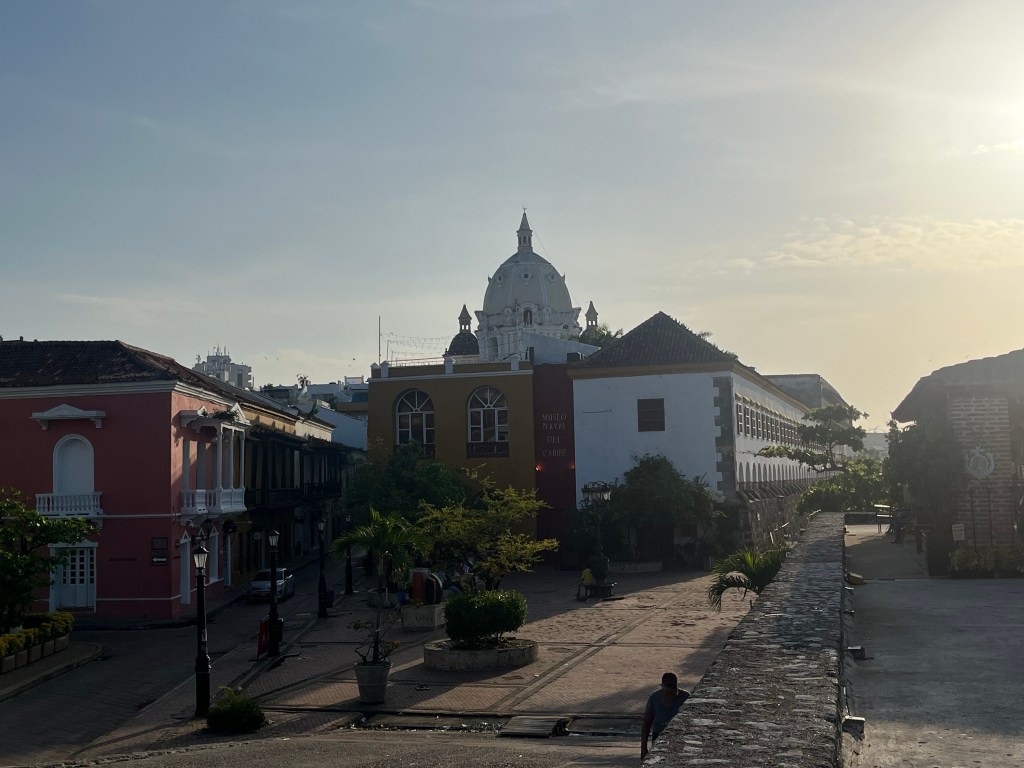
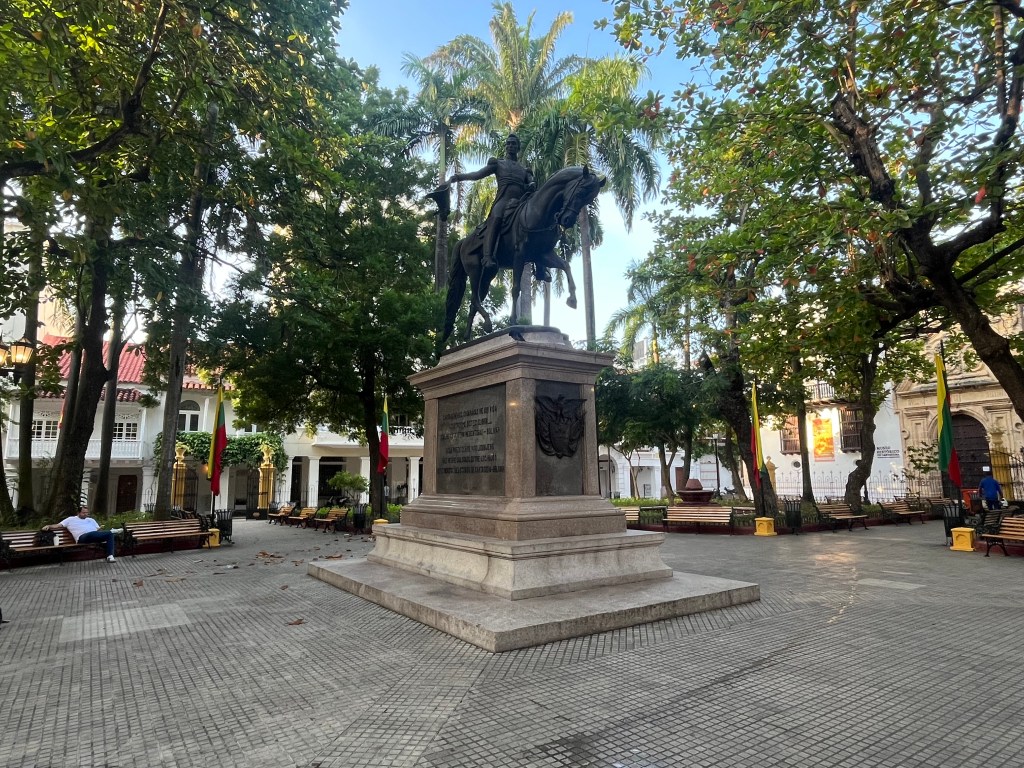
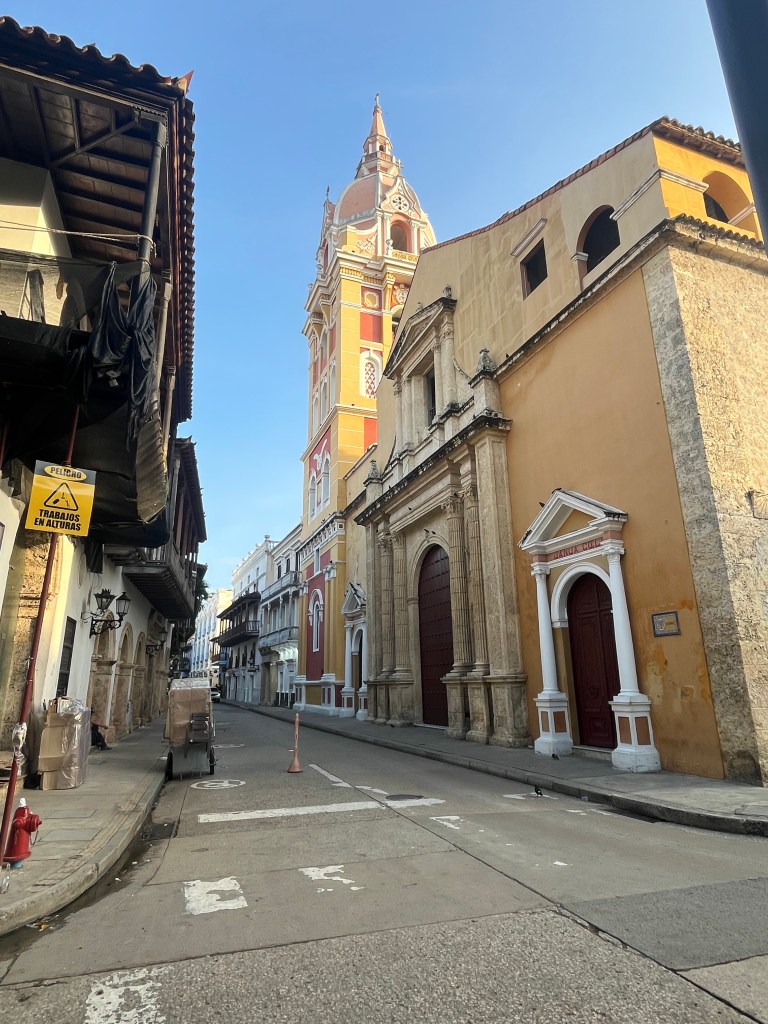
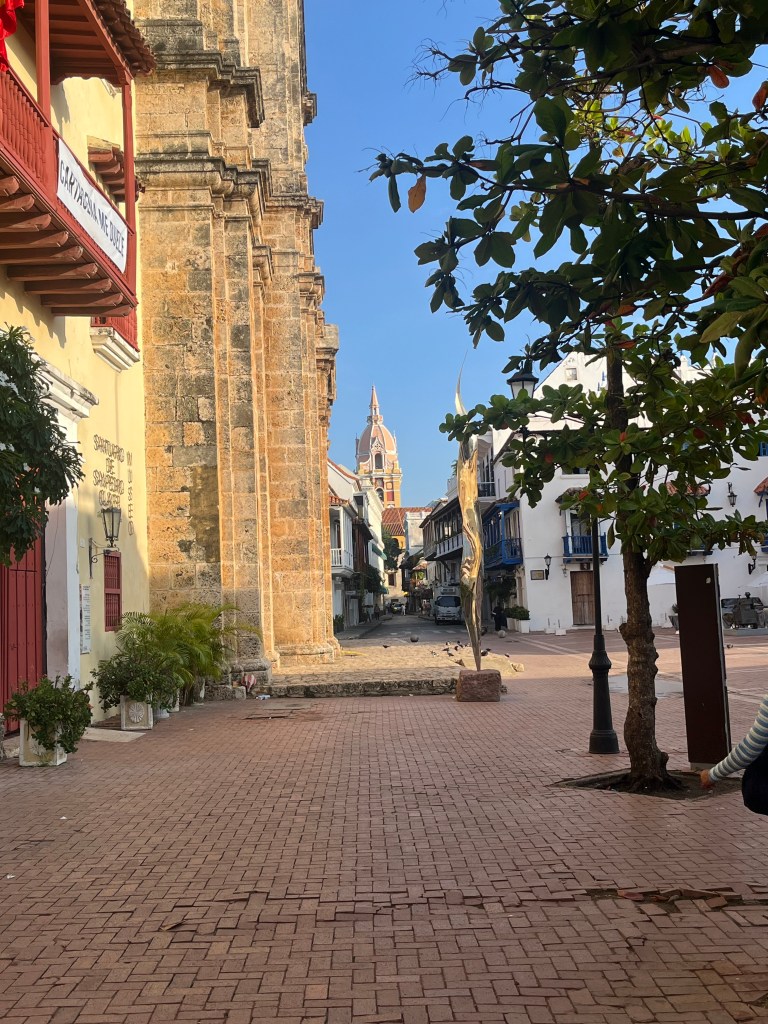

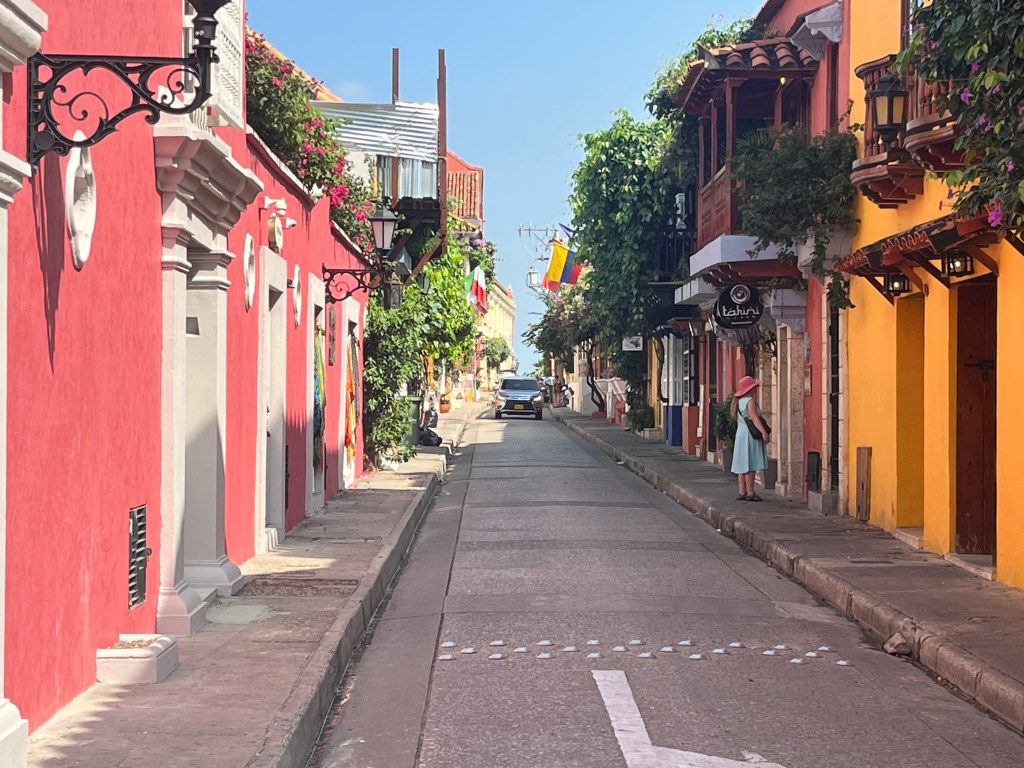
Why yes, that is Yahm in the bottom right photo. Of course she’s looking at a menu for a restaurant named Tahini. It’s a kebab restaurant we didn’t get a chance to visit.
Colombia officially achieved independence from Spain on July 20, 1810. However, the official Declaration of Independence was signed in Cartagena on November 11, 1811. (Colombia, by the way, was the first South American country to achieve independence.) Because the Declaration of Independence was such an important and groundbreaking document for the region, Cartagena has its own Independence Day festival starting on November 11th that lasts for a week. We were fortunate enough to be in town for the celebrations.
The quiet streets that welcomed us our first morning in Cartagena belied the festive atmosphere for the rest of our stay. This city is known as Colombia’s resort and party hub. Cruise ships have a port of call and there are numerous islands that host beach parties and posh resorts. However, during the Independence Day Festival, everything gets cranked up. Hours-long parades with floats and dancers, live music, and the unmistakable energy of a street party were seemingly everywhere. Children and adults alike sprayed each other with foam cans for days. We even got sprayed by a few Colombians who shouted “Welcome to Cartagena!”
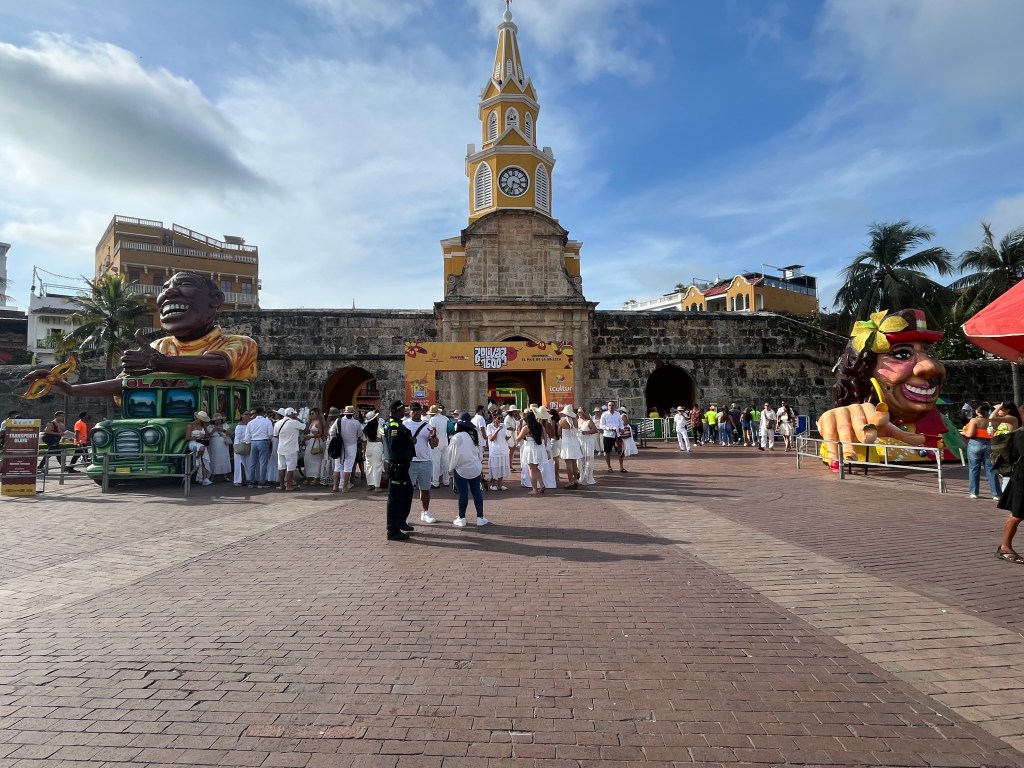
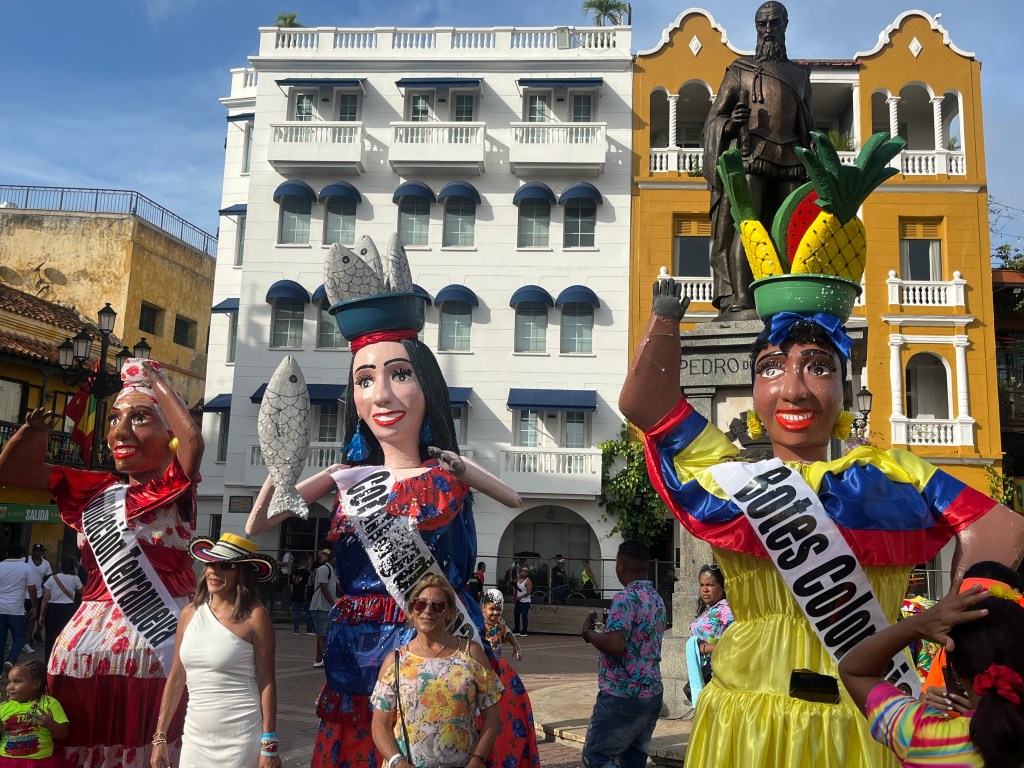
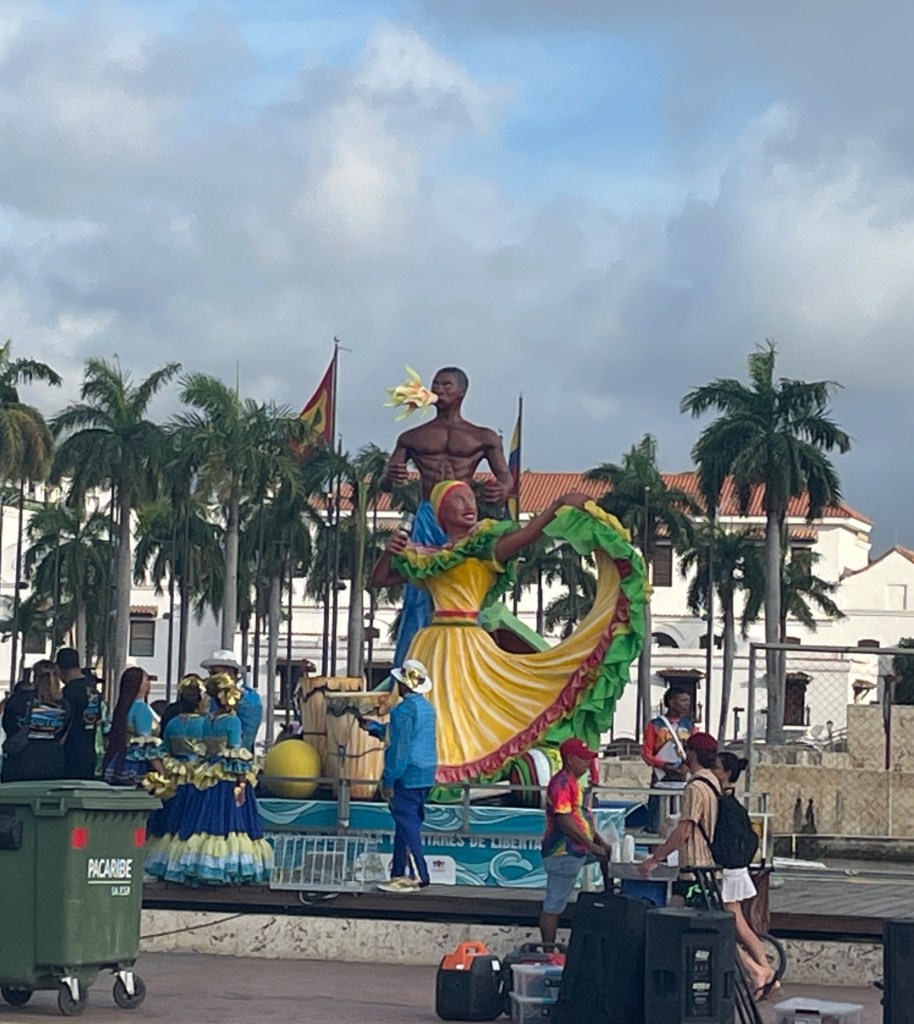
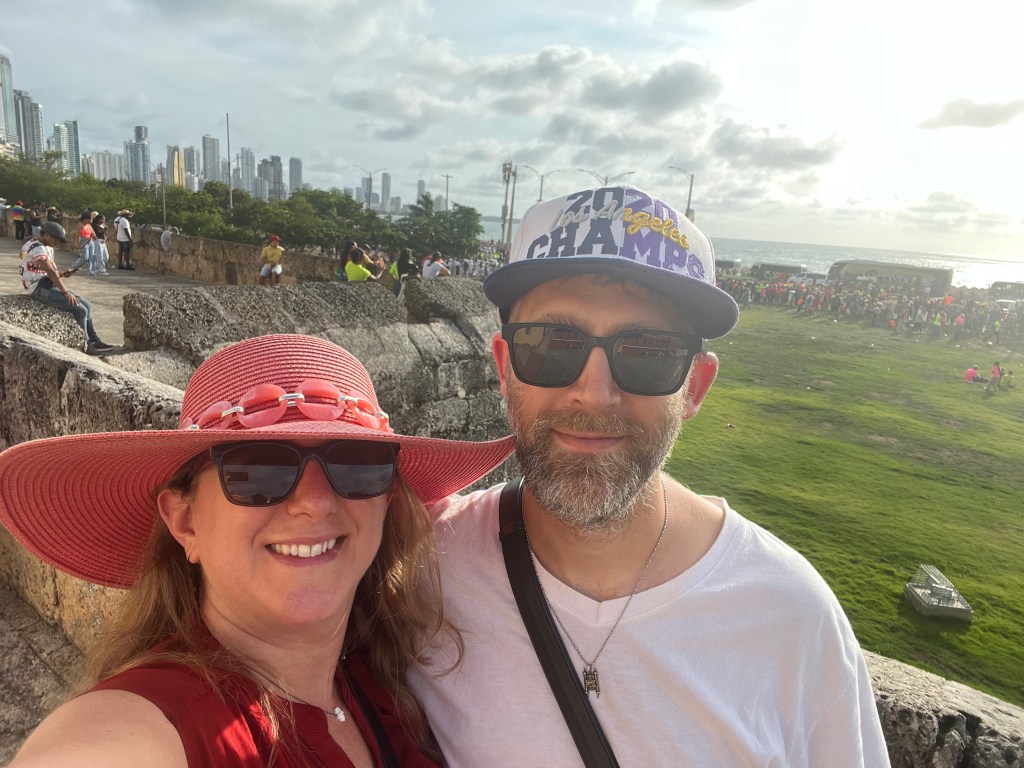
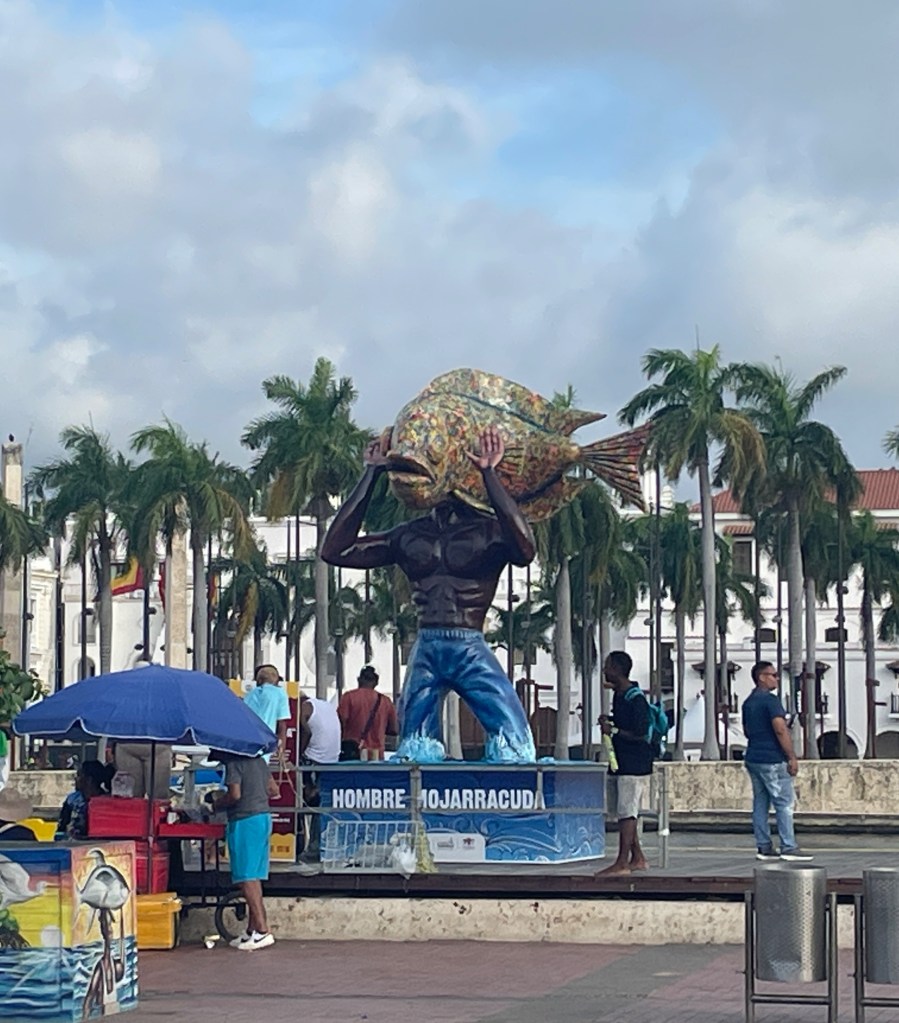
For traumatized Americans watching the third video: that popping sound you hear at the end isn’t gunshots. They’re popping fireworks that made us jump at first too. We eventually got used to them.
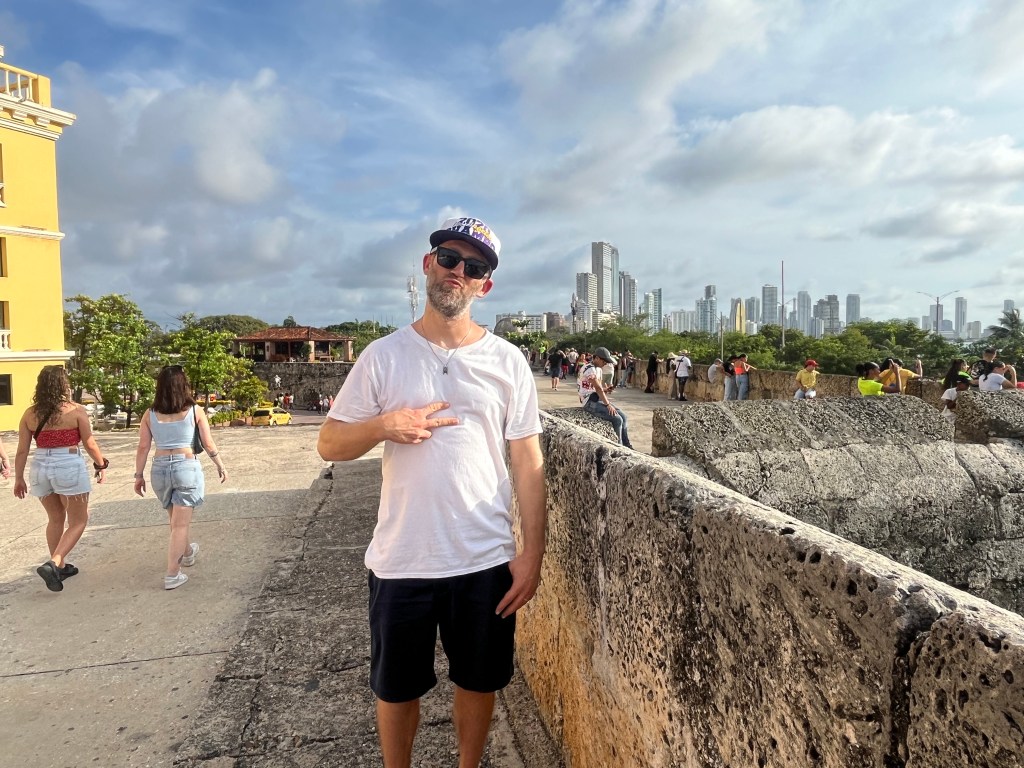
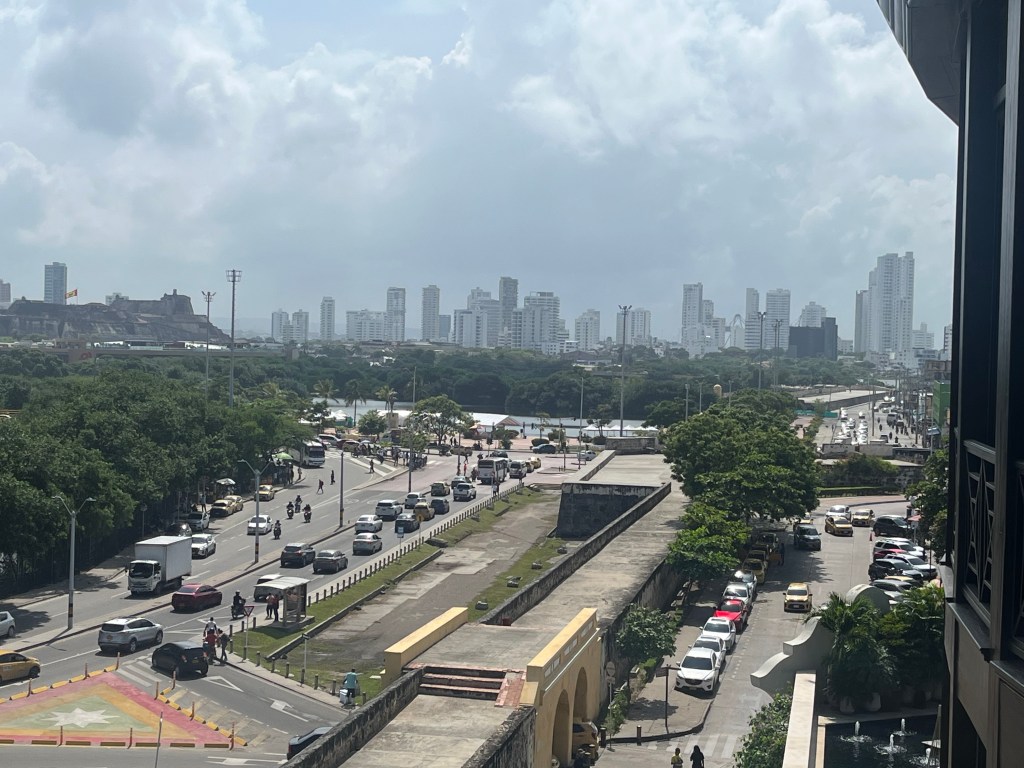
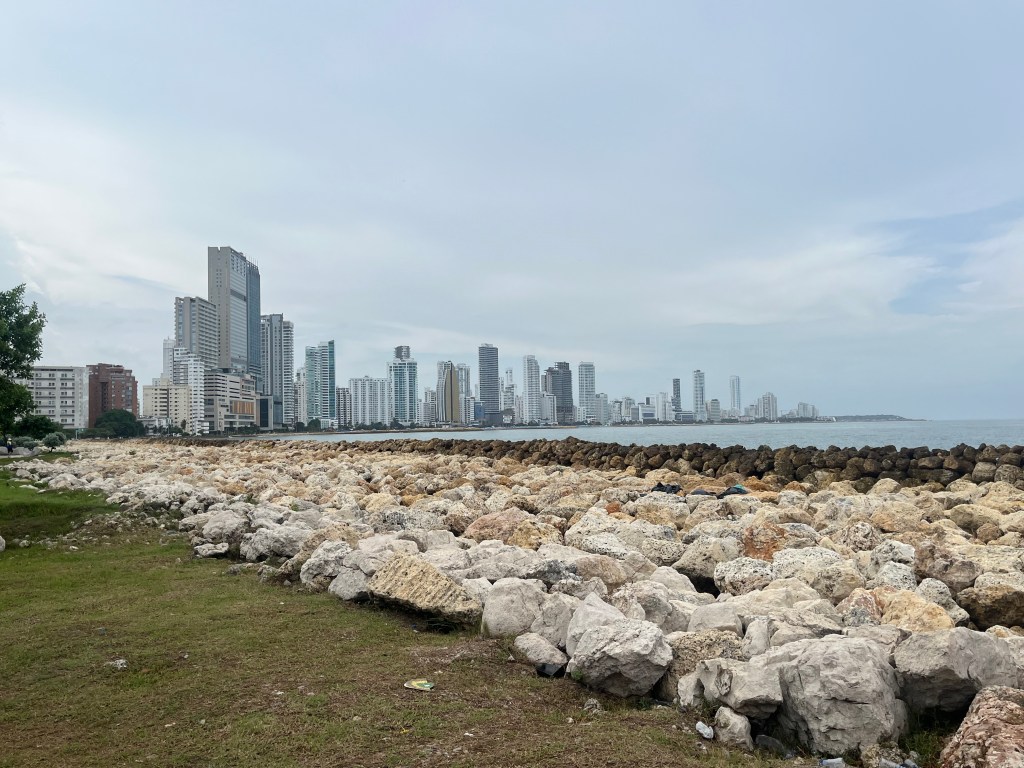
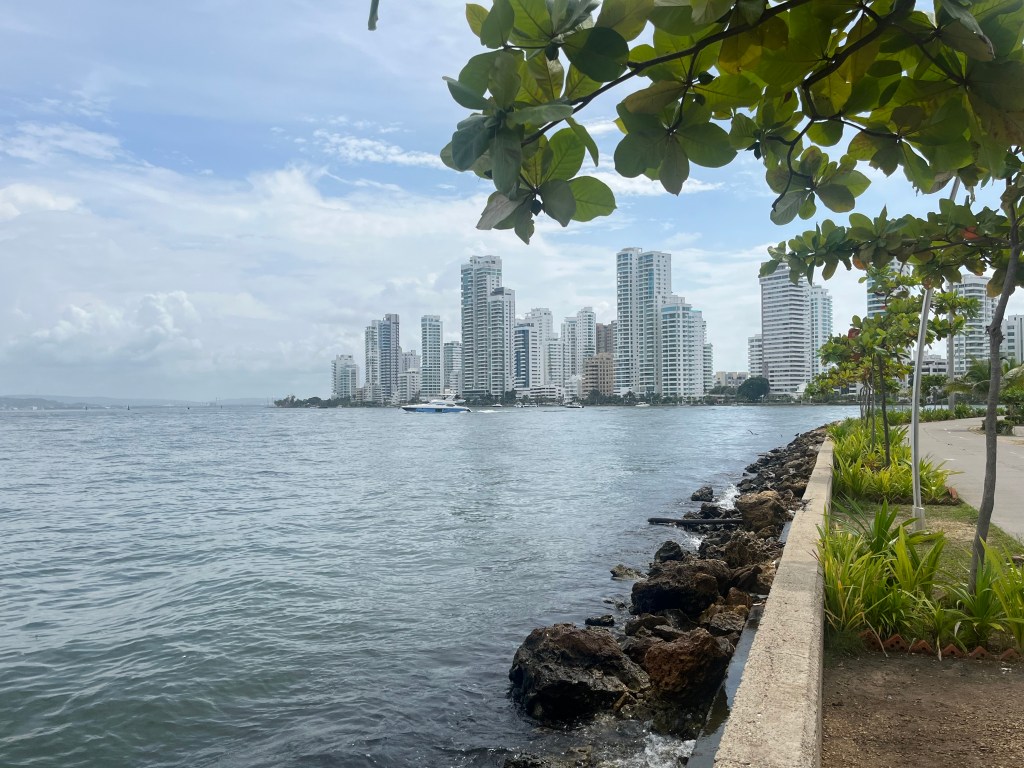
Cartagena is famous for its historic area, which consists of two parts: the walled city and the historic city. In some of the photos and videos you can see some very old walls, which were part of the fort the Spanish built along the coast to protect the colonial city they established. From there sprouted a historic area, which is where most tourists tend to stay. The city, though, has since grown beyond these areas to become one of Colombia’s largest cities. Though we mostly stayed in this area, we also visited the western peninsula, which is comprised of beaches and high-rises.
From left to right: a view of the peninsula from the historic city; two promenade views of the high-rises along the sea.
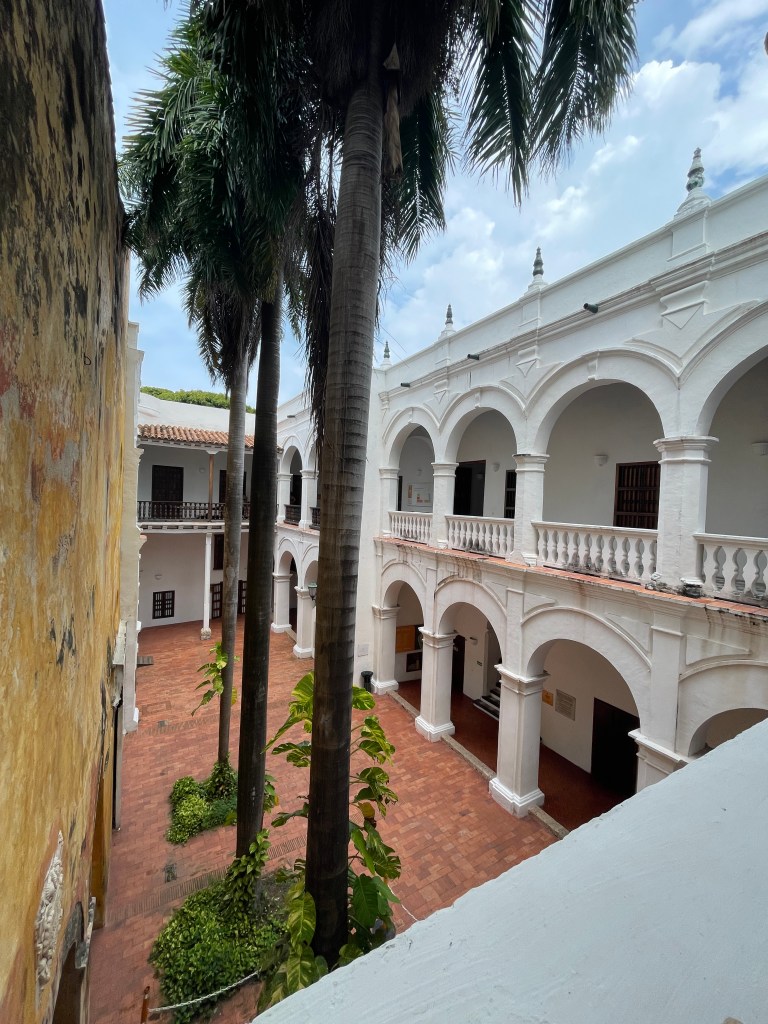
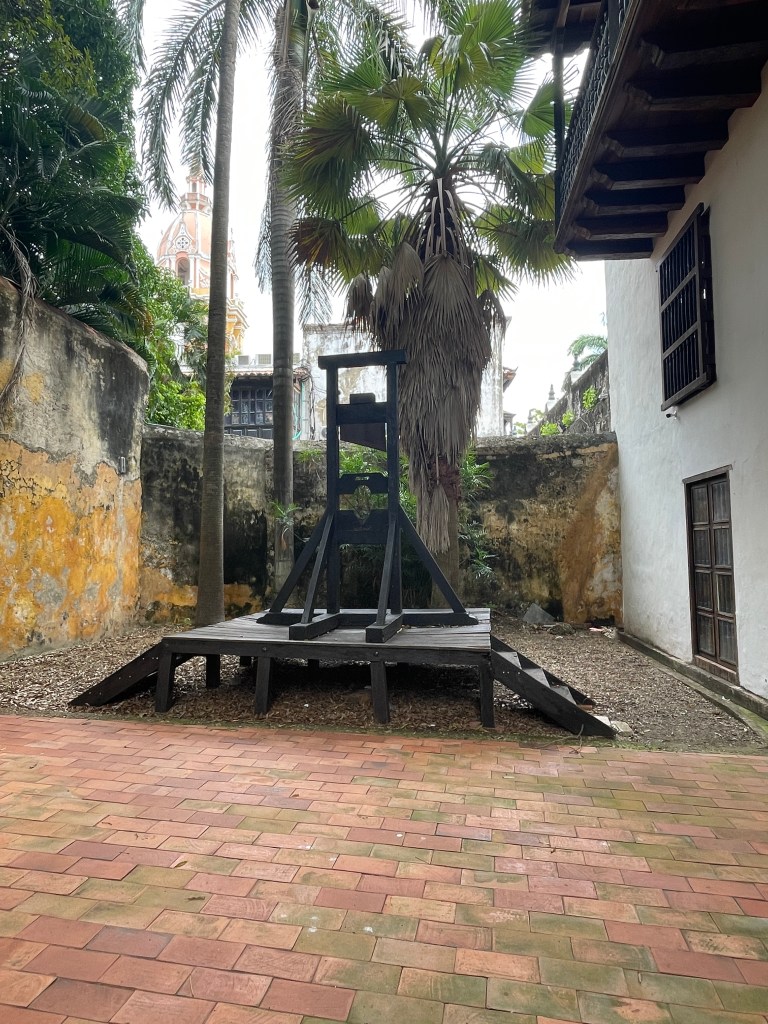
Besides strolling around the city and enjoying the parties, we also visited the Museo Histórico de Cartagena. The museum is located inside the Inquisition Palace, where thousands of Spanish, Indigenous, and African people were tried, tortured, and murdered for crimes against the Catholic Church. While some of these crimes such as sodomizing or practicing witchcraft were not surprising; others, such as Judaizing and Muhammadizing were newer to us. Yahm’s maternal family had been expelled from Spain during the Spanish Inquisition in 1492, so she was aware that simply being Jewish was a crime against the Catholic Church. However, Judaizing and Muhammadizing were defined as actively trying to lead people away from Catholic teachings. Torture devices, the dangers of book bans, and the importance of promoting a pluralistic society were displayed throughout the museum.
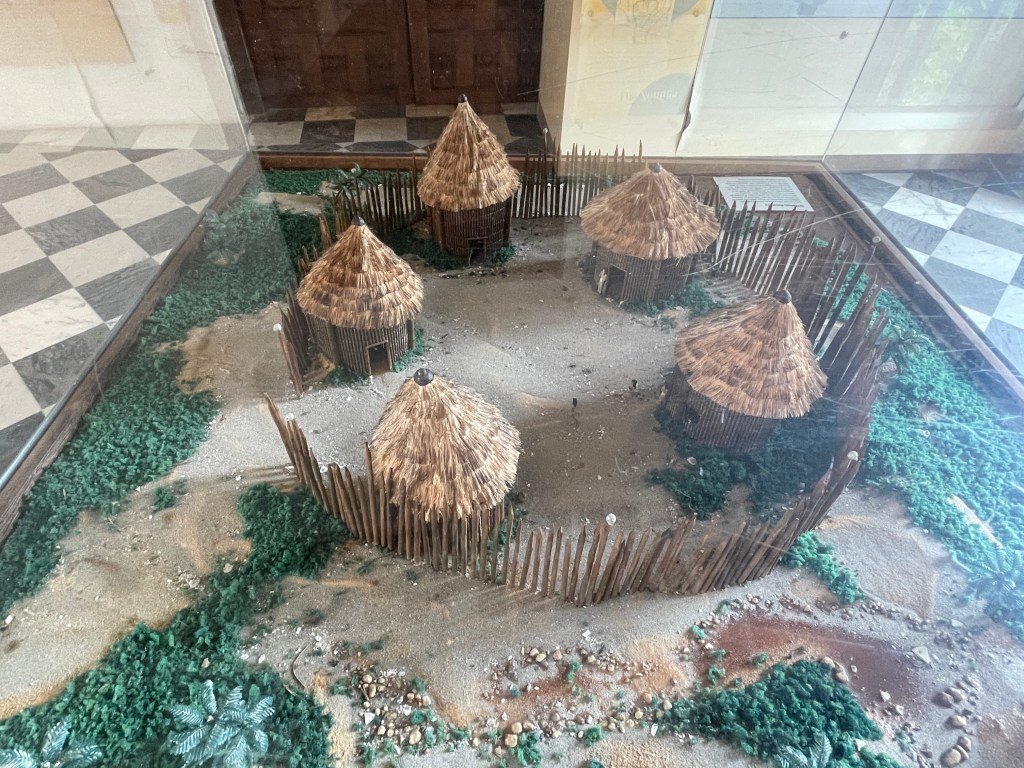
Additionally, the museum featured exhibits about the Indigenous peoples that inhabited the Caribbean coastal plain of Colombia before the Spanish arrived. In fact, the word Caribbean comes from the names of two tribes: Karibs and Tainos. A separate exhibit provided context about the roots of the enslaved Africans brought by Spanish slave traders to Colombia’s coast. The Caribbean, the sea itself and the lands that border it, are where the culture clashes between Europe, Africa, and the Americas began. This fact is often forgotten. As one of the displays read, “The Caribbean Sea is, thus, the sea of encounters and it has marked, in a most definitive manner, the way of life of its people since the most remote times.”
First row, left to right: the interior of the Inquisition Palace/museum; a guillotine; a creepy courtyard, including a scaffolding where (we assume) people were tortured and hung.
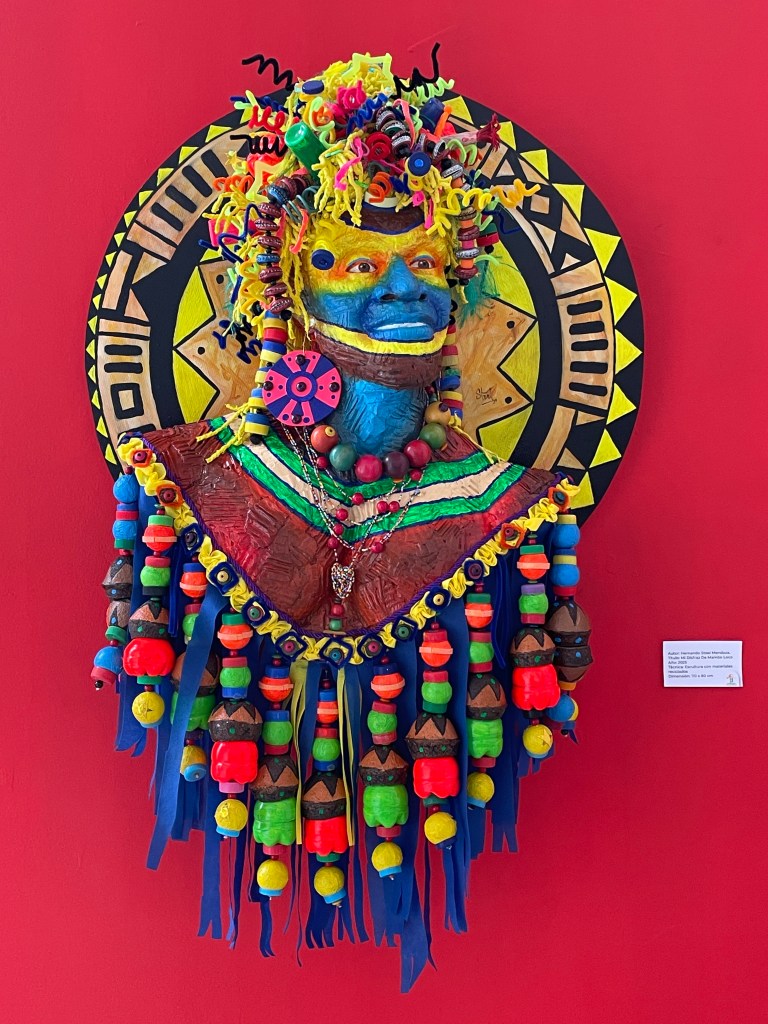
Second row, left to right: a gorgeous art piece; a diorama of an Indigenous village.

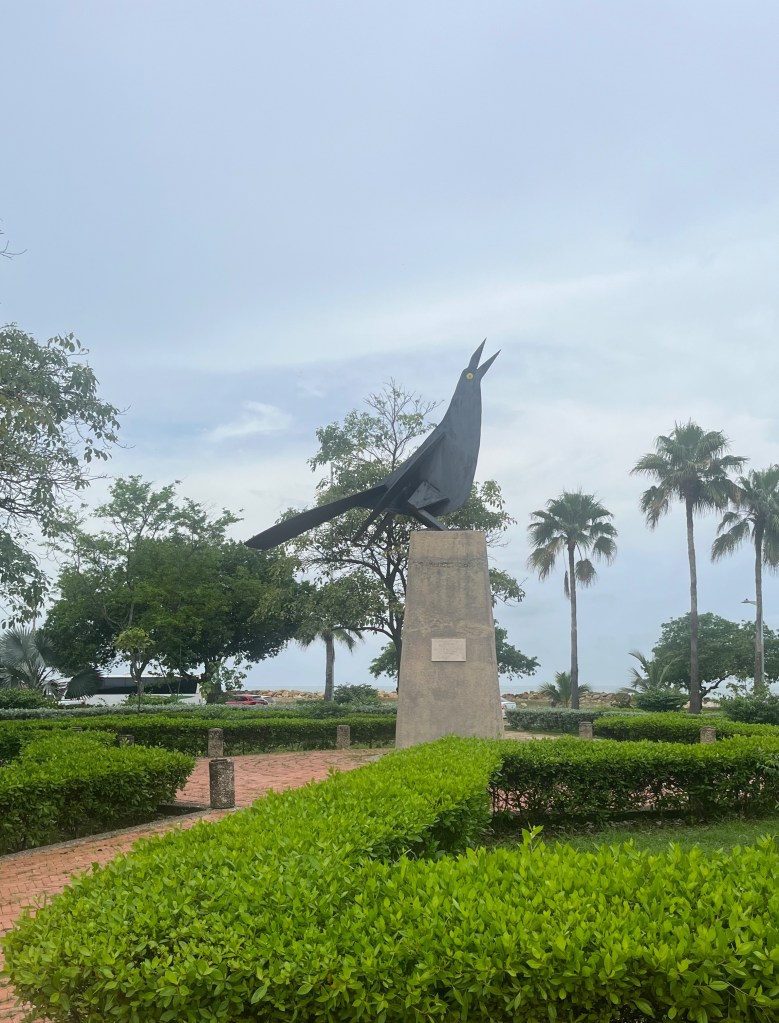
Lastly, we would like to share some photos and videos of feathered friends. Not only did we hear the unique calls of parrots and see beautiful yellow-bellied birds, but we also ran into grackles. When we lived in Arizona, we grew especially fond of grackles due to their charismatic, loud, and mischievous nature. Clearly, we’re not the only ones who are fans considering they even have their own statue on the peninsula.

We have two more stops in our journey through Colombia, both along the Caribbean Sea: Santa Marta and Tayrona National Park. Be sure to like, comment, and subscribe to Traveling While Introverted so you don’t miss it!

 Traveling While Introverted
Leave a reply to samanovo Cancel reply