Our journey to São Paulo began with an intensely long travel day. We flew out of Cartagena to Bogotá, which took one hour and change. Our connection in Bogotá was an hour, but we managed to quickly go through security (again) and run to the gate just in time. The longest leg of the journey was ahead of us: the flight to São Paulo is approximately six hours. Eastern Brazil is also two hours ahead of Colombia. When we landed, it was 1am Eastern (Colombian) time/3am Atlantic (Eastern Brazil) time. We do our best to avoid these types of flights, especially since arriving at a new place at night can make everything feel more complicated. However, there weren’t any other choices, so to mitigate our anxiety, we slept in a hotel near the airport and asked for a late check-out. By the time we checked out of the airport hotel and schlepped into town, it was time to check-in to the hotel for the duration of our São Paulo stay.
We were anxious about feeling overwhelmed in São Paulo because of its sheer size. For those who don’t know, the metro area has over 22 million people. It is the largest city in both the Western and Southern Hemisphere, as well as the 13th largest city in the world. Readers may remember how much of an assault on the senses Bogotá was and that city has only 10 million people. We braced ourselves for an intensity and sensory overload that would exhaust us. Instead, what we discovered is a city that, despite its size, has a calmer demeanor that delighted us. More than anything, São Paulo reminded us so much of our hometown, Los Angeles.
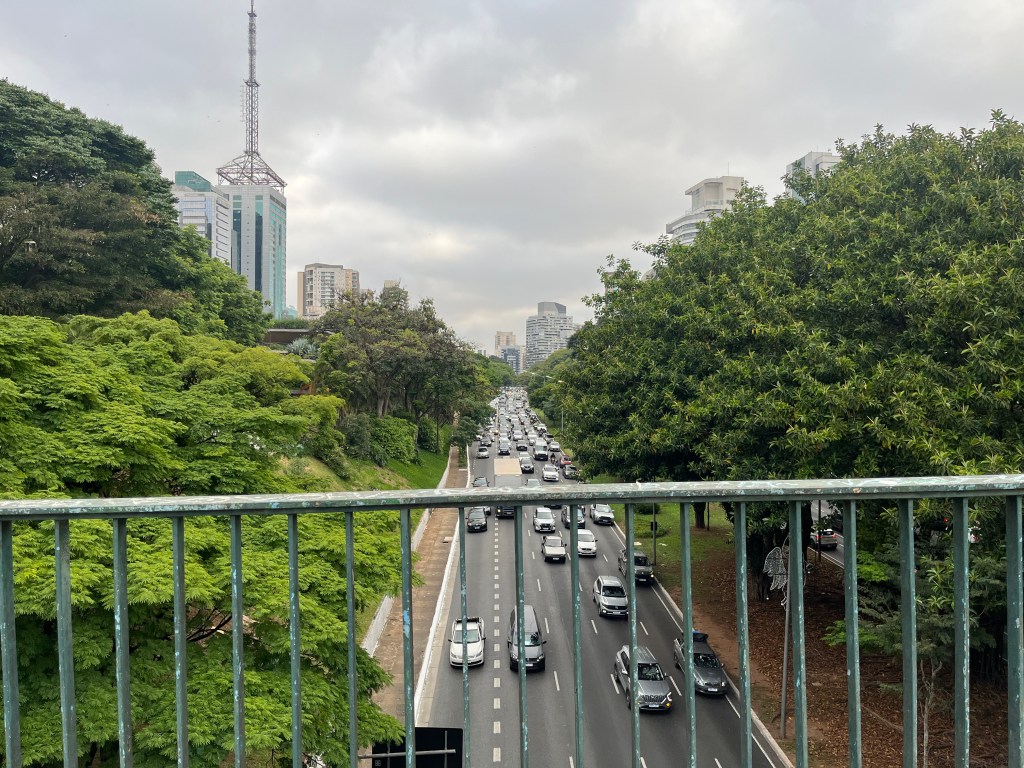
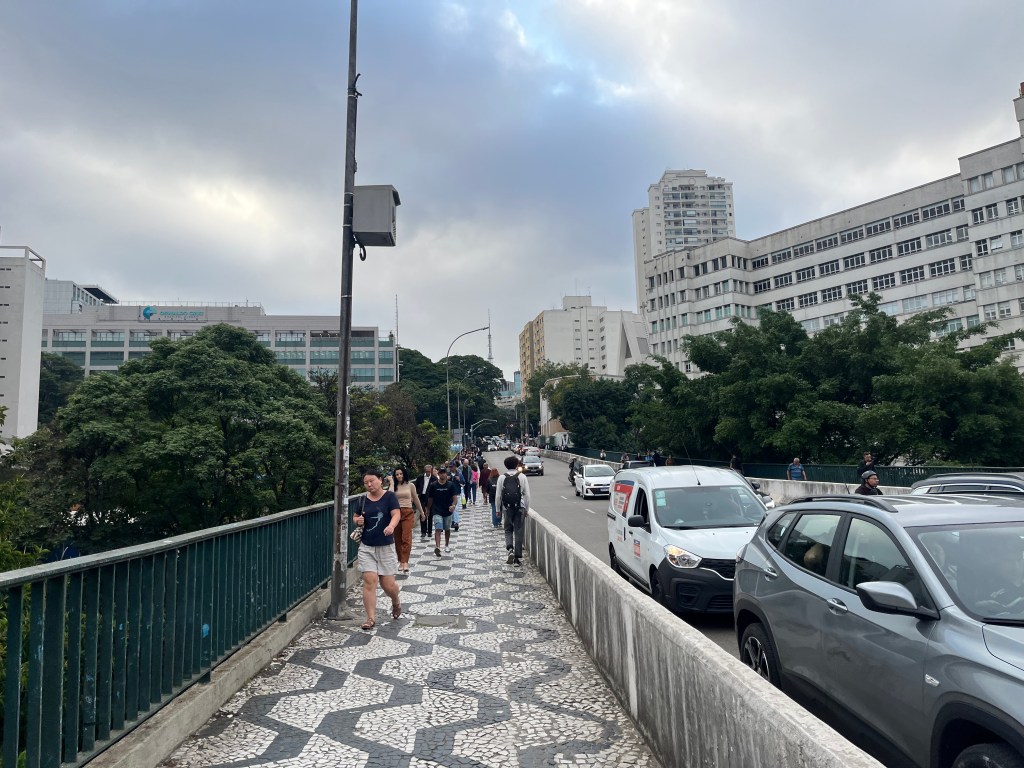
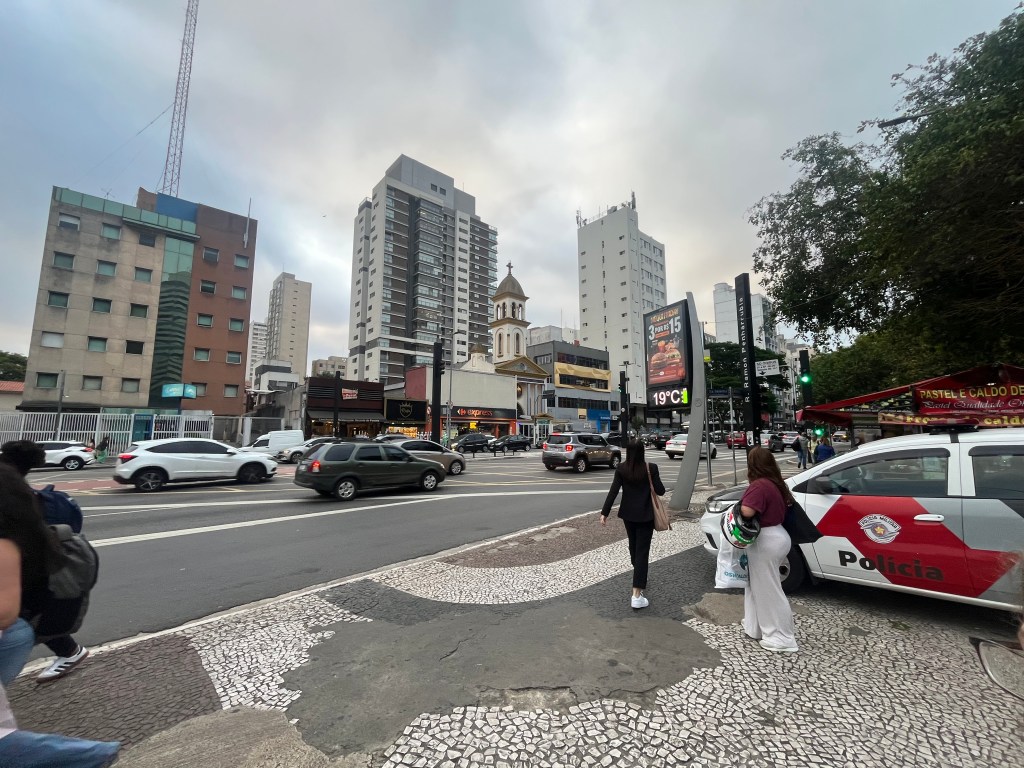
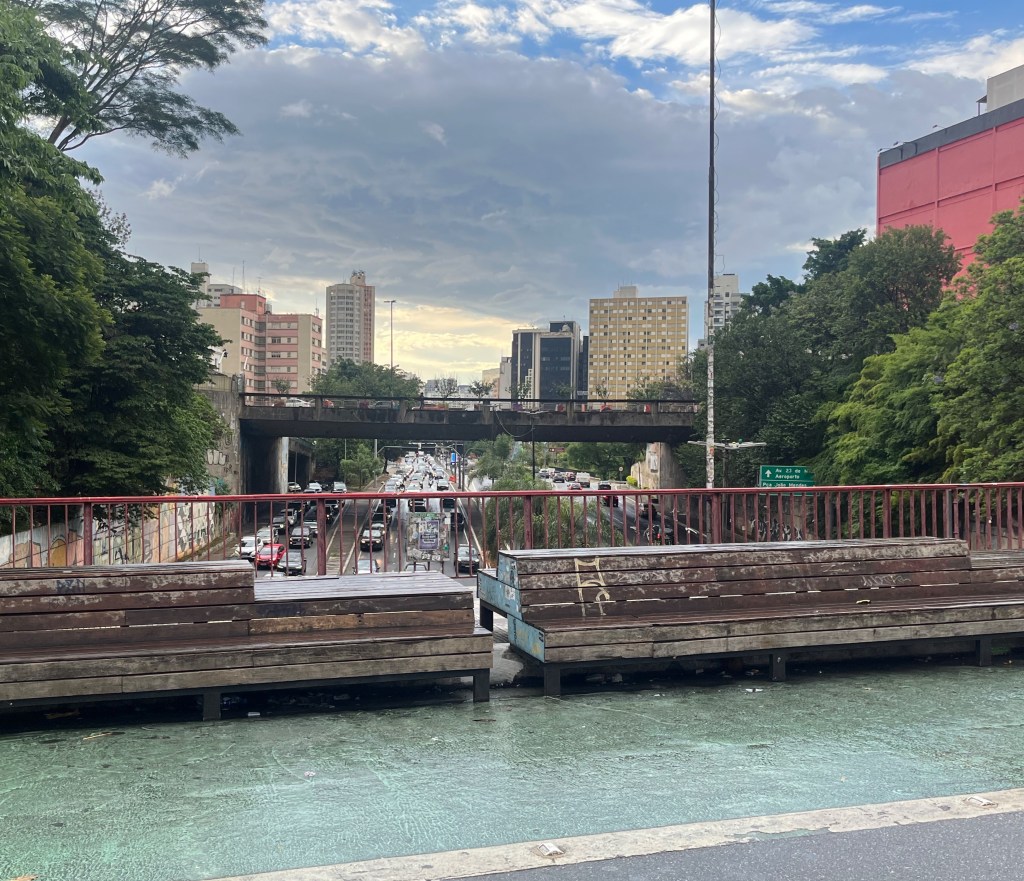
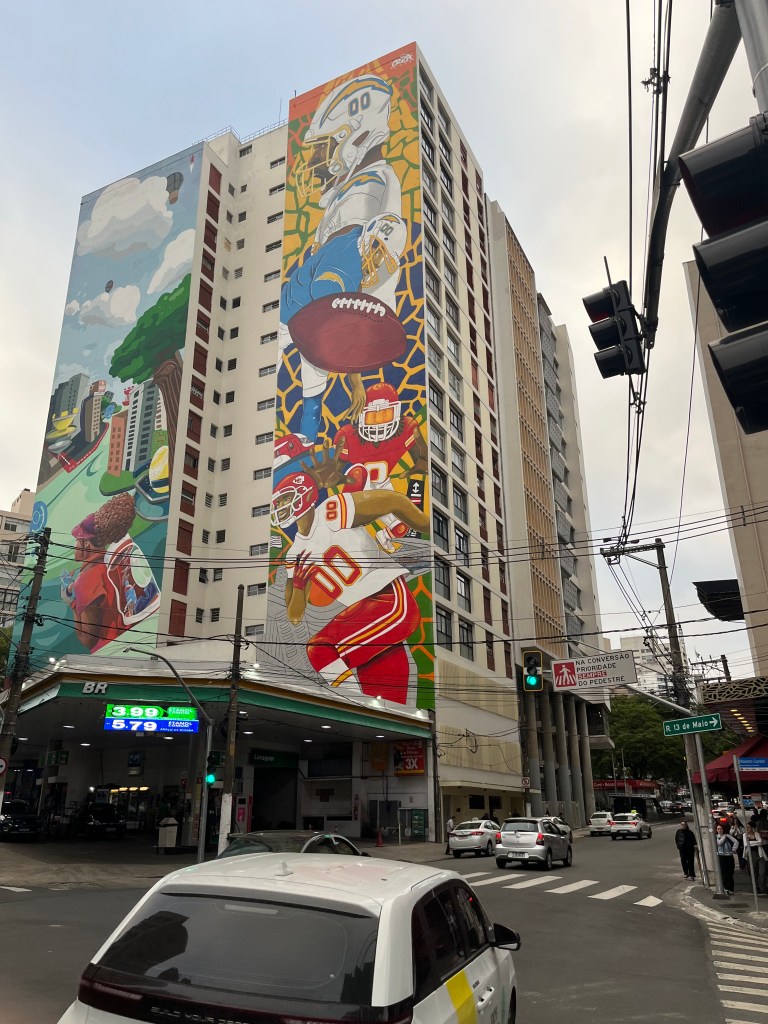
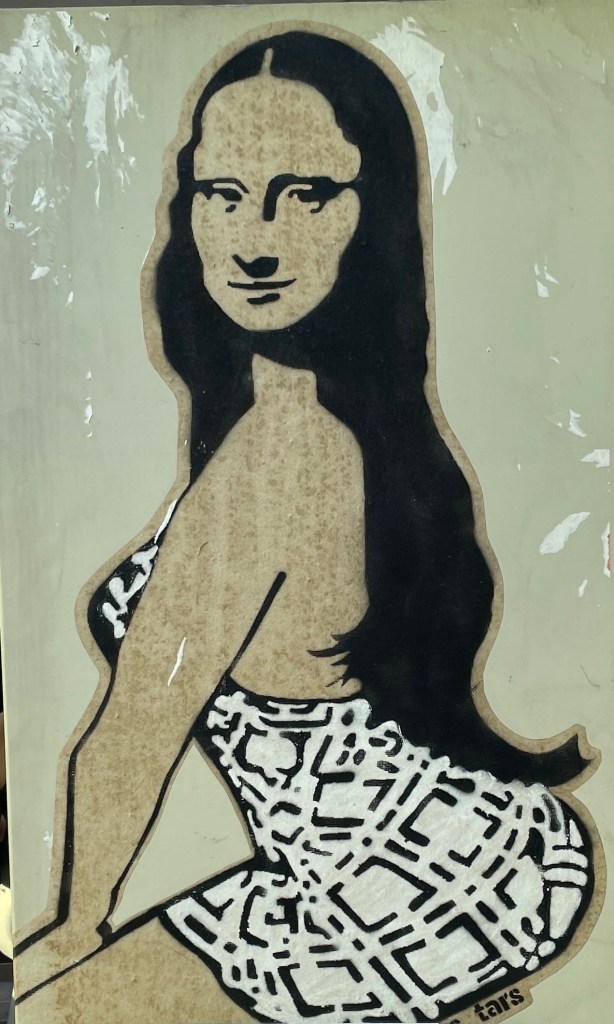
Like Los Angeles, São Paulo is not known for its beauty. However, both cities feature unique neighborhoods and ethnic enclaves that require people to look beyond the surface. The best places to visit, eat at, and explore are always under the radar. Locals may purposefully tell people to visit a certain area because it’s best for tourists and leave the special non-touristy areas only for themselves. (We are both guilty of only telling our favorite people about our favorite places in L.A. #sorrynotsorry.) Lastly, like Los Angeles, SP has some public transportation but is woefully car-dependent with serious traffic and pollution problems. (The irony of this is that bus-rapid transit, or BRT, started in Brazil.)
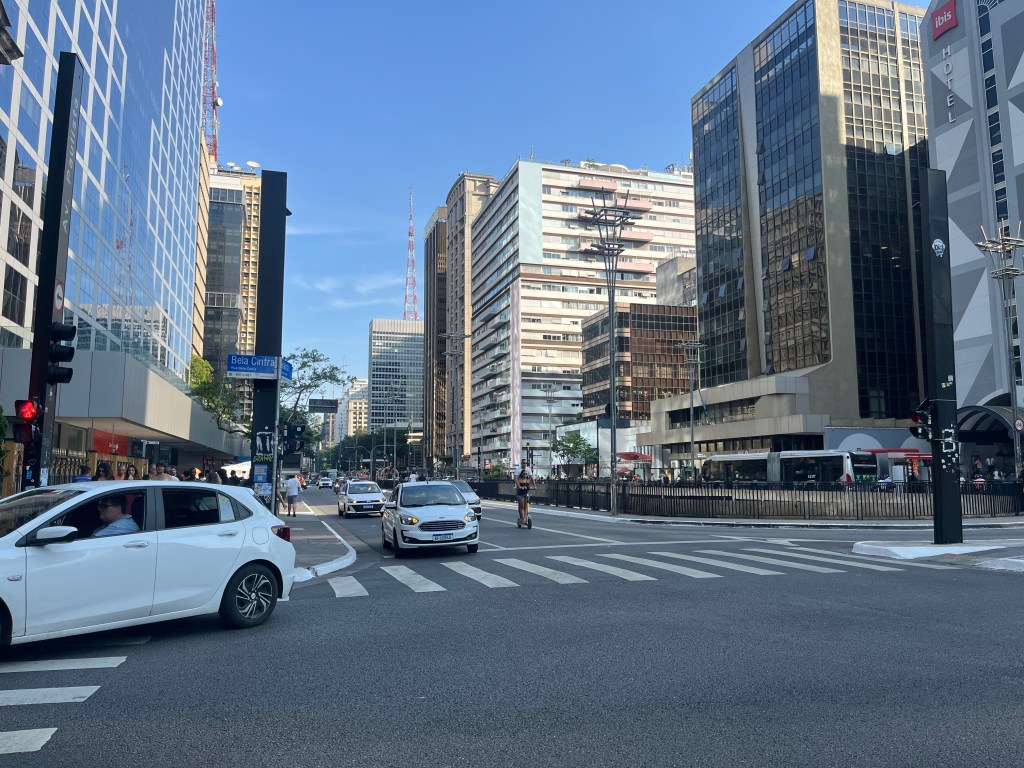
Of course São Paulo has some very walkable areas and neighborhoods. Avenida Paulista is one of the major thoroughfares in the city. On Sundays, it closes down completely to car traffic so that pedestrians can enjoy their version of Ventura Boulevard.
Avenida Paulista cuts through a variety of socio-economic neighborhoods and offers a glimpse into the complexities of urbanity. We took our time strolling along the street and were very tempted by vendors selling tchotchkes (trinkets), clothes (new and used), art, drinks, and treats. As long-term travelers, we didn’t buy anything because we literally have to carry everything on our backs, but Yahm kept pointing out things she would have liked to buy if she could have, such as a purse made out of two 45s.
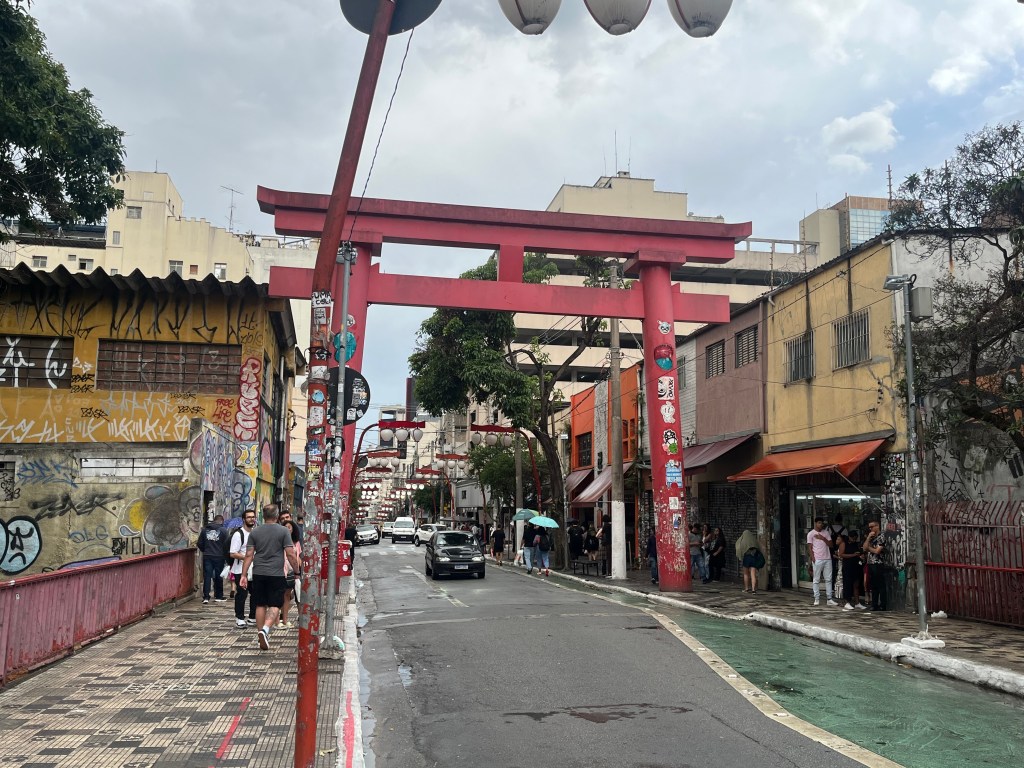
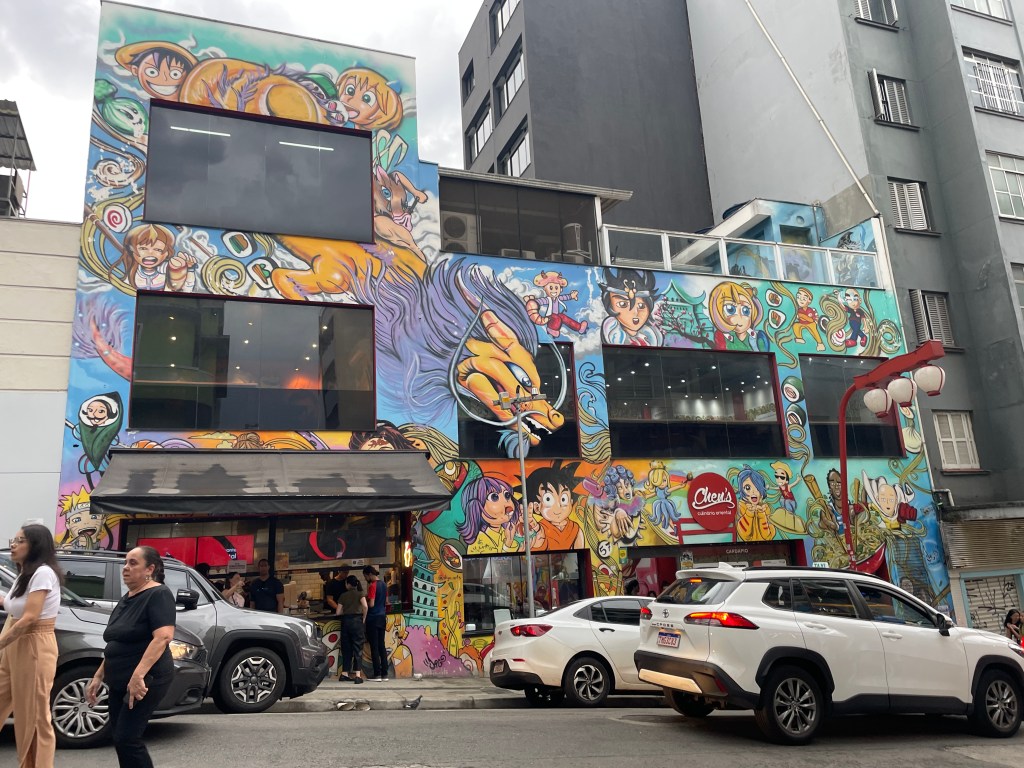
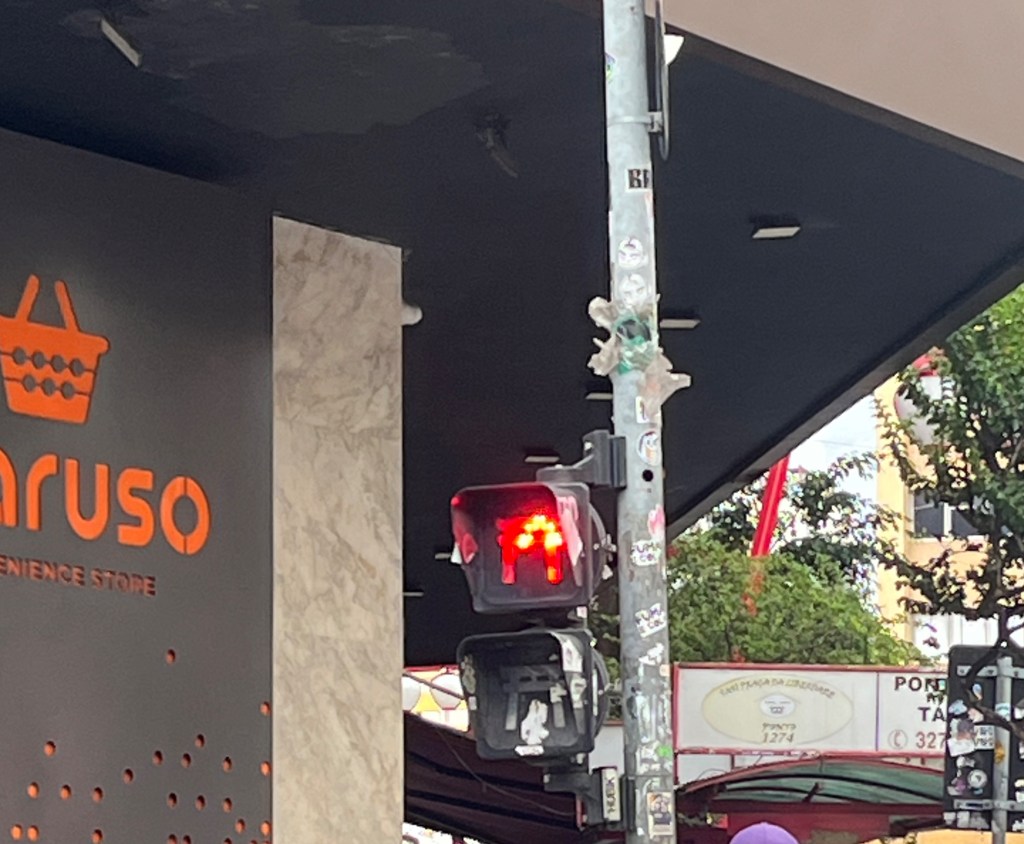
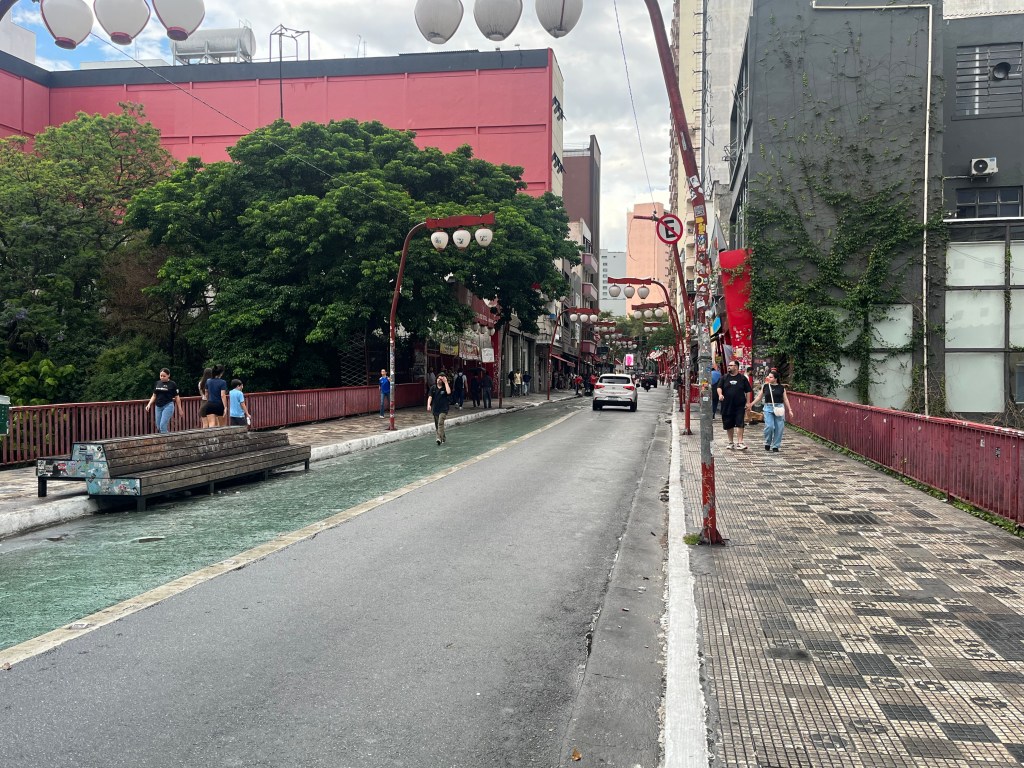
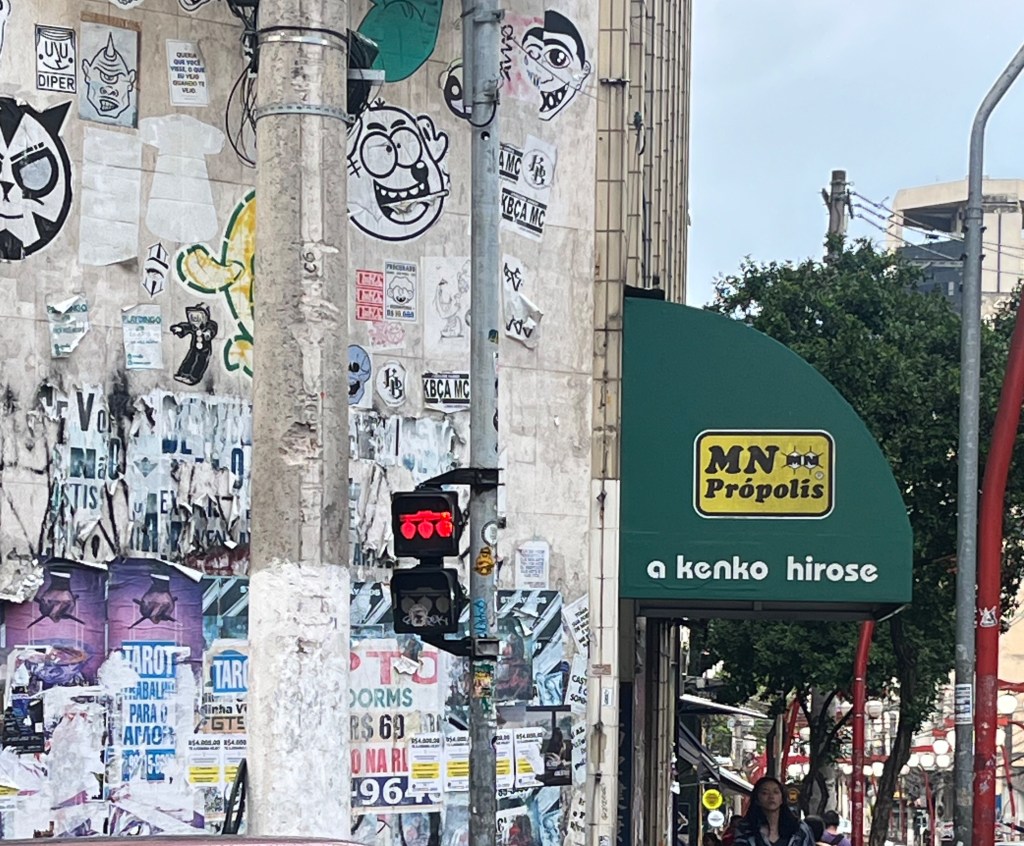
One neighborhood we were particularly excited to visit was Liberdade, home to the largest Japanese population in the Americas (including the United States). Because Los Angeles has so many East Asian neighborhoods, we were curious to see what it would look like filtered through a Brazilian gaze. What we found were more similarities than differences, though we only spent a few hours there. For example, in the San Gabriel Valley in Los Angeles, street signs are in Chinese and English. In Liberdade, the crosswalk signals feature the neighborhood’s architecture and unique street lights (horizontal not vertical). The architecture throughout the area features Japanese elements as well. Funnily enough, we had Taiwanese food, which Yahm will write about in her forthcoming blog post.
As in the case with so many large urban areas, green spaces are built to help residents get a break from all the concrete and asphalt. São Paulo has many green spaces, but there is one park that most residents and visitors alike recommend. Parque Ibirapuera (Ibirapuera Park) is 390 acres (158 hectares) and includes lots of trails, a pond, multiple cultural centers, cafes, and stands selling fresh coconuts.

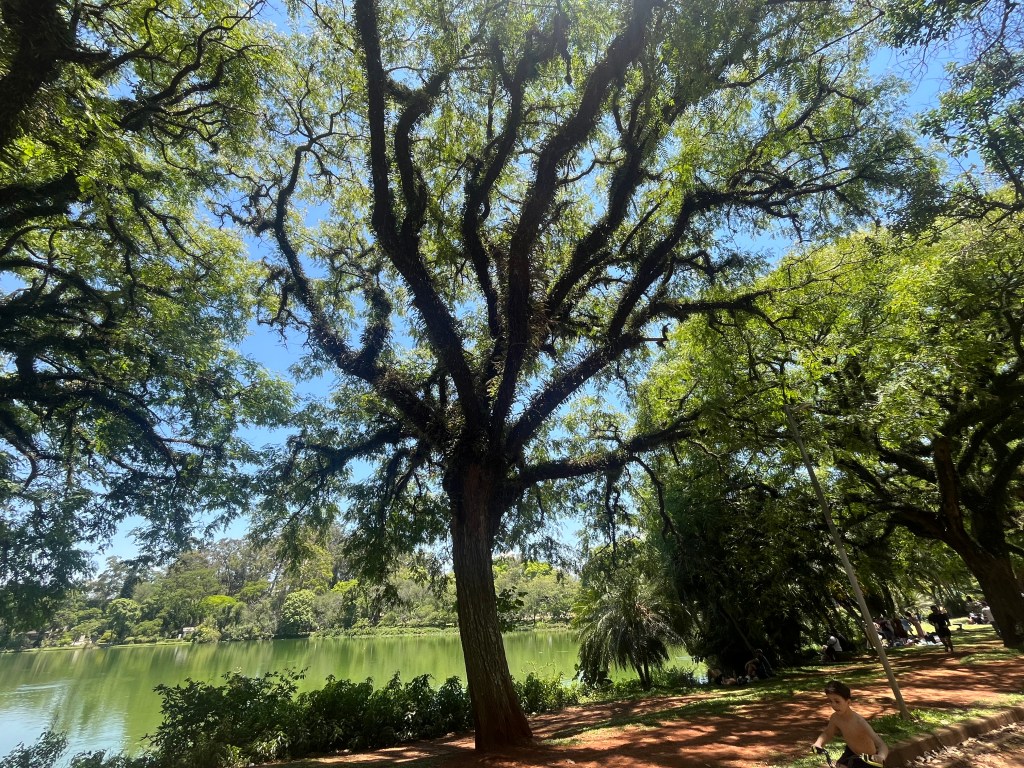
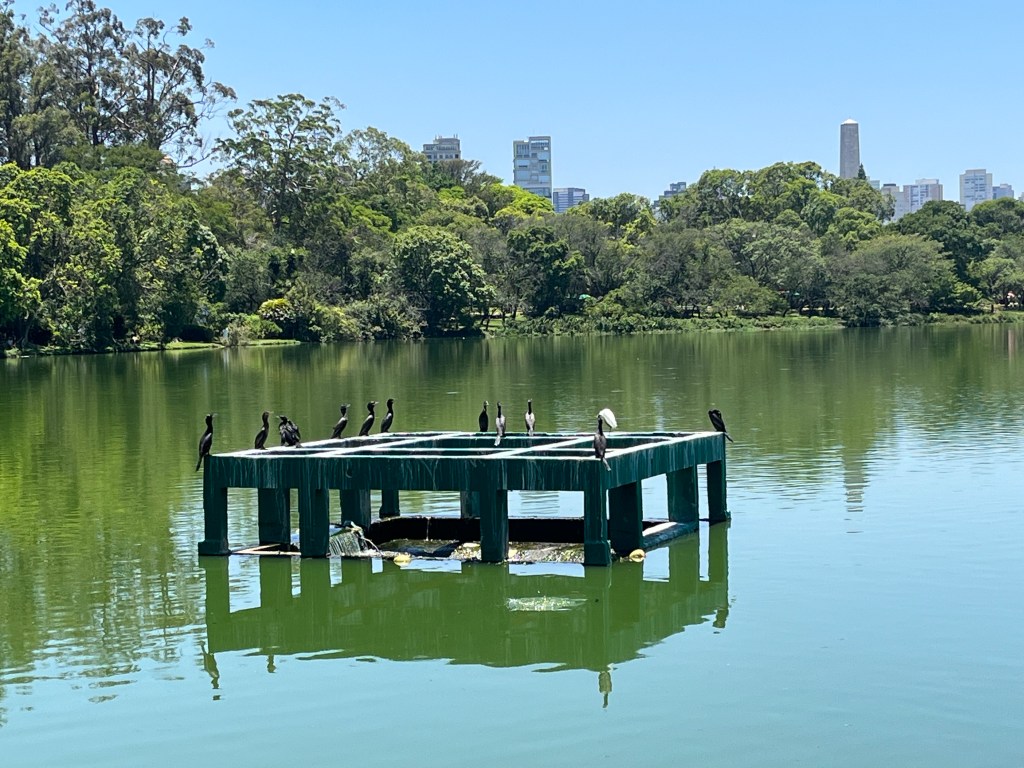
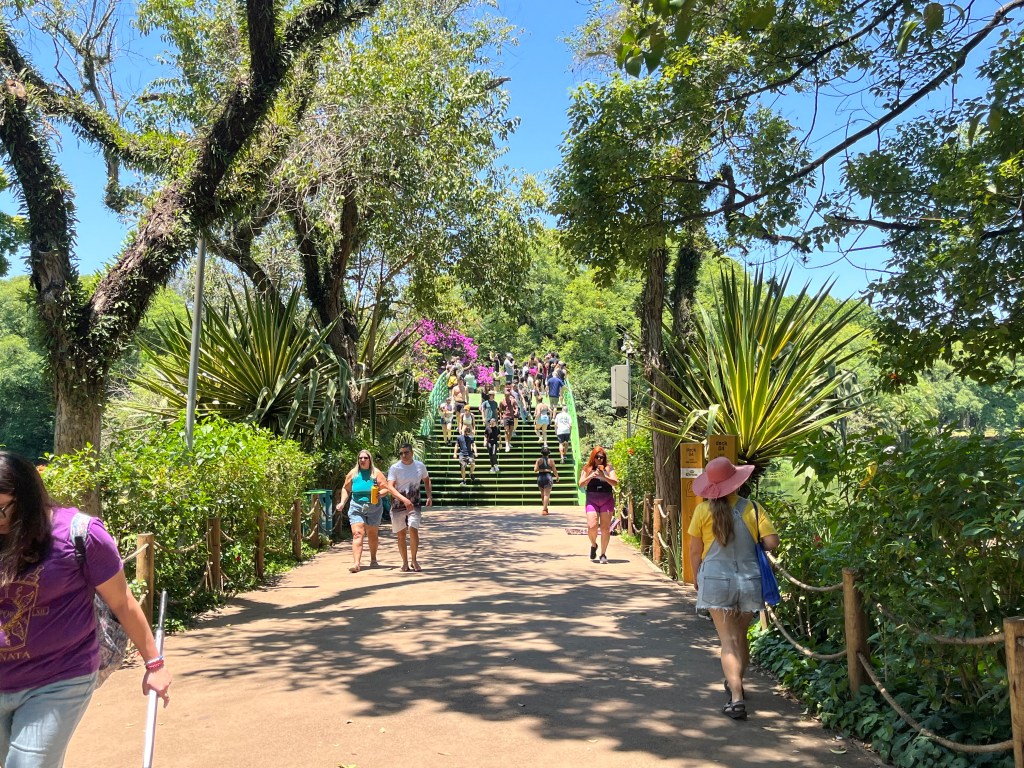
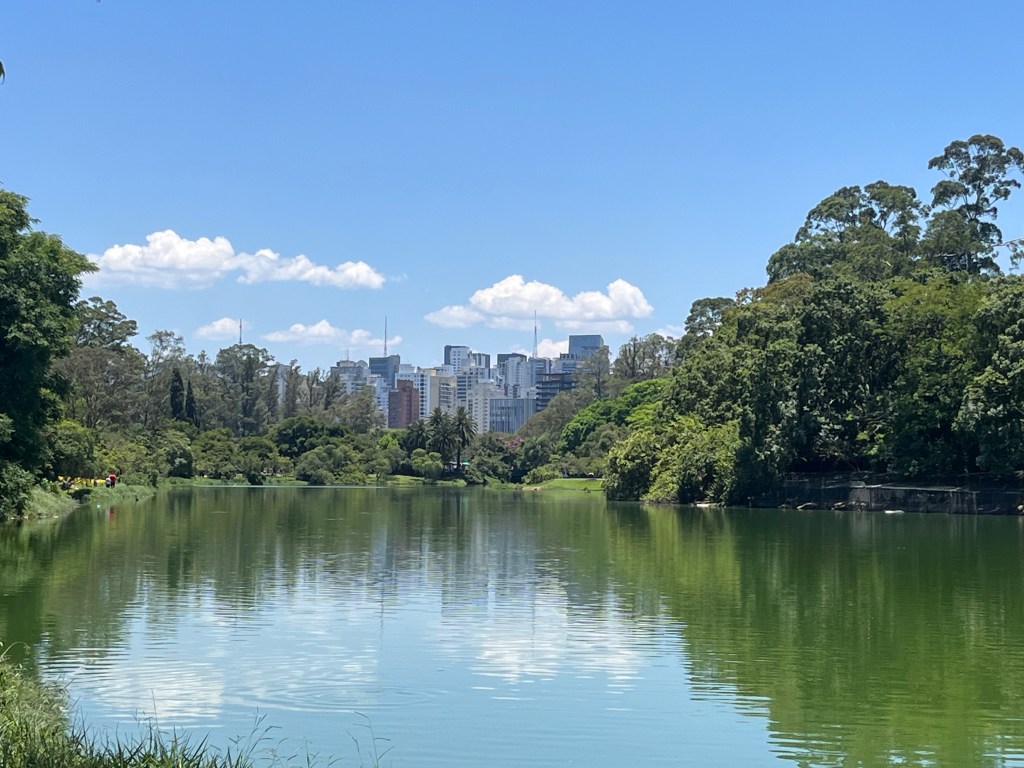
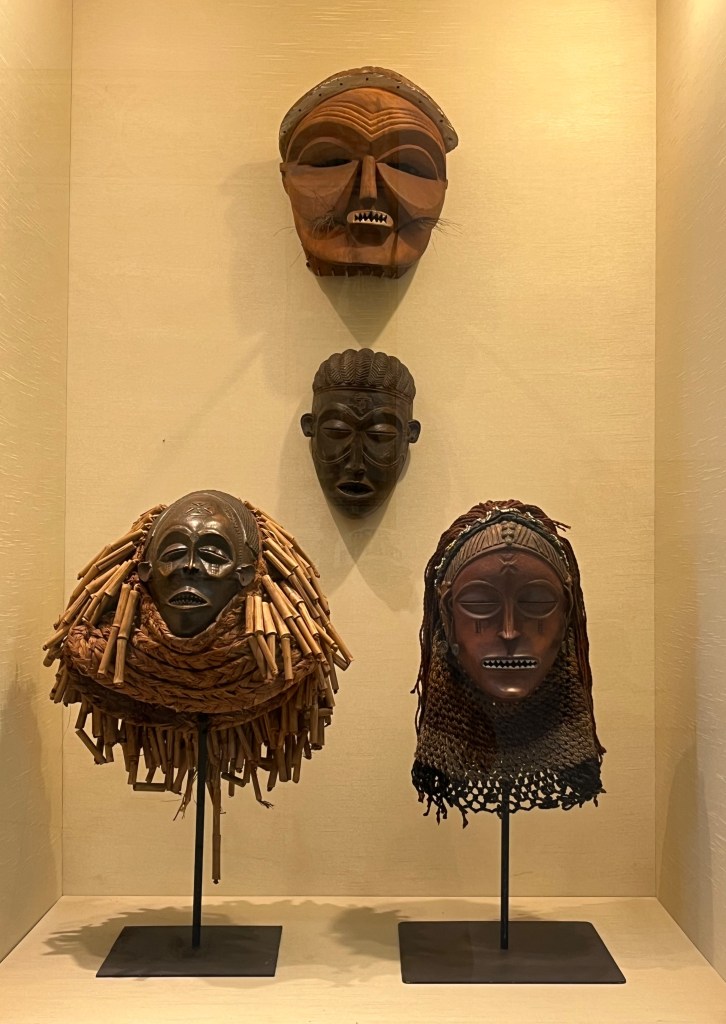
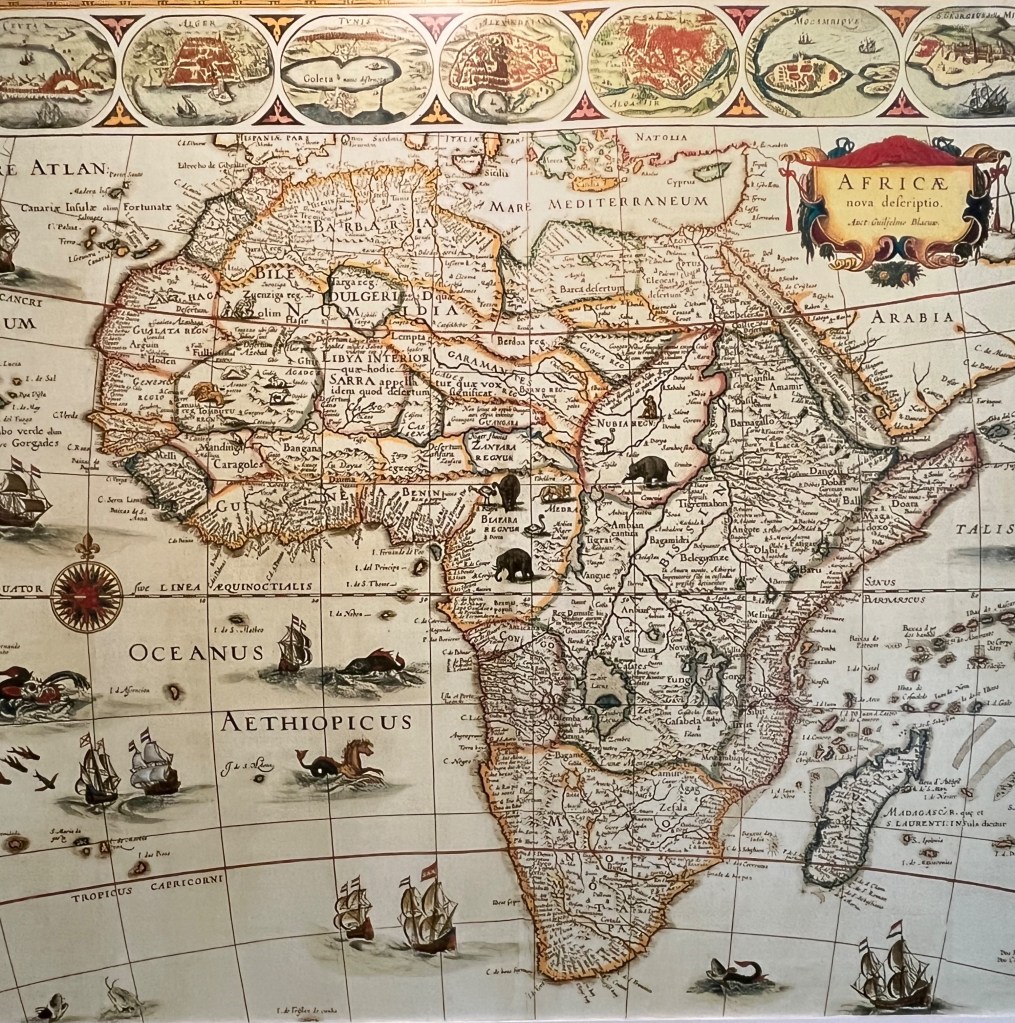
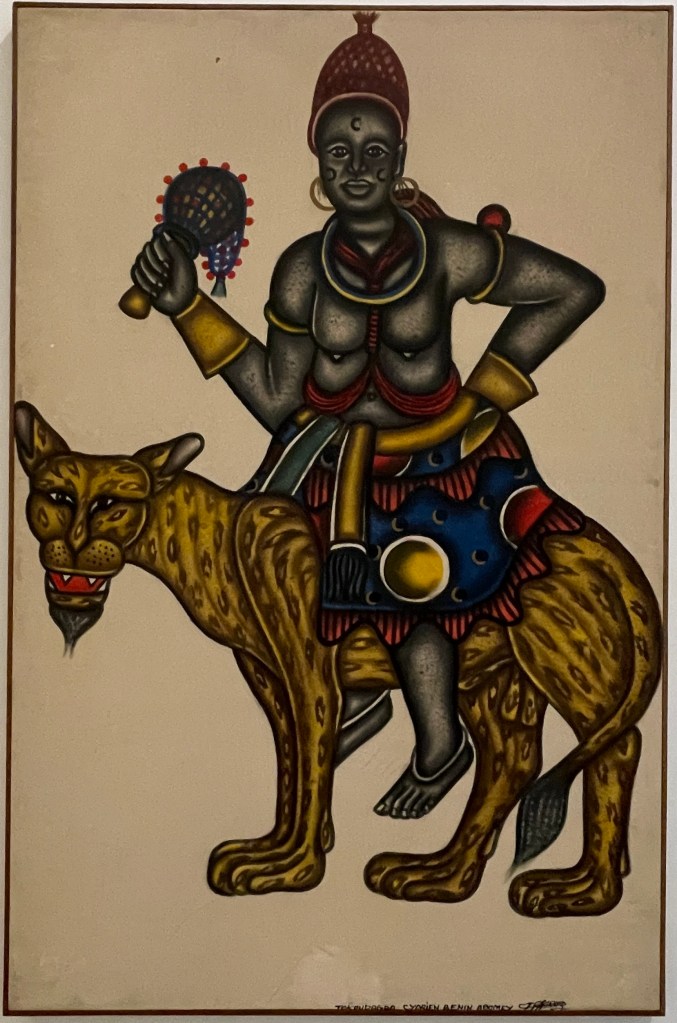
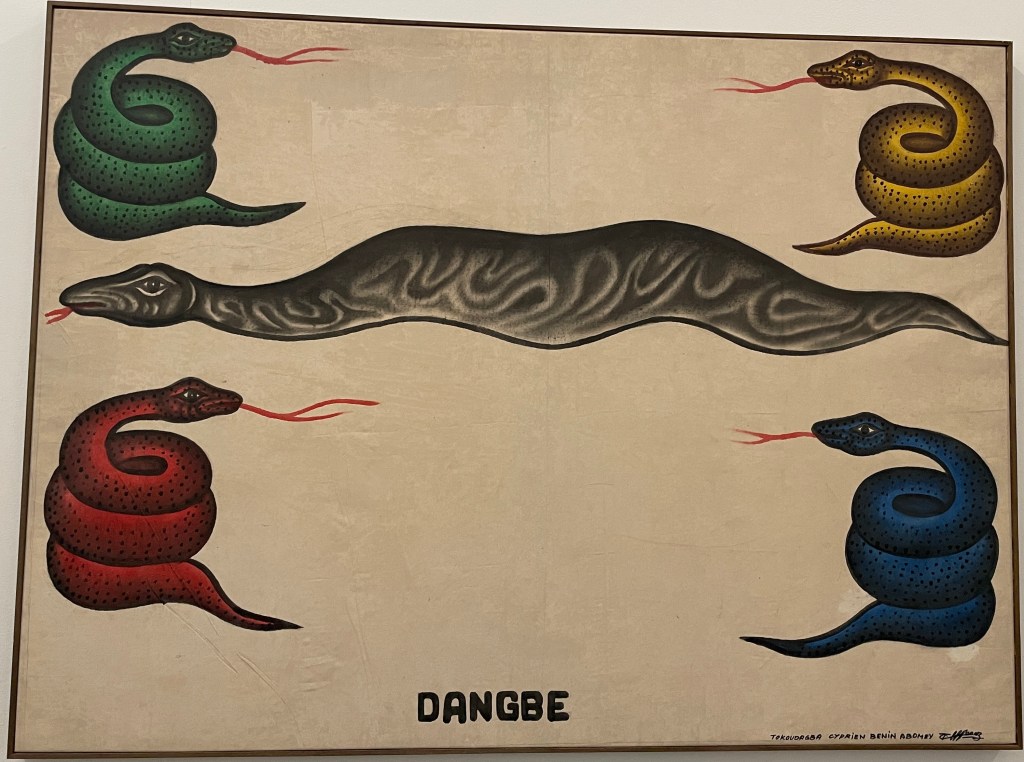
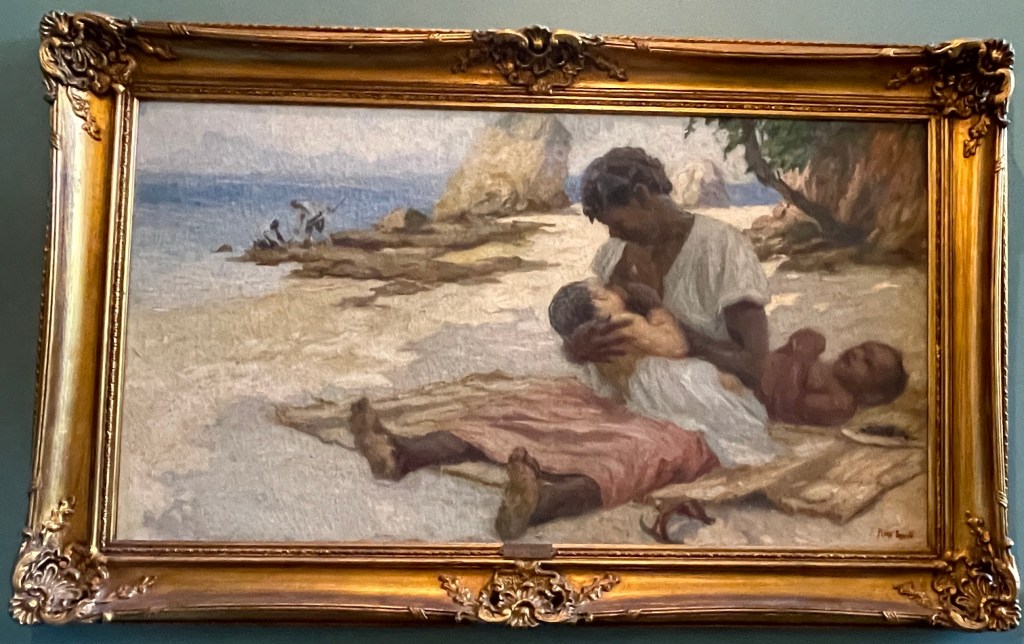
We spent some time walking around the park and visited the Museu Afro Brasil Emanoel Araujo (Afro Brazil Museum). Brazil is home to the largest African diaspora in the world, which might surprise some people. However, considering that the Portuguese were the primary colonial power that shipped enslaved Africans from Africa to Europe and the Americas, it makes sense that so many people arrived in Brazil first. We had assumed that the museum was mostly going to focus on the history of Africans in Brazil, but it is predominantly an art and visual museum. Over 6,000 pieces of art and culture are in the museum, including torture devices used by enslavers, art depicting African and Afro-Brazilian culture during and after slavery, and contemporary art by local artists. Below are a few photos of art that spoke to us.
Top row, left to right: masks from various West African countries; map of African tribal kingdoms.
Bottom row, left to right: painting of a person riding a leopard-looking animal; snakes because we love snakes; an enslaved African woman breastfeeding a white baby while her hungry baby is in the background.
Probably the place we enjoyed visiting the most was the Reptile House at the Instituto Butantan. The institute was built by Vital Brazil in 1901 to research medicine for the bubonic plague, but has since become a world-renown institute for vaccine and anti-venom research. (Butantan is one of the largest distributors of anti-venom serums in the world and the largest in Latin America.) The institute has a huge park that includes a vaccine museum, a microbiology museum, a hiking path through remnant Atlantic Forest, and much more. We only had time to visit the Reptile House where snakes, reptiles, amphibians, and a few arachnids are housed. Most of the species are native to Brazil and South America, which made it particularly interesting to visit.
Readers who know us personally know that we had a Colombian red-tail boa named Eve for 17 years. (Adam got her before he met Yahm. If you’re wondering: nope, Yahm wasn’t afraid because Eve wasn’t venomous.) We had to give her up when we embarked on this journey, so we get extra excited when we can be around snakes because we miss Eve very much.
Video: Boa constrictor at the Reptile House at the Instituto Butantan pushing up against the glass just like our Evey girl used to do (probably to loosen skin to make shedding easier).
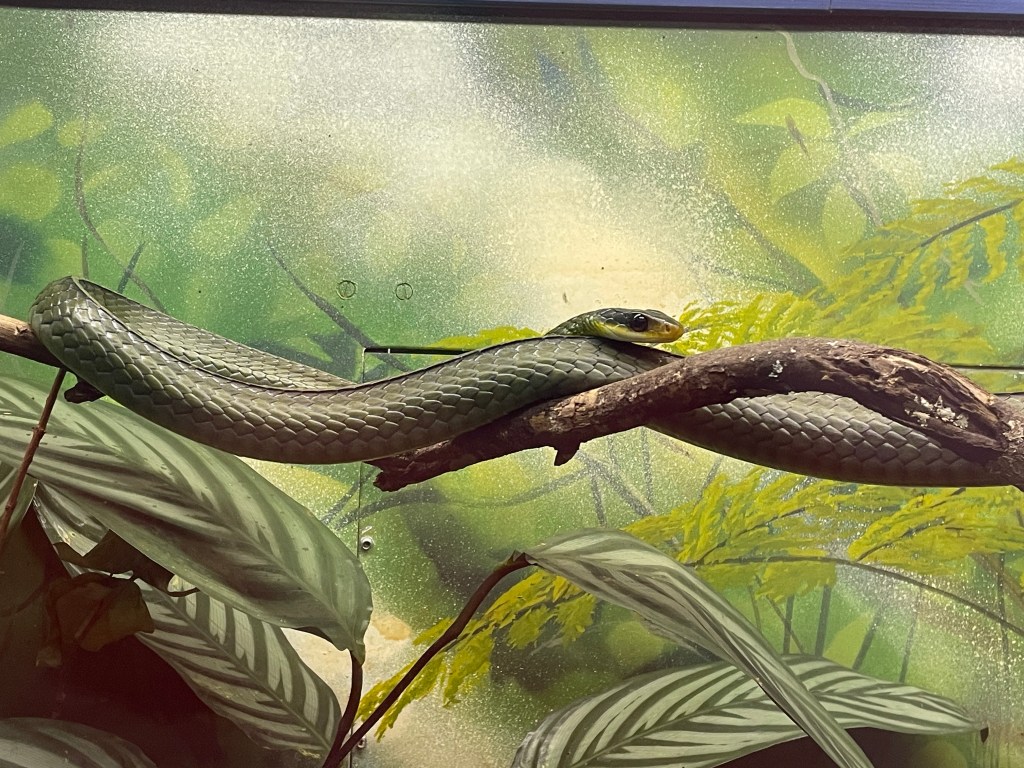
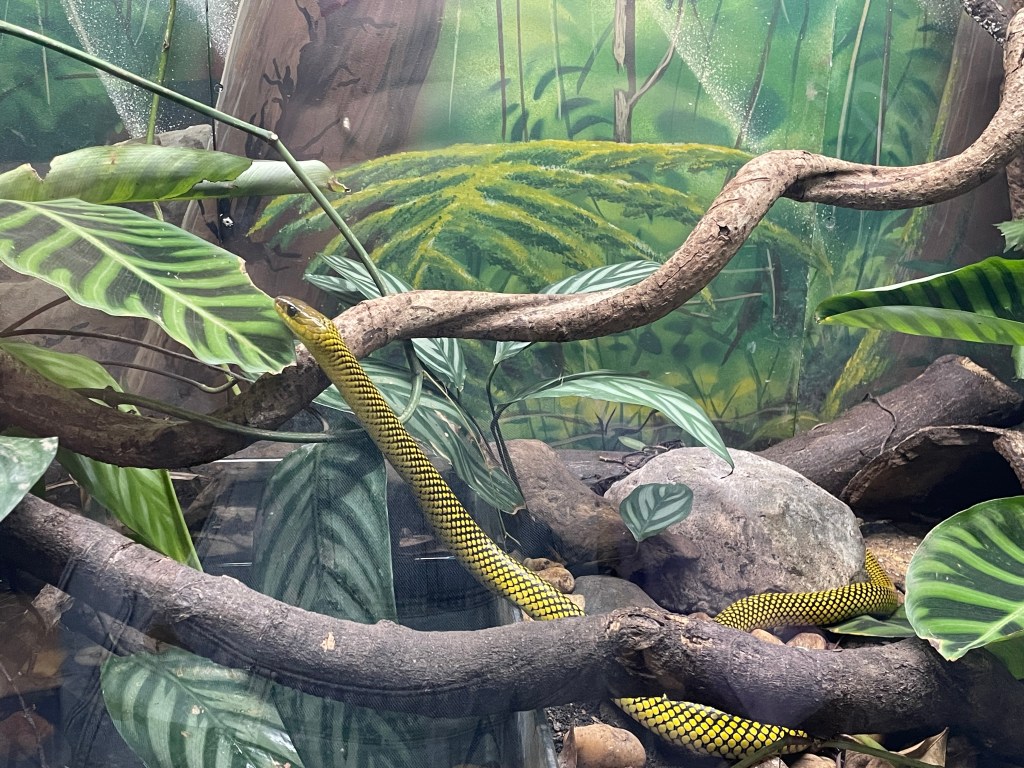
Top row, left to right: Patagonian racer; military ground snake; chicken snake.
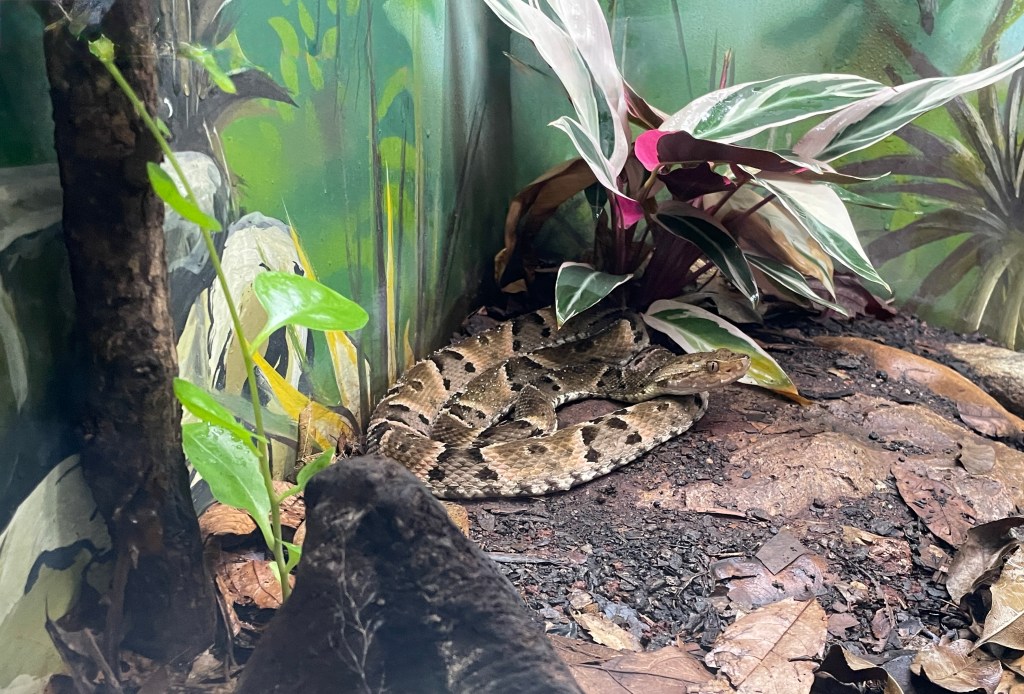
Middle row, left to right: Emerald tree boa; Brazilian lancehead.
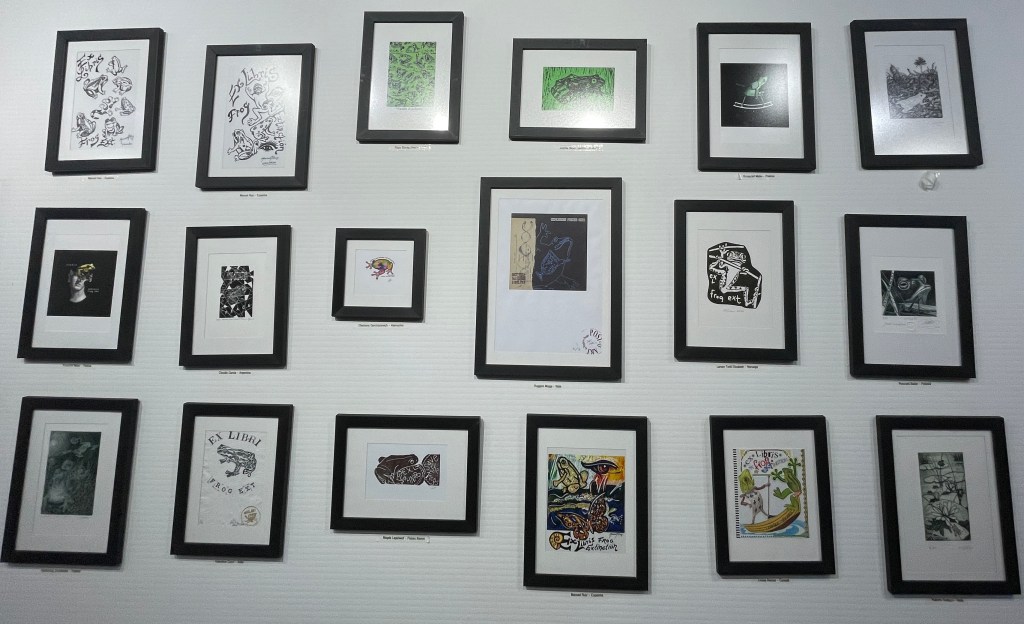
Bottom row, left to right: Bruno’s casque-headed frog; drawings that say “Ex Libris Frog Extinction” to raise awareness about the perils of frogs worldwide due to habitat destruction and the spread of chytrid fungus.



There was so much more we wanted to see in São Paulo, but we had a wonderful excuse to miss some attractions. A branch of Adam’s family from his late paternal grandfather’s side live in São Paulo (and Belem). We weren’t sure what to expect when we reached out to them since Adam had never met them before. We made flexible plans just in case, and are so glad that we did. Nearly every day, we had family to hug us, share meals with us, and give us suggestions. There was an instantaneous feeling of familiarity as if we’ve always known each other. After four months of traveling, our time with family has become some of our favorite memories to date. Next time (and there will be a next time!), we will plan to spend more time in São Paulo, not just to sight-see, but also to be with family.
Stay tuned for Yahm’s next post about visiting the Jewish Museum and food adventures, as well as our next general post about the Atlantic coast between São Paulo and Rio de Janeiro. Be sure to like, comment, and subscribe to Traveling While Introverted so you don’t miss it!

 Traveling While Introverted
Leave a reply to Between Cities: Exploring Southeast Brazil’s Atlantic Coast – Traveling While Introverted Cancel reply