After an amazing week in São Paulo, it was time to head north towards Rio de Janeiro. Since the two cities are 270 miles (435 kilometers) apart, we decided to split the journey up by visiting some of the smaller towns along the Atlantic coast of southeastern Brazil. The first town we journeyed to was Ubatuba. It’s within the state of São Paulo (Brazil is divided into 26 states) and is approximately 141 miles (227 kilometers) north of the city of São Paulo. Ubatuba is a popular place for Brazilians to visit when they need a coastal getaway.
Once we settled in, we took a walk around the central business district (CBD) that parallels the coast. The CBD is a mixture of restaurants, bars, an aquarium, an outdoor mall, and some dance clubs. A hybrid biking and walking path close to the Atlantic allows for a stroll along the ocean. This path provides great views of both the coast and the surrounding forested mountains, which are part of Serra do Mar State Park, one of the largest remaining contiguous stretches of Atlantic Forest.
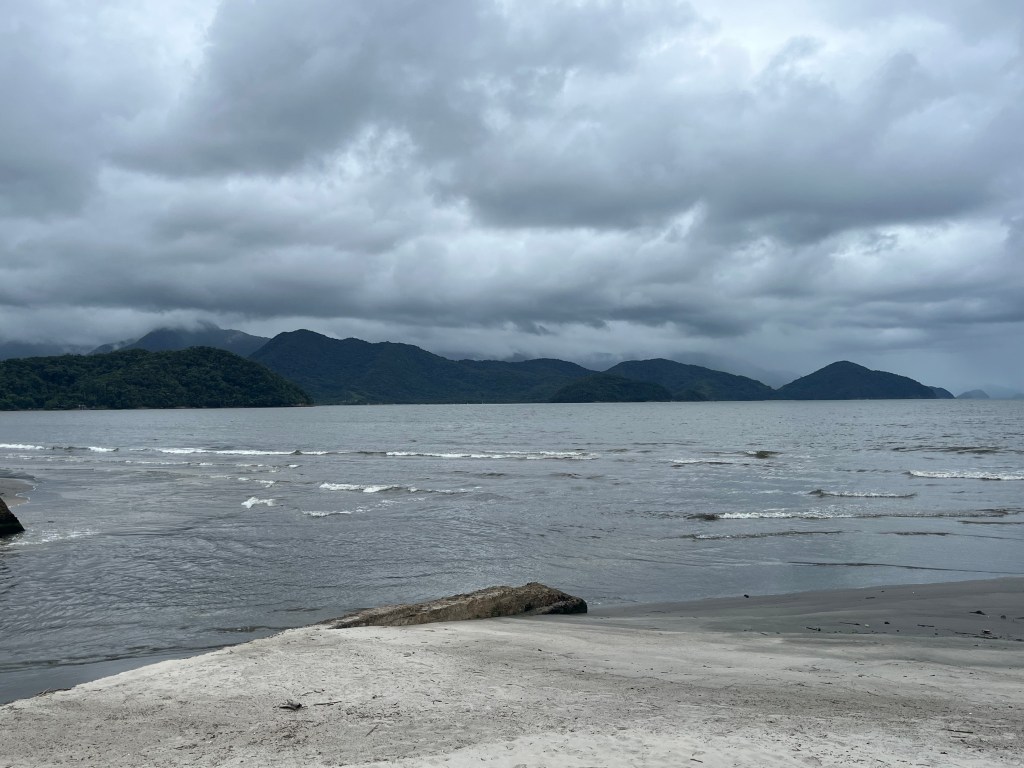
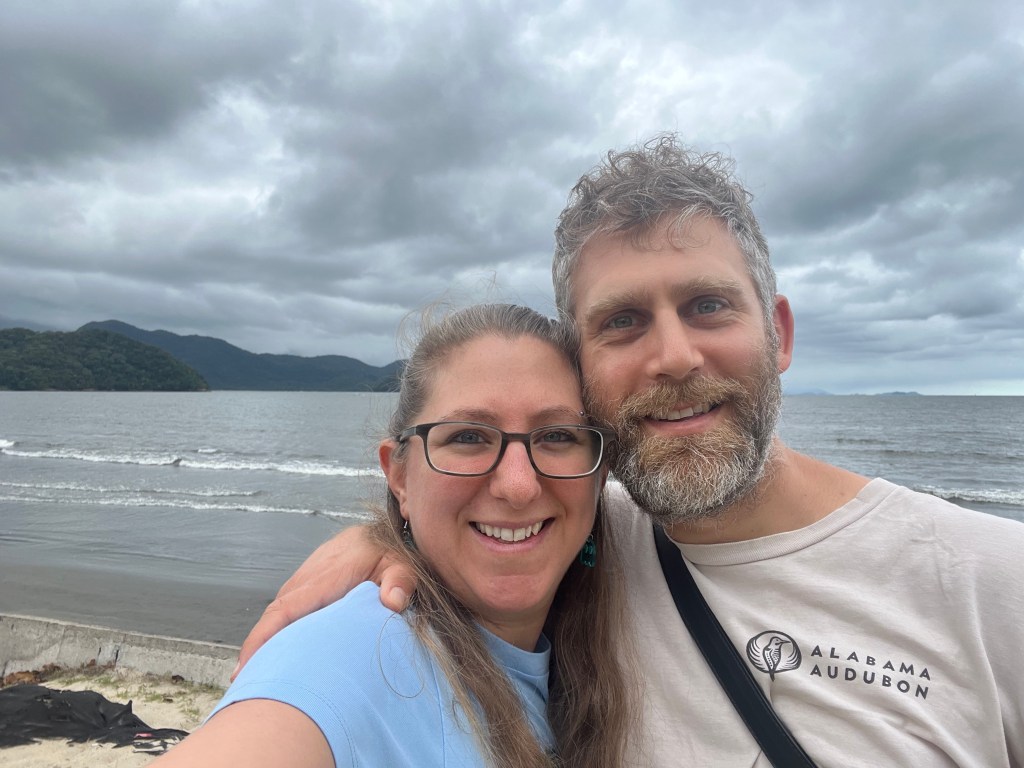
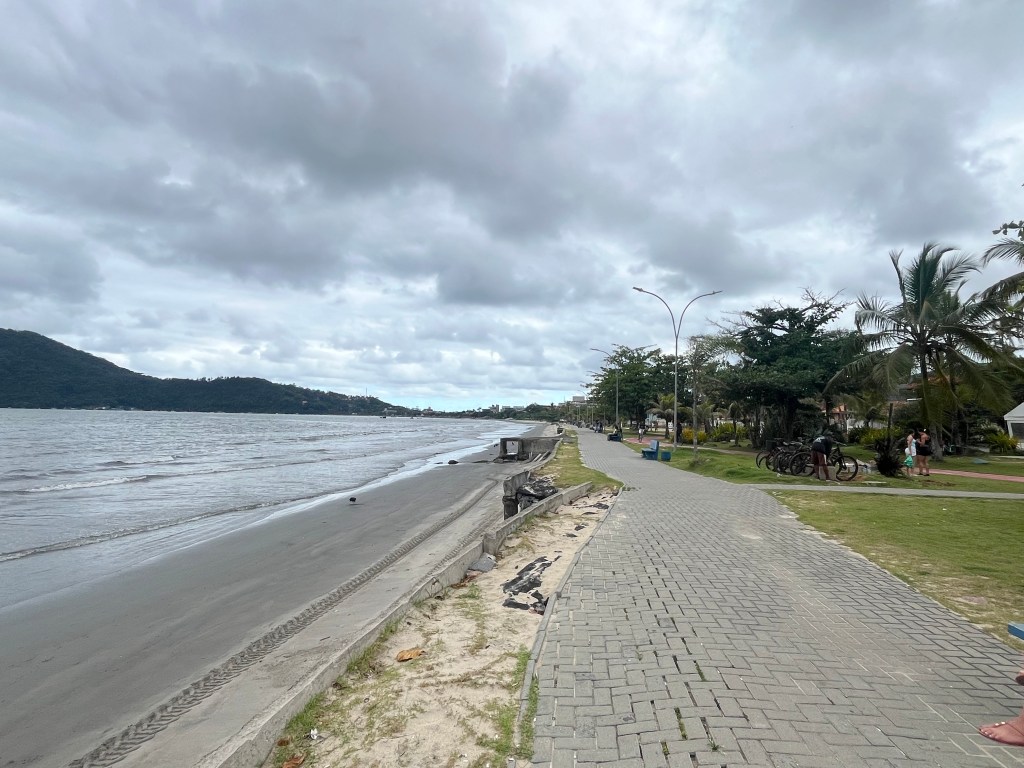
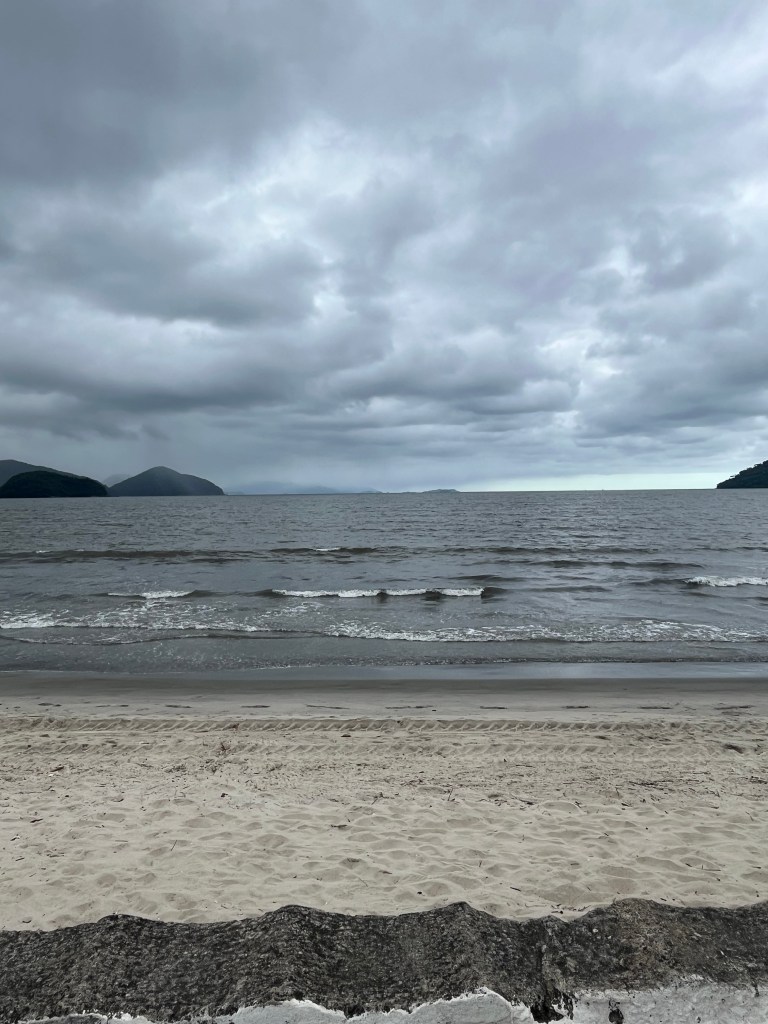
The late-afternoon walk allowed us to check out the ocean and some of the local birdlife. A large contingent of Black Vultures was patrolling the beach, eating and fighting over washed up fish that were scattered around.
We also saw Southern Lapwings hanging out on the shore walking close behind the vultures but maintaining a distance.
The beach around Ubatuba itself is not great for swimming, so while we were in town we mostly walked on the sand and dipped our feet in the Atlantic. The town itself is so charming that it’s easy to see why it’s so popular with Brazilians. (You’ll have to believe us since the photos we took don’t do the town justice. Think 1990s San Luis Obispo vibes, but in Portuguese.) As is the case with so many Latin American towns and cities, Ubatatuba is quite sleepy and calm during the day but comes alive at night. We did spend one evening out and about and were surprised by the crowds and vibrant atmosphere. We also ate at a particularly delicious seafood restaurant that Yahm will mention in her blog post.
After two-and-a-half days in Ubatuba it was time to say goodbye and head 45 miles (73 kilometers) north to the small colonial city of Paraty in Rio de Janeiro state. Paraty was founded in 1597 by the Portuguese. Its name (like that of Ubatuba) is from the Tupi language which was spoken by the Indigenous Guaianá people who inhabited the area before Europeans arrived. The name is derived from a species of fish that is found in nearby waters. Paraty has ballooned beyond the historic colonial core but is still a pretty small town (less than 45,000 people) and, similar to Ubatuba, it is a coastal escape for Brazilians.
One of the reasons we decided to visit Paraty is because we thought it would be easier for Adam to hike in the Atlantic Forest. A hiking excursion through the Atlantic Forest requires a guided tour because it’s easy to get lost and cell phone reception is spotty. Plus, a guide helps to spot wildlife, which is one of the big draws of the forest. Unfortunately, these guided tours require anywhere from 2-6 people and Yahm was not interested in trekking through the forest. (There’s only so much nature Yahm is willing to experience.) Adam tried to find a group tour to join, but, alas, there weren’t any. To compensate, Adam plans on hiking through a patch of the Atlantic Forest that surrounds Rio de Janeiro, so stay tuned for that blog entry!
Similar to Ubatuba, the best beaches are outside of Paraty and require a car or bus. On our second full day, we hopped on a bus and headed approximately 15 miles (24 kilometers) south to the small village of Trindade. Formerly a fishing hamlet founded by the Caiçaras, Trinidade has since become a trendy place for people to visit and even stay, though facilities are limited. The village has a rustic beauty, though the true gems are the beaches that surround it. None of the photos below have filters: the waters really are that gorgeous.
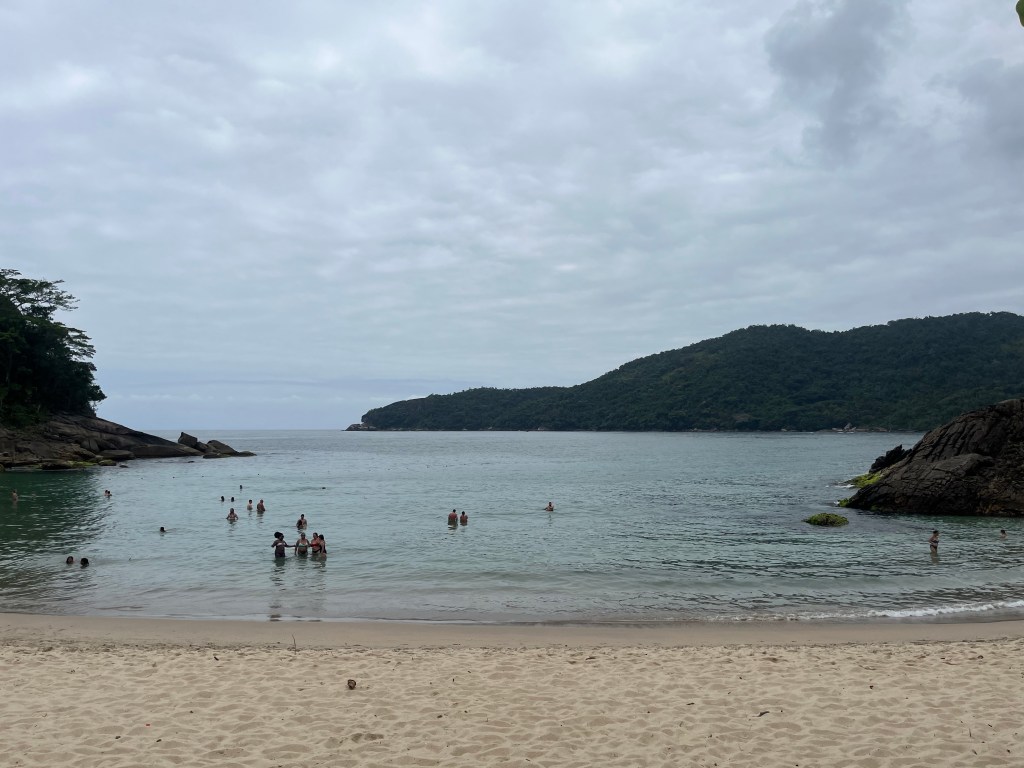
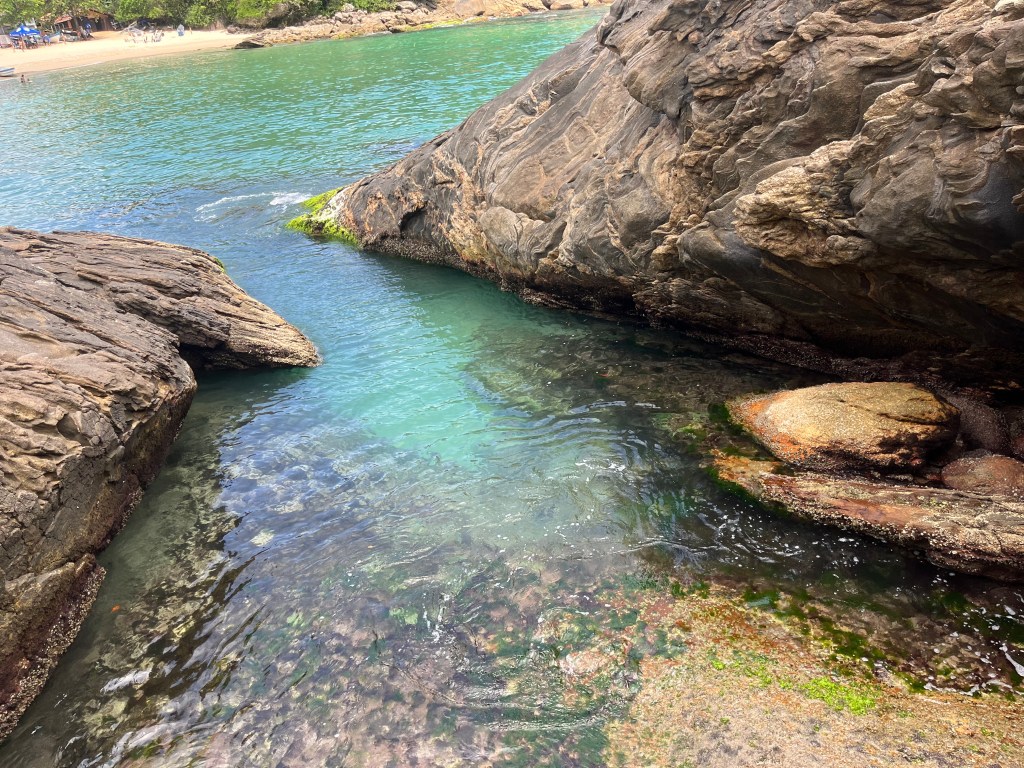
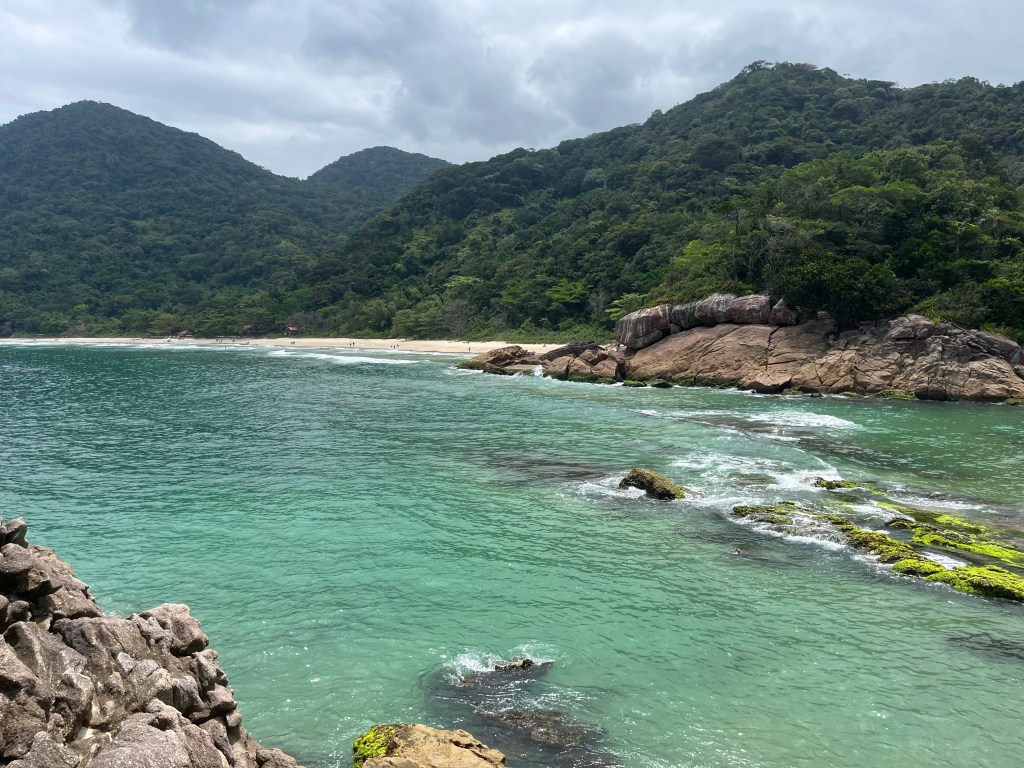
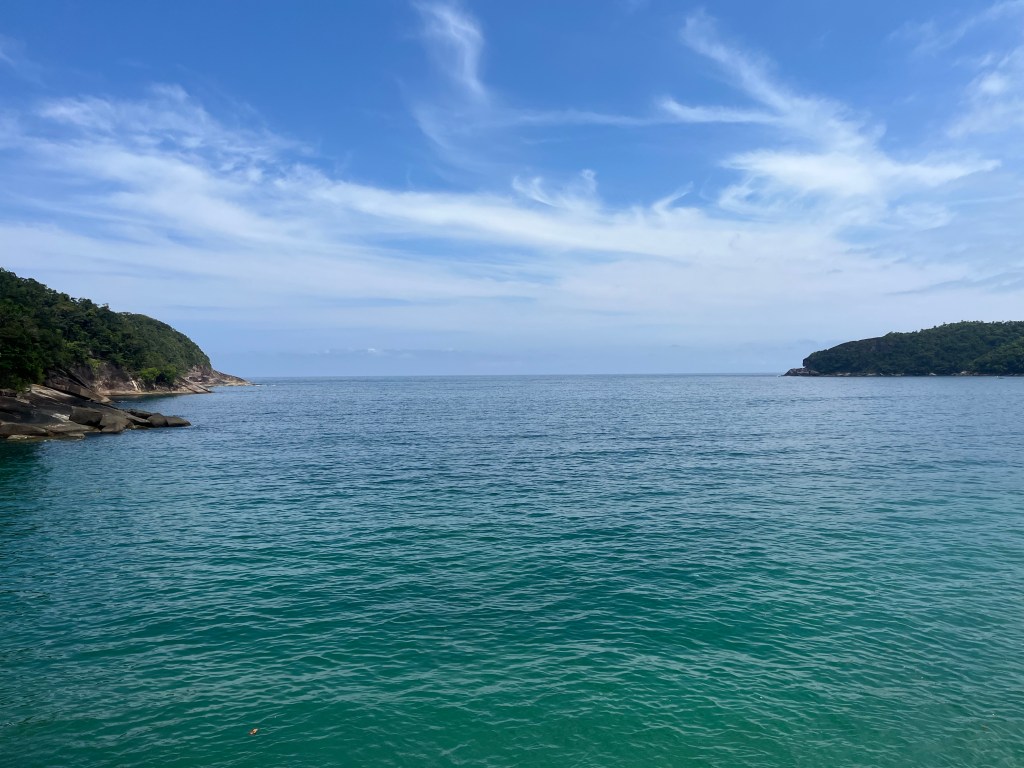
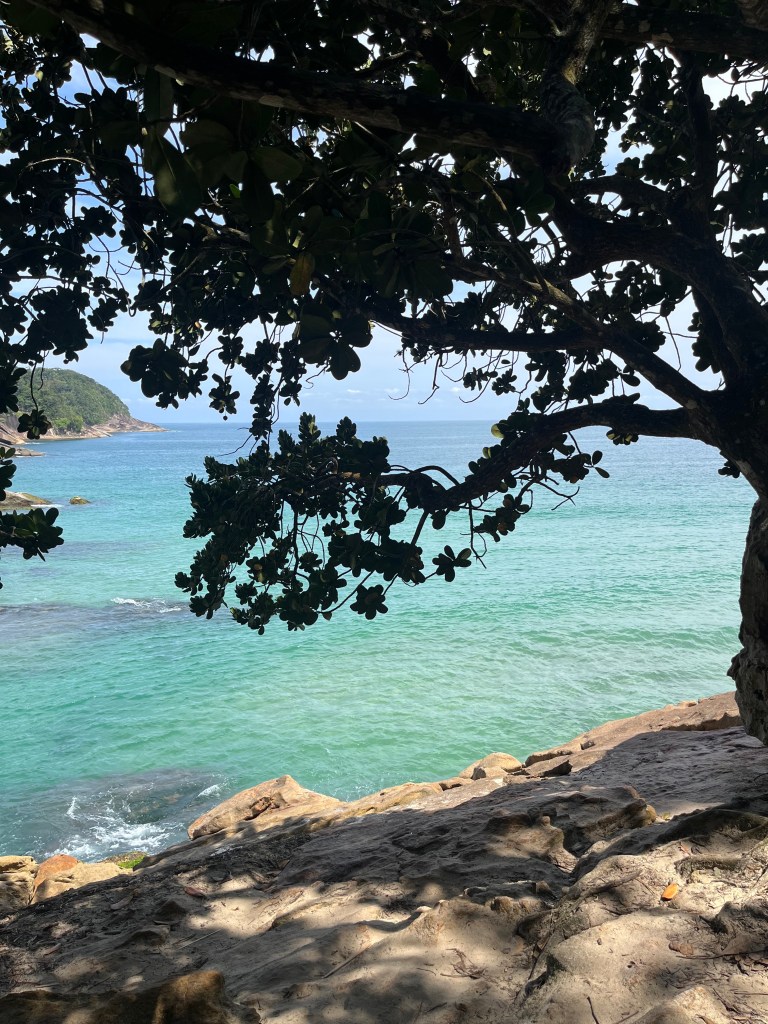
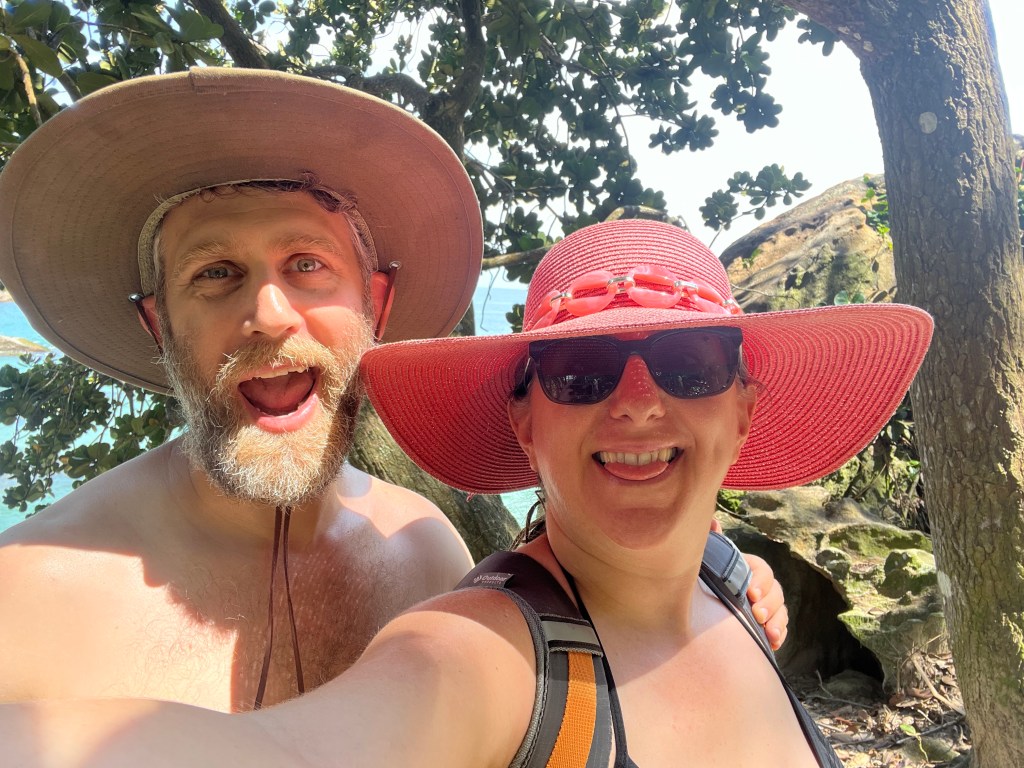
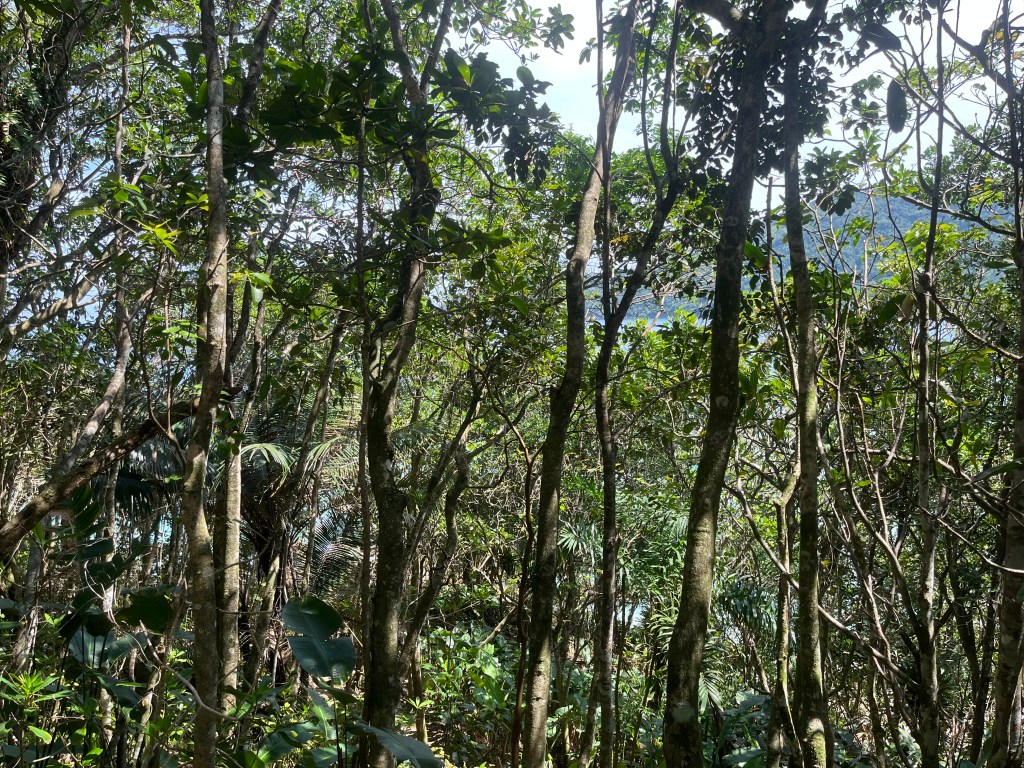
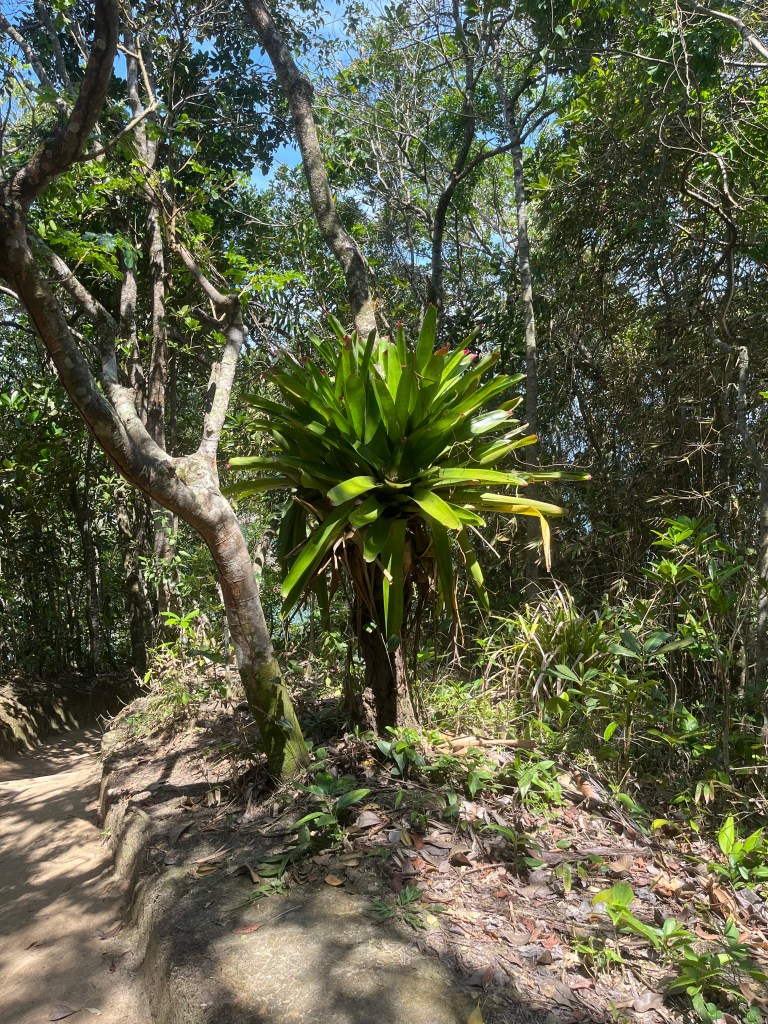
Despite the fact that we are in the Southern Hemisphere during the spring and that we’re on the southern edge of the tropics (Tropic of Capricorn), the water was cold. This stretch of the Atlantic felt like the Pacific Ocean off the coast of California. Still, it was very refreshing, especially as the day progressed. Once the sun broke through the cloud cover, it started to get very hot and the cold water became a welcome respite. The forested bluffs above the water, which included hiking paths to move between beaches, was another nice way to escape the sun.
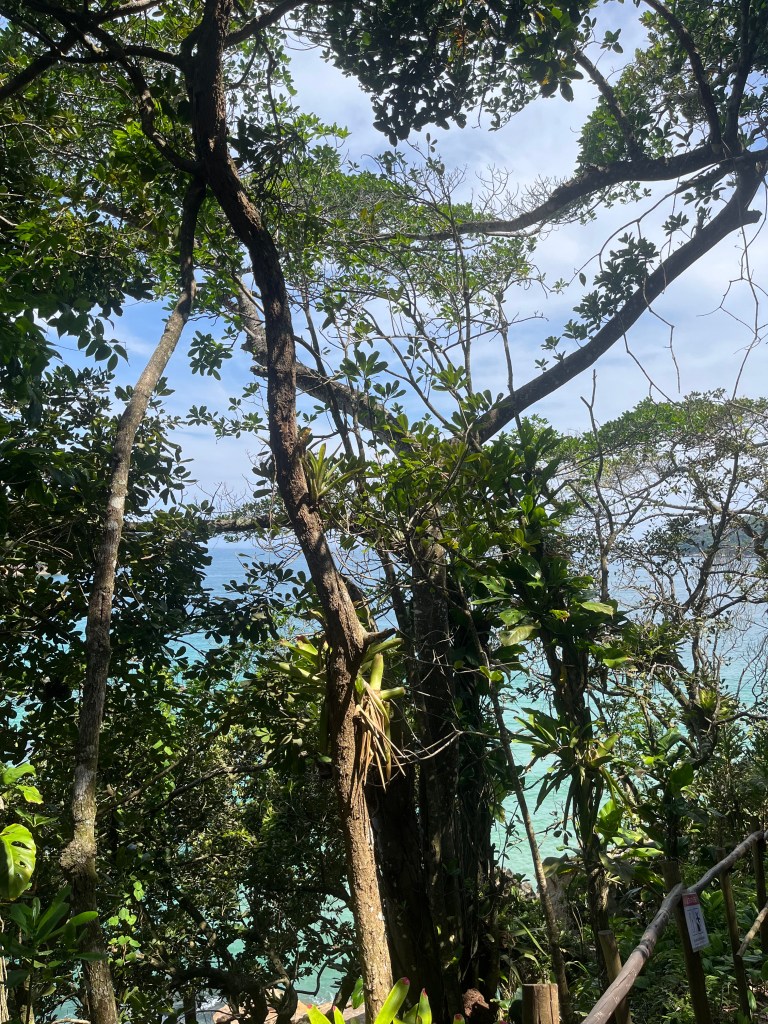
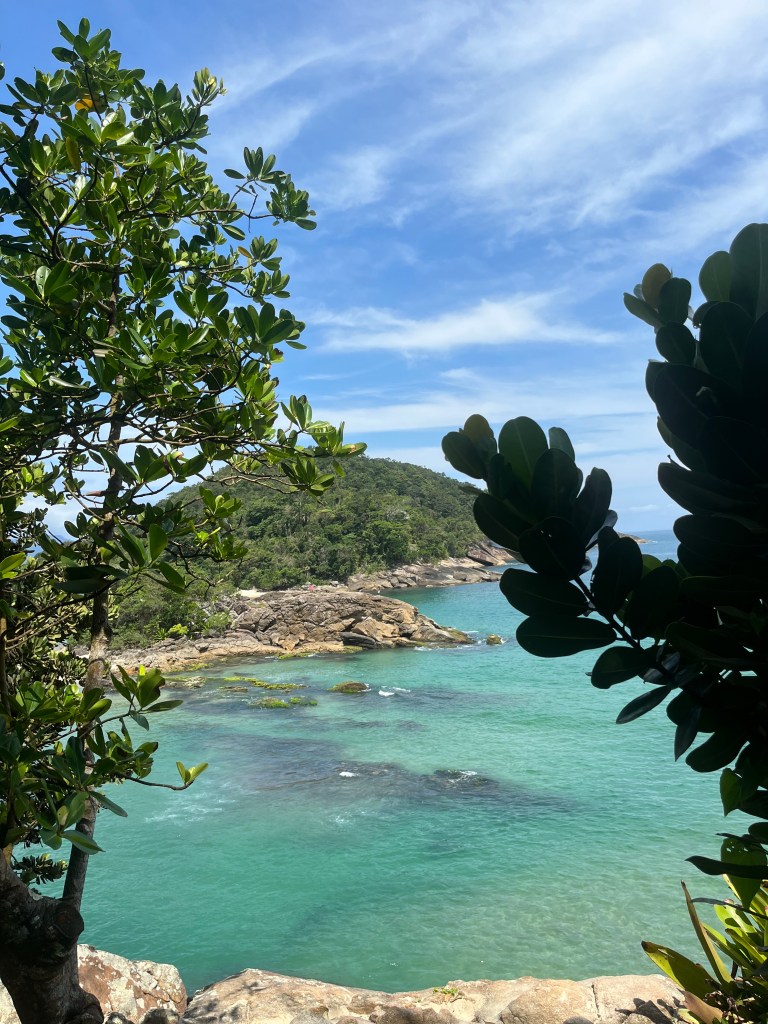
Eventually, we walked to the bus station to head back to Paraty. Besides buses, there are also cargo vans that take people back and forth. We hopped into one and were sardined the entire 40-minute drive. What was interesting was being the only Anglos in a very Brazilian space. Everyone was laughing and talking with each other, indicating a very strong sense of community. We were both a little carsick from the twists and turns of the road, but thankfully an open window helped calm the nausea. Later that evening, we decided to take a walk around the colonial section of Paraty. The buildings from the colonial Portuguese and Brazilian Imperial periods are beautifully preserved. No cars are allowed in this area because of the cobblestone streets, that, honestly, are so uneven that we spent most of the time looking down so we wouldn’t slip and fall. The colonial core features a lot of restaurants and bars that all seemed to serve the same ten dishes. (Why are Brazilians so obsessed with Italian food? If you know, please tell us!) Of course it’s charming in the way that historical areas are always charming, but, at this point in our travels, all the colonial towns blend together and it’s hard to tell them apart.
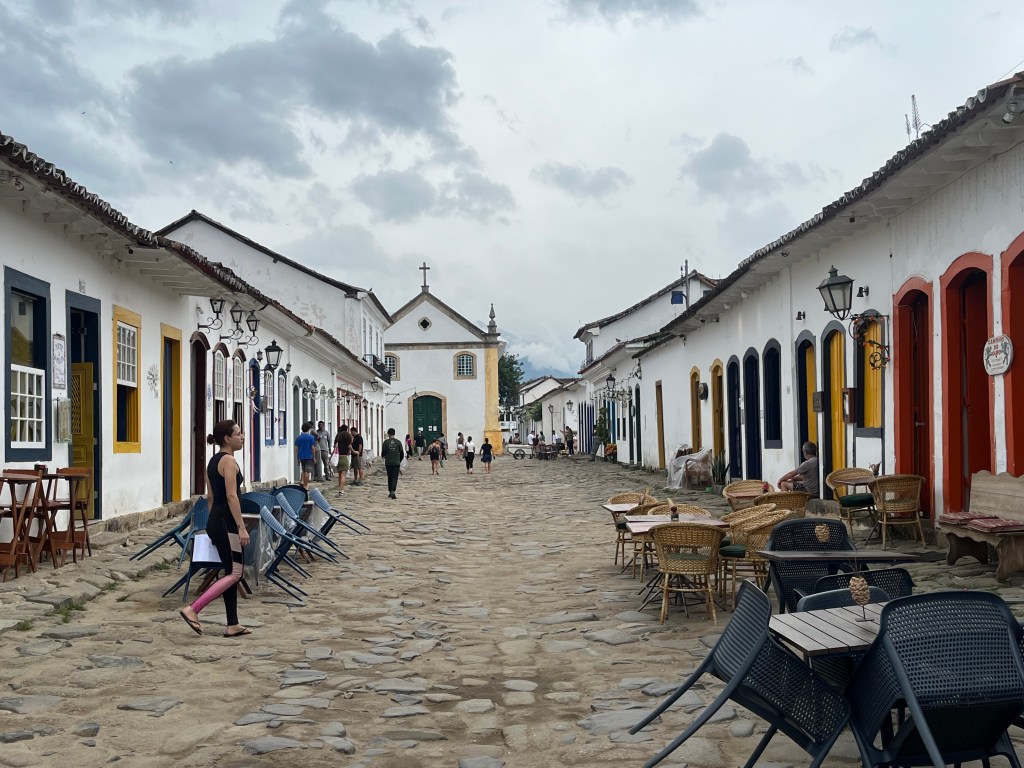
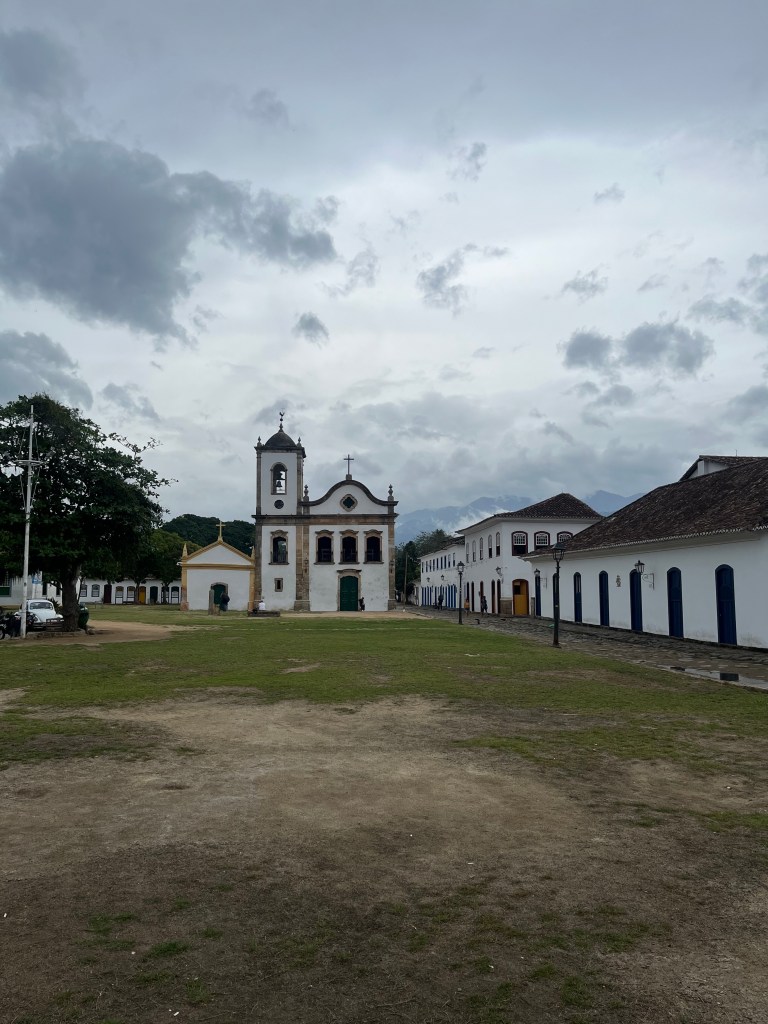
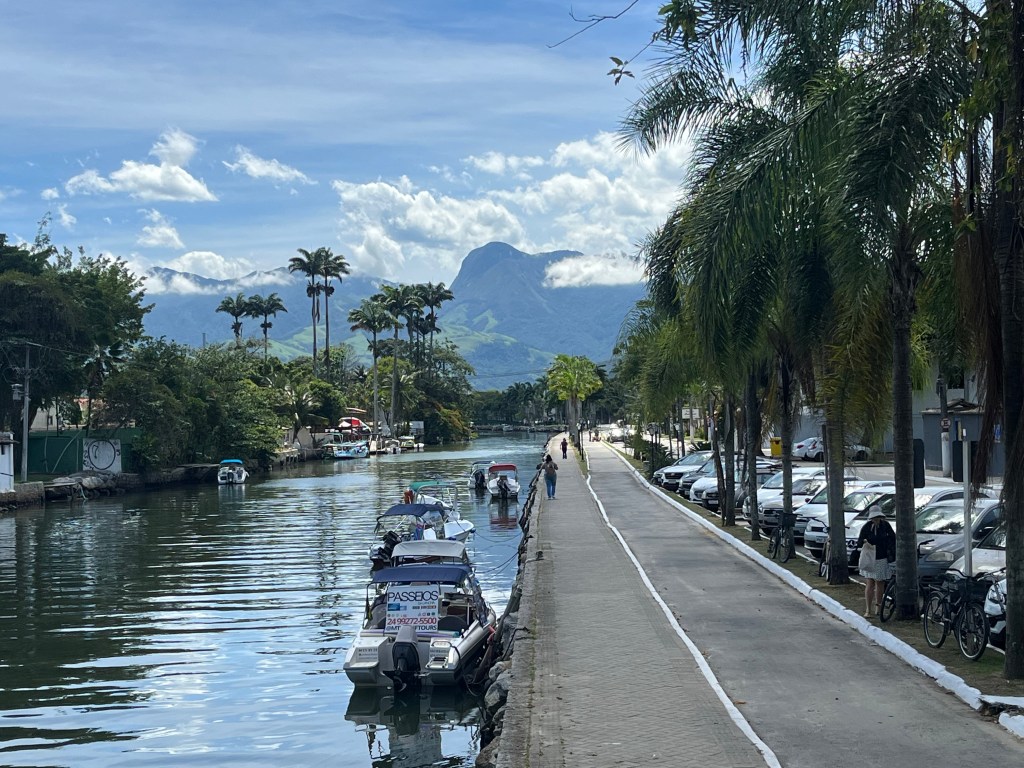
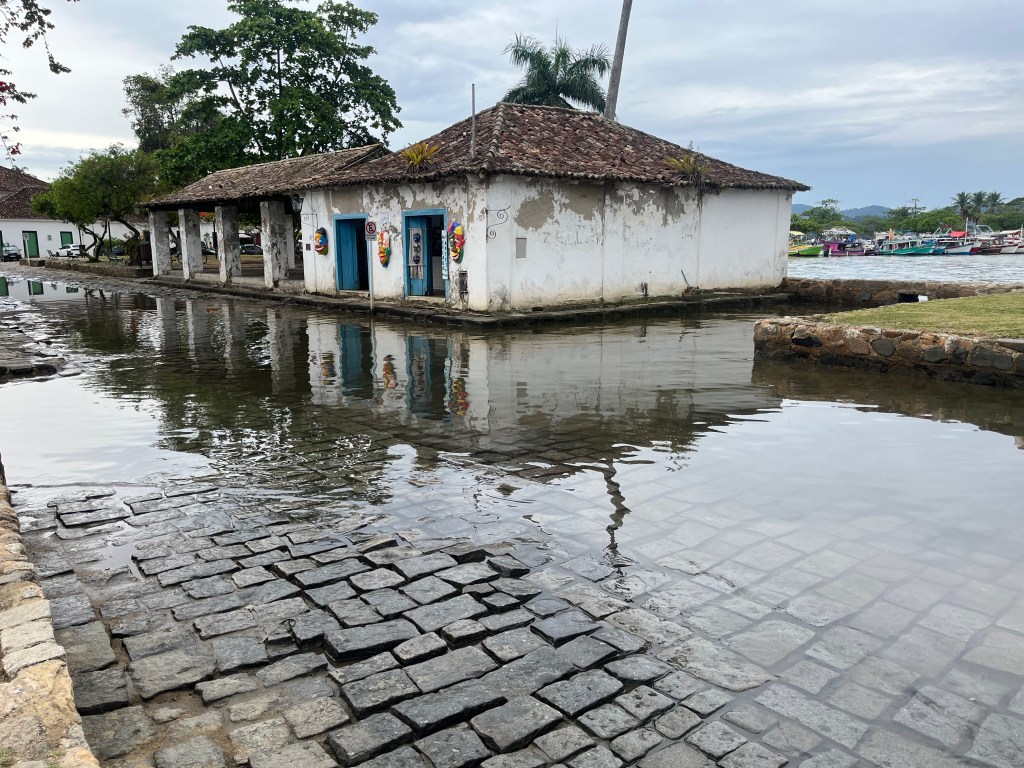
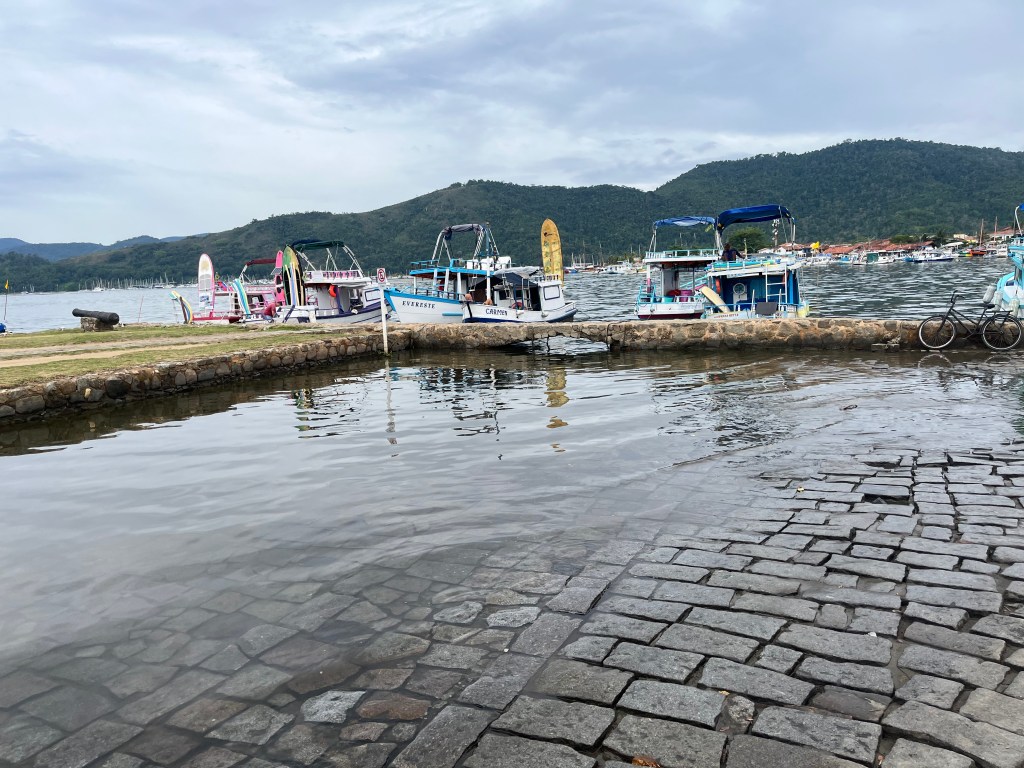
The town sits along an estuary and inlets that feed the Atlantic with freshwater from the surrounding highlands. Because of the town’s location in an estuary and that it sits at sea level, flooding is a given. The area near the marina was designed to allow tidal waters to enter town, thereby preventing flooding from occurring deeper in. We were both impressed that a town founded and built centuries ago seemed to understand that building with the rhythms of nature rather than against it is the best way to avoid catastrophe. In the photo on the right, you can see a gap in the stones between the boats. These gaps allow the tide to flow in and out as needed.
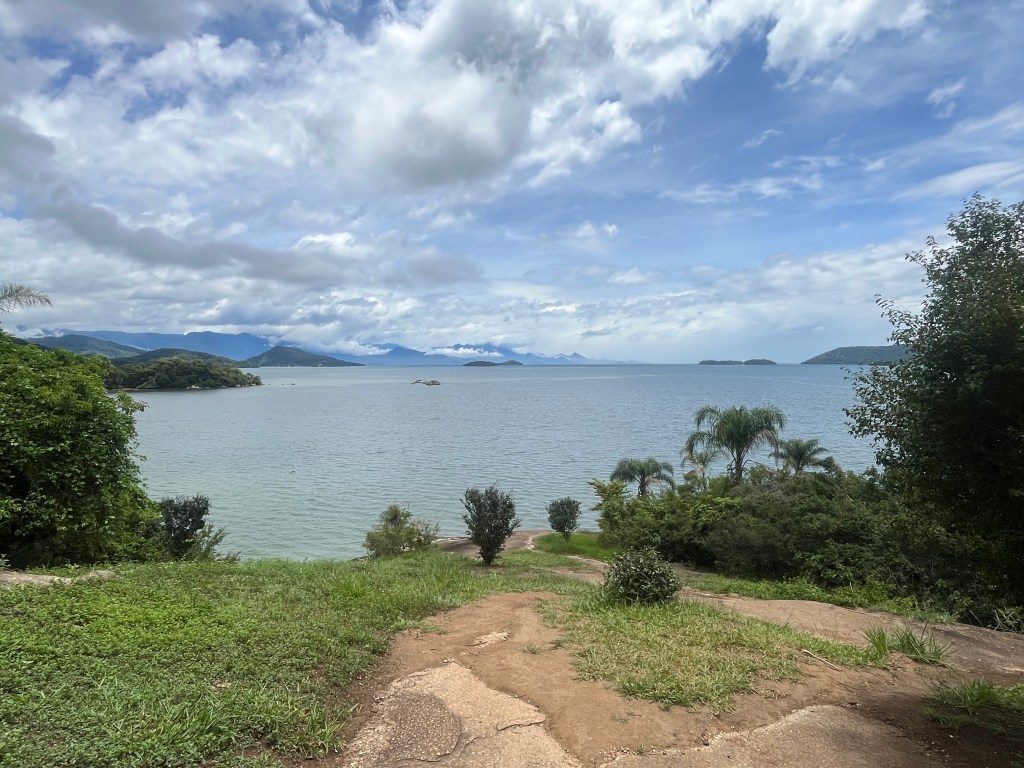
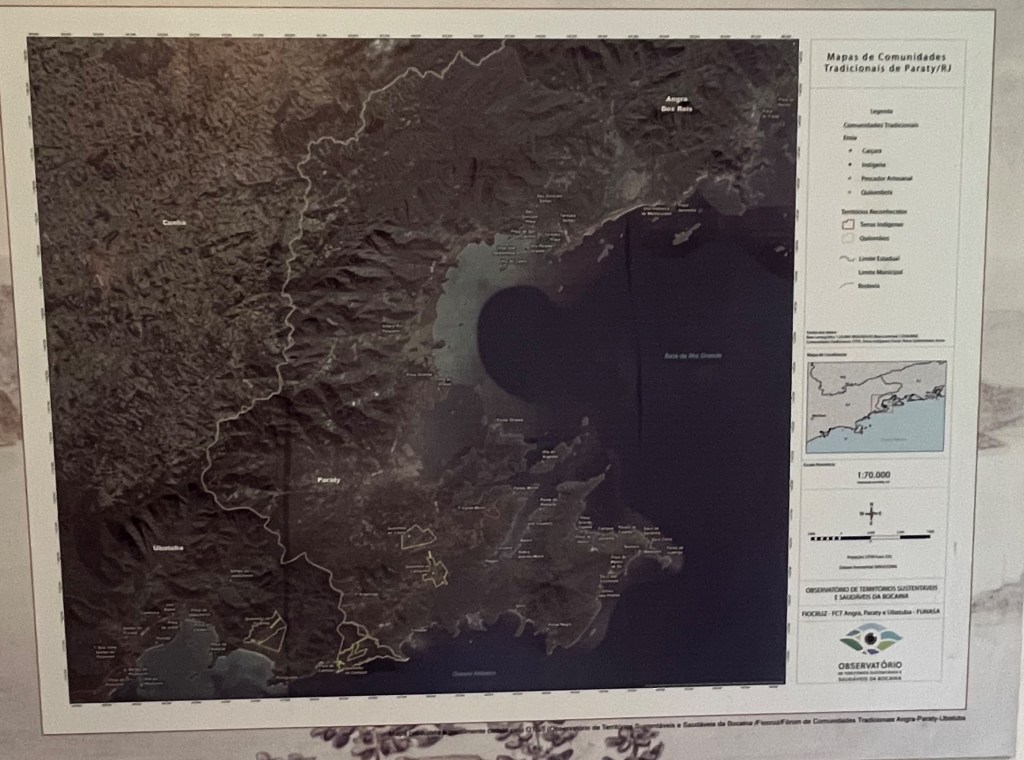
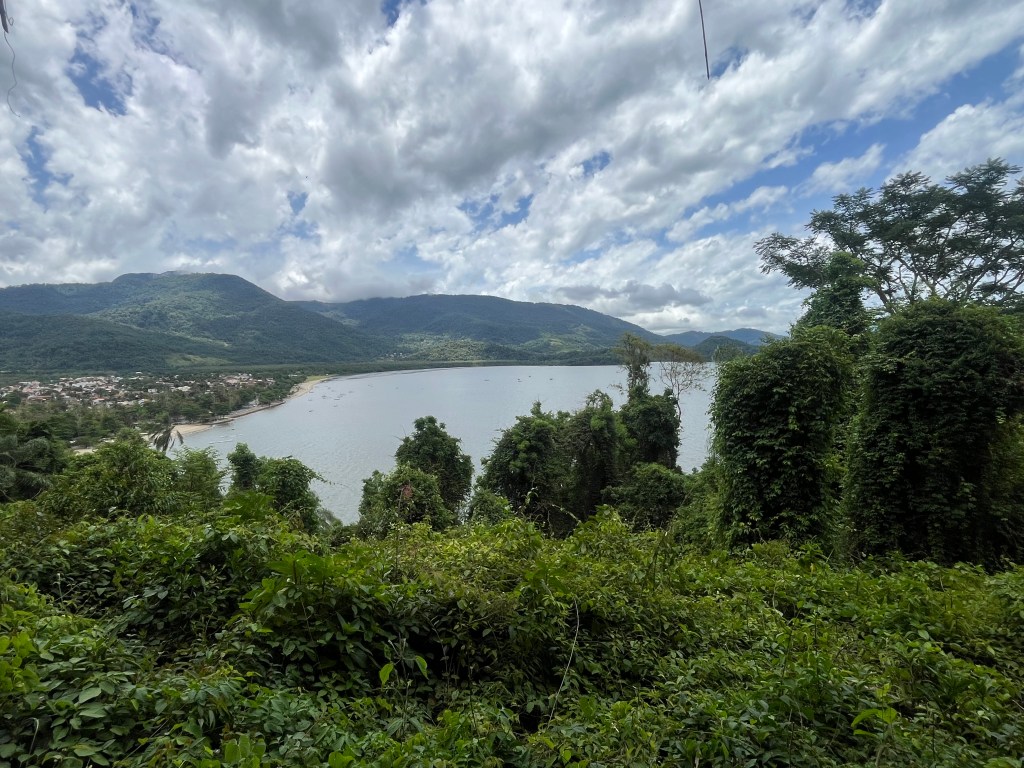
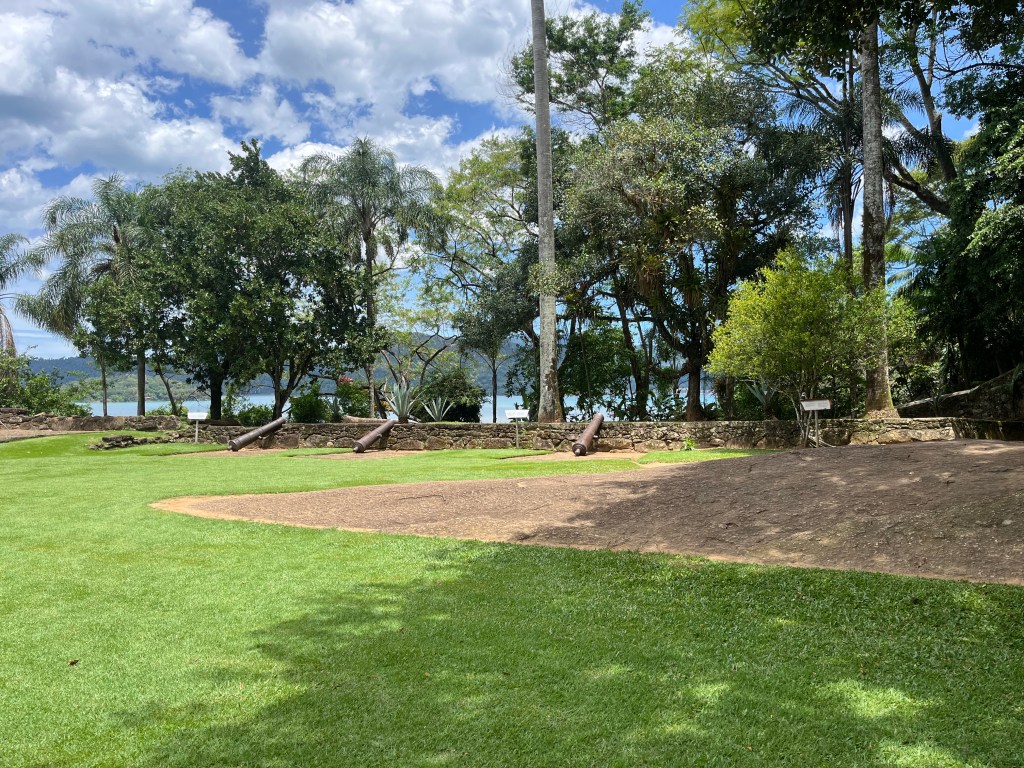
The other highlight of our time in Paraty was hiking up to the Museu Forte Defensor Perpétuo (Fort Defensor Perpétuo Musuem). The museum is not a true fort, but is a battery built in the early-1800s to protect Paraty. Though it was built during the late-Portuguese colonial period, it was mostly used during the Brazilian Imperial period after independence. Canons from the 19th century were scattered throughout the grounds. The museum featured a history of the Indigenous people who inhabited the area before Europeans arrived, the period during colonization, and the slave trade. We also learned how the economic ebbs and flows of Paraty were so closely tied to road access. Paraty was cut off from the rest of Rio state and coastal Brazil for decades until highway BR-101 was built in the 1970s. Many of the plaques were in English as well as Portuguese, which is always a nice surprise. The museum also featured incredible views of the Atlantic and had a patch of forest behind it that extended to the coast.
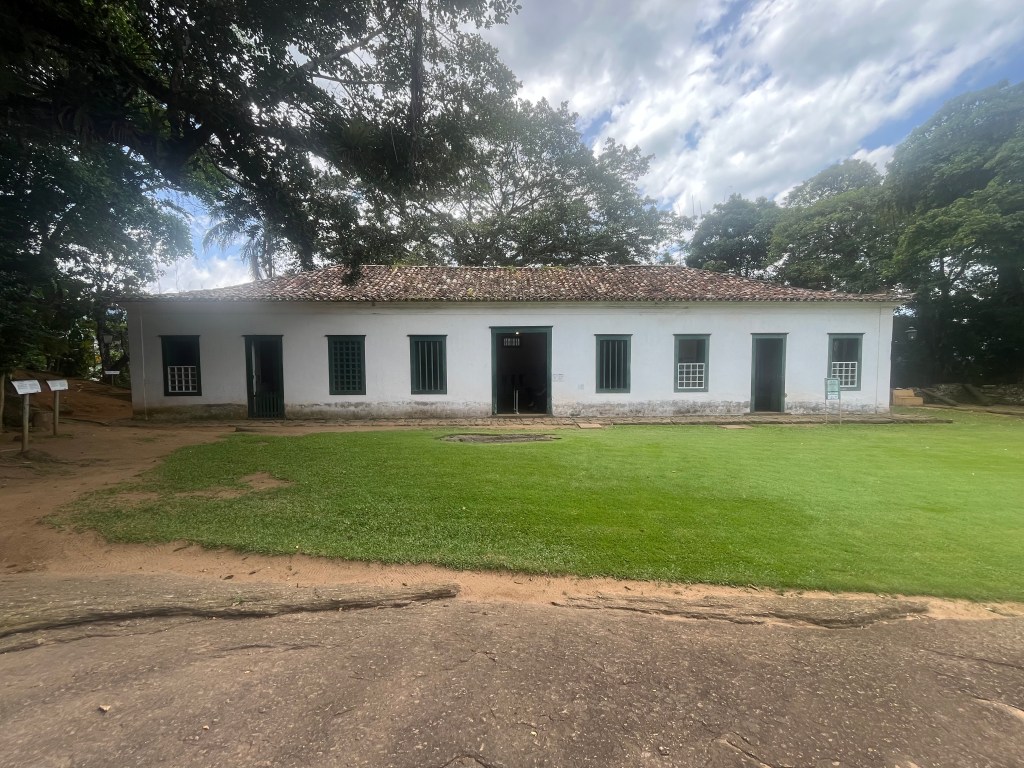
As we headed back to town, Adam noticed some bird activity (because of course he did; he’s the resident bird nerd). A group of rambunctious Boat-billed Flycatchers were fighting with each other in the trees. We also heard some Bananaquits, but could not capture them on video.
Though Paraty has its charm and interesting history, Ubatuba was much more our speed. Still, the coast of southeastern Brazil is gorgeous and we’re excited to explore Rio de Janeiro next. Stay tuned for Yahm’s food recap and our impressions of Rio. Be sure to like, comment, and subscribe to Traveling While Introverted so you don’t miss it!
 Traveling While Introverted
Leave a comment