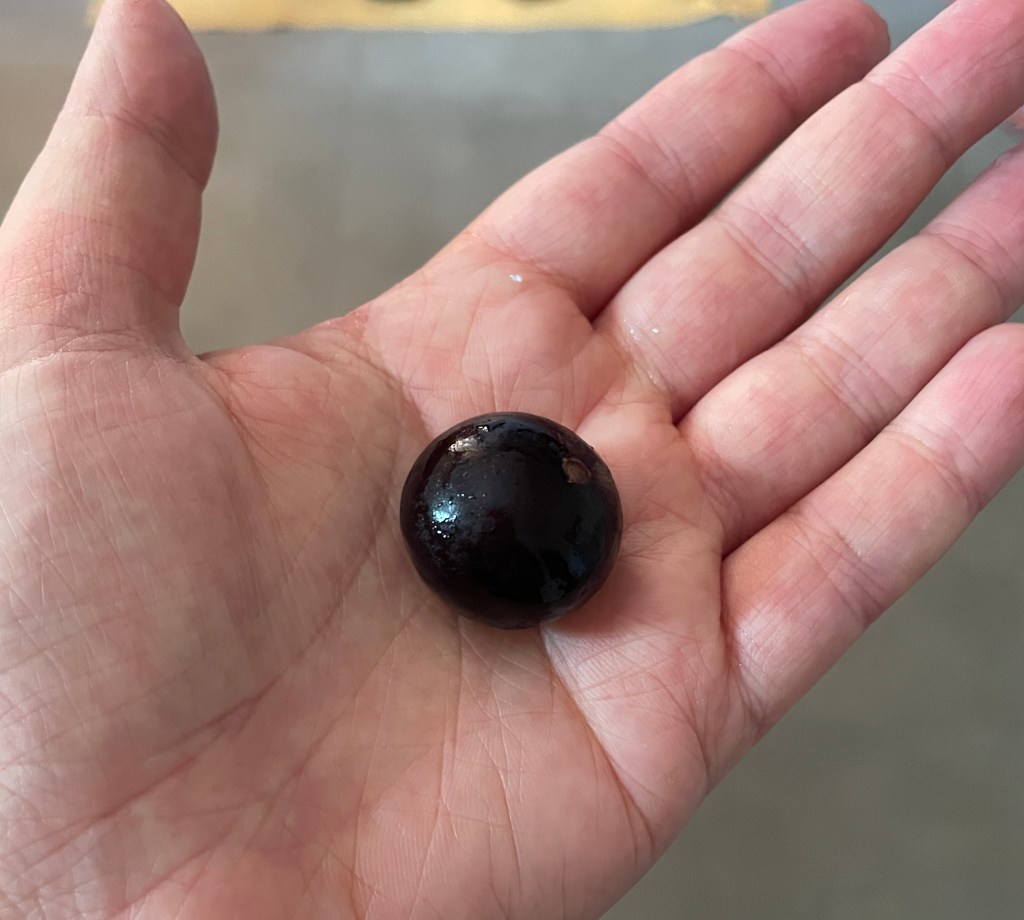
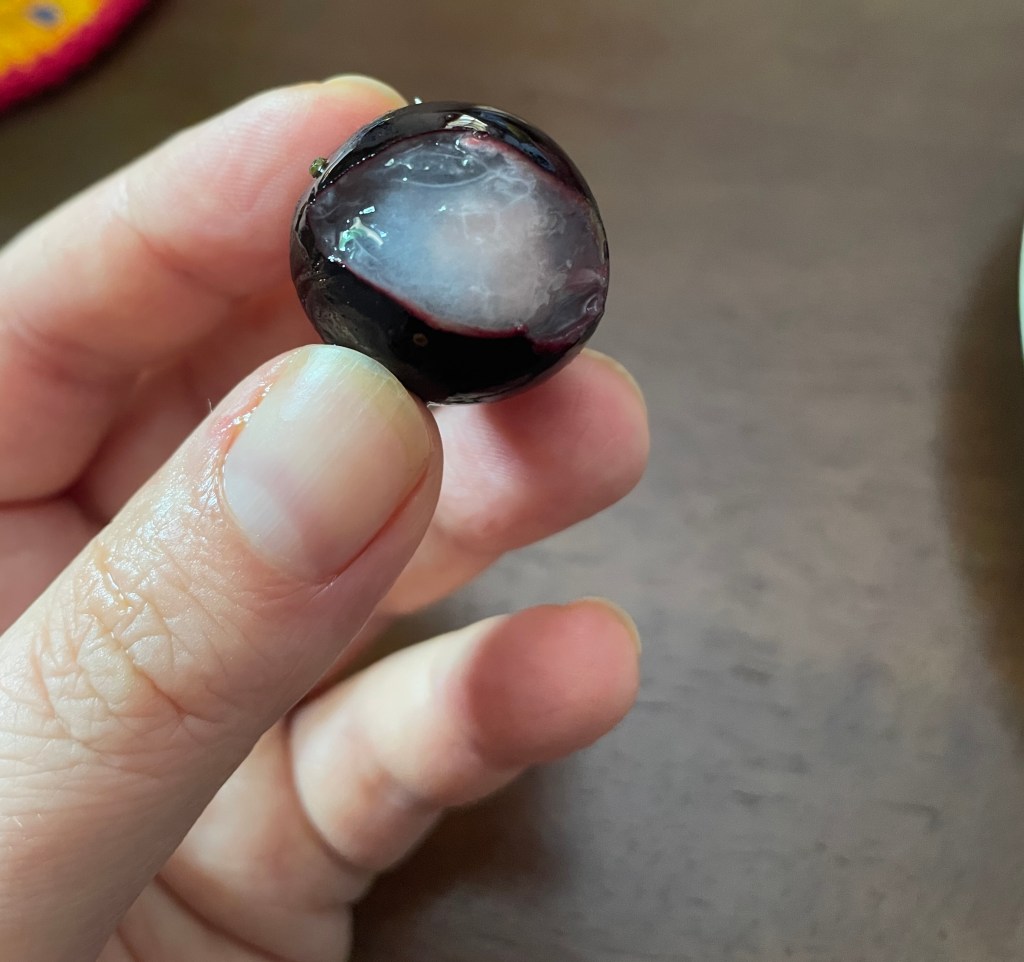
As I mentioned in the last post in this corner, my goal was to eat more traditional Brazilian food once we left the diverse urbanity of São Paulo. One of the first things I got my hands on in Ubatuba was a fruit that was recommended to us by Adam’s cousins: jabuticaba. This fruit has a thick skin, a juicy interior, and one or two seeds that you spit out. They taste a lot like teardrop grapes and are very reminiscent of muscadines and scuppernongs that we ate when we lived in Alabama. I really enjoyed them and would love to try some jabuticaba wine if anyone has any recommendations. I should also mention that, even though I don’t have any photos, I’ve been eating açai when I can and it is so much tastier here than anywhere else. I don’t even add any toppings because it’s so flavorful on its own. If you like açai, you have to come to Brazil. (Just be careful because it’s a laxative!)
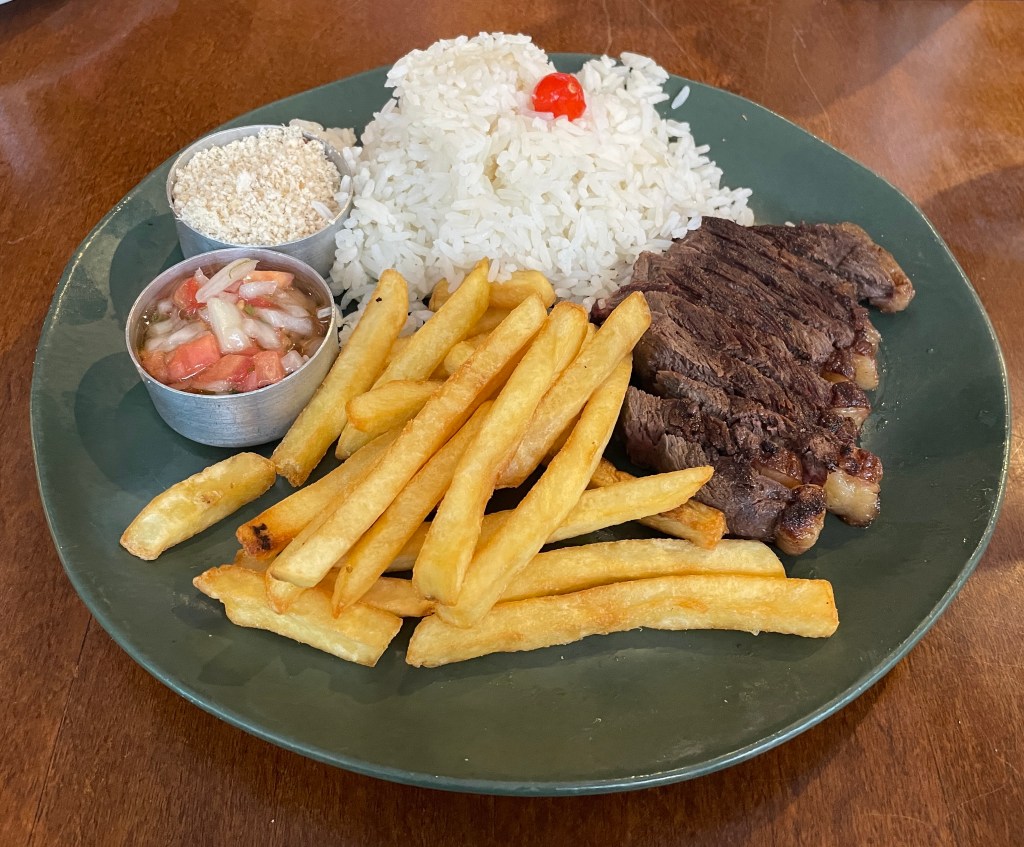
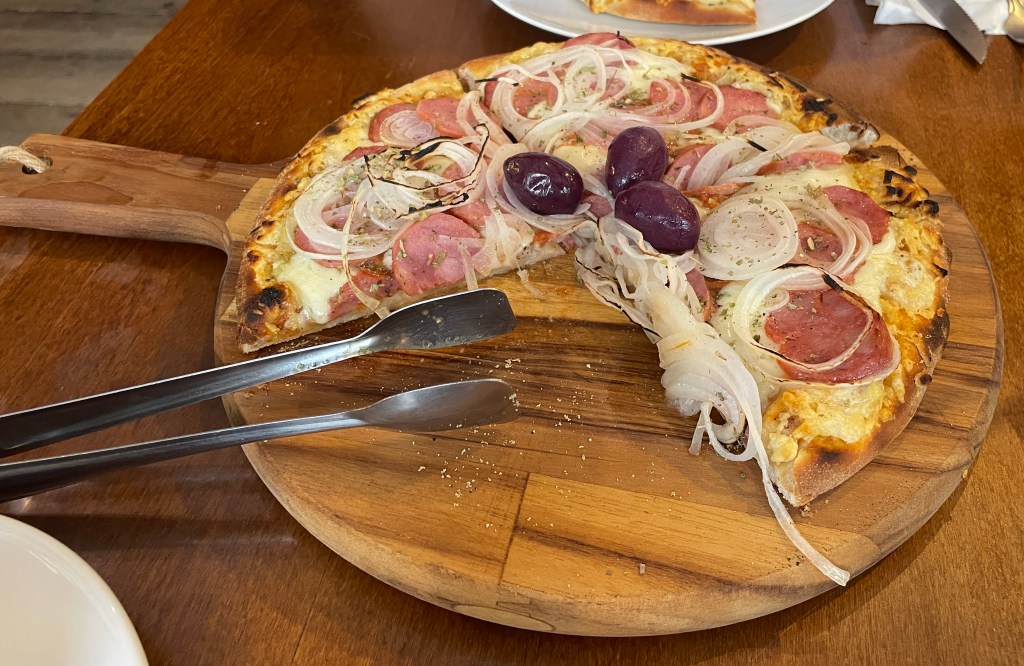
The few times Adam and I visited Brazilian restaurants in the United States, the picanha was always the best meat to eat. So, obviously, I ordered some at a restaurant in Ubatuba. For those who don’t know, picanha is from the top of the rump, so it’s tender and has a fat cap that adds a lot of flavor. Of course it was delicious and served with rice and fries. We noticed that Brazilians also serve meals with a side of vinaigrette, which I assumed was their version of chimichurri. (Chimichurri is not Brazilian y’all. I know. I was as surprised as you are.) Nope, it’s tomatoes and onions in an olive oil-vinegar sauce. I’m definitely on team lemon rather than vinegar, but the vinegar taste was very subtle. Adam ordered a ham, onion, and olive pizza which he enjoyed, though he said it was too cheesy for his taste. Just look at those olives!
Ubatuba solidified two observations we noticed in Sao Paulo but weren’t sure if they were standard in other places. For one, buffets are extremely popular and are called “self-service” restaurants. Typically you pay for the meal by weight, kind of like how frozen yogurt shops work in the United States. Adam isn’t a big fan of buffets for many reasons, but especially food waste. It occurred to us that, either intentionally or unintentionally, this type of buffet probably reduces food waste. You won’t pile up tons of food on your plate and not eat it if you’re paying for it by kilo unless you enjoy throwing away your money. We visited two buffets so far and they were both excellent. They weren’t massive, but they had plenty of variety and everything tasted very fresh. I told Adam that these buffets reminded me of Sizzler and the Soup Plantation from the 1990s. (No photos, sorry. I was too hungry. You’ll just have to come to Brazil yourself to experience it.)
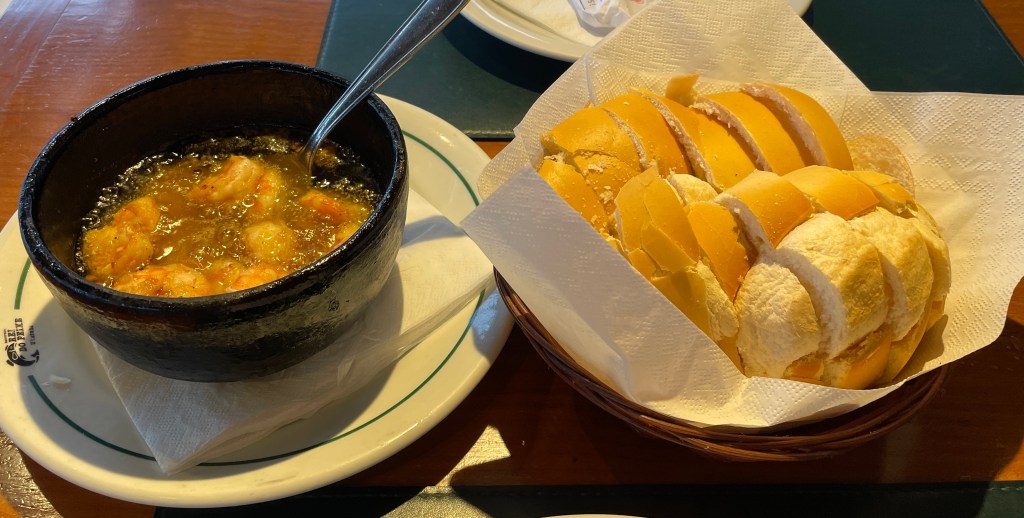
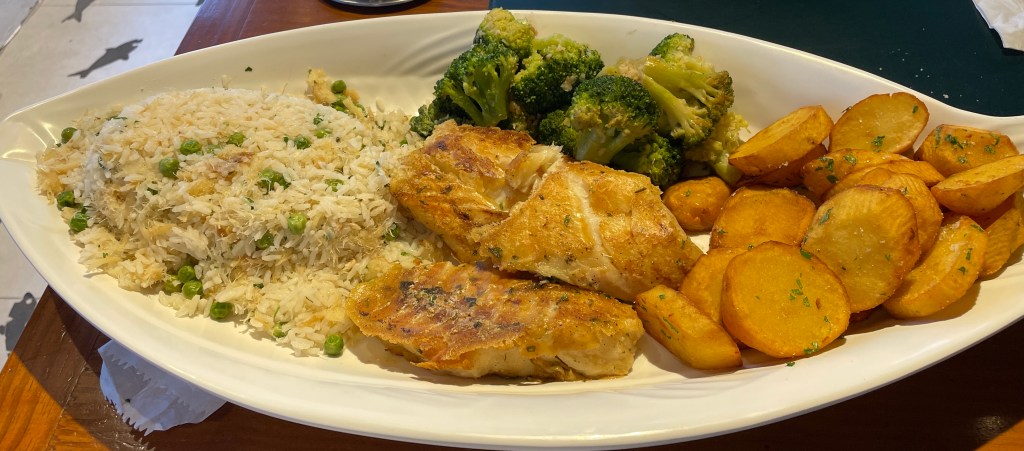
The second observation is about prices. We were initially shocked by prices as we walked around town until we realized that we were looking at the “for two” menu. The prices reflect meals intended to be shared. A separate “for one” menu is usually available too, so you don’t have to share everything all the time. Once we figured that out, we were on the hunt for a good seafood restaurant and quickly found one near the main square of town. At O Rei do Peixe, we started the meal with gammas al ajillo (Spanish garlic shrimp), a favorite tapas dish. In the photo on the left, you can see how bubbling hot the sauce is. Don’t worry: I made sure Adam dipped some bread in the sauce for the full experience. For the main, we ordered “To the King”: codfish grilled in olive oil with garlic broccoli, roasted potatoes, and rice mixed with peas and dried salted cod. This was the best codfish either of us had ever had. That crust isn’t breaded – it’s just pure fish. We couldn’t even finish everything and had to take a doggy bag home. (That has only happened once or twice since we’ve been on this trip, just for reference.) Unlike other countries we’ve visited, Brazilian restaurant portions seem most akin to United States-sized portions.
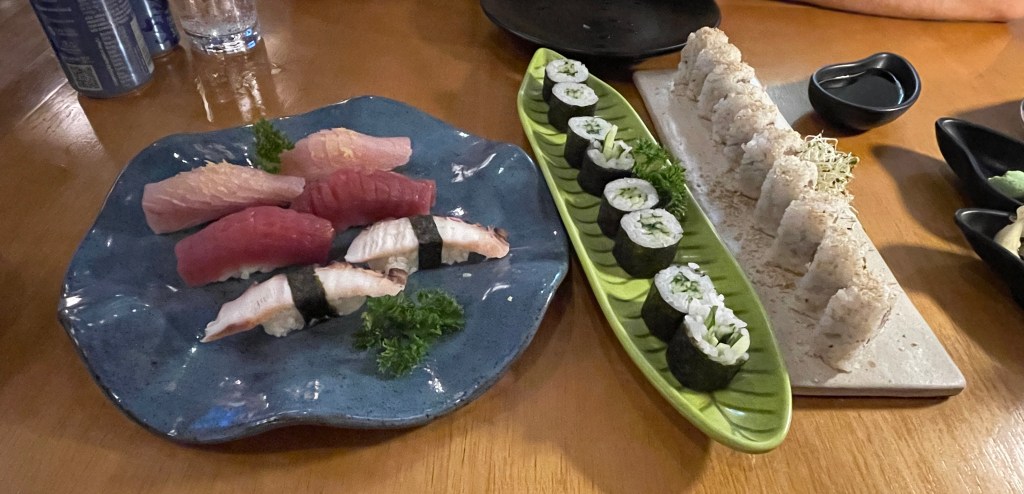
We only deviated from our insistence on Brazilian food once in Ubatuba. I noticed that sushi restaurants were pretty popular and we found one that had more than just salmon and tuna on the menu. Not everything was in tempura and/or rolled up with cream cheese either, which seems to be a rarity. We had a chance to eat “white fish” (maybe cod?), grilled eel, salmon roe, and smelt fish eggs. It was a pretty good effort, though the salmon roe and smelt fish eggs tasted a little off. The next day, we realized that we were both worried those pieces were going to make us sick, but neither one of us wanted to say anything. We were fine, which makes me think that either our stomachs are stronger than we think or they were fine and just tasted a little weird to us.

Paraty’s food scene was very different than Ubatuba. Pretty much every restaurant we found, except for one Thai and two Arab restaurants, featured Italian or Brazilian food. I don’t know why Brazilians are so obsessed with Italian cuisine. Maybe because they love bread and cheese so much; maybe it’s a desire to be closer to Europe without being Portuguese; maybe it’s just filling and easy for families. Whatever the reason, if you love Italian food and colonial architecture, you should come to Paraty. On the other hand, it seemed like every Brazilian restaurant featured the same dishes over and over again. I’m sure that there are subtle differences we missed because we’re tourists. (At times, it almost felt like we were the only non-Brazilians in town.) Adam reminded me that when we lived in Tuscaloosa, Alabama, a town with twice the population of Paraty, 95% of the restaurants were either barbecue, pizza, burgers or wings. It was an important reminder that variety is a staple of diverse urbanity, not small town living.
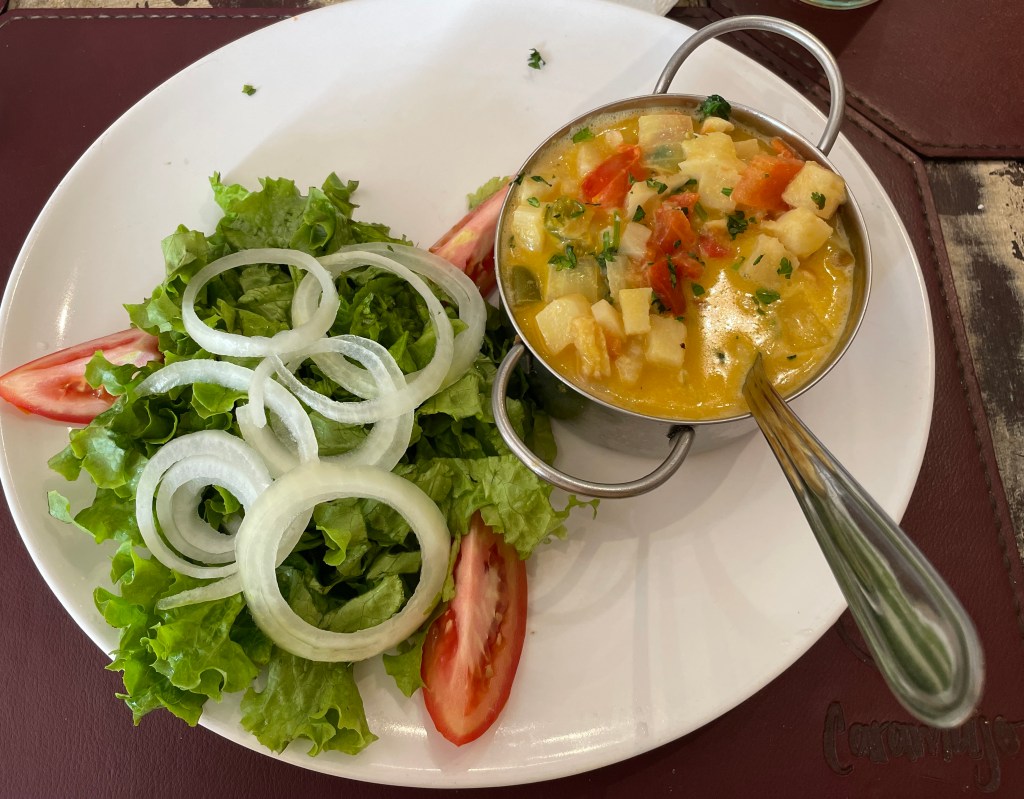
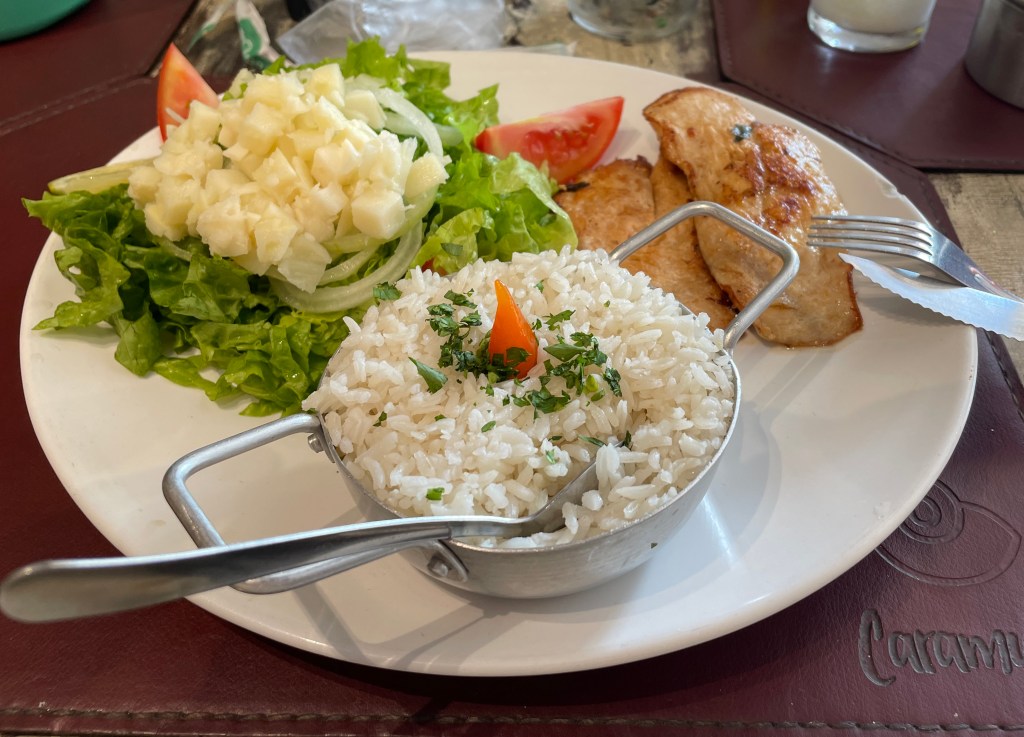
Still, we managed to find a few good meals. I’m a sucker for anything with hearts of palm so when I saw a restaurant offer a vegan moqueca with hearts of palm and plantains, I had to try it (left photo). What a wonderful take on a traditional dish. (In Brazil, they refer to plantains as banana da terra, or land bananas, which I think is adorable.) Adam ordered grilled chicken with rice and a “palmito” (chopped hearts of palm) salad (right photo). Sure, this is a simple lunch, but look at how fresh it all looks. Plus, that pile of hearts of palm is very generous. I can’t overstate how much better hearts of palm taste here.
The hotel we stayed at in Paraty didn’t have a very comfortable work space and the internet in our room didn’t work well, so we spent quite a few hours at a cafe working away on our laptops. We found an adorable space that had what we thought was a very fair business model. If you’re going to use their internet and space to work, you can pay $30R (~$6 US) for the day and you don’t have to purchase anything else. Or, if you spend $50R (~$10 US), you’re welcome to use their internet all day and the $30R “fee” is waved. As someone who worked as a server in cafes for a long time, this was one of the better solutions I’ve seen for the dilemma of customers “parking” themselves in a chair all day.
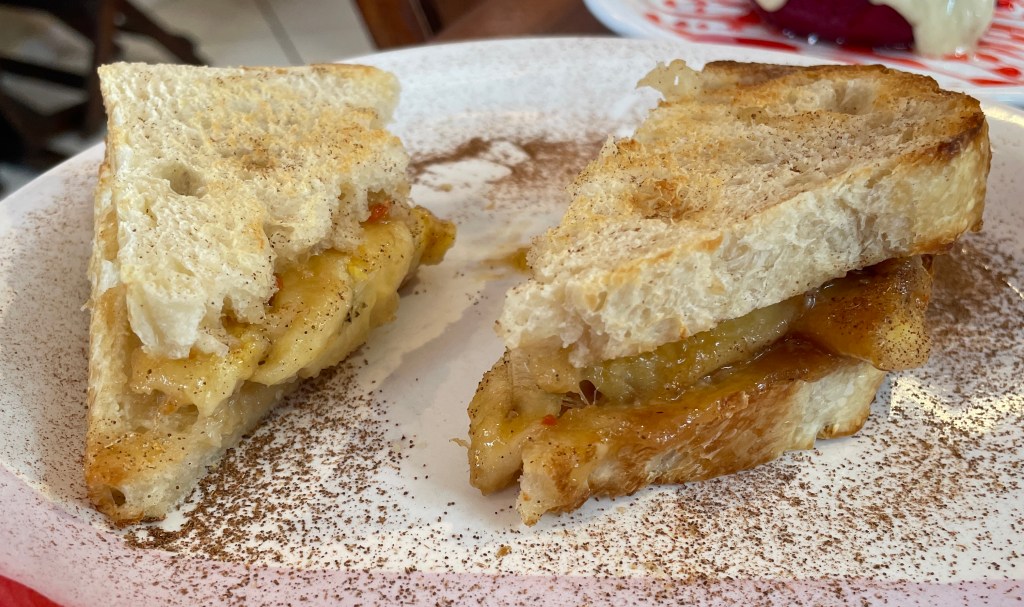
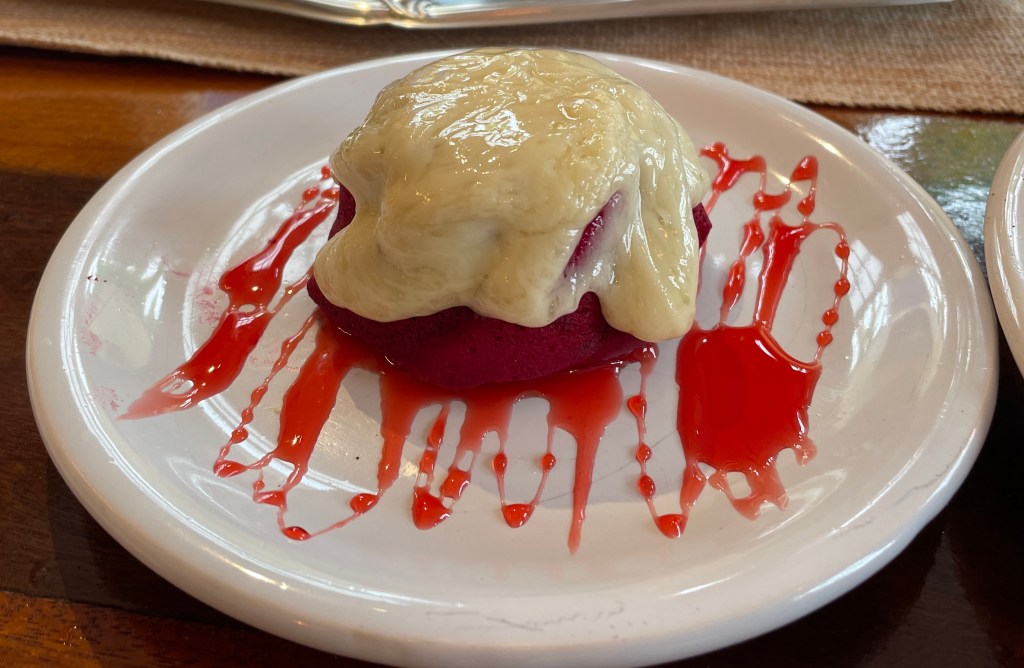
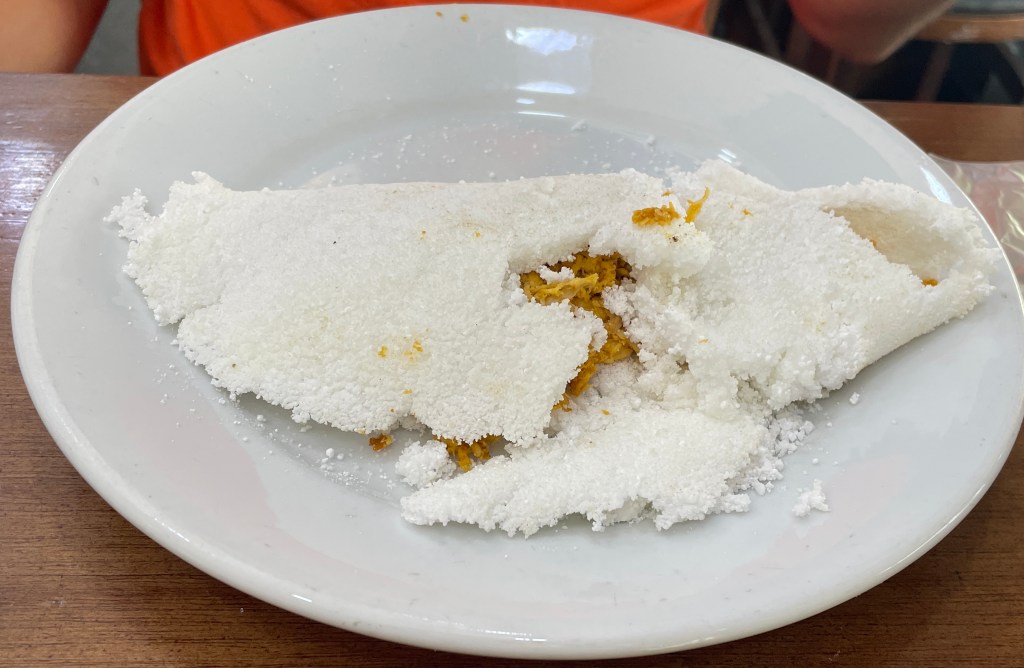
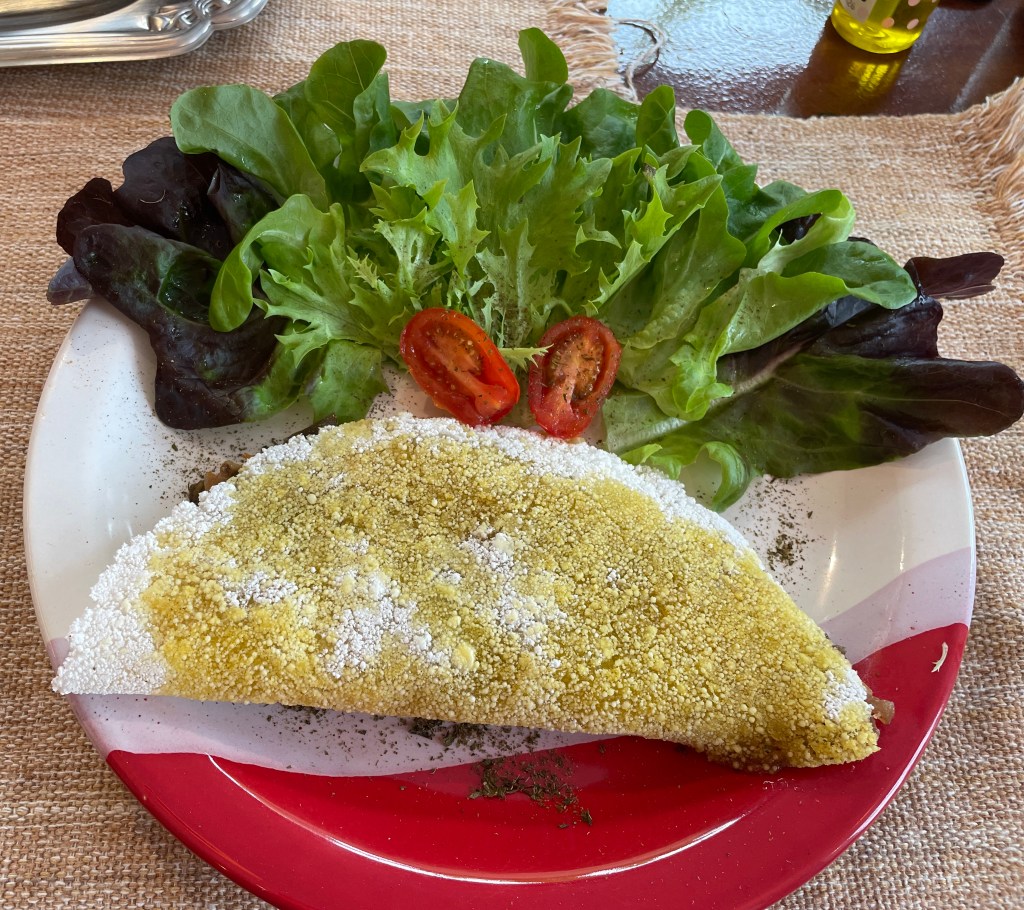
Since we were going to order coffee and lunch, we knew we would easily get to the $50R mark. Adam ordered a caramelized banana and pepper jelly sandwich and a red velvet cake with vanilla frosting (top row). (I know. It’s vanilla frosting, okay?) I gave another try to a tapioca pancake and I am so glad I did. Cassava is a very important crop in Brazil and one of the ways it is used is by making thin pancakes stuffed with savory or sweet fillings. When we tried it on our first day in São Paulo, it was such a disappointment because the filling was just chicken and the pancake itself was dry (bottom row, left photo). A tapioca pancake needs to be cooked just right and needs some sort of sauce to keep it from drying out. At the cafe in Paraty, the pancake was filled with an eggplant-tomato sauce and the pancake itself took on a fun, chewy texture similar to mochi. I could have easily eaten three of them (bottom row, right photo). Comparing them side-by-side you can see the difference. The tricky part for me is finding places that offer dairy-free fillings.
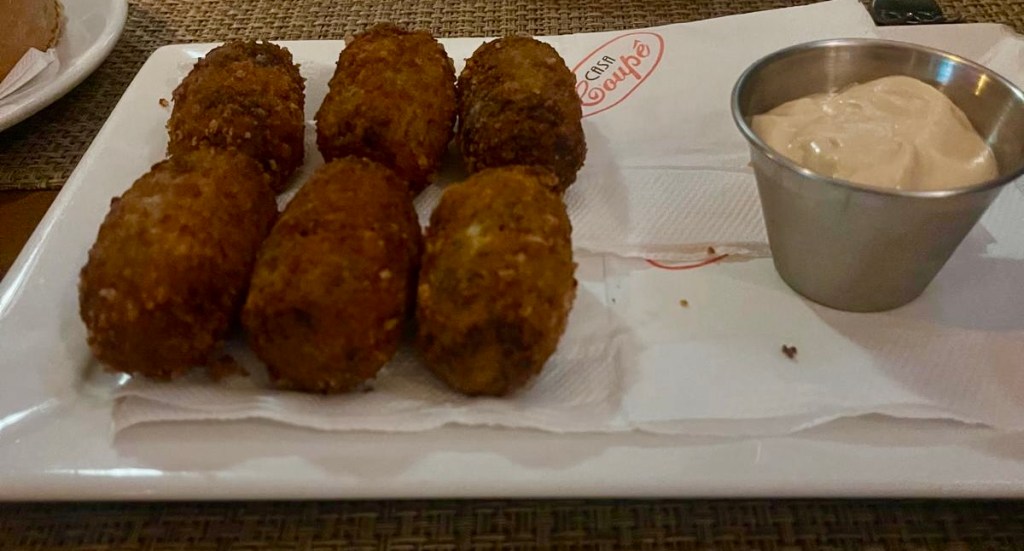
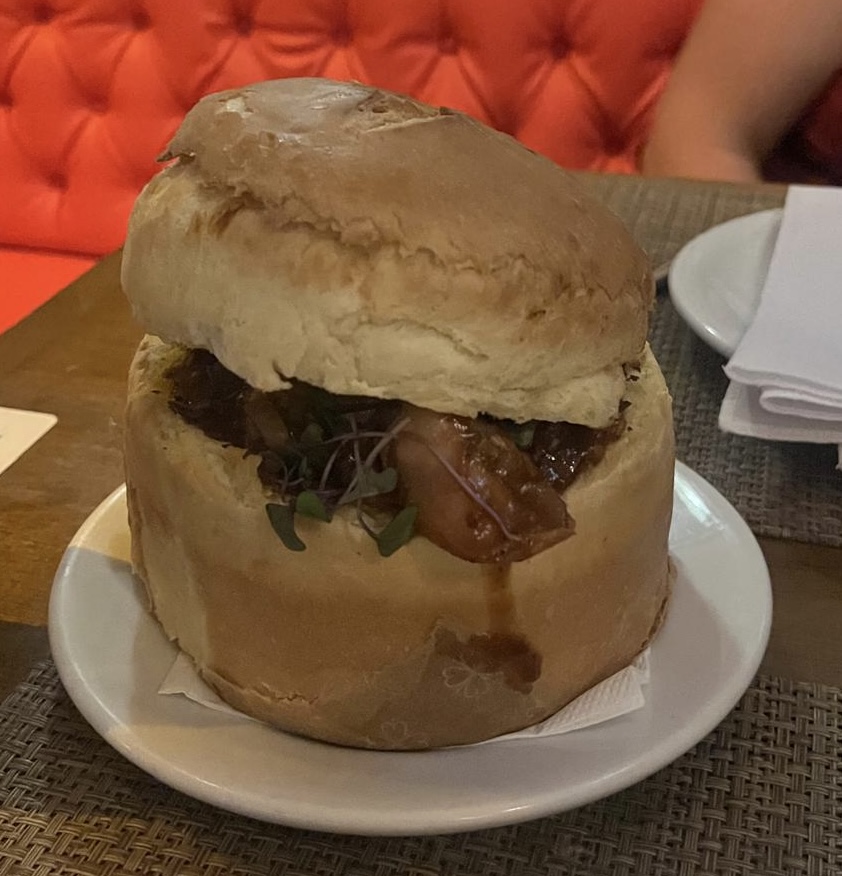
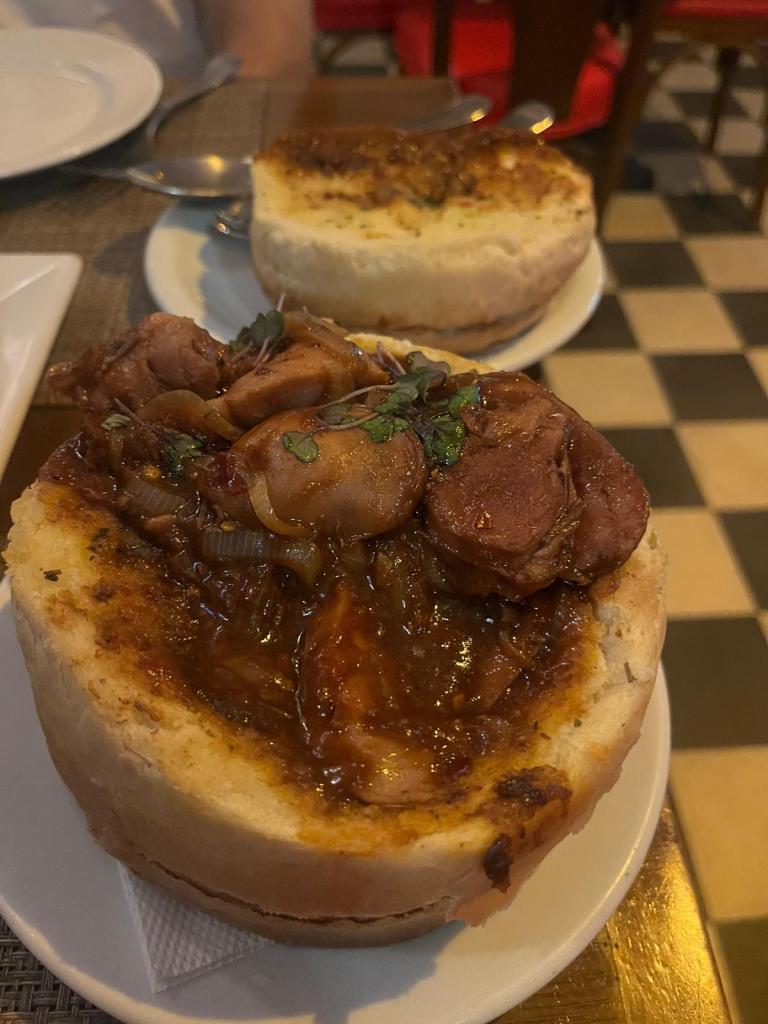
We did visit one Italian restaurant in Paraty because they had salads on the menu and I really needed some leafy greens. I didn’t take a photo of the salad because, well, it was just a salad. (With lots of hearts of palm obviously!) Adam’s dinner, on the other hand, was far more interesting. First, he ordered “dumplings” filled with braised pot roast (left). They were more like croquettes, but maybe it’s the same word in Portuguese or something was lost in the translation. He enjoyed them, even though I think he was hoping for dim sum-style dumplings. He also ordered the “sausage on bread.” That sounds like a decent appetizer, right? What he got was a loaf of bread with all the fluffy inside removed and stuffed with grilled onion and slices of sausage in a red wine sauce (center and right photos). It was bigger than his head! It was good, but maybe a tomato sauce would have been tastier. Also, a more accurate description would have been helpful. This was just too much bread, even for Adam.
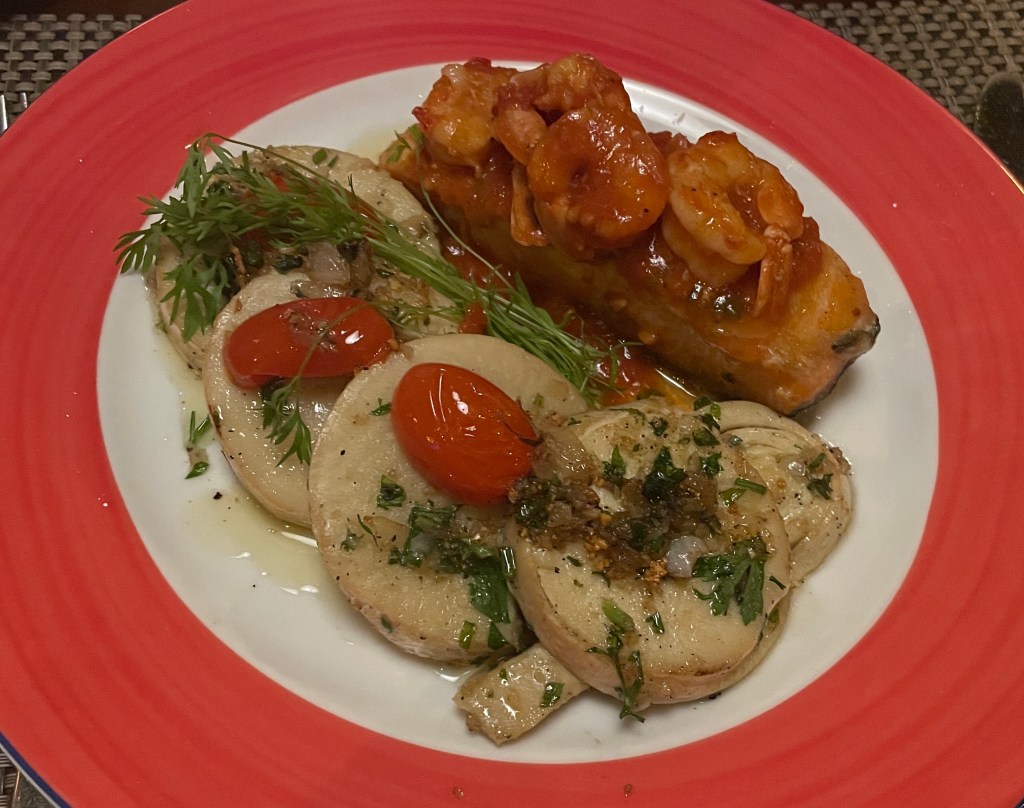
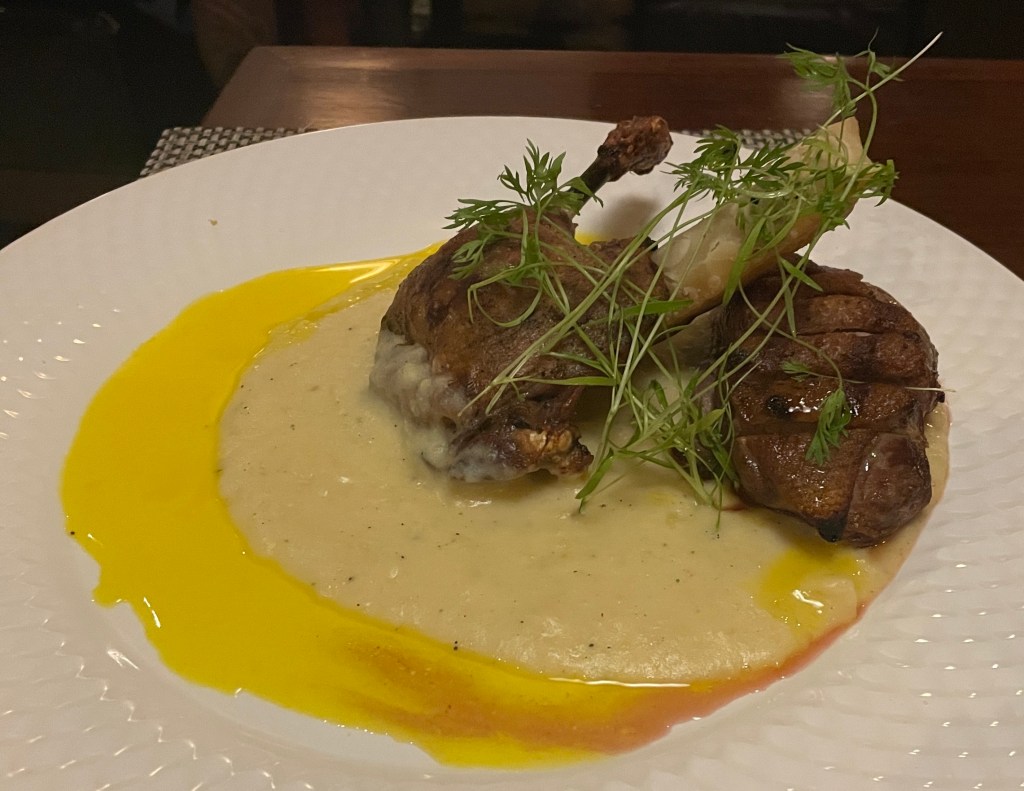
By far the best meal we had in Paraty was at a restaurant located at the very beginning of the historical district. The menu was Brazilian, but with nods to Italian and East Asian flavors. Normally, that would turn us off because too many flavors means the restaurant doesn’t have a vision for what kind of food it serves. However, this menu seemed thoughtful and intended to bring a little excitement to typical dishes. Due to my allergies, I really only had one choice: grilled salmon topped with shrimp in a tomato sauce and grilled hearts of palm (left photo). What a choice it was though! The salmon was cooked perfectly, the shrimp were plump, the tomato sauce was tangy without overpowering anything, and the hearts of palm tasted like grilled artichoke hearts. Adam wasn’t sure what to get, but I pushed him to get the duck because it’s so rare to see on a menu in Latin America. (Or at least it’s rare at restaurants we can afford.) The duck was beautifully grilled, topped with a light orange sauce and served with a dried fruit-filled egg roll and a Peruvian parsnip puree (right photo).
Our final week in Brazil is in Rio de Janeiro and I’m going to be on the lookout for more specialties before we fly to our next country. Be sure to like, comment, and subscribe to Traveling While Introverted so you don’t miss our next posts!

 Traveling While Introverted
Leave a reply to A Star on the Forehead Cancel reply