The last stop on our southeastern Brazil tour was Rio de Janeiro, the second largest city in the country. Rio’s vibe differs dramatically from São Paulo. While São Paulo has endless urbanity that is fun but not pretty, Rio is a mosaic of neighborhoods stitched together between the mountains and ocean, forming a beautiful cityscape. When we arrived in Rio, we were immediately swept up in the simultaneously laidback but energetic atmosphere that surrounded us. Our list of to-do experiences was very ambitious and we knew that six full days wouldn’t be enough time to do them all. We have the sense that two weeks would have been barely enough time to see, eat, and do everything. Still, we managed to check a few things off the list.
So much of our time in Rio was spent taking walks through various neighborhoods. We stayed in Leblon, one of the nicer neighborhoods in town. Normally, we don’t stay in these types of neighborhoods, but Rio’s more popular neighborhoods can become rowdy at night. Maybe because we’re married or older or just tired Millennials, we really value quiet nights. Leblon was also recommended to us by Adam’s cousins and as we explored more neighborhoods, it became very clear to us why they pushed us to stay there.
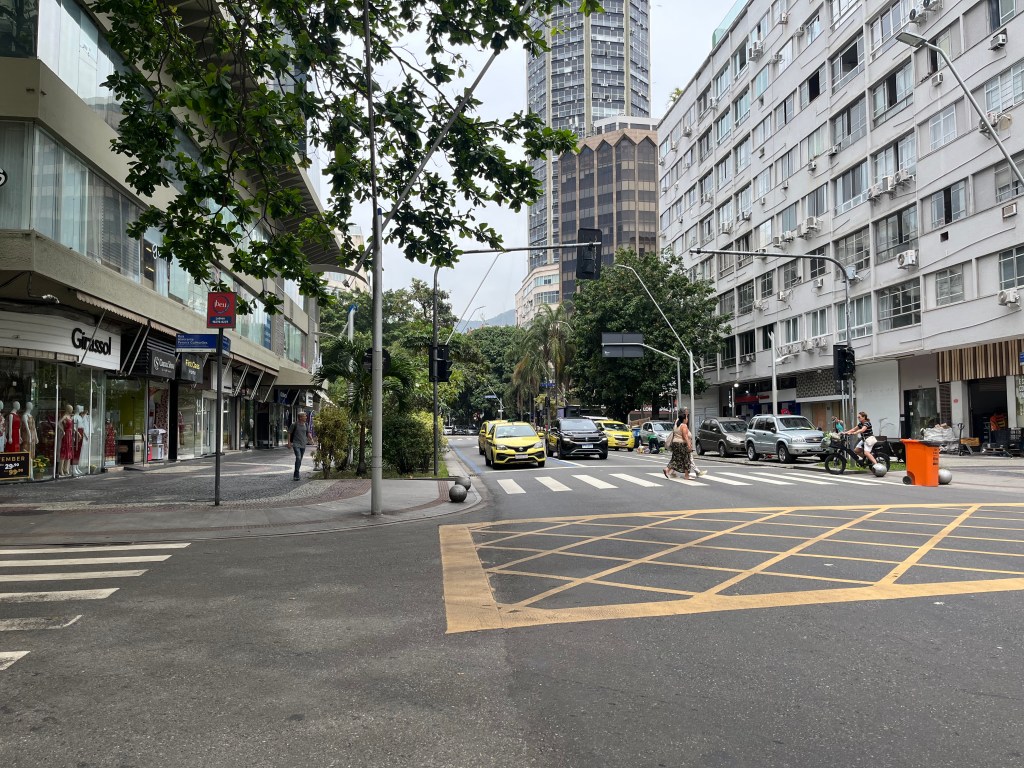
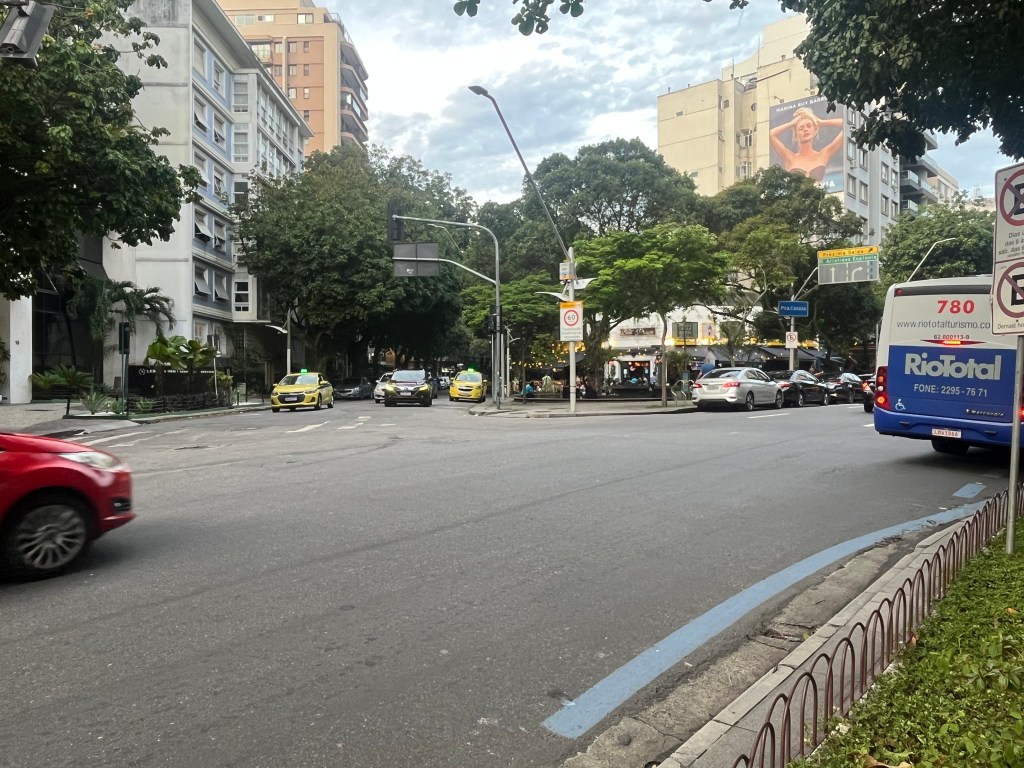
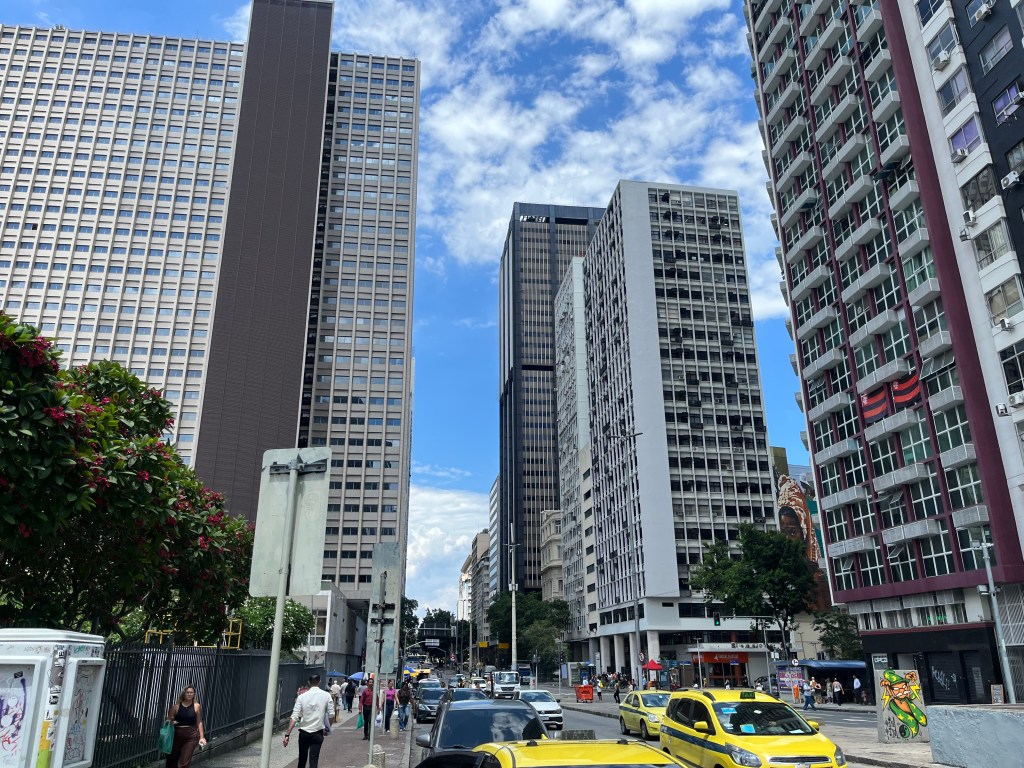
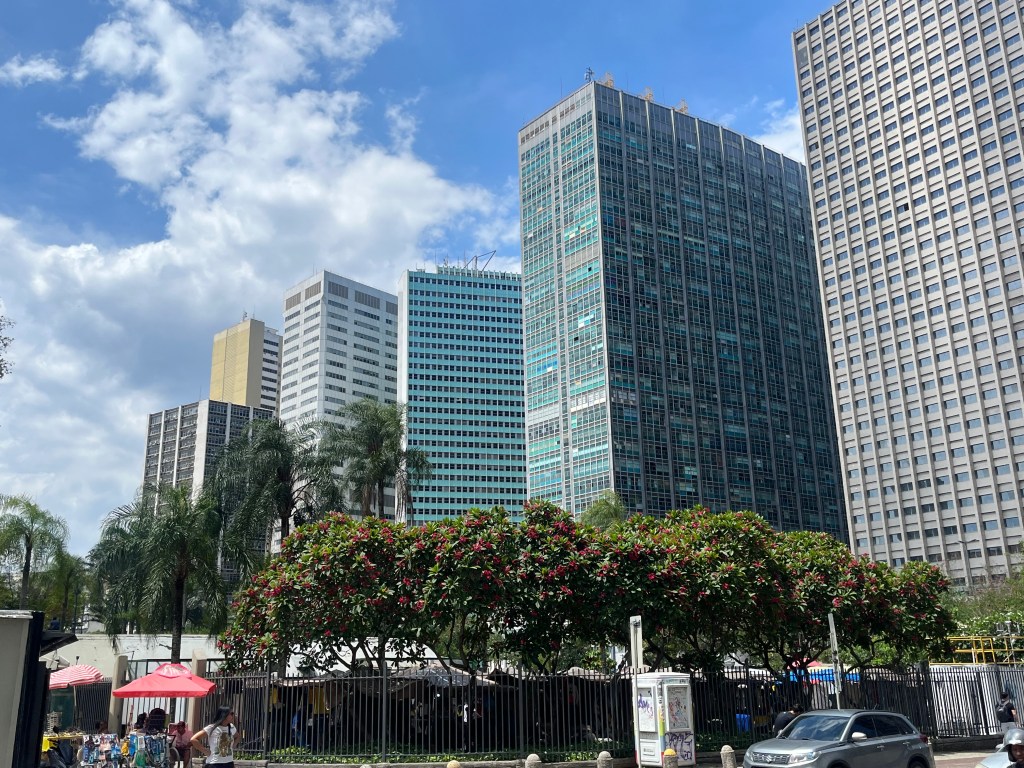
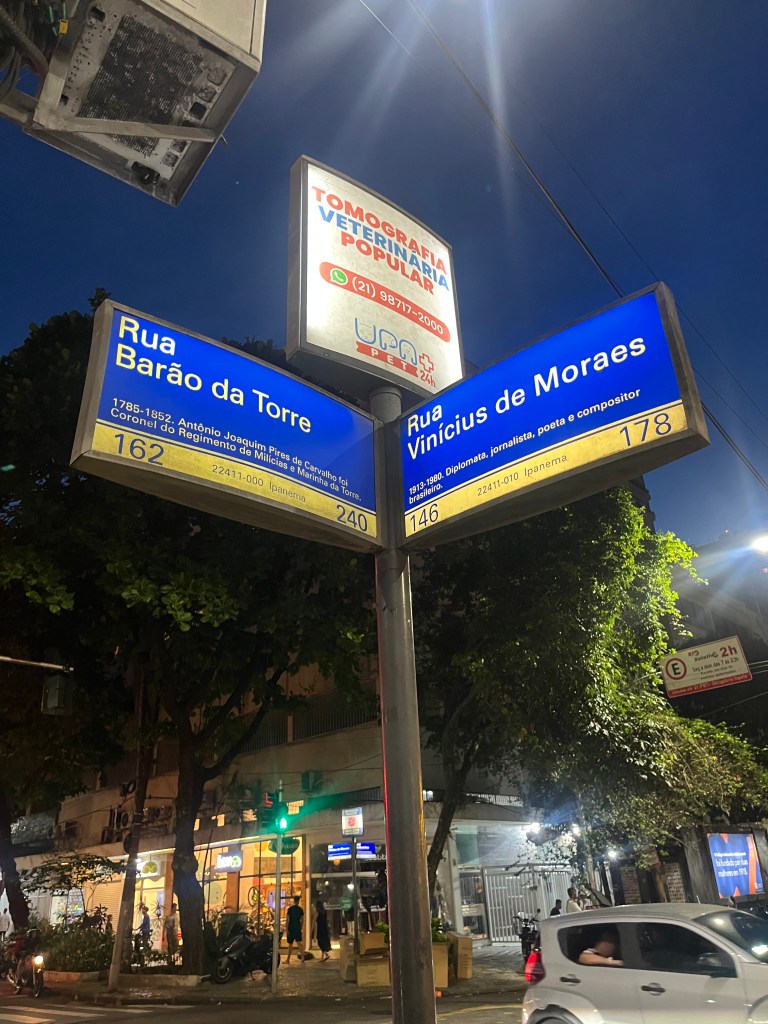
Throughout Rio, you’ll find street signs named after people and places with little descriptions about their significance. We both wish more cities would do this. Even with our bare bones Portuguese we got the gist of the descriptions.
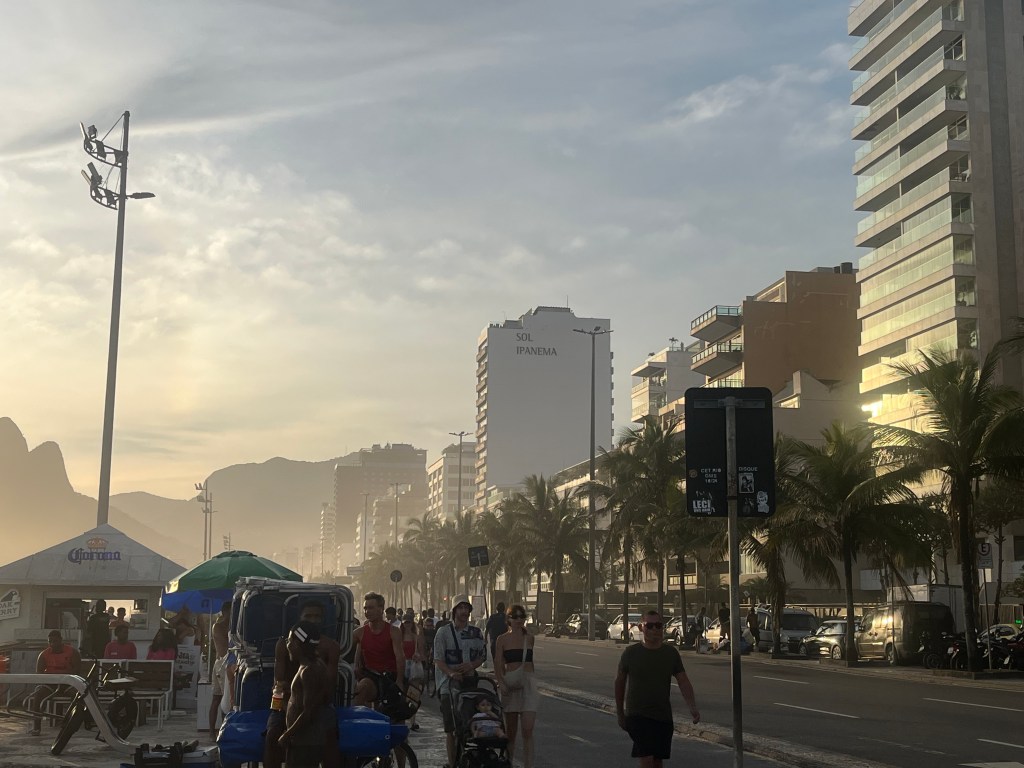
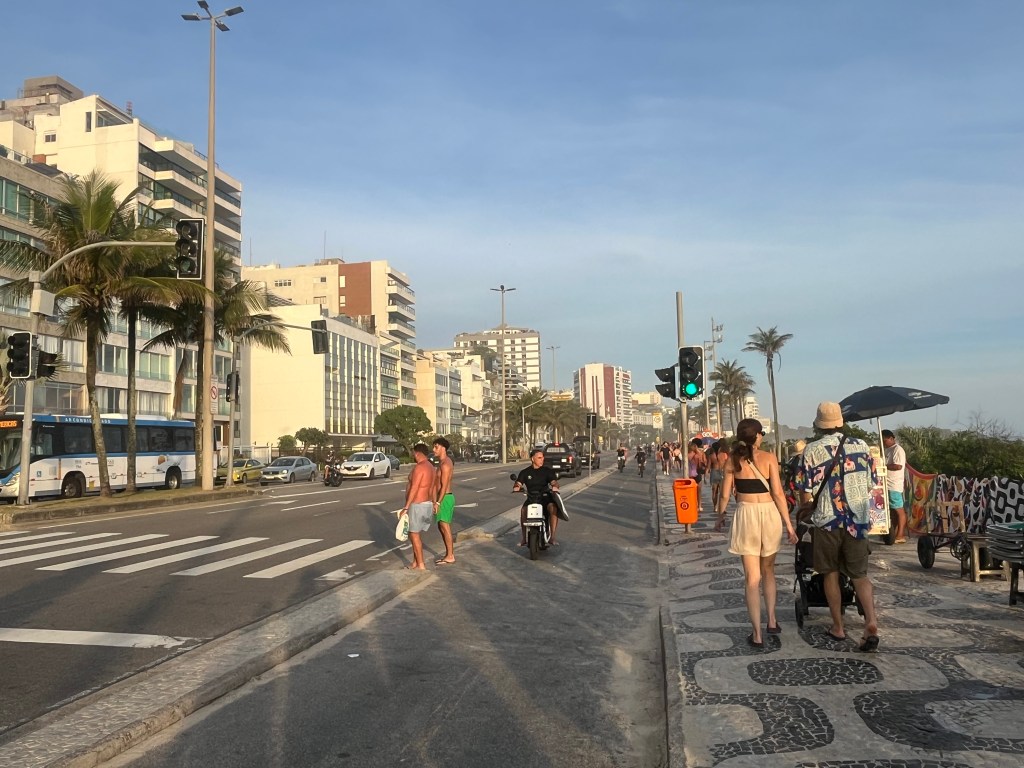
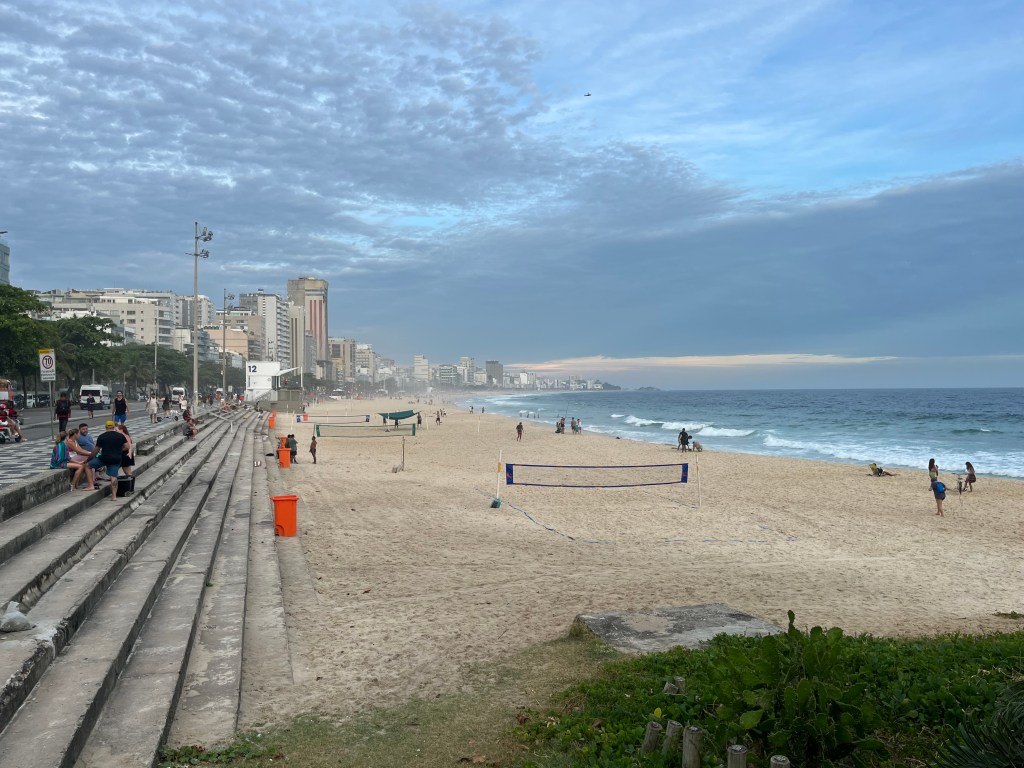
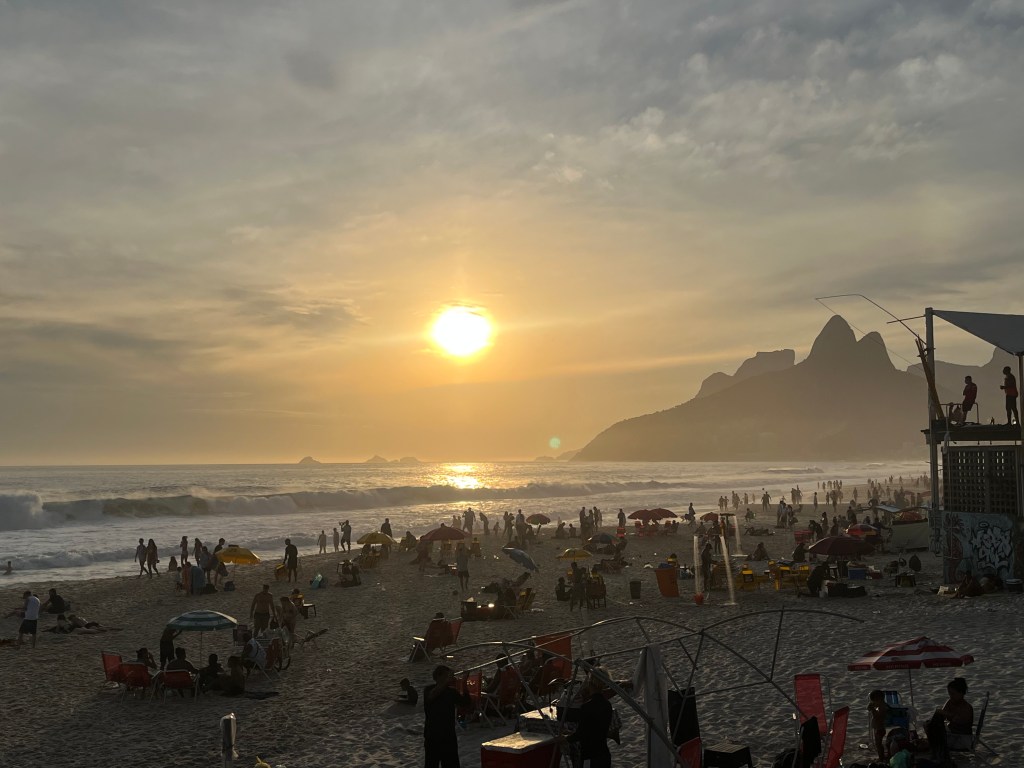
We spent plenty of time walking along Rio’s famous beaches. The weather didn’t quite cooperate with our schedule and it rained every time we planned on going to the beach. Still, we enjoyed walking along the boardwalks and people watching. The shores were packed with people (it is summer vacation after all!) and restaurants and bars line all the major beaches.
Besides Rio’s beaches, the city is also famous for Sugar Loaf Mountain and a statue named Christ the Redeemer, both of which can be seen in the background pretty much everywhere. These two landmarks are integral parts of the city’s landscape, but we do not have pictures of them. (We took some but they do not really capture either well.) Though we could have taken a cable car to see them, we decided not to visit either. (We did not really want to pay $40 per person to be in a large crowd to see some city views. It was also quite cloudy the majority of the time we were there, which would have limited visibility.)
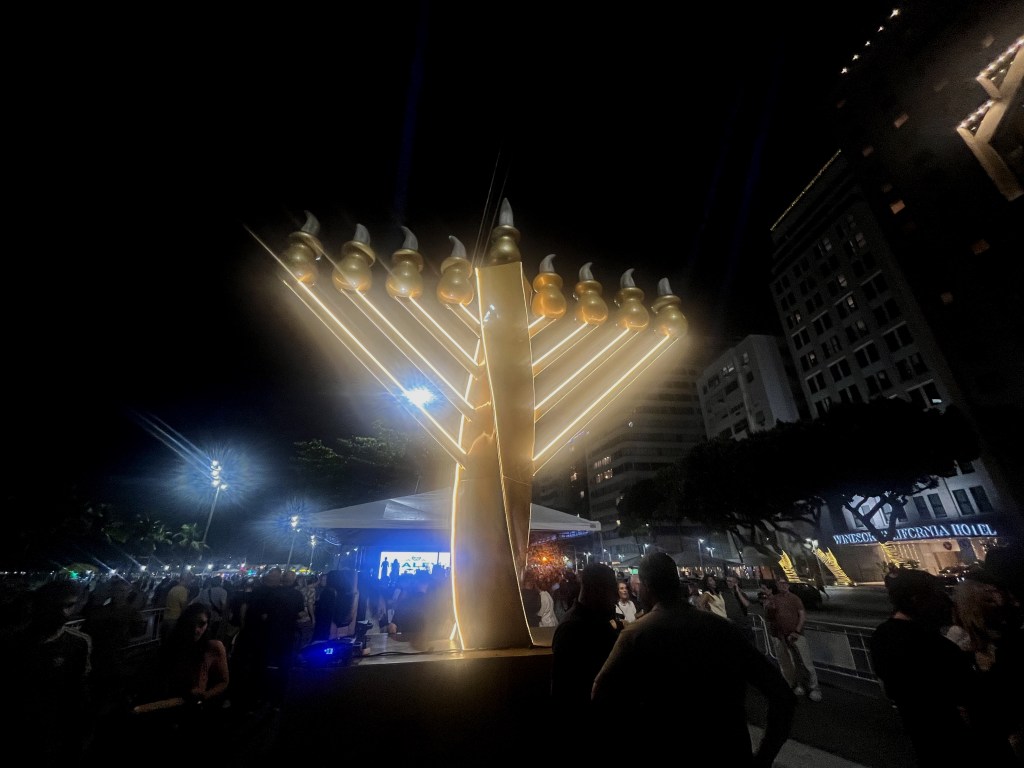
Since we were in Rio for Hanukkah, we wanted to find a place to celebrate. Unlike other Jewish holidays, Hanukkah is typically a very public holiday. The local Chabad in Rio had a long list of family-friendly activities throughout the city, though we only joined in on the first night. Candle lighting for the first night took place in famous Copacabana Beach. Though the event called on people to arrive at 6:00pm, the actual candle lighting only took place around 8:00pm. During those two hours, there were plenty of activities to keep children occupied, including a magician, jugglers, live music, and a play about Hanukkah (in Portuguese). Eventually the candles were lit and we left for dinner soon after.

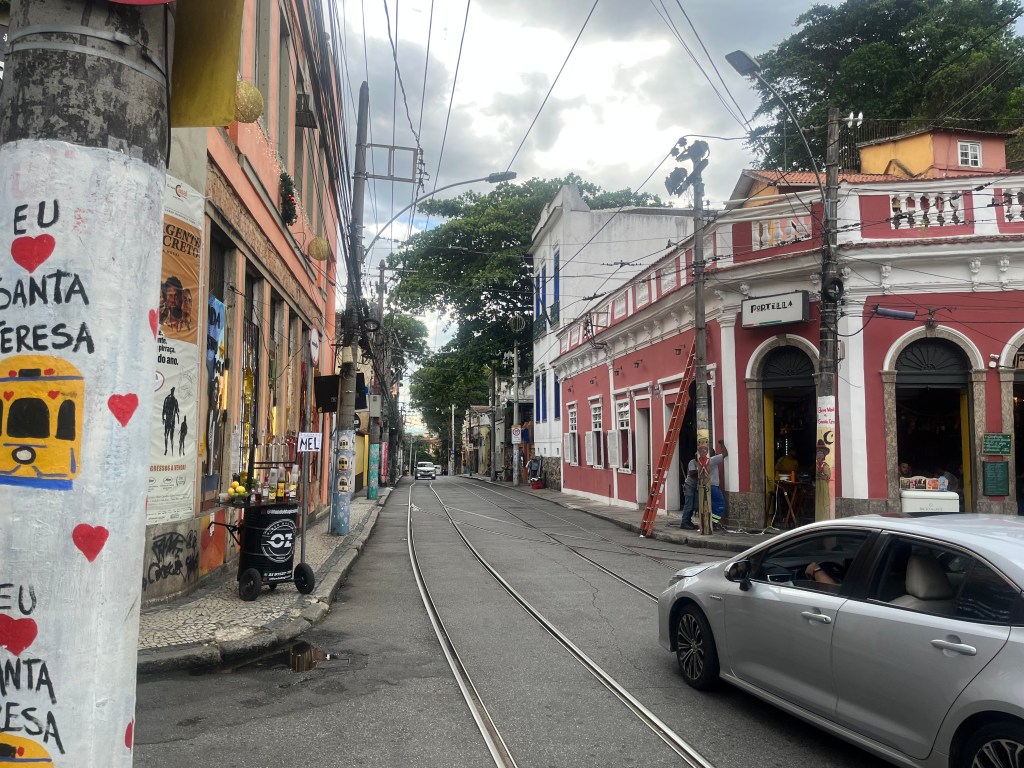
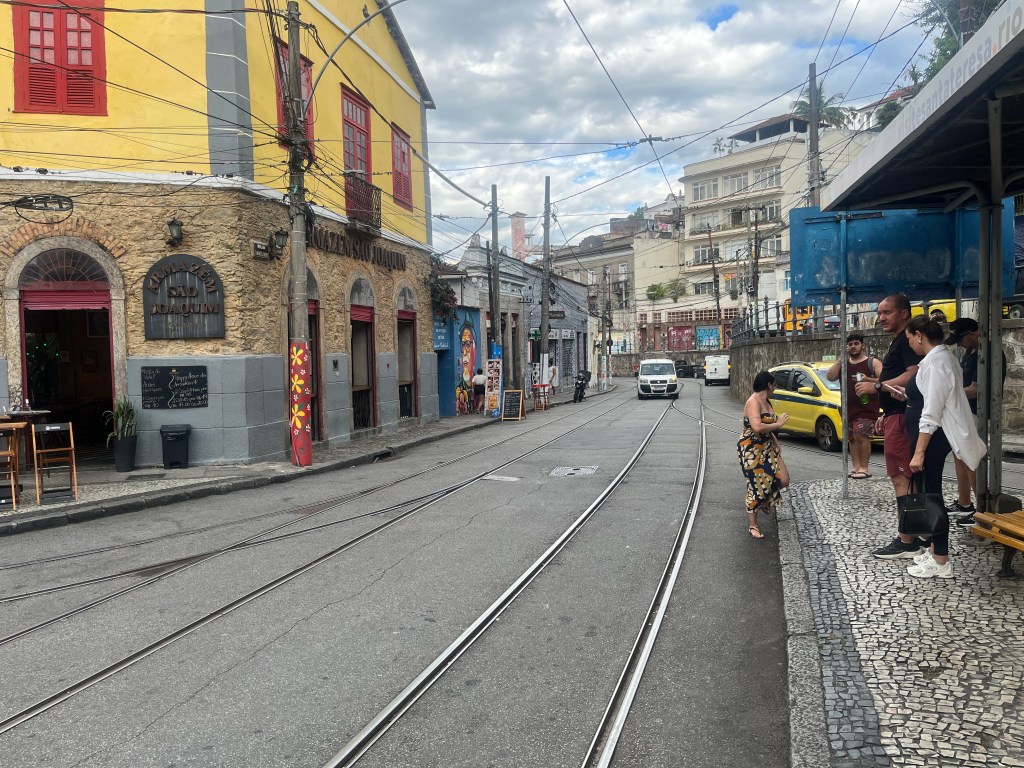
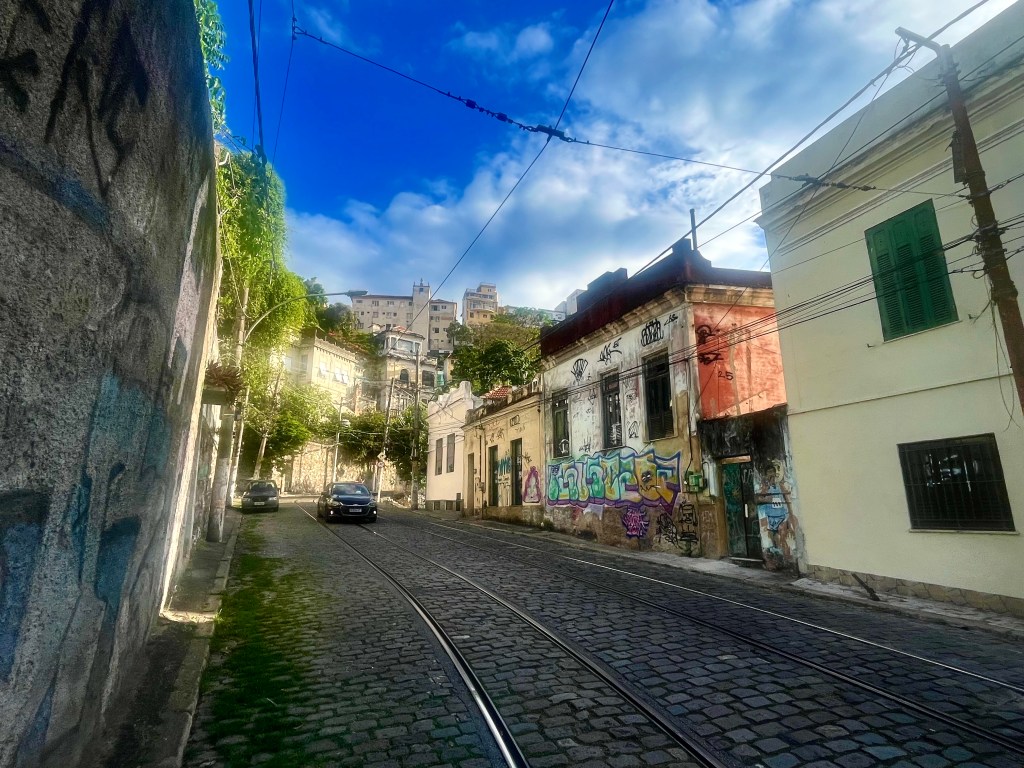
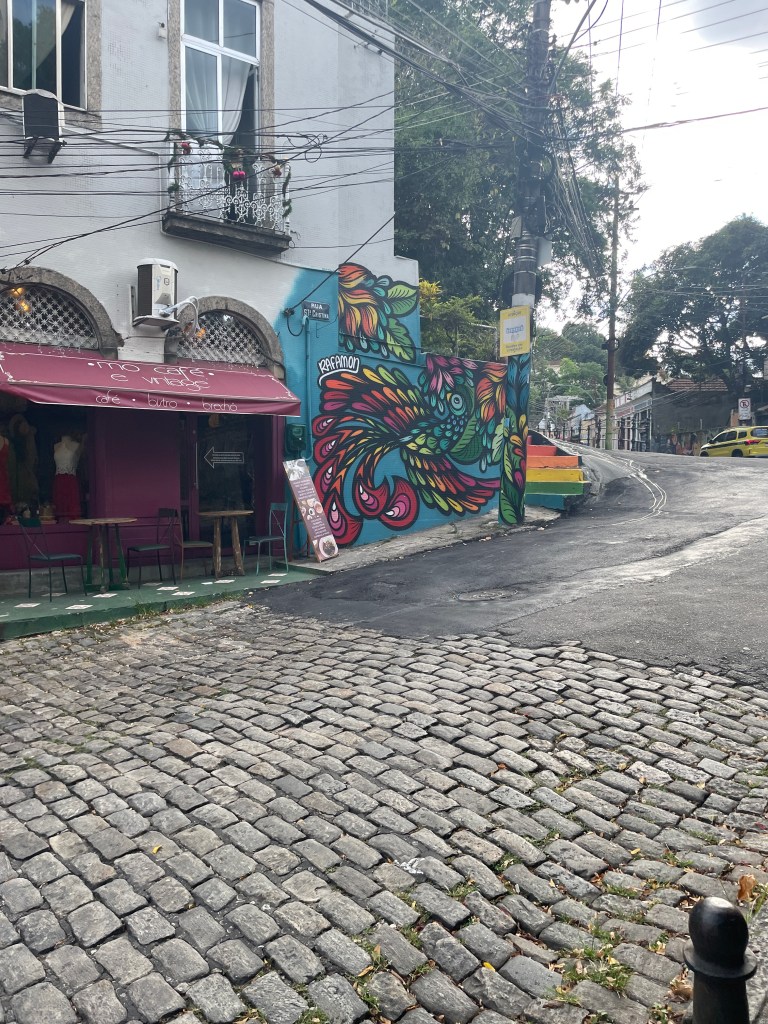
One of the neighborhoods that is highly recommended to visit is Santa Teresa. To get there, we took a bonde (street car) which Adam will write about in a post about the city’s public transportation. The neighborhood sits on a hillside above the city and is known for its artistic and bohemian sensibilities. Santa Teresa offers a break from the beaches and urbanity of other parts of the city, which we appreciated. Though we walked around for hours, we both had the sense that we were missing out on some of the more picturesque places. The day we visited was particularly hot too, so we didn’t see everything we could have. This neighborhood is one we would love to visit again next time we’re in Rio.


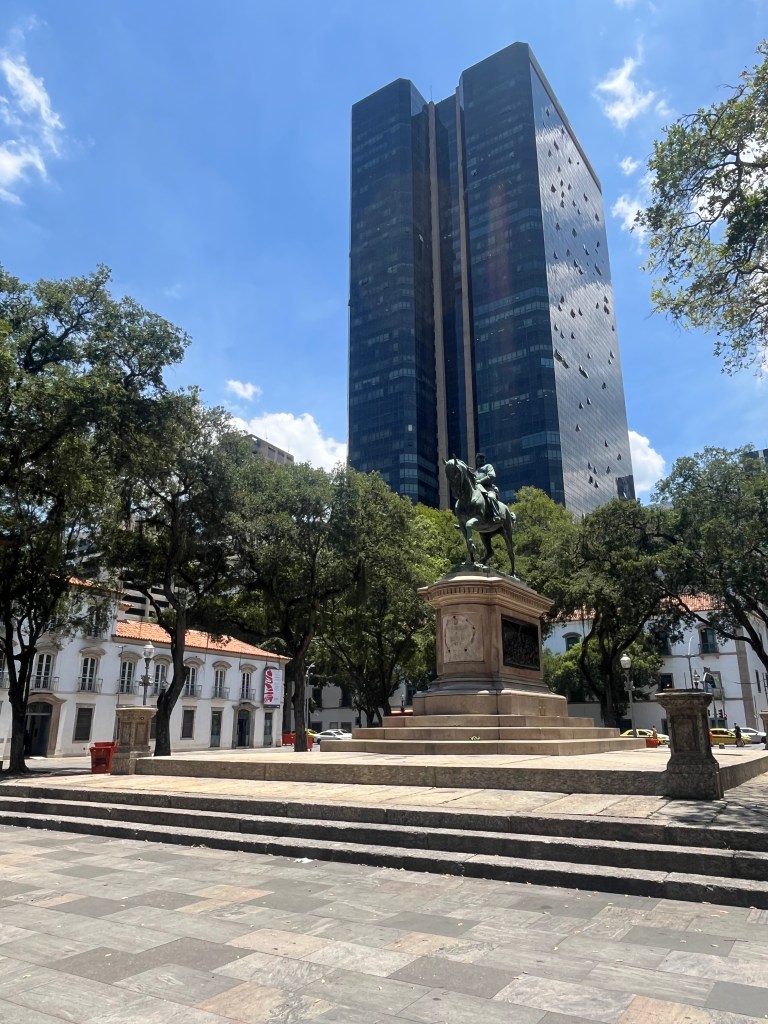
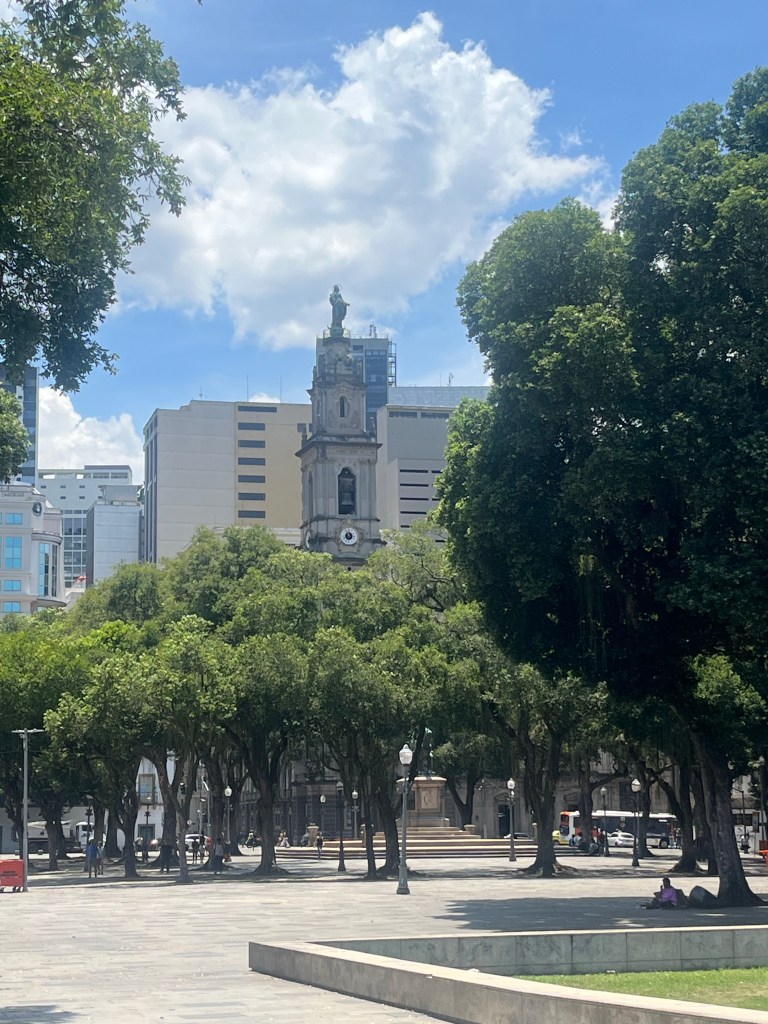
We also visited the Praça XV de Novembro (15th of November Plaza), which commemorates the change from Imperial Brazil to Brazil as a Republic. (As a reminder, when Brazil gained its independence from Portugal, the country became a monarchy until a military dictatorship turned the country into a republic.) Since Rio used to be the capital of the country until the 1960s, there is plenty of history to learn. (Side note: the capital was moved to Brasília during Brazil’s military dictatorship (a different one than the one mentioned above) and is a model for urban planning, which is ironic considering it’s not known for much else.)
The plaza itself is mostly empty save for a few statues and a remnant of a wall and mote used by Portugal to defend the city. However, nearby are a naval museum, an arcade from the 18th century, a museum about the nearby marina that is still in use, and much more.

After walking around, we decided to duck into the Palácio Tiradentes (Tiradentes Palace) mostly to get a break from the heat. They offer free tours in English, which we recommend. The Tiradentes Palace is the current seat of the Legislative Assembly of the State of Rio de Janeiro. (Remember, Brazil is divided into states like the United States.) The building used to house the Chamber of Deputies when Rio was the capital city of Brazil. Government officials conducted government business on the second floor while the first floor was a prison. That building was torn down and, in its place, a neo-classical style palace was built. Neo-classical buildings are very popular in this area partially because there was a desire to emulate European cities such as Paris. According to our tour guide, the desire to mimic European cities was so strong that hills and mountains near the area were bulldozed to create a flat plain from which to build the city.
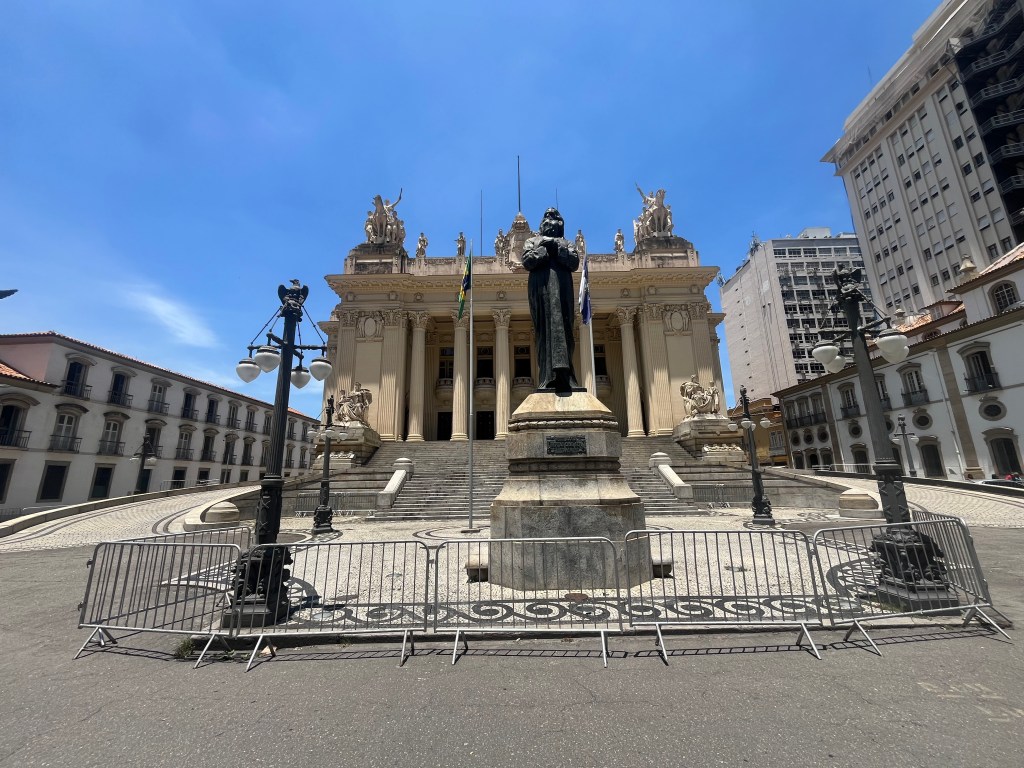
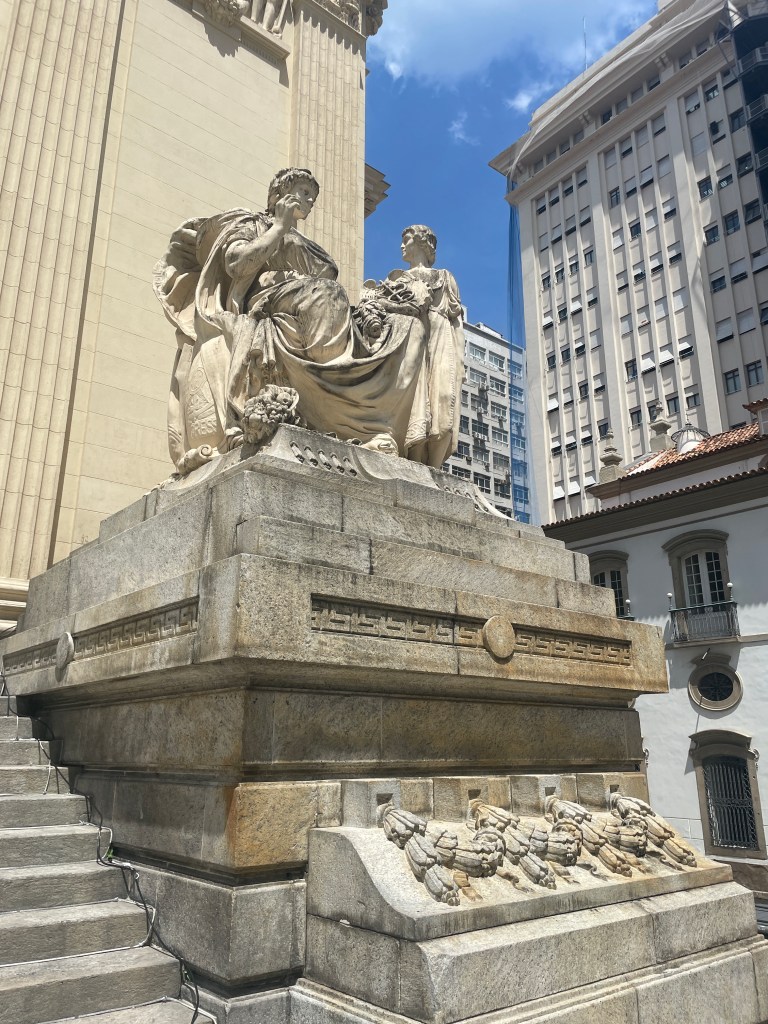
Top row: the exterior of the palace
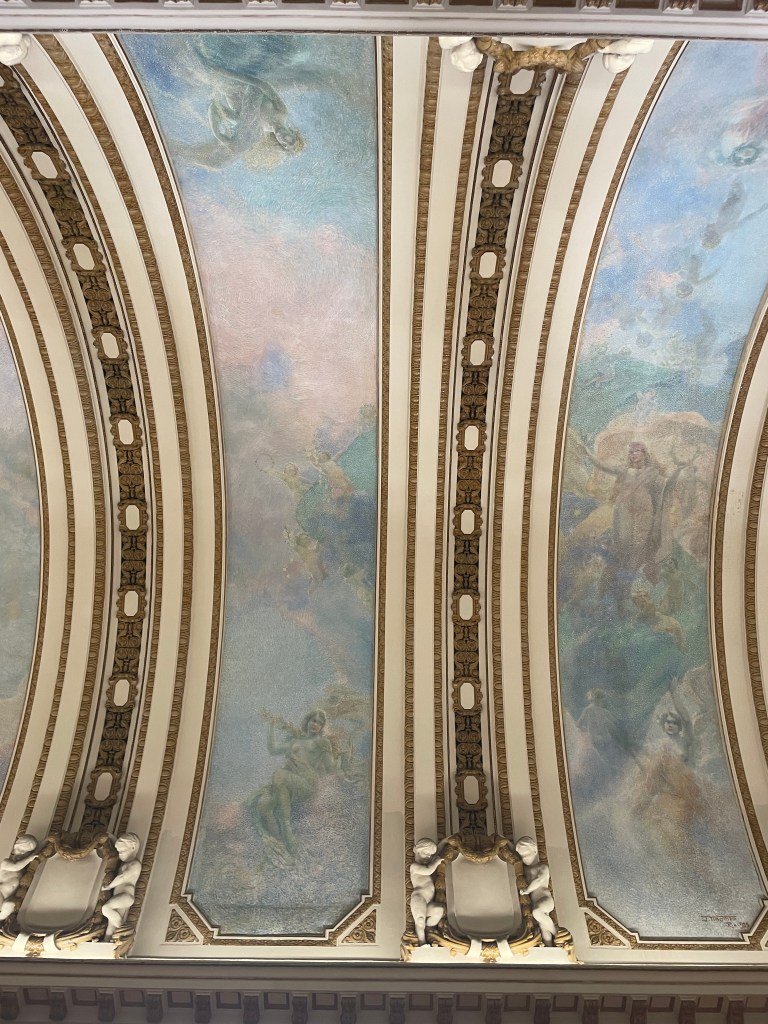
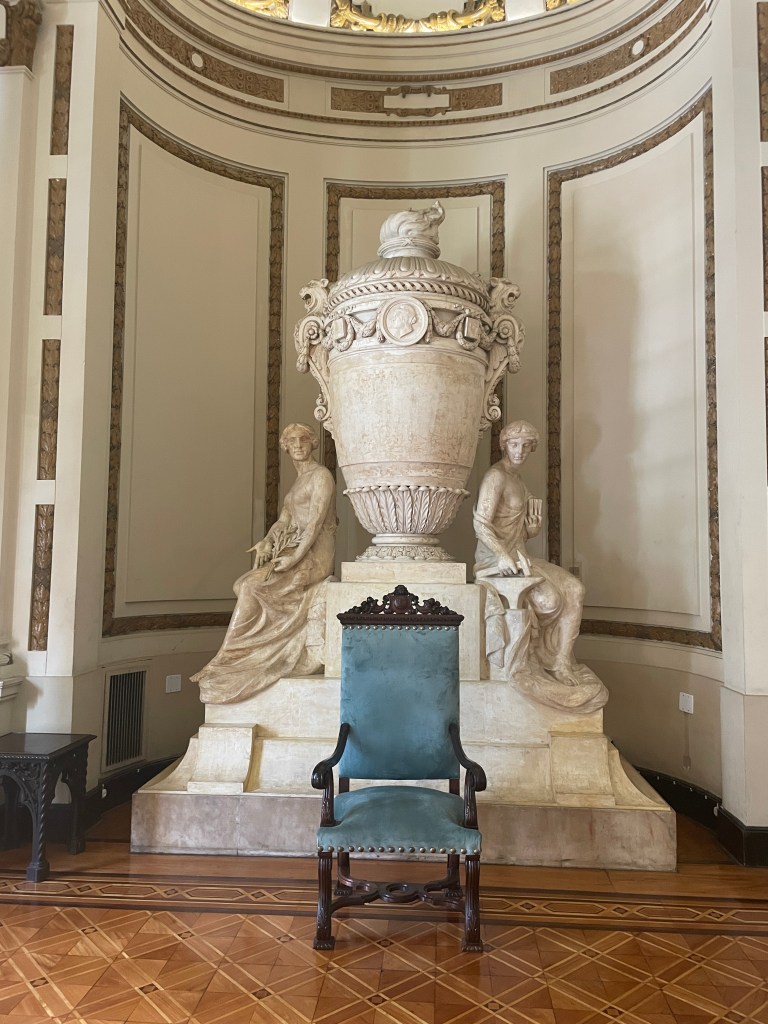
The photos below are from one of the main rooms where important legislation was signed, including the Golden Law that abolished slavery.
Left to right: paintings from the ceiling using the pointillism technique in only blue, green, and yellow, the colors of the Brazilian flag (that pink you see is not actually pink); the wood used in the building is made from jacaranda, a native plant that has a resin termites don’t like so it is a natural pest control (please also note the decorative coffee beans); lastly, there are four women in this room each representing a different quality of the republic: education, justice, peace, and work.
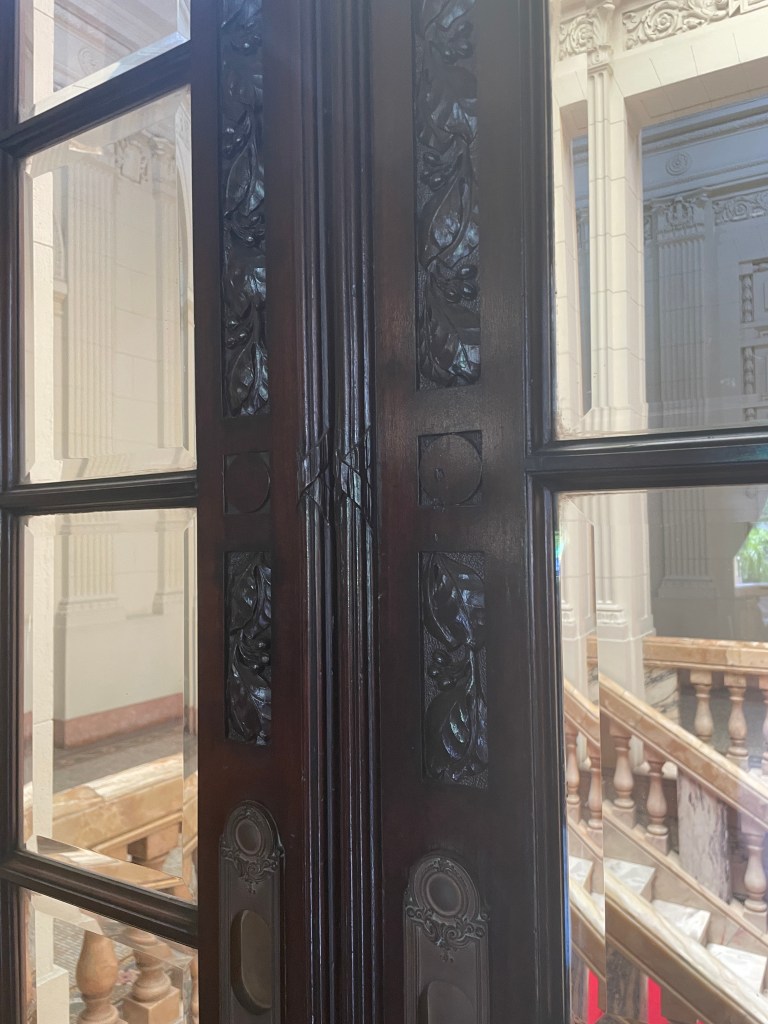
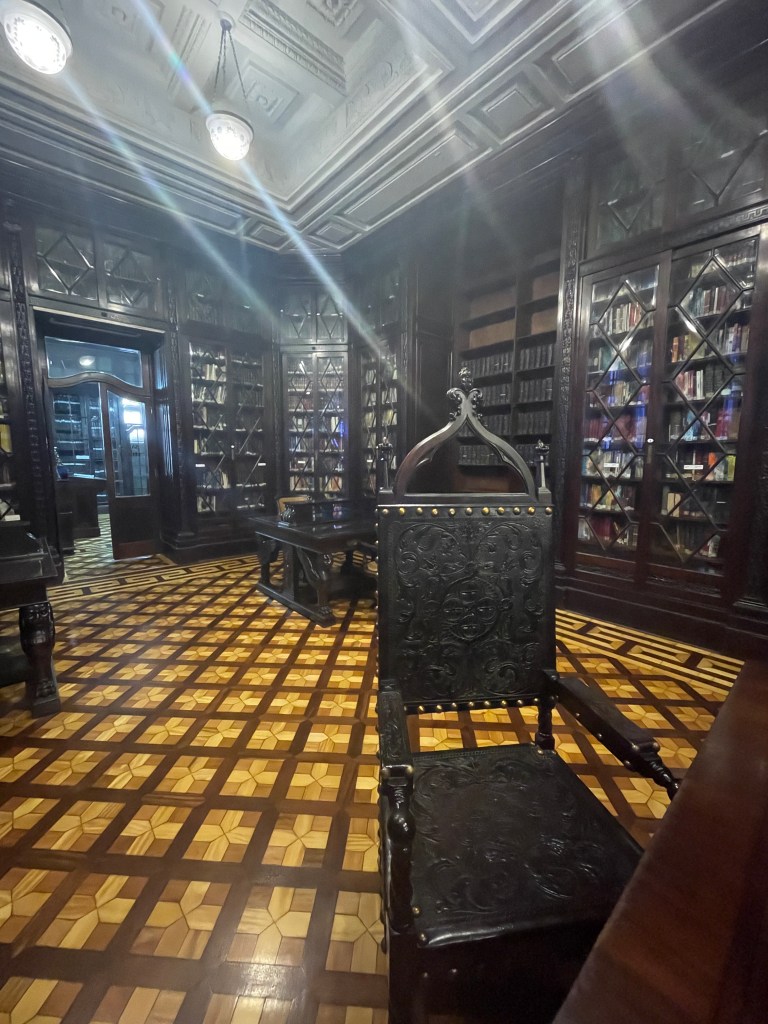
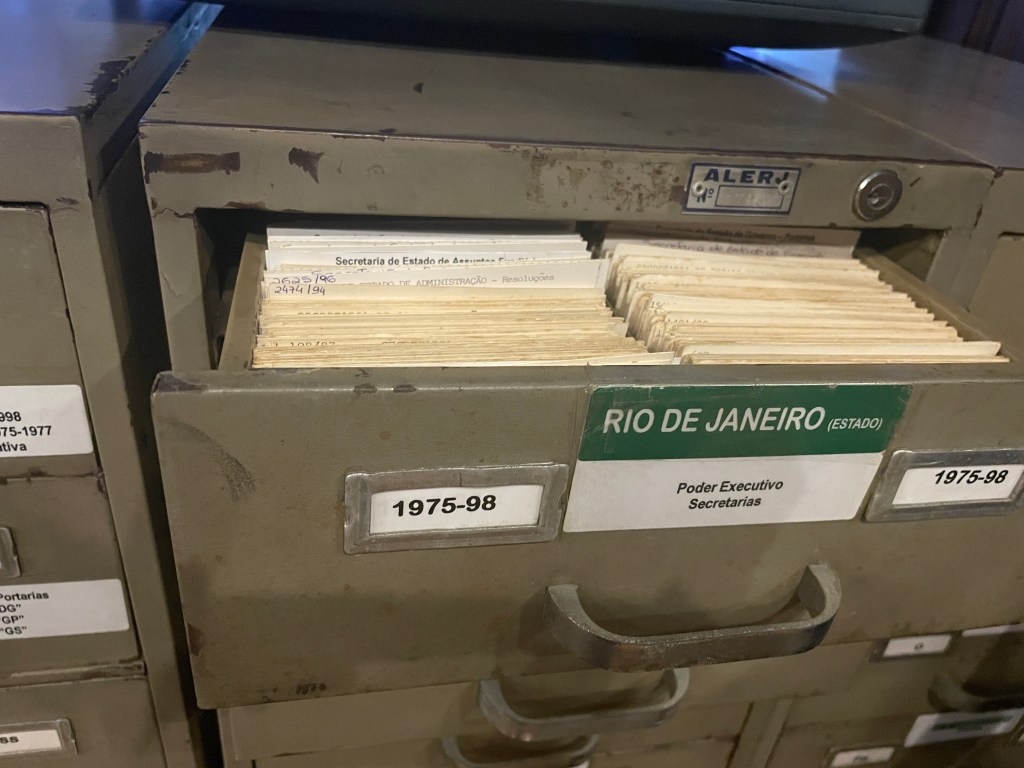
The photos below are from the library. (Yahm didn’t even ask to go in; it was part of the tour.) Note the jacaranda everywhere in the left photo. The right photo is of the vertical files. Unlike file vertical files, these cards tell patrons where to find an article about a specific subject. It is not a card catalog to look up books. This library has the largest collection of legislative material in the country and is often used by lawyers and lawmakers.
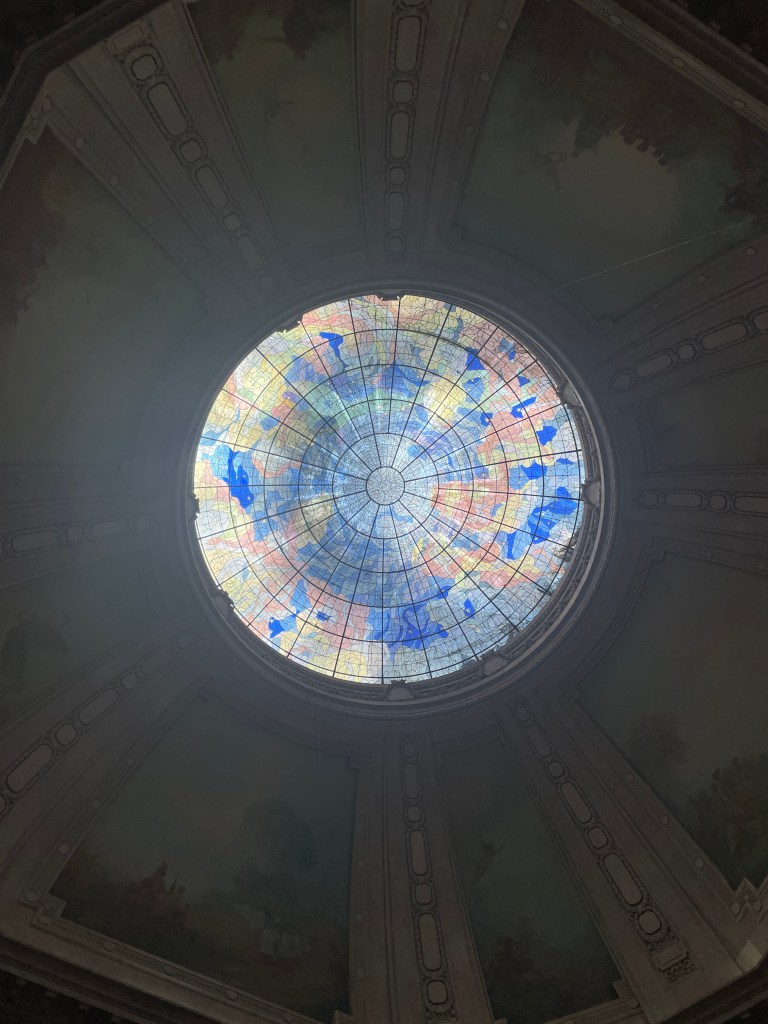
The photos below are of the legislative chamber.
Top row, left to right: entering the chamber where elected officials sit; the dome at the top of the chamber is intended to let in sunlight and moonlight
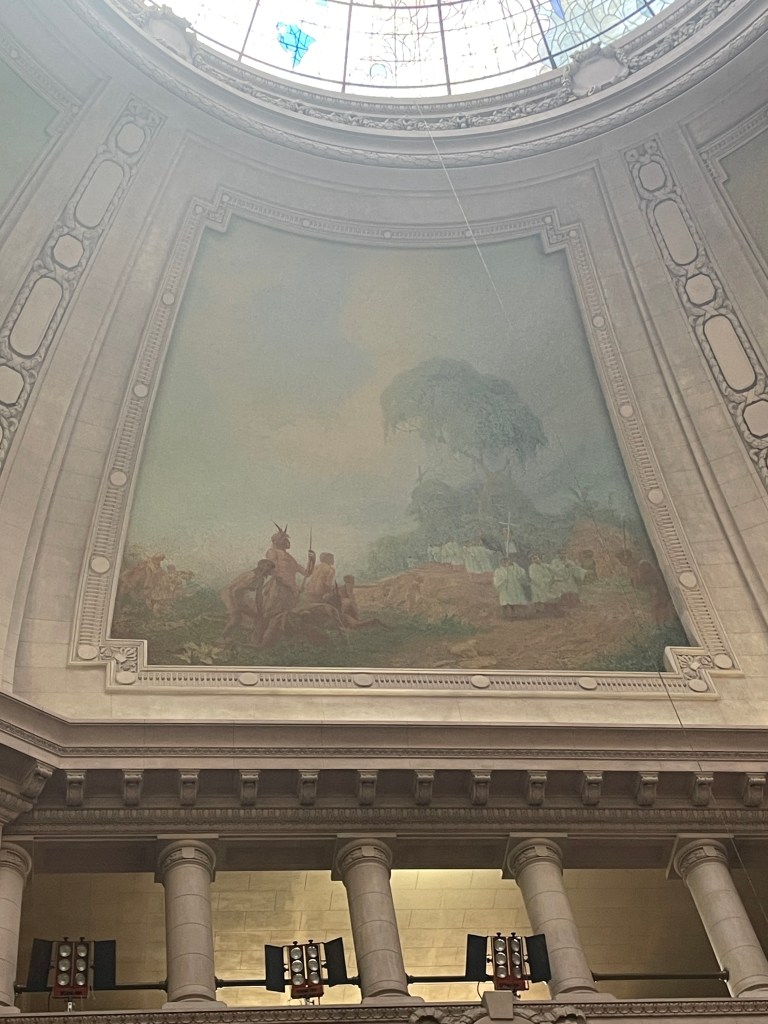
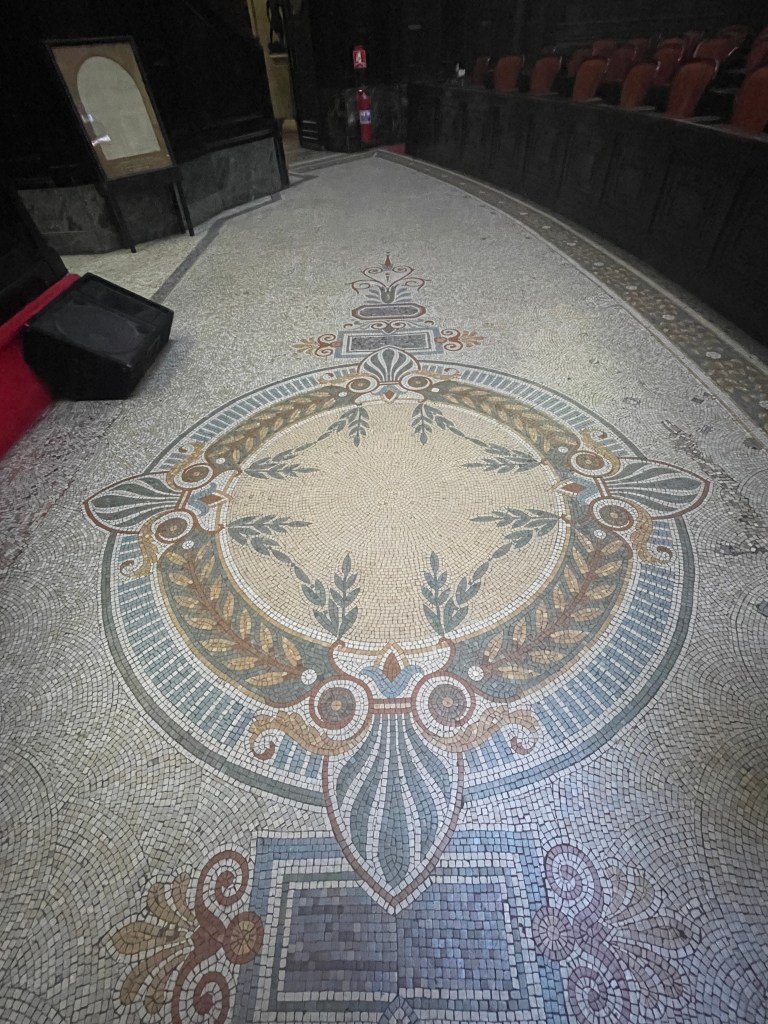
Bottom row: paintings that depict the history of Brazil, beginning with the arrival of the Portuguese to spread Catholicism; the floor of the chamber between the dais and where elected officials sit.

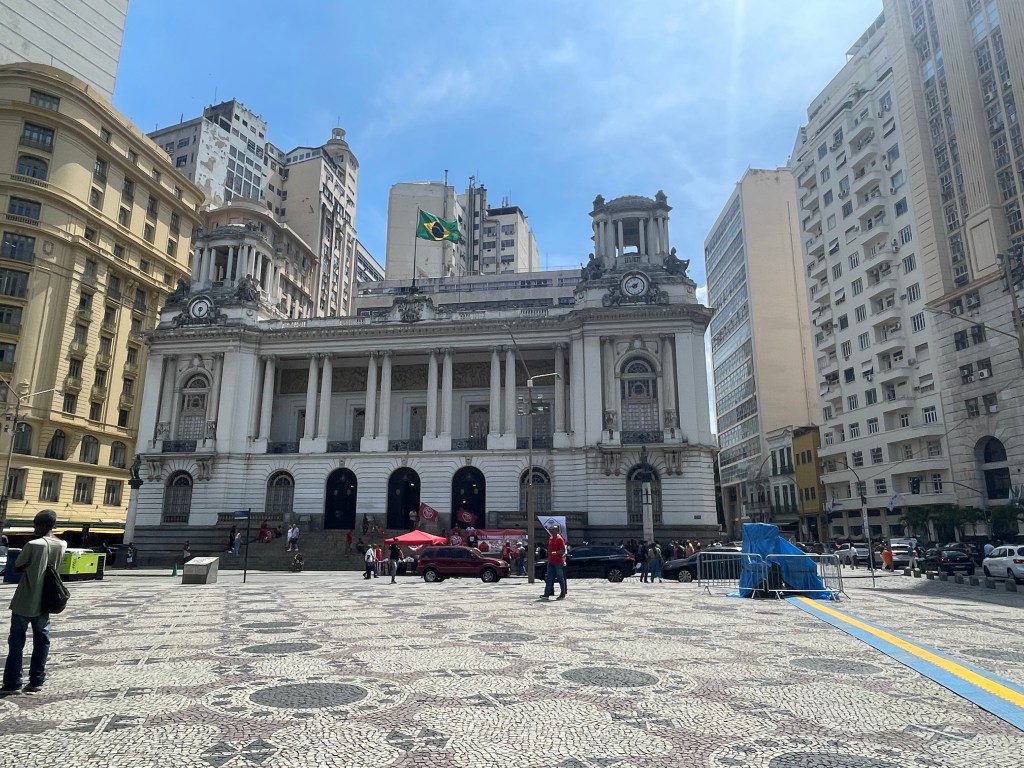
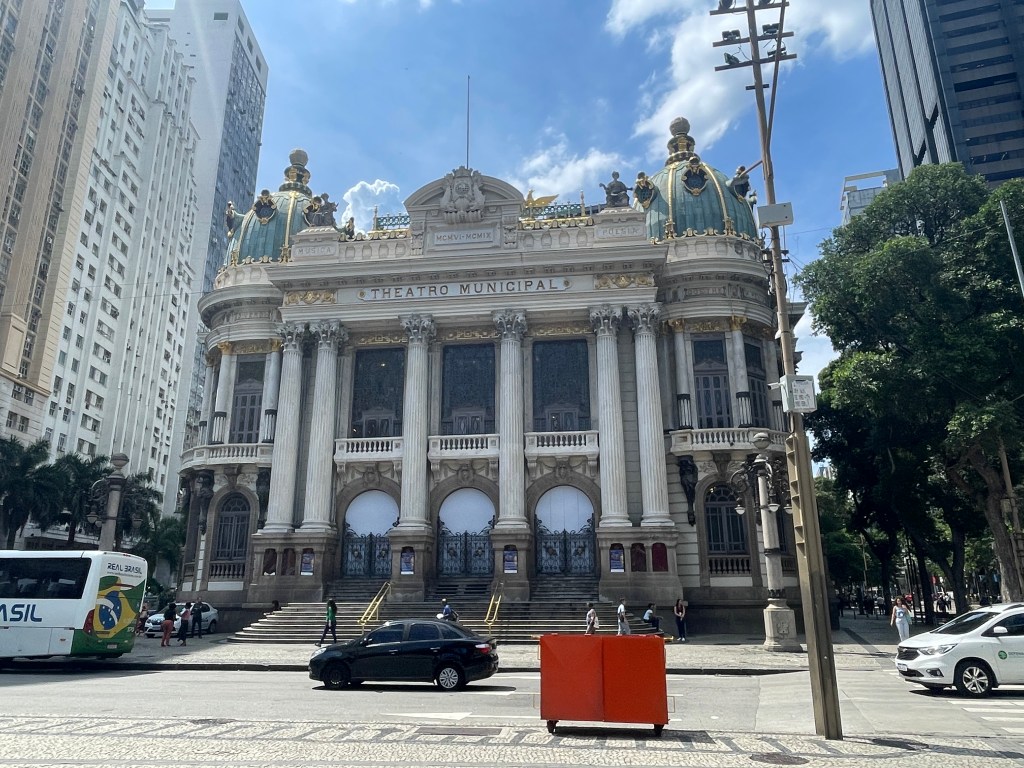
As we walked from the palace to the National Library for a tour (more on that in Yahm’s forthcoming post), we saw so many more neo-classical buildings. On the left is a photo of the Câmara Municipal do Rio de Janeiro (Municipal Chamber of Rio de Janeiro) where a protest was taking place. On the right is the Theatro Municipal do Rio de Janeiro (Municipal Theater of Rio de Janeiro) with many gold ornaments, including winged angels that are copies of the Palais Garnier in Paris. All of that gold, by the way, is real gold. It’s not plated gold either.
As we mentioned above, we really only scratched the surface of all that Rio has to offer but we fully intend on coming back some time in the future. Stay tuned for a few more posts related to our time in Rio in our respective corners. Be sure to like, comment, and subscribe to Traveling While Introverted so you don’t miss it!
 Traveling While Introverted
Leave a reply to A Public Transportation Fix in Rio de Janeiro – Traveling While Introverted Cancel reply