After Adam and I visited the Palácio Tiradentes, we walked to the Fundação Biblioteca Nacional (FBN) (National Library of Brazil). Not only is Brazil’s national library a UNESCO world heritage site, but it’s also the largest library in Latin America and the 7th largest library in the world! The library offers free daily tours in English and Portuguese, which we booked very easily. Not every country has (or wants to have) the resources to fund these tours, so it’s very special when they’re available. Readers will remember that we couldn’t get a tour for the National Library of Panamà because they had serious budget problems. Considering the worldwide literacy crisis and the growing literacy crisis in the United States, it’s more important than ever to visit libraries, archives, and museums. Foot traffic makes a profound difference to an institution’s budget and its ability to stay open, so please visit when you can wherever you can.
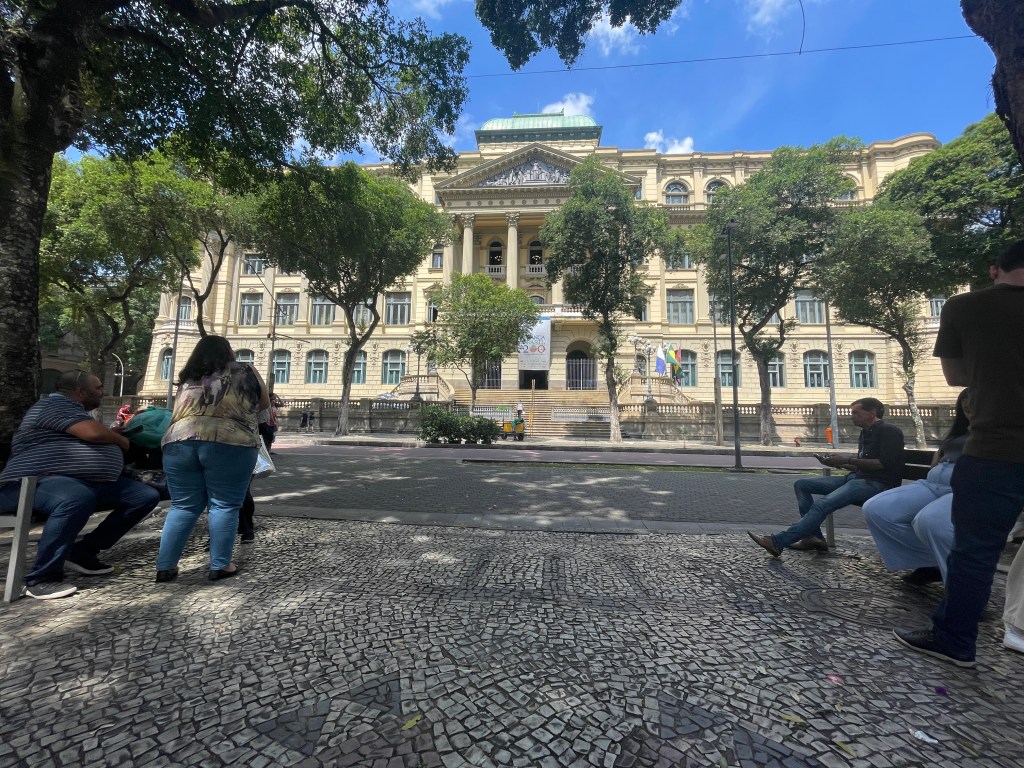
The library’s architecture is impressive in and of itself. Besides matching the neo-classical style of other historic buildings in the area, the edifice is also massive. In fact, Adam and I weren’t sure it was the right building at first because it’s so imposing.
(I couldn’t get a photo without people or trees, but I think you get the gist.)
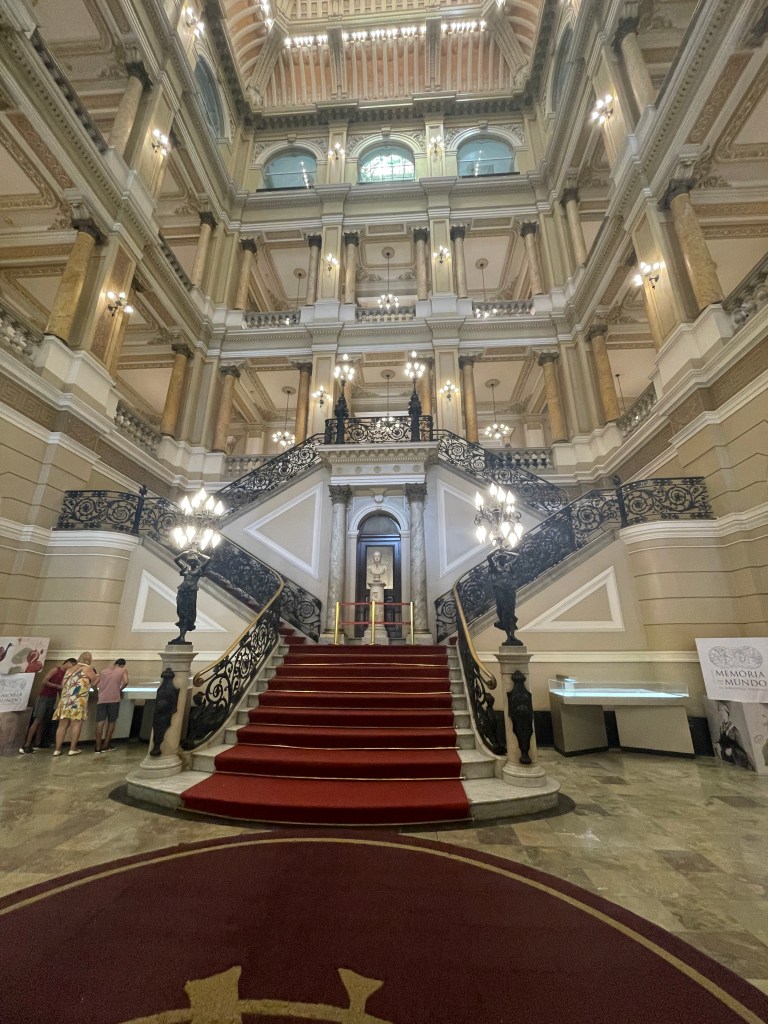
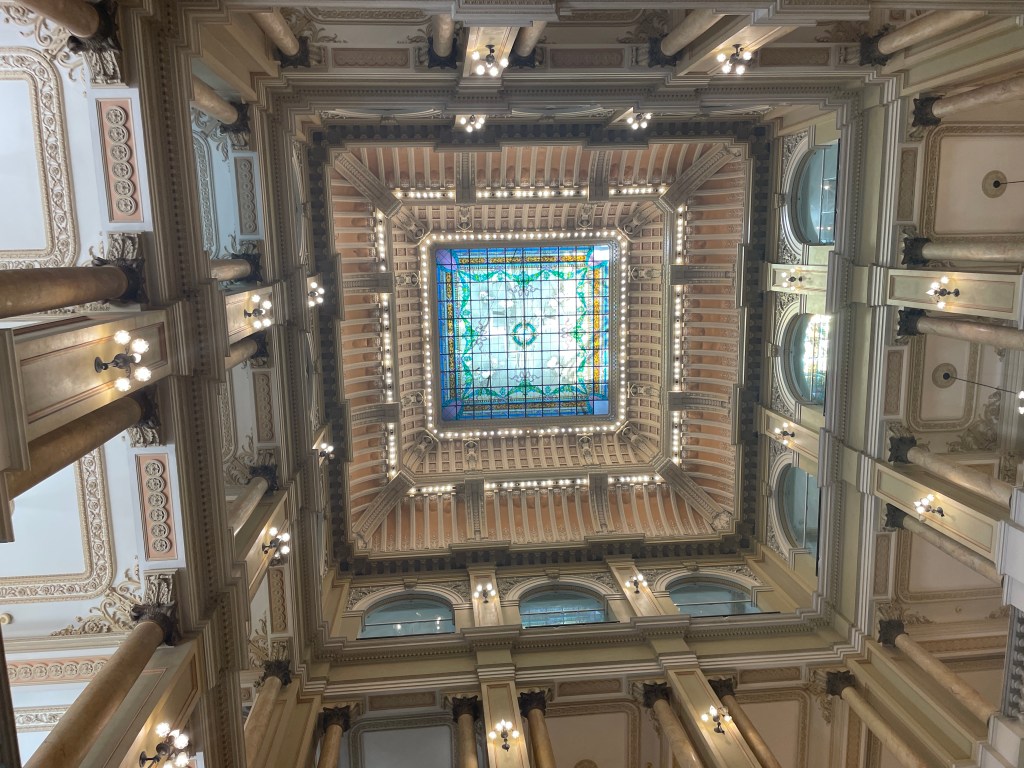
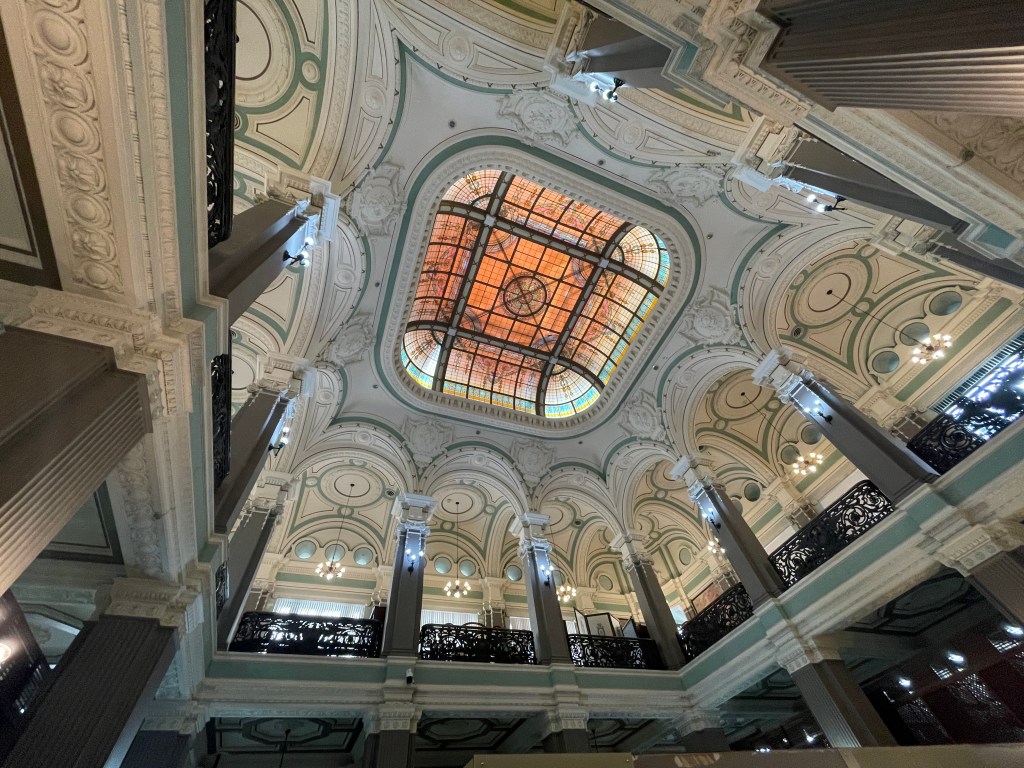
As we climbed the stairs and walked inside, I was so surprised by the interior. Neo-classical style architecture is visible throughout the library: geometric symmetry, large columns, elegant staircases, and stained glass windows underneath sweeping arches abound. Art nouveau decorations contrast and complement the building’s construction, such as the use of industrial iron shaped into curvy vines with leaves to hold up the staircase. Below is a photo of the lobby (left) and of the stained glass ceiling looking up from the lobby (right). This was probably the most beautiful library I have ever visited.
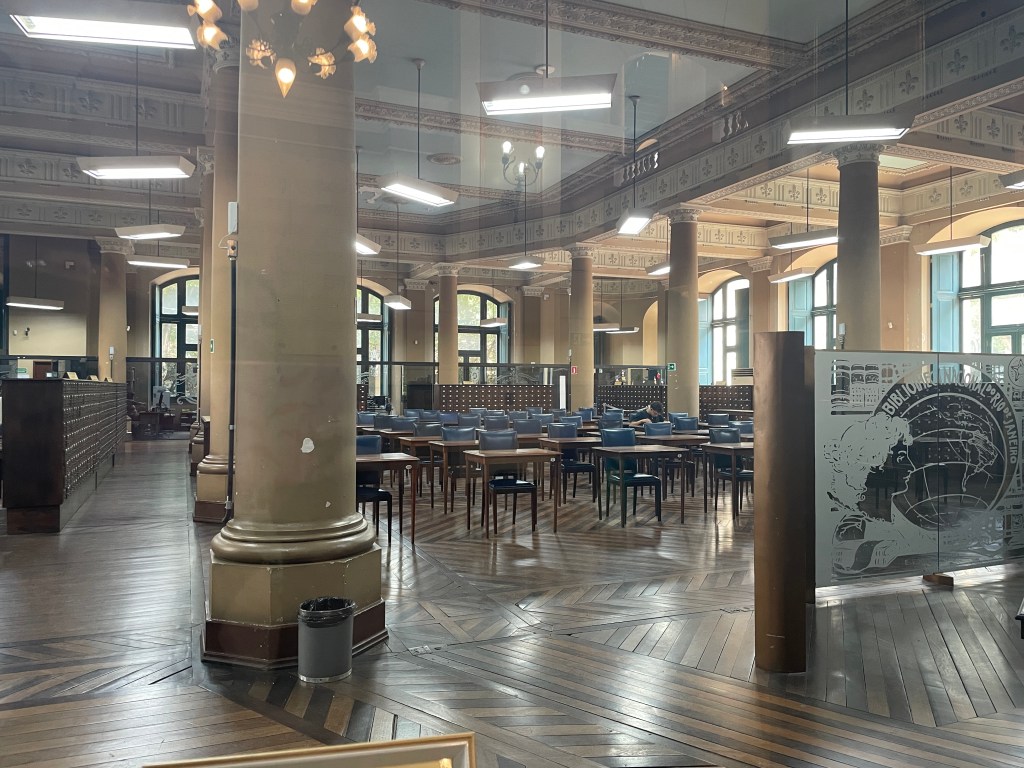
Because the library holds over 9 million items, many of which are exceptionally rare and valuable, the only way to enter the reading rooms is via appointment. On the tour, we were able to peak inside the rooms through glass, so apologies for the extra glare in the photos (below). Much of the furniture that looks like it is made of dark wood is actually iron as a way to prevent fires from burning hotter and faster. The furniture was manufactured in the United States and painted to look like wood for aesthetic purposes. This furniture hasn’t been replaced since the library opened on October 28, 1810. Speaking of, October 28th is national book day in Brazil specifically to coincide with the date the library opened. The library wasn’t always at this location though. It outgrew its original building and moved to this location in the early 1900s. The new library opened its doors on October 29, 1910 exactly 100 years after the original one opened.
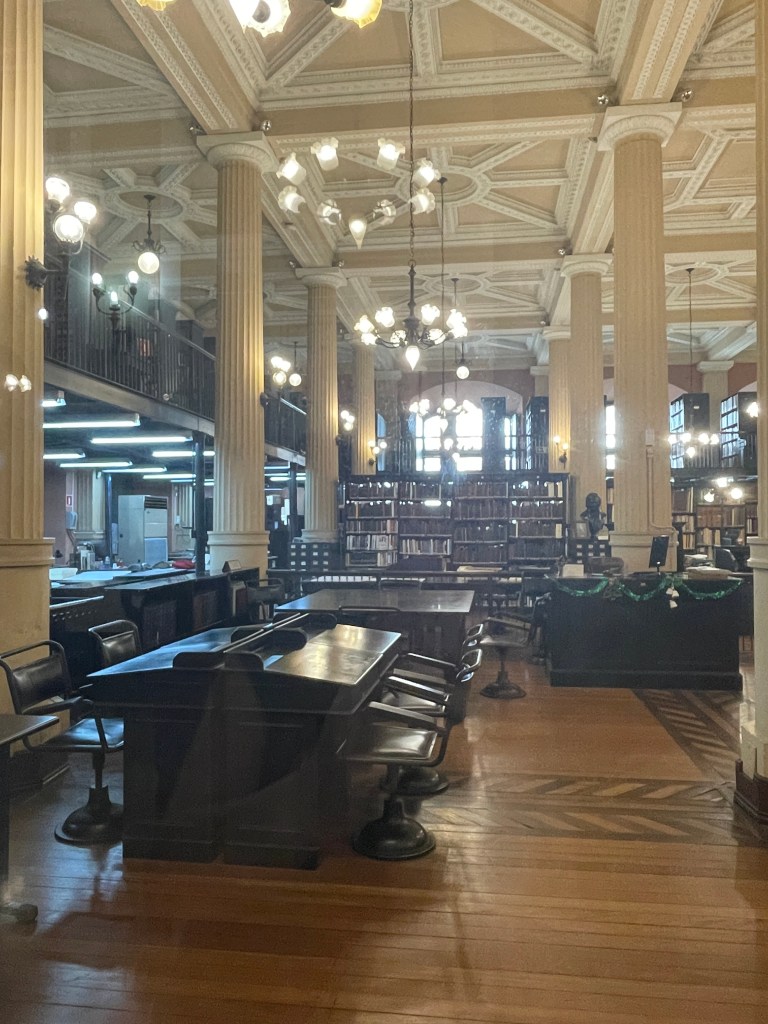
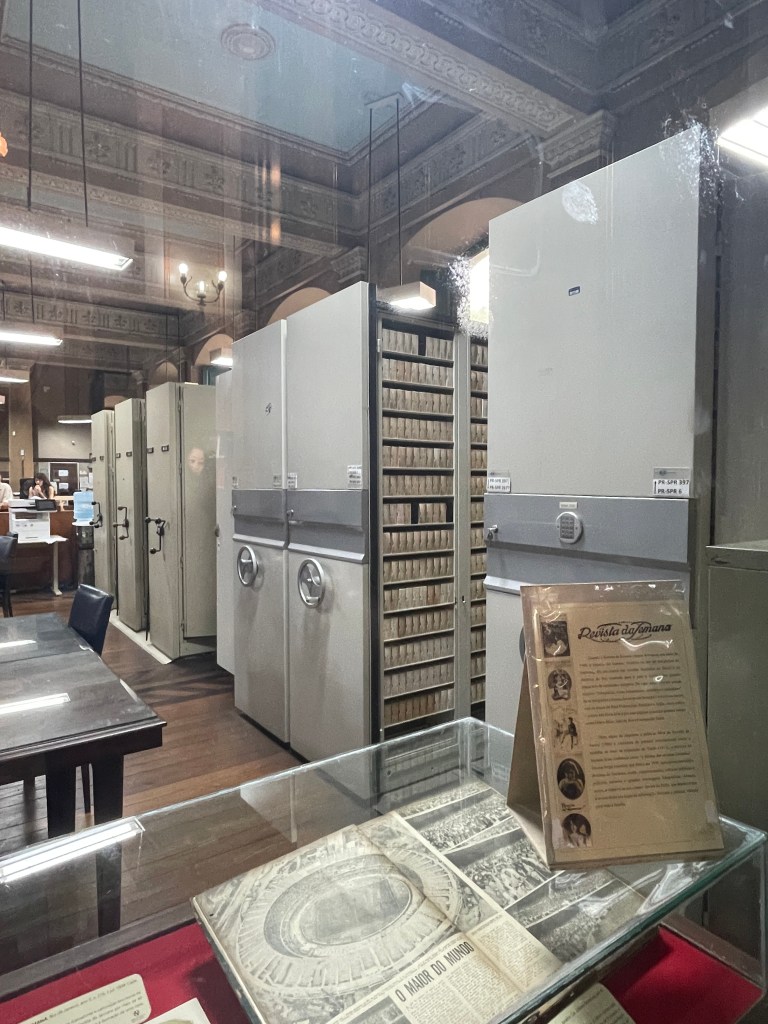
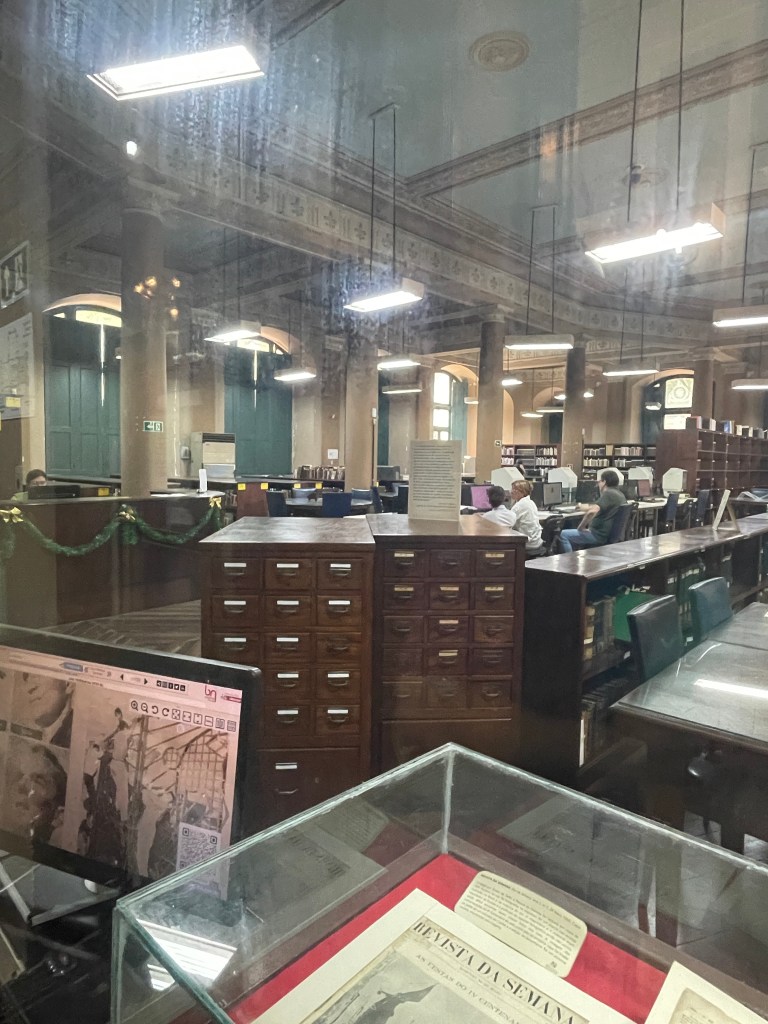
In the two photos below, the stacks are barely visible from behind the iron gates. As is the case with so many specialized libraries, only a limited number of staff members can access the stacks. Moreover, no one besides the librarians know how the items are organized, including our tour guide. For those curious, the library uses the Universal Decimal Classification system (rather than Dewey), but where each section lives in the stacks remains a mystery to most. Our tour guide also told us that books are arranged by size and weight to prevent them from going missing. Why all this mystery? First, it makes it harder to steal valuable items if you don’t know where to look for them. Second, books have legs and go missing all the time, even in the best kept libraries. Limiting access prevents that problem. (This is why you should never return a book back to the stack. Let the professionals handle it.)
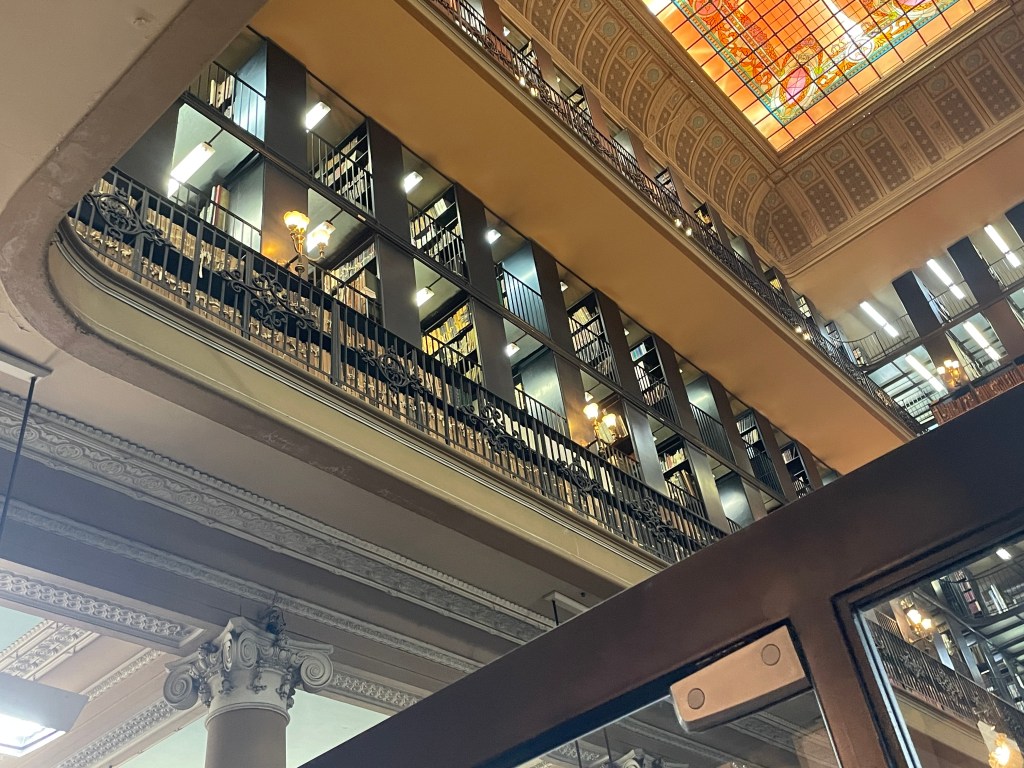
Normally, national libraries are located in capital cities. Even though the capital of Brazil was moved to Brasilia in 1960, Rio is still home to the original national library. Another national library exists in Brasilia, but it does not have all of the official documents that this one has. Instead, the libraries work in tandem, but are not sister organizations. This library also supports “municipal libraries” (city and state libraries) in a variety of ways, most notably by sharing duplicates of new and donated materials. By law, publishers are required to send at least 1 copy of all of their books to the national library otherwise they are fined. Many countries have similar laws, but very few have any teeth to them. When I worked as a librarian in Arizona, government agencies were required to send at least 1 copy of their reports to the library but they faced zero consequences if they did not.
What really floored me about the library was the staffing. Everyone in the library is a paid employee. They do not employ volunteers for any project, no matter how large or small. In Brazil, librarians and support staff must pass rigorous tests to become civil servants. Once they are accepted, they work in government until retirement. Because it is so difficult to pass the test to become a civil servant, the pay and benefits are excellent. Of course, this system causes all sorts of problems: it’s impossible to fire people who probably need to be fired; jobs are limited based on when people retire; and, I assume, there are economic, social, and racial barriers to ensure a diverse workforce. However, this system creates a protected and highly-skilled class of white-collar employees who ensure the government can do its business and provide much-needed services to its citizens, residents, and even tourists. What a shocking difference from current United States policy!
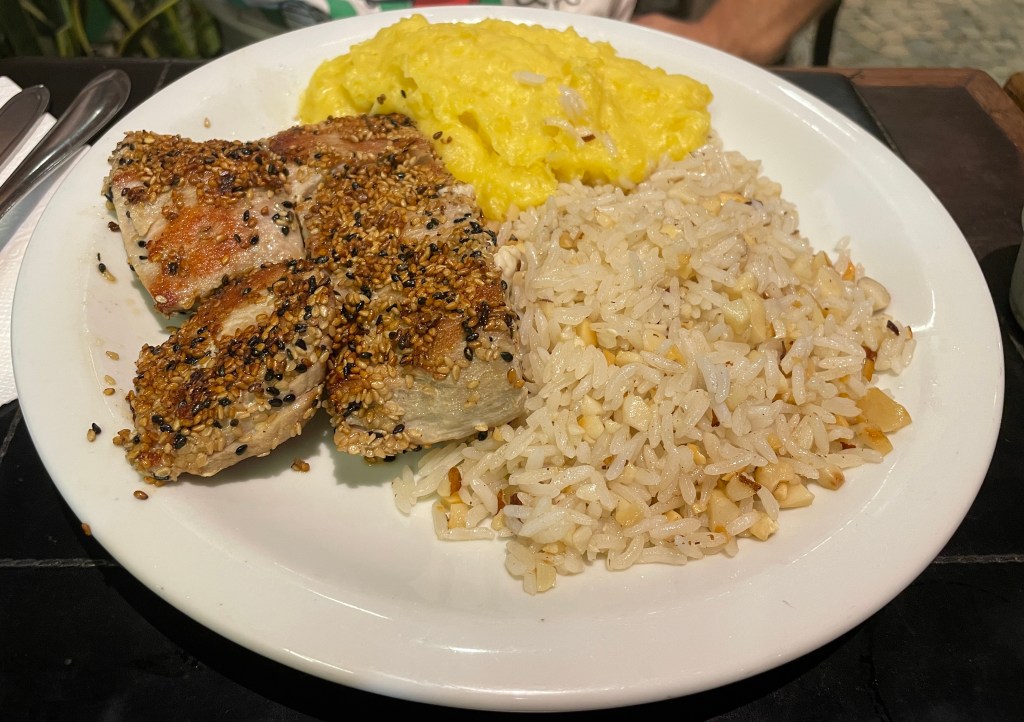
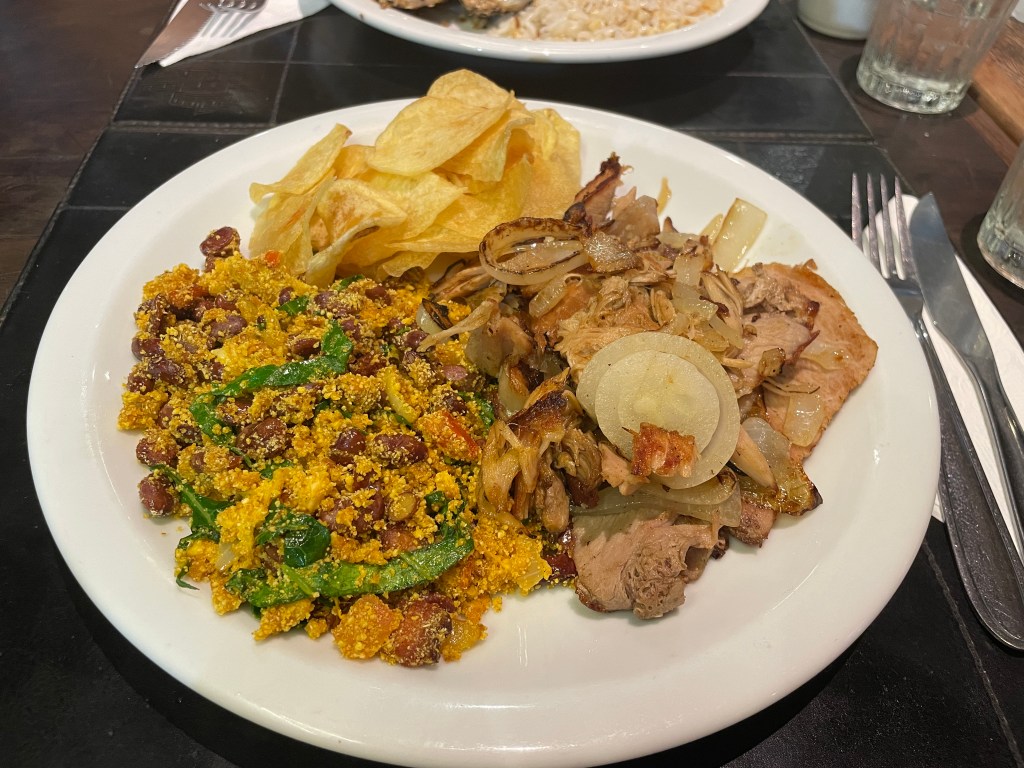
Now on to the food. On our first night in Rio, we ate dinner at a locals’ bar not far from our apartohotel. It didn’t look particularly exciting initially, but our meal was hot, fresh, and pretty filling. Adam ordered sesame-crusted tuna, rice with nuts, and parsnip purée (left photo). I ordered pork stir-fried with onions and peppers, garlicky farofa with peanuts, and “Portuguese potatoes,” which were just chips (right photo).
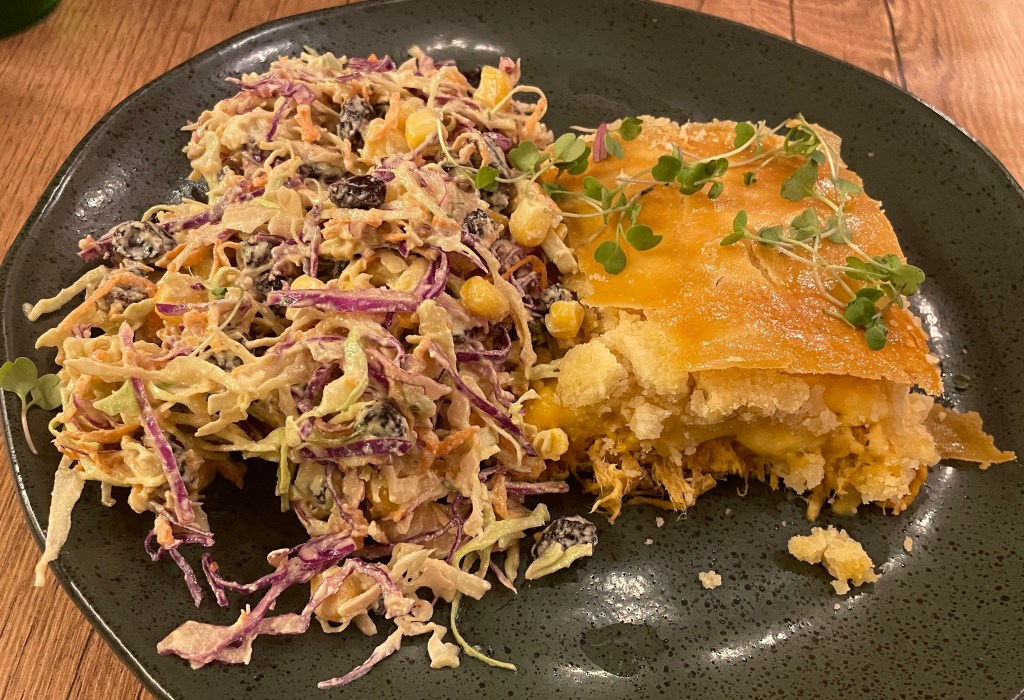
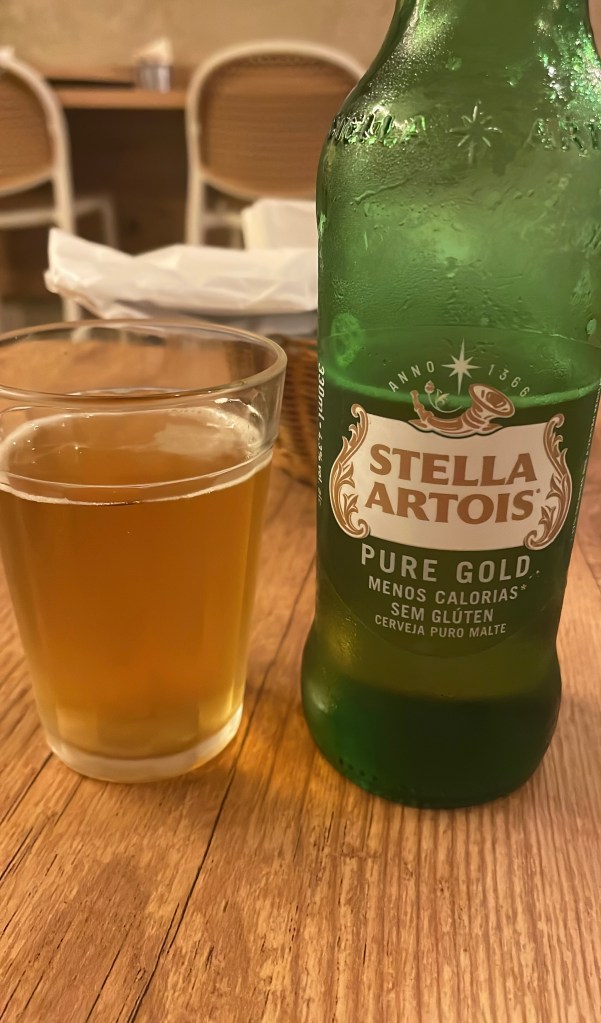
After the candle lighting at Copacabana Beach on the first night of Hannukah, we visited a restaurant that offered many gluten-free and vegan options. I was very excited to order a chicken pot pie. I knew it wouldn’t be like an American one, but it was carby and comforting, served with a slightly bland cabbage-chicken salad (left photo). (Considering we were a little edgy because of what happened at Bondi Beach, comforting food was in order.) I also ordered a gluten-free beer, which is an exceptionally rare find in my experience. When I was in my 20s, I loved drinking beer, especially Belgians and stouts. I probably wouldn’t order this beer again, but I appreciated the novelty (center photo). For dinner, Adam had a barbecue jackfruit bowl that was okay, but not great (right photo).
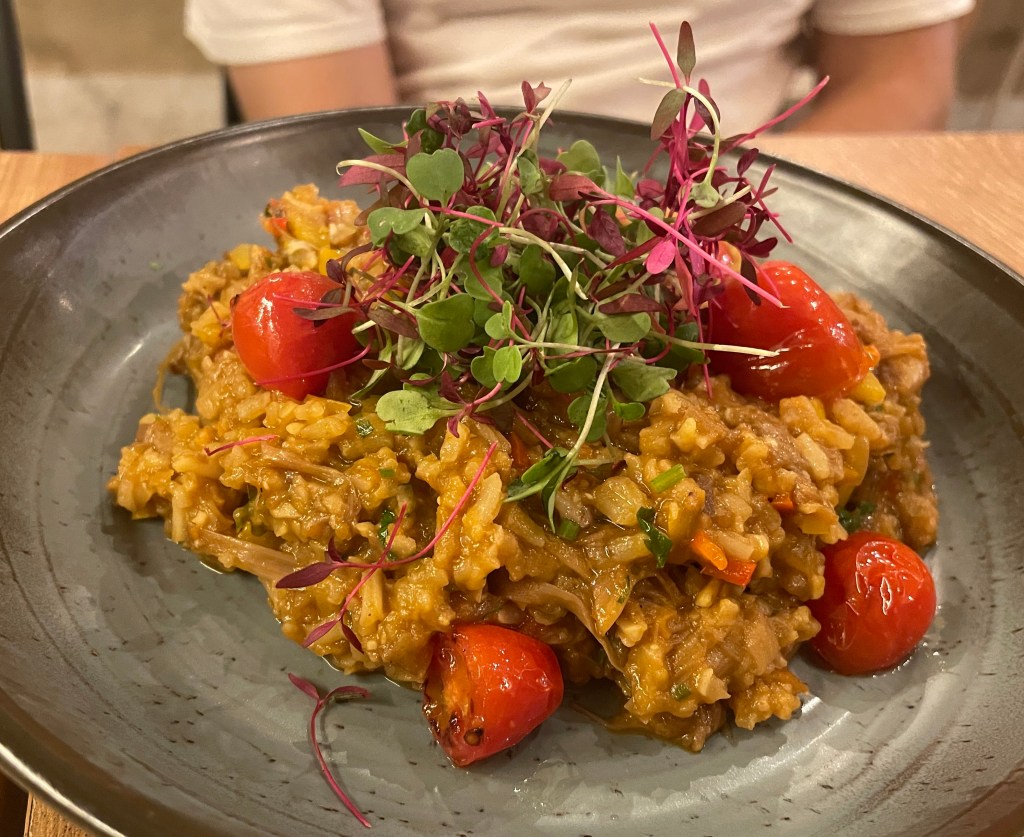
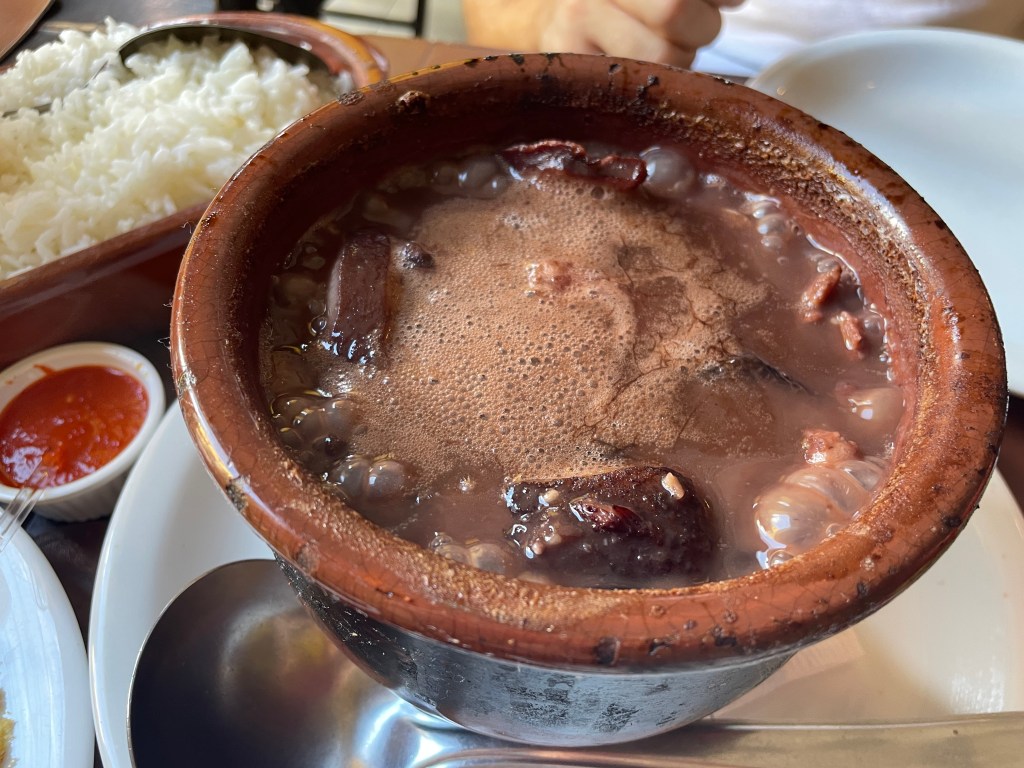
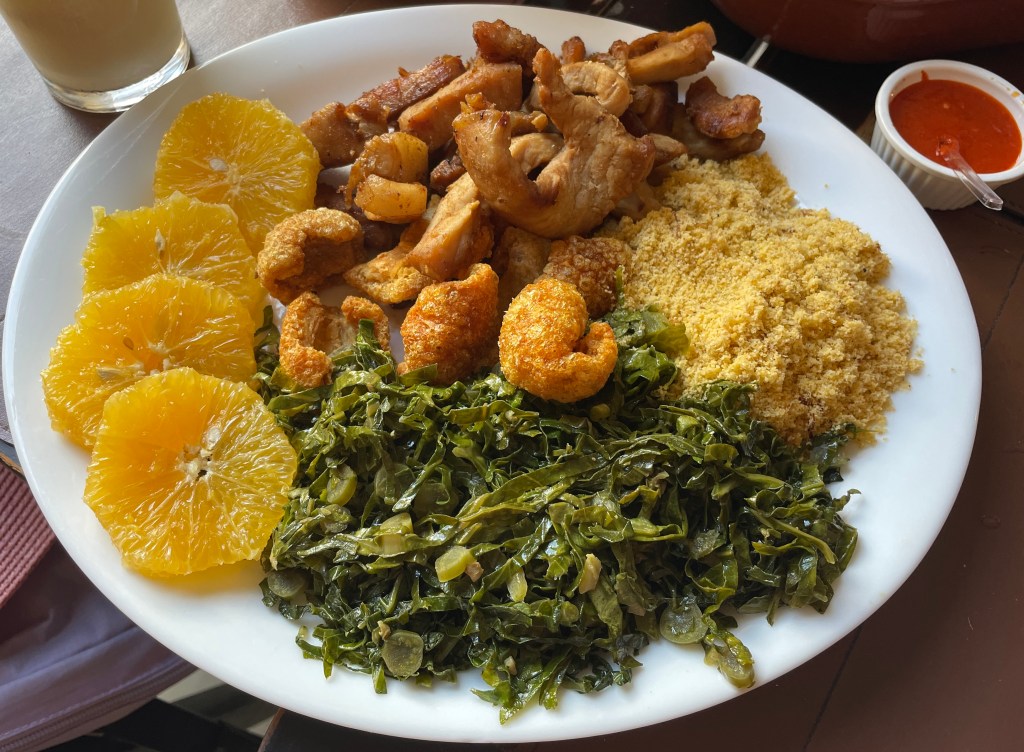
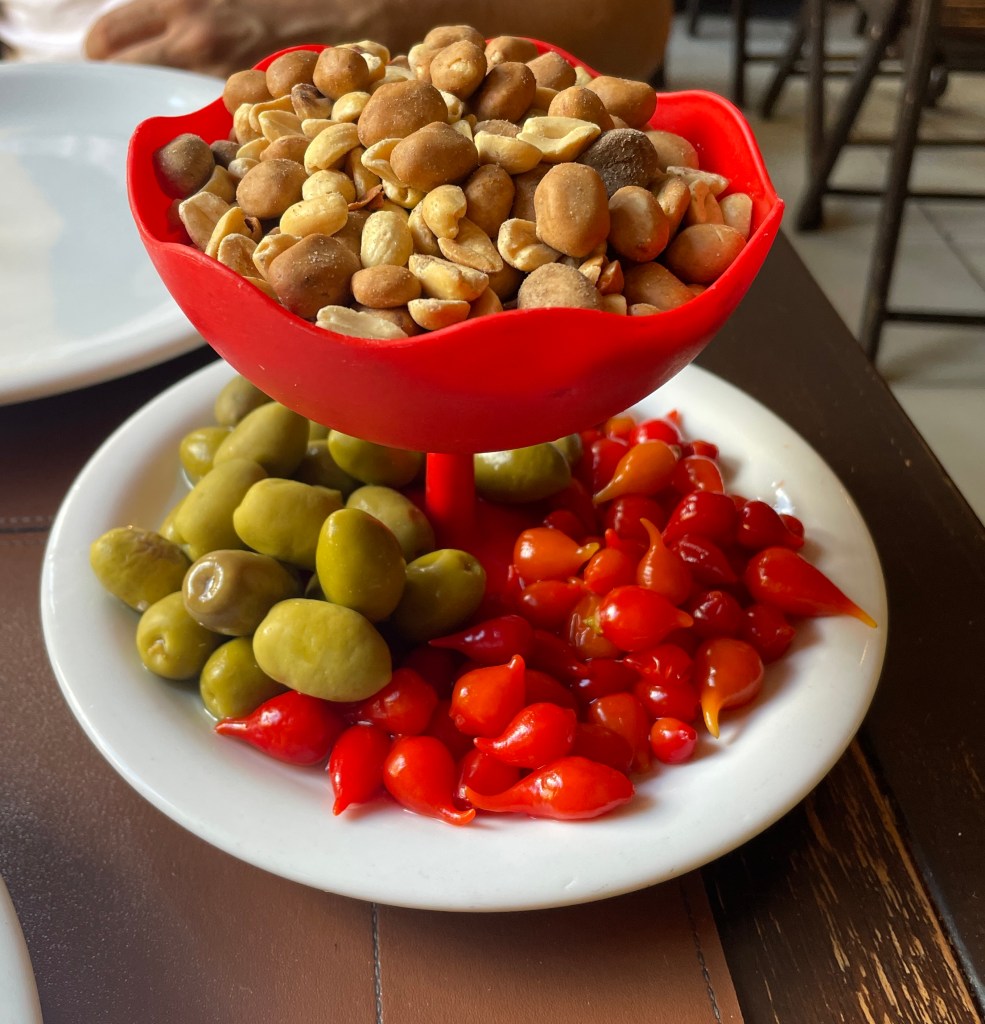
One of the better meals we ate was at Portella Bar in Santa Teresa. We finally had a chance to try traditional feijoada, the national dish of Brazil. Feijoada is a slow-cooked black bean stew with pork and/or beef and served with farofa, rice, and lightly cooked, thinly-sliced collards. This particular order included chicharron and slices of orange. We also ordered an appetizer of peanuts, olives, and pimento biquinho, or pickled beak peppers that added extra tang rather than spice (right photo). The combination of beans, meat, collards, and carby farofa took me back to some of my favorite (United States-ian) Southern food. It was the comforting meal I didn’t realize I needed after so much travel.
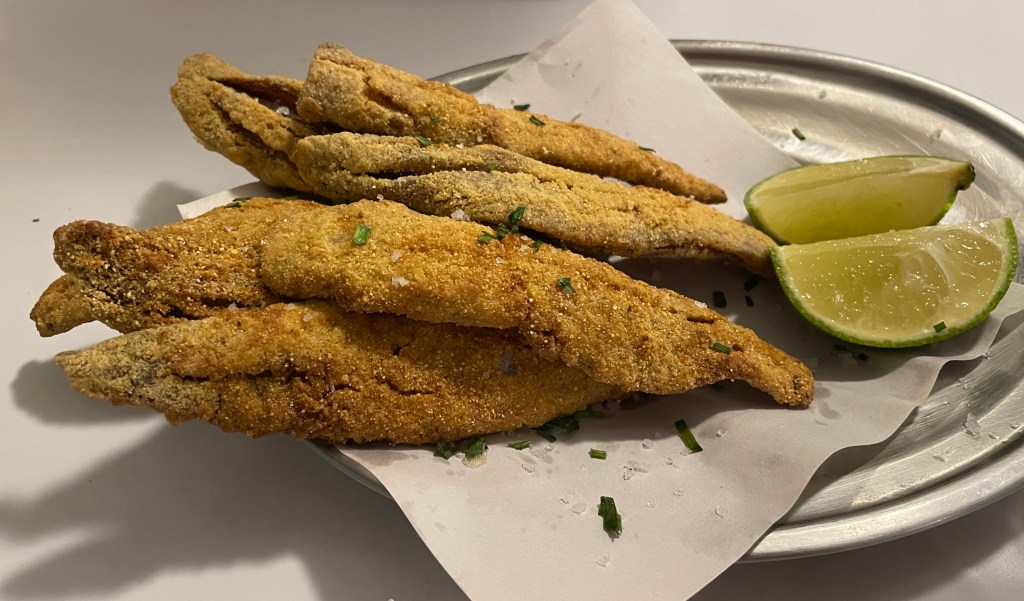
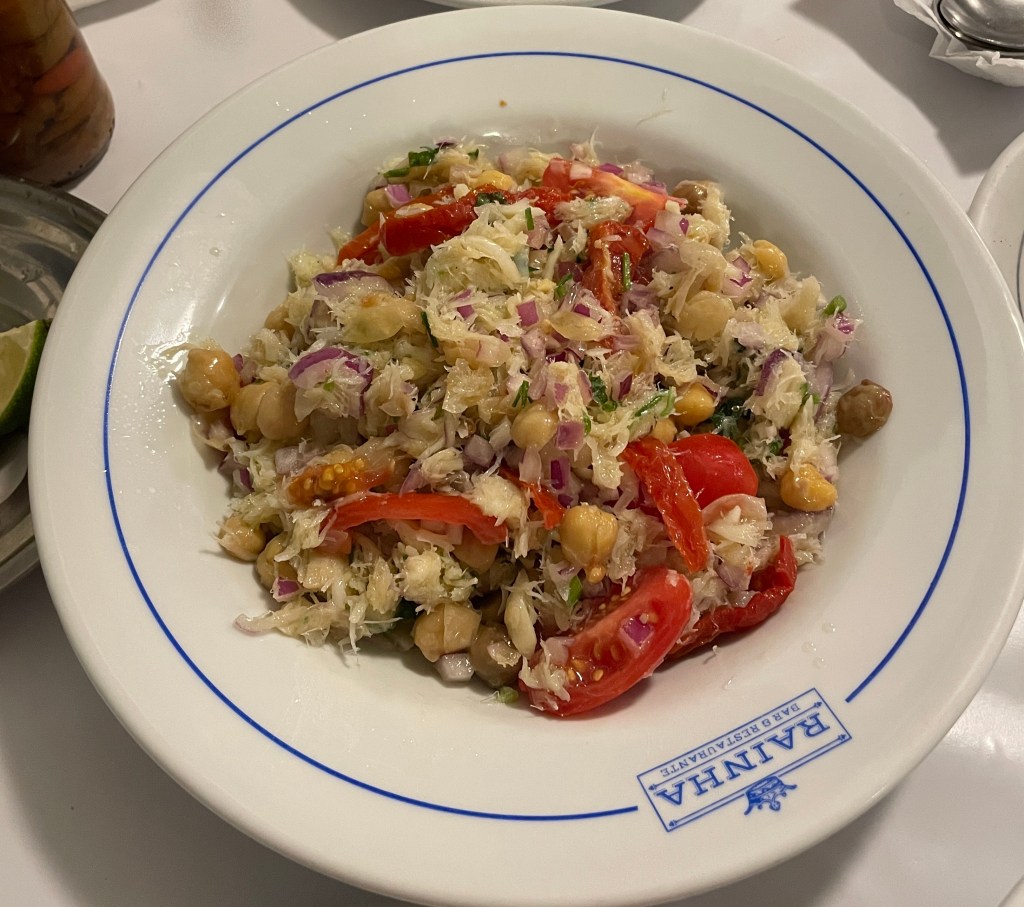
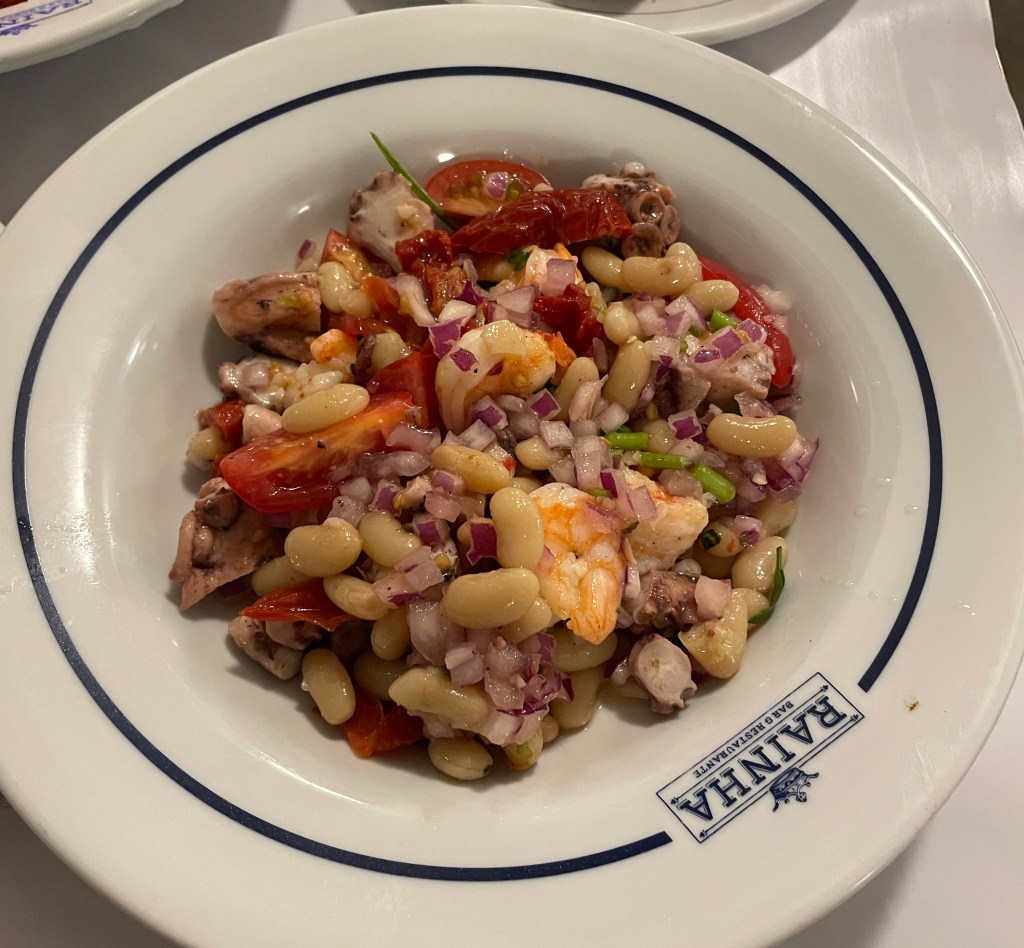
We had to have seafood one more time before we left Brazil and decided to eat at Boteco Rainha, a well-regarded seafood restaurant in the Leblon neighborhood. Due to a misunderstanding, we ordered breaded and fried sardines which Adam had to eat on his own (left photo). We’re not typically big on sardines, but he said these were very good. We also ordered two seafood salads. One was a bacalhau (salted & rehydrated cod) salad with onion, garbanzo beans, capers, tomatoes, and sun-dried tomatoes (middle photo). The other was a shrimp and octopus salad with white beans, onions, tomatoes, and sun-dried tomatoes. The dressing for both was just olive oil so that the flavors could really come through. So simple and so rich.
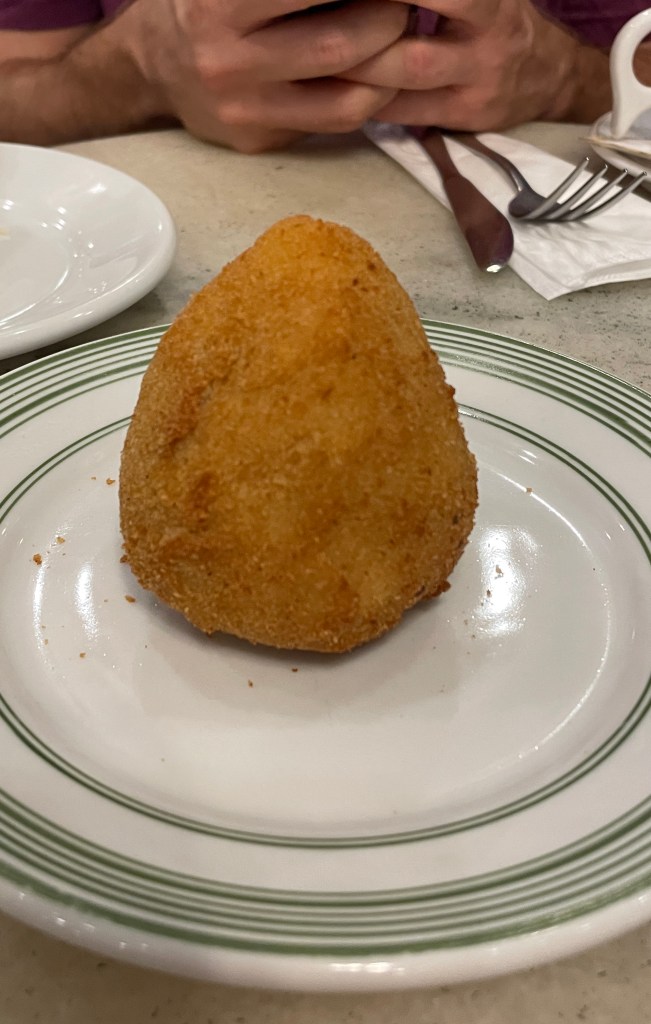
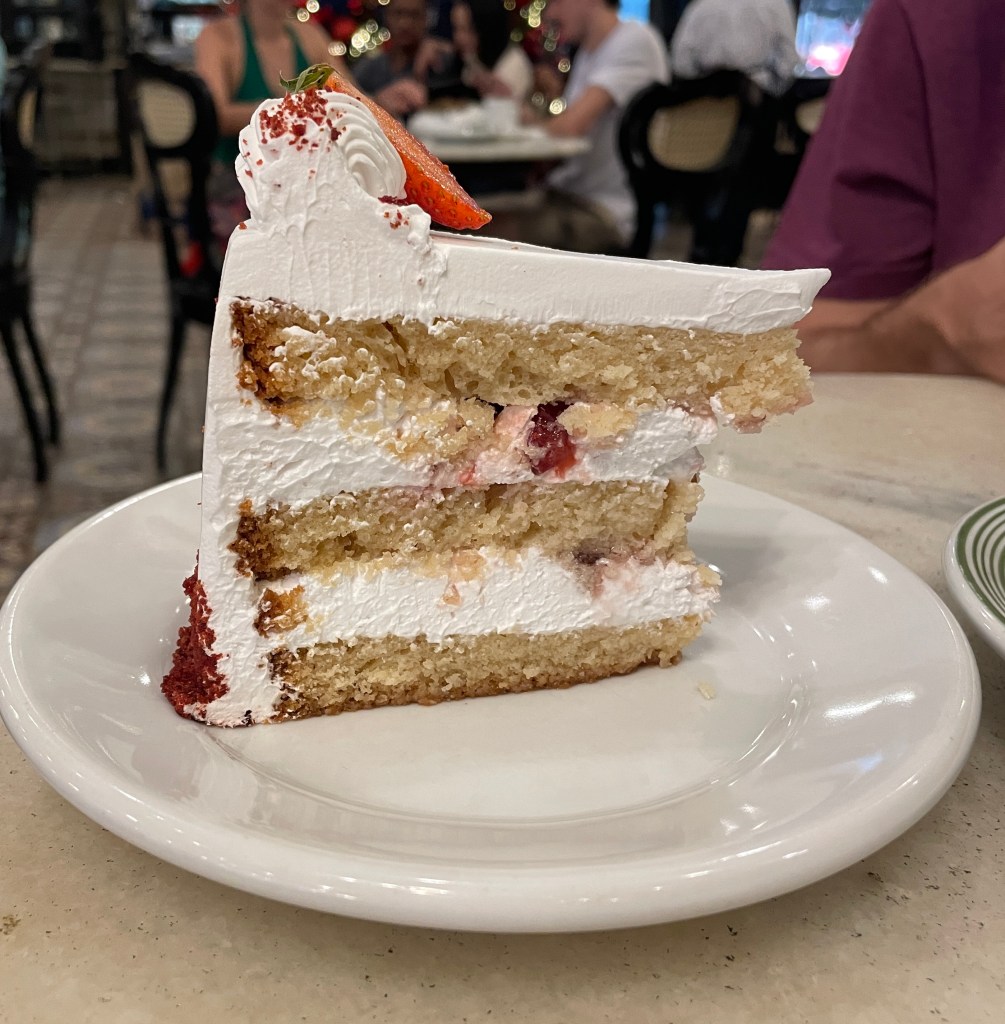
During one of our big exploration days, we visited Confeitaria Colombo, a classic Rio de Jainero café. The building is a repurposed cinema with two floors of seating and old-timey elevators. (The photos we took are full of glare because of too many lights and mirrors, but it’s very pretty and worth stopping by for lunch or a quick nosh and coffee.) As we walked in, all the savory and sweet baked goods are on display, which felt a bit retro but made ordering very easy. Adam tried a croquette called coxinha, a very popular street food I was dying for him to try (left photo). Fillings range from cheese to potato to a variety of meat, but he ordered chicken. Adam’s verdict: good but not amazing, especially without any hot sauce to give it some oomph. (Why don’t South Americans like spicy food?) He also treated himself to a slice of vanilla cake with little bits of strawberry, which is one of the few desserts he craves twice a year (right photo).
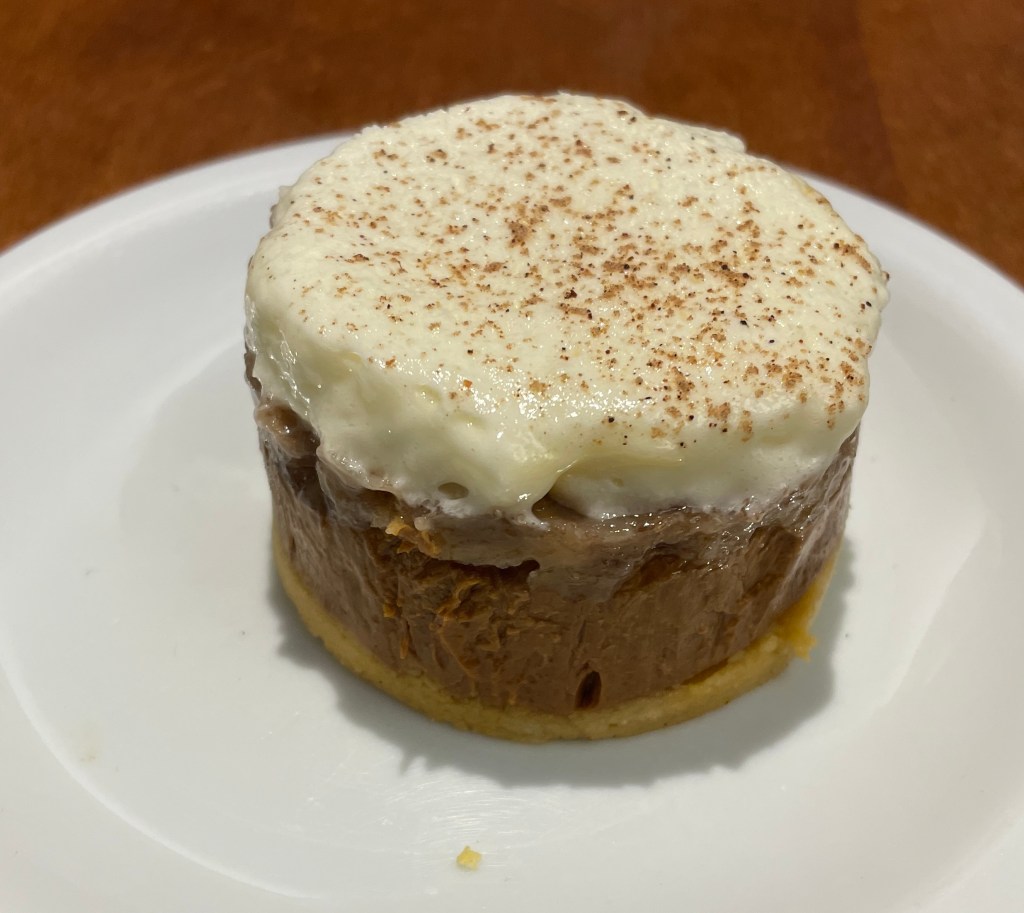
At a different café, I had a chance to order a gluten-free and dairy-free banofe pie. For those who don’t know, banofe pie has layers of banana, dulce de leche, and cream. I hadn’t had anything banofe in so long that I forgot how wonderfully sweet it is.
There is so much more food I wish we had time to try. We’ll be back, though, and we’re coming hungry so watch out Brazil! Don’t forget to read more posts about our time in Rio in Adam’s corner before we blog about our next destination. Be sure to like, comment, and subscribe to Traveling While Introverted so you don’t miss it!
 Traveling While Introverted
Leave a reply to A Public Transportation Fix in Rio de Janeiro – Traveling While Introverted Cancel reply