Since my last post in this corner, I finished The Rose of Sebastopol by Katharine McMahon. So much of the book focused on the mundane drudgery of war and how everyday people are at the mercy of a few powerful men and their egos. The book is set in the mid-1800s when Florence Nightingale’s band of nurses were still very controversial because the field of medicine lacked so much of the knowledge we take for granted today. This was a time period when the best remedy for a broken leg was amputation; setting the bone was considered controversial. No one knew about germ theory; instead, foul odors were thought to spread disease. As the days bleed into one another and war rages, a new normal emerges for Mariella, the narrator and main character, that I think would be so difficult to endure today. Then again, one of the reasons humans are so prolific is due to our insistence on adapting to new situations. At any rate, the ending is wonderfully tragic, just as I hoped. McMahon’s writing kept me in suspense until the very end. It’s been two months since I finished the novel and I still find myself thinking about the characters and feeling misty-eyed.
Next, I read The Wives of Los Alamos by Tarashea Nesbit. I didn’t intentionally set out to pick up another book about wartime, in case you’re wondering. This book has a very unique style of writing: each chapter features a situation and is described through the very many conflicting experiences of women who lived in Los Alamos, New Mexico from 1943-1945. These women were married to the scientists who built the bomb. They cleaned, cooked, raised children, laughed, and cried with zero knowledge of what their husbands and the Army Corps were building. These women only learned the truth when they read Atomic Energy for Military Purposes: The Official Report on the Development of the Atomic Bomb Under the Auspices of the United States Government, 1940-1945 also known as The Smyth Report). The Smyth Report was published just a week after Nagasaki and Hiroshima were bombed. Smyth begins his preface with “The ultimate responsibility for our nation’s policy rests on its citizens and they can discharge such responsibilities wisely only if they are informed.” The irony of this statement both for the women who lived in Los Alamos and our time of deep misinformation is laughable.
I cannot imagine what sitting on a secret like building a nuclear bomb would have done to my marriage if I was in one of those women’s shoes. How can you possibly trust your partner after knowing what they knew for years? How can you live with the guilt of contributing to weapons of mass destruction?
What I appreciated the most about the novel, once I got used to the vignette style, was the cacophony of contradictions and complexities. There was no uniform experience, except for the secrecy and the never-ending dry dust of the New Mexican desert. As an added bonus of getting swept up in such a fascinating time period, I also learned that snafu is actually an acronym: Situation Normal, All Fouled Up. Now we all have a fun fact to share the next time there’s a lull in the conversation.
At the end of June, I attended the annual Association of Jewish Libraries conference, a professional organization for librarians who work or want to work in the world of Judaica, however large or small. The conference was warm and insightful as always, and this time I attended the award banquet dinner that highlighted exceptional works of fiction and non-fiction. I was inspired to read the book Kaplan’s Plot by Jason Diamond, which won the 2026 Jewish Fiction Award, after I heard Diamond’s acceptance speech. The novel is set in Chicago and follows a mob boss, Kaplan, from his childhood when he immigrates from Eastern Europe. I absolutely love novels that jump backwards and forwards in time – it’s such a clever technique to slowly paint a full picture. The characters are flawed but endearing, and I absolutely did not expect the ending. While the book focuses heavily on men, women are full characters and not just “the wife” or “the daughter.” The novel slightly reminded me of The Yiddish Policeman’s Union by Michael Chabon, but much more gripping and interesting. Who said only Italians can be gangsters?
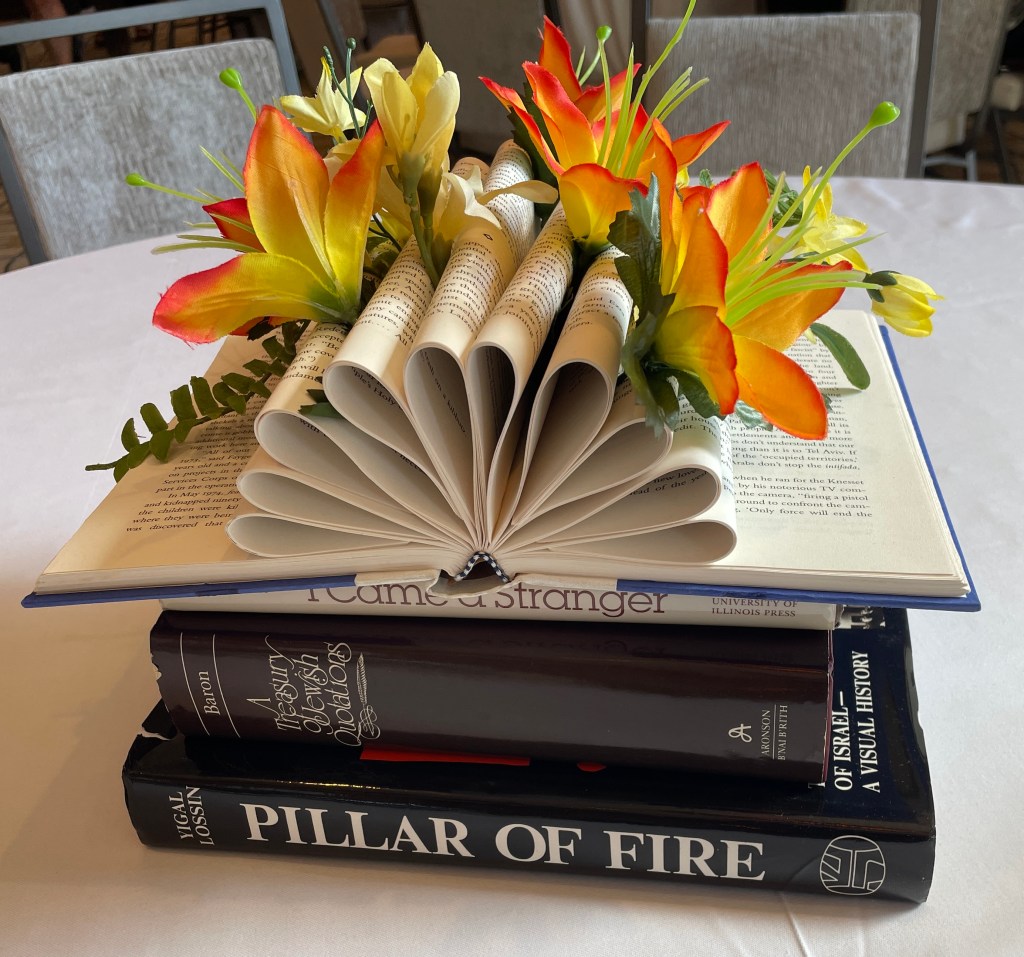
Before moving on, I do want to quickly mention these beautiful centerpieces at the AJL conference. Not only did centerpieces made of discarded books make so much sense for a conference for librarians, publishers, and authors, but this was such a clever way to make use of them before they were sold or donated. (At the end of the conference, attendees could take any of the books as well.)
The last book I read while we were in Los Angeles (a post about our big move will be published soon!), was The Harem Midwife by Roberta Rich. When I picked it up from the library, I didn’t realize it was a sequel; I would have chosen the first book had I known. My main motivation was that it was a new-ish book in Hebrew. I haven’t read a book in Hebrew in a very, very long time and since I’ve been reading so much since Costa Rica, I wanted to level up. I don’t really have an opinion of the novel since I didn’t finish it, but I hope to return to it. If you’ve read it, I’d love to hear your thoughts.
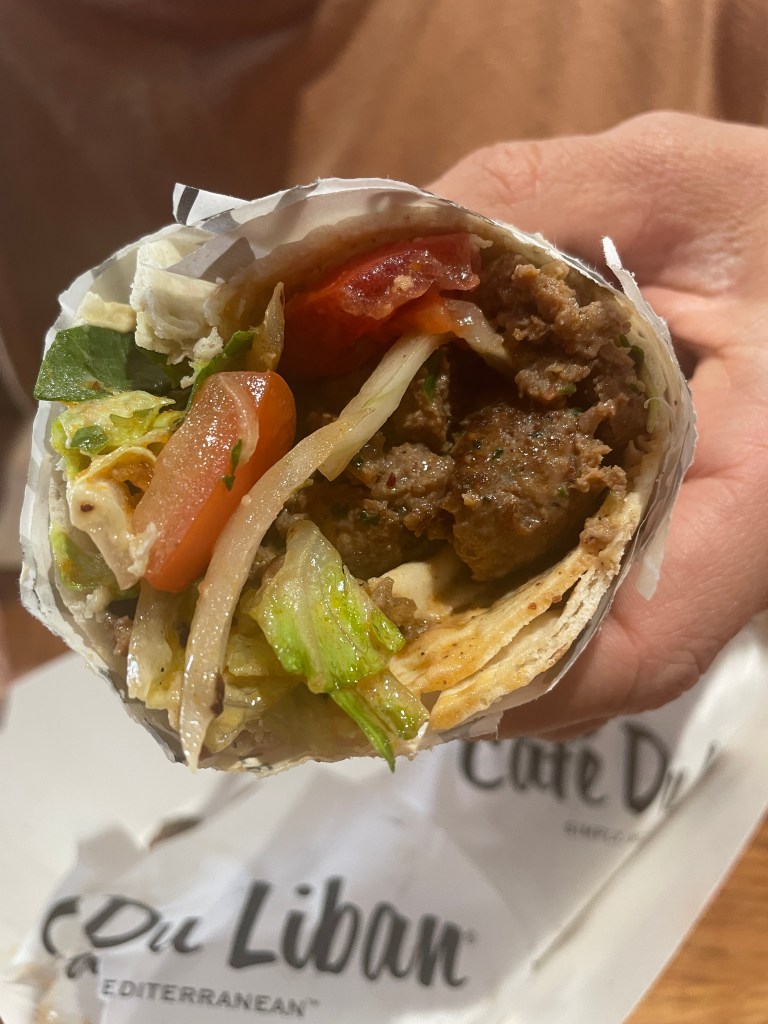
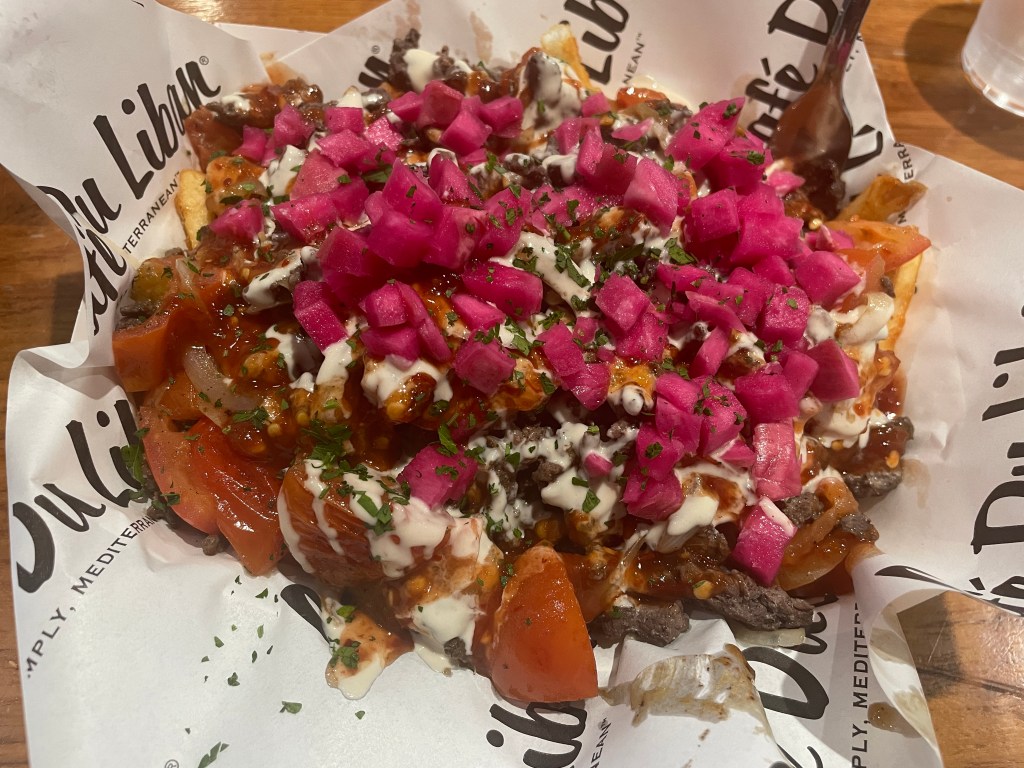
Since the last post in this corner, we have had so many opportunities to take part in the excellent restaurants all over The Valley. One day while running errands, Adam and I stopped at Cafe du Liban for lunch. When I was little, my family would frequent this restaurant and I can still remember how lemony their tahini was. It’s changed quite a bit over the decades, so I was excited to check it out. Adam ordered a gyro wrap (left) and I had the beef shawarma fries (right), with extra tahini and toum (a Lebanese garlic sauce). If you’re wondering what the pink bits are, those are pickled turnips, one of my most favorite pickled vegetables. The turnips turn pink because they’re pickled with beets for added natural sweetness.
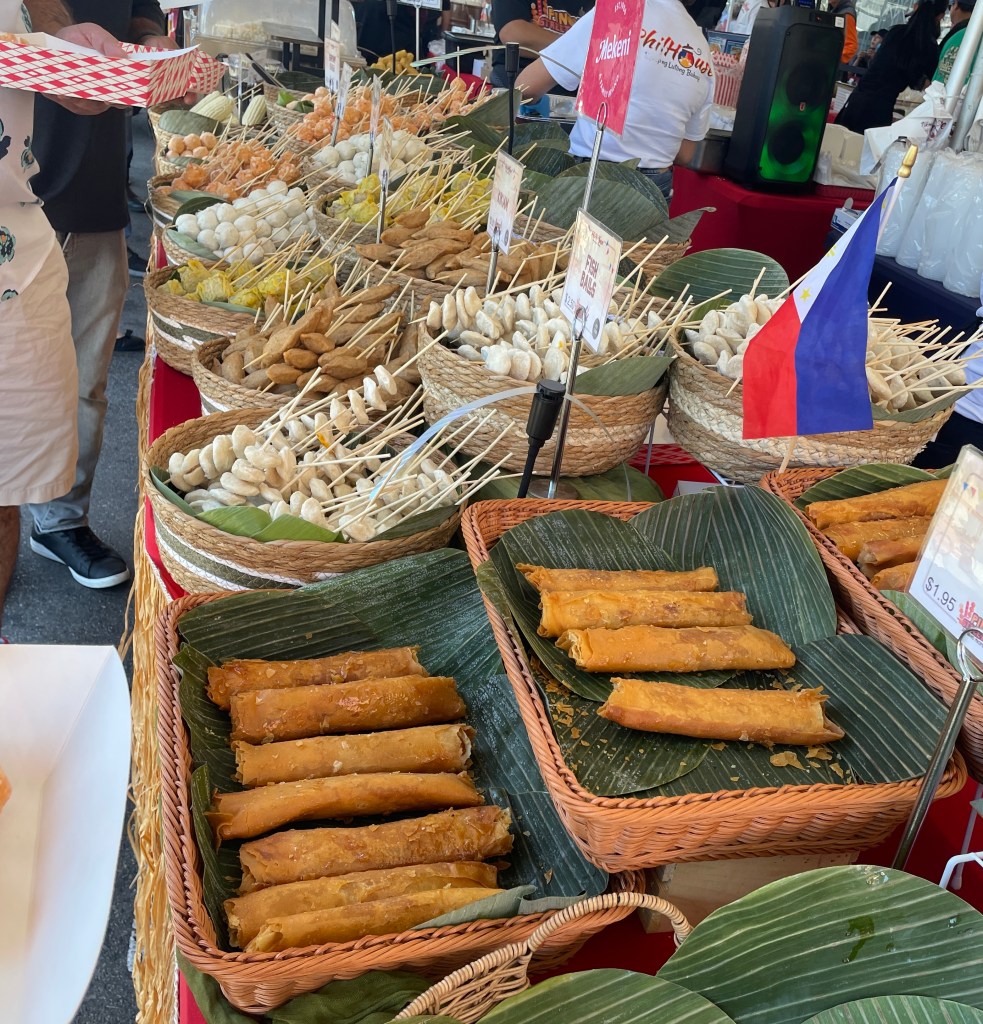
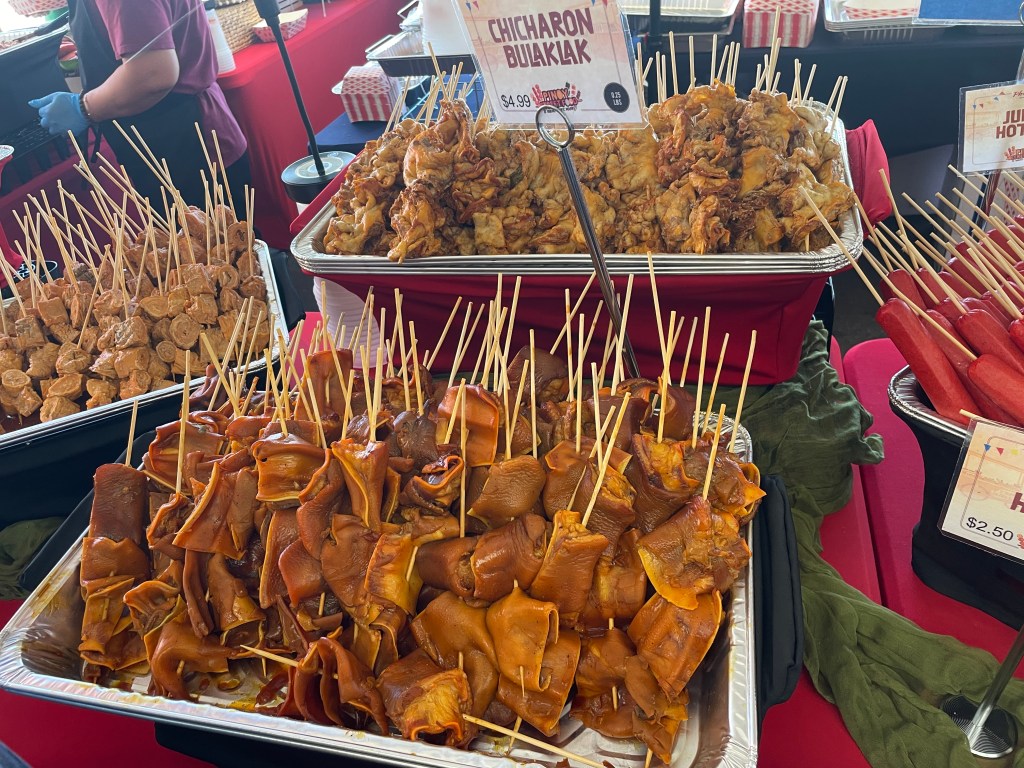
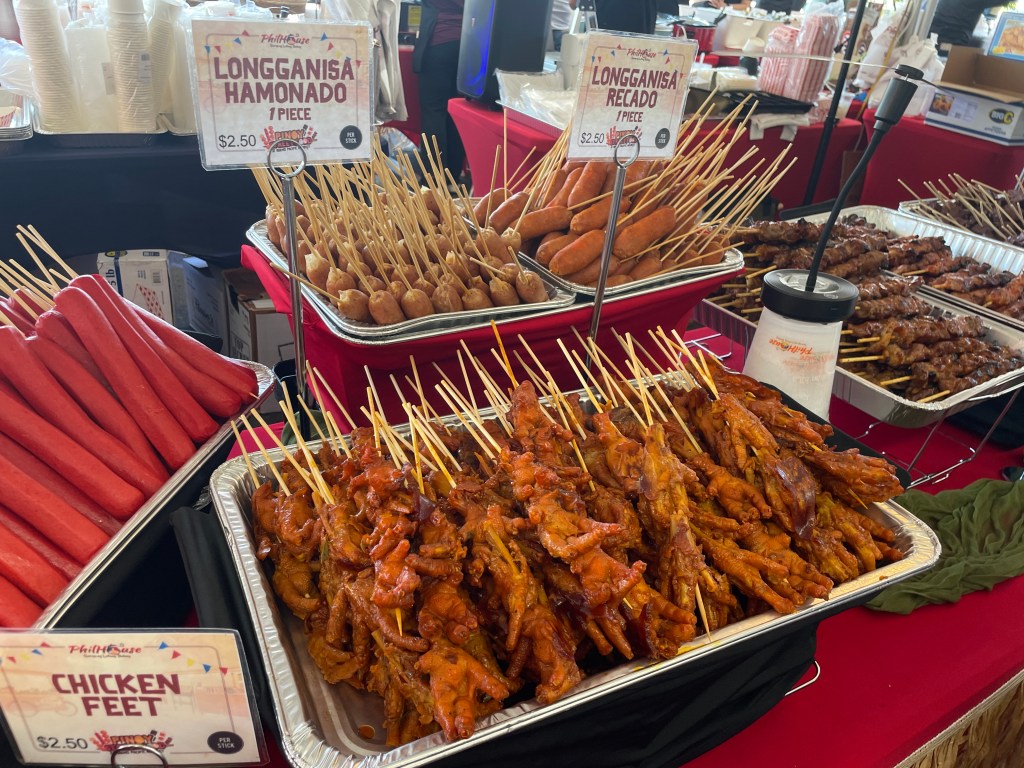
I randomly discovered that a Pinoy (Filipino) grocery store not far from my mother’s house called Island Pacific Seafood Market hosts big cook outs once a month. Adam and I went with our good friend Joey. The selection was huge; the photos below hardly do it justice. Everyone picked items they wanted and they were fried or boiled after we paid so everything was hot. It wasn’t the best Pinoy food we had eaten, but we were glad to partake in such a festive event. One lady asked me if this was my first time eating Pinoy food, and I started rattling off dishes I like and I could tell she was impressed. Also, if you’re wondering, yes that is a huge platter of chicken feet in the bottom right corner and, yes, of course Adam got a skewer.
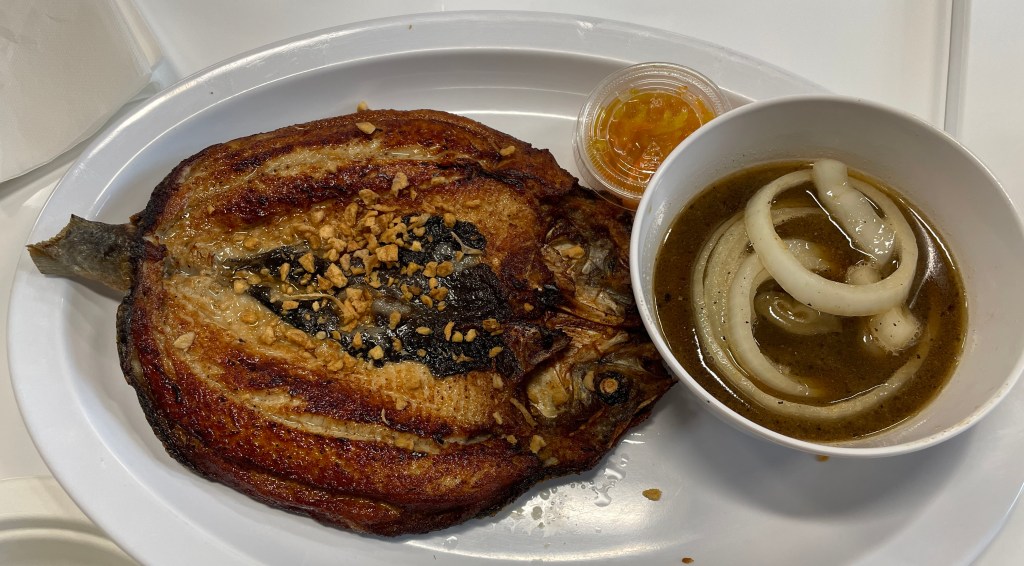
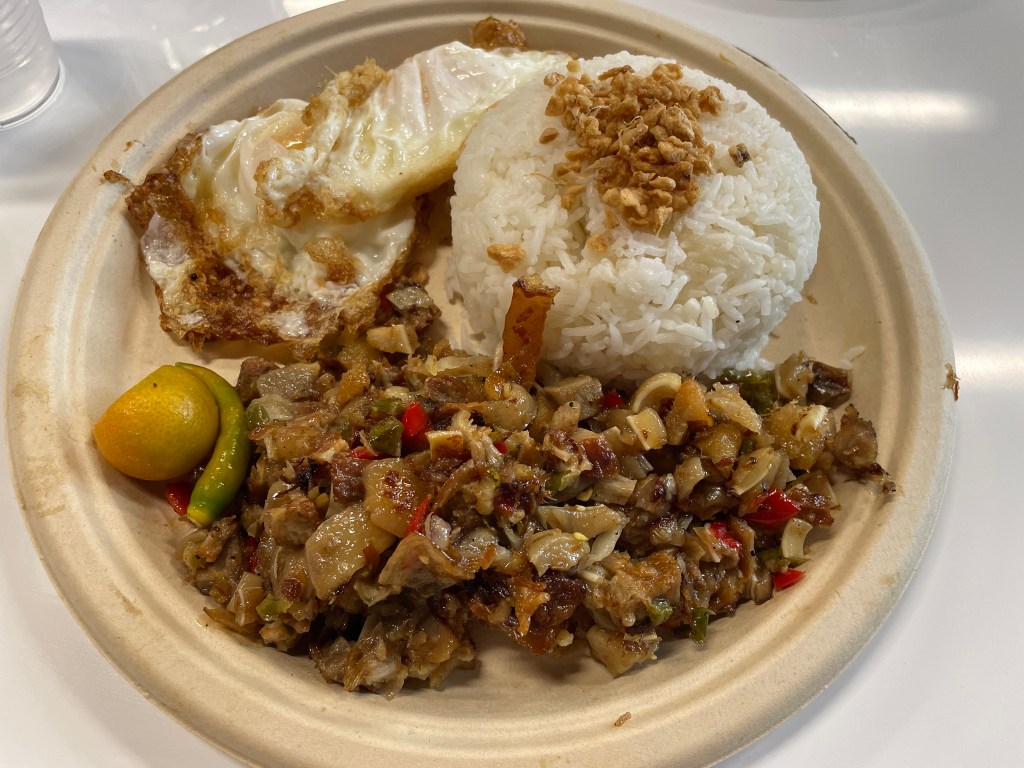
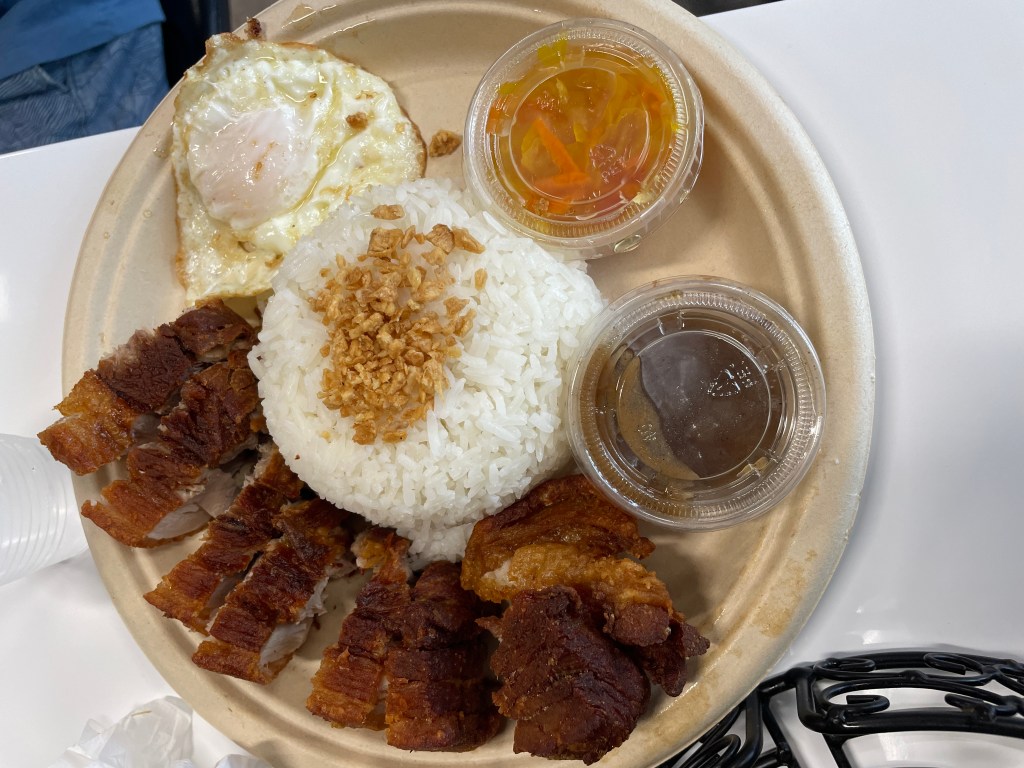
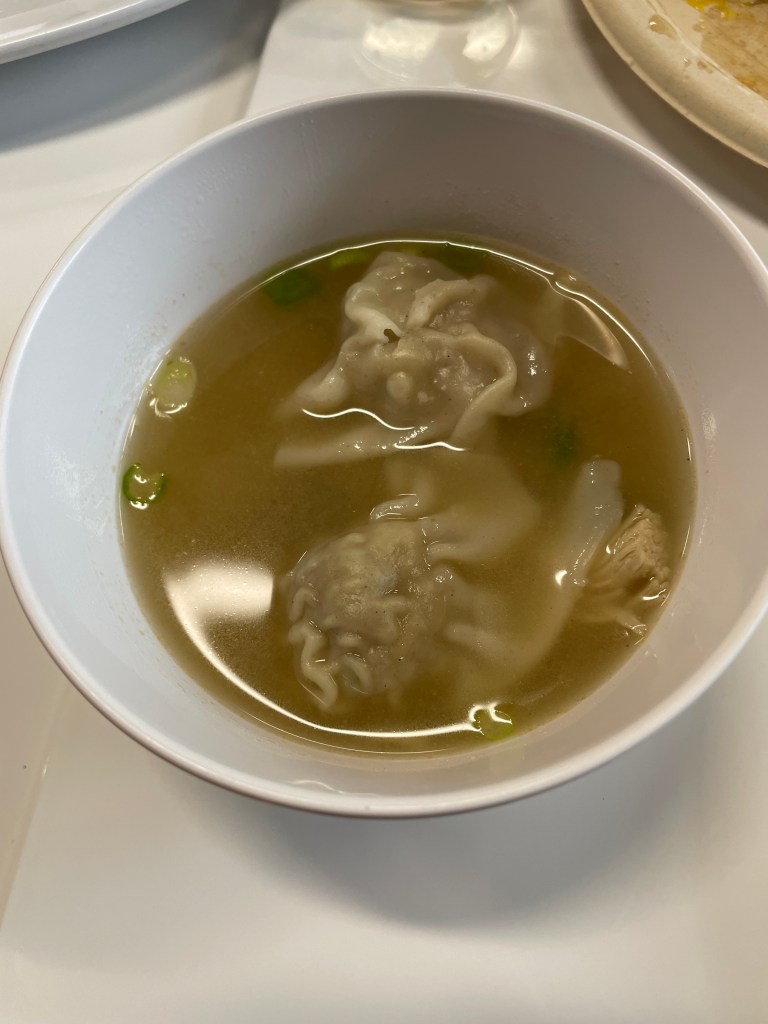
The cookout didn’t quite satisfy my craving for Filipino food, which I think is an underrated cuisine, Jollibee notwithstanding. So, when we debated where to go for lunch with my mom a week later, we took our chances on a nearby restaurant called Bacolod Chick’n Inasal. The food was hot, fresh, and did not skimp on the garlic. The fresh calamansi made it all the more special, too, because it has such a unique citrus flavor.
Top row, left to right: whole grilled fish; sigsig with garlic rice and fried eggs
Bottom row, left to right: fried pork belly with garlic rice and fried eggs; a bowl of soup with dumplings
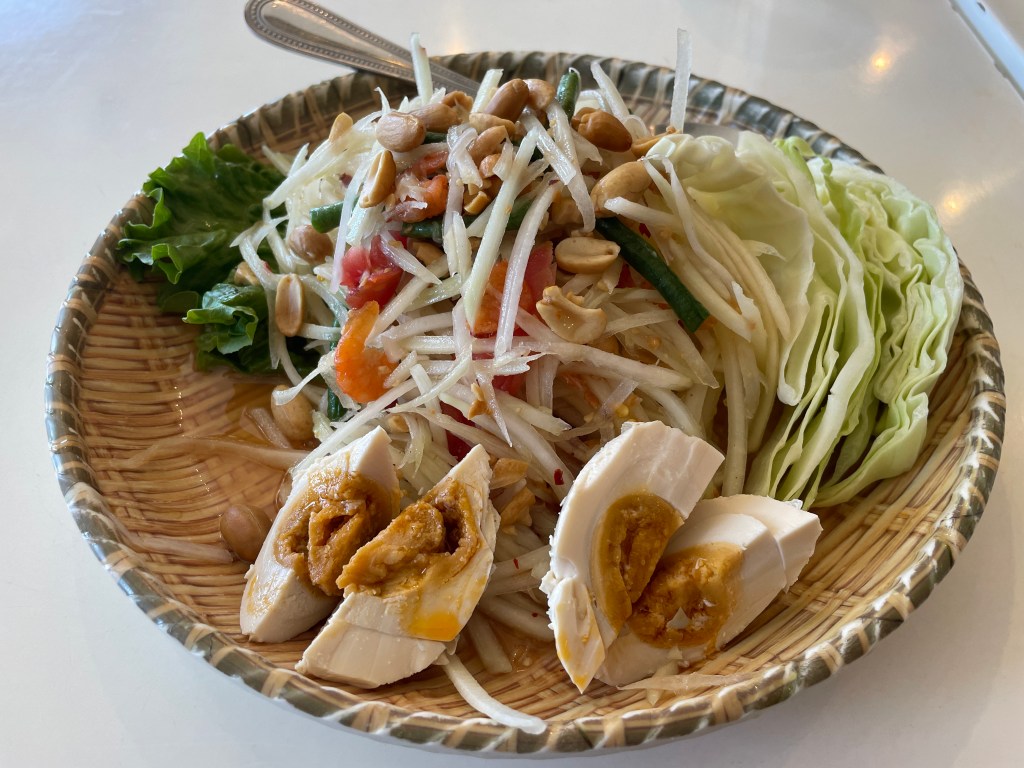
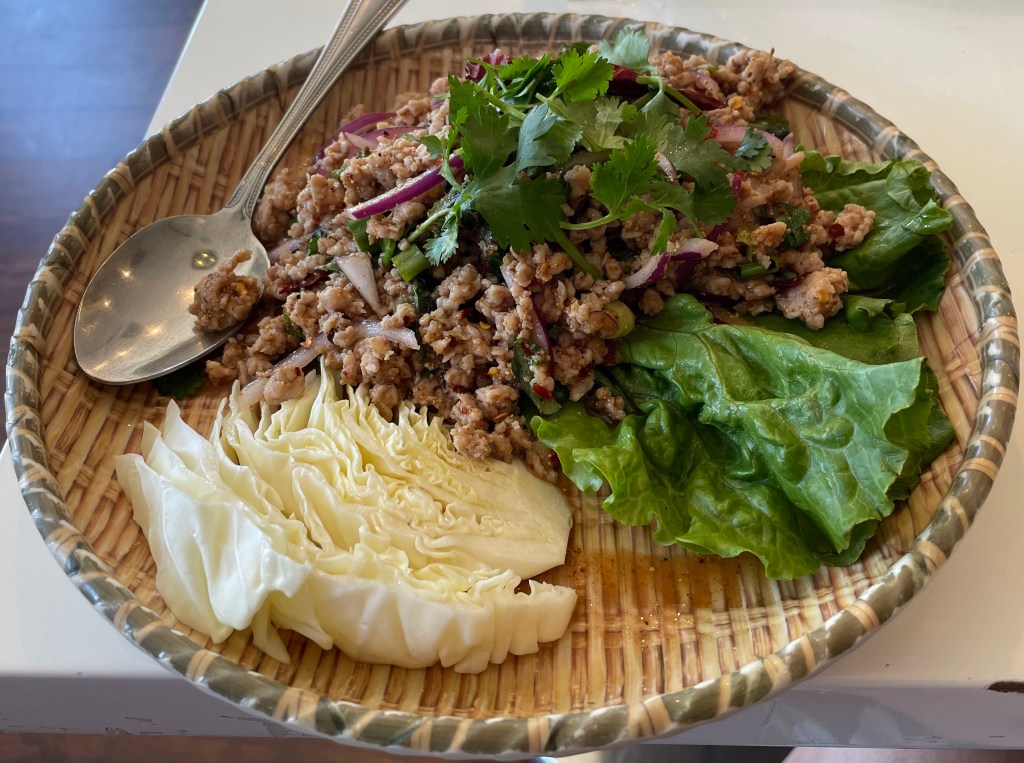
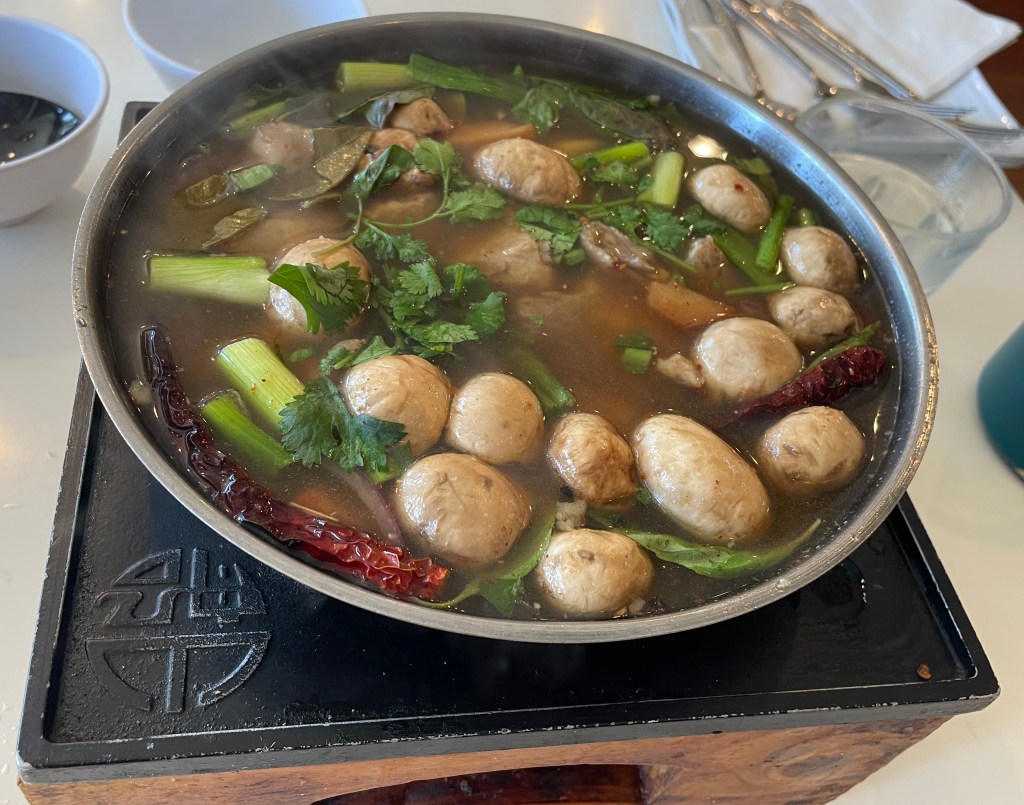
Speaking of cuisines on the Asian continent: when Adam and I were housesitting the English Bulldog Calvin, we were so close to Thai Town that it felt like such a shame not to visit a restaurant at least once. (For those who might not be aware, Thai Town has some of the best Thai food in the United States, but please don’t tell all the tourists. They’ll ruin it.) We settled on Lacha Somtum for lunch on our last day. We shared a papaya salad with salted eggs that was perfectly refreshing for a hot summer day (left). I ate the chicken larb (center) and Adam ordered the Esaan hot pot soup (right). For dessert, we walked to Coco Kanom Thai, a local dessert shop (no photos sadly). They had free samples of a vegan pandan custard that were too savory for my liking. Adam had a scoop of a very milky ice cream, though I did try to convince him to finally buy some durian, the king of fruit! I bought a cup of mango sticky rice for later, which was a first for me. (Typically mango sticky rice has dairy.) I liked it, though I can see why people add condensed milk to it.
A very good friend from the Phoenix metro area visited us while we were in Los Angeles. Since he was staying in Long Beach, we decided to show him the Port of Los Angeles and Long Beach, which is an incredible sight to behold. While we were there, we trekked to Artesia to visit Little India. Our friend, Mihir, is from the southern Indian city of Chennai and we had a feeling that, of all the ethnic neighborhoods in the L.A. metro, this is the one that he would enjoy the most. He did, of course. He told us that quite a few stores are actually chains in India!
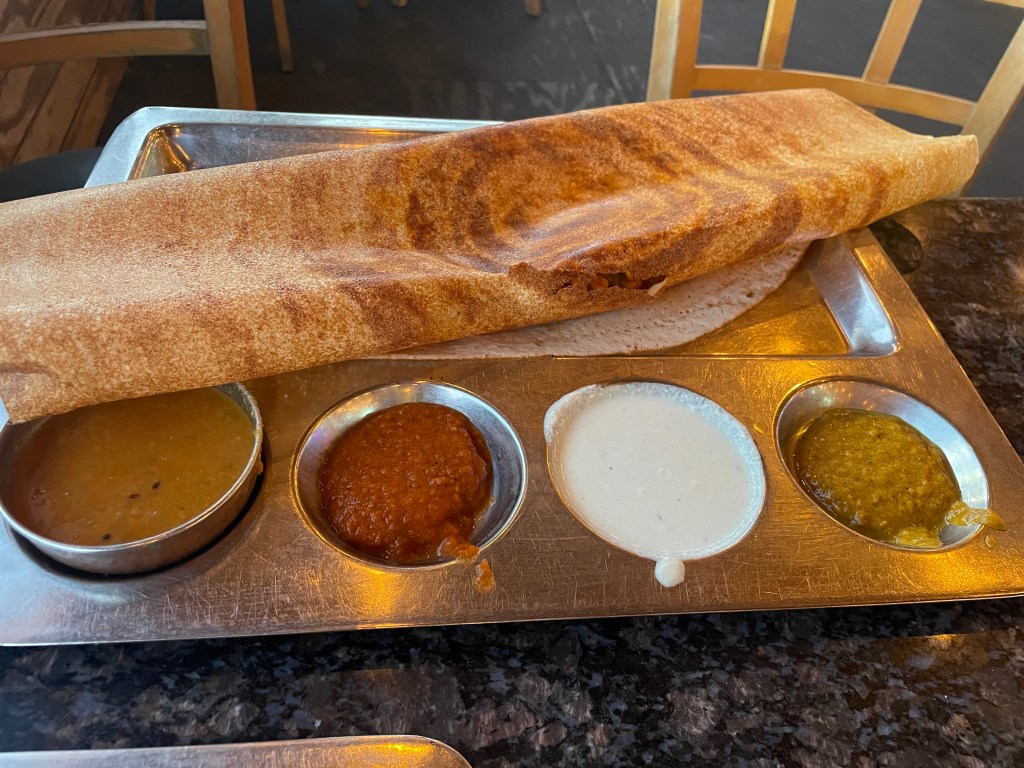
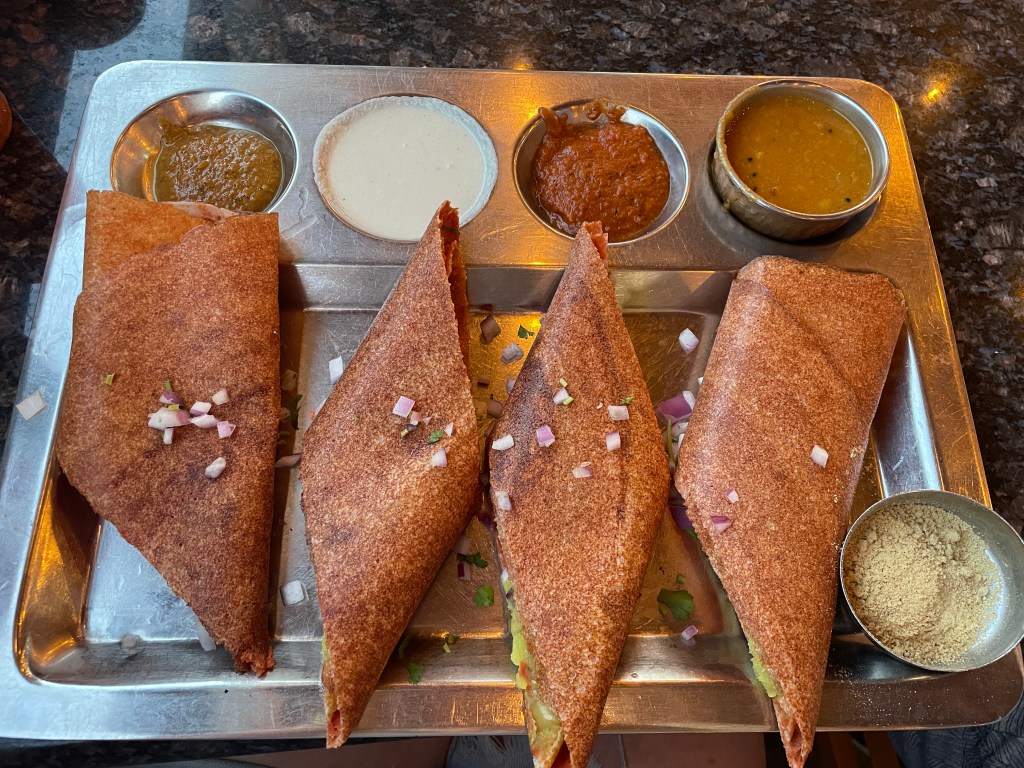
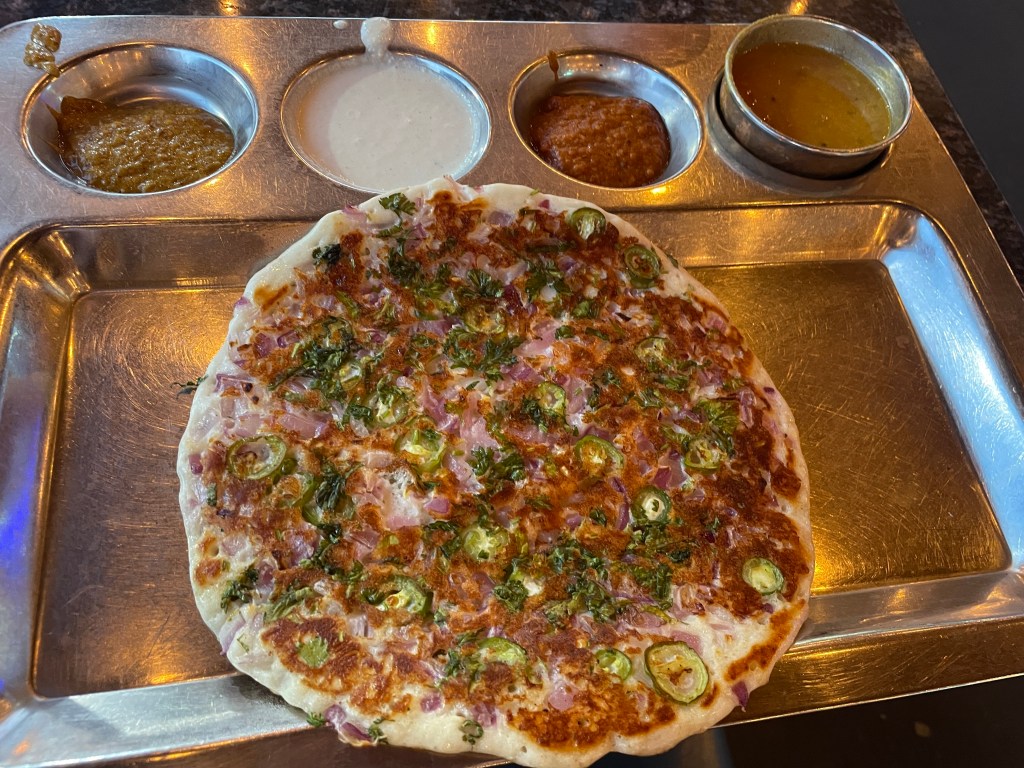
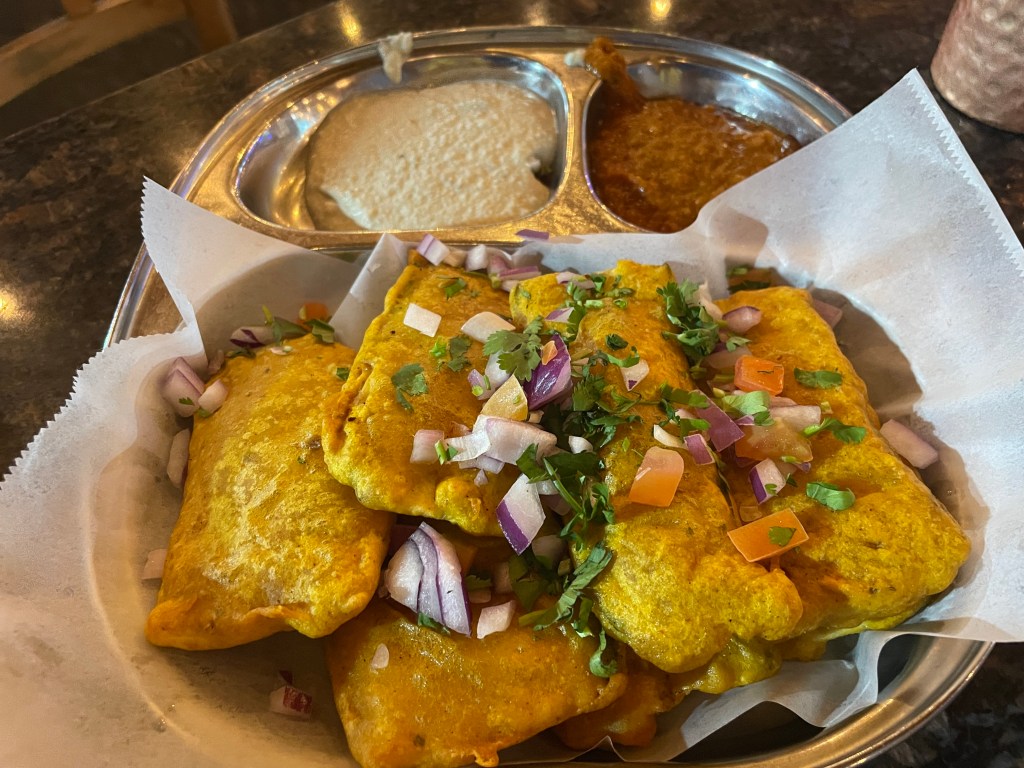
We let Mihir pick the restaurant for dinner, which isn’t a big deal since Little India isn’t very big. After walking around, we sat down at the very unassuming Bhimas Indian Vegetarian. While Mihir ordered a traditional dosa, I ordered the house specialty, mysore masala dosa. Dosas are very thin crepes made from fermented lentils that are stuffed with all kinds of fillings. Traditionally, they are also topped with ghee which gives them an extra buttery quality. My dosa was probably the best I’d ever had, even without the ghee, and the chutneys were delicious. Adam ordered the uthapam topped with onion, tomato, and chili. Uthapam (or uttapam) is a thick and savory pancake with all sorts of toppings and served with chutneys. We also shared a side of cut mirchi: fried dumplings made from chickpea flour and filled with chilis. While I love fried foods from all over the world, I think Indians make the best ones. They really know how to fry a fritter, no matter what the batter.
For dessert, because I needed something cool to calm all that spicy goodness, we went to an ice cream shop where we tried traditional Indian ice cream flavors such as saffron, kulfi (pistachio and cardamom), gulkand (rose petal), and rojbhog (click the link for an explanation). I don’t remember what flavor I got, but I remember it was incredible. Indians don’t get enough credit for how flavorful and creamy their ice cream is, even when it’s vegan.
Top row, left to right: classic dosa; mysore masala dosa
Bottom row, left to right: uthapam with onions, tomato, and chili; cut mirchi
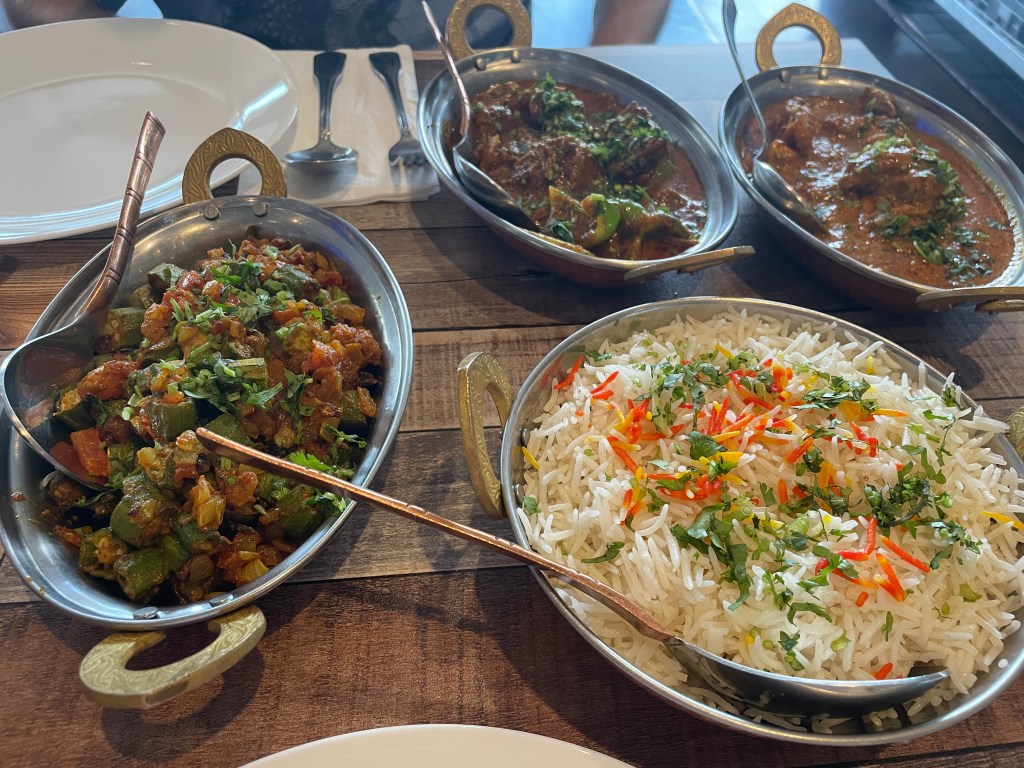
We didn’t mention this in our main blog post about our time in Los Angeles, but thanks to Adam’s father, we had an opportunity to house sit without pets. There were so many restaurants we wanted to try, but one worth mentioning was a little hole in the wall called Tandoori Eats. Much like the restaurant Mihir chose, it was so unassuming and just as delicious. Adam and I shared bindi masala (okra in tomato sauce), lamb karahi, and goat achari. Karahi is actually a Pakistani curry with a wonderful rich flavor, while achari curry uses pickling spices such as nigella and mustard seeds for flavor. We had never tried either, which is always exciting for us. Adam also ordered a naan of course.
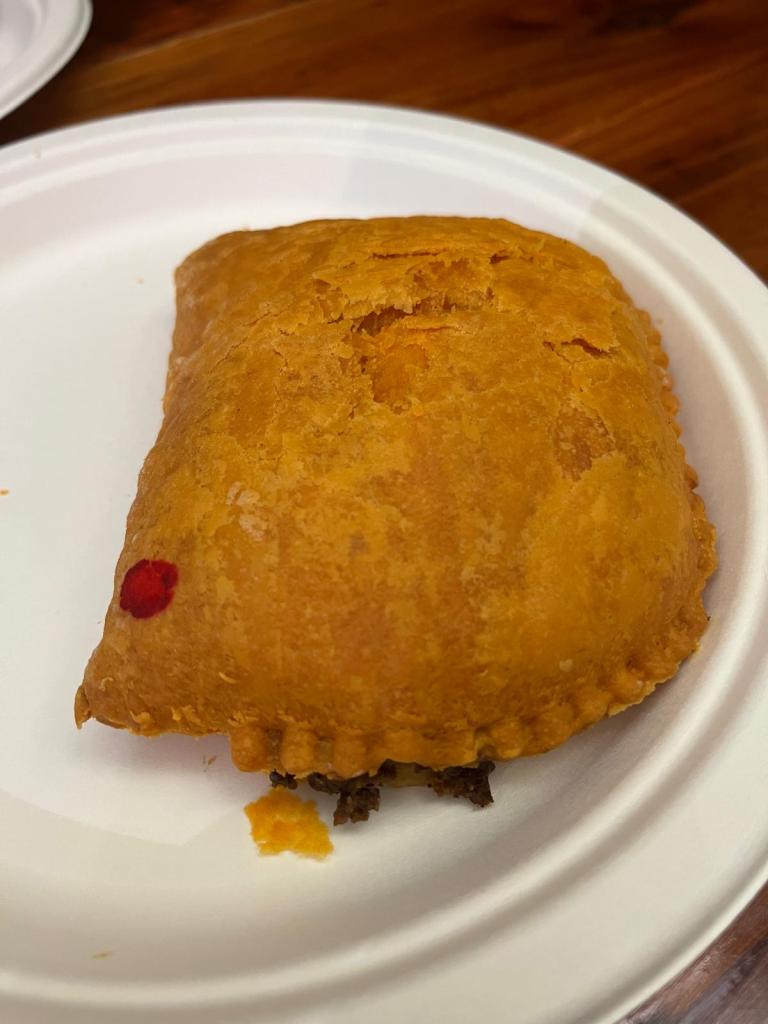
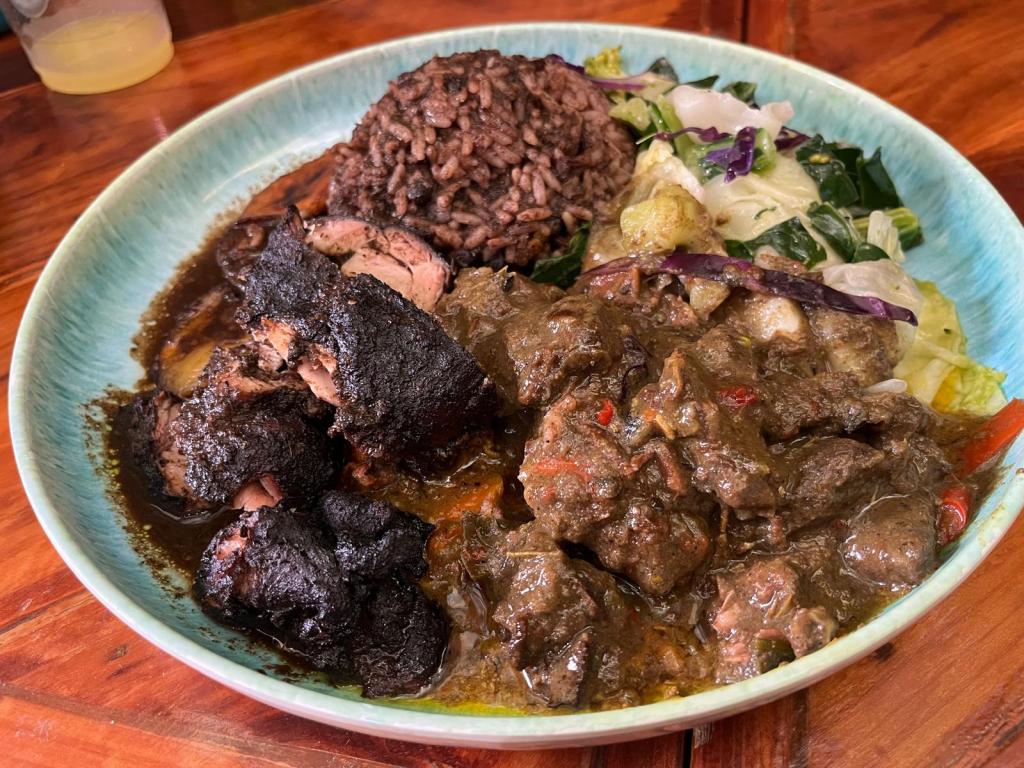
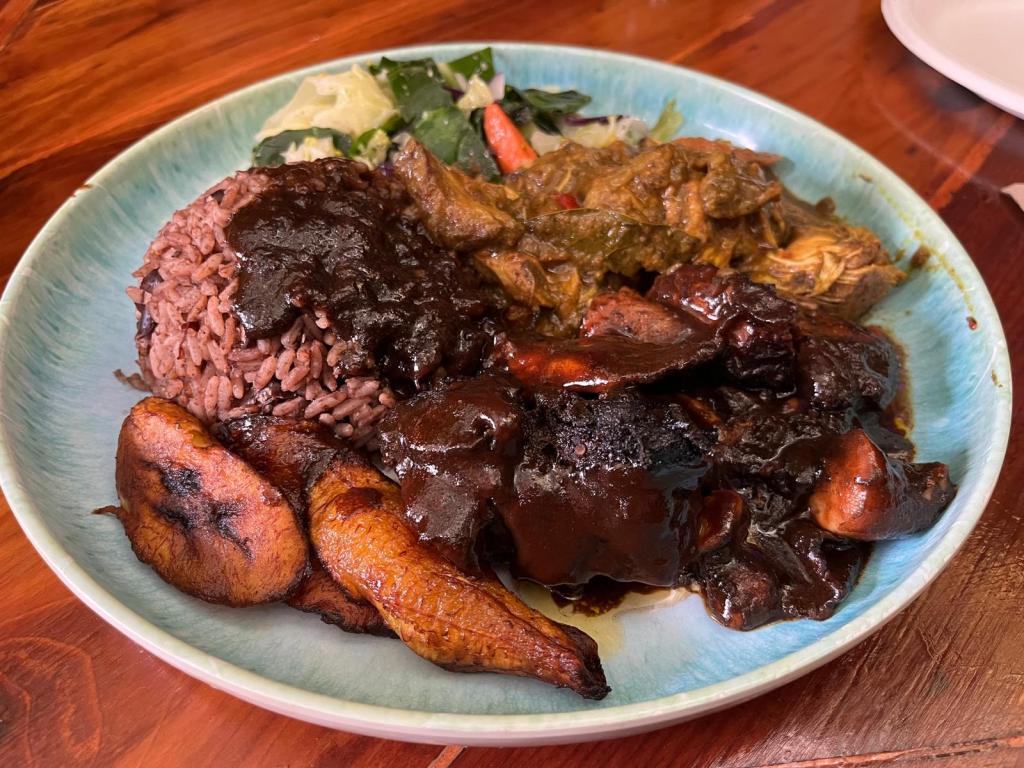
Speaking of curries, we randomly had lunch with our good friend Joey (same one from the Pinoy cookout) at Sattdown Jamaican Grill. Jamaican cuisine has been one of my ultimate favorite cuisines by the time I entered adulthood. I don’t know how I initially found it, but when I had it for the first time, I fell head over heels for this particular combination of hot, sweet, savory, and spice. Plantains were a revelation too. At the restaurant, Joey and Adam shared a meat patty which they said was
(left photo). We all ordered combo plates. Adam ordered jerk chicken and curry goat with rice and stewed cabbage (center photo), while I ordered the jerk bbq chicken and curry chicken with rice, plantains, and stewed cabbage (right photo). (Joey ordered a similar combination.) This tiny little restaurant with three crammed table is superb and I would be remiss not to recommend it if you’re in the area.
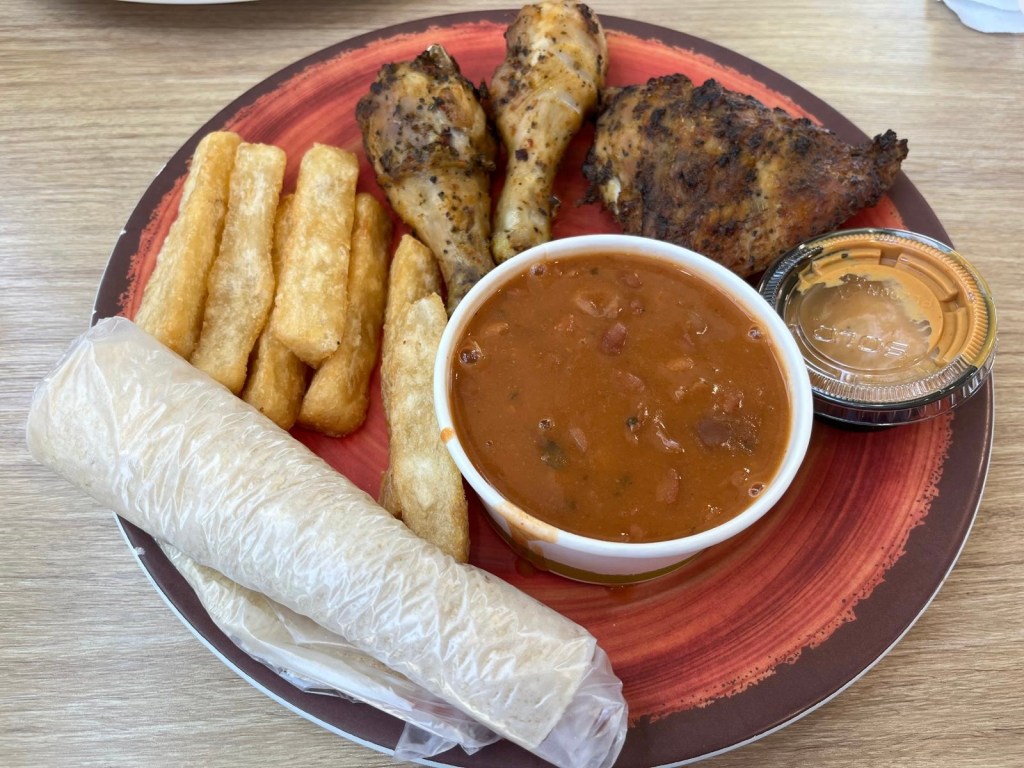
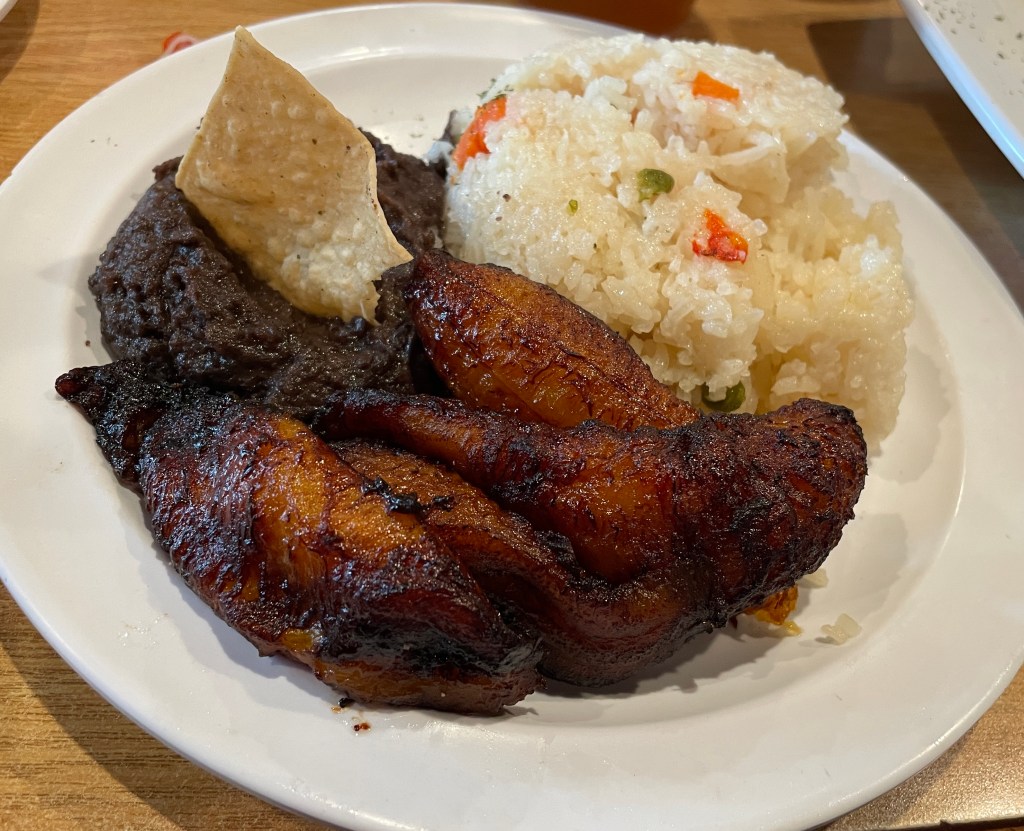
Since my other Los Angeles post, we had Guatemalan food three additional times. We finally went to Pollo Campero, a Guatemalan chain of roasted and fried chicken. Every time we thought about going while we were in Guatemala, we found a hole in the wall rotisserie to visit instead. So, one day when we were craving rotisserie, we finally decided to go. Was it the best rotisserie chicken I’ve ever had? No, but it was much better than many other chains. Plus, you can get sides like fried yucca (so much better than french fries) and very delicious beans. Below is my plate that was very similar to Adam’s.
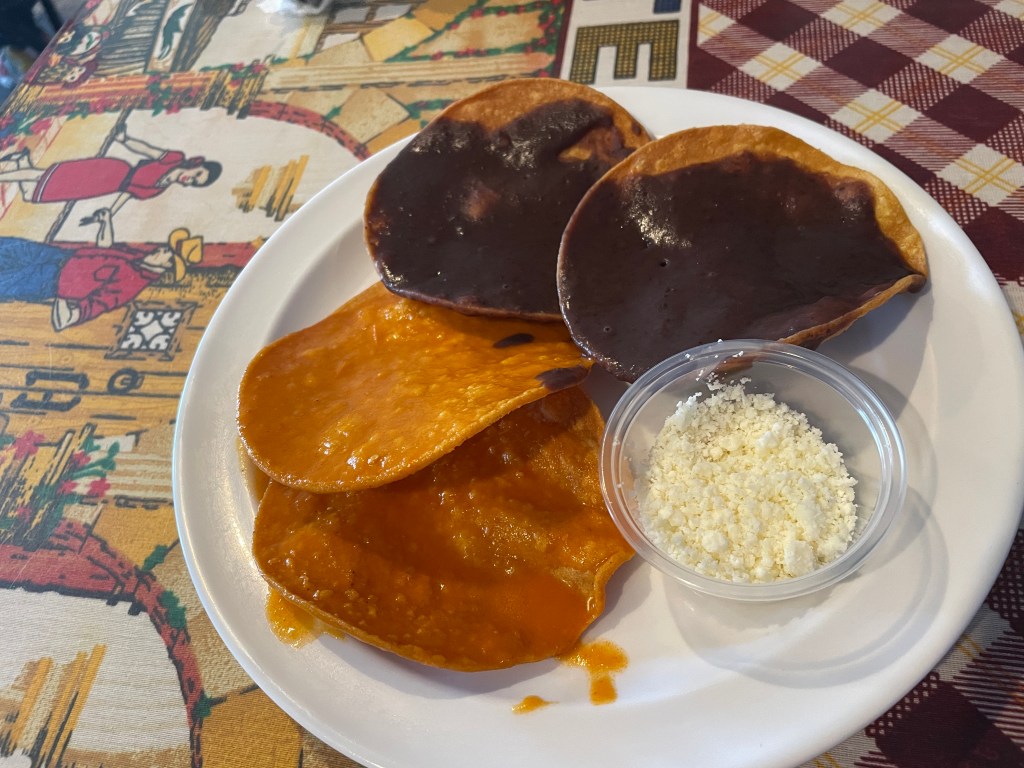
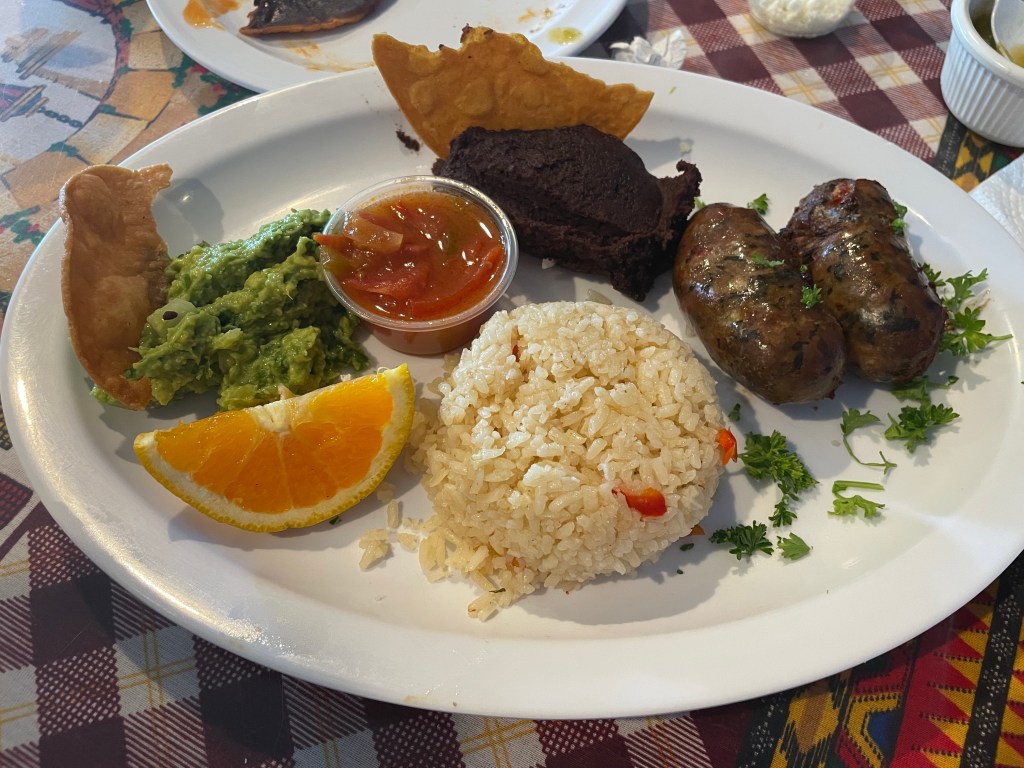
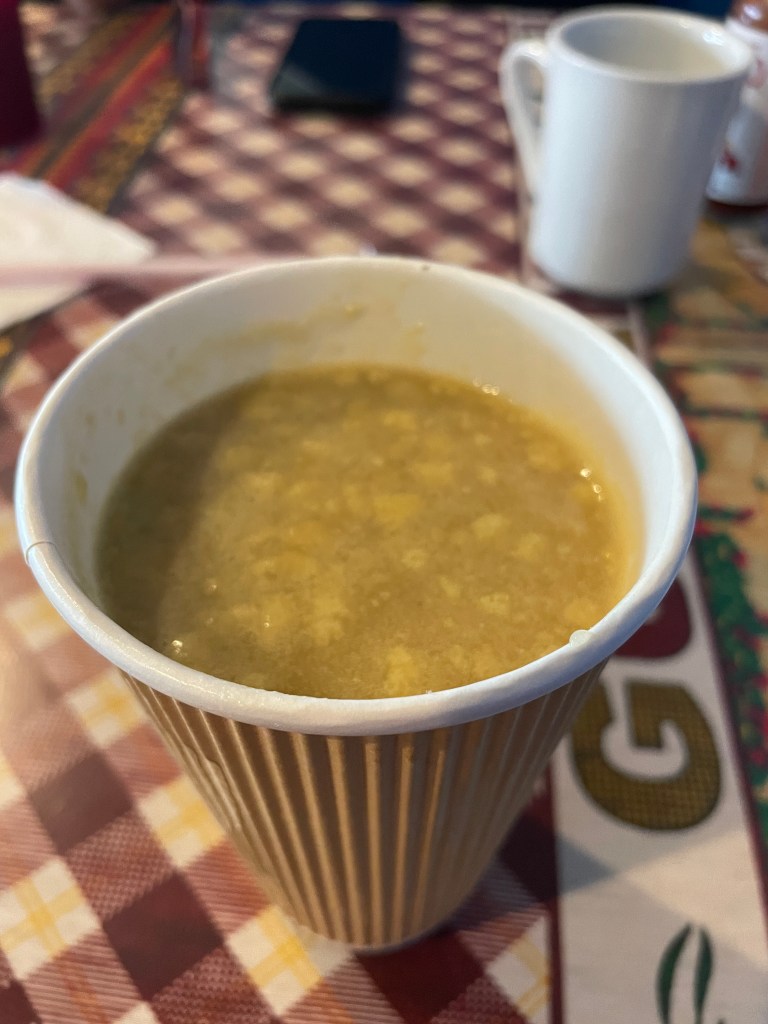
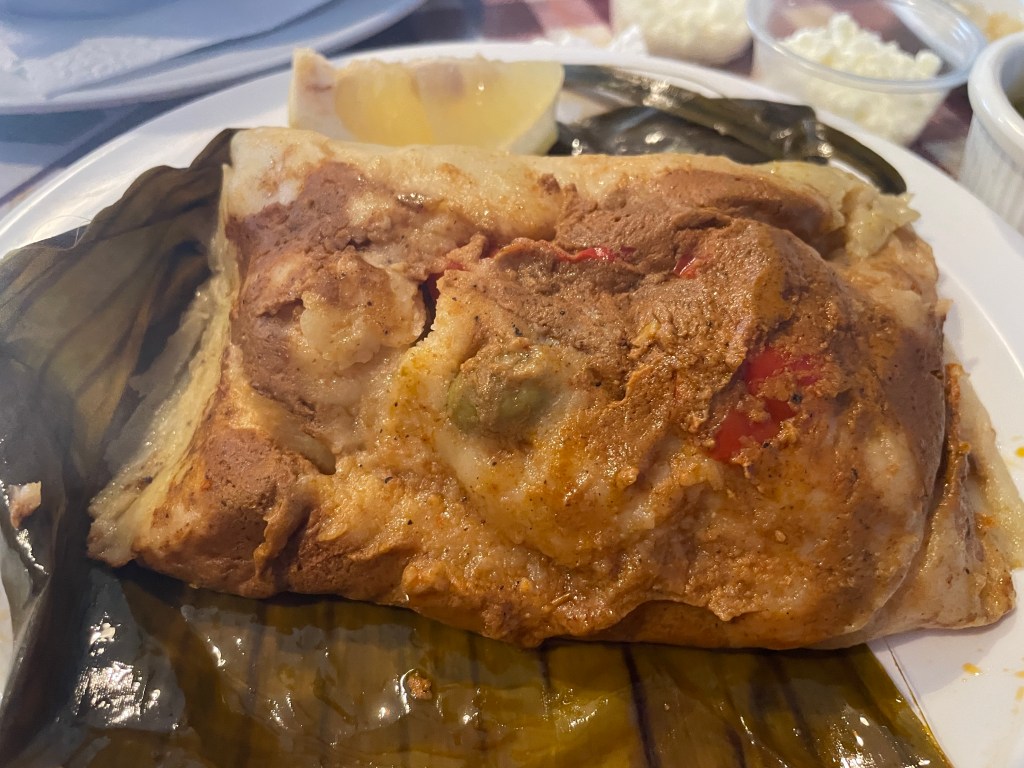
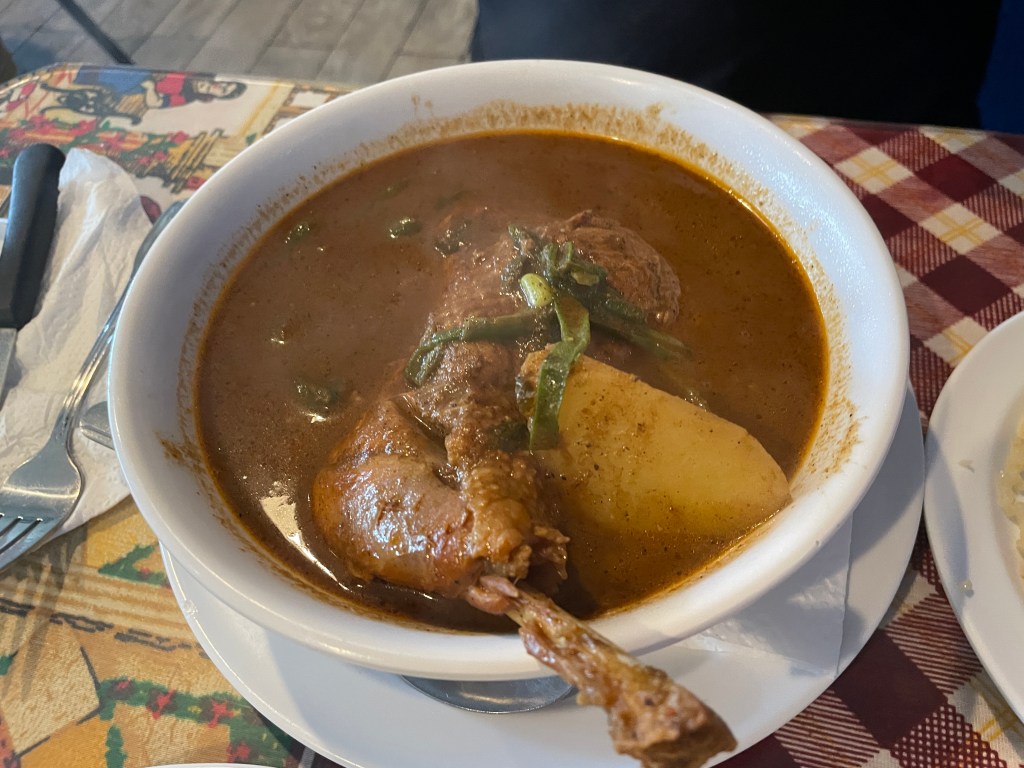
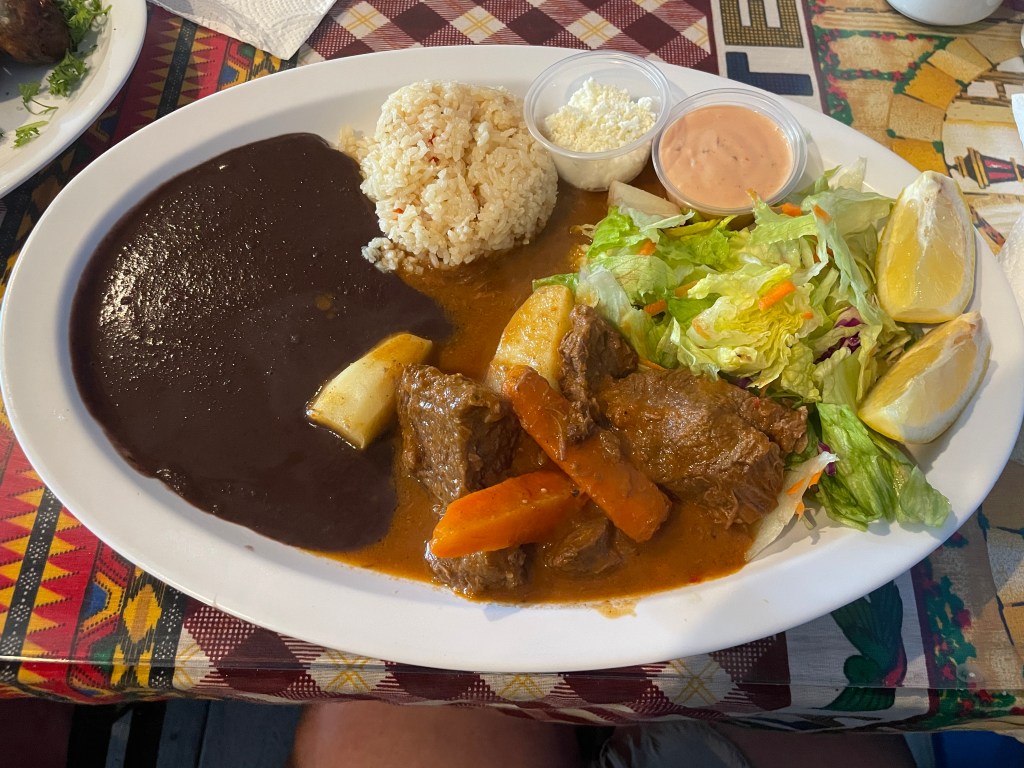
The other two times we ate Guatemalan food was when we were with Adam’s parents. The first time was just with his father, Moshe, at a restaurant called Mi Cocinita Chapina. We were served by both the owner and his son, who humored our broken Spanish and enjoyed hearing how much we loved their home country. We started off with some tostadas covered in a red sauce and a bean sauce, as well as longaniza sausages that were stuffed with herbs and garlic. To drink, I ordered atol de platano, a very thick and hot drink made from mashed and sweetened plantains that I was very curious to try. It’s deeply comforting and could be a meal on its own. For mains, the three of us shared a tamal de puerco (pork), pepin de gallina (Guatemala’s national dish; a type of chicken stew), and bistec de res (beef).
Top row, left to right: tostadas with salsas; longaniza sausages; atol de platano
Bottom row, left to right: tamal; pepin de gallina; bistec de res
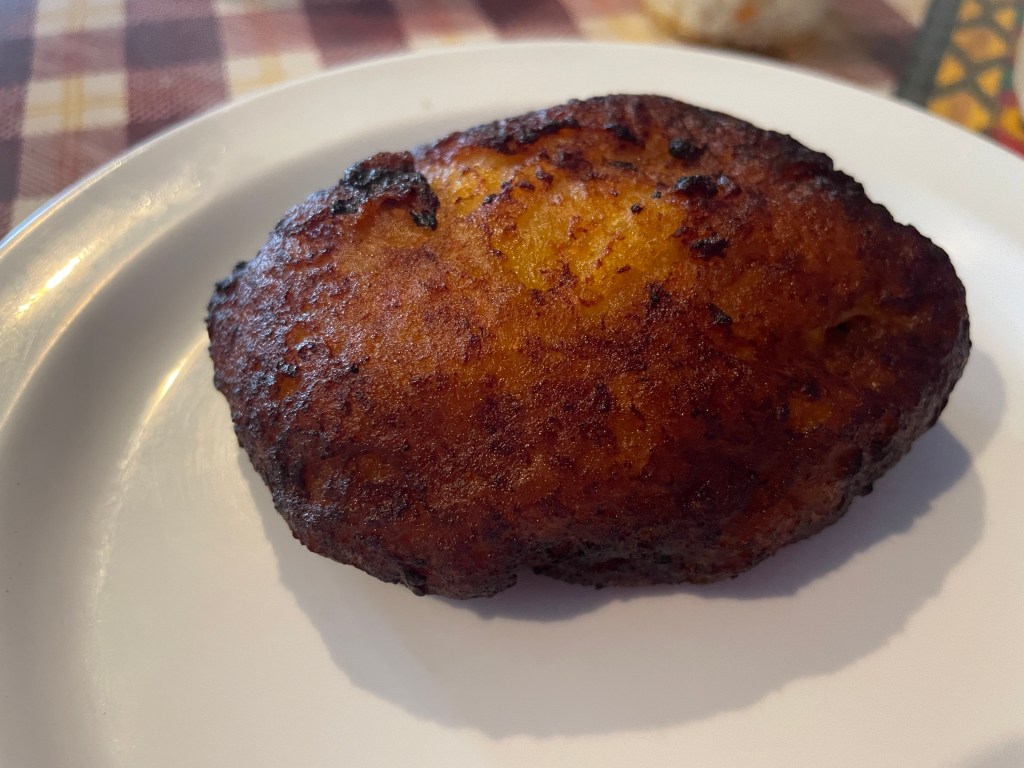
I think because we were having such a good time, the owner also gave us a free dessert: rellenitos. This was one of the most unique desserts I’ve ever tried. Cooked and mashed plantain is stuffed with sweetened black beans and then deep fried. It’s so sweet that you wouldn’t know it’s vegan.
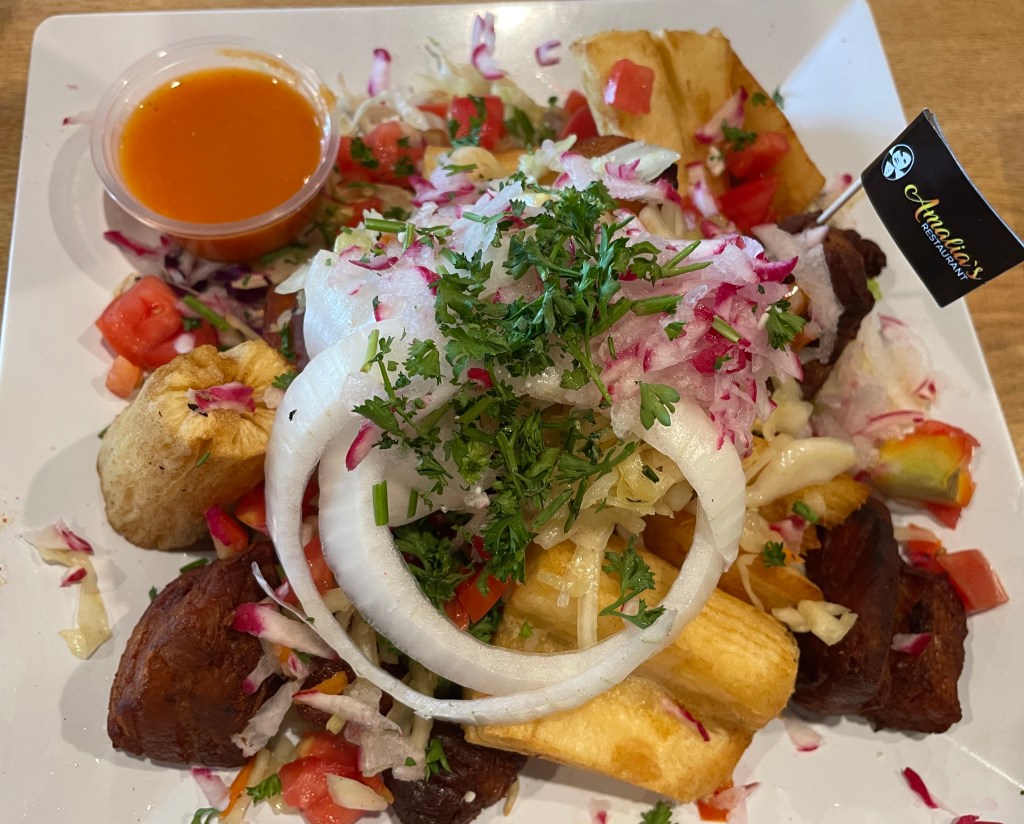
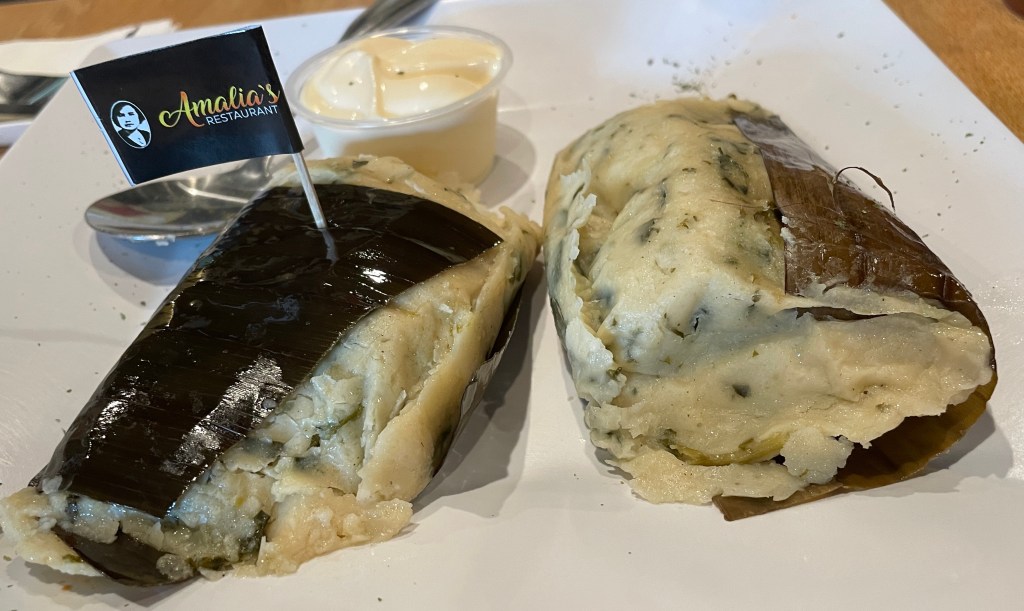
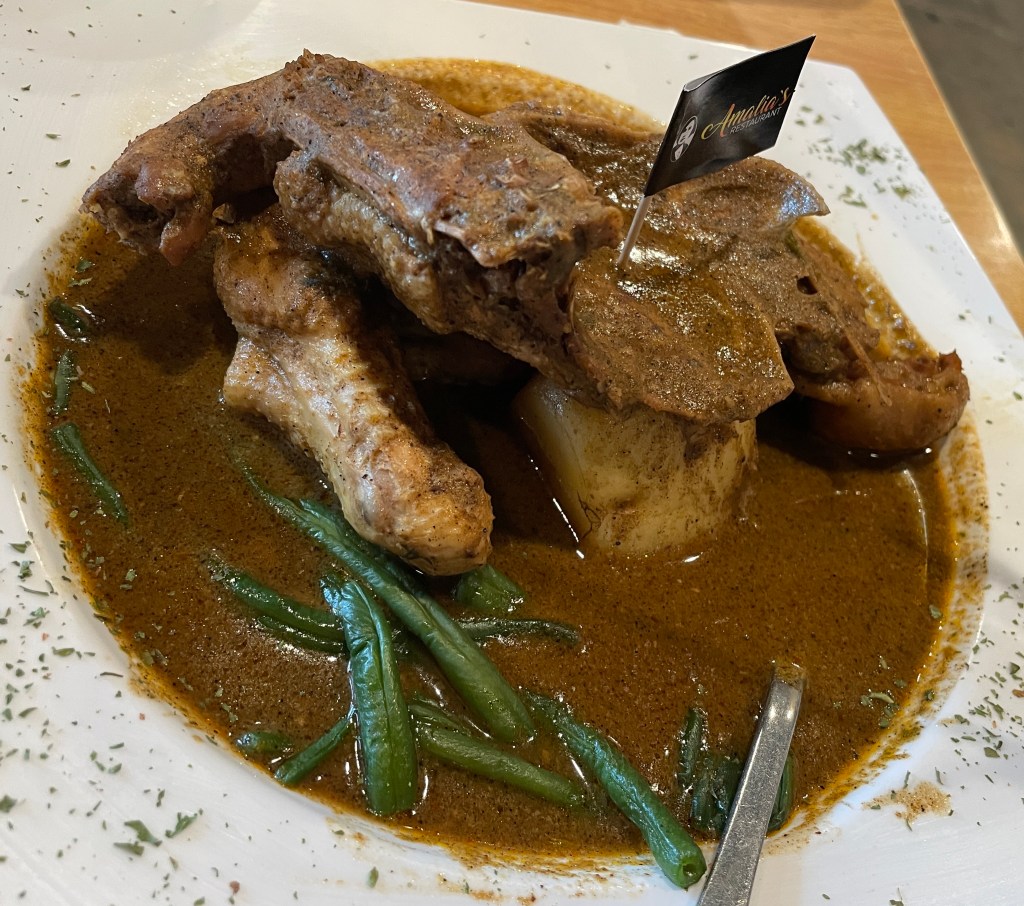
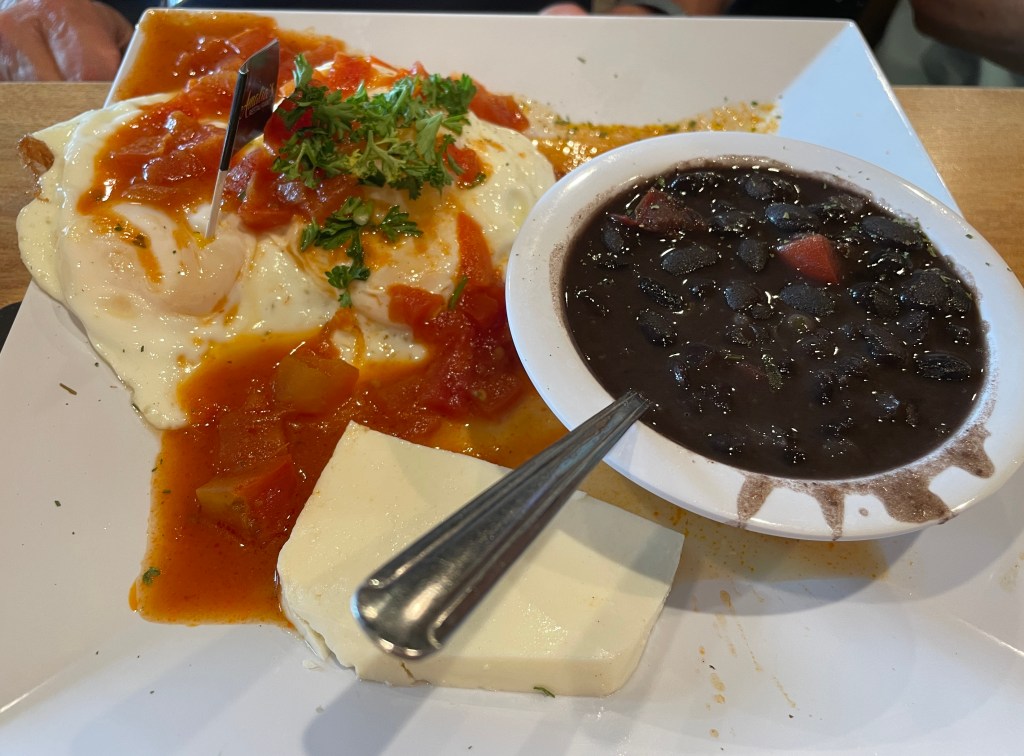
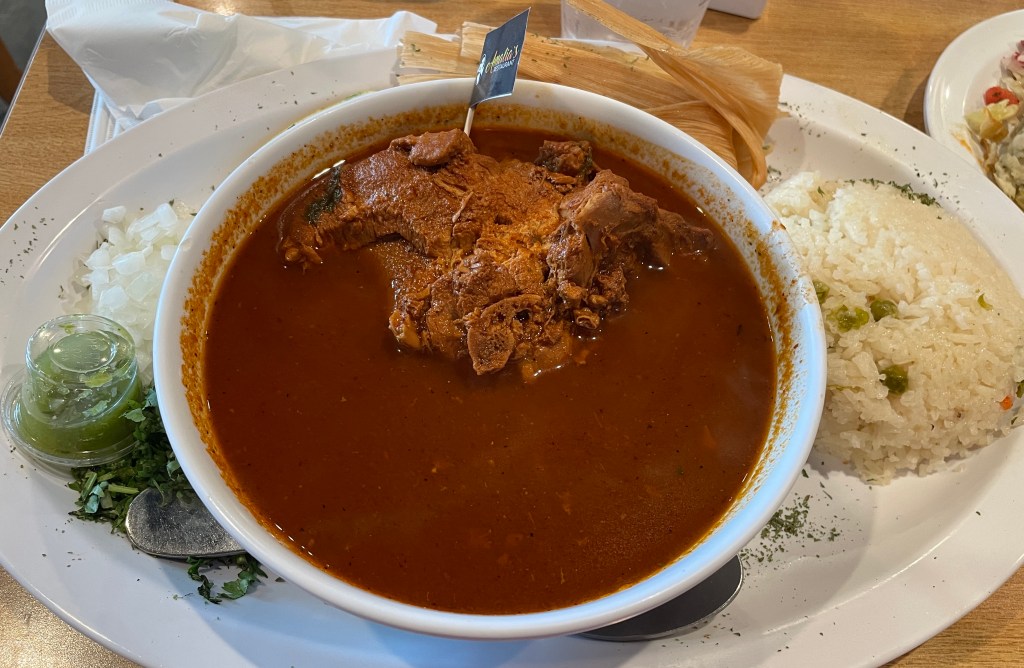
The second time we ate Guatemalan food was with both of Adam’s parents when we were celebrating Moshe’s birthday. This time, we visited Amalia’s. We began our meal with a plate of yuca con chicharron (fried yucca with fried pork pieces) and tamalitos de chipilín (two mini tamales with a special herb, chipilín). The yucca and pork were delicious, but I still think that Salvadorans make the best tamales. For mains, Moshe ordered eggs with tomatoes that came with a side of beans, cheese, and tortillas. Adam ordered the caldo de gallina (hen stew) and I ordered kak’ik (turkey stew). We had had kak’ik in Antigua, but this version was spicier than I remembered, which I loved. Adam’s mother, Joey, tried a little bit of everyone’s dishes, which I think is her favorite way to eat at a restaurant and I don’t blame her. Everything was fantastic, as to be expected.
Top row, left to right: yuca con chicharron; tamalitos de chipilín
Center row, left to right: caldo de gallina; sides of beans, rice, and plantains
Bottom row, left to right: eggs with tomatoes; kak’ik
Despite all of the truly incredible food in Los Angeles, my absolute favorite place in the entire city is a little café and market called Follow Your Heart. That name may sound familiar: in the last decade or so, they’ve expanded their line of vegennaise (vegan mayonnaise) and vegan cheeses across the country. To me, though, it’s still a little hippie dippie haven that has remained consistent for over 25 years. (Follow Your Heart has been around since the 1970s but I’m not that old.) I have spent countless hours at this café either by myself or with friends and family. I even insisted on bringing Mihir here when he was visiting L.A., because I just couldn’t imagine not showing him this special place. Even Mihir, a decidedly picky eater, enjoyed his meal and the atmosphere.
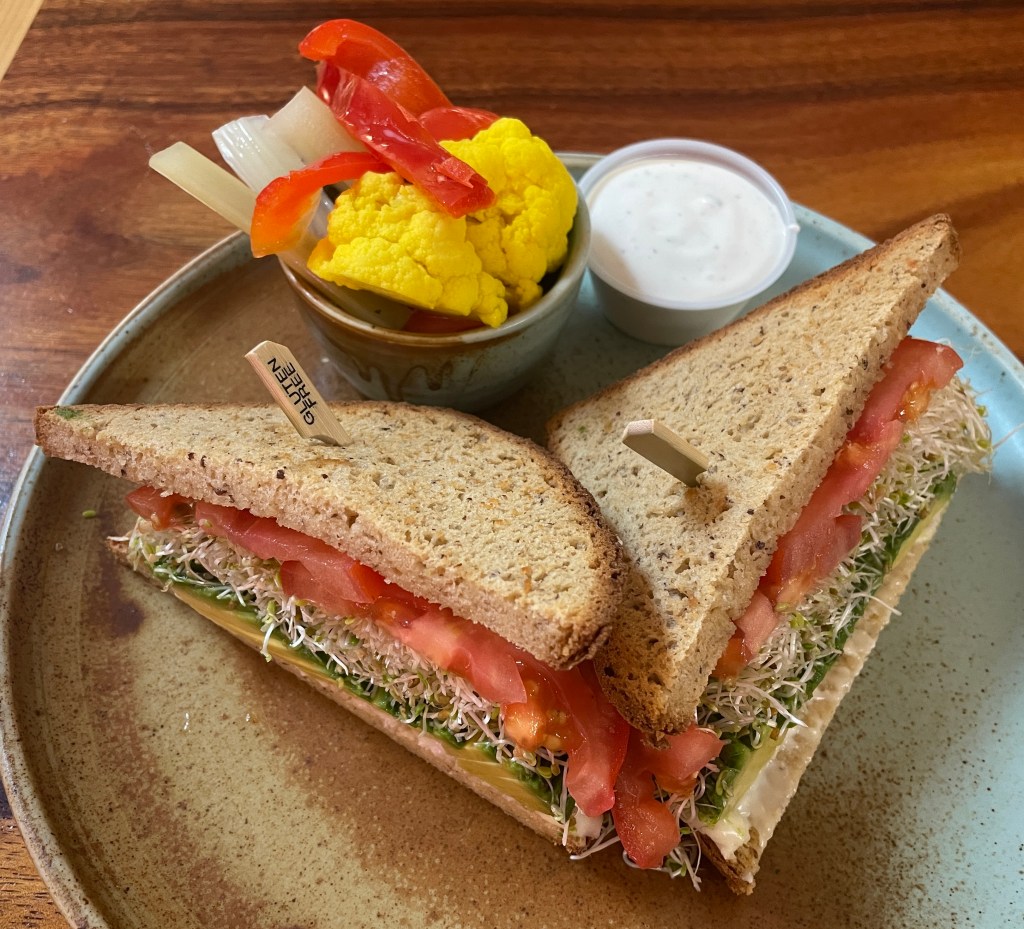
A few days before we left Los Angeles to our new home in Duluth, Minnesota, I had a date with myself at Follow Your Heart. I ordered my favorite sandwich: the melted (vegan) cheese with tomato, avocado, and sprouts. It used to come with a side of sliced carrots, but now the side is pickled veggies (yum!). I added a side of vegan blue cheese for dipping my sando. I treated myself to one of their (vegan) milkshakes too. Mocha was my go-to for years, but this time I got strawberry. I sat at the cafe for about two hours reading The Harem Midwife and people watching.
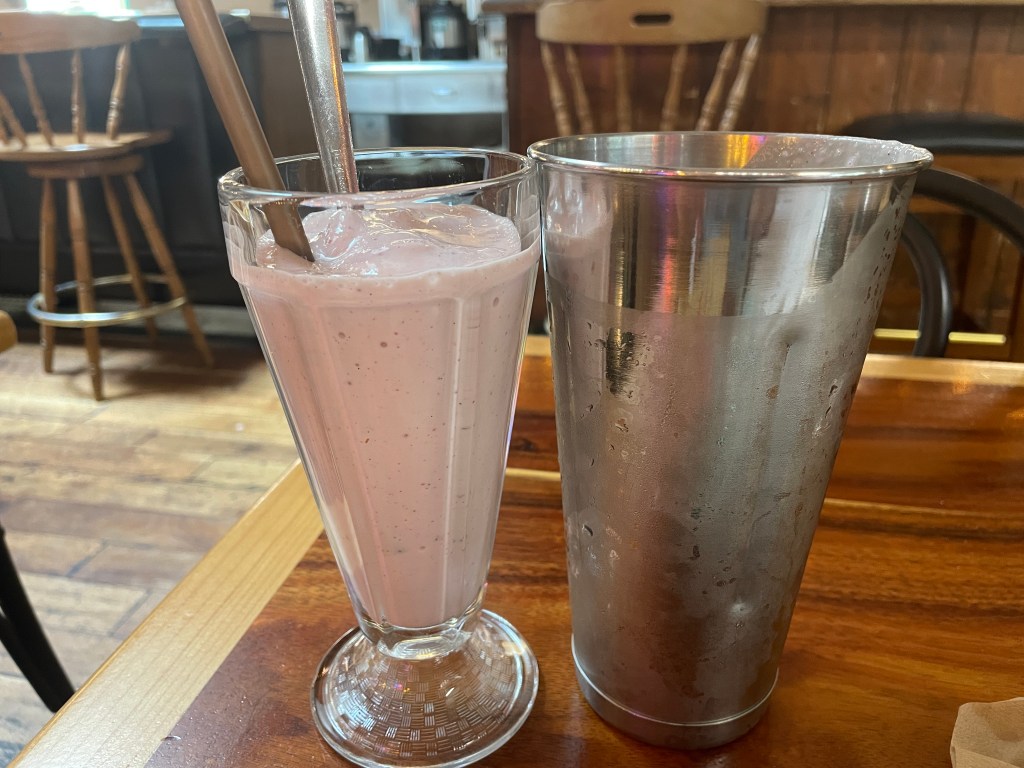
I’ll be forty in two days, and as I write this, I’m on the couch in our new home. Yet, sitting at Follow Your Heart, eating and reading, all while trying to escape the anxieties of moving to a new home, however superficial, made me feel 18 again. And 20 again. And 29 again. And all the other times I sat at this café over the years when we visited L.A. Follow Your Heart is more than just a place to eat. It’s a reminder that no matter how overwhelmed I feel by how huge this city is, by family and friends, or by the never-ending lists and anxieties in my head, there is one little store tucked away in a random Canoga Park neighborhood that I can always count on to mostly stay the same. That reliability is why I love Follow Your Heart so much and I hope it never changes.
Be sure to like, comment, and subscribe to Traveling While Introverted so you don’t miss our next posts about the move to Duluth!


Leave a Reply