One of the big pulls of visiting the Twin Cities was the food, of course. If you read my last post about Duluth, you know that we have a great food scene here and there are plenty of restaurants we haven’t tried yet. At the same time, there is a limit to the diversity. There is only one Indian restaurant in town, for example. Plus, while the grocery stores near us have “ethnic” ingredients like tahini and tamari (gluten-free soy sauce), they’re small in size and expensive, which doesn’t really work for home cooks like us. How long will a 12-ounce jar of tahini last? Not long, I can assure you! So when we visited the Twin Cities, I researched grocery stores to visit so that we could purchase staples such as sumac, gochujang, and tamarind. When we got home, I spent a good amount of time rearranging the pantry, which I enjoyed probably more than you might expect. (If you’re thinking, well, you lived in Alabama; didn’t you have to deal with this there too? Nope! Some of the best homemade kimchi I’ve ever had was at a Chinese grocery store, I could always find large tubs of tahini at the Middle Eastern grocery store, and there were a few tiendas in town.)
It’s not only that the Twin Cities is home to over 3 million people that makes such diversity accessible. As of 2024, 9% of residents (524,000 people) in the Twin Cities are immigrants, which may not sound like much compared to cities such as Los Angeles or Miami. Still, their numbers are significant enough that these diasporic communities have created lively enclaves that have had a profound impact on the culture and history of this metropolitan area. In other words, we didn’t just shop; we ate too.
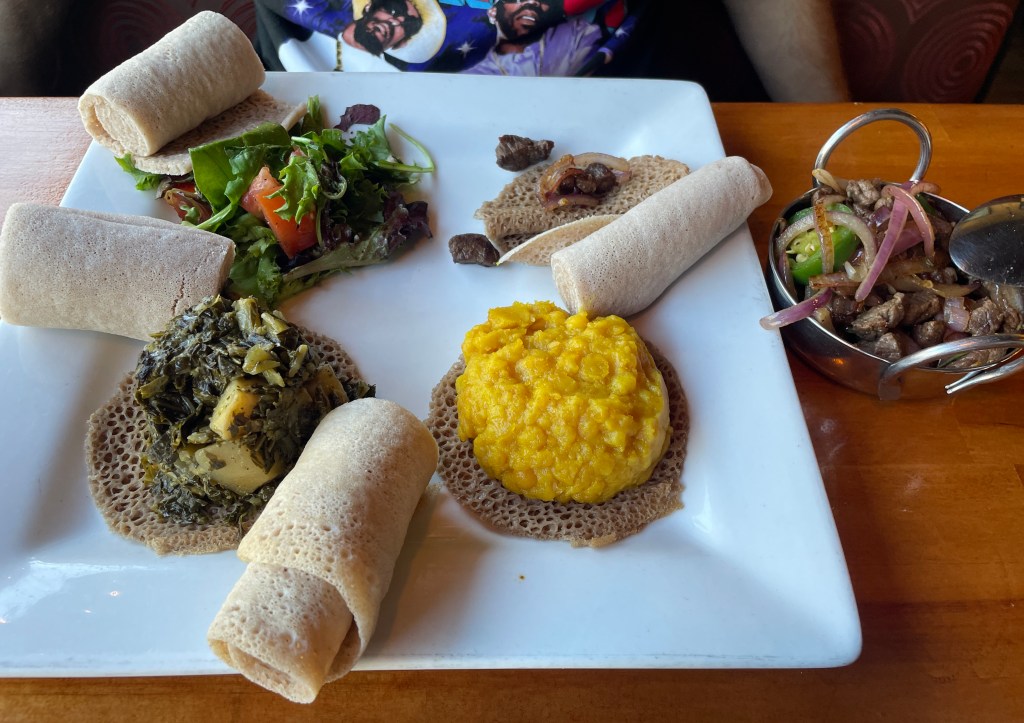
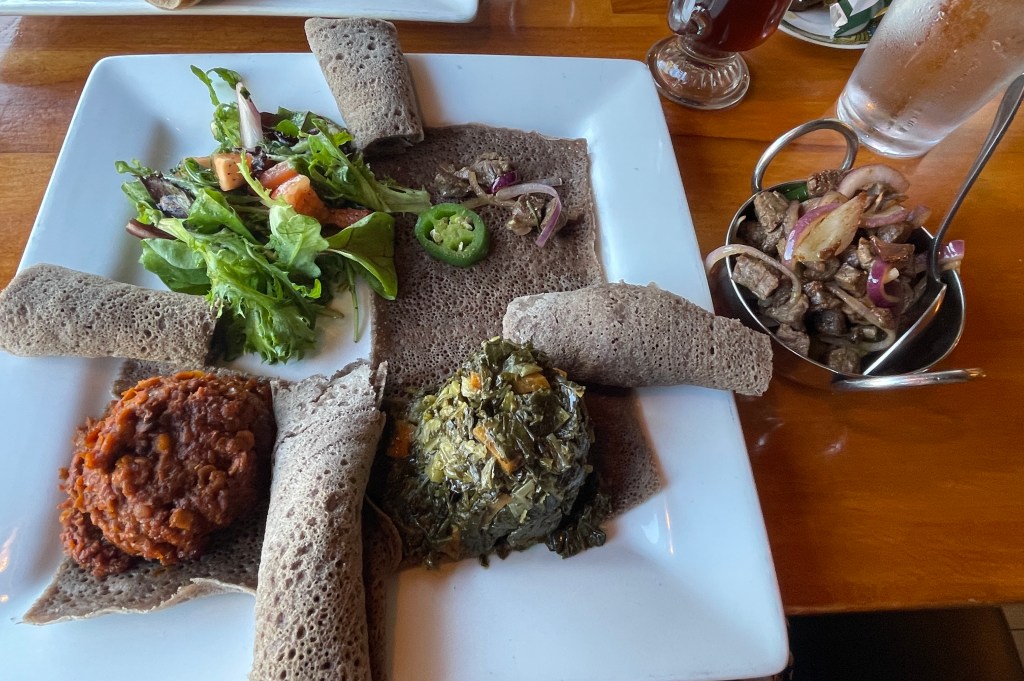
The first place we visited was an Ethiopian restaurant called Bolé. Ethiopian food isn’t new to us: Los Angeles is home to a large Ethiopian diaspora and we’ve visited Little Ethiopia many times. We’ve also had Ethiopian food in Phoenix, Tucson, Atlanta, and Israel, so we were excited to try it in St. Paul to see if it was different. In a word, Bolé is fantastic. Typically, we like to order a platter with a variety of meats and vegetarian dishes. However, we didn’t want to fill up too much because then we wouldn’t have room for dinner, so we each got our own plate. We both ordered Awaze Tibs (beef with berber spice, jalapeños, onions, and tomatoes) and a side of gomen (stewed collard greens). Adam also ordered ater kik (yellow split peas) and I ordered miser (lentils with garlic, ginger and berber spice). What makes Ethiopian food so filling is the injera that is served with it. Injera is a spongy, slightly tangy flatbread that is perfect for soaking up all of the flavors of the meal. (If you don’t like eating with your hands, Ethiopian food might not be for you.) Injera is traditionally made with teff, a gluten-free grain that only grows in Ethiopia. Not all restaurants can afford to make their injera only out of teff, so I get extra excited when gluten free injera is offered. You’ll notice that the injera in the right photo is slightly darker and that’s because it’s the gluten free version.
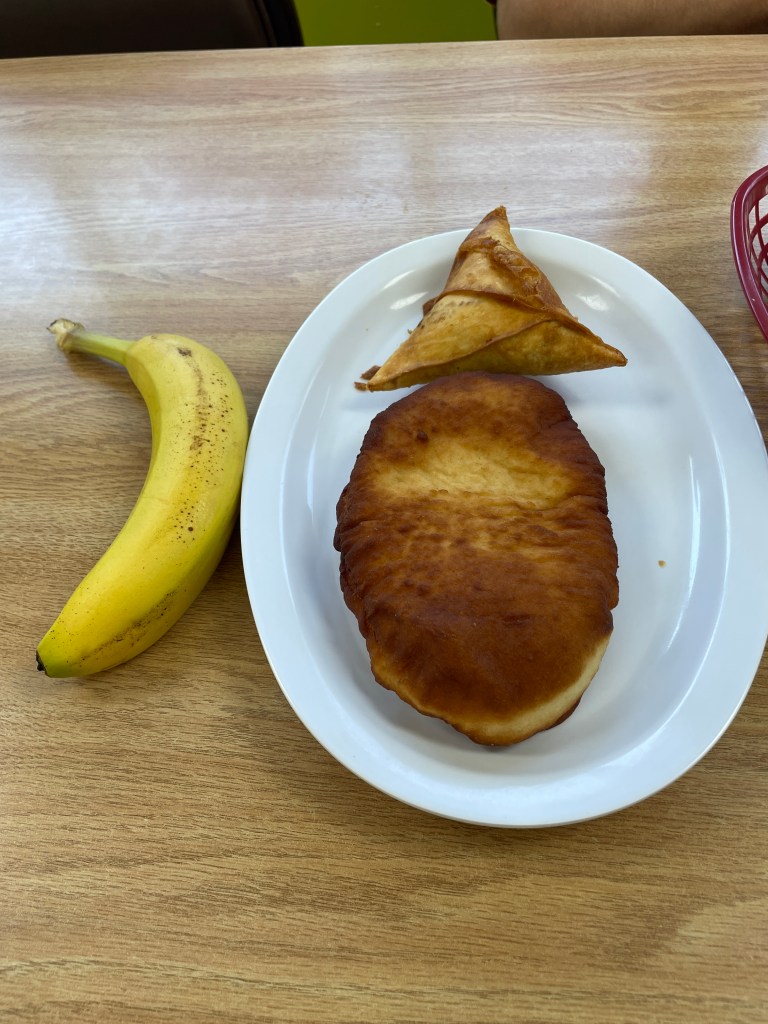
A cuisine that was new to us that we had an opportunity to try was Somali food. As of 2024, over 62,000 people of Somali descent live in the Twin Cities and there are plenty of restaurants, grocery stores, and cultural hubs peppered throughout the metro. In my research, multiple articles recommended Mama Safia as an introduction to Somali food. The restaurant is small and humble, but very beloved in the community. To start, Adam ordered a sambusa (sometimes called a samosa), a deep-fried pastry filled with meat and veggies, as well as a mahamri, a deep-fried sweet bread. The mahamri smelled like a sufganya or Hanukkah donut to me. Adam gobbled up both of them, of course.
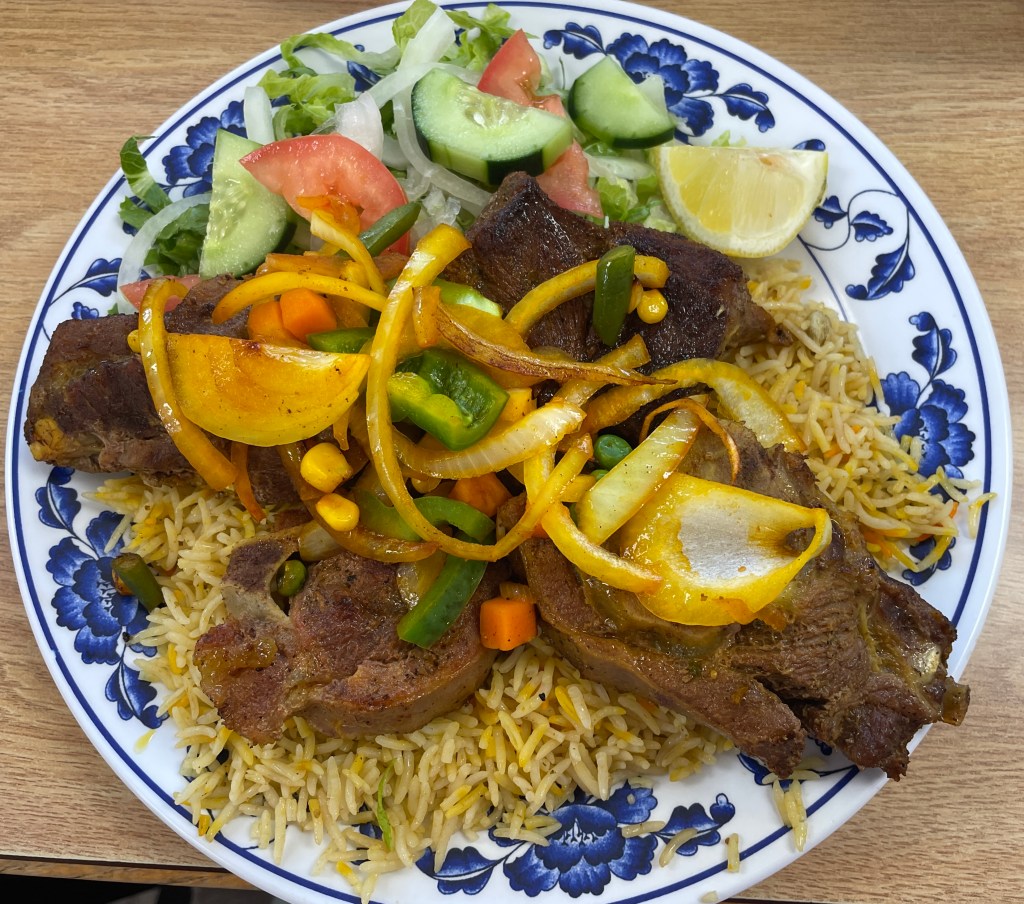
For our mains, we both ordered goat with rice and salad. The salad was fresh and the rice was of good quality, evidenced by its ability to soak up the goat juices without getting sticky. The goat itself was good but needed a lot of hot sauce to give it oomph. What was the most surprising, though, was the banana. We were each given a banana when the starters came out and we thought it was supposed to be eaten with the sweet bread. Someone told us to mash up the banana with our rice when the main dish was served. I was skeptical at first, but I understand the appeal. The banana helps break up savory and spicy flavors without adding too much sweetness to the dish. While we liked it, we both agree that we need to try Somali food again to decide whether we’re fans or not.
Left to right: the sambusa (triangle), sweet bread and banana; goat with rice and salad
The Twin Cities are also home to a long-standing Hmong population. The Hmong (silent “h”) are a stateless people that hail from Southern China and Southeast Asia. (If you’re a Grey’s Anatomy fan, you may remember this character undergoing a special ceremony before surgery.) Many Hmong helped the United States in a secret campaign during the Vietnam War, so in the mid-1970s, many immigrated to the U.S. as refugees. Today, 66,000 people of Hmong decent live in the Twin Cities, so of course we wanted to try their food.
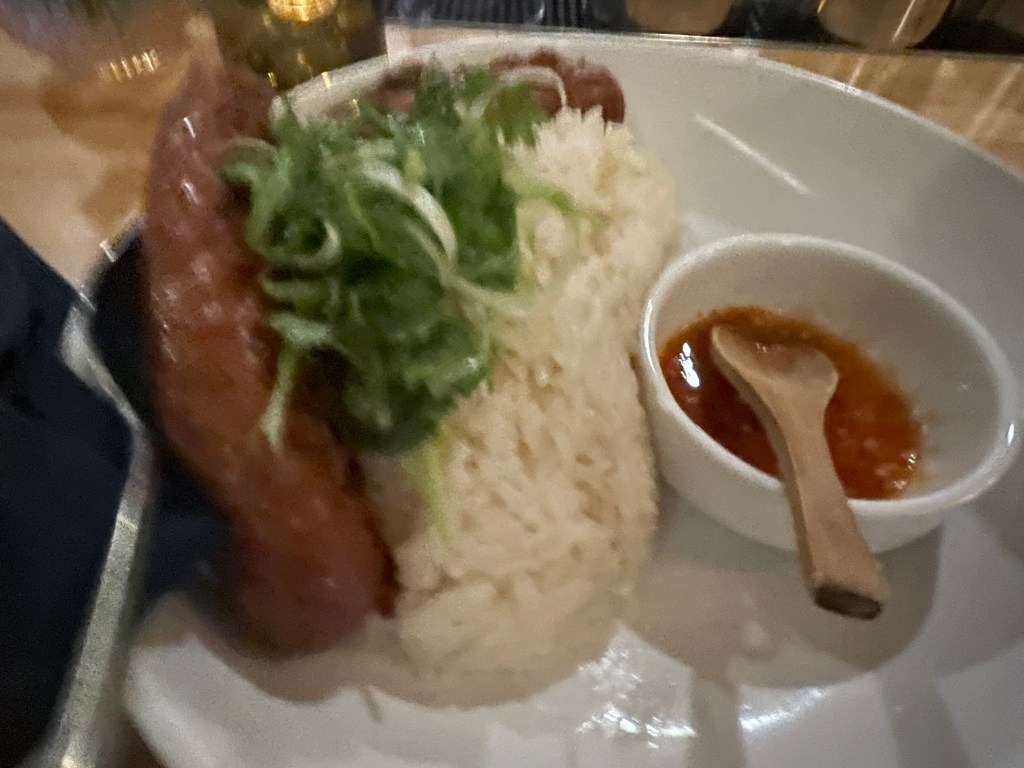
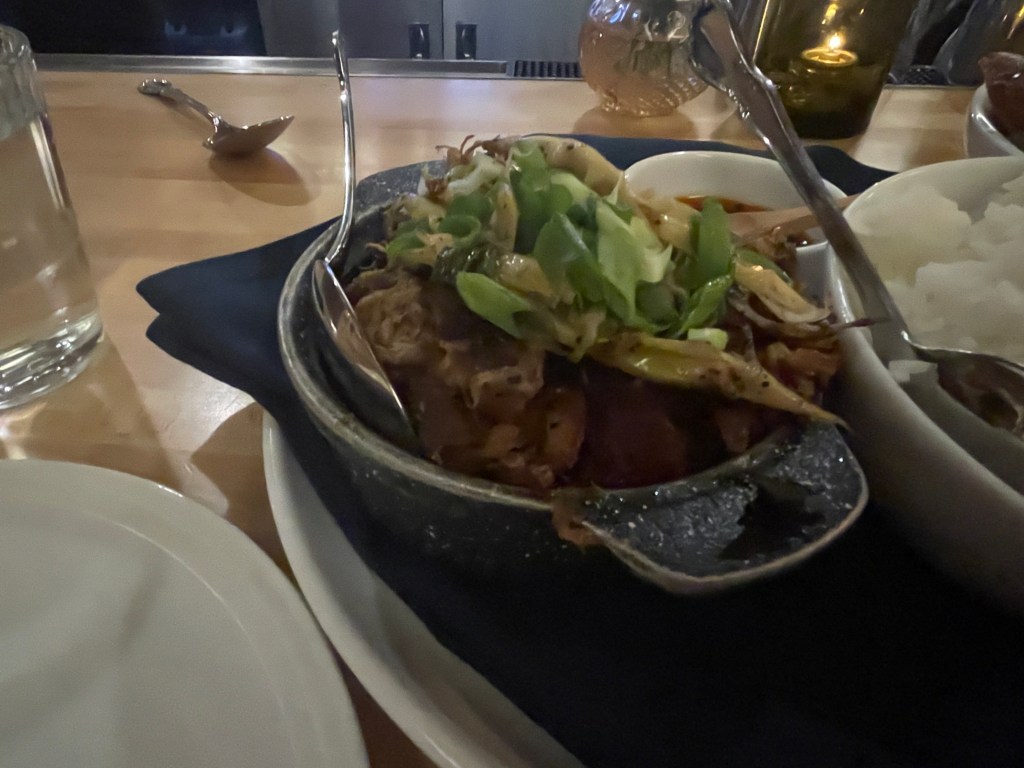
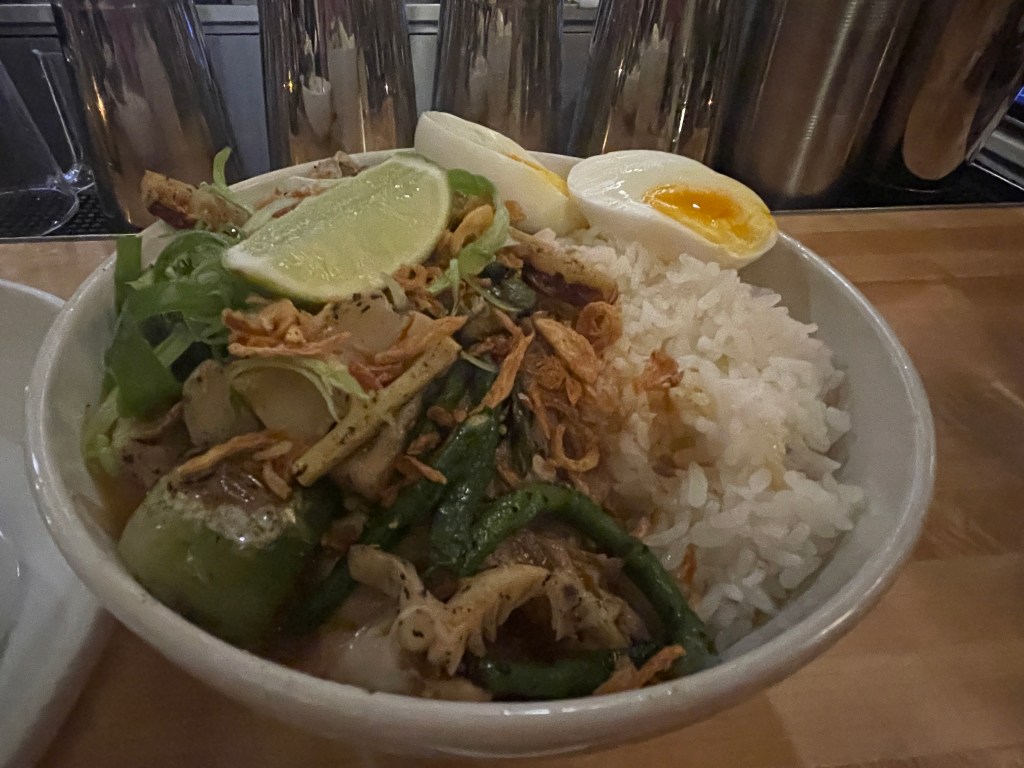
There are many places to try Hmong food. Perhaps the best place is Hmong Village, but I read that it is very, very crowded during the weekend and it’s best to go early in the morning or during the week. Instead, we went to Diane’s Place, which serves Hmong-American cuisine. Budgets being what they are, we couldn’t order everything we wanted, but oh my goodness was everything delicious. We started off with the Hmong sausages served with sticky rice and we asked for all four sauce options: hot sauce, Hmong hot sauce (mild), sweet and sour, and peanut. The sausage was juicy and fatty so that the rice and sauces helped balance everything out. Next, we ate Hmong pulled pork served with sour bamboo and rice. The pulled pork was quite fatty but also airy and the bamboo had a lovely char on it. We couldn’t resist ordering the red curry duck stew served with a soft boiled egg, greens, bamboo, and Thai eggplant. Duck is usually too rich for me, so I ate all the eggplant (the only vegetable Adam really doesn’t like). The sauce was delicious and reminded us of other red curries we’ve had, but also different enough that we could tell we were trying a different cuisine.
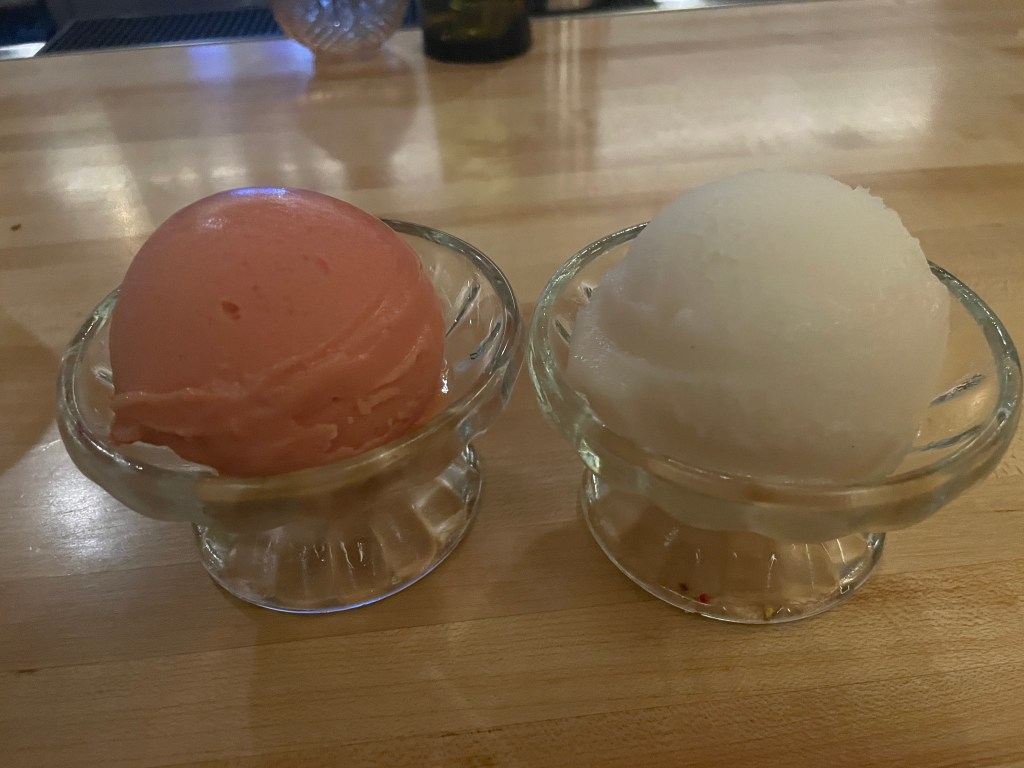
For dessert, we each had a scoop of their dairy-free sorbet. I ordered the rambutan because I love lychee and they’re quite similar. It was good, but it had a very lemony aftertaste that I didn’t really enjoy. (Dessert doesn’t count if it’s lemony. I don’t make up the rules.) Adam, on the other hand, ordered the guava and it was fantastic. We discovered the deliciousness of guava jam in Latin America and have been chasing that flavor ever since. Adam was kind enough to trade sorbets with me, so he gets bonus husband points.
A quick note about the photos: normally I take multiple photos of everything and choose the best one, but, I guess I was too excited and some photos are blurry and the lighting is bad. So, you’ll have to use your imagination a bit or go to Diane’s Place yourself.
Top row, left to right: Hmong sausages; Hmong pulled pork
Bottom row, left to right: Red curry duck stew; two perfect scoops of sorbet: guava (pink) and rambutan (white)
While in the Twin Cities, we decided to give Cambodian food another try. Many years ago when we lived in Los Angeles, we took a day trip to Long Beach and had lunch in Cambodia Town. If I remember correctly, we tried some congee (a comforting, savory rice pudding) and Adam tried some of their breads. It didn’t make too much of an impression and for a long time we have been meaning to visit Cambodia Town again, but somehow always forget to go. So, when I found out that the Twin Cities has a large Cambodian population, we were excited to try this cuisine again.
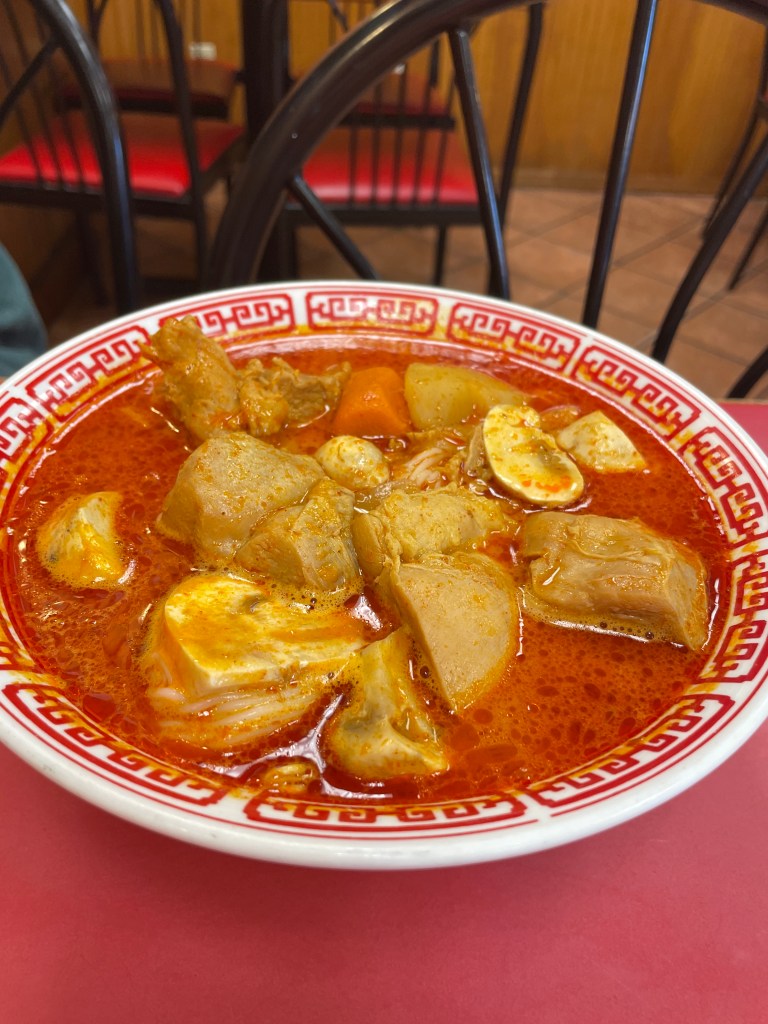
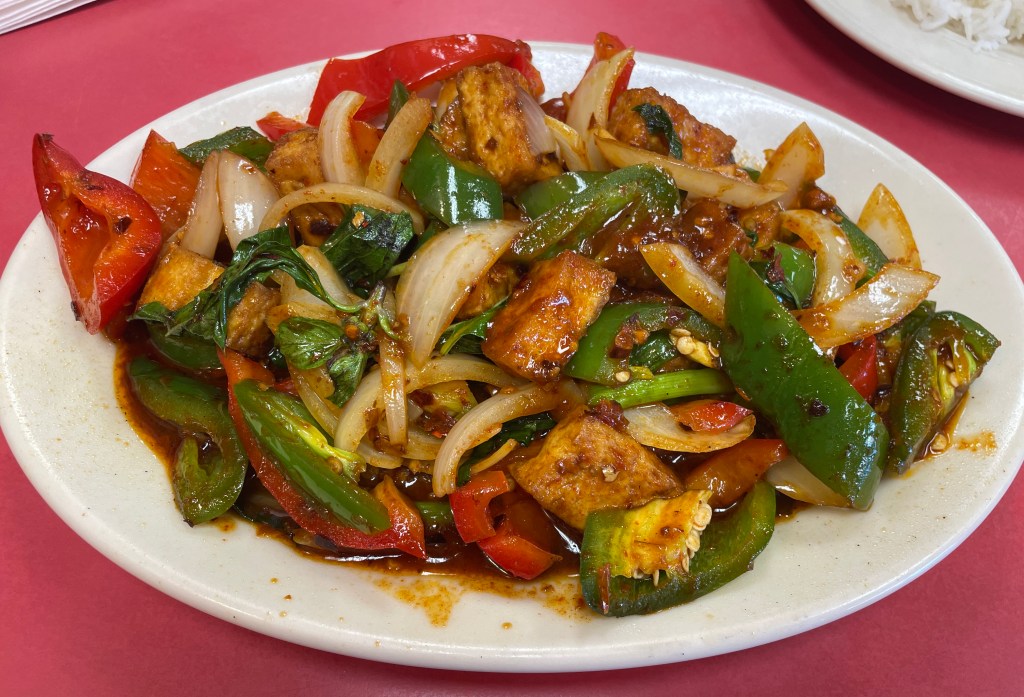
We ate at Cheng Heng, a hole-in-the-wall restaurant in St. Paul that has been around for decades. When we walked in, we saw plenty of Cambodian families eating and laughing, which we took as a good sign. The menu is long and we didn’t want to eat too much for lunch, so it took us some time to narrow down our choices. Eventually, Adam settled on the curry chicken noodle soup, despite it being a hot weekend (it was in the 80s F/27-28 C!). I can’t really eat soup on a hot day, so I ordered a dish with vegetables, fried tofu, and a spicy red sauce. Not only was it very flavorful, but it was the kind of heat that builds over time, which I enjoyed. Cambodian food does remind us of Thai, Vietnamese, and Laotian food, but it clearly has its own distinct flavor profile. We’ve only begun to scratch the surface of Cambodian food and we both agreed that we’d come back to Cheng Heng next time we come to St. Paul.
Left to right: red curry chicken noodle soup; tofu and vegetable red curry
As we inch closer to winter, we’ll keep looking for ways to explore more of the Midwest. Be sure to like, comment, and subscribe to Traveling While Introverted so you don’t miss it!


Leave a Reply